Leave no one behind: ensuring access to COVID-19 vaccines for refugee and displaced populations

Nature Medicine
Volume 27 Issue 5, May 2021
https://www.nature.com/nm/volumes/27/issues/5


Comment | 19 April 2021
Leave no one behind: ensuring access to COVID-19 vaccines for refugee and displaced populations
Ensuring access to vaccines against COVID-19 for refugee and displaced populations and addressing health inequities are vital for an effective pandemic response.
Monette Zard, Ling San Lau, S. Patrick Kachur

COVID-19 vaccine rumors and conspiracy theories: The need for cognitive inoculation against misinformation to improve vaccine adherence

PLoS One
http://www.plosone.org/
[Accessed 15 May 2021]


COVID-19 vaccine rumors and conspiracy theories: The need for cognitive inoculation against misinformation to improve vaccine adherence
Md Saiful Islam, Abu-Hena Mostofa Kamal, Alamgir Kabir, Dorothy L. Southern, Sazzad Hossain Khan, S. M. Murshid Hasan, Tonmoy Sarkar, Shayla Sharmin, Shiuli Das, Tuhin Roy, Md Golam Dostogir Harun, Abrar Ahmad Chughtai, Nusrat Homaira, Holly Seale
Research Article | published 12 May 2021 PLOS ONE
https://doi.org/10.1371/journal.pone.0251605

Characteristics of Misinformation Spreading on Social Media During the COVID-19 Outbreak in China: A Descriptive Analysis

Risk Management and Healthcare Policy
https://www.dovepress.com/risk-management-and-healthcare-policy-archive56
[Accessed 15 May 2021]


Original Research
Characteristics of Misinformation Spreading on Social Media During the COVID-19 Outbreak in China: A Descriptive Analysis
Chen K, Luo Y, Hu A, Zhao J, Zhang L
Published Date: 10 May 2021

Israel’s COVID-19 endgame

Science
14 May 2021 Vol 372, Issue 6543
http://www.sciencemag.org/current.dtl


Editorial
Israel’s COVID-19 endgame
By Ran D. Balicer, Reut Ohana
Science14 May 2021 : 663
Summary
As several countries now confront COVID-19 surges, Israel may be crossing over to other side of the pandemic. Whereas 5.5 million new severe acute respiratory syndrome coronavirus 2 (SARS-CoV-2) infections were reported globally last week, Israel reported only 398 (compared with >50,000 in January). Already, 54% of Israel’s 9.2 million citizens have been fully vaccinated, considerably more than in most other countries. In the coming months, as restrictions continue to ease, the country should be optimistic, yet cautious, as risks of resurgence persist. Israel thus may well be an early case study for favorable outcomes of a mass-vaccination campaign.

Investigate the origins of COVID-19

Science
14 May 2021 Vol 372, Issue 6543
http://www.sciencemag.org/current.dtl


Letters
Investigate the origins of COVID-19
By Jesse D. Bloom, Yujia Alina Chan, Ralph S. Baric, Pamela J. Bjorkman, Sarah Cobey, Benjamin E. Deverman, David N. Fisman, Ravindra Gupta, Akiko Iwasaki, Marc Lipsitch, Ruslan Medzhitov, Richard A. Neher, Rasmus Nielsen, Nick Patterson, Tim Stearns, Erik van Nimwegen, Michael Worobey, David A. Relman
Science14 May 2021 : 694

A paradigm shift to combat indoor respiratory infection

Science
14 May 2021 Vol 372, Issue 6543
http://www.sciencemag.org/current.dtl


Policy Forum
A paradigm shift to combat indoor respiratory infection
By Lidia Morawska, Joseph Allen, William Bahnfleth, Philomena M. Bluyssen, Atze Boerstra, Giorgio Buonanno, Junji Cao, Stephanie J. Dancer, Andres Floto, Francesco Franchimon, Trisha Greenhalgh, Charles Haworth, Jaap Hogeling, Christina Isaxon, Jose L. Jimenez, Jarek Kurnitski, Yuguo Li, Marcel Loomans, Guy Marks, Linsey C. Marr, Livio Mazzarella, Arsen Krikor Melikov, Shelly Miller, Donald K. Milton, William Nazaroff, Peter V. Nielsen, Catherine Noakes, Jordan Peccia, Kim Prather, Xavier Querol, Chandra Sekhar, Olli Seppänen, Shin-ichi Tanabe, Julian W. Tang, Raymond Tellier, Kwok Wai Tham, Pawel Wargocki, Aneta Wierzbicka, Maosheng Yao
Science14 May 2021 : 689-691 Restricted Access
Building ventilation systems must get much better

When politics collides with public health: COVID-19 vaccine country of origin and vaccination acceptance in Brazil

Vaccine
Volume 39, Issue 19 Pages 2605-2730 (6 May 2021)
https://www.sciencedirect.com/journal/vaccine/vol/39/issue/19


Short communication Full text access
When politics collides with public health: COVID-19 vaccine country of origin and vaccination acceptance in Brazil
Wladimir G. Gramacho, Mathieu Turgeon
Pages 2608-2612

Ten-year follow-up on efficacy, immunogenicity and safety of two doses of a combined measles-mumps-rubella-varicella vaccine or one dose of monovalent varicella vaccine: Results from five East European countries

Vaccine
Volume 39, Issue 19 Pages 2605-2730 (6 May 2021)
https://www.sciencedirect.com/journal/vaccine/vol/39/issue/19


Research article Open access
Ten-year follow-up on efficacy, immunogenicity and safety of two doses of a combined measles-mumps-rubella-varicella vaccine or one dose of monovalent varicella vaccine: Results from five East European countries
Roman Prymula, Michael Povey, Jerzy Brzostek, Hana Cabrnochova, … Md Ahsan Habib
Pages 2643-2651

COVID-19 vaccination attitudes, values and intentions among United States adults prior to emergency use authorization

Vaccine
Volume 39, Issue 19 Pages 2605-2730 (6 May 2021)
https://www.sciencedirect.com/journal/vaccine/vol/39/issue/19


Research article Full text access
COVID-19 vaccination attitudes, values and intentions among United States adults prior to emergency use authorization
Daniel A. Salmon, Matthew Z. Dudley, Janesse Brewer, Lilly Kan, … Benjamin Schwartz
Pages 2698-2711

The critical role of background rates of possible adverse events in the assessment of COVID-19 vaccine safety

Vaccine
Volume 39, Issue 19 Pages 2605-2730 (6 May 2021)
https://www.sciencedirect.com/journal/vaccine/vol/39/issue/19


Research article Full text access
The critical role of background rates of possible adverse events in the assessment of COVID-19 vaccine safety
Steven B. Black, Barbara Law, Robert T. Chen, Cornelia L. Dekker, … Greg Poland
Pages 2712-2718

Hepatitis B Vaccination in Senegalese Children: Coverage, Timeliness, and Sociodemographic Determinants of Non-Adherence to Immunisation Schedules (ANRS 12356 AmBASS Survey)

Vaccines — Open Access Journal
http://www.mdpi.com/journal/vaccines


(Accessed 15 May 2021)
Open Access Article
Hepatitis B Vaccination in Senegalese Children: Coverage, Timeliness, and Sociodemographic Determinants of Non-Adherence to Immunisation Schedules (ANRS 12356 AmBASS Survey)
by Lauren Périères et al and on behalf of the ANRS 12356 AmBASS Survey Study Group
Vaccines 2021, 9(5), 510; https://doi.org/10.3390/vaccines9050510 (registering DOI) – 15 May 2021
Abstract
Detailed knowledge about hepatitis B virus (HBV) vaccination coverage and timeliness for sub-Saharan Africa is scarce. We used data from a community-based cross-sectional survey conducted in 2018–2019 in the area of Niakhar, Senegal, to estimate coverage, timeliness, and factors associated with non-adherence to […]

Attitudes toward Vaccination against COVID-19 in Poland. A Longitudinal Study Performed before and Two Months after the Commencement of the Population Vaccination Programme in Poland

Vaccines — Open Access Journal
http://www.mdpi.com/journal/vaccines


Open Access Article
Attitudes toward Vaccination against COVID-19 in Poland. A Longitudinal Study Performed before and Two Months after the Commencement of the Population Vaccination Programme in Poland
by Mateusz Babicki and Agnieszka Mastalerz-Migas
Vaccines 2021, 9(5), 503; https://doi.org/10.3390/vaccines9050503 – 13 May 2021
Abstract
Despite the fact that more than a year has passed since the WHO declared the pandemic, there is still no effectivetreatment of COVID-19. According to current knowledge, the only method to stop the virus from spreading is prophylactic vaccination of the population. However, […]

The Incidence and Severity of Post-Vaccination Reactions after Vaccination against COVID-19

Vaccines — Open Access Journal
http://www.mdpi.com/journal/vaccines


Open Access Article
The Incidence and Severity of Post-Vaccination Reactions after Vaccination against COVID-19
by Izabela Jęśkowiak et al
Vaccines 2021, 9(5), 502; https://doi.org/10.3390/vaccines9050502 – 13 May 2021
Abstract
The pandemic of COVID-19 might be limited by vaccination. Society should be vaccinated to prevent the spread of coronavirus disease 2019 (COVID-19) and to protect persons who are at high risk for complications. In Poland, the National Vaccination Program has been introduced, which […]

Stakeholders’ Understandings of Human Papillomavirus (HPV) Vaccination in Sub-Saharan Africa: A Rapid Qualitative Systematic Review

Vaccines — Open Access Journal
http://www.mdpi.com/journal/vaccines


Open Access Systematic Review
Stakeholders’ Understandings of Human Papillomavirus (HPV) Vaccination in Sub-Saharan Africa: A Rapid Qualitative Systematic Review
by Caroline Deignan et al
Vaccines 2021, 9(5), 496; https://doi.org/10.3390/vaccines9050496 – 12 May 2021
Abstract
Cervical cancer rates in Sub-Saharan Africa (SSA) are amongst the highest worldwide. All three of the Human Papillomavirus (HPV) vaccines (9-valent, quadrivalent and bivalent HPV vaccine) provide primary protection against the most common cancer-causing strains of HPV (types 16 and 18) that are

Targeting COVID-19 Vaccine Hesitancy in Minority Populations in the US: Implications for Herd Immunity

Vaccines — Open Access Journal
http://www.mdpi.com/journal/vaccines


Open Access Review
Targeting COVID-19 Vaccine Hesitancy in Minority Populations in the US: Implications for Herd Immunity
by James E. K. Hildreth and Donald J. Alcendor
Vaccines 2021, 9(5), 489; https://doi.org/10.3390/vaccines9050489 – 11 May 2021
Abstract
There has been a continuous underrepresentation of minorities in healthcare research and vaccine trials, along with long-standing systemic racism and discrimination that have been fueling the distrust of the healthcare system among these communities for decades. The history and legacy of racial injustices […

Media/Policy Watch

Media/Policy Watch
This watch section is intended to alert readers to substantive news, analysis and opinion from the general media and selected think tanks and similar organizations on vaccines, immunization, global public health and related themes. Media Watch is not intended to be exhaustive, but indicative of themes and issues CVEP is actively tracking. This section will grow from an initial base of newspapers, magazines and blog sources, and is segregated from Journal Watch above which scans the peer-reviewed journal ecology.
We acknowledge the Western/Northern bias in this initial selection of titles and invite suggestions for expanded coverage. We are conservative in our outlook in adding news sources which largely report on primary content we are already covering above. Many electronic media sources have tiered, fee-based subscription models for access. We will provide full-text where content is published without restriction, but most publications require registration and some subscription level.
The sheer volume of vaccine and pandemic-related coverage is extraordinary. We will strive to present the most substantive analysis and commentary we encounter.


The Atlantic
http://www.theatlantic.com/magazine/
Accessed 15 May 2021
Health
No One Actually Knows If You’re Vaccinated
Vaccination requirements in stores, offices, and schools can offer peace of mind. But they’re rarely going to prove anything.
Ian Bogost
May 14, 2021


BBC
http://www.bbc.co.uk/
Accessed 15 May 2021
[No new, unique, relevant content]


The Economist
http://www.economist.com/
Accessed 15 May 2021
May 15th 2021
Ten million reasons to vaccinate the world

Next in line
A worrying new wave of covid-19 is hitting South-East Asia
Cases are rising across a region that had been relatively unscathed
Less than one dose for every 100 of the world’s people has been given away
May 15th 2021 edition


Financial Times
https://www.ft.com/
Accessed 15 May 2021
Covid-19 vaccines
J&J pushes Latin America to take unfrozen vaccines in Covax talks
May 14, 2021
Top of Form
Bottom of Form

Covid-19 vaccines
Cuba deploys homegrown Covid jabs before regulators give go-ahead
May 13, 2021
Top of Form
Bottom of Form

The Big Read
India’s Covid-19 crisis diminishes Narendra Modi
May 13, 2021

FT Magazine Gillian Tett
Radical transparency will help vaccinate the world
May 12, 2021
Top of Form
Bottom of Form

Pedro Sánchez
Intellectual property must not be an obstacle to fair vaccine supply
May 12, 2021
Top of Form
Bottom of Form


Forbes
http://www.forbes.com/
Accessed 15 May 2021
May 14, 2021
Fake Vaccine Cards On The Rise: CVS Employee Arrested For Stealing Them
A CVS employee in Long Island, New York, was arrested this week for stealing Covid-19 vaccination cards to distribute, Nassau County Police said Thursday.

Editors’ Pick  |  
May 14, 2021
WHO Chief Implores Rich Nations—Like The U.S.— To Not Vaccinate Children And Teens Against Covid And Donate Doses For Poorer Countries
It is a “moral catastrophe” that a handful of rich countries dominate global vaccine supplies, he said.
By Robert Hart Forbes Staff


Foreign Affairs
http://www.foreignaffairs.com/
Accessed 15 May 2021
[No new, unique, relevant content]


Foreign Policy
http://foreignpolicy.com/
Accessed 15 May 2021
Voice
Industrial Policy Saved Europe’s Vaccine Drive
The EU got its act together not by banning exports but through classic cooperation with industry.
By Caroline de Gruyter, a Europe correspondent for the Dutch newspaper NRC Handelsblad and a columnist at Foreign Policy.


New Yorker
http://www.newyorker.com/
Accessed 15 May 2021
Medical Dispatch
India’s Crisis Marks a New Phase in the Pandemic
In countries where the storm is lifting, it’s time to turn outward and help the rest of the world.
By Dhruv Khullar
May 13, 2021

Dispatch
India’s Epidemic of False COVID-19 Information
As patients and families frantically seek treatment, elected officials—and some physicians—have fuelled denialism and specious talk of miracle cures.
By Rahul Bhatia
May 10, 2021


New York Times
http://www.nytimes.com/
Accessed 15 May 2021
U.S.
Mask? No Mask? New Rules Leave Americans Recalibrating, Hour by Hour
The C.D.C. said fully vaccinated people could safely go most places without a mask. Not everyone was sure, or ready.
By Mitch Smith
PRINT EDITION May 16, 2021

World
Greece opens its doors to international tourists.
Greek television showed islanders on Mykonos, one of the country’s most popular summer destinations, painting cobblestone streets with whitewash in anticipation.
By Niki Kitsantonis May 16, 2021

The Upshot
723 Epidemiologists on When and How the U.S. Can Fully Return to Normal
Government mandates are lifting, but these experts say the pandemic won’t really end nationally until more people, including children, are vaccinated.
By Claire Cain Miller, Kevin Quealy and Margot Sanger-Katz May 16, 2021


Washington Post
https://www.washingtonpost.com/
Accessed 15 May 2021
[No new, unique, relevant content]

Think Tanks et al

Think Tanks et al

Brookings
http://www.brookings.edu/
Accessed 15 May 2021
FixGov
COVID-19 vaccines: The endgame
William A. Galston and Elaine Kamarck
Wednesday, May 12, 2021
 
 
Center for Global Development [to 15 May 2021]
http://www.cgdev.org/page/press-center
Content
How Does the Market for Vaccines Work?
May 14, 2021
Effective vaccines are developed through collaboration between governments, publicly funded research universities and for-profit pharmaceutical companies. But the incentives to produce the doses can often leave out lower-income countries.
Anthony McDonnell and Flavio Toxvaerd

A Matter of Trust and Coordination: A COVID-19 Vaccination Certificate for Southeast Asia?
May 13, 2021
As governments worldwide increase their COVID-19 vaccination coverage, COVID-19 vaccination certificates (CVCs) are making headlines as a possible answer to the question of how to reopen economies safely. While countries like Israel and Estonia are well advanced in introducing CVCs, developing countries, as with their vaccination rates, are further behind. In especially interconnected developing regions like Southeast Asia, CVCs present unprecedented collaboration challenges, including that of coordination and trust.
Azusa Sato and Anit Mukherjee

Sharing Research Results with Participants: An Ethical Discussion
May 13, 2021
It is widely recognized that social science research involving human participants should be based on the principles of “doing good” and “mitigating harm.” While research results are often shared with academics and policymakers alike, it is unclear whether—and how often—they are shared with the participants themselves.
Samantha Friedlander et al.
 
 
Chatham House [to 15 May 2021]
https://www.chathamhouse.org/
Accessed 15 May 2021
[No new digest content]


CSIS
https://www.csis.org/
Accessed 15 May 2021
Transcript
When Vaccine Confidence Becomes National Security
May 12, 2021

Upcoming Event
Preventing the Next Pandemic: A Conversation with Peter J. Hotez
May 12, 2021
 
 
Kaiser Family Foundation
https://www.kff.org/search/?post_type=press-release
Accessed 15 May 2021
May 13, 2021 News Release
Vaccine Monitor: Unvaccinated Hispanic Adults are Twice as Likely as White Adults to Want a COVID-19 Vaccine ASAP, Highlighting a Key Outreach Opportunity for Vaccination Efforts
A third (33%) of unvaccinated Hispanic adults say they want to get a COVID-19 vaccine as soon as possible – twice the share as among unvaccinated White (16%) or Black (17%) adults, presenting an opportunity for targeted outreach to boost overall vaccination rates, according to a new KFF COVID-19 Vaccine Monitor report focused on the vaccine views and experiences of Hispanic adults.

Vaccines and Global Health: The Week in Review :: 8 May 2021

Vaccines and Global Health: The Week in Review is a weekly digest  summarizing news, events, announcements, peer-reviewed articles and research in the global vaccine ethics and policy space. Content is aggregated from key governmental, NGO, international organization and industry sources, key peer-reviewed journals, and other media channels. This summary proceeds from the broad base of themes and issues monitored by the Center for Vaccine Ethics & Policy in its work: it is not intended to be exhaustive in its coverage. You are viewing the blog version of our weekly digest, typically comprised of between 30 and 40 posts below all dated with the current issue date

.– Request an Email Summary: Vaccines and Global Health : The Week in Review is published as a single email summary, scheduled for release each Saturday evening before midnight (EDT in the U.S.). If you would like to receive the email version, please send your request to david.r.curry@centerforvaccineethicsandpolicy.org.

– pdf version A pdf of the current issue is available here: 

– blog edition: comprised of the approx. 35+ entries posted below.

– Twitter:  Readers can also follow developments on twitter: @vaxethicspolicy.
.
– Links:  We endeavor to test each link as we incorporate it into any post, but recognize that some links may become “stale” as publications and websites reorganize content over time. We apologize in advance for any links that may not be operative. We believe the contextual information in a given post should allow retrieval, but please contact us as above for assistance if necessary.

Support this knowledge-sharing service: Your financial support helps us cover our costs and to address a current shortfall in our annual operating budget. Click here to donate and thank you in advance for your contribution.

.
David R. Curry, MS
Executive Director
Center for Vaccine Ethics and Policy

G7 Foreign and Development Ministers’ Meeting, May 2021: communiqué

Milestones :: Perspectives :: Research


G7 Foreign and Development Ministers’ Meeting, May 2021: communiqué
Published 5 May 2021
[Excerpts]

2. We affirm the need to take collective action on the most pressing foreign and security challenges. The COVID-19 pandemic has underscored that global challenges require global collaboration. We reaffirm that investments in health systems will strengthen economic growth and our ability to respond to future pandemic threats. We reaffirm our commitment to working with developing partner countries, especially in Africa, to achieve a green, inclusive and sustainable recovery from COVID-19, aligned with the 2030 Agenda and the Paris Agreement, including urgent equitable access to vaccines, therapeutics and diagnostics. We commit to supporting developing partner countries to tackle and prevent the interlinked threats of conflict, climate change, poverty, food insecurity, and the health, humanitarian, human rights and economic effects of COVID-19; and building back better so that we are more prepared for future pandemics. We are deeply concerned that the pandemic has further set back progress towards the Sustainable Development Goals (SDGs). We commit to making increased efforts towards achieving the SDGs by 2030, and commit to ensuring that no-one is left behind…


Enabling equitable global access to COVID-19 vaccines, therapeutics and diagnostics (VTDs)
62. We affirm our belief that commitment to an open, transparent and multilateral approach is essential in responding to the global health impacts of COVID-19. A global health emergency on this scale requires co-ordinated action and global solidarity. We reaffirm our support for all existing pillars of Access to COVID-19 Tools Accelerator (ACT-A), including its COVAX facility. We recognise that equipping the ACT-Accelerator with adequate funding is central. We support the strengthening of health systems, and affordable and equitable global access to vaccines, therapeutics and diagnostics, and we will further increase our efforts to support affordable and equitable access for people in need, taking approaches consistent with members’ commitments to incentivise innovation… In this context, we look forward to the COVAX Advance Market Commitment (AMC) Summit to be co-hosted by Gavi and Japan following the COVAX AMC One World Protected Event co-hosted by Gavi and US.

63. We commit to the G7 Foreign and Development Ministers’ Equitable Access and Collaboration Statement to help accelerate the end of the acute phase of the COVID-19 pandemic. We commit to supporting COVAX financially, including by encouraging pledges to the Facility, including at the COVAX AMC Summit in June, disbursing as soon as possible, providing in-kind contributions, and coordinating with and using COVAX, which is the key mechanism for global sharing of vaccines to supplement its own direct procurement, to enable the rapid equitable deployment of vaccines.

64. We support the work of G7 Health Ministers and continued G7 efforts to work with partners to improve pandemic preparedness and global health security, with WHO as the leading and co-ordinating authority, to strengthen health systems, develop solutions that embed a One Health approach, tackle antimicrobial resistance, and accelerate progress towards universal health coverage and the health-related Sustainable Development Goals. We welcome the establishment of the One Health High Level Experts Panel supported by WHO, FAO, OIE and UNEP…

65. We note the continuing need to support health systems and health security and secure sustainable financing, together with partner countries’ domestic resources, to help accelerate global vaccine development and deployment, recover and then sustain access to essential health and nutrition services and health commodities, including in humanitarian settings and for sexual and reproductive health and rights, and to bolster the global health architecture for pandemic preparedness, including through stronger rapid response mechanisms… We look forward to working with G7 Finance Ministers to build consensus on practical actions to facilitate access to existing global financing sources to meet demands for access to COVID-19 vaccines, therapeutics and diagnostics, as well as how best to tackle the ACT-A funding gaps, with the aim of shortening the lifespan of the pandemic and with particular focus on the needs of vulnerable countries. In this regard, we look forward to the outcomes of the Independent Panel for Pandemic Preparedness and Response (IPPPR) initiated by the WHO, and the High Level Independent Panel on financing the global commons for pandemic preparedness and response (HLIP) established by the G20…

WHO, Germany launch new global hub for pandemic and epidemic intelligence

Milestones :: Perspectives :: Research

WHO, Germany launch new global hub for pandemic and epidemic intelligence
5 May 2021 Joint News Release
Geneva/Berlin
:: The WHO Hub for Pandemic and Epidemic Intelligence will be a global platform for pandemic and epidemic intelligence, creating shared and networked access to vital multi-sectoral data, driving innovations in data analytics and building the communities of practice needed to predict, prevent, detect, prepare for and respond to worldwide health threats.
:: The WHO Hub will be a new global collaboration of countries and partners worldwide, driving innovations to increase availability and linkage of diverse data; develop tools and predictive models for risk analysis; and to monitor disease control measures and infodemics. 
:: The WHO Hub will enable partners from around the world to collaborate and co-create the tools and data access that all countries need to prepare, detect and respond to pandemic and epidemic risks.

The World Health Organization (WHO) and the Federal Republic of Germany will establish a new global hub for pandemic and epidemic intelligence, data, surveillance and analytics innovation. The Hub, based in Berlin and working with partners around the world, will lead innovations in data analytics across the largest network of global data to predict, prevent, detect prepare for and respond to pandemic and epidemic risks worldwide.

H.E. German Federal Chancellor Dr Angela Merkel said: “The current Covid-19 pandemic has taught us that we can only fight pandemics and epidemics together. The new WHO Hub will be a global platform for pandemic prevention, bringing together various governmental, academic and private sector institutions. I am delighted that WHO chose Berlin as its location and invite partners from all around the world to contribute to the WHO hub.”

The WHO Hub for Pandemic and Epidemic Intelligence is part of WHO’s Health Emergencies Programme and will be a new collaboration of countries and partners worldwide, driving innovations to increase availability and linkage of diverse data; develop tools and predictive models for risk analysis; and to monitor disease control measures, community acceptance and infodemics. Critically, the WHO Hub will support the work of public health experts and policy-makers in all countries with insights so they can take rapid decisions to prevent and respond to future public health emergencies…

Joint Statement on transparency and data integrity – International Coalition of Medicines Regulatory Authorities (ICMRA) and the World Health Organization (WHO)

Milestones :: Perspectives :: Research


Joint Statement on transparency and data integrity – International Coalition of Medicines Regulatory Authorities (ICMRA) and the World Health Organization (WHO)
7 May 2021
ICMRA* and WHO call on the pharmaceutical industry to provide wide access to clinical data for all new medicines and vaccines (whether full or conditional approval, under emergency use, or rejected). Clinical trial reports should be published without redaction of confidential information for reasons of overriding public health interest.

The COVID-19 pandemic has brought into sharp focus the need for information and data to support academics, researchers and industry in developing vaccines and therapeutics; to support regulators and health authorities in their decision-making; to support healthcare professionals in their treatment decisions; and to support public confidence in the vaccines and therapeutics being deployed.

While some initiatives have met with stakeholder support (e.g. WHO International Clinical Trials Registry Platform, US NIH ClinicalTrials.gov database, Health Canada Clinical Information Portal, EMA Clinical Trials Register and Japan Registry of Clinical Trials), not all past efforts have been successful. Often this was because they were unsustainable due to reliance on goodwill or lack of appropriate resourcing**.

The common aim of these initiatives is to ensure that results of research are accessible to all those involved in health care decision-making. The priority should be for new innovative medicines and vaccines. This improves transparency and strengthens the validity and value of the scientific evidence base. To succeed, initiatives need multi-stakeholder engagement aimed at finding solutions that deliver benefits for public health.

Regulators continue to spend considerable resources negotiating transparency with sponsors. Both positive and negative clinically relevant data should be made available, while only personal data and individual patient data should be redacted. In any case, aggregated data are unlikely to lead to re-identification of personal data and techniques of anonymisation can be used.


The first benefit is public trust. Regulators are opening their decisions to public scrutiny demonstrating confidence in their work.

Another benefit is the possible check of data integrity, a scientific necessity and an ethical must. Data must be robust, exhaustive and verifiable, through peer-review. Data integrity is priceless. Wrong regulatory decisions, made on selected or unreliable data, will affect the patients who receive that medicine.

Lack of public access to negative trials has been identified as a source of bias, which weakens the conclusions of systematic reviews and provides a false sense of reassurance on the safety or efficacy of the medicine.

Publication of data allows science to advance faster, by avoiding repetition of unnecessary trials and waste of resources (human and financial). This also brings benefits by improving the efficiency of development programmes and reducing both development costs and time. Publication of data also allows secondary analyses (and meta-analysis) which have a different or complementary focus.

Many public bodies have made open access a requirement as data are a common good. Providing access to data is also owed to trial participants who contributed physically and took the potential research risks.

Not all data are of high quality, and increased public scrutiny should eventually improve the overall quality of data. Resources however are needed for data sharing, and systems for such access need to be established. Standardisation of data will allow better analyses but is not a requirement.

While there may be a small risk of misuse of data (piracy or data mining for unfair commercial purpose) and misinterpretation, trial data can be put in context when published with the regulatory review of such data.

Data must be published at the time of finalisation of the regulatory review. It cannot be justified to keep confidential efficacy and safety data of a medicine available on the market, or which has been refused access to the market. Some regulators regularly publish the data that support positive approvals, but fewer do this for rejections, while this should avoid false expectations, misuse (accidental or not) and safety issues. Many completed trials on publication platforms only disclose protocols while results remain partial, outdated or unpublished.

ICMRA and WHO are conscious of concerns that some stakeholders may have as regulators move to greater levels of transparency, but we remain confident of the overwhelming positive public health benefits of doing so.


Providing systematic public access to data supporting approvals and rejections of medicines reviewed by regulators, is long overdue despite existing initiatives, such as those from the European Medicines Agency and Health Canada. The COVID-19 pandemic has revealed how essential to public trust access to data is. ICMRA and WHO call on the pharmaceutical industry to commit, within short timelines, and without waiting for legal changes, to provide voluntary unrestricted access to trial results data for the benefit of public health.

* ICMRA is a voluntary coalition of leaders of medicines regulatory authorities that provides strategic directions for enhanced cooperation, improved communication and effective global crisis response mechanisms.
** E.g. Past declarations and private initiatives abandoned or not followed through include:
— Walsh F (26 February 2013), “Drug firm Roche pledges greater access to trials data”
— Alltrials Campaign,
https://www.alltrials.net/ (most recent data from March 2019)
— WHO and multi-party Joint statement on public disclosure of results from clinical trials, 18 May 2017 (accessed
here, March 2021).


::::::

IFPMA Response on Joint Statement on transparency and data integrity by International Coalition of Medicines
Geneva, 7 May 2021 – The R&D-based biopharmaceutical industry is fully committed to enhancing public health through responsible sharing of clinical trial data in a manner that ensures safeguarding the privacy of patients, clinical investigators and trial participants; respecting the integrity of national regulatory systems; and maintaining incentives for investment in biomedical research.

We recognize the call from ICMRA & WHO to share knowledge and information with the scientific community to better inform patients, healthcare providers and researchers and the public about ongoing regulatory processes and procedures to facilitate trust in our shared interest in providing safe and efficacious treatments and vaccines. We are widely supportive of sharing data and providing access to clinical trial results.

The R&D-based industry provides access to trial results data for the benefit of public health. For example, biopharmaceutical companies routinely collaborate with academic researchers, publish their clinical research in peer-reviewed literature, and share clinical trial information including results on public websites (such as WHO International Clinical Trials Registry Platform, US NIH ClinicalTrials.gov database, Health Canada Clinical Information Portal, EU Clinical Trials Register, EMA’s Clinical Data Website and Japan Registry of Clinical Trials). In addition to enhance patient understanding about the clinical trials in which they have participated, biopharmaceutical companies are collaborating with national regulatory authorities to adopt mechanisms for providing lay summaries of clinical trial results to research participants consistent with applicable laws and rules.
Report – Powering Vaccine R&D: Opportunities for Transformation

Milestones :: Perspectives :: Research


Report – Powering Vaccine R&D: Opportunities for Transformation
SABIN-ASPEN VACCINE SCIENCE & POLICY GROUP
This publication is based on work funded by the Bill & Melinda Gates Foundation and the Wellcome
Trust.
2021 :: 164 pages
PDF: https://www.sabinaspengroup.org/app/uploads/2021/05/Sabin-Aspen-Report-2021.pdf

Press Release
Vaccine Science and Policy Experts Call for Transformation of Vaccine R&D Enterprise
WASHINGTON, D.C. – May 4, 2021 – As the world continues to grapple with the significant impact of the COVID-19 pandemic, the global community face an urgent need to develop an efficient, coordinated and sustainable model for a healthy and well-functioning vaccine research and development (R&D) ecosystem.

In a new report, “Powering Vaccine R&D: Opportunities for Transformation,” the Sabin-Aspen Vaccine Science & Policy Group uses lessons learned from the rapid development of COVID-19 vaccines to explore opportunities to overhaul vaccine R&D practices to better prepare for the next pandemic, to make strides against diseases currently without vaccines, and to establish next-generation vaccines that offer meaningful improvements.

“The COVID pandemic and the rapid development of vaccines to fight SARS-CoV-2 have heightened our sense of urgency that the time has come to evolve and reform the vaccine R&D ecosystem with the goal of creating a world free of vaccine-preventable diseases,” said Shirley M. Tilghman, PhD, co-chair of the Group and president emeritus and professor emeritus of Molecular Biology and Public Affairs at Princeton University.

“This report reflects our group’s end-to-end thinking on vaccine science and policy, from continued innovation in developing and deploying vaccines, through equitable distribution of vaccines in low- and middle-income countries, to overcoming vaccine hesitancy and realizing the full benefit of vaccines to individuals, families, and society,” adds Harvey V. Fineberg, MD, PhD, co-chair of the Group and president of the Gordon and Betty Moore Foundation.

Despite remarkable accomplishments in recent years, including the new vaccine development platforms that have enabled the rapid response to COVID-19, challenges and structural barriers remain hat have slowed the development of new and improved vaccines.

The report focuses on five “Big Ideas” that aim to stimulate a more efficient and responsive approach to vaccine research and development:
:: Define leadership roles, responsibilities, and mechanisms of accountability to prepare for the R&D demands that surface in a pandemic, including a leadership model that engages diverse stakeholders, expertise and institutions from across the globe.

:: Propel a transdisciplinary research effort to expand and advance vaccine science, including support for a research infrastructure that creates opportunities for novel and high-risk/high-reward ideas, leverages lessons from other scientific areas, ranging from the chemistry and physics of vaccine formulation to the immunologic basis of protection, and creates two-way learning opportunities between research focused on pandemics and on longstanding endemic diseases.

:: Restructure regulatory science to reflect advances in vaccine R&D to make vaccine trials faster, nimbler, and more cost-effective as well as to enhance product scale-up and manufacturing and post-market surveillance.

:: Reimagine clinical trials to feature equity and efficiency as prime drivers, with lower- and middle-income countries as full partners in clinical trial development at every stage.

:: Position vaccines as a public good and align incentives so that benefits accrue to all sectors of society, including a strong push to develop or maintain policies and practices that promote information sharing and collaborative problem-solving.

These recommendations offer the opportunity to advance and accelerate vaccine development and should be a critical part of any effort to reexamine and restructure the R&D component of the vaccine/vaccination ecosystem, a particularly relevant undertaking as the world continues to address and learn lessons from the COVID-19 response.

“The rapid generation and distribution of effective COVID-19 vaccines have demonstrated the efficiency that can be achieved through heightened collaboration, cooperation and data sharing across multiple contributing disciplines,” said Bob Tepper, Group member and co-founder and partner at Third Rock Ventures. “This offers a blueprint for the future where worldwide coordination of scientific, clinical, regulatory and distribution efforts must be established as the new norm.”

The Sabin-Aspen Vaccine Science & Policy Group is a partnership which brings together senior leaders across many disciplines to examine some of the most challenging vaccine-related issues and drive impactful change. The meeting of the Sabin-Aspen Vaccine Science & Policy Group and its research and report were funded by the Bill & Melinda Gates Foundation and the Wellcome Trust.

COVID Vaccines IP – TRIPS Waiver Debate

Milestones :: Perspectives :: Research


COVID Vaccines IP – TRIPS Waiver Debate

Statement from Ambassador Katherine Tai on the Covid-19 Trips Waiver
05/05/2021
WASHINGTON – United States Trade Representative Katherine Tai today released a statement announcing the Biden-Harris Administration’s support for waiving intellectual property protections for COVID-19 vaccines.
“This is a global health crisis, and the extraordinary circumstances of the COVID-19 pandemic call for extraordinary measures.  The Administration believes strongly in intellectual property protections, but in service of ending this pandemic, supports the waiver of those protections for COVID-19 vaccines. We will actively participate in text-based negotiations at the World Trade Organization (WTO) needed to make that happen. Those negotiations will take time given the consensus-based nature of the institution and the complexity of the issues involved.
“The Administration’s aim is to get as many safe and effective vaccines to as many people as fast as possible.  As our vaccine supply for the American people is secured, the Administration will continue to ramp up its efforts – working with the private sector and all possible partners – to expand vaccine manufacturing and distribution.  It will also work to increase the raw materials needed to produce those vaccines.”


::::::

WHO Director-General commends United States decision to support temporary waiver on intellectual property rights for COVID-19 vaccines
5 May 2021 News release
WHO Director-General Dr Tedros Adhanom Ghebreyesus praised the commitment by the United States administration of President Joe Biden and Vice-President Kamala Harris to support the temporary waiver of intellectual property on COVID-19 vaccines in a bold move to end the pandemic as quickly as possible.
“This is a monumental moment in the fight against COVID-19. The commitment by the President of the United States Joe Biden and Ambassador Katherine Tai, the US Trade Representative, to support the waiver of IP protections on vaccines is a powerful example of American leadership to address global health challenges,” said Dr Tedros…


::::::

Unitaid statement on US support for IP waiver for COVID-19 vaccines
Geneva, 6th May 2021 –
Unitaid welcomes the decision of the United States government to support a waiver of intellectual property protections for COVID-19 vaccines.
This is an important step forwards for equitable access in the context of the current World Trade Organization (WTO) negotiations around Trade-Related Aspects of Intellectual Property Rights (TRIPS), and we applaud the leadership of President Joe Biden, Vice-President Kamala Harris, and Ambassador Katherine Tai.
Alongside vaccines, there is a need to have broad access to all the tools to fight COVID-19 – including treatments – for low- and middle-income countries in Africa, Asia, and Latin America, which are currently carrying the heaviest burden of the pandemic.
An important component, alongside the waiver of intellectual property rights, will be the transfer of technology, so that manufacturers can receive the know-how to scale up production quickly. This equally applies to therapeutic products such as monoclonal antibodies, which could be an important tool in the COVID-19 response.
The current crisis of rising case numbers, new variants and constrained oxygen supply illustrates the urgent need for rapid action both in-country and at a global level. We encourage the international community to mobilise to make the tools to fight COVID-19 available to everyone, everywhere.
Marisol Touraine, Chair of the Unitaid Executive Board
Dr Philippe Duneton, Executive Director, Unitaid


::::::

IFPMA Statement on WTO TRIPS Intellectual Property Waiver
Geneva, 5 May 2021 – The decision of the US administration to support a patent waiver for COVID-19 vaccines is disappointing. We are fully aligned with the goal to ensure COVID-19 vaccines are quickly and equitably shared around the world. But, as we have consistently stated, a waiver is the simple but the wrong answer to what is a complex problem. Waiving patents of COVID-19 vaccines will not increase production nor provide practical solutions needed to battle this global health crisis. On the contrary, it is likely to lead to disruption; while distracting from addressing the real challenges in scaling up production and distribution of COVID-19 vaccines globally: namely elimination of trade barriers, addressing bottlenecks in supply chains and scarcity of raw materials and ingredients in the supply chain, and a willingness by rich countries to start sharing doses with poor countries.

While the decision of the US administration does not address the real challenges in vaccinating the world, industry will not waver in its commitment to provide safe, effective and quality vaccines and therapeutics. We will continue to leave no stone unturned to further scale up manufacturing of COVID-19 vaccines, as no one is safe until everyone is safe. The international intellectual property system has given companies confidence to engage in more than 200 technology transfer agreements to expand delivery on COVID-19 vaccines based on unprecedented partnerships between vaccine industrialized and developing country vaccine manufacturers. The only way to ensure quick scaling up of and equitable vaccine access to all those in need remains pragmatic and constructive dialogue with the private sector.


::::::

PhRMA Statement on WTO TRIPS Intellectual Property Waiver
WASHINGTON, D.C. (May 5, 2021) – Pharmaceutical Research and Manufacturers of America (PhRMA) president and CEO Stephen J. Ubl made the following statement after the United States Trade Representative expressed support for a proposal to waive patent protections for COVID-19 medicines:

“In the midst of a deadly pandemic, the Biden Administration has taken an unprecedented step that will undermine our global response to the pandemic and compromise safety. This decision will sow confusion between public and private partners, further weaken already strained supply chains and foster the proliferation of counterfeit vaccines.

“This change in longstanding American policy will not save lives. It also flies in the face of President Biden’s stated policy of building up American infrastructure and creating jobs by handing over American innovations to countries looking to undermine our leadership in biomedical discovery. This decision does nothing to address the real challenges to getting more shots in arms, including last-mile distribution and limited availability of raw materials. These are the real challenges we face that this empty promise ignores.

“In the past few days alone, we’ve seen more American vaccine exports, increased production targets from manufacturers, new commitments to COVAX and unprecedented aid for India during its devastating COVID-19 surge. Biopharmaceutical manufacturers are fully committed to providing global access to COVID-19 vaccines, and they are collaborating at a scale that was previously unimaginable, including more than 200 manufacturing and other partnerships to date. The biopharmaceutical industry shares the goal to get as many people vaccinated as quickly as possible, and we hope we can all re-focus on that shared objective.”


::::::

Support of “TRIPS” Waiver Sets Dangerous Precedent – BIO
May 5, 2021
Dr. Michelle McMurry-Heath, president and CEO of the Biotechnology Innovation Organization (BIO), released the following statement in response to the White House’s support of waiving critical intellectual property rights for COVID-19…
…”Handing needy countries a recipe book without the ingredients, safeguards, and sizable workforce needed will not help people waiting for the vaccine. Handing them the blueprint to construct a kitchen that – in optimal conditions – can take a year to build will not help us stop the emergence of dangerous new COVID variants. The better alternative would have been to follow through on the President’s pledge just last week to make the United States the world’s “arsenal of vaccines”.  This policy leads in the opposite direction….

COVID Vaccines – OCHA:: HDX

Milestones :: Perspectives :: Research

::::::


COVID Vaccines – OCHA:: HDX

COVID-19 Data Explorer: Global Humanitarian Operations
COVID-19 Vaccine Roll-out
Apr 30, 2021 | COVAX (WHO,GAVI,CEPI), UNDESA, Press Reports | DATA
Global COVID-19 Figures: 149M total confirmed cases; 3.1M total confirmed deaths
Global vaccines administered: 1.24B
Number of Countries: 26
COVAX First Allocations (Number of Doses): 73M
COVAX Delivered (Number of Doses): 13M
Other Delivered (Number of Doses): 24M
Total Delivered (Number of Doses): 36M
Total Administered (Number of Doses): 15M

Coronavirus [COVID-19] – WHO Public Health Emergency of International Concern (PHEIC)

Milestones :: Perspectives :: Research


Coronavirus [COVID-19] – WHO
Public Health Emergency of International Concern (PHEIC)
https://www.who.int/emergencies/diseases/novel-coronavirus-2019


Weekly Epidemiological and Operational updates
Last update: 8 May 2021
Confirmed cases :: 156 496 592 [week ago: 50 989 419]
Confirmed deaths :: 3 264 143 [week ago: 3 173 576]
Vaccine doses administered: 1 171 658 745


::::::
Weekly operational update on COVID-19 – 3 May 2021
Overview
In this edition of the Weekly Operational Update on COVID-19, highlights of country-level actions and WHO support to Member States include:
:: Addressing critical gaps urgently in India
:: Lifesaving supplies donated to Gambia for the COVID-19 response
:: Medical oxygen delivery and trainings in Somalia
:: Training national laboratory mentors in Kazakhstan
:: Essential equipment handed over to support Mongolia
:: Strengthening the COVID-19 response with OpenWHO in Indonesia
:: Hosting a webinar on safe, functional, climate-resilient and environmentally sustainable health facilities post-COVID-19
:: The Strategic Preparedness and Response Plan (SPRP) 2021 resource requirements and progress made to continue investing in the COVID-19 response and for building the architecture to prepare for, prevent and mitigate future health emergencies
:: Updates on WHO/PAHO procured items, Partners Platform, implementation of the Unity Studies, and select indicators from the COVID-19 Monitoring and Evaluation Framework


Weekly epidemiological update on COVID-19 – 4 May 2021
Overview
For the second successive week, the number of COVID-19 cases globally remains at the highest levels since the beginning of the pandemic with over 5.7 million new weekly cases, following nine consecutive weeks of increases. New deaths continue to increase for the seventh consecutive week, with over 93 000 deaths. The South-East Asia Region continues to report marked increases in both case and death incidences.
In this edition, special focus updates are provided on:
:: World Hand Hygiene Day, 5 May 2021
:: WHO partnership with SeroTracker — synthesizing “real-time” seroprevalence data to support global pandemic response
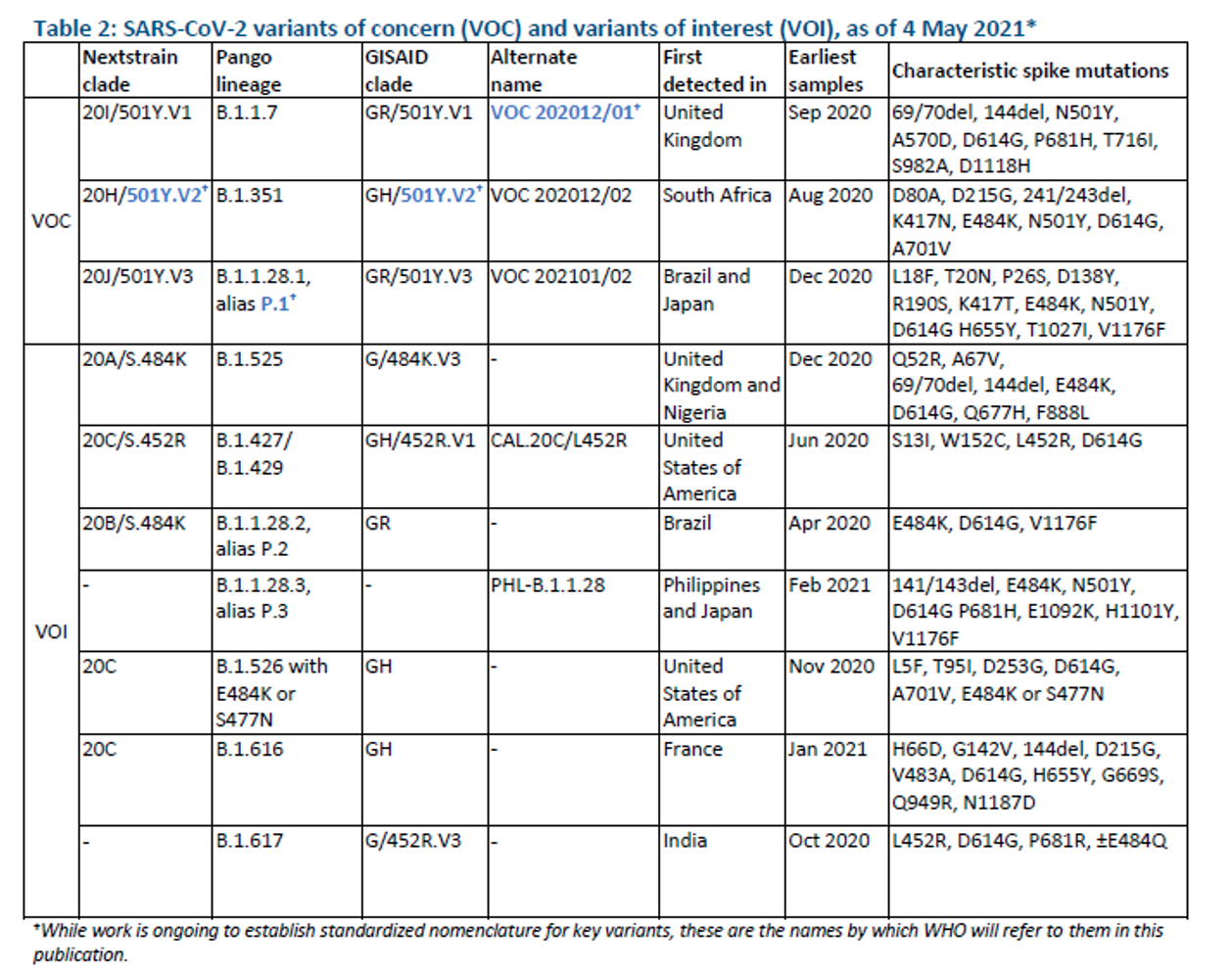
:: SARS-CoV-2 variants

WHO – COVID Vaccines EUAL, Prequalification, SAGE Meetings/Recommendations

Milestones :: Perspectives :: Research

WHO – COVID Vaccines EUAL, Prequalification, SAGE Meetings/Recommendations

WHO lists additional COVID-19 vaccine for emergency use and issues interim policy recommendations
7 May 2021 News release
WHO today listed the Sinopharm COVID-19 vaccine for emergency use, giving the green light for this vaccine to be rolled out globally. The Sinopharm vaccine is produced by Beijing Bio-Institute of Biological Products Co Ltd, subsidiary of China National Biotec Group (CNBG). 

“The addition of this vaccine has the potential to rapidly accelerate COVID-19 vaccine access for countries seeking to protect health workers and populations at risk,” said Dr Mariângela Simão, WHO Assistant-Director General for Access to Health Products. “We urge the manufacturer to participate in the COVAX Facility and contribute to the goal of more equitable vaccine distribution.”

WHO’s Emergency Use Listing (EUL) is a prerequisite for COVAX Facility vaccine supply. It also allows countries to expedite their own regulatory approval to import and administer COVID-19 vaccines. 

The EUL assesses the quality, safety and efficacy of COVID-19 vaccines, as well as risk management plans and programmatic suitability, such as cold chain requirements. The assessment is performed by the product evaluation group, composed by regulatory experts from around the world and a Technical Advisory Group (TAG), in charge of performing the risk-benefit assessment for an independent recommendation on whether a vaccine can be  listed for emergency use and, if so, under which conditions.

In the case of the Sinopharm vaccine, the WHO assessment included on-site inspections of the production facility. 

The Sinopharm product is an inactivated vaccine called SARS-CoV-2 Vaccine (Vero Cell). Its easy storage requirements make it highly suitable for low-resource settings. It is the also first vaccine that will carry a vaccine vial monitor, a small sticker on the vaccine vials that change color as the vaccine is exposed to heat, letting health workers know whether the vaccine can be safely used.

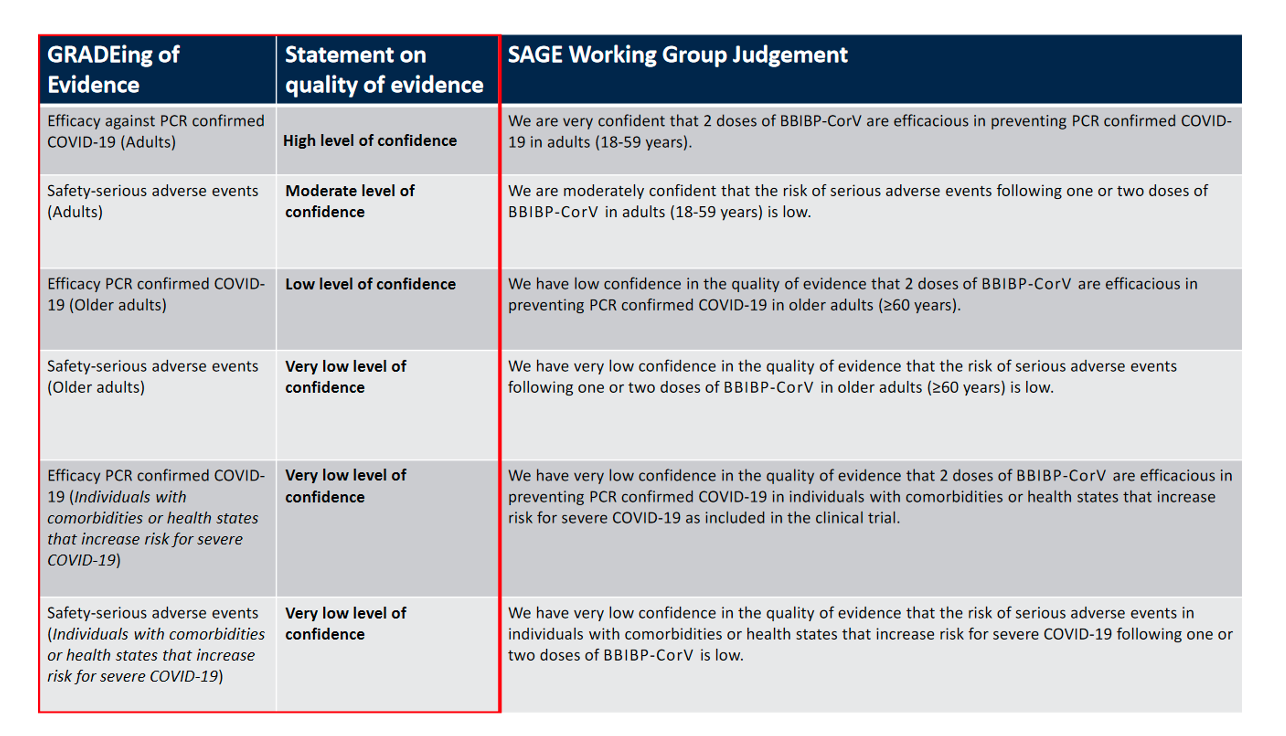
WHO’s Strategic Advisory Group of Experts on Immunization (SAGE) has also completed its review of the vaccine. On the basis of all available evidence, WHO recommends the vaccine for adults 18 years and older, in a two-dose schedule with a spacing of three to four weeks. Vaccine efficacy for symptomatic and hospitalized disease was estimated to be 79%, all age groups combined.
Few older adults (over 60 years) were enrolled in clinical trials, so efficacy could not be estimated in this age group.  Nevertheless, WHO is not recommending an upper age limit for the vaccine because preliminary data and supportive immunogenicity data suggest the vaccine is likely to have a protective effect in older persons.  There is no theoretical reason to believe that the vaccine has a different safety profile in older and younger populations.  WHO therefore recommends that countries using the vaccine in older age groups conduct safety and effectiveness monitoring to make the recommendation more robust…

Extraordinary meeting of the Strategic Advisory Group of Experts on Immunization (SAGE) – 29 April 2021
Presentations
:: COVID-19 Vaccine (Vero Cell), Inactivated-Sinovac Biotech LTD
:: Evidence Assessment: Sinovac/CoronaVac COVID-19 vaccine

:: COVID-19 Vaccine (Vero Cell), Inactivated-China National Biotec Group Company Limited
:: Evidence Assessment: Sinopharm/BBIBP COVID-19 vaccine
[Title and Summary Slide below]

::::::

Draft landscape and tracker of COVID-19 candidate vaccines
7 May 2021 | Publication
The COVID-19 candidate vaccine landscape and tracker database compiles detailed information on COVID-19 vaccine candidates in development.
The landscape is updated regularly – twice a week (Tuesday and Friday, 17:00 CET).
Download: https://cdn.who.int/media/docs/default-source/blue-print/07.05.2021-novel-coronavirus_landscape_covid-19.xlsx.zip?sfvrsn=23955096_3&download=true

::::::

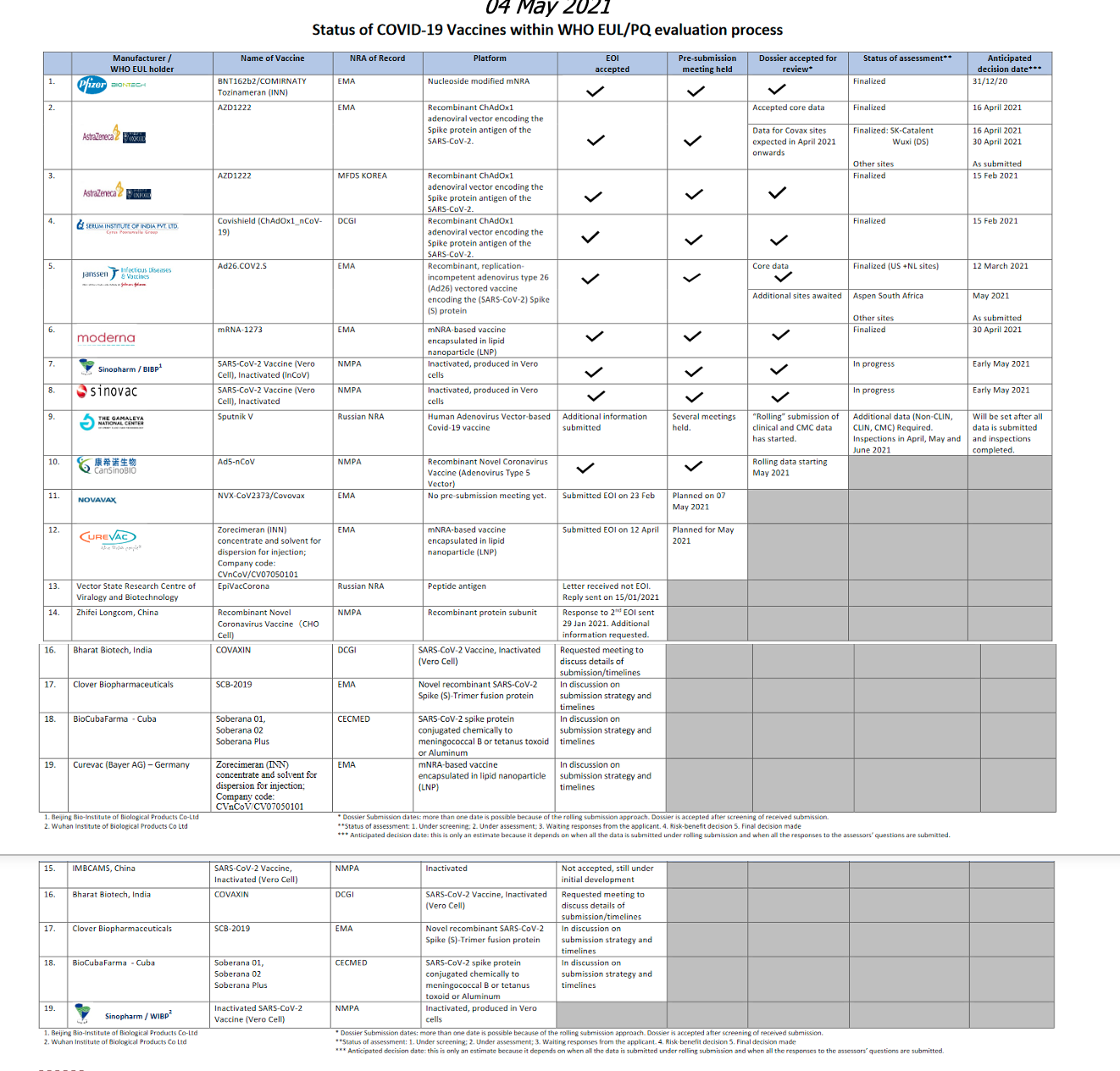
Status of COVID-19 Vaccines within WHO EUL/PQ evaluation process 23 April 2021
For 19 vaccine candidates, presents Manufacturer, Name of Vaccine, NRA of Record, Platform, EOI Accepted Status, Pre-submission Meeting Held Status, Dossier Accepted for Review, Status of Assessment; Anticipated/Completed Decision Date
[click on the link above for full scale view]
04 May 2021

COVID Vaccine Developer/Manufacturer Announcements [organizations from WHO EUL/PQ listing above]

Milestones :: Perspectives :: Research


COVID Vaccine Developer/Manufacturer Announcements [organizations from WHO EUL/PQ listing above]


AstraZeneca
Press Releases – No new digest announcements identified

Bharat Biotech, India
Press Releases – No new digest announcements identified

BioCubaFarma – Cuba
Últimas Noticias – No new digest announcements identified


CanSinoBIO
News – No new digest announcements identified

Clover Biopharmaceuticals – China
News – No new digest announcements identified


Curevac [Bayer Ag – Germany]
News – No new digest announcements identified


Gamaleya National Center
Latest News and Events – No new digest announcements identified [See Russia/RFID below]

IMBCAMS, China
Home – No new digest announcements identified


Janssen/JNJ
Press Releases
May 07, 2021
Access Arrangements for Janssen COVID-19 Vaccine
Johnson & Johnson is committed to enabling equitable global access to the Janssen COVID-19 vaccine on a not-for-profit basis for emergency pandemic use, pending local regulatory authorizations and direct procurement agreements with governments. In December 2020, the Company entered into an agreement in principle in support of COVAX, the global procurement mechanism for COVID-19 vaccines. We expect to enter into an Advance Purchase Agreement (APA) that would provide up to 500 million doses of the Janssen vaccine to COVAX through 2022.
At this time, the Company is only negotiating with government bodies and supranational organizations (e.g., European Commission, African Union, Gavi/COVAX) at a central level for vaccine procurement or purchase. We are not working with or through third parties for vaccine access during the current emergency pandemic period. National governments may reach out to us directly with any procurement questions by contacting: janssen_covid_vaccine_supply@its.jnj.com.
Johnson & Johnson recognizes the role of the private sector in addressing the pandemic and, at a future date, we will inform stakeholders when other options for vaccine procurement become available.


Moderna
Press Releases
May 6, 2021
Moderna Announces New Supply Agreement with Switzerland for 7 Million Booster Vaccine Doses in 2022 and Option for Additional 7 Million Doses

May 5, 2021
Moderna Announces Positive Initial Booster Data Against SARS-CoV-2 Variants of Concern

May 4, 2021
Moderna Announces Expansion of its Manufacturing Technology Center in Massachusetts

May 3, 2021
Moderna Announces Supply Agreement with Gavi for up to 500 Million Doses of COVID-19 Vaccine Moderna for COVAX To Help End COVID-19 Pandemic in Lowest Income Countries
:: 34 million doses to begin delivery in the fourth quarter of 2021
:: Option granted to COVAX Facility for up to 466 million additional doses in 2022
:: Doses provided at lowest tiered price, in keeping with Moderna’s global access principles commitment


Novavax
Press Releases
Novavax Statement in Opposition to the WTO TRIPS Waiver
5/7/2021 Statement

Novavax Statement on Ministry of Health, Labour and Welfare’s Announcement Regarding Procurement from Takeda of NVX-CoV2373 for Japan
5/7/2021 Statement
…Takeda is in the process of establishing vaccine procurement based on technology transfer by Novavax of NVXCoV2373, a recombinant protein vaccine candidate, and will be responsible for manufacturing and commercialization in Japan. Takeda will have the capability to manufacture 250 million doses yearly of the vaccine at its manufacturing site in Japan…

Novavax and Gavi Execute Advance Purchase Agreement for COVID-19 Vaccine for COVAX Facility
5/6/2021
:: Novavax to deliver 350 million doses beginning Q3 2021
:: 1.1 billion doses of Novavax vaccine to be available to countries participating in COVAX
:: Serum Institute of India to provide balance of doses for LMICs
:: Underscores commitment to global equitable access to Novavax vaccine

New England Journal of Medicine Publishes Phase 2b Clinical Trial Results Demonstrating Efficacy of Novavax COVID-19 Vaccine Against the B.1.351 Variant
5/63/2021

Novavax Initiates Pediatric Expansion for Phase 3 Clinical Trial of COVID-19 Vaccine
5/5/2021


Pfizer
Recent Press Releases
05.07.2021
Pfizer and BioNTech Initiate Rolling Submission of Biologics License Application for U.S. FDA Approval of Their COVID 19 Vaccine
Pfizer Inc. (NYSE: PFE) and BioNTech SE (Nasdaq: BNTX) today announced the initiation of a Biologics License Application (BLA) with the U.S. Food and Drug Administration (FDA) for approval of their mRNA vaccine to prevent COVID-19 in individuals 16 years of age and older. Data to support the BLA will be submitted by the companies to the FDA on a rolling basis over the coming weeks, with a request for Priority Review. The Prescription Drug User Fee Act (PDUFA) goal date for a decision by the FDA will be set once the BLA is complete and formally accepted for review by the agency…

05.06.2021
Pfizer and BioNTech to Provide COVID-19 Vaccine Doses for Olympic Athletes at the 2020 Tokyo Games
Pfizer Inc. (NYSE: PFE) and BioNTech SE (Nasdaq: BNTX) today announced the signing of a Memorandum of Understanding (MoU) with the International Olympic Committee (IOC) to donate doses of the companies’ COVID-19 Vaccine to help vaccinate athletes, and their delegations, participating in the Olympic and Paralympic Games Tokyo 2020, which are scheduled to begin on July 23, 2021…


Serum Institute of India
NEWS & ANNOUNCEMENTS – No new digest announcements identified
[See Financial Times coverage in Media Watch below]


Sinopharm/WIBPBIBP
News – No new digest announcements identified


Sinovac
Press Releases – No new digest announcements identified
EMA starts rolling review of COVID-19 Vaccine (Vero Cell) Inactivated
News 04/05/2021


Vector State Research Centre of Viralogy and Biotechnology
Home – No new digest announcements identified

Zhifei Longcom, China
[Anhui Zhifei Longcom Biologic Pharmacy Co., Ltd.]
[No website identified]