medRxiv https://www.medrxiv.org/content/about-medrxiv medRxiv is a free online archive and distribution server for complete but unpublished manuscripts (preprints) in the medical, clinical, and related health sciences. Preprints are preliminary reports of work that have not been certified by peer review. They should not be relied on to guide clinical practice or health-related behavior and should not be reported in news media as established information. medRxiv is for the distribution of preprints – complete but unpublished manuscripts – that describe human health research conducted, analyzed, and interpreted according to scientific principles…
[Monitoring/selection from medRxiv will resume in our next edition]
Wellcome Open Research provides all Wellcome researchers with a place to rapidly publish any results they think are worth sharing. All articles benefit from rapid publication, transparent peer review and editorial guidance on making all source data openly available.
Review metrics AWAITING PEER REVIEW ‘Working relationships’ across difference – a realist review of community engagement with malaria research[version 1; peer review: awaiting peer review]
Robin Vincent, Bipin Adhikari, Claire Duddy, Emma Richardson, Geoff Wong, James Lavery, Sassy Molyneux, The REAL team: Mary Chambers, Phaik Yeong Cheah, Al Davies, Kate Gooding, Dorcas Kamuya, Vicki Marsh, Noni Mumba, Deborah Nyirenda, and Paulina Tindana.
Peer Reviewers Invited
Funders
Wellcome
Human Engagement Learning Platform (Bill and Melinda Gates Foundation)
Emory University
PUBLISHED 13 Jan 2022
Kaiser Family Foundation https://www.kff.org/search/?post_type=press-release Accessed 15 Jan 2022
[No new digest content identified] Rand [to 15 Jan 2022] https://www.rand.org/pubs.html Reports, Selected Journal Articles Research Brief Early Insights from the Equity-First Vaccination Initiative
The Equity-First Vaccination Initiative aims to reduce racial/ethnic disparities in COVID-19 vaccination rates in the United States. Five demonstration sites are using hyper-local, community-led strategies to increase vaccine confidence and access.
Dec 20, 2021
Laura J. Faherty, Jeanne S. Ringel, Malcolm V. Williams, Ashley M. Kranz, Lilian Perez, Lucy Schulson, Allyson D. Gittens, Brian Phillips, Lawrence Baker, Priya Gandhi, Khadesia Howell, Rebecca Wolfe, Tiwaladeoluwa
Vaccines and Global Health: The Week in Review is a weekly digest summarizing news, events, announcements, peer-reviewed articles and research in the global vaccine ethics and policy space. Content is aggregated from key governmental, NGO, international organization and industry sources, key peer-reviewed journals, and other media channels. This summary proceeds from the broad base of themes and issues monitored by the Center for Vaccine Ethics & Policy in its work: it is not intended to be exhaustive in its coverage. You are viewing the blog version of our weekly digest, typically comprised of between 30 and 40 posts below all dated with the current issue date
.– Request anEmail Summary:Vaccines and Global Health : The Week in Review is published as a single email summary, scheduled for release each Saturday evening before midnight (EDT in the U.S.). If you would like to receive the email version, please send your request to david.r.curry@centerforvaccineethicsandpolicy.org.
– pdf version: A pdf of the current issue is available here:
– blog edition: comprised of the approx. 35+ entries posted below.
– Twitter:Readers can also follow developments on twitter: @vaxethicspolicy. . – Links: We endeavor to test each link as we incorporate it into any post, but recognize that some links may become “stale” as publications and websites reorganize content over time. We apologize in advance for any links that may not be operative. We believe the contextual information in a given post should allow retrieval, but please contact us as above for assistance if necessary.
Support this knowledge-sharing service:Your financial support helps us cover our costs and to address a current shortfall in our annual operating budget. Click here to donate and thank you in advance for your contribution.
. David R. Curry, MS Executive Director Center for Vaccine Ethics and Policy
I hope global leaders who have shown such resolve in protecting their own populations will extend that resolve to make sure that the whole world is safe and protected. And this pandemic will not end until we do that!
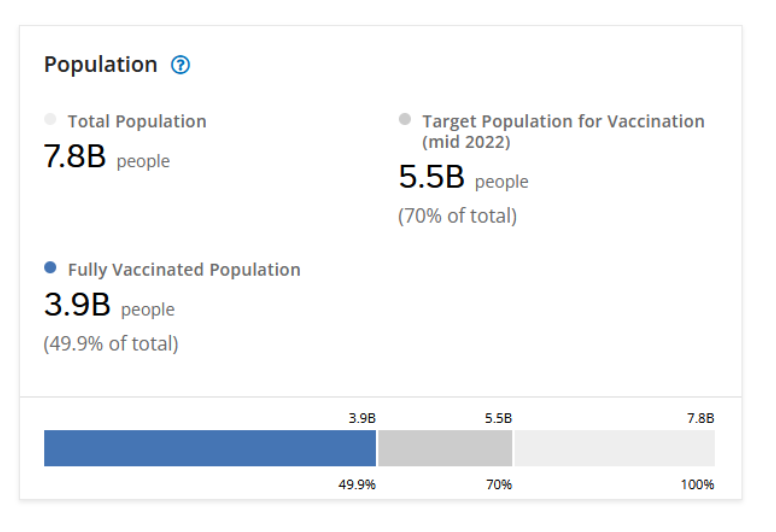
Last week, I asked everyone to make a New Year’s resolution to get behind the campaign to vaccinate 70% of people in every country by the middle of 2022. And on top of that, to ensure that breakthrough treatments, as well as reliable tests, are available in all countries. To end the acute stage of the pandemic, the highly effective tools science has given us need to be shared fairly and quickly with all countries of the world.
Vaccine inequity and health inequity overall were the biggest failures of last year. While some countries have had enough personal protective equipment, tests and vaccines to stockpile throughout this pandemic, many countries do not have enough to meet basic baseline needs or modest targets, which no rich country would have been satisfied with.
Vaccine inequity is a killer of people and jobs and it undermines a global economic recovery. Alpha, Beta, Delta, Gamma and Omicron reflect that in part because of low vaccination rates, we’ve created the perfect conditions for the emergence of virus variants. Last week, the highest number of COVID-19 cases were reported so far in the pandemic.
And we know, for certain, that this is an underestimate of cases because reported numbers do not reflect the backlog of testing around the holidays, the number of positive self-tests not registered, and burdened surveillance systems that miss cases around the word. While Omicron does appear to be less severe compared to Delta, especially in those vaccinated, it does not mean it should be categorized as ‘mild’. Just like previous variants; Omicron is hospitalizing people and it is killing people. In fact, the tsunami of cases is so huge and quick, that it is overwhelming health systems around the world.
Hospitals are becoming overcrowded and understaffed, which further results in preventable deaths from not only COVID-19 but other diseases and injuries where patients cannot receive timely care.
First-generation vaccines may not stop all infections and transmission but they remain highly effective in reducing hospitalization and death from this virus.
So as well as vaccination, public health social measures, including the wearing of well fitting masks, distancing, avoiding crowds and improving and investing in ventilation are important for limiting transmission. At the current pace of vaccine rollout, 109 countries would miss out on fully vaccinating 70% of their populations by the start of July 2022.
The essence of the disparity is that some countries are moving toward vaccinating citizens a fourth time, while others haven’t even had enough regular supply to vaccinate their health workers and those at most risk. Booster after booster in a small number of countries will not end a pandemic while billions remain completely unprotected. But we can and must turn it around. In the short-term we can end the acute stage of this pandemic while preparing now for future ones.
First, we must effectively share the vaccines that are being produced.
Throughout most of 2021 this was not the case but toward the end, supply increased. Now it’s crucial that manufacturers and dose-donating countries share delivery timings ahead of time so that countries have adequate preparation to roll them out effectively.
Second, let’s take a ‘never again’ approach to pandemic preparedness and vaccine manufacturing so that as soon as the next generation of COVID-19 vaccines become available, they are produced equitably and countries don’t have to beg for scarce resources. A few countries have provided a blueprint for how high quality vaccines and other health tools can be mass produced quickly and distributed effectively. And now we need to build on it. WHO will continue to invest in vaccine manufacturing hubs and work with any and all manufacturers who are willing to share know-how, technology and licenses. I’m encouraged by some of the vaccines currently going through trial where innovators have already committed to waiving patents and sharing licenses, technology and know how.
It reminds me of how Jonas Salk did not patent his polio vaccine and in doing so saved millions of children from the disease.
Lets also invest and build the public health and health systems we need with strong surveillance, adequate testing, a strengthened, supported and protected health workforce, and an empowered, engaged and enabled global population.
And finally, I call on citizens of the world, including civil society, scientists, business leaders, economists and teachers to demand that governments and pharmaceutical companies to share health tools globally and bring an end to the death and destruction of this pandemic.
We need vaccine equity, treatment equity, test equity and health equity and we need your voices to drive that change.
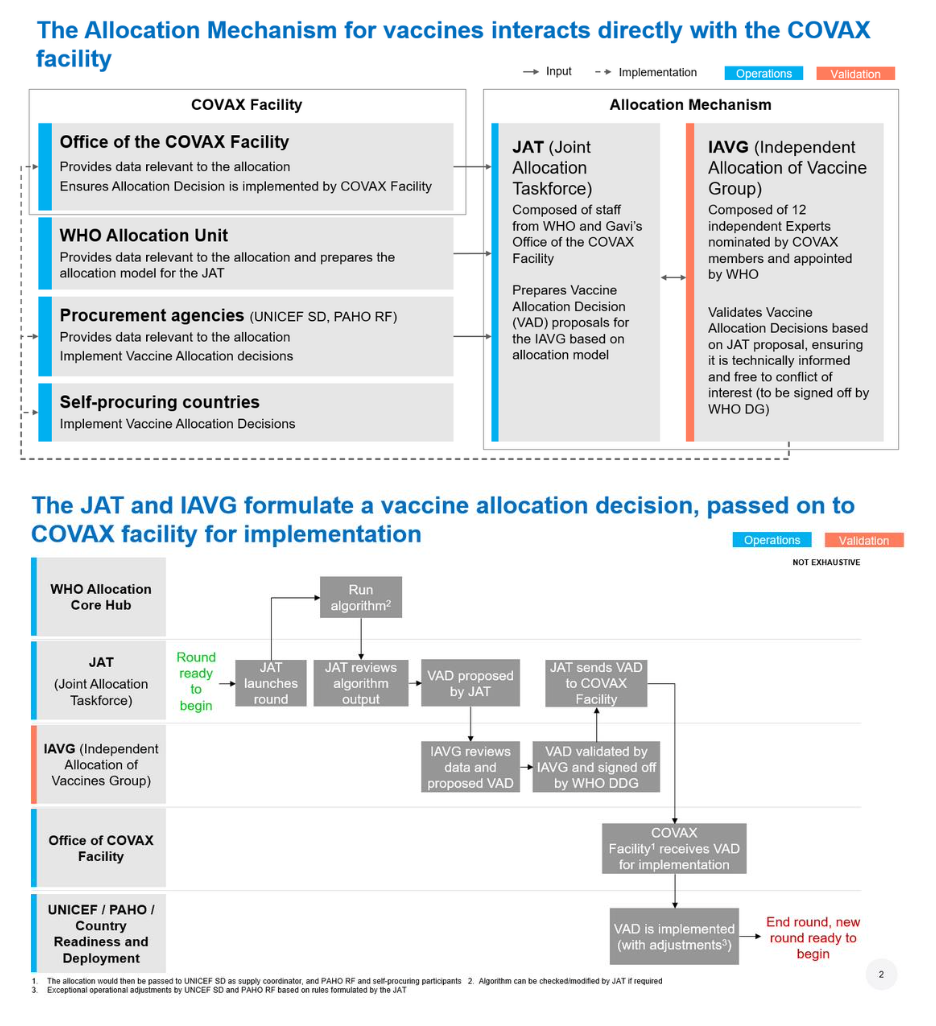
Achieving 70% COVID-19 Immunization Coverage by Mid-2022 Statement of the Independent Allocation of Vaccines Group (IAVG) of COVAX 23 December 2021 The Independent Allocation of Vaccines Group (IAVG) has issued a set of recommendations to make the allocation of COVID-19 vaccines more equitable and more effective. The group was established a year ago, to validate and assess vaccine allocations recommended by WHO’s and Gavi’s Joint Allocation Taskforce (JAT) of COVAX. [1] Since then, much has changed.
COVAX was envisioned to be the world’s primary distributor of COVID-19 vaccines, with IAVG serving as an independent referee for needs-based allocations. But rich nations largely sidestepped COVAX, hoarding doses for their own populations and cutting deals directly with low- and middle-income countries. This has made subsequent allocation decisions even more challenging.
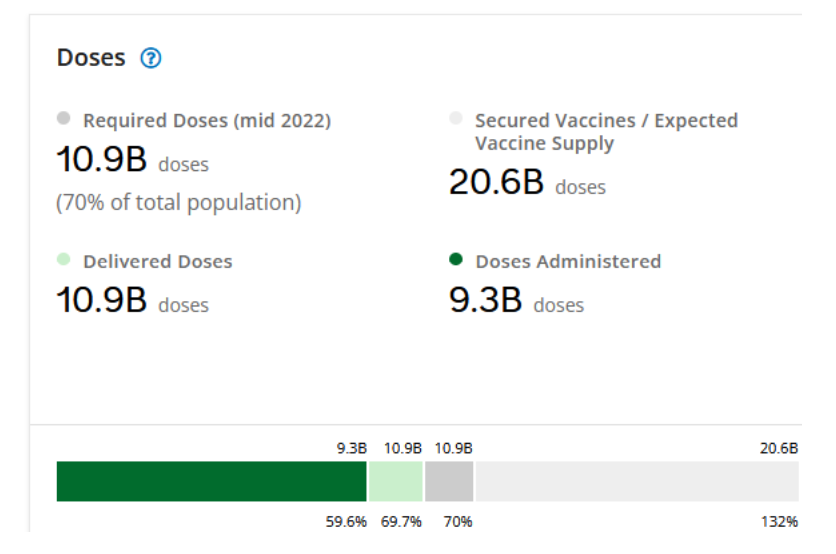
The IAVG is concerned that the primary priority use of available vaccines is not consistent with the goals outlined in the Strategy to Achieve Global COVID-19 Vaccination by Mid-2022 in October 2021. [2] The group also notes that it has validated the allocation of only 730 million of the estimated 8 billion doses of vaccine that have been administered globally, which is less than 10%. The rapid emergence of the Omicron variant is a stark reminder of the ongoing threat posed by the evolution of the COVID-19 pandemic and reinforces the critical need to achieve high levels of immunization coverage in all countries, including in highly vulnerable populations, in a timely manner.
The IAVG is therefore calling for: :: Achievement of 70% coverage with COVID-19 vaccines in all countries as a global imperative. As the overall vaccine supply to COVAX is anticipated to continue to grow substantially next year, COVAX will have a greater opportunity to contribute to achieving this goal. Manufacturers, vaccine-producing and high-coverage countries must prioritize vaccine equity and transparency, including the sharing of information about manufacturing capacity and supply schedules with COVAX, as well as vaccine access plans.
:: All countries to work with COVAX with considerable urgency to optimize the strategic use of the growing vaccine supply. This means that high-coverage countries will need to establish complementary, “dual-track” approaches that consider both domestic and international goals. Greater attention must be paid to who is being immunized. Equity must remain the overarching principle, and priority must be given in all countries to ensuring that the primary series is offered first and foremost to all adults and adolescents, in the step-wise manner recommended by the WHO, given that a high proportion of these populations still require primary immunization. However, as more is known about the required vaccination response in the face of Omicron, the need for booster doses and need to immunize children, the COVAX vaccine allocation decisions must consider these recommendations. Given the global health and epidemiologic consequences of failing to immunize vulnerable populations, including those in humanitarian settings, the IAVG recommends that COVAX continue to work with all manufacturers and countries to immediately increase the availability and uptake of vaccines in these populations.
:: All countries to have a steady, predictable supply of COVID-19 vaccines, which meet the unique needs of each country. Attention must be paid to addressing prohibitive absorptive challenges in countries that request support. This may include support for vaccine storage, distribution, administration and/or record-keeping, which may in part be due to competing health and immunization crises [3]. It will be important to have close collaboration between all COVAX partners, donors, and participants. In order to increase demand for COVID-19 vaccines, ongoing, concerted global, national and local leadership is required to address vaccine misinformation.
Background The initial COVAX targets were to achieve 3% coverage, and then 20% vaccine coverage through COVAX-secured doses by the end of 2021. [4] These targets were then expanded globally, when WHO released the Strategy to Achieve Global COVID-19 Vaccination by Mid-2022 in October 2021. [5] The new global target is 40% total population coverage by the end of 2021, and 70% total population coverage by mid-2022. However, these figures were from all country sources of supply, not solely from COVAX. COVAX would nonetheless contribute as much as possible to efforts to reach this coverage level in a fair and equitable manner.
None of these targets have been met. Ninety-eight countries have not vaccinated 40% of their population. An estimated 1.4 billion eligible people [6] need to be urgently immunized, many of whom are in the highest risk groups for death and serious illness. These gaps have been most pronounced in low-and lower-middle income countries (LICs and LMICs), with 34 out of 89 Advanced Market Commitment (AMC) participants,[7] representing the countries that are most dependent on COVAX to access COVID-19 vaccines, not achieving the 40% target. The main reason for this has been the severe vaccine supply constraints to COVAX, which persisted until the last quarter of 2021. In the forthcoming months, larger volumes of vaccine are expected to become available, but in most cases the increase in volumes will create challenges in absorption capacity in resource-poor settings. This includes the capacity to receive, store, distribute, administer (due, for example, the lack of trained health personnel or vaccination centers), and to record vaccine use, including wastage.
Another hurdle in achieving the target of 70% total population coverage in all countries by mid-2022 will be demand limits arising from widespread misinformation and its resulting vaccine hesitancy.
Challenges The COVAX portion of the global supply – The original goal of COVAX was to achieve fair and equitable vaccine access across all 162 current Facility participants, and the initial role of the IAVG was to validate vaccine allocation decision (VAD) proposals that included all participants. Many high-income countries (HICs) entered into direct contractual arrangements with vaccine suppliers, bypassing the COVAX mechanism, and pharmaceutical companies did not prioritize and deliver according to their contractual obligations with COVAX, seriously reducing its supply and making it highly unpredictable.
Moreover, high-coverage countries began donating directly to their low-coverage and low-income counterparts, bypassing COVAX. Indemnity and liability-related conditions are added barriers to the vaccine access for the most vulnerable populations. The IAVG has validated the allocation of only 730 million of the estimated 8 billion doses of vaccine that have been administered globally, which is less than 10%.
Additionally, many of the donated doses channeled through COVAX have been earmarked for specific countries, compounding the challenge of achieving the goal of fair and equitable access among lower income countries.
With respect to vaccine allocation, the IAVG recommended and acknowledges that, where feasible, the limited COVAX supply has recently been dedicated to those countries with low estimated total population coverage which are likely relying solely on COVAX for access to COVID-19 vaccines.
Unpredictable supply to COVAX – 1) Procured doses – While those involved in vaccine allocation through COVAX have done their best to direct and redirect available doses, supply unpredictability has strained the system, frustrated participating countries and undermined the allocation decisions of the IAVG. Not all expected doses from COVAX advanced purchase agreements (APAs) have been honoured by vaccine producers according to contractual obligations. 2) Donated volumes – Similarly, promised donations by high-income countries have often been late to materialize or unpredictable. Unexpected additional vaccine allocation rounds have been undertaken after sudden announcements of vaccine availability through donations to COVAX. Worsening the challenge, these sudden donations have often included vaccines with brief expiry windows. These last-minute scrambles, a part massively increasing transaction costs, added considerable stress to already severely resource-strapped countries coping with many competing health and humanitarian crises, straining participants’ ability to plan for the receipt and use of their allocated vaccines. Beyond logistics, the last-minute deliveries undermined countries’ efforts to inform the general public about the vaccines and the communication needed to counteract the misinformation spread by social media.
This way of doing business is not acceptable and needs to end.
Across country and in-country inequity – The Global COVID-19 Vaccination Strategy [8] clearly outlines the step-by-step process needed to achieve the immediate goal of minimizing deaths, severe disease and overall disease burden, and reducing the risk of new variants. Older adults and high-risk populations, all adults, and adolescents have been prioritized in a step-wise manner, while the broader scope of vaccine-use recommendations is still under consideration. For instance, 15 times [9] as many booster doses are currently being administered globally as are primary doses in LICs. In October, the WHO and many other concerned partners [10] noted that data from 119 countries suggest that by September 2021, two in five health and care workers (HCW) were vaccinated on average. But the differences across regions and economic groups remained stark. For instance, less than one in ten have been fully vaccinated in the African region while four in five have been vaccinated in 22 mostly high income countries.
The IAVG is concerned that the primary priority use of available vaccines is not consistent with the goals outlined the Strategy.
More supply but more unknowns – Although the world is expected to have enough COVID-19 vaccine doses by mid-2022 to vaccinate 70% of the world’s population with three doses, [11] uncertainties abound. These include the possible need for variant-specific vaccines, changes to vaccination policies, country preference for some products over others, the programmatic complexity of managing multiple products, and the need for better intelligence on country-level planning and execution.
The uncertainty of the required vaccination response to the Omicron variant will necessitate ongoing attention to achieving fairness and equity while requiring flexibility in vaccine allocation and supply management.
Highly vulnerable populations – Our collective health security depends on the health security of all populations wherever they are, and whatever status they may have in individual countries. Among them, people residing in humanitarian settings (refugees, internally displaced persons) are at considerably increased risk of infection with COVID-19 [12] and should be covered by country vaccine allocations.
Joint Statement of the Multilateral Leaders Taskforce on Scaling Covid-19 Tools, December 17, 2021: “From Vaccines to Vaccinations”
Washington, December 22, 2021 — The heads of the International Monetary Fund, World Bank Group, World Health Organization, and World Trade Organization held high-level consultations with Gavi and UNICEF on December 17, 2021 aimed at increasing the use of COVID-19 vaccines and other critical medical countermeasures in low-income (LIC) and lower middle-income (LMIC) countries and supporting countries to be better prepared, resourced, and ready to roll out vaccines.
We agreed on the urgency to accelerate vaccinations in LICs, where under 5% of the population is fully vaccinated, as well as in LMICs, where around 30% of the population is fully vaccinated. We agreed to work with countries to support and strengthen their national vaccination goals consistent with the global target to vaccinate 70% of the populations in all countries by mid-2022. The emergence of the Omicron variant underscores the vital need for fair and broad access to vaccines as well as testing, sequencing, and treatments to end the pandemic.
Addressing vaccine inequity, particularly in LICs, requires increasing the supplies of vaccines to COVAX and AVAT, encouraging LICs and LMICs to purchase additional vaccine doses, and enhancing country readiness to deploy vaccines. Furthermore, to facilitate trade flows to support the manufacturing and distribution of vaccines and other COVID tools, export restrictions must be rolled back and trade-facilitating measures must be put in place. Fully funding the ACT-A Accelerator’s Financing Framework would play an important role in narrowing these gaps and reaching the global target.
Some LICs and LMICs are facing serious challenges in vaccine deployment. Constraints related to storage, cold chain capacity, and trained vaccinators are exacerbated in some cases by doses arriving with short shelf lives and without adequate lead time and shortages in ancillary supplies (such as syringes, safety boxes, and dilutants), with challenges to plan and finance vaccination campaigns in a timely manner. As in wealthier countries, vaccine hesitancy is also an issue in some LICs and LMICs.
To address such challenges, we call on governments that have already achieved high coverage to: fulfill their donation pledges as quickly as possible to accelerate near-term deliveries to COVAX; release manufacturers from contracts and options and implement delivery swaps, so they can prioritize supply to COVAX, AVAT, and low-coverage countries.
We urge governments that have yet to achieve high vaccination coverage to: contract additional doses immediately through AVAT, COVAX, or bilaterally; establish in-country surge capacity to increase the rate of vaccine utilization as supplies increase; and coordinate between health and finance authorities for making increased use of multilateral development banks’ resources that are readily available for both vaccine purchase and deployment.
We call for better coordination among vaccine manufacturers, dose donating countries, COVAX, AVAT, and other partners to improve visibility on vaccine supply schedules and quality of supply for LICs and LMICs, to support country-level planning and preparedness for turning vaccines into vaccinations. Visibility on schedules along with adequate lead times and shelf lives of vaccines are critical for both equitable distribution as well as for recipient countries and their partners to prepare for in-country deployment.
Growing volumes of COVID-19 vaccines are forecast to arrive in LICs and LMICs in the coming months. Close coordination amongst all stakeholders will be crucial to help provide countries with the assistance and necessary resources to increase their capacity to administer those doses. In this regard, we welcome the recent appointment by UNICEF and WHO, in partnership with Gavi, of the Global Lead Coordinator for COVID Vaccine Country Readiness and Delivery, who will play an important key role in strengthening in-country vaccine deployment.
::::::
UNICEF and WHO, in partnership with Gavi, ask Ted Chaiban to serve as Global Lead Coordinator for COVID Vaccine Country Readiness and Delivery Statement by UNICEF Executive Director Henrietta Fore
NEW YORK, 6 December 2021 – “I am pleased to announce that UNICEF and WHO, in partnership with Gavi, have asked Ted Chaiban, currently UNICEF Regional Director Middle East and North Africa, to serve as Global Lead Coordinator for COVID Vaccine Country Readiness and Delivery. “This decision is an expression of our joint commitment to reinvigorate efforts to turn vaccines into vaccinations in low- and middle-income countries…
Reflections on 2021 from CEPI CEO Dr Richard Hatchett
21 Dec 2021
By Dr. Richard Hatchett [Excerpts]
…Whatever its ultimate impact, I believe the emergence of Omicron will come to be seen as a watershed event in the unfolding of the pandemic. Policymakers and elected officials should pay close attention to what Omicron is telling us. It encapsulates both how far we have come, even since 2020, and how far we have yet to go. And it portends our future with COVID….
…But we must also use the momentum the pandemic has created to institutionalize and improve our new response capabilities and to drive the creation of new norms of collective action and accountability. The response to Omicron, in its positive aspects, exemplifies the ways in which we must be ready to respond to any future threat and the speed and seriousness with which we must act to counter it even as we perform our assessments and gather information. Omicron’s emergence also provided dramatic backlighting for, and helped propel, the Special Session of the World Health Assembly that convened the week of November 29 to begin deliberations on an international framework or convention on pandemic prevention, preparedness, and response. Developing such a framework or convention will require sustained diplomacy and likely take years but I am confident the effort will succeed and that the agreements achieved at the Special Session will come to be regarded as foundational.
CEPI will contribute to this momentum in the coming months as we begin to implement our CEPI 2.0 agenda. We have already announced seed funding for three programs under our Broadly Protective SARS-CoV-2 Vaccine initiative and will soon announce our first awards to support the development of Broadly Protective Betacoronavirus Vaccines. With Wellcome Leap, we are co-funding 17 different performers under an RNA Readiness and Response (R3) initiative that aims to increase exponentially the number of biologic products that can be designed, developed, and produced every year, reducing their costs and increasing equitable access; and to create a self-sustaining network of manufacturing facilities providing globally distributed, state-of-the-art surge capacity to meet future pandemic needs. In January, we will put out a call to begin the development of our vaccine libraries and issue a report laying out our thinking about how to achieve the 100-Day Mission – all in the lead-up to our March 2022 Global Pandemic Preparedness Summit, hosted by the government of the United Kingdom. The Summit will provide an opportunity for world leaders to demonstrate their support for epidemic and pandemic preparedness, the role research and development can play in enabling such preparedness, the institutional capabilities and norms we need to establish to achieve the 100-Day Mission, the value of collective action against common threats, and the overriding imperative to secure access for all to vaccines and other countermeasures….
…Jeremy Farrar, the Director of Wellcome, has said we may still be closer to the beginning of the pandemic than to its end. Our work through COVAX will and must continue. And I am sure that 2022 will present many unforetold challenges, just as 2021 did. But even as we rise to meet whatever 2022 throws at us, we must envision and work toward the future that we desire for the long term.
And how do we accomplish that? A friend, a journalist, had the opportunity recently to travel to Oslo to attend the ceremony honoring his longtime friend and colleague Maria Ressa, who, with Dmitry Muratov, received the 2021 Nobel Peace Prize for her “efforts to safeguard freedom of expression, which is a precondition for democracy and lasting peace.” After my friend returned, he called her Nobel Address to my attention as an “important document for our times” (it is; I commend it to you all). Two statements in her Address have stuck with me:
…We are standing on the rubble of the world that was, and we must have the foresight and courage to imagine what might happen if we don’t act now, and instead, create the world as it should be – more compassionate, more equal, more sustainable…
…Without facts, you can’t have truth. Without truth, you can’t have trust. Without trust, we have no shared reality, no democracy, and it becomes impossible to deal with our world’s existential problems: climate, coronavirus, the battle for truth.
The first statement calls us to recognize our predicament and to have the courage to imagine and begin working towards a better future. The second reminds us of the conditions required for communities to flourish and to work together to tackle their greatest problems. Courage, foresight, imagination, facts, trust, and a shared reality: lacking these, it will be all but impossible to deal with the challenges ahead. But with them, we can do anything – we can move mountains.
Drugmakers need to prioritise global access to Covid-19 vaccines and tie management pay to equitable distribution, a group of top international investors has said.
Asset managers Nomura, BMO and GAM are among 65 institutional investors that have written to leading pharmaceutical companies urging them “to make the global availability of vaccines part of the remuneration policy of managers and directors”. The signatories represent more than $3.5tn in assets under management.
“It is clear that currently a large part of the world population still does not have sufficient and equitable access to vaccines,” the investors said in the letter, published on Thursday.
“A pandemic which remains out of control in many parts of the world is and should be at the top of our agenda as global investors, and also for governments and the companies in which we invest.” The letter was sent to the boards of Pfizer, Moderna, AstraZeneca and Johnson & Johnson…
… Drugmakers should prioritise fulfilling contracts for vaccine access schemes Covax and African Vaccine Acquisition Trust “as a matter of urgency”, the investors wrote, and provide transparency and clear monthly supply schedules to these distribution alliances as well as to low- and middle-income countries.
They added that companies should negotiate areas such as delivery swaps with countries that already have high coverage, and commit to greater expertise and technology transfer including licensing rights.
“Pharmaceutical companies have a duty to do their utmost on this but unfortunately we see that they are lagging behind. In addition, the business case is clear: new variants threaten the recovery of economies around the world,” said Rogier Krens, chief investment officer of Achmea Investment Management, the Netherlands-based fund manager that co-ordinated the letter.
Achmea said it would vote against any executive pay packages that did not integrate these objectives. Voting policy among the other signatories may vary. Alex Rowe, portfolio manager at Japan-based Nomura Asset Management, said “prioritising access to vaccines over near-term profits is not only the right thing to do from an ethical standpoint, but the most sustainable long-term approach for these businesses”.
He said this would help lower the risk of new variants developing and of any potential backlash against drugmakers “with regards to their role in limiting the impact on human life”.
The emergence of the highly infectious Omicron coronavirus variant in southern Africa in November highlighted the consequences of failures to vaccinate vast swaths of the world’s population. Global markets tumbled and many countries were forced to bring in new lockdown measures in an effort to halt the spread.
Most of the 65 investors that signed the letter hold small stakes in three of the biggest vaccine manufacturers: Moderna, BioNTech and Pfizer. The largest by some distance is a 0.3 per cent stake in Pfizer held by Canada’s BMO Global Asset Management, worth $1.04bn, while Achmea’s largest pharma holding is a 0.01 per cent stake in J&J valued at $41.1m, according to S&P Capital IQ.
Financial Times
3 January 2022 Opinion There is a good chance the global impact of coronavirus will ease
The editorial board
Omicron, by far the most contagious coronavirus variant to date, is so rampant around the world that it is easy to feel despondent about the prospects of the pandemic easing — let alone coming to an end — in 2022. But there are good reasons to think that Covid-19’s toll on global health and its wider social and economic impact could wane this year, if governments and health authorities follow appropriate policies and if this volatile virus develops in the way that many scientists believe is most likely.
A debate is growing between those who think new pathogens such as Sars-Cov-2 tend to cause milder disease as time passes and those who say they are just as likely to evolve in a more virulent direction. Without taking sides, it is reasonable to conclude that the interaction between virus and the human immune system means that the more people acquire some protection against severe Covid-19 symptoms through vaccination or infection, the better the outlook. No conceivable descendant of Sars-Cov-2 could have enough mutations in the right places to escape fully the attentions of both antibodies and T-cells generated by prior exposure to an earlier variant.
The top priority is, therefore, to vaccinate the whole world — as it should have been for the past year. Unfortunately, Covid-19 vaccine inequity has never been greater, with just 10 per cent of the population in low-income countries having received at least one jab, according to the World Health Organization, while wealthy nations are rolling out third or even fourth shots. As the WHO says, with global vaccine production close to 1.5bn doses a month, there will be enough for these booster programmes to continue, while directing far more supplies to poorer countries than in 2021, through schemes such as Covax.
Although industrialised nations are justified in protecting their populations with boosters for adults and campaigns to extend vaccination to children, we cannot expect to keep jabbing people every four to six months for very long in the face of new variants. We will have to rely on the immunity provided by annual inoculations — preferably with a new generation of products that are effective against all coronavirus variants — and by repeated exposure to what will sooner or later become an endemic infection.
Governments and regulators must encourage the development of new vaccine technologies to supplement the near duopoly that Moderna and BioNTech/Pfizer enjoy in the developed world with their mRNA products. At the same time, more investment should be directed towards antiviral drugs that could play a bigger role in suppressing symptoms in those who are infected. Recommended Covid-19 vaccines Covid-19 vaccine tracker: the global race to vaccinate
Another vital area that must be reinforced is diagnosis and surveillance. Requirements here range from ensuring enough quick lateral flow tests are available for people to check whether they are infected before meeting others to building up more genomic sequencing capacity worldwide to monitor the emergence of new variants.
Whatever slim chance we might have had at the beginning of 2020 to eliminate Covid-19 has long gone. Efforts to control the pandemic have been justified so far in the context of a global health emergency but they cannot continue indefinitely. The collateral damage — to mental health and wellbeing, social cohesion and the global economy — would be too great. This year the world will have to build up resilience so that we can live with Sars-Cov-2 and its descendants, in a way that causes less disruption while still protecting those who are most vulnerable.
Editor’s Note:
We recognize that the collection of JAMA Viewpoints below are largely focused on U.S. pandemic response policy, programs and imperatives.
JAMA
Online January 6, 2022 Viewpoint A National Strategy for the “New Normal” of Life With COVID
Ezekiel J. Emanuel, MD, PhD; Michael Osterholm, PhD, MPH; Celine R. Gounder, MD, ScM
free access
JAMA. Published online January 6, 2022. doi:10.1001/jama.2021.24282
This Viewpoint discusses how US policy makers should address how the nation can move forward as the pandemic persists. …Conclusions
After previous infectious disease threats, the US quickly forgot and failed to institute necessary reforms. That pattern must change with the COVID-19 pandemic. Without a strategic plan for the “new normal” with endemic COVID-19, more people in the US will unnecessarily experience morbidity and mortality, health inequities will widen, and trillions will be lost from the US economy. This time, the nation must learn and prepare effectively for the future.
The resources necessary to build and sustain an effective public health infrastructure will be substantial. Policy makers should weigh not only the costs but also the benefits, including fewer deaths and lost productivity from COVID-19 and all viral respiratory illnesses. Indeed, after more than 800 000 deaths from COVID-19, and a projected loss of $8 trillion in gross domestic product through 2030,8 these interventions will be immensely valuable.
Viewpoint A National Strategy for COVID-19Testing, Surveillance, and Mitigation Strategies
David Michaels, PhD, MPH; Ezekiel J. Emanuel, MD, PhD; Rick A. Bright, PhD
free access
JAMA. Published online January 6, 2022. doi:10.1001/jama.2021.24168
This Viewpoint discusses the areas on which the US needs to improve its public health infrastructure in order to reduce COVID-19 transmission and achieve a “new normal”: testing, surveillance, masking, and ventilation. … Conclusions
To reduce COVID-19 transmission, achieve and sustain a “new normal,” and preempt future emergencies, the nation needs to build and sustain a greatly improved public health infrastructure, including a comprehensive, permanently funded system for testing, surveillance, and mitigation measures that does not currently exist.
Viewpoint A National Strategy for COVID-19 Medical Countermeasures: Vaccines and Therapeutics
Luciana L. Borio, MD; Rick A. Bright, PhD; Ezekiel J. Emanuel, MD, PhD free access
JAMA. Published online January 6, 2022. doi:10.1001/jama.2021.24165
This Viewpoint proposes a multistep plan that US can implement to achieve a “new normal” of living, in which the combined risk of all viral respiratory illnesses, including COVID-19, does not exceed the risk during prepandemic years. …Conclusions
There has been tremendous progress in rapidly creating novel COVID-19 vaccines and therapeutics. Nevertheless, these efforts have been insufficient to achieve a “new normal,” in which the combined risk of all viral respiratory illnesses, including COVID-19, does not exceed the risk during pre–COVID-19 years. The US needs investment in variant-specific vaccines, alternative vaccine administration mechanisms, and research into the optimal vaccination strategies. Having effective vaccines are of real value in reducing the spread of COVID-19 and serious illness, but their benefits will be limited without near universal coverage. This coverage can be augmented through additional vaccination requirements. Finally, research needs to be expedited to develop and use effective COVID-19 oral therapeutics. The short window for administration requires a much closer linkage between COVID-19 testing and treatment.
Viewpoint The First 2 Years of COVID-19 – Lessons to Improve Preparedness for the Next Pandemic
Jennifer B. Nuzzo, DrPH, SM; Lawrence O. Gostin, JD
free access
JAMA. Published online January 6, 2022. doi:10.1001/jama.2021.24394
This Viewpoint examines the lessons that the COVID-19 pandemic can provide public health institutions and health care personnel to advance preparedness, detection, and response regarding future pandemics.
Viewpoint The Pandemic Preparedness Program – Reimagining Public Health
Eli Y. Adashi, MD, MS; I. Glenn Cohen, JD
free access
JAMA. Published online January 6, 2022. doi:10.1001/jama.2021.23656
This Viewpoint reviews the leading objectives of the pandemic preparedness proposal, discusses the outcome of comparable past federal efforts, and emphasizes the imperative of intragovernmental coordination.
Weekly Epidemiological and Operational updates Last update: 08 Jan 2022 Confirmed cases :: 298 915 721 Confirmed deaths :: 5 469 Vaccine doses administered: 9 118 223 397
::::::
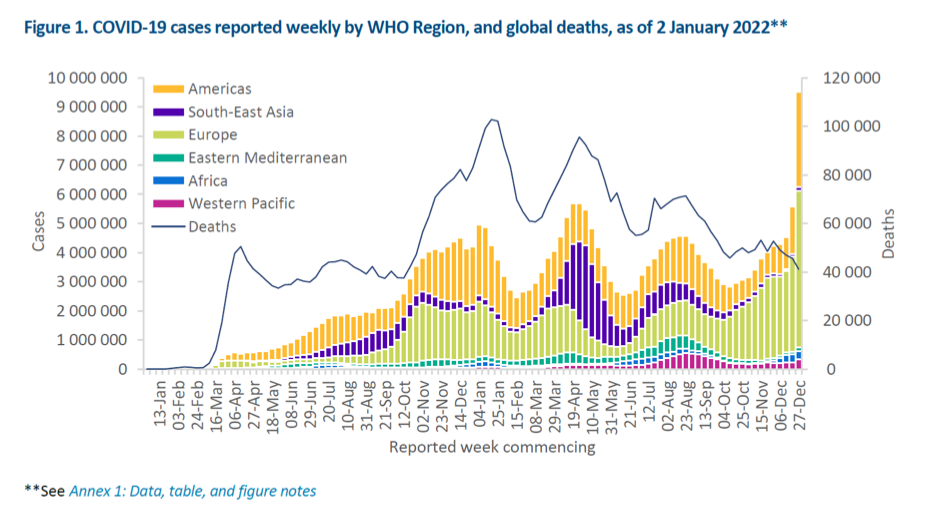
Weekly epidemiological update on COVID-19 – 06 January 2022 Overview During the week 27 December 2021 to 2 January 2022, following a gradual increase since October, the global number of new cases increased sharply by 71% as compared to the previous week, while the number of new deaths decreased by 10%. This corresponds to just under 9.5 million new cases and over 41 000 new deaths reported during the last week. As of 2 January, a total of nearly 289 million cases and just over 5.4 million deaths have been reported globally. All regions reported an increase in the incidence of weekly cases, with the Region of the Americas reporting the largest increase (100%), followed by the South-East Asia Region (78%) and the European Region (65%). The African Region reported a weekly increase in the number of new deaths (22%), while all the other regions reported a decrease as compared to the previous week.
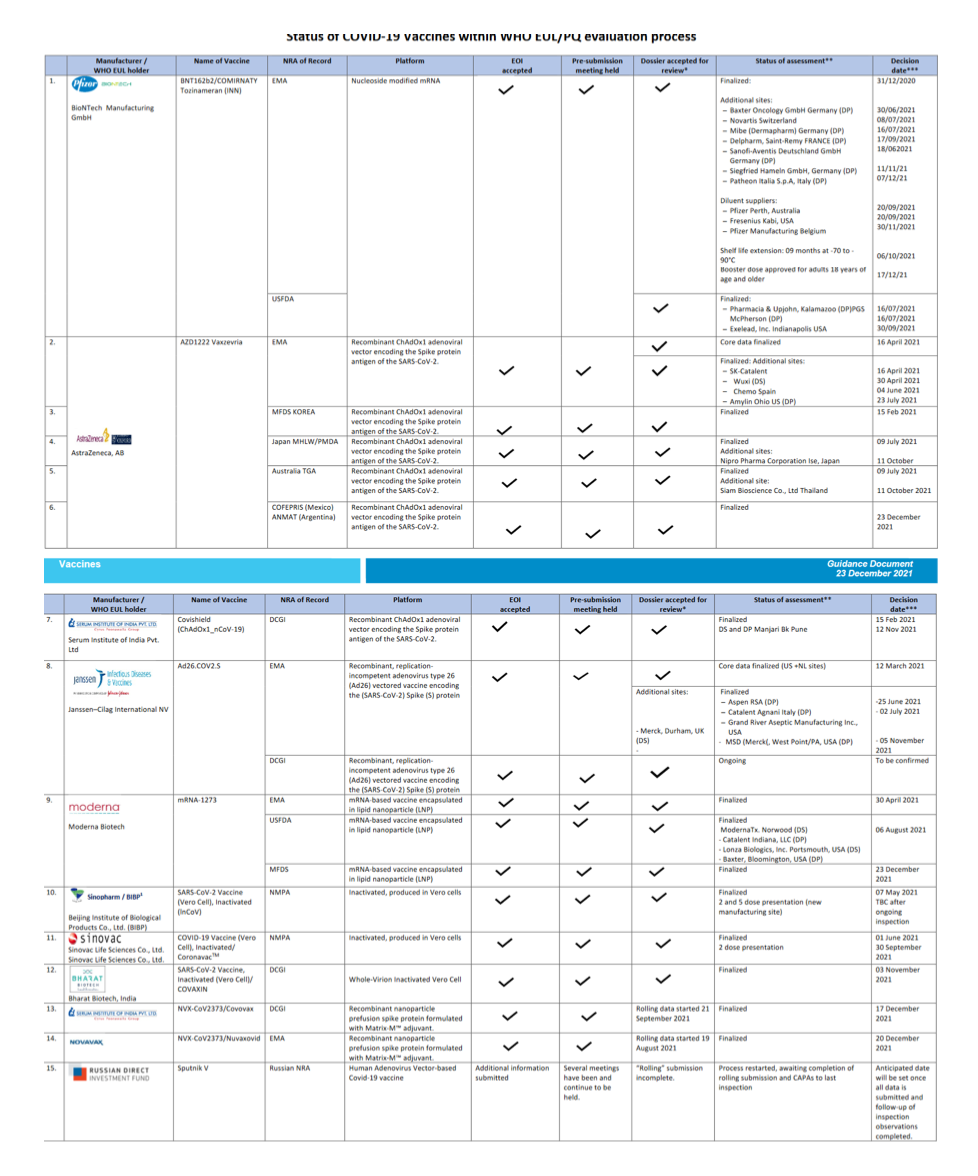
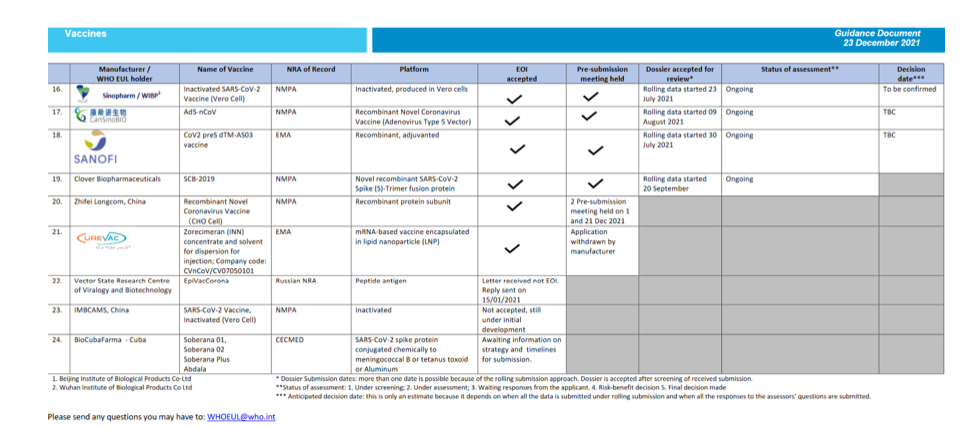
COVID Vaccine Developer/Manufacturer Announcements [relevant press releases/announcement from organizations from WHO EUL/PQ listing above]
AstraZeneca Press Releases Vaxzevria significantly boosted antibody levels against Omicron 23 December 2021
:: University of Oxford study supports use of Vaxzevria as third dose booster against Omicron
:: Neutralising antibody levels against Omicron following a third dose boost of Vaxzevria were broadly similar to levels achieved after two doses against the Delta variant
Evusheld long-acting antibody combination retains neutralising activity against Omicron variant in studies from Oxford and Washington Universities 23 December 2021
:: University of Oxford study supports use of Vaxzevria as third dose booster against Omicron
:: Neutralising antibody levels against Omicron following a third dose boost of Vaxzevria were broadly similar to levels achieved after two doses against the Delta variant
December 23, 2021 Merck and Ridgeback’s Molnupiravir Receives U.S. FDA Emergency Use Authorization for the Treatment of High-Risk Adults With Mild to Moderate COVID-19
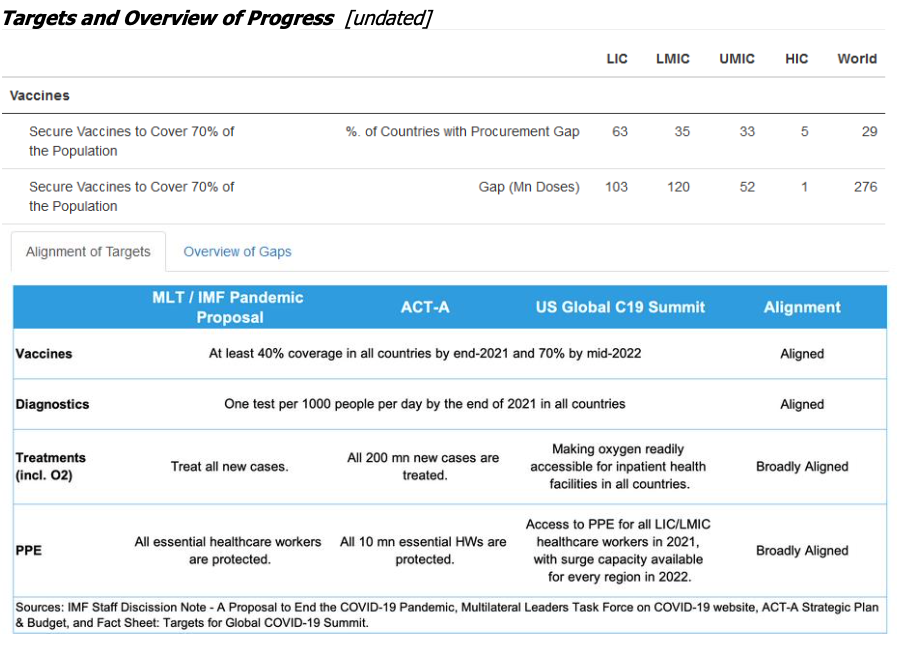
COVID-19 Global Targets and Progress Tracker – IMF The COVID-19 Global Targets and Progress Tracker presents a consolidated view of the progress towards global COVID-19 targets, barriers in access to COVID-19 tools, and delivery of donor pledges. The global targets presented in the Tracker are based on an alignment of the targets identified in the IMF Pandemic Proposal, ACT-A Strategic Plan & Budget, and the US-hosted Global C19 Summit, and as such have been reaffirmed by multilateral institutions and global leaders. We will continue to enhance the tracker as we improve our data collection efforts.
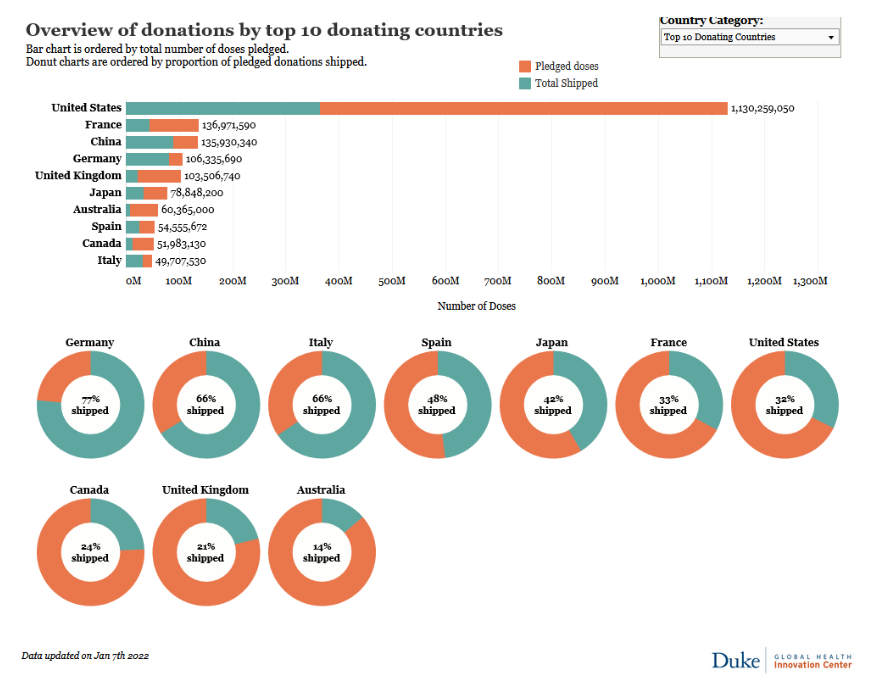
Duke – Launch and Scale Speedometer The Race for Global COVID-19 Vaccine Equity A flurry of nearly 200 COVID-19 vaccine candidates are moving forward through the development and clinical trials processes at unprecedented speed; more than ten candidates are already in Phase 3 large-scale trials and several have received emergency or limited authorization. Our team has aggregated and analyzed publicly available data to track the flow of procurement and manufacturing and better understand global equity challenges. We developed a data framework of relevant variables and conducted desk research of publicly available information to identify COVID vaccine candidates and status, deals and ongoing negotiations for procurement and manufacturing, COVID burden by country, and allocation and distribution plans. We have also conducted interviews with public officials in key countries to better understand the context and challenges facing vaccine allocation and distribution [accessed 24 July 2021] See our COVID Vaccine Purchases research See our COVID Vaccine Manufacturing research See our COVID Vaccine Donations & Exports research
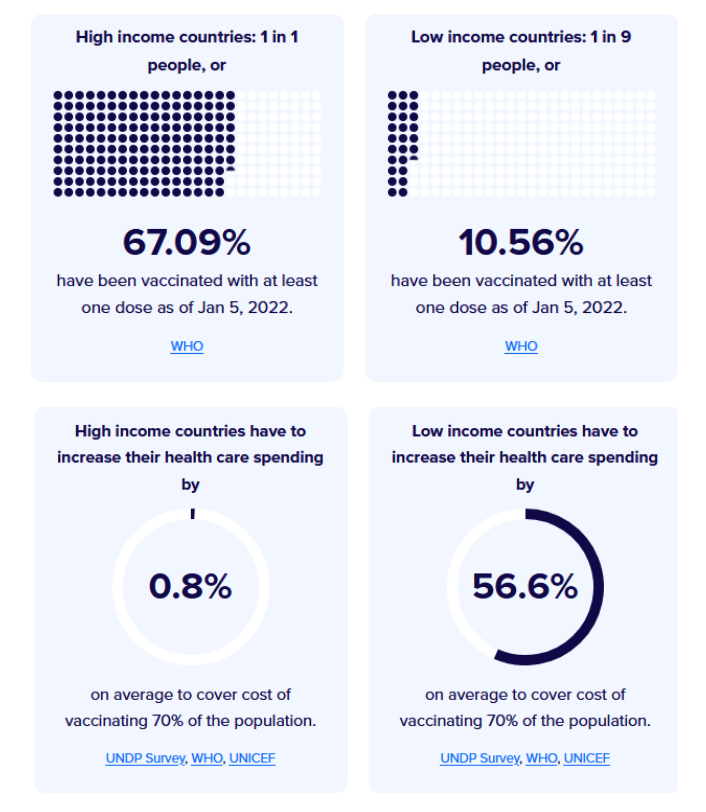
Global Dashboard on COVID-19 Vaccine Equity The Dashboard is a joint initiative of UNDP, WHO and the University of Oxford with cooperation across the UN system, anchored in the SDG 3 Global Action Plan for Healthy Lives and Well-being for All.
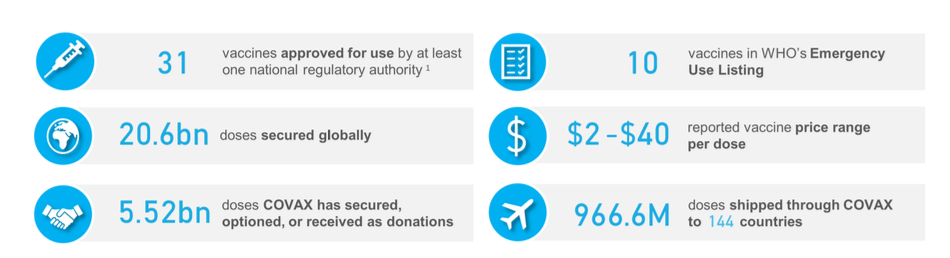
COVID-19 Data Explorer: Global Humanitarian Operations COVID-19 Vaccine Roll-out 08 Jan 2022 | COVAX (WHO,GAVI,CEPI), UNDESA, Press Reports | DATA Global COVID-19 Figures: 299M total confirmed cases; 5.5M total confirmed deaths Global vaccines administered: 9.40B
Number of Countries: 30 [30 week ago]
COVAX Allocations Round 4-9 (Number of Doses): 220M
COVAX Delivered (Number of Doses): 260M
Other Delivered (Number of Doses): 330M
Total Delivered (Number of Doses): 590M
Total Administered (Number of Doses): 450M
Multilateral Leaders Task Force on COVID-19 [IMF, World Bank Group, WHO, WTO] https://data.covid19taskforce.com/data A global effort to help developing countries access and deliver COVID-19 vaccines, testing, and therapeutics, as they work to end the pandemic and boost economic recovery. The International Monetary Fund, World Bank Group, World Health Organization and World Trade Organization have joined forces to accelerate access to COVID-19 vaccines, therapeutics and diagnostics by leveraging multilateral finance and trade solutions, particularly in low- and middle-income countries. Website accessed 08 Jan 2022: https://data.covid19taskforce.com/data The global view below is complemented by country-specific dashboards here.
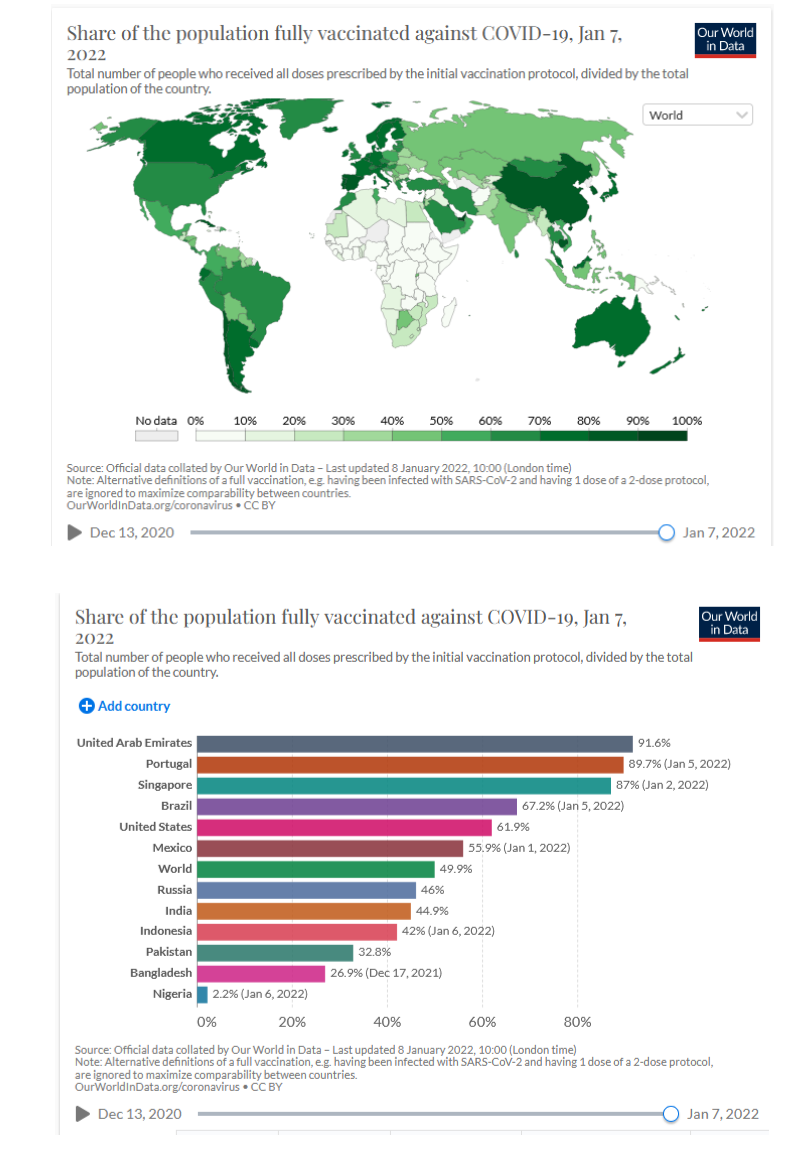
Our World in Data Coronavirus (COVID-19) Vaccinations[Accessed 08 Jan 2022] :: 59.1% of the world population has received at least one dose of a COVID-19 vaccine. :: 9.4 billion doses have been administered globally, and 29.8 million are now administered each day. :: Only 8.9% of people in low-income countries have received at least one dose.
Press Statement Supporting Multilateral Responses to the COVID-19 Crisis
Antony J. Blinken December 21, 2021
The United States is providing an additional $580 million from the American Rescue Plan Act to support seven partners who are working tirelessly in our global fight against COVID-19. This funding includes: $280 million for the World Health Organization (WHO), including $50 million for the Contingency Fund for Emergencies, to help contain the spread of COVID-19, particularly through surveillance and laboratory testing, and support the continuity of essential health services and systems, especially for individuals most at risk; $170 million to the United Nations Children’s Fund (UNICEF) to expand its efforts to deliver COVID-19 vaccines around the world including to high-risk and vulnerable populations, provide critical COVID-19 commodities, such as Personal Protective Equipment and oxygen equipment, and support education needs in response to the COVID-19 pandemic; $75 million to the Pan American Health Organization (PAHO) to provide technical cooperation to support implementation and monitoring of COVID-19 vaccinations in the Americas; $20 million to the United Nations Development Program (UNDP) to help address the socioeconomic impact of COVID-19, including through programs for providing employment services and livelihood support; $20 million for the United Nations Population Fund (UNFPA) to support its efforts to protect health workers and provide women with safe reproductive and maternal health care to mitigate higher rates of maternal and neonatal mortality and morbidity related to COVID-19; $10 million to the Food and Agriculture Organization (FAO) to support its efforts to improve health surveillance, early warning, and risk assessment tools for zoonotic diseases; and $5 million to UN Women to assist their efforts to support women and girls, in all their diversity, during the COVID-19 crisis, including a focus on programs to prevent and respond to gender-based violence.
European Medicines Agency News & Press Releases News: EMA recommends Nuvaxovid for authorisation in the EU (new) CHMP, Last updated: 20/12/2021 EMA has recommended granting a conditional marketing authorisation for Novavax’s COVID-19 vaccine Nuvaxovid (also known as NVX-CoV2373) to prevent COVID-19 in people from 18 years of age.
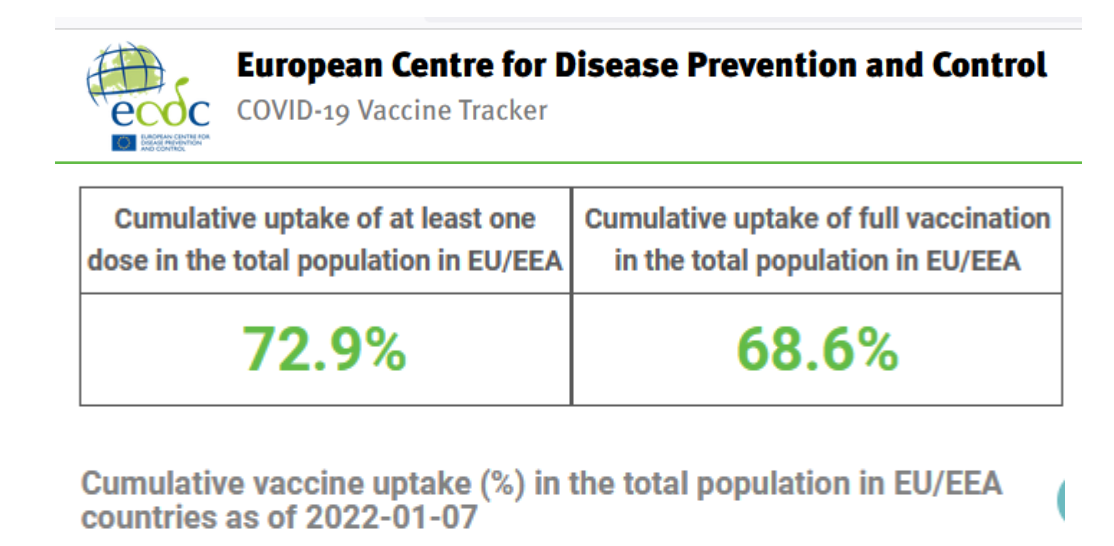
European Centre for Disease Prevention and Control https://www.ecdc.europa.eu/en Latest Updates News ECDC updates its guidance regarding quarantine and isolation considering the rapid spread of Omicron in the EU/EEA News story – 7 Jan 2022 Considering the rapid spread of the Omicron variant of concern (VOC), ECDC is proposing options regarding quarantine and isolation, and recommendations that can be adapted and implemented by EU/EEA Member States when resources are limited and when there is high pressure on healthcare systems and other functions in society (e.g. staff shortage and reduced resources). Due to limited scientific evidence on the epidemiological characteristics of Omicron, the proposed options are not evidence based and may imply an additional risk for transmission.
European Commission https://ec.europa.eu/commission/presscorner/home/en Statement 6 January 2022 Statement by President von der Leyen on vaccine sharing in 2021 and targets for 2022 The European Union is the biggest donor of safe and effective COVID-19 vaccines so far. As Team Europe we have exceeded our vaccine-sharing target in 2021. We promised to share 250 million doses with low and middle income countries by the end of 2021. And in fact we shared 380 million doses, mostly through COVAX. More than 255 million of these doses were already delivered to recipient countries. And we will do more. The Team Europe has promised to share 700 million doses by mid-2022. We are on track to fulfill this promise. In particular, we will step up our efforts to support Africa where vaccination rates are lower than in other parts of the world. Because we will only control this global pandemic if we fight it in every corner of the world.
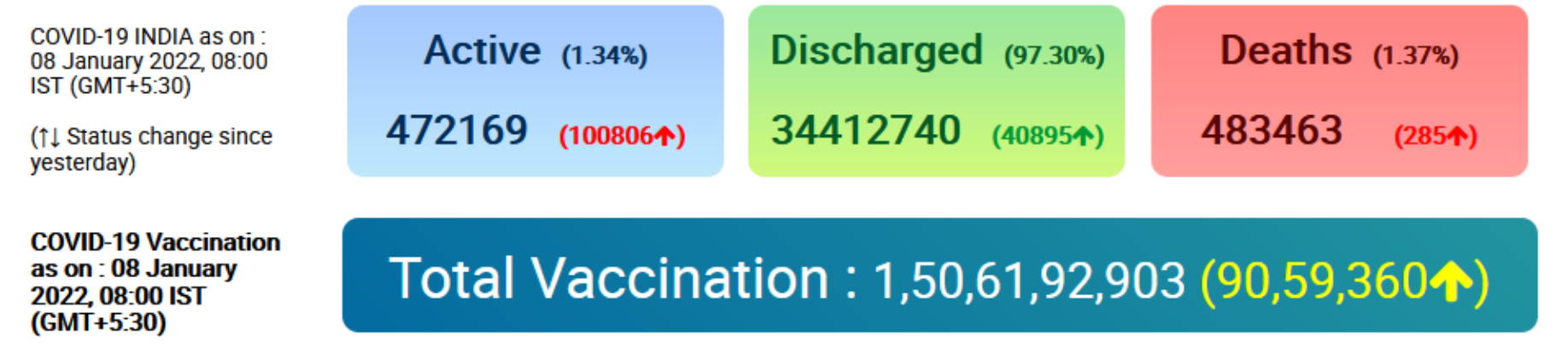
Government of India – Press Information Bureau Latest Press Releases COVID – 19 Vaccination Update – Day 358 :: More than 2 Cr Vaccine Doses administered among Adolescents between 15-18 age group :: Schedule for ‘precaution’ dose of Covid-19 released today :: India’s cumulative vaccination coverage achieves 151.47 crore :: More than 79 lakh Vaccine doses administered today till 7 pm Posted On: 08 JAN 2022 8:37PM by PIB Delhi
Polio this week as of 05 January 2022 Summary of new WPV and cVDPV viruses this week (AFP cases and ES positives): – Madagascar: One cVDPV1 positive environmental sample
Health emergencies list– WHO
“The health emergencies list details the disease outbreaks, disasters and humanitarian crises where WHO plays an essential role in supporting countries to respond to and recover from emergencies with public health consequences.” Afghanistan crisis[Last apparent update: 18 Oct 2021]
Northern Ethiopia Ethiopia – Northern Ethiopia Humanitarian Update Situation Report, 6 January 2022
Situation Report HIGHLIGHTS
In Amhara, 30 hospitals, 280 health centres and 890 health posts have resumed provision of basic health services.
Food Cluster partners voiced concern over the risk of spoilage and infestation of humanitarian food stocks in Semera, Afar Region, due to the harsh weather conditions and the urgent need to bring in fumigants (currently unavailable in the region) to treat stored stock.
As of 3 January, food partners have around only 10000L of fuel left in Tigray. At least 60000L of fuel are needed to dispatch around 4000 MT of food currently available in Mekelle. A measles campaign started on 1 January in Mekelle, targeting 1.7 million children under five years of age.
WHO & Regional Offices [to 08 Jan 2022] https://www.who.int/ Selected News, Statements 23 December 2021
Departmental news Achieving 70% COVID-19 Immunization Coverage by Mid-2022 [See Perspectives above for full text]
22 December 2021
Statement Interim statement on booster doses for COVID-19 vaccination
22 December 2021
News release From vaccines to vaccinations: seventh meeting of the Multilateral Leaders Task Force on COVID-19 Vaccines, Therapeutics and Diagnostics
21 December 2021
Departmental news US FDA approved cabotegravir extended-release – the first long-acting injectable option for HIV pre-exposure prophylaxis
21 December 2021
Departmental news WHO lists 10th COVID-19 vaccine for emergency use : Nuvaxovid
20 December 2021
Departmental news Latest child mortality estimates reveal world remains off track to meeting Sustainable Development Goals
20 December 2021
Departmental news Novavax Covid-19 vaccine recommendations for use
WHO Region of the Americas PAHO
:: 29 Dec 2021 COVID-19 cases increase 50% in the Americas in the last week
The region reports the biggest rise in cases worldwide with holiday period set to drive up numbers, PAHO warns, urging countries to continue vaccination campaigns and implementation of public health measures. Washington, DC, December 29, 2021 (PAHO)- Pan American Health Organization (PAHO) data show that COVID-19 cases increased 50% and deaths 11…
:: 23 Dec 2021 PAHO welcomes first WHO emergency use listing of COVID-19 vaccine produced in Latin America
Approval will increase vaccine availability as pandemic persists Washington, D.C., 23 December 2021 (PAHO) – The Pan American Health Organization (PAHO) welcomed the WHO listing today of an AstraZeneca vaccine jointly produced by Argentina and Mexico – the first such decision for a COVID-19 vaccine manufactured in Latin America. The vaccine,…
30 December 2021 Together on the road to evidence-informed decision-making for health in the post-pandemic era: a draft call for action
Overview
The EVIPNet Call for Action for sustainable evidence-policy-society-systems was launched at the WHO Global Evidence-to-Policy Summit in November 2021, and received wide encouragement and support from global partners, multisectoral stakeholders and EVIPNet members. Existing EVIPNet country teams and partner organizations will provide additional support taking the Call for Action forward.
National Health Commission of the People’s Republic of China [to 08 Jan 2022] http://en.nhc.gov.cn/ News Jan 8: Daily briefing on novel coronavirus cases in China
On Jan 7, 31 provincial-level regions and the Xinjiang Production and Construction Corps on the Chinese mainland reported 159 new cases of confirmed infections.
Organization Announcements Editor’s Note:
Careful readers will note that the number and range of organizations now monitored in our Announcements section below has grown as the impacts of the pandemic have spread across global economies, supply chains and programmatic activity of multilateral agencies and INGOs.
Airfinity https://www.airfinity.com/insights INSIGHTS & COMPANY NEWS No new digest content identified. Paul G. Allen Frontiers Group [to 08 Jan 2022] https://alleninstitute.org/news-press/ News New technique sorts out what different kinds of neurons do in the brain
January 7, 2022
Study pinpoints a mouse neuron’s role in sensing touch BARDA – U.S. Department of HHS [to 08 Jan 2022] https://www.phe.gov/about/barda/Pages/default.aspx News No new digest content identified. BMGF – Gates Foundation [to 08 Jan 2022] https://www.gatesfoundation.org/ideas/media-center Press Releases and Statements No new digest content identified. Bill & Melinda Gates Medical Research Institute [to 08 Jan 2022] https://www.gatesmri.org/ The Bill & Melinda Gates Medical Research Institute is a non-profit biotech organization. Our mission is to develop products to fight malaria, tuberculosis, and diarrheal diseases—three major causes of mortality, poverty, and inequality in developing countries. The world has unprecedented scientific tools at its disposal; now is the time to use them to save the lives of the world’s poorest people No new digest content identified. CARB-X [to 08 Jan 2022] https://carb-x.org/ News No new digest content identified. Center for Vaccine Ethics and Policy – GE2P2 Global Foundation [to 08 Jan 2022] https://centerforvaccineethicsandpolicy.net/ News/Analysis/Statements
:: Past weekly editions and posting of all segments of Vaccines and Global Health: The Week in Review are available here. :: Informed Consent: A Monthly Review – January 2022 is now posted here CEPI – Coalition for Epidemic Preparedness Innovations [to 08 Jan 2022] http://cepi.net/ Latest News Reflections on 2021 from CEPI CEO Dr Richard Hatchett
21 Dec 2021
By Dr. Richard Hatchett
CEPI CEO Dr Richard Hatchett offers his personal reflections on the events of the past year, and looks to the challenges ahead as the world responds to Omicron and prepares for the threat of future pandemics. [See Perspectives above for excerpts] DARPA – Defense Advanced Research Projects Agency [U.S.] [to 08 Jan 2022 https://www.darpa.mil/news News No new digest content identified. Duke Global Health Innovation Center[to 08 Jan 2022] https://dukeghic.org/ Our Blog No new digest content identified. EDCTP [to 08 Jan 2022] http://www.edctp.org/ The European & Developing Countries Clinical Trials Partnership (EDCTP) aims to accelerate the development of new or improved drugs, vaccines, microbicides and diagnostics against HIV/AIDS, tuberculosis and malaria as well as other poverty-related and neglected infectious diseases in sub-Saharan Africa, with a focus on phase II and III clinical trials News No new digest content identified. Emory Vaccine Center [to 08 Jan 2022] http://www.vaccines.emory.edu/ Vaccine Center News No new digest content identified. European Vaccine Initiative [to 08 Jan 2022] http://www.euvaccine.eu/ Latest News, Events No new digest content identified. Fondation Merieux [to 08 Jan 2022] http://www.fondation-merieux.org/ News, Events No new digest content identified. Gavi [to 08 Jan 2022] https://www.gavi.org/ News Releases COVAX awarded 2021 North-South Prize for enhancing global equitable access to COVID-19 vaccines
Geneva, 21 December 2021 – The COVAX Facility has been awarded the 2021 North-South Prize of the Council of Europe in recognition of its efforts to ensure that COVID-19 vaccines are available worldwide, including in low-income countries, and for striving for a more equitable world to protect people’s lives.
…The North-South Prize of the Council of Europe is awarded each year to two nominees, one from the North and one from the South, for their exceptional commitment to promoting North-South solidarity…
International Coalition of Medicines Regulatory Authorities [ICMRA] http://www.icmra.info/drupal/en/news Selected Statements, Press Releases, Research No new digest content identified. ICRC [to 08 Jan 2022] https://www.icrc.org/en/whats-new Selected News Releases, Statements, Reports Egypt: ICRC donates protective equipment to health ministry to support fight against COVID-19
The ICRC donation, worth 1 million Egyptian pounds, includes FFP2/N95 masks, protective coveralls, examination gloves, surgical gloves, body bags, and non-touch thermometers.The PPE will be sent to the health facilities in the governorates of Ismailia and North Sinai. This comes as part of the continued cooperation between the ICRC and the health ministry to support the
20-12-2021 | News release
NIH celebrates FDA approval of long-acting injectable drug for HIV prevention
December 21, 2021 — Approval marks pivotal expansion of HIV prevention options in the United States. OECD [to 08 Jan 2022] http://www.oecd.org/newsroom/publicationsdocuments/bydate/ Newsroom No new digest content identified. PATH [to 08 Jan 2022] https://www.path.org/media-center/ Press Releases No new digest content identified. Sabin Vaccine Institute [to 08 Jan 2022] http://www.sabin.org/updates/pressreleases Statements and Press Releases No new digest content identified. UNAIDS[to 08 Jan 2022] http://www.unaids.org/en Selected Press Releases/Reports/Statements
6 January 2022 New indicators added to Key Populations Atlas
The UNAIDS Key Populations Atlas is an online tool that provides a range of information about members of key populations—sex workers, gay men and other men who have sex with men, people who inject drugs, transgender people and prisoners—worldwide, together with information about people living with HIV.
Information about gay men and other men who have sex with men has been expanded with the inclusion of 11 new indicators from the EMIS and LAMIS projects. Under funding from the European Commission, EMIS-2017 collected data from gay men and other men who have sex with men in 50 countries between October 2017 and January 2018. LAMIS is the Latin American version of EMIS and finished data collection across 18 additional countries in May 2018.
The 11 new indicators shown in the Key Population Atlas—on syphilis, symptomatic syphilis, gonorrhoea, symptomatic gonorrhoea, chlamydia, symptomatic chlamydia, sexually transmitted infections testing, syphilis partner notification, gonorrhoea partner notification and hepatitis A and B vaccination—were chosen because of their high relevance to the communities…
UNICEF [to 08 Jan 2022] https://www.unicef.org/media/press-releases Press Releases, News Notes, Statements[Selected] Press release 12/31/2021 Grave violations of children’s rights in conflict on the rise around the world, warns UNICEF Less than half of parties to conflict globally have committed to protect children Unitaid [to 08 Jan 2022] https://unitaid.org/ Featured News No new digest content identified. USAID [to 08 Jan 2022] https://www.usaid.gov/news-information/press-releases/2021 Selected Press Releases, Statements, Announcements Administrator Samantha Power’s Meeting with Director of the Africa Centres for Disease Control and Prevention Dr. John Nkengasong
January 4, 2022
Today, Administrator Samantha Power met with Dr. John Nkengasong, the Director of the Africa Centres for Disease Control and Prevention (Africa CDC). They discussed the recently announced whole-of-government effort, the Initiative for Global Vaccine Access (Global VAX), to accelerate global efforts to turn COVID-19 vaccines into vaccinations through expanded vaccine readiness, delivery support, and enhanced coordination. Dr. Nkengasong provided his perspective on the country capacity and political will needed to significantly ramp up vaccine access and delivery across the African continent. The Administrator and Dr. Nkengasong agreed on the importance of close collaboration between the U.S. government and the Africa CDC in achieving Global VAX goals.
World Bank Supports Burundi’s Response to COVID-19
WASHINGTON, December 22, 2021 – The World Bank Group approved today US$60 million in additional funding for the COVID-19 Preparedness and Response Project in Burundi to help the Government prevent, detect…
Date: December 22, 2021 Type: Press Release
Joint Statement of the Multilateral Leaders Taskforce on Scaling Covid-19 Tools, December 17, 2021: “From Vaccines to Vaccinations”
Washington, December 22, 2021 — The heads of the International Monetary Fund, World Bank Group, World Health Organization, and World Trade Organization held high-level consultations with…
Date: December 22, 2021 Type: Statement [See Perspectives above for detail] World Organisation for Animal Health (OIE) [to 08 Jan 2022] https://www.oie.int/en/media/news/ Press Releases, Statements No new digest content identified. WTO – World Trade Organisation [to 08 Jan 2022] http://www.wto.org/english/news_e/news_e.htm WTO News and Events International organizations discuss how to improve access to COVID vaccines, countermeasures
22 December 2021
The heads of the International Monetary Fund, World Bank Group, World Health Organization and World Trade Organization held on 17 December high-level consultations with UNICEF and Gavi aimed at increasing access to COVID-19-related vaccines and other critical medical countermeasures in low— and lower-middle-income countries. The four agency heads — Kristalina Georgieva (IMF), David Malpass (World Bank), Dr Tedros Adhanom Ghebreyesus (WHO) and Dr Ngozi Okonjo-Iweala (WTO) — issued a joint statement on behalf of the Multilateral Leaders Task Force. [See Perspectives above for detail]
::::::
ARM [Alliance for Regenerative Medicine] [to 08 Jan 2022] https://alliancerm.org/press-releases/ Selected Press Releases No new digest content identified. BIO [to 08 Jan 2022] https://www.bio.org/press-releases Press Releases, Letters, Testimony, Comments [Selected] No new digest content identified. DCVMN – Developing Country Vaccine Manufacturers Network [to 08 Jan 2022] http://www.dcvmn.org/ News; Upcoming events No new digest content identified. ICBA – International Council of Biotechnology Associations [to 08 Jan 2022] https://internationalbiotech.org/news/ News No new digest content identified. IFPMA [to 08 Jan 2022] http://www.ifpma.org/resources/news-releases/ Selected Press Releases, Statements, Publications No new digest content identified.
International Generic and Biosimilar Medicines Association [IGBA] https://www.igbamedicines.org/ News No new digest content identified. International Alliance of Patients’ Organizations – IAPO [to 08 Jan 2022] https://www.iapo.org.uk/news/topic/6 Press and media [Selected] No new digest content identified. PhRMA [to 08 Jan 2022] http://www.phrma.org/ Latest News [Selected] No new digest content identified.
Journal Watch Vaccines and Global Health: The Week in Review continues its weekly scanning of key peer-reviewed journals to identify and cite articles, commentary and editorials, books reviews and other content supporting our focu-s on vaccine ethics and policy. Journal Watch is not intended to be exhaustive, but indicative of themes and issues the Center is actively tracking. We selectively provide full text of some editorial and comment articles that are specifically relevant to our work. Successful access to some of the links provided may require subscription or other access arrangement unique to the publisher.
If you would like to suggest other journal titles to include in this service, please contact David Curry at: david.r.curry@centerforvaccineethicsandpolicy.org
Poliovirus immunity among adults in the Democratic Republic of the Congo: a cross-sectional serosurvey Vaccination efforts to eradicate polio currently focus on children under 5 years of age, among whom most cases of poliomyelitis still occur. However, in the Democratic Republic of the Congo (DRC), an outbreak …
Authors: Vivian H. Alfonso, Arie Voorman, Nicole A. Hoff, William C. Weldon, Sue Gerber, Adva Gadoth, Megan Halbrook, Amelia Goldsmith, Patrick Mukadi, Reena H. Doshi, Guillaume Ngoie-Mwamba, Trevon L. Fuller, Emile Okitolonda-Wemakoy, Jean-Jacques Muyembe-Tamfum and Anne W. Rimoin
Citation: BMC Infectious Diseases 2022 22:30
Content type: Research
Published on: 5 January 2022
 vaccines and global health :: ethics and policy