Comparison of mRNA-1273 and BNT162b2 Vaccines on Breakthrough SARS-CoV-2 Infections, Hospitalizations, and Death During the Delta-Predominant Period

JAMA
February 15, 2022, Vol 327, No. 7, Pages 605-693
https://jamanetwork.com/journals/jama/currentissue


Research Letter
Comparison of mRNA-1273 and BNT162b2 Vaccines on Breakthrough SARS-CoV-2 Infections, Hospitalizations, and Death During the Delta-Predominant Period
Lindsey Wang; Pamela B. Davis, MD, PhD; David C. Kaelber, MD, PhD, MPH; et al.
free access has active quiz
JAMA. 2022;327(7):678-680. doi:10.1001/jama.2022.0210
This study examines breakthrough SARS-CoV-2 infections, hospitalizations, and mortality in March-August 2021, when the Delta variant predominated, among a general US cohort vaccinated with mRNA-1273 or BNT162b2.

COVID-19 Therapeutics for Nonhospitalized Patients

JAMA
February 15, 2022, Vol 327, No. 7, Pages 605-693
https://jamanetwork.com/journals/jama/currentissue


Viewpoint
COVID-19 Therapeutics for Nonhospitalized Patients
Rajesh T. Gandhi, MD; Preeti N. Malani, MD, MSJ; Carlos del Rio, MD
JAMA. 2022;327(7):617-618. doi:10.1001/jama.2022.0335
This Viewpoint provides a summary of currently available therapeutics for nonhospitalized patients with COVID-19 in the setting of the Omicron variant including principles for equitable allocation.

Intellectual property rights trump the right to health: Canada’s Access to Medicines Regime and TRIPs flexibilities in the context of Bolivia’s quest for vaccines

Journal of Global Ethics
Volume 17, Issue 3, 2021
http://www.tandfonline.com/toc/rjge20/current


Article
Intellectual property rights trump the right to health: Canada’s Access to Medicines Regime and TRIPs flexibilities in the context of Bolivia’s quest for vaccines
James Crombie
Pages: 353-366
Published online: 16 Dec 2021

Describing the Epidemiology of COVID-19 in Nigeria: An Analysis of the First Year of the Pandemic

Journal of Health Care for the Poor and Underserved (JHCPU)
Volume 33, Number 1, February 2022
https://muse.jhu.edu/issue/47329


Table of Contents
Original Papers
Describing the Epidemiology of COVID-19 in Nigeria: An Analysis of the First Year of the Pandemic
Obinna Oleribe, Olatayo Olawepo, Oliver Ezechi, Princess Osita-Oleribe, Michael Fertleman, Simon D. Taylor-Robinson
pp. 33-46
DOI: 10.1353/hpu.2022.0005

Parents’ Behaviors and Experiences Associated with Four Vaccination Behavior Groups for Childhood Vaccine Hesitancy

Maternal and Child Health Journal
Volume 26, issue 2, February 2022
https://link.springer.com/journal/10995/volumes-and-issues/26-2


Articles
Parents’ Behaviors and Experiences Associated with Four Vaccination Behavior Groups for Childhood Vaccine Hesitancy
Morgan E. Ellithorpe, Robyn Adams, Fashina Aladé
Content type: OriginalPaper
Published: 07 January 2022
Pages: 280 – 288

Pandemics disable people — the history lesson that policymakers ignore

Nature
Volume 602 Issue 7897, 17 February 2022
https://www.nature.com/nature/volumes/602/issues/7897


Comment | 16 February 2022
Pandemics disable people — the history lesson that policymakers ignore
Influenza, polio and more have shown that infections can change lives even decades later. Why the complacency over possible long-term effects of COVID-19?
Laura Spinney

Recent Orange and Purple Book legislation suggests a need to bridge drug and biologic patent regimes

Nature Biotechnology
Volume 40 Issue 2, February 2022
https://www.nature.com/nbt/volumes/40/issues/2


Patents | 15 February 2022
Recent Orange and Purple Book legislation suggests a need to bridge drug and biologic patent regimes
Additional changes could make the registries of drug patents published by the FDA, called the Orange and Purple Books, more useful and reduce barriers to effective competition from generic and biosimilar drugs.
Bryan S. Walsh, Jonathan J. Darrow, Aaron S. Kesselheim

Evaluating stability of attenuated Sabin and two novel type 2 oral poliovirus vaccines in children

njp Vaccines
https://www.nature.com/npjvaccines/
[Accessed 19 Feb 2022]


7, Article number: 19 (2022]
Open access
Evaluating stability of attenuated Sabin and two novel type 2 oral poliovirus vaccines in children
Rahnuma Wahid. Laina Mercer, John O. Konz
Abstract
Novel oral poliovirus vaccine type 2 (nOPV2) is being developed to reduce the rare occurrence of disease and outbreaks associated with the genetic instability of the Sabin vaccine strains. Children aged 1 to 5 years were enrolled in two related clinical studies to assess safety, immunogenicity, shedding rates and properties of the shed virus following vaccination with nOPV2 (two candidates) versus traditional Sabin OPV type 2 (mOPV2). The anticipated pattern of reversion and increased virulence was observed for shed Sabin-2 virus, as assessed using a mouse model of poliovirus neurovirulence. In contrast, there were significantly reduced odds of mouse paralysis for shed virus for both nOPV2 candidates when compared to shed Sabin-2 virus. Next-generation sequencing of shed viral genomes was consistent with and further supportive of the observed neurovirulence associated with shed Sabin-2 virus, as well as the reduced reversion to virulence of shed candidate viruses. While shed Sabin-2 showed anticipated A481G reversion in the primary attenuation site in domain V in the 5’ untranslated region to be associated with increased mouse paralysis, the stabilized domain V in the candidate viruses did not show polymorphisms consistent with reversion to neurovirulence. The available data from a key target age group for outbreak response confirm the superior genetic and phenotypic stability of shed nOPV2 strains compared to shed Sabin-2 and suggest that nOPV2 should be associated with less paralytic disease and potentially a lower risk of seeding new outbreaks.

Media attention and Vaccine Hesitancy: Examining the mediating effects of Fear of COVID-19 and the moderating role of Trust in leadership

PLoS One
http://www.plosone.org/
[Accessed 19 Feb 2022]


Research Article
Media attention and Vaccine Hesitancy: Examining the mediating effects of Fear of COVID-19 and the moderating role of Trust in leadership
Lulin Zhou, Sabina Ampon-Wireko, Xinglong Xu, Prince Edwudzie Quansah, Ebenezer Larnyo
Research Article | published 18 Feb 2022 PLOS ONE
https://doi.org/10.1371/journal.pone.0263610

Infection and vaccination status of COVID-19 among healthcare professionals in academic platform: Prevision vs. reality of Bangladesh context

PLoS One
http://www.plosone.org/
[Accessed 19 Feb 2022]


Infection and vaccination status of COVID-19 among healthcare professionals in academic platform: Prevision vs. reality of Bangladesh context
Bilkis Banu, Nasrin Akter, Sujana Haque Chowdhury, Kazi Rakibul Islam, Md. Tanzeerul Islam, Sarder Mahmud Hossain
Research Article | published 18 Feb 2022 PLOS ONE
https://doi.org/10.1371/journal.pone.0263078

Hepatitis vaccination adherence and completion rates and factors associated with low compliance: A claims-based analysis of U.S. adults

PLoS One
http://www.plosone.org/
[Accessed 19 Feb 2022]


Hepatitis vaccination adherence and completion rates and factors associated with low compliance: A claims-based analysis of U.S. adults
Joyce LaMori, Xue Feng, Christopher D. Pericone, Marco Mesa-Frias, Obiageli Sogbetun, Andrzej Kulczycki
Research Article | published 17 Feb 2022 PLOS ONE
https://doi.org/10.1371/journal.pone.0264062

Determinants of vaccine coverage and timeliness in a northern Pakistani village

PLoS One
http://www.plosone.org/
[Accessed 19 Feb 2022]


Determinants of vaccine coverage and timeliness in a northern Pakistani village
Alexandra F. Jamison, Benjamin J. J. McCormick, Ejaz Hussain, Elizabeth D. Thomas, Syed Iqbal Azam, Chelsea L. Hansen, Zeba A. Rasmussen
Research Article | published 17 Feb 2022 PLOS ONE
https://doi.org/10.1371/journal.pone.0263712

To vax or not to vax: Predictors of anti-vax attitudes and COVID-19 vaccine hesitancy prior to widespread vaccine availability

PLoS One
http://www.plosone.org/
[Accessed 19 Feb 2022]


To vax or not to vax: Predictors of anti-vax attitudes and COVID-19 vaccine hesitancy prior to widespread vaccine availability
Hannah A. Roberts, D. Angus Clark, Claire Kalina, Carter Sherman, Sarah Brislin, Mary M. Heitzeg, Brian M. Hicks
Research Article | published 15 Feb 2022 PLOS ONE
https://doi.org/10.1371/journal.pone.0264019

Global systemic risk and resilience for novel coronavirus in postpandemic era

Risk Analysis
Volume 42, Issue 1 January 2022
https://onlinelibrary.wiley.com/toc/15396924/current


Special Issue: Global Systemic Risk and Resilience for Novel Coronavirus in Post‐Pandemic Era
EDITORIAL
Free Access
Global systemic risk and resilience for novel coronavirus in postpandemic era
Desheng Dash Wu, Jade Mitchell, James H. Lambert
Pages: 1-4
First Published: 12 February 2022

Empower with evidence

Science
Volume 375| Issue 6582| 18 Feb 2022
https://www.science.org/toc/science/current


Editorial
Empower with evidence
Susan G. Amara
[Excerpt]
This week (17 to 20 February), the virtual annual meeting of the American Association for the Advancement of Science (AAAS, the publisher of Science) will address the challenges of building the public’s trust and understanding of science by illuminating both great science and innovative initiatives in advocacy, education, and policy. The theme, “Empower with Evidence,” speaks to the critical importance of decision-making, policy-making, and interventions that are grounded in knowledge and facts, not opinions—or worse, misinformation.
The ability of science to transform the world is increasingly threatened by misinformation that is jeopardizing trust in science. As highlighted in Science last week, the world’s information ecosystem is rapidly changing, and online environments have become a powerful open marketplace of facts, ideas, and opinions—where the meaningfulness of science is easily drowned out by the noise.
Solutions to this dilemma include training students and professional scientists to more effectively translate their work to the public, harnessing insights from the behavioral and social sciences to better engage with the public, and working with social media platforms to improve information delivery to a broader audience. These are important efforts, but do they get to the root of the problem?…

Sovereignty, sanctions, and data sharing under international law

Science
Volume 375| Issue 6582| 18 Feb 2022
https://www.science.org/toc/science/current


Policy Forum
Sovereignty, sanctions, and data sharing under international law
BY Michelle Rourke, Mark Eccleston-Turner, Stephanie Switzer
17 Feb 2022: 724-726
Pathogen samples and scientific data are bargaining chips in a global argument about who gets what in a pandemic
Abstract
In September 2021, after inaugurating the Berlin-based World Health Organization (WHO) Hub for Pandemic and Epidemic Intelligence, German Health Minister Jens Spahn indicated that sanctions might be an appropriate tool to deal with WHO member states that do not cooperate on data sharing during disease outbreaks. Tedros Adhanom Ghebreyesus, director general of the WHO, affirmed this, stating that “exploring the [idea of ] sanctions may be important” in cases where collaboration fails (1). Such comments indicate that the WHO Hub has been designed without much consideration of data sovereignty and “access and benefit sharing” (ABS) debates occurring across multiple United Nations (UN) bodies, including the WHO. Threats of sanctions do little to promote the ideals of equity and solidarity often touted as foundational to global health governance. They entrench the idea that pathogen samples and associated data are “bargaining chips” rather than vital inputs to public health research and pandemic response.

Impact of the COVID-19 pandemic on pediatric and adolescent vaccinations and well child visits in the United States: A database analysis

Vaccine
Volume 40, Issue 5 Pages 691-832 (31 January 2022)
https://www.sciencedirect.com/journal/vaccine/vol/40/issue/5


Research article Open access
Impact of the COVID-19 pandemic on pediatric and adolescent vaccinations and well child visits in the United States: A database analysis
Stephanie A. Kujawski, Lixia Yao, H. Echo Wang, Cristina Carias, Ya-Ting Chen
Pages 706-713

Optimizing vaccine distribution via mobile clinics: a case study on COVID-19 vaccine distribution to long-term care facilities

Vaccine
Volume 40, Issue 5 Pages 691-832 (31 January 2022)
https://www.sciencedirect.com/journal/vaccine/vol/40/issue/5


Research article Open access
Optimizing vaccine distribution via mobile clinics: a case study on COVID-19 vaccine distribution to long-term care facilities
Samta Shukla, Francois Fressin, Michelle Un, Henriette Coetzer, Sreekanth K. Chaguturu
Pages 734-741

Vaccine timeliness and prevalence of undervaccination patterns in children ages 0–19 months, U.S., National Immunization Survey-Child 2017

Vaccine
Volume 40, Issue 5 Pages 691-832 (31 January 2022)
https://www.sciencedirect.com/journal/vaccine/vol/40/issue/5


Research article Abstract only
Vaccine timeliness and prevalence of undervaccination patterns in children ages 0–19 months, U.S., National Immunization Survey-Child 2017
Rain E. Freeman, Juthika Thaker, Matthew F. Daley, Jason M. Glanz, Sophia R. Newcomer
Pages 765-773

Pre-Print Servers

Pre-Print Servers


Gates Open Research
https://gatesopenresearch.org/browse/articles
[Accessed 19 Feb 2022]

Research Article metrics
Revised
Setting up child health and mortality prevention surveillance in Ethiopia [version 2; peer review: 1 approved, 1 approved with reservations]
Anna C. Seale, Nega Assefa, Lola Madrid, Stefanie Wittmann, Hanan Abdurahman, Nardos Teferi, Letta Gedefa, Alexander Mohamed, Natnael Debela, Tseyon Tesfaye, Tigistu Samuel, Mehret Dubale, Hiwot Yigzaw, Eyoel Taye, Workalemahu Bekele, Caroline Ackley, Gutema Imana Keno, Yosef Zegeye, Zerihun Girma, Ketema Degefa, Berhanu Damisse, Adugna Tadesse, Mohammed Aliyi, Gurmu Feyissa, Yenenesh Tilahun, Getahun Wakwaya, Bizunesh Sintayehu, Getamesay Abayneh, Addisu Alemu, Emmanuel Azore, Joe Oundo, Zelalem T Mariam, Dadi Marami, Mulu Berihun, Mussie Berhanu, Mahlet Mekonnen, Andualem Alemayehu, Nana Sarkodie-Mensah, Shirine Voller, Boniface Jibendi, Abraham Aseffa, Taye Balcha, Robert F. Breiman, Scott Dowell, Asnake Worku, Tsigereda Kifle, Ebba Abate, Yadeta Dessie, J. Anthony G. Scott
Peer Reviewers Godfrey M. Bigogo; Bernt Lindtjørn
Funders
Bill and Melinda Gates Foundation
Wellcome
LATEST VERSION PUBLISHED 14 Feb 2022


medRxiv
https://www.medrxiv.org/content/about-medrxiv
medRxiv is a free online archive and distribution server for complete but unpublished manuscripts (preprints) in the medical, clinical, and related health sciences. Preprints are preliminary reports of work that have not been certified by peer review. They should not be relied on to guide clinical practice or health-related behavior and should not be reported in news media as established information. medRxiv is for the distribution of preprints – complete but unpublished manuscripts – that describe human health research conducted, analyzed, and interpreted according to scientific principles…

Adolescent vaccination with BNT162b2 (Comirnaty, Pfizer-BioNTech) vaccine and effectiveness against COVID-19: national test-negative case-control study, England
Annabel A Powell, Freja Kirsebom, Julia Stowe, Kelsey McOwat, Vanessa Saliba, Mary E Ramsay, Jamie Lopez Bernal, Nick Andrews, Shamez N Ladhani
medRxiv 2021.12.10.21267408; doi: https://doi.org/10.1101/2021.12.10.21267408

Meta-analyses on SARS-CoV-2 Viral Titers in Wastewater and Their Correlations to Epidemiological Indicators
David Mantilla-Calderon, Kaiyu (Kevin) Huang, Aojie Li, Kaseba Chibwe, Xiaoqian Yu, Yinyin Ye, Lei Liu, Fangqiong Ling
medRxiv 2022.02.14.22270937; doi: https://doi.org/10.1101/2022.02.14.22270937

City-wide wastewater genomic surveillance through the successive emergence of SARS-CoV-2 Alpha and Delta variants
F.S. Brunner, M.R. Brown, I. Bassano, H. Denise, M.S. Khalifa, M. Wade, J.L. Kevill, D.L. Jones, K. Farkas, A.R. Jeffries, The COVID-19 Genomics UK (COG-UK) Consortium, E. Cairns, C. Wierzbicki, S. Paterson
medRxiv 2022.02.16.22269810; doi: https://doi.org/10.1101/2022.02.16.22269810

Racial discrimination, low trust in the health system, and COVID-19 vaccine uptake: a longitudinal observational study of 633 UK adults from ethnic minority groups
Elise Paul, Daisy Fancourt, Mohammad Razai
medRxiv 2021.08.26.21262655; doi: https://doi.org/10.1101/2021.08.26.21262655

SARS-CoV-2 infection in Africa: A systematic review and meta-analysis of standardised seroprevalence studies, from January 2020 to December 2021
HC Lewis, H Ware, M Whelan, L Subissi, Z Li, X Ma, A Nardone, M Valenciano, B Cheng, K Noel, C Cao, M Yanes-Lane, B Herring, A Talisuna, N Nsenga, T Balde, DA Clifton, M Van Kerkhove, DL Buckeridge, N Bobrovitz, J Okeibunor, RK Arora, I Bergeri, the UNITY Studies Collaborator Group
medRxiv 2022.02.14.22270934; doi: https://doi.org/10.1101/2022.02.14.22270934

Assessing the Profile of Unvaccinated COVID-19 Individuals in African American and Latinx Communities in Eastern Pennsylvania
Kenya M. Colvin, Kennedy S. Camara, Latasha S. Adams, Adline P. Sarpong, Danielle G. Fuller, Sadie E. Peck, Anthony S. Ramos, Ariana L. Acevedo, Meless A. Badume, Shae-lyn A. Briggs, Tiffany N. Chukwurah, Zanett Davila-Gutierrez, James A. Ewing, Jemimah O. Frempong, Amirah A. Garrett, Steven J. Grampp, Jahasia W. Gillespie, Emmanuel J. Herrera, Emis J. Maddox, John C. Pelaez, Olivia L. Quartey, Fanny Rodriguez, Luis A. Vasquez, Brian J. Piper, Swathi Gowtham
medRxiv 2022.02.11.22270504; doi: https://doi.org/10.1101/2022.02.11.22270504

Co-infection with SARS-COV-2 Omicron and Delta Variants Revealed by Genomic Surveillance
Rebecca J Rockett, Jenny Draper, Mailie Gall, Eby M Sim, Alicia Arnott, Jessica E Agius, Jessica Johnson-Mackinnon, Elena Martinez, Alexander P Drew, Clement Lee, Christine Ngo, Marc Ramsperger, Andrew N Ginn, Qinning Wang, Michael Fennell, Danny Ko, Linda Huston, Lukas Kairaitis, Edward C Holmes, Matthew N O’Sullivan, Sharon C-A Chen, Jen Kok, Dominic E Dwyer, Vitali Sintchenko
medRxiv 2022.02.13.22270755; doi: https://doi.org/10.1101/2022.02.13.22270755

Unpacking COVID-19 and Conspiracy Theories in the UK Black Community
Tushna Vandrevala, Jane Hendy, Kristin Hanson, Lailah Alidu, Aftab Ala
medRxiv 2022.02.12.22270438; doi: https://doi.org/10.1101/2022.02.12.22270438

Wellcome Open Research [to 19 Feb 2022]
https://wellcomeopenresearch.org/browse/articles
[Accessed 19 Feb 2022]

Wellcome Open Research provides all Wellcome researchers with a place to rapidly publish any results they think are worth sharing. All articles benefit from rapid publication, transparent peer review and editorial guidance on making all source data openly available.

Research Article metrics
Revised
Date of introduction and epidemiologic patterns of severe acute respiratory syndrome coronavirus 2 (SARS-CoV-2) in Mogadishu, Somalia: estimates from transmission modelling of satellite-based excess mortality data in 2020 [version 2; peer review: 1 approved, 1 approved with reservations]
Mihaly Koltai, Abdihamid Warsame, Farah Bashiir, Terri Freemantle, Chris Reeve, Chris Williams, Mark Jit, Stefan Flasche, Nicholas G. Davies, CMMID COVID-19 working group, Ahmed Aweis, Mohamed Ahmed, Abdirisak Dalmar, Francesco Checchi
Peer Reviewers Zindoga Mukandavire; Bhaswar Ghosh
Funders
Wellcome Trust
Foreign, Commonwealth and Development Office
UK Research and Innovation
LATEST VERSION PUBLISHED 18 Feb 2022

Systematic Review metrics AWAITING PEER REVIEW
Influences on User Trust in Healthcare Artificial Intelligence: A Systematic Review [version 1; peer review: awaiting peer review]
Eva Jermutus, Dylan Kneale, James Thomas, Susan Michie
Peer Reviewers Invited
Funders
Wellcome Trust
Economic and Social Research Council
PUBLISHED 18 Feb 2022

Research Article metrics
Revised
Lessons learned and lessons missed: impact of the coronavirus disease 2019 (COVID-19) pandemic on all-cause mortality in 40 industrialised countries and US states prior to mass vaccination [version 2; peer review: 1 approved, 1 approved with reservations]
Vasilis Kontis, James E. Bennett, Robbie M. Parks, Theo Rashid, Jonathan Pearson-Stuttard, Perviz Asaria, Bin Zhou, Michel Guillot, Colin D. Mathers, Young-Ho Khang, Martin McKee, Majid Ezzati
Peer Reviewers Rajeev Gupta; Virgilio Gómez-Rubio
Funders
Wellcome Trust
British Heart Foundation
US Environmental Protection Agency
LATEST VERSION PUBLISHED 15 Feb 2022
Think Tanks

Think Tanks
 
 
Brookings
http://www.brookings.edu/
Accessed 19 Feb 2022
How We Rise
The pandemic showed why social and structural determinants of health matter. Now it’s time for policymakers to act.
Anthony Barr and Ariel Gelrud Shiro
Friday, February 18, 2022

Future Development
Harnessing technology for pandemic preparedness demands system reform
Yolanda Botti-Lodovico
Friday, February 18, 2022

Africa in Focus
What’s next for R&D in health for Africa?
Dr. Christian Happi
Thursday, February 17, 2022

Future Development
Getting out of the coronavirus economic contraction
Indermit Gill, M. Ayhan Kose, and Dana Vorisek
Wednesday, February 16, 2022

Africa in Focus
The future of vaccine manufacturing in Africa
Chidi Victor Nweneka and Tolu Disu
Monday, February 14, 2022
 
 
Center for Global Development [to 19 Feb 2022]
https://www.cgdev.org/
Accessed 19 Feb 2022
Operationalizing the African Medicines Agency: The Strategic Design of a Regional Platform for Medicines Regulation
Event 2/24/22
As of November 5, 2021, the African Union signed into force its second specialized health agency: the African Medicines Agency (AMA). More than two years after its introduction, the AMA treaty has now been ratified by 17 African Union member countries – two more than was required – and has been signed by many more, making it the latest regional partnership to strengthen capacity for medicines regulation and facilitate regulatory harmonization across the African continent in order to improve access to safe, effective, and quality-assured medicines. With high-level support secured, attention now must shift to strategic questions of how to operationalize the AMA and set it up for success.

African Vaccine Manufacturing with EU support: Addressing Demand Uncertainties is Crucial for Success
February 15, 2022
Last week, the European Union and its member states placed a “European global health strategy” at the top of their shared agenda. And as part of the EU-Africa summit this week in Brussels, the EU is highlighting its support for regional manufacturing of COVID-19 vaccine via the African Union’s Partnership for African Vaccine Manufacturing (PAVM) as a major piece of the overall agenda.
Amanda Glassman and Prashant Yadav

Decolonising EU-Africa Relations Is A Pre-Condition For A True Partnership Of Equals
February 15, 2022
The upcoming EU-Africa summit is a welcome step towards upgrading ties. But a true partnership of equals between the two continents requires a decolonization of relations between the EU and Africa.
Shada Islam
 
 
Chatham House [to 19 Feb 2022]
https://www.chathamhouse.org/
Accessed 19 Feb 2022
[No new digest content identified]


CSIS
https://www.csis.org/
Accessed 19 Feb 2022
Upcoming Event
Overcoming Gender-Related Barriers to Immunization Services
March 8, 2022


Kaiser Family Foundation
https://www.kff.org/search/?post_type=press-release
Accessed 19 Feb 2022
February 17, 2022 News Release
Analysis Finds The Share of Nursing Home Staff Who Have Been Vaccinated Against COVID-19 Varies Substantially by State
The share of nursing home staffers who have been fully vaccinated against COVID-19 varies considerably by state, from 70 percent in Ohio to 99 percent in Maine, Rhode Island, New York and Massachusetts, a new KFF analysis finds. The national average is 84 percent. The analysis of federal nursing home…
 
 
Rand [to 19 Feb 2022] ############
https://www.rand.org/pubs.html
Reports, Selected Journal Articles
Report
Incorporating Complementary and Integrative Health Providers in the Public Health Pandemic Response: Lessons from COVID-19 and Recommendations for the Future from a Multidisciplinary Expert Panel
Complementary and integrative health providers have been an underutilized public health asset in the response to the COVID-19 pandemic. This report seeks to inform how they can be better integrated into future responses to public health emergencies.
Feb 17, 2022
Ian D. Coulter, Margaret D. Whitley, Raheleh Khorsan, Patricia M. Herman

Report
COVID-19 Genomics UK (COG-UK) Consortium: Final Report
RAND Europe evaluated how the COVID-19 Genomics UK (COG-UK) Consortium contributed to the pandemic response in the United Kingdom and examined the role of pathogen genomics research and sequencing networks in pandemic response.
Feb 15, 2022
Sonja Marjanovic, Robert J. Romanelli, Gemma-Claire Ali, Brandi Leach, Margaretha Bonsu, Daniela Rodriguez-Rincon, Tom Ling

Vaccines and Global Health: The Week in Review :: 12 February 2022

Vaccines and Global Health: The Week in Review is a weekly digest  summarizing news, events, announcements, peer-reviewed articles and research in the global vaccine ethics and policy space. Content is aggregated from key governmental, NGO, international organization and industry sources, key peer-reviewed journals, and other media channels. This summary proceeds from the broad base of themes and issues monitored by the Center for Vaccine Ethics & Policy in its work: it is not intended to be exhaustive in its coverage. You are viewing the blog version of our weekly digest, typically comprised of between 30 and 40 posts below all dated with the current issue date

.– Request an Email Summary: Vaccines and Global Health : The Week in Review is published as a single email summary, scheduled for release each Saturday evening before midnight (EDT in the U.S.). If you would like to receive the email version, please send your request to david.r.curry@centerforvaccineethicsandpolicy.org.

– pdf version A pdf of the current issue is available here:

– blog edition: comprised of the approx. 35+ entries posted below.

– Twitter:  Readers can also follow developments on twitter: @vaxethicspolicy.
.
– Links:  We endeavor to test each link as we incorporate it into any post, but recognize that some links may become “stale” as publications and websites reorganize content over time. We apologize in advance for any links that may not be operative. We believe the contextual information in a given post should allow retrieval, but please contact us as above for assistance if necessary.

Support this knowledge-sharing service: Your financial support helps us cover our costs and to address a current shortfall in our annual operating budget. Click here to donate and thank you in advance for your contribution.

.
David R. Curry, MS
Executive Director
Center for Vaccine Ethics and Policy

ACT-Accelerator calls for fair share-based financing of US$ 23 billion to end pandemic as global emergency in 2022

ACT-Accelerator calls for fair share-based financing of US$ 23 billion to end pandemic as global emergency in 2022
World leaders launch campaign to meet the US$ 16 billion ACT-Accelerator funding gap and US$ 6.8 billion in-country delivery costs to take vital steps towards ending the pandemic as a global emergency in 2022.
The ACT-Accelerator initiative works to overcome vast global inequities by providing low- and middle-income countries with access to COVID-19 tests, treatments, vaccines and personal protective equipment.
The ACT-Accelerator agencies urgently need new funding to scale up their work to develop and deliver the COVID-19 countermeasures essential to address the threat of Omicron and prevent even more dangerous variants from emerging.
A diverse group of governments have agreed on a new financing framework developed in support of the ACT-Accelerator, which makes ‘fair share’ requests of richer countries to contribute to the global fight against COVID-19.

GENEVA, February 9, 2022 – World leaders will today launch a call to end the pandemic as a global emergency in 2022 by funding the Access to COVID-19 Tools (ACT) Accelerator, a partnership of leading agencies that is providing low and middle-income countries with tests, treatments, vaccines, and personal protective equipment.

With a significant proportion of the global population still unable to get vaccinated, tested or treated, US$ 16 billion in grant funding is urgently required from governments to fund the work of the ACT-Accelerator agencies. This investment will allow them to procure essential tools to fight COVID-19 and provide them to low- and middle-income countries.

The ACT-Accelerator is calling for the support of higher income countries, at a time when vast global disparities in access to COVID-19 tools persist. Over 4.7 billion COVID-19 tests have been administered globally since the beginning of the pandemic. However, only about 22 million tests have been administered in low-income countries, comprising only 0.4% of the global total. Only 10% of people in low-income countries have received at least one vaccine dose. This massive inequity not only costs lives, it also hurts economies and risks the emergence of new, more dangerous variants that could rob current tools of their effectiveness and set even highly-vaccinated populations back many months…

Calling Vaccine Inequity ‘Biggest Moral Failure of Our Times’, Secretary-General Says Focus Must Be on Fairness, in COVID-19 Tools Accelerator Launch Remarks

Calling Vaccine Inequity ‘Biggest Moral Failure of Our Times’, Secretary-General Says Focus Must Be on Fairness, in COVID-19 Tools Accelerator Launch Remarks
9 February 2022
SG/SM/21137
Following are UN Secretary-General António Guterres’ remarks to the Access to COVID-19 Tools Accelerator (ACT-Accelerator) campaign launch, held virtually, today:
I am pleased to join all of you to launch this resource mobilization campaign for the ACT-Accelerator.  I thank you for putting the focus on fairness.  If we want to ensure vaccinations for everyone to end this pandemic, we must first inject fairness into the system.

We are entering the third year of the pandemic — and the world is still far from meeting crucial targets:  to vaccinate the globe; to increase testing; to make lifesaving effective treatments available for all who need it; to protect our frontline health-care workers with quality personal protection equipment.

Vaccine inequity is the biggest moral failure of our times — and people and countries are paying the price.  The good news is that recent progress shows how we can deliver when we have the resources and come together.

Vaccine supply and roll-out is ramping up exponentially and we are making up for lost time in many countries.  The end of this pandemic can be within our sights — this year.  We can get the economic recovery back on track and rescue the Sustainable Development Goals.  But, we need to act now.

Vaccines, tests and effective treatments are available.  Yet, many low- and middle-income countries are still not getting enough of these pandemic-ending tools to protect their families and communities — and our world.  Until and unless we can ensure access to these tools, the pandemic will not go away, and the sense of insecurity of people will only deepen.  We have the systems to accelerate the roll-out of these essential tools.

The United Nations family has decades of experience working with countries and communities in crisis.  United Nations agencies — led by the World Health Organization (WHO) and the United Nations Children’s Fund (UNICEF) — have the know-how to help Governments turn vaccines into vaccination, tests into testing, and treatments into effective clinical care for patients.


But, we cannot access the tools — without first accessing the resources to support countries to achieve global vaccination, testing and treatment targets.  The ACT-Accelerator provides a costed, coordinated and credible path out of the COVID-19 pandemic for everyone, everywhere.  This needs to be financed by fair share contributions from countries.

Above all, we need urgent investment in timely vaccine delivery and increasing testing.  This is a matter of fairness — but also it is a matter of justice — and it is a matter of plain old common sense.

We can end the pandemic this year.  We have the pathway to get there.  But, we can only get there together.  It is all up to us — and it all comes down to fairness.  Thank you and I wish this meeting the best possible success to the benefit of humankind.

Remarks by UNICEF Executive Director Catherine M. Russell at the opening of the UNICEF Executive Board

Remarks by UNICEF Executive Director Catherine M. Russell at the opening of the UNICEF Executive Board
02/08/2022
As prepared for delivery
…I want to begin by thanking Secretary General Guterres and all the members of the Executive Board for the opportunity to lead this extraordinary organization.

Children are the world’s most precious resource.  There is no greater cause than championing their rights and wellbeing.  I am committed to this cause with all my heart, and I am proud to join the UNICEF family.

I would like to acknowledge and thank my predecessor, Henrietta Fore, for her leadership of UNICEF over the last four years — especially for skillfully guiding UNICEF’s global response to the COVID- pandemic, and for engaging every sector to support the world’s most vulnerable children.

For 75 years, UNICEF has stood for a powerful truth: Every child has the right to grow up healthy and strong.  To be nurtured and protected.  To be educated and prepared to contribute to their societies.  And for 75 years, UNICEF and our partners have worked to help children realize those rights, wherever they are…

…All these threats to children are harmful enough on their own.  COVID-19 has exponentially increased their impact.

From the very first weeks and months of the pandemic, UNICEF has been responding to the direct risks COVID-19 posed to children and families.  Through COVAX, we are helping lead the largest vaccine procurement and supply operation in history, using our unique expertise as the world’s biggest vaccine buyer and our on-the-ground delivery capacity.

We continue to focus our efforts on expanding vaccine access for communities in low- and middle-income countries — and reaching those hardest to reach.  It is unconscionable that in the world’s poorest countries, fewer than 10 percent of people have received at least one dose of vaccine.
UNICEF is working with our partners to change this, including by procuring and delivering COVID-19 vaccines to African Union Member States, on behalf of the African Vaccine Acquisition Trust.

We still have a long way to go to turn vaccines into vaccinations — and to reach every arm.  To achieve vaccine equity, we need more partners to join us, and we must have a fully coordinated global effort.  That is why we are requesting your endorsement for the establishment of a new senior position to support COVID-19 vaccine country-readiness and delivery.  This role will coordinate interagency efforts to forecast vaccine needs, as well as provide financial and technical assistance to overcome bottlenecks.

We will continue working to make progress on vaccine distribution and access.  But the last two years have shown us that it is not enough to mitigate the spread of COVID-19.  We also need to mitigate the pandemic’s impact on children.

The numbers are staggering. We estimate that 100 million more children are now living in poverty because of the pandemic — a 10 per cent increase since 2019.  Increasing poverty could push an additional 9 million children into child labor by the end of this year. More than 616 million children are still affected by full or partial school closures, something I will say more about in a moment.


In 2020 alone, an additional 23 million children didn’t receive essential vaccinations that protect their lives and their healthy development. 

An additional 9 million children are at risk of wasting, the deadliest form of malnutrition — many of them caught in humanitarian crises without access to treatment. UNICEF estimates that an additional 10 million girls are at risk for child marriage, and there is mounting evidence of increases in gender-based violence and sexual abuse. And children’s mental health has been severely impacted during the pandemic, in high-, middle-, and low-income countries alike.

These figures represent the lives and futures of millions of children — and the future of their societies.  The economic impact of pandemic-caused school closures alone could cause a $17 trillion loss in lifetime earnings for this entire generation of schoolchildren.


The world cannot continue to overlook children in the COVID-19 response and recovery. Children should not have to bear the cost of this pandemic for the rest of their lives.

UNICEF is calling on governments to put children at the center of global, national, and local pandemic response and recovery plans…

Featured Journal Content

Featured Journal Content


Editor’s Note:
We feature three journal articles of particular interest below. The first two were selected for their pandemic focus and their timing as we seem to be slipping into a dangerous and evidence-devoid “post-pandemic mindset [as least in the Global North]. The third was selected based on the continuing and apparently intractable “zero-dose” children challenge and the article’s analysis of how this plays out across ethnic groups.


medRxiv
This article is a preprint and has not been certified by peer review [what does this mean?]. It reports new medical research that has yet to be evaluated and so should not be used to guide clinical practice.
Model-based estimates of deaths averted and cost per life saved by scaling-up mRNA COVID-19 vaccination in low and lower-middle income countries in the COVID-19 Omicron variant era
Alexandra Savinkina, Alyssa Bilinksi, Meagan C Fitzpatrick, A David Paltiel, Zain Rizvi, Joshua A Salomon, Thomas Thornhill, Gregg S. Gonsalves
doi: https://doi.org/10.1101/2022.02.08.22270465
Posted February 09, 2022
Abstract
Background:
While almost 60% of the world has received at least one dose of COVID-19 vaccine, the global distribution of vaccination has not been equitable. Only 4% of the population of low-income countries has received a full primary vaccine series, compared to over 70% of the population of high-income nations.
Methods:
We used economic and epidemiologic models, parameterized with public data on global vaccination and COVID-19 deaths, to estimate the potential benefits of scaling up vaccination programs in low and lower-middle income countries (LIC/LMIC) in 2022 in the context of global spread of the Omicron variant of SARS-CoV2. Outcomes were expressed as number of avertable deaths through vaccination, costs of scale-up, and cost per death averted. We conducted sensitivity analyses over a wide range of parameter estimates to account for uncertainty around key inputs.
Findings:
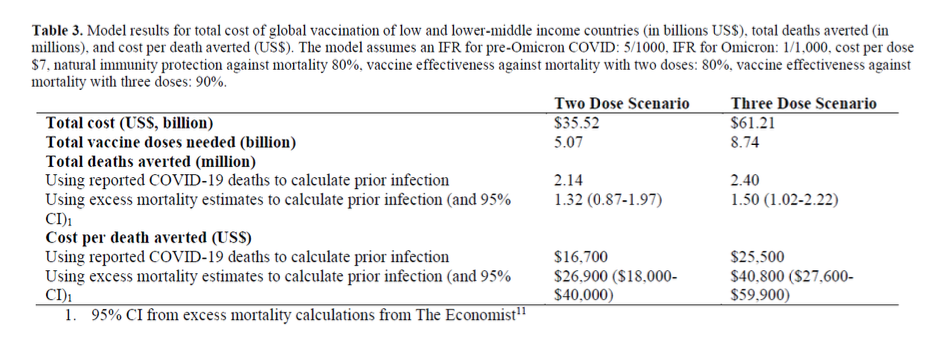
:: Global scale up of vaccination to provide two doses of mRNA vaccine to everyone in LIC/LMIC would cost $35.5 billion and avert 1.3 million deaths from COVID-19, at a cost of $26,900 per death averted.


:: Scaling up vaccination to provide three doses of mRNA vaccine to everyone in LIC/LMIC would cost $61.2 billion and avert 1.5 million deaths from COVID-19 at a cost of $40,800 per death averted.

:: Lower estimated infection fatality ratios, higher cost-per-dose, and lower vaccine effectiveness or uptake lead to higher cost-per-death averted estimates in the analysis.

Interpretation:
Scaling up COVID-19 global vaccination would avert millions of COVID-19 deaths and represents a reasonable investment in the context of the value of a statistical life (VSL). Given the magnitude of expected mortality facing LIC/LMIC without vaccination, this effort should be an urgent priority.


::::::

The Lancet
Articles| Online First
Pandemic preparedness and COVID-19: an exploratory analysis of infection and fatality rates, and contextual factors associated with preparedness in 177 countries, from Jan 1, 2020, to Sept 30, 2021
COVID-19 National Preparedness Collaborators
Open Access Published: February 01, 2022
DOI:https://doi.org/10.1016/S0140-6736(22)00172-6
Summary
Background
National rates of COVID-19 infection and fatality have varied dramatically since the onset of the pandemic. Understanding the conditions associated with this cross-country variation is essential to guiding investment in more effective preparedness and response for future pandemics.
Methods
Daily SARS-CoV-2 infections and COVID-19 deaths for 177 countries and territories and 181 subnational locations were extracted from the Institute for Health Metrics and Evaluation’s modelling database. Cumulative infection rate and infection-fatality ratio (IFR) were estimated and standardised for environmental, demographic, biological, and economic factors. For infections, we included factors associated with environmental seasonality (measured as the relative risk of pneumonia), population density, gross domestic product (GDP) per capita, proportion of the population living below 100 m, and a proxy for previous exposure to other betacoronaviruses. For IFR, factors were age distribution of the population, mean body-mass index (BMI), exposure to air pollution, smoking rates, the proxy for previous exposure to other betacoronaviruses, population density, age-standardised prevalence of chronic obstructive pulmonary disease and cancer, and GDP per capita. These were standardised using indirect age standardisation and multivariate linear models. Standardised national cumulative infection rates and IFRs were tested for associations with 12 pandemic preparedness indices, seven health-care capacity indicators, and ten other demographic, social, and political conditions using linear regression. To investigate pathways by which important factors might affect infections with SARS-CoV-2, we also assessed the relationship between interpersonal and governmental trust and corruption and changes in mobility patterns and COVID-19 vaccination rates.
Findings
The factors that explained the most variation in cumulative rates of SARS-CoV-2 infection between Jan 1, 2020, and Sept 30, 2021, included the proportion of the population living below 100 m (5·4% [4·0–7·9] of variation), GDP per capita (4·2% [1·8–6·6] of variation), and the proportion of infections attributable to seasonality (2·1% [95% uncertainty interval 1·7–2·7] of variation). Most cross-country variation in cumulative infection rates could not be explained. The factors that explained the most variation in COVID-19 IFR over the same period were the age profile of the country (46·7% [18·4–67·6] of variation), GDP per capita (3·1% [0·3–8·6] of variation), and national mean BMI (1·1% [0·2–2·6] of variation). 44·4% (29·2–61·7) of cross-national variation in IFR could not be explained.


Pandemic-preparedness indices, which aim to measure health security capacity, were not meaningfully associated with standardised infection rates or IFRs. Measures of trust in the government and interpersonal trust, as well as less government corruption, had larger, statistically significant associations with lower standardised infection rates.

High levels of government and interpersonal trust, as well as less government corruption, were also associated with higher COVID-19 vaccine coverage among middle-income and high-income countries where vaccine availability was more widespread, and lower corruption was associated with greater reductions in mobility.

If these modelled associations were to be causal, an increase in trust of governments such that all countries had societies that attained at least the amount of trust in government or interpersonal trust measured in Denmark, which is in the 75th percentile across these spectrums, might have reduced global infections by 12·9% (5·7–17·8) for government trust and 40·3% (24·3–51·4) for interpersonal trust. Similarly, if all countries had a national BMI equal to or less than that of the 25th percentile, our analysis suggests global standardised IFR would be reduced by 11·1%.


Interpretation
Efforts to improve pandemic preparedness and response for the next pandemic might benefit from greater investment in risk communication and community engagement strategies to boost the confidence that individuals have in public health guidance. Our results suggest that increasing health promotion for key modifiable risks is associated with a reduction of fatalities in such a scenario.
Funding
Bill & Melinda Gates Foundation, J Stanton, T Gillespie, J and E Nordstrom, and Bloomberg Philanthropies.


Research in context
Evidence before this study
Responsive policies such as physical distancing and mask mandates were important in shaping outcomes during the COVID-19 pandemic. Yet, the conditions associated with cross-country variation in infection and fatality rates during the COVID-19 pandemic are not well understood. In the aftermath of the 2013–16 Ebola epidemic in west Africa, WHO launched a voluntary Joint External Evaluation (JEE) process to track adoption of core capacities required under the 2005 International Health Regulations and to assess national capacity to prevent, detect, and respond to disease with potential for pandemic spread. WHO’s April 2021 interim assessment did not find JEE scores from the 100 countries that had conducted voluntary assessments to be correlated with COVID-19 outcomes, although such metrics were designed as benchmarking exercises for National Action Plans rather than cross-country comparators. Preliminary analysis of COVID-19 outcomes in relation to other health-system capacity indices, such as the Global Health Security Index and the index of effective coverage of universal health coverage produced by the Global Burden of Diseases, Injuries, and Risk Factors Study (GBD) have also been found not to be predictive of COVID-19 outcomes. Other exploratory research on COVID-19 outcomes has had a regional focus or has focused on a small number of country experiences.


Added value of this study
We analysed measures of pandemic preparedness. 12 indicators of preparedness and response and seven indicators of health-system capacity were considered, in addition to ten other demographic, social, and political conditions that previous research suggests might be relevant. Associations with both incidence and mortality from SARS-CoV-2 infections were investigated. We controlled for demographic, biological, economic, and environmental variables associated with COVID-19 outcomes, including population age structure and environmental seasonality, population density, national income, and population health risks, to identify contextual factors subject to policy control. This research considerably expands on the scope of previous research by investigating correlates of pandemic preparedness and mitigation in 177 countries between Jan 1, 2020, and Sept 30, 2021, and includes inputs that have been adjusted for problems associated with under-reporting of COVID-19 outcomes. This expanded scope was possible because of inputs from COVID-19 research produced by the Institute for Health Metrics and Evaluation and mortality and population estimates generated by GBD.


Implications of all the available evidence
The existing metrics for health-system capacity and national pandemic preparedness and response have been poor predictors of pandemic outcomes, suggesting other areas might merit greater weight in future preparedness efforts. Not all of the correlates that account for some variation in infections per capita and infection-to-fatality ratios, such as age structure, altitude at which a population lives, and environmental seasonality, are easy for policy makers to control. Yet, other factors are within the policy realm, including preventive health measures focused on population health fundamentals: encouraging healthy bodyweight and reducing smoking might be helpful in averting morbidity and mortality in future pandemic scenarios. Moreover, the level of trust is something that a government can prepare for and earn in a crisis, and our analysis suggests doing so may be crucial to mount a more effective response to future pandemic threats. Large unexplained variation in differences in SARS-CoV-2 infections across countries speaks to the importance of further research in this area.


::::::

medRxiv
This article is a preprint and has not been certified by peer review [what does this mean?]. It reports new medical research that has yet to be evaluated and so should not be used to guide clinical practice.
Ethnic disparities in immunisation: analyses of zero-dose prevalence in 64 low- and middle-income countries
Bianca Oliveira Cata-Preta, Thiago Melo Santos, Andrea Wendt, Daniel R Hogan, Tewodaj Mengistu, Aluisio Jardim Dornellas Barros, Cesar Gomes Victora
medRxiv 2022.02.09.22270671; doi: https://doi.org/10.1101/2022.02.09.22270671
Posted February 10, 2022.
Abstract
Background The Sustainable Development Goals (SDGs) recommend stratification of health indicators by ethnic group, yet there are few studies that have assessed if there are ethnic disparities in childhood immunisation in low and middle income countries (LMICs).
Methods We identified 64 LMICs with standardized national surveys carried out since 2010, which provided information on ethnicity or a proxy variable and on vaccine coverage; 339 ethnic groups across the 64 countries were identified after excluding those with fewer than 50 children in the sample and countries with a single ethnic group. Lack of vaccination with diphtheria-pertussis-tetanus (DPT) vaccine, a proxy for no access to routine vaccination or zero-dose status, was the outcome of interest. Differences among ethnic groups were assessed using a chi-squared test for heterogeneity. Additional analyses controlled for household wealth, maternal education and urban-rural residence.
Findings The median gap between the highest and lowest zero-dose prevalence ethnic groups in all countries was equal to 10 percentage points (interquartile range 4-22; range 1 to 84) and the median ratio was 3.3 (interquartile range 1.8-6.7; range 1.1-30.4). In 35 of the 64 countries, there was significant heterogeneity in zero-dose prevalence among the ethnic groups. In most countries, adjustment for wealth, education and residence made little difference to the ethnic gaps, but in four countries (Angola, Benin, Nigeria, and Philippines) the high-low ethnic gap decreased by over 15 pp after adjustment. Children belonging to a majority group had 29% lower prevalence of zero-dose compared to the rest of the sample.
Interpretation Statistically significant ethnic disparities in child immunisation were present in over half of the countries studied. Such inequalities have been seldom described in the published literature. Regular analyses of ethnic disparities are essential for monitoring trends, targeting resources and assessing the impact of health interventions to ensure zero-dose children are not left behind in the Sustainable Development Goals era.

Coronavirus [COVID-19] – WHO Public Health Emergency of International Concern (PHEIC)

Featured Journal Content

::::::


Coronavirus [COVID-19] – WHO
Public Health Emergency of International Concern (PHEIC)
https://www.who.int/emergencies/diseases/novel-coronavirus-2019


Weekly Epidemiological and Operational updates
Last update: 11 Feb 2022
Confirmed cases :: 404 910 528
Confirmed deaths :: 5 783 776
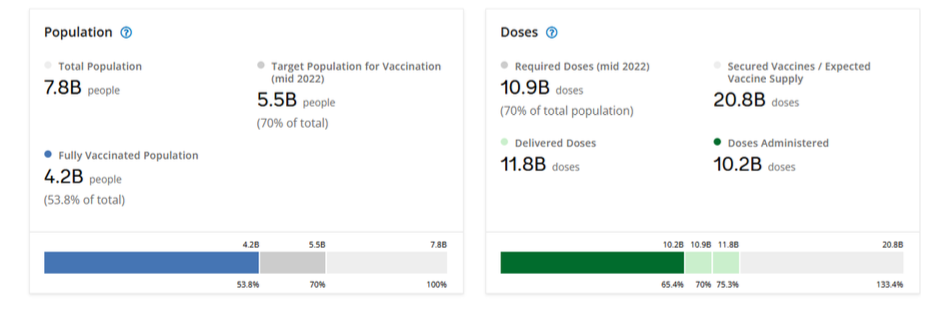
Vaccine doses administered: 10 095 615 243


::::::

Weekly epidemiological update on COVID-19 – 08 February 2022
Overview
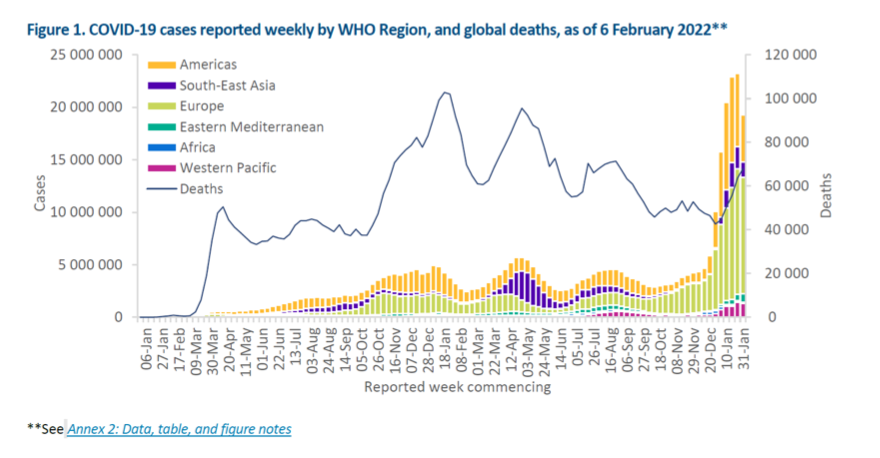
Globally, during the week of 31 January to 6 February 2022, the number of new COVID-19 cases decreased by 17% as compared to the number reported during the previous week, while the number of new deaths increased by 7%. Across the six WHO regions, over 19 million new cases and just under 68 000 new deaths were reported. As of 6 February 2022, over 392 million confirmed cases and over 5.7 million deaths have been reported globally.
In this edition, we provide updates on the geographic distribution of circulating SARS-CoV-2 variants of concern (VOCs), including the spread and prevalence of the Omicron variant. We also provide updates on vaccine effectiveness for the Delta and Omicron variants.

WHO Director General Speeches [selected]

Featured Journal Content


WHO Director General Speeches [selected]
https://www.who.int/director-general/speeches
Selected
11 February 2022
Speech
WHO Director-General’s remarks at mRNA Technology Transfer Hub – 11 February 2022
[Excerpt]
…One of the most obvious lessons of the pandemic, therefore, is the urgent need to increase local production of vaccines, especially in low- and middle-income countries.
That’s why, in April last year, WHO issued a call for expressions of interest for establishing a technology transfer hub for mRNA vaccines.
The turnout of applications was high but South Africa was chosen and established here in South Africa, as a partnership between WHO, Afrigen Biologics, the Biologicals and Vaccines Institute of Southern Africa, or Biovac, the South African Medical Research Council, the Africa Centres for Disease Control and Prevention, and the Medicines Patent Pool.
We very much appreciate the strong support for the hub from Belgium, Canada, the European Union, France, Germany and Norway.
And it’s already producing results, with Afrigen’s announcement last week that it has produced its own mRNA vaccine, based on publicly available information about the composition of an existing vaccine. And the mrNA technology is not just for COVID. It will be for malaria, TB and HIV – it will be a game changer.
We expect this vaccine to be more suited to the contexts in which it will be used, with fewer storage constraints and at a lower price.
The Medicines Patent Pool will manage the intellectual property, and where necessary issue licences to manufacturers.
Once a vaccine has been successfully developed, other manufacturers from around the world will be able to produce the vaccine for national and regional use. Many of the countries that have asked to serve as a hub will become a spoke, and there will be a network of institutions working together.
We expect clinical trials to start in the fourth quarter of this year, with approval expected in 2024.
Spokes in other countries receiving the technology should be able to receive approval shortly thereafter.
I congratulate Afrigen on this achievement, and WHO looks forward to supporting you as you take this vaccine candidate into clinical trials and beyond…

9 February 2022
Speech
WHO Director-General’s remarks at the ACT Accelerator Advocacy Event – 9 February 2022

7 February 2022
Speech
WHO Director-General’s opening remarks at the signing ceremony for the MoU between WHO and the Commonwealth Secretariat – 7 February 2022

Featured Journal Content


Status of COVID-19 Vaccines within WHO EUL/PQ evaluation process 23 December 2021
[Full scale view available at title link above]
[No change from 23 December 2021]


COVID Vaccines/Therapeutics – Developer/Manufacturer Announcements

COVID Vaccines/Therapeutics – Developer/Manufacturer Announcements
[Selected press releases/announcements from organizations from WHO EUL/PQ listing above and other organizations]


AstraZeneca
Press Releases – No new digest announcements identified

Bharat Biotech
Press Releases – No new digest announcements identified

BioCubaFarma – Cuba
Últimas Noticias – No new digest announcements identified


CanSinoBIO
News – [Website not responding at inquiry]

Clover Biopharmaceuticals – China
News – No new digest announcements identified


Curevac [Bayer Ag – Germany]
News – No new digest announcements identified


Gamaleya National Center
Latest News and Events – See Russia below

IMBCAMS, China
Home – Website not responding at inquiry


Janssen/JNJ
Press Releases – No new digest announcements identified


Moderna
Press Releases
February 9, 2022
Moderna Chief Technical Operations and Quality Officer Juan Andres Elected to National Academy of Engineering

February 8, 2022
Moderna Announces New Supply Agreement with Colombia for Additional 10.8 Million Doses of Moderna’s COVID-19 Vaccine


Novavax
Press Releases
Novavax Statement on First Administration of its COVID-19 Vaccine in Australia
Feb 11, 2022
The first dose of Nuvaxovid™ COVID-19 Vaccine (recombinant, adjuvanted) was administered today in Australia during a press briefing by The Hon Greg Hunt MP, Federal Minister for Health and Aged Care. Nuvaxovid is the first protein-based COVID-19 vaccine to receive approval for provisional registration by the Therapeutic Goods Administration (TGA)…

Novavax Announces Positive Results of COVID-19 Vaccine in Pediatric Population of PREVENT-19 Phase 3 Clinical Trial
Feb 10, 2022
– PREVENT-19 pediatric expansion in adolescents aged 12 through 17 achieved primary effectiveness endpoint demonstrating comparability to adult population
– Trial demonstrated 82% clinical efficacy against Delta variant
– Immune responses were about two-to-three-fold higher in adolescents than in adults against all variants studied
– Vaccine was well-tolerated with no safety signals identified
– Novavax plans to supplement global regulatory filings with pediatric data in Q1 2022


Pfizer
Recent Press Releases
02.11.2022
Pfizer and BioNTech Provide Update on Rolling Submission for Emergency Use Authorization of Their COVID-19 Vaccine in Children 6 Months Through 4 Years of Age
NEW YORK & MAINZ, Germany–(BUSINESS WIRE)– Pfizer Inc. (NYSE: PFE) and BioNTech SE (Nasdaq: BNTX) today announced plans to extend their rolling submission to the U.S. Food and Drug Administration (FDA) seeking to amend the Emergency Use Authorization of the Pfizer-BioNTech COVID-19 Vaccine to include children 6 months through 4 years of age, which had been requested by FDA.
The trial in children 6 months through 4 years of age is ongoing and data on the first two 3 µg doses in this age group are being shared with the FDA on an ongoing basis. Cases continue to accumulate according to the study protocol and more data are being generated because rates of infection and illness remain high in children of this age, especially due to the recent Omicron surge.
In December 2021, Pfizer and BioNTech announced that the ongoing clinical study would evaluate a third 3 µg dose at least two months after the second dose of the two-dose series in this age group. Given that the study is advancing at a rapid pace, the companies will wait for the three-dose data as Pfizer and BioNTech continue to believe it may provide a higher level of protection in this age group. This is also supported by recent observations of three dose booster data in several other age groups that seems to meaningfully augment neutralizing antibody levels and real world vaccine protection for omicron compared to the two-dose regimen. The companies expect to have three-dose protection data available in early April.
The independent Data Monitoring Committee (DMC) for the study supports the continuation of the trial according to the protocol and believe that the data collected to date indicate the vaccine is well tolerated and support a potential three-dose regimen.
The extension allows the FDA time to receive updated data on the two and three-dose regimen, conduct a thorough evaluation of it and facilitate a robust, public discussion.


Sanofi Pasteur
Press Releases – No new digest announcements identified


Serum Institute of India
NEWS & ANNOUNCEMENTS – No new digest announcements identified


Sinopharm/WIBPBIBP
News – No new digest announcements identified


Sinovac
Press Releases – No new digest announcements identified


Vector State Research Centre of Viralogy and Biotechnology
Home – No new digest announcements identified

Zhifei Longcom, China
[Anhui Zhifei Longcom Biologic Pharmacy Co., Ltd.]
[No website identified]


::::::

GSK
Press releases for media – No new digest announcements identified


Merck
News releases
Merck and Ridgeback Announce That 3.1 Million Courses of Molnupiravir, an Investigational Oral Antiviral COVID-19 Medicine, Have Been Supplied to the U.S. Government for Use in the United States
February 08, 2022


Novartis
News – No new digest announcements identified


SK Biosciences
Press releases
SK bioscience Begins Shipment of First Authorized Protein-Based COVID-19 Vaccine
– A vaccine platform with long-term well-understood safety and efficacy is expected to induce more participants to vaccination who are reluctant to.
– SK started supplying 2 million doses of Nuvaxovid from L-House.
– A total of 40 million doses will be distributed for domestic use in Korea.


Valneva
Press Releases – No new digest announcements identified

COVID-19 Global Targets and Progress Tracker – IMF

Featured Journal Content


COVID-19 Global Targets and Progress Tracker – IMF
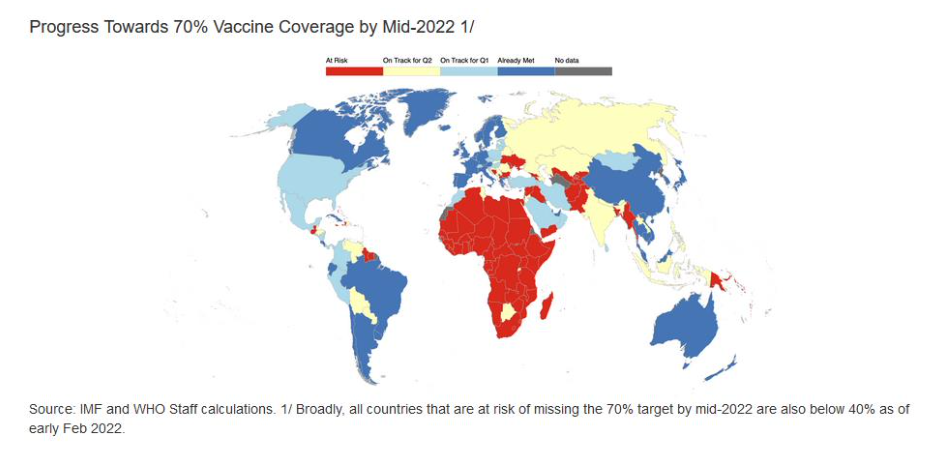
The COVID-19 Global Targets and Progress Tracker presents a consolidated view of the progress towards global COVID-19 targets, barriers in access to COVID-19 tools, and delivery of donor pledges. The global targets presented in the Tracker are based on an alignment of the targets identified in the IMF Pandemic Proposal, ACT-A Strategic Plan & Budget, and the US-hosted Global C19 Summit, and as such have been reaffirmed by multilateral institutions and global leaders. We will continue to enhance the tracker as we improve our data collection efforts.

Global Dashboard on COVID-19 Vaccine Equity

Featured Journal Content


Global Dashboard on COVID-19 Vaccine Equity
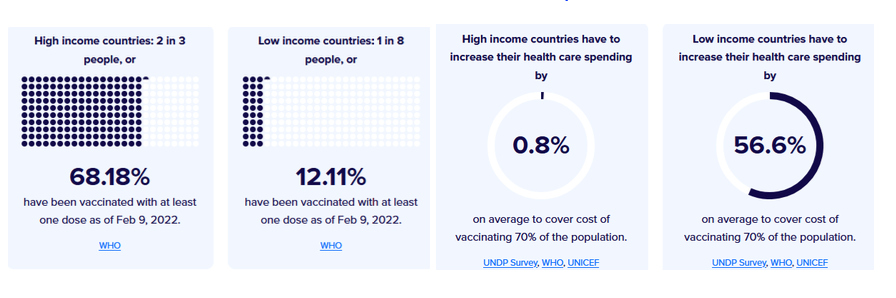
The Dashboard is a joint initiative of UNDP, WHO and the University of Oxford with cooperation across the UN system, anchored in the SDG 3 Global Action Plan for Healthy Lives and Well-being for All.

Dashboard on Vaccine Equity [accessed 12 Feb 2022]: https://data.undp.org/vaccine-equity/
See also visualization on Vaccine Access and Vaccine Affordability

The Race for Global COVID-19 Vaccine Equity

Featured Journal Content


Duke – Launch and Scale Speedometer
The Race for Global COVID-19 Vaccine Equity
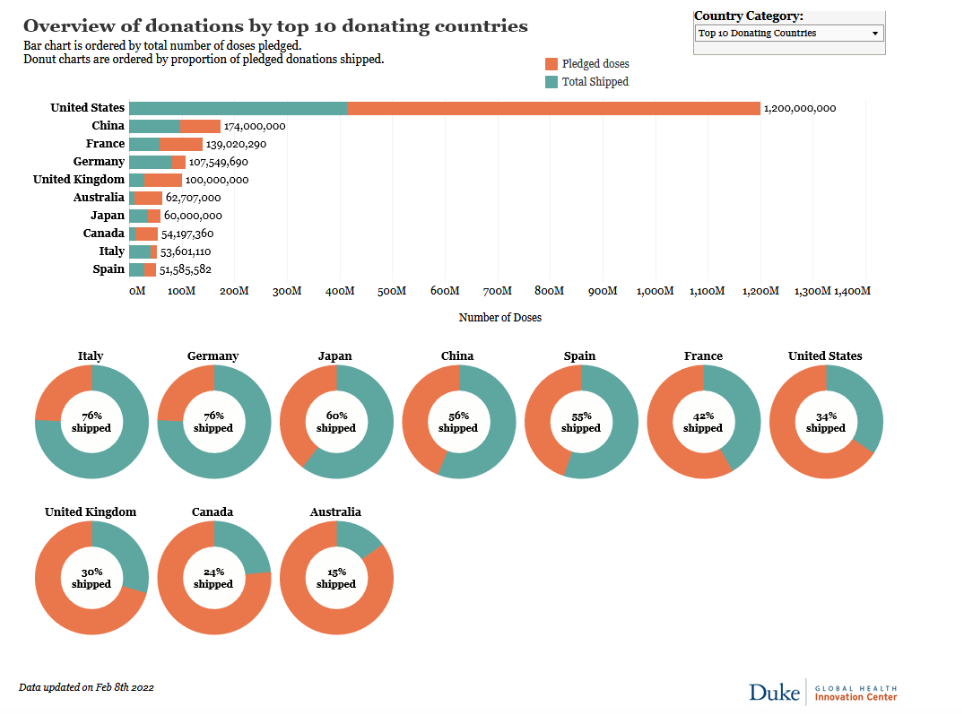
A flurry of nearly 200 COVID-19 vaccine candidates are moving forward through the development and clinical trials processes at unprecedented speed; more than ten candidates are already in Phase 3 large-scale trials and several have received emergency or limited authorization. Our team has aggregated and analyzed publicly available data to track the flow of procurement and manufacturing and better understand global equity challenges. We developed a data framework of relevant variables and conducted desk research of publicly available information to identify COVID vaccine candidates and status, deals and ongoing negotiations for procurement and manufacturing, COVID burden by country, and allocation and distribution plans. We have also conducted interviews with public officials in key countries to better understand the context and challenges facing vaccine allocation and distribution
[accessed 24 July 2021]
See our COVID Vaccine Purchases research
See our COVID Vaccine Manufacturing research
See our COVID Vaccine Donations & Exports research

COVID Vaccines – OCHA:: HDX

Featured Journal Content


COVID Vaccines – OCHA:: HDX

COVID-19 Data Explorer: Global Humanitarian Operations
COVID-19 Vaccine Roll-out
12 Feb 2022 | COVAX (WHO,GAVI,CEPI), UNDESA, Press Reports | DATA
Global COVID-19 Figures: 405M total confirmed cases; 5.8M total confirmed deaths
Global vaccines administered: 10.2B
Number of Countries: 28
COVAX Allocations Round 4-9 (Number of Doses): 170M
COVAX Delivered (Number of Doses): 240M
Other Delivered (Number of Doses): 220M
Total Delivered (Number of Doses): 460M
Total Administered (Number of Doses): 260M

Multilateral Leaders Task Force on COVID-19 [IMF, World Bank Group, WHO, WTO]

Featured Journal Content


Multilateral Leaders Task Force on COVID-19 [IMF, World Bank Group, WHO, WTO]
https://data.covid19taskforce.com/data
A global effort to help developing countries access and deliver COVID-19 vaccines, testing, and therapeutics, as they work to end the pandemic and boost economic recovery.
The International Monetary Fund, World Bank Group, World Health Organization and World Trade Organization have joined forces to accelerate access to COVID-19 vaccines, therapeutics and diagnostics by leveraging multilateral finance and trade solutions, particularly in low- and middle-income countries.
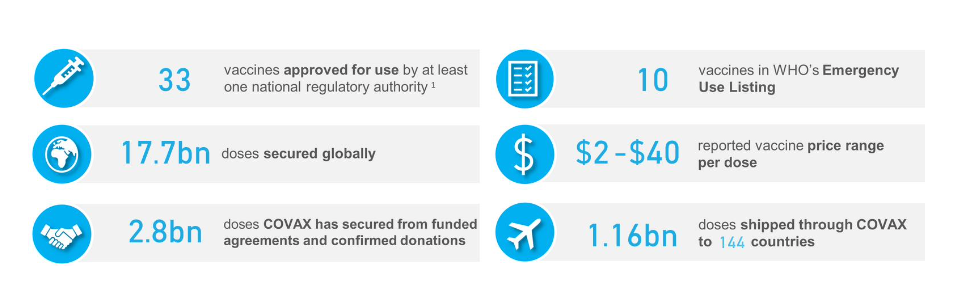
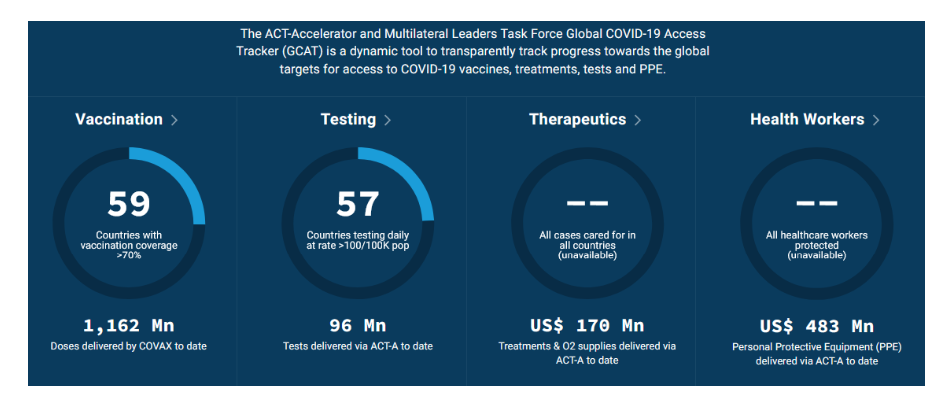
Website accessed 12 Feb 2022: https://data.covid19taskforce.com/data The global view below is complemented by country-specific dashboards here.