Open Letter metrics AWAITING PEER REVIEW Women’s groups and COVID-19: An evidence review on savings groups in Africa[version 1; peer review: awaiting peer review]
Olayinka Adegbite, Leigh Anderson, Sybil Chidiac, Osasuyi Dirisu, Jenna Grzeslo, Julia Hakspiel, Chinmaya Holla, Emily Janoch, Krishna Jafa, Shubha Jayaram, Grace Majara, Tabitha Mulyampiti, Eve Namisango, Eva Noble, Bukola Onyishi, David Panetta, Garima Siwach, Munshi Sulaiman, Rebecca Walcott, Sapna Desai, Thomas de Hoop
Peer Reviewers Invited
Funder
The Bill and Melinda Gates Foundation
PUBLISHED 12 Apr 2022
medRxiv https://www.medrxiv.org/content/about-medrxiv
medRxiv is a free online archive and distribution server for complete but unpublished manuscripts (preprints) in the medical, clinical, and related health sciences. Preprints are preliminary reports of work that have not been certified by peer review. They should not be relied on to guide clinical practice or health-related behavior and should not be reported in news media as established information. medRxiv is for the distribution of preprints – complete but unpublished manuscripts – that describe human health research conducted, analyzed, and interpreted according to scientific principles…
Mondo: Unifying diseases for the world, by the world
Nicole A Vasilevsky, Nicolas A Matentzoglu, Sabrina Toro, Joe E Flack, Harshad Hegde, Deepak R Unni, Gioconda Alyea, Joanna S Amberger, Larry Babb, James P Balhoff, Taylor I Bingaman, Gully A Burns, Tiffany J Callahan, Leigh C Carmody, Lauren E Chan, George S Chang, Michel Dumontier, Laura E Failla, May J Flowers, H A Garrett Jr., Dylan Gration, Tudor Groza, Marc Hanauer, Nomi L Harris, Ingo Helbig, Jason A Hilton, Daniel S Himmelstein, Charles T Hoyt, Megan S Kane, Sebastian Kohler, David Lagorce, Martin Larralde, Antonia Lock, Irene Lopez Santiago, Donna R Maglott, Adriana J Malheiro, Birgit HM Meldal, Julie A McMurry, Moni Munoz-Torres, Tristan H Nelson, David Ochoa, Tudor I Oprea, David Osumi-Sutherland, Helen Parkinson, Zoe M Pendlington, Ana Rath, Heidi L Rehm, Lyubov Remennik, Erin R Riggs, Paola Roncaglia, Justyne E Ross, Marion F Shadbolt, Kent A Shefchek, Morgan N Similuk, Nicholas Sioutos, Rachel Sparks, Ray Stefancsik, Ralf Stephan, Doron Stupp, Jagadish Chandrabose Sundaramurthi, Imke Tammen, Courtney L Thaxton, Eloise Valasek, Alex H Wagner, Danielle Welter, Patricia L Whetzel, Lori L Whiteman, Valerie Wood, Colleen H Xu, Andreas Zankl, Xingmin A Zhang, Christopher G Chute, Peter N Robinson, Christopher J Mungall, Ada Hamosh, Melissa A Haendel
medRxiv 2022.04.13.22273750; doi: https://doi.org/10.1101/2022.04.13.22273750
There are thousands of distinct disease entities and concepts, each of which are known by different and sometimes contradictory names. The lack of a unified system for managing these entities poses a major challenge for both machines and humans that need to harmonize information to better predict causes and treatments for disease. The Mondo Disease Ontology is an open, community-driven ontology that integrates key medical and biomedical terminologies, supporting disease data integration to improve diagnosis, treatment, and translational research. Mondo records the sources of all data and is continually updated, making it suitable for research and clinical applications that require up-to-date disease knowledge.
Health Economic Burden of COVID-19 in Saudi Arabia
Khalidah A. Alenzi, Hamdan S. Al-malky, Ali F. Altebainawi, Hamidah Q. Abushomi, Fahad O. Alatawi, Moosa H. Atwadi, Moosa A. Khobrani, Dlal A. Almazrou, Nariman Alrubeh, Zainab A. Alsoliabi, Abdulaziz M. Kardam, Shakr A. Alghamdi, Abdulrahman Alasiri, Thamir M. Alshammari
medRxiv 2022.04.08.22273439; doi: https://doi.org/10.1101/2022.04.08.22273439
The relation between COVID-19 vaccinations and public governance to improve preparedness of next pandemic impacts and crisis management: a global study
Mario Coccia, Igor Benati
medRxiv 2022.04.10.22273663; doi: https://doi.org/10.1101/2022.04.10.22273663 Abstract
The goal of this study is to analyze the relationship between COVID-19 vaccinations and public governance performing a global analysis of more than 110 countries worldwide. Methodology applies the Independent Samples T-Test that compares the means of two independent groups (countries with high/low level of vaccinations) to determine whether there is statistical evidence that the associated population means of indicators of public governance are significantly different. Findings suggest that high levels of governance can support a better function of health systems in the rollout of vaccinations to cope with COVID-19 pandemic crisis. This study may assist long-run policy of governments to improve good governance and health systems of countries in order to reinforce the preparedness to face next pandemic threats and in general future crisis management in society.
Novel Privacy Considerations for Large Scale Proteomics
Andrew C. Hill, Elizabeth M. Litkowski, Ani Manichaikul, Leslie Lange, Katherine A. Pratte, Katerina J. Kechris, Matthew DeCamp, Marilyn Coors, Victor E. Ortega, Stephen S. Rich, Jerome I. Rotter, Robert E. Gerzsten, Clary B. Clish, Jeffery Curtis, Xiaowei Hu, Debby Ngo, Wanda K O’Neal, Deborah Meyers, Eugene Bleecker, Brian D. Hobbs, Michael H. Cho, Farnoush Banaeikashani, Russell P. Bowler
medRxiv 2022.04.06.22269907; doi: https://doi.org/10.1101/2022.04.06.22269907
Wellcome Open Research provides all Wellcome researchers with a place to rapidly publish any results they think are worth sharing. All articles benefit from rapid publication, transparent peer review and editorial guidance on making all source data openly available.
Data Note metrics AWAITING PEER REVIEW An open dataset of Plasmodium vivax genome variation in 1,895 worldwide samples[version 1; peer review: awaiting peer review]
MalariaGEN, Ishag Adam, Mohammad Shafiul Alam, Sisay Alemu, Chanaki Amaratunga, Roberto Amato, Voahangy Andrianaranjaka, Nicholas M Anstey, Abraham Aseffa, Elizabeth Ashley, Ashenafi Assefa, Sarah Auburn, Bridget E Barber, Alyssa Barry, Dhelio Batista Pereira, Jun Cao, Nguyen Hoang Chau, Kesinee Chotivanich, Cindy Chu, Arjen M. Dondorp, Eleanor Drury, Diego F. Echeverry, Berhanu Erko, Fe Espino, Rick Fairhurst, Abdul Faiz, María Fernanda Villegas, Qi Gao, Lemu Golassa, Sonia Goncalves, Matthew J Grigg, Yaghoob Hamedi, Tran Tinh Hien, Ye Htut, Kimberly J Johnson, Nadira Karunaweera, Wasif Khan, Srivicha Krudsood, Dominic P Kwiatkowski, Marcus Lacerda, Benedikt Ley, Pharath Lim, Yaobao Liu, Alejandro Llanos-Cuentas, Chanthap Lon, Tatiana Lopera-Mesa, Jutta Marfurt, Pascal Michon, Olivo Miotto, Rezika Mohammed, Ivo Mueller, Chayadol Namaik-larp, Paul N Newton, Thuy-Nhien Nguyen, Francois Nosten, Rintis Noviyanti, Zuleima Pava, Richard D Pearson, Beyene Petros, Aung P Phyo, Ric N Price, Sasithon Pukrittayakamee, Awab Ghulam Rahim, Milijaona Randrianarivelojosia, Julian C Rayner, Angela Rumaseb, Sasha V Siegel, Victoria J Simpson, Kamala Thriemer, Alberto Tobon-Castano, Hidayat Trimarsanto, Marcelo Urbano Ferreira, Ivan D Vélez, Sonam Wangchuk, Thomas E Wellems, Nicholas J White, Timothy William, Maria F Yasnot, Daniel Yilma
Peer Reviewers Invited
Funders
Wellcome Trust
Medical Research Council UK and the Department for International Development (DFID)
Bill and Melinda Gates Foundation
PUBLISHED 14 Apr 2022
Think Tanks Brookings http://www.brookings.edu/
Accessed 23 Apr 2022
[No new digest content identified] Center for Global Development [to 23 Apr 2022] https://www.cgdev.org/ Research [Selected] POLICY PAPERS Beyond India’s Lockdown: PMGKY Benefits During the COVID-19 Crisis and the State of Digital Payments Alan Gelb et al.
April 11, 2022
India imposed a lock-down in response to the COVID-19 pandemic in March 2020 and began a gradual re-opening in June. A telephonic survey in April examined the early effectiveness of information and the massive PMGKY social protection program (Policy Paper 217). This paper analyzes a second-round sur… Chatham House [to 23 Apr 2022] https://www.chathamhouse.org/ Accessed 23 Apr 2022
[No new digest content identified]
Vaccines and Global Health: The Week in Review is a weekly digest summarizing news, events, announcements, peer-reviewed articles and research in the global vaccine ethics and policy space. Content is aggregated from key governmental, NGO, international organization and industry sources, key peer-reviewed journals, and other media channels. This summary proceeds from the broad base of themes and issues monitored by the Center for Vaccine Ethics & Policy in its work: it is not intended to be exhaustive in its coverage. You are viewing the blog version of our weekly digest, typically comprised of between 30 and 40 posts below all dated with the current issue date
.– Request anEmail Summary:Vaccines and Global Health : The Week in Review is published as a single email summary, scheduled for release each Saturday evening before midnight (EDT in the U.S.). If you would like to receive the email version, please send your request to david.r.curry@centerforvaccineethicsandpolicy.org.
– pdf version: A pdf of the current issue is available here:
– blog edition: comprised of the approx. 35+ entries posted below.
– Twitter:Readers can also follow developments on twitter: @vaxethicspolicy. . – Links: We endeavor to test each link as we incorporate it into any post, but recognize that some links may become “stale” as publications and websites reorganize content over time. We apologize in advance for any links that may not be operative. We believe the contextual information in a given post should allow retrieval, but please contact us as above for assistance if necessary.
Support this knowledge-sharing service:Your financial support helps us cover our costs and to address a current shortfall in our annual operating budget. Click here to donate and thank you in advance for your contribution.
. David R. Curry, MS Executive Director Center for Vaccine Ethics and Policy
Vaccines and Global Health: The Week in Review is a weekly digest summarizing news, events, announcements, peer-reviewed articles and research in the global vaccine ethics and policy space. Content is aggregated from key governmental, NGO, international organization and industry sources, key peer-reviewed journals, and other media channels. This summary proceeds from the broad base of themes and issues monitored by the Center for Vaccine Ethics & Policy in its work: it is not intended to be exhaustive in its coverage. You are viewing the blog version of our weekly digest, typically comprised of between 30 and 40 posts below all dated with the current issue date
.– Request anEmail Summary:Vaccines and Global Health : The Week in Review is published as a single email summary, scheduled for release each Saturday evening before midnight (EDT in the U.S.). If you would like to receive the email version, please send your request to david.r.curry@centerforvaccineethicsandpolicy.org.
– pdf version: A pdf of the current issue is available here:
– blog edition: comprised of the approx. 35+ entries posted below.
– Twitter:Readers can also follow developments on twitter: @vaxethicspolicy. . – Links: We endeavor to test each link as we incorporate it into any post, but recognize that some links may become “stale” as publications and websites reorganize content over time. We apologize in advance for any links that may not be operative. We believe the contextual information in a given post should allow retrieval, but please contact us as above for assistance if necessary.
Support this knowledge-sharing service:Your financial support helps us cover our costs and to address a current shortfall in our annual operating budget. Click here to donate and thank you in advance for your contribution.
. David R. Curry, MS Executive Director Center for Vaccine Ethics and Policy
Session 1 – Global & Regional Reports Report from the WHO Department of Immunization, Vaccines & Biologicals
• The speed of the COVID-19 vaccine rollout has been unprecedented with nearly every country
introducing the vaccine in under 12 months.
• Available data of COVID-19 vaccine effectiveness against the Omicron variant generally show
waning immunity against infection but high and more sustained effectiveness against severe
disease and death, especially after booster doses. Data remain very limited for some of the WHO
EUL vaccines.
• To date, 21 countries remain below 10% population coverage, leaving at high risk the most
vulnerable populations. Among countries eligible for support through the COVAX Advance
Market Commitment (AMC) strategy at least 43 have set population targets at 70% or higher
and only a small number have targets below 40% of their population.
• However, available data indicate that coverage among the high priority groups is insufficient to
provide the needed protection against severe disease and death. Health worker coverage is 65%
overall, with coverage below 50% in some regions (Non-AMC member states), and coverage of
older adults is 69% going as low as 24% in some regions.
• Disruptions to routine immunization programmes persist, including the ongoing delay of at least
one campaign in 37 countries as of 10 January 2022, putting millions of children at risk of disease
outbreaks. Large and disruptive outbreaks of measles have occurred in at least 19 countries
during the past 12 months.
• COVID-19 vaccination response and investments offer important opportunities that are being
leveraged to restore and strengthen immunization programmes and enhance their resilience.
WHO Regional Updates
• National immunization programmes in all six WHO regions were adversely impacted by the
COVID-19 pandemic through declining immunization coverage and surveillance quality, though
the magnitude of the impact varied between and within regions.
• The European region is also facing a challenge due to the ongoing war in Ukraine and the
resulting large population displacement. The WHO Regional Office and partner agencies are
taking measures to mitigate the risks of vaccine-preventable disease outbreaks such as measles,
polio, and COVID-19, while also ensuring continued delivery of critical medical supplies and
services.
• All countries are implementing measures to restore vaccination coverage, with several having
identified innovative strategies for catch up vaccination.
• The rollout of COVID-19 vaccination is progressing in all regions, though vaccine uptake varies
between and within regions and disproportionately lower vaccination coverage has been
observed in low- and low-middle income countries. Vaccine hesitancy and low risk perception
are further affecting the uptake of COVID-19 vaccination in several countries.
Gavi report
• Reaching the zero-dose children through the building of resilient health systems remains a top
priority of the Alliance in the Gavi strategy 2021-2025 (Gavi 5.0) and is estimated to account for
over half the incremental impact of Gavi investments during the strategy period.
• A funding window for the rollout of malaria vaccines will be opened in the second half of 2022 to
enable initial vaccine introductions in 2023.
• Gavi expressed concern over the 13% decline of global HPV vaccine coverage in 2020 due to
COVID-19 disruptions, attributing this issue primarily to school closures and limited supply. It
was acknowledged that a recommendation for a single dose regimen has the potential to
accelerate introductions and reduce operational costs and complexity.
• The COVAX facility has sufficient supply available for all AMC countries to achieve the WHO 70%
coverage target by June 2022. The COVAX Vaccine Delivery Partnership is supporting countries
to overcome barriers and to achieve national coverage targets.
Session 2 – Immunization Agenda 2030 and catch-up vaccination
• SAGE was presented with evidence of the impact of the COVID-19 pandemic on national
immunization programmes mainly due to service delivery disruptions.
• The urgent need to close resulting immunity gaps was recognized, as was the importance of
supporting the recovery and resilience of immunization programmes and mitigating the risk of
vaccine-preventable disease outbreaks.
• SAGE recommended that countries use the COVID-19 pandemic and COVID-19 vaccination
rollout as a transformative opportunity to establish resilient immunization programmes and
strengthen primary health care. Among the specific areas identified were health worker
vaccination, immunization logistics and registries, surveillance, data and communications.
• The document “Guiding Principles for recovering, building resiliency, and strengthening of
immunization in 2022 and beyond” was endorsed and recommended for dissemination to
regional and national immunization technical advisory groups so that it may be adapted and
used for their local context.
[The full summaries for the sessions below are available at the PDF link above] Session 3 – Hepatitis A vaccination
Session 4 – COVID-19 vaccines
Session 5 – Typhoid conjugate vaccination
Session 6 – Human Papillomavirus vaccination
Session 7 – Poliovirus vaccines
::::::
One-dose Human Papillomavirus (HPV) vaccine offers solid protection against cervical cancer
11 April 2022 News release
The 4-7 April convening of the WHO Strategic Advisory Group of Experts on Immunization (SAGE) evaluated the evidence that has been emerging over past years that single-dose schedules provide comparable efficacy to the two or three-dose regimens.
SAGE’s review concluded that a single-dose Human Papillomavirus (HPV) vaccine delivers solid protection against HPV, the virus that causes cervical cancer, that is comparable to 2-dose schedules. This could be a game-changer for the prevention of the disease; seeing more doses of the life-saving jab reach more girls…
“The HPV vaccine is highly effective for the prevention of HPV serotypes 16 & 18, which cause 70% of cervical cancer,” said Dr Alejandro Cravioto, SAGE Chair. “SAGE urges all countries to introduce HPV vaccines and prioritize multi-age cohort catch up of missed and older cohorts of girls. These recommendations will enable more girls and women to be vaccinated and thus preventing them from having cervical cancer and all its consequences over the course of their lifetimes.”
SAGE recommends updating dose schedules for HPV as follows:
one or two-dose schedule for the primary target of girls aged 9-14
one or two-dose schedule for young women aged 15-20
Two doses with a 6-month interval for women older than 21.
Immunocompromised individuals, including those with HIV, should receive three doses if feasible, and if not at least two doses. There is limited evidence regarding the efficacy of a single dose in this group.
WHO’s recommendations will be updated following further consultation across stakeholders…
Globally, the uptake of the life-saving vaccine has been slow, and coverage in countries much lower than the 90% target. Consequently, in 2020 global coverage with 2 doses was only 13%. Several factors have influenced the slow uptake and low coverage of HPV vaccines including supply challenges, as well as the programmatic challenges and costs related to delivering a two regimen to older girls who are not typically part of childhood vaccination programs. Added to this has been the relatively high cost of HPV vaccines, particularly for middle-income countries…
The option for a single dose of the vaccine is less costly, less resource intensive and easier to administer. It facilitates implementing catch-up campaigns for multiple age groups, reduces the challenges link ed to tracing girls for their second dose and allows for financial and human resources to be redirected to other health priorities.”
The Secretariat presented on the current status of the COVID-19 pandemic and a vision for how to optimize the ongoing response to the COVID-19 pandemic for 2022. The presentation focused on:
the global epidemiological context and factors that continue to drive transmission;
updates on international traffic as well as COVID-19 proof of vaccination and test result certificates;
the status of COVID-19 vaccination; and
the strategic objectives for countries to incorporate in their COVID-19 response.
The Committee discussed key issues including SARS-CoV-2 variants; use and equitable access to antivirals; vaccine protection and global shifts in the supply and demand for COVID-19 vaccines; hybrid immunity; potential future scenarios for SARS-CoV-2 transmission and challenges posed by concurrent health emergencies; and how Member States are responding to the COVID-19 pandemic. The Committee also noted with concern the growing fatigue among communities worldwide in response to the COVID-19 pandemic and challenges posed by the lack of trust in scientific guidance and governments….
The Committee unanimously agreed that the COVID-19 pandemic still constitutes an extraordinary event that continues to adversely affect the health of populations around the world, poses an ongoing risk of international spread and interference with international traffic, and requires a coordinated international response. The Committee stressed the importance for States Parties to prepare for future scenarios with the assistance of WHO and to continue robust use of the essential tools (e.g. vaccines, therapeutics, and diagnostics). The Committee concurred that the COVID-19 pandemic remains a PHEIC and offered its advice to the Director-General.
The Director-General determined that the COVID-19 pandemic continues to constitute a PHEIC. He accepted the advice of the Committee and issued the Committee’s advice to States Parties as Temporary Recommendations under the IHR.
The Emergency Committee will be reconvened within three months or earlier, at the discretion of the Director-General. The Director-General thanked the Committee for its work.
Equitable access to COVID-19 vaccination is a humanitarian imperative – ICRC Statement by the International Committee of the Red Cross (ICRC) at the United Nations Security Council, New York 11 April 2022. Delivered by Dr. Esperanza Martinez, Senior Advisor to the Office of the Director-General
12-04-2022 | Statement
Mr. President, Members of the Council, Colleagues,
Thank you for the opportunity to address you today and to the UK for spotlighting the importance of vaccination in conflict settings through Resolution 2565 as well as continuing the Council’s focus on what needs to be done.
COVID-19 has killed more than 6 million people globally – with the number probably much higher as these are only the officially reported figures. The successes in the development and production of vaccines mean that many countries are starting to regain a sense of normalcy. However, to end the pandemic, vaccination needs to occur everywhere – and this is not the case in conflict-affected areas.
In conflict-settings, health systems torn apart by conflict are less able to contain the spread of diseases across frontlines and international borders. Vaccination and other health activities in such contexts are incredibly difficult to carry out. Furthermore, many people in conflict settings are overlooked in public health responses, including people displaced, detained, or living in areas controlled by non-state armed groups.
Moreover, in areas affected by armed conflict, COVID-19 is not the most pressing issue people face as the most basic needs – such as food, water, and shelter – are often not covered. Even if the health system continues to function, its focus turns from general health care, including vaccination, to treating war-wounded patients and keeping the core of the system functioning. This can happen in any conflict setting.
Mr. President,
The good news is that, as the supply of vaccine doses grows, the potential to get jabs in arms grows too. To achieve this in conflict settings, the International Committee of the Red Cross presents three asks to this Council, UN Member States, and conflict-affected countries:
First, ensure that International Humanitarian Law is respected
Under international humanitarian law, hospitals and other medical facilities as well as medical personnel – including those administering vaccines – are specifically protected from attacks. And where states cannot meet the basic needs of populations, they must allow impartial humanitarian organizations to conduct health activities – including vaccination.
These obligations are reaffirmed in Resolution 2565. We call on all parties to conflict to implement them in good faith as attacks on healthcare have a profound effect on people’s lives and future.
Second, integrate COVID-19 vaccinations into a broader health strategy and in tandem strengthen the health system
We have seen vaccines expire on airport tarmacs in Afghanistan, Nigeria, South Sudan, and several other places. Some of these vaccines were wasted because they arrived with too short expiry dates. Others, because the receiving countries’ health systems were not ready to distribute them. Countries need a degree of capacity to deliver vaccines.
The COVID-19 pandemic offers an opportune moment to strengthen the health systems in conflict-affected countries. We need to consider how COVID-19 vaccinations can be routinized where possible and integrated with other health services that are prioritized during times of conflict.
This doesn’t mean we have to do everything, but we must invest in country preparedness and fortify the building blocks of the health system that support immunizations – and which in turn support the response to other pre-existing health needs. Critically, this investment can help address renewed outbreaks of other highly contagious and lethal diseases – which are occurring today, for example with measles in Afghanistan and polio in the Democratic Republic of Congo.
One strategy to address this is to invest in developing health workers’ capacity and skillsets – as well as improving key components of service delivery, such as local supply chains and infrastructure. This is both critical and doable in contexts affected by armed conflict. The ICRC, for example, supported more than 600 health facilities in Iraq in 2021 which allowed the administration of over 14 million doses of COVID-19 vaccines.
Third, involve the community in vaccination activities and adequately resource community-engagement
Done well, effective community engagement is a force multiplier. It enhances the safety of frontline health workers and expands the reach of vaccination and other health efforts. Community involvement allows the community to identify pressing needs, take ownership, and spread the word about health-related programs.
For example, the ICRC established a network of Community Health Committees attached to 28 Primary Health Care Centres in Somalia and 16 in South Sudan. Many representatives are women from the community who can play an important role in the control and prevention of the COVID-19 pandemic and other diseases.
However, done poorly, ineffective or lack of community engagement can undermine public trust in vaccinations and government-run programs more broadly, with ramifications beyond this pandemic. We have witnessed the effects of distrust in West Africa with Ebola and now in many countries with COVID-19. Even if communities can be reached, people will not accept being vaccinated if they do not trust those administering the vaccine, and they do not see other pressing priorities being addressed.
For the ICRC and the wider Red Cross and Red Crescent Movement, community engagement ensures that communities’ insights are an integral part of the design and delivery of programs, and that people have accurate information about vaccines and public health interventions, so they can make informed choices for themselves. Beyond vaccination, the ICRC strives to build trust with communities and parties to conflict concerning all its humanitarian activities.
The ICRC – as part of the Red Cross and Red Crescent Movement – will continue to play its part. The ICRC helped to administer more than 21 million doses of COVID-19 vaccines last year in areas impacted by armed conflict.
Equitable access to COVID-19 vaccination is a humanitarian imperative. Our collective recovery depends on it, because the longer COVID circulates anywhere, the longer it remains a threat everywhere.
“We must take the rapid action needed to accelerate vaccination.” COVID-19 Vaccine Delivery Partnership Global Lead Coordinator Ted Chaiban’s remarks at the Security Council briefing on equitable access to COVID-19 vaccines in conflict and humanitarian crises
Remarks 04/12/2022 As prepared.
…“Just over 1 million cases of COVID-19 were reported to WHO in the last 24 hours – the pandemic is still far from over. We have safe and available vaccines that can protect against death and severe illness caused by COVID-19 and help avoid the next variant and there is an urgency, with over six million lives having been lost to date, to raise COVID-19 vaccination in countries that did not have this opportunity in 2021. The next six months are critical.
“More than 11.1 billion doses of COVID-19 vaccines have been administered globally:
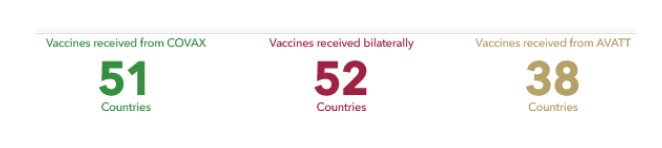
:: 124 of the 194 WHO member states have vaccinated more than 40% of their population :: 51 countries have reached more than 70% of their population; only 11% in low-income countries. :: 83% of the population in WHO’s Africa region and 51% in its Eastern Mediterranean region, which includes Afghanistan, remain unvaccinated.
“In 2022, we must take the rapid action needed to accelerate vaccination. The window of opportunity is gradually closing. We risk losing the momentum and failing on vaccine equity.
“The COVID-19 Vaccine Delivery Partnership is focused, amongst others, on 34 countries which were at 10% or less full vaccine coverage and face the biggest challenges to increasing vaccination coverage. The goal is to vaccinate all adults and adolescents – starting with the elderly, healthcare and other frontline workers and those with underlying health conditions who are at the highest risk from COVID-19.
“19 of the 34 countries identified for concerted support by the Delivery Partnership are included in the Global Humanitarian Overview for 2022.
“We know there are many competing health, humanitarian and economic priorities in these countries. We must therefore use every opportunity to bundle or integrate COVID-19 vaccination with other health and humanitarian interventions and leverage these investments for the longer term strengthening of health systems.
“In many countries, COVID-19 vaccination is being integrated with measles campaigns and,in complement, with maternal health and routine immunization. COVID-19 vaccination is being used to strengthen cold chain, health management information systems and to train and provide incentives to health workers, including the surge required.
“With strong political leadership, country coordination and planning, and implementation of mass vaccination campaigns, countries can quickly pick up their vaccination rates and coverage. Since January 2022, the number of countries with a full population vaccination coverage rate at or below 10% has dropped from 34 countries to 18 countries currently…
…“I am speaking to you now from the Democratic Republic of the Congo where this week we will be meeting the government and key partners to better address the urgent bottlenecks to expanding vaccination coverage across this country of nearly 100 million people. We know Risk Communications and Community Engagement is a key component to success so we will be working with in-country partners to support clear communications to increase demand and work to improve convenient access to vaccination.
“In humanitarian settings, from Afghanistan to Yemen, addressing low vaccination rates requires integrating with humanitarian priorities, working with humanitarian partners and a sustained, country-by-country effort to identify and overcome the primary obstacles to increasing vaccination rates among the populations affected by natural disasters, conflict and socio-political instability.
“We recognize the significance of the Humanitarian Buffer, a mechanism established within the COVAX facility to ensure access to COVID-19 vaccines for high-risk and vulnerable populations living in humanitarian settings. As of today, two applicants have successfully received vaccine doses via the Humanitarian Buffer — the Ministries of Health in Iran and Uganda — but the partners are committed to make it a more user friendly, easily accessible mechanism to ensure that humanitarian populations not included in national vaccination plans, microplanning, or the implementation process can equally benefit from vaccination.
“The COVID-19 Vaccine Delivery Partnership and partners — UNICEF, WHO, GAVI, the World Bank, the Africa CDC and others — are providing concerted support to all these countries, mobilizing political engagement, providing flexible funding ($21 million in last two months), strategic advice and technical assistance. We are lining up partners behind one country team, one plan and one budget to put countries at the center and reduce their transaction costs.
“Mr President, Excellencies, to address the significant vaccine equity gap that continues to pose a threat for global health security, please consider the following requests:
“First, continue your strong support and actions to implement Resolutions 2532 and 2565 with a particular focus on ensuring countries continue to prioritise COVID-19 vaccination.
“Second, with appreciation for the US$4.8 billion in pledges made at the COVAX AMC summit co-hosted with Germany, turn these commitments into support for lower-income countries’ COVID-19 vaccination needs, with a priority on delivery systems. Flexible, agile funding is vital and these investments can last beyond the pandemic.
“Third, advocate for and help guarantee full, safe and unhindered access, in line with International Humanitarian Law — including protecting humanitarian corridors — as a means to getting vital supplies of vaccines and other essential equipment for the delivery of COVID-19 vaccinations to populations in need and ensure the safety of health and humanitarian personnel administering vaccines in humanitarian settings.
“Fourth, advocate across government, and work with UN country teams and partners to ensure strong national vaccination planning that addresses the needs of all populations living within the national territory, regardless of nationality, migration or refugee status.
“Fifth, engage in the important conversations on the global health emergency architecture and advocate for strong governance and an investment in the basics of primary health care as a key element of future pandemic preparedness.”
WHO, WIPO, WTO launch trilateral COVID-19 technical assistance platform
11 April 2022
The World Health Organization (WHO), the World Intellectual Property Organization (WIPO) and the WTO launched on 11 April 2022 their new Trilateral COVID-19 Technical Assistance Platform. This new tool aims to help members and WTO accession candidates address their capacity building needs to respond to the COVID-19 pandemic.
In welcoming the initiative, WTO Director-General Okonjo-Iweala said the Platform “takes our trilateral collaboration to the next level: a one-stop shop for members to seek and receive support from the three organizations on all available tools including intellectual property flexibilities to improve access to COVID-19 vaccines, medicines, and related technologies.”
WHO Director-General Tedros Adhanom Ghebreyesus said: “The WHO-WIPO-WTO partnership aims to place public health innovation and intellectual property at the service of access to health technologies for everyone. Countries should consider using this platform and all other available mechanisms to promote public health.”
WIPO Director General Daren Tang noted the three organizations “came together last summer to offer our expertise and resources jointly to help members overcome the complex challenges posed by the pandemic. I am proud that through our partnership, we are providing a Trilateral Technical Assistance Platform that gives members a ‘one-stop shop’ access to the expertise and resources of all three organizations. By working together to support the strengthening of innovation, trade and health, we can help members overcome and recover.”
The new Platform for COVID-19 related technical assistance provides WTO members and accession candidates an overview of technical assistance activities offered by the three organizations. It supports members and accession candidates seeking to address their needs for COVID-19 vaccines, medicines and related technologies and facilitates requests for the provision of timely and tailored technical assistance with a view to making full use of all available options…
COVID-19 vaccines and treatments output continues apace; as health systems and last mile hurdles remain – IFPMA To date, over 13 billion doses of COVID-19 vaccines have been produced and 11 billion have been administered. Presently, vaccine supplies outstrip global demand, with voluntary technology transfer playing a significant role. Urgent steps are needed to provide a high level of protection against COVID-19 among the elderly and vulnerable populations wherever they live. Several COVID-19 treatments are now standard of care for COVID-19. Biopharmaceutical companies with approved treatments are scaling up manufacturing capacity with wide use of voluntary licensing, but the effective roll out of treatments to all patients is dependent on swift regulatory approval, allocation strategies, health systems capacity, and testing.
The historic scaling up of manufacturing and the numerous technology transfers and voluntary licenses are further proof that intellectual property has been an enabler throughout the pandemic. Recent COVID-19 waves underscore that equitable access to vulnerable populations should be commanding all our collective efforts.
13 April 2022, Geneva – The COVID-19 pandemic continues to evolve and challenge the public health response. Meanwhile, the biopharmaceutical industry continues to bring its R&D expertise and solutions to the pandemic, while scaling up manufacturing of safe and effective treatments and vaccines. There is now broad acknowledgement that supplies of COVID-19 vaccines have outstripped demand, and manufacturing of treatments for people who have contracted COVID-19 or who are unable to be vaccinated is on track thanks, in part, to widescale voluntary licensing…
To date, 13.7 billion COVID-19 vaccine doses have been delivered[1]. While 11 billion COVID-19 vaccines have been administered thus far, equitable distribution remains a major concern. The spread of the Omicron BA2 variant underscores the importance of targeted immunization and should focus all minds to ensure full course vaccinations are administered with haste to all in need, in particular the elderly, vulnerable populations, and people who are immunosuppressed.
Sufficient vaccines are available to continue inoculation programs, since more than 7.98 billion doses could be produced this year. More than half of the doses forecast to be produced this year will be COVID-19 vaccines produced by companies member of IFPMA, together with partners who are in technology transfer agreements with them. In parallel to COVID-19 vaccine manufacturing, innovation into broader spectrum vaccines to tackle the pandemic continues apace, with combination vaccines or vaccines that are easier to transport and administer.
The biopharmaceutical industry remains steadfast in its position that steps urgently need to be taken to ensure all healthcare workers, the elderly, and those who are immunosuppressed or vulnerable through comorbidities wherever they live should receive a full course of vaccines. “The trend that we predicted last year that COVID-19 vaccine supplies will outstrip global demand has been proven correct,” said Thomas Cueni, Director General, IFPMA. The COVID-19 vaccine manufacturing scale-up has seen 372 partnerships forged, of which 88% (329) include technology transfer or fill & finish. 51 manufacturing and production agreements were made in developing countries (LICs and LMICs).
In addition, several important commitments have been made by biopharmaceutical companies that are set to change Africa’s vaccine manufacturing landscape in years to come. “To continue to advocate that vaccine equity is caused by scarcity of vaccines due to a lack of technology transfer flies in the face of the facts – both for the numbers of vaccines available but also for the way vaccines are made. The reasons for the woeful inequity are manyfold but cannot be laid at the door of intellectual property,” Cueni explained. “We remain steadfast in our verdict that the proposed World Trade Organization’s TRIPS waiver is a solution in search of a problem. It is a distraction and is misleading in its promise of equity for this pandemic. And it sends the wrong signal to innovators for future pandemics,” he concluded…
There is increasing acceptance that society will have to live with COVID-19. The vaccines and treatments that have been developed since the pandemic are essential public health tools to both alleviate the impact of the virus but also help people with other conditions access the care they need. Continued innovation remains essential. Fortunately, there is a strong pipeline for both COVID-19 vaccines and treatments, building on the 10 vaccines that have so far received WHO EUL approval[2] and the 18 different treatments that have been approved in the UK, USA, and EU.
Further innovation is critical to keep pace with the evolving nature of COVID-19. Today, there are 271 vaccines in preclinical and 147 in clinical phases and there are 1827 treatment candidates in clinical trials. Innovation is not without its risks; for example, so far 9 vaccine candidates that reached the final phase of clinical trials have been discontinued and 6 applications were rejected. [1]https://www.unicef.org/supply/covid-19-vaccine-market-dashboard [2]https://covid19.trackvaccines.org/agency/who/
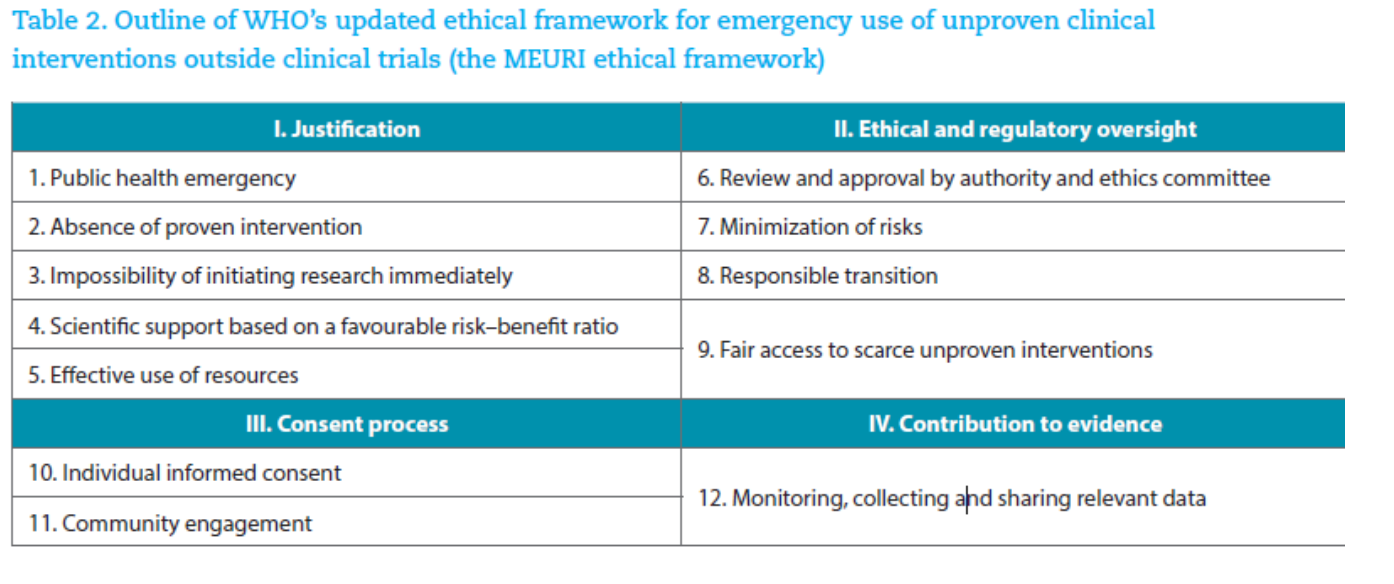
Emergency use of unproven clinical interventions outside clinical trials: ethical considerations – WHO 12 April 2022 :: 60 pages Overview This document is intended to provide policy-makers, authorities in charge of the prevention and management of a public health emergency, such as ministries of health, national regulatory authorities and national disaster management agencies, health-care workers, ethics committees and others, with: an updated version of the ethical framework for use of unproven clinical interventions outside clinical trials during public health emergencies (the MEURI ethical framework), general and operational recommendations for implementing the framework and • answers to questions that stakeholders may raise.
Equitable access to COVID-19 tools – WHO Aligning the private sector with national response efforts 12 April 2022 :: 28 pages Overview COVID-19 has reinforced the need for whole-of-society and whole-of-government approaches to the pandemic response. This has tested the foundation of public and private sector relations in healthcare, and either nurtured or exacerbated trust. In many instances, the private sector has demonstrated solidarity and delivered critical essential and COVID-19-related health services and products. However adverse behaviours have also featured. These have exacerbated the State’s duty to ‘protect’ the right to health, improve health security and system resilience for universal health care. The pandemic has further exposed the need for robust governance of health systems. This is good for both the private and public sectors, but most importantly, consumers, including those most likely to be left behind. This rapid review seeks to understand why and where there has been swift and proactive action to build better governance of national COVID-19 response, to cross-countries lessons sharing on how to govern the private sector in health to maximize the COVID-19 response.
Weekly epidemiological update on COVID-19 – 12 April 2022 Overview Globally, during the week of 4 through 10 April 2022, the number of new COVID-19 cases has continued to decline for the third consecutive week, with a 24% decrease as compared to the previous week. Also the number of new weekly deaths continue the decreasing trend (-18% as compared to the previous week). Across the six WHO regions, over 7 million cases and over 22 000 deaths were reported, with all the regions showing decreasing trends both in the number of new weekly cases and new weekly deaths. As of 10 April 2022, over 496 million confirmed cases and over 6 million deaths have been reported globally. In this edition we provide: Special Focus: Update on WHO COVID-19 global rapid risk assessment Updates on circulating SARS-CoV-2 variants of concern (VOCs), including information on Omicron descendent lineages.
COVID Vaccines/Therapeutics – Developer/Manufacturer Announcements [Selected press releases/announcements from organizations from WHO EUL/PQ listing above and other organizations]
AstraZeneca Press Releases – No new digest announcements identified
Bharat Biotech Press Releases – No new company announcements identified
CanSinoBIO News– Website not responding at inquiry
CIGB Latest News – No new digest announcements identified
Cinagen Recent News – No new digest announcements identified
Clover Biopharmaceuticals – China News – No new digest announcements identified
Curevac [Bayer Ag – Germany] News
April 11, 2022 CureVac and GSK Enter into Pandemic Preparedness Contract with German Government
German government reserves domestic manufacturing capacity until 2029 to ensure rapid access to mRNA vaccines developed by CureVac and GSK
Five-year contract enables production of up to 80 million vaccine doses at short notice in case of a public health emergency, contributing to increased pandemic preparedness
Novartis News – No new digest announcements identified
SK Biosciences Press releases– SK bioscience Initiates Clinical Development of Antiviral Nasal Spray for Prevention of COVID-19
SK began developing an innovative technology to prevent viral infections and relieve symptoms through intranasal spray
The spray is expected to be used as the first line of defense to prevent virus spread before vaccine development
The project is being funded by the Bill & Melinda Gates Foundation through a grant to IAVI and a subgrant to SK bioscience
2022.04.13
COVID-19 Global Targets and Progress Tracker – IMF The COVID-19 Global Targets and Progress Tracker presents a consolidated view of the progress towards global COVID-19 targets, barriers in access to COVID-19 tools, and delivery of donor pledges.
The global targets presented in the Tracker are based on an alignment of the targets identified in the IMF Pandemic Proposal, ACT-A Strategic Plan & Budget, and the US-hosted Global C19 Summit, and as such have been reaffirmed by multilateral institutions and global leaders. We will continue to enhance the tracker as we improve our data collection efforts.
Global Dashboard on COVID-19 Vaccine Equity The Dashboard is a joint initiative of UNDP, WHO and the University of Oxford with cooperation across the UN system, anchored in the SDG 3 Global Action Plan for Healthy Lives and Well-being for All.
Duke – Launch and Scale Speedometer The Race for Global COVID-19 Vaccine Equity A flurry of nearly 200 COVID-19 vaccine candidates are moving forward through the development and clinical trials processes at unprecedented speed; more than ten candidates are already in Phase 3 large-scale trials and several have received emergency or limited authorization. Our team has aggregated and analyzed publicly available data to track the flow of procurement and manufacturing and better understand global equity challenges. We developed a data framework of relevant variables and conducted desk research of publicly available information to identify COVID vaccine candidates and status, deals and ongoing negotiations for procurement and manufacturing, COVID burden by country, and allocation and distribution plans. We have also conducted interviews with public officials in key countries to better understand the context and challenges facing vaccine allocation and distribution [accessed 24 July 2021] See our COVID Vaccine Purchases research See our COVID Vaccine Manufacturing research See our COVID Vaccine Donations & Exports research
COVID-19 Data Explorer: Global Humanitarian Operations COVID-19 Vaccine Roll-out 16 Apr 2022 | COVAX (WHO,GAVI,CEPI), UNDESA, Press Reports | DATA Global COVID-19 Figures: 500M total confirmed cases; 6.2M total confirmed deaths Global vaccines administered: 11.4B
Number of Countries: 28
COVAX Allocations Round 4-9 (Number of Doses): 170M
COVAX Delivered (Number of Doses): 280M
Other Delivered (Number of Doses): 260M
Total Delivered (Number of Doses): 540M
Total Administered (Number of Doses): 390M
Multilateral Leaders Task Force on COVID-19 [IMF, World Bank Group, WHO, WTO] https://data.covid19taskforce.com/data A global effort to help developing countries access and deliver COVID-19 vaccines, testing, and therapeutics, as they work to end the pandemic and boost economic recovery. The International Monetary Fund, World Bank Group, World Health Organization and World Trade Organization have joined forces to accelerate access to COVID-19 vaccines, therapeutics and diagnostics by leveraging multilateral finance and trade solutions, particularly in low- and middle-income countries. Website accessed 16 Apr 2022: https://data.covid19taskforce.com/data The global view below is complemented by country-specific dashboards here.
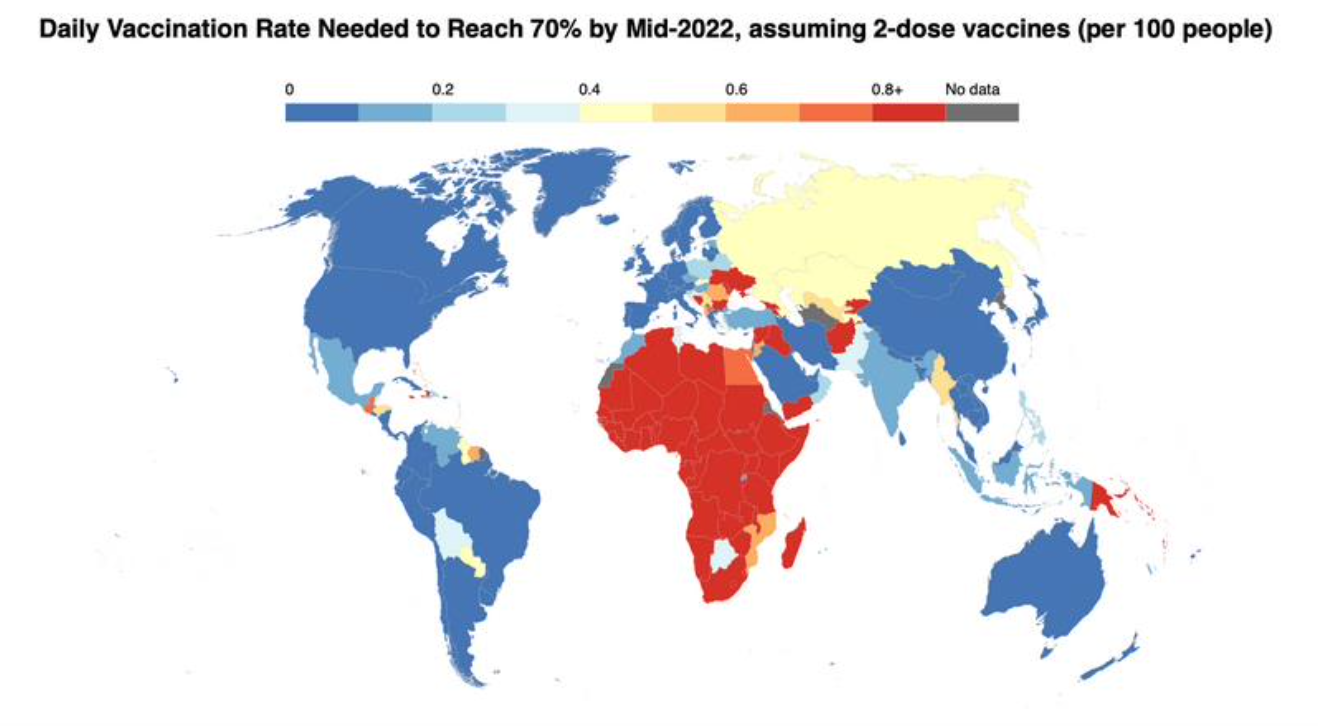
Our World in Data Coronavirus (COVID-19) Vaccinations[Accessed 16 Apr 2022] 65% of the world population has received at least one dose of a COVID-19 vaccine. 11.45 billion doses have been administered globally, and 11.79 million are now administered each day. Only 15.2% of people in low-income countries have received at least one dose.
FDA Takes Important Steps to Increase Racial and Ethnic Diversity in Clinical Trials Agency’s Focus on Inclusion in Trials for All Medical Products Aligns with Biden Administration’s Cancer Moonshot Goal of Addressing Inequities and Beyond
April 13, 2022
Today, the U.S. Food and Drug Administration issued a new draft guidance to industry for developing plans to enroll more participants from underrepresented racial and ethnic populations in the U.S. into clinical trials – expanding on the agency’s previous guidances for industry to improve clinical trial diversity.
“The U.S. population has become increasingly diverse, and ensuring meaningful representation of racial and ethnic minorities in clinical trials for regulated medical products is fundamental to public health,” said FDA Commissioner Robert M. Califf, M.D. “Going forward, achieving greater diversity will be a key focus throughout the FDA to facilitate the development of better treatments and better ways to fight diseases that often disproportionately impact diverse communities. This guidance also further demonstrates how we support the Administration’s Cancer Moonshot goal of addressing inequities in cancer care, helping to ensure that every community in America has access to cutting-edge cancer diagnostics, therapeutics and clinical trials.”
Despite having a disproportionate burden for certain diseases, racial and ethnic minorities are frequently underrepresented in biomedical research. Clinical trials provide a crucial base of evidence for evaluating whether a medical product is safe and effective; therefore, enrollment in clinical trials should reflect the diversity of the population that is ultimately going to use the treatment. It is known that biological differences exist in how people respond to certain therapies. For example, variations in genetic coding can make a treatment more or less toxic for one racial or ethnic group than another. These variations can also make drugs like antidepressants and blood-pressure medications less effective for certain groups.
White House [U.S.] [to 16 Apr 2022] Briefing Room– Selected Major COVID Announcements Press Statement – COVID Context No new digest content identified.
USAID Announces $18 Million Contribution to Education Cannot Wait
April 13, 2022
Press Release
The U.S. Agency for International Development (USAID) will contribute an additional $18 million to Education Cannot Wait (ECW), the major global fund for education in emergencies. USAID announced the additional funding during ECW’s scoping visit to Moldova to support the response to the crisis in Ukraine.
USAID and LIXIL Announce $10 Million to Confront the Global Sanitation Crisis
April 12, 2022
Today, the U.S. Agency for International Development and LIXIL, a global housing and sanitation products multinational company, launched the Partnership for Better Living to expand access to affordable sanitation and hygiene solutions for the underserved in up to 11 countries across sub-Saharan Africa and Asia by 2026.
Government of India – Press Information Bureau Latest Press Releases COVID – 19 Vaccination Update – Day 456 :: India’s cumulative vaccination coverage crosses 186.49 Crore :: More than 11 lakh Vaccine doses administered today till 7 pm :: More than 2.42 Crore Vaccine Doses administered to 12-14 age group so far Posted On: 16 APR 2022 8:05PM by PIB Delhi
[We did not identify official announcements about Shanghai confirming the reports below; See China CDC below for additional announcements]
China tightens controls as Shanghai reports record Covid cases Japan urges local government to address business concerns as ongoing restrictions hit commerce
Reuters in Shanghai
Sat 16 Apr 2022 10.42 EDT
Shanghai reported a record number of symptomatic Covid-19 cases on Saturday and other areas across China tightened controls as the country kept up its “dynamic clearance” approach that aims to stamp out the highly transmissible Omicron variant.
The Zhengzhou airport economic zone, a central Chinese manufacturing area that includes Apple supplier Foxconn, announced a 14-day lockdown on Friday “to be adjusted according to the epidemic situation”…
…Shanghai itself, which is at the centre of China’s recent Covid surge starting in early March, reported a record 3,590 symptomatic cases for 15 April, as well as 19,923 asymptomatic cases. The asymptomatic case number was up slightly from 19,872 cases a day earlier.
The city’s case tally makes up the vast majority of cases nationwide even as most of its 25 million residents remain under lockdown…
At the Zhengzhou economic zone, only personnel with valid passes, health codes and proof of negative Covid tests would be able to leave during the two-week period, although “special vehicles” would be able to travel normally for work reasons, local authorities said in a post on an official WeChat instant messaging account.
Overall, China reported 24,791 new coronavirus cases on 15 April, of which 3,896 were symptomatic and 20,895 were asymptomatic, the National Health Commission said on Saturday.
UN OCHA – Current Emergencies Current Corporate Emergencies Afghanistan No new updates identified.
Northern Ethiopia Ethiopia – Northern Ethiopia Humanitarian Update Situation Report, 14 Apr 2022 HIGHLIGHTS
Humanitarian partners have not been able to move any additional aid supplies into Tigray by road since the convoy entered on 1 and 2 April.
About 36 metric tons of HIV medical supplies were airlifted to Mekelle, the first time since July 2021. It will be enough to provide treatment for 46,000 patients for six months.
Authorities in Amhara relocated more than 20,000 people out of the planned 70,000 people in North Wello and Wag Hamra zones to new designated sites since mid-March.
WFP assisted over 35,000 people with food in Gulina, Barahle and Dalole woredas in Afar during the reporting period, reaching over 235,000 people since last week of February.
More than 11,000 children under five and pregnant and lactating women received supplementary nutrients in Wag Harma and North Wello zones in Amhara between 1 and 10 April.
WHO & Regional Offices [to 16 Apr 2022] https://www.who.int/news News [Selected] 14 April 2022 Departmental news The Global Diabetes Compact: a promising first year
14 April 2022 Departmental news World Chagas Disease Day: finding and reporting every case
13 April 2022 Statement Statement on the eleventh meeting of the International Health Regulations (2005) Emergency Committee regarding the coronavirus disease (COVID-19) pandemic [See Milestones above for detail]
13 April 2022 Departmental news Ukraine next country to receive technology from the WHO mRNA technology transfer hub
12 April 2022 Departmental news Meeting of WHO Director-General’s Expert Group on Cervical Cancer Elimination, 19 April 2022
11 April 2022 Departmental news SAGE April 2022 meeting highlights [See Milestones above for detail]
11 April 2022 News release One-dose Human Papillomavirus (HPV) vaccine offers solid protection against cervical cancer [See Milestones above for detail]
14 April 2022 Speech WHO Director-General’s opening remarks at the Briefing to the African Union Ambassadors in Geneva on Strengthening Local Manufacturing Capacity – 14 April 2022
13 April 2022 Speech WHO Director-General’s opening remarks at the WHO press conference – 13 April 2022
12 April 2022 Speech WHO Director-General’s opening remarks at the International Strategic Dialogue on Noncommunicable Diseases and the Sustainable Development Goals – 12 April 2022
12 April 2022 Speech WHO Director-General’s opening remarks at the Global Launch of the WHO QualityRights e-training to advance mental health, eliminate stigma and promote community inclusion – 12 April 2022
12 April 2022 Speech WHO Director-General’s opening remarks at the Public Hearing regarding a new international instrument on pandemic preparedness and response – 12 April 2022
::::::
WHO Regional Offices Selected Press Releases, Announcements WHO African Region
:: Africa witnesses longest-running decline in COVID-19 cases 14 April 2022
Brazzaville – Africa is experiencing its longest-running decline in COVID-19 infections since the onset of the pandemic. Recorded weekly cases have fallen for the past 16 weeks, while deaths have dropped for the last eight.
Infections—largely due to the Omicron-driven fourth pandemic wave—have tanked from a peak of over 308 000 cases weekly at the start of the year to less than 20 000 in the week ending on 10 April 2022. Over the past week, around 18 000 cases and 239 deaths were recorded, a decline of 29% and 37% respectively compared with the week before. This low level of infection has not been seen since April 2020 in the early stages of the pandemic in Africa…
:: Botswana, South Africa deepen probe into new Omicron sub-variants 12 April 2022
Brazzaville – Researchers in Botswana and South Africa have detected new sub-lineages of the Omicron variant of the SARS-CoV-2 and are carrying out further investigations to fully understand crucial traits such as infectivity and virulence.
The identified sub-lineages variant are BA.4 and BA.5. World Health Organization (WHO) experts are working with scientists and researchers in the two countries to deepen analysis of the sub-lineages which have so far been identified in four people in Botswana and 23 in South Africa. Outside Africa, the BA.4 and the BA.5 have been confirmed in Belgium, Denmark, Germany and the United Kingdom…
:: Deaths from noncommunicable diseases on the rise in Africa 11 April 2022
Accra/Brazzaville – Noncommunicable diseases such as cancer, cardiovascular diseases and diabetes are increasingly becoming the main cause of mortality in sub-Saharan Africa, where the diseases were responsible for 37% of deaths in 2019, rising from 24% in 2000 largely due to weaknesses in the implementation of critical control measures including prevention, diagnosis and care. This comes on the eve of a high-level heads of state and health leaders meeting in Ghana to find ways of accelerating progress against noncommunicable diseases…
WHO Region of the Americas PAHO
:: 13 Apr 2022 Less than 10% of those infected with Chagas disease receive timely diagnosis and treatment
PAHO calls for detection of all cases and equitable access to care for this disease, which causes about 30,000 new infections each year. Washington, DC, April 13, 2022 (PAHO)- Due to its silent nature, less than 10% of those infected with Chagas disease each year receive timely diagnosis and, therefore, effective treatment in Mexico, Central…
:: 11 Apr 2022 One-dose Human Papillomavirus (HPV) vaccine offers solid protection against cervical cancer
Geneva, 11 April 2022 (WHO)- The 4-7 April convening of the WHO Strategic Advisory Group of Experts on Immunization (SAGE) evaluated the evidence that has been emerging over past years that single-dose schedules provide comparable efficacy to the two or three-dose regimens. SAGE’s review concluded that a single-dose Human Papillomavirus (HPV)…
New WHO Publications https://www.who.int/publications/i Selected Titles
14 April 2022 Environmental surveillance for SARS-COV-2 to complement public health surveillance – Interim Guidance Overview
Routine diagnostic surveillance for COVID-19 has been augmented with environmental surveillance (ES) in wastewater in many locations. ES provides additional evidence on virus in circulation at population level including presence or absence, early warning of increasing or decreasing trends, and information on variants of concern or interest.
This guidance provides advice on:
What situations ES has been shown to add value to public health decision making
What is needed to plan and coordinate an effective ES programme
How to carry out data collection, analysis, interpretation and communication of results.
This guidance is targeted at public health officials who want to understand and integrate complementary ES into COVID-19 control strategies.
ACIP Meetings
Next ACIP Meeting April 20, 2022 11:00am – 4:00pm ET.
This meeting is virtual. No registration is required to watch the webcasts. Webcast Link No Agenda posted at inquiry
Careful readers will note that the number and range of organizations now monitored in our Announcements section below has grown as the impacts of the pandemic have spread across global economies, supply chains and programmatic activity of multilateral agencies and INGOs.
The Bill & Melinda Gates Medical Research Institute is a non-profit biotech organization. Our mission is to develop products to fight malaria, tuberculosis, and diarrheal diseases—three major causes of mortality, poverty, and inequality in developing countries. The world has unprecedented scientific tools at its disposal; now is the time to use them to save the lives of the world’s poorest people
The European & Developing Countries Clinical Trials Partnership (EDCTP) aims to accelerate the development of new or improved drugs, vaccines, microbicides and diagnostics against HIV/AIDS, tuberculosis and malaria as well as other poverty-related and neglected infectious diseases in sub-Saharan Africa, with a focus on phase II and III clinical trials
Statement by the International Committee of the Red Cross (ICRC) at the United Nations Security Council, New York 11 April 2022. Delivered by Dr. Esperanza Martinez, Senior Advisor to the Office of the Director-General.
12-04-2022 | Statement
[See COVID above for detail]
International Coalition of Medicines Regulatory Authorities [ICMRA]
ISC is a non-governmental organization with a unique global membership that brings together 40 international scientific Unions and Associations and over 140 national and regional scientific organizations including Academies and Research Councils.
During World Immunization Week 2022 the International Vaccine Access Center, along with global immunization and indigenous health partners, will host a three webinars. Registration is free, and we encourage all to sign up and save these dates on their calendars. Enabling Equitable Access to COVID-19 Vaccines for Indigenous Populations When: April 26, 2022 from 6:00 […]
Foreign aid from official donors rose to an all-time high of USD 179 billion in 2021, up 4.4% in real terms from 2020 as developed countries stepped up their help for developing countries grappling with the COVID-19 crisis, according to preliminary data collected by the OECD.
… Unitaid’s efforts, underway in Brazil, Bolivia, Colombia and Paraguay, seek to demonstrate new approaches to testing, treatment and care for Chagas disease that will generate valuable evidence to facilitate the adoption of feasible and cost-effective health strategies for combatting Chagas disease across the region and globally…
BRUSSELS, April 14, 2022 – Green fiscal reforms can help protect vulnerable households and support pandemic recovery efforts in European countries on the road to climate neutrality by 2050, says a new…
Proposed actions to help vulnerable countries include providing emergency food supplies and deploying financial support to households and countries; facilitating unhindered trade; investing in sustainable…
Proposed actions to help vulnerable countries include providing emergency food supplies and deploying financial support to households and countries; facilitating unhindered trade; investing in sustainable…
The heads of the World Bank, the International Monetary Fund (IMF), the United Nations World Food Program (WFP) and the WTO issued a joint statement on 13 April urging coordinated action to help vulnerable countries address growing threats to food security. The proposed actions include providing emergency food supplies and deploying financial support to households and countries, facilitating unhindered trade, and investing in sustainable food production and nutrition security.
The World Health Organization (WHO), the World Intellectual Property Organization (WIPO) and the WTO launched on 11 April 2022 their new Trilateral COVID-19 Technical Assistance Platform. This new tool aims to help members and WTO accession candidates address their capacity building needs to respond to the COVID-19 pandemic.
[See COVID above for detail]
::::::
ARM [Alliance for Regenerative Medicine] [to 16 Apr 2022]
The biopharmaceutical industry is committed to working with stakeholders to improve pandemic preparedness for the future and to ensure equitable access to medical countermeasures.
Any system should be built on what worked well during the COVID-19 pandemic with robust IP frameworks enabling collaborations, as well as immediate sharing of pathogens.
As the INB enters deeper discussions on a new instrument we believe these should be informed by a few core principles:
International Generic and Biosimilar Medicines Association [IGBA]
Journal Watch Vaccines and Global Health: The Week in Review continues its weekly scanning of key peer-reviewed journals to identify and cite articles, commentary and editorials, books reviews and other content supporting our focu-s on vaccine ethics and policy. Journal Watch is not intended to be exhaustive, but indicative of themes and issues the Center is actively tracking. We selectively provide full text of some editorial and comment articles that are specifically relevant to our work. Successful access to some of the links provided may require subscription or other access arrangement unique to the publisher.
If you would like to suggest other journal titles to include in this service, please contact David Curry at: david.r.curry@centerforvaccineethicsandpolicy.org
Health Equity in US Latinx Communities
Latinx communities in the US include over 60 million people with a plurality of political beliefs, cultural practices, and wealth. This diversity is also expressed in population health data: some health indicators suggest advantages of Latinx community membership while other data demonstrate inequitable disease burden and maldistribution of environmental and occupational risk. Legacies of colonial conquest of the Americas persist in discrimination and marginalization today and are embodied by members of our Latinx communities.
(Accessed 16 Apr 2022) Studying SARS-CoV-2 vaccine hesitancy among health professionals in Tunisia People’s lives were seriously affected by the emergence and the spread of the COVID-19 disease. Several vaccines were developed in record time to overcome this pandemic. However, putting an end to this public …
Authors: Nawel Zammit, Amani El Gueder, Aïcha Brahem, Imen Ayouni, Rim Ghammam, Sihem Ben Fredj, Chaima Sridi, Asma Chouchene, Houda Kalboussi, Olfa El Maalel, Souhaeil Chatti, Jihene Maatoug, Hassen Ghannem and Néjib Mrizak
Citation: BMC Health Services Research 2022 22:489
Content type: Research Published on: 12 April 2022
Children with SARS-CoV-2 infection during the novel coronaviral disease (COVID-19) outbreak in Iran: an alarming concern for severity and mortality of the disease The rapid worldwide spread of severe acute respiratory syndrome coronavirus 2 (SARS-CoV-2) infections led to public health crises globally and the number of pediatric patients with Coronavirus Disease 2019 (CO…
Authors: Setareh Mamishi, Babak Pourakbari, Mehrzad Mehdizadeh, Amene Navaeian, Hamid Eshaghi, Bahareh Yaghmaei, Reihaneh Hosseinpour Sadeghi, Shiva Poormohammadi, Yasmine Mahmoudieh and Shima Mahmoudi
Citation: BMC Infectious Diseases 2022 22:382
Content type: Research article Published on: 15 April 2022
Determinants of measles vaccination dropout among 12 − 23 months aged children in pastoralist community of Afar, Ethiopia Measles is a viral disease and a leading vaccine-preventable childhood killer. More than 95% of measles deaths occur in countries with low incomes and weak health infrastructures. In response to this, Ethiopia…
Authors: Chekole Hailu, Girmatsion Fisseha and Aregawi Gebreyesus
Citation: BMC Infectious Diseases 2022 22:376
Content type: Research article Published on: 14 April 2022
Barriers to and strategies to address COVID-19 testing hesitancy: a rapid scoping review Testing is a foundational component of any COVID-19 management strategy; however, emerging evidence suggests that barriers and hesitancy to COVID-19 testing may affect uptake or participation and often these a…
Authors: Mark Embrett, S. Meaghan Sim, Hilary A. T. Caldwell, Leah Boulos, Ziwa Yu, Gina Agarwal, Rhiannon Cooper, Allyson J. Gallant AJ, Iwona A. Bielska, Jawad Chishtie, Kathryn Stone, Janet Curran and Andrea Tricco
Citation: BMC Public Health 2022 22:750
Content type: Research Published on: 14 April 2022
Considering social inequalities in health in large-scale testing for COVID-19 in Montréal: a qualitative case study Evidence continues to demonstrate that certain marginalised populations are disproportionately affected by COVID-19. While many studies document the impacts of COVID-19 on social inequalities in health, none h…
Authors: Marie-Catherine Gagnon-Dufresne, Lara Gautier, Camille Beaujoin, Ashley Savard Lamothe, Rachel Mikanagu, Patrick Cloos, Valéry Ridde and Kate Zinszer
Citation: BMC Public Health 2022 22:749
Content type: Research Published on: 14 April 2022
Prioritizing COVID-19 vaccination efforts and dose allocation within Madagascar While mass COVID-19 vaccination programs are underway in high-income countries, limited availability of doses has resulted in few vaccines administered in low and middle income countries (LMICs). The COVID-19 …
Authors: Fidisoa Rasambainarivo, Tanjona Ramiadantsoa, Antso Raherinandrasana, Santatra Randrianarisoa, Benjamin L. Rice, Michelle V. Evans, Benjamin Roche, Fidiniaina Mamy Randriatsarafara, Amy Wesolowski and Jessica C. Metcalf
Citation: BMC Public Health 2022 22:724
Content type: Research Published on: 12 April 2022
A network of change: united action on research integrity
Authors: Thomas Rhys Evans, Madeleine Pownall, Elizabeth Collins, Emma L. Henderson, Jade S. Pickering, Aoife O’Mahony, Mirela Zaneva, Matt Jaquiery and Tsvetomira Dumbalska
Citation: BMC Research Notes 2022 15:141
Content type: Commentary Published on: 14 April 2022 Abstract
The last decade has seen renewed concern within the scientific community over the reproducibility and transparency of research findings. This paper outlines some of the various responsibilities of stakeholders in addressing the systemic issues that contribute to this concern. In particular, this paper asserts that a united, joined-up approach is needed, in which all stakeholders, including researchers, universities, funders, publishers, and governments, work together to set standards of research integrity and engender scientific progress and innovation. Using two developments as examples: the adoption of Registered Reports as a discrete initiative, and the use of open data as an ongoing norm change, we discuss the importance of collaboration across stakeholders.
Conversations Learning lessons from lipids to make COVID-19 vaccines
A game-changing intervention in the COVID-19 pandemic has been the rapid implementation of highly effective vaccines against SARS-CoV-2. The 2022 Canada Gairdner International Award recognizes Pieter Cullis, Katalin Karikó, and Drew Weissman “for their pioneering work developing nucleoside-modified mRNA and lipid nanoparticle (LNP) drug delivery: the foundational technologies for the highly effective COVID-19 mRNA vaccines.” Cell editor Cheri Sirois caught up with Pieter to discuss how a long interest in basic and applied questions in lipid biology led to this fortuitous collaboration. Excerpts of the conversation are presented below.





 vaccines and global health :: ethics and policy