Predictors of immunization coverage among 12–23 month old children in Ethiopia: systematic review and meta-analysis

BMC Public Health
http://bmcpublichealth.biomedcentral.com/articles
(Accessed 28 Nov 2020)


Predictors of immunization coverage among 12–23 month old children in Ethiopia: systematic review and meta-analysis
Immunization is one of modern medicine’s greatest achievements in the last three decades. Annually it can prevent nearly 2 to 3 million deaths. Understanding the determinants of effective immunization coverage…
Authors: Tahir Yousuf Nour, Alinoor Mohamed Farah, Omer Moelin Ali, Mohamed Omar Osman, Mowlid Akil Aden and Kalkidan Hassen Abate
Citation: BMC Public Health 2020 20:1803
Content type: Research article
Published on: 26 November 2020

Willingness of female sex workers in Kampala, Uganda to participate in future HIV vaccine trials: a case control study

BMC Public Health
http://bmcpublichealth.biomedcentral.com/articles
(Accessed 28 Nov 2020)


Willingness of female sex workers in Kampala, Uganda to participate in future HIV vaccine trials: a case control study
We anticipate large efficacy trials of novel HIV vaccines that have shown acceptable safety profiles. We determined willingness to participate (WTP) in future HIV vaccine efficacy trials among HIV negative fem…
Authors: Yunia Mayanja, Andrew Abaasa, Gertrude Namale, Matt A. Price and Anatoli Kamali
Citation: BMC Public Health 2020 20:1789
Content type: Research article
Published on: 25 November 2020

The role of the media on maternal confidence in provider HPV recommendation

BMC Public Health
http://bmcpublichealth.biomedcentral.com/articles
(Accessed 28 Nov 2020)


The role of the media on maternal confidence in provider HPV recommendation
Despite a growing understanding of the importance of provider HPV recommendation on parental acceptance, U.S. HPV vaccination rates remain suboptimal. Given the prevalence and use of the media for health decis…
Authors: Kimberly K. Walker, Heather Owens and Gregory Zimet
Citation: BMC Public Health 2020 20:1765
Content type: Research article
Published on: 23 November 2020

Personality and individual attitudes toward vaccination: a nationally representative survey in the United States

BMC Public Health
http://bmcpublichealth.biomedcentral.com/articles
(Accessed 28 Nov 2020)


Personality and individual attitudes toward vaccination: a nationally representative survey in the United States
Although past studies have identified factors associated with individual perceptions of vaccination, limited attention has been paid to the role of personality in individual attitudes toward vaccination. This
Authors: Fang-Yu Lin and Ching-Hsing Wang
Citation: BMC Public Health 2020 20:1759
Content type: Research article
Published on: 23 November 2020

Geographic location of health facility and immunization program performance in Hoima district, western Uganda: a health facility level assessment

BMC Public Health
http://bmcpublichealth.biomedcentral.com/articles
(Accessed 28 Nov 2020)


Geographic location of health facility and immunization program performance in Hoima district, western Uganda: a health facility level assessment
Globally, immunization coverage for childhood vaccines is below the immunization target of achieving at least 90% coverage with the pentavalent vaccine. In Uganda, a recent survey shows 80% of districts had po…
Authors: Nicholas Kwikiriza Magambo, Francis Bajunirwe and Fred Bagenda
Citation: BMC Public Health 2020 20:1764
Content type: Research article
Published on: 23 November 2020

Considerations for planning COVID-19 treatment services in humanitarian responses

Conflict and Health
http://www.conflictandhealth.com/
[Accessed 28 Nov 2020]


Considerations for planning COVID-19 treatment services in humanitarian responses
The COVID-19 pandemic has the potential to cause high morbidity and mortality in crisis-affected populations. Delivering COVID-19 treatment services in crisis settings will likely entail complex trade-offs bet…
Authors: Sylvia Garry, Nada Abdelmagid, Louisa Baxter, Natalie Roberts, Olivier le Polain de Waroux, Sharif Ismail, Ruwan Ratnayake, Caroline Favas, Elizabeth Lewis and Francesco Checchi
Citation: Conflict and Health 2020 14:80
Content type: Research in practice
Published on: 25 November 2020

Ripple effects of research capacity strengthening: a study of the effects of a project to support test facilities in three African countries towards Good Laboratory Practice certification

Gates Open Research
https://gatesopenresearch.org/browse/articles
[Accessed 28 Nov 2020]


Research Article metrics AWAITING PEER REVIEW
Ripple effects of research capacity strengthening: a study of the effects of a project to support test facilities in three African countries towards Good Laboratory Practice certification [version 1; peer review: awaiting peer review]
Sara Begg, Alexandra Wright, Graham Small, Diabate Abdoulaye, William Kisinza, Benjamin Koudou, Sarah Moore, Franklin Mosha, Constant Edi, Matthew Kirby, Patrick Kija, Robert Malima, Jason Moore, Imelda Bates
Peer Reviewers Invited
Funder
Bill and Melinda Gates Foundation
PUBLISHED 27 Nov 2020

Supporting early-career mentorship for women in Health Policy and Systems Research: a vital input to building the field

Health Policy and Planning
Volume 35, Issue Supplement_1, November 2020
https://academic.oup.com/heapol/issue/35/Supplement_1


SUPPLEMENT
Health policy and systems research mentoring: Supporting early career women in Low- and Middle-Income Countries
Supporting early-career mentorship for women in Health Policy and Systems Research: a vital input to building the field
Aku Kwamie, Nanuka Jalaghonia
Health Policy and Planning, Volume 35, Issue Supplement_1, November 2020, Pages i4–i6, https://doi.org/10.1093/heapol/czaa105

Factors associated with the utilization of inactivated polio vaccine among children aged 12 to 23 months in Kalungu District, Uganda

Health Policy and Planning
Volume 35, Issue Supplement_1, November 2020
https://academic.oup.com/heapol/issue/35/Supplement_1


Factors associated with the utilization of inactivated polio vaccine among children aged 12 to 23 months in Kalungu District, Uganda
Mirembe Rachel Faith, Babirye Juliet, Nathan Tumuhamye, Tumwebaze Mathias, Emma Sacks
Health Policy and Planning, Volume 35, Issue Supplement_1, November 2020, Pages i30–i37, https://doi.org/10.1093/heapol/czaa099

Do social accountability approaches work? A review of the literature from selected low- and middle-income countries in the WHO South-East Asia region

Health Policy and Planning
Volume 35, Issue Supplement_1, November 2020
https://academic.oup.com/heapol/issue/35/Supplement_1


Do social accountability approaches work? A review of the literature from selected low- and middle-income countries in the WHO South-East Asia region
Nahitun Naher, Dina Balabanova, Eleanor Hutchinson, Robert Marten, Roksana Hoque
Health Policy and Planning, Volume 35, Issue Supplement_1, November 2020, Pages i76–i96, https://doi.org/10.1093/heapol/czaa107

Disability inclusion in humanitarian action

Humanitarian Exchange Magazine
Number 78, October 2020
https://odihpn.org/magazine/inclusion-of-persons-with-disabilities-in-humanitarian-action-what-now/


Disability inclusion in humanitarian action
by HPN October 2020
The theme of this edition of Humanitarian Exchange, co-edited with Sherin Alsheikh Ahmed from Islamic Relief Worldwide, is disability inclusion in humanitarian action. Persons with disabilities are not only disproportionately impacted by conflicts, disasters and other emergencies, but also face barriers to accessing humanitarian assistance. At the same time, global commitments and standards and the IASC Guidelines on the inclusion of persons with disabilities in humanitarian action all emphasise how persons with disabilities are also active agents of change. Disability and age-focused organisations have led on testing and demonstrating how inclusion can be done better. Yet despite this progress, challenges to effective inclusion remain.

As Kirstin Lange notes in the lead article, chief among these challenges is humanitarian agencies’ lack of engagement with organisations of persons with disabilities. Simione Bula, Elizabeth Morgan and Teresa Thomson look at disability inclusion in humanitarian response in the Pacific, and Kathy Al Jubeh and Alradi Abdalla argue for a ‘participation revolution’, building on learning from the gender movement. Tchaurea Fleury and Sulayman AbdulMumuni Ujah outline how the Bridge Article 11 training initiative is encouraging constructive exchange between humanitarian and disability actors. The lack of good, disaggregated data is highlighted by Sarah Collinson; Frances Hill, Jim Cranshaw and Carys Hughes emphasise the need for training resources in local languages and accessible formats; and Sophie Van Eetvelt and colleagues report on a review of the evidence on inclusion of people with disabilities and older people.

Rebecca Molyneux and co-authors analyse the findings of a review of a DFID programme in north-east Nigeria, while Carolin Funke highlights the importance of strategic partnerships between disability-focused organisations, drawing on her research in Cox’s Bazar. Sherin Alsheikh Ahmed describes Islamic Relief Worldwide’s approach to mainstreaming protection and inclusion, while Pauline Thivillier and Valentina Shafina outline IRC’s Client Responsive Programming. The edition ends with reflections by Mirela Turcanu and Yves Ngunzi Kahashi on CAFOD’s SADI approach.

Characterizing mothers and children at risk of being under-immunized in India: A latent class analysis approach

International Journal of Infectious Diseases
November 2020 Volume 100 p1-512
https://www.ijidonline.com/current


Original Reports
Characterizing mothers and children at risk of being under-immunized in India: A latent class analysis approach
Taylor A. Holroyd, Brian Wahl, Madhu Gupta,…Daniel J. Erchick, Mathuram Santosham,
Rupali J. Limaye
Published online: August 26, 2020
p59-66

COVID-19 and Excess All-Cause Mortality in the US and 18 Comparison Countries

JAMA
November 24, 2020, Vol 324, No. 20, Pages 2013-2114
https://jamanetwork.com/journals/jama/currentissue


Research Letter
COVID-19 and Excess All-Cause Mortality in the US and 18 Comparison Countries
Alyssa Bilinski, MSc; Ezekiel J. Emanuel, MD, PhD
free access has active quiz
JAMA. 2020;324(20):2100-2102. doi:10.1001/jama.2020.20717
This Viewpoint compares the COVID-19 per capita overall and excess mortality rates in the US vs that of 18 OECD countries and the timing of any increases in excess mortality between February and September 2020.

Is It Lawful and Ethical to Prioritize Racial Minorities for COVID-19 Vaccines?

JAMA
November 24, 2020, Vol 324, No. 20, Pages 2013-2114
https://jamanetwork.com/journals/jama/currentissue


Viewpoint
Is It Lawful and Ethical to Prioritize Racial Minorities for COVID-19 Vaccines?
Harald Schmidt, PhD; Lawrence O. Gostin, JD; Michelle A. Williams, ScD
free access has active quiz has multimedia has audio
JAMA. 2020;324(20):2023-2024. doi:10.1001/jama.2020.20571
This Viewpoint considers how COVID-19 vaccines can be distributed strategically, ethically, and legally given conflicts between consensus public health recommendations to prioritize allocation to disadvantaged racial and ethnic minorities and laws discouraging explicit consideration of race in policy decisions.

Scientific and Ethical Principles Underlying Recommendations From the Advisory Committee on Immunization Practices for COVID-19 Vaccination Implementation

JAMA
November 24, 2020, Vol 324, No. 20, Pages 2013-2114
https://jamanetwork.com/journals/jama/currentissue


Scientific and Ethical Principles Underlying Recommendations From the Advisory Committee on Immunization Practices for COVID-19 Vaccination Implementation
Beth P. Bell, MD, MPH; José R. Romero, MD; Grace M. Lee, MD, MPH
free access has active quiz
JAMA. 2020;324(20):2025-2026. doi:10.1001/jama.2020.20847
This Viewpoint summarizes the principles guiding coronavirus disease 2019 (COVID-19) vaccine recommendations made by the Advisory Committee on Immunization Practices (ACIP), a nongovernment advisory standing committee that counsels the Centers for Disease Control and Prevention on US population vaccine use, emphasizing that any final recommendations await phase 3 safety and efficacy data from ongoing trials.

Answering Key Questions About COVID-19 Vaccines

JAMA
November 24, 2020, Vol 324, No. 20, Pages 2013-2114
https://jamanetwork.com/journals/jama/currentissue


Answering Key Questions About COVID-19 Vaccines
Jesse L. Goodman, MD, MPH; John D. Grabenstein, RPh, PhD; M. Miles Braun, MD, MPH
free access has active quiz
JAMA. 2020;324(20):2027-2028. doi:10.1001/jama.2020.20590
This Viewpoint offers provisional answers to common questions the public will have about approved COVID-19 vaccines, including what they can expect regarding its effectiveness and safety, trustworthiness of the approval process, and whether society can return to normal once sufficient numbers of people are immunized.

Herd Immunity and Implications for SARS-CoV-2 Control

JAMA
November 24, 2020, Vol 324, No. 20, Pages 2013-2114
https://jamanetwork.com/journals/jama/currentissue


Herd Immunity and Implications for SARS-CoV-2 Control
Saad B. Omer, MBBS, MPH, PhD; Inci Yildirim, MD, PhD, MSc; Howard P. Forman, MD, MBA
free access has active quiz has multimedia has audio
JAMA. 2020;324(20):2095-2096. doi:10.1001/jama.2020.20892
This JAMA Insights Clinical Update discusses herd immunity in the context of the COVID-19 pandemic and explains the herd immunity threshold as a function of transmissibility (R0), the role of an effective vaccine and vaccination program in sustaining herd immunity, and the risks of an infection-based herd immunity approach.

Evidence synthesis and methodological research on evidence in medicine—Why it really is research and it really is medicine

Journal of Evidence-Based Medicine
Volume 13, Issue 4 Pages: 251-324 November 2020
https://onlinelibrary.wiley.com/toc/17565391/current


EDITORIAL
Evidence synthesis and methodological research on evidence in medicine—Why it really is research and it really is medicine
Livia Puljak
Pages: 253-254
First Published: 03 November 2020

Analytics with artificial intelligence to advance the treatment of acute respiratory distress syndrome

Journal of Evidence-Based Medicine
Volume 13, Issue 4 Pages: 251-324 November 2020
https://onlinelibrary.wiley.com/toc/17565391/current


REVIEWS
Analytics with artificial intelligence to advance the treatment of acute respiratory distress syndrome
Zhongheng Zhang et al
Pages: 301-312
First Published: 13 November 2020
Abstract
Artificial intelligence (AI) has found its way into clinical studies in the era of big data. Acute respiratory distress syndrome (ARDS) or acute lung injury (ALI) is a clinical syndrome that encompasses a heterogeneous population. Management of such heterogeneous patient population is a big challenge for clinicians. With accumulating ALI datasets being publicly available, more knowledge could be discovered with sophisticated analytics. We reviewed literatures with big data analytics to understand the role of AI for improving the caring of patients with ALI/ARDS. Many studies have utilized the electronic medical records (EMR) data for the identification and prognostication of ARDS patients. As increasing number of ARDS clinical trials data is open to public, secondary analysis on these combined datasets provide a powerful way of finding solution to clinical questions with a new perspective. AI techniques such as Classification and Regression Tree (CART) and artificial neural networks (ANN) have also been successfully used in the investigation of ARDS problems. Individualized treatment of ARDS could be implemented with a support from AI as we are now able to classify ARDS into many subphenotypes by unsupervised machine learning algorithms. Interestingly, these subphenotypes show different responses to a certain intervention. However, current analytics involving ARDS have not fully incorporated information from omics such as transcriptome, proteomics, daily activities and environmental conditions. AI technology is assisting us to interpret complex data of ARDS patients and enable us to further improve the management of ARDS patients in future with individual treatment plans.

Emergency use authorisation for COVID-19 vaccines: lessons from Ebola

The Lancet
Nov 28, 2020 Volume 396 Number 10264 p1703-1776
https://www.thelancet.com/journals/lancet/issue/current


Comment
Emergency use authorisation for COVID-19 vaccines: lessons from Ebola
Maxwell J Smith, Samuel Ujewe, Rachel Katz, Ross E G Upshur
Russia and China have begun COVID-19 vaccinations outside of clinical trials. This move has been met with widespread criticism because the safety profiles of these candidate COVID-19 vaccines remain uncertain without data from phase 3 trials.1,2 Emergency use authorisations—a regulatory mechanism that enables the public to gain access to promising investigational medical products when those products have not yet received regulatory approval and licensure3 —have previously been used for unlicensed vaccines in public health emergencies and can be ethically justified provided that certain conditions are met. So why have the actions of Russia and China drawn such criticism? And how can other national regulatory authorities ensure future emergency use authorisations for COVID-19 vaccines are issued in a way that is scientifically and ethically sound? Experience of emergency use authorisations for investigational Ebola virus vaccines in Guinea and the Democratic Republic of the Congo (DRC) can elucidate key lessons that can guide ethical emergency use authorisations for COVID-19 vaccines…

Banning Genetic Discrimination in Life Insurance — Time to Follow Florida’s Lead

New England Journal of Medicine
November 26, 2020 Vol. 383 No. 22
http://www.nejm.org/toc/nejm/medical-journal


Perspective
Banning Genetic Discrimination in Life Insurance — Time to Follow Florida’s Lead
Mark A. Rothstein, J.D.,
and Kyle B. Brothers, M.D., Ph.D.
Fear of discrimination by life insurance companies has been an obstacle to progress in the use of genetic technologies in medicine and research. A new Florida law will allow residents to undergo genetic testing without fear of the financial consequences of results.

Trustworthiness before Trust — Covid-19 Vaccine Trials and the Black Community

New England Journal of Medicine
November 26, 2020 Vol. 383 No. 22
http://www.nejm.org/toc/nejm/medical-journal


Perspective
Trustworthiness before Trust — Covid-19 Vaccine Trials and the Black Community
Rueben C. Warren, D.D.S., Dr.P.H., M.Div., Lachlan Forrow, M.D., David Augustin Hodge, Sr., D.Min., Ph.D., and Robert D. Truog, M.D.
… What are the barriers to greater participation of Black people in Covid-19 trials? Although they are multiple, a critical factor is the deep and justified lack of trust that many Black Americans have for the health care system in general and clinical research in particular. This distrust is often traced to the legacy of the infamous syphilis study at Tuskegee, in which investigators withheld treatment from hundreds of Black men in order to study the natural history of the disease. But the distrust is far more deeply rooted, in centuries of well-documented examples of racist exploitation by American physicians and researchers.2

Hepatitis B vaccination status and knowledge, attitude, and practice regarding Hepatitis B among preclinical medical students of a medical college in Nepal

PLoS One
http://www.plosone.org/


Research Article
Hepatitis B vaccination status and knowledge, attitude, and practice regarding Hepatitis B among preclinical medical students of a medical college in Nepal
Dhan Bahadur Shrestha, Manita Khadka, Manoj Khadka, Prarthana Subedi, Subashchandra Pokharel, Bikash Bikram Thapa
Research Article | published 23 Nov 2020 PLOS ONE
https://doi.org/10.1371/journal.pone.0242658

Ethics in field experimentation: A call to establish new standards to protect the public from unwanted manipulation and real harms

PNAS – Proceedings of the National Academy of Sciences of the United States of America
http://www.pnas.org/content/early/


Articles
Ethics in field experimentation: A call to establish new standards to protect the public from unwanted manipulation and real harms
Rose McDermott and Peter K. Hatemi
PNAS first published November 23, 2020. https://doi.org/10.1073/pnas.2012021117
Abstract
In 1966, Henry Beecher published his foundational paper “Ethics and Clinical Research,” bringing to light unethical experiments that were routinely being conducted by leading universities and government agencies. A common theme was the lack of voluntary consent. Research regulations surrounding laboratory experiments flourished after his work. More than half a century later, we seek to follow in his footsteps and identify a new domain of risk to the public: certain types of field experiments. The nature of experimental research has changed greatly since the Belmont Report. Due in part to technological advances including social media, experimenters now target and affect whole societies, releasing interventions into a living public, often without sufficient review or controls. A large number of social science field experiments do not reflect compliance with current ethical and legal requirements that govern research with human participants. Real-world interventions are being conducted without consent or notice to the public they affect. Follow-ups and debriefing are routinely not being undertaken with the populations that experimenters injure. Importantly, even when ethical research guidelines are followed, researchers are following principles developed for experiments in controlled settings, with little assessment or protection for the wider societies within which individuals are embedded. We strive to improve the ethics of future work by advocating the creation of new norms, illustrating classes of field experiments where scholars do not appear to have recognized the ways such research circumvents ethical standards by putting people, including those outside the manipulated group, into harm’s way.

The Magnitude and Determinants of Missed Opportunities for Childhood Vaccination in South Africa

Vaccines — Open Access Journal
http://www.mdpi.com/journal/vaccines
(Accessed 28 Nov 2020)


Open Access Article
The Magnitude and Determinants of Missed Opportunities for Childhood Vaccination in South Africa
by Duduzile Ndwandwe et al
Vaccines 2020, 8(4), 705; https://doi.org/10.3390/vaccines8040705 – 25 Nov 2020
Viewed by 160
Abstract
Missed opportunities for vaccination (MOV) may be among the factors responsible for suboptimal vaccination coverage in South Africa. However, the magnitude and determinants of MOV in the country are not known. Thus, this study seeks to assess the prevalence and determinants of MOV […]

Media/Policy Watch

Media/Policy Watch
This watch section is intended to alert readers to substantive news, analysis and opinion from the general media and selected think tanks and similar organizations on vaccines, immunization, global public health and related themes. Media Watch is not intended to be exhaustive, but indicative of themes and issues CVEP is actively tracking. This section will grow from an initial base of newspapers, magazines and blog sources, and is segregated from Journal Watch above which scans the peer-reviewed journal ecology.
We acknowledge the Western/Northern bias in this initial selection of titles and invite suggestions for expanded coverage. We are conservative in our outlook in adding news sources which largely report on primary content we are already covering above. Many electronic media sources have tiered, fee-based subscription models for access. We will provide full-text where content is published without restriction, but most publications require registration and some subscription level.


The Atlantic
http://www.theatlantic.com/magazine/
Accessed 28 Nov 2020
Ideas
Your Individually Rational Choice Is Collectively Disastrous
Stopping the virus from spreading requires us to override our basic intuitions.
November 24, 2020
Yascha Mounk
.. Many factors help explain America’s abject failure to contain the pandemic. A good number of them can be traced back to Donald Trump. But many democracies with able leaders, such as Germany and Canada, are also struggling to contain the virus, so pointing to the president’s lies and incompetence isn’t sufficient.
One major problem is that stopping the virus from spreading requires us to override our basic intuitions. Three cognitive biases make it hard for us to avoid actions that put us in great collective danger…


BBC
http://www.bbc.co.uk/
Accessed 28 Nov 2020
[No new, unique, relevant content]


The Economist
http://www.economist.com/
Accessed 28 Nov 2020
United States Nov 28th 2020 edition
America will be the first country to roll out a covid-19 vaccine
Here is how the federal government and states plan to do it


Financial Times
https://www.ft.com/
Accessed 28 Nov 2020
Coronavirus treatment
UK set to approve Pfizer-BioNTech Covid vaccine within days
…The UK is poised to become the first western country to approve a Covid-19 vaccine, with the independent regulator set to grant approval within days. Deliveries of the vaccine developed by BioNTech…
November 28, 2020

Analysis Pharmaceuticals sector
Covid vaccines offer Big Pharma a chance of rehabilitation
November 27, 2020

Analysis Coronavirus treatment
How AstraZeneca and Oxford found their vaccine under fire
ovember 27, 2020


Forbes
http://www.forbes.com/
Accessed 28 Nov 2020
Breaking  |  5 hours ago
Biden Creates Diverse Covid-19 Advisory Board To Contrast With Trump
Trump’s task force is primarily composed of political appointees with portfolios ranging from the economy to national security to housing.
By Andrew Solender Forbes Staff


Foreign Affairs
http://www.foreignaffairs.com/
Accessed 28 Nov 2020
[No new, unique, relevant content]


Foreign Policy
http://foreignpolicy.com/
Accessed 28 Nov 2020
[No new, unique, relevant content]


The Guardian
http://www.guardiannews.com/
Accessed 28 Nov 2020
[No new, unique, relevant content]


New Yorker
http://www.newyorker.com/
Accessed 28 Nov 2020
[No new, unique, relevant content]


New York Times
http://www.nytimes.com/
Accessed 28 Nov 2020
Europe
Britain Set to Leap Ahead in Approving Vaccines
Regulators may approve the troubled AstraZeneca vaccine and the American-made Pfizer shot weeks before the U.S. does so.
By Benjamin Mueller Nov. 27

World
The military’s role in a vaccine will be strictly behind the scenes, despite Trump’s claims.
By Jennifer Steinhauer Nov. 27

Science
The Virus Won’t Stop Evolving When the Vaccine Arrives
The coronavirus is not a shape shifter like the flu virus, but it could become vaccine resistant over time. That prompts researchers to urge vigilance.
By James Gorman and Carl Zimmer Nov. 27

Business
After Admitting Mistake, AstraZeneca Faces Difficult Questions About Its Vaccine
Some trial participants only got a partial dose of AstraZeneca’s vaccine. Experts said the company’s spotty disclosures have eroded confidence.
By Rebecca Robbins and Benjamin Mueller Nov. 25

World
A Russian vaccine maker reports positive results based on an incomplete trial.
The results were based on an unspecified small group of volunteers during the ongoing Phase 3 trial of the vaccine.
By Andrew E. Kramer


Washington Post
https://www.washingtonpost.com/
Opinion by Editorial Board
The U.S. has ensured its supplies of coronavirus vaccine. Now it must help provide them to poor
Nov 26, 2020
THE WORLD HEALTH Organization’s director-general, Dr. Tedros Adhanom Ghebreyesus, warned in August that no country could afford to go it alone in fighting the pandemic. Nations already depend on global supply chains for everything from diagnostic testing to personal protective equipment, he said, and they must avoid “vaccine nationalism” when it comes to the most powerful tool to fight covid-19. When the Group of 20 leaders held their virtual summit meeting last weekend, they again declared their intent not to hoard lifesaving vaccines, saying, “We will spare no effort to ensure their affordable and equitable access for all people.”

But as vaccines come closer to reality, wealthy nations of the world have already taken care of their own needs and signed contracts to buy up hundreds of millions of vaccine doses. And the poor? A global risk-sharing procurement initiative to ensure fair and equitable access to vaccines, the Covax Facility, could bring them protection, but only if it can get sufficient funding in 2021. This is the world’s best chance to help the poorest populations confront the pandemic, being led by the WHO, the Coalition for Epidemic Preparedness Innovations and Gavi, the Vaccine Alliance.

As it currently stands, 92 lower-income economies will be supported by the financing mechanism in Covax, the Advanced Market Commitment (AMC). Ninety-seven higher-income economies have signed up as self-financing members of the Covax Facility. The idea is to pool vaccine buying power and ensure distribution for all countries, including the less developed nations, with a goal of obtaining 2 billion doses to protect 20 percent of their populations by the end of 2021, enough to cover front-line health-care workers and the most vulnerable. Negotiations for the shots are underway with manufacturers. To make this initiative work, according to the WHO, there is an urgent need for $7.8 billion next year from international donors, including $5 billion for the 92 lower-income countries, and additional funds to help them set up distribution systems, a demanding task. All of that funding remains to be raised.

China and Russia are developing vaccines, too. They have their own national regulatory process, but for their vaccines to be used globally through the Covax Facility they would have to meet international standards through WHO review of quality, safety and impact on disease. They could distribute the vaccines on their own. China has joined Covax as a participant, allowing it to procure doses from the facility, but Russia has not.

Among the big donors to the AMC are the United Kingdom, Canada, Germany and Saudi Arabia. President-elect Joe Biden should commit the United States, too. A $200 million donation would amount to only 2 percent of spending on Operation Warp Speed. And we hope Mr. Biden will rapidly return the United States to the WHO.

The world’s wealthiest countries are on the verge of a science triumph with the arrival of an effective vaccine in less than a year. But in this moment of need, the haves should also extend a hand to the have-nots. As Dr. Tedros said in August, “No one is safe until everyone is safe.”

EU says first virus vaccinations possible by Christmas
Associated Press · Nov 25, 2020

Think Tanks et al

Think Tanks et al

Brookings
http://www.brookings.edu/
Accessed 28 Nov 2020
[No new relevant content]

Center for Global Development [to 28 Nov 2020]
http://www.cgdev.org/page/press-center
November 25, 2020
Certificate of COVID Vaccination: Can We Do Better than the Yellow Card?
Can technology help? At the most basic level, a COVID ID would be a digitized version of the Yellow Card, the paper-based International Certificate of Vaccination or Prophylaxis that many international travelers carry with them traveling to and from high-risk areas of the world.
Alan Gelb and Anit Mukherjee

November 25, 2020
The Domestic Allocation Of COVID-19 Vaccines in Low-and Middle-Income Countries, Who Goes First?
As COVID-19 vaccines begin to emerge, policymakers around the world are feeling buoyant. Although governments will be the initial recipients of vaccines, their decisions on how to distribute these among their populations will be fundamental for the ultimate recipients: individuals.
Vageesh Jain

Chatham House [to 28 Nov 2020]
https://www.chathamhouse.org/
[No new relevant content]


CSIS
https://www.csis.org/
Accessed 28 Nov 2020
[No new relevant content]


Council on Foreign Relations
http://www.cfr.org/
Accessed 28 Nov 2020
[No new relevant content]


Kaiser Family Foundation
https://www.kff.org/search/?post_type=press-release
Accessed 28 Nov 2020
[No new relevant content]

Vaccines and Global Health: The Week in Review :: 21 November 2020

Vaccines and Global Health: The Week in Review is a weekly digest  summarizing news, events, announcements, peer-reviewed articles and research in the global vaccine ethics and policy space. Content is aggregated from key governmental, NGO, international organization and industry sources, key peer-reviewed journals, and other media channels. This summary proceeds from the broad base of themes and issues monitored by the Center for Vaccine Ethics & Policy in its work: it is not intended to be exhaustive in its coverage. You are viewing the blog version of our weekly digest, typically comprised of between 30 and 40 posts below all dated with the current issue date

.– Request an Email Summary: Vaccines and Global Health : The Week in Review is published as a single email summary, scheduled for release each Saturday evening before midnight (EDT in the U.S.). If you would like to receive the email version, please send your request to david.r.curry@centerforvaccineethicsandpolicy.org.

– pdf version A pdf of the current issue is available here: 

– blog edition: comprised of the approx. 35+ entries posted below.

– Twitter:  Readers can also follow developments on twitter: @vaxethicspolicy.
.
– Links:  We endeavor to test each link as we incorporate it into any post, but recognize that some links may become “stale” as publications and websites reorganize content over time. We apologize in advance for any links that may not be operative. We believe the contextual information in a given post should allow retrieval, but please contact us as above for assistance if necessary.

Support this knowledge-sharing service: Your financial support helps us cover our costs and to address a current shortfall in our annual operating budget. Click here to donate and thank you in advance for your contribution.

.
David R. Curry, MS
Executive Director
Center for Vaccine Ethics and Policy

How CDC Is Making COVID-19 Vaccine Recommendations

How CDC Is Making COVID-19 Vaccine Recommendations

Updated Nov. 20, 2020

CDC is making coronavirus disease 2019 (COVID-19) vaccination recommendations for the United States based on input from the Advisory Committee on Immunization Practices (ACIP). ACIP is a federal advisory committee made of up of medical and public health experts who develop recommendations on the use of vaccines in the U.S. public. ACIP holds regular meetings, which are open to the public and provide opportunity for public comment.

Since the pandemic began, ACIP has been holding special meetings to review U.S. data on COVID-19 and the vaccines in development to help prevent it. Before making recommendations, ACIP plans to review all available clinical trial information, including descriptions of

:: Who is receiving each candidate vaccine (age, race, ethnicity, underlying medical conditions)

:: How different groups respond to the vaccine

:: Side effects experienced

If the Food and Drug Administration (FDA) authorizes or approves a COVID-19 vaccine, ACIP will quickly hold a public meeting to review all available data about that vaccine (sign up to receive email updates whenever ACIP’s Meeting Information is updated). From these data, ACIP will then vote on whether to recommend the vaccine and, if so, who should receive it. Included in ACIP’s recommendations will be guidance on who should receive COVID-19 vaccines if supply is limited. Recommendations must go to the director of CDC for approval before becoming official CDC policy.

Goals for vaccination if supply is limited

ACIP has set the following goals for recommending which groups should receive COVID-19 vaccines if supply is limited:

:: Decrease death and serious disease as much as possible

:: Preserve functioning of society

:: Reduce the extra burden the disease is having on people already facing disparities

:: Increase the chance for everyone to enjoy health and well-being

Ethical principles

ACIP has identified four ethical principles to guide their decision-making process if supply is limited:

:: Maximize benefits and minimize harms — Respect and care for people using the best available data to promote public health and minimize death and severe illness.

:: Mitigate health inequities — Reduce health disparities in the burden of COVID-19 disease and death, and make sure everyone has the opportunity to be as healthy as possible.

:: Promote justice — Treat affected groups, populations, and communities fairly. Remove unfair, unjust, and avoidable barriers to COVID-19 vaccination.

:: Promote transparency — Make a decision that is clear, understandable, and open for review. Allow and seek public participation in the creation and review of the decision processes.

Groups considered for early vaccination if supply is limited

ACIP is considering four groups to possibly recommend for early COVID-19 vaccination if supply is limited:

:: Healthcare personnel

:: Workers in essential and critical industries

:: People at high risk for severe COVID-19 illness due to underlying medical conditions

:: People 65 years and older

Healthcare personnel continue to be on the front line of the nation’s fight against this deadly pandemic. By providing critical care to those infected with the virus that causes COVID-19, many healthcare personnel have a high risk of being exposed to and getting sick with COVID-19. Healthcare personnel who get COVID-19 can also spread the virus to their patients seeking care for medical conditions that, in turn, increase their patients’ risk for severe COVID-19 illness. Early vaccine access is critical to ensuring the health and safety of this essential workforce of approximately 21 million people, protecting not only them but also their patients, communities, and the broader health of our country. Learn who is included under the broad term “healthcare personnel.”

Workers in essential and critical industries are considered part of America’s critical infrastructure, as defined by the Cybersecurity & Infrastructure Security Agencyexternal icon. Current data show that many of these workers are at increased risk for getting COVID-19. Early vaccine access is critical not only to protect them but also to maintain the essential services they provide U.S. communities.

People with certain underlying medical conditions are at increased risk for severe COVID-19 illness, regardless of their age. Severe illness means that the person with COVID-19 may require hospitalization, intensive care, or a ventilator to help them breathe, or that they may even die. Early vaccine access is critical to ensuring the health and safety of this population that is disproportionately affected by COVID-19.

Among adults, the risk for severe illness and death from COVID-19 increases with age, with older adults at highest risk. Early vaccine access is critical to help protect this population that is disproportionately affected by COVID-19.

Other frameworks

Input from the public and the following professional groups is informing ACIP’s discussions on who should receive COVID-19 vaccines if supply is limited:

:: Johns Hopkins Bloomberg School of Public Health: Interim Framework for COVID-19 Vaccine Allocation and Distribution in the United Statesexternal icon

:: The National Academies of Sciences, Engineering, and Medicine: Framework for Equitable Allocation of COVID-19 Vaccineexternal icon

:: World Health Organization (WHO) Strategic Advisory Group of Experts (SAGE): WHO SAGE Values Framework for the Allocation and Prioritization of COVID-19 Vaccinationpdf

:: WHO SAGE: WHO SAGE Roadmap for Prioritizing Uses of COVID-19 Vaccines in the Context of Limited Supplypdf

November 20, 2020 – Coronavirus (COVID-19) Update: FDA Announces Advisory Committee Meeting to Discuss COVID-19 Vaccine Candidates

November 20, 2020 – Coronavirus (COVID-19) Update: FDA Announces Advisory Committee Meeting to Discuss COVID-19 Vaccine Candidates
The U.S. Food and Drug Administration has scheduled a meeting of its Vaccines and Related Biological Products Advisory Committee (VRBPAC) on Dec. 10 to discuss the request for emergency use authorization (EUA) of a COVID-19 vaccine from Pfizer, Inc. in partnership with BioNTech Manufacturing GmbH.
“The FDA recognizes that transparency and dialogue are critical for the public to have confidence in COVID-19 vaccines. I want to assure the American people that the FDA’s process and evaluation of the data for a potential COVID-19 vaccine will be as open and transparent as possible,” said FDA Commissioner Stephen M. Hahn, M.D. “The FDA has been preparing for the review of EUAs for COVID-19 vaccines for several months and stands ready to do so as soon as an EUA request is submitted.  While we cannot predict how long the FDA’s review will take, the FDA will review the request as expeditiously as possible, while still doing so in a thorough and science-based manner, so that we can help make available a vaccine that the American people deserve as soon as possible. A discussion about the safety and effectiveness of Pfizer and BioNTech’s vaccine with this committee, made up of outside scientific and public health experts from around the country, will help ensure clear public understanding of the scientific data and information that the FDA will evaluate in order to make a decision about whether to authorize a vaccine for emergency use for the prevention of COVID-19.”…

News: EMA organises public meeting on COVID-19 vaccines :: News: EMA starts rolling review of mRNA COVID-19 vaccine by Moderna Biotech Spain, S.L.

News: EMA organises public meeting on COVID-19 vaccines
Last updated: 19/11/2020
EMA will organise a public meeting on 11 December 2020 to inform European citizens about the EU regulatory processes for the approval of COVID-19 vaccines and the Agency’s role in their development, evaluation, approval and safety monitoring…
The public meeting will inform citizens about EMA’s role in the pandemic and of EU regulatory procedures. It will also give the opportunity to the public and stakeholder groups to speak and share their needs, expectations and any concerns, that will be considered by EMA and the European medicines regulatory network in the decision-making process.
The agenda of the event is available on the EMA website.


News: EMA starts rolling review of mRNA COVID-19 vaccine by Moderna Biotech Spain, S.L.
Last updated: 16/11/2020
MA’s human medicines committee (CHMP) has started a ‘rolling review’ of data on a vaccine for COVID-19 known as mRNA-1273, which is being developed by Moderna Biotech Spain, S.L. (a subsidiary of Moderna, Inc.).
The CHMP’s decision to start the rolling review of mRNA-1273 is based on preliminary results from non-clinical studies and early clinical studies in adults which suggest that the vaccine triggers the production of antibodies and T cells (cells of the immune system, the body’s natural defences) that target the virus.
The Committee has started evaluating the first batch of data on the vaccine, which come from laboratory studies (non-clinical data). Large-scale clinical trials involving several thousands of people are ongoing, and results are expected shortly. These results will provide information on how effective the vaccine is in protecting people against COVID-19 and will be assessed once submitted to the agency. All the available data on the safety of the vaccine as well as its pharmaceutical quality (such as its ingredients, the way it is produced, stability and storage conditions) will also be reviewed as they become available.
The rolling review will continue until enough evidence is available to support a formal marketing authorisation application

CHINA – Vaccine to undergo 3rd phase of trials

CHINA – Vaccine to undergo 3rd phase of trials
Updated: 2020-11-20 China Daily
China began its first Phase 3 clinical trials of a recombinant subunit vaccine against COVID-19 on Nov 18, making it the fifth Chinese vaccine candidate to enter late-stage human testing.
The recombinant subunit vaccine is being jointly developed by Anhui Zhifei Longcom Biologic Pharmacy and the Institute of Microbiology, part of the Chinese Academy of Sciences.
This vaccine falls under the category of an adjuvanted recombinant protein subunit (RBD-Dimer) vaccine.
The Phase 3 trials of the vaccine candidate began in Xiangtan county, Hunan province, on Wednesday.
Uzbekistan will also host a trial later this month, followed by Indonesia, Pakistan and Ecuador in the coming months, the vaccine developer said during the launch ceremony.
The trials will enlist 29,000 volunteers age 18 and older for the randomized, double-blind placebo experiment.
On Oct 22, Anhui Zhifei said the vaccine is generally safe and effective based on data from the first two clinical trial phases.
A protein subunit vaccine uses pieces of the protein components of a pathogen to trigger a protective immune response.
It has distinct advantages over live attenuated and inactivated vaccines since it can induce humoral and cell-mediated immune responses, and the risks associated with processing live pathogens for vaccine production are eliminated, according to the Vaccine Book, a medical textbook published by Academic Press.
However, subunit vaccines may be more expensive and may require specific adjuvants to enhance immune response.
The other four Chinese vaccines in Phase 3 clinical trials are: two inactivated vaccines developed by the China National Pharmaceutical Group (Sinopharm); one inactivated vaccine developed by Sinovac Biotech Co; and the adenoviral vector vaccine jointly developed by the Academy of Military Science and Chinese biotech company CanSino

China Sinopharm’s coronavirus vaccine taken by about a million people in emergency use

China Sinopharm’s coronavirus vaccine taken by about a million people in emergency use
November 19, 2020
By Reuters Staff
BEIJING (Reuters) – Nearly one million people have taken an experimental coronavirus vaccine developed by China National Pharmaceutical Group (Sinopharm) through the country’s emergency use programme, the firm said late on Wednesday.

China launched the emergency use programme in July, which so far includes three vaccine candidates for essential workers and other limited groups of people even as clinical studies have yet to be completed to prove their safety and efficacy.

No serious adverse reaction has been reported from those who received the vaccine in emergency use, Sinopharm said in an article on social media WeChat, citing Chairman Liu Jingzhen from a recent media interview.

Two vaccine candidates developed by Sinopharm’s subsidiary China National Biotec Group (CNBG) and third one developed by Sinovac Biotech SVA.O have been used for the emergency programme.

It’s unclear which vaccine Liu referred to, and Sinopharm was not immediately available to comment.

Sinopharm’s vaccines, which use inactivated virus unable to replicate in human cells to trigger immune responses, require two doses, clinical trial registration data showed.

The experimental vaccines are undergoing Phase 3 clinical trials overseas that have recruited nearly 60,000 people, and blood samples of more than 40,000 participants have been taken 14 days after they took the second dose, the article said citing Liu, without breaking down the numbers for each vaccine.

Among construction project employees, diplomats and students who went abroad after taking Sinopharm’s vaccine, no one has been infected, it added.

But experts have cautioned against using data solely from emergency use programme, without comparable results from a clinical trial-standard control group, to determine a vaccine’s effectiveness.

COVID-19 Vaccines – Development/Procurement

COVID-19 Vaccines – Development/Procurement

Pfizer and BioNTech to Submit Emergency Use Authorization Request Today to the U.S. FDA for COVID-19 Vaccine
November 20, 2020

Pfizer and BioNTech Conclude Phase 3 Study of COVID-19 Vaccine Candidate, Meeting All Primary Efficacy Endpoints
November 18, 2020

Moderna Announces Supply Agreement with United Kingdom Government to Supply mRNA Vaccine Against COVID-19 (mRNA-1273) if Approved for Use
November 17, 2020

Moderna’s COVID-19 Vaccine Candidate Meets its Primary Efficacy Endpoint in the First Interim Analysis of the Phase 3 COVE Study
November 16, 2020

Moderna’s COVID-19 Vaccine Candidate Meets its Primary Efficacy Endpoint in the First Interim Analysis of the Phase 3 COVE Study
November 16, 2020

Biological E. Limited Starts Phase I/II Clinical Trial of its COVID-19 Vaccine Candidate
Nov 16, 2020, 06:00 ET

Johnson & Johnson and U.S. Department of Health & Human Services Expand Agreement to Support Next Phase of COVID-19 Vaccine Candidate Research and Development
Nov 14, 2020, 09:34 ET

Coronavirus [COVID-19] Public Health Emergency of International Concern (PHEIC)

EMERGENCIES

Coronavirus [COVID-19]
Public Health Emergency of International Concern (PHEIC)

Weekly Epidemiological and Operational updates
last update: 14 November 2020, 10:30 GMT-4
Confirmed cases :: 57 274 018 [week ago: 53 164 803] [two weeks ago: 49 106 931]
Confirmed deaths :: 1 368 000 [week ago: 1 300 576] [two weeks ago: 1 239 157]
Countries, areas or territories with cases :: 220

::::::

WHO Director-General’s opening remarks at the media briefing on COVID-19 – 20 November 2020
20 November 2020

Weekly epidemiological update – 17 November 2020
Overview
Globally in the past week, rates of new COVID-19 cases and deaths continued to increase, with almost 4 million new cases and 60 000 new deaths recorded. Cumulatively as of 15 November 2020, 53.7 million confirmed cases and 1.3 million deaths have been reported to WHO.

::::::
::::::

POLIO Public Health Emergency of International Concern (PHEIC); WHO/OCHA Emergencies

Emergencies

POLIO
Public Health Emergency of International Concern (PHEIC)

Polio this week as of 18 November 2020
:: On 13 November, the World Health Organization’s (WHO) Prequalification (PQ) program issued an Emergency Use Listing (EUL) recommendation for the type 2 novel oral polio vaccine (nOPV2). This will allow rollout of the vaccine for limited initial use in countries affected by circulating vaccine-derived poliovirus type 2 (cVDPV2) outbreaks…Read more

Summary of new WPV and cVDPV viruses this week (AFP cases and environmental samples):
:: Afghanistan: one WPV1 case, one WPV1 positive environmental sample and one cVDPV2 positive environmental sample
:: Pakistan: one WPV1 case, three WPV1 positive environmental samples, three cVDPV2 cases and two cVDPV2 positive environmental samples
:: Burkina Faso: five cVDPV2 cases
:: Democratic Republic of the Congo: three cVDPV2 cases
:: Ghana: one cVDPV2 positive environmental sample
:: Nigeria: one cVDPV2 case
:: Sudan: five cVDPV2 cases and three positive environmental samples

::::::
::::::

WHO Grade 3 Emergencies [to 21 Nov 2020]

Democratic Republic of the Congo – No new digest announcements identified
Mozambique floods – No new digest announcements identified
Nigeria – No new digest announcements identified
Somalia – No new digest announcements identified
South Sudan – No new digest announcements identified
Syrian Arab Republic – No new digest announcements identified
Yemen – No new digest announcements identified

::::::

WHO Grade 2 Emergencies [to 21 Nov 2020]
Iraq
:: Prioritizing a transition from psychiatric hospital-based to community-based mental health services in Iraq 16 November 2020

Afghanistan – No new digest announcements identified
Angola – No new digest announcements identified
Burkina Faso – No new digest announcements identified
Burundi – No new digest announcements identified
Cameroon – No new digest announcements identified
Central African Republic – No new digest announcements identified
Ethiopia – No new digest announcements identified
Iran floods 2019 – No new digest announcements identified
Libya – No new digest announcements identified
Malawi Floods – No new digest announcements identified
Measles in Europe – No new digest announcements identified
MERS-CoV – No new digest announcements identified
Mozambique – No new digest announcements identified
Myanmar – No new digest announcements identified
Niger – No new digest announcements identified
occupied Palestinian territory – No new digest announcements identified
HIV in Pakistan – No new digest announcements identified
Sao Tome and Principe Necrotizing Cellulitis (2017) – No new digest announcements identified
Sudan – No new digest announcements identified
Ukraine – No new digest announcements identified
Zimbabwe – No new digest announcements identified

::::::

WHO Grade 1 Emergencies [to 21 Nov 2020]

Chad – No new digest announcements identified
Djibouti – Page not responding at inquiry
Kenya – No new digest announcements identified
Mali – No new digest announcements identified
Namibia – viral hepatitis – No new digest announcements identified
Tanzania – No new digest announcements identified

::::::
::::::

UN OCHA – L3 Emergencies
The UN and its humanitarian partners are currently responding to three ‘L3’ emergencies. This is the global humanitarian system’s classification for the response to the most severe, large-scale humanitarian crises. 
Syrian Arab Republic
:: Recent Developments in Northwest Syria – Situation Report No. 22 – As of 18 November 2020
Some 80 percent of all confirmed COVID-19 cases in northwest Syria were identified in the past month. Seven new treatment centres have been added, for a total of 26 with a capacity of 1,110 beds, and precautionary measures are being reintroduced especially in the Idleb area.
…Ongoing hostilities encroach on population areas, leading to higher civilian casualties…

Yemen – No new digest announcements identified

::::::

UN OCHA – Corporate Emergencies
When the USG/ERC declares a Corporate Emergency Response, all OCHA offices, branches and sections provide their full support to response activities both at HQ and in the field.
East Africa Locust Infestation
:: Desert Locust situation update – 20 November 2020

COVID-19
:: Coronavirus Disease (COVID-19): Weekly Epidemiological Update (17 November 2020)

::::::
::::::

WHO & Regional Offices [to 21 Nov 2020]

WHO & Regional Offices [to 21 Nov 2020]
20 November 2020 News release
World leaders join forces to fight the accelerating crisis of antimicrobial resistance

20 November 2020 Departmental news
WHO and other stakeholders join forces to accelerate access to effective paediatric HIV and tuberculosis diagnostics and medicines

19 November 2020 Statement
Joint Statement on Data Protection and Privacy in the COVID-19 Response

19 November 2020 Departmental news
Learning from history: Sanitation for prosperity

19 November 2020 Departmental news
Regulating sanitation services as a public good

18 November 2020 Departmental news
Your Right To A Better World

17 November 2020 News release
A cervical cancer-free future: First-ever global commitment to eliminate a cancer

17 November 2020 Departmental news
WHO-commissioned global systematic review finds high HCV prevalence and incidence among men who have sex with men

17 November 2020 Departmental news
WHO announces certification programme for trans fat elimination

17 November 2020 Departmental news
WHO launches new roadmap on human resource strategies to ensure that all newborns survive and thrive
Today, on World Prematurity Day, WHO launched a new Roadmap on human resource strategies to improve newborn care in health facilities in low- and middle-income countries, aimed at improving quality of care for newborns, including small and sick babies, and supporting countries to achieve the SDG target to reduce neonatal mortality to less than 12 per 1000 live births by 2030…

17 November 2020 Departmental news
HIV drug resistance: World Antimicrobial Awareness Week 2020

16 November 2020 Departmental news
WHO releases new estimates of the global burden of cervical cancer associated with HIV

16 November 2020 Departmental news
WHO launches assistive technology capacity assessment (ATA-C)

15 November 2020 Departmental news
MVIP update – 1 million doses administered, Kenya 1st anniversary, cooperation for vaccine access
More than one year on across the pilot countries of Ghana, Kenya and Malawi, more than 1 million doses of the RTS,S/AS01 malaria vaccine have been administered, and an estimated 480,000 children have received their first dose of vaccine in childhood vaccination and should benefit from this additional malaria prevention.
Kenya marked its 1st anniversary of the launch of the pilot in September, with more than 128,000 children reached with vaccine, and one country health official expressing “a great sense of pride” in being part of the effort to protect children from malaria.
Malaria vaccination is continuing in all participating countries without major disruptions and there is good uptake of the vaccine, despite the challenges posed by the COVID-19 pandemic..

15 November 2020 Departmental news
Henrietta Lacks: A centennial celebration

15 November 2020 Departmental news
Towards Cervical Cancer elimination in the Americas


::::::

Immunization as an essential health service: guiding principles for immunization activities during the COVID-19 pandemic and other times of severe disruption
10 November 2020
Download (333.7 kB)
Overview
This document, endorsed by the WHO Strategic Advisory Group of Experts on Immunization, provides guiding principles to support countries in their decision-making regarding provision or resumption of immunization services during severe disruptive events such as COVID-19, natural disasters or humanitarian emergencies. It incorporates the Immunization Agenda 2030 principles of being people-centred, country-owned, partnership-based and data-guided.


::::::

Weekly Epidemiological Record, 20 November 2020, vol. 95, 47 (pp. 573–584)
:: Progress towards poliomyelitis eradication – Pakistan, January 2019–September 2020
:: Performance of acute flaccid paralysis (AFP) surveillance and incidence of poliomyelitis, 2020


::::::

WHO Regional Offices
Selected Press Releases, Announcements
WHO African Region AFRO
:: What’s the cause? Certifying deaths in sub-Saharan Africa
19 November 2020 Brazzaville – About two thirds of countries in the African region do not have reliable data on births, deaths, and causes of death, a recent World Health Organization (WHO) assessment found. The absence of this crucial information complicates effective health responses and policy-making in region.
:: Defeating Ebola in the Democratic Republic of the Congo 18 November 2020
:: How chats on private parts and cervical cancer are helping to defeat the disease in …
17 November 2020 Playing on radios across Zambia this month is an upbeat piano snippet with a female radio personality speaking words of warning for women that have always been considered taboo.

WHO Region of the Americas PAHO
No new digest content identified

WHO South-East Asia Region SEARO
No new digest content identified

WHO European Region EURO
:: Regional Director’s visit cements stronger cooperation on health in Albania 20-11-2020
:: Next steps to deliver “United Action for Better Health” in Europe 20-11-2020
:: Doing our share, a new horizon with technological and pharmaceutical development, and preserving the rights of children 19-11-2020
:: WHO/Europe highlights how alcohol undermines sustainable development across the WHO European Region 18-11-2020
::Coming together to identify health-workforce needs in small countries 18-11-2020

WHO Eastern Mediterranean Region EMRO
:: WHO Regional Director’s statement for virtual press briefing, 19 November

WHO Western Pacific Region
No new digest content identified

CDC/ACIP [to 21 Nov 2020]

CDC/ACIP [to 21 Nov 2020]
http://www.cdc.gov/media/index.html
https://www.cdc.gov/vaccines/acip/index.html
Latest News Releases, Announcements
Transcript for CDC Telebriefing on the COVID-19 Outbreak
Thursday, November 19, 2020
…THANK YOU FOR JOINING US TODAY FOR THIS BRIEFING TO DISCUSS SAFE WAYS TO ENJOY THE UPCOMING HOLIDAYS AMID THE COVID-19 PANDEMIC

Ebola Outbreak in the Democratic Republic of the Congo Ends
Wednesday, November 18, 2020

CDC Foundation Launches Crush COVID-19 Campaign to Meet Urgent Needs Caused by Pandemic
ATLANTA, Nov. 16, 2020 /PRNewswire/ — As the coronavirus pandemic accelerates, the CDC Foundation today announced it is redoubling its response efforts through the official launch of the “Crush COVID” campaign. This campaign aims to raise support and advance work targeted to end the COVID-19 pandemic, which has taken hundreds of thousands of lives in America alone and shaken the global economy.

Advisory Committee on Immunization Practices (ACIP)
Webcast: November 23, 2020 meeting is a virtual meeting. No registration is required.
Meeting time, 12:00 – 5:00pm EDT (times subject to change).
Webcast Linkexternal icon
Meeting Agenda – Finalpdf icon

Coronavirus Disease 2019 (COVID-19)
Selected Resources
:: Scientific Brief: Community Use of Cloth Masks to Control the Spread of SARS-CoV-2 Friday, November 20, 2020
:: 10 Things Healthcare Professionals Need to Know about U.S. COVID-19 Vaccination Plans Friday, November 20, 2020
:: How CDC Is Making COVID-19 Vaccine Recommendations Friday, November 20, 2020
:: Celebrating Thanksgiving Thursday, November 19, 2020

MMWR News Synopsis Friday, November 20, 2020
:: Vital Signs: Deaths Among Persons with Diagnosed HIV Infection, United States, 2010-2018
:: COVID-19 Outbreak — New York City, February 29–June 1, 2020
:: Characterization of COVID-19 in Assisted Living Facilities — 39 States, October 2020
:: Implementation of a Pooled Surveillance Testing Program for Asymptomatic SARS-CoV-2 Infections on a College Campus — Duke University, Durham, North Carolina, August–October, 2020 (Early Release November 17, 2020)
:: Progress Toward Poliomyelitis Eradication — Pakistan, January 2019–September 2020
:: COVID-19 Stats: COVID-19 Incidence, by Urban-Rural Classification — United States, January 22–October 31, 2020

Africa CDC [to 21 Nov 2020]

Africa CDC [to 21 Nov 2020]
http://www.africacdc.org/
Press Releases
Announcements
Kofi Annan Global Health Leadership Programme
19 November 2020

Press Releases
African Development Bank supports continental strategy on COVID-19 with US$27.33 million
19 November 2020
… Awarded under three key components – technical assistance and capacity building (US$19.33 million), institutional support (US$7 million) and contribution to the African Union COVID-19 Response Fund (US$ 1 million) – the grant is to support implementation of the Africa Joint Continental Strategy for COVID-19 Outbreak. It will enable Africa CDC to provide technical assistance and capacity building support in combating the COVID-19 pandemic and mitigating its impact in 37 African Development Fund eligible African Union Member States…

Press Releases
International and African organizations partner to fight antimicrobial resistance in Africa
18 November 2020

China CDC

China CDC
http://www.chinacdc.cn/en/
No new digest content identified.


National Health Commission of the People’s Republic of China
http://en.nhc.gov.cn/
News
Nov 21: Daily briefing on novel coronavirus cases in China
On Nov 20, 31 provincial-level regions and the Xinjiang Production and Construction Corps on the Chinese mainland reported 16 new cases of confirmed infections.

Vaccine to undergo 3rd phase of trials
Updated: 2020-11-20 China Daily
China began its first Phase 3 clinical trials of a recombinant subunit vaccine against COVID-19 on Nov 18, making it the fifth Chinese vaccine candidate to enter late-stage human testing.
The recombinant subunit vaccine is being jointly developed by Anhui Zhifei Longcom Biologic Pharmacy and the Institute of Microbiology, part of the Chinese Academy of Sciences.
This vaccine falls under the category of an adjuvanted recombinant protein subunit (RBD-Dimer) vaccine.
The Phase 3 trials of the vaccine candidate began in Xiangtan county, Hunan province, on Wednesday.
Uzbekistan will also host a trial later this month, followed by Indonesia, Pakistan and Ecuador in the coming months, the vaccine developer said during the launch ceremony.
The trials will enlist 29,000 volunteers age 18 and older for the randomized, double-blind placebo experiment.
On Oct 22, Anhui Zhifei said the vaccine is generally safe and effective based on data from the first two clinical trial phases.
A protein subunit vaccine uses pieces of the protein components of a pathogen to trigger a protective immune response.
It has distinct advantages over live attenuated and inactivated vaccines since it can induce humoral and cell-mediated immune responses, and the risks associated with processing live pathogens for vaccine production are eliminated, according to the Vaccine Book, a medical textbook published by Academic Press.
However, subunit vaccines may be more expensive and may require specific adjuvants to enhance immune response.
The other four Chinese vaccines in Phase 3 clinical trials are: two inactivated vaccines developed by the China National Pharmaceutical Group (Sinopharm); one inactivated vaccine developed by Sinovac Biotech Co; and the adenoviral vector vaccine jointly developed by the Academy of Military Science and Chinese biotech company CanSino.

China, BRICS partners work on COVID-19 vaccines: Xi
Updated: 2020-11-19 | Xinhua
BEIJING — Chinese companies are carrying out phase-III clinical trials of COVID-19 vaccines with Russian and Brazilian partners, said Chinese President Xi Jinping on Nov 17.
China is also willing to have relevant cooperation with South Africa and India, Xi said when addressing the 12th BRICS summit in Beijing via video link.
Xi said to support the development of the BRICS Vaccine R&D Center, China has designated its own national center.
China will work with other BRICS countries both online and offline to advance collective vaccine research and trials, set up plants, authorize production and recognize each other’s standards, Xi said.

Announcements

Announcements


Paul G. Allen Frontiers Group [to 21 Nov 2020]
https://alleninstitute.org/what-we-do/frontiers-group/news-press/
News
No new digest content identified.


BARDA – U.S. Department of HHS [to 21 Nov 2020]
https://www.phe.gov/about/barda/Pages/default.aspx
BARDA News
No new digest content identified.


BMGF – Gates Foundation [to 21 Nov 2020]
http://www.gatesfoundation.org/Media-Center/Press-Releases
Press Releases and Statements
No new digest content identified.


Bill & Melinda Gates Medical Research Institute [to 21 Nov 2020]
https://www.gatesmri.org/
The Bill & Melinda Gates Medical Research Institute is a non-profit biotech organization. Our mission is to develop products to fight malaria, tuberculosis, and diarrheal diseases—three major causes of mortality, poverty, and inequality in developing countries. The world has unprecedented scientific tools at its disposal; now is the time to use them to save the lives of the world’s poorest people
No new digest content identified.


CARB-X [to 21 Nov 2020]
https://carb-x.org/
News
11.18.2020  |
CARB-X is funding Clarametyx Biosciences to develop an innovative immune-enabling antibody therapy targeting serious biofilm-associated infections
CARB-X is awarding up to US$2.42 million to Clarametyx Biosciences to develop a new treatment for serious bacterial biofilm infections, including those such as pneumonia caused by antibiotic-resistant ESKAPE pathogens and polymicrobial biofilms.


CEPI – Coalition for Epidemic Preparedness Innovations [to 21 Nov 2020]
http://cepi.net/
Latest News
CEPI creates new collaborative taskforce to assess impact of emerging viral strains on effectiveness of COVID-19 vaccines
8 November 2020, Oslo, Norway – To rapidly monitor the emergence of new COVID-19 viral strains and evaluate their impact on vaccine candidates in development, CEPI, the Coalition for Epidemic Preparedness Innovations, has today announced the launch of a first-of-its-kind collaboration with the GISAID Initiative, Public Health England (PHE) and the National Institute for Biological Standards and Control (NIBSC) to further strengthen real-time global tracking and testing of SARS-CoV-2 sequences– the virus behind COVID-19. The announcement follows recent attention to a mutant strain of the virus detected in mink and human populations in Denmark…
Dr. Richard Hatchett, Chief Executive Officer, CEPI: “This joint collaboration between CEPI, GISAID, Public Health England, and the National Institute for Biological Standards and Control, fills a key gap in the global outbreak response through acting as a mechanism to both monitor and test emerging viral strains and evaluate whether these circulating strains may impact COVID-19 vaccine development. Through this effort we can provide information to support continuing global efforts to develop effective COVID-19 vaccines and bring an end to this pandemic as quickly as possible.”

CEPI welcomes Moderna announcement of positive interim data from Phase III trial of COVID-19 vaccine candidate
16 Nov 2020


EDCTP [to 21 Nov 2020]
http://www.edctp.org/
The European & Developing Countries Clinical Trials Partnership (EDCTP) aims to accelerate the development of new or improved drugs, vaccines, microbicides and diagnostics against HIV/AIDS, tuberculosis and malaria as well as other poverty-related and neglected infectious diseases in sub-Saharan Africa, with a focus on phase II and III clinical trials
Latest news
No new digest content identified.


Emory Vaccine Center [to 21 Nov 2020]
http://www.vaccines.emory.edu/
Vaccine Center News
No new digest content identified.


European Medicines Agency [to 21 Nov 2020]
http://www.ema.europa.eu/ema/
News & Press Releases
News: Update on remdesivir – EMA will evaluate new data from Solidarity trial
Last updated: 20/11/2020
EMA is aware that the World Health Organization (WHO) has updated its guidelines advising against the use of remdesivir in hospitalised patients with COVID-19, regardless of disease severity based on a recent meta-analysis…
EMA has requested the full Solidarity data from WHO and the marketing authorisation holder. Once the data are available, EMA will assess the evidence, together with other relevant data, to see if any changes are needed to the marketing authorisation of Veklury (remdesivir) in the EU…


News: HMA/EMA statement on approval of vaccines
Last updated: 20/11/2020
Development and deployment of safe and effective vaccines is seen as an essential element in the management and solution of the COVID-19 pandemic. There are no COVID-19 vaccines approved yet in the European Union, but due to the urgency posed by this health crisis, different mechanisms are in place to expedite the development of such vaccines in order to make them available as soon as possible while safeguarding the mandatory requirements of quality, safety and efficacy.
According to EU legislation (Regulation 726/2004) most COVID-19 vaccines fall under the scope of the centralised procedure since they are produced by biotechnological processes for which the centralised procedure is mandatory (as listed in Annex 1 to the Regulation). For other types of vaccines currently under development, such as those composed of whole-inactivated virus or live attenuated virus, the European Medicines Agency (EMA) and the Heads of Medicines Agencies (HMA) network encourage marketing authorisation holders to submit their applications through the centralised procedure in order to ensure that those vaccines reach all Member States at the same time, with no unfair access in the Union. This is possible according to Article 3.2 of the above-mentioned Regulation:
“Any medicinal product not appearing in the Annex may be granted a marketing authorisation by the Union in accordance with the provisions of this Regulation, if:
(a) the medicinal product contains a new active substance which, on the date of entry into force of this Regulation, was not authorised in the Union; or
(b) the applicant shows that the medicinal product constitutes a significant therapeutic, scientific or technical innovation or that the granting of authorisation in accordance with this Regulation is in the interests of patients or animal health at Union level.”
In such a procedure, EMA’s Committee for Medicinal Products for Human Use (CHMP), which is composed of national experts, carries out a scientific assessment of the application and gives a recommendation on whether the medicine should be authorised or not. This procedure, subsequently finalised by the European Commission’s decision, gives all EU Member States, as well as those in the European Economic Area, the possibility of access to thoroughly and effectively evaluated medicines at the same time and ensures centralised safety monitoring across their life cycle.
In accordance with predefined standards for quality, safety and effectiveness that adequately protect  EU patients and all people who receive medicines or vaccines, EMA in close cooperation with NCA experts in scientific committees, uses accelerated procedures to speed up the process. The goal is to deliver assessments of high-quality applications in the shortest possible timeframes while ensuring robust scientific opinions. Therefore, COVID-19 vaccine applications should be assessed via the centralised procedure and, in addition to the centralised procedure itself, EMA’s scientific advice mechanism should be used whenever necessary, to advise developers on the quality, safety and efficacy requirements that must be met to enter the European market.


News: EMA organises public meeting on COVID-19 vaccines
Last updated: 19/11/2020
EMA will organise a public meeting on 11 December 2020 to inform European citizens about the EU regulatory processes for the approval of COVID-19 vaccines and the Agency’s role in their development, evaluation, approval and safety monitoring…
The public meeting will inform citizens about EMA’s role in the pandemic and of EU regulatory procedures. It will also give the opportunity to the public and stakeholder groups to speak and share their needs, expectations and any concerns, that will be considered by EMA and the European medicines regulatory network in the decision-making process.
The agenda of the event is available on the EMA website.


News: EMA starts rolling review of mRNA COVID-19 vaccine by Moderna Biotech Spain, S.L.
Last updated: 16/11/2020
MA’s human medicines committee (CHMP) has started a ‘rolling review’ of data on a vaccine for COVID-19 known as mRNA-1273, which is being developed by Moderna Biotech Spain, S.L. (a subsidiary of Moderna, Inc.).
The CHMP’s decision to start the rolling review of mRNA-1273 is based on preliminary results from non-clinical studies and early clinical studies in adults which suggest that the vaccine triggers the production of antibodies and T cells (cells of the immune system, the body’s natural defences) that target the virus.
The Committee has started evaluating the first batch of data on the vaccine, which come from laboratory studies (non-clinical data). Large-scale clinical trials involving several thousands of people are ongoing, and results are expected shortly. These results will provide information on how effective the vaccine is in protecting people against COVID-19 and will be assessed once submitted to the agency. All the available data on the safety of the vaccine as well as its pharmaceutical quality (such as its ingredients, the way it is produced, stability and storage conditions) will also be reviewed as they become available.
The rolling review will continue until enough evidence is available to support a formal marketing authorisation application


European Vaccine Initiative [to 21 Nov 2020]
http://www.euvaccine.eu/
Latest News
No new digest content identified.


FDA [to 21 Nov 2020]
https://www.fda.gov/NewsEvents/Newsroom/PressAnnouncements/default.htm
Press Announcements /Selected Details
November 20, 2020 – Coronavirus (COVID-19) Update: November 20, 2020
:: The FDA, yesterday, issued an EUA for the drug baricitinib (Olumiant), in combination with remdesivir (Veklury) for the treatment of suspected or laboratory confirmed COVID-19 in hospitalized adults and pediatric patients two years of age or older requiring supplemental oxygen, invasive mechanical ventilation, or extracorporeal membrane oxygenation (ECMO).
:: The FDA has updated a webpage, Vaccine Development – 101, to provide an overview of the vaccine development process.
:: In a new webpage, Emergency Use Authorization for Vaccines Explained, the FDA offers answers to questions about EUAs, in general, and more specifically, about EUA requests for a vaccine intended to prevent COVID-19.

November 20, 2020 – Coronavirus (COVID-19) Update: FDA Announces Advisory Committee Meeting to Discuss COVID-19 Vaccine Candidate
The U.S. Food and Drug Administration has scheduled a meeting of its Vaccines and Related Biological Products Advisory Committee (VRBPAC) on Dec. 10 to discuss the request for emergency use authorization (EUA) of a COVID-19 vaccine from Pfizer, Inc. in partnership with BioNTech Manufacturing GmbH.
“The FDA recognizes that transparency and dialogue are critical for the public to have confidence in COVID-19 vaccines. I want to assure the American people that the FDA’s process and evaluation of the data for a potential COVID-19 vaccine will be as open and transparent as possible,” said FDA Commissioner Stephen M. Hahn, M.D. “The FDA has been preparing for the review of EUAs for COVID-19 vaccines for several months and stands ready to do so as soon as an EUA request is submitted.  While we cannot predict how long the FDA’s review will take, the FDA will review the request as expeditiously as possible, while still doing so in a thorough and science-based manner, so that we can help make available a vaccine that the American people deserve as soon as possible. A discussion about the safety and effectiveness of Pfizer and BioNTech’s vaccine with this committee, made up of outside scientific and public health experts from around the country, will help ensure clear public understanding of the scientific data and information that the FDA will evaluate in order to make a decision about whether to authorize a vaccine for emergency use for the prevention of COVID-19.”…

November 19, 2020 – Coronavirus (COVID-19) Update: FDA Authorizes Drug Combination for Treatment of COVID-19

November 17, 2020 – Coronavirus (COVID-19) Update: FDA Authorizes First COVID-19 Test for Self-Testing at Home

November 17, 2020 – Coronavirus (COVID-19) Update: November 17, 2020
:: Today, the FDA reaffirmed its commitment to transparency around the EUA process and shared updates on its plan to provide more information about the agency’s decisions to issue, revise or revoke EUAs for drugs and biological products, including vaccines, as part of our COVID-19 response

November 17, 2020 – COVID-19 Update: FDA’s Ongoing Commitment to Transparency for COVID-19 EUAs
I am announcing today that our drug and biological product centers intend, to the extent appropriate and permitted by law, to publicly post their reviews of the scientific data and information supporting the issuance, revision or revocation of EUAs for all drug and biological products, including vaccines, as part of our COVID-19 response. We have already posted some scientific review documents, for instance for an EUA revocation as well as an EUA authorization, and we are committing to continuing to post these documents moving forward…

November 16, 2020 – Coronavirus (COVID-19) Update: November 16, 2020
:: Today, FDA updated its guidance on investigational COVID-19 convalescent plasma. The updated guidance extends the period of enforcement discretion through the end of February 2021. This extension will allow continued access to convalescent plasma for the treatment of hospitalized COVID-19 patients while blood establishments develop the necessary operating procedures to manufacture the plasma consistent with the EUA.
:: The agency also today published a new webpage, A Closer Look at COVID-19 Diagnostic Testing, to provide health care providers and other public health professionals, including those who might purchase COVID-19 tests, more technical information and resources.


FDA – COVID-19 Vaccines [to 21 Nov 2020]
www.fda.gov/covid19vaccines
Upcoming Events
11/20/2020
Coronavirus (COVID-19) Update: FDA Announces Advisory Committee Meeting to Discuss COVID-19 Vaccine Candidate
The FDA has scheduled a meeting of its Vaccines and Related Biological Products Advisory Committee (VRBPAC) on Dec. 10 to discuss the request for emergency use authorization (EUA) of a COVID-19 vaccine from Pfizer, Inc. in partnership with BioNTech Manufacturing GmbH.

11/20/2020
The FDA published new information about the vaccine development and review process:
:: Vaccine Development 101
:: Emergency Use Authorization for Vaccines Explained
:: The Path for a COVID-19 Vaccine from Research to Emergency Use Authorization (PDF-723KB)

11/19/2020
FDA and Vaccinate Your Family Talk COVID With Minority Community LeadersExternal Link Disclaimer
FDA leaders participate in a virtual meeting with racial and ethnic minority community members about FDA’s COVID-19 vaccine work.

11/17/2020
COVID-19 Update: FDA’s Ongoing Commitment to Transparency for COVID-19 EUAs
Statement reaffirming FDA’s commitment to transparency around the EUA process and updates on FDA’s plan to provide more information about decisions to issue, revise or revoke EUAs for drugs and biological products, including vaccines.


Fondation Merieux [to 21 Nov 2020]
http://www.fondation-merieux.org/
News, Events
Mérieux Foundation co-organized event
7th Meeting of the GTFCC Working Group on Oral Cholera Vaccine Webinars
November 19 – December 10, 2020 – Webinars


Gavi [to 21 Nov 2020]
https://www.gavi.org/
News releases
No new digest content identified.


GHIT Fund [to 21 Nov 2020]
https://www.ghitfund.org/newsroom/press
GHIT was set up in 2012 with the aim of developing new tools to tackle infectious diseases that No new digest content identified.


Global Fund [to 21 Nov 2020]
https://www.theglobalfund.org/en/news/
News
Opportunity for Evaluation of Selected Medicines
20 November 2020
The Global Fund, Stop TB Partnership Global Drug Facility and Unitaid are inviting manufacturers of antiretroviral (HIV/AIDS), antihepatitis B and C, antituberculosis and antimalarial medicines to submit an expression of interest to have their products evaluated by the Expert Review Panel for Pharmaceutical Products.

COVID-19 must transform the definition of global health security
19 November 2020
By Peter Sands, Executive Director
The recent announcements that multiple new coronavirus vaccines are showing strong results provide hope that life will eventually return to normal and the catastrophic death toll will end – good news we all desperately need right now.
But despite this truly astonishing scientific achievement, the stark reality is that the COVID-19 pandemic is getting worse, with accelerating infections, and a weekly death toll of around 50,000. Even if vaccines are approved quickly, they will not be available in large volumes in countries where the Global Fund invests until late 2021 at best. It is therefore vital that the progress on vaccines is not used to justify backing off from current efforts to contain the pandemic and mitigate its devastating consequences on health systems and economies worldwide. On the contrary, we need to step up the global response. We can now see the light at the end of the tunnel; let’s get there as fast as we can and minimize the damage on the way…

Lao PDR aims to achieve universal health coverage with new Global Fund, Government of Australia and World Bank investment
18 November 2020
The first co-financing investment under a new agreement between the Global Fund to Fight AIDS, Tuberculosis (TB) and Malaria, and the World Bank, will support the Government of the Lao People’s Democratic Republic’s goal of achieving universal health coverage by 2025.


Global Research Collaboration for Infectious Disease Preparedness [GloPID-R] [to 21 Nov 2020]
https://www.glopid-r.org/news/
News
No new digest content identified.


Hilleman Laboratories [to 21 Nov 2020]
http://www.hillemanlabs.org/
No new digest content identified.


Human Vaccines Project [to 21 Nov 2020]
http://www.humanvaccinesproject.org/media/press-releases/
Press Releases
No new digest content identified.
COVID-19 Vaccines: What’s Next?
Interview with Margaret Hamburg, M.D.
Former Commissioner, U.S. Food and Drug Administration
Margaret Hamburg is a former Commissioner of the U.S. Food and Drug Administration (FDA), having served in this post from 2009-2015. A physician-scientist and public health expert, she recently completed a term as Chair of the Board/President of the American Association for the Advancement of Science (AAAS). HVP Editor Kristen Jill Abboud recently spoke with Hamburg about the regulatory issues concerning the eventual licensure of COVID-19 vaccines. These issues are particularly relevant given recent reports that indicate vaccine candidates being developed by Pfizer/BioNTech and Moderna are highly effective.

An edited version of the conversation appears below.
What do you think about the potential risk of politics influencing the licensure of COVID-19 vaccines?
Developing a vaccine is a very big scientific challenge that requires enormous focus and attention on conducting the right studies, ensuring that they are sufficiently rigorous to determine safety and efficacy, and making sure that they are designed and structured ethically. Those issues are generally taken for granted, but in this highly charged political environment there have been concerns raised about the chance that either there will be corners cut in the effort to accelerate vaccine development, or that political pressure will lead regulators to make decisions without adequate and complete information. In my view, it is essential that all of the stakeholders come together to support a robust vaccine research and development process, and I think that has been happening. I have enormous confidence and faith in the FDA and in the teams of scientists and experts that are reviewing these candidate vaccines. We need to have COVID-19 vaccines, preferably more than one, and we need them to be safe and effective. But we also need people to have trust and confidence in those vaccines. If they don’t trust these new vaccines, they won’t take them and then they will not serve their intended purpose to help manage, control, and ultimately end this devastating pandemic.

Pfizer/BioNTech and Moderna have both reported that their vaccine candidates are 95% effective against COVID-19. Was this surprising? Do you anticipate that COVID-19 vaccines will far exceed the U.S. FDA’s minimum efficacy level of 50%?

This was very encouraging news. We are all eager to see more data, but these announcements suggest that these vaccines will meet criteria for authorization and their administration in priority, high-risk populations may begin soon. The data also suggest that the SARS-CoV-2 Spike protein is an appropriate vaccine target, and this bodes well for many of the other vaccine candidates in development that are using different approaches, but are using the Spike protein as the antigen.

Many vaccines are not as effective as we would ideally want them to be. The FDA was thinking about COVID-19 vaccines with regard to the experience with influenza vaccines, which range from 40-70% efficacy. The FDA guidance indicated a 50% efficacy as the minimum threshold for authorization/approval, so these results are coming in dramatically higher than initially expected for this respiratory virus.


Do you suspect these trials will be sufficient to determine the efficacy of COVID-19 vaccines in specific subpopulations such as the elderly?
Determining efficacy across all relevant populations is a problem for vaccine studies, but we are noticing it more acutely now because there is a very wide range of individuals that will ultimately need to be vaccinated against COVID-19. There has been an effort from the beginning to include elderly individuals in the vaccine studies because we know they are a very important target group because of their elevated risk. Other high-risk groups have been included in the vaccine studies as well, including those with comorbidities, but there will probably need to be expanded studies in some key subpopulations as well. One critical group will be pregnant women, who have not been recruited in a targeted way in the ongoing studies. Another important group is children and youth. A couple of the studies, most notably Pfizer/BioNTech’s, have lowered the age cutoff down to include age 12 and up, but we are going to have to do additional work to understand safety and efficacy, as well as appropriate dosing and immunization schedules in younger children, who may not be at the greatest risk of life-threatening disease, but are certainly important in the dynamics of disease transmission. We will want to have COVID vaccines for all of these population groups, and this will require bridging studies to further flesh-out appropriate use of these vaccines in populations that either weren’t included or a large part of the initial studies.

It will be important to have ongoing oversight of vaccines, even as they move out of the research context and into broader use, because we always want to monitor for emerging safety concerns and deepen our understanding of efficacy. It will be particularly important that we learn more about the duration of protection and determine if certain vaccines work better in specific subpopulations. We will learn much more about that over time and with expanded use as we go from controlled studies of tens of thousands of people, to millions, or even billions of people receiving vaccines worldwide.

If the first candidate vaccines are found to be effective, will all future vaccine candidates need to be compared to those in head-to-head trials for them to receive licensure?
That is a hugely important question and one that is being debated as we speak. It is unusual to be developing and testing so many different vaccines for the same disease at one time. The good news is that there are lot of potential COVID-19 vaccines, but this does make the testing scenarios much more complicated, both scientifically and ethically. Some of the best scientific minds and most qualified vaccine researchers are discussing these issues and it will be critically important that a clear strategy is developed. For now, it is still very much under discussion.


As data from efficacy trials continues to emerge, what are some of the most pressing issues facing regulators?
One of the critical regulatory issues is whether COVID-19 vaccines will receive an Emergency Use Authorization (EUA) or a full approval. I think it’s pretty safe to say that the first candidate vaccines will most likely be authorized using an EUA and that their use will be targeted to a well-defined set of priority groups for vaccination. The EUA allows more flexibility to move a vaccine out in the context of a massive public health crisis. The process of getting a full licensure is a longer one with more specific data and administrative aspects. My guess is that companies that seek an initial EUA will move quickly to a full licensure application, but that the FDA might ask them to collect additional information before full licensure is granted.

One of the regulatory issues related to actually moving vaccines out into larger and larger populations involves the continued need for “pharmacovigilance” as touched on earlier, which is the ongoing monitoring/oversight to detect any emerging safety concerns and to learn more about levels of efficacy and duration across various subpopulations. Another key regulatory focus will concern vaccine scale up and manufacturing. There has been a great deal of attention paid to this early in the development process of COVID-19 vaccines, which is atypical. Because of the urgency of this situation, decisions were made to “manufacture at risk” before the candidate vaccines are authorized or approved. That will significantly speed the ability to get the vaccine out to people who need it, but there will still be a need for robust regulatory oversight of the scale up and manufacturing process to compare different lots of vaccine as it gets manufactured in larger and larger volumes.

From the beginning of this crisis, regulators around the world have tried very hard to work together and I think have done so in important ways, including collaborative activities to look at the science of developing COVID vaccines and accelerating both the research and development efforts and the regulatory process for reviewing these candidates globally.


What other issues do you think we will face as vaccines become available?
One of the important issues is understanding what having a vaccine will mean. Early on, vaccines will be a huge step forward, but we will still need to follow many of the non-pharmaceutical public health interventions we have come to know so well—wearing masks, social distancing, washing hands, and avoiding large groups. We have to realize that even though there has been a huge push to scale up the manufacturing of vaccines even before authorization or approval, there are still going to be limited quantities in the beginning, and so it could be a while until everyone who wants the vaccines are going to be able to get them. Many of the vaccines that may be available early on are going to require two doses so that limits the supply, and also means it will take longer until you
reach your desired level of protection.

Vaccines differ, and some may reduce the seriousness of the symptoms of disease or the length of the course of disease, but they may not always prevent infection per se, so people can still get sick. And if you can get sick, most likely you can still transmit the virus, so we’re going to have to be mindful of all of that as we move into a world where vaccines are available.

We need to be careful not to convey the message that vaccines are going to be the magic bullet that will turn the COVID crisis around overnight and we can go right back to our normal lives. On the other hand, we need to work much more aggressively to help the public understand why vaccines matter and to encourage use of the vaccines once they are available. It’s been distressing to see the decreasing number of people who are expressing the conviction that they will take the vaccine. We have to ensure that the right message about the safety and efficacy of the vaccines is getting out so that people trust the vaccines. That message shouldn’t just come from the government or companies. We also need to engage a network of communities—and trusted community leaders—to do outreach to help people understand the use of these vaccines and their potential benefits in a way that is meaningful to them. The great tragedy will be if we have vaccines that work and are safe and nobody wants to take them.

Interview by Kristen Jill Abboud


IAVI [to 21 Nov 2020]
https://www.iavi.org/newsroom
PRESS RELEASES/FEATURES
No new digest content identified.


International Coalition of Medicines Regulatory Authorities [ICMRA]
http://www.icmra.info/drupal/en/news
Selected Statements, Press Releases, Research
No new digest content identified.


International Generic and Biosimilar Medicines Association [IGBA]
https://www.igbamedicines.org/
News
IGBA Launches First Global Biosimilars Week (November 2020)
Geneva, November 16, 2020 – Today the International Generic and Biosimilar Medicines Association (IGBA) launched the first ever Global Biosimilars Week, which is aimed at raising the awareness of biosimilar medicines worldwide through a globally aligned educational initiative.


IFFIm
http://www.iffim.org/
Press Releases/Announcements
The Innovative Humanitarian Financing Forum to develop collaboration with WEF
19 Nov 2020
The Innovative Humanitarian Financing Forum (IHFF), founded by leaders from IFFIm’s Board and the British Red Cross, convened online on 4 November 2020, bringing to the table 33 people from 17 organisations, both returning and new participants, to explore ways to catalyse humanitarian investing initiatives.


IFRC [to 21 Nov 2020]
http://media.ifrc.org/ifrc/news/press-releases/
Selected Press Releases, Announcements
Austria, Europe, Germany, Greece, Italy, Malta, Portugal, Spain
Red Cross expands COVID-19 testing in seven countries with €35.5 million EU support
Budapest/Geneva, 19 November 2020 – As Europe continues to experience a surge in coronavirus cases and deaths, the Red Cross will scale up COVID-19 testing with the announcement of a €35.5 million European Commission partnership. The International Fede …
19 November 2020

Democratic Republic of the Congo
DR Congo: The latest Ebola outbreak is over, but major challenges remain
Goma/Kinshasa/Nairobi/Geneva, 18 November 2020 – The International Federation of Red Cross and Red Crescent Societies (IFRC) joins the people of the Democratic Republic of the Congo (DRC) in celebrating the end of the country’s 11th Ebola outbreak. Thi …
18 November 2020

Global
Climate change: New report shows global response is failing people in greatest need
IFRC’s World Disasters Report 2020: Come Heat or High Water shows that the countries most affected by climate-related disasters receive only a fraction of the funding that is available for climate change adaptation and thus struggle to protect people from the aggravating effects of climate change.
17 November 2020

Asia Pacific, Philippines
Catastrophic floods submerge whole towns in Philippines
Kuala Lumpur/Manila/Geneva, 15 November 2020 – Catastrophic floods have completely submerged entire towns and villages in the northern region of the Philippines, forcing tens of thousands of people from their homes just days after Typhoon Vamco tore th …
15 November 2020

Asia Pacific, Vietnam
Millions brace for dangerous floods as severe storm hits Viet Nam
Kuala Lumpur/Hanoi/Geneva, 14 November 2020 – Millions of people in Viet Nam are bracing themselves for further floods and landslides, as the thirteenth big storm of the year threatens the country’s hard-hit central provinces. Typhoon Vamco has caused …
14 November 2020


Institut Pasteur [to 21 Nov 2020]
https://www.pasteur.fr/en/press-area
Press documents
Press Info
16.11.2020
Operation and reliability of RT-PCR tests in the detection of SARS-CoV-2
The National Reference Center (CNR) for Respiratory Viruses at the Institut Pasteur specializes in viruses such as influenza and bronchiolitis in infants. As an expert center in France, the CNR is responsible for monitoring cases of respiratory infections and for epidemic surveillance. When a new virus emerges, like the novel coronavirus in China, the CNR’s task is to do everything it can to detect the novel pathogen.
In response to the crisis caused by COVID-19, as soon as the first cases began emerging at international level, and especially in Europe (in late January 2020), the CNR at the Institut Pasteur developed a diagnostic test to detect the SARS-CoV-2 virus (known at the time as 2019-nCoV) in suspected cases of infection…


IRC International Rescue Committee [to 21 Nov 2020]
http://www.rescue.org/press-release-index
Media highlights [Selected]
Press Release
As Yemen teeters on the brink of famine, IRC urges G20 leaders to fulfil humanitarian commitments at Saudi Arabia summit
November 20, 2020

Press Release
As COVID-19 second waves threaten conflict-affected countries, IRC urges incoming Biden Administration to prioritize pandemic response in humanitarian contexts
November 16, 2020
New IRC report “Catalyzing the U.S. Response to COVID-19 in Humanitarian Settings” outlines failures in U.S. response and calls on Biden administration to commit at least $20 billion to address virus response abroad in first 100 days.


IVAC [to 21 Nov 2020]
https://www.jhsph.edu/research/centers-and-institutes/ivac/index.html
Updates; Events
No new digest content identified.


IVI [to 21 Nov 2020]
http://www.ivi.int/
Selected IVI News, Announcements, Events
IVI, Vaccine Innovative Technology ALliance Korea (VITAL-Korea) to partner up for innovative vaccine research and development
11/17/2020
Aim to accelerate R&D and globalization of Korean vaccines to increase contributions to global health     The International Vaccine Institute (IVI) and the Vaccine Innovative Technology ALliance Korea (VITAL-Korea) agreed to join forces to promote vaccine research and development for global health.


JEE Alliance [to 21 Nov 2020]
https://www.jeealliance.org/
Selected News and Events
No new digest content identified.


MSF/Médecins Sans Frontières [to 21 Nov 2020]
http://www.msf.org/
Latest [Selected Announcements]
Mediterranean migration
“What Europe is experiencing today, is not a humanitarian crisis, b…
Speech 19 Nov 2020

Democratic Republic of Congo
MSF denounces ongoing violence in Salamabila
Statement 19 Nov 2020

DRC Ebola outbreaks
Improved medical response sees the end of DRC’s eleventh Ebola outbreak
Project Update 19 Nov 2020

Coronavirus COVID-19 pandemic
Governments must support landmark proposal to waive COV…
Press Release 19 Nov 2020
:: In October, India and South Africa proposed to waiver some intellectual property rights on coronavirus tools during the COVID-19 pandemic.
:: The landmark request would allow countries to choose not to grant nor enforce patents on COVID-19 drugs and vaccines.
:: MSF urges all countries to back the proposal, which is already supported by 99 countries, to allow COVID-19 tools to be more affordable and accessible.

Tuberculosis
Step up for TB report 2020
Report 16 Nov 2020

Tuberculosis
MSF calls on governments and donors to speed up TB testing …
Press Release 16 Nov 2020


National Vaccine Program Office – U.S. HHS [to 21 Nov 2020]
https://www.hhs.gov/vaccines/about/index.html
No new digest content identified.


NIH [to 21 Nov 2020]
http://www.nih.gov/news-events/news-releases
News Releases
NIH expands research to improve COVID-19 testing among underserved and vulnerable populations
November 20, 2020 — Research designed to rapidly implement testing strategies in populations disproportionately affected by COVID-19.

Promising Interim Results from Clinical Trial of NIH-Moderna COVID-19 Vaccine
November 16, 2020 — An interim review of trial data suggests that the vaccine is safe and effective at preventing symptomatic COVID-19 in adults.


PATH [to 21 Nov 2020]
https://www.path.org/media-center/
Press Release
No new digest content identified.


Sabin Vaccine Institute [to 21 Nov 2020]
http://www.sabin.org/updates/pressreleases
Statements and Press Releases
No new digest content identified.


UNAIDS [to 21 Nov 2020]
http://www.unaids.org/en
Selected Press Releases/Reports/Statements
20 November 2020
UNAIDS joins partners to call for better testing, treatment and prevention of HIV and TB among children
On World Children’s Day, UNAIDS is joining with partners to call for accelerated access to better tools to prevent, diagnose and treat HIV in children and tuberculosis (TB) in children living with HIV with a joint statement announcing the launch of the Rome Action Plan 2020…
On 5 and 6 November, the Vatican’s Cardinal Turkson convened the virtual Rome Five meeting. This innovative dialogue brought together leaders from the private and public sectors, governments, regulatory authorities, faith-based and community-based organizations and other implementing partners to find solutions to reduce the burden of HIV and TB among children
The meeting resulted in a new Rome Action Plan 2020, a series of ambitious commitments made by participating organizations aimed at overcoming the bottlenecks to HIV and TB services for children. Among the many commitments made by the partner organizations, UNAIDS has committed to supporting governments to collect and report on the burden of HIV and TB among children so that national responses can be targeted to where they are most needed. UNAIDS will set and report on ambitious age-specific global targets for the prevention, testing and successful treatment of HIV in children and TB in children living with HIV. UNAIDS will continue to advocate at the highest political level for increased investment and committed actions at the country level so that the world can get on track to ending AIDS and TB among children living with HIV.

16 November 2020
New faith-based initiative launched in Côte d’Ivoire

16 November 2020
HIV financing gap widening
The funding gap for HIV responses is widening. Momentum established following global agreement on the Millennium Development Goals in 2000 has been lost in the Sustainable Development Goal era. Increases in resources for HIV responses in low- and middle-income countries halted in 2017, with funding decreasing by 7% between 2017 and 2019 (to US$ 18.6 billion in constant 2016 United States dollars).
The total funding available in 2019 for HIV in these countries amounted to about 70% of the 2020 target set by the United Nations General Assembly…


UNICEF [to 21 Nov 2020]
https://www.unicef.org/media/press-releases
Selected Press releases, Statements
Press release
11/20/2020
Presidents, Prime Ministers, UNICEF Goodwill Ambassadors and global businesses unite with children and young people on World Children’s Day

News note
11/20/2020
Geneva Palais briefing note on the situation of Ethiopian children fleeing into Sudan and UNICEF’s response

Statement
11/19/2020
2.3 million children in Tigray region of Ethiopia need humanitarian assistance, as thousands flee across border into Sudan
Statement by UNICEF Executive Director Henrietta Fore

Press release
11/19/2020
UNICEF appeals for US$42.6 million to deliver humanitarian assistance in hurricane-struck Central America

Press release
11/18/2020
UNICEF calls for averting a lost generation as COVID-19 threatens to cause irreversible harm to children’s education, nutrition and well-being
Children and adolescents account for 1 in 9 of reported COVID-19 infections, according to new analysis released ahead of World Children’s Day

Press release
11/18/2020
UNICEF welcomes end of Ebola outbreak in the Equateur Province of the DRC


Unitaid [to 21 Nov 2020]
https://unitaid.org/
Featured News
19 November 2020
Unitaid reaffirms its support to the Medicines Patent Pool, a key player for equitable access to life-saving medicines
Geneva – Through the approval of a new $34.3 million grant for the next five years to the Medicines Patent Pool (MPP), Unitaid has reinforced its historic commitment to equitable access to affordable, quality medicines for all.

Founded by Unitaid 10 years ago, MPP has established itself as a key player in global health through facilitating rapid access to medicines for people affected by HIV/AIDS, tuberculosis and hepatitis C in low- and middle-income countries (LMICs).

Since its inception, MPP’s work with pharmaceutical manufacturers and partners has contributed to supplying over 15 billion doses of quality generic treatments for HIV and hepatitis C in LMICs.

Over the past six years, as part of a coalition of partners including the World Health Organization (WHO), the Global Fund to Fight AIDS, Tuberculosis and Malaria, PEPFAR, Unitaid, and countries such as South Africa and civil society, MPP has facilitated the development, scale-up, and roll-out of dolutegravir (DTG) and the DTG combination regimen TLD (tenofovir/lamivudine/dolutegravir). TLD is a more efficient fixed-dose combination that contributes to decreasing the pill burden and increasing adherence to treatment for people living with HIV.

Joint efforts have contributed to making these life-saving drugs available at historically low prices. Countries are now procuring DTG for less than US$ 70 per person, per year — bringing substantial savings that can be reinvested in other areas. Current annual savings are enough to procure treatment for an additional 5 million people every year.

The WHO recommends DTG-based treatment as the preferred first- and second-line regimen for people living with HIV. MPP has also contributed to the development and distribution of different pediatric formulations that are better suited to children, and has played a critical role in enabling affordable access to hepatitis C treatments in many LMICs.

This new grant, that covers the period 2021-2025, will enable MPP to further its work centered around negotiating voluntary licenses and expanding production capacities for HIV, tuberculosis and hepatitis C medicines in order to make them more widely available and affordable for those who need it. The project also includes extending MPP’s scope to long-acting therapeutics, working alongside all Unitaid-funded long-acting projects with the objective to bring simplified treatments to patients and increase adherence. A further area of work targets voluntary licensing of patented medicines on the WHO Model List of Essential Medicines…

17 November 2020
Unitaid supports the WHO’s cervical cancer elimination strategy launch
Geneva – Unitaid is delighted to give its support to today’s launch of the WHO’s Global Strategy to Accelerate the Elimination of Cervical Cancer – the first time the world has ever committed to eliminating a cancer…

Unitaid is now the largest funder of innovative tools to find and treat precancerous lesions in women living in low-resource settings. These investments have laid a firm foundation for the elimination strategy, and Unitaid remains on-target to reach one million women within three years, with an estimated 100,000 additional lives saved over eight years.

Our partnerships with CHAI, Expertise France, Jhpiego and UICC focus on introducing innovation and making it accessible and affordable. Many of the successful techniques for reducing cervical cancer in high-income countries are difficult to transfer over to low-and-middle income countries, so Unitaid’s fresh and targeted approach has transformational potential.
We have already made significant progress towards our ambitious goal of delivering screening and treatment for less than US$1 per woman. Thermal Ablation devices are now available for less than US$900, representing an average price reduction of 50%…


Vaccination Acceptance Research Network (VARN) [to 21 Nov 2020]
https://vaccineacceptance.org/news.html#header1-2r
Announcements
No new digest content identified.


Vaccine Confidence Project [to 21 Nov 2020]
http://www.vaccineconfidence.org/
Research and Reports
No new digest content identified.


Vaccine Education Center – Children’s Hospital of Philadelphia [to 21 Nov 2020]
http://www.chop.edu/centers-programs/vaccine-education-center
News
Experts Issue Recommendations for Equitable Distribution of COVID-19 Vaccine
–CHOP-led paper outlines five principles that would allow for equity, transparency, accountability, availability and access–
PHILADELPHIA, Nov. 19, 2020 /PRNewswire/ — A group of vaccine experts led by Children’s Hospital of Philadelphia (CHOP) has published recommendations to ensure equitable distribution of a COVID-19 vaccine when it becomes available. The framework, published today in Heath Affairs, focuses on five principles the authors believe would strengthen the current immunization delivery system to ensure equitable access to everyone for whom vaccination is recommended.

“It is critical for the federal government to set policy and provide coordinated guidance and resources to states and localities for meaningful, rapid implementation of a vaccine strategy, so that areas may begin immunizing prioritized populations as soon as they receive vaccine doses,” said lead author Angela K. Shen, ScD, MPH, a visiting research scientist at CHOP’s Vaccine Education Center.

The paper outlines five main principles by which policymakers can implement an equitable COVID-19 vaccine distribution strategy:
[1] Recruit diverse populations to participate in clinical trials for a COVID-19 vaccine to ensure the data reflect the racial, ethnic, age and gender diversity of the US.
[2] Require transparency when it comes to reviewing safety and efficacy data, with approval discussions taking place in the public eye, particularly in the event of an Emergency Use Authorization.
[3] Follow guidance from the Advisory Committee on Immunization Practices (ACIP) and the National Academy of Sciences, Engineering, and Medicine (NASEM) working groups as they identify priority groups and develop recommendations for vaccinating the civilian population.
[4] Ensure access to vaccinations for all individuals, regardless of their ability to pay.
[5] Engage state-level task forces and working groups in discussions about how to distribute vaccines effectively to recommended populations, with a focus on communication strategies and ensuring proper representation of minority voices.


Health Affairs Ahead of Print
Analysis
Ensuring Equitable Access To COVID-19 Vaccines In The US: Current System Challenges And Opportunities
Angela K. Shen, Richard Hughes IV, Erica DeWald, Sara Rosenbaum, Amy Pisani, and Walt Orenstein
PUBLISHED:November 19, 2020 Free Accesshttps://doi.org/10.1377/hlthaff.2020.01554
Abstract
There has been a worldwide effort to accelerate the development of safe and effective severe acute respiratory syndrome coronavirus-2 (SARS-CoV-2) vaccines. When vaccines become licensed and available broadly to the public, the final hurdle is equitable distribution and access for all who are recommended for vaccination. Frameworks and existing systems for allocation, distribution, vaccination, and monitoring for safety and effectiveness are assets of the current immunization delivery system that should be leveraged to ensure equitable distribution and broad uptake of licensed vaccines. The system should be strengthened where possible to address gaps in access to immunization services and to modernize the public health infrastructure. We offer five recommendations as guideposts to ensure that policies and practices at the federal, state, local and tribal levels support equity, transparency, accountability, availability and access to coronavirus disease 2019 (COVID-19) vaccines. [Editor’s Note: This Fast Track Ahead Of Print article is the accepted version of the peer-reviewed manuscript. The final edited version will appear in an upcoming issue of Health Affairs.]


Wellcome Trust [to 21 Nov 2020]
https://wellcome.ac.uk/news
Opinion | 20 November 2020
Four reasons why we need multiple vaccines for Covid-19
Charlie Weller, Head of Vaccines Programme, Wellcome
Having a range of Covid-19 vaccines available for people to use around the world will be essential to bringing the pandemic under control. Here’s why.

Explainer | 19 November 2020
Seven vital questions about the RNA Covid-19 vaccines emerging from clinical trials
Preliminary data from phase III clinical trials has shown the Pfizer-BioNTech and Moderna Covid-19 vaccines to be more than 90% effective. They are the first vaccine candidates to produce such positive results, and this is great news.
These vaccines, unlike the vaccines we already use for other diseases, have been developed using ribonucleic acid (RNA) technology. So, how do they work, are they safe, and when will they be available?

Opinion | 16 November 2020
Drug-resistant infections: what we’re doing now to tackle this slow-moving pandemic
Tim Jinks, Head of Drug-resistant Infections Programme, Wellcome
To stop life-threatening infections from escalating, the world must control the spread of drug-resistant infections. Tim Jinks explains Wellcome’s role in the global response to antimicrobial resistance.


The Wistar Institute [to 21 Nov 2020]
https://www.wistar.org/news/press-releases
Press Releases
No new digest content identified.


WFPHA: World Federation of Public Health Associations [to 21 Nov 2020]
https://www.wfpha.org/
Latest News
No new digest content identified.


World Organisation for Animal Health (OIE) [to 21 Nov 2020]
https://www.oie.int/en/for-the-media/press-releases/2020/
Press Releases
20/11/20
World leaders join forces to fight the accelerating crisis of antimicrobial resistance


::::::


ARM [Alliance for Regenerative Medicine] [to 21 Nov 2020]
https://alliancerm.org/press-releases/
Press Releases
ARM Statement on the Trump Administration’s Interim Final Rule on Drug Pricing
November 20, 2020 Washington, DC
Cell, gene, and tissue-based therapies are the future of medicine, with the potential to durably treat or even cure the most challenging diseases. The administration’s ‘Most Favored Nation’ Interim Final Rule could threaten innovation in regenerative medicine. If the administration is concerned about clinical outcomes and high expenditures, policymakers should embrace innovative payment models, including outcomes-based agreements that reward scientific investment when therapies work and patients’ conditions improve.


BIO [to 21 Nov 2020]
https://www.bio.org/press-releases
Press Releases
BIO’s Dr. McMurry-Heath Calls Foreign Price Controls a “Fatally Flawed Regulation” That Will “Endanger Our Most Vulnerable Americans”
Washington, DC (November 20, 2020) – Dr. Michelle McMurry-Heath, president and CEO of the Biotechnology Innovation Organization (BIO), issued the following statement after the Trump administration moved forward with its threat to impose…


DCVMN – Developing Country Vaccine Manufacturers Network [to 21 Nov 2020]
http://www.dcvmn.org/
News; Upcoming events
No new digest content identified.


ICBA – International Council of Biotechnology Associations [to 21 Nov 2020]
https://internationalbiotech.org/news/
News
No new digest content identified.


IFPMA [to 21 Nov 2020]
http://www.ifpma.org/resources/news-releases/
Selected Press Releases, Statements, Publications
Biopharmaceutical representative joins new antibiotic resistance fighting United Nations group to avert looming superbugs public
20 November 2020

Joint Statement On World Antimicrobial Awareness Week
18 November 2020


PhRMA [to 21 Nov 2020]
http://www.phrma.org/
Selected Press Releases, Statements
Press Release
PhRMA Announces First-Ever, Industry-Wide Principles on Clinical Trial Diversity
WASHINGTON, D.C. (November 17, 2020) – Today, the Pharmaceutical Research and Manufacturers of America (PhRMA) announced first-ever, industry-wide principles on clinical trial diversity. The principles focus on four main areas: building trust and acknowledging the historic mistrust of clinical trials within Black and Brown communities, reducing barriers to clinical trial access, using real-world data to enhance information on diverse populations beyond product approval and enhancing information about diversity and inclusion in clinical trial participation. These principles were approved by the PhRMA Board of Directors and will take effect in April of 2021.

“The industry’s new clinical trial diversity principles are an important step toward greater health equity,” said Stephen J. Ubl, president and chief executive officer of PhRMA. “We are addressing issues of mistrust and working to reduce systemic issues that deter communities of color from participating in clinical trials, so that those patients who want to participate, can.”
America’s biopharmaceutical companies are committed to learning and leading forward to address systematic racism and stand up to injustice. At the core of this effort is the need for our industry to better serve historically underserved communities, including Black and Brown communities.

Critical to health equity for these communities is clinical trial diversity that better reflects intended treatment populations for different medicines and therapeutics. With the voluntary adoption of these industry-wide principles by PhRMA member companies, we are pledging to work on addressing the systemic issues that deter people from participating in clinical trials.

To view the principles, please visit: https://www.phrma.org/en/Codes-and-guidelines/PhRMA-Principles-on-Conduct-of-Clinical-Trials
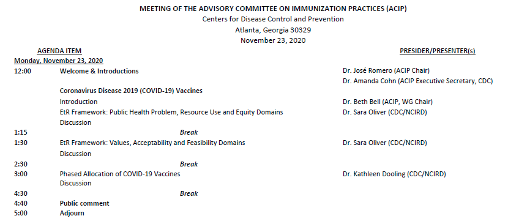
Journal Watch

Journal Watch
Vaccines and Global Health: The Week in Review continues its weekly scanning of key peer-reviewed journals to identify and cite articles, commentary and editorials, books reviews and other content supporting our focu-s on vaccine ethics and policy. Journal Watch is not intended to be exhaustive, but indicative of themes and issues the Center is actively tracking. We selectively provide full text of some editorial and comment articles that are specifically relevant to our work. Successful access to some of the links provided may require subscription or other access arrangement unique to the publisher.
If you would like to suggest other journal titles to include in this service, please contact David Curry at: david.r.curry@centerforvaccineethicsandpolicy.org