Global COVID-19 Access Tracker
https://www.covid19globaltracker.org/

Global COVID-19 Access Tracker
https://www.covid19globaltracker.org/
Duke – Launch and Scale Speedometer
The Race for Global COVID-19 Vaccine Equity
A flurry of nearly 200 COVID-19 vaccine candidates are moving forward through the development and clinical trials processes at unprecedented speed; more than ten candidates are already in Phase 3 large-scale trials and several have received emergency or limited authorization. Our team has aggregated and analyzed publicly available data to track the flow of procurement and manufacturing and better understand global equity challenges. We developed a data framework of relevant variables and conducted desk research of publicly available information to identify COVID vaccine candidates and status, deals and ongoing negotiations for procurement and manufacturing, COVID burden by country, and allocation and distribution plans. We have also conducted interviews with public officials in key countries to better understand the context and challenges facing vaccine allocation and distribution
[accessed 24 July 2021]
See our COVID Vaccine Purchases research
See our COVID Vaccine Manufacturing research
See our COVID Vaccine Donations & Exports research

COVID Vaccines – OCHA:: HDX
COVID-19 Data Explorer: Global Humanitarian Operations
COVID-19 Vaccine Roll-out
07 May 2022 | COVAX (WHO,GAVI,CEPI), UNDESA, Press Reports | DATA
Global COVID-19 Figures: 514M total confirmed cases; 6.2M total confirmed deaths
Global vaccines administered: 11.6B
Number of Countries: 28
COVAX Allocations Round 4-9 (Number of Doses): 170M
COVAX Delivered (Number of Doses): 290M
Other Delivered (Number of Doses): 310M
Total Delivered (Number of Doses): 600M
Total Administered (Number of Doses): 410M
Multilateral Leaders Task Force on COVID-19 [IMF, World Bank Group, WHO, WTO]
https://data.covid19taskforce.com/data
A global effort to help developing countries access and deliver COVID-19 vaccines, testing, and therapeutics, as they work to end the pandemic and boost economic recovery.
The International Monetary Fund, World Bank Group, World Health Organization and World Trade Organization have joined forces to accelerate access to COVID-19 vaccines, therapeutics and diagnostics by leveraging multilateral finance and trade solutions, particularly in low- and middle-income countries.
Website accessed 07 May 2022: https://data.covid19taskforce.com/data The global view below is complemented by country-specific dashboards here.
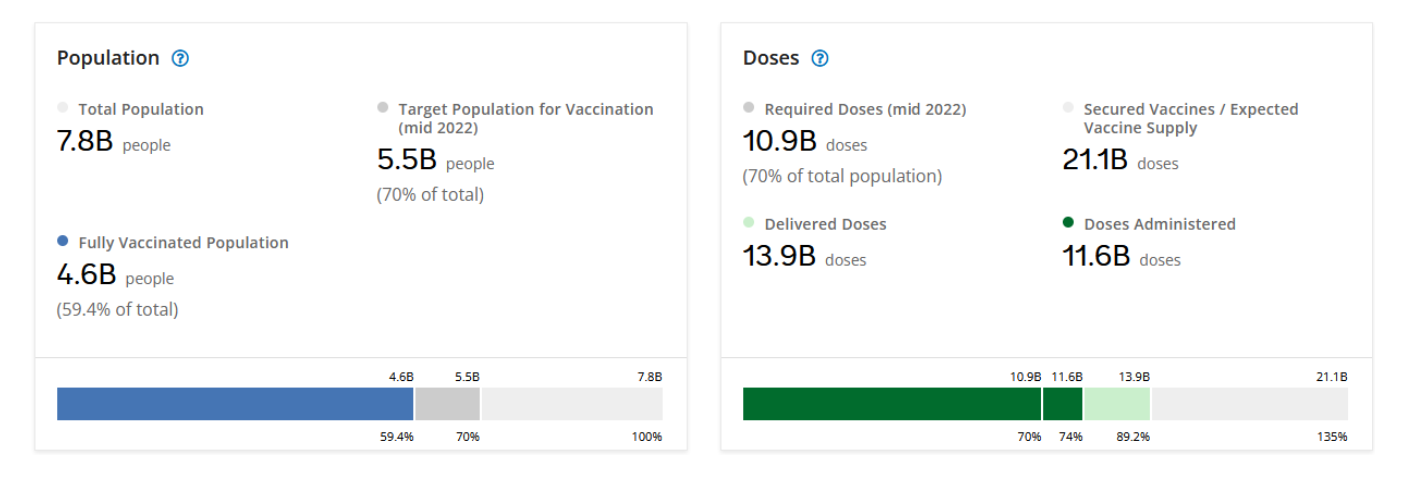
Our World in Data
Coronavirus (COVID-19) Vaccinations [Accessed 07 May 2022]
:: 65.5% of the world population has received at least one dose of a COVID-19 vaccine.
:: 11.64 billion doses have been administered globally, and 8.77 million are now administered each day.
:: Only 15.8% of people in low-income countries have received at least one dose.

U.S.: COVID-19 Vaccines – Announcements/Regulatory Actions/Deployment
HHS
News
No new digest content identified.
BARDA-ASPR – U.S. Department of HHS [to 07 May 2022]
https://aspr.hhs.gov/newsroom/Pages/NewsRoomHome.aspx
News
No new digest content identified.
::::::
FDA
Press Announcements
May 5, 2022 – Coronavirus (COVID-19) Update: FDA Limits Use of Janssen COVID-19 Vaccine to Certain Individuals
Today, the U.S. Food and Drug Administration has limited the authorized use of the Janssen COVID-19 Vaccine to individuals 18 years of age and older for whom other authorized or approved COVID-19 vaccines are not accessible or clinically appropriate, and to individuals 18 years of age and older who elect to receive the Janssen COVID-19 Vaccine because they would otherwise not receive a COVID-19 vaccine…
The Fact Sheet for Healthcare Providers Administering Vaccine now reflects the revision of the authorized use of the Janssen COVID-19 Vaccine and includes a warning statement at the beginning of the fact sheet for prominence which summarizes information on the risk for TTS. Additionally, information on the revision to the authorized use of the vaccine and updated information on this risk of blood clots with low levels of blood platelets has been added to the Fact Sheet for Recipients and Caregivers.
“We recognize that the Janssen COVID-19 Vaccine still has a role in the current pandemic response in the United States and across the global community. Our action reflects our updated analysis of the risk of TTS following administration of this vaccine and limits the use of the vaccine to certain individuals,” said Peter Marks, M.D., Ph.D., director of the FDA’s Center for Biologics Evaluation and Research. “Today’s action demonstrates the robustness of our safety surveillance systems and our commitment to ensuring that science and data guide our decisions. We’ve been closely monitoring the Janssen COVID-19 Vaccine and occurrence of TTS following its administration and have used updated information from our safety surveillance systems to revise the EUA. The agency will continue to monitor the safety of the Janssen COVID-19 Vaccine and all other vaccines, and as has been the case throughout the pandemic, will thoroughly evaluate new safety information.”…
Regulatory Actions
Vaccines and Related Biological Products Advisory Committee– FDA
https://www.fda.gov/advisory-committees/blood-vaccines-and-other-biologics/vaccines-and-related-biological-products-advisory-committee
Calendar
April 29, 2022 – Coronavirus (COVID-19) Update: FDA Announces Tentative Advisory Committee Meeting Schedule Regarding COVID- 19 Vaccines
Today, the U.S. Food and Drug Administration is announcing its plans to hold virtual meetings of its Vaccines and Related Biological Products Advisory Committee (VRBPAC) in anticipation of complete submissions of emergency use authorization (EUA) requests in the coming months that have been publicly announced by COVID-19 vaccine manufacturers.
It is important to note that the dates below are tentative as none of the submissions are complete. The agency understands the urgency to authorize a vaccine for age groups who are not currently eligible for vaccination and will work diligently to complete our evaluation of the data. Should any of the submissions be completed in a timely manner and the data support a clear path forward following our evaluation, the FDA will act quickly and anticipates convening the following VRBPAC meetings:
On June 7, FDA intends to convene VRBPAC to discuss an EUA request for a COVID-19 vaccine manufactured by Novavax to prevent COVID-19 in individuals 18 years of age and older.
On June 8, 21 and 22, the FDA has held dates for the VRBPAC to meet to discuss updates to the Moderna and Pfizer-BioNTech EUAs for their COVID-19 vaccines to include younger populations. As the sponsors complete their submissions and the FDA reviews that data and information, it will provide additional details on scheduling of the VRBPAC meetings to discuss each EUA request.
On June 28, the FDA plans to convene the VRBPAC to discuss whether the SARS-CoV-2 strain composition of COVID-19 vaccines should be modified, and if so, which strain(s) should be selected for Fall 2022. This meeting is a follow-up to the April 6 VRBPAC meeting that discussed general considerations for future COVID-19 vaccine booster doses and the strain composition of COVID-19 vaccines to further meet public health needs.
“As we continue to address the ongoing COVID-19 pandemic, there are a number of anticipated submissions and scientific questions that will benefit from discussion with our advisory committee members,” said Peter Marks, M.D., Ph.D., director of the Center for Biologics Evaluation and Research. “We are providing a tentative schedule for discussion of these submissions, as these meetings will cover a number of topics that are of great interest to the general public. The agency is committed to a thorough and transparent process that considers the input of our independent advisors and provides insight into our review of the COVID-19 vaccines. We intend to move quickly with any authorizations that are appropriate once our work is completed.”
Once the meeting dates are finalized, the FDA intends to make background materials available to the public, including the meeting agenda and committee roster, no later than two business days before each meeting…
::::::
White House [U.S.] [to 07 May 2022]
Briefing Room – Selected Major COVID Announcements
No new digest content identified.
USAID [to 07 May 2022]
https://www.usaid.gov/news-information/press-releases
Selected Press Releases, Statements, Announcements
USAID Announces the Launch of its Updated Youth in Development Policy
May 6, 2022
Today, the U.S. Agency for International Development (USAID) launched its updated Youth in Development Policy with a vision of a world in which young people have agency, rights, influence, and opportunities to pursue their life goals, and contribute to the development of their communities. The Policy aims to improve youth access, increase youth participation, and strengthen youth collective action to bring about change. Inclusive development is at the heart of this Policy, which promotes the inclusion of all youth, especially those with intersecting marginalized identities, to fully participate in decision-making as key partners.
The United States Announces Additional Humanitarian Assistance to Ukraine
May 5, 2022
The United States, through the U.S. Agency for International Development (USAID), is providing nearly $387 million in additional humanitarian assistance to Ukraine amid the Russian Federation’s war – an unprovoked aggression that has triggered staggering displacement and humanitarian need.
Europe: COVID-19 Vaccines – Announcements/Regulatory Actions/Deployment
European Medicines Agency
News & Press Releases
No new digest content identified.
European Centre for Disease Prevention and Control
https://www.ecdc.europa.eu/en
Latest Updates [Selected]
News
Joint statement: Ensuring high-quality viral hepatitis care for refugees from Ukraine
News – 3 May 2022
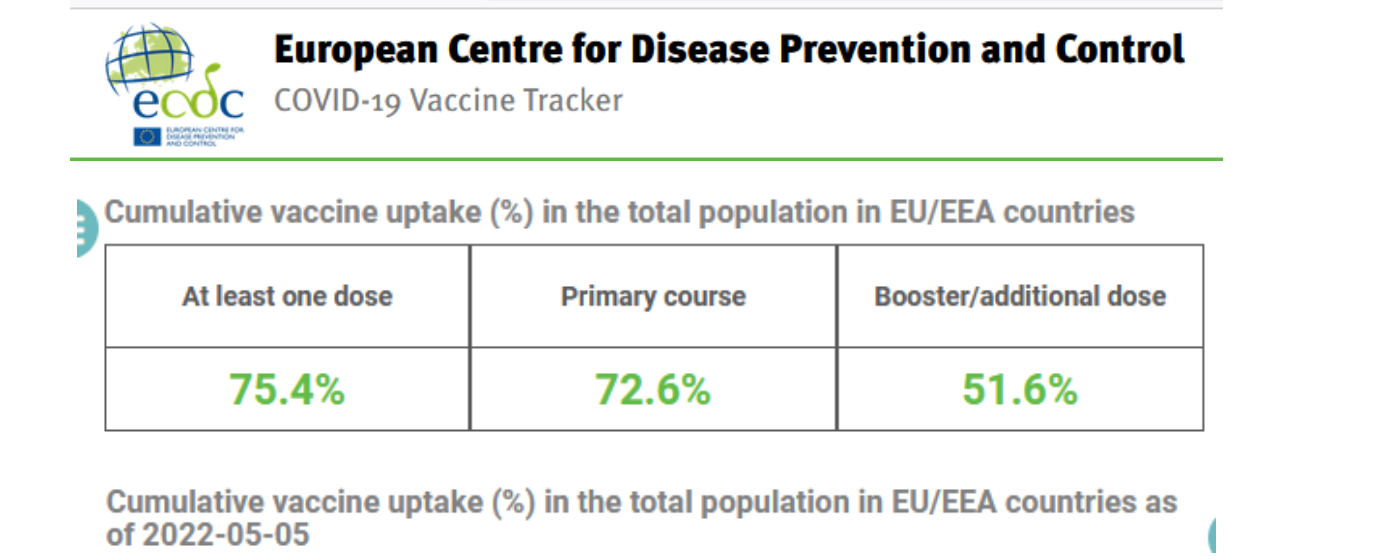
Accessed 07 May 2022
https://vaccinetracker.ecdc.europa.eu/public/extensions/COVID-19/vaccine-tracker.html#uptake-tab
::::::
European Commission
https://ec.europa.eu/commission/presscorner/home/en
Latest [Selected]
Press release 5 May 2022
Standing with Ukraine: Commission announces new aid worth €200 million for displaced people
The Commission is announcing a new aid package of €200 million to support displaced people in Ukraine, in the context of the International Donor’s Conference convened jointly by Poland and Sweden.
Africa: COVID-19 – Announcements/Regulatory Actions/Deployment
https://africacdc.org/covid-19-vaccination/

Russia: COVID-19 Vaccines – Announcements/Regulatory Actions/Deployment
Russia: Sputnik V – “the first registered COVID-19 vaccine”
https://sputnikvaccine.com/newsroom/pressreleases/
Press Releases
Latest Updates [Selected]
[No new digest content identified; last announcement at 28.03.2022]
India: COVID-19 Vaccines – Announcements/Regulatory Actions/Deployment
Ministry of Health and Family Welfare
https://www.mohfw.gov.in/

Government of India – Press Information Bureau
Latest Press Releases
No new digest content identified.
Indian Council for Medical Research (ICMR)
https://www.icmr.gov.in/media.html
Press Releases
No new digest content identified.
China: COVID-19 Vaccines – Announcements/Regulatory Actions/Deployment
Editor’s Note:
Given the context of COVID control strategies being employed in China, we include the full text of the commentary below. We also note this article from medRxiv
Assessing the feasibility of sustaining a ‘Zero-COVID’ policy in China in the era of highly transmissible variants
Yan Wang, Kaiyuan Sun, Zhaomin Feng, Lan Yi, Yanpeng Wu, Hengcong Liu, Quanyi Wang, Marco Ajelli, Cecile Viboud, Hongjie Yu
medRxiv 2022.05.07.22274792; doi: https://doi.org/10.1101/2022.05.07.22274792
CCDC Weekly Reports: Current Volume (4)
China CDC Weekly (Weekly) serves as a platform for China CDC, the national public health bulletin for China, and a platform to promote international collaboration for all issues related to global public health. The Weekly publishes authoritative professional information on national population health, disease and risk factor monitoring, investigation data, and important public health event investigation reports.
Commentary: Persevere in the Dynamic COVID-Zero Strategy in China to Gain a Precious Time Window for the Future
2022-05-06 / No. 18 COVID-19 ISSUE (26)
Jue Liu1; Min Liu1, Wannian Liang2,3, View author affiliations
According to the report of the World Health Organization (WHO), as of April 20, 2022, the cumulative number of confirmed cases of severe acute respiratory syndrome coronavirus 2 (SARS-CoV-2) in the world had exceeded 500 million, with 6.20 million deaths and over 580,000 new confirmed cases on that day (1). As many countries have announced to relax quarantine policies, China is facing increasing pressure from overseas imports. All 31 provincial-level administrative divisions (PLADs) of China have reported a total of 191,112 local confirmed cases, with 2,761 new confirmed cases, 17,166 new asymptomatic infections, and 7 new deaths (all in Shanghai Municipality) on April 19 (2). Recently, several local outbreaks in clusters have appeared in China, presenting a grim and complex situation with multiple spots, wide coverage, and frequent occurrence (3).
Omicron Spreads Quickly and Is Harmful to Those at Risk
The current epidemic was mainly caused by Omicron variant BA.2, which has a short incubation period, strong transmissibility, short serial interval, and a large ability of immune escape (4–5). It was found that the basic regeneration number (R0) of Omicron variant was about 9.5, and its maximum incubation period was about 9 days (4–5). The median incubation period was about 3 days, which was significantly shorter than that of the Delta variant (4.3 days) and other variants (5.0 days) (4–5). Its median serial interval was about 2.8 days (4–5).
It is reported that the proportion of asymptomatic infections of Omicron variant was relatively high (4). There are some reasons for this phenomenon. First, the characteristics of Omicron variant caused a higher proportion of asymptomatic infections than that of other variants. Second, some people did not develop symptoms even after being infected because of the coronavirus disease 2019 (COVID-19) vaccination. Third, early detection can find infections at early stages when symptoms have not yet appeared. In addition, the training of medical staff to improve their ability to correctly conduct diagnosis and treatment, scientifically and reasonably determinate the asymptomatic and confirmed cases, also needed to be strengthened. According to the Statistics on the 5th Wave of COVID-19 in Hong Kong, the population-wide mortality rate caused by Omicron variant was 799 per million and for people over 80 years old was 10,408 per million ((6–7). According to the real-world data in Hong Kong, the fatality rate of the Omicron variant (0.76%) was significantly higher than that of influenza (0.1%), and it reached 10.4% among people over 80 years old (6–7). The elderly, people with underlying diseases, and those who had not been vaccinated were at high risk of severe illness and death. Of the 8,973 patients who died (0–112 years old) in Hong Kong, 96% were the elderly, and 88% were not fully vaccinated. Fortunately, a large real-world study in Hong Kong showed that three doses of either vaccination against COVID-19 offered very high levels of protection against severe illness and death caused by the Omicron variant (vaccine effectiveness 98.1%, 95% confidence interval: 97.1%, 98.8%) (8). Although the total vaccine coverage in the mainland of China is high, compared with adults, the two-dose or booster vaccination rate of the elderly and children was relatively low. In Shanghai, for example, the two-dose vaccination rate for people over 80 years old is only about 15% (9). There are still a large proportion of susceptible people.
The Dynamic COVID-Zero Strategy Is Still Required
China should still persevere in the Dynamic COVID-Zero Strategy. Putting people’s lives and health first is the fundamental starting point and goal of all prevention and control measures in China. Because of the large population, unbalanced regional development, and insufficient total medical resources, China will face the risk of serious runs of medical and health resources if the “lying flat” strategy is adopted (10). The health of many patients with underlying diseases, the elderly, children, and pregnant women will be seriously threatened, and the steady economic and social development will be seriously affected (10).
Dynamic COVID-Zero Strategy is the general guideline for China’s fight against COVID-19, which is also a summary of previous experiences in fighting against dozens of domestic clusters of outbreaks since 2020. The multiple rounds of COVID-19 have proved that the Dynamic COVID-Zero Strategy is in line with China’s national conditions and is the best option for China to fight the epidemic, which is based on the concept of “people first, life first.” China has the capability, the foundation, the conditions, and the toolkits to implement this strategy. Also, China has strong institutional advantages, professional teams, and the support of the public, which will form the greatest protection for life.
The core of the dynamic zero strategy lies in early detection, rapid containment, and cutting off transmission to prevent continuous spread and large-scale rebound of the epidemic (11). This is not about “zero infection” or “zero tolerance” of COVID-19, but about science and precision. The premise of precision is to be effective. In the face of the virus, we need to stay ahead. Zero community transmission refers to newly discovered infected persons being comprehensively found in quarantined and controlled populations without the possibility of spreading to the rest of society. The temporary inconveniences in some areas are for longer-term normal life and socioeconomic development of the population more broadly. We need to take a systematic approach and a long-term view to do the best to strike a better balance between epidemic prevention and control with socioeconomic development.
Seize the Opportunities to Gain Precious Time Window for the Future
At present, China has entered the fourth stage of comprehensive epidemic prevention and control, namely, “scientific, accurate, and dynamic COVID-zero” (10). Facing the rapidly spreading Omicron, in order to stop the spread of the epidemic in the community as soon as possible, we are supposed to make coordinated efforts to control the outbreak at early stages, including control of at-risk populations, detection, epidemiological investigation, transport, isolation, treatment, and other aspects (10). The Dynamic COVID-Zero Strategies adopted by China have won a precious time window for the future. China should seize this opportunity to speed up research and development of specific drugs and vaccines, accelerate the two or three-dose vaccination of the population, especially for the elderly and children, and strengthen the preparedness of resources for the future to finally defeat the virus at a minimal cost.
[Citations at title link above]
::::::
[We did not identify official announcements about COVID response in Shanghai, Beijing or other China locations confirming the reports below; See China CDC below for additional announcements]
Beijing kicks off fresh round of COVID tests as Shanghai postpones crucial exams
Reuters, May 7, 202210:27 AM EDT
By Brenda Goh
SHANGHAI, May 7 (Reuters) – China’s capital Beijing kicked off a fresh round of mass testing for COVID-19 on Saturday and shut more bus routes and metro stations, as it seeks to avert the fate of Shanghai, where millions of residents have been locked down for over a month.
The draconian movement curbs on Shanghai, an economic and financial hub, have caused frustration among its 25 million residents and triggered rare protests over issues such as access to food and medical care, loss of income and crowded as well as unsanitary conditions at central quarantine centres.
While some people have been let out for light and air in recent weeks, residents for the most part say they still cannot leave their housing compounds.
Beijing is striving to avoid an explosion in cases like that of Shanghai, China’s largest city, by conducting rounds of mass testing, banning restaurant dining-in services in multiple districts and shutting more than 60 subway stations, about 15% of the network.
Shanghai cases have fallen for eight days and the city says its outbreak is under effective control, allowing it to shut some of the makeshift hospitals it raced to build as case numbers ballooned.
But authorities have also indicated that a full easing is still far off, warning against complacency to stick to China’s zero-COVID goal.
Underscoring that expectation, Shanghai officials on Saturday postponed the city’s “gaokao” university entrance exam by a month to early July. The last time that happened was in 2020, during the initial coronavirus outbreak.
The city’s top Communist Party official, Li Qiang, a close ally of President Xi Jinping, told a Friday government meeting that it was “necessary to issue military orders at all levels, and take more resolute and powerful actions to overcome the great war and great tests,” according to an official statement.
The number of infections in Shanghai outside areas under lockdown – a gauge of whether the city can further reopen – fell to 18 on Friday from 23 the day before. Total new cases declined slightly to around 4,000, data released on Saturday showed.
Shanghai is also building thousands of permanent PCR testing stations, in line with other cities, as China looks to make regular testing a feature of everyday life…
…But Chinese leaders this week reiterated their resolve to battle the virus, threatening action against critics of their strict measures. Beyond Shanghai, dozens of cities have imposed full or partial lockdowns, relaxing and tightening curbs at various times.
The measures are exacting a mounting economic toll that has fuelled complaints from global industry groups and businesses at home…
GPEI Polio
Polio this week as of 04 April 2022
Headlines
:: In a newly published article by Global Citizen, Senior Polio Epidemiologist Dr. Zubair Mufti Wadood discusses the impact of COVID-19 has had on polio vaccination campaigns. Read the article here.
Summary of new polioviruses this week:
– Pakistan: one WPV1 case
– Nigeria: three cVDPV2 cases and 11 cVDPV2 positive environmental samples
UN OCHA – Current Emergencies
Current Corporate Emergencies
Afghanistan
No new updates identified.
Northern Ethiopia
Ethiopia – Northern Ethiopia Humanitarian Update Situation Report, 7 May 2022
HIGHLIGHTS
Seeds and fertilizers need to urgently be availed for farmers across conflict-affected northern Ethiopia to support the Meher planting season which is just weeks away.
More than 11,000 displaced people and returnees received emergency shelter and non-food items in Amhara during the reporting period.
More than 28,000 people were reached with different health services in Tigray during the reporting week. 11 health partners are operating in 26 of the 88 woredas across six zones.
More than 58,000 people across Fanti Rasu and Kilbati Rasu zones in Afar received food assistance
Ukraine
Ukraine: Situation Report – Last updated: 6 May 2022
Intense fighting and bombardments are ongoing in eastern and southern Ukraine while missile attacks continue across the country.
The UN, in coordination with ICRC, supported the evacuation of civilians sheltering at the Azovstal steel plant in Mariupol and nearby areas
WHO warns that the negative impacts of first the COVID-19 pandemic and now the conflict on health care and vaccination rates increase the risk of outbreaks of diseases.
As of 5 May, the UN and humanitarian partners have reached over 5.4 million people across Ukraine.
As of 1 May, WFP has reached nearly 920,000 people with food through the distribution of rapid response rations.
WHO & Regional Offices [to 07 May 2022]
https://www.who.int/news
6 May 2022
News release
WHO launches first ever global report on infection prevention and control
Reveals that good IPC programmes can reduce health care infections by 70%
5 May 2022
News release
14.9 million excess deaths associated with the COVID-19 pandemic in 2020 and 2021
[See COVID above for detail]
2 May 2022
Departmental news
WHO issues rapid communication on updated guidance for the treatment of drug-resistant tuberculosis
2 May 2022
Departmental news
At your fingertip: New WHO Guide and online Repository of WHO tools for Evidence-informed Decision-making
2 May 2022
Departmental news
Integrating HIV and mental health services for better overall health
::::::
WHO Director General Speeches [selected]
https://www.who.int/director-general/speeches
Selected
5 May 2022
Speech
WHO Director-General’s remarks at the High-Level International Donors’ Conference for Ukraine
4 May 2022
Speech
WHO Director-General’s opening remarks at the ninth meeting of the Working Group on Strengthening WHO Preparedness and Response to Health Emergencies – 4 May 2022
4 May 2022
Speech
WHO Director-General’s opening remarks at the WHO press conference – 4 May 2022
::::::
WHO Regional Offices
Selected Press Releases, Announcements
WHO African Region
:: East Africa steps up health emergency readiness, response 06 May 2022
Arusha, Tanzania – Five East African countries have held their first simulation exercise since the onset of the COVID-19 pandemic to improve preparedness and bolster response to health emergencies.
WHO Region of the Americas PAHO
:: 6 May 2022 PAHO Establishes High-Level Commission on Mental Health and COVID-19
Commissioners will prepare recommendations to accelerate action on mental health in the Region, following the devastating effects of the pandemic Washington, DC, 6 May 2022 (PAHO) – Dr. Carissa F. Etienne, Director of the Pan American Health Organization (PAHO), today launched the High-level Commission on Mental Health and COVID-19. The…
:: 5 May 2022 14.9 million excess deaths associated with the COVID-19 pandemic in 2020 and 2021
Geneva, 5 May 2022 – New estimates from the World Health Organization (WHO) show that the full death toll associated directly or indirectly with the COVID-19 pandemic (described as “excess mortality”) between 1 January 2020 and 31 December 2021 was approximately 14.9 million (range 13.3 million to 16.6 million). “These sobering data not…
:: 4 May 2022 Brazil, PAHO and WHO share experiences to improve diagnosis and genomic surveillance of the COVID-19 virus
Brasilia, 4 May 2022 (PAHO) – Health authorities, managers, experts, and technical health surveillance teams have shared today (4) in the city of Brasilia, Brazil, experiences of 27 central public health laboratories of all Brazilian states, 13 laboratories located in border areas and 3 National Influenza Centres. The 1st National Exhibition of…
:: 4 May 2022 More must be done to protect nursing workforce as COVID cases rise in the Americas, says PAHO Director
Nurses play a central role in vaccination programs and in caring for those that fall ill. Countries must double investments and improve policies to support “backbone” of health care systems. Washington D.C., 4 May 2022 (PAHO) – As COVID cases and hospitalizations once again rise in the Americas – by 12.7% since last week – the Pan American Health…
WHO South-East Asia Region SEARO
:: Countries in WHO South-East Asia Region renew commitment to eliminate malaria by 2030
New Delhi | 5 May 2022 The WHO South-East Asia Region today renewed its commitment to eliminate malaria by 2030, with countries pledging accelerated action and greater efforts at the sub-national and community levels.
WHO European Region EURO
:: 14.9 million excess deaths associated with the COVID-19 pandemic in 2020 and 2021 05-05-2022
WHO Eastern Mediterranean Region EMRO
:: Statement by the WHO Regional Director for the Eastern Mediterranean on the occasion of Eid al-Fitr in the context of COVID-19 Cairo, Egypt, 1 May 2022
WHO Western Pacific Region
No new digest content identified.
::::::
Disease Outbreak News (DONs)
Latest WHO Disease Outbreak News (DONs), providing information on confirmed acute public health events or potential events of concern.
6 May 2022 | Avian Influenza A (H5N1) – United States of America
::::::
WHO Events
https://www.who.int/news-room/events/1
[Selected]
Seventy-fifth World Health Assembly WHA 75
22-28 May 2022
:: Provisional agenda A75/1 Rev.1
::::::
New WHO Publications
https://www.who.int/publications/i
Selected Titles
5 May 2022
Emergency in Ukraine: external situation report #10, published 5 May 2022: reporting period: 28 April…
2 May 2022
Rapid communication: Key changes to the treatment of drug-resistant tuberculosis
2 May 2022
Evidence. Knowledge Translation. Impact.
CDC/ACIP [U.S.] [to 07 May 2022]
http://www.cdc.gov/media/index.html
https://www.cdc.gov/vaccines/acip/index.html
Media Statement
CDC Recommendation for Masks and Travel
Tuesday, May 3, 2022
At this time, CDC recommends that everyone aged 2 and older – including passengers and workers – properly wear a well-fitting mask or respirator over the nose and mouth in indoor areas of public transportation (such as airplanes, trains, etc.) and transportation hubs (such as airports, stations, etc.). When people properly wear a well-fitting mask or respirator, they protect themselves and those around them, and help keep travel and public transportation safer for everyone. Wearing a well-fitting mask or respirator is most beneficial in crowded or poorly ventilated locations, such as airport jetways. We also encourage operators of public transportation and transportation hubs to support mask wearing by all people, including employees.
This public health recommendation is based on the currently available data, including an understanding of domestic and global epidemiology, circulating variants and their impact on disease severity and vaccine effectiveness, current trends in COVID-19 Community Levels within the United States, and projections of COVID-19 trends in the coming months…
ACIP Meetings
Next ACIP Meeting
June 22-23
No Agenda posted at inquiry
MMWR Weekly: Current Volume (71) May 6, 2022 / No. 18
PDF of this issuepdf icon
Use of a Modified Preexposure Prophylaxis Vaccination Schedule to Prevent Human Rabies: Recommendations of the Advisory Committee on Immunization Practices — United States, 2022
West Nile Virus and Other Domestic Nationally Notifiable Arboviral Diseases — United States, 2020
Effectiveness of a COVID-19 Additional Primary or Booster Vaccine Dose in Preventing SARS-CoV-2 Infection Among Nursing Home Residents During Widespread Circulation of the Omicron Variant — United States, February 14–March 27, 2022
Acute Hepatitis and Adenovirus Infection Among Children — Alabama, October 2021−February 2022
Coronavirus Disease 2019 (COVID-19)– CDC
Approximately 25 announcements/reports/data summaries.
:: 5/6/22 Overall US COVID-19 Vaccine Distribution and Administration Update as of Fri, 06 May 2022 06:00:00 EST
Africa CDC [to 07 May 2022]
http://www.africacdc.org/
News
Announcements
Africa CDC Announces 2nd Annual International Conference on Public Health in Africa (CPHIA 2022), 13-15 December 2022, Kigali, Rwanda
5 May 2022
Editor’s Note:
Careful readers will note that the number and range of organizations now monitored in our Announcements section below has grown as the impacts of the pandemic have spread across global economies, supply chains and programmatic activity of multilateral agencies and INGOs.
Airfinity [to 07 May 2022]
https://www.airfinity.com/insights
INSIGHTS & COMPANY NEWS
No new digest content identified.
Paul G. Allen Frontiers Group [to 07 May 2022]
https://alleninstitute.org/news-press/
News
No new digest content identified.
BMGF – Gates Foundation [to 07 May 2022]
https://www.gatesfoundation.org/ideas/media-center
Press Releases and Statements
No new digest content identified.
Bill & Melinda Gates Medical Research Institute [to 07 May 2022]
The Bill & Melinda Gates Medical Research Institute is a non-profit biotech organization. Our mission is to develop products to fight malaria, tuberculosis, and diarrheal diseases—three major causes of mortality, poverty, and inequality in developing countries. The world has unprecedented scientific tools at its disposal; now is the time to use them to save the lives of the world’s poorest people
No new digest content identified.
News
No new digest content identified.
Center for Vaccine Ethics and Policy – GE2P2 Global Foundation [to 07 May 2022]
https://centerforvaccineethicsandpolicy.net/
:: Past weekly editions of Vaccines and Global Health: The Week in Review are available here.
:: Informed Consent: A Monthly Review – MAY 2022is now posted here
CEPI – Coalition for Epidemic Preparedness Innovations [to 07 May 2022]
New expert appointments to CEPI’s Board and Scientific Advisory Committee
New appointments to CEPI Board and SAC along with announcement of CEPI’s first Global Goodwill Ambassador
News 06 May 2022
Independent External Review of CEPI’s COVID-19 Vaccine Development Agreements Published
The review was carried out by the University of Georgetown’s O’Neill Institute for National & Global Health Law.
05 May 2022
[See COVID above for detail]
DARPA – Defense Advanced Research Projects Agency [U.S.] [to 07 May 2022
News
No new digest content identified.
Duke Global Health Innovation Center [to 07 May 2022]
No new digest content identified.
The European & Developing Countries Clinical Trials Partnership (EDCTP) aims to accelerate the development of new or improved drugs, vaccines, microbicides and diagnostics against HIV/AIDS, tuberculosis and malaria as well as other poverty-related and neglected infectious diseases in sub-Saharan Africa, with a focus on phase II and III clinical trials
News
No new digest content identified.
Emory Vaccine Center [to 07 May 2022]
http://www.vaccines.emory.edu/
Vaccine Center News
No new digest content identified.
European Vaccine Initiative [to 07 May 2022]
Latest News, Events
No new digest content identified.
Evidence Aid [to 07 May 2022]
Evidence Aid aims to save lives and livelihoods in disasters by providing decision-makers with the best available evidence and by championing its use.
Vaccination status of migrants and refugees in Europe Added May 3, 2022 Citation: Mipatrini D, Stefanelli P, Severoni S, et al. Vaccinations in migrants and refugees: a challenge for European health systems. A systematic review of current scientific evidence. Pathogens and Global Health. 2017;111(2):59-68.
Fondation Merieux [to 07 May 2022]
http://www.fondation-merieux.org/
News, Events
Mérieux Foundation & University of Geneva co-organized event
22nd Advanced Vaccinology Course (ADVAC)
May 9 – 20, 2022 – Les Pensières Center for Global Health, Veyrier-du-Lac (France)
Gavi [to 07 May 2022]
News Releases
No new digest content identified.
GHIT Fund [to 07 May 2022]
https://www.ghitfund.org/newsroom/press
Press Releases
No new digest content identified.
Global Fund [to 07 May 2022]
https://www.theglobalfund.org/en/news/
News & Stories
04 May 2022
COVID-19 Clinical Therapeutics
In this operational update, we would like to give you an update on COVID-19 testing and therapeutics that can be currently supported through the Global Fund’s COVID-19 Response Mechanism (C19RM), following WHO guidelines.
03 May 2022
Global Fund Appoints Susie Rhee as General Counsel and Head of the Legal & Governance Department
The Global Fund is pleased to announce the appointment of Susie Rhee as the new General Counsel and Head of the Legal & Governance Department.
Global Research Collaboration for Infectious Disease Preparedness [GloPID-R] [to 07 May 2022]
News
No new digest content identified
Hilleman Laboratories [to 07 May 2022]
News & Insights
No new digest content identified
HHMI – Howard Hughes Medical Institute [to 07 May 2022]
Press Room
Research May 05 2022
Cutting Calories and Eating at the Right Time of Day Leads to Longer Life in Mice
In a study that followed hundreds of mice over their lifespans, calorie restriction combined with time-restricted eating boosted longevity.
Human Vaccines Project [to 07 May 2022]
http://www.humanvaccinesproject.org/
News
HVP COVID Report
Apr 28, 2022
Neil M. Vora: Protecting Nature, Preventing Pandemics
IAVI [to 07 May 2022]
Latest News
May 6, 2022
IAVI salutes the confirmation of John Nkengasong as head of PEPFAR
Nkengasong was a founding leader of PEPFAR and has served on IAVI’s board of directors.
ICRC [to 07 May 2022]
https://www.icrc.org/en/whats-new
What’s New [Selected]
Message on World Red Cross and Red Crescent Day 2022
“Tutti Fratelli!” We are brothers and sisters, exclaimed the women of Castiglione after the devastating battle of Solferino in 1859.
08-05-2022 | Statement
Ukraine: “Level of death, destruction and misery abhorrent and unacceptable”
05-05-2022 | Statement
International Coalition of Medicines Regulatory Authorities [ICMRA]
http://www.icmra.info/drupal/en/news
Selected Statements, Press Releases, Research
No new digest content identified.
IFFIm
Press Releases/Announcements
No new digest content identified.
IFRC [to 07 May 2022]
http://media.ifrc.org/ifrc/news/press-releases/
Press Releases [Selected]
Horn of Africa: IFRC Secretary General visits Kenya as worst drought in 40 years looms for millions
06/05/2022 | Press release
Institut Pasteur [to 07 May 2022]
https://www.pasteur.fr/en/press-area
Press Documents
Press release
04.05.2022
HIV: bestowing CD8+ T cells with properties observed in natural controllers
HIV controllers are rare individuals able to control infection naturally without treatment. CD8+ T immune cells play a…
IOM / International Organization for Migration [to 07 May 2022]
http://www.iom.int/press-room/press-releases
News – Selected
No new digest content identified.
ISC / International Science Council [to 07 May 2022]
https://council.science/current/
ISC is a non-governmental organization with a unique global membership that brings together 40 international scientific Unions and Associations and over 140 national and regional scientific organizations including Academies and Research Councils.
Press Documents
No new digest content identified.
International Union of Immunological Societies (IUIS)
News/Events [Selected]
2022 International Day of Immunology
April 26, 2022
IVAC [to 07 May 2022]
Updates; Events
Originally published on ImmunizationEconomics.org (April 27, 2022)
Researchers at Johns Hopkins University have developed a new standardized toolkit to assess equity in vaccine coverage. The VERSE Equity Toolkit compares the level of vaccine coverage against the level of equity and quantifies the influence of key sociodemographic factors to inequity.
IVI [to 07 May 2022]
IVI News & Announcements
IVI, SmileGate, partners team up to vaccinate 28,000 people in Nepal
May 4, 2022, SEOUL, Republic of Korea — The International Vaccine Institute (IVI), in collaboration with SmileGate in Korea and Nepalese partners, will vaccinate 28,000 people against cholera to help prevent and control outbreaks in Nepal in May 2022…
Johns Hopkins Center for Health Security [to 07 May 2022]
https://www.centerforhealthsecurity.org/news/center-news/
Center News
No new digest content identified.
MSF/Médecins Sans Frontières [to 07 May 2022]
Latest [Selected Announcements]
Tuberculosis
WHO approves MSF MDR-TB trial regimen, but prices must come down
Press Release 4 May 2022
National Academy of Medicine – USA [to 07 May 2022]
News [Selected]
No new digest content identified.
National Academy of Sciences – USA [to 07 May 2022]
http://www.nasonline.org/news-and-multimedia/
News
No new digest content identified.
National Vaccine Program Office – U.S. HHS [to 07 May 2022]
https://www.hhs.gov/vaccines/about/index.html
Upcoming Meetings/Latest Updates
No new digest content identified.
NIH [to 07 May 2022]
News Releases
No new digest content identified.
OECD [to 07 May 2022]
http://www.oecd.org/newsroom/publicationsdocuments/bydate/
Newsroom/Library
Growth and economic well-being: Fourth quarter 2021, OECD
Household income falls slightly in OECD area in Q4 2021, despite continuing GDP growth
5 May 2022
OXFAM [to 07 May 2022]
Reaction to WTO TRIP’s waiver “outcome”
4 May 2022
Responding to the WTO’s published ‘outcome’ of negotiations over a waiver of Trade-Related aspects of Intellectual Property (TRIPS), Max Lawson, Head of Inequality Policy for Oxfam and co-chair of the People’s Vaccine Alliance, said:
“This text is a recognition that WTO rules on intellectual property are a clear barrier to ensuring people get the vaccines, tests, and treatments they need. It is a tragedy that it has taken almost two years and millions of deaths to reach this point and a travesty that the action proposed today falls well short of what is needed.
“The text as it stands continues to place pharmaceutical corporate interests over the needs of global health. It adds more unnecessary barriers than existed before negotiations began and failure to act now on treatments and tests is inexcusable.
“This is not the TRIPS waiver supported by over 100 governments. It is not endorsed by any member other than the EU. And it is utterly insufficient for a pandemic that has killed an estimated 20 million people and rising.
“WTO member states must urgently deliver a genuine intellectual property waiver that will turn the tide on global vaccine, test, and treatment inequality and make a difference to controlling this virus. If WTO negotiations cannot deliver that after two years of a deadly pandemic, then we must admit that the institution is not fit for purpose.”
PATH [to 07 May 2022]
https://www.path.org/media-center/
Press Releases
Hanoi, Vietnam, May 3, 2022—A new article published in the Clinical Liver Disease journal presents impactful results from a novel community-based and HIV integrated hepatitis B (HBV) and hepatitis C virus (HCV) testing model in Vietnam, a country where 8.8 million people are estimated to be living with HBV and HCV infection, yet 80 to 90 percent are undiagnosed and untreated. These findings are drawn from HepLINK, a PATH-led initiative in partnership with The Hepatitis Fund that seeks to provide learning in ways to best increase access to viral hepatitis screening, diagnosis, and treatment within primary and community health care…
Rockefeller Foundation [to 07 May 2022]
Selected Reports/Press Releases
Apr 28 2022
Press Releases
[See COVID above for detail]
Sabin Vaccine Institute [to 07 May 2022]
http://www.sabin.org/updates/pressreleases
Statements and Press Releases
No new digest content identified.
UNAIDS [to 07 May 2022]
Selected Press Releases/Reports/Statements
5 May 2022
Jamaica commits to improving social protection
3 May 2022
“A litmus test of civilization” – How the war in Ukraine has impacted LGBTI people
UNHCR Office of the United Nations High Commissioner for Refugees [to 07 May 2022]
http://www.unhcr.org/en-us/media-centre.htmlS
Selected News Releases, Announcements
UNHCR and TikTok launch campaign in solidarity with refugees from Ukraine and beyond
UNHCR, the UN Refugee Agency, and TikTok launch a hashtag challenge and live concert series #TheWorldNeeds, using music to bring people together and promote solidarity with refugees
04 May 2022
UNICEF [to 07 May 2022]
https://www.unicef.org/media/press-releases
Press Releases, News Notes, Statements [Selected]
Every day that the war in Ukraine continues is a nightmare for millions of children.
https://www.unicef.org/press-releases/every-day-war-ukraine-continues-nightmare-millions-children
Unitaid [to 07 May 2022]
Featured News
No new digest content identified.
Vaccine Equity Cooperative [nee Initiative] [to 07 May 2022]
News
No new digest content identified.
Vaccination Acceptance & Demand Initiative [Sabin) [to 07 May 2022]
https://www.vaccineacceptance.org/
Announcements, Blog
No new digest content identified.
Vaccine Confidence Project [to 07 May 2022]
http://www.vaccineconfidence.org/
News, Research and Reports
No new digest content identified.
Vaccine Education Center – Children’s Hospital of Philadelphia [to 07 May 2022]
http://www.chop.edu/centers-programs/vaccine-education-center
News
No new digest content identified.
Wellcome Trust [to 07 May 2022]
News. Opinion, Reports
No new digest content identified.
The Wistar Institute [to 07 May 2022]
https://www.wistar.org/news/press-releases
Press Releases
No new digest content identified.
WFPHA: World Federation of Public Health Associations [to 07 May 2022]
Latest News – Blog
No new digest content identified.
World Bank [to 07 May 2022]
http://www.worldbank.org/en/news/all
Selected News, Announcements
World Bank Increases its COVID-19 Assistance to Solomon Islands
Additional US$8 million to provide immediate support to COVID-19 emergency response, vaccine access and health system strengthening HONIARA, May 2, 2022 – With Solomon Islands’ COVID-19 situation having…
Date: May 02, 2022 Type: Press Release
World Customs Organization – WCO [to 07 May 2022]
Latest News
03 May 2022
World Organisation for Animal Health (OIE) [to 07 May 2022]
https://www.oie.int/en/media/news/
Press Releases, Statements
No new digest content identified.
WTO – World Trade Organisation [to 07 May 2022]
http://www.wto.org/english/news_e/news_e.htm
WTO News and Events [Selected]
TRIPS Council hears initial reactions to Quad’s outcome document on IP COVID-19 response
6 May 2022
At a meeting of the Council for Trade-Related Aspects of Intellectual Property Rights (TRIPS) on 6 May, WTO members discussed the outcome document that has recently emerged from the informal process conducted with the Quad (the European Union, India, South Africa and the United States) for an intellectual property (IP) response to COVID-19. Members also adopted the oral status report that will be submitted by the chair of the TRIPS Council, Ambassador Lansana Gberie of Sierra Leone, to the General Council scheduled for 9-10 May.
[See Milestones above for detail]
WTO, generic drug makers explore cooperation for increased access to therapeutics
2 May 2022
WTO Director-General Ngozi Okonjo-Iweala and the CEO Advisory Committee of the International Generic and Biosimilar Medicines Association (IGBA) held on 2 May a virtual meeting to discuss how to promote international health equity and access to therapeutics. The meeting marked the initial step towards a continuing dialogue aimed at contributing to the fight against the pandemic and securing global public health beyond the current health crisis.
Quad’s outcome document on IP COVID-19 response made public
3 May 2022
WTO Director-General Ngozi Okonjo-Iweala put forward on 3 May the outcome document that emerged from the informal process conducted with the Quad (the European Union, India, South Africa and the United States) for an intellectual property response to COVID-19.
[See Milestones above for detail]
::::::
ARM [Alliance for Regenerative Medicine] [to 07 May 2022]
Selected Press Releases
No new digest content identified.
BIO [to 07 May 2022]
https://www.bio.org/press-releases
Press Release
No new digest content identified.
DCVMN – Developing Country Vaccine Manufacturers Network [to 07 May 2022]
News; Upcoming events
No new digest content identified.
ICBA – International Council of Biotechnology Associations [to 07 May 2022]
https://internationalbiotech.org/news/
News
ICBA Statement on Tabled WTO TRIPS Waiver Text
[Undated]
Steve Bates, Chair of ICBA said “Now that the text is open to public scrutiny after its formal proposal by the WTO Director-General, it is clear that what is proposed would do nothing to solve
[See Milestones above for detail]
IFPMA [to 07 May 2022]
http://www.ifpma.org/resources/news-releases/
Selected Press Releases, Statements, Publications
No new digest content identified.
International Generic and Biosimilar Medicines Association [IGBA]
https://www.igbamedicines.org/
News
May 3, 2022
The newly established IGBA CEO Advisory Committee, a forum for generic and biosimilar medicines industry leaders to discuss broad, strategic issues, and to engage and position the industry on a range of critical policy matters, held its inaugural meeting on Monday, May 2 and launched initial discussions with World Trade Organization (WTO) Director-General Dr. Ngozi Okonjo-Iweala.
“During the discussions with Dr. Ngozi, members of IGBA’s new CEO Advisory Committee outlined the essential role of generic and biosimilar medicines in global patient care and the significant contribution of the industry during the COVID-19 pandemic,” commented Vivian Frittelli, Chair of the IGBA Management Committee.
“Members of the Advisory Committee welcomed the WTO’s efforts to promote barrier-free trade and protect a resilient global supply chain for medicines, and the importance of promoting a balanced approach to competition and innovation to enable patients to benefit from a competitive pharmaceutical marketplace” Frittelli said. “Achieving greater predictability is a critical underpinning of improved access to medicines, and this will be one area of focus for ongoing discussions and action with the WTO moving forward,” Vivian Frittelli concluded.
International Alliance of Patients’ Organizations – IAPO [to 07 May 2022]
https://www.iapo.org.uk/news/topic/6
Press and media [Selected]
No new digest content identified.
PhRMA [to 07 May 2022]
Latest News [Selected]
Journal Watch
Vaccines and Global Health: The Week in Review continues its weekly scanning of key peer-reviewed journals to identify and cite articles, commentary and editorials, books reviews and other content supporting our focu-s on vaccine ethics and policy. Journal Watch is not intended to be exhaustive, but indicative of themes and issues the Center is actively tracking. We selectively provide full text of some editorial and comment articles that are specifically relevant to our work. Successful access to some of the links provided may require subscription or other access arrangement unique to the publisher.
If you would like to suggest other journal titles to include in this service, please contact David Curry at: david.r.curry@centerforvaccineethicsandpolicy.org
AMA Journal of Ethics
Volume 24, Number 4: E249-341 Apr 2022
https://journalofethics.ama-assn.org/issue/health-equity-us-latinx-communities
Health Equity in US Latinx Communities
Latinx communities in the US include over 60 million people with a plurality of political beliefs, cultural practices, and wealth. This diversity is also expressed in population health data: some health indicators suggest advantages of Latinx community membership while other data demonstrate inequitable disease burden and maldistribution of environmental and occupational risk. Legacies of colonial conquest of the Americas persist in discrimination and marginalization today and are embodied by members of our Latinx communities.
American Journal of Public Health
April 2022 112(52)
http://ajph.aphapublications.org/toc/ajph/current
Supplement 2 2022 = Global Opioid Crisis
BMJ Global Health
May 2022 – Volume 7 – 5
https://gh.bmj.com/content/7/5
Health service utilisation during the COVID-19 pandemic in sub-Saharan Africa in 2020: a multicountry empirical assessment with a focus on maternal, newborn and child health services (2 May, 2022)
Agbessi Amouzou, Abdoulaye Maïga, Cheikh Mbacké Faye, Samuel Chakwera, Dessalegn Y Melesse, Martin Kavao Mutua, Sokhna Thiam, Idrissa Boukary Abdoulaye, Seth Kwaku Afagbedzi, Akory Ag Iknane, Odile Sassor Ake-Tano, Joshua O Akinyemi, Victor Alegana, Yakubu Alhassan, Arinaitwe Emma Sam, Dominic Kwabena Atweam, Shraddha Bajaria, Luke Bawo, Mamadou Berthé, Andrea Katryn Blanchard, Hamissou Alaji Bouhari, Ousmane Maimouna Ali Boulhassane, Maio Bulawayo, Ovost Chooye, Amed Coulibaly, Mamatou Diabate, Fatou Diawara, Ousman Esleman, Mulugeta Gajaa, Kamil Halimatou Amadou Garba, Theodros Getachew, Choolwe Jacobs, George P Jacobs, Femi James, Ayodele S Jegede, Catherine Joachim, Rornald Muhumuza Kananura, Janette Karimi, Helen Kiarie, Denise Kpebo, Bruno Lankoandé, Akanni Olayinka Lawanson, Yahaha Mahamadou, Masoud Mahundi, Tewabe Manaye, Honorati Masanja, Modeste Roch Millogo, Abdoul Karim Mohamed, Mwiche Musukuma, Rose Muthee, Douba Nabié, Mukome Nyamhagata, Jimmy Ogwal, Adebola Orimadegun, Ajiwohwodoma Ovuoraye, Adama Sanogo Pongathie, Stéphane Parfait Sable, Geetor S Saydee, Josephine Shabini, Brivine Mukombwe Sikapande, Daudi Simba, Ashenif Tadele, Tefera Tadlle, Alfred K Tarway-Twalla, Mahamadi Tassembedo, Bentoe Zoogley Tehoungue, Ibrahim Terera, Soumaïla Traoré, Musu P Twalla, Peter Waiswa, Naod Wondirad, Ties Boerma
BMJ Global Health
May 2022 – Volume 7 – 5
https://gh.bmj.com/content/7/5
Original research
Effect of adolescent pregnancy on child mortality in 46 countries (3 May, 2022)
Navideh Noori, Joshua L Proctor, Yvette Efevbera, Assaf P Oron
BMC Health Services Research
http://www.biomedcentral.com/bmchealthservres/content
(Accessed 07 May 2022)
On prioritising global health’s triple crisis of sepsis, COVID-19 and antimicrobial resistance: a mixed-methods study from Malawi
Sepsis causes 20% of global deaths, particularly among children and vulnerable populations living in developing countries. This study investigated how sepsis is prioritised in Malawi’s health system to inform …
Authors: Paul Kawale, Levi Kalitsilo, Jessie Mphande, Bayode Romeo Adegbite, Martin P. Grobusch, Shevin T. Jacob, Jamie Rylance and Nyovani J. Madise
Citation: BMC Health Services Research 2022 22:613
Content type: Research Published on: 7 May 2022
BMC Infectious Diseases
http://www.biomedcentral.com/bmcinfectdis/content
(Accessed 07 May 2022)
SARS-CoV-2 vaccine effectiveness against infection, symptomatic and severe COVID-19: a systematic review and meta-analysis
The temporal evolution of SARS-CoV-2 vaccine efficacy and effectiveness (VE) against infection, symptomatic, and severe COVID-19 is incompletely defined. The temporal evolution of VE could be dependent on age,…
Authors: Paddy Ssentongo, Anna E. Ssentongo, Navya Voleti, Destin Groff, Ashley Sun, Djibril M. Ba, Jonathan Nunez, Leslie J. Parent, Vernon M. Chinchilli and Catharine I. Paules
Citation: BMC Infectious Diseases 2022 22:439
Content type: Research Published on: 7 May 2022
BMC Infectious Diseases
http://www.biomedcentral.com/bmcinfectdis/content
(Accessed 07 May 2022)
Measles immunity in medical center staff after changes in national and local hospital vaccination policies
Measles vaccination was introduced in Taiwan in 1978, and the disease was declared eliminated in Taiwan in 2007. However, new cases have been reported unpredictably since then. Hospital medical staff are at pa…
Authors: Meng-Yu Lin, Hsin-Hui Shao and Meng-Ting Tsou
Citation: BMC Infectious Diseases 2022 22:427
Content type: Research Published on: 4 May 2022
BMC Infectious Diseases
http://www.biomedcentral.com/bmcinfectdis/content
(Accessed 07 May 2022)
Determinants of associated events following AZD1222 (Covishield) vaccination in a high-risk population in Nepal
Vaccination is the most effective method to prevent the spread of infectious diseases and helps reduce mortality rate and economic costs associated with the pandemic. Despite these advantages, misinformation o…
Authors: Kapil Madi Poudel, Neha Shah, Manab Prakash, Santosh Kumar Deo, Sunita Bhandari and Tika Ram Poudel
Citation: BMC Infectious Diseases 2022 22:422
Content type: Research Published on: 3 May 2022
BMC Medicine
http://www.biomedcentral.com/bmcmed/content
(Accessed 07 May 2022)
The COVID-19 pandemic in the African continent
In December 2019, a new coronavirus, severe acute respiratory syndrome coronavirus-2 (SARS-CoV-2) and associated disease, coronavirus disease 2019 (COVID-19), was identified in China. This virus spread quickly…
Authors: Godfrey Bwire, Alex Riolexus Ario, Patricia Eyu, Felix Ocom, Joseph F. Wamala, Kwadwo A. Kusi, Latif Ndeketa, Kondwani C. Jambo, Rhoda K. Wanyenze and Ambrose O. Talisuna
Citation: BMC Medicine 2022 20:167
Content type: Forum Published on: 2 May 2022
BMC Public Health
http://bmcpublichealth.biomedcentral.com/articles
(Accessed 07 May 2022)
Correlates of influenza vaccination among underserved Latinx middle-aged and older adults: a cross-sectional survey
Vaccination is a powerful tool in the fight against seasonal influenza, among underserved, middle-age and older, Latinx adults. Yet, vaccine hesitancy and inconsistent uptake in this population continues to re…
Authors: Mohsen Bazargan, Adrienne Martinez-Hollingsworth, Sharon Cobb and Lucy W. Kibe
Citation: BMC Public Health 2022 22:907
Content type: Research Published on: 6 May 2022
BMC Public Health
http://bmcpublichealth.biomedcentral.com/articles
(Accessed 07 May 2022)
Diverging levels of COVID-19 governmental response satisfaction across middle eastern Arab countries: a multinational study
Public acceptance of governmental measures are key to controlling the spread of infectious diseases. The COVID-19 pandemic has placed a significant burden on healthcare systems for high-income countries as wel…
Authors: Rania Itani, Samar Karout, Hani M. J. Khojah, Makram Rabah, Mohamad B. Kassab, Francine K. Welty, Mazen AlBaghdadi, Haitham Khraishah, Faris El-Dahiyat, Salman Alzayani, Yousef S. Khader, Mohammad S. Alyahya, Danah Alsane, Rana Abu-Farha, Tareq L. Mukattash, Tarek Soukarieh…
Citation: BMC Public Health 2022 22:893
Content type: Research Published on: 5 May 2022
Bulletin of the World Health Organization
Volume 100(5); 2022 May 1
https://www.ncbi.nlm.nih.gov/pmc/issues/406286/
Editorials
Antimicrobial resistance and the COVID-19 pandemic
Samira Choudhury, Antonieta Medina-Lara, Richard Smith
Bull World Health Organ. 2022 May 1; 100(5): 295–295A. Published online 2022 May 1. doi: 10.2471/BLT.21.287752
PMCID: PMC9047431
Bulletin of the World Health Organization
Volume 100(5); 2022 May 1
https://www.ncbi.nlm.nih.gov/pmc/issues/406286/
Research
COVAX and equitable access to COVID-19 vaccines
Katelyn J Yoo, Akriti Mehta, Joshua Mak, David Bishai, Collins Chansa, Bryan Patenaude
Bull World Health Organ. 2022 May 1; 100(5): 315–328. Published online 2022 Mar 25. doi: 10.2471/BLT.21.287516
PMCID: PMC9047429
To evaluate equity in the allocation and distribution of vaccines for coronavirus disease 2019 (COVID-19) to countries and territories participating in the COVID-19 Vaccines Global Access (COVAX) Facility.
Bulletin of the World Health Organization
Volume 100(5); 2022 May 1
https://www.ncbi.nlm.nih.gov/pmc/issues/406286/
Systematic Reviews
Catastrophic health expenditure in sub-Saharan Africa: systematic review and meta-analysis
Paul Eze, Lucky Osaheni Lawani, Ujunwa Justina Agu, Yubraj Acharya
Bull World Health Organ. 2022 May 1; 100(5): 337–351J. Published online 2022 Apr 4. doi: 10.2471/BLT.21.287673
PMCID: PMC9047424
Clinical Pharmacology & Therapeutics
Volume 111, Issue 5 Pages: 973-1174 May 2022
https://ascpt.onlinelibrary.wiley.com/toc/15326535/current
Perspective
Open Access
Heterogeneity in COVID-19 Convalescent Plasma Clinical Trials
Mirco Müller-Olling, Ute Vahlensieck, Anneliese Hilger
Pages: 995-1000
First Published:17 June 2021
Clinical Pharmacology & Therapeutics
Volume 111, Issue 5 Pages: 973-1174 May 2022
https://ascpt.onlinelibrary.wiley.com/toc/15326535/current
Articles
The Impact of COVID-19 on the Initiation of Clinical Trials in Europe and the United States
Florian Lasch, Eftychia-Eirini Psarelli, Ralf Herold, Andrea Mattsson, Lorenzo Guizzaro, Frank Pétavy, Anja Schiel
Pages: 1093-1102
First Published:28 January 2022
Conflict and Health
http://www.conflictandhealth.com/
[Accessed 07 May 2022]
Conducting public health surveillance in areas of armed conflict and restricted population access: a qualitative case study of polio surveillance in conflict-affected areas of Borno State, Nigeria
This study examined the impact of armed conflict on public health surveillance systems, the limitations of traditional surveillance in this context, and innovative strategies to overcome these limitations. A q…
Authors: Eric Wiesen, Raymond Dankoli, Melton Musa, Jeff Higgins, Joseph Forbi, Jibrin Idris, Ndadilnasiya Waziri, Oladapo Ogunbodede, Kabiru Mohammed, Omotayo Bolu, Gatei WaNganda, Usman Adamu and Eve Pinsker
Citation: Conflict and Health 2022 16:20
Content type: Research in practice Published on: 7 May 2022
Contemporary Clinical Trials
Volume 115 April 2022
https://www.sciencedirect.com/journal/contemporary-clinical-trials/vol/115/suppl/C
Short communication No access
Initiation of three complementary international studies investigating prevalence of oral HPV infection, burden of HPV-related head and neck disease, and efficacy of 9-valent HPV vaccination against oral HPV persistent infection
Anna R. Giuliano
Article 106629
Contemporary Clinical Trials
Volume 115 April 2022
https://www.sciencedirect.com/journal/contemporary-clinical-trials/vol/115/suppl/C
Research article Abstract only
Design of a phase III efficacy, immunogenicity, and safety study of 9-valent human papillomavirus vaccine in prevention of oral persistent infection in men
Anna R. Giuliano, Timothy Wilkin, Oliver M. Bautista, Kyeongmi Cheon, … Yingmei Tu
Article 106592
Contemporary Clinical Trials
Volume 115 April 2022
https://www.sciencedirect.com/journal/contemporary-clinical-trials/vol/115/suppl/C
Research article Abstract only
Ethical and epistemic issues in the design and conduct of pragmatic stepped-wedge cluster randomized clinical trials
Carole A. Federico, Patrick J. Heagerty, John Lantos, Pearl O’Rourke, … David Magnus
Article 106703
Contemporary Clinical Trials
Volume 115 April 2022
https://www.sciencedirect.com/journal/contemporary-clinical-trials/vol/115/suppl/C
Research article Open access
COVID-19 interventional trials: Analysis of data sharing intentions during a time of pandemic
Kristina Larson, Ida Sim, Megan von Isenburg, Marcia Levenstein, … Rebecca Li
Article 106709
Contemporary Clinical Trials
Volume 115 April 2022
https://www.sciencedirect.com/journal/contemporary-clinical-trials/vol/115/suppl/C
Review article Full text access
COVID-19 vaccines: Considering sex differences in efficacy and safety
Adelaide Jensen, Masha Stromme, Shayda Moyassari, Antonella Santuccione Chadha, … Maria Teresa Ferretti
Article 106700
Health Research Policy and Systems
http://www.health-policy-systems.com/content
[Accessed 07 May 2022]
An evaluation of the evidence brief for policy development process in WHO EVIPNet Europe countries
Evidence briefs for policy (EBPs) represent a potentially powerful tool for supporting evidence-informed policy-making. Since 2012, WHO Evidence-Informed Policy Network (EVIPNet) Europe has been supporting Mem…
Authors: Adrianna Murphy, Maja Šubelj, Balázs Babarczy, Kristina Köhler, Evelina Chapman, Polonca Truden-Dobrin, Kathryn Oliver, Saskia Nahrgang, Marge Reinap and Tanja Kuchenmüller
Citation: Health Research Policy and Systems 2022 20:54
Content type: Research Published on: 7 May 2022
Health Research Policy and Systems
http://www.health-policy-systems.com/content
[Accessed 07 May 2022]
An evaluation of the evidence brief for policy development process in WHO EVIPNet Europe countries
Evidence briefs for policy (EBPs) represent a potentially powerful tool for supporting evidence-informed policy-making. Since 2012, WHO Evidence-Informed Policy Network (EVIPNet) Europe has been supporting Mem…
Authors: Adrianna Murphy, Maja Šubelj, Balázs Babarczy, Kristina Köhler, Evelina Chapman, Polonca Truden-Dobrin, Kathryn Oliver, Saskia Nahrgang, Marge Reinap and Tanja Kuchenmüller
Citation: Health Research Policy and Systems 2022 20:54
Content type: Research Published on: 7 May 2022
International Health
Volume 14, Issue 3, May 2022
https://academic.oup.com/inthealth/issue/14/3
ORIGINAL ARTICLES
Tracking immunization coverage, dropout and equity gaps among children ages 12–23 months in Malawi – bottleneck analysis of the Malawi Demographic and Health Survey
Kondwani Mmanga, Tisungane E Mwenyenkulu, Owen Nkoka, Peter A M Ntenda
International Health, Volume 14, Issue 3, May 2022, Pages 250–259, https://doi.org/10.1093/inthealth/ihab038
JAMA Network
COVID-19 Update May 7, 2022
These articles on COVID-19 were published across the JAMA Network in the last week.
JAMA Pediatrics
May 2022, Vol 176, No. 5, Pages 434-532
https://jamanetwork.com/journals/jamapediatrics/currentissue
Viewpoint
Caregiver COVID-19 Vaccination Status in Pediatric Hospitals—Ethics of Exclusion
Andrew J. Helmers, MDCM, MHSc, MSc; James A. Anderson, PhD; Roxanne E. Kirsch, MD, MBE
free access
JAMA Pediatr. 2022;176(5):441-442. doi:10.1001/jamapediatrics.2021.6582
This Viewpoint discusses the benefits and harms of restrictions excluding caregivers who are not vaccinated for COVID-19 from pediatric hospitals.
JAMA Pediatrics
May 2022, Vol 176, No. 5, Pages 434-532
https://jamanetwork.com/journals/jamapediatrics/currentissue
Hypersensitivity Reactions to COVID-19 Vaccines—Identify High-risk Children and Vaccinate the Rest
Natalia Fernandez-Davila, MD; Margaret G. Taylor, MD; Sara Anvari, MD, MS
free access
JAMA Pediatr. 2022;176(5):443-444. doi:10.1001/jamapediatrics.2022.0088
This Viewpoint discusses recommendations for COVID-19 vaccination in children with hypersensitivity to the vaccine and its excipients.
JAMA Pediatrics
May 2022, Vol 176, No. 5, Pages 434-532
https://jamanetwork.com/journals/jamapediatrics/currentissue
Original Investigation
Association of BNT162b2 COVID-19 Vaccination During Pregnancy With Neonatal and Early Infant Outcomes
Inbal Goldshtein, PhD; David M. Steinberg, PhD; Jacob Kuint, MD; et al.
free access has active quiz has audio
JAMA Pediatr. 2022;176(5):470-477. doi:10.1001/jamapediatrics.2022.0001
This cohort study examines the association between maternal immunization with the BNT162b2 COVID-19 vaccine during pregnancy and neonatal and early infant outcomes.
Audio Editors’ Summary: Early Intervention Services and Standardized Tests Among Children Exposed to Lead; Association of BNT162b2 COVID-19 Vaccination During Pregnancy With Infant Outcomes
 vaccines and global health :: ethics and policy