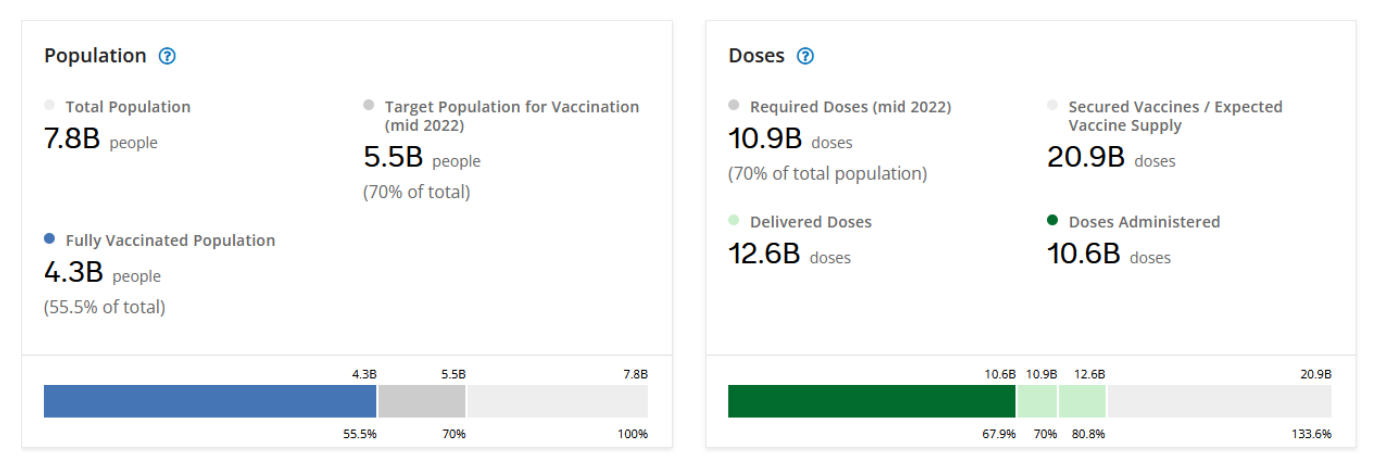
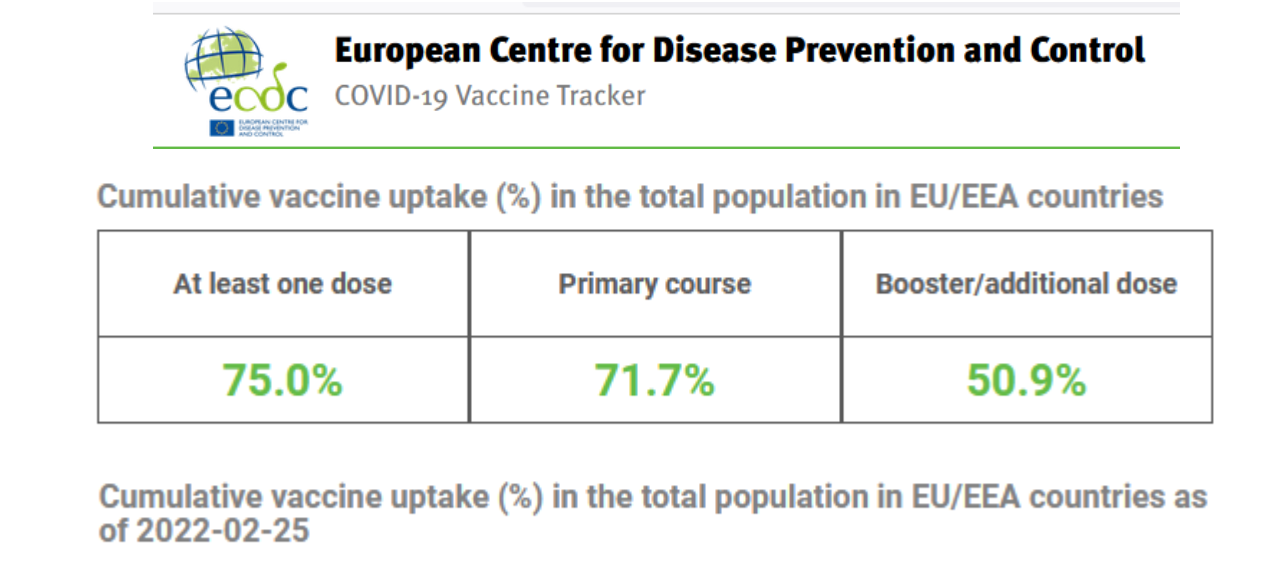
Multilateral Leaders Task Force on COVID-19 [IMF, World Bank Group, WHO, WTO] https://data.covid19taskforce.com/data A global effort to help developing countries access and deliver COVID-19 vaccines, testing, and therapeutics, as they work to end the pandemic and boost economic recovery. The International Monetary Fund, World Bank Group, World Health Organization and World Trade Organization have joined forces to accelerate access to COVID-19 vaccines, therapeutics and diagnostics by leveraging multilateral finance and trade solutions, particularly in low- and middle-income countries. Website accessed 26 Feb 2022: https://data.covid19taskforce.com/data The global view below is complemented by country-specific dashboards here.
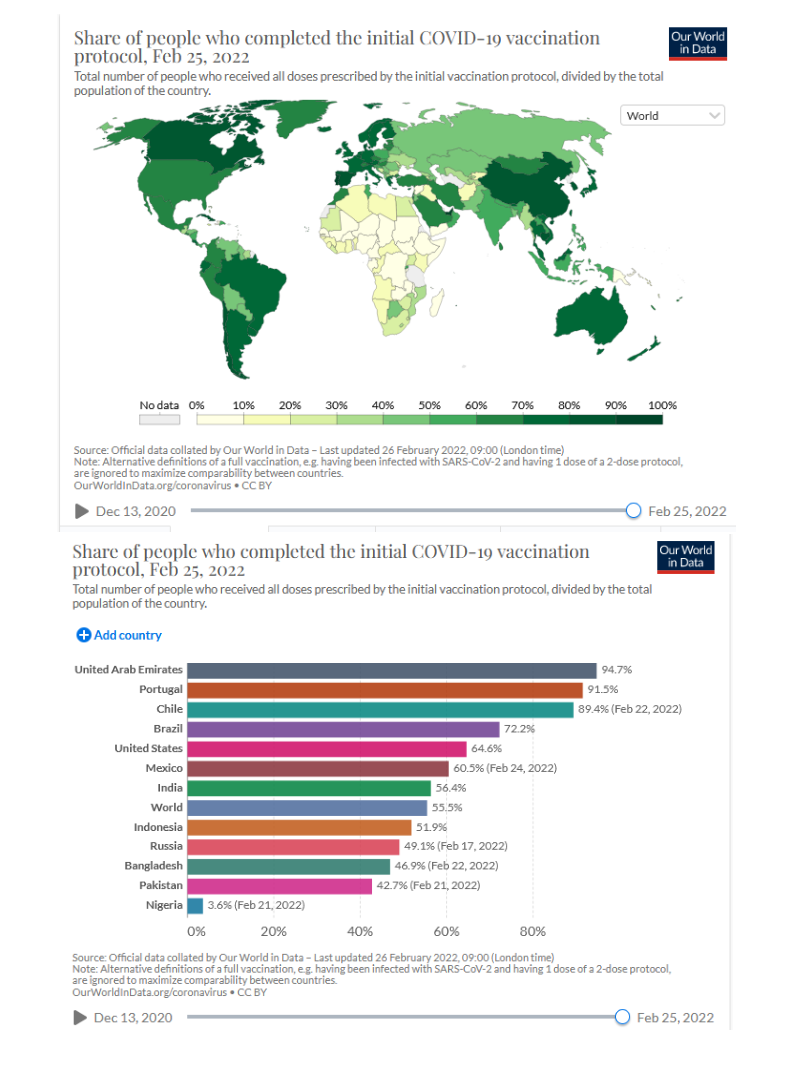
Our World in Data Coronavirus (COVID-19) Vaccinations[Accessed 26 Feb 2022] 62.6% of the world population has received at least one dose of a COVID-19 vaccine. 10.68 billion doses have been administered globally, and 29.51 million are now administered each day. Only 12.3% of people in low-income countries have received at least one dose.
USAID [to 26 Feb 2022] https://www.usaid.gov/news-information/press-releases/2021 Selected Press Releases, Statements, Announcements News New General License 20 Authorizing Certain Afghanistan Transactions
February 25, 2022
USAID welcomes the announcement by the Department of the Treasury’s Office of Foreign Assets Control (OFAC) that it is expanding authorizations for commercial and financial transactions in Afghanistan, including with its governing institutions. The issuance of General License (GL) 20 aims to ensure that U.S. sanctions do not prevent or inhibit the transactions and activities needed to support the basic human needs of the people of Afghanistan, and underscores the United States’ commitment to working with the private sector, international partners and allies, and international organizations to support the people of Afghanistan.
On Russia’s Unprovoked and Unjustified Attack on Ukraine
February 25, 2022
After months of relentless diplomacy in which the United States, Ukraine and our allies engaged with Russia in good faith to avoid further conflict, President Putin has shown he is not interested in peace, but only in power—in invading a neighbor in a premeditated and unprovoked attack, carving up sovereign territory by force, and denying the Ukrainian people the right to live in peace and and determine their own future. He has gone so far as to suggest Ukraine has no ability to exist as a nation separate from Russia, and baselessly and debasingly invoked claims of genocide to create a pretext for this war of choice—a war for which Russia is entirely responsible.
USAID Providing Humanitarian Assistance in Response to Devastating Floods in Petrópolis, Brazil
February 24, 2022
The U.S. Agency for International Development (USAID) is providing $100,000 in immediate humanitarian assistance to support people affected by severe flooding and landslides following an intense storm in Brazil’s Petrópolis city, Rio de Janeiro State. The devastating storm generated more rain in a single afternoon than the historical average for the entire month. The fatal floods have affected thousands of people across the city, displacing at least 3,000 people, and destroying homes.
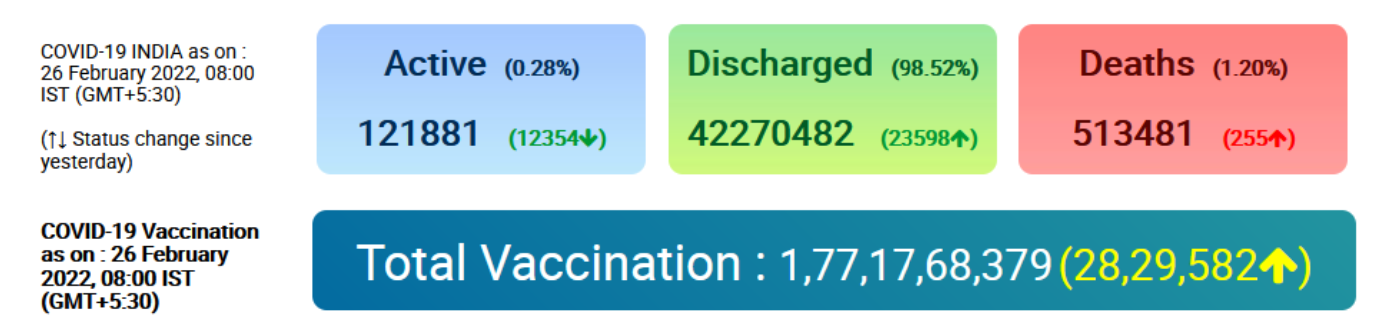
Government of India – Press Information Bureau Latest Press Releases COVID – 19 Vaccination Update – Day 407
:: India’s cumulative vaccination coverage over 177.40Crore
:: More than 21 lakh Vaccine doses administered today till 7 pm Posted On: 26 FEB 2022 8:06PM by PIB Delhi
National Health Commission of the People’s Republic of China [to 26 Feb 2022] http://en.nhc.gov.cn/ News Feb 26: Daily briefing on novel coronavirus cases in China
On Feb 25, 31 provincial-level regions and the Xinjiang Production and Construction Corps on the Chinese mainland reported 249 new cases of confirmed infections.
China widens choices for COVID-19 booster shots
Updated: 2022-02-21 | CHINA DAILY
China began delivering COVID-19 booster shots over the weekend based on technologies different from those used in initial inoculations in the country, in an effort to reinforce herd immunity against the disease.
The method, known as sequential immunization, targets people over 18 years old who are fully vaccinated with one of the three inactivated vaccines produced by Sinopharm and Sinovac Biotech, according to the National Health Commission. Two shots are required for full vaccination.
Instead of receiving an additional shot developed with the same technology, which has been standard practice in the country since October, people eligible for a booster now have wider choices. They can get a protein subunit COVID-19 vaccine made by Anhui Zhifei Longcom Biopharmaceutical or a viral vector vaccine from CanSino Biologics.
Protein subunit vaccines use a subunit of virus antigen to trigger an immune response, and viral vector vaccines use a modified version of a different virus to instruct our cells to fight the virus, according to Chinese researchers.
“Research has shown that boosters of both the same and different technologies are effective at further improving protection against the disease,” Wu Liangyou, deputy director of the commission’s Bureau of Disease Prevention and Control, said at a briefing on Saturday. “The public only needs to select one of them.”…
Second medical team from mainland arrives in Hong Kong in fighting latest COVID-19 outbreak
2022-02-21
HONG KONG – The second team of mainland health experts and workers arrived in the Hong Kong Special Administrative Region (HKSAR) via the Shenzhen Bay Port on Saturday to work with the HKSAR government in fighting the latest COVID-19 outbreak.
The team is comprised of 114 members, including four critical care medical specialists, four administrative staff members, and 106 sampling workers.
The four critical care specialists will discuss with clinical medical experts in Hong Kong on the treatment of severe and critical COVID-19 cases, and share the treatment experience of COVID-19 patients in the mainland.
Also on Saturday, the construction of two community isolation and treatment facilities built with assistance from the mainland began at Penny’s Bay and Kai Tak Pier in Hong Kong, respectively.
Designed and constructed by China State Construction International Holdings Ltd, the two isolation facilities are expected to provide about 9,500 quarantine units when fully operational…
Polio this week as of 23 February 2022
:: After the safe and successful rollout of nationwide polio campaigns since November 2021, we have received tragic news that 8 health workers at the forefront have been killed this morning in a series of shootings in Takhar and Kunduz in northeast Afghanistan. The vaccination campaign has been suspended in both provinces. A statement has been issued by the Regional Director of WHO’s Eastern Mediterranean Region, Dr Ahmed Al-Mandhari, as well as by the United Nations in the country, condemning these attacks, expressing condolences to the families and underscoring that the provision of health and the safety of health workers at the forefront are paramount, and must be kept neutral to any geo-political situation anywhere. Our thoughts and prayers are both with the families and our teams on the ground at this time.
:: Last week, Malawi reported a WPV1 case in a 3-year-old girl in the capital, Lilongwe. Analysis shows that the virus is genetically linked to WPV1 that was detected in Pakistan’s Sindh province in October 2019. This is the first WPV1 case from the continent of Africa in over five years. Read more…
Summary of new WPV and cVDPV viruses this week (AFP cases and ES positives): – DR Congo: two cVDPV2 cases – Madagascar: two cVDPV1 cases and six cVDPV1 positive environmental samples – Malawi: one WPV1 case – Nigeria: three cVDPV2 cases and eight positive environmental samples – Yemen: three cVDPV2 cases
:::::: ::::::
Disease Outbreak News (DONs)
:: Lassa Fever – United Kingdom of Great Britain and Northern Ireland
21 February 2022
On 9 February 2022, WHO was notified by the United Kingdom health authorities of two laboratory confirmed cases and one probable case of Lassa fever. As of 18 February, three cases have been confirmed and one death has been reported. These are the first reported Lassa fever cases in the United Kingdom since 2009, and represents the second known case of secondary transmission of Lassa fever in Europe.
The first case travelled to Mali in late 2021, where Lassa fever is endemic. After returning to the United Kingdom, the individual developed symptoms of fever, fatigue and loose stool, and was subsequently hospitalized. The first case has now recovered. The second and third cases were family members of the first case and did not travel to Mali. Both were admitted to the hospital and the third case has sadly died…
:::::: ::::::
WHO/OCHA Emergencies
Health emergencies list– WHO
“The health emergencies list details the disease outbreaks, disasters and humanitarian crises where WHO plays an essential role in supporting countries to respond to and recover from emergencies with public health consequences.” Afghanistan crisis[Last apparent update: 17 Jan 2022]
Northern Ethiopia Ethiopia – Northern Ethiopia Humanitarian Update Situation Report, 24 February 2022 HIGHLIGHTS
Regional authorities estimate few hundred thousand people displaced in Zone 2 in Afar, while displacement is still ongoing, significantly increasing the needs in the region.
More than 6.8 million people reached with of food assistance in Amhara under the current food distribution cycle launched two months ago.
About 4 MT of seeds distributed to more than 11,000 farming households in Tigray since the start of the year.
More than 1,500 children, including more than 630 girls, in 13 schools in Dubti and Awash Fentale woredas in Afar enrolled in informal learning programs.
Humanitarian partners continue to reduce their operations in Tigray due to lack of supplies, fuel, and cash. :::::: ::::::
WHO & Regional Offices [to 26 Feb 2022] https://www.who.int/ News [Selected] 25 February 2022 News release Recommendations announced for influenza vaccine composition for the 2022-2023 northern hemisphere influenza season
24 February 2022 Statement WHO Director-General: Deeply concerned over escalating health crisis in Ukraine
24 February 2022 Departmental news WHO and NAM encourage digital platforms to apply global principles for identifying credible sources of health information [See Perspectives above for detail]
23 February 2022 Departmental news ILO-WHO step up collaboration to address health emergencies and promote healthier and safer working populations
23 February 2022 News release Moving forward on goal to boost local pharmaceutical production, WHO establishes global biomanufacturing training hub in Republic of Korea
22 February 2022 Statement Statement on Omicron sublineage BA.2 [See COVID above for detail]
22 February 2022 Departmental news WHO launches new guideline for the control and elimination of human schistosomiasis
21 February 2022 Departmental news The Vaccine Manufacturing Workshop for South-East Asia and Western Pacific Regions ended
21 February 2022 Joint News Release New WHO/ILO guide urges greater safeguards to protect health workers
21 February 2022 Departmental news WHO validates Saudi Arabia for eliminating trachoma as a public health problem
::::::
WHO Regional Offices Selected Press Releases, Announcements WHO African Region
:: New push to drive up Africa’s COVID-19 vaccination
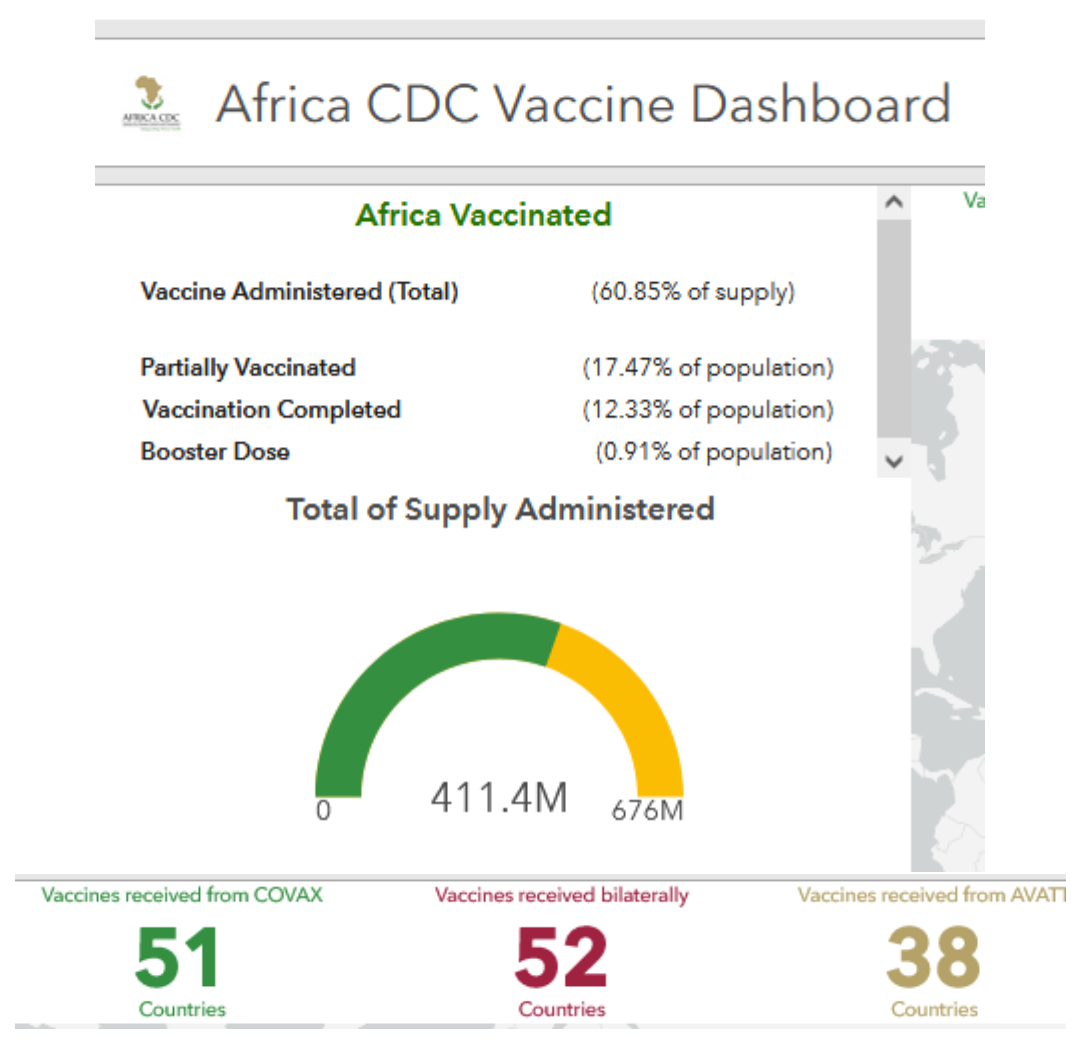
24 February 2022 Brazzaville – One year since the COVAX Facility delivered the first COVID-19 vaccines to Africa, around 400 million doses have been administered – the region’s largest ever vaccine rollout in a single year. However, vaccination rates in the continent are the lowest in the world. To help bolster uptake, World Health Organization (WHO), UNICEF, Gavi, the Vaccine Alliance, and partners are supporting mass vaccination campaigns in 10 priority countries to reach 100 million people by the end of April 2022.
:: Mauritius’ strong COVID-19 vaccination drive reaches 76% of population 25 February 2022
:: Ramping up COVID-19 vaccination among Kenya’s hard-to-reach communities 22 February 2022
WHO Region of the Americas PAHO
:: PAHO Urges Increased Polio Vaccination of Children in the Americas
23 Feb 2022 Only 82% of children received a third dose of polio vaccine in 2020, the lowest rate since 1994 Washington, DC, February 23, 2022 (PAHO)- The Pan American Health Organization (PAHO) is calling on the countries of the Americas to redouble efforts to vaccinate children against polio. The vaccination rate with all three doses of the polio…
:: Low vaccination rates in the Caribbean must be urgently addressed to stop the spread of COVID-19 says PAHO Director
23 Feb 2022 10 out of 13 countries and territories in the Americas yet to reach 40% coverage are in the Caribbean but the tide can still be turned with targeted interventions Washington D.C. 23 February 2022 (PAHO) – Low vaccination coverage in many countries of the Caribbean must be urgently addressed to stop the spread of COVID-19 and protect the most…
WHO Events https://www.who.int/news-room/events/2 [Selected] 9th ACT-Accelerator Facilitation Council meeting
28 February 2022 12:30 – 15:00 CET Primary Objectives
:: To take stock of progress to meet global COVID-19 targets for vaccines, tests, treatments and PPE
:: Share country experience, lessons learnt and progress in meeting global COVID-19 targets
:: Reinforce Facilitation Council commitment and political support for the ACT-Accelerator campaign
New WHO Publications https://www.who.int/publications/i Selected Titles
25 February 2022 Shaping the global innovation and access landscape for better paediatric medicines Overview
The lack of appropriate paediatric medicines and formulations is hindering the achievement of the Sustainable Development Goals and universal health coverage and is putting children’s lives at risk.
The Global Accelerator for Paediatric Formulations Strategy (GAP-f) 2022–2024 strategy builds from the work undertaken to date by the network of leading partners, both individually and collectively, through GAP-f. With this new strategy, we are excited to increase our footprint into a broader set of diseases to bring us closer to our vision of all children having equitable access to the medicines they need.
21 February 2022 Global vaccine safety blueprint 2.0 (GVSB2.0) 2021-2023 Overview
The lack of appropriate paediatric medicines and formulations is hindering the achievement of the Sustainable Development Goals and universal health coverage and is putting children’s lives at risk.
The Global Accelerator for Paediatric Formulations Strategy (GAP-f) 2022–2024 strategy builds from the work undertaken to date by the network of leading partners, both individually and collectively, through GAP-f. With this new strategy, we are excited to increase our footprint into a broader set of diseases to bring us closer to our vision of all children having equitable access to the medicines they need.
National Health Commission of the People’s Republic of China [to 26 Feb 2022] http://en.nhc.gov.cn/ News Feb 26: Daily briefing on novel coronavirus cases in China
On Feb 25, 31 provincial-level regions and the Xinjiang Production and Construction Corps on the Chinese mainland reported 249 new cases of confirmed infections.
Careful readers will note that the number and range of organizations now monitored in our Announcements section below has grown as the impacts of the pandemic have spread across global economies, supply chains and programmatic activity of multilateral agencies and INGOs.
The Bill & Melinda Gates Medical Research Institute is a non-profit biotech organization. Our mission is to develop products to fight malaria, tuberculosis, and diarrheal diseases—three major causes of mortality, poverty, and inequality in developing countries. The world has unprecedented scientific tools at its disposal; now is the time to use them to save the lives of the world’s poorest people
The European & Developing Countries Clinical Trials Partnership (EDCTP) aims to accelerate the development of new or improved drugs, vaccines, microbicides and diagnostics against HIV/AIDS, tuberculosis and malaria as well as other poverty-related and neglected infectious diseases in sub-Saharan Africa, with a focus on phase II and III clinical trials
The Mérieux Foundation was deeply moved to learn of the death of Professor François Gros, President of Honor of its Board of Directors, on February 18, 2022.
A French biologist, he was internationally recognized for his contribution to the discovery of messenger RNA and for his career as a researcher and teacher dedicated to the study of genes and their role in the regulation of cellular functions.
Head of the Pasteur Institute from 1976 to 1982, advisor to Prime Ministers Pierre Mauroy and Laurent Fabius, he was also Permanent Secretary of the French Academy of Sciences and member of the Institut de France…
GENEVA – The Global Fund to Fight AIDS, Tuberculosis and Malaria applauds the decision by the United Kingdom Foreign, Commonwealth & Development Office to contribute GBP 60 million to the Global Fund’s COVID-19 Response Mechanism…
Gut bacteria brew all sorts of chemicals, but we don’t know what most of them do. A new study suggests that one such compound, previously linked to cancer, may serve as a bizarre weapon in microbial skirmishes.
ISC is a non-governmental organization with a unique global membership that brings together 40 international scientific Unions and Associations and over 140 national and regional scientific organizations including Academies and Research Councils.
The International Science Council (ISC) today announces that Heide Hackmann will step down as Chief Executive Officer. Mathieu Denis, Science Director, will become Acting CEO, and a recruitment process for a new CEO of the ISC is underway.
Heide Hackmann has served as Chief Executive Officer of the International Science Council (ISC) since its creation in 2018, and as Executive Director of the ISC’s two predecessor organizations: the International Social Science Council (ISSC), from 2006 to 2015, and the International Council for Science (ICSU), from 2015 to 2018…
February 24, 2022 — Study highlights the need for public health messaging strategies that address biases against all population groups that have been marginalized.
Following on from yesterday’s statement condemning the large scale aggression by Russia against Ukraine in the strongest possible terms and as part of its urgent reconsideration of all cooperation with Russia, the OECD Council has taken a number of initial decisions today.
The world is producing twice as much plastic waste as two decades ago, with the bulk of it ending up in landfill, incinerated or leaking into the environment, and only 9% successfully recycled, according to a new OECD report.
Today, the European Commission put forward a proposal for a law to clean up supply chains worldwide and make business sustainable. This new law will introduce important reforms only applying to a small group of very large companies selling goods and services on the EU market. Contrary to the Commission’s initial ambitions, it does not include significant reforms to directors’ duties.
…As co-founder and chief strategist of PIH, his influence was integral to the delivery of several successful joint projects with Unitaid, including one of Unitaid’s flagship TB investments, which aimed at improving treatment for multidrug-resistant TB around the world…
Geneva – Unitaid is pleased to welcome Tenu Avafia as its Deputy Executive Director. Tenu brings over 20 years of professional and managerial experience in public health, human rights inclusive development and trade-related matters across country, regional and global settings…
Vaccine Equity Cooperative [nee Initiative] [to 26 Feb 2022]
KATHMANDU, February 25, 2022 – The Government of Nepal and the World Bank today signed an agreement for a second additional concessional loan financing of $18 million (Rs. 2.14 billion) for COVID-19…
Many governments are using trade policy measures to increase the availability of medical and food products during the COVID-19 pandemic. Tracking them is important for assessing their incidence, effectiveness…
…The WCO-coordinated enforcement operations demonstrated that e-commerce has become one of the major conduits for illicit trade. Therefore, it has become essential to obtain access to good quality data for risk management purposes, using digital technology in a paperless trade environment. Like in the case of traditional containerized trade, where there is an established data flow from the trade community to Customs, there is also a need for Customs to enhance cooperation with the e-commerce operators, including e-commerce platforms…
WTO members agreed on 23 February that the postponed 12th Ministerial Conference (MC12) will now take place during the week of 13 June in Geneva. The decision at a meeting of the organization’s General Council was taken following the easing of COVID-19 pandemic restrictions in the host country Switzerland.
MC12 was due to take place from 30 November to 3 December 2021 but was postponed due to the outbreak of the Omicron variant of COVID-19, which led to the imposition of travel restrictions and quarantine requirements in Switzerland and many other European countries.
Ambassador Dacio Castillo of Honduras, the chair of the General Council, noted that fixing the dates for the eagerly awaited meeting should provide impetus to the WTO’s work and focus for the discussion on ministerial outcomes. The exact dates of the meeting will be defined later, he noted.
“Let us work together, with the primary objective in mind, that the Conference will provide the WTO, and us here in Geneva, with an opportunity to demonstrate that the WTO can deliver,” Ambassador Castillo declared. “Let us make this count.”
The pandemic has twice forced the postponement of MC12. The meeting was originally scheduled to take place in June 2020 in Nur-Sultan, Kazakhstan.
::::::
Editor’s Note:
This WTA announcement does not happen to note that resolution of TRIPS intellectual property issues around COVID vaccines has been confounded by recurring MC12 scheduling delays, as well as WTA decisions taken such resolution could not be achieved from meaningful work outside of the MC12 meeting format.
::::::
ARM [Alliance for Regenerative Medicine] [to 26 Feb 2022]
This paper discusses specifics of ATMPs, where traditional in-country testing is challenging, outlining existing control strategies to detect potential issues, with recommendations to waive in-country testing without compromising product safety, quality and efficacy and in compliance with requirements, i.e., by recognition of certificates from countries with mature National Regulatory Authorities (NRAs).*
* Mature NRAs refers to Stringent Regulatory Authorities, SRAs [1-3]. A list of SRAs has been published by the WHO here. Once the WHO listed authority (WLA) system is fully implemented the term WLA will replace the term SRA.
International Generic and Biosimilar Medicines Association [IGBA]
Patient involvement in Global Health Technology Assessment (HTA) is still in its infancy, although several efforts continue to be initiated in recent years.
In response, IAPO and DUKE NUS are conducting a global survey to assess patients’ awareness, involvement and learning needs in HTA in order to develop training materials that meet the learning needs of patient organizations to support them to be meaningfully involved in HTA processes….
Journal Watch Vaccines and Global Health: The Week in Review continues its weekly scanning of key peer-reviewed journals to identify and cite articles, commentary and editorials, books reviews and other content supporting our focu-s on vaccine ethics and policy. Journal Watch is not intended to be exhaustive, but indicative of themes and issues the Center is actively tracking. We selectively provide full text of some editorial and comment articles that are specifically relevant to our work. Successful access to some of the links provided may require subscription or other access arrangement unique to the publisher.
If you would like to suggest other journal titles to include in this service, please contact David Curry at: david.r.curry@centerforvaccineethicsandpolicy.org
Tactical Health and Law Enforcement
Tactical health involves providing field-based clinical support to law enforcement operations during frontline crisis interventions and prehospital emergency care. Health professional skill can inform individual officers’ occupational health maintenance and help agents of the state navigate primary and secondary trauma and posttrauma experiences in field- and clinic-based settings. Tactical health expertise can also inform department- and agency-level policies, decisions, and responses to community health and safety threats. Ethical questions considered in this issue focus on the nature and scope of health professionals’ collaborations with law enforcement personnel during and following critical event preparation and responses.
Pneumococcal meningitis and COVID-19: dangerous coexistence. A case report SARS-CoV-2 is the major cause of infections in humans since December 2019 and is top of the global health concern currently. Streptococcus pneumoniae is one of the leading pathogens of invasive bacterial diseases…
Authors: Katarzyna Guziejko, Piotr Czupryna, Ewa Katarzyna Zielenkiewicz-Madejska and Anna Moniuszko-Malinowska
Citation: BMC Infectious Diseases 2022 22:182
Content type: Case report
Published on: 23 February 2022
Pneumococcal meningitis and COVID-19: dangerous coexistence. A case report SARS-CoV-2 is the major cause of infections in humans since December 2019 and is top of the global health concern currently. Streptococcus pneumoniae is one of the leading pathogens of invasive bacterial diseases…
Authors: Katarzyna Guziejko, Piotr Czupryna, Ewa Katarzyna Zielenkiewicz-Madejska and Anna Moniuszko-Malinowska
Citation: BMC Infectious Diseases 2022 22:182
Content type: Case report
Published on: 23 February 2022
Determinants of pre-vaccination antibody responses to SARS-CoV-2: a population-based longitudinal study (COVIDENCE UK) Prospective population-based studies investigating multiple determinants of pre-vaccination antibody responses to SARS-CoV-2 are lacking.
Authors: Mohammad Talaei, Sian Faustini, Hayley Holt, David A. Jolliffe, Giulia Vivaldi, Matthew Greenig, Natalia Perdek, Sheena Maltby, Carola M. Bigogno, Jane Symons, Gwyneth A. Davies, Ronan A. Lyons, Christopher J. Griffiths, Frank Kee, Aziz Sheikh, Alex G. Richter…
Citation: BMC Medicine 2022 20:87
Content type: Research article
Published on: 22 February 2022
Authors: Sahar S. Othman, Abeer Alsuwaidi, Rafal Aseel, Reema Alotaibi, Reem Bablgoom, Ghadeer alsulami, Razan Alharbi and Ranya Ghamri
Citation: BMC Public Health 2022 22:375
Content type: Research
Published on: 21 February 2022
Editorial CRISPR Rewrites the Future of Medicine
Rodolphe Barrangou
Published Online:22 February 2022
…As always, the CRISPR collaborative network relies on teamwork, encompassing leaders in academia, clinical settings, and regulatory agencies enabling industry pioneers to develop CRISPR drugs. Critical translational endeavors by genome-editing companies and their pharmaceutical partners are translating progress into actual therapies that patients need, barely 2 years after the initial dosing of SCD patient Victoria Gray.
Several ongoing studies are anticipated to corroborate the safety and efficacy of CRISPR medicines, with about 50 studies currently registered on clinicaltrials.gov. Active studies in the aforementioned disorders and immunotherapies will be joined by trials on lymphoma (CB010A), myeloma (CTX-120), leukemia (NTLA-5001), carcinoma (CTX-130), Leber congenital amaurosis (EDIT-101), angioedema (NTLA-2002) and others, with more than two dozen studies actively recruiting. Most activity is centered in the United States and China, with trials also taking place in the United Kingdom, Canada, France, Sweden, and New Zealand, illustrating the global enthusiasm for CRISPR-based therapies.
CRISPR’s path to the clinic is reaching a critical point where clinical-stage development requires translational efforts by biotech pioneers joining forces with pharmaceutical companies to scale up these programs. Publicly disclosed partnerships include Intellia Therapeutics with Regeneron and Novartis; Editas Medicine with Bristol Myers Squibb and AskBio; CRISPR Therapeutics with Vertex and Bayer; Beam Therapeutics with Pfizer; and Caribou Biosciences with Abbvie. This trend has inspired additional partnerships and investments in up-and-coming players such as Mammoth Biosciences and Metagenomi, as well as fueling next-generation CRISPR startups such as Prime Medicine, Graphite Bio, LifeEDIT, Scribe Therapeutics, Tessera Therapeutics, Tome Biosciences, and Tune Therapeutics.
We thank our special issue guest editors, Annarita Miccio (Institut Imagine, Paris) and Matthew Porteus (Stanford University), for helping to shepherd this issue to completion. The articles in this issue illustrate how quickly translational efforts are progressing, how far into the clinic we already are, and set the stage for the expanded and accelerated deployment of CRISPR therapeutic payloads. We look forward to following this path in future issues of The CRISPR Journal.
Commentary The Importance of Developing Rigorous Social Science Methods for Community Engagement and Behavior Change During Outbreak Response Henry C. Ashworth, Sara Dada, Conor Buggy, Shelley Lees
Published online by Cambridge University Press: 09 July 2020, pp. 685-690 Abstract
Despite growing international attention, the anthropological and socio-behavioral elements of epidemics continue to be understudied and under resourced and lag behind the traditional outbreak response infrastructure. As seen in the current 2019 coronavirus disease (COVID-19) pandemic, the importance of socio-behavioral elements in understanding transmission and facilitating control of many outbreak-prone pathogens, this is problematic. Beyond the recent strengthening of global outbreak response capacities and global health security measures, a greater focus on the socio-behavioral components of outbreak response is required. We add to the current discussion by briefly highlighting the importance of socio-behavior in the Ebola virus disease (EVD) response, and describe vital areas of future development, including methods for community engagement and validated frameworks for behavioral modeling and change in outbreak settings.
TABLE OF CONTENTS FEATURE On the Ethics of Vaccine Nationalism: The Case for the Fair Priority for Residents Framework
Ezekiel J. Emanuel, Allen Buchanan, Shuk Ying Chan, Cécile Fabre, Daniel Halliday, R. J. Leland, Florencia Luna, Matthew S. McCoy, Ole F. Norheim, G. Owen Schaefer, Kok-Chor Tan, Christopher Heath Wellman Abstract
COVID-19 vaccines are likely to be scarce for years to come. Many countries, from India to the U.K., have demonstrated vaccine nationalism. What are the ethical limits to this vaccine nationalism? Neither extreme nationalism nor extreme cosmopolitanism is ethically justifiable. Instead, we propose the fair priority for residents (FPR) framework, in which governments can retain COVID-19 vaccine doses for their residents only to the extent that they are needed to maintain a noncrisis level of mortality while they are implementing reasonable public health interventions. Practically, a noncrisis level of mortality is that experienced during a bad influenza season, which society considers an acceptable background risk. Governments take action to limit mortality from influenza, but there is no emergency that includes severe lockdowns. This “flu-risk standard” is a nonarbitrary and generally accepted heuristic. Mortality above the flu-risk standard justifies greater governmental interventions, including retaining vaccines for a country’s own citizens over global need. The precise level of vaccination needed to meet the flu-risk standard will depend upon empirical factors related to the pandemic. This links the ethical principles to the scientific data emerging from the emergency. Thus, the FPR framework recognizes that governments should prioritize procuring vaccines for their country when doing so is necessary to reduce mortality to noncrisis flu-like levels. But after that, a government is obligated to do its part to share vaccines to reduce risks of mortality for people in other countries. We consider and reject objections to the FPR framework based on a country: (1) having developed a vaccine, (2) raising taxes to pay for vaccine research and purchase, (3) wanting to eliminate economic and social burdens, and (4) being ineffective in combating COVID-19 through public health interventions.
Article Health equity and health system strengthening – Time for a WHO re-think N. Jensen, A. H. Kelly & M. Avendano
Pages: 377-390
Published online: 10 Jan 2021 ABSTRACT
The pursuit of health equity is foundational to the global health enterprise. But while moral concerns over health inequities can galvanise political commitment, how such concerns can or should translate into practice remains less clear. This paper reviews evolving ways that equity goals have featured in key World Health Organization (WHO)-related policy documents, before discussing the heuristic value and empirical traction that the concept of equity can bring to the health system strengthening (HSS) agenda. We argue that while health equity is often presented as the overarching goal of HSS, in practice this is typically circumscribed to the provision of healthcare services. Although healthcare equity is important, we suggest that this narrow focus risks losing sight of the structural political, social and economic drivers of health and health inequities, as well as the broader contexts of care and complex socio-political mechanisms through which health systems are strengthened. Drawing on new lines of empirical inquiry, we propose that broadening the equity lens for HSS offers exciting opportunities to put health systems at the heart of a more ambitious equity agenda in global health.
How are global health policies transferred to sub-Saharan Africa countries? A systematic critical review of literature Most sub-Saharan Africa countries adopt global health policies. However, mechanisms with which policy transfers occur have largely been studied amongst developed countries and much less in low- and middle- inc…
Authors: Walter Denis Odoch, Flavia Senkubuge, Ann Bosibori Masese and Charles Hongoro
Citation: Globalization and Health 2022 18:25
Content type: Research
Published on: 23 February 2022
Redressing COVID-19 vaccine inequity amidst booster doses: charting a bold path for global health solidarity, together With large swathes of the world’s population—majority clustered in low- and middle-income countries—still yet to receive the minimum of two doses of the COVID-19 vaccine; The need to address the failures of in…
Authors: Sudhan Rackimuthu, Kapil Narain, Arush Lal, Faisal A. Nawaz, Parvathy Mohanan, Mohammad Yasir Essar and Henry Charles Ashworth
Citation: Globalization and Health 2022 18:23
Content type: Commentary
Published on: 22 February 2022
SPECIAL ISSUE: Country Responses to the COVID-19 Pandemic Articles analyzing country responses in Australia, New Zealand, Canada, U.S., Belgium, Netherlands, Sweden, France, Italy
Original Investigation Association of SARS-CoV-2 Infection With Serious Maternal Morbidity and Mortality From Obstetric Complications
Torri D. Metz, MD, MS; Rebecca G. Clifton, PhD; Brenna L. Hughes, MD, MS; et al.
free access has active quiz has multimedia has audio
JAMA. 2022;327(8):748-759. doi:10.1001/jama.2022.1190
This cohort study evaluates the association of SARS-CoV-2 infection with serious maternal morbidity or mortality related to hypertensive disorders of pregnancy, postpartum hemorrhage, or infection other than SARS-CoV-2.
JAMA Patient Page COVID-19 and Pregnancy
Kristin Walter, MD, MS
free access has multimedia has audio
JAMA. 2022;327(8):790. doi:10.1001/jama.2021.22679
This JAMA Patient Page describes characteristics of COVID-19 among pregnant people and vaccination recommendations for people who are pregnant or breastfeeding.
Comment Waning effectiveness of COVID-19 vaccines
Hiam Chemaitelly, Laith J Abu-Raddad
In The Lancet, Peter Nordström and colleagues1 report the effectiveness of several COVID-19 vaccines and different vaccine schedules against any documented SARS-CoV-2 infection and against severe COVID-19, for up to 9 months of follow-up. Data for 842 974 matched pairs of vaccinated and unvaccinated individuals in this retrospective cohort study were retrieved from the Swedish national registers. These registers track health outcomes for all registered individuals nationwide. Both cohorts had a median age of 52·7 years (IQR 37·0–67·5) and included mostly women (500 297 [59·3%] in each cohort) and individuals born in Sweden (703 666 [83·5%] in the vaccinated cohort vs 578 647 [68·6%] in the unvaccinated cohort). Follow-up started 14 days after the second dose for each person vaccinated with BNT162b2 (Pfizer–BioNTech), mRNA-1273 (Moderna), ChAdOx1 nCoV-19 (Oxford–AstraZeneca), or mixed ChAdOx1 nCoV-19 and an mRNA vaccine and their unvaccinated matches. Effectiveness estimates were adjusted for date of second dose, age, sex, domestic support (proxy for disability), education, place of birth, and comorbidities. The study was completed on Oct 4, 2021, before the advent of the omicron (B.1.1.529) variant…
Comment | 22 February 2022 COVID-19: talk of ‘vaccine hesitancy’ lets governments off the hook
Go beyond the attitudes of individuals and focus more on what governments must do to build people’s trust and ensure easy access to vaccines for all.
Katie Attwell, Adam Hannah, Julie Leask
Article | 23 December 2021 | Open Access Omicron extensively but incompletely escapes Pfizer BNT162b2 neutralization
Plasma from individuals vaccinated with BNT162b2 exhibits 22-fold less neutralization capacity against Omicron (B.1.1.529) than against an ancestral SARS-CoV-2 strain but residual neutralization is maintained in those with high levels of neutralization of ancestral virus.
Sandile Cele, Laurelle Jackson, Alex Sigal
Article | 23 December 2021 | Open Access Omicron escapes the majority of existing SARS-CoV-2 neutralizing antibodies
A high-throughput yeast display platform is used to analyse the profiles of mutations in the SARS-CoV-2 receptor-binding domain (RBD) that enable escape from antibodies, and suggests that most anti-RBD antibodies can be escaped by the Omicron variant.
Yunlong Cao, Jing Wang, Xiaoliang Sunney Xie
Article | 23 December 2021 Broadly neutralizing antibodies overcome SARS-CoV-2 Omicron antigenic shift
Pseudovirus assays and surface plasmon resonance show that the Omicron receptor-binding domain binds to human ACE2 with increased affinity relative to the ancestral virus, and that most neutralizing antibodies are considerably less potent against Omicron.
Elisabetta Cameroni, John E. Bowen, Davide Corti
Article | 23 December 2021 Considerable escape of SARS-CoV-2 Omicron to antibody neutralization
An isolate of the Omicron variant of SARS-COV-2 was completely or partially resistant to neutralization by all nine clinically approved monoclonal antibodies tested.
Delphine Planas, Nell Saunders, Olivier Schwartz
Article | 23 December 2021 Striking antibody evasion manifested by the Omicron variant of SARS-CoV-2
The B.1.1.529/Omicron variant of SARS-CoV-2 is resistant to neutralization by serum not only from patients who recovered from COVID-19, but also from individuals vaccinated with one of the four widely used COVID-19 vaccines.
Lihong Liu, Sho Iketani, David D. Ho