New England Journal of Medicine
December 16, 2021 Vol. 385 No. 25
http://www.nejm.org/toc/nejm/medical-journal
Original Articles
Phase 3 Safety and Efficacy of AZD1222 (ChAdOx1 nCoV-19) Covid-19 Vaccine A.R. Falsey and Others
New England Journal of Medicine
December 16, 2021 Vol. 385 No. 25
http://www.nejm.org/toc/nejm/medical-journal
Original Articles
Phase 3 Safety and Efficacy of AZD1222 (ChAdOx1 nCoV-19) Covid-19 Vaccine A.R. Falsey and Others
New England Journal of Medicine
December 16, 2021 Vol. 385 No. 25
http://www.nejm.org/toc/nejm/medical-journal
Effectiveness of mRNA Covid-19 Vaccine among U.S. Health Care Personnel T. Pilishvili and Others
PLoS Medicine
http://www.plosmedicine.org/
(Accessed 18 Dec 2021)
Vaccine effectiveness against SARS-CoV-2 infection, hospitalization, and death when combining a first dose ChAdOx1 vaccine with a subsequent mRNA vaccine in Denmark: A nationwide population-based cohort study
Mie Agermose Gram, Jens Nielsen, Astrid Blicher Schelde, Katrine Finderup Nielsen, Ida Rask Moustsen-Helms, Anne Katrine Bjørkholt Sørensen, Palle Valentiner-Branth, Hanne-Dorthe Emborg
Research Article | published 17 Dec 2021 PLOS Medicine
https://doi.org/10.1371/journal.pmed.1003874
PLoS One
http://www.plosone.org/
[Accessed 18 Dec 2021]
Research Article
Oncologists’ reflections on patient rights and access to compassionate use drugs: A qualitative interview study from an academic cancer center
Jeremiah Stout, Cambray Smith, Jan Buckner, Alex A. Adjei, Mark Wentworth, Jon C. Tilburt, Zubin Master
Research Article | published 17 Dec 2021 PLOS ONE
https://doi.org/10.1371/journal.pone.0261478
PLoS One
http://www.plosone.org/
[Accessed 18 Dec 2021]
Estimating the impact of interventions against COVID-19: From lockdown to vaccination
James Thompson, Stephen Wattam
Research Article | published 17 Dec 2021 PLOS ONE
https://doi.org/10.1371/journal.pone.0261330
PLoS One
http://www.plosone.org/
[Accessed 18 Dec 2021]
COVID-19 vaccine hesitancy among Ethiopian healthcare workers
Rihanna Mohammed, Teklehaimanot Mezgebe Nguse, Bruck Messele Habte, Atalay Mulu Fentie, Gebremedhin Beedemariam Gebretekle
Research Article | published 17 Dec 2021 PLOS ONE
https://doi.org/10.1371/journal.pone.0261125
PLoS One
http://www.plosone.org/
[Accessed 18 Dec 2021]
Factors of parental COVID-19 vaccine hesitancy: A cross sectional study in Japan
Sayaka Horiuchi, Haruka Sakamoto, Sarah K. Abe, Ryoji Shinohara, Megumi Kushima, Sanae Otawa, Hideki Yui, Yuka Akiyama, Tadao Ooka, Reiji Kojima, Hiroshi Yokomichi, Kunio Miyake, Takashi Mizutani, Zentaro Yamagata
Research Article | published 17 Dec 2021 PLOS ONE
https://doi.org/10.1371/journal.pone.0261121
PLoS One
http://www.plosone.org/
[Accessed 18 Dec 2021]
A randomized controlled trial to evaluate the effect of influenza vaccination and probiotic supplementation on immune response and incidence of influenza-like illness in an elderly population in Indonesia
Sukamto Koesnoe, Nuning Masjkuri, Asri Adisasmita, Samsuridjal Djauzi, Cissy Kartasasmita, Julitasari Sundoro, Mardiati Nadjib, Mondastri Korib, Alisa Nurul Muthia, Virly Nanda Muzellina, Ummu Habibah, Saskia Aziza Nursyirwan, Kristoforus Hendra Djaya, Novilia Sjafri Bachtiar, Rini Mulia Sari
Research Article | published 16 Dec 2021 PLOS ONE
https://doi.org/10.1371/journal.pone.0250234
PLoS One
http://www.plosone.org/
[Accessed 18 Dec 2021]
Knowledge and awareness of human papillomavirus infection and human papillomavirus vaccine among Kazakhstani women attending gynecological clinics
Torgyn Issa, Aisha Babi, Alpamys Issanov, Ainur Akilzhanova, Kadisha Nurgaliyeva, Zauresh Abugalieva, Azliyati Azizan, Saleem A. Khan, Chee Kai Chan, Raushan Alibekova, Gulzhanat Aimagambetova
Research Article | published 13 Dec 2021 PLOS ONE
https://doi.org/10.1371/journal.pone.0261203
PNAS – Proceedings of the National Academy of Sciences of the United States
December 07, 2021; vol. 118 no. 49
https://www.pnas.org/content/118/49
Brief Report
Open Access
Religious identity cues increase vaccination intentions and trust in medical experts among American Christians
James Chu, Sophia L. Pink, and Robb Willer
PNAS December 7, 2021 118 (49) e2106481118; https://doi.org/10.1073/pnas.2106481118
PNAS – Proceedings of the National Academy of Sciences of the United States
December 07, 2021; vol. 118 no. 49
https://www.pnas.org/content/118/49
Persuading US White evangelicals to vaccinate for COVID-19: Testing message effectiveness in fall 2020 and spring 2021
Scott E. Bokemper, Alan S. Gerber, Saad B. Omer, and Gregory A. Huber
PNAS December 7, 2021 118 (49) e2114762118; https://doi.org/10.1073/pnas.2114762118
Preventive Medicine
Volume 153 December 2021
https://www.sciencedirect.com/journal/preventive-medicine/vol/153/suppl/C
Research article Full text access
The role of trust in the likelihood of receiving a COVID-19 vaccine: Results from a national survey
Peter G. Szilagyi, Kyla Thomas, Megha D. Shah, Nathalie Vizueta, … Arie Kapteyn
Article 106727
Preventive Medicine
Volume 153 December 2021
https://www.sciencedirect.com/journal/preventive-medicine/vol/153/suppl/C
Research article Full text access
Issues surrounding incentives and penalties for COVID-19 vaccination: The Israeli experience
Mor Saban, Vicki Myers, Shani Ben Shetrit, Rachel Wilf-Miron
Article 106763
Preventive Medicine
Volume 153 December 2021
https://www.sciencedirect.com/journal/preventive-medicine/vol/153/suppl/C
Research article Full text access
Time and geographic variations in human papillomavirus vaccine uptake in Washington state
Nastaran Pourebrahim, Parth Shah, Trang VoPham, David R. Doody, … Margaret M. Madeleine
Article 106753
Reproductive Health
http://www.reproductive-health-journal.com/content
[Accessed 18 Dec 2021]
Looking ahead in the COVID-19 pandemic: emerging lessons learned for sexual and reproductive health services in low- and middle-income countries
Authors: Aduragbemi Banke-Thomas and Sanni Yaya
Content type: Editorial
14 December 2021
Revista Panamericana de Salud Pública/Pan American Journal of Public Health (RPSP/PAJPH)
https://www.paho.org/journal/en
15 Dec 2021
Adolescent pregnancy, public policies, and targeted programs in Latin America and the Caribbean: a systematic review
Review | English |
Revista Panamericana de Salud Pública/Pan American Journal of Public Health (RPSP/PAJPH)
https://www.paho.org/journal/en
16 Dec 2021
Public health and digital interdependence: technological evolution, technological sustainability, and the user revolution
Opinion and analysis | Spanish |
Revista Panamericana de Salud Pública/Pan American Journal of Public Health (RPSP/PAJPH)
https://www.paho.org/journal/en
16 Dec 2021
Risk of Publication Bias in Therapeutic Interventions for COVID-19
Special report | Spanish |
Revista Panamericana de Salud Pública/Pan American Journal of Public Health (RPSP/PAJPH)
https://www.paho.org/journal/en
Selected Articles
16 Dec 2021
Social Determinants of Mental Health: Public Policies Based on the Biopsychosocial Model in Latin American Countries
Special report | Spanish |
Science
Volume 374| Issue 6574| 17 Dec 2021
https://www.science.org/toc/science/current
2021 Breakthrough of the Year
News
Protein structures for all
BY Robert F. Service
16 Dec 2021: 1426-1427
AI-powered predictions reveal the shapes of proteins by the thousands
Science
Volume 374| Issue 6574| 17 Dec 2021
https://www.science.org/toc/science/current
Runners-up
BY Elizabeth Pennisi, et al.
16 Dec 2021: 1428-1433
Science
Volume 374| Issue 6574| 17 Dec 2021
https://www.science.org/toc/science/current
Missed shots
BY Kai Kupferschmidt
16 Dec 2021: 1434-1435
By total doses delivered, the COVID-19 vaccine rollout was a spectacular success. By other measures, it went tragically awry
Science
Volume 374| Issue 6574| 17 Dec 2021
https://www.science.org/toc/science/current
Breakdowns of the year
BY Paul Voosen et al.
16 Dec 2021: 1436-1436
What went wrong in the world of science
Science
Volume 374| Issue 6574| 17 Dec 2021
https://www.science.org/toc/science/current
Policy Forum
COVID-19 impact on infant and adolescent vaccine supplies
BY Tania Cernuschi…Alejandro Cravioto
16 Dec 2021: 1438-1441
Vaccine production is quadrupling rapidly, creating supply chain challenges
Immunization prevents 4 to 5 million deaths annually, primarily among children, but each year 20 million infants do not receive a full course of the most essential basic vaccines. COVID-19 has underscored the importance of vaccines to public health, but immunization coverage dropped in 2020 as a result of the pandemic, leaving even more infants un- or underimmunized (1). The push to manufacture COVID-19 vaccines has raised concerns that supplies of other essential vaccines may be compromised, which could erode the gains achieved by immunization and delay access for underserved populations. Drawing on data assembled by the World Health Organization (WHO) and on the advice of technical experts (see supplementary materials), we describe how COVID-19 is affecting the global supply of key infant and adolescent vaccines (see the table). We assess the risks to those essential vaccines, identify mitigations, and explore how emerging innovations can help improve market health…
Science Translational Medicine
Volume 13| Issue 624| 15 Dec 2021
https://www.science.org/toc/stm/current
Viewpoint
Vaccines 2020: The era of the digital vaccine is here
BY Mariagrazia Pizza, Simone Pecetta, Rino Rappuoli
15 Dec 2021
The SARS-CoV-2 pandemic has generated a renaissance in vaccinology, with COVID-19 mRNA vaccines delivering a “digital code” of the viral antigen with no need to purify proteins or inactivate pathogens.
Vaccine
Volume 39, Issue 50, Pages 7221-7356 (8 December 2021)
https://www.sciencedirect.com/journal/vaccine/vol/39/issue/50
100 Years of the Bacillus Calmette-Guérin Vaccine
Editorial Full text access
100 years of the Bacillus Calmette-Guérin vaccine
Paulo J.G. Bettencourt, Simone A. Joosten, Cecilia S. Lindestam Arlehamn, Marcel A. Behr, … Olivier Neyrolles
Pages 7221-7222
Vaccine
Volume 39, Issue 50, Pages 7221-7356 (8 December 2021)
https://www.sciencedirect.com/journal/vaccine/vol/39/issue/50
Conference info Open access
Meeting report: Virtual Global Forum on Tuberculosis Vaccines, 20–22 April 2021
Sara Suliman, Puck T. Pelzer, Moagi Shaku, Virginie Rozot, Simon C. Mendelsohn
Pages 7223-7229
Vaccine
Volume 39, Issue 50, Pages 7221-7356 (8 December 2021)
https://www.sciencedirect.com/journal/vaccine/vol/39/issue/50
Review article Full text access
Systematic review of M. Bovis BCG and other candidate vaccines for Buruli ulcer prophylaxis
Stephen Muhi, Timothy P. Stinear
Pages 7238-7252
Vaccine
Volume 39, Issue 50, Pages 7221-7356 (8 December 2021)
https://www.sciencedirect.com/journal/vaccine/vol/39/issue/50
Research article Open access
MTBVAC, a live TB vaccine poised to initiate efficacy trials 100 years after BCG
Carlos Martín, Dessislava Marinova, Nacho Aguiló, Jesús Gonzalo-Asensio
Pages 7277-7285
Pre-Print Servers
Gates Open Research
https://gatesopenresearch.org/browse/articles
[Accessed 18 Dec 2021]
[No new digest content identified]
medRxiv
https://www.medrxiv.org/content/about-medrxiv
medRxiv is a free online archive and distribution server for complete but unpublished manuscripts (preprints) in the medical, clinical, and related health sciences. Preprints are preliminary reports of work that have not been certified by peer review. They should not be relied on to guide clinical practice or health-related behavior and should not be reported in news media as established information. medRxiv is for the distribution of preprints – complete but unpublished manuscripts – that describe human health research conducted, analyzed, and interpreted according to scientific principles…
[Accessed 18 Dec 2021]
Selected Content
Resource Profile: The Regenstrief Institute COVID-19 Research Data Commons (CoRDaCo)
Katie S. Allen, Nader Zidan, Vishal Dey, Eneida Mendonca, Shaun Grannis, Suranga Kasturi, Babar Khan, Sarah R. Zappone, David Haggstrom, Laura Ruppert, Titus Schleyer, Xia Ning, Peter Embi, Umberto Tachinardi
medRxiv 2021.12.17.21267942; doi: https://doi.org/10.1101/2021.12.17.21267942
Perceptions and Attitudes Towards COVID-19 Vaccination Amongst Pregnant and Postpartum Individuals
Molly R. Siegel, Mario I. Lumbreras-Marquez, Kaitlyn James, Brandon R. McBay, Kathryn J. Gray, Juliana Schantz-Dunn, Khady Diouf, Ilona T Goldfarb
medRxiv 2021.12.17.21267997; doi: https://doi.org/10.1101/2021.12.17.21267997
A machine learning-based approach to determine infection status in recipients of BBV152 whole virion inactivated SARS-CoV-2 vaccine for serological surveys
Prateek Singh, Rajat Ujjainiya, Satyartha Prakash, Salwa Naushin, Viren Sardana, Nitin Bhatheja, Ajay Pratap Singh, Joydeb Barman, Kartik Kumar, Raju Khan, Karthik Bharadwaj Tallapaka, Mahesh Anumalla, Amit Lahiri, Susanta Kar, Vivek Bhosale, Mrigank Srivastava, Madhav Nilakanth Mugale, C.P Pandey, Shaziya Khan, Shivani Katiyar, Desh Raj, Sharmeen Ishteyaque, Sonu Khanka, Ankita Rani, Promila, Jyotsna Sharma, Anuradha Seth, Mukul Dutta, Nishant Saurabh, Murugan Veerapandian, Ganesh Venkatachalam, Deepak Bansal, Dinesh Gupta, Prakash M Halami, Muthukumar Serva Peddha, Gopinath M Sundaram, Ravindra P Veeranna, Anirban Pal, Ranvijay Kumar Singh, Suresh Kumar Anandasadagopan, Parimala Karuppanan, Syed Nasar Rahman, Gopika Selvakumar, Subramanian Venkatesan, MalayKumar Karmakar, Harish Kumar Sardana, Animika Kothari, DevendraSingh Parihar, Anupma Thakur, Anas Saifi, Naman Gupta, Yogita Singh, Ritu Reddu, Rizul Gautam, Anuj Mishra, Avinash Mishra, Iranna Gogeri, Geethavani Rayasam, Yogendra Padwad, Vikram Patial, Vipin Hallan, Damanpreet Singh, Narendra Tirpude, Partha Chakrabarti, Sujay Krishna Maity, Dipyaman Ganguly, Ramakrishna Sistla, Narender Kumar Balthu, Kiran Kumar A, Siva Ranjith, Vijay B Kumar, Piyush Singh Jamwal, Anshu Wali, Sajad Ahmed, Rekha Chouhan, Sumit G Gandhi, Nancy Sharma, Garima Rai, Faisal Irshad, Vijay Lakshmi Jamwal, MasroorAhmad Paddar, Sameer Ullah Khan, Fayaz Malik, Debashish Ghosh, Ghanshyam Thakkar, Saroj K Barik, Prabhanshu Tripathi, Yatendra Kumar Satija, Sneha Mohanty, Md. Tauseef Khan, Umakanta Subudhi, Pradip Sen, Rashmi Kumar, Anshu Bhardwaj, Pawan Gupta, Deepak Sharma, Amit Tuli, Saumya Ray Chaudhuri, Srinivasan Krishnamurthi, Prakash L, Ch V Rao, B N Singh, Arvindkumar Chaurasiya, Meera Chaurasiyar, Mayuri Bhadange, Bhagyashree Likhitkar, Sharada Mohite, Yogita Patil, Mahesh Kulkarni, Rakesh Joshi, Vaibhav Pandya, Amita Patil, Rachel Samson, Tejas Vare, Mahesh Dharne, Ashok Giri, Shilpa Paranjape, G. Narahari Sastry, Jatin Kalita, Tridip Phukan, Prasenjit Manna, Wahengbam Romi, Pankaj Bharali, Dibyajyoti Ozah, Ravi Kumar Sahu, Prachurjya Dutta, Moirangthem Goutam Singh, Gayatri Gogoi, Yasmin Begam Tapadar, Elapavalooru VSSK Babu, Rajeev K Sukumaran, Aishwarya R Nair, Anoop Puthiyamadam, PrajeeshKooloth Valappil, Adrash Velayudhan Pillai Prasannakumari, Kalpana Chodankar, Samir Damare, Ved Varun Agrawal, Kumardeep Chaudhary, Anurag Agrawal, Shantanu Sengupta, Debasis Dash
medRxiv 2021.12.16.21267889; doi: https://doi.org/10.1101/2021.12.16.21267889
Predictors of uncertainty and unwillingness to receive the COVID-19 booster vaccine in a sample of 22,139 fully vaccinated adults in the UK
Elise Paul, Daisy Fancourt
medRxiv 2021.12.17.21267941; doi: https://doi.org/10.1101/2021.12.17.21267941
Vaccines provide disproportional protection to the increased hospitalisation risk posed by the Delta variant of SARS-CoV2: a meta-analysis
Mirre J P Simons
medRxiv 2021.12.15.21267799; doi: https://doi.org/10.1101/2021.12.15.21267799
Cash Transfer Programs and HIV-Related Outcomes: an Analysis of 42 Countries from 1996 to 2019
Aaron Richterman, Harsha Thirumurthy
medRxiv 2021.12.16.21267921; doi: https://doi.org/10.1101/2021.12.16.21267921
SAFETY PROFILE OF COVID-19 VACCINES IN PREGNANT AND POSTPARTUM WOMEN IN BRAZIL
Yaping Qiao, Ariane Abreu, Carolina Zampirolli Dias, Xing Meng, Rafaela Vansan Ferreira, Ramon Goncalves Pereira, Guilherme Silva Julian, Weidong Yin
medRxiv 2021.12.14.21267777; doi: https://doi.org/10.1101/2021.12.14.21267777
A meta-analysis of Early Results to predict Vaccine efficacy against Omicron
David S Khoury, Megan Steain, James Triccas, Alex Sigal, Miles Philip Davenport, Deborah Cromer
medRxiv 2021.12.13.21267748; doi: https://doi.org/10.1101/2021.12.13.21267748
Waning of mRNA-1273 vaccine effectiveness against SARS-CoV-2 infection in Qatar
Laith J Abu-Raddad, Hiam Chemaitelly, Houssein H. Ayoub, HADI M. YASSINE, Fatiha Benslimane, Heba A. Al Khatib, Patrick Tang, Mohammad Rubayet Hasan, Peter Coyle, Zaina Al Kanaani, Einas Al Kuwari, Andrew Jeremijenko, Anvar Hassan Kaleeckal, Ali Nizar Latif, Riyazuddin Mohammad Shaik, Hanan F. Abdul Rahim, Gheyath Nasrallah, Mohamed Ghaith Al Kuwari, Adeel A Butt, Hamad Eid Al Romaihi, Mohamed H. Al-Thani, Abdullatif Al Khal, Roberto Bertollini
medRxiv 2021.12.16.21267902; doi: https://doi.org/10.1101/2021.12.16.21267902
The COVID-19 pandemic amplified long-standing racial disparities in the United States criminal justice system
Brennan Klein, C. Brandon Ogbunugafor, Benjamin J. Schafer, Zarana Bhadricha, Preeti Kori, Jim Sheldon, Nitish Kaza, Emily A. Wang, Tina Eliassi-Rad, Samuel V. Scarpino, Elizabeth Hinton
medRxiv 2021.12.14.21267199; doi: https://doi.org/10.1101/2021.12.14.21267199
COVID-19 vaccine hesitancy in diverse groups in the UK – is the driver economic or cultural in student populations?
Francis Drobniewski, Dian Kusuma, Agnieszka Broda, Enrique Castro-Sanchez, Raheelah Ahmad
medRxiv 2021.12.14.21267773; doi: https://doi.org/10.1101/2021.12.14.21267773
Waning of Vaccine Effectiveness for the COVID-19 vaccine in Japan
Junko Kurita, Tamie Sugawara, Yasushi Ohkusa
medRxiv 2021.06.20.21259209; doi: https://doi.org/10.1101/2021.06.20.21259209
Effectiveness of COVID-19 vaccines against the Omicron (B.1.1.529) variant of concern
Nick Andrews, Julia Stowe, Freja Kirsebom, Samuel Toffa, Tim Rickeard, Eileen Gallagher, Charlotte Gower, Meaghan Kall, Natalie Groves, Anne-Marie O’Connell, David Simons, Paula B. Blomquist, Asad Zaidi, Sophie Nash, Nurin Iwani Binti Abdul Aziz, Simon Thelwall, Gavin Dabrera, Richard Myers, Gayatri Amirthalingam, Saheer Gharbia, Jeffrey C. Barrett, Richard Elson, Shamez N Ladhani, Neil Ferguson, Maria Zambon, Colin NJ Campbell, Kevin Brown, Susan Hopkins, Meera Chand, Mary Ramsay, Jamie Lopez Bernal
medRxiv 2021.12.14.21267615; doi: https://doi.org/10.1101/2021.12.14.21267615
Assessing impact of Omicron on SARS-CoV-2 dynamics and public health burden
Epke A Le Rutte, Andrew J Shattock, Nakul Chitnis, Sherrie L Kelly, Melissa A Penny
medRxiv 2021.12.12.21267673; doi: https://doi.org/10.1101/2021.12.12.21267673
SARS-CoV-2 Omicron variant escapes neutralization by vaccinated and convalescent sera and therapeutic monoclonal antibodies
Nariko Ikemura, Atsushi Hoshino, Yusuke Higuchi, Shunta Taminishi, Tohru Inaba, Satoaki Matoba
medRxiv 2021.12.13.21267761; doi: https://doi.org/10.1101/2021.12.13.21267761
mRNA booster immunization elicits potent neutralizing serum activity against the SARS-CoV-2 Omicron variant
Henning Gruell, Kanika Vanshylla, Pinkus Tober-Lau, David Hillus, Philipp Schommers, Clara Lehmann, Florian Kurth, Leif E. Sander, Florian Klein
medRxiv 2021.12.14.21267769; doi: https://doi.org/10.1101/2021.12.14.21267769
Racial and ethnic disparities in COVID-19 vaccinations in the United States during the booster rollout
Jeremy Samuel Faust, Benjamin Renton, Utibe R. Essien, Céline R. Gounder, Zhenqiu Lin, Harlan M. Krumholz
medRxiv 2021.12.12.21267663; doi: https://doi.org/10.1101/2021.12.12.21267663
Wellcome Open Research [to 18 Dec 2021]
https://wellcomeopenresearch.org/browse/articles
[Accessed 18 Dec 2021]
Wellcome Open Research provides all Wellcome researchers with a place to rapidly publish any results they think are worth sharing. All articles benefit from rapid publication, transparent peer review and editorial guidance on making all source data openly available.
Research Article metrics AWAITING PEER REVIEW
Household overcrowding and risk of SARS-CoV-2: analysis of the Virus Watch prospective community cohort study in England and Wales [version 1; peer review: awaiting peer review]
Robert W Aldridge, Helen Pineo, Ellen Fragaszy, Max T Eyre, Jana Kovar, Vincent Nguyen, Sarah Beale, Thomas Byrne, Anna Aryee, Colette Smith, Delan Devakumar, Jonathon Taylor, Srinivasa Vittal Katikireddi, Wing Lam Erica Fong, Cyril Geismar, Parth Patel, Madhumita Shrotri, Isobel Braithwaite, Nicholas Patni, Annalan M D Navaratnam, Anne Johnson, Andrew Hayward
Peer Reviewers Invited
Funders
Wellcome Trust
Medical Research Council
PUBLISHED 15 Dec 2021
Research Article metrics AWAITING PEER REVIEW
Assessing equity and the determinants of socio-economic impacts of COVID-19: Results from a cross-sectional survey in three counties in Kenya [version 1; peer review: awaiting peer review]
Robinson Oyando, Stacey Orangi, Daniel Mwanga, Jessie Pinchoff, Timothy Abuya, Eva Muluve, Faith Mbushi, Karen Austrian, Edwine Barasa
Peer Reviewers Invited
Funders
Wellcome Trust
Wellcome Trust core grant
UK Department for International Development
PUBLISHED 14 Dec 2021
Think Tanks
Brookings [to 18 Dec 2021]
http://www.brookings.edu/
Accessed 18 Dec 2021
[No new digest content identified]
Center for Global Development [to 18 Dec 2021]
http://www.cgdev.org/page/press-center
Accessed 18 Dec 2021
[No new digest content identified]
Chatham House [to 18 Dec 2021]
https://www.chathamhouse.org/
Accessed 18 Dec 2021
[No new digest content identified]
CSIS
https://www.csis.org/
Accessed 18 Dec 2021
[No new digest content identified]
Kaiser Family Foundation
https://www.kff.org/search/?post_type=press-release
Accessed 18 Dec 2021
December 15, 2021 News Release
“Breakthrough” COVID-19 Hospitalizations Among Fully Vaccinated Patients Occur Most Often among Older Adults and Involve People with Chronic Health Conditions
“Breakthrough” hospitalizations involving COVID-19 among people who are fully vaccinated against the disease most often affected older adults and people with other chronic health conditions, finds a new analysis of hospital data from June through September by KFF and Epic Research. More than two-thirds (69%) of breakthrough COVID-19 hospitalizations occurred…
ODI [Overseas Development Institute] [to 18 Dec 2021]
https://odi.org/en/publications/
Publications
[No new digest content identified]
Contents [click to move among sections]
:: Editor’s Note: Publication to resume on Saturday, January 8
Historically, we have suspended publication of Vaccines and Global Health: The Week in Review over the end-of-year, holiday season. We do not plan to publish the next two weekend editions [December 25; January 1], and expect to resume regularly weekly digests on Saturday, January 8.
Of course, if developments in the COVID-19 PHEIC warrant, we will publish special updates over this period.
Vaccines and Global Health: The Week in Review is a weekly digest summarizing news, events, announcements, peer-reviewed articles and research in the global vaccine ethics and policy space. Content is aggregated from key governmental, NGO, international organization and industry sources, key peer-reviewed journals, and other media channels. This summary proceeds from the broad base of themes and issues monitored by the Center for Vaccine Ethics & Policy in its work: it is not intended to be exhaustive in its coverage. You are viewing the blog version of our weekly digest, typically comprised of between 30 and 40 posts below all dated with the current issue date
.– Request an Email Summary: Vaccines and Global Health : The Week in Review is published as a single email summary, scheduled for release each Saturday evening before midnight (EDT in the U.S.). If you would like to receive the email version, please send your request to david.r.curry@centerforvaccineethicsandpolicy.org.
– pdf version: A pdf of the current issue is available here:
– blog edition: comprised of the approx. 35+ entries posted below.
– Twitter: Readers can also follow developments on twitter: @vaxethicspolicy.
.
– Links: We endeavor to test each link as we incorporate it into any post, but recognize that some links may become “stale” as publications and websites reorganize content over time. We apologize in advance for any links that may not be operative. We believe the contextual information in a given post should allow retrieval, but please contact us as above for assistance if necessary.
Support this knowledge-sharing service: Your financial support helps us cover our costs and to address a current shortfall in our annual operating budget. Click here to donate and thank you in advance for your contribution.
.
David R. Curry, MS
Executive Director
Center for Vaccine Ethics and Policy
State of inequality: HIV, tuberculosis and malaria
WHO
Published 2021 :: 260 pages
PDF: English
Foreword
…Although great strides have been made to expand health services and prevention efforts across the three diseases, progress to date has not been fast enough. The COVID-19 pandemic has disrupted essential health services in many countries, jeopardizing the gains we have made.
HIV, TB and malaria continue to take a disproportionally large toll on the poorest, least educated and most rural parts of society. Certain communities – including sexual and gender minorities, sex workers, people in prisons, people who inject drugs, migrants, refugees, displaced people and indigenous people – face stigma and discrimination, resulting in lower service access and higher disease risk. COVID-19 has further exposed these fault lines.
The World Health Organization and the Global Fund to Fight AIDS, Tuberculosis and Malaria are part of a group of agencies working together to accelerate progress towards the health-related SDGs through the Global Action Plan for Healthy Lives and Well-being for All. Understanding patterns of inequalities in these diseases is essential for taking strategic, evidence-informed action to realize our shared vision of ending the epidemics of HIV, TB and malaria.
This report presents the first comprehensive analysis of the magnitude and patterns of socioeconomic, demographic and geographic inequalities in disease burden and access to services for prevention and treatment….
Conclusions
The COVID-19 pandemic has had far-reaching and devastating impacts on health and health systems worldwide. Against the backdrop of the COVID-19 pandemic, the quality and availability of essential care for all conditions, including HIV, TB and malaria, have been compromised. Testing, treatment and prevention programmes have suffered widespread interruptions, and many people have faced changes in routine services and heightened stigma, discrimination and fear. Tackling inequities in HIV, TB and malaria is key to accelerating progress and closing the persistent gaps in access to care and health outcomes across population subgroups.
Identifying and characterizing inequalities through health inequality monitoring lends important insights to inform differentiation in service provision, so that resources are aligned to achieve maximal impact. An understanding of patterns of inequalities can help to promote equity by increasing the availability of essential health services and interventions among groups at higher risk of infection or mortality.
Recognizing instances where countries have reduced inequities to improve access to key services among groups experiencing higher burden of disease provides an important opportunity to dig deeper into understanding how and why actions were successful. The results of health inequality monitoring, alongside consideration of relevant in-depth quantitative and qualitative studies, can be used to inform equity-oriented policies, programmes and practices, which are central to address the underlying conditions that put groups at higher risk for HIV, TB and malaria.
The impact of monitoring activities, however, lies in their application. Developing technical capacity for health inequality monitoring is important to ensure the process is rigorous and impactful and generates change. Capacity-building activities may encompass identifying and implementing changes to data sources to strengthen the data available for inequality monitoring. To ensure the representation of all groups, data collection efforts should take into account subnational and civil society programmes that work with disadvantaged groups. Other activities include conducting training and skills-building sessions for data analysis and for conducting quantitative and qualitative studies; and strengthening reporting approaches to effectively reach diverse target audiences.
Importantly, there is a need to support activities and practices that translate the findings of inequality analyses to inform the development of policies and programmes and to empower the wider use of data. WHO has developed a number of tools and resources to support health inequality monitoring (see https://www. who.int/data/gho/health-equity).
Media Release
WHO and Global Fund Warn Inequalities Block Progress Towards Ending AIDS, TB and Malaria
09 December 2021
GENEVA – Inequities have been widely acknowledged as barriers to achieving global and national goals and targets in HIV, TB and malaria programs. However, the magnitude and extent of underlying health inequalities have remained poorly documented and understood.
Until those inequalities are better identified, and their consequences better understood, it will be hard for programs to meet people’s real health needs. Now, for the first time, a new report from the World Health Organization and the Global Fund to Fight AIDS, Tuberculosis and Malaria systematically assesses the global an important step forward in understanding how inequalities are hindering the fight against the three diseases. Using the latest available global data for 32 health indicators in up to 186 countries, it shows that while national averages of HIV, TB and malaria indicators have generally improved in the past decade, the poorest, least educated and rural subgroups tend to remain at a disadvantage across most HIV, TB and malaria indicators…
Joint Statement: Foundations Decry Vaccine Inequity Leading to the Emergence and Circulation of Dangerous Variants
12.01.21
NEW YORK — As concern escalates over the threat of the Omicron Covid-19 variant spreading, a group of the world’s leading philanthropies have joined together to call on G7 countries and multinational pharmaceutical companies to urgently lift their restrictions on vaccine supply.
The Global Alliance of Foundations calls on G7 countries under the U.K. and incoming German leadership to make good on earlier commitments and aim even higher to ensure that countries in the Global South have the means to buy, administer, and quickly produce their own vaccines.
We also urge countries to refrain from imposing unreasonable travel bans that penalize countries that shared early warnings about this new variant in the name of global health security.
This new variant comes as the world is failing to meet the World Health Organization’s goal of vaccinating 40 percent of every country’s population by the end of 2021. Less than 7 percent of Africa’s population is fully vaccinated, and the global death toll has exceeded five million and continues to climb.
The longer the world takes to deliver vaccine equity, the more we allow Covid-19 to mutate and become more dangerous. This new variant demonstrates that vaccine nationalism is a short-sighted approach that is self-defeating and puts us all at risk. It reinforces the reality, once again, that no one is safe until everyone is safe.
While the world awaits more information on whether existing vaccines will be effective against the new variant, we will no doubt see additional pressure on vaccine supplies. Global leaders must do everything in their power to accelerate sharing of intellectual property and technology transfer to allow additional manufacturers to reproduce Covid-19 vaccines in low- and middle-income countries.
Along with the African Vaccine Acquisition Trust (AVAT), the Africa Centres for Disease Control and Prevention, and COVAX, we call for countries with excess doses to stop hoarding and donate those supplies now, and to continue to donate future excesses in real-time. Donations to COVAX, AVAT, and African countries must be made in a way that allows their governments to mobilize their resources in support of equitable distribution and enables both short- and long-term planning.
Covid-19 is not a one-off emergency. This variant will be followed by others, and by new pandemics. This brings home the need for structural global pandemic preparedness and response; effective surveillance and global early warning systems for emerging diseases and new variants; an upscale in local systems’ delivery capacity; medicines manufacturing capacity taken out of the hands of the few and expanded to each continent; global responses based on solidarity, equity, and the understanding of mutual interest; and adequate financing to support all countries in effective response.
We must do better. If we are to address collective global crises, whether Covid, climate, or economic recovery, we need ambitious and urgent reform of the multilateral architecture, including an emphasis on strengthening localized capacity and resilience to deliver a just, green, and inclusive recovery.
James Holt, Executive Director, Archewell Foundation
Kate Hampton, CEO, Children’s Investment Fund Foundation
Peter Laugharn, President, Conrad N. Hilton Foundation
Darren Walker, President, Ford Foundation
Boichoko Ditlhake, Head, Civil Society Support, Kagiso Trust
Mo Ibrahim, Founder and Chair, Mo Ibrahim Foundation
Mark Malloch-Brown, President, Open Society Foundations
Dr. Rajiv J. Shah, President, The Rockefeller Foundation
World Medical Association [to 11 Dec 2021]
https://www.wma.net/news-press/press-releases/
Press Releases
Global Physicians Condemn Continuing Vaccine Inequity
2nd December 2021
Global physician leaders have condemned the continuing inequity of vaccine distribution.
Following the emergence of the new Omicron variant, the World Medical Association has strongly criticised wealthier nations for not doing enough to help lower income countries to vaccinate their populations.
WMA President Dr. Heidi Stensmyren said: ‘This blatant inequity amounts to a failure of global leadership and is deeply disappointing. Until we all learn that this pandemic cannot be contained by one country alone, we will all continue to suffer.
‘The WMA fully supports the World Health Organisation in its latest plan to develop an instrument for pandemic prevention, preparedness and response with a whole-of-government and whole-of-society approach, prioritizing the need for equity. But for coping with the current pandemic, this comes too late.
‘Developed countries must now do more to embrace international cooperation. We must progress together not separately and this cannot wait for a new treaty to be finished. We cannot afford to leave anyone behind’.
UNICEF and WHO, in partnership with Gavi, ask Ted Chaiban to serve as Global Lead Coordinator for COVID Vaccine Country Readiness and Delivery
Statement
NEW YORK, 6 December 2021 – “I am pleased to announce that UNICEF and WHO, in partnership with Gavi, have asked Ted Chaiban, currently UNICEF Regional Director Middle East and North Africa, to serve as Global Lead Coordinator for COVID Vaccine Country Readiness and Delivery.
“This decision is an expression of our joint commitment to reinvigorate efforts to turn vaccines into vaccinations in low- and middle-income countries.
“With vastly improved supply, the world no longer has a global vaccine supply problem; it has a vaccine equity and delivery problem. More than 80 per cent of the world’s vaccines have gone to G20 countries while millions of people, including healthcare workers, in low-income countries are still unprotected.
“As vaccine doses become increasingly available in the coming weeks, it is critical that countries are prepared, resourced and able to roll them out.
“With support from COVAX, the African Union, AVAT and other partners, governments in low-income countries have made important progress in getting ready to receive and administer COVID-19 vaccines at a scale sufficient to meet global objectives. However, they still face significant challenges in scaling up capacity….
Global Health Security (GHS) Index 2021 | Advancing Collective Action and Accountability Amid Global Crisis
Authors: Jessica A. Bell; Jennifer B. Nuzzo; Nellie Bristol; Gabrielle Essix; Christopher Isaac; Amanda Kobokovich; Diane Meyer; Lucia Mullen; Sophie Rose
Date posted: December 08, 2021
Publication type: Report 268 pages
Publisher: Nuclear Threat Initiative
[Excerpt]
LEARNING FROM THE COVID-19 PANDEMIC
Nearly two years after the World Health Organization (WHO) recognized COVID-19 as a Public Health Emergency of International Concern, some lessons from the pandemic are clear:
Countries’ ability to measure the number of COVID-19 cases and deaths depend on their having public health capacities such as diagnostic and screening tests, which were not adequately established in many countries before the pandemic. For example, the WHO has estimated that six of every seven COVID-19 infections in Africa go undetected due to limited testing capacity.a As a result, official country reports of cases and deaths may not accurately reflect the full impact of COVID-19.
The availability of health security capacities in countries does not automatically translate into protection from illness, death, and economic consequence. Successful outcomes during a pandemic depend on political will and government readiness and flexibility to use available capacities in a way that aligns with evolving evidence-based public health recommendations for disease containment and mitigation. The public must trust advice from health officials and not face hurdles, such as lost income, if protective recommendations are to be followed.
National risk environments—measured by disorderly transfers of power, social unrest, international tensions, and distrust in medical and health advice from the government— can have an outsized impact on a country’s ability to successfully use its health security capacities to respond to an emerging outbreak. The success of disease-mitigation efforts is contingent upon public trust in government, healthcare institutions, and public health professionals. In the absence of trust, public cooperation and compliance with recommendations—including physical distancing, mask mandates, and shutdowns— are likely to fail and be more vulnerable to corrosive misinformation. Countries with those risk factors must develop strategies to minimize their influence—such as working to foster trust and prevent the politicization of a crisis—to enable a successful response.
Public health and health system capacities must be coupled with policies and programs that enable all people to comply with public health recommendations. Universal health coverage, paid sick leave, subsidized childcare, income assistance, and food and housing assistance are examples of policies that helped populations comply with protective public health measures of the COVID-19 pandemic. For example, Ghana and Ukraine both provide wraparound services, such as economic or medical support, to infected patients and their contacts to self-isolate or quarantine. New Zealand raised its minimum wage and began providing weekly benefits to support participation of public health measures in society. Portugal extended temporary citizenship to asylum seekers and migrants during the pandemic, thereby dismantling barriers to accessing healthcare among those populations.
See World Health Organization, “Six in Seven COVID-19 Infections Go Undetected in Africa,” October 14, 2021. https://www.afro.who.int/news/six-seven-covid-19-infections-go-undetected-africa
Media Release
2021 Global Health Security Index Finds All Countries Remain Dangerously Unprepared for Future Epidemic and Pandemic Threats
Report calls on national and global leaders to sustain and expand upon preparedness capacities developed to fight COVID-19
WASHINGTON, DC (December 8, 2021) — Despite important steps taken by countries to respond to the COVID-19 pandemic, all countries—across all income levels—remain dangerously unprepared to meet future epidemic and pandemic threats, according to the new 2021 Global Health Security (GHS) Index.
The report, released today by the Nuclear Threat Initiative (NTI) and the Johns Hopkins Center for Health Security at the Bloomberg School of Public Health, with research by Economist Impact, measured the capacities of 195 countries to prepare for epidemics and pandemics. The data demonstrate that all countries have insufficient sustained health capacities, leaving the world acutely vulnerable to future health emergencies, including those potentially more devastating than COVID-19. The average overall 2021 GHS Index score is 38.9 out of a possible score of 100. No country scored in the top tier of rankings and no country scored above 75.9.
“COVID-19 offers a devastating illustration of how poor pandemic preparedness and response can impact health and security at every level—local, national and global,” said NTI Co-Chair and CEO Ernest J. Moniz. “The stakes are high, and world leaders need to act. Biological risks are growing in frequency, and all countries need more investment in durable capabilities to address these risks.”
The GHS Index is designed to inform leaders of the foundational elements that are necessary to prepare their countries for future outbreaks and where they should prioritize planning and durable funding. It is not a direct predictor of performance in the face of a health emergency; as COVID-19 has demonstrated—contextual social, political, and cultural phenomena also impact how well a country responds to a biological event.
“Leaders now have a choice,” said Dr. Jennifer Nuzzo, senior scholar at the Johns Hopkins Center for Health Security. “They can make dedicated, sustainable investments in the new capacities created during the COVID-19 response to prepare their countries for the long term, or they can fall back into the decades-long cycle of panic-and-neglect that will leave the world at grave risk for inevitable future public health threats.”…
ICMRA high-level meeting on global health emergencies and regulatory approaches
News 06/12/2021
On 1 and 2 December, International Coalition of Medicines Regulatory Authorities (ICMRA), a group of leading medicines regulatory authorities and experts from around the world, held a high-level meeting to discuss regulatory challenges, including those faced during the ongoing COVID-19 pandemic. Participants from the 24 members and 13 associated members and experts from the World Health Organization and the European Commission also discussed the path towards regulatory alignment on the global response to the Omicron variant.
“The pandemic has increased the urgency for us to converge on responses both to existing regulatory challenges and complex new ones,” said Emer Cooke, Chair of ICMRA and EMA’s Executive Director. “ICMRA has proven its value during the COVID-19 response, both as a platform for sharing information and best practices and as a venue for providing strategic leadership, active information sharing, pragmatic solutions and regulatory convergence.”
One of the goals of the meeting was to exchange information on regulatory approaches to the COVID-19 response, draw lessons learned and identify future priorities and opportunities to strengthen regulatory preparedness for future public health emergencies. Meeting participants also reflected on other important issues that are on the agenda of medicines regulators and public health bodies, including the fight against antimicrobial resistance, medicines for use in pregnancy and supply chain integrity.
The meeting was hosted by the Brazilian National Health Surveillance Agency (ANVISA) and co-chaired by Antonio Barra Torres, Director of ANVISA, and Emer Cooke, Chair of ICMRA and EMA’s Executive Director. A meeting report summarising the outcomes of the discussions will be published on the ICMRA website in due course.
::::::
ICMRA Statement on Need for Continued Focus on COVID-19 Therapeutics
07 December 2021
ICMRA presents this statement to highlight the significance of the continued need for development of additional therapeutics to treat and prevent COVID-19.
Since the World Health Organization’s declaration of the pandemic in March 2020, remarkable advances in health product development have made a significant impact against COVID-19. These advances include the development and marketing of several new testing devices, numerous disinfectants and sanitizers, different types of personal protective equipment, a variety of products to assist patients in hospitals and intensive care units (ICU), some new treatments, and a number of new vaccines. While several vaccines have been successfully brought to market and are currently being deployed globally, with several others under development, more efforts are needed to increase the availability of and access to effective treatments across the disease spectrum.
The International Coalition of Medicines Regulatory Authorities (ICMRA) has been convening since the beginning of the pandemic to share information, discuss scientific requirements for the development of drugs and vaccines for COVID-19, and develop aligned regulatory approaches. ICMRA has hosted workshops and issued several statements to assist regulators, industry, healthcare professionals, patients, and other stakeholders through the pandemic, including a statement on the need to conduct well-designed clinical trials for vaccines and treatments, to support regulatory decision-making.
Building on the actions taken to-date, ICMRA, through international collaboration, pledges to continue the efforts towards developing new therapeutics for COVID-19. This is especially important in order to have treatment options for people who are unable to be vaccinated or who have lower immune response to vaccines (e.g., people who are immunocompromised), and to address issues such as break-through infections, the emergence of SARS-CoV-2 variants with some level of vaccine resistance, and waning immunity. For these reasons, there is an ongoing need for safe, effective and accessible treatments to complement vaccination.
Some advancements have been made with small molecules, including antivirals and glucocorticoids, to treat severe disease and monoclonal antibodies for prophylaxis or to treat mild-to-moderate COVID-19 in non-hospitalized patients. Many of these treatments have become available in several countries. While these treatments are helpful, all may require parenteral (intravenous or subcutaneous) administration and/or specialized healthcare settings to monitor for adverse events. This necessitates additional treatments with ease of administration and accessibility. Recent advancements in oral antivirals for mild-to-moderate infection are encouraging, and may help fulfill the unmet need for easily accessible options. Furthermore, the entire spectrum of COVID-19 illness could benefit from new treatments (including prevention, early mild-to-moderate disease in non-hospitalized patients, severe disease in hospitalized and ICU patients, and for patients with long-COVID symptoms).
ICMRA calls on researchers, industry, healthcare professionals, health research funding agencies, research institutions, and others to focus development efforts on therapeutics addressing the full spectrum of the COVID-19 disease in all populations and in particular, including underrepresented or underserved populations such as pediatric patients and pregnant individuals. SARS-COV-2 variants of concern should be prominently addressed in these efforts. ICMRA encourages that application for use in low and middle-income countries, also be a focus in the development of antivirals and other treatments that are safe, effective and easy to deploy.
As expressed in previous statements, ICMRA encourages collaboration to ensure the design of robust clinical trials that can deliver actionable results, with prioritisation of therapeutics with a high probability of success. Additionally, ICMRA will continue to support ongoing and sustained international collaboration on pharmacovigilance and post-approval systems to equip regulators with data and information that supports well-informed and timely action.
FDA News Release
Coronavirus (COVID-19) Update: FDA Authorizes New Long-Acting Monoclonal Antibodies for Pre-exposure Prevention of COVID-19 in Certain Individuals
December 08, 2021
Today, the U.S. Food and Drug Administration issued an emergency use authorization (EUA) for AstraZeneca’s Evusheld (tixagevimab co-packaged with cilgavimab and administered together) for the pre-exposure prophylaxis (prevention) of COVID-19 in certain adults and pediatric individuals (12 years of age and older weighing at least 40 kilograms [about 88 pounds]).
The product is only authorized for those individuals who are not currently infected with the SARS-CoV-2 virus and who have not recently been exposed to an individual infected with SARS-CoV-2. The authorization also requires that individuals either have:
:: moderate to severely compromised immune systems due to a medical condition or due to taking immunosuppressive medications or treatments and may not mount an adequate immune response to COVID-19 vaccination (examples of such medical conditions or treatments can be found in the fact sheet for health care providers) or;
:: a history of severe adverse reactions to a COVID-19 vaccine and/or component(s) of those vaccines, therefore vaccination with an available COVID-19 vaccine, according to the approved or authorized schedule, is not recommended.
“Vaccines have proven to be the best defense available against COVID-19. However, there are certain immune compromised individuals who may not mount an adequate immune response to COVID-19 vaccination, or those who have a history of severe adverse reactions to a COVID-19 vaccine and therefore cannot receive one and need an alternative prevention option,” said Patrizia Cavazzoni, M.D., director of the FDA’s Center for Drug Evaluation and Research. “Today’s action authorizes the use of the combination of two monoclonal antibodies to reduce the risk of developing COVID-19 in these individuals.”…
Coronavirus [COVID-19] – WHO
Public Health Emergency of International Concern (PHEIC)
https://www.who.int/emergencies/diseases/novel-coronavirus-2019
Weekly Epidemiological and Operational updates
Last update: 10 Dec 2021
Confirmed cases :: 267 865 289 [263 563 622 week ago]
Confirmed deaths :: 5 285 888 [5 232 562 week ago]
Vaccine doses administered: 8 158 815 265 [7 864 123 038 week ago]
::::::
Weekly epidemiological update on COVID-19 – 7 December 2021
WHO
Overview
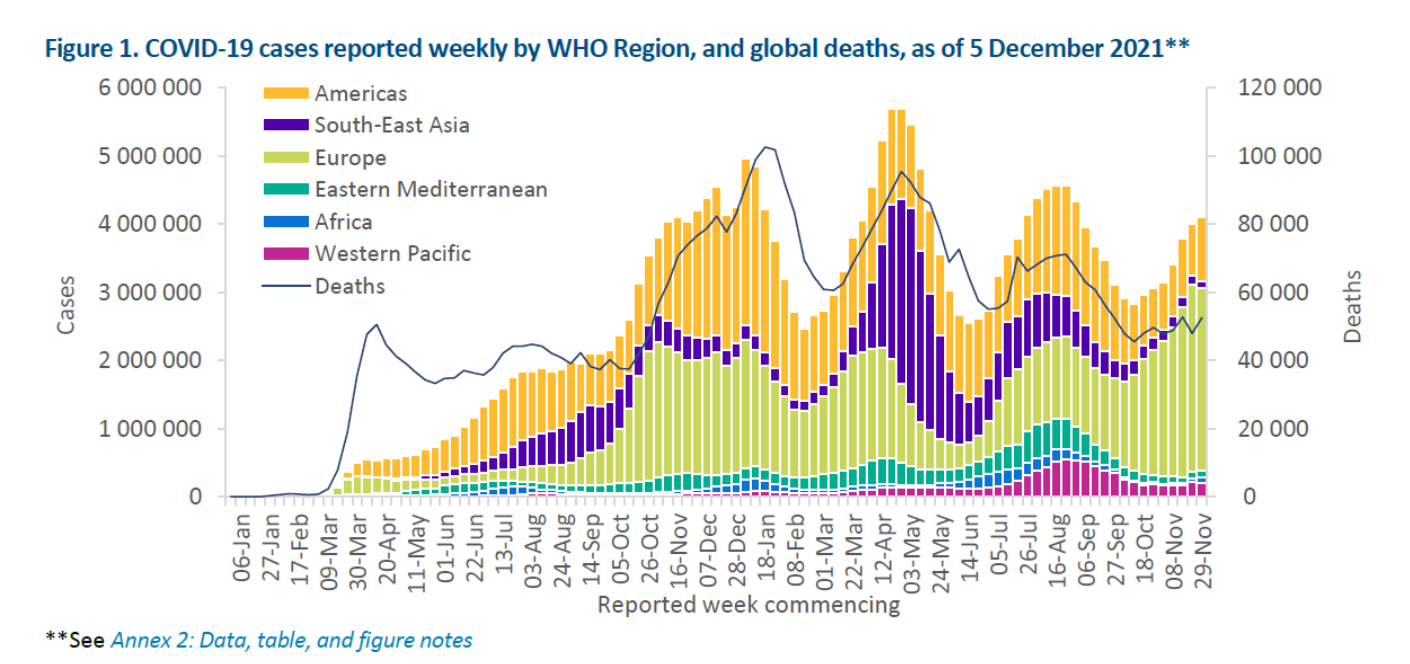
Globally, weekly COVID-19 case incidence plateaued this week (29 November – 5 December 2021), with over 4 million confirmed new cases reported, similar to the number reported in the previous week’s figures. However, new weekly deaths increased by 10% as compared to the previous week, with over 52 500 new deaths reported. As of 5 December, nearly 265 million confirmed cases and over 5.2 million deaths have been reported globally.
In this edition a special focus update is provided on SARS-CoV-2 Variants of Concern (VOCs) and Variants of Interest (VOIs)
An update on Variant of Concern Omicron is also provided and includes the current situation in terms of the epidemiology and transmissibility, clinical severity, risk of reinfection and potential impact on diagnostics, vaccines and therapeutics. As our understanding of the Omicron variant is evolving, these updates will continue as further evidence becomes available.
WHO Director General Speeches [selected]
https://www.who.int/director-general/speeches
Selected
9 December 2021
Speech
WHO Director-General’s opening remarks Global Health Landscape Symposium – 9 December 2021
9 December 2021
Speech
WHO Director-General’s opening remarks at the 8th meeting of the Access to COVID-19 Tools Accelerator Facilitation Council – 9 December 2021
8 December 2021
Speech
WHO Director-General’s opening remarks at the media briefing on COVID-19 – 8 December 2021
:: The Omicron variant has now been reported in 57 countries, and we expect that number to continue growing. Certain features of Omicron, including its global spread and large number of mutations, suggest it could have a major impact on the course of the pandemic. Exactly what that impact will be is still difficult to know.
:: Any complacency now will cost lives. Many of those who don’t die could be left battling long COVID, or post-COVID condition, a disease with debilitating, lingering symptoms that we are only beginning to understand.
:: New data are emerging every day, but scientists need time to complete studies and interpret the results. We must be careful about drawing firm conclusions until we have a more complete picture. Every day, WHO is convening thousands of experts around the world to share and analyse data and drive research forward.
6 December 2021
Speech
WHO Director-General’s opening remarks at the Stakeholder Engagement Event: Progress made so far on implementing the partnerships for vaccine manufacturing in Africa
6 December 2021
Speech
WHO Director-General’s opening remarks at the USAID Development Ministerial on COVID-19
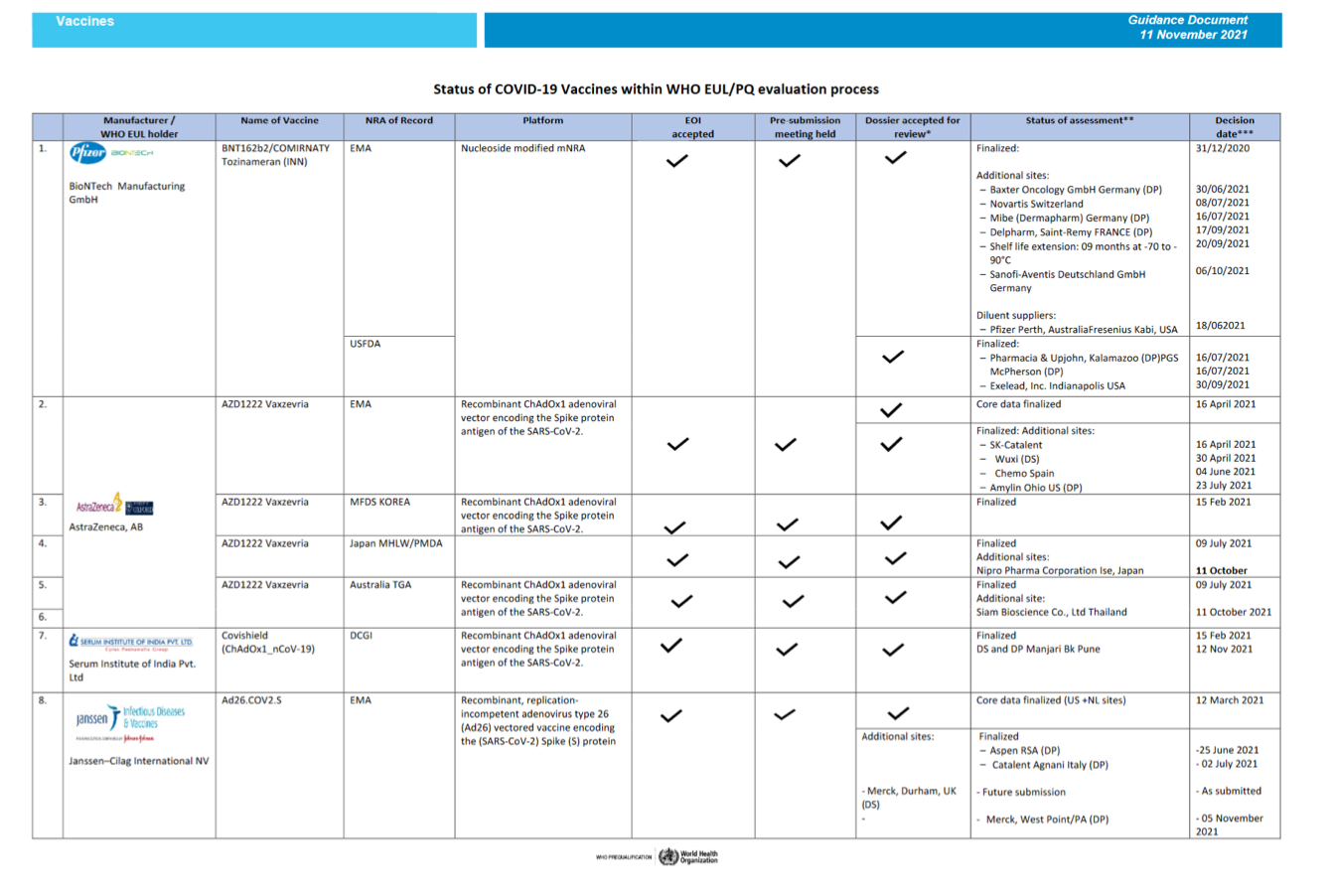
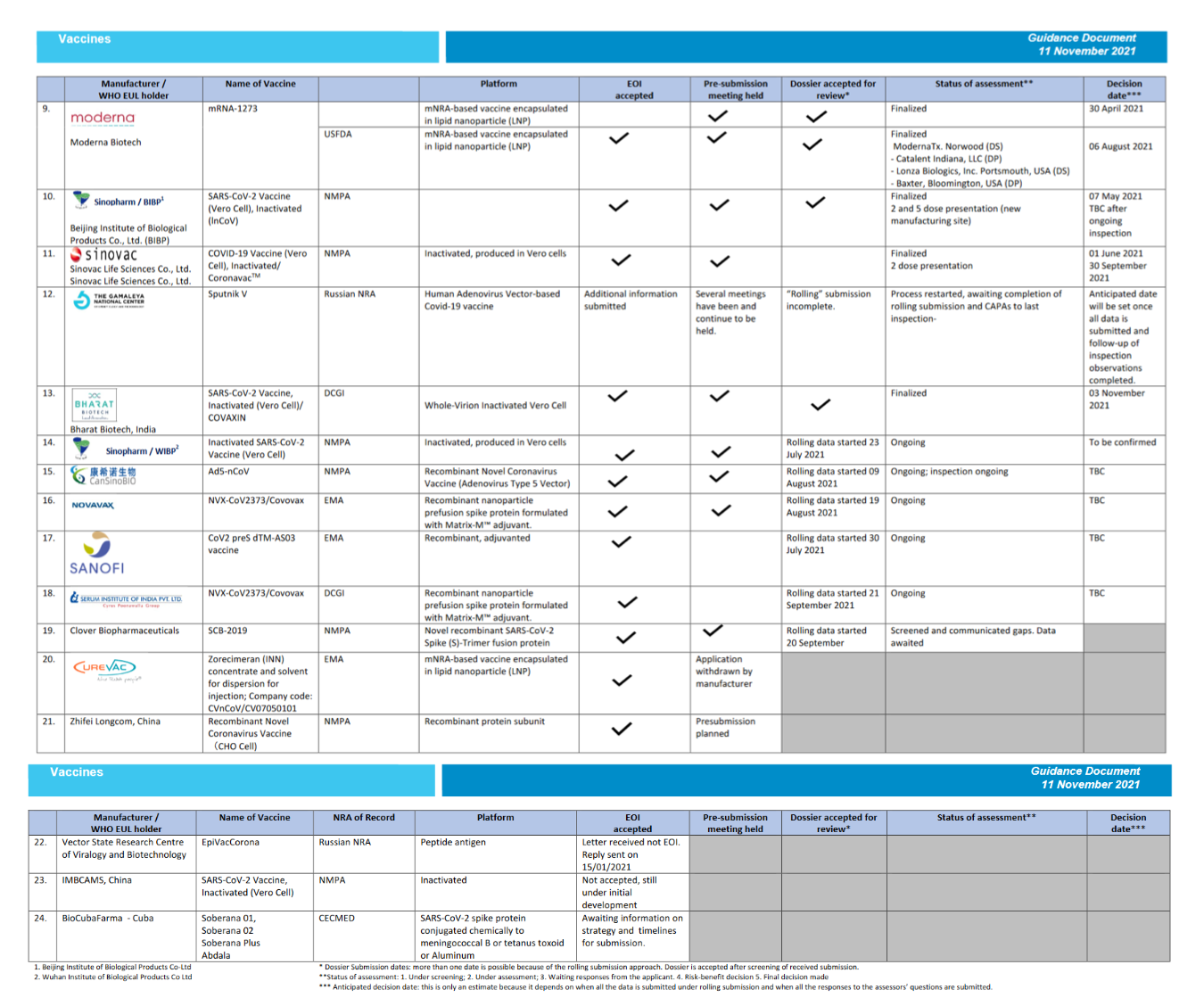
Status of COVID-19 Vaccines within WHO EUL/PQ evaluation process 11 November 2021
For 24 vaccine candidates, presents Manufacturer, Name of Vaccine, NRA of Record, Platform, EOI Accepted Status, Pre-submission Meeting Held Status, Dossier Accepted for Review, Status of Assessment; Anticipated/Completed Decision Date
[Full scale view available at title link above]
COVID Vaccine Developer/Manufacturer Announcements
[relevant press releases/announcement from organizations from WHO EUL/PQ listing above]
AstraZeneca
Press Releases
Evusheld (formerly AZD7442) long-acting antibody combination authorised for emergency use in the US for pre-exposure prophylaxis (prevention) of COVID-19
08 December 2021
Bharat Biotech
Press Releases – No new digest announcements identified
BioCubaFarma – Cuba
Últimas Noticias – [Website not responding at inquiry; receiving 403-Forbidden]
CanSinoBIO
News – [Website not responding at inquiry]
Clover Biopharmaceuticals – China
News – No new digest announcements identified
Clover Signs COVID-19 Vaccine Supply Agreement with UNICEF
Dec 7,2021
UNICEF signs supply agreement for Clover COVID-19 vaccine
NEW YORK/COPENHAGEN, 7 December 2021 – UNICEF and Clover Biopharmaceuticals Ltd. have signed a long-term agreement for the supply of the Clover COVID-19 vaccine on behalf of the COVAX Facility.
Through the supply agreement, UNICEF will have access to up to 414 million doses of Clover’s COVID-19 vaccine until the end of 2022. These doses were committed to the COVAX Facility through an Advance Purchase Agreement (APA) signed between Gavi, the Vaccine Alliance and Clover Biopharmaceuticals on 30 June 2021. The vaccine will be supplied to participating countries and territories in the COVAX Facility’s Advance Market Commitment (AMC), as well as self-financing participants…
Curevac [Bayer Ag – Germany]
News – No new digest announcements identified
Gamaleya National Center
Latest News and Events – No new digest announcements identified [See Russia/RFID below]
IMBCAMS, China
Home – No new digest announcements identified
Janssen/JNJ
Press Releases
Dec 09, 2021 United States
World Health Organization Strategic Advisory Group of Experts (SAGE) Interim Recommendation Supports Use of Johnson & Johnson COVID-19 Vaccine as a Booster
Dec 07, 2021 United States
Janssen Announces Respiratory Syncytial Virus (RSV) Adult Vaccine Candidate Maintains High Efficacy Regardless of Lower Respiratory Tract Disease Severity
Dec 05, 2021 United States
Johnson & Johnson COVID-19 Booster, Administered Six Months After Two-Dose Regimen of BNT162b2, Shows Substantial Increase in Antibody and T-cell Responses
Moderna
Press Releases
December 10, 2021
Moderna Announces Additional 20 Million Doses of COVID-19 Vaccine to COVAX for Supply in 2021 and New Additional Supply Agreement for 2022
December 10, 2021
Moderna Announces Positive Interim Phase 1 Data for mRNA Flu Vaccine and Provides Program Update
Novavax
Press Releases – No new digest announcements identified
Pfizer
Recent Press Releases
12.09.2021
Pfizer and BioNTech Receive U.S. FDA Emergency Use Authorization of COVID-19 Vaccine Booster for Individuals 16 Years and Older
12.08.2021
Pfizer and BioNTech Provide Update on Omicron Variant
Sanofi Pasteur
Press Releases – No new digest announcements identified
Serum Institute of India
NEWS & ANNOUNCEMENTS – No new digest announcements identified
Sinopharm/WIBPBIBP
News – No new digest announcements identified
Sinovac
Press Releases – No new digest announcements identified
Vector State Research Centre of Viralogy and Biotechnology
Home – No new digest announcements identified
Zhifei Longcom, China
[Anhui Zhifei Longcom Biologic Pharmacy Co., Ltd.]
[No website identified]
::::::
GSK
Press releases for media
07 December 2021 Medicago and GSK announce positive Phase 3 efficacy and safety results for adjuvanted plant-based COVID-19 vaccine candidate
:: Primary endpoints and secondary endpoints for which data are available were met in trial dominated by COVID-19 variants
:: Efficacy demonstrated against all variants seen in the study, including 75.3% efficacy against COVID-19 of any severity caused by the globally dominant Delta variant
:: Vaccine candidate was well-tolerated, with no related serious adverse events reported in the vaccine group
:: Final regulatory submission to be filed with Health Canada imminently
Merck
News releases
Merck Announces Pause in Enrollment for Two Phase 3 Clinical Trials of Investigational, Once-Monthly, Oral Islatravir for Pre-Exposure Prophylaxis (PrEP) of HIV-1 infection
December 06, 2021
Novartis
News – No new digest announcements identified
SK Biosciences
Press releases – No new digest announcements identified
Valneva
Press Releases
December 8, 2021
Valneva Signs Advance Purchase Agreement with Bahrain for Inactivated COVID-19 Vaccine VLA2001
UNICEF COVID-19 Vaccine Market Dashboard :: Agreements Table Accessed 11 Dec 2021
An overview of information collected from publicly announced bilateral and multilateral supply agreements [no new agreements since 10/22/2021 reported]
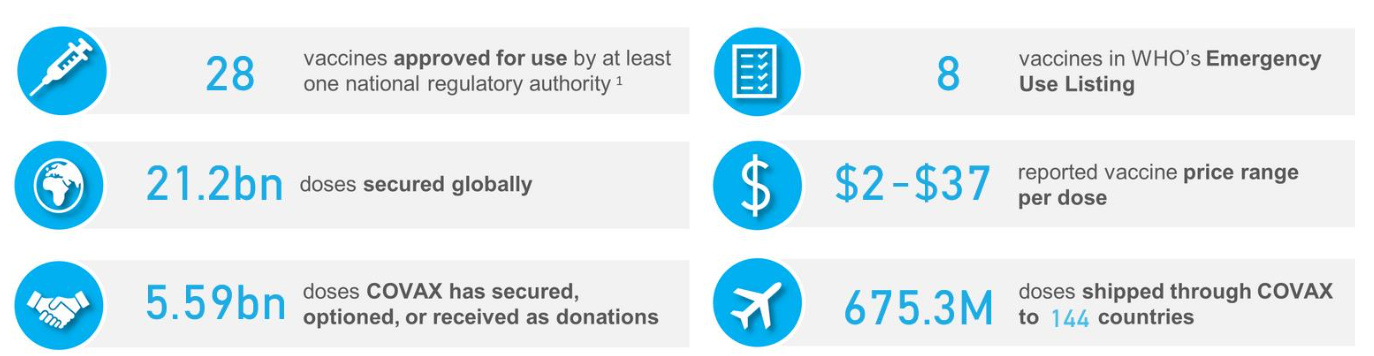
IMF-WHO Vaccine Supply Forecast Dashboard
Updated on 22 November 2021
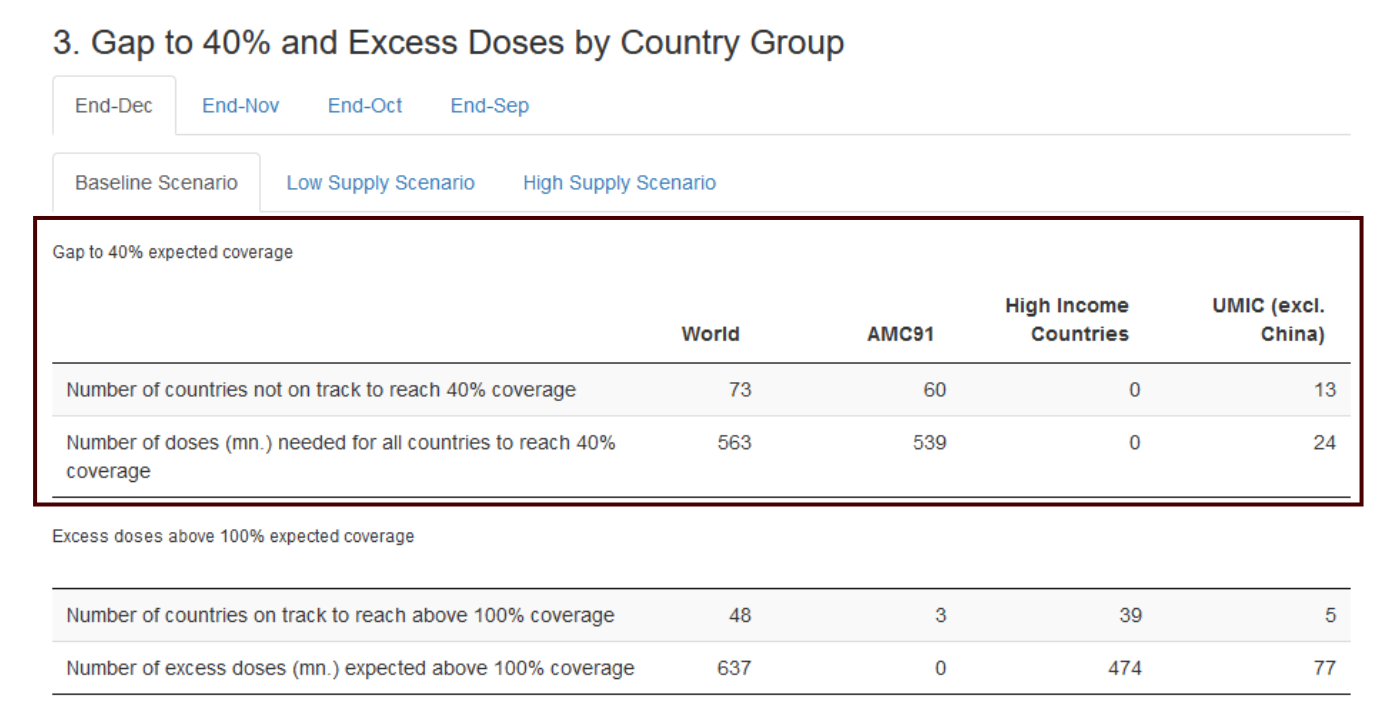
Many countries are not on track to meet the 40% vaccine coverage target. To make progress towards this target, we must identify: (1) Where and in which countries are the gaps?, and (2) How can gaps the be addressed?
The IMF-WHO COVID-19 Vaccine Supply Forecast Dashboard estimates expected month vaccine supply until the end of 2021 by country, product and channel. The tracker builds on the work of the IMF Staff Discussion Note – A Proposal to End the COVID-19 Pandemic (Agarwal and Gopinath, 2021).
Duke – Launch and Scale Speedometer
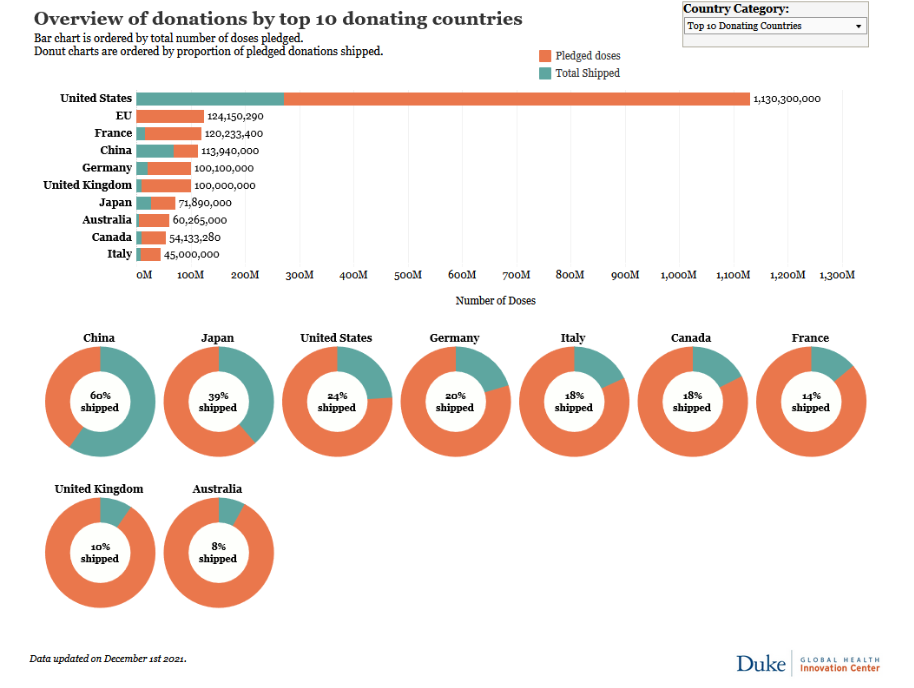
The Race for Global COVID-19 Vaccine Equity
A flurry of nearly 200 COVID-19 vaccine candidates are moving forward through the development and clinical trials processes at unprecedented speed; more than ten candidates are already in Phase 3 large-scale trials and several have received emergency or limited authorization. Our team has aggregated and analyzed publicly available data to track the flow of procurement and manufacturing and better understand global equity challenges. We developed a data framework of relevant variables and conducted desk research of publicly available information to identify COVID vaccine candidates and status, deals and ongoing negotiations for procurement and manufacturing, COVID burden by country, and allocation and distribution plans. We have also conducted interviews with public officials in key countries to better understand the context and challenges facing vaccine allocation and distribution
[accessed 24 July 2021]
See our COVID Vaccine Purchases research
See our COVID Vaccine Manufacturing research
See our COVID Vaccine Donations & Exports research
Global Dashboard on COVID-19 Vaccine Equity
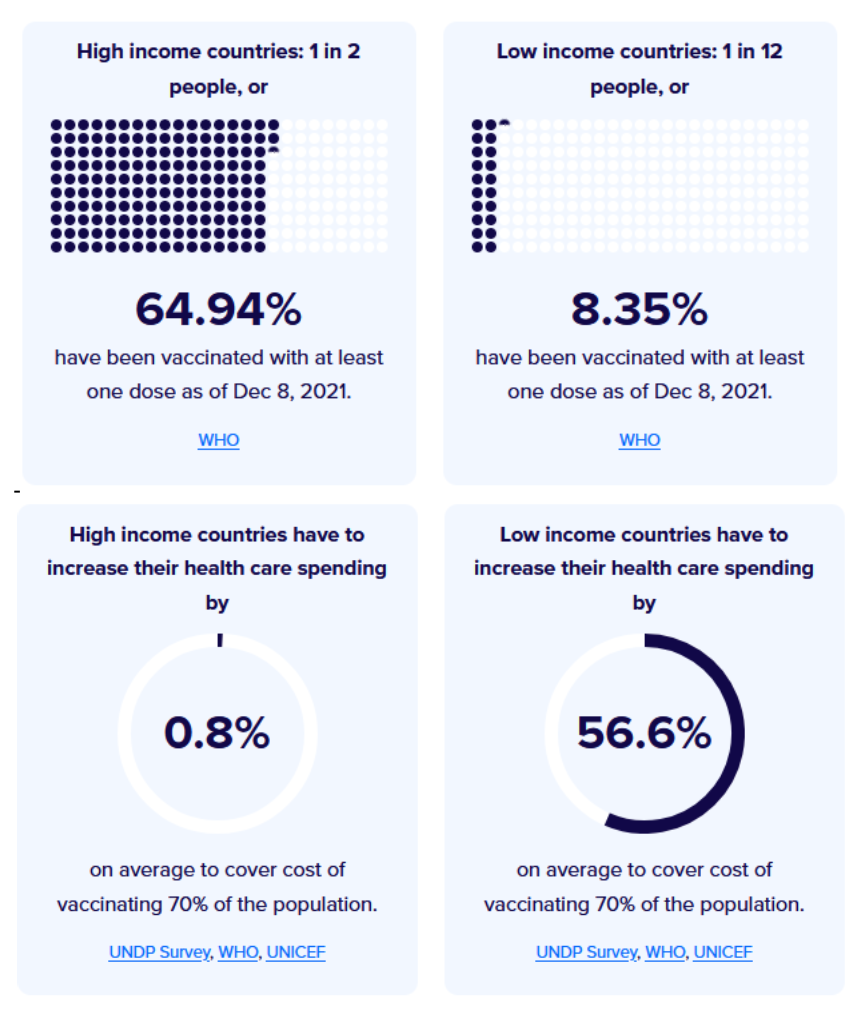
The Dashboard is a joint initiative of UNDP, WHO and the University of Oxford with cooperation across the UN system, anchored in the SDG 3 Global Action Plan for Healthy Lives and Well-being for All.
Dashboard on Vaccine Equity [accessed 11 Dec 2021]: https://data.undp.org/vaccine-equity/
See also visualization on Vaccine Access and Vaccine Affordability
–
COVID Vaccines – OCHA:: HDX
COVID-19 Data Explorer: Global Humanitarian Operations
COVID-19 Vaccine Roll-out
11 Dec 2021 | COVAX (WHO,GAVI,CEPI), UNDESA, Press Reports | DATA
Global COVID-19 Figures: 268M total confirmed cases; 5.3M total confirmed deaths
Global vaccines administered: 8.035B
Number of Countries: 30 [30 week ago]
COVAX Allocations Round 4-9 (Number of Doses): 220M [220M week ago]
COVAX Delivered (Number of Doses): 180M [180M week ago]
Other Delivered (Number of Doses): 300M [300M week ago]
Total Delivered (Number of Doses): 480M [480M week ago]
Multilateral Leaders Task Force on COVID-19 [IMF, World Bank Group, WHO, WTO]
https://data.covid19taskforce.com/data
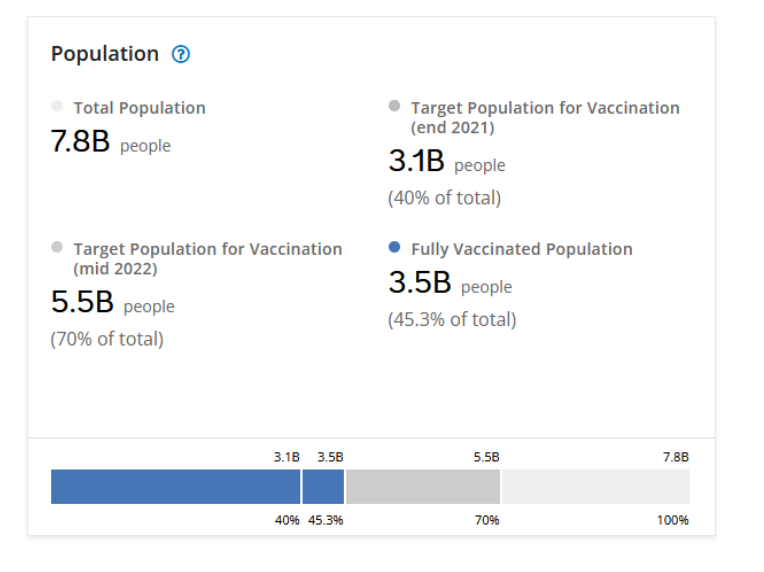
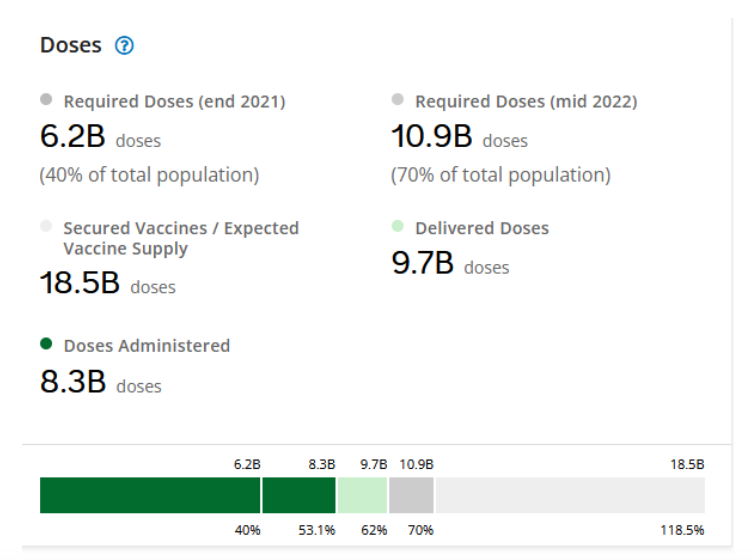
A global effort to help developing countries access and deliver COVID-19 vaccines, testing, and therapeutics, as they work to end the pandemic and boost economic recovery.
The International Monetary Fund, World Bank Group, World Health Organization and World Trade Organization have joined forces to accelerate access to COVID-19 vaccines, therapeutics and diagnostics by leveraging multilateral finance and trade solutions, particularly in low- and middle-income countries.
Website accessed 11 Dec 2021: https://data.covid19taskforce.com/data The global view below is complemented by country-specific dashboards here.
Our World in Data
Coronavirus (COVID-19) Vaccinations [Accessed 11 Dec 2021]
:: 55.9% of the world population has received at least one dose of a COVID-19 vaccine.
:: 8.41 billion doses have been administered globally, and 34.49 million are now administered each day.
:: Only 7.1% of people in low-income countries have received at least one dose.