COVID-19 vaccine acceptance and hesitancy in low- and middle-income countries

Nature Medicine
Volume 27 Issue 8, August 2021
https://www.nature.com/nm/volumes/27/issues/8


Article | 16 July 2021 | Open Access
COVID-19 vaccine acceptance and hesitancy in low- and middle-income countries
Survey data collected across ten low-income and middle-income countries (LMICs) in Asia, Africa and South America compared with surveys from Russia and the United States reveal heterogeneity in vaccine confidence in LMICs, with healthcare providers being trusted sources of information, as well as greater levels of vaccine acceptance in these countries than in Russia and the United States.
Julio S. Solís Arce, Shana S. Warren, Saad B. Omer

Evaluation of the extended efficacy of the Dengvaxia vaccine against symptomatic and subclinical dengue infection

Nature Medicine
Volume 27 Issue 8, August 2021
https://www.nature.com/nm/volumes/27/issues/8


Article | 24 June 2021
Evaluation of the extended efficacy of the Dengvaxia vaccine against symptomatic and subclinical dengue infection
Multiyear analysis of antibody responses in recipients of the dengue vaccine Dengvaxia in the Philippines supports their utility as a predictor of protection against disease, and reveals that Dengvaxia efficacy declines 3 years after complete vaccination.
Henrik Salje, Maria Theresa Alera, Alan L. Rothman

Advances and opportunities in malaria population genomics

Nature Reviews Genetics
Volume 22 Issue 8, August 2021
https://www.nature.com/nrg/volumes/22/issues/8


Review Article | 08 April 2021
Advances and opportunities in malaria population genomics
In this Review, Neafsey, Taylor and MacInnis discuss how population genomics approaches are currently used to study malaria parasites and mosquito vectors. They explore information that can be derived from such genomics approaches and discuss the use of relatedness-based measures of population variation to understand parasite and vector dynamics at highly resolved spatiotemporal scales.
Daniel E. Neafsey, Aimee R. Taylor, Bronwyn L. MacInnis

Understanding COVID-19 in Africa

Nature Reviews Immunology
Volume 21 Issue 8, August 2021
https://www.nature.com/nri/volumes/21/issues/8


Comment | 24 June 2021
Understanding COVID-19 in Africa
In this Comment article, Sofonias Tessema and John Nkengasong provide an overview of the current state of the COVID-19 pandemic in Africa and the challenges posed by the triple burden of emerging, endemic and non-communicable diseases.
Sofonias K. Tessema, John N. Nkengasong

Immunological mechanisms of vaccine-induced protection against COVID-19 in humans

Nature Reviews Immunology
Volume 21 Issue 8, August 2021
https://www.nature.com/nri/volumes/21/issues/8


Progress | 01 July 2021
Immunological mechanisms of vaccine-induced protection against COVID-19 in humans
This Progress article summarizes our current understanding of the immune mechanisms of protection induced by the available COVID-19 vaccines. The authors compare vaccine-induced antibody responses following one or two doses of different vaccines and consider the relative importance of neutralizing antibodies for vaccine-mediated protection against SARS-CoV-2.
Manish Sadarangani, Arnaud Marchant, Tobias R. Kollmann

Trust in Science: a novel research partnership model in Latin America

Nature Reviews Drug Discovery
Volume 20 Issue 8, August 2021
https://www.nature.com/nrd/volumes/20/issues/8


Comment | 12 April 2021
Trust in Science: a novel research partnership model in Latin America
Ten years ago, GlaxoSmithKline established an innovative model for public–private research partnerships in Latin America known as Trust in Science. Here, we summarize this novel initiative, illustrate its achievements in terms of scientific advances and local talent development, and highlight the key learnings that could be applied to similar initiatives.
Israel S. Gloger, Rosana Felice, Kevin P. Madauss

Use of lay vaccinators in animal vaccination programmes: A scoping review

PLoS Neglected Tropical Diseases
http://www.plosntds.org/


Use of lay vaccinators in animal vaccination programmes: A scoping review
Christian Tetteh Duamor, Katie Hampson, Felix Lankester, Maganga Sambo, Katharina Kreppel, Sally Wyke, Sarah Cleaveland
Research Article | published 10 Aug 2021 PLOS Neglected Tropical Diseases
https://doi.org/10.1371/journal.pntd.0009691

Knowledge, acceptance and perception on COVID-19 vaccine among Malaysians: A web-based survey

PLoS One
http://www.plosone.org/
[Accessed 14 Aug 2021]


Knowledge, acceptance and perception on COVID-19 vaccine among Malaysians: A web-based survey
Nurul Azmawati Mohamed, Hana Maizuliana Solehan, Mohd Dzulkhairi Mohd Rani, Muslimah Ithnin, Che Ilina Che Isahak
Research Article | published 13 Aug 2021 PLOS ONE
https://doi.org/10.1371/journal.pone.0256110

Shifting research priorities in maternal and child health in the COVID-19 pandemic era in India: A renewed focus on systems strengthening

PLoS One
http://www.plosone.org/
[Accessed 14 Aug 2021]


Shifting research priorities in maternal and child health in the COVID-19 pandemic era in India: A renewed focus on systems strengthening
Kayur Mehta, Sanjay Zodpey, Preetika Banerjee, Stephanie L. Pocius, Baldeep K. Dhaliwal, Andrea DeLuca, Sangeeta Das Bhattacharya, Shailendra Hegde, Paramita Sengupta, Madhu Gupta, Anita Shet
Research Article | published 12 Aug 2021 PLOS ONE
https://doi.org/10.1371/journal.pone.0256099

Influenza vaccination hesitancy in large urban centers in South America. Qualitative analysis of confidence, complacency and convenience across risk groups

PLoS One
http://www.plosone.org/
[Accessed 14 Aug 2021]


Influenza vaccination hesitancy in large urban centers in South America. Qualitative analysis of confidence, complacency and convenience across risk groups
Miguel Ángel González-Block, Blanca Estela Pelcastre-Villafuerte, Daniela Riva Knauth, Andréa Fachel-Leal, Yamila Comes, Pedro Crocco, Laura Noboa, Berenice Rodríguez Zea, Mónica Ruoti, Sandra Patricia Díaz Portillo, Elsa Sarti
Research Article | published 12 Aug 2021 PLOS ONE
https://doi.org/10.1371/journal.pone.0256040

Estimating SARS-CoV-2 infections from deaths, confirmed cases, tests, and random surveys

PNAS – Proceedings of the National Academy of Sciences of the United States of America
July 27, 2021; vol. 118 no. 31
https://www.pnas.org/content/118/31


Statistics
Open Access
Estimating SARS-CoV-2 infections from deaths, confirmed cases, tests, and random surveys
Nicholas J. Irons and Adrian E. Raftery
PNAS August 3, 2021 118 (31) e2103272118; https://doi.org/10.1073/pnas.2103272118

Quantifying COVID-19 importation risk in a dynamic network of domestic cities and international countries

PNAS – Proceedings of the National Academy of Sciences of the United States of America
July 27, 2021; vol. 118 no. 31
https://www.pnas.org/content/118/31


Environmental Sciences
Quantifying COVID-19 importation risk in a dynamic network of domestic cities and international countries
Xiaoyi Han, Yilan Xu, Linlin Fan, Yi Huang, Minhong Xu, and Song Gao
PNAS August 3, 2021 118 (31) e2100201118; https://doi.org/10.1073/pnas.2100201118

Interdisciplinary Theory, Methods, and Approaches for Hazards and Disaster Research: An Introduction to the Special Issue

Risk Analysis
Volume 41, Issue 7 Pages: 1047-1253 July 2021
https://onlinelibrary.wiley.com/toc/15396924/current


Special Issue: Interdisciplinary Theory, Methods, and Approaches for Hazards and Disaster Research
Original Research Articles
Interdisciplinary Theory, Methods, and Approaches for Hazards and Disaster Research: An Introduction to the Special Issue
Lori Peek, Seth Guikema
Pages: 1047-1058
First Published: 28 June 2021
Abstract
What is interdisciplinary research? Why is it vital to the advancement of the field of hazards and disaster research? What theory, methods, and approaches are fundamental to interdisciplinary research projects and their applications? This article addresses these and other pressing questions by taking stock of recent advancements in interdisciplinary studies of hazards and disasters. It also introduces the special issue of Risk Analysis, which includes this introductory article and 25 original perspectives papers meant to highlight new trends and applications in the field. The papers were written following two National Science Foundation-supported workshops that were organized in response to the growing interest in interdisciplinary hazards and disaster research, the increasing number of interdisciplinary funding opportunities and collaborations in the field, and the need for more rigorous guidance for interdisciplinary researchers and research teams. This introductory article and the special collection are organized around the cross-cutting themes of theory, methods, approaches, interdisciplinary research projects, and applications to advance interdisciplinarity in hazards and disaster research.

Community engagement and vulnerability in infectious diseases: A systematic review and qualitative analysis of the literature

Social Science & Medicine
Volume 284 September 2021
https://www.sciencedirect.com/journal/social-science-and-medicine/vol/284/suppl/C


Review article Open access
Community engagement and vulnerability in infectious diseases: A systematic review and qualitative analysis of the literature
Jacob Osborne, John Paget, Tamara Giles-Vernick, Ruth Kutalek, … Michel Dückers
Article 114246

Emerging issues in COVID-19 vaccination in tropical areas: Impact of the immune response against helminths in endemic areas

Travel Medicine and Infectious Diseases
Volume 42 July–August 2021
https://www.sciencedirect.com/journal/travel-medicine-and-infectious-disease/vol/42/suppl/C


Editorial No access
Emerging issues in COVID-19 vaccination in tropical areas: Impact of the immune response against helminths in endemic areas
Leonor Chacin-Bonilla, Nathalie Chacón-Fonseca, Alfonso J. Rodriguez-Morales
Article 102087

Helping patients with ethical concerns about COVID-19 vaccines in light of fetal cell lines used in some COVID-19 vaccines

Vaccine
Volume 39, Issue 31 Pages 4239-4390 (13 July 2021)
https://www.sciencedirect.com/journal/vaccine/vol/39/issue/31


Discussion Full text access
Helping patients with ethical concerns about COVID-19 vaccines in light of fetal cell lines used in some COVID-19 vaccines
Richard K. Zimmerman
Pages 4242-4244

Should older adult pneumococcal vaccination recommendations change due to decreased vaccination in children during the pandemic? A cost-effectiveness analysis

Vaccine
Volume 39, Issue 31 Pages 4239-4390 (13 July 2021)
https://www.sciencedirect.com/journal/vaccine/vol/39/issue/31


Research article Full text access
Should older adult pneumococcal vaccination recommendations change due to decreased vaccination in children during the pandemic? A cost-effectiveness analysis
Kenneth J. Smith, Angela R. Wateska, Mary Patricia Nowalk, Chyongchiou J. Lin, … Richard K. Zimmerman
Pages 4278-4282

COVID-19 related immunization disruptions in Rajasthan, India: A retrospective observational study

Vaccine
Volume 39, Issue 31 Pages 4239-4390 (13 July 2021)
https://www.sciencedirect.com/journal/vaccine/vol/39/issue/31


Research article Open access
COVID-19 related immunization disruptions in Rajasthan, India: A retrospective observational study
Radhika Jain, Ambika Chopra, Camille Falézan, Mustufa Patel, Pascaline Dupas
Pages 4343-4350

Impact of the COVID-19 pandemic on the provision of routine childhood immunizations in Ontario, Canada

Vaccine
Volume 39, Issue 31 Pages 4239-4390 (13 July 2021)
https://www.sciencedirect.com/journal/vaccine/vol/39/issue/31


Research article Abstract only
Impact of the COVID-19 pandemic on the provision of routine childhood immunizations in Ontario, Canada
Pierre-Philippe Piché-Renaud, Catherine Ji, Daniel S. Farrar, Jeremy N. Friedman, … Shaun K. Morris
Pages 4373-4382

Think Tanks et al

Think Tanks et al
 
 
Brookings [to 14 Aug 2021]
http://www.brookings.edu/
Order from Chaos
Delta variant outbreak challenges Vietnam’s COVID-19 response strategy
Huong Le Thu
Wednesday, August 11, 2021

Report
Global governance after COVID-19: Survey report
Kemal Derviş and Sebastian Strauss
Monday, August 9, 2021
 
 
Center for Global Development [to 14 Aug 2021]
http://www.cgdev.org/page/press-center
Podcast
Lagos to Mombasa: How Does the Pandemic End in Africa?
August 12, 2021
This first episode of the new Africa-centered podcast series Lagos to Mombasa examines how African governments can shape their responses to the pandemic and prepare for the future. Patrick Tippoo of Biovac and the African Vaccine Manufacturing Initiative and Prashant Yadav from CGD join Gyude Moore to discuss options and opportunities.
W. Gyude Moore

Malaria Case Management in the Private Sector in Africa: A Call for Action to Identify Sustainable Solutions
Publication
August 11, 2021
Over the past two decades, partnerships between bilateral and multilateral funders, philanthropy, national governments, and the private sector have substantially increased global access to effective malaria treatment. Nevertheless, further action on malaria case management is needed to meet global targets for reduced malaria morbidity and mortality.
 
 
Chatham House [to 14 Aug 2021]
https://www.chathamhouse.org/
Accessed 14 Aug 2021
[No new digest content identified]


CSIS
https://www.csis.org/
Accessed 14 Aug 2021
Report
Beyond Emergency Pandemic Response: The Case for Prioritizing Peacebuilding and Conflict Prevention
August 10, 2021 | By Erol Yayboke, Janina Staguhn


Kaiser Family Foundation
https://www.kff.org/search/?post_type=press-release
August 13, 2021 News Release
Children Head Back to School Amid an Ongoing Pandemic That Has Had Significant Effects on Their Health and Well-Being
As students head back to in-person school this fall, a new KFF brief highlights the effects of the ongoing pandemic on the health and well-being of children, including missed routine vaccinations and preventive care, mental health challenges and economic setbacks that can influence health. There had been over 4 million…

August 12, 2021 News Release
Drug Overdose Deaths Rose During the COVID-19 Pandemic, Particularly Among Black and American Indian/Alaska Native People
Drug overdose deaths rose during the early part of the COVID-19 pandemic, with some of the biggest jumps occurring among people of color, a new KFF analysis finds. The analysis breaks out drug overdose deaths by race and ethnicity for the first nine months of 2020, when the pandemic triggered…

August 11, 2021 News Release
Most Parents Don’t Want Their Schools to Require COVID-19 Vaccination, But Most Favor Requiring Masks for Unvaccinated Children and Staff
Worries about Long-Term and Serious Side Effects are Parents’ Top Concern; Hispanic and Black Parents Are More Likely than White Parents to Cite Access and Cost Issues As schools around the country prepare to reopen, a majority of parents of school-age children say they do not want their children’s schools…

August 10, 2021 News Release
Direct Care Workforce Shortages Have Worsened in Many States During the Pandemic, Hampering Providers of Home and Community-Based Services
During the pandemic many states have experienced worsening direct care workforce shortages that have affected providers of home- and community-based long-term care services (HCBS), according to early findings of a new KFF survey of Medicaid HCBS programs in all 50 states and the District of Columbia. Most states reported workforce…

Vaccines and Global Health: The Week in Review :: 7 August 2021

Vaccines and Global Health: The Week in Review is a weekly digest  summarizing news, events, announcements, peer-reviewed articles and research in the global vaccine ethics and policy space. Content is aggregated from key governmental, NGO, international organization and industry sources, key peer-reviewed journals, and other media channels. This summary proceeds from the broad base of themes and issues monitored by the Center for Vaccine Ethics & Policy in its work: it is not intended to be exhaustive in its coverage. You are viewing the blog version of our weekly digest, typically comprised of between 30 and 40 posts below all dated with the current issue date

.– Request an Email Summary: Vaccines and Global Health : The Week in Review is published as a single email summary, scheduled for release each Saturday evening before midnight (EDT in the U.S.). If you would like to receive the email version, please send your request to david.r.curry@centerforvaccineethicsandpolicy.org.

– pdf version A pdf of the current issue is available here: 

– blog edition: comprised of the approx. 35+ entries posted below.

– Twitter:  Readers can also follow developments on twitter: @vaxethicspolicy.
.
– Links:  We endeavor to test each link as we incorporate it into any post, but recognize that some links may become “stale” as publications and websites reorganize content over time. We apologize in advance for any links that may not be operative. We believe the contextual information in a given post should allow retrieval, but please contact us as above for assistance if necessary.

Support this knowledge-sharing service: Your financial support helps us cover our costs and to address a current shortfall in our annual operating budget. Click here to donate and thank you in advance for your contribution.

.
David R. Curry, MS
Executive Director
Center for Vaccine Ethics and Policy

WHO Director-General’s opening remarks at the Member State Information Session on COVID-19 – 5 August 2021

Milestones :: Perspectives :: Research

WHO Director-General’s opening remarks at the Member State Information Session on COVID-19 – 5 August 2021
5 August 2021
Honourable Ministers, Excellencies, dear colleagues and friends,
Good morning, good afternoon and good evening to all Member States, and thank you for joining us once again in our weekly session.

With the development of vaccines in record time we have come so far. But the world is now in a period of real danger. Many of the gains we have made are now being eroded.

The total number of reported cases will likely pass 200 million tomorrow. And we know the real figures are much higher. The highly transmissible Delta variant has now been detected in at least 132 countries. But the rise in cases is not just a natural process; it is being fuelled by increased social mixing, inconsistent public health and social measures, and inequitable vaccination.

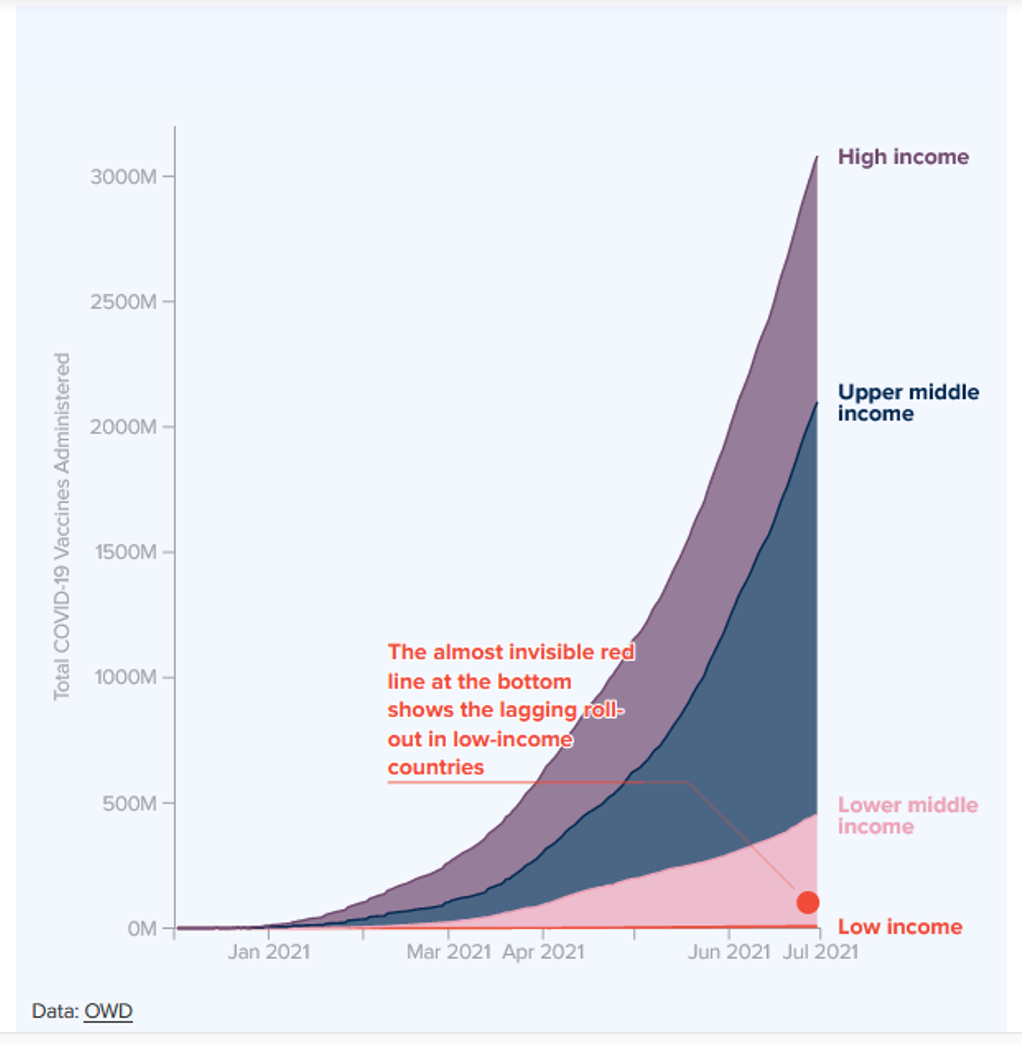
Over 4 billion vaccines have been administered globally, but more than 80% have gone to high- and upper-middle income countries. Health workers and people most at risk in lower-income countries are not receiving vaccines, while some countries are vaccinating those at low risk of serious disease.

This is wrong.  The hard-won gains we have made are being lost, and health systems in many countries are being overwhelmed as the increased number of infections is creating a shortage of life-saving treatments.

Twenty-nine countries have high and rising oxygen needs, and many countries have inadequate supplies of basic equipment to protect frontline health workers. Meanwhile, testing rates in low-income countries are less than 2% of what they are in high-income countries. This leaves us blind to understanding where the disease is and whether new, more dangerous variants are emerging.

So far, the Secretariat has supported 117 countries with oxygen concentrators and generators; we’re providing guidance to help countries better detect variants; and we continue to work daily with our global networks of experts to understand why the Delta variant spreads so readily. But the needs are much greater than the resources we have to meet them.

The WHO Strategic Preparedness and Response Plan for 2021 faces a funding shortfall of US$900 million, almost half of what we need. Of the funds we have received, nearly all of them are earmarked. This shortfall is already having an impact on our operations, and the lack of flexibility, in particular, leaves us in real danger of not being able to sustain urgent priorities for vaccination, surveillance and response in countries experiencing surges in cases.

In addition, the Access to COVID-19 Tools Accelerator is launching the Rapid ACT-Accelerator Delta Response, or RADAR, issuing an urgent call for US$7.7 billion for tests, treatments and vaccines. In parallel, we will need $3.8 billion in additional financing this year for COVAX to exercise its options to purchase vaccines for 2022.

At the same time, we are working to find new ways of scaling up vaccine production. Last week we took another step forward in setting up a technology transfer hub for mRNA vaccines in South Africa, with a letter of intent that sets out the terms of collaboration.


WHO’s goal remains to support every country to vaccinate at least 10% of its population by the end of September and at least 40% by the end of this year, and 70% of the world’s population by the middle of next year. 

Yet even while a large percentage of the world’s people are still waiting for their first dose, some countries are moving towards booster doses. I understand the concern of all governments to protect their people from the Delta variant. But we cannot accept countries that have already used most of the global supply of vaccines using even more of it, while the world’s most vulnerable people remain unprotected.            
                        
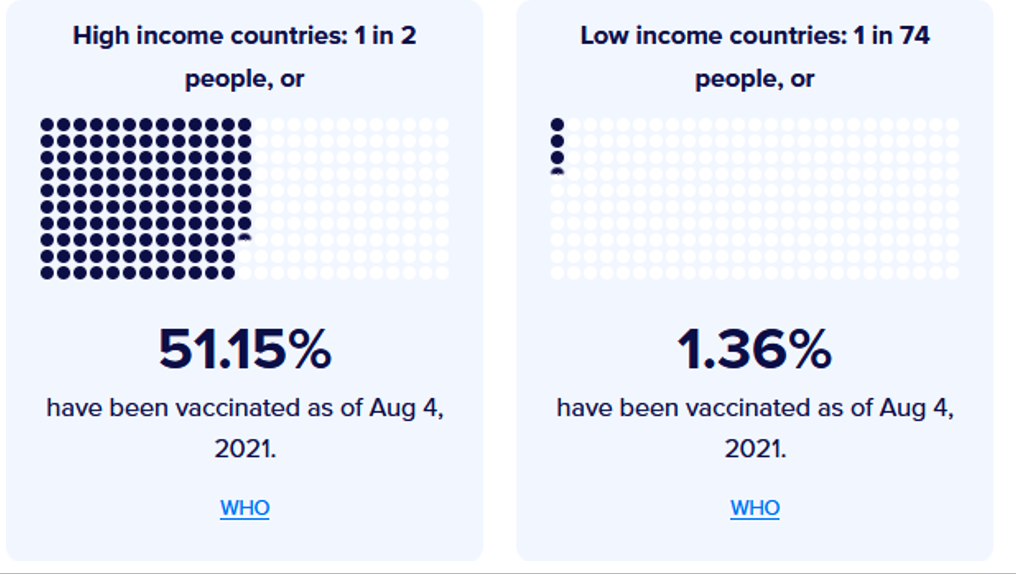
High-income countries have now administered almost 100 doses for every 100 people. Meanwhile, low-income countries have only been able to administer 1.5 doses for every 100 people, due to lack of supply.

We need an urgent reversal, from the majority of vaccines going to high-income countries, to the majority going to low-income countries. That’s why I am calling for a moratorium on boosters until at least the end of September, to enable at least 10% of the population of every country to be vaccinated.

To make that happen, we need everyone’s cooperation, especially the handful of countries and companies that control the global supply of vaccines. We call on those countries and vaccine producers to prioritize COVAX. 

At the same time, we must all remember that vaccines are not the only tool. Indeed, there is no single tool that will defeat this pandemic. We can only defeat it with a comprehensive approach of vaccines in combination with the proven public health and social measures that we know work.

Elevating political leadership for Pandemic Preparedness and Response Meeting with the UN General Assembly

Milestones :: Perspectives :: Research

The Independent Panel for Pandemic Preparedness and Response
Elevating political leadership for Pandemic Preparedness and Response Meeting with the UN General Assembly
28 July 2021
Statement [Excerpts]
Ellen Johnson Sirleaf
…So today there is a choice – to carry on with business as usual with the inevitability of a future pandemic catastrophe, or to make real and lasting change.

That choice is clear: now we must act – this must be the last pandemic to cause devastation on the scale we are witnessing today. We need a stronger international system for pandemic preparedness and response that understands the threats, is alert, and is poised to take collective action. The job can’t be done by any single country working alone. It can’t even be done by a group of countries, no matter how willing, because we are only as strong as our weakest link. Therefore, the UN General Assembly has a decisive role to play in strengthening the multilateral infrastructure so that it can identify and respond more quickly to the next virus with pandemic potential.

Helen Clark
…The international system needs to work as a coherent and effective system – and it must also work across sectors and silos. The pandemic is not only a health crisis; it is also a social economic, political, and peace and security crisis. That is why we have come to you – the UN General Assembly. Our Panel believes that the General Assembly has a crucial role to play in ensuring that the international system is co-ordinated and empowered to identify and act against future diseases with pandemic potential.
We said earlier that our recommendations are a package. We propose that a negotiated political declaration be adopted by the UN General Assembly later this year, setting out the road map for a stronger international system for the future.  

That roadmap should set out the architecture required and the steps to be taken to create it. It should encompass support for a new high-level oversight council, a dedicated financing mechanism, a new pandemic convention, and a  redesigned, permanent mechanism replacing ACT-A based on a global public goods model.

At the top of that system, our Panel recommends the creation of a Global Health Threats Council at the level of Heads of State and Government and including private sector and civil society representation. Pandemic preparedness must be led from the top, and it must be multisectoral.

Indeed, that Council would be tasked with maintaining political commitment to pandemic preparedness and response. It would not be an operational body, but rather a body that monitors progress, draws attention to gaps, and holds actors accountable – all key functions that the Panel found were missing in the international system.

WHO has an indispensable role in responding to global health emergencies and ensuring longer-term public health and health security through the strengthening of primary health systems in all countries. WHO is and should remain the lead agency for health in the international system. The quality, timing, and clarity of the technical advice and direction WHO provides to the world are of the utmost importance and Member States must adequately resource, empower, and further strengthen it. We welcome the initiative taken by the World Health Assembly to establish a Working Group on strengthening WHO.

The Panel backs the calls for a new pandemic framework convention which should, among other things, fill gaps in the current legal system and clarify the responsibilities between States and international actors. This pandemic treaty or framework convention would give state parties the opportunity to commit to the principles of pandemic preparedness and response in the spirit of mutual obligation, and give a framework for the institutional architecture needed to prevent future pandemics. The Panel recommended that it be adopted using the powers under Article 19 of the WHO Constitution, and be complementary to the International Health Regulations.

We propose the creation of an international pandemic financing facility. It must be able distribute up to ten billion dollars a year for preparedness and disburse up to one hundred billion in the event of a crisis. Ultimately, investing billions in preparedness now will save trillions in the future, as the current pandemic has so clearly illustrated. Funding for response to this pandemic generally was too little and came too late.

The facility should raise resources on an ability-to-pay formula with all countries contributing and allocations being made to those requiring solidarity funding. This should be a sustainable core commitment – not subtracted from an already stretched development assistance envelope. The facility could be hosted by an existing institution which is representative of countries big and small, rich and poor – we have proposed that the Global Health Threats Council be the allocator of funds.

The Panel considered that the current model of development and delivery of vaccines, diagnostics, and therapeutics for pandemics is not fit for purpose. We believe there is a need to shift away from a market-based model to one based on global public goods. This can be achieved through a transformation of ACT-A.

The Panel has recommended increasing the authority and independence of WHO, including by it having adequate, predictable, flexible and sustainable funding, and having its Director General and Regional Directors in future each serving a single term of seven years.

A greatly improved system for disease surveillance and alert is needed. WHO must have the authority to investigate outbreaks of concern rapidly, and publish information rapidly on its own authority. Future declarations of a Public Health Emergency of International Concern by the WHO Director-General should be based on the precautionary principle where warranted, as in the case of respiratory infections. PHEIC declarations should be based on clear, objective, and published criteria.

The Panel recommended that WHO set measurable benchmarks for country preparedness and response capacities, and for countries to invest accordingly, with support coming from the dedicated financing mechanism for those with limited resources. WHO should formalise universal periodic peer reviews of country progress against the benchmarks it sets. We also brought the IMF into the picture – proposing that it incorporate assessments of preparedness as part of its Article Four consultations.

Ultimately preparedness rests on national governments setting up the right structures, developing the needed capacities, and investing in vital assets such as health and other system resilience and social protection. Governments can listen and learn from the best practices we illustrate in our report.

Ellen Johnson Sirleaf
…I speak with conviction when I say that this current pandemic must be the last to cause devastation to human life, societies, and economies. As a world, we must do better.

This time we must act and not bury this analysis and these recommendations in the vault as has happen many times before.

To implement a package of reforms like that which our Panel has developed will require the engagement of Heads of State and Government. Every Head of State and Government is currently focused on the problems created by the pandemic.

It is vital now to mobilise the political will to make the changes required for a more effective and timely global response next time a pandemic threat emerges. We owe this to future generations.

The General Assembly has the authority to convene at the highest level to endorse a negotiated political declaration which will drive reform. That is what our Panel has requested the General Assembly to do, and we hope that you will give this your most serious consideration.
Joint Statement of the Multilateral Leaders Task Force on COVID-19 Vaccines, Therapeutics, and Diagnostics for Developing Countries following its Second Meeting

Milestones :: Perspectives :: Research

Joint Statement of the Multilateral Leaders Task Force on COVID-19 Vaccines, Therapeutics, and Diagnostics for Developing Countries following its Second Meeting
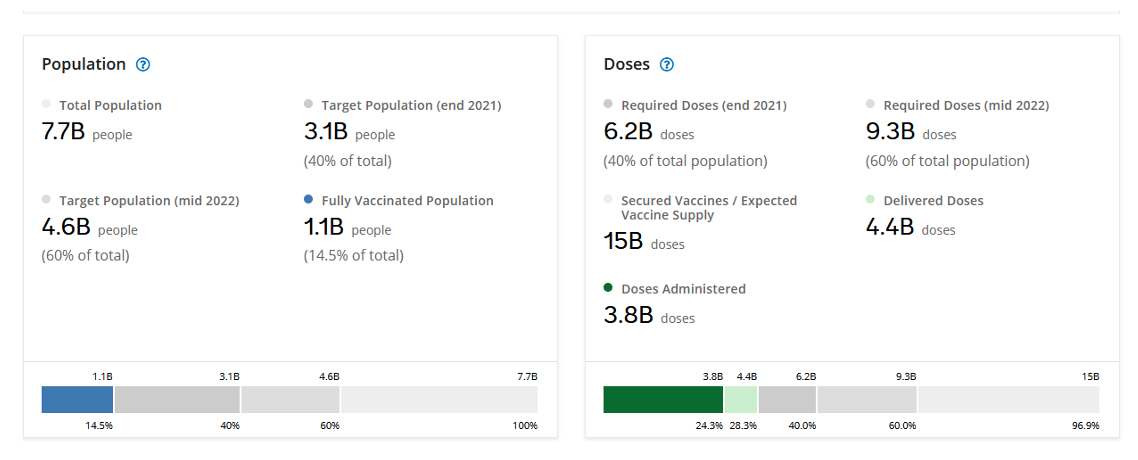
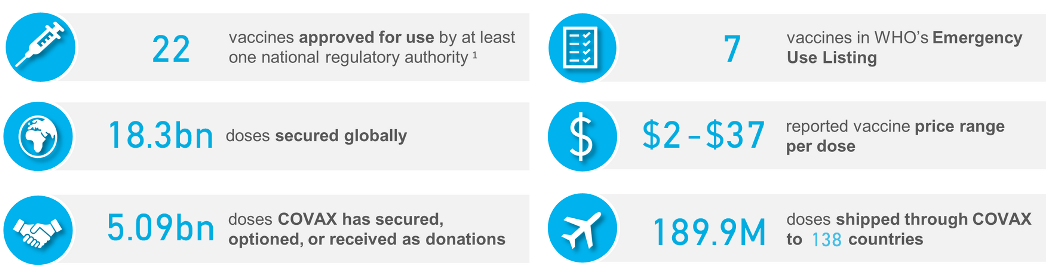
New Global Database to Enhance Transparency and Improve Delivery of COVID-19 Tools

WASHINGTON, July 30, 2021 — The Task Force on COVID-19 Vaccines, Therapeutics and Diagnostics for Developing Countries, established by the heads of the International Monetary Fund, World Bank Group, World Health Organization and the World Trade Organization to identify and resolve finance and trade impediments to vaccine, diagnostics, therapeutic production and deliveries, today launched a new website that includes the first phase of a global database and country dashboards on vaccines, therapeutics, and diagnostics to guide their work and advocacy. It also today issued the following joint statement:

“We reiterate the urgency of providing access to COVID-19 vaccines, tests and treatments to people throughout the developing world. In the area of vaccines, a key constraint is the acute and alarming shortage in the supply of doses to low and low-middle income countries, especially for the rest of 2021. We call on countries with advanced COVID-19 vaccination programs to release as soon as possible as much of their contracted vaccine doses and options as possible to COVAX, AVAT, and low and low-middle income countries.

We are concerned that vaccine delivery schedules and contracts for COVAX, AVAT, and low and low-middle income countries are delayed or too slow. Less than 5% of vaccine doses that were pre-purchased by or for low-income countries have been delivered. Our common target is for at least 40% of people in low and low-middle income countries to be vaccinated by the end of 2021. We estimate that less than 20% of the necessary vaccines is currently scheduled for delivery to these countries, whether through COVAX, AVAT, or bilateral deals and dose-sharing agreements.

We urge COVID-19 vaccine manufacturers to redouble their efforts to scale up production of vaccines specifically for these countries, and to ensure that the supply of doses to COVAX and low and low-middle income countries takes precedence over the promotion of boosters and other activities. We call on governments to reduce or eliminate barriers to the export of vaccines and all materials involved in their production and deployment. We underscore the urgent need for all parties to address supply chain and trade bottlenecks for vaccines, testing, and therapeutics as well as all of the materials involved in their production and deployment.

As per the IMF staff’s $50 billion proposal to end the pandemic, and in line with the priorities set out by WHO, WTO, IMF and the World Bank Group, over $35 billion in grant are needed with only one third of this financed to date. We welcome the recent announcement by COVAX and the World Bank to accelerate vaccine supplies for developing countries through a new financing mechanism. We also welcome the partnership between the World Bank and AVAT, noting that World Bank financing is now available to support the purchase and deployment of doses secured by both AVAT and COVAX.

It is critical to improve clarity and transparency around the evolving vaccine market, expected production volumes, delivery schedules, and pre-purchase options. We call on manufacturers to accelerate delivery to developing countries and we call on advanced economies to scale-up near-term deliveries to developing countries.”

The database and country-by-country dashboards, which also build on the IMF-WHO COVID-19 Vaccine Supply Tracker, seek to focus international attention and mobilize action by illuminating specific gaps, not just globally but also country-by-country. 

TASK FORCE ON COVID-19 VACCINES, THERAPEUTICS, AND DIAGNOSTICS
International Monetary Fund, World Bank Group, World Health Organization, World Trade Organization
Through this web site, which includes a global database and country-by-country data dashboards, the Task Force is tracking and monitoring specific global and country-level gaps to support faster and more targeted solutions to accelerate access to COVID-19 vaccines, treatments and tests in developing countries. Read more on the purpose of this website and how to explore the data

Website accessed 7 Aug 2021: https://data.covid19taskforce.com/data

Biomedical Research COVID-19 Impact Assessment: Lessons Learned and Compelling Needs

Featured Journal Content

National Academy of Medicine ̶ NAM Perspectives Discussion Paper
Biomedical Research COVID-19 Impact Assessment: Lessons Learned and Compelling Needs
By Nakela L. Cook and Michael S. Lauer
July 26, 2021 | Discussion Paper :: 28 pages
NAM Perspectives. Discussion Paper, National Academy of Medicine, Washington, DC. https://doi.org/10.31478/202107e.
Open Access PDF: https://nam.edu/wp-content/uploads/2021/07/Biomedical-Research-COVID19-Impact-Assessment.pdf

Introduction
The COVID-19 pandemic, a public health emergency of unprecedented scale and consequences, has revealed vulnerabilities in our health care system and public health infrastructure, yet also serves as a remarkable learning opportunity for transformational changes. Effects of the COVID-19 pandemic touch every aspect of life in ways not previously imagined—the biomedical and health research enterprises are no exception. Preexisting stresses in the research sector’s workforce, processes, and organizations have been exacerbated in the sector’s quest to effectively generate meaningful information in response to the pandemic and deliver research in new and innovative ways.

The COVID-19 pandemic revealed the necessity to enhance the ability for researchers to share data through interoperable and customizable systems to enable rigor, reproducibility, and efficiency. This properly stewarded data essential for research is available and actionable, but trust remains a critical issue in establishing and maintaining data sharing entities [147].

Despite the rapid innovation occurring during the COVID-19 pandemic, longstanding problems remain. The disproportionate burden of COVID-19 cases and outcomes amongst lower-income populations and communities of color underscores the need to address the lack of diversity of clinical research participants as a top priority. The type of causal, clinical, and population-related intervention studies that may have a critical impact on outcomes in this pandemic necessitated the inclusion of a large, diverse pool of participants most adversely affected and traditionally underrepresented in research.

Government funding focused on community engagement in research can certainly be a lever to promote diversity in study participation, as regulatory bodies seek to ensure the safety and efficacy of therapies across diverse populations [151]. This paper describes the current status of research and the challenges, lessons learned, and the potential, if the challenges are overcome, for a longer-term impact beyond the pandemic to enhance the resilience and diversity of the biomedical research workforce. These lessons learned can also be applied to help advance the rapid translation of research into practice (from basic science to clinical and population settings to applied public health), promote the sharing of data for delivering near real-time results in a clinical setting, and elevate community and participants as equal partners in research…

Summary and Priorities 
Assessing the Impact
The COVID-19 pandemic will have long-standing implications for the research enterprise, which may not return to pre-pandemic operations. A critical priority over the next 6–12 months will be to assess, in both quantitative and qualitative terms, the ongoing and longer-term impact of the pandemic, including opportunities for research to continue to help mitigate and  overcome the pandemic, ensuring the future of the research enterprise is protected, and learning and transforming research to capitalize on lessons from the pandemic response. The Council on Governmental Relations posted a working paper in August 2020 describing a Research Impact Metric by which institutions can assess their operations. The working paper describes a new “Pandemic Normal” characterized by ongoing slow-downs, changes in operations (e.g., shift work, required protective equipment), supply challenges, core facility disruptions, slowed hiring and promotion, and perhaps above all, a great deal of uncertainty [36]. A recently published landscape review described some of the uncertainties: the trajectory of federal funds and policies, the role of charitable foundations, the impact of declines in non-research revenues on research operations, whether future shut-downs may be needed as the pandemic worsens, what the long-term effects on research collaborations (positive and negative) will be, how changes in rapid scientific communication and peer review will evolve, whether research will return to “normal” levels of productivity and on what timeline, and what will happen to the scientific workforce [140]…

Research Participants and Public Participation in Research
This pandemic has created an imperative for communication, collaboration, and coordination across sectors that could not be stronger. Actions and considerations include the following:
:: The establishment of meaningful partnerships and trust with affected communities as research partners is central to the path forward to combat high levels of distrust of scientists and researchers. Partnerships begin with the identification and involvement of community brokers and subsequently identified community entities in understanding the purpose of research studies, setting research priorities, and translating information to communities.

:: Engagement of stakeholders, patients, and communities leveraging community brokers toward building trust and trustworthiness and enhancing diverse participation in research.

:: Broad scientific communications enhance the value of research conveyed to the public and build trust among individuals, organizations, and broader communities.

In the face of unprecedented challenges and urgent necessity, the biomedical and health research enterprise has the potential to deliver the discovery, translation, and implementation science related to vaccines and therapeutics required to end the COVID-19 pandemic. To propel the entire sector toward a holistic approach, it is crucial that all components of the research ecosystem collaborate on a multifaceted transformation that enhances the resilience and diversity of the research workforce and innovates in funding processes and partnerships to maintain the viability of research efforts during a crisis. The research sector of the future accelerates the translation of knowledge to care and public health action, delivers on long-standing data sharing efforts, and coordinates across health and health care. Essential to the sector’s efforts to innovate and achieve is the elevation of communities and participants as equal partners in research while engaging the public in science.

COVID

Featured Journal Content


COVID


Editor’s Note:
As is obvious to all, the sheer volume of strategic announcements, regulatory actions, country program decisions, commentary, and, indeed, misinformation around COVID response continues at extraordinary levels. Our weekly digest strives to present a coherent and comprehensive snapshot, but cannot be exhaustive, If you recognize a missed strategic development, a new source of rigorous analysis, or an insight/commentary that would benefit our common understanding, please advise me…we will review all suggestions and consider for inclusion in a subsequent edition: david.r.curry@ge2p2global.org

We are seeking access to modelling which engages scenarios and articulates imperatives around a pandemic end-game through at least a 2025 horizon. We assess that WHO must be conducting or contracting for such modeling – or should recognize an imperative to be doing so in its global health governance role. If we have missed such modeling in progress, we would be delighted to be advised of it and will include it in our coverage.

COVID-19 Data Explorer: Global Humanitarian Operations

Featured Journal Content


COVID Vaccines – OCHA:: HDX

COVID-19 Data Explorer: Global Humanitarian Operations
COVID-19 Vaccine Roll-out
Aug 07, 2021 | COVAX (WHO,GAVI,CEPI), UNDESA, Press Reports | DATA


Global COVID-19 Figures: 201M total confirmed cases; 4.3M total confirmed deaths
Global vaccines administered: 4.40B
Number of Countries: 26 [26]
COVAX Delivered (Number of Doses): 44M
Other Delivered (Number of Doses): 57M
Total Delivered (Number of Doses): 100M
Total Administered (Number of Doses): 96M

Weekly operational update on COVID-19 – 4 August 2021

Featured Journal Content

Weekly operational update on COVID-19 – 4 August 2021
Overview
In this edition of the COVID-19 Weekly Operational Update, highlights of country-level actions and WHO support to countries include:
Supporting COVID-19 emergency preparedness and response in Thailand
Supporting treatment of COVID-19 patients across Yemen
Facilitating the implementation of Single Nucleotide Polymorphism (SNP) assays to detect SARS-CoV-2 variants in Ukraine
More than one million COVID-19 vaccines arrive in Lao People’s Democratic Republic through the COVAX Facility
Driving COVID-19 vaccine uptake in Ghana’s hard-to-reach communities
Progress on a subset of indicators from the SPRP 2021 Monitoring and Evaluation Framework
Updates on WHO’s financing to support countries in SPRP 2021 implementation and provision of critical supplies.

Weekly epidemiological update on COVID-19 – 3 August 2021
Overview
Globally, weekly cases have been increasing for more than a month, with over 4 million cases reported in the past week. An average of over 570 000 cases were reported each day over the past week as compared to a little over     540 000 cases reported daily the week before. This increasing trend is largely attributed to substantial increases in the Eastern Mediterranean and the Western Pacific Regions which reported a 37% and 33% increase respectively as compared to the previous week. Overall, the number of deaths reported this week decreased by 8% as compared to the previous week, with over 64 000 deaths reported. However, the Western Pacific Region and the Eastern Mediterranean Region showed a sharp increase in new deaths as compared to the previous week, 48% and 31% respectively. The cumulative number of cases reported globally is now nearly 197 million and the number of cumulative deaths has reached 4.2 million.

In this edition, a special focus updates are provided on:
SARS-CoV-2 Variants of Concern (VOCs) Alpha, Beta, Gamma and Delta which includes updates on the geographic distribution of VOCs.

Status of COVID-19 Vaccines within WHO EUL/PQ evaluation process 15 July 2021

Featured Journal Content


Status of COVID-19 Vaccines within WHO EUL/PQ evaluation process 15 July 2021
For 22 vaccine candidates, presents Manufacturer, Name of Vaccine, NRA of Record, Platform, EOI Accepted Status, Pre-submission Meeting Held Status, Dossier Accepted for Review, Status of Assessment; Anticipated/Completed Decision Date
[No update since 15 July 2021; click on the link above for full scale view]

COVID Vaccine Developer/Manufacturer Announcements [relevant press releases/announcement from organizations from WHO EUL/PQ listing above]

Featured Journal Content


COVID Vaccine Developer/Manufacturer Announcements [relevant press releases/announcement from organizations from WHO EUL/PQ listing above]


AstraZeneca
Press Releases
Vaxzevria and mRNA COVID-19 vaccines showed similar and favourable safety profiles in a population-based cohort study of over a million people
28 July 2021


Vaxzevria showed no increased incidence of thrombosis with thrombocytopenia after second dose
28 July 2021

BioCubaFarma – Cuba
Últimas Noticias
[Website not responding at inquiry; receiving 403=Forbidden message]]


CanSinoBIO
News – No new digest announcements identified

Clover Biopharmaceuticals – China
News – No new digest announcements identified


Curevac [Bayer Ag – Germany]
News – No new digest announcements identified


Gamaleya National Center
Latest News and Events – No new digest announcements identified [See Russia/RFID below]

IMBCAMS, China
Home – No new digest announcements identified


Janssen/JNJ
Press Releases
Jul 29, 2021
Johnson & Johnson Statement on U.S. FDA Approval of Shelf Life Extension for Company’s COVID-19 Vaccine


Moderna
Press Releases
August 3, 2021
Moderna Receives FDA Fast Track Designation for Respiratory Syncytial Virus (RSV) Vaccine (mRNA-1345)

August 2, 2021
Moderna Announces First Participant Dosed in Phase 1 Study of Its IL-2 mRNA Therapeutic


Novavax
Press Releases
Novavax Announces COVID-19 Vaccine Booster Data Demonstrating Four-Fold Increase in Neutralizing Antibody Levels Versus Peak Responses After Primary Vaccination
Aug 5, 2021

Novavax and Serum Institute of India Announce Submission to Regulatory Agencies in India, Indonesia, Philippines for Emergency Use Authorization of Novavax’ Recombinant Nanoparticle COVID-19 Vaccine
Aug 5, 2021

Novavax and European Commission Finalize Advance Purchase Agreement for up to 200 million doses of COVID-19 Vaccine
Aug 4, 2021


Pfizer
Recent Press Releases – No new digest announcements identified


Sanofi Pasteur
Press Releases
August 03 2021 Press releases
Sanofi to acquire Translate Bio; advances deployment of mRNA technology across vaccines and therapeutics development
Accelerates development of current Sanofi licensed programs in vaccines and potential to explore other therapeutic areas
Fast tracks establishment of Sanofi’s recently announced mRNA Center of Excellence
Full integration upgrades drug formulation capabilities and enhances US talent in a promising new technology
PARIS and LEXINGTON, Mass – August 3, 2021 – As part of Sanofi’s endeavor to accelerate the application of messenger RNA (mRNA) to develop therapeutics and vaccines, the company has entered into a definitive agreement with Translate Bio (NASDAQ: TBIO), a clinical-stage mRNA therapeutics company, under which Sanofi will acquire all outstanding shares of Translate Bio for $38.00 per share in cash, which represents a total equity value of approximately $3.2 billion (on a fully diluted basis). The Sanofi and Translate Bio Boards of Directors unanimously approved the transaction…


Serum Institute of India
NEWS & ANNOUNCEMENTS – No corporate announcements identified
[Last media release still posted is dated February 15, 2021; media release of April 21, 2021 apparently removed]


Sinopharm/WIBPBIBP
News – No new digest announcements identified


Sinovac
Press Releases
SINOVAC Announces Positive Data on Booster Dose of CoronaVac®
021/07/21


Vector State Research Centre of Viralogy and Biotechnology
Home – No new digest announcements identified

Zhifei Longcom, China
[Anhui Zhifei Longcom Biologic Pharmacy Co., Ltd.]
[No website identified]


::::::

GSK
Press releases for media
28 July 2021
GSK and Vir Biotechnology announce Joint Procurement Agreement with European Commission for COVID-19 treatment, sotrovimab
GlaxoSmithKline plc and Vir Biotechnology, Inc. announce the supply of 220,000 doses of sotrovimab for adults and adolescents with COVID-19.

26 July 2021
Shingrix approved in the US for prevention of shingles in immunocompromised adults
Immunocompromised individuals are at greater risk of shingles and associated complications than immunocompetent individuals


SK Biosciences
Press releases – No new digest announcements identified

Countries receiving World Bank support for vaccines

Featured Journal Content


World Bank Vaccine Operations Portal
https://www.worldbank.org/en/who-we-are/news/coronavirus-covid19/world-bank-support-for-country-access-to-covid-19-vaccines
As of July 29, 2021, the World Bank approved operations to support vaccine rollout in 54 countries amounting to $4.6 billion. See the latest project financing, project documents and procurement information in the list below:

Countries receiving World Bank support for vaccines
As of July 29, 2021
This list of countries, project documents, and procurement notices and contracts will be updated as data becomes available.

Duke – Launch and Scale Speedometer

Featured Journal Content


Duke – Launch and Scale Speedometer

The Race for Global COVID-19 Vaccine Equity
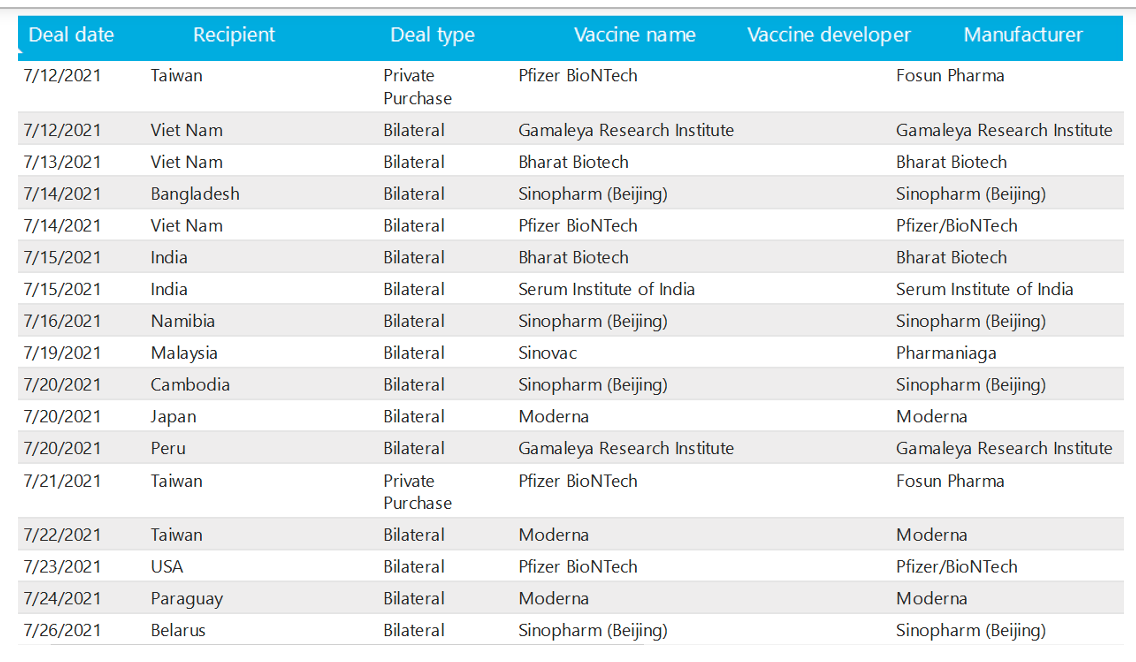
A flurry of nearly 200 COVID-19 vaccine candidates are moving forward through the development and clinical trials processes at unprecedented speed; more than ten candidates are already in Phase 3 large-scale trials and several have received emergency or limited authorization. Our team has aggregated and analyzed publicly available data to track the flow of procurement and manufacturing and better understand global equity challenges. We developed a data framework of relevant variables and conducted desk research of publicly available information to identify COVID vaccine candidates and status, deals and ongoing negotiations for procurement and manufacturing, COVID burden by country, and allocation and distribution plans. We have also conducted interviews with public officials in key countries to better understand the context and challenges facing vaccine allocation and distribution
[accessed 24 July 2021]
See our COVID Vaccine Purchases research
See our COVID Vaccine Manufacturing research
See our COVID Vaccine Donations & Exports research

Coronavirus (COVID-19) Vaccinations[Accessed 7 Aug 2021]

Featured Journal Content


Our World in Data
Coronavirus (COVID-19) Vaccinations[Accessed 7 Aug 2021]
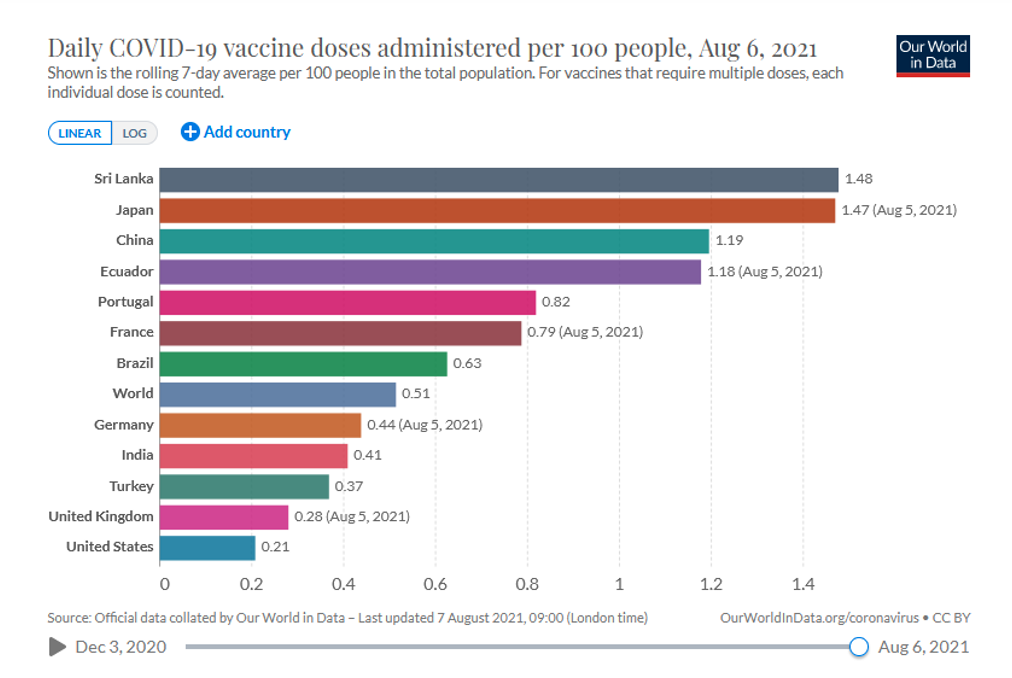
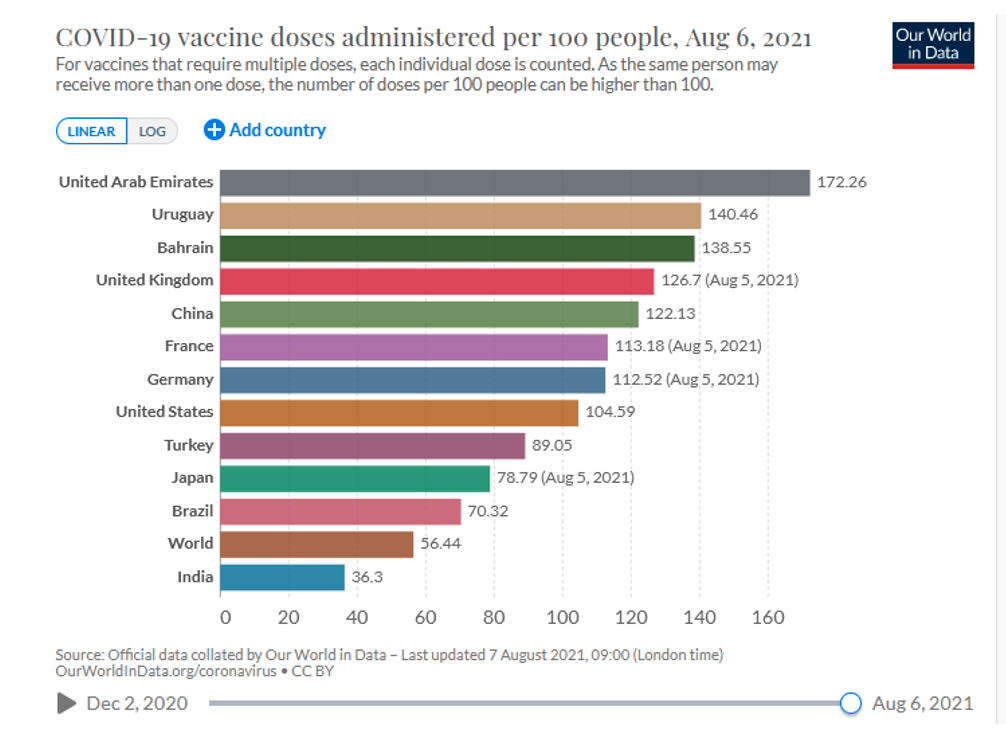
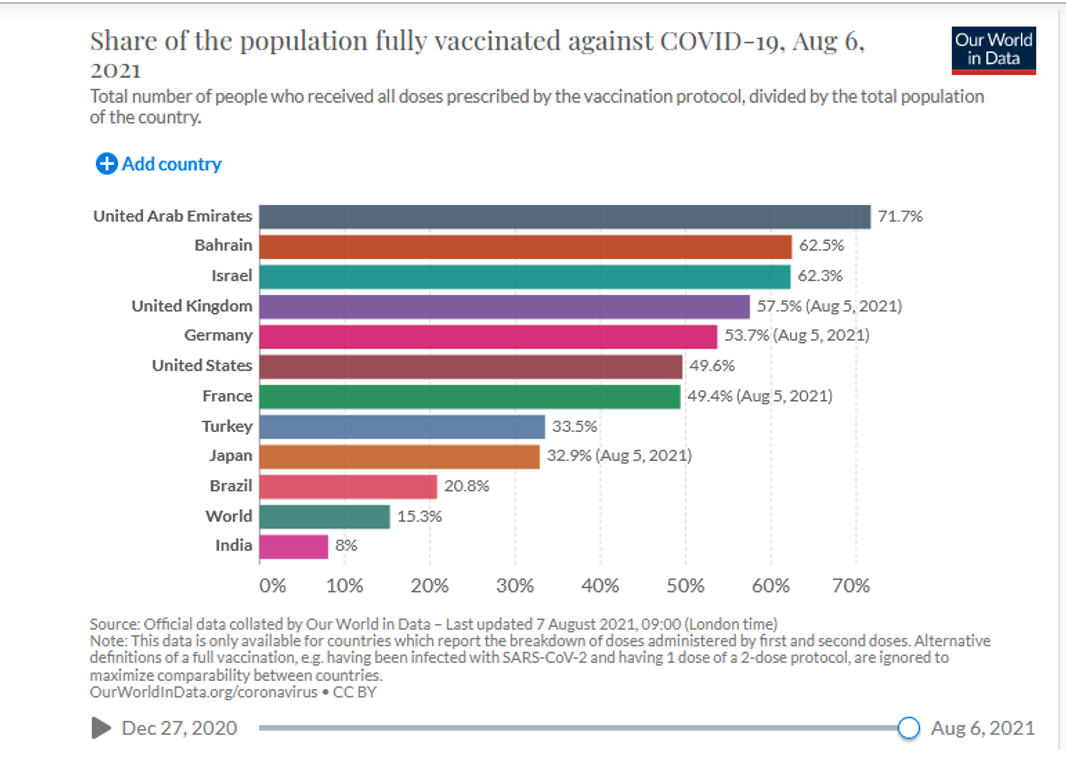
29.7% of the world population has received at least one dose of a COVID-19 vaccine, and 15.3% is fully vaccinated.
4.4 billion doses have been administered globally, and 40.04 million are now administered each day.
Only 1.1% of people in low-income countries have received at least one dose.


U.S.: COVID-19 Vaccines – Announcements/Regulatory Actions/Deployment

Featured Journal Content


U.S.: COVID-19 Vaccines – Announcements/Regulatory Actions/Deployment

Vaccines and Related Biological Products Advisory Commi ttee
:: No meetings scheduled


::::::

White House [U.S.]
Briefing Room – Selected Major COVID Announcements
Press Briefing by White House COVID-⁠19 Response Team and Public Health Officials
August 05, 2021 • Press Briefings

Remarks by President Biden on Fighting the COVID-⁠19 Pandemic
August 03, 2021 • Speeches and Remarks

FACT SHEET: President Biden Announces Major Milestone in Administration’s Global Vaccination Efforts: More Than 100 Million U.S. COVID-⁠19 Vaccine Doses Donated and Shipped Abroad
August 03, 2021 • Statements and Releases

Press Briefing by White House COVID-⁠19 Response Team and Public Health Officials
August 02, 2021 • Press Briefings

Europe: COVID-19 Vaccines – Announcements/Regulatory Actions/Deployment

Featured Journal Content


Europe: COVID-19 Vaccines – Announcements/Regulatory Actions/Deployment


European Medicines Agency

News & Press Releases
News: ECDC and EMA update on COVID-19 (new)
Last updated: 04/08/2021
Full vaccination is key to protecting against serious COVID-19, including disease caused by the Delta variant
With the increasing circulation of the Delta variant of SARS-CoV-2 in EU/EEA countries, the European Medicines Agency (EMA) and the European Centre for Disease Prevention and Control (ECDC) strongly encourage those who are eligible for vaccination but have not yet been vaccinated to start and complete the recommended COVID-19 vaccination schedule in a timely manner…


News: Increased manufacturing capacity and supply for Spikevax (new)
CHMP, Last updated: 30/07/2021


::::::

European Centre for Disease Prevention and Control
https://www.ecdc.europa.eu/en
Latest Updates
News
ECDC and EMA update on COVID-19
News story 4 Aug 2021
Full vaccination is key to protecting against serious COVID-19, including disease caused by the Delta variant.


::::::

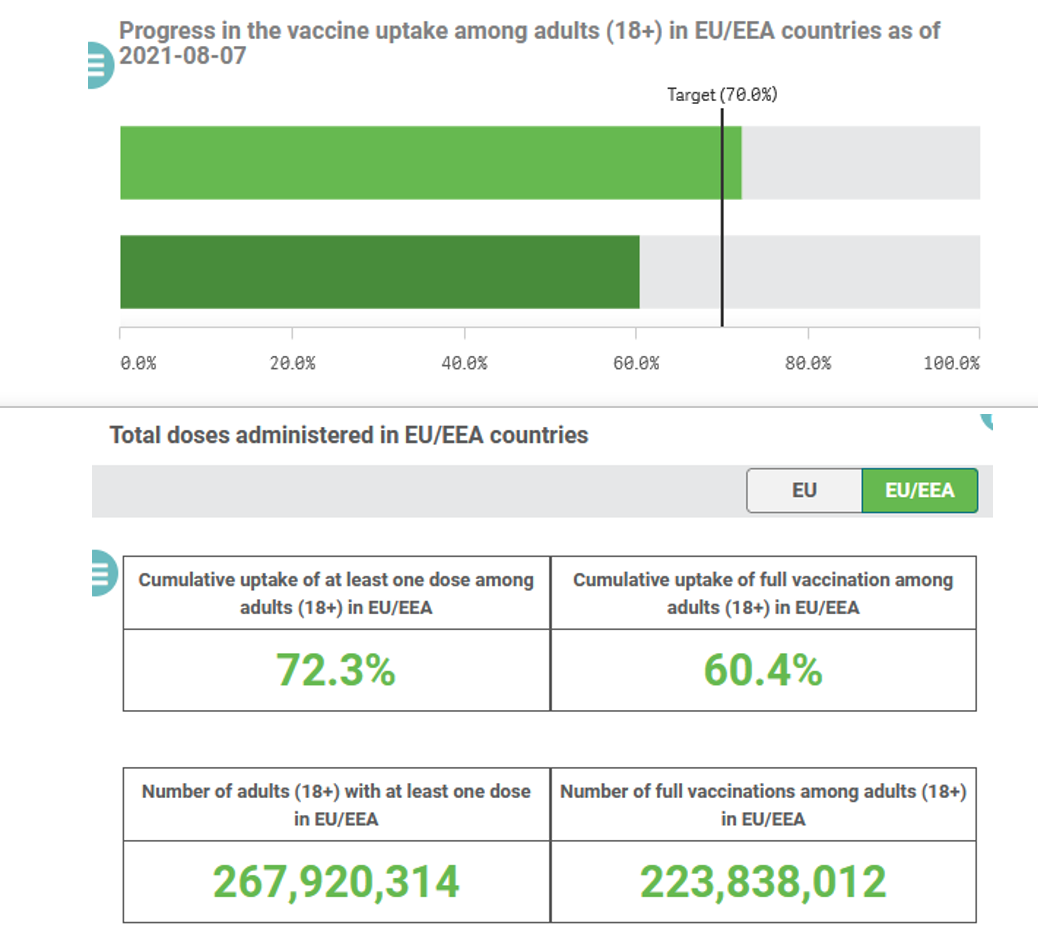
Data as of 2021-08-07
https://vaccinetracker.ecdc.europa.eu/public/extensions/COVID-19/vaccine-tracker.html#uptake-tab


::::::

European Commission
https://ec.europa.eu/commission/presscorner/home/en
Press release 4 August 2021
Coronavirus: Commission approves new contract for a potential COVID-19 vaccine with Novavax
Today, the European Commission has approved its seventh Advanced Purchase Agreement (APA) with a pharmaceutical company to ensure access to a potential vaccine against COVID-19 in Q4 of 2021 and in 2022.

Press release 4 August 2021
Lebanon: EU mobilises €5.5 million for coronavirus response
The Commission is allocating €5.5 million in humanitarian funding to help strengthen the COVID-19 response in Lebanon. The funding comes as Lebanon faces high infection rates, with the national health system close to collapse as well as low vaccination rates.

Statement 27 July 2021
Statement by President von der Leyen on a new milestone in the EU Vaccines Strategy
President von der Leyen announced that the EU has achieved its goal of vaccinating 70% of its adult population with at least one dose in July.

Africa: COVID-19 – Announcements/Regulatory Actions/Deployment

Featured Journal Content


Africa: COVID-19 – Announcements/Regulatory Actions/Deployment


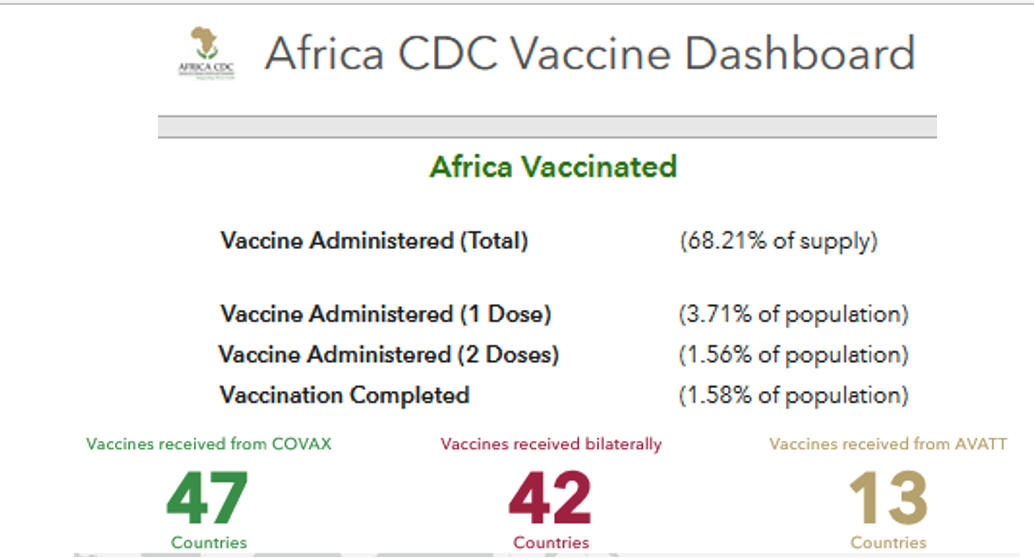
Current at 21 Jul 2021; Full scale, interactive dashboard available at: https://africacdc.org/covid-19-vaccination/


::::::

Africa announces the rollout of 400m vaccine doses to the African Union Member States and the Caribbean
ADDIS ABABA, 5 August, 2021 – His Excellency President Cyril Ramaphosa, President of the Republic of South Africa and African Union (AU) COVID-19 Champion, is pleased to announce the start of monthly shipments of vaccines acquired by the AU / African Vaccine Acquisition Trust (AVAT) to the AU Member States today. An initiative by the AU Member States to pool their purchasing power, the AVAT, on 28 March 2021, had signed the historic agreement for the purchase of 220 million doses of the Johnson & Johnson single-shot COVID-19 vaccine, with the potential to order an additional 180 million doses. The Johnson & Johnson vaccine was selected for this first pooled procurement for three reasons: first of all, as a single-shot vaccine, it is easier and cheaper to administer; second, the vaccine has a long shelf-life and favourable storage conditions. Last but not least, the vaccine is partly manufactured on the African continent, with fill-finish activities taking place in South Africa.

President Ramaphosa said: “This is a momentous step forward in Africa’s efforts to safeguard the health and well-being of its people. By working together and by pooling resources, African countries have been able to secure millions of vaccine doses produced right here in Africa. This will provide impetus to the fight against COVID-19 across the continent and will lay the basis for Africa’s social and economic recovery.”…

…This vaccine acquisition is a unique milestone for the African continent. It is the first time Africa has undertaken a procurement of this magnitude involving all Member States. It also marks the first time that the AU Member States have collectively purchased vaccines to safeguard the health of the African population – 400m vaccines are sufficient to immunise a third of the African people and bring Africa halfway towards its continental goal of vaccinating at least 60 per cent of the population. International donors have committed to deliver the remaining half of the doses required through the COVAX initiative.

It is significant that these vaccine doses are being produced on the African continent at the Aspen Pharmacare facility in Gqeberha in South Africa. This is part of the concerted effort by African countries to rally the world to support the TRIPS waiver for technology transfer and active pharmaceutical ingredients to develop our own manufacturing capabilities.

Mr Strive Masiyiwa, African Union Special Envoy, said: “Delivering our first doses to African Union Member States is an unprecedented milestone. We are deploying relentless efforts to help each Member State to reach its goal of immunising 60 per cent of Africans, as recommended by the Africa CDC. Johnson & Johnson AVAT-purchased single-shot vaccines will enable us to considerably improve our vaccination level across the continent.”

Dr John Nkengasong, Director of the Africa Centres for Disease Control and Prevention (Africa CDC), said: “During the last months, we have seen the vaccination gap between Africa and other parts of the world widen, and a devastating third wave hit our continent. The deliveries starting now will help us get to the vaccination levels necessary to protect African lives and livelihoods.”

The agreement with Johnson & Johnson was made possible through a USD 2 billion facility provided by African Export-Import Bank (Afreximbank), who are also the Financial and Transaction Advisers, Guarantors, Instalment Payment facility providers and Payment Agents…

AVAT to partner with UNICEF in scaling up vaccine deliveries to African Union Member States
DDIS ABABA/NEW YORK, 2 August 2021 – Having secured access to up to 400 million doses of the J&J COVID-19 vaccine, the African Union (AU), African Vaccine Acquisition Trust (AVAT) and UNICEF are partnering to ensure the seamless procurement and delivery of vaccines to AU Member States. This partnership will help ramp up efforts to mitigate the impact of the pandemic as less than 2 per cent of people on the continent are fully vaccinated so far.

“We are building a platform for deeper collaboration that will pave the way to a more robust African response to the pandemic and move the continent towards recovery, leveraging the opportunities to strengthen health systems and support the manufacturing sector for job creation,” said Dr. Vera Songwe, United Nations Under-Secretary-General and Executive Secretary of the Economic Commission for Africa…

Established by African leaders, AVAT has spearheaded African efforts on fair equitable access and distribution of vaccines, negotiating vaccine acquisition with pharmaceutical companies to at least 60 per cent of the African population with safe and efficacious vaccines to achieve “herd immunity” by 2022…

Russia: COVID-19 Vaccines – Announcements/Regulatory Actions/Deployment

Featured Journal Content


Russia: COVID-19 Vaccines – Announcements/Regulatory Actions/Deployment
Russia: Sputnik V – “the first registered COVID-19 vaccine”
https://sputnikvaccine.com/newsroom/pressreleases/
Press Releases
Argentina and Russia continue to successfully work together to accelerate the vaccination campaign and generate scientific evidence regarding the interchangeability of vaccines
Press release, 04.08.2021

Combination of the first component of Sputnik V vaccine (Sputnik Light vaccine) with vaccines by AstraZeneca, Sinopharm and Moderna demonstrates high safety profile during the study in Argentina’s Buenos-Aires province
Press release, 04.08.2021

SPUTNIK V TEAM STATEMENT ON PRODUCTION SCALE UP IN AUGUST AND SEPTEMBER
Press release, 04.08.2021

Laboratorios Richmond to provide Argentina with over 3 million doses of the second component of the Sputnik V vaccine in August with the first 150,000 doses to become available for vaccination this week
Press release, 03.08.2021

Test batch of the Sputnik V vaccine produced in Uzbekistan
Press release, 31.07.2021

The world’s first study of a combination between the AstraZeneca vaccine and the first component of the Sputnik V vaccine (Sputnik Light) in Azerbaijan shows no serious adverse events or COVID infection cases following the vaccination
Press release, 30.07.2021