Disability inclusion in humanitarian action

Humanitarian Exchange Magazine
Number 78, October 2020
https://odihpn.org/magazine/inclusion-of-persons-with-disabilities-in-humanitarian-action-what-now/


Disability inclusion in humanitarian action
by HPN October 2020
The theme of this edition of Humanitarian Exchange, co-edited with Sherin Alsheikh Ahmed from Islamic Relief Worldwide, is disability inclusion in humanitarian action. Persons with disabilities are not only disproportionately impacted by conflicts, disasters and other emergencies, but also face barriers to accessing humanitarian assistance. At the same time, global commitments and standards and the IASC Guidelines on the inclusion of persons with disabilities in humanitarian action all emphasise how persons with disabilities are also active agents of change. Disability and age-focused organisations have led on testing and demonstrating how inclusion can be done better. Yet despite this progress, challenges to effective inclusion remain.

As Kirstin Lange notes in the lead article, chief among these challenges is humanitarian agencies’ lack of engagement with organisations of persons with disabilities. Simione Bula, Elizabeth Morgan and Teresa Thomson look at disability inclusion in humanitarian response in the Pacific, and Kathy Al Jubeh and Alradi Abdalla argue for a ‘participation revolution’, building on learning from the gender movement. Tchaurea Fleury and Sulayman AbdulMumuni Ujah outline how the Bridge Article 11 training initiative is encouraging constructive exchange between humanitarian and disability actors. The lack of good, disaggregated data is highlighted by Sarah Collinson; Frances Hill, Jim Cranshaw and Carys Hughes emphasise the need for training resources in local languages and accessible formats; and Sophie Van Eetvelt and colleagues report on a review of the evidence on inclusion of people with disabilities and older people.

Rebecca Molyneux and co-authors analyse the findings of a review of a DFID programme in north-east Nigeria, while Carolin Funke highlights the importance of strategic partnerships between disability-focused organisations, drawing on her research in Cox’s Bazar. Sherin Alsheikh Ahmed describes Islamic Relief Worldwide’s approach to mainstreaming protection and inclusion, while Pauline Thivillier and Valentina Shafina outline IRC’s Client Responsive Programming. The edition ends with reflections by Mirela Turcanu and Yves Ngunzi Kahashi on CAFOD’s SADI approach.

Influenza, Varicella, and Mumps Outbreaks in US Migrant Detention Centers

JAMA
January 12, 2021, Vol 325, No. 2, Pages 105-195
https://jamanetwork.com/journals/jama/currentissue


Research Letter
Influenza, Varicella, and Mumps Outbreaks in US Migrant Detention Centers
Nathan C. Lo, MD, PhD; Sindiso Nyathi, BA; Lloyd A. C. Chapman, PhD; et al.
JAMA. 2021;325(2):180-182. doi:10.1001/jama.2020.20539
This study uses US Immigration and Customs Enforcement (ICE) Health Service Corps data to describe incident cases and outbreaks of influenza, varicella, and mumps in 22 US ICE detention centers between 2017 and March 2020.

COVID-19 as the Leading Cause of Death in the United States

JAMA
January 12, 2021, Vol 325, No. 2, Pages 105-195
https://jamanetwork.com/journals/jama/currentissue


Viewpoint
COVID-19 as the Leading Cause of Death in the United States
Steven H. Woolf, MD, MPH; Derek A. Chapman, PhD; Jong Hyung Lee, MS
free access has active quiz
JAMA. 2021;325(2):123-124. doi:10.1001/jama.2020.24865
This Viewpoint uses CDC data to compare the COVID-19 mortality rate in 2020 with prior leading causes of death (heart disease, cancer, lung disease, and injury) to put into context the cost of the infection in loss of life in the United States.

Behaviorally Informed Strategies for a National COVID-19 Vaccine Promotion Program

JAMA
January 12, 2021, Vol 325, No. 2, Pages 105-195
https://jamanetwork.com/journals/jama/currentissue


Behaviorally Informed Strategies for a National COVID-19 Vaccine Promotion Program
Kevin G. Volpp, MD, PhD; George Loewenstein, PhD; Alison M. Buttenheim, PhD, MBA
free access has active quiz has multimedia has audio
JAMA. 2021;325(2):125-126. doi:10.1001/jama.2020.24036
This Viewpoint proposes behavioral economic and social marketing strategies to motivate coronavirus disease 2019 (COVID-19) vaccination among the public, including making the vaccine free and accessible, requiring it for access to valued activities or settings, and securing public endorsements from leaders or celebrities to ease perceptions of safety and acceptability.

Digital Health—The Need to Assess Benefits, Risks, and Value

JAMA
January 12, 2021, Vol 325, No. 2, Pages 105-195
https://jamanetwork.com/journals/jama/currentissue


Digital Health—The Need to Assess Benefits, Risks, and Value
Eric Perakslis, PhD; Geoffrey S. Ginsburg, MD, PhD
free access has audio
JAMA. 2021;325(2):127-128. doi:10.1001/jama.2020.22919
This Viewpoint reviews the regulatory, ethical, and security issues attending the explosive growth in digital health technologies (apps, devices, and systems) and proposes a framework for evaluating the benefits, risks, and value of these new tools before recommending them for routine clinical care.

While Waiting for Vaccination, Most US Adults Will Wear Masks, Follow Social Distancing Guidelines, Poll Finds: A Randomized Noninferiority Clinical Trial

JAMA Network
COVID-19 Update January 16, 2021


These articles on COVID-19 were published across the JAMA Network in the last week.
Selected Articles
JAMA Health Forum
Opinion
While Waiting for Vaccination, Most US Adults Will Wear Masks, Follow Social Distancing Guidelines, Poll Finds: A Randomized Noninferiority Clinical Trial
Joan Stephenson, PhD

2021: a new year for the WHO

Nature Medicine
Volume 27 Issue 1, January 2021
https://www.nature.com/nm/volumes/27/issues/1


Editorial | 13 January 2021
2021: a new year for the WHO
The United Nations Assembly has named 2021 the International Year of Peace and Trust. In that spirit, the world can look forward with hope to the international collaborations spearheaded by the World Health Organization and consider the challenges the agency has yet to face.

Difficult trade-offs in response to COVID-19: the case for open and inclusive decision making

Nature Medicine
Volume 27 Issue 1, January 2021
https://www.nature.com/nm/volumes/27/issues/1


Comment | 18 December 2020
Difficult trade-offs in response to COVID-19: the case for open and inclusive decision making
We argue that deliberative decision making that is inclusive, transparent and accountable can contribute to more trustworthy and legitimate decisions on difficult ethical questions and political trade-offs during the pandemic and beyond.Ole F. Norheim, Joelle M. Abi-Rached[…] & Alex Voorhoeve

Vaccinating Detained Migrants against SARS-CoV-2 — Preventing Another Tragedy

New England Journal of Medicine
January 14, 2021 Vol. 384 No. 2
http://www.nejm.org/toc/nejm/medical-journal


Points of View
Vaccinating Detained Migrants against SARS-CoV-2 — Preventing Another Tragedy C. Foppiano Palacios and M.A. Travassose5
… The provision of a SARS-CoV-2 vaccine is essential to provide protection against Covid-19 in one of the most vulnerable populations for which the federal government holds responsibility. Vaccinating detainees is both good medicine and a humane approach to a completely disenfranchised population. Although we urge each state to prioritize SARS-CoV-2 immunization of detained migrants, it is also the responsibility of the federal government to mandate the protection of members of this most vulnerable group by explicitly allocating vaccines for them.

Evaluation of a ‘serious game’ on nursing student knowledge and uptake of influenza vaccination

PLoS One
http://www.plosone.org/
[Accessed 16 Jan 2021]


Evaluation of a ‘serious game’ on nursing student knowledge and uptake of influenza vaccination
Gary Mitchell, Laurence Leonard, Gillian Carter, Olinda Santin, Christine Brown Wilson
Research Article | published 14 Jan 2021 PLOS ONE
https://doi.org/10.1371/journal.pone.0245389

Costs of continuing RTS,S/ASO1E malaria vaccination in the three malaria vaccine pilot implementation countries

PLoS One
http://www.plosone.org/
[Accessed 16 Jan 2021]


Costs of continuing RTS,S/ASO1E malaria vaccination in the three malaria vaccine pilot implementation countries
Ranju Baral, Ann Levin, Chris Odero, Clint Pecenka, Collins Tabu, Evans Mwendo, George Bonsu, John Bawa, John Frederick Dadzie, Joyce Charo, Kwadwo Odei Antwi-Agyei, Kwame Amponsa-Achianou, Rose Eddah Jalango, Rouden Mkisi, Scott Gordon, Temwa Mzengeza, Winthrop Morgan, Farzana Muhib
Research Article | published 11 Jan 2021 PLOS ONE
https://doi.org/10.1371/journal.pone.0244995

Trust trumps comprehension, visceral factors trump all: A psychological cascade constraining informed consent to clinical trials: A qualitative study with stable patients

Research Ethics
Volume 17 Issue 1, January 2021
http://journals.sagepub.com/toc/reab/current


Original Article: Non-Empirical
Trust trumps comprehension, visceral factors trump all: A psychological cascade constraining informed consent to clinical trials: A qualitative study with stable patients
Michael Rost, Rebecca Nast, Bernice S Elger, David Shaw
First Published April 17, 2020; pp. 87–102

Patient perspectives on research use of residual biospecimens and health information: On the necessity of obtaining societal consent by creating a governance structure based on value-sharing

Research Ethics
Volume 17 Issue 1, January 2021
http://journals.sagepub.com/toc/reab/current

Patient perspectives on research use of residual biospecimens and health information: On the necessity of obtaining societal consent by creating a governance structure based on value-sharing
Mayumi Yamanaka, Mika Suzuki, Keiko Sato


First Published April 17, 2020; pp. 103–119

Herd immunity by infection is not an option

Science
15 January 2021 Vol 371, Issue 6526
http://www.sciencemag.org/current.dtl


Perspectives
Herd immunity by infection is not an option
By Devi Sridhar, Deepti Gurdasani
Science15 Jan 2021 : 230-231 Full Access
Difficult lessons are learned from a largely uncontrolled COVID-19 epidemic in Manaus, Brazil
Summary
Herd immunity is expected to arise when a virus cannot spread readily, because it encounters a population that has a level of immunity that reduces the number of individuals susceptible to infection. On page 288 of this issue, Buss et al. (1) describe the extent of the largely uncontrolled severe acute respiratory syndrome coronavirus 2 (SARS-CoV-2) epidemic in Manaus, the capital of Amazonas state in Brazil. Their data show the impact on mortality rates of a largely unmitigated outbreak where even with an estimated 76% of the population being infected, herd immunity was not achieved. Manaus provides a cautionary example of unmitigated spread across a population, showing that herd immunity is likely not achieved even at high levels of infection and that it comes with unacceptably high costs.

Three-quarters attack rate of SARS-CoV-2 in the Brazilian Amazon during a largely unmitigated epidemic

Science
15 January 2021 Vol 371, Issue 6526
http://www.sciencemag.org/current.dtl


Report
Three-quarters attack rate of SARS-CoV-2 in the Brazilian Amazon during a largely unmitigated epidemic
By Lewis F. Buss, Carlos A. Prete Jr., Claudia M. M. Abrahim, Alfredo Mendrone Jr., Tassila Salomon, Cesar de Almeida-Neto, Rafael F. O. França, Maria C. Belotti, Maria P. S. S. Carvalho, Allyson G. Costa, Myuki A. E. Crispim, Suzete C. Ferreira, Nelson A. Fraiji, Susie Gurzenda, Charles Whittaker, Leonardo T. Kamaura, Pedro L. Takecian, Pedro da Silva Peixoto, Marcio K. Oikawa, Anna S. Nishiya, Vanderson Rocha, Nanci A. Salles, Andreza Aruska de Souza Santos, Martirene A. da Silva, Brian Custer, Kris V. Parag, Manoel Barral-Netto, Moritz U. G. Kraemer, Rafael H. M. Pereira, Oliver G. Pybus, Michael P. Busch, Márcia C. Castro, Christopher Dye, Vítor H. Nascimento, Nuno R. Faria, Ester C. Sabino
Science15 Jan 2021 : 288-292 Open Access
Attack rate in Manaus
Severe acute respiratory syndrome coronavirus 2 (SARS-CoV-2) incidence peaked in Manaus, Brazil, in May 2020 with a devastating toll on the city’s inhabitants, leaving its health services shattered and cemeteries overwhelmed. Buss et al. collected data from blood donors from Manaus and São Paulo, noted when transmission began to fall, and estimated the final attack rates in October 2020 (see the Perspective by Sridhar and Gurdasani). Heterogeneities in immune protection, population structure, poverty, modes of public transport, and uneven adoption of nonpharmaceutical interventions mean that despite a high attack rate, herd immunity may not have been achieved. This unfortunate city has become a sentinel for how natural population immunity could influence future transmission. Events in Manaus reveal what tragedy and harm to society can unfold if this virus is left to run its course.
Abstract
Severe acute respiratory syndrome coronavirus 2 (SARS-CoV-2) spread rapidly in Manaus, the capital of Amazonas state in northern Brazil. The attack rate there is an estimate of the final size of the largely unmitigated epidemic that occurred in Manaus. We use a convenience sample of blood donors to show that by June 2020, 1 month after the epidemic peak in Manaus, 44% of the population had detectable immunoglobulin G (IgG) antibodies. Correcting for cases without a detectable antibody response and for antibody waning, we estimate a 66% attack rate in June, rising to 76% in October. This is higher than in São Paulo, in southeastern Brazil, where the estimated attack rate in October was 29%. These results confirm that when poorly controlled, COVID-19 can infect a large proportion of the population, causing high mortality.

Key criteria for the ethical acceptability of COVID-19 human challenge studies: Report of a WHO Working Group

Vaccine
Volume 39, Issue 4 Pages 627-776 (22 January 2021)
https://www.sciencedirect.com/journal/vaccine/vol/39/issue/4


WHO Report
Discussion Open access
Key criteria for the ethical acceptability of COVID-19 human challenge studies: Report of a WHO Working Group
Euzebiusz Jamrozik, Katherine Littler, Susan Bull, Claudia Emerson, … Michael J Selgelid
Pages 633-640

Epidemiology of COVID-19 infection in young children under five years: A systematic review and meta-analysis

Vaccine
Volume 39, Issue 4 Pages 627-776 (22 January 2021)
https://www.sciencedirect.com/journal/vaccine/vol/39/issue/4


Review article Full text access
Epidemiology of COVID-19 infection in young children under five years: A systematic review and meta-analysis
Mejbah Uddin Bhuiyan, Eunice Stiboy, Md. Zakiul Hassan, Mei Chan, … Nusrat Homaira
Pages 667-677

Vaccination coverage and adherence to a dengue vaccination program in the state of Paraná, Brazil

Vaccine
Volume 39, Issue 4 Pages 627-776 (22 January 2021)
https://www.sciencedirect.com/journal/vaccine/vol/39/issue/4


Research article Open access
Vaccination coverage and adherence to a dengue vaccination program in the state of Paraná, Brazil
Clara Preto, Angela Maron de Mello, Eliane Mara Cesário Pereira Maluf, Elias Teixeira Krainski, … Karin Regina Luhm
Pages 711-719

Vaccination attitudes, beliefs and behaviours among primary health care workers in northern Croatia

Vaccine
Volume 39, Issue 4 Pages 627-776 (22 January 2021)
https://www.sciencedirect.com/journal/vaccine/vol/39/issue/4


Research article Abstract only
Vaccination attitudes, beliefs and behaviours among primary health care workers in northern Croatia
Morana Tomljenovic, Goranka Petrovic, Nataša Antoljak, Lisa Hansen
Pages 738-745

Vaccine sentiments and under-vaccination: Attitudes and behaviour around Measles, Mumps, and Rubella vaccine (MMR) in an Australian cohort

Vaccine
Volume 39, Issue 4 Pages 627-776 (22 January 2021)
https://www.sciencedirect.com/journal/vaccine/vol/39/issue/4


Research article Abstract only
Vaccine sentiments and under-vaccination: Attitudes and behaviour around Measles, Mumps, and Rubella vaccine (MMR) in an Australian cohort
Mathew Toll, Ang Li
Pages 751-759

Willingness to Receive COVID-19 Vaccination in Japan

Vaccines — Open Access Journal
http://www.mdpi.com/journal/vaccines
(Accessed 16 Jan 2021)


Open Access Article
Willingness to Receive COVID-19 Vaccination in Japan
by Takeshi Yoda and Hironobu Katsuyama
Vaccines 2021, 9(1), 48; https://doi.org/10.3390/vaccines9010048 – 14 Jan 2021
Abstract
In the wake of the COVID-19 pandemic, vaccines are being developed by many countries for the safety of their population. However, people of various nations have revealed hesitancy towards being vaccinated, citing reasons such as side effects, safety, a lack of trust in […]

Flattening the Curve of COVID-19 Vaccine Rejection—An International Overview

Vaccines — Open Access Journal
http://www.mdpi.com/journal/vaccines
(Accessed 16 Jan 2021)


Open Access Article
Flattening the Curve of COVID-19 Vaccine Rejection—An International Overview
by Wojciech Feleszko, Piotr Lewulis, Adam Czarnecki and Paweł Waszkiewicz
Vaccines 2021, 9(1), 44; https://doi.org/10.3390/vaccines9010044 – 13 Jan 2021
Abstract
Background: If globally implemented, a safe coronavirus disease 2019 (COVID-19) vaccination program will have broad clinical and socioeconomic benefits. However, individuals who anticipate that the coronavirus vaccine will bring life back to normality may be disappointed, due to the emerging antivaccination attitude within […]

Media/Policy Watch

Media/Policy Watch
This watch section is intended to alert readers to substantive news, analysis and opinion from the general media and selected think tanks and similar organizations on vaccines, immunization, global public health and related themes. Media Watch is not intended to be exhaustive, but indicative of themes and issues CVEP is actively tracking. This section will grow from an initial base of newspapers, magazines and blog sources, and is segregated from Journal Watch above which scans the peer-reviewed journal ecology.
We acknowledge the Western/Northern bias in this initial selection of titles and invite suggestions for expanded coverage. We are conservative in our outlook in adding news sources which largely report on primary content we are already covering above. Many electronic media sources have tiered, fee-based subscription models for access. We will provide full-text where content is published without restriction, but most publications require registration and some subscription level.


The Atlantic
http://www.theatlantic.com/magazine/
Accessed 16 Jan 2021
Ideas
We Need to Know Who Is Getting Vaccinated
The federal government must release demographic data about vaccine recipients.
January 13, 2021
Erin Kissane, Co-founder of the The COVID Tracking Project
Alice Goldfarb, Lead of the COVID Racial Data Tracker and a 2021 Nieman Visiting Fellow
A year into the coronavirus pandemic in the United States, we still lack a complete understanding of who is getting sick, and where, and when. Demographic data from many states are astonishingly incomplete, and even widely collected information, such as the age of patients at the time of diagnosis or death, is so inconsistently presented that it has been impossible to assemble into a clear national picture. The federal government is now making more demographic data available, but the information continues to emerge at a snail’s pace…


BBC
http://www.bbc.co.uk/
Accessed 16 Jan 2021
Covid: India to begin vaccine rollout on 16 January
PM Narendra Modi hails a “landmark step” and says the aim is to vaccinate 300 million people by July.
Published 16 Jan 2021


The Economist
http://www.economist.com/
Accessed 16 Jan 2021
Chaguan
Many in China are strikingly accepting of harsh virus controls
A year into the pandemic, ordinary Chinese are strikingly accepting of harsh virus controls
Jan 16th 2021 edition


Financial Times
https://www.ft.com/
Accessed 16 Jan 2021
Coronavirus treatment
India launches vaccine drive against backdrop of growing scepticism
Modi says domestic jab is just what the country has been waiting for but some states are already pushing back
January 16, 2021
India, a country of 1.4bn people, has the world’s second-highest number of coronavirus infections at 10.5m. Lockdowns have had limited effect in controlling the spread of the virus and contact tracing has faltered, making a successful inoculation programme essential. The first phase of the vaccination rollout targets 30m healthcare and frontline workers, with the goal of inoculating 300m people by July…
But New Delhi’s approval of Covaxin, a vaccine developed by Hyderabad-based Bharat Biotech, before phase 3 trial data was released has been criticised by healthcare experts and stoked vaccine scepticism. A survey this month by pollster Local Circles found that 69 per cent of respondents were hesitant about getting a jab…
As was the case with Russian and Chinese vaccines, Covaxin was fast-tracked without completing phase 3 trials. Experts argue that the growing doubt surrounding the vaccine, developed in partnership with India’s government, risks undermining the vaccination drive.
Some states are already pushing back: the health minister of Chhattisgarh, for example, has refused to accept Covaxin until the phase 3 trials are completed.
“What Indian regulators have done is pulled us down to Russia and China’s level,” said Dinesh Thakur, a former pharma executive in India who now works as a public health activist in the US…

Coronavirus pandemic
Rollout of China’s Sinovac vaccine in Hong Kong under threat
Beijing-backed jab faces greater scrutiny after Brazil trial confusion
January 16, 2021

Hong Kong is likely to delay the distribution of mainland Chinese producer Sinovac’s Covid-19 vaccine because of a lack of trial data, raising transparency concerns over a shot Beijing wants to sell throughout the developing world.
Any doubts over the Sinovac inoculation risks heightening political tension in Hong Kong over the government’s free vaccine strategy. Carrie Lam, the territory’s leader, is facing a struggle to convince some citizens to accept vaccines developed in mainland China.
Ms Lam said in December that she hoped Sinovac would deliver the vaccine in January and then start distribution to vulnerable members of the city’s population. But the head of the Hong Kong’s government vaccine panel said on Friday that the shot was unlikely to be approved this month.
“We haven’t received an application, we haven’t received documents from them so the advisory panel will not be vetting the Sinovac vaccine. It is not possible for that to go out anytime in Hong Kong yet,” Wallace Lau, convener of the government’s advisory panel on Covid-19 vaccines, told the Financial Times…

Coronavirus treatment
EU countries decry ‘very short notice’ of delay in delivery of Pfizer vaccine
Drugmaker blames temporary cutback on factory revamp designed to boost production this year
January 15, 2021
Top of Form
Bottom of Form

Medical science
Health and tech groups aim to create digital Covid ‘vaccination passport’
Coalition including Microsoft and Oracle says system can help people return to travel, work and education
Hannah Kuchler in New York
January 14 2021
Health and technology groups are working together to create a digital vaccination passport in the expectation that governments, airlines and other businesses will require proof people have been vaccinated against Covid-19.
The Vaccination Credential Initiative, a coalition of organisations including Microsoft, Oracle and the US healthcare non-profit Mayo Clinic, aims to establish standards to verify whether a person has had their shot and prevent people falsely claiming to be protected against the disease.
The coalition builds on work done by one of its members, The Commons Project, to develop an internationally accepted digital certificate to prove travellers have tested negative for Covid-19. The pass developed by the non-profit, established with support from the Rockefeller Foundation, is now being used by all three major airline alliances.
Paul Meyer, chief executive of The Commons Project, said people vaccinated so far were often handed just a piece of paper, reminiscent of the “old yellow cards”. By working with health IT companies, such as Epic and Cerner in the US, the new system will be able to draw from electronic medical records to create a digital card.
Mr Meyer said the coalition was in talks with several governments that expected their entry requirements to evolve over the next few months from mandating negative tests to a “hybrid”, accepting either tests or proof of vaccination…


Forbes
http://www.forbes.com/
Accessed 16 Jan 2021
16 Jan 2020
Rate Of Black Americans Getting Vaccinated Significantly Lower Than Rate Among Whites
Topline
Despite being hospitalized and killed by the coronavirus at a disproportionately higher rate, Black Americans are receiving Covid-19 vaccinations at a far lower rate than white Americans, according to an analysis by Kaiser Health News.
“If we don’t vaccinate the population that’s highest-risk, we’re going to see even more disproportional deaths in Black and brown communities.”
By Tommy Beer Forbes Staff

16 Jan 2020
Covid Vaccination Incentives: The Risks And Rewards For Employers
Offering incentives to workers to get their vaccine shots for Covid-19 — as Dollar General, Trader Joe’s, and Instacart plan to do — appears to be a generous and important gesture that can help address the worsening pandemic. But is the carrot and stick approach right for all companies?
By Edward Segal Contributor


Foreign Affairs
http://www.foreignaffairs.com/
Accessed 16 Jan 2021
[No new, unique, relevant content]


Foreign Policy
http://foreignpolicy.com/
Accessed 16 Jan 2021
Report
Trump Mounts Last-Minute Attempt to Starve Funding for Foreign Aid, Global Vaccine Efforts
But congressional sources say it’s highly unlikely lawmakers will cut billions of dollars of already appropriated funding.
By Robbie Gramer
January 15, 2021, 1:50 PM
…The rescission package targets $4 billion for Gavi, a public-private partnership that distributes vaccines worldwide, including COVID-19 vaccine doses, to low- and middle-income countries. It would also cut $1.5 billion in emergency food aid and around $2 billion for programs aimed at tackling AIDS…


The Guardian
http://www.guardiannews.com/
Accessed 16 Jan 2021
[No new, unique, relevant content]


New Yorker
http://www.newyorker.com/
Accessed 16 Jan 2021
[No new, unique, relevant content]


New York Times
http://www.nytimes.com/
Accessed 16 Jan 2021
Opinion
The Next President Actually Has a Covid Plan
America desperately needs a leader who takes the pandemic seriously.
By The Editorial Board
Vaccinate quickly
The national vaccination effort is in a state of chaos. Only about one-third of the 30 million or so shots provided to states have been injected into arms. The rest have been held up by a roster of factors, including vaccine hesitancy, cumbersome federal prioritization guidelines, and poor coordination between major pharmacies and the thousands of nursing homes whose staff and residents they are supposed to inoculate.
This week, in an attempt to speed things up, the outgoing administration abandoned its own prioritization guidelines, and deemed some 152 million more people immediately eligible for vaccination. Officials also indicated that they would release an untold number of additional doses to the states quickly, rather than holding them in reserve as was originally planned. But those pronouncements have only made matters worse. Health departments have been overrun, web portals and phone lines have crashed, and consumers scrambling to secure appointments have been outraged to find that the vaccine is still not widely available. As The Washington Post has since reported, there are no reserve doses to be had…

Politics
Biden promises a ‘bold’ federal vaccination campaign.
By Sheryl Gay Stolberg and Katie Thomas Jan. 16

Business
Frustrations Boil at Pace of Vaccinations at Long-Term Care Facilities
The Trump administration raised hopes of a speedy process for nursing homes and assisted living facilities. Patience is wearing thin.
By Rebecca Robbins Jan. 16

Asia Pacific
A Mix of Pride and Doubts as Modi Launches India’s Covid-19 Vaccine Drive
One of the world’s largest inoculation programs is set to begin on Saturday, but experts have questioned the data behind one of the country’s two vaccines — and patients don’t get to pick their shot.
By Emily Schmall and Karan Deep Singh

World
Biden picks a former F.D.A. chief to lead federal vaccine efforts, which will drop the name Operation Warp Speed.
By Sheila Kaplan and Sheryl Gay Stolberg Jan. 15

Health
Biden Picks Former F.D.A. Chief to Lead Federal Vaccine Efforts
Dr. David Kessler, who helped speed the development and approval of AIDS drugs in the 1990s, will become the top science official for the initiative the Trump administration had called Operation Warp Speed.
By Sheila Kaplan and Sheryl Gay Stolberg Jan. 15


Washington Post
https://www.washingtonpost.com/
Accessed 16 Jan 2021
Asia & Pacific
A black market for illegal coronavirus vaccines is thriving in the Philippines
By Regine Cabato
…No coronavirus vaccine has been approved for general use in the Philippines, nor is one expected to arrive, officially, until at least February. It is illegal to import unauthorized pharmaceuticals. But soaring demand among Chinese workers, many of them employed in the Philippines’ lucrative online casinos catering to gamblers in China, is driving a black market where vaccine doses are sold for many times the standard $30 price in China.
The underground distribution exposes pandemic inequalities and problems with immunization drives in places plagued by corruption and patronage. In Southeast Asia, where there are millions of overseas Chinese workers, it also threatens to heighten long-standing resentment between local communities and the Chinese population.
The bootleg vaccines aren’t limited to Chinese workers. In late December, President Rodrigo Duterte said members of the Philippine military had already taken the coronavirus vaccine from Sinopharm, a Chinese state-owned pharmaceutical company. Members of the president’s security group admitted they had received the shots, angering ordinary Filipinos who are grappling with one of the region’s worst outbreaks yet lack access to vaccines…

Politics
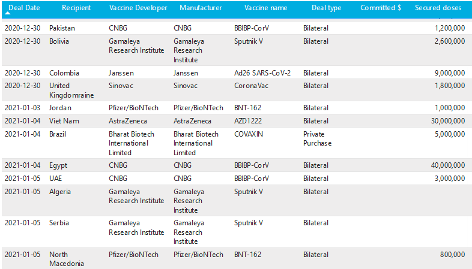
Canada has secured more vaccine doses per capita than anyone else, but it’s been slow to administer
Amanda Coletta · Jan 15, 2021
Think Tanks et al

Think Tanks et al

Brookings
http://www.brookings.edu/
Accessed 16 Jan 2021
[No new relevant content]

Center for Global Development [to 16 Jan 2021]
http://www.cgdev.org/page/press-center
[No new relevant content]


Chatham House [to 16 Jan 2021]
https://www.chathamhouse.org/
Accessed 16 Jan 2021
[No new relevant content]


CSIS
https://www.csis.org/
Accessed 16 Jan 2021
[No new relevant content]


Council on Foreign Relations
http://www.cfr.org/
Accessed 16 Jan 2021
[No new relevant content]


Kaiser Family Foundation
https://www.kff.org/search/?post_type=press-release
Accessed 16 Jan 2021
January 14, 2021 News Release
Most Hispanic Adults Lean Towards Getting a COVID-19 Vaccine, But Many Younger Adults are Hesitant
A new analysis of KFF COVID-19 Vaccine Monitor survey data finds that most Hispanic adults across the country want to get a COVID-19 vaccine at some point though younger adults are more hesitant, in part because of lower confidence that it is safe and effective. Overall a quarter (26%) of…

January 14, 2021 News Release
Despite Efforts to Slow the Spread of the Virus in Long-Term Care Facilities, KFF Analysis Finds Many States Experienced the Worst COVID-19 Outbreaks and Highest Number of Deaths in December
For some regions of the country, recent months have brought the worst COVID-19 outbreaks in long-term care facilities since the start of the pandemic, a new KFF analysis of state-reported cases and death shows, underscoring the importance of current efforts to vaccinate this high priority group. The novel coronavirus has…

January 11, 2021 News Release
New Analysis Takes In-Depth Look at How States are Prioritizing Who Gets a COVID-19 Vaccine
A new KFF analysis examines the different approaches states are taking to manage the limited initial supply of COVID-19 vaccines and balance the desire to vaccinate those at greatest risk first with the need to ensure a fast and effective statewide vaccination effort. Based on a review of state vaccination…

World Economic Forum [to 16 Jan 2021]
https://agenda.weforum.org/news/
Media
[No new relevant content]

Vaccines and Global Health: The Week in Review :: 09 January 2021

Vaccines and Global Health: The Week in Review is a weekly digest  summarizing news, events, announcements, peer-reviewed articles and research in the global vaccine ethics and policy space. Content is aggregated from key governmental, NGO, international organization and industry sources, key peer-reviewed journals, and other media channels. This summary proceeds from the broad base of themes and issues monitored by the Center for Vaccine Ethics & Policy in its work: it is not intended to be exhaustive in its coverage. You are viewing the blog version of our weekly digest, typically comprised of between 30 and 40 posts below all dated with the current issue date

.– Request an Email Summary: Vaccines and Global Health : The Week in Review is published as a single email summary, scheduled for release each Saturday evening before midnight (EDT in the U.S.). If you would like to receive the email version, please send your request to david.r.curry@centerforvaccineethicsandpolicy.org.

– pdf version A pdf of the current issue is available here: 

– blog edition: comprised of the approx. 35+ entries posted below.

– Twitter:  Readers can also follow developments on twitter: @vaxethicspolicy.
.
– Links:  We endeavor to test each link as we incorporate it into any post, but recognize that some links may become “stale” as publications and websites reorganize content over time. We apologize in advance for any links that may not be operative. We believe the contextual information in a given post should allow retrieval, but please contact us as above for assistance if necessary.

Support this knowledge-sharing service: Your financial support helps us cover our costs and to address a current shortfall in our annual operating budget. Click here to donate and thank you in advance for your contribution.

.
David R. Curry, MS
Executive Director
Center for Vaccine Ethics and Policy

Public Health Emergency of International Concern (PHEIC)

Coronavirus [COVID-19]

Public Health Emergency of International Concern (PHEIC)


Weekly Epidemiological and Operational updates

Last update: 9 January 2021

Confirmed cases ::    87 589 206    [week ago: 82 356 727]    [two weeks ago: 78 604 532]

Confirmed deaths ::    1 906 606    [week ago:   1 815 433]   [two weeks ago:   1 744 235]

Countries, areas or territories with cases :: 222

WHO Director-General’s opening remarks at the media briefing on COVID-19 – 8 January 2021

Milestones :: Perspectives :: Research

WHO Director-General’s opening remarks at the media briefing on COVID-19 – 8 January 2021
:: COVAX – set up by GAVI, CEPI and WHO in April last year – has now secured contracts of 2 billion doses of safe and effective COVID-19 vaccines, which we are ready to rollout as soon as the vaccines are delivered.  
:: However, this is where the current challenge is. Rich countries have bought up the majority of the supply of multiple vaccines.  Going forward, I want to see manufacturers prioritise supply and rollout through COVAX.  
:: If I said one thing to people in areas where there are high numbers of cases, it would be to do all you can to avoid mixing with people from other households, especially inside.  
:: This year is the year of the health and care worker. Let’s show our respect and appreciation for health workers by protecting each other and vaccinating all health workers everywhere now. 

COVAX – set up by GAVI, CEPI and WHO in April last year – has now secured contracts of 2 billion doses of safe and effective COVID-19 vaccines, which we are ready to rollout as soon as the vaccines are delivered. And we also have the right of first refusal on an additional 1 billion doses.

However, this is where the current challenge is: At present, 42 countries are rolling out safe and effective COVID-19 vaccines. 36 of these are high-income countries and six are middle-income.

So there’s a clear problem that low- and most middle-income countries are not receiving the vaccine yet. This is a problem we can and we must solve together through COVAX and the ACT-Accelerator.

At the outset, rich countries have bought up the majority of the supply of multiple vaccines. Now we’re also seeing both high and middle-income countries, that are part of COVAX, making additional bilateral deals. This potentially bumps up the price for everyone and means high-risk people in the poorest and most marginalized countries don’t get the vaccine.

And some companies and countries have not submitted critical data, which we need to issue Emergency Use Listings, which blocks the whole system of procurement and delivery.   

Vaccine nationalism hurts us all and is self-defeating. But on the flipside, vaccinating equitably saves lives, stablises health systems and would lead to a truly global economic recovery that stimulates job creation…

…Going forward, I want to see manufacturers prioritise supply and rollout through COVAX.

I urge countries that have contracted more vaccines than they will need, and are controlling the global supply, to also donate and release them to COVAX immediately, which is ready TODAY to rollout quickly.

And I urge countries and manufacturers to stop making bilateral deals at the expense of COVAX. No country is exceptional and should cut the queue and vaccinate all their population while some remain with no supply of the vaccine.

Science has delivered, let’s not waste the opportunity to protect lives of those most at risk and ensure all economies have a fair shot at recovery…

Extraordinary meeting of the Strategic Advisory Group of Experts on Immunization (SAGE) – 5 January 2021 [Pfizer-BioNTech COVID-19 vaccine BNT162b2]

Milestones :: Perspectives :: Research


Extraordinary meeting of the Strategic Advisory Group of Experts on Immunization (SAGE) – 5 January 2021 [Pfizer-BioNTech COVID-19 vaccine BNT162b2]
This extraordinary virtual meeting for the Strategic Advisory Group of Experts on Immunization (SAGE) was held on Tuesday 05 January 2021 to propose recommendations to WHO on the use of COVID-19 vaccine(s).

Interim recommendations for use of the Pfizer–BioNTech COVID-19 vaccine, BNT162b2, under Emergency Use Listing
WHO Team: WHO Headquarters (HQ)
Reference numbers: WHO Reference Number: WHO/2019-nCoV/vaccines/SAGE_recommendation/BNT162b2/2021.1
Copyright CC BY-NC-SA 3.0 IGO
Full text PDF: https://apps.who.int/iris/rest/bitstreams/1326072/retrieve [7 pages]

[Selected Excerpts; Full text at pdf link above]
General goal and strategy for the use of the mRNA vaccine BNT162b2 against COVID-19 (Pfizer–BioNTech)
The COVID-19 pandemic has caused significant morbidity and mortality throughout the world, as well as major social, educational and economic disruptions. There is an urgent global need for effective and safe vaccines. On 31 December 2020, WHO listed the COVID-19 mRNA vaccine BNT162b2 for emergency use, making the Pfizer–BioNTech vaccine the first to receive emergency validation from WHO since the outbreak began a year earlier. The WHO Emergency Use Listing Procedure (EUL) is a risk-based procedure for assessing and listing unlicensed vaccines, therapeutics and in vitro diagnostics with the ultimate aim of expediting the availability of these products to people affected by a public health emergency.

BNT162b2, an mRNA vaccine against COVID-19 developed by BioNTech and Pfizer, has been shown to have an efficacy of approximately 95%, based on a median follow-up of two months. The data reviewed by WHO at this time support the conclusion that the known and potential benefits of BNT162b2 outweigh the known and potential risks. As sufficient vaccine supply will not be immediately available to immunize all who could benefit from it, countries are recommended to use the WHO Prioritization Roadmap [4] and the WHO Values Framework [5] as guidance for their prioritization of target groups. As long as vaccine supplies are very limited (stage I in the WHO Prioritization Roadmap), in settings with community transmission, the Roadmap recommends that priority be given initially to health workers at high risk and older people with and without comorbidities. Protecting high-risk health workers has a threefold purpose: (i) to protect the individual health workers; (ii) to protect critical essential services during the COVID-19 pandemic, and (iii) to prevent onward transmission to vulnerable people. Protecting older people will have the greatest public health impact in terms of reducing the number of deaths. As more vaccine becomes available, additional priority groups should be vaccinated as outlined in the WHO Prioritization Roadmap [4], taking into account national epidemiological data and other relevant considerations…


… Considerations for deferring the second dose
WHO acknowledges that a number of countries face exceptional circumstances of vaccine supply constraints combined with a high disease burden. Some countries have therefore considered delaying the administration of the second dose to allow for a higher initial coverage. This is based on the observation that efficacy has been shown to start from day 12 after the first dose and reached about 89% between days 14 and 21, at the time when the second dose was given. No data on longer term efficacy for a single dose of the mRNA vaccine BNT162b2 currently exist, as the trial participants received 2 doses with an interval between doses in the trial ranging from 19 to 42 days. Of note, neutralizing antibody responses are modest after the first dose and increase substantially after the second dose.

Countries experiencing exceptional epidemiological circumstances may consider delaying for a short period the administration of the second dose as a pragmatic approach to maximizing the number of individuals benefiting from a first dose while vaccine supply continues to increase. WHO’s recommendation at present is that the interval between doses may be extended up to 42 days (6 weeks), on the basis of currently available clinical trial data. Should additional data become available on longer intervals between doses, revision of this recommendation will be considered. Countries should ensure that any such programme adjustments to dose intervals do not affect the likelihood of receiving the second dose…


…Special settings
Persons in settings such as refugee and detention camps, prisons, slums, and other settings with high population densities, where physical distancing is not implementable, should be prioritized for vaccination as outlined in the WHO Prioritization Roadmap [4], taking into account national epidemiological data, vaccine supply and other relevant considerations.

As noted in the WHO Prioritization Roadmap, national programmes should give special consideration to groups that are disproportionately affected by COVID-19 or that face health inequities as a result of social or structural inequities. Such groups should be identified, barriers to vaccination should be addressed, and programmes should be developed to enable equitable access to vaccines.

In the current period of very limited vaccine supply, preferential vaccination of international travelers would counter the principle of equity. Because of this and the lack of evidence on whether vaccination reduces the risk of transmission, WHO currently does not recommend COVID-19 vaccination of travelers (unless they are also part of a high-risk group or in epidemiological settings identified in the WHO Prioritization Roadmap [4]). With increasing vaccine supply, these recommendations will be revisited…


…Community engagement, effective communication, and legitimacy
Community engagement and effective communication (including risk communication) are essential to the success of COVID-19 vaccination programmes. Prioritization decisions should be made through transparent processes that are based on shared values, the best available scientific evidence, and appropriate representation and input by affected parties. Furthermore, communication about the mechanism of action of mRNA vaccines, and efficacy and safety data derived from clinical trials and post-marketing studies, needs to be strengthened. Strategies should include: (1) culturally acceptable and linguistically accessible communications regarding COVID-19 vaccination made freely available; (2) active community engagement and involvement of community opinion leaders and trusted voices to improve awareness and understanding of such communications, and (3) inclusion of diverse and affected stakeholder opinions in decision-making. Such efforts are especially important in subpopulations who may be unfamiliar with or distrustful of health care systems and immunization…


…Recommendations on addressing current knowledge gaps through further research
In order to confirm the safety profile demonstrated in the clinical trials in the short term, active surveillance of large numbers of vaccinated individuals is necessary in the general population studied for a longer duration, as well as of specific at-risk subpopulations. It is essential for Pfizer–BioNTech and vaccination providers to report the following to adverse event reporting systems in countries: all vaccine administration errors, serious adverse events, cases of multisystem inflammatory syndrome (MIS) following vaccination, anaphylaxis and other serious allergic reactions, Bell`s palsy, and cases of COVID-19 following vaccination that result in hospitalization or death.

WHO recommends the following research and post-authorization monitoring activities:
vaccine effectiveness over time;
ongoing collection of safety data in vaccine recipients;
surveillance for COVID-19 among vaccinated individuals, looking for vaccine-induced enhanced disease (possibly as vaccine-induced antibody levels decline);
safety data from inadvertently vaccinated pregnant women during trials and post-authorization;
safety data from pregnant women who receive vaccine because they are members of prioritized groups, e.g. health workers;
prospective studies on the safety of BNT162b2 in pregnant women;
impact on infants of vaccination of breastfeeding mothers;
safety data on vaccination in immunocompromised persons, including persons living with HIV and persons with autoimmune disease;
impact of delayed second dose as currently implemented by certain countries;
clinical trials on the efficacy and safety of vaccination of children below the age of 16 years;
immunogenicity and safety studies of co-administration with other vaccines, including influenza and pneumococcal vaccines, to adults and older persons;
studies to determine how protection changes with time since vaccination and whether protection can be prolonged by booster doses;
studies to demonstrate whether this vaccine reduces SARS-CoV-2 transmission and viral shedding;
stability of vaccine under alternative cold-chain distribution and storage conditions;
effectiveness of the proposed strategies for the prevention and management of anaphylactic reactions;
interchangeability and “mix and match” studies within and across COVID-19 vaccine platforms;
global surveillance of virus evolution and the impact of virus mutants on vaccine effectiveness to support possible update of vaccines if needed;
head-to-head studies with other vaccines on extent and duration of immunity using standardized neutralization assays and mucosal immunity assays.


::::::

Meeting materials
Please find related materials for the meeting, including a final agenda, list of participants, declaration of interests, background materials and presentations made during the meeting, below.

Background Materials
:: Final Meeting Agenda
:: Background paper on Covid-19 disease and vaccines
:: mRNA vaccines against COVID-19: Pfizer-BioNTech COVID-19 vaccine BNT162b2

Presentations
:: Introduction, session objective setting, update on regulatory decisions and overview of Working Group deliverables H. NOHYNEK. pdf, 4.1Mb
:: Safety monitoring S. Pal. pdf, 1Mb
:: Assessment of Evidence (SAGE working group)

FDA Statement on Following the Authorized Dosing Schedules for COVID-19 Vaccines

Milestones :: Perspectives :: Research


FDA

FDA Statement on Following the Authorized Dosing Schedules for COVID-19 Vaccines
January 04, 2021
Commissioner of Food and Drugs – Food and Drug Administration, Stephen M. Hahn M.D.
Director – Center for Biologics Evaluation and Research (CBER), Peter Marks M.D., PhD.

Two different mRNA vaccines have now shown remarkable effectiveness of about 95% in preventing COVID-19 infection in adults. As the first round of vaccine recipients become eligible to receive their second dose, we want to remind the public about the importance of receiving COVID-19 vaccines according to how they’ve been authorized by the FDA in order to safely receive the level of protection observed in the large randomized trials supporting their effectiveness.

We have been following the discussions and news reports about reducing the number of doses, extending the length of time between doses, changing the dose (half-dose), or mixing and matching vaccines in order to immunize more people against COVID-19. These are all reasonable questions to consider and evaluate in clinical trials. However, at this time, suggesting changes to the FDA-authorized dosing or schedules of these vaccines is premature and not rooted solidly in the available evidence. Without appropriate data supporting such changes in vaccine administration, we run a significant risk of placing public health at risk, undermining the historic vaccination efforts to protect the population from COVID-19.


The available data continue to support the use of two specified doses of each authorized vaccine at specified intervals. For the Pfizer-BioNTech COVID-19 vaccine, the interval is 21 days between the first and second dose. And for the Moderna COVID-19 vaccine, the interval is 28 days between the first and second dose. 

What we have seen is that the data in the firms’ submissions regarding the first dose is commonly being misinterpreted. In the phase 3 trials, 98% of participants in the Pfizer-BioNTech trial and 92% of participants in the Moderna trial received two doses of the vaccine at either a three- or four-week interval, respectively. Those participants who did not receive two vaccine doses at either a three-or four-week interval were generally only followed for a short period of time, such that we cannot conclude anything definitive about the depth or duration of protection after a single dose of vaccine from the single dose percentages reported by the companies.

Using a single dose regimen and/or administering less than the dose studied in the clinical trials without understanding the nature of the depth and duration of protection that it provides is concerning, as there is some indication that the depth of the immune response is associated with the duration of protection provided. If people do not truly know how protective a vaccine is, there is the potential for harm because they may assume that they are fully protected when they are not, and accordingly, alter their behavior to take unnecessary risks.


We know that some of these discussions about changing the dosing schedule or dose are based on a belief that changing the dose or dosing schedule can help get more vaccine to the public faster. However, making such changes that are not supported by adequate scientific evidence may ultimately be counterproductive to public health.

We have committed time and time again to make decisions based on data and science. Until vaccine manufacturers have data and science supporting a change, we continue to strongly recommend that health care providers follow the FDA-authorized dosing schedule for each COVID-19 vaccine. 

The FDA, an agency within the U.S. Department of Health and Human Services, protects the public health by assuring the safety, effectiveness, and security of human and veterinary drugs, vaccines and other biological products for human use, and medical devices. The agency also is responsible for the safety and security of our nation’s food supply, cosmetics, dietary supplements, products that give off electronic radiation, and for regulating tobacco products.

EMA

Milestones :: Perspectives :: Research


EMA


News: Extra dose from vials of Comirnaty COVID-19 vaccine
Last updated: 08/01/2021
EMA’s human medicines committee (CHMP) has recommended updating the product information for Comirnaty to clarify that each vial contains 6 doses of the vaccine.
In order to extract six doses from a single vial, low dead-volume syringes and/or needles should be used. The low dead-volume syringe and needle combination should have a dead volume of no more than 35 microliters. If standard syringes and needles are used, there may not be enough of the vaccine to extract a sixth dose from a vial.
If the amount of vaccine remaining in the vial after the fifth dose cannot provide a full dose (0.3 ml), the healthcare professional must discard the vial and its contents. There should be no pooling from multiple vials to make up a full dose, and any unused vaccine should be discarded 6 hours after dilution. Further information on all the steps for using Comirnaty is available in the updated product information


News: EMA recommends COVID-19 Vaccine Moderna for authorisation in the EU (updated)
Last updated: 06/01/2021
EMA has recommended granting a conditional marketing authorisation for COVID-19 Vaccine Moderna to prevent Coronavirus disease (COVID-19) in people from 18 years of age. This is the second COVID-19 vaccine that EMA has recommended for authorisation.
EMA’s human medicines committee (CHMP) has thoroughly assessed the data on the quality, safety and efficacy of the vaccine and recommended by consensus a formal conditional marketing authorisation be granted by the European Commission. This will assure EU citizens that the vaccine meets EU standards and puts in place the safeguards, controls and obligations to underpin EU-wide vaccination campaigns.
“This vaccine provides us with another tool to overcome the current emergency,” said Emer Cooke, Executive Director of EMA. “It is a testament to the efforts and commitment of all involved that we have this second positive vaccine recommendation just short of a year since the pandemic was declared by WHO.
“As for all medicines, we will closely monitor data on the safety and effectiveness of the vaccine to ensure ongoing protection of the EU public. Our work will always be guided by the scientific evidence and our commitment to safeguard the health of EU citizens.”…

FDA Statement on Following the Authorized Dosing Schedules for COVID-19 Vaccines

Milestones :: Perspectives :: Research


FDA

FDA Statement on Following the Authorized Dosing Schedules for COVID-19 Vaccines
January 04, 2021
Commissioner of Food and Drugs – Food and Drug Administration, Stephen M. Hahn M.D.
Director – Center for Biologics Evaluation and Research (CBER), Peter Marks M.D., PhD.

Two different mRNA vaccines have now shown remarkable effectiveness of about 95% in preventing COVID-19 infection in adults. As the first round of vaccine recipients become eligible to receive their second dose, we want to remind the public about the importance of receiving COVID-19 vaccines according to how they’ve been authorized by the FDA in order to safely receive the level of protection observed in the large randomized trials supporting their effectiveness.

We have been following the discussions and news reports about reducing the number of doses, extending the length of time between doses, changing the dose (half-dose), or mixing and matching vaccines in order to immunize more people against COVID-19. These are all reasonable questions to consider and evaluate in clinical trials. However, at this time, suggesting changes to the FDA-authorized dosing or schedules of these vaccines is premature and not rooted solidly in the available evidence. Without appropriate data supporting such changes in vaccine administration, we run a significant risk of placing public health at risk, undermining the historic vaccination efforts to protect the population from COVID-19.


The available data continue to support the use of two specified doses of each authorized vaccine at specified intervals. For the Pfizer-BioNTech COVID-19 vaccine, the interval is 21 days between the first and second dose. And for the Moderna COVID-19 vaccine, the interval is 28 days between the first and second dose. 

What we have seen is that the data in the firms’ submissions regarding the first dose is commonly being misinterpreted. In the phase 3 trials, 98% of participants in the Pfizer-BioNTech trial and 92% of participants in the Moderna trial received two doses of the vaccine at either a three- or four-week interval, respectively. Those participants who did not receive two vaccine doses at either a three-or four-week interval were generally only followed for a short period of time, such that we cannot conclude anything definitive about the depth or duration of protection after a single dose of vaccine from the single dose percentages reported by the companies.

Using a single dose regimen and/or administering less than the dose studied in the clinical trials without understanding the nature of the depth and duration of protection that it provides is concerning, as there is some indication that the depth of the immune response is associated with the duration of protection provided. If people do not truly know how protective a vaccine is, there is the potential for harm because they may assume that they are fully protected when they are not, and accordingly, alter their behavior to take unnecessary risks.


We know that some of these discussions about changing the dosing schedule or dose are based on a belief that changing the dose or dosing schedule can help get more vaccine to the public faster. However, making such changes that are not supported by adequate scientific evidence may ultimately be counterproductive to public health.

We have committed time and time again to make decisions based on data and science. Until vaccine manufacturers have data and science supporting a change, we continue to strongly recommend that health care providers follow the FDA-authorized dosing schedule for each COVID-19 vaccine. 

The FDA, an agency within the U.S. Department of Health and Human Services, protects the public health by assuring the safety, effectiveness, and security of human and veterinary drugs, vaccines and other biological products for human use, and medical devices. The agency also is responsible for the safety and security of our nation’s food supply, cosmetics, dietary supplements, products that give off electronic radiation, and for regulating tobacco products.

News: Extra dose from vials of Comirnaty COVID-19 vaccine

Milestones :: Perspectives :: Research


EMA


News: Extra dose from vials of Comirnaty COVID-19 vaccine
Last updated: 08/01/2021
EMA’s human medicines committee (CHMP) has recommended updating the product information for Comirnaty to clarify that each vial contains 6 doses of the vaccine.
In order to extract six doses from a single vial, low dead-volume syringes and/or needles should be used. The low dead-volume syringe and needle combination should have a dead volume of no more than 35 microliters. If standard syringes and needles are used, there may not be enough of the vaccine to extract a sixth dose from a vial.
If the amount of vaccine remaining in the vial after the fifth dose cannot provide a full dose (0.3 ml), the healthcare professional must discard the vial and its contents. There should be no pooling from multiple vials to make up a full dose, and any unused vaccine should be discarded 6 hours after dilution. Further information on all the steps for using Comirnaty is available in the updated product information


News: EMA recommends COVID-19 Vaccine Moderna for authorisation in the EU (updated)
Last updated: 06/01/2021
EMA has recommended granting a conditional marketing authorisation for COVID-19 Vaccine Moderna to prevent Coronavirus disease (COVID-19) in people from 18 years of age. This is the second COVID-19 vaccine that EMA has recommended for authorisation.
EMA’s human medicines committee (CHMP) has thoroughly assessed the data on the quality, safety and efficacy of the vaccine and recommended by consensus a formal conditional marketing authorisation be granted by the European Commission. This will assure EU citizens that the vaccine meets EU standards and puts in place the safeguards, controls and obligations to underpin EU-wide vaccination campaigns.
“This vaccine provides us with another tool to overcome the current emergency,” said Emer Cooke, Executive Director of EMA. “It is a testament to the efforts and commitment of all involved that we have this second positive vaccine recommendation just short of a year since the pandemic was declared by WHO.
“As for all medicines, we will closely monitor data on the safety and effectiveness of the vaccine to ensure ongoing protection of the EU public. Our work will always be guided by the scientific evidence and our commitment to safeguard the health of EU citizens.”…

U.K.

Milestones :: Perspectives :: Research


U.K.


Medicines and Healthcare products Regulatory Agency (MHRA)
https://www.gov.uk/coronavirus
Announcements
Third vaccine (Moderna) approved by UK regulator
Published 8 January 2021
The vaccine has been approved after meeting the required safety, quality and effectiveness standards.


U.K. Joint Committee on Vaccination and Immunisation (JCVI)
https://www.gov.uk/search/all?keywords=JCVI
Independent report
Priority groups for coronavirus (COVID-19) vaccination: advice from the JCVI, 30 December 2020
Advice from the Joint Committee on Vaccination and Immunisation (JCVI) on the groups that should be prioritised for vaccination
Updated: 6 January 2021
Update to footnote 2: the Pfizer-BioNTech vaccine is authorised in those aged 16 years and over. The AstraZeneca vaccine is only authorised for use in those aged 18 years and over.

COVID Vaccines: Company Announcements on Development/Regulatory Actions/Procurement/Deployment

Milestones :: Perspectives :: Research


COVID Vaccines: Company Announcements on Development/Regulatory Actions/Procurement/Deployment

An In Vitro Study Shows Pfizer-BioNTech COVID-19 Vaccine Elicits Antibodies that Neutralize SARS-CoV-2 with a Mutation Associated with Rapid Transmission
New York, NY and Mainz, Germany, January 8, 2021 — Pfizer Inc. (NYSE: PFE) and BioNTech SE
(Nasdaq: BNTX) today announced results from an in vitro study conducted by Pfizer and the University of Texas Medical Branch (UTMB) that shows the antibodies from people who have received the Pfizer-BioNTech COVID-19 vaccine effectively neutralize SARS-CoV-2 with a key mutation that is also found in two highly transmissible strains. The results were published on the preprint server bioRxiv and are available here.

Rapidly spreading variants of SARS-CoV-2 have been reported, initially in the United Kingdom and South Africa. These variants have multiple mutations in their spike or S glycoproteins, which are key targets of virus neutralizing antibodies. Though these two rapidly spreading viruses are different, they share the N501Y mutation, which is located in the receptor binding site of the spike protein and results in the virus’s spike protein binding more tightly to its receptor. It has been shown to infect mice more efficiently.1

To determine if sera of people who had received the Pfizer-BioNTech COVID-19 vaccine could neutralize SARS-CoV-2 with the N501Y mutation, a virus with this substitution was generated in UTMB’s laboratory. The sera of 20 participants from the previously reported Phase 3 trial neutralized the virus with the mutation as well as they neutralized virus without the mutation.

While the virus tested in this experiment did not include the full set of spike mutations found on the rapidly spreading strains in the U.K. or South Africa, neutralization of virus with the N501Y mutation by the Pfizer- BioNTech vaccine-elicited human sera is consistent with preserved neutralization of a panel of 15 pseudoviruses bearing spikes with other mutations found in circulating SARS-CoV-2 strains. This indicates that the key N501Y mutation, which is found in the emerging U.K and South Africa variants, does not create resistance to the Pfizer-BioNTech vaccine induced immune responses.

Pfizer, BioNTech, and UTMB are encouraged by these early, in vitro study findings. Further data are needed to monitor the Pfizer-BioNTech COVID-19 vaccine’s effectiveness in preventing COVID-19 caused by new virus variants. If the virus mutates such that an update to the vaccine is required to continue to confer protection against COVID-19, we believe that the flexibility of BioNTech’s proprietary mRNA vaccine platform is well suited to enable an adjustment to the vaccine…

United Kingdom Medicines and Healthcare products Regulatory Agency Authorizes Use of COVID-19 Vaccine Moderna
January 08, 2021
:: UK MHRA authorization is based on a rolling review of COVID-19 Vaccine Moderna data, including data from the Phase 3 COVE study
:: UK government secured an additional 10 million doses for a total of 17 million doses of the vaccine with supply beginning in early 2021
CAMBRIDGE, Mass.–(BUSINESS WIRE)–Moderna, Inc. (Nasdaq: MRNA), a biotechnology company pioneering messenger RNA (mRNA) therapeutics and vaccines, today announced that the UK’s Medicines and Healthcare products Regulatory Agency (MHRA) has approved its mRNA vaccine against COVID-19 (COVID-19 Vaccine Moderna) for use under Regulation 174. The temporary authorization permits the supply of COVID-19 Vaccine Moderna in Great Britain and is based upon the advice of the UK Commission on Human Medicines…

European Commission Authorizes COVID-19 Vaccine Moderna in Europe
January 06, 2021
:: Authorization follows European Medicines Agency recommendation of COVID-19 Vaccine Moderna
:: European Commission has secured 160 million doses; first deliveries to countries will begin next week
CAMBRIDGE, Mass.–(BUSINESS WIRE)–Moderna, Inc. (Nasdaq: MRNA), a biotechnology company pioneering messenger RNA (mRNA) therapeutics and vaccines, today announced that the European Commission has granted a conditional marketing authorization (CMA) for COVID-19 Vaccine Moderna, allowing vaccination programs using the Moderna vaccine to be rolled out across the European Union. The authorization is based upon the recommendation of the European Medicines Agency (EMA) for use of the COVID-19 Vaccine Moderna for active immunization to prevent COVID-19 caused by SARS-CoV-2 virus in individuals 18 years of age and older..

Israeli Ministry of Health Authorizes COVID-19 Vaccine Moderna for Use in Israel
January 04, 2021
Ministry of Health of Israel has secured 6 million doses and first deliveries expected to begin in January
CAMBRIDGE, Mass.–(BUSINESS WIRE)–Moderna, Inc. (Nasdaq: MRNA), a biotechnology company pioneering messenger RNA (mRNA) therapeutics and vaccines, today announced that Israel’s Ministry of Health (MOH) has given authorization to import the COVID-19 Vaccine Moderna in Israel.
“Today’s authorization is a landmark moment in our company’s history and in the global fight against COVID-19,” said Stéphane Bancel, Chief Executive Officer of Moderna. “This is the third regulatory authorization for the COVID-19 Vaccine Moderna, and its first outside of North America…

COVID Vaccines Development/Procurement/Distribution/Policy – Russia, China, India

Milestones :: Perspectives :: Research


COVID Vaccines Development/Procurement/Distribution/Policy – Russia, China, India


Editor’s Note:
We include the coverage immediately below to help assure a reasonably comprehensive view of COVID vaccines regulatory action and deployment occurring globally – even as we recognize that the evidentiary thresholds employed in the underlying decisions are highly variable, weak or even absent.


::::::

Russia: Sputnik V – “the first registered COVID-19 vaccine” [to 9 Jan 2021]
https://sputnikvaccine.com/newsroom/pressreleases/
Press Releases
Bolivia has registered Sputnik V vaccine based on Russian clinical trial data
Press release, 06.01.2021
… The vaccine was registered under the emergency use authorization procedure and was approved by AGEMED based on the results of Phase III clinical trials in Russia, without additional trials in Bolivia. Sputnik V was registered by Argentina’s regulator ANMAT under the same procedure on December 23, 2020…

RDIF to supply 2 million doses of Sputnik V vaccine to Serbia
Press release, 06.01.2021
The agreement between RDIF and the Government of Serbia will enable the vaccination of 1 million people. The supplies will help Serbia secure a diversified portfolio of vaccines against coronavirus. Deliveries will be facilitated by RDIF’s international partners in India, China, South Korea and other countries…


::::::

China: COVID-19 Vaccines – Regulatory Actions/Deployment

National Health Commission of the People’s Republic of China [to 9 Jan 2021]
http://en.nhc.gov.cn/
China pledges safety, effectiveness as vaccination to be carried out nationwide
2021-01-05
BEIJING — China’s State Council joint prevention and control mechanism against COVID-19 has ordered the strict inspection of vaccine quality, safety and smooth cold-chain transportation, as well as timely and accurate delivery of vaccines, as the country’s first self-developed vaccine got market approval with the vaccination campaign to be carried out nationwide gradually.

China has always attached great importance to the safety and effectiveness of COVID-19 vaccines. The mechanism has also emphasized the importance of providing medical support and service. It especially applies to timely treatment and reporting of adverse reactions during the vaccination drive.
The National Medical Products Administration also established a traceability information system for the management of approved vaccines.

China approved the emergency use of COVID-19 vaccines in June, targeting groups with high risks of infection. By the end of November, more than 1.5 million doses of Chinese COVID-19 vaccines had been distributed for emergency use, and 60,000 vaccinated people have traveled abroad to high-risk regions, with no severe adverse reactions reported.

On Dec 15, China officially launched a vaccination program for this winter-spring period targeting a number of key groups, including those engaged in handling imported cold-chain products, customs officers, medical workers and people working in public transport and fresh markets. The COVID-19 vaccines will be provided free of charge to all Chinese people…

… Some countries, including the United Arab Emirates and Bahrain, have approved the Chinese inactivated vaccine registration according to the World Health Organization technical standards. Egypt licensed China’s inactivated COVID-19 vaccine for emergency use on Saturday. Countries, including Brazil, Indonesia, Turkey, Chile and Malaysia, have ordered vaccines developed by Sinovac Biotech.

“China will vaccinate the eligible population as widely as possible, and gradually build an immune barrier in the whole population to control the epidemic,” said Zeng. He added that 60 or even 70 percent of the vaccination rate is needed to establish universal protection.


::::::

India: COVID-19 Vaccines – Regulatory Actions/Deployment

Bharat Biotech’s ‘COVAXIN™’ Emergency Use Authorization approval by DCGI-CDSCO, MoH&FW, a significant landmark in India’s Scientific Discovery, and Scientists Capability
Hyderabad, January 03, 2021:
Expressing delight about Ministry of Health & Family Welfare announcement today from the statement from DCGI – Central Standards Control Organization (CDSCO) Grant of permission for emergency use of its Covid-19 Vaccine, the Chairman and Managing Director of Bharat Biotech Dr. Krishna Ella said “The approval of COVAXIN™ for emergency use is a giant leap for Innovation and novel product development in India. It is a proud moment for the nation and a great milestone in India’s scientific capability, a kickstart to the innovation ecosystem in India. While this vaccine addresses an unmet medical need during this pandemic, our goal is to provide global access to populations that need it the most. COVAXIN™ has generated excellent safety data with robust immune responses to multiple viral proteins that persist.”…
…The Phase III human clinical trials of COVAXIN™ began mid-November, targeted to be done in “26,000” volunteers across India, this is India’s first and only Phase III efficacy study for a COVID-19 vaccine, and the largest phase III efficacy trial ever conducted for any vaccine in India. COVAXIN™ has been evaluated in approximately 1000 subjects in Phase I and Phase II clinical trials, with promising safety and immunogenicity results, with acceptance in international peer reviewed scientific journals…

PRESS INFORMATION BUREAU – GOVERNMENT OF INDIA
Press Statement by the Drugs Controller General of India (DCGI) on Restricted Emergency approval of COVID-19 virus vaccine
New Delhi, 3rd January, 2021
The Subject Expert Committee of Central Drugs Standard Control Organisation (CDSCO) met on 1st and 2nd January, 2021 and made recommendations in respect of proposal for Restricted Emergency Approval of COVID-19 virus vaccine of M/s Serum Institute of India and M/s Bharat Biotech as well as Phase III clinical trial of M/s Cadila Healthcare Ltd…
… M/s Bharat Biotech has developed a Whole Virion Inactivated Corona Virus Vaccine (Covaxin) in collaboration with ICMR and NIV (Pune), from where they received the virus seed strains. This vaccine is developed on Vero cell platform, which has well established track record of safety and efficacy in the country & globally.
The firm has generated safety and immunogenicity data in various animal species such as mice, rats, rabbits, Syrian hamster, and also conducted challenge studies on non-human primates (Rhesus macaques) and hamsters. All these data has been shared by the firm with CDSCO. Phase I and Phase II clinical trials were conducted in approx.800 subjects and the results have demonstrated that the vaccine is safe and provides a robust immune response. The Phase III efficacy trial was initiated in India in 25,800 volunteers and till date, ~22,500 participants have been vaccinated across the country and the vaccine has been found to be safe as per the data available till date.
The Subject Expert Committee (SEC) has reviewed the data on safety and immunogenicity of the vaccine and recommended for grant of permission for restricted use in emergency situation in public interest as an abundant precaution, in clinical trial mode, to have more options for vaccinations, especially in case of infection by mutant strains. The clinical trial ongoing within the country by the firm will continue….

POLIO Public Health Emergency of International Concern (PHEIC); WHO/OCHA Emergencies

Emergencies

POLIO
Public Health Emergency of International Concern (PHEIC)

Polio this week as of 30 December 2020
:: The COVID-19 pandemic has triggered a deep global health and economic crisis. The Polio Oversight Board (POB) remains steadfast in its resolve to secure a polio-free world, while reaffirming its commitment that polio-funded assets are at the service of countries to respond to this public health emergency, especially in the critical next phase of COVID-19 vaccine introduction and delivery. Read more on the last POB statement of 2020.

Summary of new WPV and cVDPV viruses this week (AFP cases and ES positives):
:: Pakistan: one WPV1 case, seven WPV1 and 16 cVDPV2 positive environmental samples
:: Benin: one cVDPV2 positive environmental sample
:: Chad: one cVDPV2 case
:: Cote D’Ivoire: three cVDPV2 cases
:: Democratic Republic of the Congo: one cVDPV2 case
:: Mali: one cVDPV2 positive environmental sample

::::::

POLIO OVERSIGHT BOARD :: STATEMENT ON NEXT PHASE OF GPEI SUPPORT FOR COVID-19 RESPONSE
04 January 2021
The COVID-19 pandemic has triggered a deep global health and economic crisis. The Polio Oversight Board (POB) remains steadfast in its resolve to secure a polio-free world, while reaffirming its commitment that polio-funded assets are at the service of countries to respond to this public health emergency, especially in the critical next phase of COVID-19 vaccine introduction and delivery.

When the pandemic was declared, the POB issued a Call to Action for polio-funded assets to support the response, and for a pause in polio immunization campaigns to reduce the risk of COVID-19 transmission. The Call also emphasized the importance of maintaining essential polio eradication functions, including surveillance for poliovirus. Since then, the value of polio-funded staff and assets contributed to the COVID-19 response in more than 50 countries is estimated at USD $104 million. In June 2020, faced with a concerning rise in polio cases and disruption to essential immunization, GPEI issued guidelines for safe implementation of house to house vaccination campaigns, developed with immunization partners. With the support of donors, polio campaigns have restarted in nearly 20 countries since August, while polio staff continue to simultaneously support the COVID-19 response. In November, UNICEF and WHO issued a joint Call to Action to respond to polio and measles outbreaks and prioritize funding immunization in national budgets. Polio vaccination campaigns have served as an opportunity to educate communities about essential public health measures to protect against COVID-19 and to deliver other needed health interventions. The POB would like to express their appreciation to all polio-funded staff who have taken on these dual roles with unwavering commitment.

GPEI’s core competencies for the next phase of COVID-19 response – vaccine introduction and delivery.
The POB emphasizes the importance of maintaining GPEI’s focus on urgently eradicating all forms of poliovirus. In view of the overwhelming public health imperative to end the COVID-19 pandemic, the POB commits to the polio programme’s continued support for the next phase of COVID-19 response, COVID-19 vaccine introduction and delivery, through existing assets, infrastructure and expertise in key geographies.

More than thirty years of eradicating polio has taught us that for vaccines to be effective, their delivery must be rooted in rapid and equitable access for everyone, everywhere, and that no one is safe until we are all safe.

The polio programme has core expertise in important areas of collaboration in vaccine introduction that can help in this phase of the pandemic, including campaign planning and monitoring; data collection; programme advocacy and resource mobilization; community engagement; microplanning; frontline worker training and cold chain management. These are areas in which polio-funded staff at country level can add value, under the leadership of national governments.

In November 2020 the type 2 novel oral polio vaccine (nOPV2) was the first vaccine to receive a WHO Emergency Use Listing (EUL) recommendation, and will be used to respond to circulating vaccine-derived poliovirus type 2 outbreaks. The rollout of nOPV2 under the EUL recommendation can provide lessons and experiences for countries introducing COVID-19 vaccine, if emergency regulatory pathways such as WHO EUL are used, including in the areas of monitoring readiness-verification, safety surveillance, and regulatory considerations. Levels of support will vary by country and will be determined based on discussions with host national governments, ACT-A and COVAX partners, and availability of sufficient financial resources to ensure simultaneous support for COVID-19 vaccine delivery without significant delays to the urgent polio eradication effort.

The POB is conscious that this decision may impact polio eradication, including programmatic and financial risks. However, the overwhelming need to end the COVID-19 pandemic and its ongoing impact on immunization coverage including polio, underlines the urgency of this action. The POB also believes that this will be mutually beneficial, as the polio programme can support COVID-19 response while also learning from the collaboration, including how best to integrate coordination, planning and service delivery.

To best support this decision the POB encourages countries, donors and polio stakeholders to:
:: Maintain certification-level disease surveillance as required for polio eradication.
:: Conduct, as feasible and required, high quality polio immunization campaigns in endemic and outbreak countries.
:: Seek opportunities actively to fund polio programme assets that can contribute to COVID-19 activities and future emergency response and continue to report to GPEI on the work of polio-funded staff in the COVID-19 response to ensure transparency and accountability for GPEI donors.
:: Protect children from polio, measles and other vaccine-preventable diseases by continuing to ensure the recovery of immunization services from the disruption caused by the pandemic, and by including bOPV in preventive, multi-antigen, mass vaccination campaigns.

::::::
::::::

Editor’s Note:
Continuing with this edition, we include information about the last apparent update evident on the WHO emergency country webpages, recognizing almost universal and significant interims between such updates regardless of the level of the emergency listed.

WHO Grade 3 Emergencies [to 9 Jan 2021]

Democratic Republic of the Congo – No new digest announcements identified [Last apparent update: 15 October 2020]
Mozambique floods – No new digest announcements identified [Last apparent update: 3 November 2020]
Nigeria – No new digest announcements identified [Last apparent update: 29 Jun 2020]
Somalia – No new digest announcements identified [Last apparent update: 17 July 2020]
South Sudan – No new digest announcements identified [Last apparent update: 4 February 2020]
Syrian Arab Republic – No new digest announcements identified [Last apparent update: 24 October 2020]
Yemen – No new digest announcements identified [Last apparent update: 30 June 2020]

::::::

WHO Grade 2 Emergencies [to 9 Jan 2021]
Myanmar
:: 3 January 2021 News release Advancing Digital Health strategy in Bangladesh

Afghanistan – No new digest announcements identified [Last apparent update: 5 July 2020]
Angola – No new digest announcements identified [Last apparent update: 03 December 2020]
Burkina Faso – No new digest announcements identified [Last apparent update: 17 décembre 2020]
Burundi – No new digest announcements identified [Last apparent update: 04 July 2019]
Cameroon – No new digest announcements identified [Last apparent update: 22 August 2019]
Central African Republic – No new digest announcements identified [Last apparent update: 12 June 2018]
Ethiopia – No new digest announcements identified [Last apparent update: 22 August 2019]
Iran floods 2019 – No new digest announcements identified [Last apparent update: 12 March 2020]
Iraq – No new digest announcements identified [Last apparent update: 16 December 2020]
Libya – No new digest announcements identified [Last apparent update: 7 October 2019]
Malawi Floods – No new digest announcements identified [Last apparent update: 09 October 2019]
Measles in Europe – No new digest announcements identified [Last apparent update: 16-12-2020]
MERS-CoV – No new digest announcements identified [Last apparent update: 8 July 2019]
Mozambique – No new digest announcements identified [Last apparent update: 03 November 2020]
Niger – No new digest announcements identified [Last apparent update: 29 December 2020]
occupied Palestinian territory – No new digest announcements identified [Last apparent update: 4 September 2019]
HIV in Pakistan – No new digest announcements identified [Last apparent update: 27 August 2019]
Sao Tome and Principe Necrotizing Cellulitis (2017) – No new digest announcements
Sudan – No new digest announcements identified [Last apparent update: 24 June 2020]
Ukraine – No new digest announcements identified [Last apparent update: 1 May 2019]
Zimbabwe – No new digest announcements identified [Last apparent update: 10 May 2019]

::::::

WHO Grade 1 Emergencies [to 9 Jan 2021]

Chad – No new digest announcements identified [Last apparent update: 30 June 2018]
Djibouti – No new digest announcements identified [Last apparent update: 25 novembre 2020]
Kenya – No new digest announcements identified [Last apparent update: 11 December 2020]
Mali – No new digest announcements identified [Last apparent update: 3 May 2017]
Namibia – viral hepatitis – No new digest announcements identified [Last apparent update: 20 July 2018]
Tanzania – No new digest announcements identified [Last apparent update: 21 October 2020]

::::::
::::::

UN OCHA – L3 Emergencies
The UN and its humanitarian partners are currently responding to three ‘L3’ emergencies. This is the global humanitarian system’s classification for the response to the most severe, large-scale humanitarian crises. 
Syrian Arab Republic – No new digest announcements identified
Yemen – No new digest announcements identified

::::::

UN OCHA – Corporate Emergencies
When the USG/ERC declares a Corporate Emergency Response, all OCHA offices, branches and sections provide their full support to response activities both at HQ and in the field.
COVID-19
:: Coronavirus Disease (COVID-19): Weekly Epidemiological Update (5 January 2020)

East Africa Locust Infestation
:: Desert Locust situation update – 4 January 2021

::::::
::::::

WHO & Regional Offices [to 9 Jan 2021]

WHO & Regional Offices [to 9 Jan 2021]


WHO Regional Offices
Selected Press Releases, Announcements
WHO African Region AFRO
No new digest content identified

WHO Region of the Americas PAHO
No new digest content identified

WHO South-East Asia Region SEARO
No new digest content identified

WHO European Region EURO
:: A challenging start to 2021, new COVID-19 variants and promising vaccine progress 07-01-2021
:: Decade of Healthy Ageing 2021 – 2030 06-01-2021

WHO Eastern Mediterranean Region EMRO::
:: Five million COVID-19 cases reported in WHO’s Eastern Mediterranean Region
Cairo, 7 January 2021 – Countries in the World Health Organization (WHO)’s Eastern Mediterranean Region have reported over 5 million cases of COVID-19 and 123 725 deaths since the first cases was reported in the Region on 29 January 2020. “The past year has been an exceptionally challenging time for us all. The pandemic has taken a dreadful toll on people…
:: Responding to Cyclone Gati in Somalia 7 January 2021
:: Improving water, sanitation and hygiene services in Yemen 5 January 2021
:: WHO and IOM welcome EU contribution to strengthen management of TB in Libya 4 January 2021

WHO Western Pacific Region
No new digest content identified

CDC/ACIP [to 9 Jan 2021]

CDC/ACIP [to 9 Jan 2021]
http://www.cdc.gov/media/index.html
https://www.cdc.gov/vaccines/acip/index.html
Latest News Releases, Announcements
HHS Announces $22 Billion in Funding to Support Expanded Testing, Vaccination Distribution
Thursday, January 7, 2021
The Department of Health and Human Services (HHS) today announced two upcoming actions by the Centers for Disease Control and Prevention (CDC) to provide more than $22 billion in funding to states, localities, and territories in support of the nation’s response to the COVID-19 pandemic, as directed by the Coronavirus Response and Relief Supplemental Appropriations Act.
Funding will provide critical support for testing and vaccination-related activities to jurisdictions before January 19, 2021:
:: More than $19 billion will be allocated to jurisdictions through the existing CDC Epidemiology and Laboratory Capacity (ELC) cooperative agreement. These awards will support testing, contract tracing, surveillance, containment, and mitigation to monitor and suppress the spread of COVID-19. Award recipients will include 64 jurisdictions including all 50 states, the District of Columbia, five major cities, and U.S. territories/islands. Consistent with Congressional direction, funds will be allocated by a population-based formula.
:: Over $3 billion will be made available in an initial award to jurisdictions through the existing CDC Immunization and Vaccines for Children cooperative agreement. These awards will support a range of COVID-19 vaccination activities across jurisdictions. Award recipients will include 64 jurisdictions including all 50 states, the District of Columbia, five major cities, and U.S. territories/islands. Consistent with Congressional direction, funds will be allocated by a  population-based formula…

Transcript: CDC Update on COVID-19
Wednesday, January 6, 2021

MMWR News Synopsis
Friday, January 8, 2020
:: Time from Start of Quarantine to SARS-CoV-2 Positive Test Among Quarantined College and University Athletes — 17 States, June–October 2020
:: Assessment of Day-7 Postexposure Testing of Asymptomatic Contacts of COVID-19 Patients to Evaluate Early Release from Quarantine — Vermont, May–November 2020
:: Opening of Large Institutions of Higher Education and County-Level COVID-19 Incidence — United States, July 6–September 17, 2020
:: Participation in Fraternity and Sorority Activities and the Spread of COVID-19 Among Residential University Communities — Arkansas, August 21-September 5, 2020