The REPRISE project: protocol for an evaluation of REProducibility and Replicability In Syntheses of Evidence

Systematic Reviews
https://systematicreviewsjournal.biomedcentral.com/articles
[Accessed 17 Apr 2021]


https://stm.sciencemag.org/
Protocol
The REPRISE project: protocol for an evaluation of REProducibility and Replicability In Syntheses of Evidence
Investigations of transparency, reproducibility and replicability in science have been directed largely at individual studies. It is just as critical to explore these issues in syntheses of studies, such as sy…
Authors: Matthew J. Page, David Moher, Fiona M. Fidler, Julian P. T. Higgins, Sue E. Brennan, Neal R. Haddaway, Daniel G. Hamilton, Raju Kanukula, Sathya Karunananthan, Lara J. Maxwell, Steve McDonald, Shinichi Nakagawa, David Nunan, Peter Tugwell, Vivian A. Welch and Joanne E. McKenzie
Citation: Systematic Reviews 2021 10:112
Content type: Protocol
Published on: 16 April 2021

International estimates of intended uptake and refusal of COVID-19 vaccines: A rapid systematic review and meta-analysis of large nationally representative samples

Vaccine
Volume 39, Issue 15 Pages 2017-2182 (8 April 2021)
https://www.sciencedirect.com/journal/vaccine/vol/39/issue/15


Review article Full text access
International estimates of intended uptake and refusal of COVID-19 vaccines: A rapid systematic review and meta-analysis of large nationally representative samples
Eric Robinson, Andrew Jones, India Lesser, Michael Daly
Pages 2024-2034

Social norms and vaccine uptake: College students’ COVID vaccination intentions, attitudes, and estimated peer norms and comparisons with influenza vaccine

Vaccine
Volume 39, Issue 15 Pages 2017-2182 (8 April 2021)
https://www.sciencedirect.com/journal/vaccine/vol/39/issue/15


Research article Full text access
Social norms and vaccine uptake: College students’ COVID vaccination intentions, attitudes, and estimated peer norms and comparisons with influenza vaccine
Scott Graupensperger, Devon A. Abdallah, Christine M. Lee
Pages 2060-2067

Vaccine coverage among children with epilepsy in two Canadian provinces: A Canadian immunization research network study

Vaccine
Volume 39, Issue 15 Pages 2017-2182 (8 April 2021)
https://www.sciencedirect.com/journal/vaccine/vol/39/issue/15


Research article Abstract only
Vaccine coverage among children with epilepsy in two Canadian provinces: A Canadian immunization research network study
Christiaan H. Righolt, Gurpreet Pabla, Jessy Donelle, Paula Brna, … Steven Hawken
Pages 2117-2123

Evidence-informed vaccination decision-making in countries: Progress, challenges and opportunities

Vaccine
Volume 39, Issue 15 Pages 2017-2182 (8 April 2021)
https://www.sciencedirect.com/journal/vaccine/vol/39/issue/15


Research article Open access
Evidence-informed vaccination decision-making in countries: Progress, challenges and opportunities
Christoph A. Steffen, Louise Henaff, Antoine Durupt, Nathalie El Omeiri, … Joachim Hombach
Pages 2146-2152

The potential effects of deploying SARS-Cov-2 vaccines on cold storage capacity and immunization workload in countries of the WHO African Region

Vaccine
Volume 39, Issue 15 Pages 2017-2182 (8 April 2021)
https://www.sciencedirect.com/journal/vaccine/vol/39/issue/15


Research article Open access
The potential effects of deploying SARS-Cov-2 vaccines on cold storage capacity and immunization workload in countries of the WHO African Region
Justin R. Ortiz, Joanie Robertson, Jui-Shan Hsu, Stephen L. Yu, … Kathleen M. Neuzil
Pages 2165-2176

The Perception and Attitudes toward COVID-19 Vaccines: A Cross-Sectional Study in Poland

Vaccines — Open Access Journal
http://www.mdpi.com/journal/vaccines
(Accessed 17 Apr 2021)


Open Access Article
The Perception and Attitudes toward COVID-19 Vaccines: A Cross-Sectional Study in Poland
by Piotr Rzymski, Joanna Zeyland, arbara Poniedziałek, lona Małecka and Jacek Wysocki
Vaccines 2021, 9(4), 382; https://doi.org/10.3390/vaccines9040382 – 14 Apr 2021
Abstract
Vaccine hesitancy is a major threat to the success of COVID-19 vaccination programs. The present cross-sectional online survey of adult Poles (n = 1020) expressing a willingness to receive the COVID-19 vaccine was conducted between February and March 2021 and aimed to […]

Enhancing COVID-19 Vaccines Acceptance: Results from a Survey on Vaccine Hesitancy in Northern Italy

Vaccines — Open Access Journal
http://www.mdpi.com/journal/vaccines
(Accessed 17 Apr 2021)


Open Access Article
Enhancing COVID-19 Vaccines Acceptance: Results from a Survey on Vaccine Hesitancy in Northern Italy
by Chiara Reno, lisa Maietti, Maria Pia Fantini, lena Savoia, Lamberto Manzoli, Marco Montalti and
Davide Gori
Vaccines 2021, 9(4), 378; https://doi.org/10.3390/vaccines9040378 – 13 Apr 2021
Abstract
In March 2021, the coronavirus disease 2019 (COVID-19) pandemic still poses a threat to the global population, and is a public health challenge that needs to be overcome. Now more than ever, action is needed to tackle vaccine hesitancy, especially in light of […]

Would Parents Get Their Children Vaccinated Against SARS-CoV-2? Rate and Predictors of Vaccine Hesitancy According to a Survey over 5000 Families from Bologna, Italy

Vaccines — Open Access Journal
http://www.mdpi.com/journal/vaccines
(Accessed 17 Apr 2021)


Open Access Article
Would Parents Get Their Children Vaccinated Against SARS-CoV-2? Rate and Predictors of Vaccine Hesitancy According to a Survey over 5000 Families from Bologna, Italy
by Marco Montalti, Flavia Rallo, Federica Guaraldi, apo Bartoli, Giulia Po, Michela Stillo, Paola Perrone,
Lorena Squillace, Laura Dallolio, Paolo Pandolfi, Davide Resi, Maria Pia Fantini, Chiara Reno and
Davide Gori
Vaccines 2021, 9(4), 366; https://doi.org/10.3390/vaccines9040366 – 10 Apr 2021
Abstract
In the near future, COVID-19 vaccine efficacy trials in larger cohorts may offer the possibility to implement child and adolescent vaccination. The opening of the vaccination for these strata may play a key role in order to limit virus circulation, infection spreading towards […

Media/Policy Watch

Media/Policy Watch
This watch section is intended to alert readers to substantive news, analysis and opinion from the general media and selected think tanks and similar organizations on vaccines, immunization, global public health and related themes. Media Watch is not intended to be exhaustive, but indicative of themes and issues CVEP is actively tracking. This section will grow from an initial base of newspapers, magazines and blog sources, and is segregated from Journal Watch above which scans the peer-reviewed journal ecology.
We acknowledge the Western/Northern bias in this initial selection of titles and invite suggestions for expanded coverage. We are conservative in our outlook in adding news sources which largely report on primary content we are already covering above. Many electronic media sources have tiered, fee-based subscription models for access. We will provide full-text where content is published without restriction, but most publications require registration and some subscription level.
The sheer volume of vaccine and pandemic-related coverage is extraordinary. We will strive to present the most substantive analysis and commentary we encounter.


The Atlantic
http://www.theatlantic.com/magazine/
Accessed 17 Apr 2021
[No new, unique, relevant content]


BBC
http://www.bbc.co.uk/
Accessed 17 Apr 2021
[No new, unique, relevant content]


The Economist
http://www.economist.com/
Accessed 17 Apr 2021
Politics v public health
China presses Hong Kongers to accept a Chinese vaccine
Apr 17th 2021
Many would prefer a better one, or distrust the whole process


Financial Times
https://www.ft.com/
Accessed 17 Apr 2021
Coronavirus pandemic
Mexicans head for US in hunt for Covid jab
Some residents are flocking north of the border to take advantage of growing vaccine supply
April 17, 2021


Forbes
http://www.forbes.com/
Accessed 17 Apr 2021
Apr 16, 2021
Uninsured Americans Are Half As Likely To Get The Covid-19 Vaccine Even Though It’s Free, New Data Shows
The federal government is providing Covid-19 vaccines free of charge to all people living in the United States, regardless of their immigration or health insurance status.
By Deb Gordon Contributor

Apr 15, 2021
EU Travel: ‘Vaccine Passports’ Can’t Be Requirement For Travel, Says EU
The EU has agreed on plans to roll out a ‘vaccine/health passport’ across Europe to restart travel, but crucially, it won’t become a mandatory requirement for traveling in the summer and beyond. U.S. travelers will be able to apply for one though.
By Alex Ledsom Senior Contributor


Foreign Affairs
http://www.foreignaffairs.com/
Accessed 17 Apr 2021
[No new, unique, relevant content]


Foreign Policy
http://foreignpolicy.com/
Accessed 17 Apr 2021
[No new, unique, relevant content]


New Yorker
http://www.newyorker.com/
Accessed 17 Apr 2021
Annals of Medicine
The Last Time a Vaccine Saved America
Sixty-six years ago, people celebrated the polio vaccine by embracing in the streets. Our vaccine story is both more extraordinary and more complicated.
By Howard Markel
April 12, 2021


New York Times
http://www.nytimes.com/
Accessed 17 Apr 2021
World
Ontario, hit with a virus surge, gives police sweeping new powers.
Canada has inched ahead of the United States in new daily coronavirus cases per capita, and officials warned that worse is to come.
By Ian Austen

World
In a bid to curb the virus, Zimbabwe releases hundreds of prisoners.
At least 320 prisoners were released on Saturday in an effort to ease congestion in the country’s notoriously crowded jails.
By Jeffrey Moyo and Christina Goldbaum

World
Booster shots and re-vaccinations could be needed. Drug companies are planning for it.
Pfizer’s chief executive said a third dose of the company’s Covid-19 vaccine was “likely” to be needed within a year of the initial two-dose inoculation, followed by annual vaccinations.
By Remy Tumin April 16

Health
C.D.C. Panel Keeps Pause on Use of J&J Vaccine, Citing Need to Assess Potential Risks
An advisory committee debated the very few cases of a rare blood disorder and worried about the suspension’s effect on global needs for a one-shot, easy-to-ship vaccine.
By Denise Grady and Carl Zimmer
April 15, 2021, Page A6


Washington Post
https://www.washingtonpost.com/
Accessed 17 Apr 2021
Alaska to offer tourists COVID-19 vaccines starting June 1
Apr 16, 2021

American, Georgetown universities join growing list of campuses to require coronavirus vaccines
Lauren Lumpkin · Education · Apr 16, 2021

Africa CDC urges India to lift COVID vaccine export limits
· Apr 15, 2021

Brazil battles coronavirus with a Chinese vaccine even the Chinese concede could be better
Heloísa Traiano and Terrence McCoy · Americas · Apr 15, 2021

Think Tanks et al

Think Tanks et al

Brookings
http://www.brookings.edu/
Accessed 17 Apr 2021
[No new digest content identified]
 
 
Center for Global Development [to 17 Apr 2021]
http://www.cgdev.org/page/press-center
Publication
[No new digest content identified]
 
 
Chatham House [to 17 Apr 2021]
https://www.chathamhouse.org/
Accessed 17 Apr 2021
[No new digest content identified]


CSIS
https://www.csis.org/
Accessed 17 Apr 2021
Upcoming Event
The Importance of Intellectual Property in Healthcare Innovation during Covid-19
April 22, 2021

Podcast Episode
Vaccine Hesitancy, Distribution and the Next Phase with CSIS’s Steve Morrison
April 14, 2021 | By H. Andrew Schwartz, J. Stephen Morrison

Report
The Time Is Now for U.S. Global Leadership on Covid-19 Vaccines
April 14, 2021 | By J. Stephen Morrison, Katherine E. Bliss, Anna McCaffrey

Commentary
No Evidence That Patents Slow Access to Vaccines
April 14, 2021 | By Andrei Iancu

Transcript
Trusting a COVID-19 Vaccine: What’s Next?
April 13, 2021


Kaiser Family Foundation
https://www.kff.org/search/?post_type=press-release
Accessed 17 Apr 2021
April 16, 2021 News Release
Vaccine Monitor: What We’ve Learned
With nearly all states poised to allow anyone at least 16 years old to get a COVID-19 vaccine, this week’s announcement pausing the distribution of the Johnson & Johnson vaccine to investigate a rare side effect is raising questions about whether and how it will affect the public’s eagerness to…

April 15, 2021 News Release
Vaccine Passports: What We Know and What to Consider
Around the country and in parts of the world, COVID-19 vaccination efforts continue to grow, leaving people wondering about vaccine requirements and ways to certify vaccine status. “Vaccine passports,” a paper or digital form certifying that a person has been vaccinated, have garnered increased interest in recent months, especially as…
 
 
World Economic Forum [to 17 Apr 2021]
https://agenda.weforum.org/news/
Media
Wide Variations in Post-COVID ‘Return to Normal’ Expectations, Survey Finds
News 12 Apr 2021
:: Majority hopeful that the pandemic will be contained within the next year, but expectations vary widely by country
:: China, India, Russia and Saudi Arabia believe it will take a year to return to normal, while Japan, France, Italy and South Korea believe it will take longer
:: 1 out of 2 adults say their emotional and mental health has gotten worse since the beginning of the pandemic, but nearly 1 in 4 said it improved since the start of 2021
:: Read more and view the report

Vaccines and Global Health: The Week in Review :: 10 April 2021

Vaccines and Global Health: The Week in Review is a weekly digest  summarizing news, events, announcements, peer-reviewed articles and research in the global vaccine ethics and policy space. Content is aggregated from key governmental, NGO, international organization and industry sources, key peer-reviewed journals, and other media channels. This summary proceeds from the broad base of themes and issues monitored by the Center for Vaccine Ethics & Policy in its work: it is not intended to be exhaustive in its coverage. You are viewing the blog version of our weekly digest, typically comprised of between 30 and 40 posts below all dated with the current issue date

.– Request an Email Summary: Vaccines and Global Health : The Week in Review is published as a single email summary, scheduled for release each Saturday evening before midnight (EDT in the U.S.). If you would like to receive the email version, please send your request to david.r.curry@centerforvaccineethicsandpolicy.org.

– pdf version A pdf of the current issue is available here: 

– blog edition: comprised of the approx. 35+ entries posted below.

– Twitter:  Readers can also follow developments on twitter: @vaxethicspolicy.
.
– Links:  We endeavor to test each link as we incorporate it into any post, but recognize that some links may become “stale” as publications and websites reorganize content over time. We apologize in advance for any links that may not be operative. We believe the contextual information in a given post should allow retrieval, but please contact us as above for assistance if necessary.

Support this knowledge-sharing service: Your financial support helps us cover our costs and to address a current shortfall in our annual operating budget. Click here to donate and thank you in advance for your contribution.

.
David R. Curry, MS
Executive Director
Center for Vaccine Ethics and Policy

As COVID-19 Reveals Immoral Inequities in Health System, Secretary-General Observance Message Calls for Applying Policies, Assigning Resources to Ensure Everyone Thrives

Milestones :: Perspectives :: Research


As COVID-19 Reveals Immoral Inequities in Health System, Secretary-General Observance Message Calls for Applying Policies, Assigning Resources to Ensure Everyone Thrives
5 April 2021 SG/SM/20672
Following is UN Secretary-General António Guterres’ message for World Health Day, observed on 7 April:
On this World Health Day, we highlight the inequalities and injustices of our health systems.

The COVID-19 crisis has revealed how unequal our societies are.  Within countries, illness and death from COVID-19 has been higher among people and communities that contend with poverty, unfavourable living and working conditions, discrimination and social exclusion.

Globally, the vast majority of vaccine doses administered have been in a few wealthy countries or those producing vaccines.  Thanks to the COVAX initiative, more nations are now beginning to receive vaccine supplies, but most people in low- and middle-income countries still must watch and wait.

Such inequities are immoral, and they are dangerous for our health, our economies and our societies.  As we recover from the COVID-19 pandemic, we must implement policies and allocate resources so all can enjoy the same health outcomes.  That means achieving the Sustainable Development Goals by 2030.  And it means delivering universal health coverage so everyone, everywhere, can thrive.

On this World Health Day, let us commit to work together for a healthy, equitable world.

The world must learn from COVID before diving into a pandemic treaty

Featured Journal Content


Nature
Volume 592 Issue 7853, 8 April 2021
https://www.nature.com/nature/volumes/592/issues/7853
Editorial | 06 April 2021
The world must learn from COVID before diving into a pandemic treaty
A treaty might help countries to prepare for the next pandemic — but first they must study what went wrong during this one.
Last week, 27 world leaders, including the president of the European Council and the director-general of the World Health Organization (WHO), called for the creation of a legally binding treaty so that the world is better prepared for the next pandemic. The European Union helped to initiate the idea, which is backed by countries in the African Union, Asia and South America. The United States and China are not in the founding group.

The leaders envisage a global agreement, organized through the WHO, that will enable nations to equitably share their expertise, equipment and knowledge in controlling and ending pandemics. “Together, we must be better prepared to predict, prevent, detect, assess and effectively respond to pandemics in a highly coordinated fashion,” the leaders wrote in a series of opinion articles published simultaneously in newspapers around the world.

A pandemic treaty, they imply, would be the antidote to the current response, which is the opposite of cooperative. Countries that are doing vaccine research and manufacturing — such as those in the EU, the United States and India — are buying up most of the stock or restricting exports to other countries. Many of the richer nations are, for now, maintaining intellectual-property protection on important technologies. Earlier in the pandemic, countries were outbidding each other to find personal protective equipment and coronavirus testing kits.

Although the objective of a pandemic treaty is compelling, it’s not clear whether, in practice, such an instrument would lead to a more unified and equitable response to a future pandemic. When the 2008 global financial crisis hit, world leaders, finance ministers and leaders of financial institutions worked in concert to stabilize economies. They didn’t need a treaty. Nor should those working to navigate a path out of the pandemic.

It was — and remains — entirely possible for nations to come together and make a few key joint decisions, as many, including this journal, have been advocating. On vaccinations, for example, there could have been an agreement to share know-how and supplies so that all of the world’s most vulnerable people could be protected first. Countries could similarly have cooperated by sharing research and experience to inform criteria for starting and ending lockdowns and for closing and opening borders.

Nonetheless, a pandemic treaty is not an unworkable idea, and multilateralism is infinitely preferable to nations acting alone. But it requires due diligence, alongside studies of the current pandemic response. It will also need a broader constituency of support beyond that of its founding leaders, and it will require patience, and give and take.


So what does a treaty need?
A pandemic treaty needs to meet at least four conditions.

First, international treaties need the world to sign up. So far, only a small number of countries have done so. Different countries will have different reasons for taking part, which will need to be accommodated. A global treaty would also need participation from China and the United States, which is not certain at this time of renewed tensions in East–West relations. And treaty negotiation can take years, if not decades — so prepare for a long haul.

Second, a treaty needs researchers and non-governmental organizations (NGOs) to be actively involved. Historically, both have been crucial in creating treaties. Warnings from researchers helped the world to agree on international treaties on ozone depletion and climate change. NGOs have been instrumental in the creation of biodiversity treaties and the Treaty on the Prohibition of Nuclear Weapons, which entered into force in January. Their voices, along with those of the thousands of clinicians, epidemiologists, geneticists, public-health specialists, virologists and so many more who have been central to the pandemic response, have yet to be heard — and they need to be.

Third, before negotiating a new treaty, nations need to study why existing agreements are not working. Under the EU’s pandemic plan, for example, procured vaccines are placed in a central pool and are released to countries according to priority categories. But this has proved controversial because it has prevented countries from purchasing their own supplies. Some EU countries have contravened the agreement and gone outside the pool to procure vaccines on their own.

The COVAX scheme has some elements of a treaty: countries and funders have promised to contribute funding and vaccines for the most vulnerable people in countries with the greatest need. This is an important initiative, and was designed to ensure that all of the world’s most vulnerable people could be vaccinated first. However, it is clear that donor countries are waiting for vaccines to be rolled out to their own citizens before they release supplies to COVAX for recipient countries.

Clearly, although countries say they are committed to the principle of equitable allocation, this is not actually happening. That means there is a risk that, when the next pandemic strikes, countries will return to competing with each other for supplies, even with a treaty committing them to equitable access.

Fourth, if a new treaty is to be administered by the WHO, nations need to have an honest conversation about whether they will give the agency more powers. The WHO has been offering constant guidance since before it declared a Public Health Emergency of International Concern more than a year ago. Some countries were better able to follow its advice and have had more success at eliminating the virus, others less so. To succeed, a treaty that is administered by the WHO will need every country to respect its instructions.

After the 2008 global financial crisis, world leaders realized that parts of the architecture of international finance needed to be mended. But you cannot fix a broken system in the middle of a crisis. A treaty to fix today’s ills has the potential to be a powerful instrument in a future pandemic, but, with countries still navigating their way out of this one, it’s important to remember that people don’t need an international law to pick up the phone and talk.

COVAX says India’s Serum Institute bound to supply virus vaccines

Featured Journal Content


COVAX

COVAX says India’s Serum Institute bound to supply virus vaccines
By Krishna N. Das
April 9, 2021
NEW DELHI (Reuters) – The Serum Institute of India (SII) is legally compelled to ship coronavirus vaccine to global vaccine sharing facility COVAX, its co-lead Gavi has told Reuters, a provision that could complicate the firm’s efforts to boost domestic supplies.

India, where infections have surged to 13.06 million, suspended all major exports of vaccines last month to fill demand at home, forcing the world’s biggest vaccine maker to divert nearly all its production to the domestic market.

“The agreement is legally binding and served as a basis for the first-round allocation document, which has been communicated to all participating economies,” a Gavi spokeswoman said in an email. The pact specified Gavi would receive from SII 1.1 billion doses of either the AstraZeneca vaccine or that of Novavax, with 200 million committed, and the rest on option.

SII partner AstraZeneca has already issued it a legal notice over delays to other shipments, even as many Indian states have complained of a shortage facing priority recipients.

Gavi said its pact with SII took effect when the World Health Organization approved the AstraZeneca shot on Feb. 15, after a source said SII had originally been supposed to send doses to COVAX only from May.

“SII has pledged that, alongside supplying India, it will prioritise the COVAX multilateral solution for equitable distribution,” Gavi added.

COVAX had expected here a total of more than 100 million doses from SII between February and May, excluding supplies for India, but has so far received here only about 18.2 million.

Serum has sent another 10 million doses to the Indian government through COVAX, Gavi said. Gavi did not respond on Friday to questions about what now lies ahead. SII also did not immediately respond to a request for comment…

COVAX reaches over 100 economies, 42 days after first international delivery

Featured Journal Content


COVAX reaches over 100 economies, 42 days after first international delivery
:: The COVAX Facility has now delivered life-saving vaccines to over 100 economies since making its first international delivery to Ghana on February 24th
:: So far, more than 38 million doses of vaccines from manufacturers AstraZeneca, Pfizer-BioNTech and Serum Institute of India (SII) have now been delivered, including 61 economies eligible for vaccines through the Gavi COVAX Advance Market Commitment
:: COVAX aims to supply vaccines to all participating economies that have requested vaccines, in the first half of 2021, despite some delays in planned deliveries for March and April.

GENEVA/ NEW YORK/ OSLO, 8 April 2021 – More than one hundred economies have received life-saving COVID-19 vaccines from COVAX, the global mechanism for equitable access to COVID-19 vaccines. The milestone comes 42 days after the first COVAX doses were shipped and delivered internationally, to Ghana on February 24th.

COVAX has now delivered more than 38 million doses across six continents, supplied by three manufacturers, AstraZeneca, Pfizer-BioNTech and the Serum Institute of India (SII). Of the over 100 economies reached, 61 are among the 92 lower-income economies receiving vaccines funded through the Gavi COVAX Advance Market Commitment (AMC).

Despite reduced supply availability in March and April – the result of vaccine manufacturers scaling and optimising their production processes in the early phase of the rollout, as well as increased demand for COVID-19 vaccines in India – COVAX expects to deliver doses to all participating economies that have requested vaccines in the first half of the year.

“In under four months since the very first mass vaccination outside a clinical setting anywhere in the world, it is tremendously gratifying that the roll-out of COVAX doses has already reached one hundred countries,” said Dr Seth Berkley, CEO of Gavi, the Vaccine Alliance. “COVAX may be on track to deliver to all participating economies in the first half of the year yet we still face a daunting challenge as we seek to end the acute stage of the pandemic: we will only be safe when everybody is safe and our efforts to rapidly accelerate the volume of doses depend on the continued support of governments and vaccine manufacturers. As we continue with the largest and most rapid global vaccine rollout in history, this is no time for complacency.”

“COVAX has given the world the best way to ensure the fastest, most equitable rollout of safe and effective vaccines to all at-risk people in every country on the planet,” said Dr Tedros Adhanom Ghebreyesus, WHO Director-General. “If we are going to realize this great opportunity, countries, producers and the international system must come together to prioritize vaccine supply through COVAX. Our collective future, literally, depends on it.”

“This is a significant milestone in the fight against COVID-19. Faced with the rapid spread of COVID-19 variants, global access to vaccines is fundamentally important to reduce the prevalence of the disease, slow down viral mutation, and hasten the end of the pandemic,” said Dr Richard Hatchett, CEO of the Coalition for Epidemic Preparedness Innovations (CEPI). “The extraordinary scientific achievements of the last year must now be matched by an unprecedented effort to protect the most vulnerable, so the global community must remain firmly focused on reducing the equity gap in COVID-19 vaccine distribution.”

“In just a month and a half, the ambition of granting countries access to COVID vaccines is becoming a reality, thanks to the outstanding work of our partners in the COVAX Facility,” said Henrietta Fore, UNICEF Executive Director. “However, this is no time to celebrate; it is time to accelerate. With variants emerging all over the world, we need to speed up global rollout. To do this, we need governments, along with other partners, to take necessary steps to increase supply, including by simplifying barriers to intellectual property rights, eliminating direct and indirect measures that restrict exports of COVID-19 vaccines, and donating excess vaccine doses as quickly as possible.”

According to its latest supply forecast, COVAX expects to deliver at least 2 billion doses of vaccines in 2021. In order to reach this goal, the COVAX Facility will continue to diversify its portfolio further, and will announce new agreements with vaccine manufacturers in due course.

Furthermore, in March it was announced that the United States government will host the launch event for the 2021 Gavi COVAX AMC Invest Opportunity to catalyse further commitment and support for accelerated access to vaccines for AMC-supported economies. An additional US$2 billion is required in 2021 to finance and secure up to a total of 1.8 billion donor-funded doses of vaccines. COVAX is also working to secure additional sourcing of vaccines in the form of dose-sharing from higher income countries…

COVID-19 Data Explorer: Global Humanitarian Operations

Featured Journal Content


OCHA:: HDX
COVID-19 Data Explorer: Global Humanitarian Operations
COVID-19 Vaccine Roll-out
Apr 10, 2021 | COVAX (WHO,GAVI,CEPI), UNDESA, Press Reports | DATA
Global COVID-19 Figures: 130M total confirmed cases; 2.9M total confirmed deaths
Global vaccines administered: 730M
Number of Countries: 26
COVAX First Allocations (Number of Doses): 73M
COVAX Delivered (Number of Doses): 12M
Other Delivered (Number of Doses): 11M
Total Delivered (Number of Doses): 23M
Total Administered (Number of Doses): 5.2M

We need speed and simplicity to remove barriers to the acquisition, manufacture and distribution of COVID-19 vaccines globally

We need speed and simplicity to remove barriers to the acquisition, manufacture and distribution of COVID-19 vaccines globally
Statement by UNICEF Executive Director Henrietta Fore
NEW YORK, 6 APRIL 2021
…“But the fight is not yet over. Variants are emerging all over the world, and with each, the risk of a massive global setback.

“At the current rate, there is simply not enough vaccine supply to meet demand. And the supply available is concentrated in the hands of too few. Some countries have contracted enough doses to vaccinate their populations several times, while other countries have yet to receive even their first dose. This threatens us all. The virus and its mutations will win.

“In order to get ahead of the virus, and to shift gears, we must build on a strategy of vaccinating frontline workers but drive towards a strategy that truly enables equitable access for all. We urge governments, businesses and partners to take three urgent actions:

“First, simplify Intellectual Property Rights (IPR) through voluntary and proactive licensing by IPR holders. But this alone won’t increase production. Unlike drug manufacture, vaccine production involves a complex manufacturing process with multiple components and steps. IPR holders would need to provide technology partnerships to accompany IP licenses, proactively share know-how and sub-contract to manufacturers without undue geographic or volume restrictions. This challenge requires not forced IP waivers but proactive partnership and cooperation. Recent manufacturing partnerships such as Pfizer-BioNtech; AZ-SII, J&J- Merck and J&J-Aspen are encouraging examples. UNICEF urges others to follow suit, to increase the scale and geographic diversity of manufacturing capacity.

“While markets alone can’t guarantee innovation benefits all, voluntary licensing, pooled funds and multilateral mechanisms such as COVAX are an effective and realistic way for product developers and manufacturers to collaborate, innovate, and encourage equitable access.

“Second, we need to end vaccine nationalism. Governments should remove direct and indirect export- and import-control measures that block, restrict or slow down exports of COVID-19 vaccines, ingredients and supplies. Viruses respect no borders. Defeating COVID-19 in each of our home countries also means defeating it around the world by ensuring a steady flow of vaccines and supplies to all.

“Finally, Governments that have contracted to receive more ‘future doses’ than required to vaccinate their entire adult populations this year, should immediately loan, release or donate most or all excess contracted doses for 2021 to COVAX, so they can be allocated equitably among other countries.

“In addition, countries with a sufficient, current supply of manufactured doses should consider donating at least 5% of their available manufactured doses right away, and commit to making further contributions on a continued, rolling basis throughout the year, scaling up their contributions in line with rising supply. Confirming these dose-sharing commitments now will enhance predictability, accelerate equitable access, and help stabilize the global vaccine market.

“The COVID-19 pandemic has made clear to us all that no one is safe until everyone is safe. But equitable access to COVID-19 vaccines is within our grasp. We have proven that the world can rally to do the unthinkable, and we need to do it again. The sooner we do, the sooner our lives, and the lives of our children, will go back to normal.”

Coronavirus [COVID-19] – WHO Public Health Emergency of International Concern (PHEIC)

Coronavirus [COVID-19] – WHO
Public Health Emergency of International Concern (PHEIC)
https://www.who.int/emergencies/diseases/novel-coronavirus-2019

Weekly Epidemiological and Operational updates
Last update: 23 January 2021
Confirmed cases :: 134 308 070 [week ago: 129 902 402] [two weeks ago: 125 781 957]
Confirmed deaths :: 2 907 944 [week ago: 2 831 815] [two weeks ago: 2 759 432]
Countries, areas or territories with cases :: 223

::::::

Weekly operational update on COVID-19 – 5 April 2021
Overview
In this edition of the Weekly Operational Update on COVID-19, highlights of country-level actions and WHO support to Member States include:
:: Training on the collection and electronic reporting of COVID-19 data in Burundi
:: Strengthening operational support and logistics in the western Balkans
:: WHO hears from some of the first to be vaccinated in Somalia
:: The Solomon Islands begins their COVID-19 vaccination campaign with doses supplied by the COVAX Facility
:: Outcomes on a global study of digital crisis interaction among Gen Z and Millenials
:: The Strategic Preparedness and Response Plan (SPRP) 2021 resource requirements and progress made to continue investing in the COVID-19 response and for building the architecture to prepare for, prevent and mitigate future health emergencies
:: Updates on WHO/PAHO procured items, Partners Platform, participation in the Unity Studies, and select indicators from the COVID-19 Monitoring and Evaluation Framework

Weekly epidemiological update on COVID-19 – 6 April 2021
Overview
Globally, new COVID-19 cases rose for a sixth consecutive week, with over 4 million new cases reported in the last week. The number of new deaths also increased by 11% compared to last week, with over 71 000 new deaths reported.
[No variants of concern overview included]

WHO – COVID Vaccines EUAL, Prequalification

Featured Journal Content


WHO – COVID Vaccines EUAL, Prequalification

Draft landscape and tracker of COVID-19 candidate vaccines
9 April 2021 | Publication
The COVID-19 candidate vaccine landscape and tracker database compiles detailed information on COVID-19 vaccine candidates in development.
The landscape is updated regularly – twice a week (Tuesday and Friday, 17:00 CET).
Download: https://cdn.who.int/media/docs/default-source/blue-print/12.03.2021-novel-coronavirus_landscape_covid-19.xlsx.zip?sfvrsn=c2a25511_3&download=true


::::::

Status of COVID-19 Vaccines within WHO EUL/PQ evaluation process 07 April 2021
For 18 vaccine candidates, the presents Manufacturer, Name of Vaccine, NRA of Record, Platform, EOI Accepted Status, Pre-submission Meeting Held Status, Dossier Accepted for Review, Status of Assessment; Anticipated/Completed Decision Date
[click on the link above for full scale view]

COVID Vaccine Developer/Manufacturer Announcements [organizations from WHO EUL/PQ listing above]

Featured Journal Content


COVID Vaccine Developer/Manufacturer Announcements [organizations from WHO EUL/PQ listing above]


AstraZeneca
Press Releases – No new digest announcements identified

Bharat Biotech, India
Press Releases – No new digest announcements identified

BioCubaFarma – Cuba
Últimas Noticias
Inicia aplicación de la segunda dosis de vacunas cubanas contra la COVID-19 [Application of the second dose of Phase III clinical trials of the vaccine candidates Soberana 02 and Abdala begins]

05/04/2021 13:56:23


CanSinoBIO
News
Apr 08, 2021
CanSinoBIO Announces Approval for its Single-Dose COVID-19 Vaccine Convidecia™ in Chile

Clover Biopharmaceuticals – China
News – No new digest announcements identified


Gamaleya National Center
Latest News and Events – No new digest announcements identified [See Russia/RFID below]

IMBCAMS, China
Home – No new digest announcements identified


Janssen/JNJ
Press Releases
Apr 02, 2021 United States
Johnson & Johnson Expands Phase 2a Clinical Trial of COVID-19 Vaccine Candidate to Include Adolescents
Expansion of ongoing trial to include adolescents 12-17 years of age reflects commitment to people of all ages affected by pandemic


Moderna
Press Releases
April 7, 2021
Moderna Highlights Publication of Antibody Persistence Data of its COVID-19 Vaccine out to 6 Months in the New England Journal of Medicine

April 6, 2021
Moderna and Catalent Announce Long-Term Strategic Collaboration for Dedicated Vial Filling of Moderna’s COVID-19 Vaccine and Clinical Portfolio


Novavax
Press Releases
Novavax Initiates COVID-19 Vaccine Clinical Trial Crossover
Apr 05, 2021 at 4:05 PM EDT
:: Crossover allows participants to continue in trials and remain blinded
:: Ensures that all trial participants receive active vaccine
:: South Africa and UK crossover arms initiated; US/Mexico PREVENT-19 crossover planned


Pfizer
Recent Press Releases – No new digest announcements identified


Serum Institute of India
NEWS & ANNOUNCEMENTS – No new digest announcements identified


Sinopharm/WIBPBIBP
News – No new digest announcements identified


Sinovac
Press Releases
Summary of Clinical Trail Data of Sinovac’s COVID-19 Vaccine (CoronaVac®)
Date: 2021-04-03

Sinovac Announced Buildup of Two Billion Annual Capacity of Its COVID-19 Vaccine
Date: 2021-04-02
… announced that the third production line of CoronaVac®, its COVID-19 vaccine, was completed and put into commercial production. Including this new production line, Sinovac’s annual capacity of CoronaVac® has reached 2 billion doses. At this time, over 200 million doses of CoronaVac have been delivered to over 20 countries, including China. It is estimated that over 100 million doses of CoronaVac have been administered during the vaccination rollout in different countries…


Vector State Research Centre of Viralogy and Biotechnology
Home – No new digest announcements identified

Zhifei Longcom, China
[Anhui Zhifei Longcom Biologic Pharmacy Co., Ltd.]
[No website identified]

U.S.: COVID-19 Vaccines – Announcements/Regulatory Actions/Deployment

Featured Journal Content


U.S.: COVID-19 Vaccines – Announcements/Regulatory Actions/Deployment


White House [U.S.]
Briefing Room
Press Briefing by White House COVID-19 Response Team and Public Health Officials
April 09, 2021 • Press Briefings

Press Briefing by White House COVID-19 Response Team and Public Health Officials
April 07, 2021 • Press Briefings

Remarks by President Biden Marking the 150 Millionth COVID-19 Vaccine Shot
April 06, 2021 • Speeches and Remarks

Press Briefing by White House COVID-19 Response Team and Public Health Officials
April 05, 2021 • Press Briefings


::::::

COVID Data Tracker April 3, 2021

Europe: COVID-19 Vaccines – Announcements/Regulatory Actions/Deployment

Featured Journal Content


Europe: COVID-19 Vaccines – Announcements/Regulatory Actions/Deployment


EMA
News: Meeting highlights from the Pharmacovigilance Risk Assessment Committee (PRAC) 6-9 April 2021 (new)
PRAC, Last updated: 09/04/2021
PRAC conclusion on very rare cases of unusual blood clots with low blood platelets with Vaxzevria (AstraZeneca’s COVID-19 vaccine)
EMA’s safety committee (PRAC) has concluded that unusual blood clots with low blood platelets should be listed as very rare side effects of Vaxzevria (previously COVID-19 Vaccine AstraZeneca).
In reaching its conclusion, the committee took into consideration all currently available evidence, including the advice from an ad hoc expert group.
EMA is reminding healthcare professionals and people receiving the vaccine to remain aware of the possibility of blood clots combined with low levels of blood platelets occurring very rarely within 2 weeks of vaccination…
PRAC reviews signal of capillary leak syndrome with Vaxzevria (AstraZeneca’s COVID-19 vaccine)
PRAC has started a review of a safety signal to assess reports of capillary leak syndrome in people who were vaccinated with Vaxzevria (previously COVID-19 Vaccine AstraZeneca).
Five cases of this very rare disorder, characterised by leakage of fluid from blood vessels causing tissue swelling and a drop in blood pressure, were reported in the EudraVigilance database.
At this stage, it is not yet clear whether there is a causal association between vaccination and the reports of capillary leak syndrome. These reports point to a ‘safety signal’ – information on new or changed adverse events that may potentially be associated with a medicine and that warrants further investigation…


::::::

European Commission

European Commission [to 10 Apr 2021]
http://europa.eu/rapid/search-result.htm?query=18&locale=en&page=1
Latest
Press release 7 April 2021
Coronavirus: Commission mobilises €123 million for research and innovation to combat the threat of variants
The Commission is mobilising €123 million from Horizon Europe, the new EU research and innovation programme, for urgent research into coronavirus variants. This first emergency funding under Horizon Europe adds to a range of EU-funded research and innovation actions to fight the coronavirus and contributes to the Commission’s overall action to prevent, mitigate and respond to the impact of coronavirus variants, in line with the new European bio-defence preparedness plan HERA Incubator

Russia: COVID-19 Vaccines – Announcements/Regulatory Actions/Deployment

Featured Journal Content


Russia: COVID-19 Vaccines – Announcements/Regulatory Actions/Deployment


Russia: Sputnik V – “the first registered COVID-19 vaccine”
https://sputnikvaccine.com/newsroom/pressreleases/
Press Releases
RDIF and Panacea Biotec agree to produce 100 million doses of Sputnik V vaccine in India per year
Moscow, April 5, 2021 – The Russian Direct Investment Fund (RDIF, Russia’s sovereign wealth fund), and Panacea Biotec, one of the leading vaccine and pharmaceutical producers in India, announce cooperation to produce 100 million doses per year of Sputnik V, the world’s first registered vaccine against coronavirus.
Production of Sputnik V at Panacea Biotec sites will help facilitate global supply of Sputnik V to international partners of RDIF…

India: COVID-19 Vaccines – Announcements/Regulatory Actions/Deployment

Featured Journal Content


India: COVID-19 Vaccines – Announcements/Regulatory Actions/Deployment


Ministry of Health and Family Welfare
https://www.mohfw.gov.in/

07.04.2021
Guidelines for COVID-19 Vaccination at WorkPlace
…, the prioritized group of beneficiaries for COVID-19 vaccination has been expanded to cover general population aged 45 years and above from 1st April 2021.b.Asubstantial proportion of population aged between 45-59 years (in some cases up to 65 years) are in the organized sector of the economy. They are involved in formal occupation in offices (government and private), in manufacturing and services etc…


Indian Council for Medical Research (ICMR)
https://www.icmr.gov.in/media.html
No new digest content identified.

COVID Vaccination: Incentives/Mandates/Certificates/Passports

Featured Journal Content


COVID Vaccination: Incentives/Mandates/Certificates/Passports

WHO – Call for public comments: Interim guidance for developing a Smart Vaccination Certificate – Release Candidate 1
19 March 2021 Call for consultation
Interim Guidance pdf: https://cdn.who.int/media/docs/default-source/documents/interim-guidance-svc_20210319_final.pdf?sfvrsn=b95db77d_11&download=true

In response to the Statement on the sixth meeting of the International Health Regulations (2005) Emergency Committee regarding the coronavirus disease (COVID-19) pandemic, and the need for WHO to support Member States to deliver COVID-19 vaccines, at scale, with digital tools, WHO has developed this guidance and technical specifications document, in collaboration with a multi-disciplinary group of experts. The Guidance aims to support WHO Member States in adopting interoperability standards for digital documentation of vaccination status (i.e. Smart Vaccination Certificates). 

It is critical to reiterate that the Smart Vaccination Certificate (SVC) is not intended to serve as an “immunity passport”. Furthermore, as per the “Interim position paper: considerations regarding proof of COVID-19 vaccination for international travellers”, currently, proof of COVID-19 vaccination is not recommended as a condition of departure or entry for international travel. Countries are advised to take a risk-based approach to international travel in the context of COVID-19. Additionally, along with the digital implementation of SVCs, it is recommended that the COVID-19 vaccination status should still be recorded through the paper-based International Certificate for Vaccination, and Prophylaxis based on the model presented in Annex 6 of the IHR.

Due to the constantly evolving context of the COVID-19 pandemic, this document is intended to have three releases prior to the release of the final version, with public feedback and input considered for all three releases. This document is the first of three releases. Release candidate 1 (this document) contains the key business requirements for an SVC for national adoption that includes the prioritized scenarios of use, use cases, key workflows, a core data set with preferred terminology code sets, and an initial FHIR Implementation Guide for the content in Release Candidate 1. This document will also begin to outline the international trust framework and a high-level overview of a governance mechanism.

As this is Release Candidate 1, which is an initial release of the technical specification for the Smart Vaccination Certificate, no digital solutions have met this specification yet.

As part of the public consultation, you can provide constructive feedback on this document by 12 April 2021. Please use the link to the feedback form to provide your comments. For any additional inquiries, please contact smartvaccination@who.int.

POLIO Public Health Emergency of International Concern (PHEIC); WHO/OCHA Emergencies

Emergencies

POLIO
Public Health Emergency of International Concern (PHEIC)

Polio this week as of 07 April 2021
:: The GPEI has published a new document meant to provide guidance on tOPV temperature management procedures, which differ from those used in mOPV2 response to poliovirus type 2 events and outbreaks. The document is available here.

Summary of new WPV and cVDPV viruses this week (AFP cases and ES positives):
:: Afghanistan: five cVDPV2 cases and eight cVDPV2 positive environmental samples
:: Pakistan: two WPV1 and three cVDPV2 positive environmental samples
:: Burkina Faso: one cVDPV2 case
:: Côte d’Ivoire: four cVDPV2 positive environmental samples
:: Liberia: one cVDPV2 positive environmental sample
:: Sierra Leone: one cVDPV2 case

::::::
::::::

WHO/OCHA Emergencies

Editor’s Note:
Continuing with this edition, we include information about the last apparent update evident on the WHO emergency country webpages, recognizing almost universal and significant interims since last update regardless of the level of the emergency listed.

WHO Grade 3 Emergencies [to 10 Apr 2021]

Democratic Republic of the Congo – No new digest announcements [Last apparent update: 12 Jan 2021]
Mozambique floods – No new digest announcements identified [Last apparent update: 3 November 2020]
Nigeria – No new digest announcements identified [Last apparent update: 29 Jun 2020]
Somalia – No new digest announcements identified [Last apparent update: 17 July 2020]
South Sudan – No new digest announcements identified [Last apparent update: 4 February 2020]
Syrian Arab Republic – No new digest announcements identified [Last apparent update: 24 October 2020]
Yemen – No new digest announcements identified [Last apparent update: 30 June 2020]

::::::

WHO Grade 2 Emergencies [to 10 Apr 2021]
Malawi
:: The Malaria Vaccine Pilot Implementation Programme two years on in Malawi – Increasi… 07 April 2021

Afghanistan – No new digest announcements identified [Last apparent update: 5 July 2020]
Angola – No new digest announcements identified [Last apparent update: 16 March 2021]
Burkina Faso – No new digest announcements identified [Last apparent update: 01 avril 2021]
Burundi – No new digest announcements identified [Last apparent update: 04 July 2019]
Cameroon – No new digest announcements identified [Last apparent update: 22 August 2019]
Central African Republic – No new digest announcements identified [Last apparent update: 12 June 2018]
Ethiopia – No new digest announcements identified [Last apparent update: 22 August 2019]
Iran floods 2019 – No new digest announcements identified [Last apparent update: 2 March 2020]
Iraq – No new digest announcements identified [Last apparent update: 25 March 2021]
Libya – No new digest announcements identified [Last apparent update: 7 October 2019]
Measles in Europe – No new digest announcements identified [Last apparent update: 16-12-2020]
MERS-CoV – No new digest announcements identified [Last apparent update: 8 July 2019]
Mozambique – No new digest announcements identified [Last apparent update: 03 November 2020]
Myanmar – No new digest announcements identified [Last apparent update: 23 March 2021]
Niger– No new digest announcements identified [Last apparent update:06 mars 2021]
occupied Palestinian territory – No new digest announcements identified [Last apparent update: 4 September 2019]
HIV in Pakistan – No new digest announcements identified [Last apparent update: 27 August 2019]
Sao Tome and Principe Necrotizing Cellulitis (2017) – No new digest announcements
Sudan – No new digest announcements identified [Last apparent update: 24 June 2020]
Ukraine – No new digest announcements identified [Last apparent update: 1 May 2019]
Zimbabwe – No new digest announcements identified [Last apparent update: 10 May 2019]

::::::

WHO Grade 1 Emergencies [to 10 Apr 2021]

Chad – No new digest announcements identified [Last apparent update: 30 June 2018]
Djibouti – No new digest announcements identified [Last apparent update: 25 novembre 2020]
Kenya – No new digest announcements identified [Last apparent update: 06 March 2021]
Mali – No new digest announcements identified [Last apparent update: 3 May 2017]
Namibia – viral hepatitis – No new digest announcements identified [Last apparent update: 20 July 2018]
Tanzania – No new digest announcements identified [Last apparent update: 21 October 2020]

::::::
::::::

UN OCHA – Current Emergencies
COVID-19 – No new digest announcements identified

::::::
::::::

WHO & Regional Offices [to 10 Apr 2021]

WHO & Regional Offices [to 10 Apr 2021]
8 April 2021 News release
COVAX reaches over 100 economies, 42 days after first international delivery
[See Milestones above for detail]

8 April 2021 Departmental news
Meeting of the Guidelines Development Group (GDG) for the update and consolidation of guidelines for safe abortion care

7 April 2021 Departmental news
WHO launches Progress Indicators to measure access to assistive technology

7 April 2021 Statement
Interim statement of the COVID-19 subcommittee of the WHO Global Advisory Committee on Vaccine Safety on AstraZeneca COVID-19 vaccine
…Based on current information, a causal relationship between the vaccine and the occurrence of blood clots with low platelets is considered plausible but is not confirmed. Specialised studies are needed to fully understand the potential relationship between vaccination and possible risk factors. The GACVS subcommittee will continue to gather and review further data, as it has done since the beginning of the COVID vaccine programme…

7 April 2021 Joint News Release
Alisson Becker and WHO Foundation launch campaign to raise resources and support treatment for COVID-19 patients starting in the Americas

6 April 2021 News release
WHO urges countries to build a fairer, healthier world post-COVID-19


::::::

Weekly Epidemiological Record, Vol. 96, No. 14, pp. 113–116 9 April 2021
:: 9th Meeting of the WHO Expert Working Group of the Global Influenza Surveillance and Response System for Surveillance of Antiviral Susceptibility
:: Executive summary of the 11th Meeting of the WHO Working Group for the Molecular Detection and Subtyping of Influenza Viruses and the use of next-generation sequencing in the Global Influenza Surveillance and Response System


::::::

WHO Regional Offices
Selected Press Releases, Announcements
WHO African Region AFRO

WHO Region of the Americas PAHO
No new digest content identified

WHO South-East Asia Region SEARO
:: 6 April 2021 News release Address inequities to build a fairer, healthier world: WHO

WHO European Region EURO
:: Uzbekistan strengthens its health system in the midst of COVID-19 crisis 07-04-2021
:: Ensuring safe schooling during COVID-19 07-04-2021
:: Strong chain of care links sectors to deliver essential health services and leave no one behind in Romania 07-04-2021
:: World Health Day: Putting equity at the heart of COVID-19 recovery 06-04-2021
:: Opportunity for improvement as new WHO report sheds light on promotion of unsuitable baby foods in Poland 06-04-2021

WHO Eastern Mediterranean Region EMRO
:: Vaccines now effective weapon against COVID-19 in all countries of the Region 7 April 2021
:: Islamic Republic of Iran receives first delivery of COVID-19 vaccines through COVAX Facility
6 April 2021

WHO Western Pacific Region
:: 7 April 2021 | Statement
Virtual press conference on World Health Day and COVID-19 in the Western Pacific
:: 07 April 2021 | Statement
Building a fairer, healthier world – Address by WHO Regional Director for the Western Pacific, Dr Takeshi Kasai, on the occasion of World Health Day 2021, the theme of which is “Building a fairer, healthier world”

CDC/ACIP [U.S.] [to 10 Apr 2021]

CDC/ACIP [U.S.] [to 10 Apr 2021]
http://www.cdc.gov/media/index.html
https://www.cdc.gov/vaccines/acip/index.html
Latest News Releases, Announcements
CDC Awards $3 Billion to Expand COVID-19 Vaccine Programs
Wednesday, April 7, 2021
Funding can be used for innovative partnerships with community-based organizations to increase vaccine uptake, including in underserved populations

Nearly 80 percent of teachers, school staff, and childcare workers receive at least one shot of COVID-19 vaccine
Tuesday, April 6, 2021

China CDC

China CDC
http://www.chinacdc.cn/en/
No new digest content identified.

National Health Commission of the People’s Republic of China [to 10 Apr 2021]
http://en.nhc.gov.cn/
News
April 10: Daily briefing on novel coronavirus cases in China
On April 9, 31 provincial-level regions and the Xinjiang Production and Construction Corps on the Chinese mainland reported 14 new cases of confirmed infections.

Recap of Xi’s remarks on China’s crucial battle against COVID-19 in Wuhan, Hubei
2021-04-09

WHO-convened Global Study of the Origins of SARS-CoV-2: China Part Press Briefing by China Experts Members
2021-04-07

70% of Chinese expected to get vaccinated by year-end
2021-04-09
Nearly 70 percent of Chinese are expected to receive COVID-19 vaccines by the end of this year, said Feng Duojia, president of the China Association for Vaccines.
China’s annual manufacturing capacity for COVID-19 vaccines will reach about 5 billion doses in 2022, he said during an online forum held on Wednesday…

Beijing vaccination effort expands to students
2021-04-06

National Medical Products Administration – PRC [to 10 Apr 2021]
http://english.nmpa.gov.cn/news.html
News
Over 149m COVID-19 vaccine doses administered across China
2021-04-09
More than 149 million doses of COVID-19 vaccines had been administered across China as of Wednesday, the National Health Commission said on April 9.

Sinovac, Sinopharm show safety, efficacy: WHO
2021-04-06
Chinese vaccine makers Sinopharm and Sinovac have presented data on their COVID-19 vaccines demonstrating safety and good efficacy against symptomatic COVID-19 disease, a vaccine expert from the World Health Organization (WHO) has said recently.

Organization Announcements

Organization Announcements
Editor’s Note:
Careful readers will note that the number and range of organizations now monitored in our Announcements section below has grown as the impacts of the pandemic have spread across global economies, supply chains and programmatic activity of multilateral agencies and INGOs.


Paul G. Allen Frontiers Group [to 10 Apr 2021]
https://alleninstitute.org/what-we-do/frontiers-group/news-press/
News
No new digest content identified.


BARDA – U.S. Department of HHS [to 10 Apr 2021]
https://www.phe.gov/about/barda/Pages/default.aspx
News
No new digest content identified.


BMGF – Gates Foundation [to 10 Apr 2021]
https://www.gatesfoundation.org/ideas/media-center
Press Releases and Statements
No new digest content identified.


Bill & Melinda Gates Medical Research Institute [to 10 Apr 2021]
https://www.gatesmri.org/
The Bill & Melinda Gates Medical Research Institute is a non-profit biotech organization. Our mission is to develop products to fight malaria, tuberculosis, and diarrheal diseases—three major causes of mortality, poverty, and inequality in developing countries. The world has unprecedented scientific tools at its disposal; now is the time to use them to save the lives of the world’s poorest people
No new digest content identified.


CARB-X [to 10 Apr 2021]
https://carb-x.org/
News
04.06.2021
CARB-X is funding Novel Microdevices to develop a rapid and portable diagnostic for sexually transmitted diseases including antibiotic-resistant infections
CARB-X is awarding Novel Microdevices, Inc. of Baltimore, Maryland, USA, up to $3.6 million in non-dilutive funding, and, subject to available funding, up to an additional $10.2 million if certain project milestones are met, to develop a new rapid molecular test to diagnose sexually-transmitted bacterial infections, including Chlamydia trachomatis and Neisseria gonorrhoeae.


Center for Vaccine Ethics and Policy – GE2P2 Global Foundation [to 10 Apr 2021]
https://centerforvaccineethicsandpolicy.net/
News/Analysis/Statements
:: Past weekly editions of Vaccines and Global Health: The Week in Review are available here.


CEPI – Coalition for Epidemic Preparedness Innovations [to 10 Apr 2021]
http://cepi.net/
Latest News
Do we need to update our tools assessing COVID-19 vaccine performance to work against the novel variants?
CEPI, the National Institute of Biological Standards and Control (NIBSC) and the World Health Organization (WHO) are on the search for partners to investigate.
09 Apr 2021

Covax reaches over 100 economies, 42 days after first international delivery
More than 38 million doses of vaccines from manufacturers AstraZeneca, Pfizer-BioNTech and Serum Institute of India (SII) have now been delivered.
08 Apr 2021
[See COVAX above for detail]


DARPA – Defense Advanced Research Projects Agency [to 10 Apr 2021
https://www.darpa.mil/news
News
No new digest content identified.


Duke Global Health Innovation Center [to 10 Apr 2021]
https://dukeghic.org/
WEEKLY COVID VACCINE RESEARCH UPDATE
FRIDAY, April 2, 2021


EDCTP [to 10 Apr 2021]
http://www.edctp.org/
The European & Developing Countries Clinical Trials Partnership (EDCTP) aims to accelerate the development of new or improved drugs, vaccines, microbicides and diagnostics against HIV/AIDS, tuberculosis and malaria as well as other poverty-related and neglected infectious diseases in sub-Saharan Africa, with a focus on phase II and III clinical trials
No new digest content identified.


Emory Vaccine Center [to 10 Apr 2021]
http://www.vaccines.emory.edu/
Vaccine Center News
No new digest content identified.


European Commission [to 10 Apr 2021]
http://europa.eu/rapid/search-result.htm?query=18&locale=en&page=1
Latest
Press release 7 April 2021
Coronavirus: Commission mobilises €123 million for research and innovation to combat the threat of variants
The Commission is mobilising €123 million from Horizon Europe, the new EU research and innovation programme, for urgent research into coronavirus variants. This first emergency funding under Horizon Europe adds to a range of EU-funded research and innovation actions to fight the coronavirus and contributes to the Commission’s overall action to prevent, mitigate and respond to the impact of coronavirus variants, in line with the new European bio-defence preparedness plan HERA Incubator


European Medicines Agency [to 10 Apr 2021]
http://www.ema.europa.eu/ema/
News & Press Releases
News: Meeting highlights from the Pharmacovigilance Risk Assessment Committee (PRAC) 6-9 April 2021 (new)
PRAC, Last updated: 09/04/2021


News: AstraZeneca’s COVID-19 vaccine: EMA finds possible link to very rare cases of unusual blood clots with low blood platelets (new)
PRAC, Last updated: 07/04/2021


European Vaccine Initiative [to 10 Apr 2021]
http://www.euvaccine.eu/
Latest News
No new digest content identified.


FDA [to 10 Apr 2021]
https://www.fda.gov/NewsEvents/Newsroom/PressAnnouncements/default.htm
Press Announcements /Selected Details
April 9, 2021 – Coronavirus (COVID-19) Update: April 9, 2021

April 6, 2021 – Coronavirus (COVID-19) Update: April 6, 2021

April 6, 2021 – Coronavirus (COVID-19) Update: FDA Issues Emergency Use Authorization for the Symbiotica COVID-19 Self-Collected Antibody Test System


Fondation Merieux [to 10 Apr 2021]
http://www.fondation-merieux.org/
News, Events
Mérieux Foundation co-organized event
Vaccine Acceptance webinars: managing vaccine misinformation in the midst of a pandemic
April 15, 2021 – Virtual Event


Gavi [to 10 Apr 2021]
https://www.gavi.org/
News Releases
8 April 2021
COVAX reaches over 100 economies, 42 days after first international deliver
[See COVAX above for detail]


GHIT Fund [to 10 Apr 2021]
https://www.ghitfund.org/newsroom/press
GHIT was set up in 212 with the aim of developing new tools to tackle infectious diseases that
No new digest content identified.


Global Fund [to 10 Apr 2021]
https://www.theglobalfund.org/en/news/
News & Stories
News
Global Fund Thanks Germany for EUR 140 million Contribution
08 April 2021
The Global Fund applauds Germany’s leadership in the global response to COVID-19 and warmly welcomes an additional contribution of EUR 140 million to support Global Fund efforts to fight the COVID-19 pandemic in low- and middle-income countries and mitigate the impact on HIV, tuberculosis and malaria programs, including through deploying diagnostic tests and protecting front-line health workers.


Global Research Collaboration for Infectious Disease Preparedness [GloPID-R] [to 10 Apr 2021]
https://www.glopid-r.org/news/
News
GloPID-R observer CEPI launches funding call to develop broadly protective coronavirus vaccines
09/04/2021
With the emergence of novel SARS-CoV-2 variants and the threat of future coronavirus outbreaks, GLOPID-R observer the Coalition for Epidemic…

Call for comments on the Zika virus (ZIKV) Research and Development (R&D) Roadmap
08/04/2021
A call for comments has been launched on the draft Zika virus (ZIKV) Research and Development (R&D) Roadmap developed by…

Research priorities for Long Covid: BMC Medicine commentary highlights the need for global research coordination and stronger health systems
07/04/2021
To ensure that Long Covid does not become the lasting legacy of the Covid-19 pandemic, research must be based on…


Hilleman Laboratories [to 10 Apr 2021]
http://www.hillemanlabs.org/
No new digest content identified.


Human Vaccines Project [to 10 Apr 2021]
http://www.humanvaccinesproject.org/media/press-releases/
No new digest content identified.
[Website not loading at inquiry]


IAVI [to 10 Apr 2021]
https://www.iavi.org/newsroom
PRESS RELEASES/FEATURES
No new digest content identified.


International Coalition of Medicines Regulatory Authorities [ICMRA]
http://www.icmra.info/drupal/en/news
Selected Statements, Press Releases, Research
No new digest content identified.


ICRC [to 10 Apr 2021]
https://www.icrc.org/en/whats-new
Selected News Releases, Statements, Reports
The Potential Human Cost of the Use of Weapons in Outer Space and the Protection Afforded by International Humanitarian Law
While space objects have been employed for military purposes since the dawn of the space era, the weaponization of outer space would increase the likelihood of hostilities in outer space, with potentially significant impacts for civilians on earth.
09 April 2021

The international community must redouble its efforts to address the challenges facing mine action
Statement of the ICRC to the UNSC about mine action and sustaining peace: Stronger partnerships for better delivery.
08-04-2021 | Statement

International Humanitarian Law Bibliography
The ICRC International Humanitarian Law Bibliography lists references to English and French publications on international humanitarian law.
06-04-2021 | Article


International Generic and Biosimilar Medicines Association [IGBA]
https://www.igbamedicines.org/
*News
Press Releases/Announcements
No new digest content identified.


IFFIm
http://www.iffim.org/
Press Releases/Announcements
No new digest content identified.


IFRC [to 10 Apr 2021]
http://media.ifrc.org/ifrc/news/press-releases/
Selected Press Releases, Announcements
Middle East and North Africa
New Red Cross Red Crescent analysis shows deep inequalities in COVID-19 response across Middle East and North Africa
Beirut, 8 April 2021 (IFRC) – The International Federation of Red Cross and Red Crescent Societies (IFRC) in the Middle East and North Africa (MENA) is seeking “urgent and sizeable investment” to ensure the region’s pandemic response leaves no one behind
… New analysis released today by the IFRC highlights significant inequalities in COVID-19 vaccination rates across the MENA region. According to this analysis:
:: Less than 5 per cent of vaccine doses administered in MENA Region have been administered in the eight countries facing severe or very severe humanitarian crises.
:: Only a third (37 per cent) of doses of COVID-19 vaccine administered in MENA Region have been reported administered in countries experiencing any type of humanitarian crisis, whether conflict, complex emergencies, displacement, or others.
:: Among MENA countries that have administered any vaccine doses, the country reporting the most doses per capita, UAE, reports having administered 510 times more doses per capita than Algeria.
Hossam Khalil Elsharkawi, Regional Director of the International Federation of Red Cross and Red Crescent Societies (IFRC) in the Middle East and North Africa (MENA), said: “The Middle East and North Africa hosts some of the world’s most protracted humanitarian crises. This analysis shows that people in these settings are more likely than the general population to be infected, are more likely to die once infected, and are least likely to be appropriately supported through the response, including through vaccination campaigns.
“While there is clearly a growing recognition of the importance of equitable vaccine access, this is not yet translating into investment in all the systems that are needed to turn this ambition into a reality. The Red Cross Red Crescent Movement plan focuses on reaching the last mile and ensuring that no one is left behind. To continue to play this role, we need urgent and sizeable investment.”…


Institut Pasteur [to 10 Apr 2021]
https://www.pasteur.fr/en/press-area
Press release
06.04.2021
Light shed on the coordination of neural stem cell activation
In all adult vertebrates, neural stem cells can be recruited to produce new neurons in the brain.


IRC International Rescue Committee [to 10 Apr 2021]
http://www.rescue.org/press-release-index
Media highlights [Selected]
Press Release
As wealthy countries look toward a return to normalcy, many impacted by conflict and crisis are experiencing significant increases in COVID-19 cases and deaths with little hope for a vaccine this year
April 7, 2021
:: With the emergence of more contagious and more deadly variants, many crisis-affected countries are experiencing significant upticks in COVID-19 cases and deaths.
:: Places like Kenya, Venezuela, Yemen, Ethiopia, and northeast Syria seeing average daily case increases of 322%, 91%, 379%, 289%, and 529% respectively between early and late March.
:: This World Health Day, we call on the international community to focus their investments on strengthening health systems in crisis-affected countries and to donate excess vaccine doses through the COVAX Facility.


IVAC [to 10 Apr 2021]
https://www.jhsph.edu/research/centers-and-institutes/ivac/index.html
Updates; Events
World Immunization Week 2021 Webinar
April 2021
Immunization Agenda 2030: Equitable Health Access for All During World Immunization Week 2021, the International Vaccine Access Center will co-host a panel event with Shot@Life to highlight how COVID-19 has exposed and exacerbated global health inequities, and how the new Immunization Agenda 2030 Framework for Action charts a path to equitable immunization coverage for everyone.


IVI [to 10 Apr 2021]
http://www.ivi.int/
Selected IVI News, Announcements, Events
No new digest content identified.


JEE Alliance [to 10 Apr 2021]
https://www.jeealliance.org/
Selected News and Events
No new digest content identified.


Johns Hopkins Center for Health Security [to 10 Apr 2021]
https://www.centerforhealthsecurity.org/news/center-news/
Center News
No new digest content identified.


MSF/Médecins Sans Frontières [to 10 Apr 2021]
http://www.msf.org/
Latest [Selected Announcements
DRC Ebola outbreaks
DRC’s twelfth Ebola outbreak
Crisis Update 8 Apr 2021


National Academy of Medicine – USA [to 10 Apr 2021]
https://nam.edu/programs/
Accessed 3 April 2021
Selected News/Programs
Expert Papers from the National Academy of Medicine Identify Lessons Learned and Compelling Needs for Public Health and Care Systems after COVID-19
April 7, 2021
In response to the devastating impact of COVID-19 on the American health system, the National Academy of Medicine (NAM) convened experts in nine sectors of health, health care, and biomedical research to review how each sector was impacted by COVID-19, identify challenges encountered in combating the pandemic, and outline what opportunities exist to reinforce, revitalize, […]

Advancing Pandemic and Seasonal Influenza Vaccine Preparedness and Response
An International Committee will inform and facilitate efforts to advance global influenza pandemic preparedness. This International Committee will provide an iterative, interactive, multi-disciplinary, expert-informed process for assessing the global impact that capabilities, technologies, processes, and policies developed for COVID-19 could have on pandemic and seasonal influenza global preparedness and response, especially regarding vaccine development.
Upcoming Events:
:: Overview of Vaccine Science: Establishing Priorities to Improve Influenza Vaccines (April 15)
:: Major Barriers to Effective Global Coordination and Financing for Influenza Vaccination- Day 1 (April 9)
:: Major Barriers to Effective Global Coordination and Financing for Influenza Vaccination- Day 2 (April 16)
Past Events:
Overview of Vaccine Science: Existing Evidence and Lessons from COVID-19 (March 30)


National Vaccine Program Office – U.S. HHS [to 10 Apr 2021]
https://www.hhs.gov/vaccines/about/index.html
Upcoming Meetings/Latest Updates
No new digest content identified.


NIH [to 10 Apr 2021]
http://www.nih.gov/news-events/news-releases
News Releases
NIH experts call for accelerated research to address concurrent HIV and COVID-19 pandemics
April 8, 2021 — The COVID-19 pandemic is affecting people with or at risk for HIV indirectly and directly.

NIH begins study of allergic reactions to Moderna, Pfizer-BioNTech COVID-19 vaccines
April 7, 2021 — A clinical trial is underway to determine whether people who are highly allergic or have a mast cell disorder are at increased risk for an immediate, systemic allergic reaction to the Moderna or Pfizer-BioNTech COVID-19 vaccines…


UN OCHA Office for the Coordination of Humanitarian Affairs [to 10 Apr 2021]
https://www.unocha.org/
Press Releases
No new digest content identified.


PATH [to 10 Apr 2021]
https://www.path.org/media-center/
Press Releases
No new digest content identified.


Sabin Vaccine Institute [to 10 Apr 2021]
http://www.sabin.org/updates/pressreleases
Statements and Press Releases
No new digest content identified.


UNAIDS [to 10 Apr 2021]
http://www.unaids.org/en
Selected Press Releases/Reports/Statements
6 April 2021
Keeping girls in school reduces new HIV infections


UNDP United Nations Development Programme [to 10 Apr 2021]
http://www.undp.org/content/undp/en/home/presscenter.html
Latest from News Centre
UN calls for urgent action on debt, vaccines, around the world
Posted on April 10, 2021
Washington —The United Nations called this week for expanded debt relief to all developing countries that request it and faster, more equitable COVID-19 vaccinations to tackle “unprecedented” fallout from the ongoing COVID-19 pandemic.
“To avoid a development crisis, the world must avoid a debt crisis,” UNDP Administrator Achim Steiner said on behalf of the United Nations in statements to the World Bank and International Monetary Fund (IMF) Development Committee and to the International Monetary and Financial Committee Board of Governors, gathered virtually for their yearly Spring Meetings. “This is no time for austerity.”
Speaking on behalf of the UN Secretary-General,  Steiner also noted that that 84 percent of COVID-19 vaccines administered so far have gone to wealthier countries and urged swift measures to close major gaps in vaccine funding and production for poor countries.
While the world’s largest economies have mobilized an historic US$18 trillion in fiscal support, keeping people and economies afloat amid surging poverty, joblessness, and hunger, many developing countries cannot invest in recovery and resilience because of financing constraints, Steiner said.
“The least developed countries have spent 580 times less in per capita terms on their COVID-19 response than advanced economies. This division is starkly reflected in global access to vaccines. The work is not done until vaccines are in arms around the world and until the divergent paths of recovery correct course.”…


UNESCO [to 10 Apr 2021]
http://en.unesco.org/news
Selected Latest News
Let’s discuss the ethical considerations of COVID-19 vaccination rollout: Making the COVID-19 vaccine a global public good
08/04/2021
UNESCO, in partnership with Africa Centres for Disease Control and Prevention (CDC), South African Medical Research Council (SAMRC), the South African National Bioethics Committee, the Coalition of African National Medical Associations and World Health Organisation (WHO), will host a series of online workshops to discuss the equitable and timely allocation of COVID-19 vaccines in Africa.
The first workshop will take place on 14 April 2021 and will present the UNESCO Statement on Global Equity and Solidarity, and the Africa CDC’s Framework for the Fair, Equitable and Timely Allocation of COVID-19 Vaccines in Africa. How can ethical principles such as Global Solidarity, Equity, or Ubuntu be translated into Immunisation Policies and Plans in Africa?… Join the discussion. Register here.

UNESCO launches 2021 survey on public access to information
07/04/2021
UNESCO has kicked off a global survey on public access to information, putting into practice its status as the custodian agency in the UN for monitoring the right to access to information.
Using Sustainable development indicator 16.10.2, the new survey will track progress on how states are adopting and implementing legally binding guarantees for public access to information.
The 2021 survey on Access to Information will be launched during the World Bank online consultation for the next “World Development Report 2021: Data for Better Lives”.
Previous surveys by UNESCO have raised awareness that states as the duty-bearers responsible for ensuring access to information and data are often themselves in a position of having very limited data about performance of the very institutions charged with this duty.
The launch of the new survey will help to generate new data and further pinpoint where progress is needed. It will also be an opportunity to share concrete examples on how data on the monitoring of SDG 16.10.2 can improve lives and links to other SDGs…


UNHCR Office of the United Nations High Commissioner for Refugees [to 10 Apr 2021]
http://www.unhcr.org/en-us/media-centre.htmlS
Selected Announcements
UNHCR calls for equitable access to COVID-19 vaccines for refugees
7 Apr 2021
On World Health Day, UNHCR, the UN Refugee Agency, is calling for concerted international action and solidarity to ensure equitable access to COVID-19 vaccinations, including for refugees and other forcibly displaced and stateless people.
UNHCR is encouraged by the fact that 153 States have adopted vaccination strategies that include refugees. Yet, in many parts of the world, actual immunization remains a challenge, largely due to the unequal availability of vaccines and the capacity of health systems.
“The blatant imbalances observed in vaccine-sharing among States are counter-productive and shortsighted. A ‘my country first’ approach just cannot work in a pandemic that knows no borders,” said the UN High Commissioner for Refugees Filippo Grandi.
To date, some 20 countries are known to have begun inoculating refugees on an equal footing to citizens. Recent examples include Serbia and Nepal, which came on the heels of other States, such as Rwanda and Jordan.
“We commend these countries for their exemplary dedication and leadership. By including refugees in their vaccine distribution, they mitigate the risks associated with exclusion and discrimination,” Grandi said. Such risks range from consequences for the overall public health situation to limited access to services or curtailed freedom of movement…


UNICEF [to 10 Apr 2021]
https://www.unicef.org/media/press-releases
Selected press releases, news notes and statements
Press release 04/08/2021
COVAX reaches over 100 economies, 42 days after first international delivery
[See COVAX above for detail]


Statement 04/06/2021
We need speed and simplicity to remove barriers to the acquisition, manufacture and distribution of COVID-19 vaccines globally
Statement by UNICEF Executive Director Henrietta Fore
[See COVAX above for detail]


Unitaid [to 10 Apr 2021]
https://unitaid.org/
Featured News
No new digest content identified.


Vaccination Acceptance Research Network (VARN) [to 10 Apr 2021]
https://vaccineacceptance.org/news.html#header1-2r
Announcements
No new digest content identified.


Vaccine Confidence Project [to 10 Apr 2021]
http://www.vaccineconfidence.org/
News, Research and Reports
Coronavirus global impact
Launched April 2, 2020 and recurring every 3 days, Premise Data is utilizing its global network of Contributors to assess economic, social, and health sentiment surrounding the coronavirus (COVID-19).
[Data arrays do noy seem to loading]


Vaccine Education Center – Children’s Hospital of Philadelphia [to 10 Apr 2021]
http://www.chop.edu/centers-programs/vaccine-education-center
News
No new digest content identified.


Wellcome Trust [to 10 Apr 2021]
https://wellcome.ac.uk/news
News and reports
Explainer
What are ‘adverse events’ and ’emergency use authorisation’ in relation to vaccination?
8 April 2021

Explainer
What drugs are working as treatments for Covid-19?
6 April 2021


The Wistar Institute [to 10 Apr 2021]
https://www.wistar.org/news/press-releases
Press Releases
No new digest content identified.


WFPHA: World Federation of Public Health Associations [to 10 Apr 2021]
https://www.wfpha.org/
Latest News
No new digest content identified.


World Bank [to 10 Apr 2021]
http://www.worldbank.org/en/news/all
Selected News, Announcements
World Bank’s Response to COVID-19 (Coronavirus) in Africa
… The World Bank has taken fast action to help African countries strengthen their pandemic response and health care systems and is now stepping up its support on vaccine purchase and deployment.
With the vaccine roll-out underway in many African countries, ensuring an adequate supply of vaccines is a priority for the region. Th e World Bank estimates that every month of delay costs the African continent $13.8 billion in lost gross domestic product.
Currently, the World Bank is preparing emergency vaccine financing projects in more than 30 African countries including Chad, the Democratic Republic of Congo, Ethiopia, Guinea-Bissau, Rwanda, and Senegal – amounting to a total of $1.85 billion. These projects focus on ensuring countries have available financial resources to equitably access vaccines; conducting readiness assessments to identify gaps and take measures to make sure vaccines reach as many people as possible; reinforcing infrastructure including cold chain equipment, trained human resources, and transport; establishing data collection systems to monitor the impact of vaccination efforts; as well as supporting behavior change campaigns to address vaccine hesitancy and increase demand.
The emergency vaccine financing follows the development of COVID-19 emergency projects in 36 countries (amounting to $988 million) which focus on strengthening prevention, expanding testing and providing medical equipment such as portable ventilators, personal protective equipment and masks, as well as building healthcare facilities, and strengthening community engagement, health systems and coordination. Additional resources (about $190 million) are being leveraged through project restructuring and existing health operations…

Date: April 08, 2021 Type: Factsheet


The World Bank Approves US$150 Million to Support COVID-19 Vaccination in Ecuador
WASHINGTON D.C., April 5, 2021 – The World Bank Board of Directors approved US$150 million in additional financing for the COVID-19 Emergency Response Project in Ecuador. This is the first World Bank- financed operation in Latin America and the Caribbean for COVID-19 vaccine procurement. The new resources will be used to purchase and distribute vaccines and to support pandemic management in the country…
Date: April 05, 2021 Type: Press Release Language: English


World Customs Organization – WCO [to 10 Apr 2021]
http://www.wcoomd.org/
Latest News – Selected Items
No new digest content identified.


World Organisation for Animal Health (OIE) [to 10 Apr 2021]
https://www.oie.int/en/for-the-media/press-releases/2021/
Press Releases
No new digest content identified.


WTO – World Trade Organisation [to 10 Apr 2021]
http://www.wto.org/english/news_e/news_e.htm
WTO News and Events
No new digest content identified.


::::::


ARM [Alliance for Regenerative Medicine] [to 10 Apr 2021]
Press Releases – Alliance for Regenerative Medicine (alliancerm.org)
Press Releases
No new digest content identified.


BIO [to 10 Apr 2021]
https://www.bio.org/press-releases
Press Releases
No new digest content identified.


DCVMN – Developing Country Vaccine Manufacturers Network [to 10 Apr 2021]
http://www.dcvmn.org/
News; Upcoming events
No new digest content identified.


ICBA – International Council of Biotechnology Associations [to 10 Apr 2021]
https://internationalbiotech.org/news/
News
No new digest content identified.


IFPMA [to 10 Apr 2021]
http://www.ifpma.org/resources/news-releases/
Selected Press Releases, Statements, Publications
BIO-IFPMA Comment on COVAX No-Fault Compensation Program for COVAX Advance Market Commitment Eligible Economies
Geneva, 9 April 2021 – We commend COVAX on the launch of its Web Portal for the no-fault compensation program (NFC) for the 92 low- and middle-income countries eligible for support under the COVAX Advance Market Commitment (AMC).  The development of this international NFC system is a historic achievement, and the program will play a crucial role in advancing the prompt, equitable, and responsible administration of COVID-19 vaccines.  We recognize the immense challenges the World Health Organization (WHO) faced in designing this first-of-its-kind international system, and we appreciate that the program incorporates many of the critical design elements associated with highly-effective NFC systems.  We recommend two refinements that will maximize the effectiveness and success of this impressive program.


First, we support the WHO’s decision to limit compensation to serious adverse events but suggest that the COVAX NFC program cover all serious adverse events, not just permanent serious adverse events.  Doing so would align with successful national NFC systems, and would also align with the definition of “serious adverse event” adopted by International Council for Harmonisation of Technical Requirements for Pharmaceuticals for Human Use (ICH).


Why is this refinement important to the effectiveness and success of the program?  Serious adverse events of any kind have only rarely been associated with vaccines, but those few that do occur even more seldom result in permanent injuries.  For example, anaphylaxis is a very rare but serious event that, with proper treatment, is normally resolved within a relatively short time.  It clearly fits the standard ICH definition of a serious adverse event, yet it would not always be eligible for compensation under the WHO program as currently designed.  Excluding people who experience such events would deprive them of fair compensation and could undercut public confidence in the NFC program.


Second, COVAX should ensure that the COVAX program is agile enough to respond to rapidly-changing global developments—such as the rise of new COVID-19 variants—including through potential extensions of the program’s coverage term.  We understand that the COVAX NFC program currently has an eligibility cutoff date of June 30, 2022 and includes additional coverage limitations tied to the date upon which vaccines receive initial regulatory authorization and the date upon which countries first receive vaccine doses.


Why is this refinement important to the effectiveness and success of the program?   While these coverage term restrictions may currently be appropriate, the rise of new variants and other global developments could require the introduction of new and/or modified vaccines and may significantly alter the timelines for global vaccine distribution.  Given the unpredictability of these developments, we request that the COVAX acknowledge its willingness to extend the program’s coverage term as necessary in the coming months and years.

Effective NFC systems should advance two core goals:
:: They should provide vaccine recipients with access to prompt, fair, and transparent compensation for any serious adverse events associated with vaccinations.  By achieving this goal, well-designed systems can greatly enhance vaccine confidence and expedite vaccine uptake.
:: NFC systems should mitigate the risks of time-consuming and resource-intensive vaccine liability litigation.  Reducing costly litigation provides governments and other stakeholders with the financial security necessary to carry out robust vaccination programs, while still providing vaccine recipients with timely access to compensation.  This goal is particularly important in low- and middle-income countries, were the financial risks posed by liability litigation can severely limit the implementation of vaccination programs.  By implementing the above refinements, COVAX will best be able to ensure that its program advances both of these goals.

We again commend COVAX on the announcement of its historic NFC program.  By implementing the above recommendations, the COVAX will be able to best ensure that this program plays an effective role in enhancing global vaccination efforts for the duration of the COVID-19 pandemic.  We look forward to further collaborating with the COVAX partners to advance our shared public health goals, and we welcome any opportunity to further discuss these recommendations.


PhRMA [to 10 Apr 2021]
http://www.phrma.org/
Selected Press Releases, Statements
Key excerpts: PhRMA submits comments to NIST in effort to safeguard intellectual property protections
April 9, 2021
PhRMA submits comments to NIST in effort to safeguard Intellectual Property protections
Earlier this week PhRMA submitted comments to the National Institute of Standards and Technology (NIST) regarding the proposed rulemaking on implementing regulations of the Bayh-Dole Act. Passed in 1980, the Bayh-Dole Act was a landmark piece of bipartisan legislation that established a uniform framework across the federal government to encourage technology transfer between universities and the private sector that has facilitated timely and efficient commercialization of early-stage research. Since its passage, it has fueled unprecedented innovation across the United States…
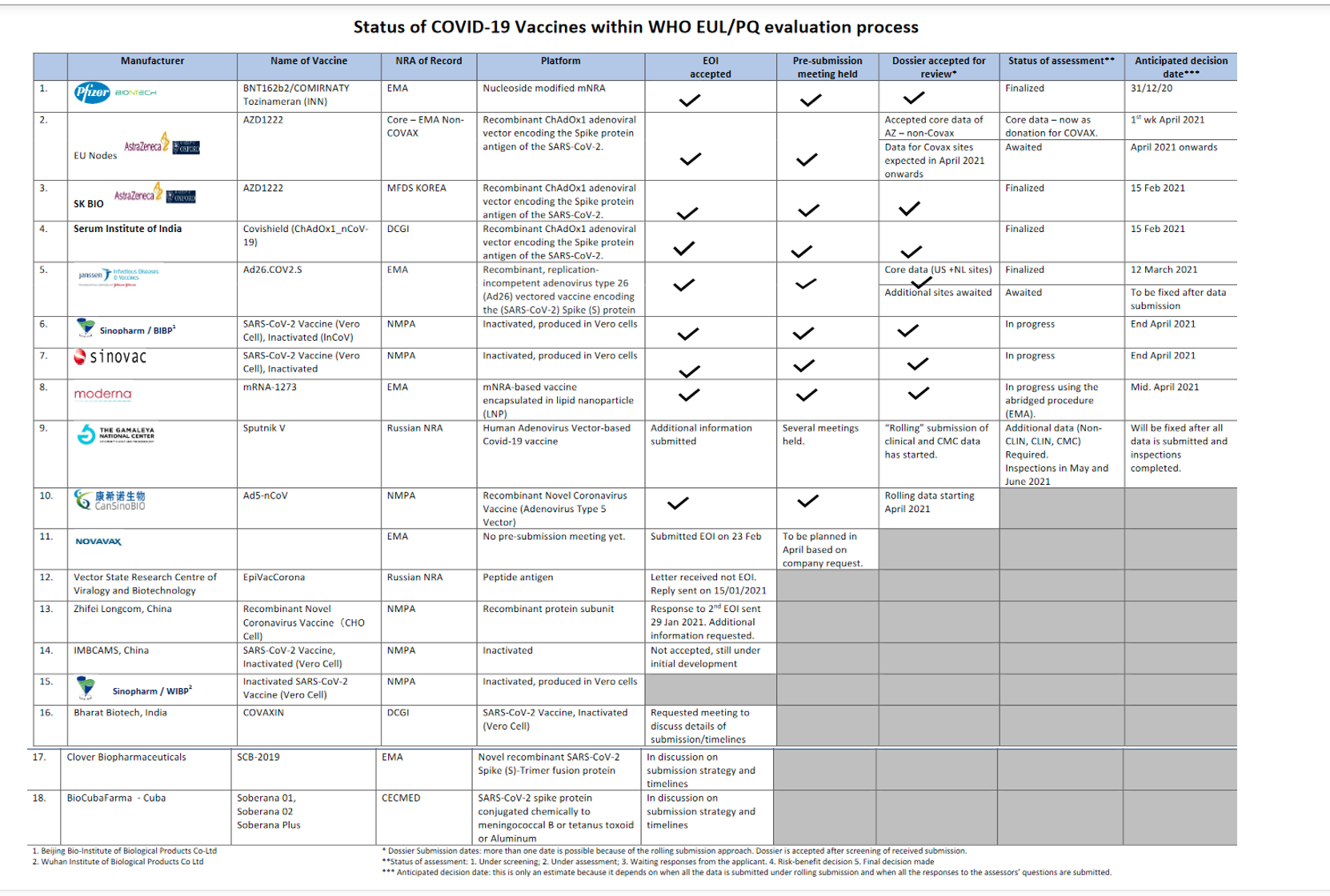
Journal Watch

Journal Watch
Vaccines and Global Health: The Week in Review continues its weekly scanning of key peer-reviewed journals to identify and cite articles, commentary and editorials, books reviews and other content supporting our focu-s on vaccine ethics and policy. Journal Watch is not intended to be exhaustive, but indicative of themes and issues the Center is actively tracking. We selectively provide full text of some editorial and comment articles that are specifically relevant to our work. Successful access to some of the links provided may require subscription or other access arrangement unique to the publisher.
If you would like to suggest other journal titles to include in this service, please contact David Curry at: david.r.curry@centerforvaccineethicsandpolicy.org

Compassionate Force

AMA Journal of Ethics
Volume 23, Number 3 Apr 2021
https://journalofethics.ama-assn.org/issue/compassionate-force


Compassionate Force
Using force in caregiving is most often justified based on risk-benefit or best interest analyses. Careful, inclusive deliberation about whether force should be used in the course of a patient’s care is a rise-to-the minimum precursor of responsible force implementation, as is minimizing a patient’s risk of harm. Even when clinically indicated and ethically justifiable, force protocols drawing on physical, pharmaceutical, and legal means of restraint or seclusion can undermine therapeutic capacity in patient-clinician relationships, erode trust, and exacerbate emotional and moral distress for both patients and clinicians. These high stakes cum patients’ extreme vulnerability prompt us to consider how clinicians’ and organizations’ clinical and ethical obligations extend beyond harm minimization to compassion maximization. Although the words “compassion” and “force” rarely appear together, this issue investigates what their union could mean for and make possible in the enterprise of health care.

Collaborating to offer HPV vaccinations in jails: results from a pre-implementation study in four states

BMC Health Services Research
http://www.biomedcentral.com/bmchealthservres/content
(Accessed 10 Apr 2021)


Collaborating to offer HPV vaccinations in jails: results from a pre-implementation study in four states
Correctional facilities are an underutilized venue for reaching young adults who have not vaccinated for human papillomavirus (HPV). The objective of this study was to identify factors that are associated with jail and local health department (LHD) interest in partnering to offer HPV vaccinations to young adults in jail.
Authors: Amanda Emerson, Molly Allison, Lisa Saldana, Patricia J. Kelly and Megha Ramaswamy
Citation: BMC Health Services Research 2021 21:309
Content type: Research article
Published on: 7 April 2021

Under consent: participation of people with HIV in an Ebola vaccine trial in Canada

BMC Medical Ethics
http://www.biomedcentral.com/bmcmedethics/content
(Accessed 10 Apr 2021)


Research article
Under consent: participation of people with HIV in an Ebola vaccine trial in Canada
Little is known about volunteers from Northern research settings who participate in vaccine trials of highly infectious diseases with no approved treatments. This article explores the motivations of HIV immunocompromised study participants in Canada who volunteered in a Phase II clinical trial that evaluated the safety and immunogenicity of an Ebola vaccine candidate.
Authors: Pierre-Marie David, Benjamin Mathiot, Oumy Thiongane and Janice E. Graham
Citation: BMC Medical Ethics 2021 22:42
Content type: Research article
Published on: 9 April 2021

Public health practitioner perspectives on dealing with measles outbreaks if high anti-vaccination sentiment is present

BMC Public Health
http://bmcpublichealth.biomedcentral.com/articles
(Accessed 10 Apr 2021)


Public health practitioner perspectives on dealing with measles outbreaks if high anti-vaccination sentiment is present
Communities with low vaccination rates are at greater risk during outbreaks of vaccine preventable diseases. Most Australian parents support vaccines, but some refuse and are often judged harshly by their comm…
Authors: Penelope Robinson, Kerrie Wiley and Chris Degeling
Citation: BMC Public Health 2021 21:578
Content type: Research article
Published on: 9 April 2021

Unwillingness to engage in behaviors that protect against COVID-19: the role of conspiracy beliefs, trust, and endorsement of complementary and alternative medicine

BMC Public Health
http://bmcpublichealth.biomedcentral.com/articles
(Accessed 10 Apr 2021)


Unwillingness to engage in behaviors that protect against COVID-19: the role of conspiracy beliefs, trust, and endorsement of complementary and alternative medicine
We investigated if people’s response to the official recommendations during the COVID-19 pandemic is associated with conspiracy beliefs related to COVID-19, a distrust in the sources providing information on C…
Authors: Anna Soveri, Linda C. Karlsson, Jan Antfolk, Mikael Lindfelt and Stephan Lewandowsky
Citation: BMC Public Health 2021 21:684
Content type: Research article
Published on: 8 April 2021

Measles vaccine coverage among children born to Somali immigrants in Norway

BMC Public Health
http://bmcpublichealth.biomedcentral.com/articles
(Accessed 10 Apr 2021)


Measles vaccine coverage among children born to Somali immigrants in Norway
Despite overall good vaccination coverage in many countries, vaccine hesitancy has hindered full coverage and exposed groups to the risk of outbreaks. Somali immigrant groups have been known to have low measle…
Authors: Sherin Marie Jenness, Preben Aavitsland, Richard Aubrey White and Brita Askeland Winje
Citation: BMC Public Health 2021 21:668
Content type: Research article
Published on: 7 April 2021

Postvaccination COVID-19 among Healthcare Workers, Israel [PDF – 1004 KB – 3 pages]

Emerging Infectious Diseases
Volume 27, Number 4—April 2021
http://wwwnc.cdc.gov/eid/


Dispatches
Postvaccination COVID-19 among Healthcare Workers, Israel [PDF – 1004 KB – 3 pages]
S. Amit et al.
Coronavirus disease (COVID-19) symptoms can be mistaken for vaccine-related side effects during initial days after immunization. Among 4,081 vaccinated healthcare workers in Israel, 22 (0.54%) developed COVID-19 from 1–10 days (median 3.5 days) after immunization. Clinicians should not dismiss postvaccination symptoms as vaccine-related and should promptly test for COVID-19.

A review of prospective pathways and impacts of COVID-19 on the accessibility, safety, quality, and affordability of essential medicines and vaccines for universal health coverage in Africa

Globalization and Health
http://www.globalizationandhealth.com/
[Accessed 10 Apr 2021]


A review of prospective pathways and impacts of COVID-19 on the accessibility, safety, quality, and affordability of essential medicines and vaccines for universal health coverage in Africa
The ongoing pandemic of coronavirus disease 2019 (COVID-19) has the potential to reverse progress towards global targets. This study examines the risks that the COVID-19 pandemic poses to equitable access to e…
Authors: Floriano Amimo, Ben Lambert, Anthony Magit and Masahiro Hashizume
Citation: Globalization and Health 2021 17:42
Content type: Review
Published on: 8 April 2021

Disability inclusion in humanitarian action

Humanitarian Exchange Magazine
Number 78, October 2020
https://odihpn.org/magazine/inclusion-of-persons-with-disabilities-in-humanitarian-action-what-now/


Disability inclusion in humanitarian action
by HPN October 2020
The theme of this edition of Humanitarian Exchange, co-edited with Sherin Alsheikh Ahmed from Islamic Relief Worldwide, is disability inclusion in humanitarian action. Persons with disabilities are not only disproportionately impacted by conflicts, disasters and other emergencies, but also face barriers to accessing humanitarian assistance. At the same time, global commitments and standards and the IASC Guidelines on the inclusion of persons with disabilities in humanitarian action all emphasise how persons with disabilities are also active agents of change. Disability and age-focused organisations have led on testing and demonstrating how inclusion can be done better. Yet despite this progress, challenges to effective inclusion remain.

As Kirstin Lange notes in the lead article, chief among these challenges is humanitarian agencies’ lack of engagement with organisations of persons with disabilities. Simione Bula, Elizabeth Morgan and Teresa Thomson look at disability inclusion in humanitarian response in the Pacific, and Kathy Al Jubeh and Alradi Abdalla argue for a ‘participation revolution’, building on learning from the gender movement. Tchaurea Fleury and Sulayman AbdulMumuni Ujah outline how the Bridge Article 11 training initiative is encouraging constructive exchange between humanitarian and disability actors. The lack of good, disaggregated data is highlighted by Sarah Collinson; Frances Hill, Jim Cranshaw and Carys Hughes emphasise the need for training resources in local languages and accessible formats; and Sophie Van Eetvelt and colleagues report on a review of the evidence on inclusion of people with disabilities and older people.

Rebecca Molyneux and co-authors analyse the findings of a review of a DFID programme in north-east Nigeria, while Carolin Funke highlights the importance of strategic partnerships between disability-focused organisations, drawing on her research in Cox’s Bazar. Sherin Alsheikh Ahmed describes Islamic Relief Worldwide’s approach to mainstreaming protection and inclusion, while Pauline Thivillier and Valentina Shafina outline IRC’s Client Responsive Programming. The edition ends with reflections by Mirela Turcanu and Yves Ngunzi Kahashi on CAFOD’s SADI approach.