A phase III, observer-blind, randomized, placebo-controlled study of the efficacy, safety, and immunogenicity of SARS-CoV-2 inactivated vaccine in healthy adults aged 18–59 years: An interim analysis in Indonesia

Vaccine
Volume 39, Issue 44 Pages 6451-6564 (22 October 2021)
https://www.sciencedirect.com/journal/vaccine/vol/39/issue/44


Research article Open access
A phase III, observer-blind, randomized, placebo-controlled study of the efficacy, safety, and immunogenicity of SARS-CoV-2 inactivated vaccine in healthy adults aged 18–59 years: An interim analysis in Indonesia
Eddy Fadlyana, Kusnandi Rusmil, Rodman Tarigan, Andri Reza Rahmadi, … Cissy B. Kartasasmita
Pages 6520-6528

Research priorities to increase vaccination coverage in Europe (EU joint action on vaccination)

Vaccine
Volume 39, Issue 44 Pages 6451-6564 (22 October 2021)
https://www.sciencedirect.com/journal/vaccine/vol/39/issue/44


Research article Abstract only
Research priorities to increase vaccination coverage in Europe (EU joint action on vaccination)
Florence Francis-Oliviero, Sandor Bozoki, András Micsik, Marie Paule Kieny, Jean-Daniel Lelièvre
Pages 6539-6544

Factors affecting antibody responses to immunizations in infants born to women immunized against pertussis in pregnancy and unimmunized women: Individual-Participant Data Meta-analysis

Vaccine
Volume 39, Issue 44 Pages 6451-6564 (22 October 2021)
https://www.sciencedirect.com/journal/vaccine/vol/39/issue/44


Research article Abstract only
Factors affecting antibody responses to immunizations in infants born to women immunized against pertussis in pregnancy and unimmunized women: Individual-Participant Data Meta-analysis
Bahaa Abu-Raya, Kirsten Maertens, Flor M. Munoz, Petra Zimmermann, … Manish Sadarangani
Pages 6545-6552

COVID-19 Vaccination Behavior of People Living with HIV: The Mediating Role of Perceived Risk and Vaccination Intention

Vaccines
https://www.mdpi.com/journal/vaccines
[Accessed 06 Nov 2021]


Open Access Article
COVID-19 Vaccination Behavior of People Living with HIV: The Mediating Role of Perceived Risk and Vaccination Intention
by Li Qi, Li Yang, Jie Ge, Lan Yu and Xiaomei Li
Vaccines 2021, 9(11), 1288; https://doi.org/10.3390/vaccines9111288 (registering DOI) – 06 Nov 2021
Abstract
The COVID-19 vaccination behavior of people living with HIV (PLWH) was examined via a cross-sectional web-based survey of PLWH aged 18 years and older. The survey was conducted from l May to 20 June 2021. The survey included social demographic information; vaccination behavior […

Willingness to Receive the Booster COVID-19 Vaccine Dose in Poland

Vaccines
https://www.mdpi.com/journal/vaccines
[Accessed 06 Nov 2021]


Open Access Article
Willingness to Receive the Booster COVID-19 Vaccine Dose in Poland
by Piotr Rzymski, Barbara Poniedziałek and Andrzej Fal
Vaccines 2021, 9(11), 1286; https://doi.org/10.3390/vaccines9111286 (registering DOI) – 05 Nov 2021
Abstract
COVID-19 vaccinations are essential to mitigate the pandemic and prevent severe SARS-CoV-2 infections. However, the serum antibody levels in vaccinated individuals gradually decrease over time, while SARS-CoV-2 is undergoing an evolution toward more transmissible variants, such as B.1.617.2, ultimately increasing the risk of [..

COVID-19 and Historic Influenza Vaccinations in the United States: A Comparative Analysis

Vaccines
https://www.mdpi.com/journal/vaccines
[Accessed 06 Nov 2021]


Open Access Article
COVID-19 and Historic Influenza Vaccinations in the United States: A Comparative Analysis
by Pranav Mirpuri and Richard A. Rovin
Vaccines 2021, 9(11), 1284; https://doi.org/10.3390/vaccines9111284 (registering DOI) – 05 Nov 2021
Abstract
The COVID-19 vaccination effort is a monumental global challenge. Recognizing and addressing the causes of vaccine hesitancy will improve vaccine uptake. The primary objective of this study was to compare the COVID-19 vaccination rates in US counties to historical vaccination rates for influenza […]

Targeting COVID Vaccine Hesitancy in Rural Communities in Tennessee: Implications for Extending the COVID-19 Pandemic in the South

Vaccines
https://www.mdpi.com/journal/vaccines
[Accessed 06 Nov 2021]


Open Access Review
Targeting COVID Vaccine Hesitancy in Rural Communities in Tennessee: Implications for Extending the COVID-19 Pandemic in the South
by Donald J. Alcendor
Vaccines 2021, 9(11), 1279; https://doi.org/10.3390/vaccines9111279 – 04 Nov 2021
Abstract
Approximately 40% of Tennesseans are vaccinated fully, due mainly to higher vaccination levels within urban counties. Significantly lower rates are observed in rural counties. Surveys suggest COVID-19 vaccine hesitancy is entrenched mostly among individuals identifying as white, rural, Republican, and evangelical Christian. Rural [..

Pre-Print Servers

Pre-Print Servers


bioRxiv
https://www.biorxiv.org/
bioRxiv (pronounced “bio-archive”) is a free online archive and distribution service for unpublished preprints in the life sciences. It is operated by Cold Spring Harbor Laboratory, a not-for-profit research and educational institution. By posting preprints on bioRxiv, authors are able to make their findings immediately available to the scientific community and receive feedback on draft manuscripts before they are submitted to journals.
[Accessed 06 Nov 2021]
SARS-CoV-2 mechanistic correlates of protection: insight from modelling response to vaccines
Marie Alexandre, Romain Marlin, Mélanie Prague, Séverin Coleon, Nidhal Kahlaoui, Sylvain Cardinaud, Thibaut Naninck, Benoit Delache, Mathieu Surenaud, Mathilde Galhaut, Nathalie Dereuddre-Bosquet, Mariangela Cavarelli, Pauline Maisonnasse, Mireille Centlivre, Christine Lacabaratz, Aurelie Wiedemann, Sandra Zurawski, Gerard Zurawski, Olivier Schwartz, Rogier W Sanders, Roger Le Grand, Yves Levy, Rodolphe Thiébaut
bioRxiv 2021.10.29.466418; doi: https://doi.org/10.1101/2021.10.29.466418


Gates Open Research
https://gatesopenresearch.org/browse/articles
[Accessed 06 Nov 2021]

[No new digest content identified]


medRxiv
https://www.medrxiv.org/content/about-medrxiv
medRxiv is a free online archive and distribution server for complete but unpublished manuscripts (preprints) in the medical, clinical, and related health sciences. Preprints are preliminary reports of work that have not been certified by peer review. They should not be relied on to guide clinical practice or health-related behavior and should not be reported in news media as established information. medRxiv is for the distribution of preprints – complete but unpublished manuscripts – that describe human health research conducted, analyzed, and interpreted according to scientific principles…
[Accessed 06 Nov 2021]
Selected Content
Shedding of Infectious SARS-CoV-2 Despite Vaccination
Kasen K Riemersma, Brittany E Grogan, Amanda Kita-Yarbro, Peter Halfmann, Anna Kocharian, Kelsey R Florek, Ryan Westergaard, Allen Bateman, Gunnar E Jeppson, Yoshihiro Kawaoka, David H O’Connor, Thomas C Friedrich, Katarina M Grande
medRxiv 2021.07.31.21261387; doi: https://doi.org/10.1101/2021.07.31.21261387

Efficacy and safety of SOBERANA 02, a COVID-19 conjugate vaccine in heterologous three-dose combination
Maria Eugenia Toledo-Romani, Mayra Garcia-Carmenate, Carmen Valenzuela Silva, Waldemar Baldoquin-Rodriguez, Marisel Martinez Perez, Meiby C Rodriguez Gonzalez, Beatriz Paredes Moreno, Ivis Mendoza Hernandez, Raul Gonzalez-Mujica Romero, Oscar Samon Tabio, Pablo Velazco Villares, Juan Pablo Bacallao Castillo, Ernesto Licea Martin, Misladys Rodriguez Ortega,, Nuris Liem Herrera Marrero, Esperanza Caballero Gonzalez, Liudmila Ibelin Egues Torres, Reinaldo Duarte Gonzalez, Serguey Garcia Blanco, Suzette Perez Cabrera, Santos Huete Ferreira, Kirenia Idalmis Idalmis Cisnero, Omaida Fonte Galindo, Dania Melia Perez, Ivonne Rojas Remedios, Sonsire Fernandez Castillo, Yanet Climent Ruiz, Yury Valdes Balbin, Dagmar Garcia Rivera, vicente Verez-Bencomo
medRxiv 2021.10.31.21265703; doi: https://doi.org/10.1101/2021.10.31.21265703

Safety and immunogenicity of heterologous and homologous inactivated and adenoviral-vectored COVID-19 vaccines in healthy adults
Nasamon Wanlapakorn, Nungruthai Suntronwong, Harit Phowatthanasathian, Ritthideach Yorsaeng, Preeyaporn Vichaiwattana, Thanunrat Thongmee, Chompoonut Auphimai, Donchida Srimuan, Thaksaporn Thatsanatorn, Suvichada Assawakosri, Sitthichai Kanokudom, Yong Poovorawan
medRxiv 2021.11.04.21265908; doi: https://doi.org/10.1101/2021.11.04.21265908

Third doses of COVID-19 vaccines reduce infection and transmission of SARS-CoV-2 and could prevent future surges in some populations
Billy J Gardner, A. Marm Kilpatrick
medRxiv 2021.10.25.21265500; doi: https://doi.org/10.1101/2021.10.25.21265500

Third doses of COVID-19 vaccines reduce infection and transmission of SARS-CoV-2 and could prevent future surges in some populations
Billy J Gardner, A. Marm Kilpatrick
medRxiv 2021.10.25.21265500; doi: https://doi.org/10.1101/2021.10.25.21265500

The basic reproduction number of COVID-19 across Africa
Sarafa A. Iyaniwura, Musa Rabiu, Jummy F. David, Jude D. Kong
medRxiv 2021.11.02.21265826; doi: https://doi.org/10.1101/2021.11.02.21265826

Assessing the Burden of COVID-19 in Developing Countries: Systematic Review, Meta-Analysis, and Public Policy Implications
Andrew Levin, Nana Owusu-Boaitey, Sierra Pugh, Bailey K. Fosdick, Anthony B. Zwi, Anup Malani, Satej Soman, Lonni Besançon, Ilya Kashnitsky, Sachin Ganesh, Aloysius McLaughlin, Gayeong Song, Rine Uhm, Gideon Meyerowitz-Katz
medRxiv 2021.09.29.21264325; doi: https://doi.org/10.1101/2021.09.29.21264325

Examining the Unit Costs of COVID-19 Vaccine Delivery in Kenya
Stacey Orangi, Angela Kairu, Anthony Ngatia, John Ojal, Edwine Barasa
medRxiv 2021.11.01.21265742; doi: https://doi.org/10.1101/2021.11.01.21265742

Public opinion on a mandatory COVID-19 vaccination policy in France: a cross sectional survey
Amandine Gagneux-Brunon, Elisabeth Botelho-Nevers, Marion Bonneton, Patrick Peretti-Watel, Pierre Verger, Odile Launay, Jeremy K. Ward
medRxiv 2021.07.05.21260017; doi: https://doi.org/10.1101/2021.07.05.21260017

Underlying factors that influence the acceptance of COVID-19 vaccine in a country with a high vaccination rate
Daniela Toro-Ascuy, Nicolás Cifuentes-Muñoz, Andrea Avaria, Camila Pereira-Montecinos, Gilena Cruzat, Francisco Zorondo-Rodriguez, Loreto F Fuenzalida
medRxiv 2021.10.31.21265676; doi: https://doi.org/10.1101/2021.10.31.21265676

COVID-19 vaccine brand hesitancy and other challenges to vaccination in the Philippines
Arianna Maever L. Amit, Veincent Christian F. Pepito, Lourdes Sumpaico-Tanchanco, Manuel M. Dayrit
medRxiv 2021.10.14.21264837; doi: https://doi.org/10.1101/2021.10.14.21264837
 
 
Wellcome Open Research [to 06 Nov 2021]
https://wellcomeopenresearch.org/browse/articles
[Accessed 06 Nov 2021]

Wellcome Open Research provides all Wellcome researchers with a place to rapidly publish any results they think are worth sharing. All articles benefit from rapid publication, transparent peer review and editorial guidance on making all source data openly available.
[No new digest content identified]

Think Tanks

Think Tanks
 
 
Brookings [to 06 Nov 2021]
http://www.brookings.edu/
Accessed 06 Nov 2021
[No new digest content identified]
 
 
Center for Global Development [to 06 Nov 2021]
http://www.cgdev.org/page/press-center
Accessed 06 Nov 2021
What We Know (and Don’t) about US Funding to End the Global Pandemic
November 1, 2021
Lawmakers on Capitol Hill extended a lifeline to US global response efforts with the provision of supplemental funding. Early on, sums dedicated to the overseas fight were modest, but last year’s end-of-year spending package included $4 billion for Gavi, the Vaccine Alliance—to support the multilateral vaccine procurement platform COVAX. And the spring 2021 reconciliation package, known as the American Rescue Plan, included close to $11 billion for international pandemic response.
Erin Collinson and Jocilyn Estes
 
 
Chatham House [to 06 Nov 2021]
https://www.chathamhouse.org/
Accessed 06 Nov 2021
[No new digest content identified]


CSIS
https://www.csis.org/
Accessed 06 Nov 2021
Upcoming Event
An Armchair Discussion with David Malpass, President of the World Bank Group
November 8, 2021


Kaiser Family Foundation
https://www.kff.org/search/?post_type=press-release
Accessed 06 Nov 2021
[No new digest content identified]
 
 
ODI [Overseas Development Institute] [to 06 Nov 2021]
https://odi.org/en/publications/
Publications
[No new digest content identified]

Vaccines and Global Health: The Week in Review :: 30 October 2021

Vaccines and Global Health: The Week in Review is a weekly digest  summarizing news, events, announcements, peer-reviewed articles and research in the global vaccine ethics and policy space. Content is aggregated from key governmental, NGO, international organization and industry sources, key peer-reviewed journals, and other media channels. This summary proceeds from the broad base of themes and issues monitored by the Center for Vaccine Ethics & Policy in its work: it is not intended to be exhaustive in its coverage. You are viewing the blog version of our weekly digest, typically comprised of between 30 and 40 posts below all dated with the current issue date

.– Request an Email Summary: Vaccines and Global Health : The Week in Review is published as a single email summary, scheduled for release each Saturday evening before midnight (EDT in the U.S.). If you would like to receive the email version, please send your request to david.r.curry@centerforvaccineethicsandpolicy.org.

– pdf version A pdf of the current issue is available here:

– blog edition: comprised of the approx. 35+ entries posted below.

– Twitter:  Readers can also follow developments on twitter: @vaxethicspolicy.
.
– Links:  We endeavor to test each link as we incorporate it into any post, but recognize that some links may become “stale” as publications and websites reorganize content over time. We apologize in advance for any links that may not be operative. We believe the contextual information in a given post should allow retrieval, but please contact us as above for assistance if necessary.

Support this knowledge-sharing service: Your financial support helps us cover our costs and to address a current shortfall in our annual operating budget. Click here to donate and thank you in advance for your contribution.

.
David R. Curry, MS
Executive Director
Center for Vaccine Ethics and Policy

The G20 established a joint Finance-Health Task Force to strengthen pandemic prevention, preparedness and response

G20
30-31 October 2021
Rome
https://www.g20.org/

The G20 established a joint Finance-Health Task Force to strengthen pandemic prevention, preparedness and response
October 29th, 2021
G20 Finance and Health Ministers met for their first joint meeting under the Italian G20 Presidency. The meeting took place on the eve of the G20 Leaders’ Summit and it was co-chaired by Daniele Franco, Italian Minister for Economy and Finance, and Roberto Speranza, Italian Minister of Health. Finance and Health Ministers agreed on a joint communiqué.


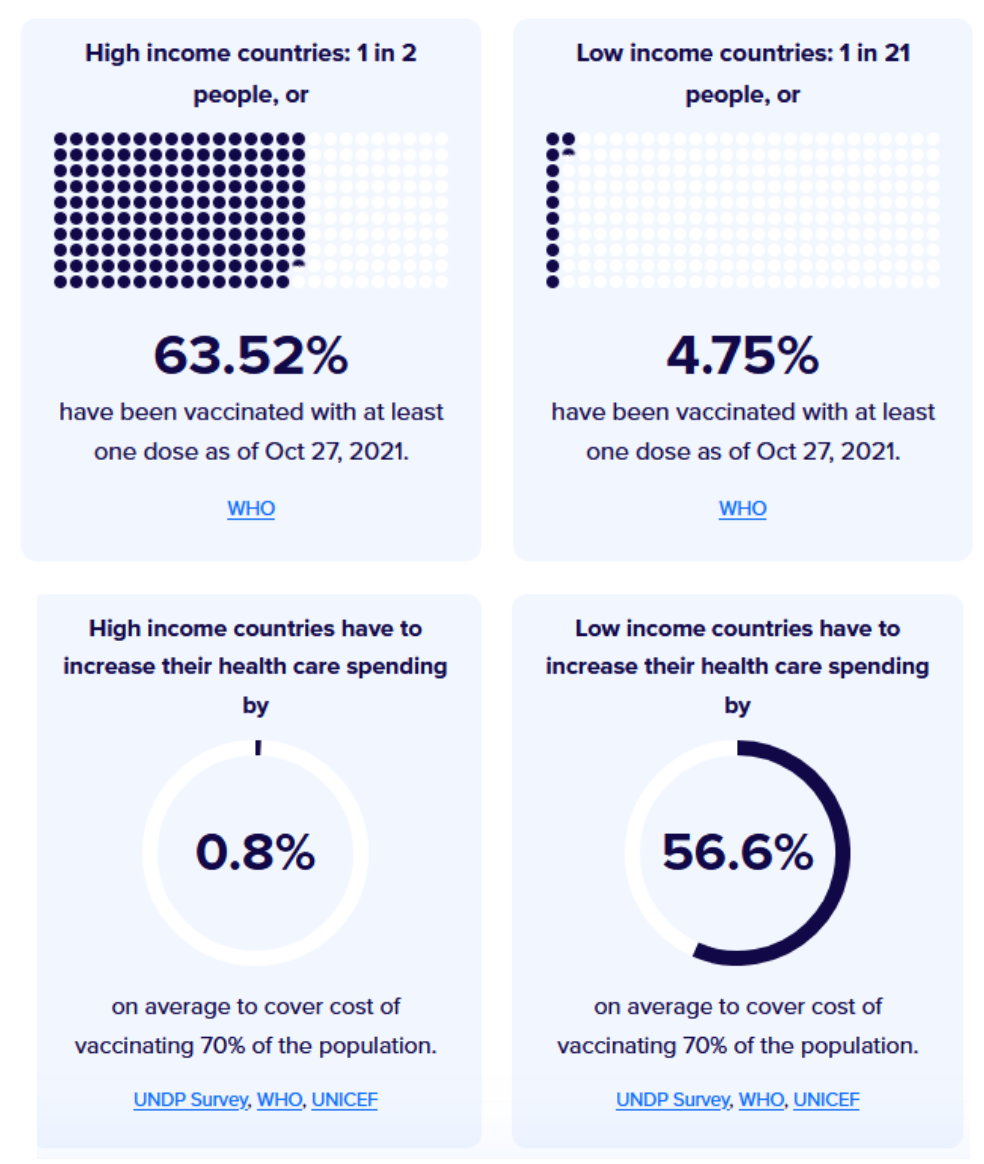
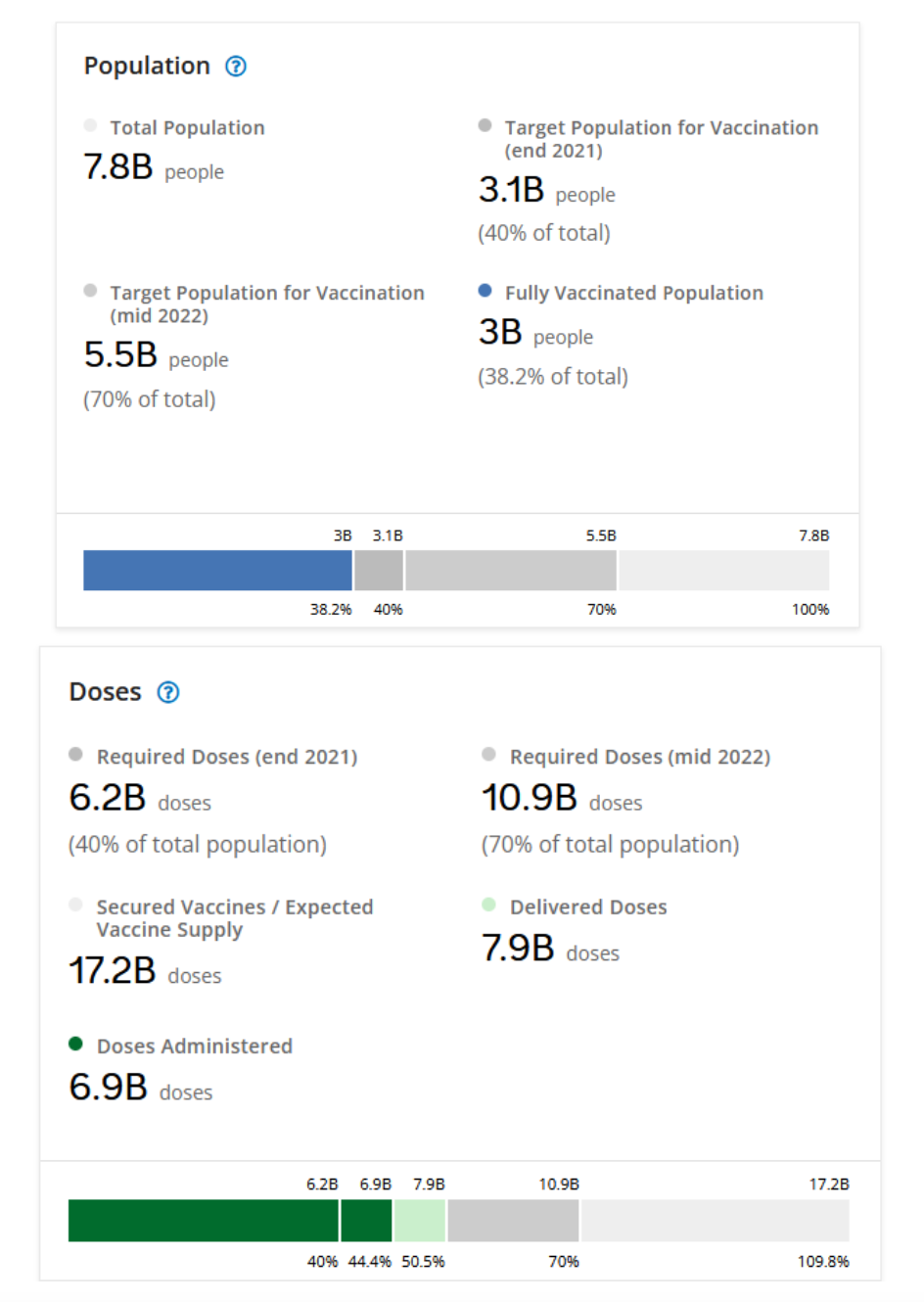
Under the Italian G20 Presidency, the membership committed to bringing the pandemic under control everywhere as soon as possible, and strengthening collective efforts to prepare for, prevent, detect, and respond to future pandemics. In this sense, the G20 will take all necessary steps needed to advance on the global goals of vaccinating at least 40 percent of the population in all countries by the end of 2021 and 70 percent by mid-2022, as recommended by the WHO.

Finance and Health Ministers have also committed to helping boost the supply of vaccines, medical countermeasures and inputs in developing countries and remove relevant supply and financing constraints. To this end, the G20 will continue to support the Access to COVID-19 Tools Accelerator (ACT-A) and the extension of its mandate into 2022, advancing collaboration with global and regional initiatives.

They have acknowledged that financing for PPR has to become more adequate, more sustainable and better coordinated and requires a continuous cooperation between health and finance decision-makers, including to address potential financing gaps, mobilising an appropriate mix of existing multilateral financing mechanisms and explore setting up new financing mechanisms.

In particular, to further strengthening a crucial coordination between Finance and Health Ministries, G20 members agreed to establish a Joint Finance-Health Task Force. Such Task Force will enhance the collaboration and global cooperation on issues relating to pandemic prevention, preparedness and response, thus leaving the international community better prepared in the eventual case of future health threats outbreaks. The Task Force will also promote the exchange of experiences and best practices, developing coordination arrangements between Finance and Health Ministries, promoting collective action and encouraging effective stewardship of resources to address the existing financing gaps in pandemic preparedness and response.

The Task Force is initially jointly chaired by the 2021 and 2022 G20 Presidencies. It will report to Health and Finance Ministers in early 2022 and will be assisted by a secretariat housed at the WHO, with the support of the World Bank.


::::::

Italian G20 Presidency
Joint G20 Finance and Health Ministers meeting
Communiqué – 29 October 2021 :: 4 pages
[Excerpt; Editor’s text bolding and spacing]
We reiterate our commitment to bring the pandemic under control everywhere as soon as possible, put people at the center of preparedness and to strengthen our collective efforts to prepare for, prevent, detect, report, and respond to health emergencies, notably promoting resilience of health systems and communities.

We recognise the role of extensive COVID-19 immunisation as a global public good. We reaffirm our support to all collaborative efforts to ensure a timely and equitable access to safe, affordable, quality and effective vaccines, therapeutics, diagnostics, and personal protective equipment, particularly in low- and middle-income countries (LMICs).

To help advance toward the global goals of vaccinating at least 40 percent of the population in all countries by the end of 2021 and 70 percent by mid-2022, as recommended by the World Health Organization (WHO)’s global vaccination strategy, we will take steps to help boost the supply of vaccines and essential medical products and inputs in developing countries and remove relevant supply and financing constraints. We reiterate our support to strengthen the resilience of supply chains, to increase vaccine distribution, administration, as well as local and regional manufacturing capacity in LMICs, including through voluntary technology transfer hubs in various regions, such as the newly established mRNA Hubs in South Africa, Brazil and Argentina, and through joint production and processing arrangements.

We will continue to support the Access to COVID-19 Tools Accelerator (ACT-A) and the extension of its mandate into 2022, and we will advance collaboration with global and regional initiatives, including ACT-A’s COVAX Pillar, the African Union’s African Vaccine Acquisition Trust (AVAT), the Revolving Fund of the Pan American Health Organization, and the Global Fund’s COVID-19 Response Mechanism. We will work to increase transparency and predictability of deliveries of vaccines and to foster responsible public-private partnerships.

We thank the Multilateral Leaders Task Force for its efforts and encourage it to work to identify gaps
and accelerate access to and on-the-ground delivery of COVID-19 tools. Not only will these actions
help save countless lives, accelerating vaccinations across the globe also remains the cornerstone
of the economic recovery. We call on Multilateral Development Banks working together with
COVAX to continue to support procurement and delivery of vaccines…

WHO Director-General’s remarks at Session 1- Global Economy and Global Health at the G20 Summit – 30 October 2021

WHO Director-General’s remarks at Session 1- Global Economy and Global Health at the G20 Summit – 30 October 2021
30 October 2021 Speech
Excellencies,
I have five requests. 


First, solve the vaccine crisis and end the pandemic. 
Since you met virtually in Riyadh last year, 7 billion vaccine doses have been administered.
Low-income countries, most of them in Africa, have received just 0.4% of those vaccines; more than 80% have gone to G20 countries. We understand and support every government’s responsibility to protect its own people. But vaccine equity is not charity; it’s in every country’s best interests.

We welcome your support for WHO’s targets to vaccinate 40% of the population of all countries by the end of this year, and 70% by mid-2022. 82 countries are at risk of missing that target. For most, the barrier is not absorptive capacity, it’s insufficient supply. We call on those countries that have already reached 40% to swap your vaccine delivery schedules with COVAX and AVAT. We ask you to support local vaccine production in Africa. We call on those countries that have promised to donate vaccines to make good on those promises, as urgently as possible.


Second, fully fund the Access to COVID-19 Tools Accelerator, which needs 23.4 billion U.S. dollars over the next 12 months to get tests, treatments and vaccines to where they are needed most. 

Third, support an ambitious G20 Joint Finance-Health Task Force, linked to a financial intermediary fund for additional financing of pandemic preparedness and response, with clear linkages to WHO as Chancellor Merkel outlined earlier.


Fourth, adopt a treaty or international agreement rooted in the constitution of WHO. 

And fifth, invest in a strengthened, empowered and sustainably financed WHO, at the centre of the global health architecture.

When we met less than a year ago, 1.5 million people had lost their lives to COVID-19. A year later, the toll is 5 million.  How many more will die, in this and future epidemics? The answer is in your hands.


Solve the vaccine crisis; Fully fund the ACT Accelerator; Establish the task force and the fund; Adopt a treaty or international agreement; And strengthen WHO. 

I thank you Prime Minister.

Open letter to G20 Heads of State and Government – UNHCR, IOM & WHO

Open letter to G20 Heads of State and Government – UNHCR, IOM & WHO
An appeal to G20 leaders to make vaccines accessible to people on the move
29 Oct 2021


We are writing to you on behalf of the millions around the world struggling to survive the COVID-19 pandemic far from home. Some have been forced to flee wars, conflict, persecution and human rights violations. Others are on the move to escape socioeconomic hardship or the consequences of climate change.

As strangers far from home, many are at risk of exclusion or neglect. Owing to their living situation, many face barriers accessing vaccinations, testing, treatment, care, and even reliable information.

It is a stark reality that some of the world’s poorest countries shoulder the greatest responsibility for supporting displaced people and other people on the move. They need a reliable and adequate supply of vaccines and other critical supplies to stabilize their fragile and over-burdened health systems, to help save the lives of their citizens, migrants, as well as refugees and other displaced people they host.


Yet the current vaccine equity gap between wealthier and low resource countries demonstrates a disregard for the lives of the world’s poorest and most vulnerable. For every 100 people in high-income countries, 133 doses of COVID-19 vaccine have been administered, while in low-income countries, only 4 doses per 100 people have been administered.

Vaccine inequity is costing lives every day, and continues to place everyone at risk. History and science make it clear: coordinated action with equitable access to public health resources is the only way to face down a global public health scourge like COVID-19. We need a strong, collective push to save lives, reduce suffering and ensure a sustainable global recovery.

And while vaccines are a very powerful tool, they’re not the only tool. Tests are needed to know where the virus is, treatments including dexamethasone and medical oxygen are needed to save lives, and tailored public health measures are needed to prevent transmission.

As the leaders of the world’s largest economies, you have the power and responsibility to help stem the pandemic by expanding access to vaccines and other tools for the people and places where these are in shortest supply.

We welcome the fact that this weekend’s summit in Rome will call for “courage and ambition” to tackle some of the greatest challenges of our time, and specifically the need to recover from the pandemic and overcome inequality. We collectively call on you, G20 leaders, to commit to:

[1] Increase vaccine supplies for the world’s poorest: We call on the world’s leading economies to fully fund and implement the Strategic Plan and Budget for the ACT Accelerator, and to distribute vaccines, tests and treatments where they are needed most. If we are to recover from the pandemic, we must — at a minimum — meet the targets to vaccinate 40 per cent of the world’s population by year-end – and 70 per cent globally by mid-2022.

[2] Ensure access to vaccines for all people on the move: We call on every country to ensure that everyone on its territory regardless of legal status – including refugees, migrants, internally displaced people, asylum-seekers, and others on the move – have access to COVID-19 vaccines, tests and treatment for COVID-19. They should adopt concrete measures to remove barriers to vaccination for everyone on their territory — for example the need for specific documents, geographical barriers,  the requirement in some settings that health care seekers are reported to immigration authorities, high fees — and fight misinformation that fuels vaccine hesitancy.

[3] Support low- and middle-income countries to combat COVID-19 with all available means: Low- and middle-income countries need comprehensive support – financial, political, technical, logistical – to vaccinate people quickly and effectively to expand access to tests and treatments, to implement tailored public health measures, and to build more resilient health systems to prepare for, prevent, detect and respond rapidly to future health emergencies.

We urge you to take swift action to ease the pandemic’s devastating human toll.

Yours faithfully,
Filippo Grandi
UN High Commissioner for Refugees
António Vitorino
IOM Director General
Tedros Adhanom Ghebreyesus
WHO Director-General

Remarks by World Bank Group President David Malpass to the G20 Leaders’ Summit – Session I: Global Economy and Health

Remarks by World Bank Group President David Malpass to the G20 Leaders’ Summit – Session I: Global Economy and Health
Date: October 30, 2021 Type: Speeches and Transcripts

“…The developing world faces multiple severe problems. The pandemic and the scarcity of COVID-19 vaccines are the most immediate. In addition, the recovery is being undercut by inflation, energy shortages, and the breakdown of the supply chain.

These multiple problems are causing devastating reversals in development. Poverty rates are rising, and literacy rates have dropped due to school closures. Progress on gender equality and education of girls have also reversed. Fragility and insecurity have become more common in dozens of countries, including in Sudan…

COVID-19 vaccines are the highest priority and the most achievable. Our Multilateral Leaders Task Force – WHO, WTO, IMF, and the World Bank – is working well together. Following our meeting last night, we issued a joint statement urging G20 members to fulfill all donation pledges in ways that deliver vaccines to arms. We noted that many pledges still do not specify a timeframe for delivery or even the type of vaccine that the donor expects to send. It’s vital for countries with high vaccination rates to swap their near-term delivery schedules, particularly those in November and December, with low-income countries. The World Bank is standing by and will actively finance these vaccines and their deployment.

Progress on debt has stalled. Debt for low-income countries rose 12% during the pandemic. This leaves no fiscal space for vaccines, education, safety nets, or climate. I urge you to explicitly accelerate the implementation of the Common Framework, request transparency and reconciliation of debt, and require the participation of private creditors. I join Kristalina in urging a debt payment standstill in the context of strengthening the Common Framework. Looking forward, steps need to be taken to balance the legal relationship between creditors and sovereign debtors. The current relationship heavily favors creditors, disadvantaging people in low-income countries.

Climate impacts and costs hit the poor the most. I’ve strongly advocated climate actions that integrate climate and development. We can’t approach the climate problem in a way that punishes the poor. The World Bank is spending more than ever on climate. The core of our Climate Change Action Plan is to bring multiple funding sources to bear on priority projects that will reduce greenhouse gas emissions and improve adaptation.

Let me conclude by urging all of you to support IDA. Concessional finance and grants are critical for the poorest countries. IDA provides 4 to 1 leverage for your contributions. It has been a main source of funding and preparedness for vulnerable countries and explicitly supports health, education, nutrition, and climate adaptation. We count on your support for an ambitious IDA20 replenishment in December as we tackle all these challenges together.

G20 members have received 15 times more COVID-19 vaccine doses per capita than sub-Saharan African countries

G20 members have received 15 times more COVID-19 vaccine doses per capita than sub-Saharan African countries
Ahead of the G20 Leaders’ Summit this weekend, 48 UNICEF Africa ambassadors and supporters unite, calling on countries to deliver doses by December.
NEW YORK, 27 OCTOBER 2021 – G20 countries have received 15 times more COVID-19 vaccine doses per capita than countries in sub-Saharan Africa*, according to a new analysis.

The analysis, conducted by science analytics company Airfinity, exposes the severity of vaccine inequity between high-income and low-income countries, especially in Africa. It found that doses delivered to G20 countries per capita are:
15 times higher than doses delivered per capita to sub-Saharan African countries;
15 times higher than doses delivered per capita to low-income countries;
3 times higher than doses delivered per capita in all other countries combined.

“Vaccine inequity is not just holding the poorest countries back – it is holding the world back,” said UNICEF Executive Director Henrietta Fore. “As leaders meet to set priorities for the next phase of the COVID-19 response, it is vital they remember that, in the COVID vaccine race, we either win together, or we lose together.”

Wealthy countries with more supplies than they need have generously pledged to donate these doses to low- and middle-income countries via COVAX but these promised doses are moving too slowly. Of the 1.3 billion additional doses countries have pledged to donate, only 356 million doses have been provided to COVAX.

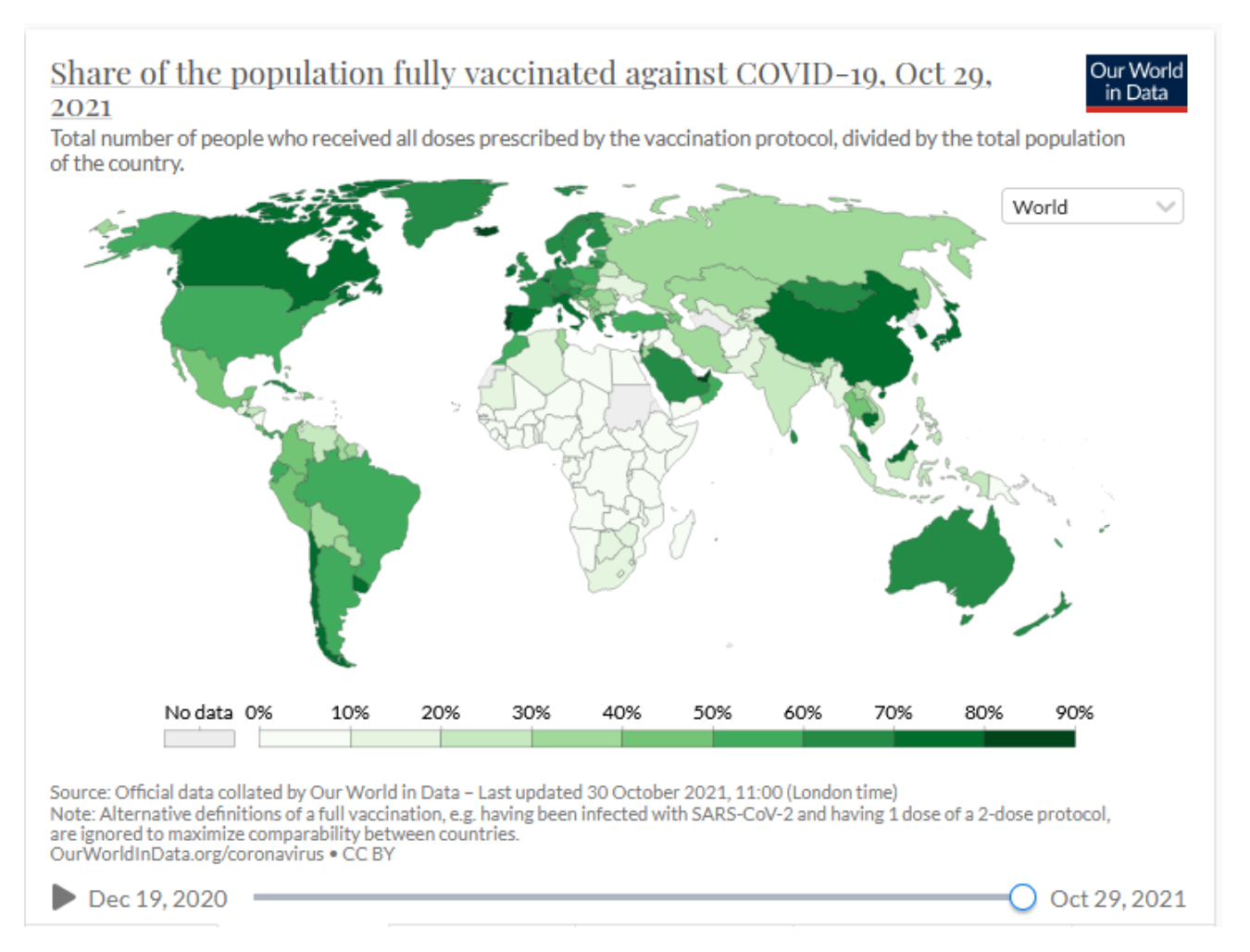
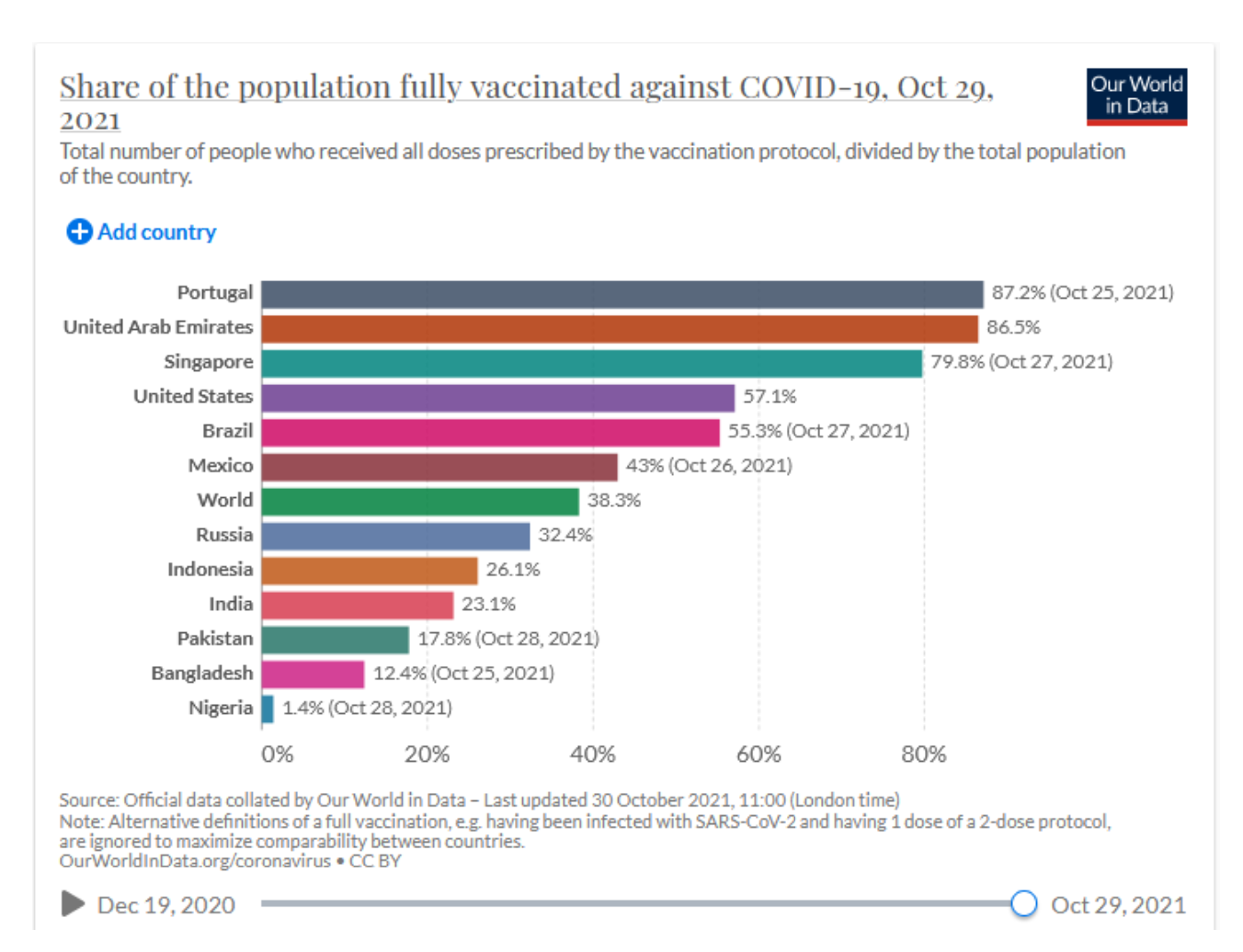
African countries in particular have largely been left without access to COVID-19 vaccines. Less than 5 per cent of the African population are fully vaccinated, leaving many countries at high-risk of further outbreaks.

As leaders prepare to meet for the G20 Summit in Rome this weekend, 48* UNICEF Africa ambassadors and supporters from across the continent have united in an open letter. They are calling for leaders to honour their promises to urgently deliver doses, writing that “the stakes could not be higher.”…


::::::

Dear G20 leaders: Vaccine equity is a must for Africa
Vaccine inequity leaves lower income countries – many of them in Africa – at the mercy of COVID-19. Well-supplied countries must urgently deliver the doses they promised.

Many countries in Africa have recently experienced a surge in COVID-19 cases and remain at high risk of further surges. But measures to contain the virus threaten fragile economic growth, and the stability of basic services such as health and education. Children are missing school and already fragile health systems are under increasing strain.


People across Africa are signing and sharing an open letter calling on G20 leaders to honor their promises to urgently deliver doses.

“Dear G20 leaders,
At the COVID-19 Summit held at the United Nations recently, world leaders set a target that every country should vaccinate 70 per cent of its population. Many rich countries are on track, yet only a fraction of Africans are fully vaccinated.

This inequity is unjust – and self-defeating. It leaves Africans – and the whole world – at the mercy of the virus. Unchecked, it can create new and more dangerous variants.

Rich nations have pledged to donate over a billion vaccines this year and hundreds of millions more in 2022. This gives us hope. But Africa cannot wait. We need doses now.


We call on you to donate doses by December, along with resources to turn vaccines into vaccinations – to train healthcare workers, equip them with personal protection, and the infrastructure to store and transport vaccines. 

The stakes could not be higher. Every day Africa remains unprotected, pressure builds on fragile health systems where there can be one midwife for hundreds of mothers and babies. As the pandemic causes a spike in child malnutrition, resources are diverted from life-saving health services and childhood immunization. Children already orphaned risk losing grandparents. Disaster looms for Sub-Saharan African families, four out of five of whom rely on the informal sector for their daily bread. Poverty threatens children’s return to school, protection from violence and child marriage.

Every day we wait risks a tragic reversal of hard-won development gains.

Remember the relief you felt when you got your first dose, when you could hug your elders, see life get back on track for your children. Africa needs this too.

The path out of the pandemic is clear. But we can only get out together. Please donate doses by December.

Actions must speak louder than words: five asks to achieve equity in vaccine delivery

Joint UN/ Red Cross/Red Crescent Statement
Actions must speak louder than words: five asks to achieve equity in vaccine delivery
28 Oct 2021
NEW YORK / GENEVA – In June 2020, a few months into the COVID-19 pandemic, the United Nations and the International Red Cross and Red Crescent Movement jointly called on governments, the private sector, international and civil society organizations to accelerate efforts to develop, test, and produce a safe and affordable “people’s vaccine” to protect everyone, everywhere and bring the crisis to an end.

A people’s vaccine should protect the affluent and the poor, the elderly as well as the young, forcibly displaced persons, migrants regardless of their immigration status, and other often neglected populations, both in urban areas and in rural communities.

Fifteen months later, thanks to extraordinary scientific and technological advances, as well as global collaboration and mutual reliance in regulatory aspects, multiple safe and effective vaccines against COVID-19 are available and being administered in countries around the world. Yet, despite lofty rhetoric about global solidarity, the goal of a “people’s vaccine” is far from being reached. Equitable vaccine distribution is a political, moral, and economic priority which has so far been largely neglected.

Profits and short-sighted vaccine nationalism continue to trump humanity when it comes to the equitable distribution of vaccines. Though more than 48 per cent of the world’s population has received at least one dose of the vaccine, that percentage drops to barely 3 per cent in low-income countries. The situation is particularly worrying in countries in humanitarian crisis which need almost 700 million more doses to reach the World Health Organization’s target of vaccinating 40 per cent of their populations by the end of the year.


Over half of the countries with a humanitarian appeal do not have enough doses to vaccinate even 10 per cent of their population. Seven of the poorest in the world only have enough doses to reach less than 2 per cent of their population (Burundi, Cameroon, Chad, the Democratic Republic of the Congo, Haiti, South Sudan, and Yemen).

Wealthy countries with access to large quantities of vaccines have generously pledged to donate their excess doses to low- and middle-income countries via COVAX. However, far too few of these donations have been received. Supply of doses to the most vulnerable continues to be constrained by export restrictions and an unwillingness of countries to give up their place in the production supply line to COVAX, even if they cannot use those doses immediately.

The Humanitarian Buffer, part of the COVAX Facility, has been open for applications since June 2021. The Buffer is a measure of last resort to ensure the world’s displaced and other vulnerable populations are reached with COVID-19 vaccines. It is also part of the efforts to curb inequity, which would otherwise jeopardize social and economic recovery in humanitarian settings. We therefore need to urgently boost supply, share vaccines, and ensure that everyone has access.

But having vaccine doses available is only part of the solution to this crisis. We must ensure that the vaccine makes it from the airport tarmac into the arms of the most vulnerable – including refugees, migrants, asylum seekers, marginalised groups, people who are stateless, and those living in areas controlled by armed groups and/or affected by armed conflict. There must be greater investment in local delivery mechanisms and capacity, not only to guarantee that vaccines are delivered quickly and fairly, but also to strengthen national health systems for more effective pandemic preparedness and response.

All around the world, efforts to curb the pandemic are undermined by mistrust that leads to vaccine hesitancy. More than ever, it is important to work with and within communities, including through social media and community networks, to build trust and strengthen confidence on the efficacy and safety of vaccines. Activities that strengthen support for local actors and address misinformation are key to ensuring the successful delivery of vaccines to local communities, especially those most at-risk.

The United Nations and the International Red Cross and Red Crescent Movement remain steadfast in their commitment to ensure equitable and effective access to COVID-19 vaccines across the globe. As the pandemic requires the international community to take extraordinary measures, today we unite our voices again to say it is time for actions to speak louder than words.

It is a humanitarian imperative and our shared responsibility to ensure that lives everywhere are protected, not only in the few countries that have the means to buy protection.

We call on governments, partners, donors, the private sector, and other stakeholders:
to scale up COVID-19 vaccine supply and access to COVAX including through donations from high-income countries to donate vaccines to those countries and regions that remain inequitably served;
to increase the funding and support to local actors to ensure that vaccines leave capital airports and reach everyone, including through investment both in the local health systems required for delivery and in community engagement to enhance acceptance and confidence in COVID-19 vaccines as well as vaccines in general;
to strengthen the capacity for COVID-19 vaccine production and distribution worldwide, particularly in low- and middle-income countries;
to accelerate the transfer of technology and know-how: investments made now will last well beyond this public health emergency and will strengthen the global capacity for response to future epidemics and pandemics;
to request the lifting of all remaining barriers (by manufactures) to allow humanitarian agencies access COVID-19 doses, including through waiving the requirement for indemnification, particularly where the most vulnerable populations can only be reached by humanitarian agencies using the COVAX Humanitarian Buffer.

Vaccine Nationalism, Hoarding Putting Us All at Risk, SecretaryGeneral Tells World Health Summit, Warning COVID19 Will Not Be Last Global Pandemic

Vaccine Nationalism, Hoarding Putting Us All at Risk, SecretaryGeneral Tells World Health Summit, Warning COVID19 Will Not Be Last Global Pandemic
24 October 2021 SG/SM/20986
Following is the text of UN SecretaryGeneral António Guterres’ video message to the World Health Summit, held in Berlin from 24 to 26 October:

“This year’s World Health Summit arrives at a time when health systems around the world have been shattered by COVID19.  Our commitment to achieving health for all has never been more important.
Building forward better means strengthening primary health systems at the community level and achieving universal health coverage, so people can receive a range of services — no matter who they are or where they live.  It means embracing a “One Health” approach to integrate human, animal and environmental health to protect people and our planet, while preventing future health emergencies.

And most urgently, it means ending the COVID19 pandemic.  The triumph of the vaccines — developed and brought to market in record speed — is being undone by the tragedy of an unequal distribution.  Three quarters of all vaccines have gone to high- and upper-middle-income countries.  Vaccine nationalism and hoarding are putting us all at risk.  This means more deaths.  More shattered health systems.  More economic misery.  And a perfect environment for variants to take hold and spread.

Earlier this month, I joined [World Health Organization (WHO) Director-General] Dr. Tedros [Adhanom Ghebreyesus] to launch the Global COVID19 Vaccination Strategy.  A credible and costed plan to get vaccines into the arms of 40 per cent of people in all countries by the end of this year — and 70 per cent by the middle of 2022.

We need manufacturers and countries alike to fulfil their dose-sharing pledges — including through swaps — and share the technology and intellectual property that can allow more countries to produce vaccines.  We need an immediate infusion of $8 billion to ensure that distribution is equitable — and we call on the G20 to help us get there.  And we need a modern and funded pandemic preparedness architecture that can prevent the mistakes we’re making now from ever happening again.

COVID19 will not be the last pandemic we face.  But it can be the last one we fail.  It’s essential to increase the resources and authority of WHO.  At this year’s World Health Summit, let’s move from alarm to action.  And let’s deliver the stronger health systems that every person deserves.”

New ACT-Accelerator strategy calls for US$ 23.4 billion international investment to solve inequities in global access to COVID-19 vaccines, tests & treatments

New ACT-Accelerator strategy calls for US$ 23.4 billion international investment to solve inequities in global access to COVID-19 vaccines, tests & treatments
Joint statement from the ACT-Accelerator partners
10/28/2021
New ACT-Accelerator strategic plan sets out urgent actions to address crucial gaps in access to COVID-19 tests, treatments, vaccines and personal protective equipment in low- and middle-income countries, using the latest epidemiological, supply and market information.
Delivering this plan is crucial to reaching globally agreed targets for COVID-19 tools, to help prevent at least 5 million potential additional deaths, save the global economy more than US$ 5.3 trillion, and accelerate the end of the pandemic everywhere.
The ACT-Accelerator needs US$ 23.4 billion until September 2022 to implement this plan, reflecting a fresh scope, advances in science and supply, and new actors joining the pandemic response.
The new plan also responds to the recent independent Strategic Review’s key recommendations and will be implemented alongside global health, government, civil society and private sector partners. The Access to COVID-19 Tools (ACT) Accelerator has today launched its strategic plan and budget for the next 12 months, outlining the urgent actions and funding needed to address deep inequities in the COVID-19 response, save millions of lives and end the acute phase of the pandemic.

The Access to COVID-19 Tools (ACT) Accelerator has today launched its strategic plan and budget for the next 12 months, outlining the urgent actions and funding needed to address deep inequities in the COVID-19 response, save millions of lives and end the acute phase of the pandemic.

Inequitable access to COVID-19 tests, treatments and vaccines is prolonging the pandemic everywhere and risking the emergence of new, more dangerous variants that could evade current tools to fight the disease. So far, only 0.4% of tests and 0.5% of vaccines administered worldwide have been used in low-income countries, despite these countries comprising 9% of the global population…


Fully funding the new strategic plan and budget will enable the partnership to:
Support the vaccination objectives of 91 lower-income countries in the COVAX Advance Market Commitment (AMC) and other countries, by delivering sufficient doses and supporting vaccination campaigns to achieve 43% coverage in AMC countries – contributing to the global target of 70% coverage in all countries by mid-2022.
Assist the 144 countries in the Diagnostics Consortium in reaching a minimum testing rate of at least 1 per 1000 people per day, and ensuring sufficient genetic sequencing capacity globally to rapidly detect new variants of concern.
Ensure 120 million COVID-19 patients in low- and middle-income countries have access to existing and emerging treatments, including medical oxygen.
Keep 2.7 million health workers in low- and middle-income countries safe with personal protective equipment (PPE)…

Navigating the World that COVID-19 Made: A Strategy for Revamping the Pandemic Research and Development Preparedness and Response Ecosystem

Navigating the World that COVID-19 Made: A Strategy for Revamping the Pandemic Research and Development Preparedness and Response Ecosystem
Thomas J. Bollyky, Jennifer B. Nuzzo, Matthew P. Shearer, Natasha Kaushal, Samantha Kiernan, Noelle Huhn, Amesh A. Adalja, Emily N. Pond
Johns Hopkins – Center for Health Security
October 29, 2021 :: 53 pages
PDF: https://www.centerforhealthsecurity.org/our-work/pubs_archive/pubs-pdfs/2021/211029-PandemicVaccineDevelopmentReport.pdf

Introduction [excerpt]
…Beyond its human and economic toll, the COVID-19 pandemic has also exposed and redefined the realities of the global vaccine R&D and response ecosystem in the following ways:
There is now widespread recognition that safe and effective vaccines provide unparalleled health, social, and economic benefits during a pandemic. Multiple governments have already announced new and potentially competing plans to invest in pandemic vaccine R&D and response. For example, China, which hardly shipped any vaccines abroad prior to the pandemic, has now become the largest exporter of COVID-19 vaccines to date.

COVID-19 has made it clear that most nations will not share scarce supplies of early vaccines and related inputs in a crisis. From the United States to Europe to the African Union, efforts are underway to domesticate vaccine manufacturing and their associated supply chains. This “me-first” approach to COVID-19 vaccine allocation could also dim countries’ enthusiasm for participating in future global pooled procurement initiatives and access and benefit sharing arrangements, given the reasonable fear that these arrangements might not be able to provide timely, equitable quantities of vaccines for LMICs in future crises.

COVID-19 demonstrated that pandemics can be profitable for vaccine manufacturers. Record revenues for COVID-19 vaccines has drawn new vaccine developers into the market, but also made them less willing to enter into public sector and nongovernmental organization funding arrangements that impose equitable access requirements that could encumber potential profitmaking.

Geopolitics constrained COVID-19 response and threaten future global health security. Global health emergencies have historically been a cause for increased international cooperation, but the response to the COVID-19 pandemic has been constrained by geopolitical rivalries. In this context, not all nations will be willing to cooperate closely on national security matters, such as pandemic vaccine R&D and response. Cooperation on pandemic R&D and response may be more feasible in groupings of regional partners or like-minded states, with global cooperation instead focused on promoting common standards and scientific collaboration.

Any future pandemic pathogen that emerges will do so in a world changed by and aware of these realities. To ensure that these lessons are heeded and to prevent the devastation of the present crisis from repeating in the next pandemic, governments, international institutions, and private sector actors must immediately act to address gaps and explore opportunities at each step along the vaccine value chain.

The measures to be taken should include:
Develop and fund an inclusive strategy for the R&D of prototype vaccine candidates for future pandemics. Although highly effective vaccines against COVID-19 were developed in record time, shortening vaccine development time even further could yield substantial benefits in the next pandemic. To shorten the development timeframe during a pandemic, research and preliminary trials must be conducted before a pandemic may occur. Candidate vaccines for a representative prototype pathogen within each of the roughly 25 viral families most likely to cause the next pandemic could be developed and taken through Phase 1 clinical evaluation. This would allow the collection of early data on safety, dosage, and schedule of vaccine administration with that particular platform, antigenic target, or other design characteristics. Taking those candidate vaccines through Phase 2 clinical trials could help identify and characterize correlates of protection for those viral families. Conducting preclinical and early-stage clinical research in advance could potentially allow for shorter and much smaller-scale Phase 3 trials when a new virus emerges. Proposals by the Coalition for Epidemic Preparedness Innovations and the US Senate, if enacted and funded, could advance this research and enable vaccines to be developed within 100 days of identification of the next pandemic.

Engage local government and donor financing and policy support to enable global vaccine manufacturing scale up. Producing a safe and effective vaccine within 100 days of a pandemic threat being detected would save significant time and lives. However, the benefits of ensuring that every country can administer vaccines at the same pace as most high-income countries have done in the COVID-19 pandemic would be even larger. Establishing vaccine manufacturing capacity in LMICs is essential to achieving this goal, but it should be viewed as a complement, not a near-term substitute, for investing in the economies of scale afforded by centralized production capacity. To succeed, donors and local governments will need to provide sustained financing, support the use of flexible business models, invest in manufacturing innovations, and establish mechanisms to facilitate and sustain technology transfer.

Create and support equitable financing, procurement, and allocation mechanisms to help end COVID-19 and prepare for the future. Wealthy and vaccine-producing nations governments will always be able to outbid a multilateral procurement body or seize locally produced vaccine doses in a pandemic. Enabling a more equitable allocation of vaccines in the next pandemic requires creating more supply and procurement mechanisms in which vaccine-producing nations are willing to participate on the same level as LMICs. COVID-19 Vaccines Global Access, or COVAX, has achieved much during this pandemic, but concerns about its performance in the present crisis make it unlikely to be trusted in the next one. Regional mechanisms may offer the most hope, but they must be established in advance and routinely used to be trusted in future crises.

Strengthen cross-border trade, standardization, and supply chain transparency in order to expand vaccine manufacturing and access during a crisis. The widespread use of export restrictions during the COVID-19 pandemic has contributed to unnecessary infections, hospitalizations, and deaths and continues to undermine efforts to prepare for future pandemic threats by discouraging international investments in vaccine and input manufacturing capacity. The threat of export restrictions on vaccines and related inputs should be reduced through adoption of regional trade and investment agreements, standardization of the specialized inputs needed for vaccine production, and greater supply chain transparency.

Build the systems needed to enable vaccine distribution, allocation, and uptake for the next pandemic. While inadequate supplies may still be the single biggest factor limiting vaccine coverage globally, COVID-19 has also illustrated the need to devote adequate and timely attention to distributing and allocating vaccines and communicating with the public about vaccine-related risks and benefits. Dedicated plans are needed to ensure that high-priority groups can be vaccinated. Operationally feasible plans are also needed to support risk communication and community engagement and to combat the spread of misinformation and disinformation about vaccines.

Plan for global coordination of postmarket research studies. Insufficient coordination of postmarket studies is compromising the ability to track COVID-19 vaccine effectiveness, monitor vaccine escape, and assess optimal dosing and the need for boosters. An independent, but government-supported organization, such as the Coalition for Epidemic Preparedness Innovations, could provide this level of international coordination of follow-on clinical investigations, in consultation with national regulatory authorities and research institutes. The World Health Organization could also assume a greater coordinating role on postmarket research studies by adapting its R&D Blueprint for Action to Prevent Epidemics.

Although COVID-19 has been described as a once-in-a-century crisis, another pandemic could occur at any time, including in the not-to-distant future. Other pandemic pathogens could emerge at any time, causing loss of life or quality of life and spillover economic, social, and political effects at the same, if not greater, magnitude than the world has suffered over the past 2 years. No one can say for certain how governments will respond when the next crisis emerges. What is certain is that national, regional, and international responses to COVID-19 are already writing the opening chapters of the next pandemic. Only by translating lessons learned into viable, equitable action can the world change the pandemic narrative in time for the next crisis.

PREPARING SOCIETY AGAINST FUTURE PANDEMICS :: Policy Perspectives from the Innovative Biopharmaceutical Industry

PREPARING SOCIETY AGAINST FUTURE PANDEMICS :: Policy Perspectives from the Innovative Biopharmaceutical Industry
IFPMA – October 2021 :: 21 pages
PDF: https://www.ifpma.org/wp-content/uploads/2021/10/IFPMA_Preparing_society_against_future_pandemics_Full_Report.pdf

Introduction [excerpts]
Despite the many laudable actions in response to COVID-19 by individuals, institutions, governments and companies around the world, the pandemic has taken an immense toll on lives and livelihoods.

With more than 4.5 million reported deaths and 222 million infections worldwide,1 and economic costs estimated at over US$4 trillion of lost output,2 this is the greatest public health crisis in a century. We can be certain that there will be future pandemics, fanned by both climate change and globalization. There is wide agreement that the world needs to be much better prepared for the next pandemic. Learning and applying the lessons from the continuing COVID-19 pandemic, as well as from other recent infectious disease outbreaks and epidemics, will be pivotal to this work.

Improving preparedness for future disease outbreaks with epidemic and pandemic potential is not a new idea; significant debate followed previous outbreaks such as the H1N1 influenza A virus, SARS (Severe Acute Respiratory Syndrome), Ebola and Zika. While some concrete actions were taken, it became clear during the COVID-19 pandemic that few were prepared for the scope and scale of response required. Governments, healthcare systems, multilateral organizations, regulators and other stakeholders have had to take unprecedented action to catch up with the pandemic and have been hindered in most cases by the lack of robust or adequately tested plans, pre-established structures, resources or processes, including at the global level. Despite the current strong political consensus to take action now, establishing the long-term, comprehensive and sustainable system needed to address an array of potential disease threats is a daunting challenge entailing substantial cost. The overall public financial investment required has been recently estimated at US$15 billion a year.3…

The biopharmaceutical industry is committed to playing its part in further improving pandemic preparedness. Our vision for future pandemic preparedness is based on two ambitious objectives:


1 Aim to develop effective and safe pandemic products within 100 days of a new pandemic declaration.

2 Collaborate with governments, multilateral organizations, regulators, and other companies and sectors to ensure equitable access to those products for people worldwide.

Fundamental to achieving both objectives is sufficient, sustained public funding and human capital to support the continuum from discovery and development to deployment at scale. Effective governance and clear institutional roles and responsibilities remain of paramount importance.

We describe below some of the critical lessons we have learned so far in tackling COVID-19 and make a series of proposals for steps the industry and other stakeholders need to take for future pandemic preparedness. We look forward to working closely with all concerned stakeholders to protect the world against future pandemics…

Media Release
Bolstering action against future pandemics: pharma policy perspectives on delivering medical countermeasures
25 October 2021
:: Future pandemic preparedness discussions cannot and must not overshadow the need for urgent joint action to redistribute COVID-19 vaccines through COVAX and donations.
:: Planning for better pandemic preparedness requires measures to develop effective and safe pandemic products even faster to save lives and livelihoods, which requires first pathogen sharing, second, strong incentive frameworks and third, a sustainable innovation ecosystem.
:: To ensure equitable access to those products for people worldwide requires more effective collaboration with governments, multilateral organizations, regulators, and other companies and sectors.

Aiming for effective and safe pandemic products within 100 days will require pre-emptive R&D. This goal, however, cannot be achieved in the absence of a robust incentive system, built on strong and predictable IP protection. The innovative biopharmaceutical industry commits to investing in research and development (R&D) on target pathogens with epidemic and pandemic potential to build a portfolio of promising candidate vaccines, treatments and technologies. It also requires the immediate sharing of pathogens with epidemic and pandemic potential, and associated information, with no strings attached.  The innovative biopharmaceutical industry commits to ensuring the highest safety protocols for our laboratories and only to use shared samples and genetic sequence data for research purposes and for the production of vaccines, medicines and diagnostics.

The solution to vaccine equity today resides in dose sharing, continuing to optimize output through manufacturing scaling up and voluntary licensing; as well as working together to enable countries to efficiently and effectively vaccinate their people. For future pandemics, it is imperative to continue building on what has worked well: the pivotal role of a strong innovation ecosystem and a strengthened, well-funded procurement system for lower-income countries. The scientific and industrial success has been nothing short of extraordinary. It is also imperative to be better prepared to ensure equitable access to pandemic products for people worldwide…

Urgent action needed now to ensure sufficient COVID vaccine syringe supply to meet 2022 vaccination targets 

COVID Vaccines – Syringe Shortage

Urgent action needed now to ensure sufficient COVID vaccine syringe supply to meet 2022 vaccination targets 
Increased demand, supply chain disruptions, and ‘syringe nationalism’ could lead to significant challenges in 2022 without immediate action

Statement by UNICEF Executive Director Henrietta Fore
NEW YORK, 27 OCTOBER 2021 – “Without action now, the world could face a serious shortage of COVID vaccine syringes by the end of 2022, with potentially dire consequences for the global effort to bring the pandemic under control.

“Last month, supporters of the global effort to provide access to COVID-19 vaccines aligned around a new target during the Vaccine Summit held on the margins of the UN General Assembly: Vaccinating at least 70 per cent of the population in every country against COVID by 2022. This ambitious aim intends to deliver on the promise of more equal access to COVID-19 vaccines.

“However, as we collectively ramp up access to COVID-19 vaccines, we must equally ramp up access to the syringes needed to administer them.

“Working closely with partners, UNICEF has been leading the charge. We tripled the number of syringes ordered to meet demand – securing almost 3 billion auto-disable syringes since 2020, including the creation of a GAVI-funded stockpile of half a billion syringes to prepare for the COVID-19 vaccine rollout.


“Thus far, this supply has been sufficient to meet the increased needs for syringes sourced via UNICEF. However, to reach the new COVID-19 vaccination targets, and assuming an unhindered vaccine supply next year, there could be a shortfall of up to 2.2 billion auto-disable syringes, according to UNICEF projections.

This shortage would only hit the type of syringes that lock automatically to prevent reuse, as required by WHO and UNICEF guidelines. Low- and middle-income countries – where this type of syringe is critical for safety – will bear the brunt of this shortage. We are not anticipating a significant supply shortage of the more standard syringes used in high-income countries.

“The anticipated shortfall is the result of the significantly higher demand, disruptions to international freight and supply chains, an unpredictable supply of vaccines due to a significant reliance on much needed donated doses, and national bans on syringe exports.


 “To avert this scenario, we need six urgent, but achievable, actions:
Expanded access to supply, both of standard 0.5ml auto-disable syringes used for most COVID-19 vaccines and for routine immunization, and 0.3ml syringes used for the Pfizer-BioNTech COVID-19 vaccine. This will necessarily require increased production by manufacturers of relevant and quality-assured products.
A more secure and predictable supply of COVID-19 vaccines to allow us to make best use of limited syringe supply.
The prioritization of injection equipment shipments by international freight carriers similar to the prioritization of vaccine shipments.
An end to ‘syringe nationalism’ and the hoarding of desperately needed safe injection equipment.
A review of the plans and timing of local immunization campaigns, as well as the phasing of local COVID-19 vaccination rollouts, so that the public health impact of global immunization campaigns can be optimized, and global syringe supply can be best utilized without significantly impacting critical immunization efforts worldwide.
The consideration of expanded use of alternative quality-assured reuse prevention (RUP) syringes as the next best alternative to auto-disable syringes, in line with the national policy of the recipient countries based on WHO/UNICEF guidelines.

“We are working with key partners – including the United States, COVAX, PATH, donors, syringe manufacturers and others – to take the necessary action to address the situation, and will continue to monitor progress. We are working to get the most out of our existing arrangements and to sign new agreements with syringe suppliers that are able to step up to the challenge in 2022…

Duke University and Covid Collaborative Launch Global Accountability Platform To Accelerate Equitable Covid-19 Pandemic Response

Duke University and Covid Collaborative Launch Global Accountability Platform To Accelerate Equitable Covid-19 Pandemic Response
10.19.21
Covid GAP Seeks Collaborations Around the World
Washington, DC—Nearly two years into the Covid-19 pandemic, the global response continues to be slow, fragmented, and inequitable. The widening gap between vaccine haves and have-nots around the world has prolonged the pandemic, worsened global inequality, risked the emergence of new viral variants that could evade vaccine immunity, and confronted countries with very different prospects for pandemic and economic recovery. In response, Duke University and the Covid Collaborative are launching the Covid Global Accountability Platform (Covid GAP), an independent initiative that aims to provide evidence-based tracking, insights, and recommendations that collectively help hold the world to account to meet pressing needs, deliver on commitments, and accelerate the end of the pandemic…

To achieve its goal, Covid GAP is collaborating with The Rockefeller Foundation, the Bill & Melinda Gates Foundation, and multiple stakeholders and data sources to:
build strong partnerships and collaborations with organizations and individuals in low- and middle-income countries and empower local leaders through evidence-driven insights to prioritize and access urgently needed resources;
analyze vaccine production, contracting and delivery, as well as dose donations and countries’ vaccination capabilities and demand, along with actual vaccinations, and link these analyses to actionable recommendations to accelerate progress;
identify and address the need for other critical interventions, including testing, therapies, oxygen, and personal protective equipment (PPE); and
track commitments and targets for future pandemic preparedness.

Across these efforts, Covid GAP will identify critical needs for additional data transparency from the public and private sectors, including high-income countries and manufacturers, and will seek to unlock additional data to enable stronger, more coordinated, and more equitable global response and decision-making…

Africa Investment Forum: Projects worth $140 million on the table to boost vaccines and healthcare in West and East Africa

African Development Bank [to 30 Oct 2021]
https://www.afdb.org/en/news-and-events/press-releases
Press Releases
Africa Investment Forum: Projects worth $140 million on the table to boost vaccines and healthcare in West and East Africa
23-Oct-2021 – Members of the Africa Investment Forum team showcased two projects during a virtual investor roundtable as the continent looks to boost its healthcare sector and attract much-needed investment in the wake of the Covid-19 pandemic. The projects, jointly worth around $140 million and located in East and West Africa, were previewed for potential investors.

Joint Statement of the Multilateral Leaders Taskforce on the Strategies to Accelerate the Supply and Deployment of COVID-19 Vaccines Following its Fifth Meeting

Joint Statement of the Multilateral Leaders Taskforce on the Strategies to Accelerate the Supply and Deployment of COVID-19 Vaccines Following its Fifth Meeting
ROME, October 30, 2021 —
The heads of the International Monetary Fund, World Bank Group, World Health Organization and World Trade Organization met to discuss strategies to accelerate the supply and deployment of COVID-19 vaccines, especially in low- and lower middle-income countries. The Multilateral Leaders Task Force (MLT) issued the following Joint Statement:

“The global rollout of COVID-19 vaccines is severely off track, resulting in a sharp divergence between rich and poor countries. Of the 7 billion vaccine doses administered globally, only 35 million doses, or 0.5%, have been administered in low-income countries. In advanced economies, over 60% of the population is fully vaccinated, with some now receiving booster shots, while less than 2% of the population in low-income countries is fully vaccinated.

The pandemic remains the biggest risk to economic health, and its impact is made worse by unequal access to vaccines, tests, treatments, and PPE. That’s why we need to reach the global targets to vaccinate at least 40% of people in every country by end-2021, and 70% by mid-2022. But we are still behind: some 82 countries, half of which are in Africa, are not on track to meet the 2021 target. Inadequate supply of vaccines is the primary problem for these countries, which are at the back of the vaccine supply queue. Almost 500 million more doses need to be delivered in low-income countries alone before year-end to achieve the 40% target.


“To bring an end to the pandemic and support a broad-based recovery, the G20 needs to:
Accelerate existing dose donations to COVAX, pledge new ones, and provide greater visibility on delivery schedules;
Execute large swaps of near-term delivery schedules with AVAT, COVAX, and bilateral contracts well in advance of doses expiring (like the recent announcement between Moderna, the African Union, and the U.S. to make doses available to Africa);
Eliminate export restrictions on vaccines and critical inputs; and
Agree on regular high-level political stock takes to build collective accountability to end the pandemic.

“At the same time, countries must be ready and able to deploy vaccines when they arrive. Data published on the Task Force website shows many examples of low-and lower middle-income countries that are administering doses effectively. We continue to monitor and help address logistical, workforce-related, and other bottlenecks on the ground and prepare countries for vaccine deployment.

“Trade has an essential role in ensuring the scale up of vaccine production and access to critical health related goods and inputs. We continue to work with countries to address finance, trade, and regulatory barriers that pose constraints to the supply and equitable delivery of vaccines. With the WTO’s 12th Ministerial Conference approaching at the end of November, we strongly urge its members to ensure that the multilateral trading system fully supports efforts to address current and future pandemics.

“Urgent action, especially by the G20, is needed now. A failure to act could mean COVID-19 will have a prolonged impact into the medium-term, which could reduce global GDP by a cumulative $5.3 trillion over the next five years and lead to five million additional lives lost.

WHO-Unitaid statement on the MPP licensing agreement for molnupiravir

WHO-Unitaid statement on the MPP licensing agreement for molnupiravir
Geneva, 27 October 2021 –
WHO and Unitaid welcome the signing of a voluntary licensing agreement by the Medicines Patent Pool (MPP) and MSD to facilitate affordable access to molnupiravir, a new medicine being tested in clinical trials for treating COVID-19 in adults.

Molnupiravir, an investigational oral antiviral medicine, was reported to reduce the risk of hospitalization in patients with mild to moderate COVID-19 by 50% in interim phase III clinical trials. It is currently being evaluated for inclusion into the WHO living guideline on COVID-19 therapeutics and is pending authorization for its use from regulatory bodies. If approved, it will be the first oral medicine for non-hospitalized mild-to-moderate COVID-19 patients.

The MPP/MSD licensing agreement is a positive step towards creating broader access to the treatment as quickly as possible by allowing generic licensees from around the world to prepare supplies and create more affordable versions of the medicine, pending WHO recommendations and other regulatory authorizations. This will shorten the time from approval of the medicine to its availability in the 105 low- and middle-income countries covered by the licence and where there is no patent infringement and licensed know-how has not been used. We hope the company will include other key countries in the scope of the agreement in the near future.


We commend MPP for negotiating the licence from a public health perspective – in line with WHO’s COVID-19 Technology Access Pool (C-TAP) principles, it is non-exclusive and transparent.

We urge the manufacturer to provide data of clinical trials to WHO as soon as possible, so that the agency can evaluate the medicine for global use.

Other companies developing vaccines, therapeutics and diagnostics should consider open and transparent licences as soon as possible, especially for other promising COVID-19 health technologies, for which we also need to ensure broad supply and affordability in all countries in order to end the pandemic. Both the Access to COVID-19 Tools Accelerator (ACT-A) and C-TAP, in partnership with MPP, are working to facilitate such licences, and look forward to an open dialogue with relevant developers.

Coronavirus [COVID-19] – WHOPublic Health Emergency of International Concern (PHEIC)

::::::


Coronavirus [COVID-19] – WHO
Public Health Emergency of International Concern (PHEIC)
https://www.who.int/emergencies/diseases/novel-coronavirus-2019


Weekly Epidemiological and Operational updates
Last update: 29 Oct 2021
Confirmed cases :: 245 373 039 [242 348 657 week ago]
Confirmed deaths :: 4 979 421 [4 927 723 week ago]
Vaccine doses administered: 6 838 727 352 [6 655 399 359 week ago]


::::::

Statement on the ninth meeting of the International Health Regulations (2005) Emergency Committee regarding the coronavirus disease (COVID-19) pandemic
26 October 2021 Statement
The ninth meeting of the Emergency Committee convened by the WHO Director-General under the International Health Regulations (2005) (IHR) regarding the coronavirus disease (COVID-19) pandemic took place on Friday 22 October 2021 from 13:00 to 17:05 Geneva time (CEST).

…The Secretariat presented updates on:
global epidemiological context and the factors driving transmission;
anticipated evolution of COVID-19 and forecasted potential future scenarios;
ongoing challenge of global COVID-19 vaccine inequity and projections for increasing COVAX Facility vaccine supply; and
States Parties’ increasing consistency in following recommendations regarding health measures for international traffic.


The Committee discussed key issues including:
SARS-CoV-2 surveillance efforts and challenges;
immunity acquired through natural infection or vaccination and protection offered by both;
the value of intra-action reviews for States Parties to inform and enhance response efforts; and
the importance of maintaining risk-informed and multi-faceted PHSM.

The Committee expressed concerns over the challenges faced by the African Region in responding to the COVID-19 pandemic, including accessing sufficient vaccines, diagnostics, and therapeutics, as well as collecting, analysing, and reporting epidemiological and quality laboratory data, including genomic sequencing data, required to monitor the evolution of the COVID-19 pandemic. The Committee urged for adequate resourcing, capacity building, and technical support for the Region and its Member States to strengthen their surveillance and response efforts…

The Committee underlined that, while progress has been made through increased uptake of COVID-19 vaccines and therapeutics, analysis of the present situation and forecasting models indicate that the pandemic is far from finished. The Committee emphasized that there is a critical need for States Parties to continue using all available tools including PHSM, vaccination, diagnostics, therapeutics, and effective communications to control the pandemic and mitigate its negative impacts on health as well as social-economic and educational contexts. In addition, the Committee recognized that the protracted nature of the COVID-19 pandemic poses an additional burden in the context of complex humanitarian emergencies, mass migration, population displacement, and other crises. As such, the Committee suggested States Parties consider revising their preparedness and response plans and assistance policies to account for these interdependencies.

The Committee unanimously agreed that the COVID-19 pandemic still constitutes an extraordinary event that continues to adversely affect the health of populations around the world, poses a risk of international spread and interference with international traffic, and requires a coordinated international response. As such, the Committee concurred that the COVID-19 pandemic remains a public health emergency of international concern (PHEIC) and offered its advice to the Director-General.


The Director-General determined that the COVID-19 pandemic continues to constitute a PHEIC. He accepted the advice of the Committee and issued the Committee’s advice to States Parties as Temporary Recommendations under the IHR.

The Emergency Committee will be reconvened within three months or earlier, at the discretion of the Director-General. The Director-General thanked the Committee for its work…

WHO Statement on Solidarity Trial Vaccines

WHO Statement on Solidarity Trial Vaccines
26 October 2021 Statement
WHO and the Ministries of Health of Colombia, Mali, and the Philippines announce the launch of the co-sponsored Solidarity Trial Vaccines. This is an international, randomized clinical trial platform designed to rapidly evaluate the efficacy and safety of promising new candidate vaccines selected by an independent vaccine prioritization advisory group composed of leading scientists and experts.

This announcement comes after the relevant regulatory authorities and ethics committees have granted approval for the study to progress.

The national principal investigators and their research teams in Colombia, Mali, and the Philippines have begun recruiting volunteers joining the trial. The Solidarity Trial Vaccines is beginning with research teams in over 40 trial sites spread across the three countries. National research teams bring together experienced investigators well-versed in good clinical practice and the conduct of clinical trials.

To date, the independent vaccine prioritization advisory group has reviewed the evidence of around 20 candidate vaccines. Following the recommendation of the working group, 2 candidate vaccines are now included in the Solidarity Trial Vaccines. These are a protein subunit vaccine from Medigen, and a DNA vaccine encoding the spike protein from Inovio.

Two additional vaccines are expected to enter the Solidarity Trial Vaccines once additional evidence and documentation has been reviewed and accepted as satisfactory by the independent vaccine prioritization advisory group.  It is expected that other candidate vaccines currently under consideration by the vaccine prioritization advisory group may be added to the trial in late 2021 and during 2022.

The Solidarity Trial Vaccines aims to accelerate the evaluation of multiple promising candidate COVID-19 vaccines, contributing to the creation of a larger portfolio of vaccines needed to protect people from COVID-19 around the world. The trial has the additional potential to uncover second-generation vaccines with greater efficacy, conferring greater protection against variants of concern, offering longer duration of protection, and/or using needle-free routes of administration.

Weekly epidemiological update on COVID-19 – 26 October 2021

Weekly epidemiological update on COVID-19 – 26 October 2021
WHO
Overview
Globally, the numbers of weekly COVID-19 cases and deaths increased slightly during the past week, with over 2.9 million cases and over 49 000 new deaths, a 4% and 5% increase respectively. With the exception of the European region, which continues for the fourth consecutive week to reported an increase in new COVID-19 cases (18% increase as compared with the previous week), other regions reported a decline. The largest decrease in new weekly cases was reported from the African Region (21%), followed by the Western Pacific Region (17%). The European and South-East Asia regions reported an increase in new weekly COVID-19 deaths, 14% and 13% respectively, as compared with the previous week. The largest decline in new weekly deaths was reported from the Western Pacific region showing a 13% decrease as compared to the previous week.
As of 24 October, over 243 million confirmed cases and over 4.9 million deaths have been reported since the start of the pandemic.

WHO Director General Speeches [selected]

WHO Director General Speeches [selected]
https://www.who.int/director-general/speeches
30 October 2021 Speech
WHO Director-General’s remarks at Session 1- Global Economy and Global Health at the G20 Summit – 30 October 2021
[See G20 above for detail]

28 October 2021 Speech
WHO Director-General’s opening remarks at the media briefing on COVID-19 – 28 October 2021


::::::

::::::

Status of COVID-19 Vaccines within WHO EUL/PQ evaluation process 20 October 2021
For 23 vaccine candidates, presents Manufacturer, Name of Vaccine, NRA of Record, Platform, EOI Accepted Status, Pre-submission Meeting Held Status, Dossier Accepted for Review, Status of Assessment; Anticipated/Completed Decision Date
[Full scale view available at title ling above]


::::::

COVID Vaccine Developer/Manufacturer Announcements
[relevant press releases/announcement from organizations from WHO EUL/PQ listing above]


AstraZeneca
Press Releases – No new digest announcements identified

BioCubaFarma – Cuba
Últimas Noticias – [Website not responding at inquiry; receiving 403-Forbidden]


CanSinoBIO
News – [Website not responding at inquiry]

Clover Biopharmaceuticals – China
News – No new digest announcements identified


Curevac [Bayer Ag – Germany]
News – No new digest announcements identified


Gamaleya National Center
Latest News and Events – No new digest announcements identified [See Russia/RFID below]

IMBCAMS, China
Home – No new digest announcements identified


Janssen/JNJ
Press Releases – No new digest announcements identified


Moderna
Press Releases
October 29, 2021
Moderna Announces Additional Supply for Q2 2022 of Vaccine for COVAX To Help End COVID-19 Pandemic in Lowest Income Countries
:: Q2 deliveries almost double – a further 56.5 million in options exercised by COVAX, for a total 116.5 million doses for delivery in the second quarter of 2022
:: Per the original APA, COVAX Facility retains options for up to 233 million additional doses in 2022
:: Doses provided at lowest tiered price, in keeping with Moderna’s global access principles commitment
CAMBRIDGE, Mass.–(BUSINESS WIRE)–Oct. 29, 2021– Moderna, Inc. (Nasdaq: MRNA), a biotechnology company pioneering messenger RNA (mRNA) therapeutics and vaccines, today announced an agreement with Gavi, the Vaccine Alliance to supply up 116.5 million doses of Moderna’s COVID-19 vaccine to be delivered in the second quarter of 2022. The exercise of these options for additional doses represents an increase from an earlier agreement for 60 million doses of Moderna’s COVID-19 vaccine that was communicated earlier this year. As per the advance purchase agreement signed on behalf of the COVAX Facility, Gavi continues to retain the option to procure 233 million additional doses in 2022 for a potential total of 500 million doses between 2021 and 2022 under the agreement. All doses are offered at Moderna’s lowest tiered price, in line with the Company’s global access commitments.
This agreement covers the 92 Gavi COVAX Advance Market Commitment (AMC) low- and middle-income countries. COVAX is a global initiative co-led by Gavi, the Vaccine Alliance (Gavi), the Coalition for Epidemic Preparedness Innovations (CEPI) and the World Health Organization (WHO), to ensure equitable access to COVID-19 vaccines for all countries, regardless of income levels.
“I am grateful to our partners at Gavi and COVAX for their work and collaboration to reach this agreement. This is another important milestone as we work to ensure that people around the world have access to our COVID-19 vaccine,” said Stéphane Bancel, Chief Executive Officer of Moderna. “We support COVAX’s mission to ensure broad, affordable and equitable access to COVID-19 vaccines and we remain committed to doing everything that we can to ending this ongoing pandemic with our mRNA COVID-19 vaccine. We have recently offered to COVAX to access more vaccines for Q2 and Q3 2022.”…

October 26, 2021
Moderna Announces First Participant Dosed in Phase 3 Pivotal Registration Study of Its mRNA Cytomegalovirus (CMV) Vaccine

October 26, 2021
Moderna Announces Swissmedic Authorizes Booster Dose of Moderna’s COVID-19 Vaccine
:: Authorization granted for particularly vulnerable individuals 12 years of age and older
:: Swissmedic also authorized a third dose for individuals 12 years of age and older with a weakened immune system

October 26, 2021
Moderna Announces Memorandum of Understanding to Supply up to 110 Million Doses of Its COVID-19 Vaccine to the African Union
:: Doses offered at Moderna’s lowest tiered price in line with its global access commitments
:: This agreement is in addition to Moderna’s agreement with COVAX for up to 500 million doses of the Moderna COVID-19 vaccine through 2022
:: Discussions ongoing for fill/finish manufacturing in Africa in 2023, as stepping stone to Moderna drug substance plant in Africa
CAMBRIDGE, Mass.–(BUSINESS WIRE)–Oct. 26, 2021– Moderna, Inc. (Nasdaq:MRNA), a biotechnology company pioneering messenger RNA (mRNA) therapeutics and vaccines, today announced a new Memorandum of Understanding (MoU) to make up to 110 million doses of the Moderna COVID-19 vaccine available to the African Union. The Company is prepared to deliver the first 15 million doses in the fourth quarter of 2021, 35 million doses in the first quarter of 2022, and up to 60 million doses in second quarter 2022. All doses are offered at Moderna’s lowest tiered price, in line with the Company’s global access commitments…
…The Company is also working on plans to allow it to fill doses of its COVID-19 vaccine in Africa as early as 2023, in parallel to building an mRNA vaccine manufacturing facility in Africa. This new MoU would be in addition to Moderna’s agreement with COVAX to supply up to 500 million doses of its COVID-19 vaccine from the fourth quarter of 2021 through 2022. Additionally, the Company recently announced an investment of up to $500 million to plan to build a state-of-the-art mRNA facility in Africa with the goal of producing up to 500 million doses of vaccines at the 50 µg dose level each year.

October 25, 2021
Moderna Announces European Medicines Agency’s Committee for Medicinal Products for Human Use Recommends Booster Dose of Moderna’s COVID-19 Vaccine in the European Union

October 25, 2021
Moderna Announces Positive Top Line Data from Phase 2/3 Study of COVID-19 Vaccine in Children 6 to 11 Years of Age


Novavax
Press Releases
Novavax Files for Provisional Approval of its COVID-19 Vaccine in Australia Oct 29, 2021

Novavax Files for Authorization of its COVID-19 Vaccine in the United Kingdom Oct 27, 2021


Pfizer
Recent Press Releases
10.29.2021
Pfizer and BioNTech Receive First U.S. FDA Emergency Use Authorization of a COVID-19 Vaccine in Children Ages 5 Through 11 Years

10.28.2021
Pfizer and BioNTech to Provide U.S. Government an Additional 50 Million Pediatric Doses of COVID-19 Vaccine to Support Further Preparedness for Future Needs

10.26.2021
FDA Advisory Committee Votes in Favor of Granting Emergency Use Authorization for the Pfizer-BioNTech COVID-19 Vaccine in Children 5 to <12 Years


Sanofi Pasteur
Press Releases – No new digest announcements identified


Serum Institute of India
NEWS & ANNOUNCEMENTS – No new digest announcements identified


Sinopharm/WIBPBIBP
News – No new digest announcements identified


Sinovac
Press Releases
SINOVAC actively discusses COVID-19 Vaccine application and the industry development with other countries [Egypt, Indonesia, Philippines]
10/26/21


Vector State Research Centre of Viralogy and Biotechnology
Home – No new digest announcements identified

Zhifei Longcom, China
[Anhui Zhifei Longcom Biologic Pharmacy Co., Ltd.]
[No website identified]


::::::

GSK
Press releases for media – No new digest announcements identified


Merck
News releases
The Medicines Patent Pool (MPP) and Merck Enter Into License Agreement for Molnupiravir, an Investigational Oral Antiviral COVID-19 Medicine, to Increase Broad Access in Low- and Middle-Income Countries
October 29, 2021

Merck and Ridgeback Announce Submission of Emergency Use Authorization Application to the U.S. FDA for Molnupiravir, an Investigational Oral Antiviral Medicine, for the Treatment of Mild-to-Moderate COVID-19 in At Risk Adults
October 25, 2021


Novartis
News – No new digest announcements identified


SK Biosciences
Press releases – No new digest announcements identified

The Race for Global COVID-19 Vaccine Equity

Duke – Launch and Scale Speedometer
The Race for Global COVID-19 Vaccine Equity
A flurry of nearly 200 COVID-19 vaccine candidates are moving forward through the development and clinical trials processes at unprecedented speed; more than ten candidates are already in Phase 3 large-scale trials and several have received emergency or limited authorization. Our team has aggregated and analyzed publicly available data to track the flow of procurement and manufacturing and better understand global equity challenges. We developed a data framework of relevant variables and conducted desk research of publicly available information to identify COVID vaccine candidates and status, deals and ongoing negotiations for procurement and manufacturing, COVID burden by country, and allocation and distribution plans. We have also conducted interviews with public officials in key countries to better understand the context and challenges facing vaccine allocation and distribution
[accessed 24 July 2021]
See our COVID Vaccine Purchases research
See our COVID Vaccine Manufacturing research
See our COVID Vaccine Donations & Exports research

Global Dashboard on COVID-19 Vaccine Equity

Global Dashboard on COVID-19 Vaccine Equity
The Dashboard is a joint initiative of UNDP, WHO and the University of Oxford with cooperation across the UN system, anchored in the SDG 3 Global Action Plan for Healthy Lives and Well-being for All.

Dashboard on Vaccine Equity [accessed 30 Oct 2021]: https://data.undp.org/vaccine-equity/
See also visualization on Vaccine Access and Vaccine Affordability

COVID-19 Data Explorer: Global Humanitarian Operations

COVID Vaccines – OCHA:: HDX

COVID-19 Data Explorer: Global Humanitarian Operations
COVID-19 Vaccine Roll-out
30 Oct 2021 | COVAX (WHO,GAVI,CEPI), UNDESA, Press Reports | DATA
Global COVID-19 Figures: 245M total confirmed cases; 5.0M total confirmed deaths
Global vaccines administered: 6.97B
Number of Countries: 29 [29 week ago]
COVAX Allocations Round 4-6 (Number of Doses): 120M [120M week ago]
COVAX Delivered (Number of Doses): 120M [120M week ago]
Other Delivered (Number of Doses): 210M [200M week ago]
Total Delivered (Number of Doses): 330M [320M week ago]
Total Administered (Number of Doses): 2706M [256M week ago]

Multilateral Leaders Task Force on COVID-19 [IMF, World Bank Group, WHO, WTO]

Multilateral Leaders Task Force on COVID-19 [IMF, World Bank Group, WHO, WTO]
A joint initiative from the International Monetary Fund, World Bank Group, World Health Organization, and World Trade Organization to accelerate access to COVID-19 vaccines, therapeutics and diagnostics by leveraging multilateral finance and trade solutions, particularly in low- and middle-income countries. Website accessed 30 Oct 2021: https://data.covid19taskforce.com/data The global view below is complemented by country-specific dashboards here.

White House [U.S.]

White House [U.S.]
Briefing Room – Selected Major COVID Announcements
Fact Sheet: Biden Administration Announces Additional Actions to Increase COVID-⁠19 Screening Testing in Schools and Keep Students Safe
October 29, 2021 • Statements and Releases

Press Briefing by White House COVID-⁠19 Response Team and Public Health Officials
October 27, 2021 • Press Briefings

A Proclamation on Advancing the Safe Resumption of Global Travel During the COVID-⁠19 Pandemic
October 25, 2021 • Presidential Actions

Europe: COVID-19 Vaccines – Announcements/Regulatory Actions/Deployment

Europe: COVID-19 Vaccines – Announcements/Regulatory Actions/Deployment


European Medicines Agency
News & Press Releases
Meeting highlights from the Pharmacovigilance Risk Assessment Committee (PRAC) 25-28 October 2021
News 29/10/2021
:: PRAC assessing further data on risk of myocarditis and pericarditis with mRNA vaccines
:: COVID-19 vaccines: PRAC finds insufficient evidence on a possible link with multisystem inflammatory syndrome
:: PRAC starts review of signal of capillary leak syndrome with Spikevax


News: Spikevax: EMA recommendation on booster (new)
CHMP, Last updated: 25/10/2021


::::::


European Centre for Disease Prevention and Control
https://www.ecdc.europa.eu/en
Latest Updates
Publication
Contact tracing in the European Union: public health management of persons, including healthcare workers, who have had contact with COVID-19 cases – fourth update
Technical report – 28 Oct 2021


::::::

Accessed 30 Oct 2021
https://vaccinetracker.ecdc.europa.eu/public/extensions/COVID-19/vaccine-tracker.html#uptake-tab


::::::


European Commission
https://ec.europa.eu/commission/presscorner/home/en

Press release 28 October 2021
Commissioner Lenarčič in Bangladesh: EU provides €12 million for displaced Rohingyas in Bangladesh and Myanmar
Commissioner for Crisis Management Janez Lenarčič is concluding today a three-day visit to Bangladesh to see the situation on the ground in the context of the worsening humanitarian crisis affecting Rohingya people.

News 24 October 2021
Von der Leyen focuses on pandemic preparedness at the World Health Summit
Speaking at the Word Health Summit on 24 October, President of the Commission Ursula von der Leyen said that pandemic preparedness was now at the centre of the EU’s action, and that an unprecedented funding of EUR 50 billion euro over seven years was proposed for a health preparedness mission.

Russia: COVID-19 Vaccines – Announcements/Regulatory Actions/Deployment

Russia: COVID-19 Vaccines – Announcements/Regulatory Actions/Deployment


Russia: Sputnik V – “the first registered COVID-19 vaccine”
https://sputnikvaccine.com/newsroom/pressreleases/
Press Releases
Individuals vaccinated with Sputnik V in Argentina are now eligible to enter EU
Press release, 29.10.2021
Moscow, October 29, 2021 – The Russian Direct Investment Fund (RDIF, Russia’s sovereign wealth fund) announces that European Council has recommended adding Argentina to the list of countries for which travel restrictions, imposed as part of the fight with the pandemic, should be lifted.
…. A number of other countries including Bahrain, Jordan, UAE and Chile (where Sputnik V has also been authorized) are also on the list of countries for which travel restrictions are recommended to be lifted by the European Council.
…The total amount of countries, which allow visitors vaccinated with Sputnik V, has reached 101 in total…

Israel joins 100 other countries in accepting the Sputnik V vaccine
Press release, 28.10.2021

GL Rapha becomes the first international partner of RDIF to obtain Russian GMP Certificate for Sputnik family vaccine production in Korea
Press release, 25.10.2021

India: COVID-19 Vaccines – Announcements/Regulatory Actions/Deployment

India: COVID-19 Vaccines – Announcements/Regulatory Actions/Deployment


Ministry of Health and Family Welfare
https://www.mohfw.gov.in/


Government of India – Press Information Bureau
Latest Press Releases
COVID-19 Vaccination Update – Day 288
India’s cumulative vaccination coverage crosses 106 crore landmark milestone
More than 61 lakh Vaccine doses administered today till 7 pm

Posted On: 30 OCT 2021 8:53PM by PIB Delhi


Indian Council for Medical Research (ICMR)
https://www.icmr.gov.in/media.html
Press Releases
No new digest content identified.

China: COVID-19 Vaccines – Announcements/Regulatory Actions/Deployment

China: COVID-19 Vaccines – Announcements/Regulatory Actions/Deployment

Vaccination of young children begins around country
2021-10-26
Many provinces in China have started vaccinating children aged 3 to 11, as the number of COVID-19 cases has grown due to small recent outbreaks related to tour groups in Gansu province and the Inner Mongolia autonomous region.
Cities including Changde, Hunan province, and Jinhua, Zhejiang province, have also started vaccinating kids in that age group. Places in Fujian and Anhui provinces plan to start vaccination programs for the young.
According to announcements in different places, the whole vaccination process for kids should be supervised and approved by their parents after examination by a doctor.

POLIO Public Health Emergency of International Concern (PHEIC)

Emergencies

POLIO
Public Health Emergency of International Concern (PHEIC)
https://polioeradication.org/polio-today/polio-now/this-week/

Polio this week as of 26 October 2021
:: On 25 October, the GPEI marked World Polio Day with this year’s theme being “Delivering on a promise”. Several online events were held to mark the day including a discussion on ‘Role of Women in Polio Eradication’ hosted by UNICEF which included a number of speakers. The recording of the event is available here.
:: It has been 30 years since the countries of the Americas defeated polio back in 1991. Read more on what 30 years without the disease means for the Region and the world.
:: While tremendous progress has been made in the fight against polio, wild poliovirus remains endemic to two countries and the threat of cVDPV outbreaks continues to loom. Watch this animation to learn how the GPEI intends to reinvigorate polio prevention and outbreak response with the bold new Strategy for 2022-2026.
Summary of new WPV and cVDPV viruses this week (AFP cases and ES positives):
:: Cameroon: one cVDPV2 case
:: Guinea-Bissau: three cVDPV2 cases
:: Madagascar: one cVDPV1 case and eight positive environmental samples
:: Mauritania: one cVDPV2 positive environmental sample
:: Nigeria: 42 cVDPV2 cases and two positive environmental samples
:: Senegal: one cVDPV2 case and one positive environmental sample


::::::
::::::

WHO/OCHA Emergencies

Health emergencies list – WHO
“The health emergencies list details the disease outbreaks, disasters and humanitarian crises where WHO plays an essential role in supporting countries to respond to and recover from emergencies with public health consequences.”
Afghanistan crisis [Last apparent update: 5 Aug 2021]

Crisis in Northern Ethiopia [Last apparent update: 18 Oct 2021]

Ebola outbreak, Democratic Republic of the Congo, 2021 [Last apparent update: 17 Aug 2021]

Ebola outbreak outbreak, N’Zerekore, Guinea, 2021 [Last apparent update: 17 Aug 2021]

Coronavirus disease (COVID-19) pandemic [See COVID above]


Ebola outbreak, Equateur Province, Democratic Republic of the Congo, 2020
[Last apparent update: 17 Aug 2021]

Ebola outbreak, North Kivu, Ituri, Democratic Republic of the Congo, 2018 – 2020
[Last apparent update: 17 Aug 2021]

Ebola outbreak, Democratic Republic of the Congo, 2018 [Last apparent update: 24 July 2018]

Yemen crisis [Last apparent update: 12 February 2021]

Syria crisis [Last apparent update: 18 June 2021]

Somalia crisis [Last apparent update: 24 March 2018]

Nigeria crisis [Last apparent update: 1 Oct 2021]

Ebola outbreak, Democratic Republic of the Congo, 2017 [Last apparent update: 17 Aug 2021]

Zika virus disease outbreak, 2015-2016 [Last apparent update: 24 Jan 2020]

Ebola outbreak: West Africa, 2014-2016 [Last apparent update: 17 Aug 2021]

Iraq crisis [Last apparent update: 9 Jan 2008]

South Sudan crisis [Last apparent update: 23 Sep 2020]

Avian influenza A (H7N9) virus outbreak [Last apparent update: 13 September 2021]

Middle East respiratory syndrome (MERS-CoV) outbreak [Last apparent update: 8 July 2019]

Influenza A (H1N1) virus, 2009-2010 pandemic [Last apparent update: 10 Aug 2010]


::::::

UN OCHA – Current Emergencies
Current Corporate Emergencies
Afghanistan
Afghanistan: Weekly Humanitarian Update (18 – 24 October 2021)


Northern Ethiopia
[No new reports identified]


::::::
::::::

WHO & Regional Offices [to 30 Oct 2021]

WHO & Regional Offices [to 30 Oct 2021]
https://www.who.int/
29 October 2021
Statement
An appeal to G20 leaders to make vaccines accessible to people on the move
[See COVID above for detail]

29 October 2021
News release
World Health Organization Secretariat announcement regarding the election of the next WHO Director-General
The appointment of the next Director-General of the World Health Organization will take place at the Seventy-fifth World Health Assembly in May 2022 (WHA75). The Director-General is WHO’s chief technical and administrative officer.
The election process began when Member States, through a circular letter sent by the WHO Secretariat in April 2021, were invited to submit proposals for candidates for the Director-General position. The deadline for submission of proposals was 23 September 2021. The date on which WHO is scheduled to publish information on candidates, including the curricula vitae and other particulars of their qualifications and experience as received from Member States, is to follow the closure of the last WHO Regional Committee meeting of the year.
As today marks the closure of the last Regional Committee meeting, WHO can announce that a single candidate was proposed by Member States by the 23 September 2021 deadline: Dr Tedros Adhanom Ghebreyesus, who is the incumbent Director-General…

28 October 2021
News release
New ACT-Accelerator strategy calls for US$ 23.4 billion international investment to solve inequities in global access to COVID-19 vaccines, tests & treatments
[See COVID above for detail]

27 October 2021
Statement
COVID-19 subcommittee of the WHO Global Advisory Committee on Vaccine Safety (GACVS): updated statement regarding myocarditis and pericarditis reported with COVID-19 mRNA vaccines

27 October 2021
Statement
WHO-Unitaid statement on the MPP licensing agreement for molnupiravir
[See COVID above for detail]

27 October 2021
Departmental news
Health – A Political Choice: Solidarity, Science and Solutions

26 October 2021
Departmental news
Journalism in a pandemic: Covering COVID-19 vaccines — What journalists need to know

26 October 2021
Departmental news
Journalism in a pandemic: Covering COVID-19 now and in the future — A self-directed course for journalists

26 October 2021
News release
Top economists call for radical redirection of the economy to put Health for All at the centre in the run-up to G20

26 October 2021
Statement
Statement on the ninth meeting of the International Health Regulations (2005) Emergency Committee regarding the coronavirus disease (COVID-19) pandemic
[See COVID above for detail]

26 October 2021
Departmental news
The use of the WHO costing and budgeting tool for National Action Plans on Antimicrobial Resistance (AMR) in Sierra Leone: lessons learned

26 October 2021
Statement
WHO Statement on Solidarity Trial Vaccines
[See COVID above for detail]

25 October 2021
Departmental news
Adopt One Health, Stop Rabies: India launches new national action plan for dog mediated rabies elimination by 2030

24 October 2021
Departmental news
WHO delivers essential health supplies to Sudan

::::::

Weekly Epidemiological Record, Vol. 96, No. 43, pp. 521–536 29 October 2021
:: Antigenic and genetic characteristics of zoonotic influenza A viruses and development of candidate
vaccine viruses for pandemic preparedness

::::::


WHO Regional Offices
Selected Press Releases, Announcements
WHO African Region AFRO
:: WHO, UNFPA, UNICEF host training on prevention of sexual exploitation and abuse in the Democratic Republic of the Congo 29 October 2021
:: Pursuing the endgame: novel polio vaccine rollout in Africa 26 October 2021
:: Mobile cash in polio response: three things to know 28 October 2021

WHO Region of the Americas PAHO
No new digest content identified

WHO South-East Asia Region SEARO
:: Health Ministers commit to renew, accelerate efforts to end TB in South-East Asia 26 October 2021

WHO European Region EURO
:: WHO/Europe: Keep schools open this winter – but with precautions in place 29-10-2021
:: Improving health in prisons: new WHO Prison Health Framework can improve data quality 28-10-2021
:: WHO/Europe urges countries to collect gender data through their health information systems 28-10-2021
:: “When I got more information, I was sure I needed the vaccine” – immunizing pregnant women against influenza in Kaunas, Lithuania 25-10-2021
:: Q&A on flu in the context of COVID-19 25-10-2021

WHO Eastern Mediterranean Region EMRO
:: ECHO supports the delivery of WHO medical supplies to Kabul 28 October 2021
:: Germany donates 163 000 COVID-19 vaccine doses to Somalia through COVAX Facility
26 October 2021
:: Government of Japan supports Islamic Republic of Iran with US$ 6.3 million grant to strengthen COVID-19 response 26 October 2021
:: Delivering on the promise to protect every Somali child from polio 24 October 2021

WHO Western Pacific Region
:: 29 October 2021 News release Health leaders endorse action plan to end TB in the Region
:: 28 October 2021 News release Regional health leaders agree actions to promote health through schools, harness tradition…
:: 25 October 2021 Regional Director’s opening remarks at the RCM72 virtual press conference

::::::

New WHO Publications [Selected]
https://www.who.int/publications/i
Selected Titles
28 October 2021
Consolidated guidelines on HIV testing services

26 October 2021
Maintaining Essential Health Services during COVID-19

25 October 2021
Interim recommendations for an extended primary series with an additional vaccine dose for COVID-19 vaccination in immunocompromised persons
This interim guidance has been developed on the basis of the advice issued by the Strategic Advisory Group of Experts (SAGE) on Immunization at its meeting on 5 October 2021.

25 October 2021
Guidance on selecting, commissioning and using freeze-preventative vaccine carriers

CDC/ACIP [U.S.] [to 30 Oct 2021]

CDC/ACIP [U.S.] [to 30 Oct 2021]
http://www.cdc.gov/media/index.html
https://www.cdc.gov/vaccines/acip/index.html
Latest News Releases, Announcements [Selected]
New CDC Study: Vaccination Offers Higher Protection than Previous COVID-19 Infection
Friday, October 29, 2021
Today, CDC published new science reinforcing that vaccination is the best protection against COVID-19. In a new MMWR examining more than 7,000 people across 9 states who were hospitalized with COVID-like illness, CDC found that those who were unvaccinated and had a recent infection were 5 times more likely to have COVID-19 than those who were recently fully vaccinated and did not have a prior infection…

CDC To Invest $26 Million in Advanced Outbreak Forecasting and Analytics
Tuesday, October 26, 2021
…The agency will provide $21 million to support research and development of advanced infectious disease models and analytical tools. The awards will support three years of work at five leading academic institutions: University at Albany, State University of New York; Johns Hopkins University; Stanford University; the University of Utah and Harvard T.H. Chan School of Public Health.
The CDC also announced $5 million to support collaborations with the National Science Foundation and the Department of Energy to further advance federal infectious disease modeling capabilities. These funds will support rapid-response research projects and provide access to high performance computing resources…

CDC’s Framework for Conditional Sailing Order Temporarily Extended Through January 15, 2022 Monday, October 25, 2021

CDC Issues Orders Operationalizing the President’s Safer, More Stringent International Travel System Monday, October 25, 2021

Next ACIP Meetings
No registration is required to watch the webcast.
:: November 2-3, 2021 – Draft Agenda

MMWR News Synopsis Friday, October 29, 2021
Selected Content
:: Routine Vaccination Coverage — Worldwide, 2020
:: Severity of Disease Among Adults Hospitalized with Laboratory-Confirmed COVID-19 Before and During the Period of SARS-CoV-2 B.1.617.2 (Delta) Predominance — COVID-NET, 14 States, January–August 2021
:: COVID-19 Vaccination and Non-COVID-19 Mortality Risk — Seven Integrated Health Care Organizations, United States, December 14, 2020–July 31, 2021

Coronavirus Disease 2019 (COVID-19)– CDC
Approximately 25 announcements/reports/data summaries.
10/29/21
New CDC Study: Vaccination Offers Higher Protection than Previous COVID-19 Infection

10/29/21
Overall US COVID-19 Vaccine Distribution and Administration Update as of Fri, 29 Oct 2021 06:00:00 EST

Africa CDC [to 30 Oct 2021]

Africa CDC [to 30 Oct 2021]
http://www.africacdc.org/
News
The First International Conference on Public Health in Africa (CPHIA), organized by the Africa Centres for Disease Control and Prevention (Africa CDC)
27 October 2021
The first International Conference on Public Health in Africa (CPHIA) will focus on the deployment of the COVID-19 vaccine, the strengthening of health systems and the lessons learned from the fight against COVID-19…
The virtual CPHIA, which will take place from December 14-16, 2021, will provide a unique platform for African researchers, policy makers and stakeholders from across the globe to share perspectives and research findings in public health.
Registration for the conference is now open at: www.cphia2021.com

China CDC http://www.chinacdc.cn/en/

China CDC http://www.chinacdc.cn/en/

National Health Commission of the People’s Republic of China [to 30 Oct 2021]
http://en.nhc.gov.cn/
News
Oct 30: Daily briefing on novel coronavirus cases in China
On Oct 29, 31 provincial-level regions and the Xinjiang Production and Construction Corps on the Chinese mainland reported 78 new cases of confirmed infections.

National Medical Products Administration – PRC [to 30 Oct 2021]
http://english.nmpa.gov.cn/news.html
News
HPV shots expected to benefit world
2021-10-29
The World Health Organization’s recent approval of China’s first self-developed vaccine against the human papillomavirus is expected to expand affordable access to the cancer-preventing doses in developing countries, officials and experts have said.

Over 2.254b COVID-19 vaccine doses administered on Chinese mainland
2021-10-29
More than 2.254 billion doses of COVID-19 vaccines had been administered on the Chinese mainland as of Oct 27, data from the National Health Commission showed on Oct 28.

Q&A: COVID-19 vaccine shots for children
2021-10-2

Vaccination of young children begins around country
2021-10-26
Many provinces in China have started vaccinating children aged 3 to 11, as the number of COVID-19 cases has grown due to small recent outbreaks related to tour groups in Gansu province and the Inner Mongolia autonomous region.

CCDC Weekly – Weekly Reports: Current Volume (3)
2021-10-22 / No. 43
View  PDF of this issue
2021-10-29 / No. 44 WORLD FLU DAY ISSUE
:: Editorial: Let’s Get Vaccinated for Both Flu and COVID-19: On the World Flu Day 2021
:: Vital Surveillances: Epidemiological and Virological Surveillance of Seasonal Influenza Viruses — China, 2020–2021
:: Outbreak Reports: Genetic Characterization of Two Human Cases Infected with the Avian Influenza A (H5N6) Viruses — Guangxi Zhuang Autonomous Region, China, 2021
:: Review: Epidemiological and Genetic Characteristics of the H3 Subtype Avian Influenza Viruses in China
:: Review: Leveraging Global Influenza Surveillance and Response System for the COVID-19 Pandemic Response and Beyond

Organization Announcements

::::::


Organization Announcements
Editor’s Note:
Careful readers will note that the number and range of organizations now monitored in our Announcements section below has grown as the impacts of the pandemic have spread across global economies, supply chains and programmatic activity of multilateral agencies and INGOs.
 
 
Paul G. Allen Frontiers Group [to 30 Oct 2021]
https://alleninstitute.org/news-press/
News
No new digest content identified.
 
 
BARDA – U.S. Department of HHS [to 30 Oct 2021]
https://www.phe.gov/about/barda/Pages/default.aspx
News
No new digest content identified.
 
 
BMGF – Gates Foundation [to 30 Oct 2021]
https://www.gatesfoundation.org/ideas/media-center
Press Releases and Statements
 
 
Bill & Melinda Gates Medical Research Institute [to 30 Oct 2021]
https://www.gatesmri.org/
The Bill & Melinda Gates Medical Research Institute is a non-profit biotech organization. Our mission is to develop products to fight malaria, tuberculosis, and diarrheal diseases—three major causes of mortality, poverty, and inequality in developing countries. The world has unprecedented scientific tools at its disposal; now is the time to use them to save the lives of the world’s poorest people
No new digest content identified.
 
 
CARB-X [to 30 Oct 2021]
https://carb-x.org/
News
No new digest content identified.
 
 
Center for Vaccine Ethics and Policy – GE2P2 Global Foundation [to 30 Oct 2021]
https://centerforvaccineethicsandpolicy.net/
News/Analysis/Statements
:: Past weekly editions and posting of all segments of Vaccines and Global Health: The Week in Review are available here.
:: [NEW] Informed Consent: A Monthly Review – October 2021 is now posted here
 
 
CEPI – Coalition for Epidemic Preparedness Innovations [to 30 Oct 2021]
http://cepi.net/
Latest News
Statement from Dr Richard Hatchett, CEO of CEPI, following the G20 Health & Finance Ministers meeting
The G20 must redouble their efforts to end the COVID-19 pandemic and commit funding and leadership to prepare the world for future pandemic threats.
End Pandemics
29 Oct 2021

Unleashing the power of science to work for everyone everywhere
With the right investments, leaders of the G20 nations can help CEPI and the world prepare for almost any pathogen – old or new, known or unknown – that we might encounter.
COVID-19
28 Oct 2021

Vaccine production efforts across key regions mapped in first-of-its-kind study to prepare for future pandemics
CEPI’s landscaping exercise revealed vaccine manufacturing capacity needs to be expanded and diversified in Africa, Latin America-Caribbean, the Middle East, as well as further improvements in South East Asia-Western Pacific.
Blog
27 Oct 2021
 
 
DARPA – Defense Advanced Research Projects Agency [to 30 Oct 2021
https://www.darpa.mil/news
News
No new digest content identified.
 
 
Duke Global Health Innovation Center [to 30 Oct 2021]
https://dukeghic.org/
Our Blog
No new digest content identified.
 
 
EDCTP [to 30 Oct 2021]
http://www.edctp.org/
The European & Developing Countries Clinical Trials Partnership (EDCTP) aims to accelerate the development of new or improved drugs, vaccines, microbicides and diagnostics against HIV/AIDS, tuberculosis and malaria as well as other poverty-related and neglected infectious diseases in sub-Saharan Africa, with a focus on phase II and III clinical trials
News
No new digest content identified.
 
 
Emory Vaccine Center [to 30 Oct 2021]
http://www.vaccines.emory.edu/
Vaccine Center News
No new digest content identified.
 
 
European Vaccine Initiative [to 30 Oct 2021]
http://www.euvaccine.eu/
Latest News
No new digest content identified.
 
 
Fondation Merieux [to 30 Oct 2021]
http://www.fondation-merieux.org/
News, Events
No new digest content identified.
 
 
Gavi [to 30 Oct 2021]
https://www.gavi.org/
News releases
28 October 2021
Combining vaccines with nutrition: a game-changer against COVID-19 and future pandemics say Gavi and SUN
Malnutrition and infectious diseases together cause millions of preventable child deaths every year and contribute to a vicious cycle of poor health, stunted growth, poverty and exclusion
Rolling out immunisation and nutrition programmes together significantly increases the number of people reached and reduces delivery costs
Gavi, the Vaccine Alliance, and the Scaling Up Nutrition (SUN) Movement have now partnered to launch this innovative two-pronged healthcare approach
This approach is a game-changer in supporting communities to be resilient to future pandemics, especially for vulnerable people including women and children
 
 
GHIT Fund [to 30 Oct 2021]
https://www.ghitfund.org/newsroom/press
GHIT was set up in 2012 with the aim of developing new tools to tackle infectious diseases that
No new digest content identified.
 
 
Global Fund [to 30 Oct 2021]
https://www.theglobalfund.org/en/news/
News & Stories
No new digest content identified.
 
 
Global Research Collaboration for Infectious Disease Preparedness [GloPID-R] [to 30 Oct 2021]
https://www.glopid-r.org/news/
News
No new digest content identified.
 
 
Hilleman Laboratories [to 30 Oct 2021]
http://www.hillemanlabs.org/
Website reports “under maintenance” at inquiry
 
 
Human Vaccines Project [to 30 Oct 2021]
http://www.humanvaccinesproject.org/
News
HVP COVID Report
Oct 28, 2021
Allison Greaney: Vaccines Are Holding up Against Delta, but What Will Come Next?
 
 
IAVI [to 30 Oct 2021]
https://www.iavi.org/newsroom
Latest News
PRESS RELEASES
IAVI and the Biomedical Advanced Research and Development Authority partner to advance filovirus vaccine candidates
NEW YORK – OCTOBER 27, 2021 – IAVI announced today the award of up to US$126 million from the Biomedical Advanced Research and Development Authority (BARDA) at the U.S. Department of Health and Human Services to develop two recombinant vesicular stomatitis virus (rVSV)-vectored filovirus vaccine candidates. This award supports preclinical activities and includes options for clinical development up to and inclusive of a Phase II clinical trial of IAVI’s rVSV Sudan ebolavirus vaccine candidate (rVSVΔG-SUDV-GP). Optional work that would continue the development of IAVI’s Marburg virus vaccine candidate (rVSVΔG-MARV-GP) that is currently supported by the Defense Threat Reduction Agency of the U.S. Department of Defense could be funded at a later date.
No licensed vaccines against Sudan ebolavirus (SUDV) or Marburg virus (MARV) are currently available…


International Coalition of Medicines Regulatory Authorities [ICMRA]
http://www.icmra.info/drupal/en/news
Selected Statements, Press Releases, Research
No new digest content identified.
 
 
ICRC [to 30 Oct 2021]
https://www.icrc.org/en/whats-new
Selected News Releases, Statements, Reports
Actions must speak louder than words: 5 asks to achieve equity in vaccine delivery
A people’s vaccine should protect the affluent and the poor, the elderly as well as the young, forcibly displaced persons, migrants regardless of their immigration status, and other often neglected populations, both in urban areas and in rural commun
28-10-2021 | Statement
[See COVID above for detail]

When conflict and climate change collide – ICRC warning ahead of COP26
Bamako/Geneva (ICRC) – Climate change is everywhere, but in Mali, a country battered by nearly a decade of conflict, it is pushing families to the brink.Hawa Dicko told me in a dusty, sprawling displacement camp how she lost her home twice – first be
28-10-2021 | News release

ICRC President Peter Maurer: Education for front-line communities must be a priority
On the occasion of the 4th International Conference on the Safe Schools Declaration, which took place from 25 to 27 October 2021 in Abuja, Nigeria, ICRC President Peter Maurer delivered the following pre-recorded message in the closing segment.
27-10-2021 | Statement


IFFIm
http://www.iffim.org/
Press Releases/Announcements
No new digest content identified.
 
 
IFRC [to 30 Oct 2021]
http://media.ifrc.org/ifrc/news/press-releases/
Selected Press Releases, Announcements
28/10/2021
Red Cross Red Crescent report reveals extent of the impact on people forced to flee their homes by floods, fires and drought around the world

25/10/2021
Urgent action needed as COVID-19 overwhelms PNG h\health system
 
 
Institut Pasteur [to 30 Oct 2021]
https://www.pasteur.fr/en/press-area
Press Documents
No new digest content identified.
 
 
IOM / International Organization for Migration [to 30 Oct 2021]
http://www.iom.int/press-room/press-releases
News – Selected
News 29 Oct 2021
Niger’s Leadership on Migration Acknowledged During High-Level IOM Visit

News 29 Oct 2021
IOM Launches Institutional Strategy on Migration, Environment and Climate Change for Next Decade

News 29 Oct 2021
Open Letter to G20 Heads of State and Government – An Appeal to Make Vaccines Accessible to People on the Move
[See COVID above for detail]

News 29 Oct 2021
IOM Marks 60 Years of International Migration Journal
 
 
ISC / International Science Council [to 30 Oct 2021]
https://council.science/current/
ISC is a non-governmental organization with a unique global membership that brings together 40 international scientific Unions and Associations and over 140 national and regional scientific organizations including Academies and Research Councils.
Blog
International scientific advisors call for science and innovation to be at the centre of action on climate change
29.10.2021
In a statement released by the UK Government Office for Science, senior scientific advisors from around the world, including members of the ISC’s Governing Board, and network of affliated bodies and committees, as well as representatives of the ISC Membership, call for ambitious, science-based strategies to ‘keep the 1.5°C temperature goal alive’.

News
Members of International Science Council commit to work for change in scientific publishing, and endorse eight principles for reform
25.10.2021
As the 2021 Open Access week begins, the scientific community as represented by the International Science Council’s members has approved a resolution committing to work to reform scholarly publishing, and to endorse eight fundamental principles for scientific publishing that contributes to the advancement of science as a global public good.
 
 
IVAC [to 30 Oct 2021]
https://www.jhsph.edu/research/centers-and-institutes/ivac/index.html
Updates; Events
No new digest content identified.
 
 
IVI [to 30 Oct 2021]
http://www.ivi.int/
IVI News & Announcements
IVI and JEDI partner for innovations in health and science
October 25, 2021 – SEOUL, Republic of Korea, PARIS, France, BRUSSELS, Belgium, BERLIN, Germany – The International Vaccine Institute (IVI) and the Joint European Disruptive Initiative (JEDI) signed a Memorandum of Understanding to establish a collaborative relationship. Both organizations are dedicated to advancing innovations in health and science. IVI and JEDI will explore many cooperation routes, in particular around innovative approaches to zoonoses, infectious diseases and in addressing the global threat of antimicrobial resistance (AMR)…
 
 
Johns Hopkins Center for Health Security [to 30 Oct 2021]
https://www.centerforhealthsecurity.org/news/center-news/
Center News
New Report: Navigating the World that COVID-19 Made: A Strategy for Revamping the Pandemic Research and Development Preparedness and Response Ecosystem
October 29, 2021
[See COVID above for detail]
 
 
MSF/Médecins Sans Frontières [to 30 Oct 2021]
http://www.msf.org/
Latest [Selected Announcements]
Haiti
Haiti fuel crisis severely limits access to vital medical care
Press Release 27 Oct 2021

Mediterranean migration
Nearly 400 people rescued from the Mediterranean need a place of safety
Project Update 26 Oct 2021
 
 
National Academy of Medicine – USA [to 30 Oct 2021]
https://nam.edu/programs/
Selected News/Programs/Events
No new digest content identified.
 
 
National Academy of Sciences – USA [to 30 Oct 2021]
http://www.nasonline.org/news-and-multimedia/
News
No new digest content identified.
 
 
National Vaccine Program Office – U.S. HHS [to 30 Oct 2021]
https://www.hhs.gov/vaccines/about/index.html
Upcoming Meetings/Latest Updates
No new digest content identified.
 
 
NIH [to 30 Oct 2021]
http://www.nih.gov/news-events/news-releases
News Releases
NIH researchers identify how two people controlled HIV after stopping treatment
October 29, 2021 — Different mechanisms suppressed the virus in each person.

NIH, FDA and 15 private organizations join forces to increase effective gene therapies for rare diseases
October 27, 2021 — While there are approximately 7,000 rare diseases, only two heritable diseases currently have FDA-approved gene therapies.
The National Institutes of Health, U.S. Food and Drug Administration, 10 pharmaceutical companies and five non-profit organizations have partnered to accelerate development of gene therapies for the 30 million Americans who suffer from a rare disease. While there are approximately 7,000 rare diseases, only two heritable diseases currently have FDA-approved gene therapies. The newly launched Bespoke Gene Therapy Consortium (BGTC), part of the NIH Accelerating Medicines Partnership (AMP) program and project-managed by the Foundation for the National Institutes of Health (FNIH), aims to optimize and streamline the gene therapy development process to help fill the unmet medical needs of people with rare diseases.
“Most rare diseases are caused by a defect in a single gene that could potentially be targeted with a customized or ‘bespoke’ therapy that corrects or replaces the defective gene,” said NIH Director Francis S. Collins, M.D., Ph.D. “There are now significant opportunities to improve the complex development process for gene therapies that would accelerate scientific progress and, most importantly, provide benefit to patients by increasing the number of effective gene therapies.”…

NIH awards nearly $75M to catalyze data science research in Africa
October 26, 2021 — New program will establish data science research and training network across the continent.
The National Institutes of Health is investing about $74.5 million over five years to advance data science, catalyze innovation and spur health discoveries across Africa. Under its new Harnessing Data Science for Health Discovery and Innovation in Africa (DS-I Africa) program, the NIH is issuing 19 awards to support research and training activities. DS-I Africa is an NIH Common Fund program that is supported by the Office of the Director and 11 NIH Institutes, Centers and Offices.
Awards will establish a consortium consisting of a data science platform and coordinating center, seven research hubs, seven data science research training programs and four projects focused on studying the ethical, legal and social implications of data science research. Awardees have a robust network of partnerships across the African continent and in the United States, including numerous national health ministries, nongovernmental organizations, corporations, and other academic institutions…
 
 
PATH [to 30 Oct 2021]
https://www.path.org/media-center/
Press Releases
No new digest content identified.
 
 
Sabin Vaccine Institute [to 30 Oct 2021]
http://www.sabin.org/updates/pressreleases
Statements and Press Releases
No new digest content identified.
 
 
UNAIDS [to 30 Oct 2021]
http://www.unaids.org/en
Selected Press Releases/Reports/Statements
31 October 2021
Western and central Africa HIV summit

29 October 2021
Brandy Rodriguez leaves legacy of courageous advocacy and community support

29 October 2021
Zero Discrimination Platform relaunched in Central African Republic

29 October 2021
Getting unconditional cash to marginalized households during COVID-19

28 October 2021
Bangkok Metropolitan Administration receives award for innovations on PrEP and key population-led services

26 October 2021
ASEAN cities protecting the gains of the HIV response during the COVID-19 pandemic

25 October 2021
Financial shortfalls hold back the HIV response in western and central Africa

UNHCR Office of the United Nations High Commissioner for Refugees [to 30 Oct 2021]
http://www.unhcr.org/en-us/media-centre.htmlS
Selected News Releases, Announcements
Open letter to G20 Heads of State and Government – UNHCR, IOM & WHO
An appeal to G20 leaders to make vaccines accessible to people on the move
29 Oct 2021
[See COVID above for detail]


Actions must speak louder than words: five asks to achieve equity in vaccine delivery
Joint UN/ Red Cross/Red Crescent Statement
28 Oct 2021
[See COVID above for detail]


New data visualization on COVID-19 eviction and homelessness risks for Venezuelan refugees and migrants
25 Oct 2021
 
 
UNICEF [to 30 Oct 2021]
https://www.unicef.org/media/press-releases
Press Releases, News Notes, Statements [Selected]
Press release
10/28/2021
New ACT-Accelerator strategy calls for US$ 23.4 billion international investment to solve inequities in global access to COVID-19 vaccines, tests & treatments
Joint statement from the ACT-Accelerator partners
[See COVID above for detail]

Statement
10/27/2021
Urgent action needed now to ensure sufficient COVID vaccine syringe supply to meet 2022 vaccination targets 
Increased demand, supply chain disruptions, and ‘syringe nationalism’ could lead to significant challenges in 2022 without immediate action
[See COVID above for detail]

Press release
10/27/2021
G20 members have received 15 times more COVID-19 vaccine doses per capita than sub-Saharan African countries
Ahead of the G20 Leaders’ Summit this weekend, 48 UNICEF Africa ambassadors and supporters unite, calling on countries to deliver doses by December.
[See COVID above for detail]

Remarks
10/25/2021
Opening remarks for UNICEF virtual event on the ‘Role of Women in Polio Eradication’ – 25 Oct 2021
UNICEF Executive Director Henrietta Fore

Remarks
10/25/2021
Keynote Speech to the World Health Summit 2021 – 24 October 2021
UNICEF Executive Director Henrietta Fore
 
 
Unitaid [to 30 Oct 2021]
https://unitaid.org/
Featured News
29 October 2021
Unitaid statement at the G20 Joint Finance and Health Ministers’ Meeting

27 October 2021
WHO-Unitaid statement on the MPP licensing agreement for molnupiravir
[See COVID above for detail]
 
 
Vaccine Equity Cooperative [nee Initiative] [to 30 Oct 2021]
https://vaccineequitycooperative.org/news/
News
No new digest content identified.
 
 
Vaccination Acceptance & Demand Initiative [Sabin) [to 30 Oct 2021]
https://www.vaccineacceptance.org/
Announcements
No new digest content identified.
 
 
Vaccine Confidence Project [to 30 Oct 2021]
http://www.vaccineconfidence.org/
News, Research and Reports
Coronavirus global impact
Launched April 2, 2020 and recurring every 3 days, Premise Data is utilizing its global network of Contributors to assess economic, social, and health sentiment surrounding the coronavirus (COVID-19).
 
 
Vaccine Education Center – Children’s Hospital of Philadelphia [to 30 Oct 2021]
http://www.chop.edu/centers-programs/vaccine-education-center
News
Vaccine Update Newsletter – October 2021
Vaccine Update is our monthly email newsletter that will keep you up to date on current vaccine-related issues.
 
 
Wellcome Trust [to 30 Oct 2021]
https://wellcome.ac.uk/news
News and reports
Explainer
What treatments are working for Covid-19?
28 October 2021
From existing antivirals to new antibody therapies – researchers are working tirelessly to find the best drugs to treat Covid-19.

Explainer
Four reasons why health must be at the heart of climate action
25 October 2021
Climate change is one of the most urgent health challenges of our time. Ahead of COP26, we outline some of the damaging effects of climate change on health, and why climate action cannot ignore the evidence.
 
 
The Wistar Institute [to 30 Oct 2021]
https://www.wistar.org/news/press-releases
Press Releases
No new digest content identified.
 
 
WFPHA: World Federation of Public Health Associations [to 30 Oct 2021]
https://www.wfpha.org/
Latest News
No new digest content identified.
 
 
World Bank [to 30 Oct 2021]
http://www.worldbank.org/en/news/all
Selected News, Announcements
Joint Statement of the Multilateral Leaders Taskforce on the Strategies to Accelerate the Supply and Deployment of COVID-19 Vaccines Following its Fifth Meeting
ROME, October 30, 2021 — The heads of the International Monetary Fund, World Bank Group, World Health Organization and World Trade Organization met to discuss strategies to accelerate the…
Date: October 30, 2021 Type: Statement
[See COVID above for detail]

Remarks by World Bank Group President David Malpass to the G20 Leaders’ Summit – Session I: Global Economy and Health
Thank you, Prime Minister Draghi. The developing world faces multiple severe problems. The pandemic and the scarcity of COVID-19 vaccines are the most immediate. In addition, the recovery is being undercut…
Date: October 30, 2021 Type: Speeches and Transcripts
[See COVID above for detail]

Working towards Universal Health Coverage in East Asia and the Pacific
Highlights – Countries in East Asia and the Pacific have committed to providing universal health coverage for their populations – so they can access quality health care when they need it without falling into…
Date: October 29, 2021 Type: Brief

World Bank: Pandemic Threatens to Drive Unprecedented Number of Children into Learning Poverty
WASHINGTON D.C., October 29, 2021— The COVID-19 pandemic could drive up learning poverty, the share of 10-year-olds who cannot read a basic text, to around 70 percent in low- and middle-income countries…
Date: October 29, 2021 Type: Press Release

Remarks by World Bank Group President David Malpass at the G20 Joint Finance and Health Ministerial
Rome – October 29, 2021 Thank you, Ministers Franco and Speranza. I welcome the Italian G20 presidency’s efforts to improve coordination on pandemic preparedness and response. As we enter the third year…
Date: October 29, 2021 Type: Speeches and Transcripts

World Customs Organization – WCO [to 30 Oct 2021]
http://www.wcoomd.org/
Latest News – Selected Items
29 October 2021
Release of the Harmonized System Committee’s working documents on WCO public database

29 October 2021
The annual International Customs Forum was held in Moscow

28 October 2021
Latest edition of WCO News now available
 
 
World Organisation for Animal Health (OIE) [to 30 Oct 2021]
https://www.oie.int/en/media/news/
Press Releases, Statements
Supporting investment decisions for animal health
28 October 2021
Given that we live in a world of interconnectedness, the importance of data and improving datasets is paramount to achieving evidence-based policy-making at international and national levels. The Global Burden of Animal Diseases (GBADs) programme  will act as an essential piece of a bigger digital transformation at the World Organisation for Animal Health (OIE) and it will act in complementarity with other OIE datasets and workstreams such as the Training Platform  Observatory   and PVS Pathway.
 
 
WTO – World Trade Organisation [to 30 Oct 2021]
http://www.wto.org/english/news_e/news_e.htm
WTO News and Events
New WTO report on G20 shows restraint in new pandemic-related trade restrictions
28 October 2021
G20 economies have continued to roll back COVID-19-related trade-restrictive measures and demonstrated restraint in the imposition of new ones, but the value of trade covered by pandemic-related restrictions still in place now exceeds that of trade-facilitating measures, according to the latest WTO Trade Monitoring Report on G20 trade measures released today (28 October). Ahead of a G20 leaders’ summit in Rome this weekend, Director-General Ngozi Okonjo-Iweala called on G20 economies to continue to unwind pandemic-related trade restrictions and to push for a strong WTO response to the pandemic at the 12th Ministerial Conference.


::::::

ARM [Alliance for Regenerative Medicine] [to 30 Oct 2021]
https://alliancerm.org/press-releases/
Selected Press Releases
The Alliance for Regenerative Medicine Announces Election of 2022 Officers, Executive Committee, and Board of Directors
Washington, DC – October 21, 2021
 
 
BIO [to 30 Oct 2021]
https://www.bio.org/press-releases
Press Releases, Letters, Testimony, Comments [Selected]
No new digest content identified.
 
 
DCVMN – Developing Country Vaccine Manufacturers Network [to 30 Oct 2021]
http://www.dcvmn.org/
News; Upcoming events
No new digest content identified.
 
 
ICBA – International Council of Biotechnology Associations [to 30 Oct 2021]
https://internationalbiotech.org/news/
News
No new digest content identified.
 
 
IFPMA [to 30 Oct 2021]
http://www.ifpma.org/resources/news-releases/
Selected Press Releases, Statements, Publications
Bolstering action against future pandemics: pharma policy perspectives on delivering medical countermeasures
25 October 2021
:: Future pandemic preparedness discussions cannot and must not overshadow the need for urgent joint action to redistribute COVID-19 vaccines through COVAX and donations.
:: Planning for better pandemic preparedness requires measures to develop effective and safe pandemic products even faster to save lives and livelihoods, which requires first pathogen sharing, second, strong incentive frameworks and third, a sustainable innovation ecosystem.
:: To ensure equitable access to those products for people worldwide requires more effective collaboration with governments, multilateral organizations, regulators, and other companies and sectors.
[See Milestones/Perspective above for detail]


International Generic and Biosimilar Medicines Association [IGBA]
https://www.igbamedicines.org/
News
No new digest content identified.
 
 
International Alliance of Patients’ Organizations – IAPO [to 30 Oct 2021]
https://www.iapo.org.uk/news/topic/6
Press and media [Selected]
No new digest content identified.
 
 
PhRMA [to 30 Oct 2021]
http://www.phrma.org/
Latest News [Selected]
No new digest content identified.
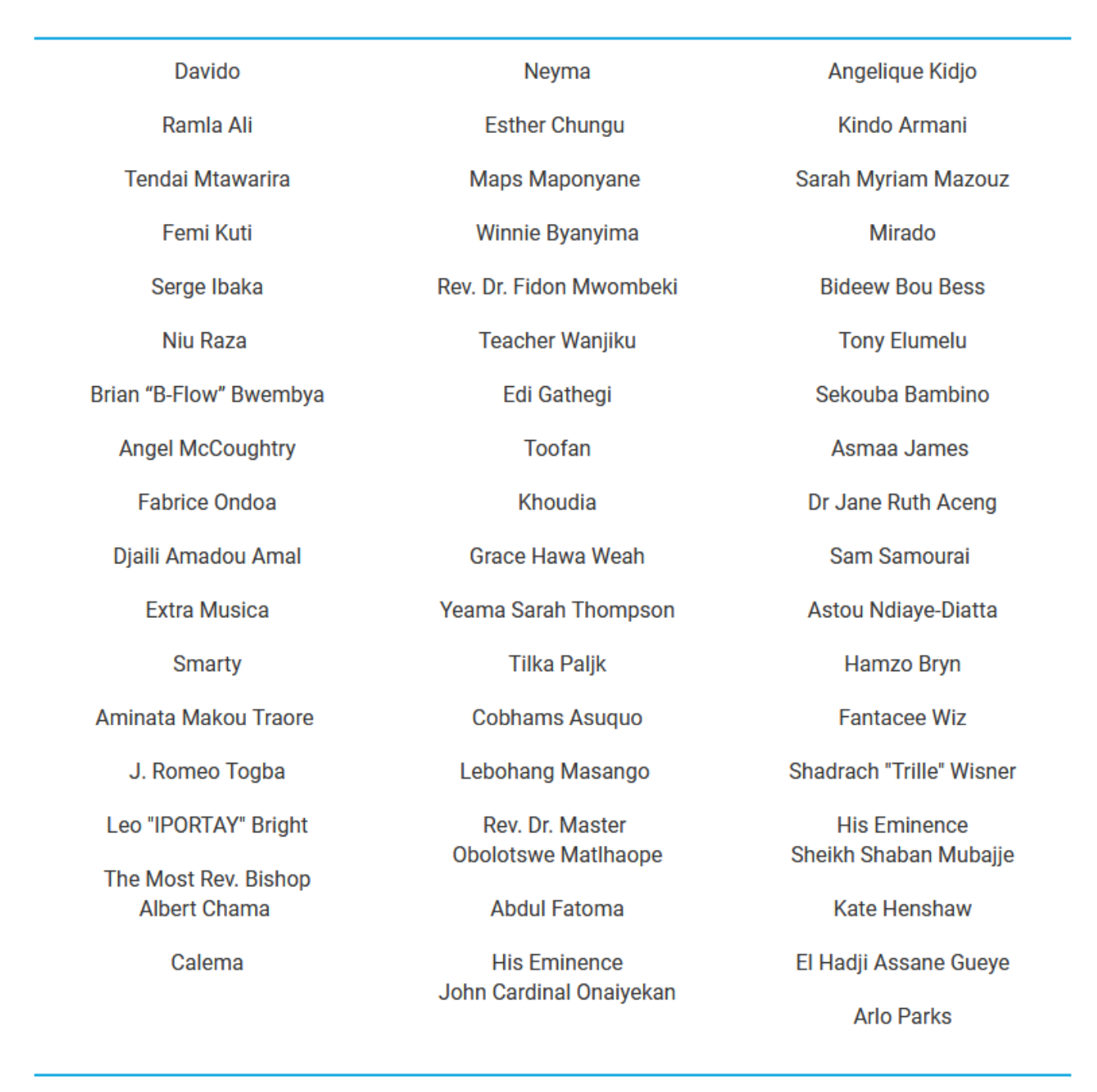
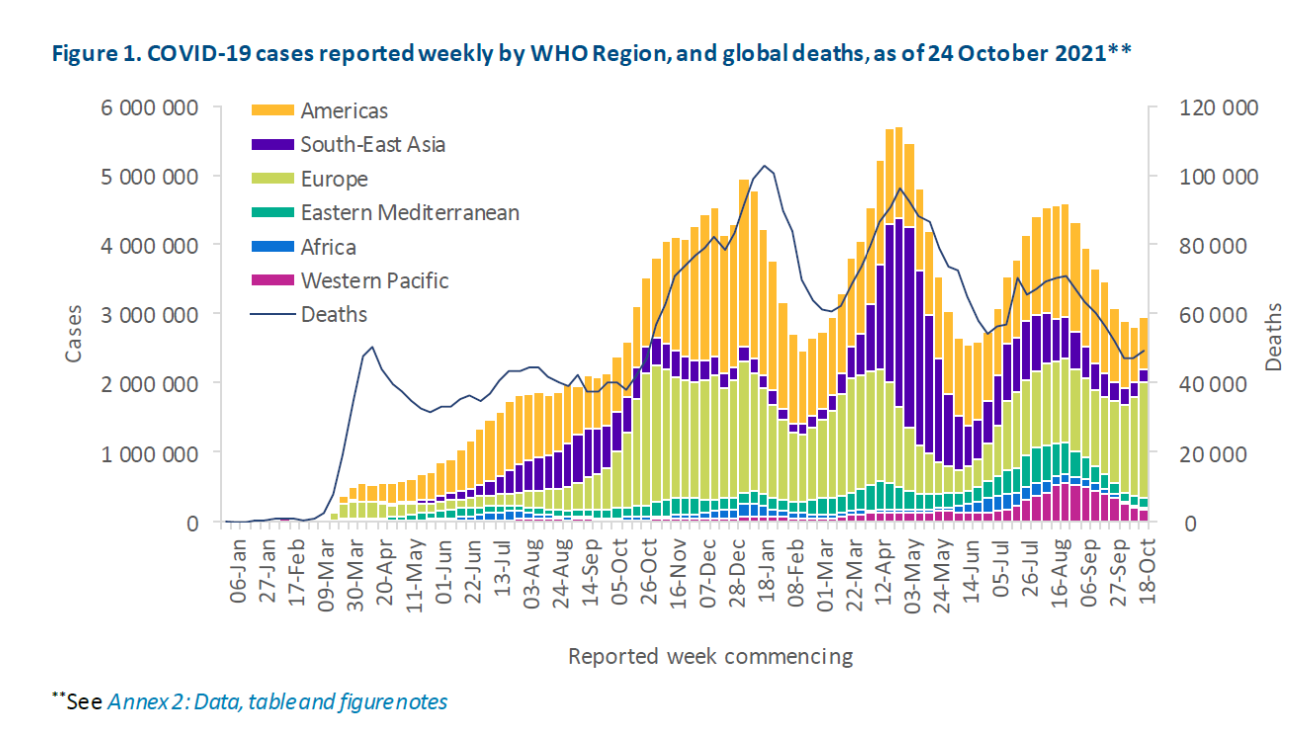
Journal Watch

Journal Watch
Vaccines and Global Health: The Week in Review continues its weekly scanning of key peer-reviewed journals to identify and cite articles, commentary and editorials, books reviews and other content supporting our focu-s on vaccine ethics and policy. Journal Watch is not intended to be exhaustive, but indicative of themes and issues the Center is actively tracking. We selectively provide full text of some editorial and comment articles that are specifically relevant to our work. Successful access to some of the links provided may require subscription or other access arrangement unique to the publisher.
If you would like to suggest other journal titles to include in this service, please contact David Curry at: david.r.curry@centerforvaccineethicsandpolicy.org