Disability inclusion in humanitarian action

Humanitarian Exchange Magazine
Number 78, October 2020
https://odihpn.org/magazine/inclusion-of-persons-with-disabilities-in-humanitarian-action-what-now/


Disability inclusion in humanitarian action
by HPN October 2020
The theme of this edition of Humanitarian Exchange, co-edited with Sherin Alsheikh Ahmed from Islamic Relief Worldwide, is disability inclusion in humanitarian action. Persons with disabilities are not only disproportionately impacted by conflicts, disasters and other emergencies, but also face barriers to accessing humanitarian assistance. At the same time, global commitments and standards and the IASC Guidelines on the inclusion of persons with disabilities in humanitarian action all emphasise how persons with disabilities are also active agents of change. Disability and age-focused organisations have led on testing and demonstrating how inclusion can be done better. Yet despite this progress, challenges to effective inclusion remain.

As Kirstin Lange notes in the lead article, chief among these challenges is humanitarian agencies’ lack of engagement with organisations of persons with disabilities. Simione Bula, Elizabeth Morgan and Teresa Thomson look at disability inclusion in humanitarian response in the Pacific, and Kathy Al Jubeh and Alradi Abdalla argue for a ‘participation revolution’, building on learning from the gender movement. Tchaurea Fleury and Sulayman AbdulMumuni Ujah outline how the Bridge Article 11 training initiative is encouraging constructive exchange between humanitarian and disability actors. The lack of good, disaggregated data is highlighted by Sarah Collinson; Frances Hill, Jim Cranshaw and Carys Hughes emphasise the need for training resources in local languages and accessible formats; and Sophie Van Eetvelt and colleagues report on a review of the evidence on inclusion of people with disabilities and older people.

Rebecca Molyneux and co-authors analyse the findings of a review of a DFID programme in north-east Nigeria, while Carolin Funke highlights the importance of strategic partnerships between disability-focused organisations, drawing on her research in Cox’s Bazar. Sherin Alsheikh Ahmed describes Islamic Relief Worldwide’s approach to mainstreaming protection and inclusion, while Pauline Thivillier and Valentina Shafina outline IRC’s Client Responsive Programming. The edition ends with reflections by Mirela Turcanu and Yves Ngunzi Kahashi on CAFOD’s SADI approach.

The intentions to get vaccinated against influenza and actual vaccine uptake among diabetic patients in Ningbo, China: identifying motivators and barriers

Human Vaccines & Immunotherapeutics (formerly Human Vaccines)
Volume 17, Issue 1, 2021
https://www.tandfonline.com/toc/khvi20/current


Research Paper
Article
The intentions to get vaccinated against influenza and actual vaccine uptake among diabetic patients in Ningbo, China: identifying motivators and barriers
Lixia Ye, Ting Fang, Jun Cui, Guanghui Zhu, Rui Ma, Yexiang Sun, Pingping Li, Hui Li, Hongjun Dong & Guozhang Xu
Pages: 106-118
Published online: 27 May 2020

Analysis of protective immune responses to seasonal influenza vaccination in HIV-infected individuals

Human Vaccines & Immunotherapeutics (formerly Human Vaccines)
Volume 17, Issue 1, 2021
https://www.tandfonline.com/toc/khvi20/current


Article
Analysis of protective immune responses to seasonal influenza vaccination in HIV-infected individuals
Ying Xia, Fuli Mi, Guoqiang Du & Shenghui Qin
Pages: 124-132
Published online: 15 May 2020

Incomplete vaccination and associated factors among children aged 12–23 months in South Africa: an analysis of the South African demographic and health survey 2016

Human Vaccines & Immunotherapeutics (formerly Human Vaccines)
Volume 17, Issue 1, 2021
https://www.tandfonline.com/toc/khvi20/current


Article
Incomplete vaccination and associated factors among children aged 12–23 months in South Africa: an analysis of the South African demographic and health survey 2016
Duduzile Ndwandwe, Chukwudi A. Nnaji, Thandiwe Mashunye, Olalekan A. Uthman & Charles S. Wiysonge
Pages: 247-254
Published online: 23 Jul 2020

Chinese mothers’ intention to vaccinate daughters against human papillomavirus (HPV), and their vaccine preferences: a study in Fujian Province

Human Vaccines & Immunotherapeutics (formerly Human Vaccines)
Volume 17, Issue 1, 2021
https://www.tandfonline.com/toc/khvi20/current


Article
Chinese mothers’ intention to vaccinate daughters against human papillomavirus (HPV), and their vaccine preferences: a study in Fujian Province
Yulan Lin, Zhitai Su, Fulian Chen, Qinjian Zhao, Gregory D. Zimet, Haridah Alias, Shuqiong He, Zhijian Hu & Li Ping Wong
Pages: 304-315
Published online: 13 May 2020

Control of vaccine preventable diseases in Australian infants: reviewing a decade of experience with DTPa-HBV-IPV/Hib vaccine

Human Vaccines & Immunotherapeutics (formerly Human Vaccines)
Volume 17, Issue 1, 2021
https://www.tandfonline.com/toc/khvi20/current


Review
Control of vaccine preventable diseases in Australian infants: reviewing a decade of experience with DTPa-HBV-IPV/Hib vaccine
Julianne Bayliss, Michael Nissen, Damita Prakash, Peter Richmond, Kyu-Bin Oh & Terry Nolan
Pages: 176-190
Published online: 23 Jun 2020

The COVID-19 Pandemic as an Opportunity to Ensure a More Successful Future for Science and Public Health

JAMA
February 9, 2021, Vol 325, No. 6, Pages 507-596
https://jamanetwork.com/journals/jama/currentissue


Viewpoint
Health Policy
The COVID-19 Pandemic as an Opportunity to Ensure a More Successful Future for Science and Public Health
K. M. Venkat Narayan, MD, MSc; James W. Curran, MD, MPH; William H. Foege, MD, MPH
free access has active quiz
JAMA. 2021;325(6):525-526. doi:10.1001/jama.2020.23479
This Viewpoint suggests that the COVID-19 pandemic provides an opportunity to build trust in science and update federal agencies to improve public health and poses questions and offers recommendations for consideration.

Genetic Variants of SARS-CoV-2—What Do They Mean?

JAMA
February 9, 2021, Vol 325, No. 6, Pages 507-596
https://jamanetwork.com/journals/jama/currentissue


Genetic Variants of SARS-CoV-2—What Do They Mean?
Adam S. Lauring, MD, PhD; Emma B. Hodcroft, PhD
free access has active quiz has multimedia has audio
JAMA. 2021;325(6):529-531. doi:10.1001/jama.2020.27124
This Viewpoint discusses emerging genetic variants of SARS-CoV-2, including new “UK” and “mink” variants and the significance of the new variants to coronavirus transmissibility, spread, virulence, and efforts to vaccinate the population against COVID-19.

Mandating COVID-19 Vaccines

JAMA
February 9, 2021, Vol 325, No. 6, Pages 507-596
https://jamanetwork.com/journals/jama/currentissue


Mandating COVID-19 Vaccines
Lawrence O. Gostin, JD; Daniel A. Salmon, MPH, PhD; Heidi J. Larson, PhD
free access has active quiz has audio
JAMA. 2021;325(6):532-533. doi:10.1001/jama.2020.26553
This Viewpoint discusses whether US states, businesses, health care facilities, and schools and universities can mandate vaccination against coronavirus as a condition of employment or service.
…Mandating COVID-19 vaccines under an EUA is legally and ethically problematic. The act authorizing the FDA to issue EUAs requires the secretary of the Department of Health and Human Services (HHS) to specify whether individuals may refuse the vaccine and the consequences for refusal. Vaccine mandates are unjustified because an EUA requires less safety and efficacy data than full Biologics License Application (BLA) approval. Individuals would also likely distrust vaccine mandates under emergency use, viewing it as ongoing medical research…

Conversations with Dr Bauchner: Mandating COVID-19 Vaccines—Ethical and Legal Considerations

Problems With Paying People to Be Vaccinated Against COVID-19

JAMA
February 9, 2021, Vol 325, No. 6, Pages 507-596
https://jamanetwork.com/journals/jama/currentissue


Problems With Paying People to Be Vaccinated Against COVID-19
Emily A. Largent, JD, PhD, RN; Franklin G. Miller, PhD
free access has active quiz
JAMA. 2021;325(6):534-535. doi:10.1001/jama.2020.27121
This Viewpoint describes features of 2 proposals to pay US residents to be vaccinated against COVID-19 and proposes ethical and practical complications of the plans, arguing that they are morally suspect, likely unnecessary, and may be counterproductive.

Urgent needs of low-income and middle-income countries for COVID-19 vaccines and therapeutics

The Lancet
Feb 13, 2021 Volume 397 Number 10274 p555-640, e6
https://www.thelancet.com/journals/lancet/issue/current


Comment
Urgent needs of low-income and middle-income countries for COVID-19 vaccines and therapeutics
Lancet Commission on COVID-19 Vaccines and Therapeutics Task Force Members
WHO and partners have learnt from the mis-steps in the response to the 2009 H1N1 influenza pandemic1 and established the Access to COVID-19 Tools (ACT) Accelerator to promote equitable access to vaccines, therapeutics, and diagnostics.2 However, many high-income countries already have bilateral agreements with manufacturers of COVID-19 vaccines.3 The COVAX Facility of the ACT Accelerator has agreements to access 2 billion doses of WHO pre-qualified vaccines during 2021, but this represents only 20% of the vaccine needs of participating countries.4 Most low-income and middle-income countries (LMICs) face difficulties in accessing and delivering vaccines and therapeutics for COVID-19 to their populations.5 COVAX will require decisive action by Gavi, the Vaccine Alliance, WHO, and the Coalition for Epidemic Preparedness Innovations (CEPI), supported by the countries they serve and with financing for vaccine purchasing, to ensure people worldwide have equitable access to COVID-19 vaccines.678

For 80% of the populations in LMICs that will not benefit from COVAX-provided COVID-19 vaccines, finances for purchase or donations are needed. Government measures in response to COVID-19 and the broader global financial situation have led to increasing fiscal imbalances of heavily indebted countries.9 Multinational agencies, financial institutions, and wealthier countries should consider measures that could provide relief to indebted LMICs. The World Bank, the International Monetary Fund, and others need to lead an international initiative to mobilise support for LMICs in need.

Many LMICs do not have an established platform for vaccinating their adult populations.10 Although it is feasible to deliver COVID-19 vaccines to health-care and other front-line essential workers, in some LMICs it will be difficult to effectively reach and vaccinate with two doses all elderly populations and individuals with co-morbidities, given insufficient mechanisms to identify such groups. Governments and technical leaders will need to use transparent, accountable, and unbiased processes when they make and explain evidence-based vaccine prioritisation decisions, while also building confidence in COVID-19 vaccines and engaging with all the stakeholders.

The ultracold chain requirements of mRNA COVID-19 vaccines are likely to be an insurmountable hurdle in LMICs, outside of major cities. COVID-19 vaccine delivery will require considerable investment of resources, health-care staff, and careful planning to avoid opportunity costs, including a disruption of routine health services and a decline in essential childhood vaccination coverage, which could result in outbreaks of measles and other vaccine-preventable diseases. There were more deaths from measles than Ebola virus disease in 2019 in the aftermath of the Ebola outbreak in the Democratic Republic of the Congo, due to failure to maintain adequate childhood vaccinations.11 The infrastructure for vaccination in many LMICs is already inadequate, as shown by the 19·7 million under-vaccinated infants globally, most of whom are in these countries.12 Thus, preparation for all aspects of COVID-19 vaccine delivery in LMICs must begin now with the support of international partners.

Strengthening the capacity of LMICs to do clinical trials and promoting LMIC participation in research are also crucial.13 More LMICs need to participate in future vaccine trials and in testing the clinical effectiveness of different therapeutic agents to ensure that interventions and implementation are suitable for local contexts.

Tracking the safety and effectiveness of different COVID-19 vaccines over time in various populations and settings will necessitate improvements in pharmacovigilance.14 Regulatory authorities in many LMICs need to be strengthened and could benefit from a programme of national and international support, as well as regional cooperation and reliance mechanisms.15 As part of internationally coordinated actions, COVID-19 technologies should be transferred to LMIC-based manufacturers, accompanied by regulatory guidance. Efforts to boost local manufacturing capacity in LMICs will contribute to equity, global solidarity, and global health security. India and South Africa have called for the suspension of intellectual property rights related to COVID-19 vaccines to improve access for LMICs, a move now supported by many other countries, but opposed by the pharmaceutical industry, which cites the disincentive to innovation.16

There are further challenges. Governments in LMICs with strong private health sectors, as those in high-income countries, will need to manage the inherent potential for inequity, whereby the rich could access COVID-19 vaccines before individuals with less access to private care who may be at increased risk of severe disease and death, such as older people and those with comorbidities. LMICs affected by war, civil conflict, economic crises, or natural disasters, or with large refugee populations or populations with special needs or vulnerabilities need additional support for vaccines and vaccination under extremely difficult operational conditions.

Re-examining global governance structures, including the UN and its Security Council, is much needed so that the voices and interests of billions of people in LMICs are better represented and recognised. Global support to multilateral institutions is essential to sustain their support to LMICs to facilitate vaccinations globally. The COVID-19 pandemic shows that no nation can stand alone. We are all part of a common humanity that requires us to respect our diverse experiences, cultures, and countries and forge partnerships that better serve the interests of all.
[Author conflicts and disclosures at title link above]

Feasibility of Rapidly Developing and Widely Disseminating Patient Decision Aids to Respond to Urgent Decisional Needs due to the COVID-19 Pandemic

Medical Decision Making (MDM)
Volume 41 Issue 2, February 2021
http://mdm.sagepub.com/content/current


Brief Reports
Feasibility of Rapidly Developing and Widely Disseminating Patient Decision Aids to Respond to Urgent Decisional Needs due to the COVID-19 Pandemic
Dawn Stacey, Claire Ludwig, Patrick Archambault, Kevin Babulic, Nancy Edwards, Josée Lavoie, Samir Sinha, Annette M. O’Connor
First Published December 10, 2020; pp. 233–239

A wealth of discovery built on the Human Genome Project — by the numbers

Nature
Volume 590 Issue 7845, 11 February 2021
http://www.nature.com/nature/current_issue.html


Comment | 10 February 2021
A wealth of discovery built on the Human Genome Project — by the numbers
A new analysis traces the story of the draft genome’s impact on genomics since 2001, linking its effects on publications, drug approvals and understanding of disease.
Alexander J. Gates, Deisy Morselli Gysi & Albert-László Barabási

Origins of modern human ancestry

Nature
Volume 590 Issue 7845, 11 February 2021
http://www.nature.com/nature/current_issue.html


Review Article | 10 February 2021
Origins of modern human ancestry
A Review describes the three key phases that define the origins of modern human ancestry, and highlights the importance of analysing both palaeoanthropological and genomic records to further improve our understanding of our evolutionary history.
Anders Bergström, Chris Stringer & Pontus Skoglund

Repurposed Antiviral Drugs for Covid-19 — Interim WHO Solidarity Trial Results

New England Journal of Medicine
February 11, 2021 Vol. 384 No. 6
http://www.nejm.org/toc/nejm/medical-journal


Original Article
Repurposed Antiviral Drugs for Covid-19 — Interim WHO Solidarity Trial Results
WHO Solidarity Trial Consortium
Abstract
Background
World Health Organization expert groups recommended mortality trials of four repurposed antiviral drugs — remdesivir, hydroxychloroquine, lopinavir, and interferon beta-1a — in patients hospitalized with coronavirus disease 2019 (Covid-19).
Methods
We randomly assigned inpatients with Covid-19 equally between one of the trial drug regimens that was locally available and open control (up to five options, four active and the local standard of care). The intention-to-treat primary analyses examined in-hospital mortality in the four pairwise comparisons of each trial drug and its control (drug available but patient assigned to the same care without that drug). Rate ratios for death were calculated with stratification according to age and status regarding mechanical ventilation at trial entry.
Results
At 405 hospitals in 30 countries, 11,330 adults underwent randomization; 2750 were assigned to receive remdesivir, 954 to hydroxychloroquine, 1411 to lopinavir (without interferon), 2063 to interferon (including 651 to interferon plus lopinavir), and 4088 to no trial drug. Adherence was 94 to 96% midway through treatment, with 2 to 6% crossover. In total, 1253 deaths were reported (median day of death, day 8; interquartile range, 4 to 14). The Kaplan–Meier 28-day mortality was 11.8% (39.0% if the patient was already receiving ventilation at randomization and 9.5% otherwise). Death occurred in 301 of 2743 patients receiving remdesivir and in 303 of 2708 receiving its control (rate ratio, 0.95; 95% confidence interval [CI], 0.81 to 1.11; P=0.50), in 104 of 947 patients receiving hydroxychloroquine and in 84 of 906 receiving its control (rate ratio, 1.19; 95% CI, 0.89 to 1.59; P=0.23), in 148 of 1399 patients receiving lopinavir and in 146 of 1372 receiving its control (rate ratio, 1.00; 95% CI, 0.79 to 1.25; P=0.97), and in 243 of 2050 patients receiving interferon and in 216 of 2050 receiving its control (rate ratio, 1.16; 95% CI, 0.96 to 1.39; P=0.11). No drug definitely reduced mortality, overall or in any subgroup, or reduced initiation of ventilation or hospitalization duration.
Conclusions
These remdesivir, hydroxychloroquine, lopinavir, and interferon regimens had little or no effect on hospitalized patients with Covid-19, as indicated by overall mortality, initiation of ventilation, and duration of hospital stay. (Funded by the World Health Organization; ISRCTN Registry number, ISRCTN83971151. opens in new tab; ClinicalTrials.gov number, NCT04315948. opens in new tab.)

Randomized Trial of a Vaccine Regimen to Prevent Chronic HCV Infection

New England Journal of Medicine
February 11, 2021 Vol. 384 No. 6
http://www.nejm.org/toc/nejm/medical-journal


Original Article
Randomized Trial of a Vaccine Regimen to Prevent Chronic HCV Infection
Kimberly Page, Ph.D., M.P.H., et al
…In this trial, the HCV vaccine regimen did not cause serious adverse events, produced HCV-specific T-cell responses, and lowered the peak HCV RNA level, but it did not prevent chronic HCV infection. (Funded by the National Institute of Allergy and Infectious Diseases; ClinicalTrials.gov number, NCT01436357. opens in new tab.)

Active pharmacovigilance of the seasonal trivalent influenza vaccine produced by Instituto Butantan: A prospective cohort study of five target groups

PLoS One
http://www.plosone.org/
[Accessed 13 Feb 2021]


Active pharmacovigilance of the seasonal trivalent influenza vaccine produced by Instituto Butantan: A prospective cohort study of five target groups
Tazio Vanni, Beatriz da Costa Thomé, Mayra Martho Moura de Oliveira, Vera Lúcia Gattás, Maria da Graça Salomão, Marcelo Eiji Koike, Maria Beatriz Bastos Lucchesi, Patrícia Emília Braga, Roberta de Oliveira Piorelli, Juliana Yukari Koidara Viscondi, Gabriella Mondini, Anderson da Silva, Heloísa Maximo Espínola, Joane do Prado Santos, Samanta Hosokawa Dias de Nóvoa Rocha, Lily Yin Weckx, Olga Menang, Muriel Soquet, Alexander Roberto Precioso
Research Article | published 11 Feb 2021 PLOS ONE
https://doi.org/10.1371/journal.pone.0246540

Knowledge, attitudes, and practices of seasonal influenza vaccination in postpartum women, Honduras

PLoS One
http://www.plosone.org/
[Accessed 13 Feb 2021]


Knowledge, attitudes, and practices of seasonal influenza vaccination in postpartum women, Honduras
Zachary J. Madewell, Rafael Chacón-Fuentes, Jorge Jara, Homer Mejía-Santos, Ida-Berenice Molina, Juan Pablo Alvis-Estrada, Rosa Coello-Licona, Belinda Montejo
Research Article | published 11 Feb 2021 PLOS ONE
https://doi.org/10.1371/journal.pone.0246385

Knowledge, attitudes, and practices of seasonal influenza vaccination among older adults in nursing homes and daycare centers, Honduras

PLoS One
http://www.plosone.org/
[Accessed 13 Feb 2021]


Knowledge, attitudes, and practices of seasonal influenza vaccination among older adults in nursing homes and daycare centers, Honduras
Zachary J. Madewell, Rafael Chacón-Fuentes, Jorge Jara, Homer Mejía-Santos, Ida-Berenice Molina, Juan Pablo Alvis-Estrada, Raul Espinal
Research Article | published 11 Feb 2021 PLOS ONE
https://doi.org/10.1371/journal.pone.0246382

The epidemiologic and economic impact of a quadrivalent human papillomavirus vaccine in Thailand

PLoS One
http://www.plosone.org/
[Accessed 13 Feb 2021]


The epidemiologic and economic impact of a quadrivalent human papillomavirus vaccine in Thailand
Wichai Termrungruanglert, Nipon Khemapech, Apichai Vasuratna, Piyalamporn Havanond, Preyanuch Deebukkham, Amit Sharad Kulkarni, Andrew Pavelyev
Research Article | published 11 Feb 2021 PLOS ONE
https://doi.org/10.1371/journal.pone.0245894

Determinants of vaccination dropout among children 12-23 months age in north Gondar zone, northwest Ethiopia, 2019

PLoS One
http://www.plosone.org/
[Accessed 13 Feb 2021]


Determinants of vaccination dropout among children 12-23 months age in north Gondar zone, northwest Ethiopia, 2019
Muluken Genetu Chanie, Gojjam Eshetie Ewunetie, Asnakew Molla, Amare Muche
Research Article | published 08 Feb 2021 PLOS ONE
https://doi.org/10.1371/journal.pone.0246018

Cell-phone traces reveal infection-associated behavioral change

PNAS – Proceedings of the National Academy of Sciences of the United States of America
February 09, 2021; vol. 118 no. 6
https://www.pnas.org/content/118/6


Population Biology
Open Access
Cell-phone traces reveal infection-associated behavioral change
Ymir Vigfusson, Thorgeir A. Karlsson, Derek Onken, Congzheng Song, Atli F. Einarsson, Nishant Kishore, Rebecca M. Mitchell, Ellen Brooks-Pollock, Gudrun Sigmundsdottir, and Leon Danon
PNAS February 9, 2021 118 (6) e2005241118; https://doi.org/10.1073/pnas.2005241118
Significance
Infectious disease control critically depends on surveillance and predictive modeling of outbreaks. We argue that routine mobile-phone use can provide a source of infectious disease information via the measurements of behavioral changes in call-detail records (CDRs) collected for billing. In anonymous CDR metadata linked with individual health information from the A(H1N1)pdm09 outbreak in Iceland, we observe that people moved significantly less and placed fewer, but longer, calls in the few days around diagnosis than normal. These results suggest that disease-transmission models should explicitly consider behavior changes during outbreaks and advance mobile-phone traces as a potential universal data source for such efforts.

Strengthen scientific integrity under the Biden administration

Science
12 February 2021 Vol 371, Issue 6530
http://www.sciencemag.org/current.dtl


Policy Forum
Strengthen scientific integrity under the Biden administration
By Jacob M. Carter, Gretchen T. Goldman, Andrew A. Rosenberg, Genna Reed, Anita Desikan, Taryn MacKinney
Science12 Feb 2021 : 668-671 Restricted Access
Accountability must extend to highest levels of leadership
Summary
At his victory speech on 7 November 2020, U.S. president Joseph R. Biden described that the will of the people was in part to “marshal the forces of science.” He declared that his plans to beat the novel coronavirus would be built on a bedrock of science. On 27 January, the Biden administration issued a presidential memorandum to strengthen scientific integrity and evidence-based decision-making (1). These are great steps to bring science back to the table, but the administration still has a lot of work ahead to improve the role of science in government decision-making. The records of abuses of the past 4 years and data from surveys provide evidence that under the Trump administration, scientists were censored, scientific information was ignored, and reports and publications were unduly suppressed—all actions that undermined the appropriate use of science in decision-making processes. This occurred despite many federal agencies already having scientific integrity policies, communications policies, and well-established science advisory systems in place to promote an appropriate role for science in agency decision-making. But from these setbacks, we can draw lessons and suggest a road map for moving forward.

Advancing innovation for vaccine manufacturers from developing countries: Prioritization, barriers, opportunities

Vaccine
Volume 39, Issue 8 Pages 1173-1358 (22 February 2021)
https://www.sciencedirect.com/journal/vaccine/vol/39/issue/8


Short communication Open access
Advancing innovation for vaccine manufacturers from developing countries: Prioritization, barriers, opportunities
Benoit Hayman, Alex Bowles, Beth Evans, Elizabeth Eyermann, … Sonia Pagliusi
Pages 1190-1194

Potential impact of COVID-19 pandemic on vaccination coverage in children: A case study of measles-containing vaccine administration in the United States (US)

Vaccine
Volume 39, Issue 8 Pages 1173-1358 (22 February 2021)
https://www.sciencedirect.com/journal/vaccine/vol/39/issue/8


Short communication Full text access
Potential impact of COVID-19 pandemic on vaccination coverage in children: A case study of measles-containing vaccine administration in the United States (US)
Cristina Carias, Manjiri Pawaskar, Mawuli Nyaku, James H. Conway, … Ya-Ting Chen
Pages 1201-1204

Economic analysis for national immunization program planning: A case of rotavirus vaccines in Burundi

Vaccine
Volume 39, Issue 8 Pages 1173-1358 (22 February 2021)
https://www.sciencedirect.com/journal/vaccine/vol/39/issue/8


Research article Abstract only
Economic analysis for national immunization program planning: A case of rotavirus vaccines in Burundi
Fulgence Niyibitegeka, Arthorn Riewpaiboon, Sitaporn Youngkong, Montarat Thavorncharoensap
Pages 1272-1282

A reactive vaccination campaign with single dose oral cholera vaccine (OCV) during a cholera outbreak in Cameroon

Vaccine
Volume 39, Issue 8 Pages 1173-1358 (22 February 2021)
https://www.sciencedirect.com/journal/vaccine/vol/39/issue/8


Research article Abstract only
A reactive vaccination campaign with single dose oral cholera vaccine (OCV) during a cholera outbreak in Cameroon
Adidja Amani, Collins A. Tatang, Christian N. Bayiha, Marcel Woung, … Emmanuel Epee Douba
Pages 1290-1296

Rotavirus Vaccination of Infants Delayed and Limited within the National Immunization Programme in the Netherlands: An Opportunity Lost

Vaccines — Open Access Journal
http://www.mdpi.com/journal/vaccines
(Accessed 13 Feb 2021)


Open Access Article
Rotavirus Vaccination of Infants Delayed and Limited within the National Immunization Programme in the Netherlands: An Opportunity Lost
by Florian Zeevat, Evgeni Dvortsin, Abrham Wondimu, Jan C. Wilschut, Cornelis Boersma and Maarten J. Postma
Vaccines 2021, 9(2), 144; https://doi.org/10.3390/vaccines9020144 (registering DOI) – 10 Feb 2021
Abstract
In this study, we estimated the benefits of rotavirus vaccination for infants had the rotavirus vaccine been introduced in the Netherlands as of its market authorization in 2006. An age-structured, deterministic cohort model was developed to simulate different birth cohorts over a period…

Media/Policy Watch

Media/Policy Watch
This watch section is intended to alert readers to substantive news, analysis and opinion from the general media and selected think tanks and similar organizations on vaccines, immunization, global public health and related themes. Media Watch is not intended to be exhaustive, but indicative of themes and issues CVEP is actively tracking. This section will grow from an initial base of newspapers, magazines and blog sources, and is segregated from Journal Watch above which scans the peer-reviewed journal ecology.
We acknowledge the Western/Northern bias in this initial selection of titles and invite suggestions for expanded coverage. We are conservative in our outlook in adding news sources which largely report on primary content we are already covering above. Many electronic media sources have tiered, fee-based subscription models for access. We will provide full-text where content is published without restriction, but most publications require registration and some subscription level.


The Atlantic
http://www.theatlantic.com/magazine/
Accessed 13 Feb 2021
Ideas
How to Beat the Pandemic by Summer
Averting a wave of new COVID-19 fatalities could require some dramatic, untested, and controversial strategies.
13 Feb 2021
Derek Thompson Staff writer at The Atlantic
After nearly a year of social isolation and sacrifice in the long war on COVID-19, the end stage of the pandemic is finally in sight. Millions of Americans are being vaccinated each week, and the number of coronavirus-related hospitalizations in the United States has plunged by more than 40 percent in the past month.
But this final stage will still be lethal—perhaps more so than most people imagine. More Americans were reported dead of COVID-19 on Friday, February 5, than on any day in all of 2020. The U.S. is still on pace to have more than 80,000 COVID-19 fatalities a month. Meanwhile, variants of the coronavirus that emerged in the United Kingdom, Brazil, and South Africa are spreading quickly. These variants are more contagious and more deadly than the original virus, and they threaten to stall or even reverse our progress.
“If we don’t accelerate the pace of vaccinations, we’re looking at an apocalypse,” says Peter Hotez, a vaccine scientist at Baylor College of Medicine. “We’ve got to figure out a way to get ahead of the variants to avoid 1 million deaths by the end of this year.”…

Health
What If We Never Reach Herd Immunity?
Hitting the threshold might actually be impossible. But vaccines can still help end the pandemic.
Sarah Zhang, February 9, 2021


BBC
http://www.bbc.co.uk/
Accessed 13 Feb 2021
HARDtalk
Kirill Dmitriev: Russia’s Sputnik V a vaccine for humankind?
Kirill Dmitriev, head of a ten billion dollar sovereign wealth fund which backed Sputnik V, on Russia’s willingness to share its vaccine in the global fight against Covid19
15 February 2021 :: Audio – 23 minutes

Covid: Oxford-AstraZeneca vaccine to be tested on children
13 Feb 2021
A new trial is to test how well the Oxford-AstraZeneca coronavirus vaccine works in children.
Some 300 volunteers will take part, with the first vaccinations in the trial taking place later in February.
Researchers will assess whether the jab produces a strong immune response in children aged between six and 17.
The vaccine is one of two being used to protect against serious illness and death from Covid in the UK, along with the Pfizer-BioNTech jab.
As many as 240 children will receive the vaccine – and the others a control meningitis jab – when the trial gets under way…


The Economist
http://www.economist.com/
Accessed 13 Feb 2021
Feb 13th 2021
How well will vaccines work?
Covid-19 may become endemic. Governments need to start thinking about how to cope
EVEN MIRACLES have their limits. Vaccines against the coronavirus have arrived sooner and worked better than many people dared hope. Without them, the pandemic threatened to take more than 150m lives. And yet, while the world rolls up a sleeve, it has become clear that expecting vaccines to see off covid-19 is mistaken. Instead the disease will circulate for years, and seems likely to become endemic.

Fear, uncertainty and doubt
Vaccine hesitancy is putting progress against covid-19 at risk
If the world is to tame the virus, the doubts will need to be fought

Vaccine efficacy
When covid-19 vaccines meet the new variants of the virus
A lot depends on blocking transmission not just disease


Financial Times
https://www.ft.com/
Accessed 13 Feb 2021
Covid-19 vaccines
Can Covax deliver the vaccines much of the world needs?
February 12, 2021

Coronavirus Business Update
Developing world struggles to get its share of Covid vaccines
February 12, 2021

Why the world needs a Covid-19 exit strategy
The public needs to know when, how and how quickly restrictions will be lifted
The editorial board
February 12, 2021
February is one of the busiest months of the year for travel bookings in the northern hemisphere. Families plan how they will spend their summer holidays and try to grab a bargain spot in the sun. Not this year, however. The uncertainty over how long coronavirus restrictions will remain in place means that while some have taken a risk and booked a break, most are sitting on the sidelines, unsure of what to do. This confusion is emblematic of the wider uncertainties that exist over the reopening of economies. Tired of severe curbs of civil liberties — which have lasted far longer than most anticipated — many people are asking when governments will finally set out a path for life to return to something like normal, how it will happen, and how fast.

This anxiety has only been heightened in recent weeks by signs that in some cases restrictions, instead of easing as lockdowns take effect, are in fact being toughened to guard against more infectious and possibly more deadly new mutations of the virus. In the UK, tough border controls will take effect from Monday for people arriving in the country, including jail terms for those offending. Germany is poised to reinstate border controls with some areas of Austria and the Czech Republic, while in Australia the state of Victoria has announced a snap five-day lockdown after an outbreak.

A global, well-funded vaccination campaign is the only way to end the pandemic for good. But despite relatively high inoculation rates in some countries, it is now clear that vaccinating enough people to achieve herd immunity will take much longer than hoped. Covax, the global initiative to distribute vaccines equitably, aims to deliver at least 2bn doses by the end of this year but that will not cover much more than a third of its target population. The new variants mean that some of the measures we have become accustomed to during lockdown will have to stay in place for some time. While some curbs on freedom will be accepted, others — bans on foreign travel and on seeing family and friends — cannot be tolerated indefinitely. A point will come where the public will rebel against restrictions that make life unbearably bleak. In the UK, scientific advisers are calling for a debate on the terms of allowing a “big wave of infection”.

The solution is for politicians to provide as much certainty as is possible. They must make it clear what will trigger the lifting of restrictions and what will not be possible in the short-to-medium term. In the UK, the government has so far produced little evidence of the costs and benefits of current restrictions. Priorities must be set, supported by appropriate economic and epidemiological modelling. Concern is rife over the impact of the lockdowns on young people and the loss of education. Reopening schools must therefore be a priority. Teachers will need to be vaccinated. Fast testing and accurate and quick contact tracing is critical. How to reboot travel must also be a consideration. For this to happen, vaccination passports would be essential, but with the aim of facilitating travel, not prohibiting travel. A recent policy document proposes that areas in Europe where the virus has been eliminated are declared green zones in which civil liberties are restored. These zones expand as more regions achieve elimination. Such an approach, while appealing, will require careful, global co-ordination.

The pandemic has severely damaged economies and societies. As far as is scientifically possible, the public deserves to know the route out of current restrictions. It is time for politicians to play their part and move from crisis response to forward planning.

Opinion Coronavirus pandemic
Another pandemic need never happen
Today’s technology is such that scientists can credibly make this claim for the first time in history
Richard Hatchett
The writer is chief executive of the Coalition for Epidemic Preparedness Innovations
… Humankind cannot prevent viruses from jumping the species barrier and on to humans. But with the right research and development investments, and a deliberate focus on eliminating barriers to rapid vaccine development, I believe we can eliminate the risk of a pandemic with the impact of Covid-19 from occurring again. It might cost tens of billions of dollars. But as a global insurance policy, that has got to be a bargain.

The Big Read Covid-19 vaccines
Vaccines vs variants: the race to immunise the developing world
The spread of new Covid strains has made it even more urgent to launch rapid vaccination programmes in poorer countries
David Pilling in London, Stephanie Findlay in New Delhi and Bryan Harris in São Paulo
February 11 2021

Opinion Coronavirus treatment
The west should pay attention to Russia and China’s vaccine diplomacy
Beijing and Moscow are using jabs to court poorer nations — but the EU and US are barely noticing Anne-Sylvaine Chassan
February 10 2021

Coronavirus pandemic
WHO dismisses coronavirus lab leak theory as ‘extremely unlikely’
Scientists visiting Chinese city of Wuhan conclude that bats were most plausible source of virus
Christian Shepherd in Beijing
February 9 2021

Top of Form
Bottom of Form


Forbes
http://www.forbes.com/
Accessed 13 Feb 2021
Editors’ Pick  |  
13 Feb 2021
Why Vaccine Passports Are ‘Inevitable,’ Explained By Tony Blair
The former British Prime Minister says they are the fastest way back to normal.
By Suzanne Rowan Kelleher Forbes Staff


Foreign Affairs
http://www.foreignaffairs.com/
Accessed 13 Feb 2021
[No new, unique, relevant content]


Foreign Policy
http://foreignpolicy.com/
Accessed 13 Feb 2021
Argument
Why Europe Is Falling Behind on Vaccines
It’s a perfect storm of under procurement, overzealous regulators, and anti-vaccine populations.
By Eyck Freymann, Elettra Ardissino
| February 8, 2021, 12:02 PM


The Guardian
http://www.guardiannews.com/
Accessed 13 Feb 2021
[No new, unique, relevant content]


New Yorker
http://www.newyorker.com/
Accessed 13 Feb 2021
Our Local Correspondents
Andrew Cuomo’s Refusal to Vaccinate Inmates Is Indefensible
A new lawsuit argues that withholding the COVID-19 vaccine from New York’s prisoners puts lives in danger, threatens public health, and endangers civil rights.
By Eric Lach 13 Feb 2021


New York Times
http://www.nytimes.com/
Accessed 13 Feb 2021
World
California extends vaccine eligibility to people with disabilities after backlash.
The state will extend Covid-19 vaccinations to people over 16 who are debilitated or immunocompromised by cancer and other diseases and chronic conditions.
By Shawn Hubler Feb 12

Europe
With the Economy on the Ropes, Hungary Goes All In on Mass Vaccination
Hungary became the first European Union country to administer Russia’s Sputnik vaccine, and will soon start with one from China — posing a challenge to the bloc’s joint vaccination strategy.
By Benjamin Novak Feb 12

U.S.
‘Open season’ for vaccine eligibility could come in April, Fauci says.
Dr. Anthony Fauci said most members of the general public could become eligible to get the vaccine in April, but it would take “several more months” after that to distribute shots.
By Jacey Fortin Feb 11

World
Vaccines are the new diplomatic currency, and other news from around the world.
By Mujib Mashal and Vivian Yee Feb 11


Washington Post
https://www.washingtonpost.com/
Accessed 13 Feb 2021
Lack of health services and transportation impede access to vaccine in communities of color
Akilah Johnson · Health · Feb 13, 2021

Brazil governors seek own vaccine supplies as stocks run low
Feb 13, 2021
SAO PAULO — Brazilian state governors are pursuing their own vaccine supply plans, with some expressing concern that President Jair Bolsonaro’s government won’t deliver the shots required to avoid interrupting immunization efforts.
Governors are under pressure from mayors, some of whose vaccine stocks have already been depleted, including three cities in the metropolitan area of Rio de Janeiro. Northeastern Bahia state’s capital Salvador suspended vaccination on Thursday because supplies are dwindling. Brazil’s two biggest cities, Rio and Sao Paulo, are expected to be without shots in a matter of days…

Biden says 300 million Americans can be vaccinated by July
National · Feb 11, 2021
Think Tanks et al

Think Tanks et al

Brookings
http://www.brookings.edu/
Accessed 13 Feb 2021
Up Front
Rich countries have a moral obligation to help poor countries get vaccines, but catastrophic scenarios are overrated
Dany Bahar
Thursday, February 11, 2021
 
 
News Release
Brookings and Tsinghua University host high-level roundtable on US-China collaboration on COVID-19 prevention and treatment
Wednesday, February 10, 2021
 
 
Center for Global Development [to 13 Feb 2021]
http://www.cgdev.org/page/press-center
Publication
A COVID Vaccine Certificate: Building on Lessons from Digital ID for the Digital Yellow Card
2/11/21
COVID-19 vaccination efforts are well and truly underway across the world. In addition to those in Europe and North America, vaccination campaigns are gathering pace across China, India, Russia, and the Middle East, though lagging in many other, mostly poor, countries. As more start scaling up their own programs and the number of vaccinated people increases over the coming year, a COVID Vaccine Certificate is likely to become an important tool to help monitor and manage the rollout of vaccinations and get national economies back on track.

February 10, 2021
Release COVID-19 Vaccine Contracts
Drugs created with billions in government support, bought almost exclusively by governments and international agencies are shrouded in secrecy: who is paying how much for delivery of what by when is a matter of guesswork and estimate.
Charles Kenny
 
 
Chatham House [to 13 Feb 2021]
https://www.chathamhouse.org/
Accessed 13 Feb 2021
Expert Comment 11 February 2021
Time to Clamp Down on Dangers of Vaccine Nationalism
Scientific breakthroughs are not enough, pharmaceutical companies and political leaders must ensure vital commodities reach everyone. But they are failing.
Robert Yates, Director, Global Health Programme; Executive Director, Centre for Universal Health


CSIS
https://www.csis.org/
Accessed 13 Feb 2021
Commentary
Build Back Better: Next Steps for Africa’s Response to Covid-19
February 12, 2021 | By Laird Treiber
 
 
On Demand Event
Online Event: A Global Approach to Covid-19 Vaccination
February 10, 2021


Council on Foreign Relations
http://www.cfr.org/
Accessed 13 Feb 2021
February 11, 2021
Cybersecurity
The Dysfunctional Vaccine Rollout Is Creating Even More Opportunities for Cybercriminals
It is time for authorities to partner with platforms for safer, more efficient scheduling and ensure that every appointment goes to someone who will use it.
Blog Post by Guest Blogger for Net Politics


Kaiser Family Foundation
https://www.kff.org/search/?post_type=press-release
Accessed 13 Feb 2021
February 12, 2021 News Release
Reasons Vary Why People Want to “Wait and See” Before Getting a COVID-19 Vaccine.
Nearly a third (31%) of the public says they want to “wait and see” how a COVID-19 vaccine works for others before they would get it, representing a critical group for efforts aimed at boosting vaccinations. The latest analysis from the KFF COVID-19 Vaccine Monitor highlights how attitudes differ by…

February 8, 2021 News Release
At This Early Stage of the COVID-19 Vaccine Roll-Out, Most Older Adults Have Not Yet Been Vaccinated As Supply Remains Limited
With the COVID-19 vaccination rollout still in its early stages, a KFF analysis finds that most older adults have not yet been vaccinated against the potentially deadly virus, as vaccine supplies remain limited and most states have only recently begun to make people 65 and older eligible. Since January 12,…

February 8, 2021 News Release
In Their Own Words: What People are Saying about Getting a COVID-19 Vaccine
As the country broadens COVID-19 vaccine distribution efforts, the latest research from the KFF COVID-19 Vaccine Monitor finds that side effects, including allergic reactions and long-term consequences, are the public’s top concern about getting vaccinated when asked to describe what worries them in their own words. The latest report from…
 
 
World Economic Forum [to 13 Feb 2021]
https://agenda.weforum.org/news/
Media
[No new relevant content]

Vaccines and Global Health: The Week in Review :: 6 February 2021

Vaccines and Global Health: The Week in Review is a weekly digest  summarizing news, events, announcements, peer-reviewed articles and research in the global vaccine ethics and policy space. Content is aggregated from key governmental, NGO, international organization and industry sources, key peer-reviewed journals, and other media channels. This summary proceeds from the broad base of themes and issues monitored by the Center for Vaccine Ethics & Policy in its work: it is not intended to be exhaustive in its coverage. You are viewing the blog version of our weekly digest, typically comprised of between 30 and 40 posts below all dated with the current issue date

.– Request an Email Summary: Vaccines and Global Health : The Week in Review is published as a single email summary, scheduled for release each Saturday evening before midnight (EDT in the U.S.). If you would like to receive the email version, please send your request to david.r.curry@centerforvaccineethicsandpolicy.org.

– pdf version A pdf of the current issue is available here: 

– blog edition: comprised of the approx. 35+ entries posted below.

– Twitter:  Readers can also follow developments on twitter: @vaxethicspolicy.
.
– Links:  We endeavor to test each link as we incorporate it into any post, but recognize that some links may become “stale” as publications and websites reorganize content over time. We apologize in advance for any links that may not be operative. We believe the contextual information in a given post should allow retrieval, but please contact us as above for assistance if necessary.

Support this knowledge-sharing service: Your financial support helps us cover our costs and to address a current shortfall in our annual operating budget. Click here to donate and thank you in advance for your contribution.

.
David R. Curry, MS
Executive Director
Center for Vaccine Ethics and Policy

Coronavirus [COVID-19] – WHO

Milestones :: Perspectives :: Research


Coronavirus [COVID-19] – WHO
Public Health Emergency of International Concern (PHEIC)
https://www.who.int/emergencies/diseases/novel-coronavirus-2019


Weekly Epidemiological and Operational updates
Last update: 23 January 2021
Confirmed cases :: 104 956 439 [week ago: 101 561 219] [two weeks ago: 96 877 399]
Confirmed deaths :: 2 290 488 [week ago: 2 196 9440 [two weeks ago: 2 098 879]
Countries, areas or territories with cases :: 223


Weekly epidemiological update – 2 February 2021
Overview
Globally, just under 3.7 million new cases were reported in the past week, a decline of 13% from last week, and the number of new deaths reported was over 96 000, comparable to the previous week. This brings the cumulative numbers to over 102.1 million reported cases and over 2.2 million deaths globally since the start of the pandemic.
In this edition of the COVID-19 Weekly Epidemiological Update, special focus updates are provided on: COVID-19 and health workers, as well as on SARS-CoV-2 variants of concern.


Weekly operational update on COVID-19 – 1 February 2021
Key Figures
:: WHO-led UN Crisis-Management Team coordinating 23 UN entities across nine areas of work
:: 145 GOARN deployments conducted to support COVID-19 pandemic response
:: 8 540 231 face shields shipped globally
:: 6 713 379 gowns shipped globally
:: 35 821 900 gloves shipped globally
:: 197 343 426 medical masks shipped globally
:: 19 948 965 respirators shipped globally
:: More than 2.5 million people registered on OpenWHO and able to access 25 topical courses in 44 languages


::::::

Extraordinary meeting of the Strategic Advisory Group of Experts on Immunization (SAGE) – 8 February 2021
8 February 2021
This extraordinary virtual meeting for the Strategic Advisory Group of Experts on Immunization (SAGE) is scheduled on Monday 8 February 2021 to propose recommendations to WHO on the use of COVID-19 vaccine(s). [AstraZeneca COVID-19 vaccine – AZD1222]

Coronavirus (COVID-19) Vaccinations

Milestones :: Perspectives :: Research


Our World in Data
Coronavirus (COVID-19) Vaccinations
Our World in Data and the SDG-Tracker are collaborative efforts between researchers at the University of Oxford, who are the scientific editors of the website content; and the non-profit organization Global Change Data Lab, who publishes and maintains the website and the data tools that make our work possible. At the University of Oxford we are based at the Oxford Martin Programme on Global Development.
Research and data: Hannah Ritchie, Esteban Ortiz-Ospina, Diana Beltekian, Edouard Mathieu, Joe Hasell, Bobbie Macdonald, Charlie Giattino, and Max Roser
Web development: Breck Yunits, Ernst van Woerden, Daniel Gavrilov, Matthieu Bergel, Shahid Ahmad, Jason Crawford, and Marcel Gerber

COVAX

Milestones :: Perspectives :: Research


COVAX

COVAX publishes first interim distribution forecast
Geneva/Oslo/New York, 3 February 2021 – The Coalition for Epidemic Preparedness Innovations (CEPI), Gavi, the Vaccine Alliance and the World Health Organisation, as co-leads of the COVAX initiative for equitable global access to COVID-19 vaccines, alongside key delivery partner UNICEF, are pleased to publish COVAX’s first interim distribution forecast.

Building on the publication of the 2021 COVAX global and regional supply forecast, the interim distribution forecast provides information on early projected availability of doses of the Pfizer/BioNTech vaccine in Q1 2021 and the AstraZeneca/Oxford vaccine candidate in first half 2021 to COVAX Facility participants. This announcement comes less than two weeks after the announcement of the signed advance purchase agreement with Pfizer/BioNTech and a little more than a month after the first COVID-19 vaccine received WHO Emergency Use Listing (EUL) approval.

The purpose of sharing the interim distribution with countries, even in today’s highly dynamic global supply environment, is to provide governments and health systems with the information they need to plan for their national vaccination programmes. Final allocations will be published in due course.

The interim distribution forecast outlines projected delivery of vaccine doses to all Facility participants, with the exception of participants who have either exercised their rights to opt-out, have not submitted vaccine requests, or have not yet been allocated doses.

THE COVAX FACILITY: INTERIM DISTRIBUTION FORECAST– latest as of 3 February2021
Classified as Internal
[Excerpts]
INTRODUCTION
In line with initial guidance delivered on 22 January, and building on the publication of the 2021 COVAX global and regional supply forecast, the COVAX Facility is pleased to share the following forecast on early availability of doses of the Pfizer-BioNTech vaccine and the AstraZeneca/Oxford vaccine to Facility participants, subject the caveats listed below.

This document contains information on indicative distribution of 240 million doses of the AstraZeneca/Oxford vaccine, licensed to Serum Institute of India (SII) –hereinafter “AZ/SII” and 96 million doses of the AstraZeneca/Oxford vaccine, under the advance purchase agreement between Gavi, the Vaccine Alliance and AstraZeneca –hereinafter “AZ”, for Q1& Q2 2021.

It also contains an overview of exceptional first round allocation of1.2 million doses of the WHO Emergency Use Listing (EUL)-approved Pfizer-BioNTech vaccine – hereinafter “Pfizer-BioNTech”, for Q1 2021.

It is important to note additional doses of both these products will be available to the COVAX Facility in 2021…

PFIZER-BIONTECH VACCINE: EXCEPTIONAL FIRST ROUND DISTRIBUTION, Q1 2021
Overview of the Process
COVAX currently anticipates 1.2 million doses of the Pfizer-BioNTech vaccine will be available to the COVAX Facility in Q1 2021, subject to the completion of additional agreements, and will be complemented by the larger volumes of the AstraZeneca/Oxford vaccine available to the Facility during the same time period. Additional volumes of doses of the Pfizer-BioNTech vaccine will be available in the second quarter and beyond, per the signed advance purchase agreement between Gavi and Pfizer-BioNTech for up to 40 million doses.

As a result, an exceptional process of distribution was undertaken to ensure maximum public health benefit from the smaller volume of doses of the Pfizer-BioNTech vaccine anticipated to be available for Q1delivery.All future allocation rounds will follow the standard Facility approach…

OVERVIEW BY FACILITY PARTICIPANT
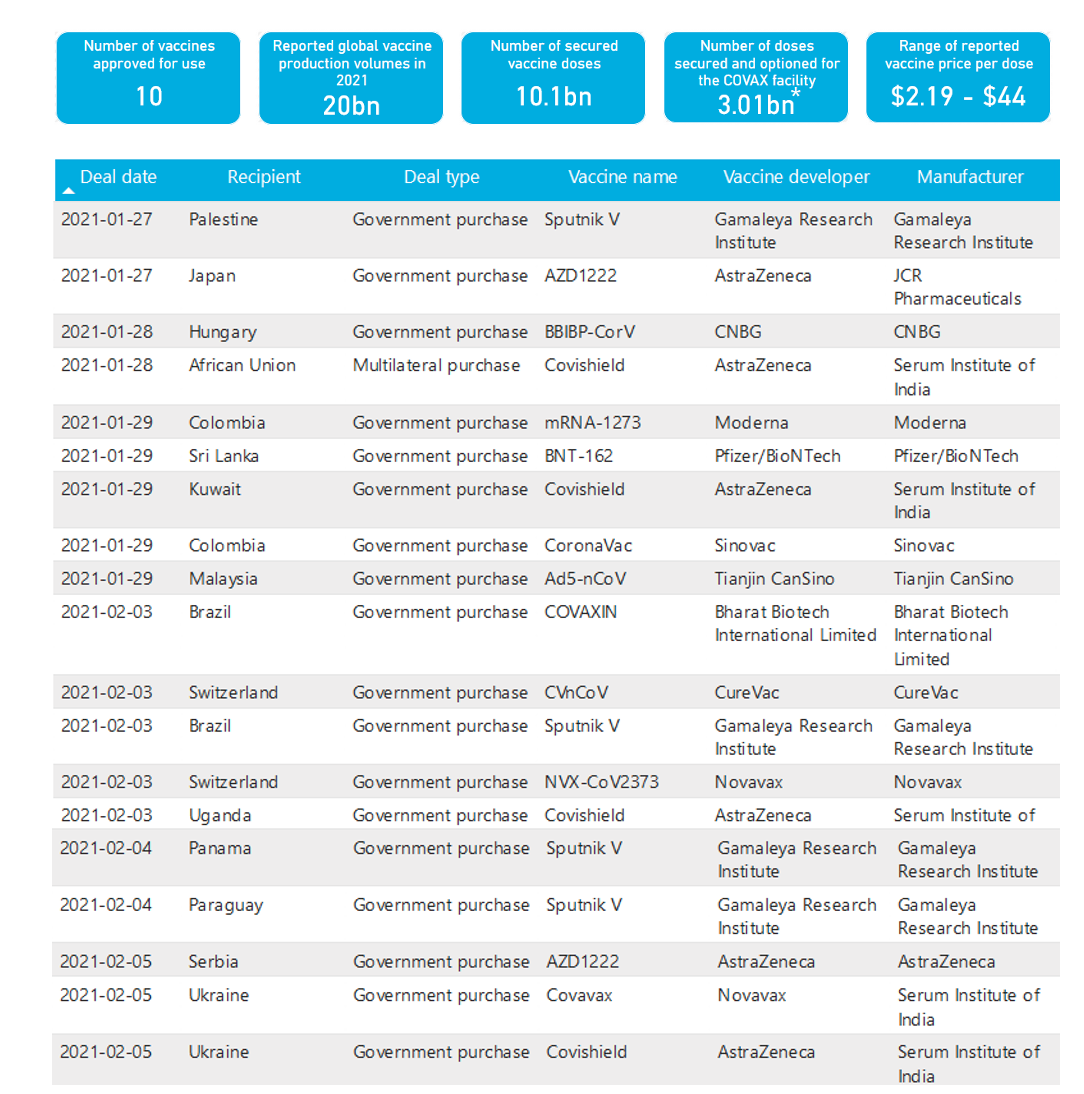
Total doses cover, on average, 3.3% of the total population of the 145 participants receiving doses from at least one manufacturer in the list detailed below. This is in line with the Facility target to reach at least 3% population coverage in all countries in the first half of the year, enough to protect the most vulnerable groups such as health care workers.

Participants that do not appear in the list below have either exercised their rights to opt-out, have not submitted vaccine requests, or have not yet been allocated doses…


Editor’s Note:
The Distribution Forecast’s discussion of the Pfizer-BioNTech and AstraZeneca/Oxford vaccines, additional “Notes of clarification,” and a country-by-country allocation listing are available here.


::::::

UNICEF Executive Director Henrietta Fore’s remarks at briefing on COVAX publishing interim distribution forecast
Statement – As delivered
NEW YORK, 3 February 2021 – “UNICEF is proud to be part of today’s release of an indicative distribution plan by the COVAX facility.

“This release will help countries continue their preparations for vaccine distribution by providing them with details of the type of vaccine each country will receive in the first and second quarters.

“This is, of course, just an initial tranche of COVAX vaccines. More will follow. We will continue to work on the supply agreements to meet the needs of the COVAX vaccine requirements for the first half of 2021.

“And we have some good news in that regard. Today we are pleased to announce the conclusion of a long-term supply agreement with the Serum Institute of India for covid-19 vaccines, to access two vaccine products through technology transfer from ASTRAZENECA and NOVAVAX. UNICEF, along with our procurement partners including PAHO, will have access to up to 1.1 billion doses of vaccines for around 100 countries, for approximately $3 a dose for the low- and lower middle-income countries.

This is great value for COVAX donors and a strong demonstration of one of the fundamental principles of COVAX – that by pooling our resources we can negotiate in bulk for the best possible deals.  Sharing pricing information is also a reflection to UNICEF’s commitment to transparency, which we have been demonstrating for the past ten years by publishing all negotiated prices for a range of commodities. As these supply agreements are concluded, we will continue to make public relevant details of the agreements, subject to the consent of the suppliers. Likewise, we look forward to working with SII to distribute these vaccines to countries, subject to the approval of the vaccine by WHO.

“With these indicative allocations, governments and public health experts can now initiate the steps needed for a successful initial roll-out of COVID vaccines to frontline healthcare workers—the first part of the largest vaccine procurement and supply operation ever mounted.

“For our part, UNICEF stands ready to fully support the roll-out of the first batch of COVID-19 vaccines as the drive against this deadly virus shifts into a higher gear. Our country offices will support governments as they move forward with this first wave to ensure that they are ready to receive the vaccines that require ultra cold chain. This includes ensuring that health workers are fully trained in how to store and handle the vaccines. We must get this right. Many of these doses will go to health workers in urban areas, who are at the highest risk of exposure to COVID-19 infections…

Over recent months, UNICEF has also been preparing for this moment by stockpiling half a billion syringes, along with safety boxes to dispose them. We have worked closely with airlines and other partners to make sure that all the necessary logistical and planning arrangements are in place. And we are supporting governments and partners in developing national plans to assess their logistics. This includes helping to plan, coordinate, budget, and prepare their health facilities and cold chain ahead of vaccine delivery. Along with WHO and Gavi, we are also advising countries to help improve their vaccine roll-out plans, every step of the way.

“Today’s release of these plans represents an important next step. For the countries receiving initial tranches of vaccines, preparatory work can now pivot to implementation and delivery. “For countries which have already initiated vaccination drives, and those yet to begin, this information is a hopeful marker on the winding path out of a pandemic that will not be truly over, until it is over for us all.”

COVID-19: Warning of “deadly consequences” of vaccine inequality, IFRC launches plan to help vaccinate 500 million people

Milestones :: Perspectives :: Research


COVID-19: Warning of “deadly consequences” of vaccine inequality, IFRC launches plan to help vaccinate 500 million people
Geneva, 4 February 2021 – The overwhelming majority of COVID-19 vaccine doses administered so far have been delivered in high-income countries, according to analysis by the International Federation of Red Cross and Red Crescent Societies (IFRC).

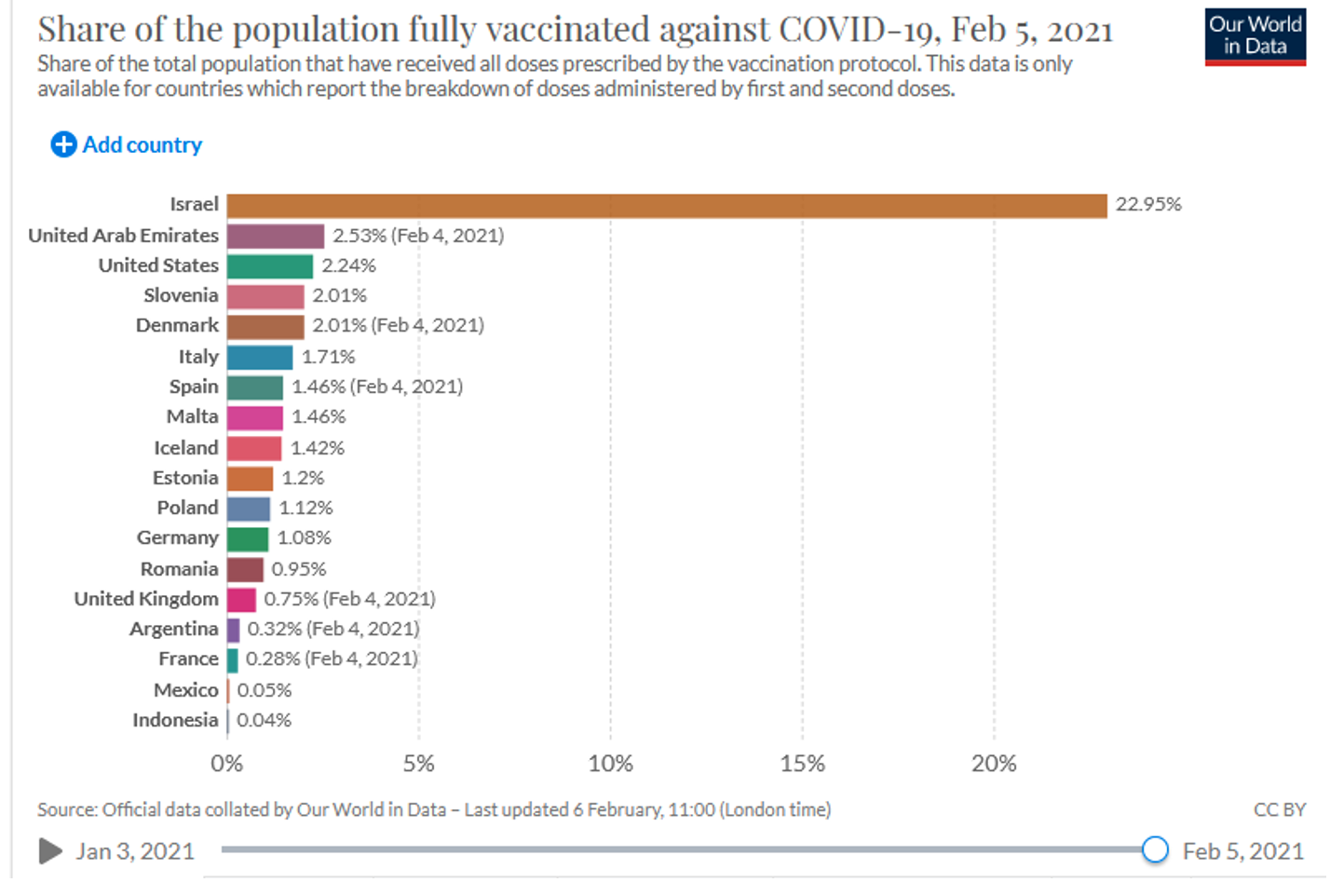
Nearly 70 per cent of vaccine doses administered so far have occurred in the world’s 50 wealthiest countries. In contrast, only 0.1 per cent of vaccine doses have been administered in the 50 poorest countries. The IFRC is warning that this inequality is alarming and could potentially backfire to deadly and devastating effect.

Mr Jagan Chapagain, Secretary General of the IFRC, said: “This is alarming because it is unfair, and because it could prolong or even worsen this terrible pandemic. Let me be clear: In the race to end this pandemic, we are all rowing the same boat. We cannot sacrifice those at highest risk in some countries so that those at lowest risk can be vaccinated in others.

“The equitable distribution of COVID-19 vaccines between and within countries is more than a moral imperative: It is the only way to solve the most pressing public health emergency of our time. Without equal distribution, even those who are vaccinated will not be safe.”


The IFRC is warning that, if large pockets of the globe remain unvaccinated, the COVID-19 virus will continue to circulate and mutate. This may lead to the emergence of variants that do not respond to vaccines, allowing the virus to infect people that may have already been vaccinated.

In a bid to support equitable vaccine distribution, the IFRC has announced today a new, 100 million Swiss franc plan that aims to support the immunization of 500 million people against COVID-19.

Under the plan, Red Cross and Red Crescent Societies will support national vaccination efforts in a range of areas and across the planning and implementation phases. This will include efforts to build trust in vaccines and to counteract misinformation about their efficacy – an intervention that is increasingly important as vaccine hesitancy rates climb around the world.

Red Cross and Red Crescent volunteers will also seek out communities and individuals that are economically, socially or geographically isolated to ensure their involvement in vaccine efforts. And trained personnel will, in many countries be responsible for the physical delivery of vaccines to at-risk and vulnerable groups.


Already, 66 National Red Cross and Red Crescent Societies are or will be involved in vaccine campaigns, with dozens more in discussions with their governments…

The IFRC’s vaccination plan – which is part of its overall COVID-19 response effort – is available on the IFRC website.

Risk of Instability, Tension Growing, amid Glaring Inequalities in Global COVID-19 Recovery, Top United Nations Officials Warn Security Council

Milestones :: Perspectives :: Research


COVID – Global Impact


Risk of Instability, Tension Growing, amid Glaring Inequalities in Global COVID-19 Recovery, Top United Nations Officials Warn Security Council
25 January 2021 SC/14422
The sweeping and devastating effects of the COVID-19 pandemic are continuing to grow, and so too are the risks of instability and tension amidst glaring inequalities in the global recovery, senior United Nations officials warned today during a Security Council videoconference on the impact of the coronavirus outbreak on international peace and security.

The meeting focused on the implementation of resolution 2532 (2020), adopted on 1 July 2020, in which the Council expressed its support for the Secretary-General’s appeal, made 100 days earlier, for a global ceasefire to help unite efforts to fight COVID-19 in the world’s most vulnerable countries.  Through that text, the 15-member organ also called for an immediate 90-day humanitarian pause to enable the safe, unhindered and sustained delivery of life-saving assistance.

Rosemary DiCarlo, Under-Secretary-General for Political and Peacebuilding Affairs, said that the pandemic’s impact on peace and security has intensified — exacerbating inequality and corruption; breeding misinformation, stigmatization and hate speech; and creating new flashpoints for tension and increased risks of instability.  It is hindering diplomatic action and complicated peacemaking efforts, without for the most part affecting the underlying dynamics of armed conflicts.  The impact on women, youth and other marginalized groups is particularly alarming, she said.

In some instances, the Secretary-General’s call for a global cessation of hostilities has given new momentum to faltering peace processes, she said, pointing to ceasefires in Libya and Ukraine, ongoing Afghanistan peace negotiations and the start of a disarmament process among insurgent groups in Mozambique.  Other places, however, have witnessed a dangerous escalation of tension, including large-scale fighting in Nagorno-Karabakh.  Without exception, United Nations missions and the Secretary-General’s special representatives and special envoys have adjusted to the changing reality, embracing new tools such as digital focus groups.  At the same time, since the onset of the pandemic, the United Nations has supported 19 elections and one referendum in 18 countries.


Looking ahead, she warned that as the pandemic’s impact grows, so too will the risk of tensions and instability, magnified by inequalities in the global recovery.  As rich countries get vaccinated, the developing world — including countries already trapped in conflict and instability — risks being left behind, dealing a severe blow to peace and security.

“One thing is clear:  The pandemic has served as a political stress test as much as a structural and public health one,” she said.  It has laid how acute crisis can become an opportunity to gain advantage on the battlefield or as a pretext to perpetuate oppression — but it has also confirmed that almost no barrier is insurmountable when there is real political will, supported by the global community, to make and sustain peace.  Going forward, the collective and individual engagement of Council members will remain crucial, she said, adding that “recovering better” in the wake of the pandemic will require more political and financial investment in conflict prevention…

COVID Vaccine Developer Announcements

Milestones :: Perspectives :: Research


COVID Vaccine Developer Announcements

Sinovac Announces Phase III Results of Its COVID-19 Vaccine
February 05, 2021
BEIJING–(BUSINESS WIRE)–Sinovac Biotech Ltd. (NASDAQ: SVA) (“Sinovac” or the “Company”), a leading provider of biopharmaceutical products in China, today announced phase III results. Sinovac had started its phase III trials on CoronaVac, its COVID-19 vaccine, on July 21, 2020. Trials were conducted in Brazil, Turkey, Indonesia, and Chile. In compliance with the principles of Good Clinical Practice (GCP), the trials were conducted with the vaccine candidate produced from the same lot and following the 0, 14 day schedule. There have been a total of 25,000 participants enrolled in the trial across those four countries…

Johnson & Johnson Announces Submission of Application to the U.S. FDA for Emergency Use Authorization of its Investigational Single-Shot Janssen COVID-19 Vaccine Candidate
Feb 04, 2021, 17:35 ET
Johnson & Johnson intends to distribute vaccine to the U.S. government immediately following authorization, and expects to supply 100 million doses to the U.S. in the first half of 2021

Sinovac Files for Conditional Market Authorization of COVID-19 Vaccine in China
February 03, 2021
BEIJING–(BUSINESS WIRE)–Sinovac Biotech Ltd. (NASDAQ: SVA) (“Sinovac” or the “Company”), a leading provider of biopharmaceutical products in China, today announced that it has officially filed for conditional market authorization for CoronaVac, the COVID-19 vaccine, with China’s National Medical Products Administration (NMPA). The vaccine candidate was tested in phase III clinical studies outside of China. The preliminary results of the trials demonstrated a good safety profile for the vaccine. Fourteen days after a two-dose vaccination, the efficacy rate meets the standards of the World Health Organization (or WHO) and the guiding principles for Clinical Evaluation on Preventive COVID-19 Vaccine (tentative) issued by the NMPA…

Singapore Health Sciences Authority (HSA) Approves Interim Authorization of COVID-19 Vaccine Moderna For Use
February 03, 2021
CAMBRIDGE, Mass.–(BUSINESS WIRE)–Moderna, Inc. (Nasdaq: MRNA), a biotechnology company pioneering messenger RNA (mRNA) therapeutics and vaccines, today announced that the Singapore Health Sciences Authority (HSA) has approved the interim authorization of its mRNA vaccine against COVID-19 (COVID-19 Vaccine Moderna) for use under the Pandemic Special Access Route (PSAR).

U.S.: COVID-19 Vaccines – Announcements/Regulatory Actions/Deployment

U.S.: COVID-19 Vaccines – Announcements/Regulatory Actions/Deployment

CDC
Coronavirus Disease 2019 (COVID-19) – CDC
:: Overall US COVID-19 Vaccine Distribution and Administration Update as of Fri, 05 Feb 2021 06:00:00 EST


FDA
Coronavirus (COVID-19) Update: FDA Announces Advisory Committee Meeting to Discuss Janssen Biotech Inc.’s COVID-19 Vaccine Candidate
02/04/2021
The FDA has scheduled a meeting of its Vaccines and Related Biological Products Advisory Committee (VRBPAC) on Feb. 26, 2021, to discuss the request for emergency use authorization (EUA) for a COVID-19 vaccine from Janssen Biotech Inc.


White House [U.S.]
Press Briefing by White House COVID-19 Response Team and Public Health Officials
February 03, 2021 • Press Briefings – NIH, CDC

FACT SHEET: President Biden Announces Increased Vaccine Supply, Initial Launch of the Federal Retail Pharmacy Program, and Expansion of FEMA Reimbursement to States
February 02, 2021 • Statements and Releases
Expanding Vaccine Supply: Building on last week’s announcement, the Biden-Harris Administration will increase overall, weekly vaccine supply to states, Tribes, and territories to 10.5 million doses nationwide beginning this week. This is a 22% increase since taking office on January 20. The Administration is committing to maintaining this as the minimum supply level for the next three weeks, and we will continue to work with manufacturers in their efforts to ramp up supply.
Launching First Phase of the Federal Retail Pharmacy Program for COVID-19 Vaccination: As part of the Biden-Harris Administration’s efforts to increase access to COVID-19 vaccines, starting on February 11, those eligible for the vaccine will have the opportunity to be vaccinated at select pharmacies across the country through the Federal Retail Pharmacy Program for COVID-19 Vaccination. This program is a public-private partnership with 21 national pharmacy partners and networks of independent pharmacies representing over 40,000 pharmacy locations nationwide (listed below). It is a key component of the Administration’s National Strategy to expand equitable access to vaccines for the American public…