Vaccines and Global Health: The Week in Review is a weekly digest summarizing news, events, announcements, peer-reviewed articles and research in the global vaccine ethics and policy space. Content is aggregated from key governmental, NGO, international organization and industry sources, key peer-reviewed journals, and other media channels. This summary proceeds from the broad base of themes and issues monitored by the Center for Vaccine Ethics & Policy in its work: it is not intended to be exhaustive in its coverage. You are viewing the blog version of our weekly digest, typically comprised of between 30 and 40 posts below all dated with the current issue date
.– Request anEmail Summary:Vaccines and Global Health : The Week in Review is published as a single email summary, scheduled for release each Saturday evening before midnight (EDT in the U.S.). If you would like to receive the email version, please send your request to david.r.curry@centerforvaccineethicsandpolicy.org.
– pdf version: A pdf of the current issue is available here:
– blog edition: comprised of the approx. 35+ entries posted below.
– Twitter:Readers can also follow developments on twitter: @vaxethicspolicy. . – Links: We endeavor to test each link as we incorporate it into any post, but recognize that some links may become “stale” as publications and websites reorganize content over time. We apologize in advance for any links that may not be operative. We believe the contextual information in a given post should allow retrieval, but please contact us as above for assistance if necessary.
Support this knowledge-sharing service:Your financial support helps us cover our costs and to address a current shortfall in our annual operating budget. Click here to donate and thank you in advance for your contribution.
. David R. Curry, MS Executive Director Center for Vaccine Ethics and Policy
Vaccines and Global Health: The Week in Review is a weekly digest summarizing news, events, announcements, peer-reviewed articles and research in the global vaccine ethics and policy space. Content is aggregated from key governmental, NGO, international organization and industry sources, key peer-reviewed journals, and other media channels. This summary proceeds from the broad base of themes and issues monitored by the Center for Vaccine Ethics & Policy in its work: it is not intended to be exhaustive in its coverage. You are viewing the blog version of our weekly digest, typically comprised of between 30 and 40 posts below all dated with the current issue date
.– Request anEmail Summary:Vaccines and Global Health : The Week in Review is published as a single email summary, scheduled for release each Saturday evening before midnight (EDT in the U.S.). If you would like to receive the email version, please send your request to david.r.curry@centerforvaccineethicsandpolicy.org.
– pdf version: A pdf of the current issue is available here:
– blog edition: comprised of the approx. 35+ entries posted below.
– Twitter:Readers can also follow developments on twitter: @vaxethicspolicy. . – Links: We endeavor to test each link as we incorporate it into any post, but recognize that some links may become “stale” as publications and websites reorganize content over time. We apologize in advance for any links that may not be operative. We believe the contextual information in a given post should allow retrieval, but please contact us as above for assistance if necessary.
Support this knowledge-sharing service:Your financial support helps us cover our costs and to address a current shortfall in our annual operating budget. Click here to donate and thank you in advance for your contribution.
. David R. Curry, MS Executive Director Center for Vaccine Ethics and Policy
NEW YORK/ GENEVA, 27 April 2022 – An increase in measles cases in January and February 2022 is a worrying sign of a heightened risk for the spread of vaccine-preventable diseases and could trigger larger outbreaks, particularly of measles affecting millions of children in 2022, warn WHO and UNICEF.
Pandemic-related disruptions, increasing inequalities in access to vaccines, and the diversion of resources from routine immunization are leaving too many children without protection against measles and other vaccine-preventable diseases.
The risk for large outbreaks has increased as communities relax social distancing practices and other preventive measures for COVID-19 implemented during the height of the pandemic. In addition, with millions of people being displaced due to conflicts and crises including in Ukraine, Ethiopia, Somalia and Afghanistan, disruptions in routine immunization and COVID-19 vaccination services, lack of clean water and sanitation, and overcrowding increase the risk of vaccine-preventable disease outbreaks.
Almost 17,338 measles cases were reported worldwide in January and February 2022, compared to 9,665 during the first two months of 2021. As measles is very contagious, cases tend to show up quickly when vaccination levels decline. The agencies are concerned that outbreaks of measles could also forewarn outbreaks of other diseases that do not spread as rapidly…
In 2020, 23 million children missed out on basic childhood vaccines through routine health services, the highest number since 2009 and 3.7 million more than in 2019…
…As countries work to respond to outbreaks of measles and other vaccine-preventable diseases, and recover lost ground, UNICEF and WHO, along with partners such as Gavi, the Vaccine Alliance, the partners of the Measles & Rubella Initiative (M&RI), Bill & Melinda Gates Foundation, and others are supporting efforts to strengthen immunization systems by: Restoring services and vaccination campaigns so countries can safely deliver routine immunization programmes to fill the gaps left by the backsliding; Helping health workers and community leaders communicate actively with caregivers to explain the importance of vaccinations; Rectifying gaps in immunization coverage, including identifying communities and people who have been missed during the pandemic; Ensuring that COVID-19 vaccine delivery is independently financed and well-integrated into overall planning for immunization services so that it is not carried out at the cost of childhood and other vaccination services; Implementing country plans to prevent and respond to outbreaks of vaccine-preventable diseases and strengthening immunization systems as part of COVID-19 recovery efforts.
The decrease in vaccination coverage precedes the pandemic; but the cessation or irregular programming of many primary health care services during the pandemic and people’s fear of catching COVID19 during visits to health centers is leaving many children without vaccines.
“The decline in vaccination rates in the region is alarming and puts millions of children and adolescents at risk of dangerous diseases that could be prevented,” said Jean Gough, UNICEF Regional Director for Latin America and Caribbean. “The solution, and it has been proven to be effective: stronger vaccination programmes.”
The 14 percentage point drop in vaccine coverage leaves nearly 2.5 million children without the complete DTP vaccination schedule and they are at risk of dangerous preventable diseases. Of them, 1.5 million are “zero doses”: they have not even received the first dose of that vaccine.
Dangerous setback
The decrease in coverage exposes more children to the resurgence of preventable diseases and epidemiological outbreaks have already occurred. In example, while in 2013 only 5 people in the region got diphtheria, in 2018 almost 900 cases were registered, according to PAHO data. Measles sets higher alarms because it is caused by a highly contagious virus: in 2013 there were almost 500 cases; but in 2019, more than 23,000 people got the disease.
“As countries recover from the pandemic, immediate actions are needed to prevent coverage rates from further dropping, because the re-emergence of disease outbreaks poses a serious risk to all of society,” Gough said. “This is an opportunity to restructure primary health care and reinforce the comprehensive and community approach that bring vaccines to the most vulnerable populations. We cannot lose the efforts of past decades and let dangerous diseases threaten the lives of children.”
UNICEF calls on the governments of Latin America and the Caribbean to urgently re-establish and strengthen routine immunization programs, develop campaigns to increase vaccine confidence and implement plans to reach all children and adolescents and their families; especially to the most vulnerable who do not have access to health services, due to their geographic location, migratory status or ethnic identity.
We are meeting to discuss the issues of preparedness and response after more than two years of a global Pandemic. Although the situation has improved, we still need to be cautious given the case numbers in some countries and the low level of vaccination in some parts of the World.
The past two years have brought a lot of hardship: in terms lives lost, impacts on livelihoods and economic opportunities, and the impact on Human Capital through school closures and basic health services. This has further raised concerns about the state of preparedness of the world, and our collective ability to break the cycle of Panic and Neglect.
This is more urgent given what we know about the state of the world. In 2021, the Global Health Security Index showed the extent of the challenge with 70% of countries showed insufficient capacity to respond to health emergencies and deliver essential health services in clinics, hospitals, and community health centers. The pandemic revealed stark disparities in the capacity of countries to prevent and respond to COVID-19 bringing into sharp focus significant under-investments in pandemic preparedness which has amplified inequalities at all levels and highlighted the urgent need for collective action.
A recent Bank paper shows that most low- and middle-income countries are already facing tremendous fiscal pressures from the ongoing pandemic and will not be able to mobilize the huge sums necessary for investing in preparedness nor for strengthening their health systems.
To respond to these challenges the global community has shown a strong willingness to lean forward.
Indeed, the IDA20 replenishment, which was hosted by Japan, has culminated in a package which includes ambitious commitments to support countries to strengthen pandemic preparedness and response. The preparedness agenda is front and center of this IDA round.
The G20 and G7 have recently endorsed a new Financial Intermediary Fund (FIF) to strengthen preparedness and response. The FIF is meant to complement the current offerings and close remaining gaps in support of countries around the world.
Furthermore, there is broader and growing awareness of the One Health approach, which offers a framework to think about prevention and preparedness at country level. For instance, this is something that we are reflecting more and more in our World Bank portfolio through entry-points in the agriculture and environment sectors.
All of these efforts have to build on what we know works, and complement it in order to provide needed resources to countries who will have to address many gaps with limited fiscal space and competing needs. This requires collaboration and strong partnerships amongst all of us. No single actor or plan can do it alone.
This is where the Health Emergency Preparedness and Response Program is comes with its mission to catalyze, complement and connect. It has a critical role to play in the network of services and support we are building for our clients. I want here to thank Japan, Australia and Germany for their financing for and partnership in the HEPR program…
…Today’s session provides a valuable forum to delve deeper into the progress made through the HEPR Program funded efforts since the it was approved 18 months ago and the work ahead. It also affords an important opportunity to hear from leaders on the frontlines in countries and communities – essential voices from whom we must all learn as we chart the way forward.
Before I hand over to the team, I would like to leave with two thoughts: :: First, we need to make strong analytical work at country and global levels a priority. Indeed, key indicators and analysis, as well as in depth work to understand country context will be important to guide policy and investments, but also raise the awareness on what is needed.
:: Second, although there is a momentum now around the agenda of preparedness, this can be sidelined very quickly by other emerging priorities. I count on all partners here to help make sure we maintain the push, and that we all advocate for preparedness to be streamlined throughout all aspects of the recovery.
I look forward to listening to our many partners and friends gathered here today for this event, from the Ministers of Health of Eswatini, Guyana, Togo, and partners from Japan, Australia, WHO and the Africa Center of Excellence for Genomics of Infectious Diseases.
COVID Vaccines – Humanitarian Buffer(HB) “Broken” humanitarian COVID-19 vaccine system delays vaccinations – MSF MSF Press Release 27 Apr 2022
People in parts of northern Syria faced delays to receiving COVID-19 vaccinations earlier this year due to an unwieldy humanitarian vaccination system.
The COVAX mechanism is failing the people it is meant to serve due to opaque legal frameworks and unfair liability demands.
MSF urges the COVAX partners – who include WHO, UNICEF and Gavi – to immediately fix the system and enable people timely access to vaccines.
The COVID-19 vaccine Humanitarian Buffer(HB) is failing its mission to support people hit by the pandemic and struggling to access immunisation, says Médecins Sans Frontières (MSF). The HB is part of the COVAX mechanism*, whose aim is to assist groups of people who do not have access to COVID-19 vaccination in situations of humanitarian emergency. However, MSF’s recent experience in northern Syria has highlighted the system’s limitations and ultimate failure to fulfil its purpose.
In late 2021, when the Delta variant was still predominant, MSF teams observed a significant increase in the number of reported COVID-19 cases in Tell Abyad and Ras Al-Ain. The area, currently under Turkish control, is home to approximately 156,000 people, including almost 70,000 people in need according to the United Nations. Due to its status, the area is not included neither in the UN’s cross-border mechanism for the delivery of humanitarian aid, nor covered by the Syrian government’s national immunisation roll-out plan.
In November of the same year, MSF submitted an application to the UN-led humanitarian emergency COVID-19 vaccine reserve with a view to launching an immunisation campaign in collaboration with our Syrian NGO partner, Al Ameen. However, once the application was approved approximately six weeks after its submission, MSF was confronted with an opaque, unwieldy legal framework placing an excessive liability on field-based humanitarian organisations carrying out the operations. This led to months of consuming contractual wrangling, until the Turkish authorities made alternative plans and the window closed on the opportunity for MSF and Al Ameen to run the planned immunisation campaign.
“For this system to work and allow for a timely intervention, it has to be practical and fair for all partners,” says Sarah Chateau, MSF’s Programme Manager for Syria. “When we started discussing with the rest of the COVAX partners, we realised it was definitely not the case.”
“To start with, we were denied access to some of the legal documents framing the procurement, which were necessary for us to assess the risks we were asked to accept,” explains Chateau.
Another significant obstacle was the deeply unbalanced distribution of liabilities in the initial version of the agreement framing the supply of the vaccines, which led to months of negotiations. In those agreements, UNICEF, Gavi (the global vaccine alliance) and the vaccine manufacturer transferred to MSF part of their liability for their own roles and responsibilities in the HB, requesting MSF to waive some of our legal avenues against them and, in some cases, indemnify them against their loss and third-party claims. Adding to this, the sheer number of contracts and interlocutors results in a lack of overall accountability for the overall functioning of the system.
As of March 2022, 2.5 million doses have been approved through the humanitarian buffer according to publicly available information and while more applications are in process, this is a small fraction of the 155 million doses announced at the beginning of 2022 as the HB target.
“The Humanitarian Buffer can potentially support millions of people, particularly among hard-to-reach groups of people,” says Chateau. “For the sake of our collective pandemic preparedness, we urge the COVAX partners to work to improve the system: unacceptably lengthy negotiations, excessive contractual complexity, lack of transparency and the unbalanced distribution of liabilities are issues that need an urgent solution.”
“We appreciate the concept of the HB,” says Chateau. “But the system today is failing its purpose and, more importantly, the people it is meant to serve.”
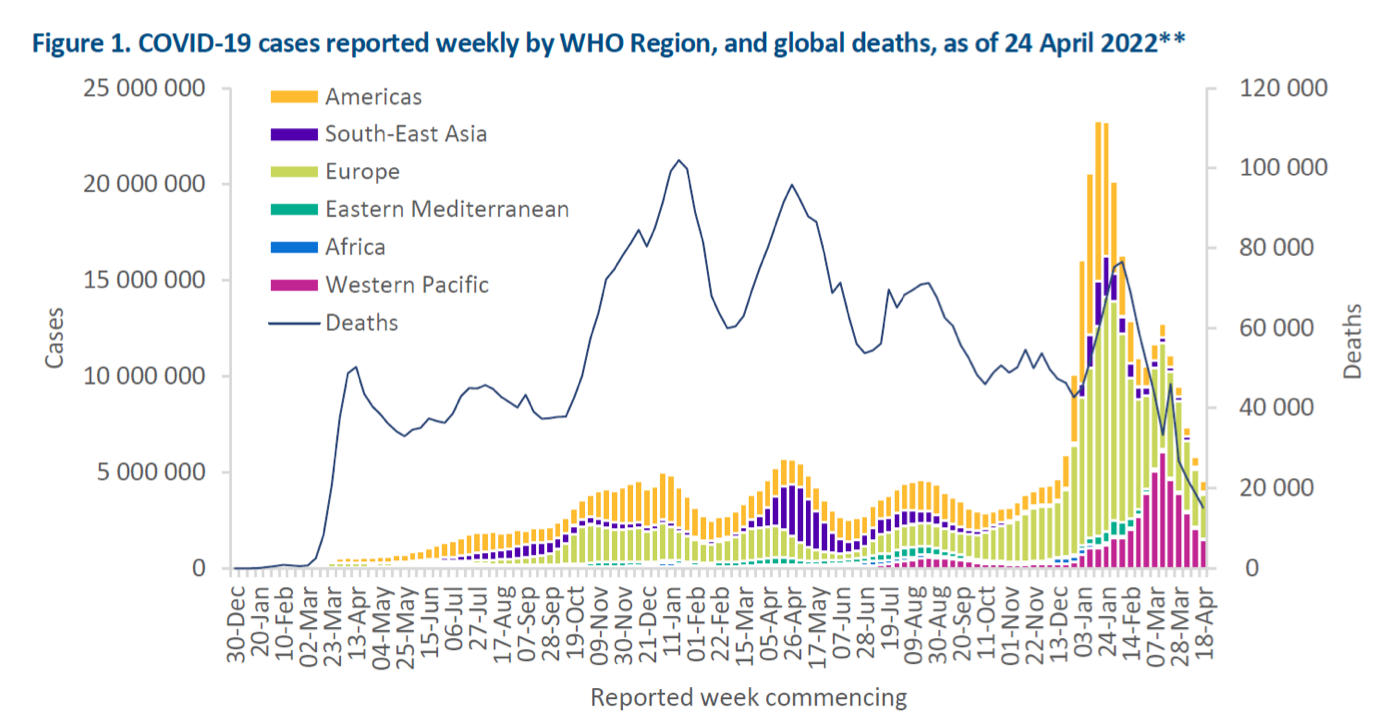
Weekly epidemiological update on COVID-19 – 27 April 2022 Overview Globally, the number of new COVID-19 cases and deaths has continued to decline since the end of March 2022. During the week of 18 through 24 April 2022, over 4.5 million cases and over 15 000 deaths were reported, decreases of 21% and 20% respectively, as compared to the previous week. However, an increase in the number of new weekly cases was reported from the Regions of the Americas (+9%) and the African Region (+32%), and the number of new weekly deaths increased in the South-East Asia Region (+41%), due to a delay in reporting of deaths from India, and in the Africa Region (+110%). As of 24 April 2022, over 500 million confirmed cases and over six million deaths have been reported globally. In this edition, we provide an update on the geographic distribution of circulating SARS-CoV-2 variants of concern (VOCs), including the prevalence and summary of current evidence of the Omicron variant. We also provide updates on vaccine effectiveness for the Delta and Omicron variants.
COVID Vaccines/Therapeutics – Developer/Manufacturer Announcements [Selected press releases/announcements from organizations from WHO EUL/PQ listing above and other organizations]
AstraZeneca Press Releases – No new digest announcements identified
Bharat Biotech Press Releases Apr 26: COVAXIN® for Children: India approves COVAXIN® in Children 6-12 years
COVAXIN is the one of the first COVID-19 vaccines in the world to generate data in 2-18
year age group.
COVAXIN was earlier approved for children 12-18 years of age.
Whole-Virion inactivated SARS-CoV-2 Vaccine (BBV152) has proven to be safe, welltolerated,
and immunogenic in paediatric subjects in phase II/III study in children 2-18 years
of age.
Neutralizing antibodies in children on were 1.7 times higher than in adults.
No serious adverse event was reported. Pain at the injection site was the most commonly
reported adverse event. No cases of myocarditis or blood clots were reported, as is to be
expected with inactivated vaccines.
COVAXIN exhibits robust immune responses in children with 2 doses and 6 months follow
up, indicating durability of immune responses. Data was presented to the CDSCO Subject
Expert Committee and will be published in the weeks to come.
Hyderabad, April 26, 2022: Bharat Biotech International Limited (BBIL), a global leader in vaccine
innovation and developer of vaccines for infectious diseases, today announced that BBV152
(COVAXIN), its whole-virion inactivated COVID-19 vaccine candidate, has received emergency use
approval in children 6-12 years of age…
Biological E News – BE’s CORBEVAXTM Gets DCGI Nod for Emergency Use in 5-12 Years
:: The approval comes soon after CORBEVAXTM was given the nod for 12-15-year group
::As part of its Phase 2/3 clinical trials in 312 children aged between 5 and 12 years, Biological E administered two doses of 0.5 ml each of CORBEVAXTM or Placebo in 28 days’ gap
– April 26, 2022
29 April, 2022 Moderna Finalizes Plan for Long-Term Strategic Partnership with The Government of Canada
:: Onshore manufacturing facility is expected to be based in Quebec and produce up to 100 million mRNA respiratory vaccine doses annually
:: The ten-year strategic partnership is expected to provide Canadians with rapid response capabilities to ensure future pandemic readiness
Nanogen News – No new digest announcements identified
Novavax Press Releases
Apr 29, 2022 FDA Announces Vaccines and Related Biological Products Advisory Committee Review of Novavax’ COVID-19 Vaccine NVX-CoV2373 would be the first protein-based COVID-19 vaccine to be reviewed by VRBPAC in the U.S.
GAITHERSBURG, Md., April 29, 2022 /PRNewswire/ — Novavax, Inc. (Nasdaq: NVAX), a biotechnology company dedicated to developing and commercializing next-generation vaccines for serious infectious diseases, today announced that the U.S. Food and Drug Administration’s (FDA) Vaccines and Related Biological Products Advisory Committee (VRBPAC) will review NVX-CoV2373 COVID-19 Vaccine (recombinant, adjuvanted) for active immunization against SARS-CoV-2 at a meeting scheduled for June 7, 2022..
UNICEF COVID-19 Vaccine Market Dashboard :: Agreements Table Accessed 30 Apr 2022 An overview of information collected from publicly announced bilateral and multilateral supply agreements [no new agreements since 3/20/2022 reported]
COVID-19 Global Targets and Progress Tracker – IMF The COVID-19 Global Targets and Progress Tracker presents a consolidated view of the progress towards global COVID-19 targets, barriers in access to COVID-19 tools, and delivery of donor pledges.
The global targets presented in the Tracker are based on an alignment of the targets identified in the IMF Pandemic Proposal, ACT-A Strategic Plan & Budget, and the US-hosted Global C19 Summit, and as such have been reaffirmed by multilateral institutions and global leaders. We will continue to enhance the tracker as we improve our data collection efforts.
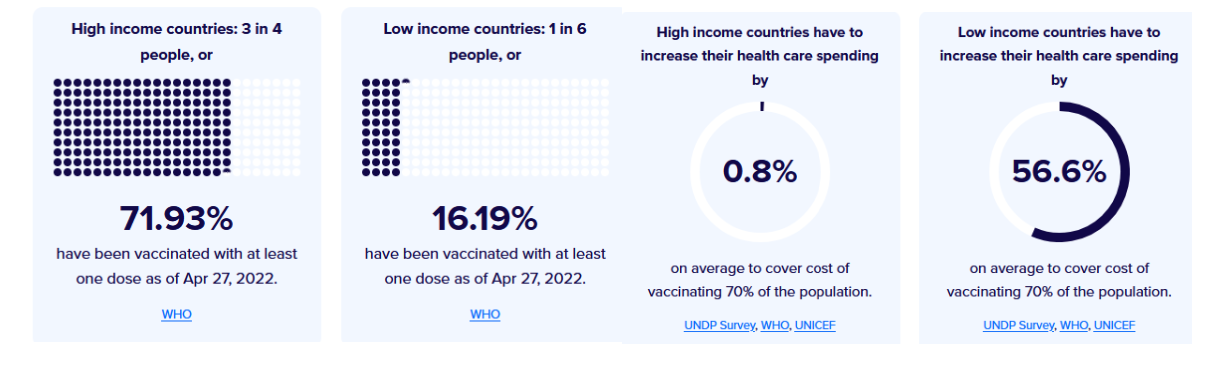
Global Dashboard on COVID-19 Vaccine Equity The Dashboard is a joint initiative of UNDP, WHO and the University of Oxford with cooperation across the UN system, anchored in the SDG 3 Global Action Plan for Healthy Lives and Well-being for All.
Duke – Launch and Scale Speedometer The Race for Global COVID-19 Vaccine Equity A flurry of nearly 200 COVID-19 vaccine candidates are moving forward through the development and clinical trials processes at unprecedented speed; more than ten candidates are already in Phase 3 large-scale trials and several have received emergency or limited authorization. Our team has aggregated and analyzed publicly available data to track the flow of procurement and manufacturing and better understand global equity challenges. We developed a data framework of relevant variables and conducted desk research of publicly available information to identify COVID vaccine candidates and status, deals and ongoing negotiations for procurement and manufacturing, COVID burden by country, and allocation and distribution plans. We have also conducted interviews with public officials in key countries to better understand the context and challenges facing vaccine allocation and distribution [accessed 24 July 2021] See our COVID Vaccine Purchases research See our COVID Vaccine Manufacturing research See our COVID Vaccine Donations & Exports research
COVID-19 Data Explorer: Global Humanitarian Operations COVID-19 Vaccine Roll-out 30 Apr 2022 | COVAX (WHO,GAVI,CEPI), UNDESA, Press Reports | DATA Global COVID-19 Figures: 510M total confirmed cases; 6.2M total confirmed deaths Global vaccines administered: 11.6B
Number of Countries: 28
COVAX Allocations Round 4-9 (Number of Doses): 170M
COVAX Delivered (Number of Doses): 290M
Other Delivered (Number of Doses): 300M
Total Delivered (Number of Doses): 590M
Total Administered (Number of Doses): 380M
Multilateral Leaders Task Force on COVID-19 [IMF, World Bank Group, WHO, WTO] https://data.covid19taskforce.com/data A global effort to help developing countries access and deliver COVID-19 vaccines, testing, and therapeutics, as they work to end the pandemic and boost economic recovery. The International Monetary Fund, World Bank Group, World Health Organization and World Trade Organization have joined forces to accelerate access to COVID-19 vaccines, therapeutics and diagnostics by leveraging multilateral finance and trade solutions, particularly in low- and middle-income countries. Website accessed 30 Apr 2022: https://data.covid19taskforce.com/data The global view below is complemented by country-specific dashboards here.
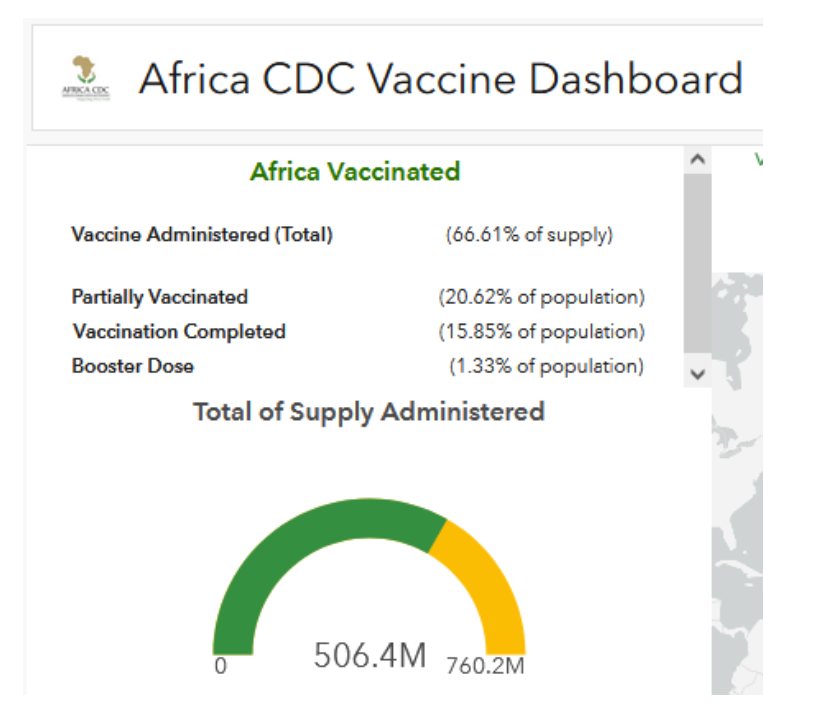
Our World in Data Coronavirus (COVID-19) Vaccinations[Accessed 30 Apr 2022] :: 65.4% of the world population has received at least one dose of a COVID-19 vaccine. :: 11.59 billion doses have been administered globally, and 10.09 million are now administered each day. :: Only 15.7% of people in low-income countries have received at least one dose.
FDA Press Announcements April 25, 2022 – Coronavirus (COVID-19) Update: FDA Approves First COVID-19 Treatment for Young Children
Today, the U.S. Food and Drug Administration expanded the approval of the COVID-19 treatment Veklury (remdesivir) to include pediatric patients 28 days of age and older weighing at least 3 kilograms (about 7 pounds) with positive results of direct SARS-CoV-2 viral testing, who are:
:: Hospitalized, or
:: Not hospitalized and have mild-to-moderate COVID-19 and are at high risk for progression to severe COVID-19, including hospitalization or death.
This action makes Veklury the first approved COVID-19 treatment for children less than 12 years of age. As a result of today’s approval action, the agency also revoked the emergency use authorization for Veklury that previously covered this pediatric population…
It is important to note that the dates below are tentative as none of the submissions are complete. The agency understands the urgency to authorize a vaccine for age groups who are not currently eligible for vaccination and will work diligently to complete our evaluation of the data. Should any of the submissions be completed in a timely manner and the data support a clear path forward following our evaluation, the FDA will act quickly and anticipates convening the following VRBPAC meetings:
On June 7, FDA intends to convene VRBPAC to discuss an EUA request for a COVID-19 vaccine manufactured by Novavax to prevent COVID-19 in individuals 18 years of age and older.
On June 8, 21 and 22, the FDA has held dates for the VRBPAC to meet to discuss updates to the Moderna and Pfizer-BioNTech EUAs for their COVID-19 vaccines to include younger populations. As the sponsors complete their submissions and the FDA reviews that data and information, it will provide additional details on scheduling of the VRBPAC meetings to discuss each EUA request.
On June 28, the FDA plans to convene the VRBPAC to discuss whether the SARS-CoV-2 strain composition of COVID-19 vaccines should be modified, and if so, which strain(s) should be selected for Fall 2022. This meeting is a follow-up to the April 6 VRBPAC meeting that discussed general considerations for future COVID-19 vaccine booster doses and the strain composition of COVID-19 vaccines to further meet public health needs.
“As we continue to address the ongoing COVID-19 pandemic, there are a number of anticipated submissions and scientific questions that will benefit from discussion with our advisory committee members,” said Peter Marks, M.D., Ph.D., director of the Center for Biologics Evaluation and Research. “We are providing a tentative schedule for discussion of these submissions, as these meetings will cover a number of topics that are of great interest to the general public. The agency is committed to a thorough and transparent process that considers the input of our independent advisors and provides insight into our review of the COVID-19 vaccines. We intend to move quickly with any authorizations that are appropriate once our work is completed.”
Once the meeting dates are finalized, the FDA intends to make background materials available to the public, including the meeting agenda and committee roster, no later than two business days before each meeting…
USAID [to 30 Apr 2022] https://www.usaid.gov/news-information/press-releases Selected Press Releases, Statements, Announcements The United States Provides an Additional $13.9 Million to Support Madagascar
April 29, 2022
The United States through the U.S. Agency for International Development (USAID) is providing an additional $13.9 million in funding to Madagascar. Of the $13.9 million in new funding, $5.4 million will go to the country’s COVID-19 response, and $8.5 million will support small and medium enterprises and economic empowerment for people with disabilities.
The United States Provides an Additional $13.9 Million to Support Madagascar
April 29, 2022
The United States through the U.S. Agency for International Development (USAID) is providing an additional $13.9 million in funding to Madagascar. Of the $13.9 million in new funding, $5.4 million will go to the country’s COVID-19 response, and $8.5 million will support small and medium enterprises and economic empowerment for people with disabilities.
2022 Interagency Report on the Implementation of the Presidential Memorandum on Advancing the Human Rights of LGBTQI+ Persons Around the World
April 28, 2022
Statement by Administrator Samantha Power
I applaud the release of the historic 2022 U.S. Interagency Report on the Implementation of the Presidential Memorandum on Advancing the Human Rights of LGBTQI+ Persons Around the World. The report puts a timely spotlight on affirmative efforts of the U.S. government, in partnership with LGBTQI+ leaders, civil-society organizations, rights advocates, and a range of partners, to defend the human rights and dignity of LGBTQI+ persons in every region of the world and across sectors.
Biden Administration Announces Hundreds of Millions of Dollars in Global Food Aid to Respond to Putin’s Unprovoked Invasion of Ukraine
April 27, 2022
Today, the Biden Administration announced that the U.S. Agency for International Development (USAID) and the U.S. Department of Agriculture (USDA) are taking the extraordinary step to draw down the full balance of the Bill Emerson Humanitarian Trust (BEHT) as part of an effort to provide $670 million in food assistance to countries in need as a result of Putin’s unprovoked invasion of Ukraine. The world is suffering from historic levels of global food insecurity, which is being exacerbated by the impact Russia’s war on Ukraine is having on global food supplies. Available estimates suggest that an additional 40 million people could be pushed into poverty and food insecurity as a result of Russia’s aggression.
United States Providing More Than $200 Million in Additional Humanitarian Assistance for the Horn of Africa
April 26, 2022
Today in Geneva, the United States announced more than $200 million in additional assistance to respond to humanitarian needs in the Horn of Africa, including from the devastating drought and to address the needs of refugees, internally displaced persons, and conflict-affected population in the region. This assistance, through the U.S. Agency for International Development (USAID) and the U.S. Department of State will help save lives in Ethiopia, Kenya, and Somalia, where more than 20 million people are projected to need emergency food assistance this year following two years of inadequate rainfall in a region dependent on agriculture and livestock to survive.
European Centre for Disease Prevention and Control https://www.ecdc.europa.eu/en Latest Updates [Selected] Publication Hepatitis of unknown origin – Reporting protocol 2022 Technical guidance – 29 Apr 2022 This reporting protocol is intended for reporting national case-based data for surveillance of hepatitis of unknown origin from all the countries and areas of the WHO European Region, including the 27 countries of the European Union (EU) and the additional three countries of the European Economic Area (EEA), to the European level.
Press release 26 April 2022 Food security in Horn of Africa: EU steps up support to drought-affected countries A devastating climate-induced drought is affecting the Horn of Africa. The situation is worsened by the impact of COVID-19, conflict and insecurity situation in the region, as well as the expected aggravation of food insecurity and nutrition due to Russia’s invasion of Ukraine.
Government of India – Press Information Bureau Latest Press Releases COVID – 19 Vaccination Update – Day 470 :: India’s cumulative vaccination coverage crosses 189 Crore landmark milestone :: More than 23 lakh Vaccine doses administered today till 7 pm Posted On: 30 APR 2022 8:02PM by PIB Delhi
[We did not identify official announcements about Shanghai confirming the reports below; See China CDC below for additional announcements]
Shanghai marks COVID milestone, Beijing on edge
By Brenda Goh and Min Zhang
Shanghai records no COVID cases outside quarantine areas
Beijing on tenterhooks, bracing for more restrictions
Breakthrough would mark victory for Xi in crucial year
Infections ease as China starts Labour Day holiday
SHANGHAI/BEIJING, April 30 (Reuters) – Shanghai said on Saturday it had detected no new daily COVID-19 cases outside quarantine areas, marking a milestone in its battle to contain the virus, which has paralysed the city of 25 million and put residents in the capital Beijing on edge.
Streets in Beijing were eerily quiet at the start of a five-day Labour Day break, with residents anxious that authorities would impose further restrictions during a holiday when many typically travel or socialise…
…Beijing will also implement a further two rounds of COVID tests on May 1 and May 3 in its most populous district of Chaoyang, known for its night life, malls and embassies.
The city will halt all restaurant dining between May 1 and 4, an official from the local commerce bureau said, calling for residents to “cook at home”.
Officials have provided no timeline or strategy for returning to some semblance of normality.
Nomura estimates 46 cities are in full or partial lockdowns, affecting 343 million people. Societe Generale estimates that provinces experiencing significant restrictions account for 80% of China’s economic output.
In response to COVID and other headwinds, China will step up policy support for the economy, a top decision-making body of the Communist Party said on Friday, lifting stocks from two-year lows. read more
Shanghai reported 47 COVID-19 deaths for Friday, down from 52 a day earlier. Some have questioned the fatality rate, as many residents have said relatives or friends have died after catching coronavirus as early as March.
Beijing has reported 295 new COVID-19 cases since April 22, the local health authority said, of which 123 cases were found in the Chaoyang district.
Overall, mainland China reported 10,793 daily COVID-19 cases, down from 15,688 new cases a day earlier, the National Health Commission said on Saturday…
Polio this week as of 27 April 2022 Headlines
:: This week, Global Polio Eradication Initiative (GPEI) partners launched the ‘Investment Case’ for polio eradication, at a virtual event. The Investment Case is the GPEI sister-document to the Polio Eradication Strategy 2022-2026, and outlines the humanitarian and economic benefits of polio eradication. During the event, the Government of Germany, which holds G7 presidency in 2022, announced that the country will co-host a pledging moment for the GPEI Strategy during the 2022 World Health Summit in October. A recording of the virtual event is available online here.
:: Rotary International President Shekhar Mehta, WHO GPEI Director Aidan O’Leary and Dr Sarthak Das, Chief Executive Officer of the Asia Pacific Leaders Malaria Alliance offer their views on what lessons and experiences from polio and malaria can be drawn for existing and future pandemics, in an op-ed published in Health Policy Watch. Read it here.
:: Comprehensive outbreak response in Tajikistan successfully stops outbreak: an outbreak response assessment concluded that a cVDPV2 outbreak that started in January 2021 has been stopped, thanks to comprehensive and rapid response with novel oral polio vaccine type 2 (nOPV2). More
Summary of new polioviruses this week: – Pakistan: one WPV1 case and one positive environmental sample – DR Congo: four cVDPV2 cases – Israel: 13 cVDPV3 positive environmental samples – Nigeria: one cVDPV2 case – Occupied Palestinian territory: seven cVDPV3 positive environmental samples – Somalia: one cVDPV2 case
Polio transition planning and polio post-certification
27 April 2022 Meeting report Overview
The Executive Board at its 150th session noted an earlier version of this report.1 The present report provides an update on the implementation of the Strategic Action Plan on Polio Transition (2018–2023)2 at the start of 2022, within the context of the coronavirus disease (COVID-19) pandemic.
UN OCHA – Current Emergencies Current Corporate Emergencies Afghanistan No new updates identified.
Northern Ethiopia Ethiopia – Northern Ethiopia Humanitarian Update Situation Report, 29 Apr 2022 HIGHLIGHTS
3,400 MT of food brought into Tigray between 1 and 25 April. At least 4,675 MT of food are required every day to complete current food distribution by mid-May.
More than 46,000 students across 144 schools in Wag Hemra Zone, South Wello, North Wello Oromia zones of Amhara Region received school feeding services during the reporting week.
Some 16,500 IDPs in Amhara Region have been assisted with essential NFI kits during this reporting week.
82,884 people received food assistance in Fanti Raise and Kilbati Rasu zones in Afar during the reporting period and overall 698,503 peopl assisted as of 25 April.
WHO & Regional Offices [to 30 Apr 2022] https://www.who.int/news News [Selected] 29 April 2022 Statement Quadripartite Memorandum of Understanding (MoU) signed for a new era of One Health collaboration
27 April 2022 Joint News Release UNICEF and WHO warn of perfect storm of conditions for measles outbreaks, affecting children [See Milestones above for detail]
27 April 2022 Departmental news WHO launches a second report of country success stories in mitigating the impact of the COVID-19 pandemic on TB services
::::::
WHO Director General Speeches [selected] https://www.who.int/director-general/speeches Selected 27 April 2022 Speech WHO Director-General’s opening remarks at the 10th meeting of the Access to COVID-19 Tools Accelerator Facilitation Council – 26 April 2022
27 April 2022 Speech WHO Director-General’s remarks at the Investment Case for Polio Eradication – 26 April 2022
27 April 2022 Speech WHO Deputy Director-General’s speech at the OECD Council on the 2030 Agenda for Sustainable Development: Session 2: Global health challenges in the era of COVID-19
26 April 2022 Speech WHO Director-General’s opening remarks at the WHO press conference – 26 April 2022
25 April 2022 Speech WHO Director-General’s panel remarks at the Group of Friends of Global Health – 25 April 2022
25 April 2022 Speech WHO Director-General’s opening remarks at the Working Group on Sustainable Finance, final meeting – 25 April 2022
WHO Region of the Americas PAHO
:: 29 Apr 2022 Environmental surveillance – complementary tool for tracking COVID-19
Over 60 countries, including several in the Americas, are using wastewater monitoring to track SARS-CoV-2 in communities, with over 3,300 active sites. Washington, D.C., April 29, 2022 (PAHO) — New guidance from the World Health Organization (WHO) provides advice to countries on sampling and testing for the SARS-CoV2 virus in untreated…
:: 25 Apr 2022 PAHO Director calls for immunization gaps to be closed for all vaccines, including COVID-19
2.7 million children in the Americas did not receive the vaccines needed to keep them healthy in 2020, while around 230 million people have still not received a single dose of COVID-19 vaccine in the region Roseau, Dominica, 25 April 2022 (PAHO) – In 2020, 2.7 million children in the Americas did not receive the essential vaccines needed to keep…
:: 25 Apr 2022 World Malaria Day – More must be done to improve malaria response at the local level
Washington D.C., 25 April 2022 (PAHO) – On World Malaria Day, the Pan American Health Organization (PAHO) urges countries to step-up efforts to tackle malaria in the region, calling for prevention, diagnosis and treatment interventions that are data-led and tailored to local contexts. While in 2020, the 18 endemic countries of the Americas…
Disease Outbreak News (DONs)
Latest WHO Disease Outbreak News (DONs), providing information on confirmed acute public health events or potential events of concern. 28 April 2022 | Ebola virus disease – Democratic Republic of the Congo
27 April 2022 Polio transition planning and polio post-certification Overview
The Executive Board at its 150th session noted an earlier version of this report.1 The present report provides an update on the implementation of the Strategic Action Plan on Polio Transition (2018–2023)2 at the start of 2022, within the context of the coronavirus disease (COVID-19) pandemic.
27 April 2022 Strengthening pandemic preparedness planning for respiratory pathogens: policy brief, 27 April 2022 Overview
This policy brief outlines core elements that Member States are encouraged to a) develop an integrated approach to respiratory pathogen pandemic preparedness planning and b) enhance national and sub-national functional capacities for preparedness. In addition, this policy brief highlights suggested actions for Member States as they initiate or update national and sub-national pandemic preparedness planning process.
Careful readers will note that the number and range of organizations now monitored in our Announcements section below has grown as the impacts of the pandemic have spread across global economies, supply chains and programmatic activity of multilateral agencies and INGOs.
Highlights include: a new Lab Notes podcast on why we don’t understand the brain, new research about how neurons connect, day-in-the-life features of our neuroscience labs and more.
The Bill & Melinda Gates Medical Research Institute is a non-profit biotech organization. Our mission is to develop products to fight malaria, tuberculosis, and diarrheal diseases—three major causes of mortality, poverty, and inequality in developing countries. The world has unprecedented scientific tools at its disposal; now is the time to use them to save the lives of the world’s poorest people
The European & Developing Countries Clinical Trials Partnership (EDCTP) aims to accelerate the development of new or improved drugs, vaccines, microbicides and diagnostics against HIV/AIDS, tuberculosis and malaria as well as other poverty-related and neglected infectious diseases in sub-Saharan Africa, with a focus on phase II and III clinical trials
Ahead of World Malaria Day, 25 April, the Global Fund calls for renewed commitment in the fight against malaria, a disease that now kills one child every minute. After years of steady declines, malaria cases and deaths are on the rise mainly due to s…
This is primarily because many are unable to bear the cost of travelling to a vaccine centre in the main city while others fear getting the vaccination owing to misinformation and lack of awareness.As a result, their families and communities remain v
Geneva (ICRC) – At its meeting on 27 April, the Assembly of the International Committee of the Red Cross (ICRC) appointed Ms Samia Hurst-Majno as its newest member.
Kuala Lumpur/Suva 28 April 2022 – The International Federation of Red Cross and Red Crescent Societies are increasingly concerned for more than 1 million people in Pacific nations as they struggle with their first major wave of COVID-19 fuelled by the Omicron variants.
Ramping up vaccinations is vital as the rapid surge in COVID infections is causing increasing death and illness in countries with low immunisation rates.
COVID-free for almost two years, Vanuatu, the Solomon Islands, Tonga, Kiribati, and Samoa have all experienced outbreaks in their capitals, and the virus is spreading to vulnerable outer island communities which lack basic treatment and vaccination facilities.
The virus is putting huge strains on fragile healthcare systems in population centres such as Honiara, Port Vila and Nuku’alofa. A rising number of healthcare workers are being struck down with COVID-19, further limiting health services and escalating the crisis…
ISC is a non-governmental organization with a unique global membership that brings together 40 international scientific Unions and Associations and over 140 national and regional scientific organizations including Academies and Research Councils.
On this International Day of Immunology, join ISC Member the International Union of Immunological Societies (IUIS) in celebrating the theme of vaccines with promotional and educational activities.
International Union of Immunological Societies (IUIS)
The National Academy of Medicine (NAM) Action Collaborative on Clinician Well-Being and Resilience is working urgently to develop a National Plan for health workforce well-being. The draft plan will be released in May 2022 for public input and builds on almost six years of collective work among 200 Clinician Well-Being Collaborative members and network organizations. […]
Despite progress made since the adoption of the 2030 Agenda for Sustainable Development and its 17 Goals (SDGs), OECD countries have met or are close to meeting only a quarter of the targets for which performance can be gauged, according to a new OECD report.
Starting in August 2020, the World Bank collaborated with the World Food Programme (WFP) and implemented nine (9) rounds of the Iraq High Frequency Phone Survey (IHFPS) as part of the WFP’s monthly mVAM…
WASHINGTON, April 28, 2022—The World Bank and government and foundation partners today launched a new program to scale up quality, affordable childcare in developing countries – a critical investment to…
We are meeting to discuss the issues of preparedness and response after more than two years of a global Pandemic. Although the situation has improved, we still need to be cautious given the case numbers…
Date: April 27, 2022 Type: Speeches and Transcripts
The Committee on Market Access held on 26 April the second experience-sharing session on COVID-19-related goods, with members reporting on how they have monitored and measured trade in essential goods to combat the pandemic. They also discussed ways to improve data collection at a time of crisis. In addition, members explored how to promote greater international cooperation to better track the trade flows of value chains for the manufacturing of essential COVID-19-related products.
Record food prices and a worsening food security context have given new urgency to the role of trade in addressing the challenges we face today, Director-General Okonjo-Iweala said at a seminar on food security organized by the WTO on 26 April. In her opening remarks, she said the event provided an opportunity to deepen understanding of the issues at stake and to help members take concrete steps forward so that trade can contribute to the attainment of food security around the world.
::::::
ARM [Alliance for Regenerative Medicine] [to 30 Apr 2022]
Janet Lynch Lambert will step down as the CEO of the Alliance for Regenerative Medicine after guiding the leading international advocacy organization for cell, gene and tissue-engineered therapies through five years of extraordinary growth in membership, funding, and influence. In Lambert’s time as the CEO of ARM, the membership doubled to more than 425 diverse global members and the organization’s budget and full-time staff tripled…The ARM board has constituted an 8-person Search Committee to conduct the search for a CEO successor, and Lambert is a key member of that committee. Executive search firm Catalyst Advisors, led by Partner Gilbert Forest, has been retained to support the search….
USTR this week released its 2022 Special 301 Report. BIO, after reviewing the report, released the following statement:
“We welcome USTR’s efforts to address IP-related concerns for U.S.-based biotech enterprises in China, especially concerning China’s coercive technology transfer policies, patent prosecution, and patent enforcement obstacles. USTR’s emphasis on monitoring China’s progress in implementing its Phase One Agreement commitments to address these longstanding IP matters is encouraging…”
Journal Watch Vaccines and Global Health: The Week in Review continues its weekly scanning of key peer-reviewed journals to identify and cite articles, commentary and editorials, books reviews and other content supporting our focu-s on vaccine ethics and policy. Journal Watch is not intended to be exhaustive, but indicative of themes and issues the Center is actively tracking. We selectively provide full text of some editorial and comment articles that are specifically relevant to our work. Successful access to some of the links provided may require subscription or other access arrangement unique to the publisher.
If you would like to suggest other journal titles to include in this service, please contact David Curry at: david.r.curry@centerforvaccineethicsandpolicy.org
Health Equity in US Latinx Communities
Latinx communities in the US include over 60 million people with a plurality of political beliefs, cultural practices, and wealth. This diversity is also expressed in population health data: some health indicators suggest advantages of Latinx community membership while other data demonstrate inequitable disease burden and maldistribution of environmental and occupational risk. Legacies of colonial conquest of the Americas persist in discrimination and marginalization today and are embodied by members of our Latinx communities.
Integrated delivery of family planning and childhood immunisation services: a mixed methods assessment of service responsiveness Postpartum women represent a considerable share of the global unmet need for modern contraceptives. Evidence suggests that the integration of family planning (FP) with childhood immunisation services could hel…
Authors: Jessie K. Hamon, Misozi Kambanje, Shannon Pryor, Alice S. Kaponda, Erick Mwale, Helen E. D. Burchett, Susannah H. Mayhew and Jayne Webster
Citation: BMC Health Services Research 2022 22:572
Content type: Research Published on: 28 April 2022
Robustness analysis for quantitative assessment of vaccination effects and SARS-CoV-2 lineages in Italy In Italy, the beginning of 2021 was characterized by the emergence of new variants of SARS-CoV-2 and by the availability of effective vaccines that contributed to the mitigation of non-pharmaceutical intervent…
Authors: Chiara Antonini, Sara Calandrini and Fortunato Bianconi
Citation: BMC Infectious Diseases 2022 22:415
Content type: Research Published on: 29 April 2022
Circulating vaccine derived polio virus type 1 outbreak, Saadah governorate, Yemen, 2020 Yemen has faced one of the worst humanitarian crises in the world since the start of the war in 2015. In 2020; 30 Vaccine Derived Polio Virus type 1 (VDPV1) isolates were detected in Saadah governorate. The ai…
Authors: Mutahar Ahmed Al-Qassimi, Mohammed Al Amad, Labiba Anam, Khaled Almoayed, Ahmed Al-Dar and Faten Ezzadeen
Citation: BMC Infectious Diseases 2022 22:414
Content type: Research Published on: 29 April 2022
Exploration of attitudes regarding uptake of COVID-19 vaccines among vaccine hesitant adults in the UK: a qualitative analysis The aim of this work was to explore barriers and facilitators to uptake of COVID-19 vaccines and to explore views and reactions to efforts to improve vaccine uptake among vaccine hesitant individuals.
Authors: Sarah Denford, Fiona Mowbray, Lauren Towler, Helena Wehling, Gemma Lasseter, Richard Amlôt, Isabel Oliver, Lucy Yardley and Matthew Hickman
Citation: BMC Infectious Diseases 2022 22:407
Content type: Research Published on: 26 April 2022
Predictors of COVID-19 vaccine acceptability among health professions students in Vietnam The COVID-19 vaccine hesitancy or refusal has actually been a threat to global health. In the current situation, health professions students are at risk for SARS-CoV-2 infection during their internship at heal…
Authors: Cua Ngoc Le, Uyen Thi To Nguyen and Diem Thi Hoang Do
Citation: BMC Public Health 2022 22:854
Content type: Research Published on: 28 April 2022
What are the reasons for refusing a COVID-19 vaccine? A qualitative analysis of social media in Germany Vaccination against COVID-19 has been available in Germany since December 2020. However, about 30% of the population report not wanting to be vaccinated. In order to increase the willingness of the population …
Authors: Jana Fieselmann, Kübra Annac, Fabian Erdsiek, Yüce Yilmaz-Aslan and Patrick Brzoska
Citation: BMC Public Health 2022 22:846
Content type: Research Published on: 27 April 2022
A tool for early estimation of influenza vaccination coverage in Spanish general population and healthcare workers in the 2018–19 season: the Gripómetro Electronic vaccine registries are not yet widely established. There is a need to real-time monitor influenza vaccine coverage, which may raise awareness to risk groups and professionals, and eventually allow t…
Authors: Javier Díez-Domingo, Esther Redondo Margüello, Raúl Ortiz de Lejarazu Leonardo, Ángel Gil de Miguel, José María Guillén Ortega, Jesús Rincón Mora and Federico Martinón-Torres
Citation: BMC Public Health 2022 22:825
Content type: Research Published on: 25 April 2022
Factors related to parents’ adherence to childhood immunization Immunizations protect children from deadly infectious diseases. Yet, there is still insufficient understanding of the factors associated with parents’ non-adherence to immunizations in contexts outside of West…
Authors: Fatimah Hobani and Eman Alhalal
Citation: BMC Public Health 2022 22:819
Content type: Research Published on: 25 April 2022
Improving the reproducibility and integrity of research: what can different stakeholders contribute? Increasing awareness of problems with the reproducibility and integrity of research led the UK Parliament Science and Technology Committee to launch, in July 2021, an inquiry into reproducibility and research …
Authors: Malcolm Macleod
Citation: BMC Research Notes 2022 15:146
Content type: Commentary Published on: 25 April 2022
Therapeutic Innovations in Neuroscience
The theme of this issue of Clinical Pharmacology & Therapeutics (CPT) encompasses neuroscience in the broad sense to include neurology and psychiatry, nonclinical and clinical aspects, novel clinical trial methodologies, and modeling and simulation approaches applicable to central nervous system (CNS) drug development and therapy. While naturally the last two years have been dominated by coronavirus disease 2019 (COVID-19), it is important not to forget that drug development for other indications has not been stopped, albeit many trials were affected in terms of delays in recruitment and collection of clinical data.
COMMENTARIES Open Access End Malaria Faster: Taking Lifesaving Tools Beyond “Access” to “Reach” All People in Need
Courtney Emerson, Jed Meline, Anne Linn, Julie Wallace, Bryan K. Kapella, Meera Venkatesan and Richard Steketee
Global Health: Science and Practice April 2022, 10(2):e2200118; https://doi.org/10.9745/GHSP-D-22-00118
To “reach the unreached” with preventive and curative malaria services, we must know which individuals and communities remain unreached and then bring tailored services from the clinic to the community and home.