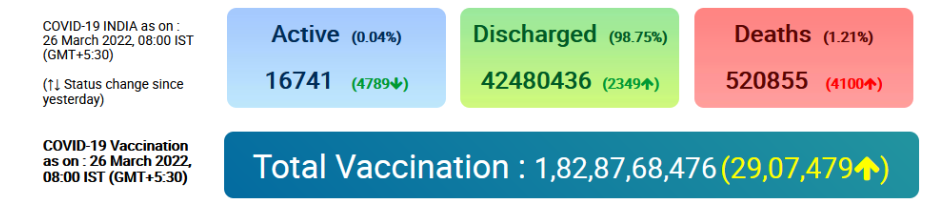
Weekly Epidemiological and Operational updates Last update: 25 Mar 2022 Confirmed cases :: 476 374 234 Confirmed deaths :: 6 108 976 Vaccine doses administered: 10 925 055 390
::::::
Weekly epidemiological update on COVID-19 – 22 March 2022 Overview After a consistent decrease since the end of January 2022, the number of new weekly cases rose for a second consecutive week, with a 7% increase reported during the week of 14 through 20 March 2022, as compared to the previous week. The number of new deaths has continued a decreasing trend (-23% as compared to the previous week). Across the six WHO regions, over 12 million cases and just under 33 000 deaths were reported.
As of 20 March 2022, over 468 million confirmed cases and over 6 million deaths have been reported globally.
At the regional level, the number of new weekly cases increased in the Western Pacific region (+21%), remained stable in the European region, and decreased in the Eastern Mediterranean (-41%), Africa (-33%), South-East Asia (-23%) and Americas (-17%) regions.
In this edition, we provide an update on the geographic distribution of circulating SARS-CoV-2 variants of concern (VOCs), including the prevalence and summary of current evidence of the Omicron variant. We also provide updates on vaccine effectiveness for the Delta and Omicron variants…
COVID Vaccines/Therapeutics – Developer/Manufacturer Announcements [Selected press releases/announcements from organizations from WHO EUL/PQ listing above and other organizations]
AstraZeneca Press Releases Evusheld long-acting antibody combination recommended for approval in the EU for the pre-exposure prophylaxis (prevention) of COVID-19 24 March 2022
Bharat Biotech Press Releases – No new digest announcements identified
Moderna Press Releases
March 24, 2022 Moderna Announces Clinical and Program Updates at 3rd Annual Vaccines Day
COVID-19 vaccine Phase 2/3 study in children 6 months to under 6 years has successfully met its primary endpoint with robust neutralizing antibody titers similar to adults. Moderna is moving forward with global regulatory submissions for mRNA-1273 for primary vaccination of children 6 months to under 6 years of age.
Moderna has initiated a submission to the FDA for emergency use authorization of mRNA-1273 in children 6 to under 12 years of age; mRNA-1273 is approved for use in this age group in Europe, Canada, and Australia.
In an interim analysis of a Phase 2 study of influenza vaccine candidate mRNA-1010, no significant safety concerns were identified, and the immunogenicity data is consistent with a potential for superiority to standard dose vaccine for influenza A strains.
Moderna is advancing vaccine candidates against five viruses that cause latent infections, three of which are in clinical trials. In a Phase 2 study, the CMV vaccine (mRNA-1647) was observed to be generally well tolerated and interim data demonstrates strong immunogenicity.
Moderna announces an increase in signed Advance Purchase Agreements for 2022 from $19 billion announced on February 24, 2022, to $21 billion.
The BRICS Vaccine R&D Center Launched SINOVAC Actively Responds to Common Initiatives
2022/03/23
In order to implement the consensus of the BRICS leaders’ meeting on the early launch of the BRICS Vaccine R&D Center, on March 22, 2022, the Chinese Ministry of Science and Technology held an online launch ceremony of the BRICS Vaccine R&D Center and the Vaccine Cooperation Workshop. Leaders from science and technology and health departments of BRICS countries and representatives from each country’s center witnessed the launch of the center and discussed vaccine cooperation…
Vector State Research Centre of Viralogy and Biotechnology Home – No new digest announcements identified
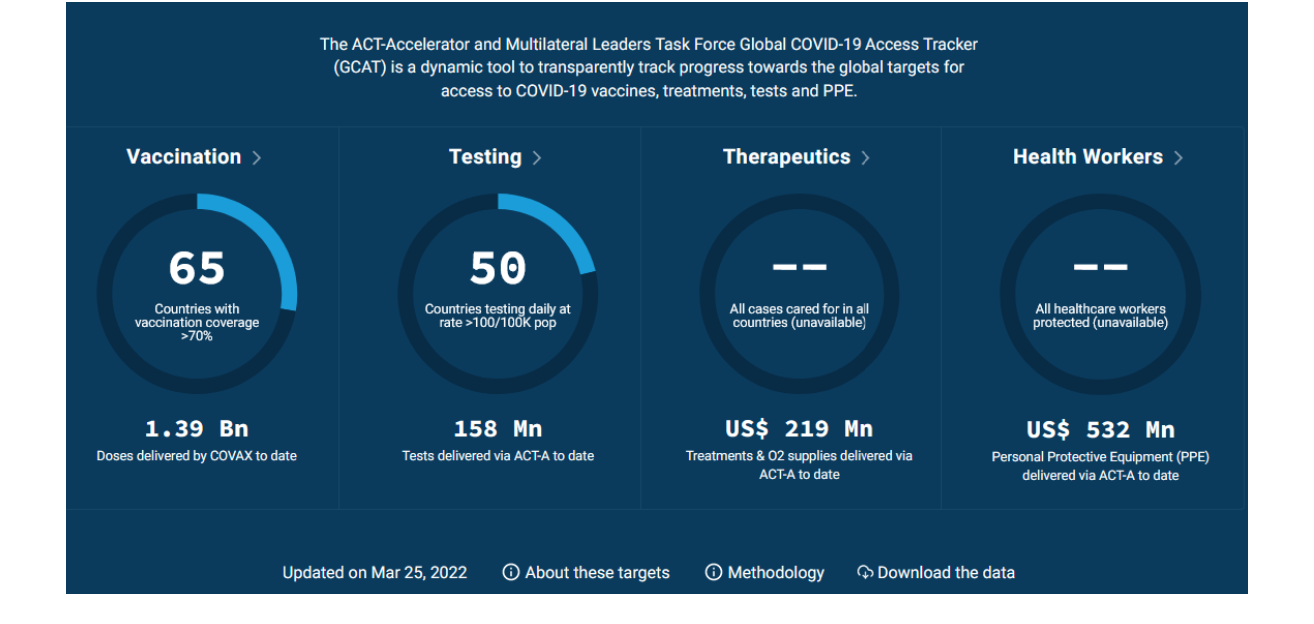
COVID-19 Global Targets and Progress Tracker – IMF The COVID-19 Global Targets and Progress Tracker presents a consolidated view of the progress towards global COVID-19 targets, barriers in access to COVID-19 tools, and delivery of donor pledges.
The global targets presented in the Tracker are based on an alignment of the targets identified in the IMF Pandemic Proposal, ACT-A Strategic Plan & Budget, and the US-hosted Global C19 Summit, and as such have been reaffirmed by multilateral institutions and global leaders. We will continue to enhance the tracker as we improve our data collection efforts.
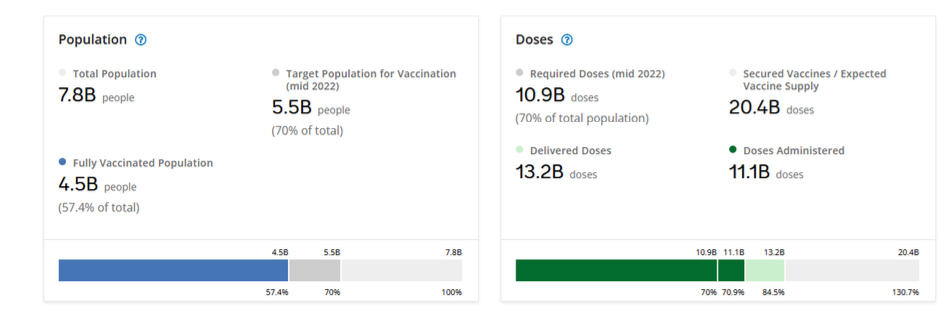
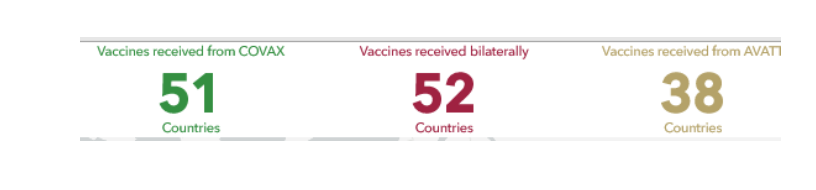
Global Dashboard on COVID-19 Vaccine Equity The Dashboard is a joint initiative of UNDP, WHO and the University of Oxford with cooperation across the UN system, anchored in the SDG 3 Global Action Plan for Healthy Lives and Well-being for All.
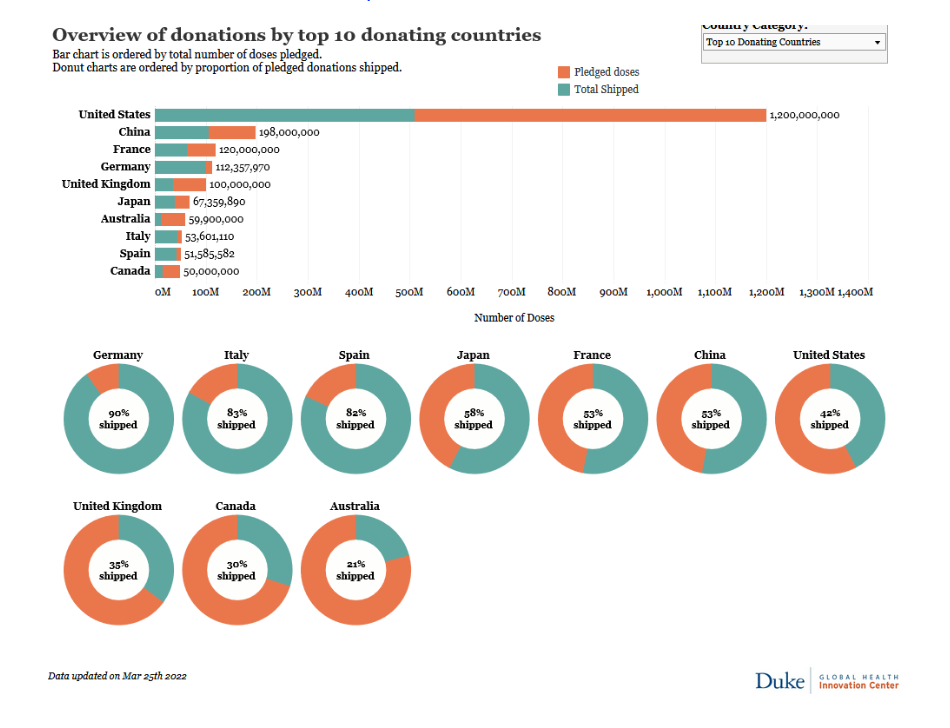
Duke – Launch and Scale Speedometer The Race for Global COVID-19 Vaccine Equity A flurry of nearly 200 COVID-19 vaccine candidates are moving forward through the development and clinical trials processes at unprecedented speed; more than ten candidates are already in Phase 3 large-scale trials and several have received emergency or limited authorization. Our team has aggregated and analyzed publicly available data to track the flow of procurement and manufacturing and better understand global equity challenges. We developed a data framework of relevant variables and conducted desk research of publicly available information to identify COVID vaccine candidates and status, deals and ongoing negotiations for procurement and manufacturing, COVID burden by country, and allocation and distribution plans. We have also conducted interviews with public officials in key countries to better understand the context and challenges facing vaccine allocation and distribution [accessed 24 July 2021] See our COVID Vaccine Purchases research See our COVID Vaccine Manufacturing research See our COVID Vaccine Donations & Exports research
COVID-19 Data Explorer: Global Humanitarian Operations COVID-19 Vaccine Roll-out 26 Mar 2022 | COVAX (WHO,GAVI,CEPI), UNDESA, Press Reports | DATA Global COVID-19 Figures: 476M total confirmed cases; 6.1M total confirmed deaths Global vaccines administered: 11.1B
Number of Countries: 28
COVAX Allocations Round 4-9 (Number of Doses): 170M
COVAX Delivered (Number of Doses): 270M
Other Delivered (Number of Doses): 260M
Total Delivered (Number of Doses): 530M
Total Administered (Number of Doses): 380M
Multilateral Leaders Task Force on COVID-19 [IMF, World Bank Group, WHO, WTO] https://data.covid19taskforce.com/data A global effort to help developing countries access and deliver COVID-19 vaccines, testing, and therapeutics, as they work to end the pandemic and boost economic recovery. The International Monetary Fund, World Bank Group, World Health Organization and World Trade Organization have joined forces to accelerate access to COVID-19 vaccines, therapeutics and diagnostics by leveraging multilateral finance and trade solutions, particularly in low- and middle-income countries. Website accessed 26 Mar 2022: https://data.covid19taskforce.com/data The global view below is complemented by country-specific dashboards here.
Our World in Data Coronavirus (COVID-19) Vaccinations[Accessed 26 Mar 2022] 64.2% of the world population has received at least one dose of a COVID-19 vaccine. 11.16 billion doses have been administered globally, and 15.63 million are now administered each day. Only 14.4% of people in low-income countries have received at least one dose.
USAID [to 26 Mar 2022] https://www.usaid.gov/news-information/press-releases/2021 Selected Press Releases, Statements, Announcements News The United States Announces More Than $195 Million in Additional Humanitarian Assistance for South Sudan
March 25, 2022
The United States, through the U.S. Agency for International Development (USAID) is providing more than $195 million in additional humanitarian assistance for the people of South Sudan, who continue to experience the devastating effects of violence, food insecurity, the COVID-19 pandemic, and successive years of widespread flooding. Approximately 8.9 million people, more than two-thirds of the country’s population, will require humanitarian assistance this year, an increase of 600,000 since 2021.
USAID Provides Nearly $64 Million in Emergency Food Assistance for Vulnerable People Affected by the Crisis in Lebanon
March 23, 2022
In response to growing food security needs in Lebanon, the United States, through the U.S. Agency for International Development (USAID) is providing nearly $64 million in additional humanitarian assistance to help feed vulnerable people in Lebanon. Lebanon is facing increased food insecurity amid the country’s ongoing economic crisis, as well as prolonged impacts of the COVID-19 pandemic, and the August 2020 Beirut port blast. This situation is exacerbated by Putin’s war against Ukraine due to Lebanon’s reliance on imported wheat, primarily from Ukraine. USAID remains concerned that increasing prices of staple foods and fuel in Lebanon will worsen food insecurity. The U.S. government is committed to providing much-needed assistance to the most vulnerable populations in Lebanon.
Administrator Samantha Power on Designation of Atrocities Against Rohingya as Genocide
March 21, 2022
Today, Secretary of State Antony J. Blinken announced that the United States has determined that the Burmese military committed genocide and crimes against humanity against the Rohingya people. All of us are grateful for the committed and forceful advocacy of Rohingya survivors of this genocide—survivors who have already demonstrated unimaginable resilience and bravery in the face of horror—as well as a range of organizations who have worked to document the Burmese military’s crimes.
European Centre for Disease Prevention and Control https://www.ecdc.europa.eu/en Latest Updates [Selected] News Tuberculosis remains one of the deadliest infectious diseases worldwide, warns new report Press release – 24 Mar 2022 According to the latest ECDC/WHO report on tuberculosis (TB) surveillance and monitoring in Europe, a sharp drop (24%) in reported tuberculosis cases between 2019 and 2020 was probably exacerbated by the COVID-19 pandemic, which hindered detection and reporting. Tuberculosis remains one of the world’s deadliest infectious diseases, second only to COVID-19, and drug resistant TB strains are still a major concern. In the fight against tuberculosis, urgent investment is critical, especially in the context of the ongoing pandemic
News ECDC: On Air – podcast on European epidemiology. Episode 17 out now! Podcast – 24 Mar 2022
News Epidemiological update: West Nile virus transmission season in Europe, 2021 Epidemiological update – 24 Mar 2022
Data Presentation: Tuberculosis situation in the EU/EEA, 2020 Presentation – 24 Mar 2022
Press release 23 March 2022 Ukraine: €3.4 billion REACT-EU pre-financing to Member States welcoming refugees fleeing Ukraine
To support Member States welcoming and accommodating refugees fleeing the war in Ukraine, the Commission has today proposed to increase by €3.4 billion the total pre-financing from the Recovery Assistance for Cohesion and the Territories of Europe (REACT-EU).
Government of India – Press Information Bureau Latest Press Releases COVID – 19 Vaccination Update – Day 435 :: India’s cumulative vaccination coverage crosses 183.16 Crore :: More than 26 lakh Vaccine doses administered today till 7 pm :: More than 1.20 Crore Vaccine Doses administered to 12-14 age group so far Posted On: 26 MAR 2022 8:06PM by PIB Delhi
Polio this week as of 23 March 2022
:: Revised containment guidance (GAPIII) soon available for public consultation:On recommendation from the Containment Advisory Group (CAG), and through wide engagement of stakeholders, WHO’s Global Action Plan for Poliovirus Containment (GAPIII, 2015) has been revised. Following a period of critical review by the CAG, the document draft will be made available for public consultation 29 March – 1 May 2022. Revisions to the guidance have been made based on CAG recommendations, review of relevant biorisk management documents to determine alignment, scientific evidence and solicited stakeholder comments on various sections. WHO encourages feedback from containment stakeholders. Please check the GPEI website for information. For queries, please email: containment@who.int.
Summary of new WPV and cVDPV viruses this week (AFP cases and ES positives): – Côte d’Ivoire: one cVDPV2 positive environmental sample – Niger: two cVDPV2 cases – Nigeria: two cVDPV2 cases – Yemen: three cVDPV2 cases
Health emergencies list– WHO
“The health emergencies list details the disease outbreaks, disasters and humanitarian crises where WHO plays an essential role in supporting countries to respond to and recover from emergencies with public health consequences.” Afghanistan crisis[Last apparent update: 14 March 2022]
UN OCHA – Current Emergencies Current Corporate Emergencies Afghanistan No new updates identified.
Northern Ethiopia Ethiopia – Northern Ethiopia Humanitarian Update Situation Report, 25 March 2022 HIGHLIGHTS
The food distribution in Tigray has reached an all-time low since March 2021 as food stocks are almost depleted with only about 68,000 people assisted between 10 – 16 March.
To date, 221.8 MT of medical supplies have been airlifted to Tigray which represents only four per cent of the total medications required to meet health needs in Tigray.
Nearly 12,000 children in 22 schools in Wag Hemra Zone in Amhara benefited from feeding program and more than more than 9,300 students received exercise books during the week.
More than 10,000 people assisted with food in Zone 2 in Afar during the week, reaching 126,000 or 20 percent of the targeted population since last week of February in the region.
No amount of operational cash cleared to be transferred to Tigray since 10 March.
Ukraine Ukraine: Humanitarian Impact Situation Report (As of 12:00 p.m. (EET) on 25 March 2022)
:: [Excerpt] …Health situation and risks.
…COVID-19 vaccination and routine immunization campaigns have almost come to a halt across the country. Before 24 February, at least 50,000 people on average were being vaccinated against COVID-19 each day. Between 24 February and 15 March, however, only 175,000 people were vaccinated against the virus – around 40,790 fewer people on average being vaccinated daily. Between 23 February and 23 March, WHO reports that the seven-day average number of antigenrapid and polymerase chain reaction (PCR) COVID-19 tests fell by a staggering 88 and 96 per percent, respectively, suggesting considerable underreporting of COVID-19 cases and deaths. Over the same period, the number of beds available for COVID-19 patients decreased significantly as many were repurposed, with the largest decreases witnessed in Luhanska (east, 80 per cent), Volynska (north-west, 69 per cent) and Chernihivska (north, 56 per cent) oblasts…
WHO & Regional Offices [to 26 Mar 2022] https://www.who.int/news News [Selected] 25 March 2022 News release WHO establishes the Global Centre for Traditional Medicine in India
24 March 2022 Departmental news First case of HIV cure in a woman after stem cell transplantation reported at CROI-2022
21 March 2022 Departmental news WHO releases clinical management guidelines for influenza
21 March 2022 Departmental news Expanding the network: Togo gains National Influenza Centre
21 March 2022 Departmental news “First time” achievements in pandemic influenza preparedness in two regions with high humanitarian and public health vulnerabilities, 2014-2021
21 March 2022 Departmental news Insights to inform influenza health worker vaccination programmes
21 March 2022 News release On World TB day WHO calls for increased investments into TB services and research
21 March 2022 Departmental news Several Covid-19 vaccine specific recommendations updated [See COVID above for detail]
21 March 2022 Departmental news One Health is critical to addressing zoonotic public health threats and environmental issues
23 March 2022 Speech WHO Director-General’s opening remarks at the Quarterly Briefing for Member States on Preventing and Responding to Sexual Exploitation, Abuse and Harassment – 23 March 2022
23 March 2022 Speech WHO Director-General’s opening remarks at the WHO press conference – 23 March 2022
21 March 2022 Speech WHO Director-General’s opening remarks at the Guinea Worm Ministerial Summit – 21 March 2022
WHO Region of the Americas PAHO
:: 23 Mar 2022 On World Tuberculosis Day, PAHO calls for increased investments in TB services
TB deaths in the Americas increased by an estimated 3,000 in 2020 compared to 2019 due to the COVID-19 pandemic. Around 18,300 children live with the disease in the region, with limited access to diagnosis and treatment Washington, D.C., March 23, 2022 (WHO)- On World Tuberculosis Day, the Pan American Health Organization (PAHO) calls for urgent…
New WHO Publications https://www.who.int/publications/i Selected Titles
25 March 2022 Report of the 7th virtual end TB strategy summit for the highest TB burden countries and countries on the WHO global watchlist, 16–17 November 2021 Overview
The 7th End TB summit of the highest TB burden countries and countries on the WHO Global TB Watchlist took place virtually from 16 to 17 November 2021 (3.5 hours per day). The overall objective of this summit was to facilitate discussions and an exchange of strategic information between National TB Programmes (NTPs), representatives of the WHO Civil Society Task Force, and partners on new ways of working to mitigate and reverse the COVID-19 impact on
TB and reinvigorate the global response to TB. Specific meeting objectives were as follows:
1. to reflect on key challenges and opportunities posted by the ongoing COVID-19 pandemic for NTPs, affected people and vulnerable populations;
2. to consider opportunities for strengthening quality TB case finding and prevention given innovations during the COVID-19 pandemic;
3. to share updates on the latest global situation for TB and exchange strategic information.
This report summarizes the sessions of the summit and provides links to background slides shared by speakers from the country, regional and global level. All slides are featured in the WHO End TB Forum.
Africa CDC [to 26 Mar 2022] http://www.africacdc.org/ News Outbreak Brief 114: Coronavirus Disease 2019 (COVID-19) Pandemic
Date of Issue: 14 March 2022
… As of 6 p.m. East African Time (EAT) 21 March 2022, a total of 11,301,084 COVID-19 cases and 250,646 deaths (CFR: 2.2%) have been reported by the 55 African Union (AU) Member States (MS). This represents 2.4% of all cases and 4.1% of all deaths reported globally. Thirty-five (64%) AU MS are reporting CFRs higher than the global CFR. Since the detection of COVID-19 on the African continent in February 2020, 53 (96%) AU MS have experienced three COVID-19 waves, 47 (72%) countries have experienced four waves and nine countries have experienced five waves. One country (Mauritius) is currently experiencing a sixth wave… Despite a test positivity rate of 11.1%, the daily reported number of new cases across the continent is on a downward trend. In the past week, more than 572 thousand new tests were conducted, which is a 32% decrease in the number of tests conducted in week 11 compared to the previous week…
The Chinese mainland on Thursday reported 1,301 locally transmitted COVID-19 cases, down from 2,010 on Wednesday, the National Health Commission said Friday.
National Medical Products Administration– PRC [to 26 Mar 2022]
The Chinese mainland on Thursday reported 1,301 locally transmitted COVID-19 cases, down from 2,010 on Wednesday, the National Health Commission said Friday.
Careful readers will note that the number and range of organizations now monitored in our Announcements section below has grown as the impacts of the pandemic have spread across global economies, supply chains and programmatic activity of multilateral agencies and INGOs.
The Bill & Melinda Gates Medical Research Institute is a non-profit biotech organization. Our mission is to develop products to fight malaria, tuberculosis, and diarrheal diseases—three major causes of mortality, poverty, and inequality in developing countries. The world has unprecedented scientific tools at its disposal; now is the time to use them to save the lives of the world’s poorest people
The European & Developing Countries Clinical Trials Partnership (EDCTP) aims to accelerate the development of new or improved drugs, vaccines, microbicides and diagnostics against HIV/AIDS, tuberculosis and malaria as well as other poverty-related and neglected infectious diseases in sub-Saharan Africa, with a focus on phase II and III clinical trials
On this year’s World TB Day, EDCTP joins the global health community in a call to urgently raise investments to achieve the commitments to end TB made by global leaders. Although funding towards TB research and development did not decrease as significantly as expected during the COVID-19 pandemic, it is still below half of the $2 billion annual financing target committed to by governments at the United Nations General Assembly High-Level Meeting on TB in 2018. In recognition of this chronic underfunding, EDCTP has made substantial investments in TB research and, together with our partners, recently launched the Global TB vaccine R&D roadmap and published several tools to accelerate TB vaccines R&D.
On March 18, 2022, the stakeholders of the APRECIT project met in Madagascar and remotely for the project’s second steering committee for the improvement of the management of latent tuberculosis infection (LTI)…
The Global Fund to Fight AIDS, Tuberculosis and Malaria commends the announcement by Minister Svenja Schulze on the occasion of World Tuberculosis Day to make available an additional EUR175 million to the Global Fund’s COVID-19 Response Mechanism, p…
Researchers and funders around the world rely on the COVID-19 Research Project Tracker and associated Living Mapping Review (LMR) to funnel resources where needs are greatest by tracking the latest COVID-19 research trends and gaps. For the first time, the LMR features an analysis of research projects on our Tracker mapped against the pillars and priorities outlined in the UN Research Roadmap for the COVID-19 Recovery…
The second webinar in the ZonMw series ‘Response to COVID-19 vaccine in patients with a hematological condition and primary immunodeficiencies’… Monday April 4, 2022, from 5pm to 6pm CET.
Thank you to the Ambassador of Mexico for organising this meeting and thank you for the opportunity to join all of you today.Just yesterday the Security Council met to discuss Syria which has now entered its 11th year of conflict.
Peter Maurer, the president of the International Committee of the Red Cross (ICRC), has completed a two-day visit to Moscow where he continued ongoing humanitarian discussions with the Russian authorities.
Vice-President of the ICRC Gilles Carbonnier addresses the issues of water access and the impact of conflicts and climate change at the ninth World Water Forum in Dakar.
21-03-2022 | News release
International Coalition of Medicines Regulatory Authorities [ICMRA]
ISC is a non-governmental organization with a unique global membership that brings together 40 international scientific Unions and Associations and over 140 national and regional scientific organizations including Academies and Research Councils.
So-called ‘predatory’ activities in academic publishing and conferences are on the increase worldwide and ‘risk becoming engrained in research culture’, according to a new InterAcademy Partnership report, which draws on a global survey of researchers.
Vaccination mandates and requirements can be effective in increasing COVID-19 vaccination rates but their success depends on being targeted and on building trust says a new rapid expert consultation which also outlines considerations for using incentives to promote booster uptake.
National Vaccine Program Office – U.S. HHS [to 26 Mar 2022]
Vaccines Federal Implementation Plan 2021-2025 On Wednesday March 2, 2022, the U.S. Department of Health and Human Services (HHS) published a Request for Information (RFI) to solicit stakeholder written public comments on the draft Vaccines Federal Implementation Plan 2021-2025- PDF*. HHS values input from all stakeholders and will take all public comments into consideration before finalizing this document. We encourage your input or comments and ask that you circulate this information to others who may also wish to provide comments. Information about how to provide written public comment is found on HHS.gov and the deadline for submissions is 5 p.m. EST Tuesday March 29, 2022. The Vaccines Federal Implementation Plan is a companion document to the Vaccines National Strategic Plan 2021-2025 published in January 2021. This plan outlines the federal government’s broad national vaccination goals and offers a framework to eliminate vaccine-preventable diseases through safe and effective vaccination over the lifespan, for both federal agencies and external partners. The implementation plan focuses on the specific actions that federal agencies can take to further those same national vaccination goals.
Even in wealthy economies, access to medicines is increasingly affected by medicine shortages – an issue exacerbated with the onset of the COVID-19 pandemic. The aim of this paper was to examine the extent and nature of medicine shortages in OECD countries (pre-COVID-19) and explore the reasons for this growing global problem. Although differences in monitoring mechanisms make multi-country analyses challenging, a sample of 14 OECD countries reported a 60% increase in the number of shortage notifications over the period 2017-2019. While the complexity of pharmaceutical manufacturing and supply chains hampers root cause analyses, available literature suggests that shortages, as reported by marketing authorisation holders, are predominantly due to manufacturing and quality issues. Nevertheless, commercial factors – and the policy settings that influence them – may play an important role. Although several OECD countries have implemented policy measures to mitigate, monitor and prevent shortages, more robust data and further analyses of root causes and effective policy responses are needed. The way forward should involve a global approach that engages all relevant actors and looks beyond the health care sector alone.
The Vietnam Ministry of Health, the UK Foreign, Commonwealth & Development Office, and PATH came together for the dissemination workshop of a project to internationalize Vietnam’s COVID-19 vaccine data and certificates.
Hanoi, Vietnam, March 22, 2022—The Vietnam Ministry of Health (MOH), the UK Foreign, Commonwealth & Development Office (FCDO), PATH, and implementing partners hosted the dissemination workshop for a six-month collaboration to support the development of Vietnam’s COVID-19 digital vaccination certification. The workshop was attended by the Deputy Minister of the Vietnam MOH, Tran Van Thuan; the British Ambassador to Vietnam, Gareth Ward; and representatives of implementing partners.
The project is funded by the Vaccine Data Co-Lab, a component of the Frontier Technology program and an FCDO-led collaboration supporting actionable solutions that improve data-driven prioritization, allocation, and distribution of COVID-19 vaccines. In May 2021, the UK-funded program launched an open call for technical proposals to identify organizations working directly with local and national governments in low- and middle-income countries to ensure sustained capacity for vaccine deployment. PATH was the first organization to receive a grant from the Vaccine Data Co-Lab…
Geneva – In advance of World TB Day, 24 March, Unitaid reaffirms its commitment to bring innovative approaches to the fight against TB.
The COVID-19 pandemic has had a devastating effect on health programmes worldwide, but tuberculosis (TB) efforts have been disproportionately affected. Disruptions and delays to crucial services caused deaths from TB to increase for the first time in over a decade.
“In a rapidly changing world, the need to confront new challenges with updated tools and strategies is more salient than ever,” said Dr Philippe Duneton, Executive Director of Unitaid. “The tuberculosis bacteria was identified 140 years ago. Yet it continues to cause 1.5 million deaths each year, and millions of people around the world still lack access to the best tools, treatments, and prevention.
“The COVID-19 pandemic puts this in a particularly stark light. Since it began just over two years ago, we have developed and deployed rapid at-home tests, several powerful vaccines, multiple treatments that avert severe disease and mobilized billions in financing. And though there remains much to do, we are hopeful that we’re starting to turn a corner…
Vaccine Equity Cooperative [nee Initiative] [to 26 Mar 2022]
More than 120,000 Jordanian households to benefit from additional financing Washington DC, March 22, 2022 – The World Bank has approved US$350 million in additional financing for Jordan’s COVID-19…
Strengthened partnership aims to accelerate coordinated strategy on human, animal and ecosystem health
Rome/Paris/Geneva/Nairobi – Work to tackle the challenges of human, animal and ecosystem health using a more integrated approach has seen significant progress in the past year, leaders of three international organizations cooperating across these sectors said, as they expanded their group to include a fourth body, the UN Environment Programme (UNEP).
At its annual executive meeting this week, the Tripartite partnership for One Health, bringing together the Food and Agriculture Organization of the United Nations (FAO), the World Health Organization (WHO) and the World Organisation for Animal Health (OIE),formally became the Quadripartite as it signed a Memorandum of Understanding with UNEP.
The One Health approach aims to sustainably balance and optimize the health of people, animals, ecosystems and the wider environment. It mobilizes multiple sectors, disciplines and communities to work together to foster well-being and tackle threats to health and ecosystems. And it addresses the collective need for clean water, energy and air, safe and nutritious food, action on climate change, and contributing to sustainable development…
::::::
ARM [Alliance for Regenerative Medicine] [to 26 Mar 2022]
21 March 2022 – The global research-based pharmaceutical industry stands in solidarity with the people of Ukraine and condemns the invasion of their country and the suffering it continues to cause. Overcoming the challenges that this unprecedented humanitarian crisis poses for patients is our main concern.
We are united in our mission of providing treatments and vaccines to all those affected by the war, wherever they are. Safe passage of medical products remains a top priority.
The industry is working in a variety of ways to support those affected by the unfolding humanitarian crisis. This includes providing free essential medicines and giving financial support to NGOs on the ground. We are monitoring for supply chain disruptions and building supply capacity where it’s needed as well as working with the wider health community to address issues as they arise.
To learn more about individual company efforts, please visit the website set up by the European Federation of Pharmaceutical Industries and Associations’ (EFPIA), found here.
International Generic and Biosimilar Medicines Association [IGBA]
Journal Watch Vaccines and Global Health: The Week in Review continues its weekly scanning of key peer-reviewed journals to identify and cite articles, commentary and editorials, books reviews and other content supporting our focu-s on vaccine ethics and policy. Journal Watch is not intended to be exhaustive, but indicative of themes and issues the Center is actively tracking. We selectively provide full text of some editorial and comment articles that are specifically relevant to our work. Successful access to some of the links provided may require subscription or other access arrangement unique to the publisher.
If you would like to suggest other journal titles to include in this service, please contact David Curry at: david.r.curry@centerforvaccineethicsandpolicy.org
Tactical Health and Law Enforcement
Tactical health involves providing field-based clinical support to law enforcement operations during frontline crisis interventions and prehospital emergency care. Health professional skill can inform individual officers’ occupational health maintenance and help agents of the state navigate primary and secondary trauma and posttrauma experiences in field- and clinic-based settings. Tactical health expertise can also inform department- and agency-level policies, decisions, and responses to community health and safety threats. Ethical questions considered in this issue focus on the nature and scope of health professionals’ collaborations with law enforcement personnel during and following critical event preparation and responses.
Disease transmission and mass gatherings: a case study on meningococcal infection during Hajj Mass gatherings can not only trigger major outbreaks on-site but also facilitate global spread of infectious pathogens. Hajj is one of the largest mass gathering events worldwide where over two million pilgrim…
Authors: Laurent Coudeville, Amine Amiche, Ashrafur Rahman, Julien Arino, Biao Tang, Ombeline Jollivet, Alp Dogu, Edward Thommes and Jianhong Wu
Citation: BMC Infectious Diseases 2022 22:275
Content type: Research article Published on: 22 March 2022
Ethical and regulatory implications of the COVID-19 pandemic for the medical devices industry and its representatives
The development and deployment of medical devices, along with most areas of healthcare, has been significantly impacted by the COVID-19 pandemic. This has had variable ethical implications, two of which we wil…
Authors: Brette Blakely, Wendy Rogers, Jane Johnson, Quinn Grundy, Katrina Hutchison, Robyn Clay-Williams, Bernadette Richards and Guy Maddern
Citation: BMC Medical Ethics 2022 23:31
Content type: Debate Published on: 23 March 2022
Indicators and criteria of consciousness: ethical implications for the care of behaviourally unresponsive patients
Assessing consciousness in other subjects, particularly in non-verbal and behaviourally disabled subjects (e.g., patients with disorders of consciousness), is notoriously challenging but increasingly urgent. T…
Authors: Michele Farisco, Cyriel Pennartz, Jitka Annen, Benedetta Cecconi and Kathinka Evers
Citation: BMC Medical Ethics 2022 23:30
Content type: Debate Published on: 21 March 2022
Cross-country evidence on the role of national governance in boosting COVID-19 vaccination Frequent mutations of the COVID-19 virus, such as the Delta and Omicron variants, have prolonged the pandemic. Rich countries have approved the booster shots (3rd doses) of vaccine, but this causes further delay …
Authors: Takeshi Aida and Masahiro Shoji
Citation: BMC Public Health 2022 22:576
Content type: Research Published on: 23 March 2022
Willingness and uptake of the COVID-19 testing and vaccination in urban China during the low-risk period: a cross-sectional study Regular testing and vaccination are effective measures to mitigate the ongoing COVID-19 pandemic. Evidence on the willingness and uptake of the COVID-19 testing is scarce, and the willingness and uptake of vac…
Authors: Suhang Song, Shujie Zang, Liubing Gong, Cuilin Xu, Leesa Lin, Mark R. Francis and Zhiyuan Hou
Citation: BMC Public Health 2022 22:556
Content type: Research Published on: 21 March 2022
Tools for assessing the scalability of innovations in health: a systematic review The last decade has seen growing interest in scaling up of innovations to strengthen healthcare systems. However, the lack of appropriate methods for determining their potential for scale-up is an unfortunate …
Authors: Ali Ben Charif, Hervé Tchala Vignon Zomahoun, Amédé Gogovor, Mamane Abdoulaye Samri, José Massougbodji, Luke Wolfenden, Jenny Ploeg, Merrick Zwarenstein, Andrew J. Milat, Nathalie Rheault, Youssoufa M. Ousseine, Jennifer Salerno, Maureen Markle-Reid and France Légaré
Citation: Health Research Policy and Systems 2022 20:34
Content type: Review Published on: 24 March 2022
Using qualitative research to develop an elaboration of the TIDieR checklist for interventions to enhance vaccination communication: short report The COVID-19 pandemic has led to an increased interest in communication with the public regarding vaccination. Our recent Cochrane qualitative evidence synthesis points to several factors that could influence …
Authors: Claire Glenton, Benedicte Carlsen, Brita Askeland Winje, Renske Eilers, Manuela Dominique Wennekes, Tammy C. Hoffmann and Simon Lewin
Citation: Health Research Policy and Systems 2022 20:31
Content type: Research Published on: 19 March 2022