Estimating global and regional disruptions to routine childhood vaccine coverage during the COVID-19 pandemic in 2020: a modelling study

The Lancet
Aug 07, 2021 Volume 398 Number 10299 p465-558, e9
https://www.thelancet.com/journals/lancet/issue/current


Estimating global and regional disruptions to routine childhood vaccine coverage during the COVID-19 pandemic in 2020: a modelling study
Kate Causey, et al
Open Access
Summary
Background
The COVID-19 pandemic and efforts to reduce SARS-CoV-2 transmission substantially affected health services worldwide. To better understand the impact of the pandemic on childhood routine immunisation, we estimated disruptions in vaccine coverage associated with the pandemic in 2020, globally and by Global Burden of Disease (GBD) super-region.
Methods
For this analysis we used a two-step hierarchical random spline modelling approach to estimate global and regional disruptions to routine immunisation using administrative data and reports from electronic immunisation systems, with mobility data as a model input. Paired with estimates of vaccine coverage expected in the absence of COVID-19, which were derived from vaccine coverage models from GBD 2020, Release 1 (GBD 2020 R1), we estimated the number of children who missed routinely delivered doses of the third-dose diphtheria-tetanus-pertussis (DTP3) vaccine and first-dose measles-containing vaccine (MCV1) in 2020.
Findings
Globally, in 2020, estimated vaccine coverage was 76·7% (95% uncertainty interval 74·3–78·6) for DTP3 and 78·9% (74·8–81·9) for MCV1, representing relative reductions of 7·7% (6·0–10·1) for DTP3 and 7·9% (5·2–11·7) for MCV1, compared to expected doses delivered in the absence of the COVID-19 pandemic. From January to December, 2020, we estimated that 30·0 million (27·6–33·1) children missed doses of DTP3 and 27·2 million (23·4–32·5) children missed MCV1 doses. Compared to expected gaps in coverage for eligible children in 2020, these estimates represented an additional 8·5 million (6·5–11·6) children not routinely vaccinated with DTP3 and an additional 8·9 million (5·7–13·7) children not routinely vaccinated with MCV1 attributable to the COVID-19 pandemic. Globally, monthly disruptions were highest in April, 2020, across all GBD super-regions, with 4·6 million (4·0–5·4) children missing doses of DTP3 and 4·4 million (3·7–5·2) children missing doses of MCV1. Every GBD super-region saw reductions in vaccine coverage in March and April, with the most severe annual impacts in north Africa and the Middle East, south Asia, and Latin America and the Caribbean. We estimated the lowest annual reductions in vaccine delivery in sub-Saharan Africa, where disruptions remained minimal throughout the year. For some super-regions, including southeast Asia, east Asia, and Oceania for both DTP3 and MCV1, the high-income super-region for DTP3, and south Asia for MCV1, estimates suggest that monthly doses were delivered at or above expected levels during the second half of 2020.
Interpretation
Routine immunisation services faced stark challenges in 2020, with the COVID-19 pandemic causing the most widespread and largest global disruption in recent history. Although the latest coverage trajectories point towards recovery in some regions, a combination of lagging catch-up immunisation services, continued SARS-CoV-2 transmission, and persistent gaps in vaccine coverage before the pandemic still left millions of children under-vaccinated or unvaccinated against preventable diseases at the end of 2020, and these gaps are likely to extend throughout 2021. Strengthening routine immunisation data systems and efforts to target resources and outreach will be essential to minimise the risk of vaccine-preventable disease outbreaks, reach children who missed routine vaccine doses during the pandemic, and accelerate progress towards higher and more equitable vaccination coverage over the next decade.
Funding
Bill & Melinda Gates Foundation.

Patient Portal Reminders for Pediatric Influenza Vaccinations: A Randomized Clinical Trial

Pediatrics
August 01, 2021; Volume 148,Issue 2
https://pediatrics.aappublications.org/


Articles
Patient Portal Reminders for Pediatric Influenza Vaccinations: A Randomized Clinical Trial
Carlos Lerner, Christina Albertin, Alejandra Casillas, O. Kenrik Duru, Michael K. Ong, Sitaram Vangala, Sharon Humiston, Sharon Evans, Michael Sloyan, Craig R. Fox, Jonathan E. Bogard, Sarah Friedman, Peter G. Szilagyi
Pediatrics, Aug 2021, 148 (2) e2020048413

Educating the future generation of researchers: A cross-disciplinary survey of trends in analysis methods

PLoS Biology
https://journals.plos.org/plosbiology/
(Accessed 7 Aug 2021)


Educating the future generation of researchers: A cross-disciplinary survey of trends in analysis methods
Taylor Bolt, Jason S. Nomi, Danilo Bzdok, Lucina Q. Uddin
Meta-Research Article | published 29 Jul 2021 PLOS Biology
https://doi.org/10.1371/journal.pbio.3001313

Levels of pneumococcal conjugate vaccine coverage and indirect protection against invasive pneumococcal disease and pneumonia hospitalisations in Australia: An observational study

PLoS Medicine
http://www.plosmedicine.org/
(Accessed 7 Aug 2021)


Levels of pneumococcal conjugate vaccine coverage and indirect protection against invasive pneumococcal disease and pneumonia hospitalisations in Australia: An observational study
Jocelyn Chan, Heather F. Gidding, Christopher C. Blyth, Parveen Fathima, Sanjay Jayasinghe, Peter B. McIntyre, Hannah C. Moore, Kim Mulholland, Cattram D. Nguyen, Ross Andrews, Fiona M. Russell
Research Article | published 03 Aug 2021 PLOS Medicine
https://doi.org/10.1371/journal.pmed.1003733

Validation of a redesigned pan-poliovirus assay and real-time PCR platforms for the global poliovirus laboratory network

PLoS One
http://www.plosone.org/
[Accessed 7 Aug 2021]


Validation of a redesigned pan-poliovirus assay and real-time PCR platforms for the global poliovirus laboratory network
Hong Sun, Chelsea Harrington, Nancy Gerloff, Mark Mandelbaum, Stacey Jeffries-Miles, Lea Necitas G. Apostol, Ma. Anne-Lesley D. Valencia, Shahzad Shaukat, Mehar Angez, Deepa K. Sharma, Uma P. Nalavade, Shailesh D. Pawar, Elisabeth Pukuta Simbu, Seta Andriamamonjy, Richter Razafindratsimandresy, Everardo Vega
Research Article | published 06 Aug 2021 PLOS ONE
https://doi.org/10.1371/journal.pone.0255795

Rotavirus A infection in pre- and post-vaccine period: Risk factors, genotypes distribution by vaccination status and age of children in Nampula Province, Northern Mozambique (2015-2019)

PLoS One
http://www.plosone.org/
[Accessed 7 Aug 2021]


Rotavirus A infection in pre- and post-vaccine period: Risk factors, genotypes distribution by vaccination status and age of children in Nampula Province, Northern Mozambique (2015-2019)
Assucênio Chissaque, Adilson Fernando Loforte Bauhofer, Idalécia Cossa-Moiane, Ezequias Sitoe, Benilde Munlela, Eva Dora João, Jerónimo S. Langa, Jorfélia José Chilaúle, Simone Salvador Boene, Marta Cassocera, Esperança Lourenço Guimarães, Timothy A. Kellogg, Luzia Gonçalves, Nilsa de Deus
Research Article | published 06 Aug 2021 PLOS ONE
https://doi.org/10.1371/journal.pone.0255720

COVID-19 vaccine access and attitudes among people experiencing homelessness from pilot mobile phone survey in Los Angeles, CA

PLoS One
http://www.plosone.org/
[Accessed 7 Aug 2021]


COVID-19 vaccine access and attitudes among people experiencing homelessness from pilot mobile phone survey in Los Angeles, CA
Randall Kuhn, Benjamin Henwood, Alexander Lawton, Mary Kleva, Karthik Murali, Coley King, Lillian Gelberg
Research Article | published 30 Jul 2021 PLOS ONE
https://doi.org/10.1371/journal.pone.0255246

Design and proof of concept for targeted phage-based COVID-19 vaccination strategies with a streamlined cold-free supply chain

PNAS – Proceedings of the National Academy of Sciences of the United States of America
July 27, 2021; vol. 118 no. 30
https://www.pnas.org/content/118/30


Microbiology
Design and proof of concept for targeted phage-based COVID-19 vaccination strategies with a streamlined cold-free supply chain
Daniela I. Staquicini, Fenny H. F. Tang, Christopher Markosian, Virginia J. Yao, Fernanda I. Staquicini, Esteban Dodero-Rojas, Vinícius G. Contessoto, Deodate Davis, Paul O’Brien, Nazia Habib, Tracey L. Smith, Natalie Bruiners, Richard L. Sidman, Maria L. Gennaro, Edmund C. Lattime, Steven K. Libutti, Paul C. Whitford, Stephen K. Burley, José N. Onuchic, Wadih Arap, and Renata Pasqualini
PNAS July 27, 2021 118 (30) e2105739118; https://doi.org/10.1073/pnas.2105739118

Taliban’s rise puts polio eradication in danger

Science
06 August 2021 Vol 373, Issue 6555
http://www.sciencemag.org/current.dtl


In Depth
Taliban’s rise puts polio eradication in danger
By Leslie Roberts
Science06 Aug 2021 : 605-606 Restricted Access
U.S. departure from Afghanistan raises questions about future of vaccination drives.
Summary
The U.S. troop withdrawal from Afghanistan is imperiling the 3-decade global quest to eradicate polio. The Taliban, which now controls large swaths of the country, has blocked house-to-house polio vaccination in areas under its reign the past 3 years, putting up to 3 million children out of reach of the campaign. The Taliban may well wrest complete control from the Afghan government—which supports the eradication campaign—after U.S. forces are gone. But some inside and outside the Global Polio Eradication Initiative say a clear resolution to the conflict, regardless of who prevails, may actually aid eradication efforts. They hope the campaign will be able to work with the Taliban to keep vaccinations going if it consolidates power.

Evaluation of post-introduction COVID-19 vaccine effectiveness: Summary of interim guidance of the World Health Organization

Vaccine
Volume 39, Issue 30 Pages 4013-4238 (5 July 2021)
https://www.sciencedirect.com/journal/vaccine/vol/39/issue/30


Conference info Abstract only
Evaluation of post-introduction COVID-19 vaccine effectiveness: Summary of interim guidance of the World Health Organization
Minal K. Patel, Isabel Bergeri, Joseph S. Bresee, Benjamin J. Cowling, … Daniel R. Feikin
Pages 4013-4024

School-based HPV vaccination positively impacts parents’ attitudes toward adolescent vaccination

Vaccine
Volume 39, Issue 30 Pages 4013-4238 (5 July 2021)
https://www.sciencedirect.com/journal/vaccine/vol/39/issue/30


Research article Open access
School-based HPV vaccination positively impacts parents’ attitudes toward adolescent vaccination
Cristyn Davies, Tanya Stoney, Heidi Hutton, Adriana Parrella, … S. Rachel Skinner
Pages 4190-4198

Think Tanks et al

Think Tanks et al
 
 
Brookings [to 7 Aug 2021]
http://www.brookings.edu/
FixGov
Vaccine mandates are more popular than you think
William A. Galston
Thursday, August 5, 2021

Interactive
COVID-19 vaccination efforts in the Middle East and North Africa
Paul Dyer, Isaac Schaider, and Andrew Letzkus
Tuesday, August 3, 2021
 
 
Center for Global Development [to 7 Aug 2021]
http://www.cgdev.org/page/press-center
Publications
Better Together: Exploring the Role of Pooled Procurement in Improving Access to Medicines amid COVID-19
August 2, 2021
Access to safe, effective, and affordable essential medicines is an integral global health goal, and all the more important during a public health emergency like COVID-19. Supply chain inefficiencies, procurement capacity constraints, and financial difficulties impede access to affordable, quality medicines; crises exacerbate these issues.
Julia Kaufman, Morgan Pincombe and Javier Guzman

The US Is Losing the Global War Against COVID-19—And That Is a National Security Issue
July 28, 2021
“The fight against COVID-19 is a global war but policymakers are not behaving accordingly. As a result… the scars will haunt our international relations for years to come.”
Masood Ahmed
 
 
Chatham House [to 7 Aug 2021]
https://www.chathamhouse.org/
Accessed 7 Aug 2021
[No new digest content identified]


CSIS
https://www.csis.org/
Accessed 7 Aug 2021
Podcast Episode
Chris Murray, IHME: “A Very Awkward Situation”
August 6, 2021 | By J. Stephen Morrison
Chris Murray, director of IHME, joined our podcast once again, at this major moment of reset of expectations – of our ability to control the pandemic, of policy decisions, data gaps, political attitudes and behavior, hitting the wall of hesitancy and refusal to vaccinate, and public confusion. We cover the full gamut: the forecast for the fall surge, missteps on masking, the need for greater transparency in data, and how much room exists to overcome resistance to vaccines.

Transcript
A Conversation with Dr. Anthony Fauci on the Antiviral Program for Pandemics
August 3, 2021

Report
U.S. Emergency Plan for Global Covid-19 Relief: Urgent Action to End the Pandemic Globally and Accelerate U.S. Recovery and Security
August 3, 2021

Podcast Episode
China’s Global Response to the COVID-19 Pandemic: A Conversation with Dr. Yanzhong Huang
August 3, 2021 | By Bonny Lin


Kaiser Family Foundation
https://www.kff.org/search/?post_type=press-release
August 4, 2021 News Release
Most Unvaccinated Adults Don’t Believe the Vaccines are Very Effective and See the Vaccines as a Greater Health Risk than COVID-19 Itself
Vaccinated Adults Are Nearly Twice as Likely as Unvaccinated Ones to Worry that New Variants Like Delta Will Worsen the Pandemic Nationally and Locally As public health officials struggle to boost vaccination rates nationally, the latest KFF COVID-19 Vaccine Monitor reports that a narrow majority (53%) of unvaccinated adults believe…

August 2, 2021 News Release
Once Common, COVID-19 Deaths in Long-Term Care Were Rare across Most States in June
Early in the COVID-19 pandemic, residents and staff at nursing homes and other long-term care facilities accounted for a huge share of COVID deaths, but a new KFF analysis finds that they were relatively rare events across the country in June. The analysis finds that 13 states and the District…

July 30, 2021 News Release
COVID-19 Vaccine Breakthrough Cases Are Extremely Rare, According to KFF State Data Analysis
As COVID-19 cases increase along with spread of the more transmissible Delta variant, the effectiveness of COVID-19 vaccines continues to be an important topic. A new KFF analysis looks at COVID-19 vaccine “breakthrough cases,” when fully vaccinated individuals become infected, as well as hospitalizations and deaths, to see which states…

Vaccines and Global Health: The Week in Review :: 24 July 2021

Vaccines and Global Health: The Week in Review is a weekly digest  summarizing news, events, announcements, peer-reviewed articles and research in the global vaccine ethics and policy space. Content is aggregated from key governmental, NGO, international organization and industry sources, key peer-reviewed journals, and other media channels. This summary proceeds from the broad base of themes and issues monitored by the Center for Vaccine Ethics & Policy in its work: it is not intended to be exhaustive in its coverage. You are viewing the blog version of our weekly digest, typically comprised of between 30 and 40 posts below all dated with the current issue date

.– Request an Email Summary: Vaccines and Global Health : The Week in Review is published as a single email summary, scheduled for release each Saturday evening before midnight (EDT in the U.S.). If you would like to receive the email version, please send your request to david.r.curry@centerforvaccineethicsandpolicy.org.

– pdf version:  A pdf of the current issue is available here: 

– blog edition: comprised of the approx. 35+ entries posted below.

– Twitter:  Readers can also follow developments on twitter: @vaxethicspolicy.
.
– Links:  We endeavor to test each link as we incorporate it into any post, but recognize that some links may become “stale” as publications and websites reorganize content over time. We apologize in advance for any links that may not be operative. We believe the contextual information in a given post should allow retrieval, but please contact us as above for assistance if necessary.

Support this knowledge-sharing service: Your financial support helps us cover our costs and to address a current shortfall in our annual operating budget. Click here to donate and thank you in advance for your contribution.

.
David R. Curry, MS
Executive Director
Center for Vaccine Ethics and Policy

WHO-WTO High-Level Dialogue on Expanding COVID-19 Vaccine Manufacture to Promote Equitable Access

Milestones :: Perspectives :: Research


WHO-WTO High-Level Dialogue on Expanding COVID-19 Vaccine Manufacture to Promote Equitable Access

WHO-WTO dialogue steps up efforts for increased COVID-19 vaccine production and equitable access
21 July 2021
The World Health Organization (WHO) and the WTO on 21 July hosted a High-Level Dialogue on “Expanding COVID-19 vaccine manufacture to promote equitable access”, with the participation of senior policymakers, heads of multilateral agencies, vaccine manufacturers, development finance institutions, global health initiatives and public health activists.


The event, which was held under the Chatham House Rule, aimed to identify obstacles and propose solutions for increasing vaccine production and closing the wide gap in vaccination rates between rich and poor countries.

Participants described current and projected production volumes as well as plans for new investments in production capacity. They shared experiences about specific supply chain bottlenecks they were encountering, from export restrictions and raw material shortages to onerous regulatory processes, and exchanged ideas on how these might be addressed.

They discussed issues around the transfer of know-how and technology as well as factors influencing their decisions on licensing intellectual property.


While there was broad agreement on the importance of keeping supply chains open and predictable, different perspectives were expressed on the proposed waiver of the WTO’s Trade-Related Intellectual Property Rights Agreement provisions pertaining to vaccines and other products needed to combat COVID-19.

The discussions also touched upon a wide range of issues where greater international cooperation would be beneficial. For instance, multiple participants noted that uncoordinated national recognition of WHO-approved vaccines could leave many vaccinated people unable to travel to places where their vaccines are not recognised. In this regard, they urged countries to accept all WHO-approved vaccines…


::::::

WHO Director-General’s opening remarks at the WTO – WHO High Level Dialogue: Expanding COVID-19 Vaccine Manufacture To Promote Equitable Access
21 July 2021
My sister Dr Ngozi, dear Mr Tang, Excellencies, members of the private sector, dear colleagues and friends, First of all, I would like to thank you, my sister Ngozi, and your colleagues at WTO for organizing this very important dialogue, and for your strong leadership in addressing the vaccine crisis.

I’m speaking to you from Tokyo, where earlier this morning I had the honour of addressing the International Olympic Committee. I told them that I had come to Tokyo to answer a question that I am often asked: when will the pandemic end? And my answer was simple: it will end when the world chooses to end it, because the solutions are in our hands.

We have all the tools we need: proven public health and social measures; rapid and accurate diagnostics; effective therapeutics including oxygen; and of course, powerful vaccines. And yet as we speak, we are in the early stages of another wave of infections and deaths.

The Delta variant is wreaking havoc around the world. Between now and when we finish our discussion today, more than 1500 people will die from COVID-19. How can this be, 19 months into the pandemic, and 7 months since the first vaccines were approved?

Without doubt, the development, approval and rollout of safe and effective vaccines against COVID-19 less than a year after the first reported cases is a stunning scientific achievement, and a much-needed source of hope for bringing the pandemic under control. And I would like to use this opportunity to thank the leaders of the private sector, the manufacturers who have joined us today. Congratulations for this very historic achievement.

But there remains a shocking imbalance in the global distribution of vaccines. This has created a two-track pandemic: the haves are opening up, while the have-nots are locking down. Over 3.5 billion vaccines have been distributed globally, but more than 75 percent of those have gone to just ten countries. Vaccine inequity is not only a moral failure, it is also epidemiologically and economically self-defeating. Of course, vaccines alone cannot solve the pandemic. Rapid diagnostics and life- saving therapeutics are also vital.

Last month, I had the pleasure of meeting with DG Ngozi, my sister, and DG Tang to commit to working together more closely to tackle the COVID-19 pandemic. We committed to intensified capacity building and providing robust joint technical assistance to countries on COVID-19 health, intellectual property and trade-related matters. Ngozi and I also are working closely together to advocate for immediate, innovative and sustainable solutions to ensure access to COVID-19 vaccines and other technologies.

Our global targets are to vaccinate at least 10% of the population of every country by September, at least 40% by the end of the year, and 70% by mid-next year. These are the critical milestones we must reach together to end the pandemic. To reach those targets, we need 11 billion doses of vaccine. Urgent dose sharing is vital to fill our current supply gap. But dose sharing is a short-term solution.


We must spare no effort to increase vaccine supply for lower-income countries. We need to dramatically scale up the number of vaccines being produced. This can be done by removing the barriers to scaling up manufacturing, including through technology transfer, freeing up supply chains, and IP waivers. 

I want to emphasise that WHO values highly the role of the private sector in the pandemic and in every area of health. The intellectual property system plays a vital role in fostering innovation of new tools to save lives. But this pandemic is an unprecedented crisis that demands unprecedented action. With so many lives on the line, profits and patents must come second.


Of course, we can’t snatch your property. What we’re proposing is for high-income countries to provide incentives to the private sector because you deserve recognition, and we don’t want you to have financial problems because of IP waiver. WHO and our partners have also established a COVAX manufacturing taskforce, to increase supply in the short term, but also to build a platform for sustainable vaccine manufacturing to support regional health security.

As part of these efforts, this month, WHO and our COVAX partners announced the first COVID mRNA vaccine technology transfer hub, to be set up in South Africa. WHO is also calling for expressions of interest to establish technology transfer hubs to assist countries acquire vaccine technology and know-how as rapidly as possible.


We are calling on funders and industry to facilitate voluntary, transparent and non-exclusive licensing of patents, transfer of know-how and data through the COVID-19 Technology Access Pool, or C-TAP.

WHO has prequalified numerous health technologies including vaccines from manufacturers in middle-income countries. These manufacturers have shown that they can produce according to international standards of quality, safety and efficacy. Through C-TAP, we will continue to provide technical assistance to companies to build capacity, especially in Africa, Asia, and Latin America.
===
My friends,
There are many diseases for which we lack vaccines, good tests and effective treatments. Not so for COVID-19. We have all the tools we need. That means ending the pandemic is not fundamentally a test of scientific discovery, financial muscle or industrial prowess; it’s a test of character.

Let’s together address the serious challenge of vaccine inequity. Please help us achieve this 70% target of vaccinating the population in all countries. I know we can do it, and I expect a strong support from the private sector to realise the 70% by mid-next year that could help us end the pandemic.
Whatever options we use, the most important is increasing the production capacity significantly so there is enough pie to share, there are enough vaccines to achieve the 70% by mid-next year and open up the world and bring lives and livelihoods to normality…


::::::

IFPMA Statement at WTO-WHO High Level Dialogue “Expanding COVID-19 Vaccine Manufacture to Promote Equitable Access”
21 July 2021 – Today, as stated by Dr Ngozi Okonjo-Iweala, Director General of the World Trade Organization, we are on course to produce 11 billion doses of COVID-19 vaccines by the end of this year, which is sufficient to vaccinate the world’s whole adult population. Now, the issue is how these vaccines are going to be distributed more equitably. This is a problem that has to be addressed in the short term by massive dose sharing.

From the first days of the pandemic, the innovative pharma industry knew that developing and manufacturing COVID-19 vaccines would be a colossal task (Ref: 19 March 2020 – Global Biopharmaceutical Industry Commitment to Address Coronavirus Public Health Crisis included the commitment to increase our manufacturing capabilities and share available capacity to ramp up production once a successful vaccine or treatment is developed).

We are on track to make the impossible happen — ramping manufacturing of Covid-19 vaccines up from zero to 11 billion doses. While three or four of the world’s largest vaccine manufacturers tried to develop COVID-19 vaccines and did not (yet) make it, others did, producing hundreds of million of safe and highly effective vaccines thanks to collaborations that were established early on in the pandemic. Therefore, despite the glitches, the bumps and the disappointments common to vaccine development, we are on track to meet the 11 billion doses target this year.

But much more needs to be done about the equitable distribution of COVID-19 vaccines. This is why, early this year, we reached out to CEPI, COVAX and other partners to convene a Summit on supply chain and manufacturing (Ref: 9 March 2021 – Meeting discusses COVID-19 vaccine manufacturing bottlenecks that must be urgently tackled for C19 vaccine output to reach its full potential).  All the experts convened at the Summit agreed that the problems in further expanding manufacturing capacity are the bottlenecks in the supply chains, the trade barriers, shortages of raw materials and other ingredients, as well as skilled labor. Pretty much all experts agree that an IP waiver would not tackle any of these challenges.

Let us focus on what really needs to be done. We have outlined five steps to urgently advance COVID-19 vaccine equity, which we launched in May. These steps include: dose sharing, and rich countries are starting to do that; and optimizing production further, which means building on the massive amount of collaboration and technology transfers already underway. (More than 200 collaborations have been forged since April 2020 [ref: Airfinity here] and at the meeting the announcement of another industry collaboration with South Africa was acknowledged.)

When it comes to the future, lessons can be learned from the current pandemic. The first lesson is related to COVAX, which is critical for equitable vaccine distribution.  Sadly, it was a little bit late in securing funding to secure doses. If we want to be better prepared for the next pandemic, we need to look at having better access to funding for such a multilateral effort upfront. The second lesson is that those who delivered safe and effective COVID-19 vaccines were the innovative vaccine manufacturers, collaborating with developing country vaccine manufacturers.  They reached out and signed up with universities, with biotechs and with developing country vaccine manufacturers.

This was not business as usual. Rather than undermining our innovation ecosystem, we need to build on its strengths and acknowledge what allowed us to respond so fast at unprecedented scale.
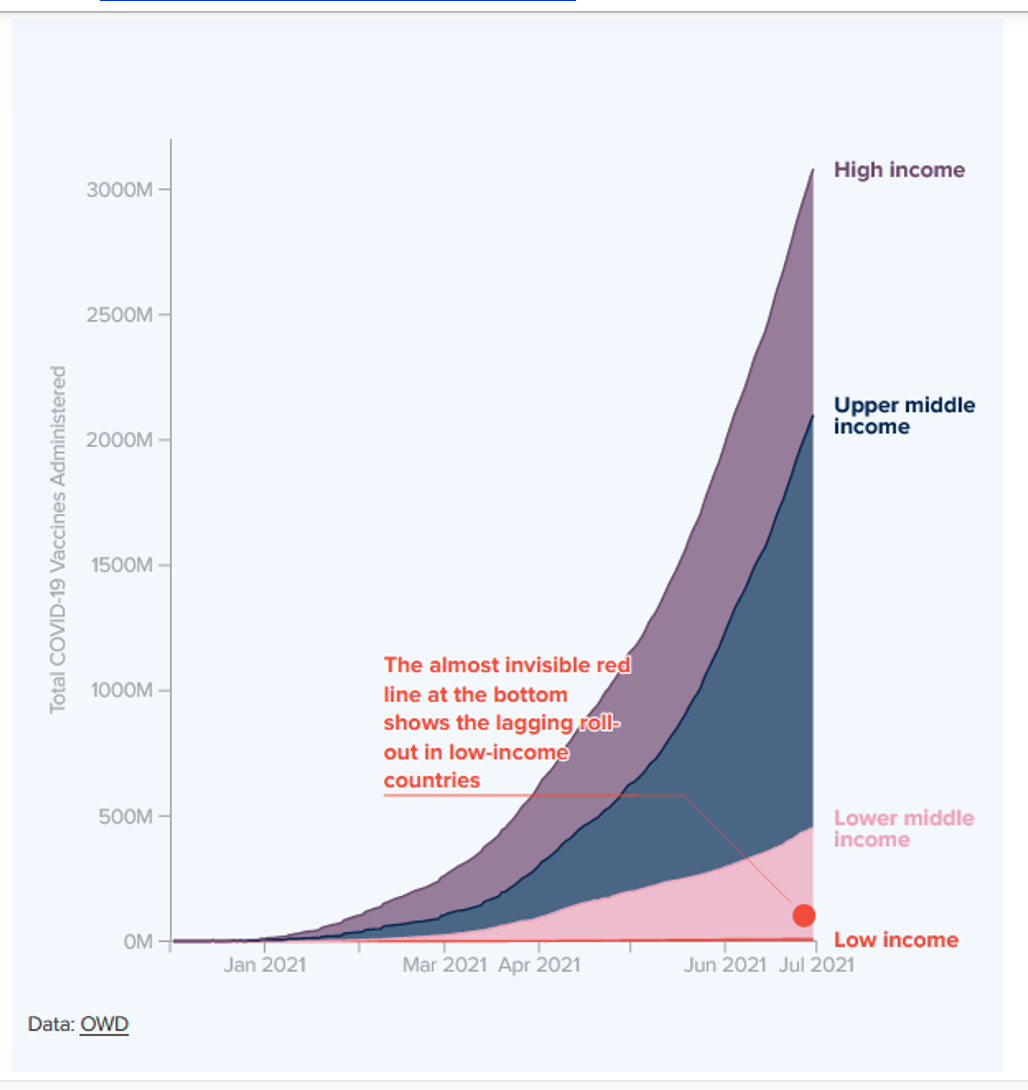
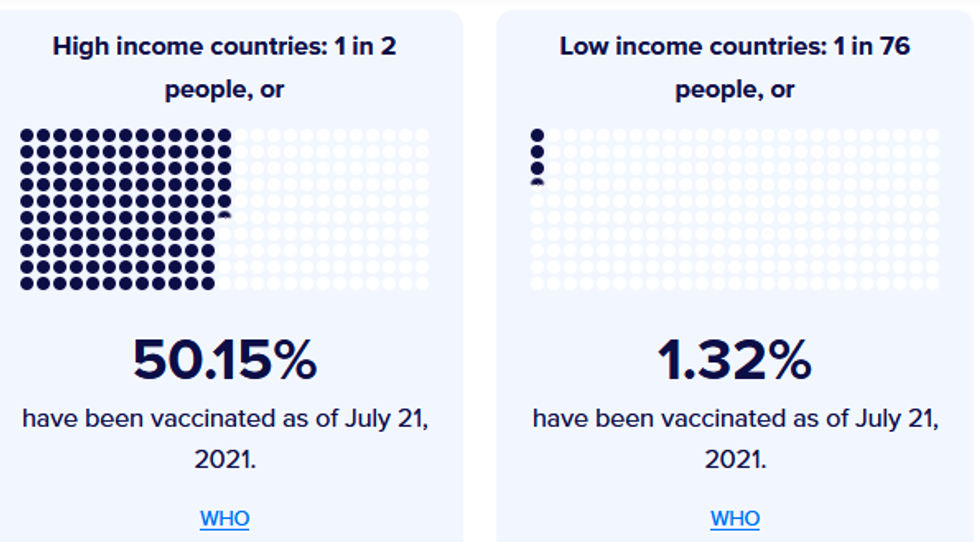
Vaccine inequity undermining global economic recovery

Milestones :: Perspectives :: Research


Global Dashboard on COVID-19 Vaccine Equity

Vaccine inequity undermining global economic recovery
22 July 2021 Joint News Release: UNDP. WHO
New Global Dashboard on COVID-19 Vaccine Equity finds low-income countries would add $38 billion to their GDP forecast for 2021 if they had the same vaccination rate as high-income countries. Global economic recovery at risk if vaccines are not equitably manufactured, scaled up and distributed.  

COVID-19 vaccine inequity will have a lasting and profound impact on socio-economic recovery in low- and lower-middle income countries without urgent action to boost supply and assure equitable access for every country, including through dose sharing, according to new data released today by the United Nations Development Programme (UNDP), the World Health Organization (WHO) and the University of Oxford.

An acceleration in scaling up manufacturing and sharing enough vaccine doses with low-income countries could have added $38 billion to their GDP forecast for 2021 if they had similar vaccination rates as high income countries. At a time when richer countries have paid trillions in stimulus to prop up flagging economies, now is the moment to ensure vaccine doses are shared quickly, all barriers to increasing vaccine manufacturing are removed and financing support is secured so vaccines are distributed equitably and a truly global economic recovery can take place.

A high price per COVID-19 vaccine dose relative to other vaccines and delivery costs – including for the health workforce surge – could put a huge strain on fragile health systems and undermine routine immunization and essential health services and could cause alarming spikes in measles, pneumonia and diarrhea. There is also a clear risk in terms of foregone opportunities for the expansion of other immunization services, for example the safe and effective rollout of HPV vaccines. Lower income countries need timely access to sustainably priced vaccines and timely financial support.

These insights come from the Global Dashboard for COVID-19 Vaccine Equity, a joint initiative from UNDP, WHO and the University of Oxford’s Blavatnik School of Government, which combines the latest information on COVID-19 vaccination with the most recent socio-economic data to illustrate why accelerating vaccine equity is not only critical to saving lives but also to driving a faster and fairer recovery from the pandemic with benefits for all.

“In some low- and middle-income countries, less than 1 per cent of the population is vaccinated – this is contributing to a two-track recovery from the COVID-19 pandemic”, said UNDP Administrator, Achim Steiner. “It’s time for swift, collective action – this new COVID-19 Vaccine Equity Dashboard will provide Governments, policymakers and international organisations with unique insights to accelerate the global delivery of vaccines and mitigate the devastating socio-economic impacts of the pandemic.”

According to the new Dashboard, which builds on data from multiple entities including the IMF, World Bank, UNICEF and Gavi, and analysis on per capita GDP growth rates from the World Economic Outlook, richer countries are projected to vaccinate quicker and recover economically quicker from COVID-19, while poorer countries haven’t even been able to vaccinate their health workers and most at-risk population and may not achieve pre-COVID-19 levels of growth until 2024. Meanwhile, Delta and other variants are driving some countries to reinstate strict public health social measures. This is further worsening the social, economic and health impact, especially for the most vulnerable and marginalised people. Vaccine inequity threatens all countries and risks reversing hard won progress on the Sustainable Development Goals…

Dashboard: https://data.undp.org/vaccine-equity/

Funding equitable access to vaccines will save lives, restart economies and protect us all – Dr. Robin Nandy, Chief of Immunizations at UNICEF

Milestones :: Perspectives :: Research


Viewpoint

Funding equitable access to vaccines will save lives, restart economies and protect us all – Dr. Robin Nandy, Chief of Immunizations at UNICEF
Published on July 12, 2021
Robin Nandy
Principal Advisor & Chief of Immunizations at UNICEF

As Chief of Immunisations at UNICEF, I know that in our globalised world, none of us will be safe from COVID-19 until everyone, everywhere is. The longer the virus continues to spread unchecked across the world, the higher the risk of variants emerging. As we have recently seen, these variants could be more contagious and possibly more deadly in the future – placing us all at risk and damaging the prospects for a much-needed return to normal lives and sustainable economic recovery.

At UNICEF we believe that vaccines are essential to bringing COVID-19 under control. As vaccinations are rolled out in the UK, USA and more widely, more of us are beginning to look forward to life getting back to normal. However, for many people the end is nowhere in sight, with cases and deaths rising in many countries. Vulnerable groups remain at risk as healthcare systems are under incredible strain, schools remain closed, economic progress has stalled and inequality is widening fast.

The deadly second wave of Covid-19 in India is a warning of the devastating consequences of leaving low- and middle-income countries without equitable access to vaccines, diagnostics and treatments and resources to deliver them. While the situation is tragic, it is not unique. Cases are rising exponentially across the world and specifically in South Asia and South America, with health systems struggling in countries from Nepal, Sri Lanka and Maldives to Argentina and Brazil.

A major pathway out of this pandemic is a global distribution of vaccines, diagnostics and therapeutics. COVAX, a joint effort between WHO, Gavi, CEPI & UNICEF, represents a collective effort in support of this pathway. It is a ground-breaking collaboration between 190 countries, to ensure the fair and equitable distribution of COVID–19 vaccines across the world – including the 92 poorest nations on earth. As part of COVAX, UNICEF and partners set out to deliver 2 billion doses of vaccine this year, enabling countries to vaccinate at least 20 per cent of their populations; this would cover all health workers and those most vulnerable to the effects of the disease. Many countries are aspiring to cover an even greater proportion of their population by the end of 2021.

COVAX has delivered over 100 million doses so far in 2021 but the recent surge of cases in many countries means that vaccines are in short supply. We must urgently re-double our efforts to reach our target. UNICEF, along with COVAX partners, is campaigning against vaccine nationalism, supporting dose sharing and the scale up of vaccine manufacturing to ensure there is adequate supply for COVAX.
Beyond the costs of vaccines, we urgently need funding to support country health systems in vaccine transport and delivery, strengthen cold and supply chains, train health care workers and combat vaccine misinformation. Moreover, we fear that if the delivery of COVID-19 vaccine is inadequately resourced, country governments will be forced to use resources from routine childhood immunization programmes, jeopardizing the delivery of other vaccines and risking outbreaks of vaccine preventable diseases. We cannot trade one crisis with another and need to ensure essential services continue as we deploy COVID-19 vaccines.

The global vaccination race can only be won when governments, businesses and individuals come together to fully fund and supply COVAX and ensure that every country in the world has access to COVID19 vaccines.

We need philanthropic partners to support this historic effort to deliver fast and fair access to vaccines to people across the world…

COVID Origins

Milestones :: Perspectives :: Research


COVID Origins


Science
23 July 2021 Vol 373, Issue 6553
http://www.sciencemag.org/current.dtl
In-Depth
WHO chief pressures China on pandemic origin
By Jon Cohen
Science23 Jul 2021 : 378 Restricted Access
Agency director calls for lab audits and more studies of how SARS-CoV-2 emerged.
Summary
In a sharp tightening of the diplomatic screws, the director-general of the World Health Organization (WHO), Tedros Adhanom Ghebreyesus, is urging China to increase its transparency about the early days of the COVID-19 pandemic and allow greater access to its labs to help resolve the origin of SARS-CoV-2. Tedros also says WHO will create a new body to conduct the next phase of studies into the emergence of the virus, an unexpected move that concerns some scientists, including at least one member of an existing mission the agency organized to study COVID-19’s origin. Tedros called for more aggressively probing the two leading theories of how SARS-CoV-2 first infected humans and then emerged in Wuhan, China, in December 2019: that the virus made a natural “zoonotic” jump from an unknown animal species into humans or, more controversially, that it first infected a human during laboratory or field studies of coronaviruses found in animals. (An even more contentious theory suggests the virus was genetically engineered in a Wuhan lab.)

WHO chief calls for ‘audits’ of Wuhan labs after first mission controversy
World health body also wants second phase of inquiry to focus on the origins of Covid-19 in China
The Guardian, 16 Jul 2021
The World Health Organization has said that the second stage of an investigation into the origins of Covid-19 should include further studies in China and lab audits.

In a closed-door briefing to member states on Friday, WHO chief, Tedros Adhanom Ghebreyesus proposed five priorities for the next phase of the investigation. They included “audits of relevant laboratories and research institutions operating in the area of the initial human cases identified in December 2019”, according to a copy of his opening statement provided by the WHO. He also suggested investigators should focus on “studies prioritising geographic areas with the earliest indication of circulation of Sars CoV-2”, the virus that causes Covid-19. And he called for more studies of animal markets in and around the Chinese city of Wuhan, where the disease was first detected.

The UN health agency has been under intensifying pressure for a new, more in-depth investigation of how the disease that has killed over 4 million people around the world first emerged. They published a report in late March, but drew no firm conclusions about how the virus first jumped to humans. Instead they ranked several hypotheses according to how likely they believed they were, finding that it was most likely the virus jumped from bats to humans via an intermediate animal. An alternative theory involving the virus leaking from a laboratory was deemed “extremely unlikely”.

The investigation faced criticism for lacking transparency and access, and for not evaluating the lab-leak theory more deeply.

According to information obtained by AFP, the WHO has now developed a protocol for evaluating laboratory safety and biological security to help ascertain whether the virus might have emerged due to a lab accident. The protocol, which the agency aims to use to investigate Covid-19’s origin as well as possible future outbreaks, provides measures for evaluating, among other things, the storage of virus samples and handling of waste.

Tedros, who has always maintained that all theories remained on the table, told journalists on Thursday that the push to rule out the possible link to a lab leak had been “premature”…


::::::

China urges tracing COVID-19 origin in multiple countries
2021-07-23
BEIJING — China hopes that the World Health Organization (WHO) will treat the novel coronavirus origin-tracing work as a scientific issue, get rid of political interference, and actively and prudently promote tracing work continuously in multiple countries and regions around the globe, said a senior official of the National Health Commission (NHC) Thursday.
What was done in the first stage of origin tracing, especially by those that have reached a clear conclusion, should not be repeated, said Zeng Yixin, deputy head of the NHC. Zeng made the remarks at a press conference on the novel coronavirus origin-tracing work held by the State Council Information Office in Beijing.
What should be carried out is the origin tracing of early cases, molecular epidemiology, and intermediary hosts in multiple countries and regions based on extensive consultations among WHO member states, Zeng said…
If any country needs further study on laboratory-related sources, Chinese experts suggest going to nations with labs similar to the one in Wuhan, which haven’t been investigated. This way, they could learn more about possible leakage problems, said Liang Wannian, the team leader from the Chinese side of the group…

‘Lab leak’ theory unfounded
2021-07-23
Claim about institute workers’ infection ‘created out of thin air’, researcher says
The Wuhan Institute of Virology has never engineered or leaked the novel coronavirus and no staff members have ever contracted the virus, a researcher from the institute said on Thursday.
Yuan Zhiming, who is also director of the National Biosafety Laboratory in Wuhan, Hubei province, said that the institute had not come in contact with, preserved or researched the virus before Dec 30, 2019…

RFPS – DEVELOPMENT OF A GLOBAL TRUST REPOSITORY, SOLUTION, IMPLEMENTATION AND OPERATION SERVICES

Milestones :: Perspectives :: Research


Editor’s Note:
It is unusual to include RFP information in this digest, but this instance is justified insofar as it responds to a strategic imperative in global pandemic response.

RFPS – DEVELOPMENT OF A GLOBAL TRUST REPOSITORY, SOLUTION, IMPLEMENTATION AND OPERATION SERVICES
UNICEF – Deadline 13 Jul 2021
Annex B_Global Trust Repository – ToR.pdf
1 Purpose of the RFPS.
To select a vendor that will provide a traceability solution, initially capable of providing a verification service, for use by low and middle-income countries in the management of vaccines, pharmaceuticals and other products, specifically:
:: Enable low and middle-income countries to manage the risk of falsified COVID 19 vaccines and diversion in their national supply chains, while setting the foundation for the establishment of national traceability systems in the long term.
:: Support COVID-19 vaccine safety efforts by making available (in the very short term) a verification tool that countries can access and use for verifying product and detecting diversion.
:: Establish a Global Trust Repository (outside of UNICEF IT operations) that can host traceability data initially from COVID-19 vaccine manufacturers and in future from any manufacturer; and can be accessed by in-country verification solutions.
:: Develop a solution that is scalable, with capacity to accommodate the verification of a broader range of non COVID-19 products and additional functionality without compromising performance.


2 Introduction and Business Need.
UNICEF works in some of the world’s toughest places to reach the world’s most disadvantaged children. To save their lives. To defend their rights. To help them fulfil their potential. Across 190 countries and territories, we work for every child, everywhere, every day, to build a better world for everyone. And we never give up. UNICEF, with its universal mandate, has established effective linkages between humanitarian and development programming and supports countries to strengthen capacities and systems when preparing and responding to emergencies.

As COVID-19 vaccines are being distributed, there has been an upsurge in the production and distribution of falsified and sub-standard vaccines and related COVID-19 supplies, particularly those reported in the media as potential therapies for COVID-19. This trend is expected to continue as COVID-19 vaccines and therapeutics become more available. The development of one of the most valuable vaccines in history has driven the proliferation of falsified COVID-19 vaccines, diversions and theft to degrees not seen before. The highest risk is in low- and middle-income countries national supply chains, where governance structures and traceability systems are non-existent or not fully mature, and tools and technical capacity to ensure good practices in manufacturing, quality control and monitoring of distribution chains is limited. To this end, a solution that provides countries with mechanisms to monitor national supply chains of COVID-19 vaccine is imperative to ensure equitable access, safety, and security – and build the foundation for end-to-end traceability for vaccines and medicines. Proposals should therefore include explanations about scalability options (detailed in section 6.2) and provide pricing structures to accommodate future changes over time.


3. Background.
The pharmaceutical industry and the international development community has for some time now promoted the use of global data standards to provide a wider and harmonized framework for supply chain visibility, strengthening anti-counterfeiting measures and sharing of data between parties. In this context, the Inter-Agency Supply Chain Group (ISG), with World Health Organisation (WHO) as the host, issued a note in 2017 supporting recommendations to:
1. Work with countries in creating policy frameworks to support GS1 standards adoption.
2. Align national supply chain policies regarding standards harmonization
3. Support & encourage investment in digital infrastructure in countries to implement
national product traceability systems.


UNICEF is currently working with various global partner organisations (including BMGF, GAVI, Global Fund, USAID, WHO, World Bank) as part of a global health community supporting low- and middle-income countries prepare for and implement traceability systems that would significantly reduce the risk of proliferation of falsified pharmaceuticals, vaccines and other health technologies.

In August 2020, UNICEF, Gavi and the World Bank made an urgent call to action for the establishment of a COVID-19 Vaccine and Therapeutics Traceability Expert Advisory Board to advocate for the development and implementation of a traceability solution for the COVID-19 vaccine and related therapeutics. The Expert Advisory Board, drawn from global partners, regulators and members of the Global Steering Committee for Quality Assurance hosted by the World Bank immediately set out to explore options for the development of a minimal viable solution that could be rapidly deployed. The first key activity was the establishment of labeling standards to be applied to vaccine packaging at secondary level that would enable traceability of products along the supply chain. In order to coalesce on a common set of labelling standards, UNICEF hosted a consultation with manufactures, regulators, procurement agents and WHO to help inform the labelling specifications of the COVID-19 vaccine that are necessary to enable traceability and authentication of COVID-19 vaccines and other products across national supply chains in countries.

Many of the vaccines being supplied to the COVAX Facility are now serialised in accordance with these labelling specifications using GS1 Standards. In 2021, UNICEF will procure 2 billion doses of COVID-19 vaccines on behalf of the COVAX facility, the vaccine pillar of the global initiative, ACT-A that aims to ensure equitable access to COVID diagnostics, treatments, and vaccines. Over 170 economies have joined the initiative, which is co-led by WHO, Gavi, the Vaccine Alliance and CEPI, the Coalition for Epidemic Preparedness Initiative. Together with partners, UNICEF is committed to ensure that those doses reach their target population safely and help reduce the risk of falsified COVID vaccines entering national supply chains and diversions.

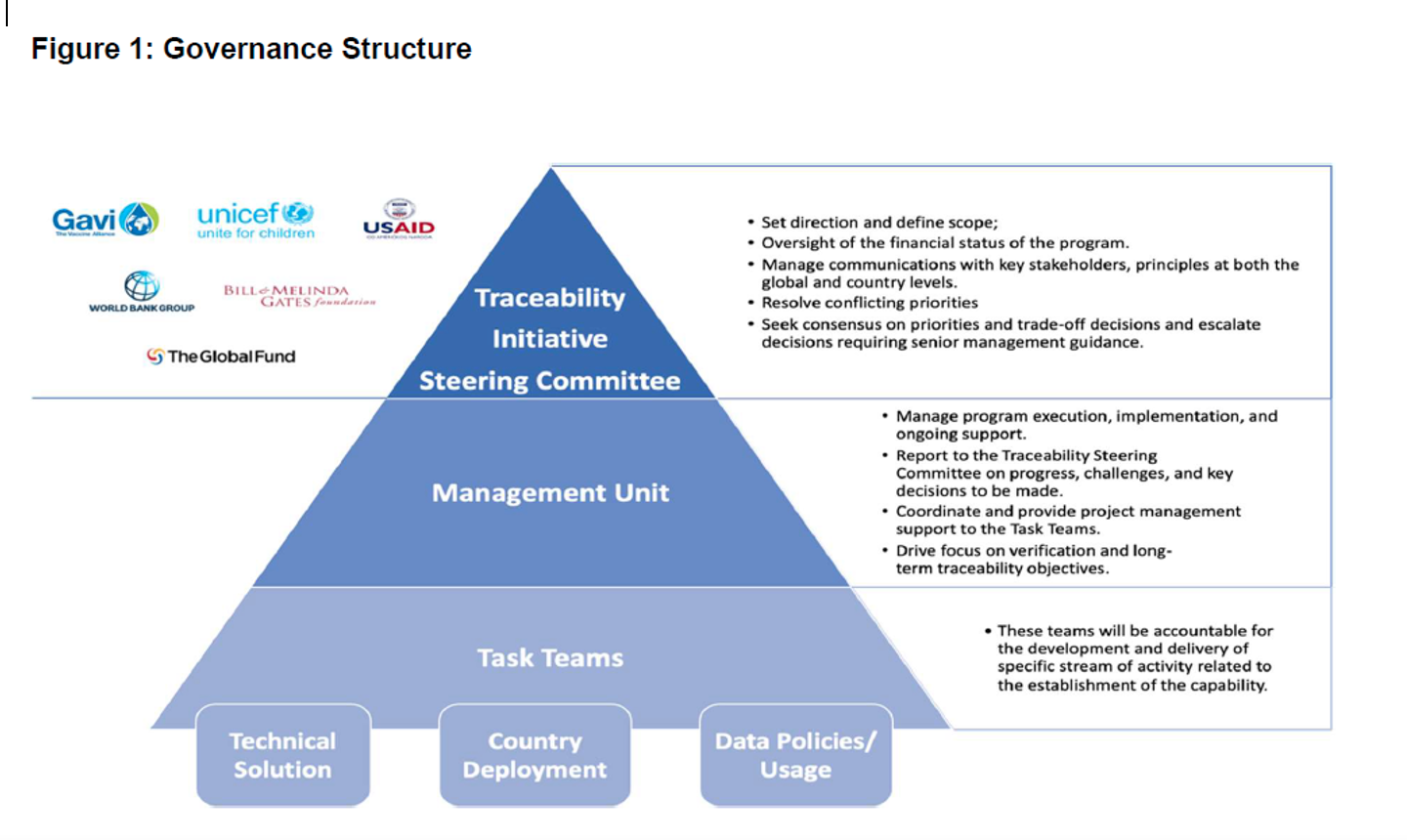
A traceability initiative has now been set up to drive the establishment of a minimally viable verification solution for COVID-19 vaccines – with a long-term vision toward end-to end traceability. To progress the “Traceability Initiative”, a multi-stakeholder governance mechanism (figure 1) led by a Traceability Initiative Steering Committee has now been established and will act as the primary vehicle for the implementation and roll out of the GTR and verification solution. The steering committee will have an oversight role for the entire project while a Project Management Unit will have oversight of programme execution and implementation. The Steering Committee will leverage the World Bank hosted Global Steering Committee on Quality Assurance of Medical Products for advocacy, independent expertise drawn from public and private sector experts, ongoing linkages to its member National Medical Regulatory Authorities (NMRAs) and to accelerate action to the mutually agreed objective of brining COVID-19 Vaccine verification solutions to scale with a vision toward end-to-end visibility of vaccines and medicines.


The Steering Committee has recommended and approved UNICEF to be the entity responsible for the procurement and commissioning of the Global Trust Repository, verification solution and associated services on behalf of the traceability initiative.

COVID

Milestones :: Perspectives :: Research


COVID

Editor’s Note:
As is obvious to all, the sheer volume of strategic announcements, regulatory actions, country program decisions, commentary, and, indeed, misinformation around COVID response continues at extraordinary levels. Our weekly digest strives to present a coherent and comprehensive snapshot, but cannot be exhaustive, If you recognize a missed strategic development, a new source of rigorous analysis, or an insight/commentary that would benefit our common understanding, please advise me…we will review all suggestions and consider for inclusion in a subsequent edition: david.r.curry@ge2p2global.org

We are seeking access to modelling which engages scenarios and articulates imperatives around a pandemic end-game through at least a 2025 horizon. We assess that WHO must be conducting or contracting for such modeling – or should recognize an imperative to be doing so in its global health governance role. If we have missed such modeling in progress, we would be delighted to be advised of it and will include it in our coverage.

COVID Vaccines – OCHA:: HDX

Milestones :: Perspectives :: Research


COVID Vaccines – OCHA:: HDX

COVID-19 Data Explorer: Global Humanitarian Operations
COVID-19 Vaccine Roll-out
Jul 24, 2021 | COVAX (WHO,GAVI,CEPI), UNDESA, Press Reports | DATA


Global COVID-19 Figures: 192M total confirmed cases; 4.1M total confirmed deaths
Global vaccines administered: 3.83B
Number of Countries: 26 [26]
COVAX First Allocations (Number of Doses): 73M [73M]
COVAX Delivered (Number of Doses): 28M [22M]
Other Delivered (Number of Doses): 52M [52M]
Total Delivered (Number of Doses): 80M [75M]
Total Administered (Number of Doses): 76M [70M]

Coronavirus [COVID-19] – WHO

Milestones :: Perspectives :: Research


Coronavirus [COVID-19] – WHO
Public Health Emergency of International Concern (PHEIC)
https://www.who.int/emergencies/diseases/novel-coronavirus-2019


Weekly Epidemiological and Operational updates
Last update: 2 Jul 2021
Confirmed cases :: 192 284 207 [week ago: 188 655 968]
Confirmed deaths :: 4 136 518 [week ago 4 067 517]
Vaccine doses administered: 3 605 386 928 [week ago: 3 402 275 866]

Weekly operational update on COVID-19 – 20 July 2021

Milestones :: Perspectives :: Research


Weekly operational update on COVID-19 – 20 July 2021
Overview
In this edition of the COVID-19 Weekly Operational Update, highlights of country-level actions and WHO support to countries include:
Strengthening clinical management of COVID-19 in Ghana
Receiving 2 million doses of COVID-19 vaccines in Viet Nam donated by the United States of America through the COVAX Facility
COVID-19 readiness and response at Points of Entry in Armenia
Planning and decentralization in Mumbai, India to fight the second COVID-19 surge
Receiving 500 000 vaccines in Haiti donated by the United States of America through the COVAX Facility
Enhancing resilience among parents and children in the Syrian Arab Republic through the “My Hero is You” mental health campaign
Exploring the use of WHO’s COVID-19 vaccination online learning in countries
Progress on a subset of indicators from the SPRP 2021 Monitoring and Evaluation Framework
Updates on WHO’s financing to support countries in SPRP 2021 implementation and provision of critical supplie

Weekly epidemiological update on COVID-19 – 20 July 2021
Overview
The global number of new cases reported last week (12-18 July 2021) was over 3.4 million, a 12% increase as compared to the previous week. Globally, COVID-19 case weekly incidence increased with an average of around 490 000 cases reported each day over the past week as compared to 400 000 cases daily in the previous week. Following a steady decline for over two months, the number of weekly deaths reported was similar to the previous week, with almost 57 000 deaths reported. The cumulative number of cases reported globally is now over 190 million and the number of deaths exceeds 4 million.

In this edition, two special focus updates are provided:
:: The release of a WHO COVID-19 detailed surveillance data dashboard, including a downloadable database feature.
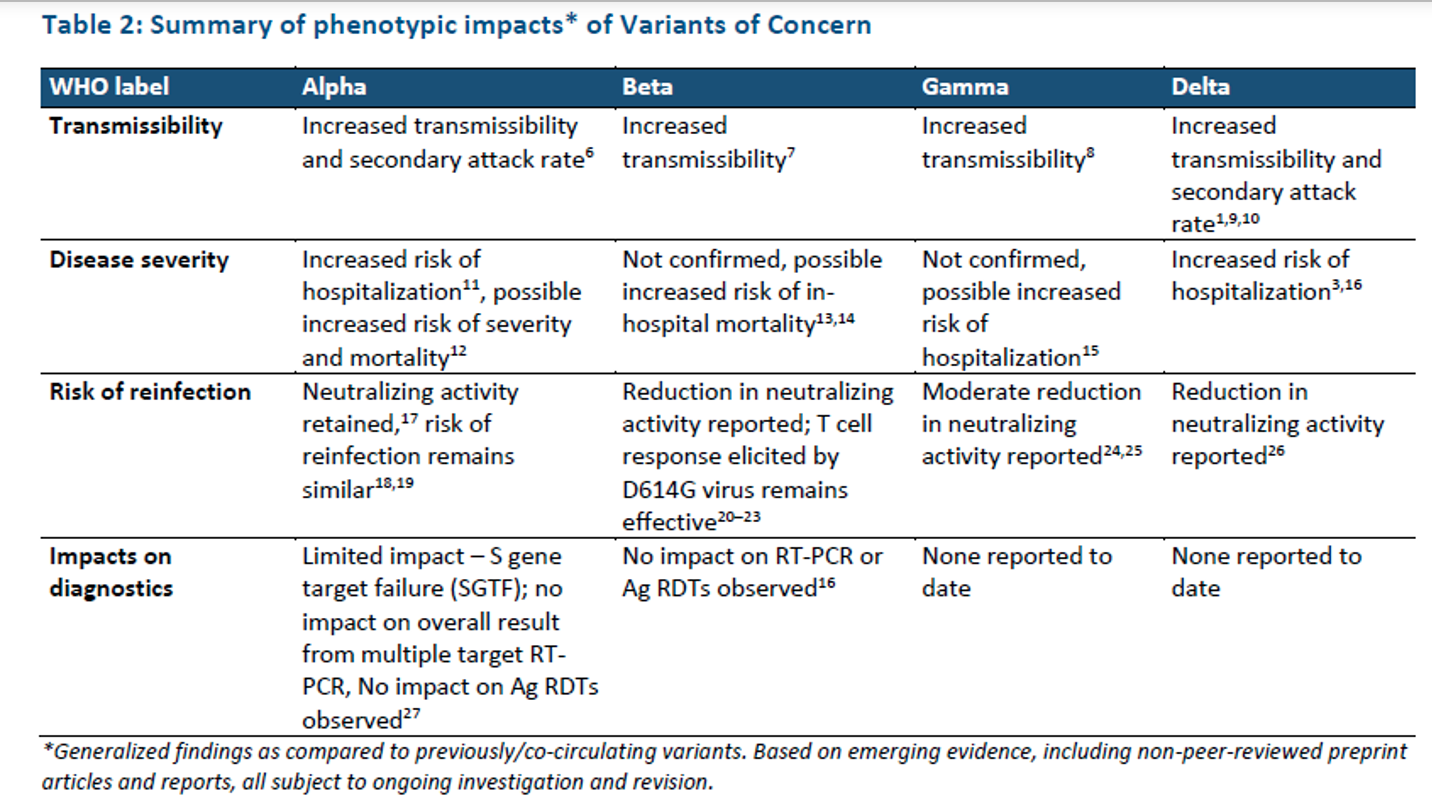
:: A detailed update on the phenotypic characteristics (transmissibility, disease severity, risk of reinfection, and impacts on diagnostics and vaccine performance) of SARS-CoV-2 Variants of Concern (VOCs) Alpha, Beta, Gamma and Delta. It also includes updates on the geographic distribution of VOCs.

[Full scale version at link above]

Status of COVID-19 Vaccines within WHO EUL/PQ evaluation process 26 June 2021

Milestones :: Perspectives :: Research


Status of COVID-19 Vaccines within WHO EUL/PQ evaluation process 26 June 2021
For 22 vaccine candidates, presents Manufacturer, Name of Vaccine, NRA of Record, Platform, EOI Accepted Status, Pre-submission Meeting Held Status, Dossier Accepted for Review, Status of Assessment; Anticipated/Completed Decision Date
[No update since 15 July 2021; click on the link above for full scale view]

COVID Vaccine Developer/Manufacturer Announcements [relevant press releases/announcement from organizations from WHO EUL/PQ listing above]

Milestones :: Perspectives :: Research


COVID Vaccine Developer/Manufacturer Announcements [relevant press releases/announcement from organizations from WHO EUL/PQ listing above]


AstraZeneca
Press Releases
Vaxzevria is highly effective after one dose against severe disease or hospitalisation caused by Beta and Delta variants of concern
23 July 2021
Real-world data from Canada showed 82% and 87% effectiveness after one dose against hospitalisation or death caused by Beta/Gamma and Delta variants respectively

BioCubaFarma – Cuba
Últimas Noticias
[Website not responding at inquiry]


CanSinoBIO
News – No new digest announcements identified

Clover Biopharmaceuticals – China
News – No new digest announcements identified


Curevac [Bayer Ag – Germany]
News – No new digest announcements identified


Gamaleya National Center
Latest News and Events – No new digest announcements identified [See Russia/RFID below]

IMBCAMS, China
Home – No new digest announcements identified


Janssen/JNJ
Press Releases – No new digest announcements identified


Moderna
Press Releases
July 23, 2021
EMA Committee for Medicinal Products for Human Use (CHMP) Adopts Positive Opinion Recommending Authorization for the Use of the Moderna COVID-19 Vaccine in Adolescents (12-17 Years of Age) in the European Union

July 22, 2021
Moderna Announces New Supply Agreement with Taiwan for 20 Million Doses of Moderna’s COVID-19 Vaccine and Variant Booster Vaccine Candidate in 2022 and 15 Million Doses in 2023

July 20, 2021
Moderna Partners with Takeda and the Government of Japan to Supply Additional 50 Million Doses of Moderna’s COVID-19 Vaccine and Variant Booster Vaccine Candidate in 2022


Novavax
Press Releases – No new digest announcements identified


Pfizer
Recent Press Releases
7.23.2021
Pfizer and BioNTech to Provide U.S. Government with an Additional 200 Million Doses of COVID-19 Vaccine to Help Meet Continued Need for Vaccine Supply in the U.S.

07.21.2021
Pfizer and BioNTech Announce Collaboration With Biovac to Manufacture and Distribute COVID-19 Vaccine Doses Within Africa

07.19.2021
Valneva and Pfizer Complete Recruitment for Phase 2 Trial of Lyme Disease Vaccine Candidate


Sanofi Pasteur
Press Releases – No new digest announcements identified


Serum Institute of India
NEWS & ANNOUNCEMENTS – No corporate announcements identified
[Last media release still posted is dated February 15, 2021; media release of April 21, 2021 apparently removed]


Sinopharm/WIBPBIBP
News – No new digest announcements identified


Sinovac
Press Releases – No new digest announcements identified


Vector State Research Centre of Viralogy and Biotechnology
Home – No new digest announcements identified

Zhifei Longcom, China
[Anhui Zhifei Longcom Biologic Pharmacy Co., Ltd.]
[No website identified]


::::::

GSK
Press releases for media – No new digest announcements identified


SK Biosciences
Press releases – No new digest announcements identified

Countries receiving World Bank support for vaccines

Milestones :: Perspectives :: Research


World Bank Vaccine Operations Portal
https://www.worldbank.org/en/who-we-are/news/coronavirus-covid19/world-bank-support-for-country-access-to-covid-19-vaccines
Countries receiving World Bank support for vaccines
As of July 1, 2021
This list of countries, project documents, and procurement notices and contracts will be updated as data becomes available.

The Race for Global COVID-19 Vaccine Equity

Milestones :: Perspectives :: Research


Duke – Launch and Scale Speedometer

The Race for Global COVID-19 Vaccine Equity
A flurry of nearly 200 COVID-19 vaccine candidates are moving forward through the development and clinical trials processes at unprecedented speed; more than ten candidates are already in Phase 3 large-scale trials and several have received emergency or limited authorization. Our team has aggregated and analyzed publicly available data to track the flow of procurement and manufacturing and better understand global equity challenges. We developed a data framework of relevant variables and conducted desk research of publicly available information to identify COVID vaccine candidates and status, deals and ongoing negotiations for procurement and manufacturing, COVID burden by country, and allocation and distribution plans. We have also conducted interviews with public officials in key countries to better understand the context and challenges facing vaccine allocation and distribution
[accessed 24 July 2021]
See our COVID Vaccine Purchases research
See our COVID Vaccine Manufacturing research
See our COVID Vaccine Donations & Exports research

Coronavirus (COVID-19) Vaccinations[Accessed 24 Jul 2021]

Milestones :: Perspectives :: Research


Our World in Data
Coronavirus (COVID-19) Vaccinations[Accessed 24 Jul 2021]
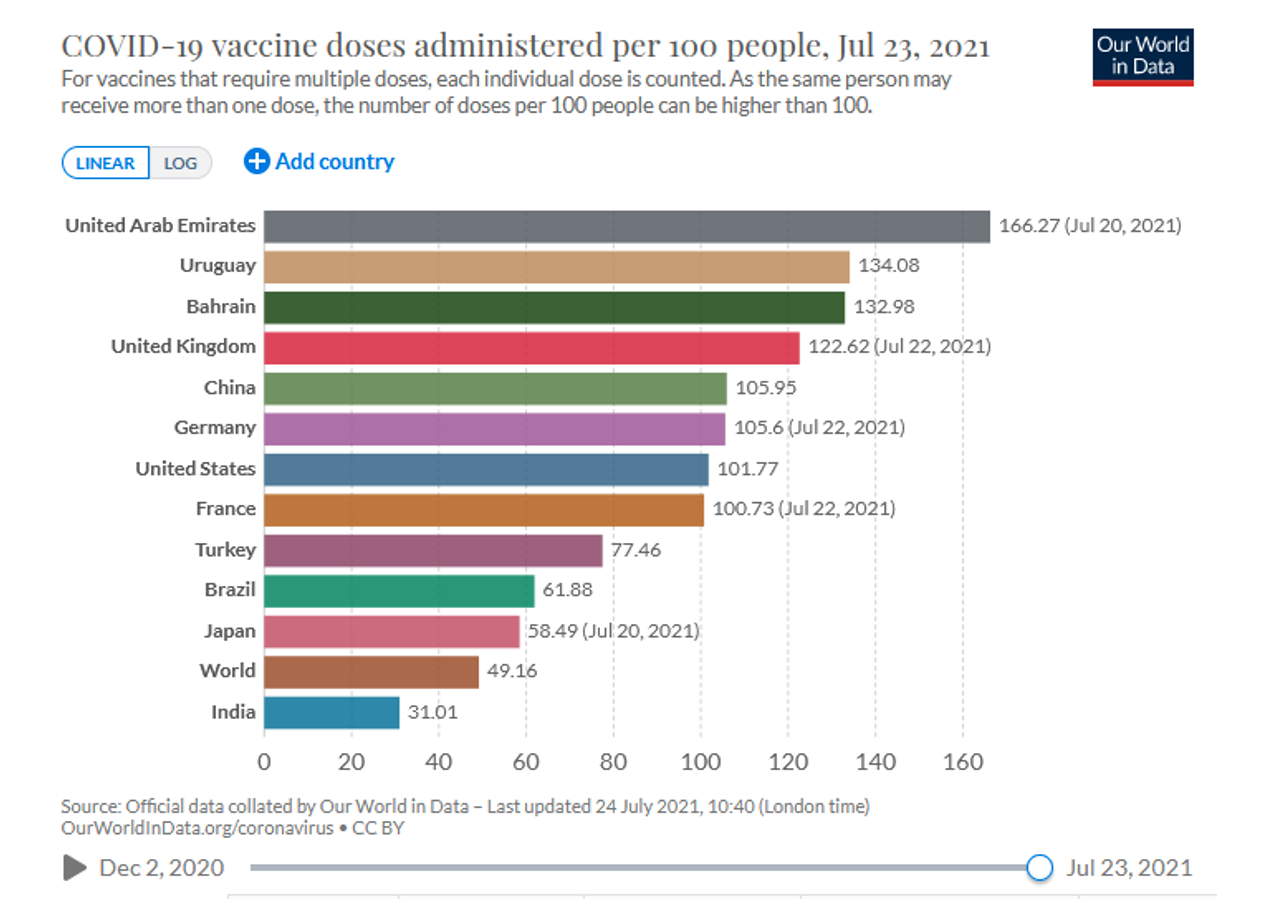
27.1% of the world population has received at least one dose of a COVID-19 vaccine, and 13.6% is fully vaccinated.
3.83 billion doses have been administered globally, and 30.86 million are now administered each day.
Only 1.1% of people in low-income countries have received at least one dose.

U.S.: COVID-19 Vaccines – Announcements/Regulatory Actions/Deployment

Milestones :: Perspectives :: Research


U.S.: COVID-19 Vaccines – Announcements/Regulatory Actions/Deployment

Vaccines and Related Biological Products Advis ory Committee
:: No meetings scheduled


::::::

White House [U.S.]
Briefing Room – Selected Major COVID Announcements
Press Briefing by White House COVID-19 Response Team and Public Health Officials
July 22, 2021 • Press Briefings

Europe: COVID-19 Vaccines – Announcements/Regulatory Actions/Deployment

Milestones :: Perspectives :: Research


Europe: COVID-19 Vaccines – Announcements/Regulatory Actions/Deployment


European Medicines Agency
News & Press Releases
News: COVID-19 vaccine Spikevax approved for children aged 12 to 17 in EU (new)
CHMP, Last updated: 23/07/2021
EMA’s human medicines committee (CHMP) has recommended granting an extension of indication for the COVID-19 vaccine Spikevax (previously COVID-19 Vaccine Moderna) to include use in children aged 12 to 17 years. The vaccine is already authorised for use in people aged 18 and above…


News: Meeting highlights from the Committee for Medicinal Products for Human Use (CHMP) 19-22 July 2021 (new)
CHMP, Last updated: 23/07/2021


News: COVID-19 Vaccine Janssen: Guillain-Barré syndrome listed as a very rare side effect (new)
PRAC, Last updated: 22/07/2021


News: EMA starts rolling review of COVID-19 vaccine Vidprevtyn (new)
CHMP, Last updated: 20/07/2021
EMA’s human medicines committee (CHMP) has started a rolling review of Vidprevtyn, a COVID-19 vaccine developed by Sanofi Pasteur.


::::::

European Centre for Disease Prevention and Control
https://www.ecdc.europa.eu/en
Latest Updates
News
SARS-COV-2 Delta variant now dominant in much of the European Region and efforts must be reinforced to prevent transmission, warn WHO/Europe and ECDC
Press release – 23 Jul 2021

Publication
Partial COVID-19 vaccination, vaccination following SARS-CoV-2 infection and heterologous vaccination schedule: summary of evidence
Technical report – 22 Jul 2021


::::::


Data as of 2021-07-24

https://vaccinetracker.ecdc.europa.eu/public/extensions/COVID-19/vaccine-tracker.html#uptake-tab


::::::

European Commission
https://ec.europa.eu/commission/presscorner/home/en
Press release 23 July 2021
Application of EU Law in 2020: Protecting our agreed rules and shared values during a pandemic

Press release 22 July 2021
Vaccinating the world: ‘Team Europe’ to share more than 200 million doses of COVID-19 vaccines with low and middle-income countries by the end of 2021
Ensuring access to safe and affordable COVID-19 vaccines around the world, and notably for low and middle-income countries, is a priority for the European Union.

Press release 22 July 2021
Coronavirus: Commission steps up research funding with €120 million for 11 new projects to tackle the virus and its variants
The Commission has short-listed 11 new projects worth €120 million from Horizon Europe, the biggest European research and innovation programme (2021-2027), for supporting and enabling urgent research into the coronavirus and its variants.


::::::

Africa: COVID-19 – Announcements/Regulatory Actions/Deployment

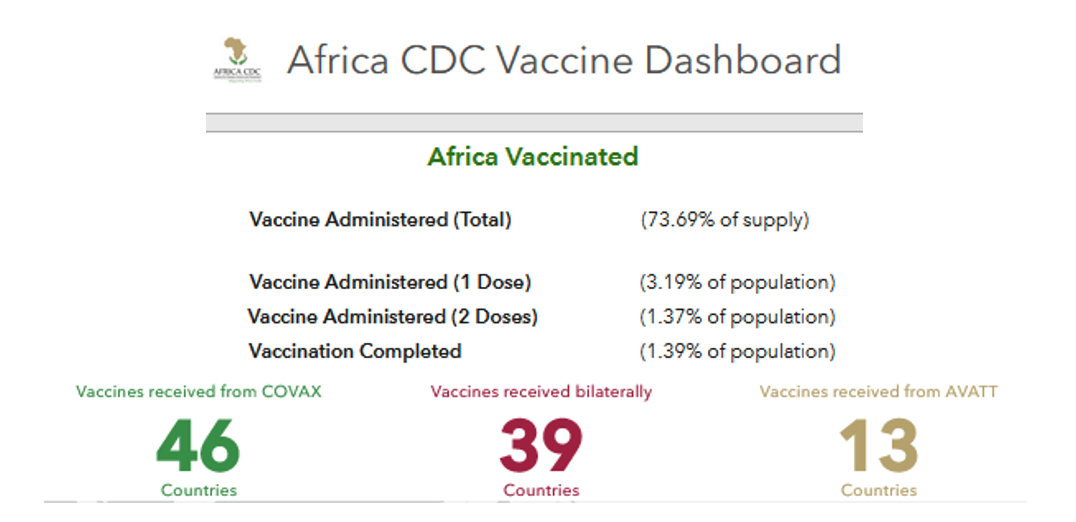
Current at 21 Jul 2021; Full scale, interactive dashboard available at: https://africacdc.org/covid-19-vaccination/


::::::

Pfizer and BioNTech Announce Collaboration With Biovac to Manufacture and Distribute COVID-19 Vaccine Doses Within Africa
07.21.2021
NEW YORK & MAINZ, Germany–(BUSINESS WIRE)– Pfizer Inc. (NYSE: PFE) and BioNTech SE (Nasdaq: BNTX) today announced the signing of a letter of intent with The Biovac Institute (Pty) Ltd, known as “Biovac,” a Cape Town-based, South African biopharmaceutical company, to manufacture the Pfizer-BioNTech COVID-19 Vaccine for distribution within the African Union.
Biovac will perform manufacturing and distribution activities within Pfizer’s and BioNTech’s global COVID-19 vaccine supply chain and manufacturing network, which will now span three continents and include more than 20 manufacturing facilities. To facilitate Biovac’s involvement in the process, technical transfer, on-site development and equipment installation activities will begin immediately.
Pfizer and BioNTech expect that Biovac’s Cape Town facility will be incorporated into the vaccine supply chain by the end of 2021. Biovac will obtain drug substance from facilities in Europe, and manufacturing of finished doses will commence in 2022. At full operational capacity, the annual production will exceed 100 million finished doses annually. All doses will exclusively be distributed within the 55 member states that make up the African Union…

Russia: COVID-19 Vaccines – Announcements/Regulatory Actions/Deployment

Milestones :: Perspectives :: Research


Russia: COVID-19 Vaccines – Announcements/Regulatory Actions/Deployment
Russia: Sputnik V – “the first registered COVID-19 vaccine”
https://sputnikvaccine.com/newsroom/pressreleases/
Press Releases
Sputnik V approved for use in Chile
Press release, 21.07.2021

First batch of the Sputnik V vaccine produced in Vietnam
Press release, 21.07.2021
The Russian Direct Investment Fund (RDIF, Russia’s sovereign wealth fund), and VABIOTECH, one of Vietnam’s leading pharmaceutical companies, announce the production of a test batch of the Russian Sputnik V vaccine against coronavirus.
The first validation samples taken from the produced batch will be shipped to the Gamaleya Center for the quality control. RDIF and VABIOTECH are actively implementing the technology transfer. Sputnik V was granted the approval by the Ministry of Health of the Socialist Republic of Vietnam on March 23, 2021…

India: COVID-19 Vaccines – Announcements/Regulatory Actions/Deployment

Milestones :: Perspectives :: Research


India: COVID-19 Vaccines – Announcements/Regulatory Actions/Deployment


Ministry of Health and Family Welfare
https://www.mohfw.gov.in/


Government of India – Press Information Bureau
Latest Press Releases
No new digest content identified.


Indian Council for Medical Research (ICMR)
https://www.icmr.gov.in/media.html
Press Releases
No new digest content identified.

POLIO Public Health Emergency of International Concern (PHEIC)

Emergencies

POLIO
Public Health Emergency of International Concern (PHEIC)

Polio this week as of 21 July 2021
:: In his latest blog, Bill Gates talks about the progress against polio made possible through the iron will of health workers and partners such as Rotary, GPEI’s support to COVID and new strategy to secure success. He calls on global solidarity/support to deliver on promise of polio-free world. Read more…
:: The GPEI welcomes the 20th Report of the Independent Monitoring Board (IMB) which provides independent assessments of the programme to help refine and improve the GPEI’s work.

Summary of new WPV and cVDPV viruses this week (AFP cases and ES positives):
:: Ethiopia: 10 cVDPV2 cases and one cVDPV2 positive environmental sample
:: Liberia: one cVDPV2 case
:: Madagascar : two cVDPV1 cases
:: Nigeria: nine cVDPV2 case and five cVDPV2 positive environmental samples
:: Senegal: one cVDPV2 case
:: South Sudan: one cVDPV2 case


::::::
::::::

WHO/OCHA Emergencies


Editor’s Note:
WHO has apparently reorganized and fundamentally shifted how it judges and tracks “emergencies”. We found no announcement of descriptive information to share and present the webpage structure as encountered below. Obviously, the dates associated with some of these emergencies suggest that this is an archival platform as well as a current emergencies resource.

Health emergencies list – WHO
“The health emergencies list details the disease outbreaks, disasters and humanitarian crises where WHO plays an essential role in supporting countries to respond to and recover from emergencies with public health consequences.”

Crisis in Tigray, Ethiopia
:: Ethiopia – Tigray Region Humanitarian Update Situation Report Last updated: 9 Jul 2021


Ebola outbreak, Democratic Republic of the Congo, 2021
[Last apparent update: 3 May 2021]

Ebola outbreak outbreak, N’Zerekore, Guinea, 2021 [Last apparent update: 3 May 2021]

Coronavirus disease (COVID-19) pandemic [Last apparent update 16 July 2021; See COVID above]

Ebola outbreak, Equateur Province, Democratic Republic of the Congo, 2020 [Last apparent update: 1 June 2021]

Ebola outbreak, North Kivu, Ituri, Democratic Republic of the Congo, 2018 – 2020 [Last apparent update: 3 May 2021]

Ebola outbreak, Democratic Republic of the Congo, 2018 [Last apparent update: 24 July 2018]

Yemen crisis [Last apparent update: 12 February 2021]

Syria crisis [Last apparent update: 18 June 2021]

Somalia crisis [Last apparent update: 24 March 2018]

Nigeria crisis [Last apparent update: 9 May 2018]

Ebola outbreak, Democratic Republic of the Congo, 2017 [Last apparent update: 3 May 2021]

Zika virus disease outbreak, 2015-2016 [Last apparent update: 24 Jan 2020]

Ebola outbreak: West Africa, 2014-2016 [Last apparent update: 3 May 2021]

Iraq crisis [Last apparent update: 9 Jan 2008]

South Sudan crisis [Last apparent update: 23 Sep 2020]

Avian influenza A (H7N9) virus outbreak [Last apparent update: 21 May 2021]

Middle East respiratory syndrome (MERS-CoV) outbreak [Last apparent update: 8 July 2019]

Influenza A (H1N1) virus, 2009-2010 pandemic [Last apparent update: 10 Aug 2010]


::::::

UN OCHA – Current Emergencies
Current Corporate Emergencies
Northern Ethiopia
Ethiopia – Tigray Region Humanitarian Update Situation Report, 19 July 2021
HIGHLIGHTS
:: Over eight months on since the start of the conflict in Tigray, the humanitarian situation remains alarmingly dire and could further deteriorate if immediate action is not taken.
:: Inside the region, humanitarians can now access previously hard-to-reach area, with 75 per cent of the population now in zones where relief operations can take place.
:: In addition, a humanitarian convoy arrived on 12 July in Tigray’s capital Mekelle, the first to reach the region in more than two weeks.
:: However, supplies & personnel fall short of the immense needs of people in Tigray. Stocks are depleting fast, as road access to the region has been curtailed over the last weeks.
:: Increased humanitarian funding and unfettered access to the region is urgently needed to prevent loss of life in Tigray


::::::
::::::

WHO & Regional Offices [to 24 Jul 2021]

WHO & Regional Offices [to 24 Jul 2021]

23 July 2021 Departmental news
First World #DrowningPrevention Day calls for accelerated action to prevent drowning, offers strategies to save lives

23 July 2021 Departmental news
Governments commit to accelerate action to improve access to eye care services

23 July 2021 Statement
Together to #ENDviolence: Leaders’ Statement. Six game-changing actions to End Violence Against Children

22 July 2021 Joint News Release
Vaccine inequity undermining global economic recovery

22 July 2021 Joint News Release
International Paralympic Committee, World Health Organization sign memorandum of understanding to cooperate in the promotion of diversity and equity in health and sports

21 July 2021 Joint News Release
New report reveals stark inequalities in access to HIV prevention and treatment services for children—partners call for urgent action

20 July 2021 Departmental news
Global minimum estimates of children affected by COVID-19-associated orphanhood and deaths of caregivers: a modelling study

19 July 2021 Departmental news
Persons with disabilities tell their stories

19 July 2021 Departmental news
WHO Position Statement on Innovative Clinical Trial Designs for Development of New TB Treatments

19 July 2021 Joint News Release
WFP and WHO launch innovative project on Emergency Health Facilities

::::::


WHO Regional Offices
Selected Press Releases, Announcements
WHO African Region AFRO
No new digest content identified

WHO Region of the Americas PAHO
No new digest content identified

WHO South-East Asia Region SEARO
No new digest content identified

WHO European Region EURO
:: Summit on COVID-19 impacts on mental health 23-07-2021
:: SARS-CoV-2 Delta variant now dominant in much of European region; efforts must be reinforced to prevent transmission, warns WHO Regional Office for Europe and ECDC 23-07-2021
:: Supporting Uzbekistan throughout the COVID-19 pandemic 22-07-2021

WHO Eastern Mediterranean Region EMRO
No new digest content identified

WHO Western Pacific Region
No new digest content identified


::::::

New WHO Publications [Selected]
https://www.who.int/publications/i
23 July 2021
Guidance on conducting vaccine effectiveness evaluations in the setting of new SARS-CoV-2 variants: Interim guidance, 22 July 2021. Addendum to Evaluation of COVID-19 vaccine effectiveness

19 July 2021
Global technical strategy for malaria 2016-2030, 2021 update

MMWR News Synopsis Friday, July 23, 2021

MMWR News Synopsis Friday, July 23, 2021
:: Changes in Influenza and Other Respiratory Viral Activity During the COVID-19 Pandemic — United States, 2020–2021
… In 2020, most of these viruses circulated at historically low levels, likely because of widespread use of COVID-19 prevention measures, including limited global travel, mask use,  physical distancing, and staying home. However, some of these viruses, such as RSV, have begun circulating at increased levels at an unusual time of the year…

China CDC

China CDC http://www.chinacdc.cn/en/

National Health Commission of the People’s Republic of China [to 24 Jul 2021]
http://en.nhc.gov.cn/
News
July 24: Daily briefing on novel coronavirus cases in China
On July 23, 31 provincial-level regions and the Xinjiang Production and Construction Corps on the Chinese mainland reported 35 new cases of confirmed infections

China urges tracing COVID-19 origin in multiple countries
2021-07-23

China provides over 600m COVID-19 vaccine doses to countries around world
2021-07-23

‘Lab leak’ theory unfounded
2021-07-23

National Medical Products Administration – PRC [to 24 Jul 2021]
http://english.nmpa.gov.cn/news.html
News
Over 1.49 bln doses of COVID-19 vaccines administered in China
2021-07-23
Over 1.49 billion doses of COVID-19 vaccines have been administered in China as of Wednesday, the National Health Commission announced on July 22.

CCDC Weekly – Weekly Reports: Current Volume (3)
2021-07-23 / No. 30
PDF of this issue
:: Outbreak Reports: Long Distance Transmission of SARS-CoV-2 from Contaminated Cold Chain Products to Humans — Qingdao City, Shandong Province, China, September 2020
:: Preplanned Studies: Belief in Science and Attitudes Toward COVID-19: A Demographic Standardization Approach to China–US Comparison, 2020
:: Notes from the Field: An Imported Confirmed Case of COVID-19 Vaccinated in Brazil — Shanghai Municipality, China, March 17, 2021
:: Notes from the Field: Detection of Variants of B.1.617 Lineage from Five Returning Chinese Nationals at a Guangxi-Vietnam Border Port — Guangxi Zhuang Autonomous Region, China, April 2021