Determinants of maternal influenza vaccination in the context of low- and middle-income countries: A systematic review

PLoS One
http://www.plosone.org/
[Accessed 29 Jan 2022]


Determinants of maternal influenza vaccination in the context of low- and middle-income countries: A systematic review
Shrish Raut, Aditi Apte, Manikandan Srinivasan, Nonita Dudeja, Girish Dayma, Bireshwar Sinha, Ashish Bavdekar
Research Article | published 26 Jan 2022 PLOS ONE
https://doi.org/10.1371/journal.pone.0262871

COVID-19 vaccination beliefs, attitudes, and behaviours among health and social care workers in the UK: A mixed-methods study

PLoS One
http://www.plosone.org/
[Accessed 29 Jan 2022]


COVID-19 vaccination beliefs, attitudes, and behaviours among health and social care workers in the UK: A mixed-methods study
Sadie Bell, Richard M. Clarke, Sharif A. Ismail, Oyinkansola Ojo-Aromokudu, Habib Naqvi, Yvonne Coghill, Helen Donovan, Louise Letley, Pauline Paterson, Sandra Mounier-Jack
Research Article | published 24 Jan 2022 PLOS ONE
https://doi.org/10.1371/journal.pone.0260949

One or two doses of hepatitis A vaccine in universal vaccination programs in children in 2020: A systematic review

Vaccine
Volume 40, Issue 2 Pages 173-396 (21 January 2022)
https://www.sciencedirect.com/journal/vaccine/vol/40/issue/2


Review article Open access
One or two doses of hepatitis A vaccine in universal vaccination programs in children in 2020: A systematic review
Anar Andani, Pierre van Damme, Eveline M. Bunge, Fernanda Salgado, … Bernard Hoet
Pages 196-205

Willingness to vaccinate against SARS-CoV-2: The role of reasoning biases and conspiracist ideation

Vaccine
Volume 40, Issue 2 Pages 173-396 (21 January 2022)
https://www.sciencedirect.com/journal/vaccine/vol/40/issue/2


Research article Full text access
Willingness to vaccinate against SARS-CoV-2: The role of reasoning biases and conspiracist ideation
Michael V. Bronstein, Erich Kummerfeld, Angus MacDonald, Sophia Vinogradov
Pages 213-222

Epidemiology of pertussis in Costa Rica and the impact of vaccination: A 58-year experience (1961–2018)

Vaccine
Volume 40, Issue 2 Pages 173-396 (21 January 2022)
https://www.sciencedirect.com/journal/vaccine/vol/40/issue/2


Research article Open access
Epidemiology of pertussis in Costa Rica and the impact of vaccination: A 58-year experience (1961–2018)
María L. Avila-Agüero, Kattia Camacho-Badilla, Rolando Ulloa-Gutierrez, Carlos Espinal-Tejada, … James D. Cherry
Pages 223-228

The impact of a change in infant BCG vaccination policy on adolescent TB incidence rates: A South African population-level cohort study

Vaccine
Volume 40, Issue 2 Pages 173-396 (21 January 2022)
https://www.sciencedirect.com/journal/vaccine/vol/40/issue/2


Research article Open access
The impact of a change in infant BCG vaccination policy on adolescent TB incidence rates: A South African population-level cohort study
Carlotta Fack, Robin Wood, Mark Hatherill, Frank Cobelens, Sabine Hermans
Pages 364-369

National stakeholder preferences for next-generation rotavirus vaccines: Results from a six-country study

Vaccine
Volume 40, Issue 2 Pages 173-396 (21 January 2022)
https://www.sciencedirect.com/journal/vaccine/vol/40/issue/2


Research article Open access
National stakeholder preferences for next-generation rotavirus vaccines: Results from a six-country study
Jessica Price, Jessica Mooney, Carolyn Bain, John Tanko Bawa, … William P. Hausdorff
Pages 370-379

Pre-Print Servers

Pre-Print Servers


Gates Open Research
https://gatesopenresearch.org/browse/articles
[Accessed 29 Jan 2022]

[No new digest content identified]


medRxiv
https://www.medrxiv.org/content/about-medrxiv
medRxiv is a free online archive and distribution server for complete but unpublished manuscripts (preprints) in the medical, clinical, and related health sciences. Preprints are preliminary reports of work that have not been certified by peer review. They should not be relied on to guide clinical practice or health-related behavior and should not be reported in news media as established information. medRxiv is for the distribution of preprints – complete but unpublished manuscripts – that describe human health research conducted, analyzed, and interpreted according to scientific principles…

Comparative effectiveness of COVID-19 vaccination against death and severe disease in an ongoing nationwide mass vaccination campaign
Theodore Lytras, Flora Kontopidou, Angeliki Lambrou, Sotirios Tsiodras
medRxiv 2022.01.28.22270009; doi: https://doi.org/10.1101/2022.01.28.22270009

Critical success factors for high routine immunization performance: A case study of Nepal
Kyra A Hester, Zoe Sakas, Anna S Ellis, Anindya Sekhar Bose, Roopa Darwar, Jhalak Gautam, Chandni Jaishwal, Hanleigh James, Pinar Keskinocak, Dima Nazzal, Emily Ogutu, Katie Rodriguez, Francisco Castillo Zunino, Sameer Dixit, Robert A. Bednarczyk, Matthew C Freeman, Vaccine Exemplars Research Consortium
medRxiv 2022.01.28.22270023; doi: https://doi.org/10.1101/2022.01.28.22270023

Early introduction and rise of the Omicron SARS-CoV-2 variant in highly vaccinated university populations
Brittany A Petros, Jacquelyn Turcinovic, Nicole Welch, Laura White, Eric Kolaczyk, Matthew Bauer, Michael Cleary, Sabrina Dobbins, Lynn Doucette-Stamm, Mitch Gore, Parvathy Nair, Tien Nguyen, Scott Rose, Bradford Taylor, Daniel Tsang, Erik Wendlandt, Michele Hope, Judy Platt, Karen Jacobson, Tara Bouton, Seyho Yune, Jared Auclair, Lena Landaverde, Catherine M. Klapperich, Davidson H Hamer, William P Hanage, Bronwyn MacInnis, Pardis Sabeti, John H Connor, Michael Springer
medRxiv 2022.01.27.22269787; doi: https://doi.org/10.1101/2022.01.27.22269787

Estimates of the impact on COVID-19 deaths of unequal global allocations of vaccines
John Paul Callan
medRxiv 2022.01.26.22269347; doi: https://doi.org/10.1101/2022.01.26.22269347

Is mandatory vaccination in population over 60 adequate to control the COVID-19 pandemic in E.U.?
Nikolaos Rachaniotis, Thomas Dasaklis, Filippos Fotopoulos, Michael Chouzouris, Thomas Georgiadis, Antigoni Lyberaki, Platon Tinios
medRxiv 2022.01.25.22269867; doi: https://doi.org/10.1101/2022.01.25.22269867

Critical success factors for high routine immunization performance: A case study of Senegal
Zoe Sakas, Kyra A. Hester, Katie Rodriguez, Saly Amos Diatta, Anna S. Ellis, Daouda Malick Gueye, Dawn Matapano, Pr Souleymane Mboup, Emily Awino Ogutu, Chenmua Yang, Robert A. Bednarczyk, Matthew C Freeman, Moussa Sarr, Vaccine Exemplars Research Consortium
medRxiv 2022.01.25.22269847; doi: https://doi.org/10.1101/2022.01.25.22269847

Omicron infection of vaccinated individuals enhances neutralizing immunity against the Delta variant
Khadija Khan, Farina Karim, Sandile Cele, James Emmanuel San, Gila Lustig, Houriiyah Tegally, Yuval Rosenberg, Mallory Bernstein, Yashica Ganga, Zesuliwe Jule, Kajal Reedoy, Nokuthula Ngcobo, Yoliswa Miya, Matilda Mazibuko, Ntombifuthi Mthabela, Zoey Mhlane, Nikiwe Mbatha, Jennifer Giandhari, Yajna Ramphal, Taryn Naidoo, Nithendra Manickchund, Nombulelo Magula, Salim Abdool Karim, Glenda Gray, Willem Hanekom, Anne von Gottberg, Ron Milo, Bernadett Gosnell, Richard Lessells, Tulio de Oliveira, Penny Moore, Yunus S Moosa, Alex Sigal
medRxiv 2021.12.27.21268439; doi: https://doi.org/10.1101/2021.12.27.21268439

COVID-19 vaccine attitude and its predictors among people living with chronic health conditions in Ibadan, Nigeria
Lucia Yetunde Ojewale, Rotimi Felix Afolabi, Adesola Ogunniyi
medRxiv 2022.01.27.22269947; doi: https://doi.org/10.1101/2022.01.27.22269947

The impacts of increased global vaccine sharing on the COVID-19 pandemic; a retrospective modelling study
Sam Moore, Edward M Hill, Louise J Dyson, Michael J Tildesley, Matt J Keeling
medRxiv 2022.01.26.22269877; doi: https://doi.org/10.1101/2022.01.26.22269877

Systematic review of social determinants of childhood immunisation in low- and middle-income countries and equity impact analysis of childhood vaccination coverage in Nigeria
Sarah V Williams, Tanimola Akande, Kaja Abbas
medRxiv 2022.01.24.22269771; doi: https://doi.org/10.1101/2022.01.24.22269771

South African Population Immunity and Severe Covid-19 with Omicron Variant
Shabir Madhi, Gaurav Kwatra, Jonathan E Myers, Waasila Jassat, Nisha Dhar, Christian K Mukendi, Amit Nana, Lucille Blumberg, Richard Welch, Nicoletta Ngorima-Mabhena, Portia C Mutevedzi
medRxiv 2021.12.20.21268096; doi: https://doi.org/10.1101/2021.12.20.21268096

Trust in the scientific research community predicts intent to comply with COVID-19 prevention measures: An analysis of a large-scale international survey dataset
Hyemin Han
medRxiv 2021.12.08.21267486; doi: https://doi.org/10.1101/2021.12.08.21267486

Wellcome Open Research [to 29 Jan 2022]
https://wellcomeopenresearch.org/browse/articles
[Accessed 29 Jan 2022]

Wellcome Open Research provides all Wellcome researchers with a place to rapidly publish any results they think are worth sharing. All articles benefit from rapid publication, transparent peer review and editorial guidance on making all source data openly available.
Research Article metrics
Revised
A patient satisfaction survey and educational package to improve the care of people hospitalised with COVID-19: a quality improvement project, Liverpool, UK [version 2; peer review: 2 approved]
Muhammad Shamsher Ahmad, Scott Rory Hicks, Rebecca Watson, Rajia Akter Ahmed, Lewis Jones, Marcella Vaselli, Meng-San Wu, Fatima Hayat, Libuse Ratcliffe, Mark McKenna, Paul Hine, Sylviane Defres, Tom Wingfield
Peer Reviewers Katherine Ajdukiewicz; Vishesh Paul
Funder
Wellcome Trust
LATEST VERSION PUBLISHED 25 Jan 2022

Systematic Review metrics AWAITING PEER REVIEW
The fragmented COVID-19 therapeutics research landscape: a living systematic review of clinical trial registrations evaluating priority pharmacological interventions. [version 1; peer review: awaiting peer review]
Alistair R.D. McLean, Sumayyah Rashan, Lien Tran, Lorenzo Arena, AbdulAzeez Lawal, Brittany J. Maguire, Sandra Adele, Emilia Sitsofe Antonio, Matthew Brack, Fiona Caldwell, Verena Ilona Carrara, Reema Charles, Barbara Wanjiru Citarella, Terrence B. Epie, Vitalis Fambombi Feteh, Kalynn Kennon, Gerald Jamberi Makuka, Roland Ngu, Amen-Patrick Nwosu, Sopuruchukwu Obiesie, Chinwe Ogbonnaa-Njoku, Parvesh Paul, Caitlin Richmond, Sauman Singh-Phulgenda, Samantha Strudwick, Carina S.B. Tyrrell, Kasia Stepniewska, Nathalie Strub-Wourgaft, Nicholas J. White, Philippe J. Guérin
Peer Reviewers Invited
Funders
Wellcome
Bundesministerium für Bildung und Forschung, Germany
International Solidarity Service, Republic and Canton of Geneva
PUBLISHED 25 Jan 2022
Abstract
Background: Many available medicines have been evaluated as potential repurposed treatments for coronavirus disease 2019 (COVID-19). We summarise the registered study landscape for 32 priority pharmacological treatments identified following consultation with external experts of the COVID-19 Clinical Research Coalition.
Methods: All eligible trial registry records identified by systematic searches of the World Health Organisation International Clinical Trials Registry Platform as of 26th May 2021 were reviewed and extracted. A descriptive summary of study characteristics was performed.
Results: We identified 1,314 registered studies that included at least one of the 32 priority pharmacological interventions. The majority (1,043, 79%) were randomised controlled trials (RCTs). The sample size of the RCTs identified was typically small (median (25th, 75th percentile) sample size = 140 patients (70, 383)), i.e. individually powered only to show very large effects. The most extensively evaluated medicine was hydroxychloroquine (418 registered studies). Other widely studied interventions were convalescent plasma (n=208), ritonavir (n=189) usually combined with lopinavir (n=181), and azithromycin (n=147). Very few RCTs planned to recruit participants in low-income countries (n=14; 1.3%). A minority of studies (348, 26%) indicated a willingness to share individual participant data. The living systematic review data are available at https://iddo.cognitive.city
Conclusions: There are many registered studies planning to evaluate available medicines as potential repurposed treatments of COVID-19. Most of these planned studies are small, and therefore substantially underpowered for most relevant endpoints. Very few are large enough to have any chance of providing enough convincing evidence to change policies and practices. The sharing of individual participant data (IPD) from these studies would allow pooled IPD meta-analyses which could generate definitive conclusions, but most registered studies did not indicate that they were willing to share their data.

Think Tanks

Think Tanks
 
 
Brookings [to 29 Jan 2022]
http://www.brookings.edu/
Accessed 29 Jan 2022
Coronavirus (COVID-19)
When a universal coronavirus vaccine arrives, we should test payments for vaccine recipients
Robert E. Litan
Wednesday, January 26, 2022

Africa in Focus
Vaccine inequity: Ensuring Africa is not left out
Michel Sidibé
Monday, January 24, 2022
 
 
Chatham House [to 29 Jan 2022]
https://www.chathamhouse.org/
Accessed 29 Jan 2022
[No new digest content identified]


CSIS
https://www.csis.org/
Accessed 29 Jan 2022
Upcoming Event
Covid-19 Vaccine Confidence at One Year
February 4, 2022

Podcast Episode
Dr. Michael Osterholm: “Don’t Be Surprised When You Are Surprised.”
January 28, 2022 | By H. Andrew Schwartz, J. Stephen Morrison

Report
Innovative Data Collection Methods for International Development
January 26, 2022 | By Daniel F. Runde, Romina Bandura


Kaiser Family Foundation
https://www.kff.org/search/?post_type=press-release
Accessed 29 Jan 2022
January 28, 2022 News Release
42% of Adults, and 70% of Those Likely Booster-Eligible, Now Say They’ve Gotten a COVID-19 Booster Shot; The Share Who Received At Least One Dose Inches Up to 77% in Omicron’s Wake
Black and Hispanic Adults are More Likely Than White Adults to Worry About Omicron’s Effects, Including Becoming Seriously Ill or Missing Work Due to Infection The latest KFF COVID-19 Vaccine Monitor report shows that 42% of all adults nationwide have received a COVID-19 booster and more than three quarters (77%)…

January 26, 2022 News Release
Key Facts on Health and Health Care by Race and Ethnicity
With the COVID-19 pandemic impacting communities of color disproportionately in their health and economic well-being, long-term racial and ethnic disparities have received growing attention. But these inequities in our health system are not new and are a part of larger issues of systemic racism. An updated KFF chart pack analyzes…

Vaccines and Global Health: The Week in Review :: 22 January 2022

Vaccines and Global Health: The Week in Review is a weekly digest  summarizing news, events, announcements, peer-reviewed articles and research in the global vaccine ethics and policy space. Content is aggregated from key governmental, NGO, international organization and industry sources, key peer-reviewed journals, and other media channels. This summary proceeds from the broad base of themes and issues monitored by the Center for Vaccine Ethics & Policy in its work: it is not intended to be exhaustive in its coverage. You are viewing the blog version of our weekly digest, typically comprised of between 30 and 40 posts below all dated with the current issue date

.– Request an Email Summary: Vaccines and Global Health : The Week in Review is published as a single email summary, scheduled for release each Saturday evening before midnight (EDT in the U.S.). If you would like to receive the email version, please send your request to david.r.curry@centerforvaccineethicsandpolicy.org.

– pdf version A pdf of the current issue is available here:

– blog edition: comprised of the approx. 35+ entries posted below.

– Twitter:  Readers can also follow developments on twitter: @vaxethicspolicy.
.
– Links:  We endeavor to test each link as we incorporate it into any post, but recognize that some links may become “stale” as publications and websites reorganize content over time. We apologize in advance for any links that may not be operative. We believe the contextual information in a given post should allow retrieval, but please contact us as above for assistance if necessary.

Support this knowledge-sharing service: Your financial support helps us cover our costs and to address a current shortfall in our annual operating budget. Click here to donate and thank you in advance for your contribution.

.
David R. Curry, MS
Executive Director
Center for Vaccine Ethics and Policy

WHO – 150th session of the Executive Board

WHO – 150th session of the Executive Board
24 – 29 January 2022
Virtual event: https://www.who.int/about/governance/executive-board/executive-board-150th-session

EB150 Main Documents [Selected]
EB150/1
Provisional agenda

EB150/1 (annotated)
Provisional agenda (annotated)

EB150/7
Political declaration of the third high-level meeting of the General Assembly on the prevention and control of noncommunicable diseases

EB150/7 Add.1
Political declaration of the third high-level meeting of the General Assembly on the prevention and control of noncommunicable diseases

EB150/8
The global health sector strategies on, respectively, HIV, viral hepatitis and sexually transmitted infections

EB150/9
Global strategy for tuberculosis research and innovation

EB150/10
Road map for neglected tropical diseases 2021–2030

EB150/11
Immunization Agenda 2030

EB150/12
Infection prevention and control

EB150/13
Global road map on defeating meningitis by 2030

EB150/15
Strengthening WHO preparedness for and response to health emergencies

EB150/17
Standing Committee on Pandemic and Emergency Preparedness and Response

EB150/18
Public health emergencies: preparedness and response
WHO’s work in health emergencies

EB150/19
Influenza preparedness

EB150/20
Global Health for Peace Initiative

EB150/21
Poliomyelitis
Poliomyelitis eradication

EB150/22
Poliomyelitis
Polio transition planning and polio post-certification

EB150/23
Maternal, infant and young child nutrition
Comprehensive implementation plan on maternal, infant and young child nutrition: biennial report

CEPI

CEPI

Bill & Melinda Gates Foundation and Wellcome pledge $300 million to CEPI to fight COVID-19 and combat threat of future pandemics
This news announcement forms part of CEPI’s 100 Days Mission, a campaign delving into how we can compress the vaccine development timeline to 100 days, while also counting down to CEPI’s Global Pandemic Preparedness Summit taking place in March, 2022.

OSLO, Norway; January 19, 2022 –The Coalition for Epidemic Preparedness Innovations (CEPI) this week celebrates its fifth birthday with US$300 million in pledges from the Bill & Melinda Gates Foundation and Wellcome to help fund its work on ending the acute phase of the COVID-19 pandemic and its global plan to take the threat of future pandemics off the table. The two philanthropic foundations were co-founders of CEPI at Davos in 2017, alongside the Governments of Norway and India, and the World Economic Forum.

The financial pledges—which together contribute towards the coalition’s $3.5 billion fundraising target—will help advance CEPI’s efforts to further COVID-19 vaccine R&D through investments in the development of the ‘next generation’ of COVID-19 vaccines, designed to protect against newly emerging variants and for use in low-resource settings.

The funding commitments will also provide critical support to ambitious initiatives set out by CEPI in its six-point pandemic preparedness plan to build a future world that is better prepared for emerging infectious disease outbreaks.

CEPI aims to reduce global epidemic and pandemic risk by preparing for known disease threats through the development of vaccines against its priority pathogens (Chikungunya, Lassa fever, MERS, Nipah, Rift Valley fever) and making them globally accessible. Focussing on Disease X, CEPI’s plan also aims to build on innovations seen in the current pandemic and transform the response to the next novel coronavirus by developing all-in-one coronavirus vaccines designed to protect against multiple SARS-CoV-2 variants and other Betacoronaviruses*. Such tools could take the world beyond the current ‘one bug, one drug’ method and provide broad protection against current and future coronavirus threats.

Dr. Richard Hatchett, Chief Executive Officer, CEPI, said, “The crucial funds that have been pledged set CEPI on a positive trajectory towards our ultimate US$3.5 billion funding goal. Achieving this funding target will enable CEPI to further advance, and enable equitable access to, life-saving vaccines and help the world develop ground-breaking new technologies including universal vaccines against Betacoronaviruses.

“Both these Foundations have shown incredible leadership with regards to global health, and we are enormously grateful to them for their visionary contribution to our work. If fully funded, CEPI’s ambitious plan will revolutionise the way the world deals with future epidemics and could prevent us ever again having to suffer the devastation of a pandemic like COVID-19.

“The future we envisage can only be only realised if the world steps up now to make the investments needed to build on the scientific advances made in response to the COVID-19 pandemic. CEPI calls on political, industry, academic, philanthropic, and civil society leaders to join us and support our bold plan.”…


::::::

CEPI and Institut Pasteur de Dakar partner to advance COVID-19 vaccine manufacturing in Africa
DAKAR, Senegal and OSLO, Norway; 18 January 2022: The Coalition for Epidemic Preparedness Innovations (CEPI) and the Institut Pasteur de Dakar (IPD) have signed a Memorandum of Understanding (MoU) to formalize the partnership between the two organizations to advance IPD’s MADIBA project, a regional manufacturing hub for COVID-19 and other vaccines in Dakar, Sénégal. In its initial phase, IPD’s new modular facility will manufacture up to 300 million doses of COVID-19 vaccine annually for use in Africa.

With the manufacturing facility in advanced construction, IPD is on track to start vaccine production in the third quarter of 2022. IPD has previously signed an MOU with BioNTech to pursue mRNA vaccine manufacturing and is actively exploring partnerships with other vaccine companies to produce licensed COVID-19 vaccines in its new manufacturing facility. In the future, IPD plans to expand to produce vaccines against other pathogens that are relevant to the region – potentially also new vaccines funded by CEPI.

CEPI will provide strategic and technical support to IPD’s MADIBA project to advance the development and delivery of vaccines manufacturing in Africa. CEPI will also advise on the implementation of an innovative vaccine filling and delivery solution, licensed from MedInstill/INTACT Solutions and developed with CEPI’s funding and support…

IHR Emergency Committee – COVID-19

IHR Emergency Committee – COVID-19


Statement on the tenth meeting of the International Health Regulations (2005) Emergency Committee regarding the coronavirus disease (COVID-19) pandemic
19 January 2022
Statement
[Excerpts]
…The Committee unanimously agreed that the COVID-19 pandemic still constitutes an extraordinary event that continues to adversely affect the health of populations around the world, poses a risk of international spread and interference with international traffic, and requires a coordinated international response. As such, the Committee concurred that the COVID-19 pandemic remains a PHEIC and offered its advice to the Director-General. 
The Director-General determined that the COVID-19 pandemic continues to constitute a PHEIC. He accepted the advice of the Committee and issued the Committee’s advice to States Parties as Temporary Recommendations under the IHR 
The Emergency Committee will be reconvened within three months or earlier, at the discretion of the Director-General. The Director-General thanked the Committee for its work….


Temporary Recommendations to States Parties
The Committee identified the following actions as critical for all countries:

[1] MODIFIED: Continue to use evidence-informed public health and social measures, therapeutics, diagnostics, and vaccines for COVID-19, and to share response experiences with WHO.  States Parties are advised to regularly adjust their response strategies by monitoring their epidemiological situation, assessing their vulnerabilities including their health system capacity, as well as considering the adherence to and attributable impact of individual and combined PHSM. Where isolation and quarantine of large numbers of cases and contacts is potentially disrupting critical infrastructure (including heath care services), States Parties may need to modify isolation and quarantine periods, with the introduction of testing, to balance the risks with the continuation of key functions, using a risk-based approach. Technical Brief on enhancing Readiness for Omicron and Considerations for implementing and adjusting public health and social measures in the context of COVID-19.

[2] MODIFIED: Take a risk-based approach to mass gathering events by evaluating, mitigating, and communicating risks. Recognizing that there are different drivers and risk tolerance for mass gatherings and mass migrations, and the particular challenges for fragile and vulnerable States Parties, it is critical to consider the epidemiological context (including the prevalence of variants of concern and the intensity of transmission), surveillance, contact tracing and testing capacity, as well as adherence to PHSM when conducting this risk assessment in line with WHO guidance. Key planning recommendations for mass gatherings in the context of COVID-19.

[3] MODIFIED: Achieve the WHO call to action to have at least 70% of all countries’ populations vaccinated by the start of July 2022 and integrate COVID-19 vaccination into routine health services. In accordance with advice from SAGE and WHO interim statements, States Parties are requested to share vaccine doses to increase global equity and to use a stepwise approach to vaccination, prioritizing those at highest risk from COVID-19, considering an evidence-informed use of booster vaccination, and taking into account evolving data on population level immunity. To enhance vaccine uptake, States Parties are encouraged to assess enablers and barriers to vaccination. Vaccination programmes should continue to prioritize vulnerable populations, including health workers, older people, people with underlying conditions, immunocompromised individuals with insufficient access to treatment, migrants, refugees, people living in fragile settings, sea farers, and air crews. Interim Statement on COVID-19 vaccines in the context of the circulation of the Omicron SARS-CoV-2 Variant from the WHO Technical Advisory Group on COVID-19 Vaccine Composition (TAG-CO-VAC); Link to WHO SAGE Prioritization Roadmap

[4] MODIFIED: Enhance surveillance of SARS-CoV-2 and continue to report to WHO to enable rapid identification, tracking, and evaluation of variants and continued monitoring of the pandemic’s evolution and its control. States Parties should strengthen systems to collect and publicly share indicators to monitor the burden of COVID-19, such as hospitalization rates, severe disease, and excess mortality. States Parties are particularly encouraged to increase efforts to increase detection of infections in individuals where variants of interest and variants of concern may emerge. States Parties should strengthen mechanisms to link individual-level clinical, vaccination and genomic data to facilitate assessment of the impact of and vaccine effectiveness against VOC. States Parties should leverage and enhance existing systems such as the Global Influenza Surveillance and Response System (GISRS), as well as other national, regional, and global networks to integrate respiratory disease surveillance and prioritize monitoring circulation of SARS-CoV-2, relative proportions of SARS-CoV-2 variants, and circulation of other co-circulating respiratory viruses, including influenza. Guidance for surveillance of SARS-CoV-2 variants; SARS-CoV-2 genomic sequencing for public health goals

[5] MODIFIED: States Parties should ensure that there is sufficient surge capacity for critical SARS-CoV-2 clinical care and post COVID-19 condition, and for the maintenance of essential health services, and should plan for the restoration of health services at all levels with sufficient funding, supplies, and human resources. Specific to the risk of evolving new lineages, special attention may be needed for ensuring access to treatment for treatable immunosuppressive disease. States Parties should enhance access to health for all by strengthening health and social systems to cope with the impacts of the pandemic, especially on children. Building health systems resilience for universal health coverage and health security during the COVID-19 pandemic and beyond: WHO position paper

[6] MODIFIED: Lift or ease international traffic bans as they do not provide added value and continue to contribute to the economic and social stress experienced by States Parties. The failure of travel restrictions introduced after the detection and reporting of Omicron variant to limit international spread of Omicron demonstrates the ineffectiveness of such measures over time. Travel measures (e.g. masking, testing, isolation/quarantine, and vaccination) should be based on risk assessments and avoid placing the financial burden on international travellers in accordance with Article 40 of the IHR.  WHO advice for international traffic in relation to the SARS-CoV-2 Omicron variant 

[7] EXTENDED: Do NOT require proof of vaccination against COVID-19 for international travel as the only pathway or condition permitting international travel given limited global access and inequitable distribution of COVID-19 vaccines. State Parties should consider a risk-based approach to the facilitation of international travel by lifting or modifying measures, such as testing and/or quarantine requirements, when appropriate, in accordance with the WHO guidance.  Interim position paper: considerations regarding proof of COVID-19 vaccination for international travellers; Policy considerations for implementing a risk-based approach to international travel in the context of COVID-19 

[8] MODIFIED: Recognize all vaccines that have received WHO Emergency Use Listing and all heterologous vaccine combinations as per SAGE recommendations, including in the context of international travel. States Parties are also requested to support research to derive the optimal vaccination strategy for reducing infection, morbidity and mortality. Interim Recommendations for heterologous COVID-19  Vaccine Schedules ; WHO Emergency Use Listing

[9] MODIFIED: Address community engagement and communications gaps and challenges posed by infodemics at national and local levels to reduce COVID-19 transmission, counter misinformation and threats to frontline workers, and improve COVID-19 vaccine acceptance, where applicable. This will require reinforcing messages that a comprehensive public health response is needed, including the continued use of PHSM alongside increasing vaccination coverage. Given the rapidly evolving situation and to promote trust and adherence, States Parties should explain clearly and transparently the rationale for the changes of policies and PHSM, with a view to balance risks and benefits of such changes. These communications need to be tailored to different population groups, including those considered as most vulnerable. Link to WHO risk communications resources.

[10] MODIFIED: Support timely uptake and monitoring of WHO recommended therapeutics by addressing challenges with accessibility and appropriate use. Local production and technology transfer can contribute to global equitable access to therapeutics. States Parties are advised to establish COVID-19 therapeutics resistance monitoring systems, using appropriate testing strategies and strengthening their surveillance system. In addition, States Parties are requested to support pharmacovigilance cohort studies and reporting systems to detect adverse events following administration of new therapeutics. Therapeutics and COVID-19: living guideline

[11] NEW: Conduct epidemiological investigations of SARS-CoV-2 transmission at the human-animal interface and targeted surveillance on potential animal hosts and reservoirs. Real time monitoring and data sharing on SARS-Cov-2 infection, transmission and evolution in animals will assist global understanding of the virus epidemiology and ecology, the potential for evolution of new variants in animal populations, their timely identification, and assessment of their public health risks. Statement from the Advisory Group on SARS-CoV-2 Evolution in Animals

COVAX

COVAX


COVAX delivers its 1 billionth COVID-19 vaccine dose
16 January 2022
On 15 January 2022, a shipment of 1.1 million COVID-19 vaccines to Rwanda included the billionth dose supplied via COVAX.
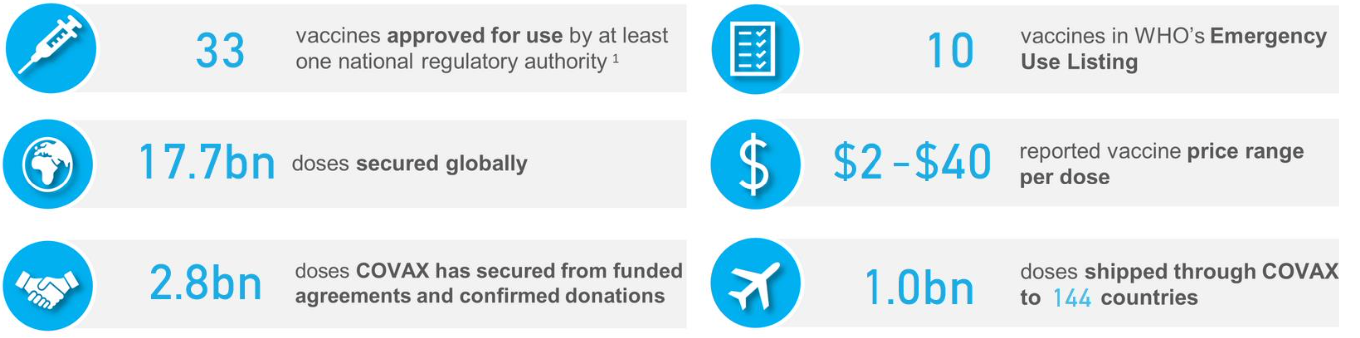
Together with our partners, COVAX is leading the largest vaccine procurement and supply operation in history, with deliveries to 144 countries to date.
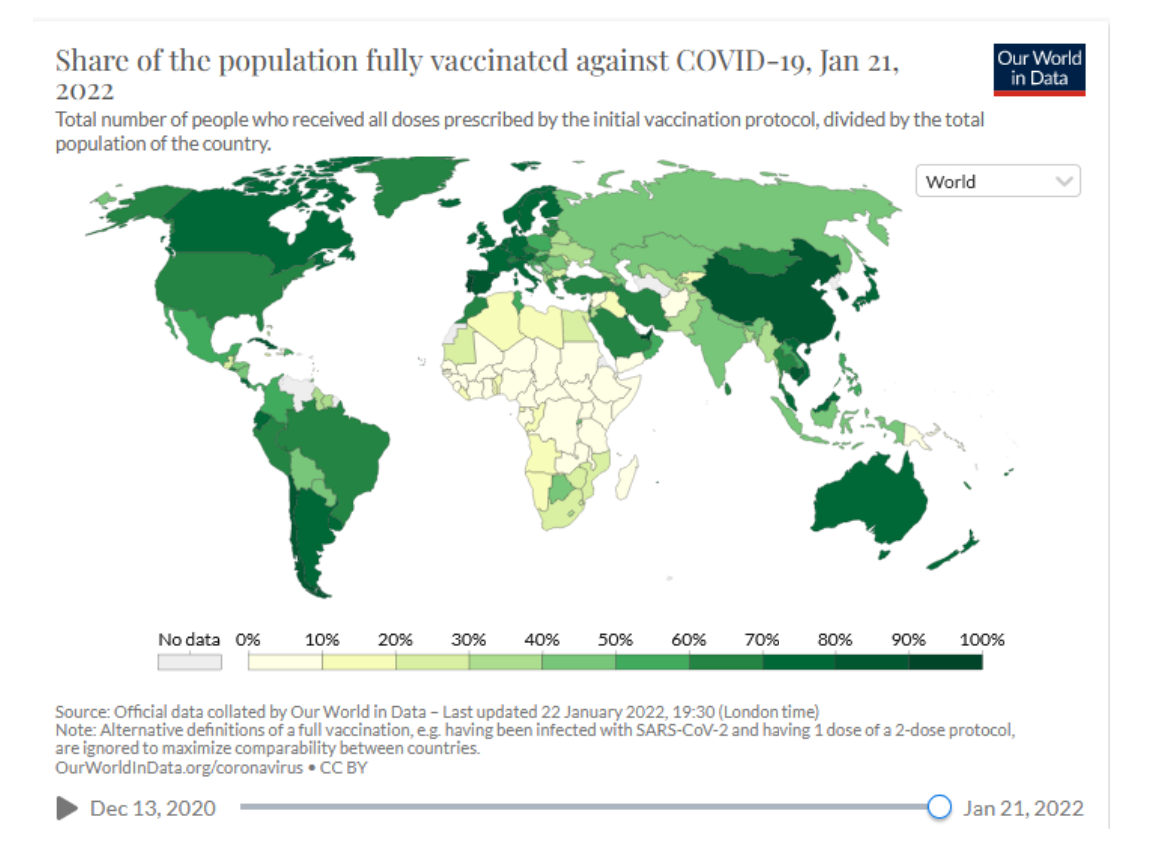
But the work that has gone into this milestone is only a reminder of the work that remains. As of 13 January 2022, out of 194 Member States, 36 WHO Member States have vaccinated less than 10% of their population, and 88 less than 40%.
COVAX’s ambition was compromised by hoarding/stockpiling in rich countries, catastrophic outbreaks leading to borders and supply being locked. And a lack of sharing of licenses, technology and know how by pharmaceutical companies meant manufacturing capacity went unused.
COVAX is working with governments, manufacturers and partners to ensure that when countries receive vaccines they can get them to people quickly.
With updated vaccines in the pipeline, now is the moment for all citizens to demand that governments & pharmaceutical companies share health tools globally & bring an end to the death & destruction cycles of this pandemic, limit new variants and drive a global economic recovery.

ICMRA COVID-19 Omicron variant workshop

ICMRA COVID-19 Omicron variant workshop
12 January 2022 [published 20 Jan 2022]
Co-chairs: Peter Marks (FDA, US) and Marco Cavaleri (EMA, EU)

Welcome by Emer Cooke, ICMRA chair (EMA)
The ‘COVID-19 Omicron variant’ workshop is the third ICMRA vaccines workshop, following the workshop organised in June 2021 entitled ‘Vaccine development: future steps’. The objective of this workshop was to reach international regulatory alignment on dealing with Omicron variant, on the criteria for the selection of adapted vaccines and fostering a strategic discussion between all public health authorities on the long term needs against SARS-CoV-2…

Closing remarks and next steps
While current vaccines are losing protection against Omicron with respect to infection and mild disease, there is still considerable protection from hospitalisation and severe COVID-19, especially after a booster dose. It is becoming increasingly clear that a booster dose is needed to extend vaccine protection.


Particularly from the perspective of a global strategy, additional boosters of current vaccines administered with short intervals to restore protection over time would not be the preferable approach to protect public health and a longer-term strategy should be defined. 

With respect to updated vaccine composition, other alternatives should be considered besides a monovalent omicron vaccine as it is not yet defined what would be the preferable approach.

In principle, clinical data are needed for approving a new updated vaccine. Clinical studies should demonstrate that the immune response, measured as neutralising antibodies, with the updated vaccine is superior to the immune response achieved with the prototype vaccine against the variant included in the updated vaccine. Cross-neutralisation of other variants of concern would be additional relevant evidence with respect to the breadth of coverage provided by the updated vaccine. These criteria have to be considered as a minimum requirement to support variant vaccine approval.

Global coordination of changes in vaccine composition to cover potential variants of concern will be important.

Coronavirus [COVID-19] – WHO Public Health Emergency of International Concern (PHEIC)

::::::


Coronavirus [COVID-19] – WHO
Public Health Emergency of International Concern (PHEIC)
https://www.who.int/emergencies/diseases/novel-coronavirus-2019


Weekly Epidemiological and Operational updates
Last update: 21 Jan 2022
Confirmed cases :: 340 543 962
Confirmed deaths :: 5 570 163
Vaccine doses administered: 9 571 502 663


::::::

Weekly epidemiological update on COVID-19 – 18 January 2022
Overview
Globally, the number of new COVID-19 cases increased in the past week (10-16 January 2022), while the number of new deaths remained similar to that of the previous week. Across the six WHO regions, over 18 million new cases were reported this week, a 20% increase, as compared to the previous week. Over 45 000 new deaths were also reported. As of 16 January, over 323 million confirmed cases and over 5.5 million deaths have been reported worldwide.

Despite a slowdown of the increase in case incidence at the global level, all regions reported an increase in the incidence of weekly cases with the exception of the African Region, which reported a 27% decrease. The South-East Asia region reported the largest increase in new cases last week (145%), followed by the Eastern Mediterranean Region (68%). New weekly deaths increased in the South-East Asia Region (12%) and Region of the Americas (7%) while remaining approximately the same as the previous week in the other regions.

WHO Director General Speeches [selected]

WHO Director General Speeches [selected]
https://www.who.int/director-general/speeches
Selected
18 January 2022
Speech
WHO Director-General’s opening remarks at the media briefing on COVID-19 — 18 January 2022
:: The volcanic eruption near Tonga and subsequent tsunami requires an urgent response. With telecommunications down, WHO is on the ground in Tonga helping coordinate the response by channelling information between UN agencies, humanitarian partners and the Tongan government.
:: Omicron continues to sweep the world. Last week, there were more than 18 million reported cases. Make no mistake, Omicron is causing hospitalizations and deaths, and even the less severe cases are inundating health facilities.
:: Next week, the WHO Executive Board, which is made up of 34 Member States, will meet to discuss the world’s health challenges. WHO will be working to accelerate progress on negotiations around a pandemic accord, as well as sustainable financing.

WHO SAGE Roadmap for prioritizing uses of COVID-19 vaccines

WHO SAGE Roadmap for prioritizing uses of COVID-19 vaccines
21 January 2022
An approach to optimize the global impact of COVID-19 vaccines, based on public health goals, global and national equity, and vaccine access and coverage scenarios
Overview
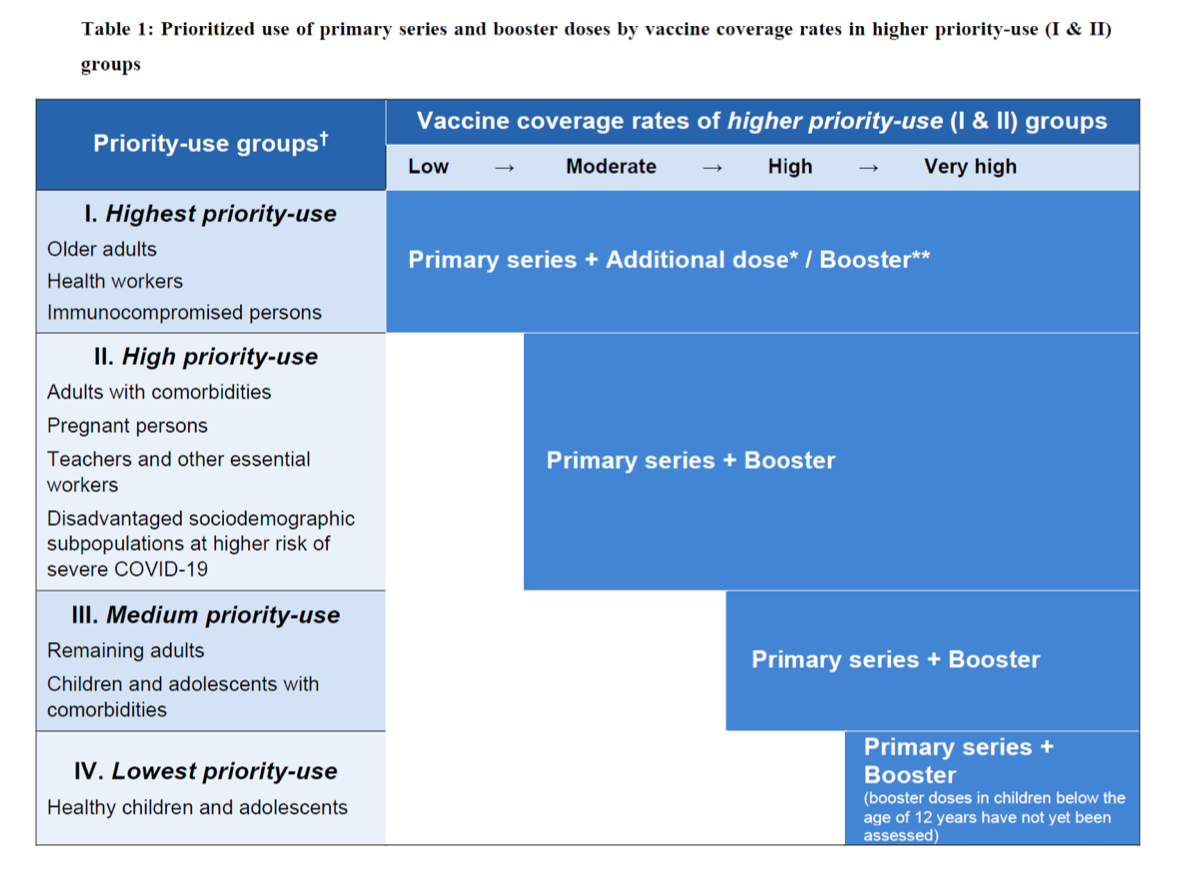
Given the urgency and wide-ranging effects of the COVID-19 pandemic, SAGE has developed an approach to help inform deliberation around the range of recommendations that may be appropriate under different epidemiologic and vaccine supply conditions. To assist in developing recommendations for use of vaccines against COVID-19, SAGE proposes a Roadmap for Prioritizing Uses of COVID-19 Vaccines that considers priority populations for vaccination based on epidemiologic setting and vaccine supply scenarios. This Roadmap builds on the WHO SAGE values framework for the allocation and prioritization of COVID-19 vaccination.
PDF: https://apps.who.int/iris/rest/bitstreams/1406385/retrieve
Preamble
This interim guidance constitutes a major revision of the WHO SAGE roadmap for prioritizing uses of COVID-19 vaccines, first issued October 2020, and updated in November 2020 and July 2021. It is based on work conducted by the SAGE Working Group on COVID-19 Vaccines and SAGE members, from October 2021 to January 2022, including consultation with RITAG1 chairs, and dedicated discussions at extraordinary meetings of the Strategic Advisory Group of Experts (SAGE) on Immunization on 7 December 2021 and 19 January 2022 (1).

This revised Roadmap takes into account increasing vaccine availability, vaccine coverage rates, and the evolving epidemiological situation including COVID-19 variants of concern. Scenarios in which vaccination coverage exceeds 50% of the population are considered, as are topics such as vaccine use in children and adolescents and prioritization of additional and booster doses in relation to vaccination coverage rates. To assist countries in developing recommendations for optimized use of vaccines against COVID-19, priority-use groups for vaccination (both primary series and booster doses) are identified based on epidemiological scenarios, public health goals, and vaccine coverage scenarios (in accordance with WHO SAGE values framework for the allocation and prioritization of COVID-19 vaccination (2)).

This Roadmap is complementary to the Strategy to achieve global Covid-19 vaccination by mid-2022 (3) issued in September 2021, which was developed by WHO in collaboration with its COVAX partners and key regional and national stakeholders, and which specifies national vaccine coverage categories. The Roadmap emphasizes the importance of prioritizing the distribution of increasingly available vaccine supply to optimize impact on health, socioeconomic conditions, and equity, and focuses on in-country vaccine policies….
Selected Chart

†Priority-use groups: The extent of risk of severe disease and death is the main determinant for assignment of a subgroup (or subpopulation) to a priority-use group. This criterion aligns with a specification of the human well-being principle in the WHO SAGE values framework for the allocation and prioritization of COVID-19 vaccines. In addition, other specifications of that principle, including reducing societal and economic disruption and protecting essential health services, as well as of the national equity and reciprocity principles, are also used to justify assignment of some of the subgroups to a priority-use group.

*Additional dose: Persons with moderate to severe immunocompromising conditions should receive an expanded primary vaccination series through an additional dose about 1–3 months after completion of the primary series (see Interim recommendations for an extended primary series with an additional vaccine dose for COVID-19 vaccination in immunocompromised persons (4). Such persons are also a high priority-use group for a subsequent (booster) dose.

**Booster dose: The optimal interval between completion of a primary series and administration of a booster dose has yet to be determined, and depends on epidemiological setting, vaccine product, targeted age groups, background seroprevalence, and circulation of specific variants of concern. As a general principle, dependent on vaccine product, an interval of 4–6 months since completion of the primary series could be considered for countries experiencing significant loss of vaccine effectiveness against severe disease in the context of an impending or ongoing major surge of cases, while a longer interval could be considered for those countries currently not experiencing, or at low risk of, an increasing incidence of cases.

Status of COVID-19 Vaccines within WHO EUL/PQ evaluation process 23 December 2021

Status of COVID-19 Vaccines within WHO EUL/PQ evaluation process 23 December 2021
[Full scale view available at title link above]
[No change from 23 December 2021]


::::::

COVID Vaccines/Therapeutics – Developer/Manufacturer Announcements
[Selected press releases/announcements from organizations from WHO EUL/PQ listing above and other organizations]


AstraZeneca
Press Releases – No new digest announcements identified

Bharat Biotech
Press Releases – No new digest announcements identified

BioCubaFarma – Cuba
Últimas Noticias
22 de Enero, 2022
Mambisa: Candidato vacunal anti-covid-19 para administración por vía nasal demuestra seguridad e inmunogenicidad y avanza en ensayos clínicos
[Mambisa: Anti-covid-19 vaccine candidate for nasal administration demonstrates safety and immunogenicity and advances in clinical trials]

19 de Enero, 2022
Avanza investigación con el candidato vacunal Mambisa
BioCubaFarma
[Research advances with the vaccine candidate Mambisa]

19 de Enero, 2022
Más de cuatro millones de cubanos han recibido dosis de refuerzo contra la COVID-19.
BioCubaFarma
[More than four million Cubans have received booster doses against COVID-19.’


CanSinoBIO
News – [Website not responding at inquiry]

Clover Biopharmaceuticals – China
News
Clover’s Final SPECTRA Phase 2/3 Clinical Trial Efficacy Data Is Published in The Lancet [COVID-19 vaccine candidate, SCB-2019]
January 20, 2022


Curevac [Bayer Ag – Germany]
News
January 17, 2022
CureVac Chief Technology Officer to Pursue New Career outside Biotech Industry


Gamaleya National Center
Latest News and Events – No new digest announcements identified [See Russia/RFID below]

IMBCAMS, China
Home – No new digest announcements identified


Janssen/JNJ
Press Releases – No new digest announcements identified


Moderna
Press Releases – No new digest announcements identified


Novavax
Press Releases
Australia Therapeutic Goods Administration (TGA) Grants Provisional Registration for Novavax COVID-19 Vaccine
Jan 19, 2022


Pfizer
Recent Press Releases
01.18.2022
Pfizer Shares In Vitro Efficacy of Novel COVID-19 Oral Treatment Against Omicron Variant
NEW YORK, January 18, 2022 — Pfizer Inc. (NYSE: PFE) today shared results from multiple studies demonstrating that the in vitro efficacy of nirmatrelvir, the active main protease (Mpro) inhibitor of PAXLOVID™ (nirmatrelvir [PF-07321332] tablets and ritonavir tablets), is maintained against the SARS-CoV-2 variant Omicron. Taken together, these in vitro studies suggest that PAXLOVID has the potential to maintain plasma concentrations many-fold times higher than the amount required to prevent Omicron from replicating in cells…


Sanofi Pasteur
Press Releases – No new digest announcements identified


Serum Institute of India
NEWS & ANNOUNCEMENTS – No new digest announcements identified


Sinopharm/WIBPBIBP
News – No new digest announcements identified


Sinovac
Press Releases
Collaboration in Africa, COVID-19 prevention and control working together with SINOVAC
2022/01/20 Event


Vector State Research Centre of Viralogy and Biotechnology
Home – No new digest announcements identified

Zhifei Longcom, China
[Anhui Zhifei Longcom Biologic Pharmacy Co., Ltd.]
[No website identified]


::::::

GSK
Press releases for media
19 January 2022 Tony Wood appointed Chief Scientific Officer designate, GSK
:: Tony Wood to assume full accountability for GSK R&D in August 2022
:: Hal Barron to transition in August 2022 from CSO to a GSK Non-Executive Director with additional responsibilities to support R&D


Merck
News releases
January 18, 2022
Merck and Ridgeback Announce Supply Agreement with UNICEF for Molnupiravir, an Investigational Oral Antiviral COVID-19 Medicine


Novartis
News – No new digest announcements identified


SK Biosciences
Press releases
SK bioscience Complete Recruitment for Phase III Clinical Trial of COVID-19 Vaccine
Recruitment of global Phase III clinical trial of ‘GBP510’ completed, with vaccine expected to be au…
2022. 01. 18


Valneva
Press Releases
January 19, 2022
Valneva’s Inactivated COVID-19 Vaccine Candidate Shown to Neutralize Omicron Variant
:: Preliminary laboratory studies demonstrate that three doses of Valneva’s inactivated COVID-19 vaccine candidate VLA2001 induced neutralization of the Omicron variant (B.1.1.529 lineage)
:: 100% of tested serum samples presented neutralizing antibodies against the ancestral virus and Delta variant, and 87% against the Omicron variant

COVID-19 Global Targets and Progress Tracker – IMF

COVID-19 Global Targets and Progress Tracker – IMF
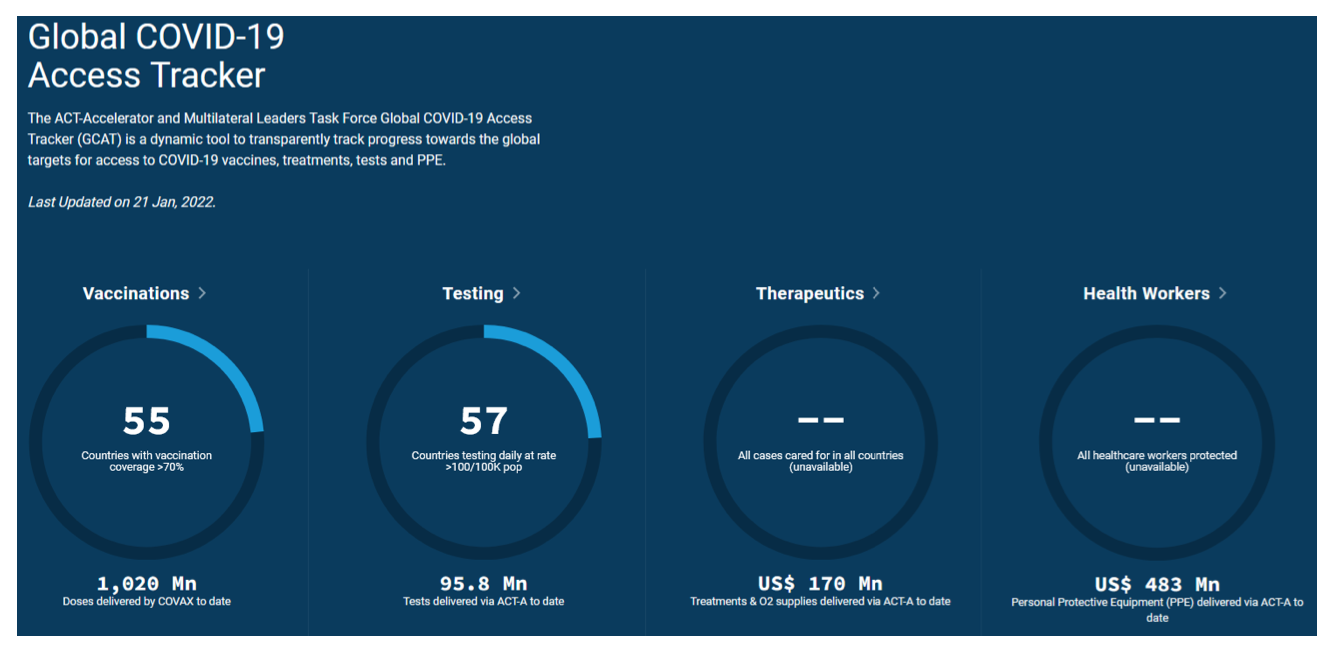
The COVID-19 Global Targets and Progress Tracker presents a consolidated view of the progress towards global COVID-19 targets, barriers in access to COVID-19 tools, and delivery of donor pledges. The global targets presented in the Tracker are based on an alignment of the targets identified in the IMF Pandemic Proposal, ACT-A Strategic Plan & Budget, and the US-hosted Global C19 Summit, and as such have been reaffirmed by multilateral institutions and global leaders. We will continue to enhance the tracker as we improve our data collection efforts.


Global Dashboard on COVID-19 Vaccine Equity

Global Dashboard on COVID-19 Vaccine Equity
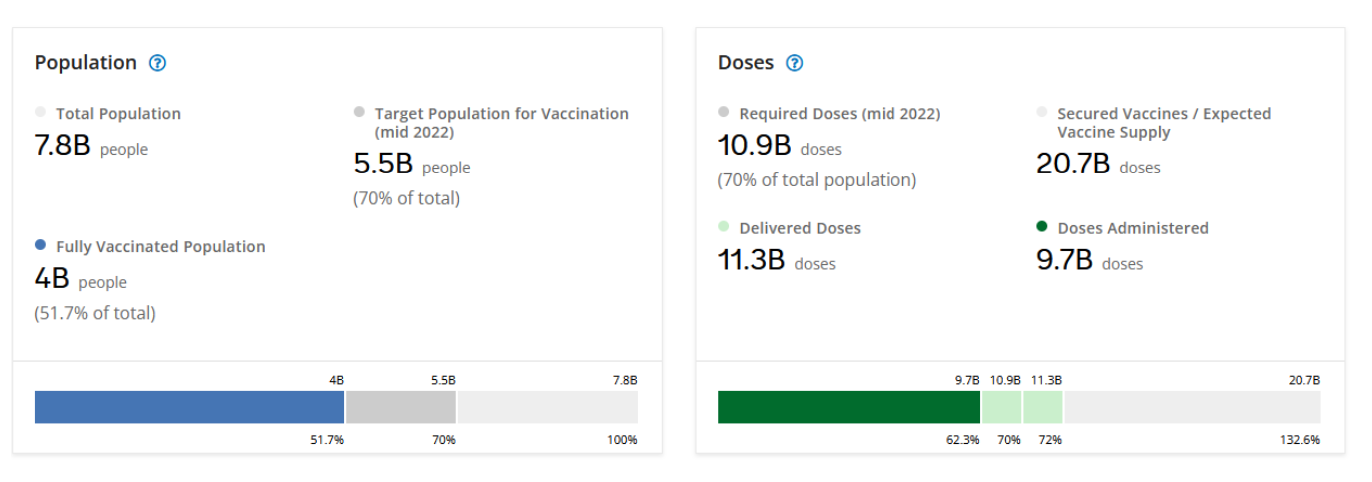
The Dashboard is a joint initiative of UNDP, WHO and the University of Oxford with cooperation across the UN system, anchored in the SDG 3 Global Action Plan for Healthy Lives and Well-being for All.

Dashboard on Vaccine Equity [accessed 22 Jan 2022]: https://data.undp.org/vaccine-equity/
See also visualization on Vaccine Access and Vaccine Affordability

The Race for Global COVID-19 Vaccine Equity

Duke – Launch and Scale Speedometer
The Race for Global COVID-19 Vaccine Equity
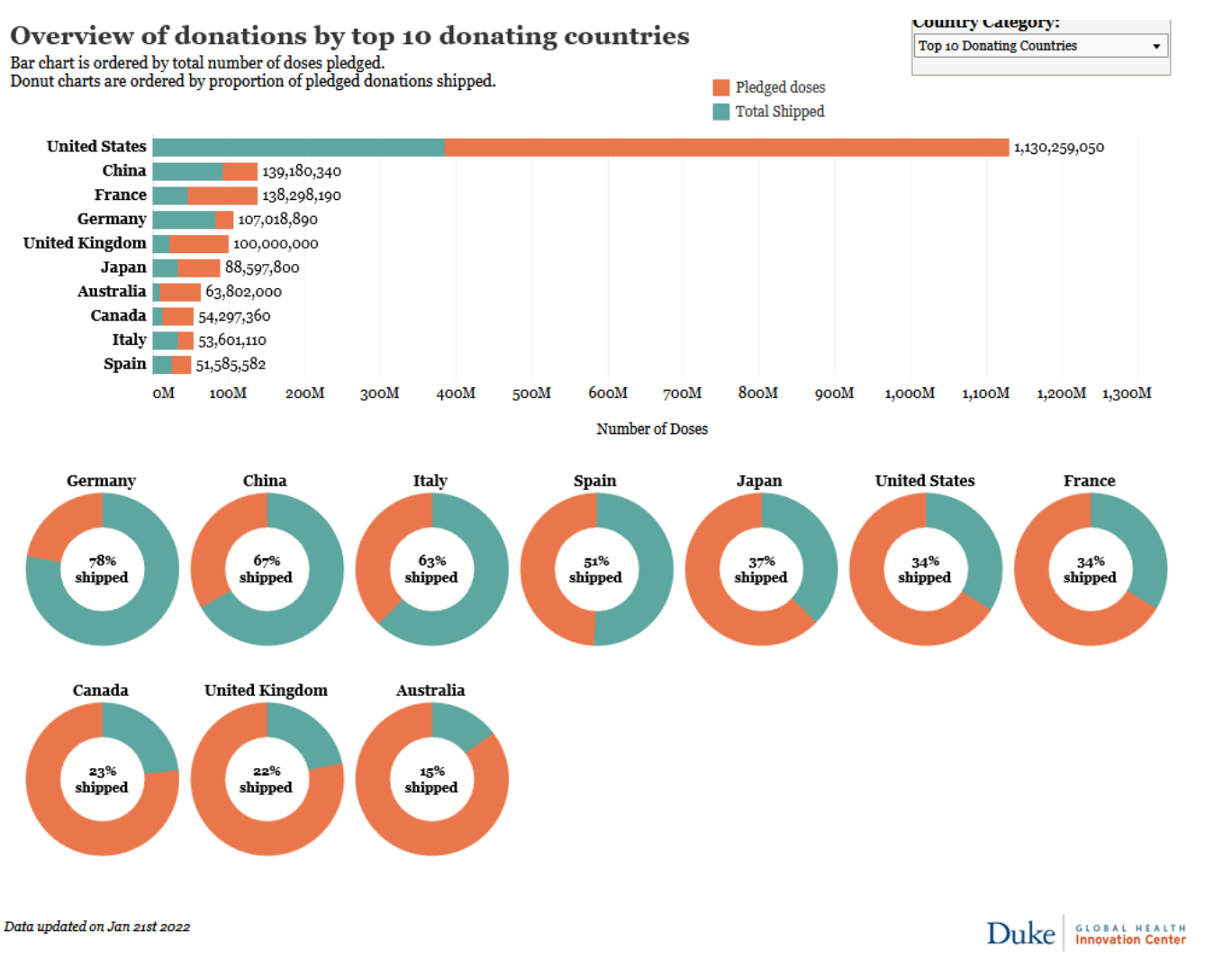
A flurry of nearly 200 COVID-19 vaccine candidates are moving forward through the development and clinical trials processes at unprecedented speed; more than ten candidates are already in Phase 3 large-scale trials and several have received emergency or limited authorization. Our team has aggregated and analyzed publicly available data to track the flow of procurement and manufacturing and better understand global equity challenges. We developed a data framework of relevant variables and conducted desk research of publicly available information to identify COVID vaccine candidates and status, deals and ongoing negotiations for procurement and manufacturing, COVID burden by country, and allocation and distribution plans. We have also conducted interviews with public officials in key countries to better understand the context and challenges facing vaccine allocation and distribution
[accessed 24 July 2021]
See our COVID Vaccine Purchases research
See our COVID Vaccine Manufacturing research
See our COVID Vaccine Donations & Exports research


COVID-19 Data Explorer: Global Humanitarian Operations

COVID Vaccines – OCHA:: HDX

COVID-19 Data Explorer: Global Humanitarian Operations
COVID-19 Vaccine Roll-out
22 Jan 2022 | COVAX (WHO,GAVI,CEPI), UNDESA, Press Reports | DATA
Global COVID-19 Figures: 340M total confirmed cases; 5.6M total confirmed deaths
Global vaccines administered: 9.79B
Number of Countries: 30
COVAX Allocations Round 4-9 (Number of Doses): 220M
COVAX Delivered (Number of Doses): 280M
Other Delivered (Number of Doses): 340M
Total Delivered (Number of Doses): 620M
Total Administered (Number of Doses): 470M

Multilateral Leaders Task Force on COVID-19 [IMF, World Bank Group, WHO, WTO]

Multilateral Leaders Task Force on COVID-19 [IMF, World Bank Group, WHO, WTO]
https://data.covid19taskforce.com/data
A global effort to help developing countries access and deliver COVID-19 vaccines, testing, and therapeutics, as they work to end the pandemic and boost economic recovery.
The International Monetary Fund, World Bank Group, World Health Organization and World Trade Organization have joined forces to accelerate access to COVID-19 vaccines, therapeutics and diagnostics by leveraging multilateral finance and trade solutions, particularly in low- and middle-income countries.
Website accessed 22 Jan 2022: https://data.covid19taskforce.com/data The global view below is complemented by country-specific dashboards here.

U.S.: COVID-19 Vaccines – Announcements/Regulatory Actions/Deployment

U.S.: COVID-19 Vaccines – Announcements/Regulatory Actions/Deployment


HHS
News
No new digest content identified.


FDA
Press Announcements
January 21, 2022 – FDA Takes Actions to Expand Use of Treatment for Outpatients with Mild-to-Moderate COVID-19
Today, the U.S. Food and Drug Administration took two actions to expand the use of the antiviral drug Veklury (remdesivir) to certain non-hospitalized adults and pediatric patients for the treatment of mild-to-moderate COVID-19 disease. This provides another treatment option to reduce the risk of hospitalization in high-risk patients. Previously, the use of Veklury was limited to patients requiring hospitalization.//


Vaccines and Related Biological Products Advisory Committee– FDA
https://www.fda.gov/advisory-committees/blood-vaccines-and-other-biologics/vaccines-and-related-biological-products-advisory-committee
No meetings on calendar


::::::


White House [U.S.]
Briefing Room – Selected Major COVID Announcements
Press Briefing by White House COVID-⁠19 Response Team and Public Health Officials
January 21, 2022 Press Briefings


U.S. Department of State
https://www.state.gov/coronavirus/releases/
Media Notes
No new digest content identified.

Europe: COVID-19 Vaccines – Announcements/Regulatory Actions/Deployment

Europe: COVID-19 Vaccines – Announcements/Regulatory Actions/Deployment


European Medicines Agency
News & Press Releases
News: International regulators’ recommendations on COVID-19 vaccines and the Omicron variant (new)
Last updated: 21/01/2022
[See Perspectives above for detail]


News: International regulators’ recommendations on COVID-19 vaccines and the Omicron variant (new)
Last updated: 21/01/2022


::::::


European Centre for Disease Prevention and Control
https://www.ecdc.europa.eu/en
Latest Updates
Publication
Communicable disease threats report, 16-22 January 2022, week 3
Publication – 21 Jan 2022

News
Weekly epidemiological update: Omicron variant of concern (VOC) – week 2 (data as of 20 January 2022) EU/EEA
Epidemiological update – 21 Jan 2022

Publication
Interim analysis of COVID-19 vaccine effectiveness against Severe Acute Respiratory Infection due to laboratory-confirmed SARS-CoV-2 among individuals aged 50 years and older, ECDC multi-country study – first update

Technical report – 20 Jan 2022


::::::

Accessed 22 Jan 2022
https://vaccinetracker.ecdc.europa.eu/public/extensions/COVID-19/vaccine-tracker.html#uptake-tab


::::::


European Commission
https://ec.europa.eu/commission/presscorner/home/en
Press release 19 January 2022
New Pact on Migration and Asylum: new mandate, new start for the European Union Agency for Asylum
Today, the new European Union Agency for Asylum starts work with its reinforced mandate, building on the achievements of its predecessor, the European Asylum Support Office

Press release 19 January 2022
EU Cohesion policy: Almost €385.5 million from the EU Solidarity Fund to 19 countries to tackle the coronavirus health emergency
The Commission completed the payments of the EU Solidarity Fund (EUSF) assistance to tackle the coronavirus health emergency to 19 countries for a total amount of almost €385.5 million.

Press release 18 January 2022
Afghanistan: EU supports the education, health and livelihoods of the Afghan people with €268.3 million
In the major humanitarian crisis Afghanistan is facing, the EU has launched projects worth €268.3 million, stepping up vital support to the Afghan population.

Press release 17 January 2022
EU at forefront of global humanitarian response: €1.5 billion for 2022
Humanitarian crises around the world continue to rise. While conflicts and violence are the source of major humanitarian needs, the situation is increasingly being worsened by natural disasters, such as drought or floods, fuelled by climate change and environmental degradation.

Russia: COVID-19 Vaccines – Announcements/Regulatory Actions/Deployment

Russia: COVID-19 Vaccines – Announcements/Regulatory Actions/Deployment


Russia: Sputnik V – “the first registered COVID-19 vaccine”
https://sputnikvaccine.com/newsroom/pressreleases/
Press Releases
Sputnik V demonstrates strong protection against Omicron variant, with over 2 times higher virus neutralizing activity compared to the Pfizer vaccine according to a unique independent comparative study conducted by the Spallanzani Institute in Italy
Press release, 20.01.2022

India: COVID-19 Vaccines – Announcements/Regulatory Actions/Deployment

India: COVID-19 Vaccines – Announcements/Regulatory Actions/Deployment


Ministry of Health and Family Welfare
https://www.mohfw.gov.in/

Revised Comprehensive Guidelines for Management of COVID-19 in Children and Adolescents (below 18 years)
20.01.2022


Government of India – Press Information Bureau
Latest Press Releases
COVID – 19 Vaccination Update – Day 372
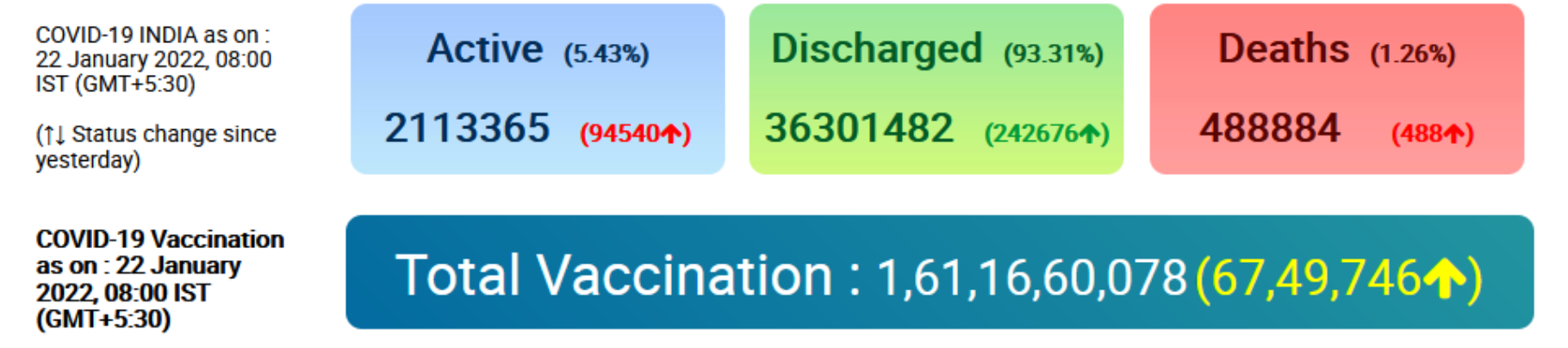
:: India’s cumulative vaccination coverage crosses 161.81 crore
:: More than 61 lakh Vaccine doses administered today till 7 pm
Posted On: 22 JAN 2022 7:52PM by PIB Delhi


Indian Council for Medical Research (ICMR)
https://www.icmr.gov.in/media.html
Press Releases
No new digest content identified.

China: COVID-19 Vaccines – Announcements/Regulatory Actions/Deployment

China: COVID-19 Vaccines – Announcements/Regulatory Actions/Deployment


Over 2.95b COVID-19 vaccine doses administered on Chinese mainland
2022-01-21
More than 2.95 billion COVID-19 vaccine doses had been administered on the Chinese mainland as of Wednesday, data from the National Health Commission showed Thursday.

Beijing confirms 5 cases, tightens virus measures
2022-01-21
Beijing is facing a severe and complicated COVID-19 epidemic control and prevention situation as an increasing number of cases have occurred in several districts this week, a senior official said on Thursday.
Beijing reported five new confirmed locally transmitted COVID-19 cases on Thursday, including three who had reported positive nucleic acid tests on Wednesday.
Following that test, a further test confirmed viral infections, bringing the total number of positive and confirmed cases in the latest outbreaks to 11.
All of the new patients work in the cold chain industry. The Delta variant of the novel coronavirus was detected in samples collected from those cases.
“The whole genome sequencing of one of the new cases is in accord with a previous case reported on Tuesday, which means they are in the same transmission chain,” Pang Xinghuo, deputy director of the Beijing Center for Disease Control and Prevention, said at a news conference…

China adopts faster mass testing for COVID-19
2022-01-20
BEIJING — Chinese health authorities have adopted faster-pooled tests for the coronavirus that allow professional labs to process 20 samples at a time.
The updated testing techniques, based on the current practice of putting five or 10 swab samples together and testing as one, are aimed at sharply boosting the efficiency of virus testing, said the State Council inter-agency task force for COVID-19 response.
The new testing approach will be introduced across the country while ensuring quality results, it said…

POLIO Public Health Emergency of International Concern (PHEIC)

Emergencies

POLIO
Public Health Emergency of International Concern (PHEIC)
https://polioeradication.org/polio-today/polio-now/this-week/

Polio this week as of 19 January 2022
:: …WHO Executive Board…The Secretariat has prepared two reports, which will inform Member State discussions, namely on polio eradication, and on polio transition planning and post-certification.
:: On polio eradication, the report provides an update on work towards Goals 1 and 2 of the Polio Eradication Strategy 2022–2026.  On transition and post-certification, the report provides an update on the implementation of the Strategic Action Plan on Polio Transition (2018-2023) within the context of COVID-19.

Summary of new WPV and cVDPV viruses this week (AFP cases and ES positives):
–  Cote d’Ivoire:  two cVDPV2 positive environmental samples
– Nigeria:  three cVDPV2 cases and 11 cVDPV2 positive environmental samples


::::::

Afghanistan conducts first polio vaccination campaign in 2022 
Kabul, 17 January 2022 – The first national polio immunization campaign for 2022 begins this week, 17-20 January 2022, targeting 9.9 million children aged 0–59 months across the country.

The recent campaign in November 2021 delivered polio vaccinations to 8.5 million children under the age of 5 while the December campaign vaccinated more than 8 million children. In total, 2.6 million children have now been vaccinated for the first time in more than 3 years.

2021 was the year with the lowest ever polio transmission in Afghanistan, providing an unprecedented opportunity to interrupt transmission of wild poliovirus and achieve eradication. Four cases of wild poliovirus type 1 (WPV1) were reported: the first, in Ghazni province in January, and 3 in Kunduz province in October and November.

In response to the detection of 3 cases of WPV1 in Kunduz earlier this month, the polio programme also conducted a third case response campaign in 7 provinces in order to stop the outbreak and protect children from the crippling but preventable disease.

“As we begin 2022, we have our best opportunity yet to end polio in Afghanistan,” said Dr Dapeng Luo, WHO Representative in Afghanistan. “To reach that goal, we have 5 more campaigns planned for 2022 and it is critical that we maintain this momentum to reach our final goal of zero cases.” …


::::::
::::::

Disease Outbreak News (DONs)

:: Hepatitis E virus – Chad 17 January 2022


::::::
::::::

WHO/OCHA Emergencies

Health emergencies list – WHO
“The health emergencies list details the disease outbreaks, disasters and humanitarian crises where WHO plays an essential role in supporting countries to respond to and recover from emergencies with public health consequences.”
Afghanistan crisis
:: First polio vaccination campaign for 2022 under way 17 January 2022

Crisis in Northern Ethiopia [Last apparent update: 1 June 2021]

Ebola outbreak, Democratic Republic of the Congo, 2021 [Last apparent update: 17 Aug 2021]

Ebola outbreak outbreak, N’Zerekore, Guinea, 2021 [Last apparent update: 17 Aug 2021]

Coronavirus disease (COVID-19) pandemic [See COVID above]


Ebola outbreak, Equateur Province, Democratic Republic of the Congo, 2020
[Last apparent update: 17 Aug 2021]

Ebola outbreak, North Kivu, Ituri, Democratic Republic of the Congo, 2018 – 2020
[Last apparent update: 17 Aug 2021]

Ebola outbreak, Democratic Republic of the Congo, 2018 [Last apparent update: 24 July 2018]

Yemen crisis [Last apparent update: 12 February 2021]

Syria crisis [Last apparent update: 18 June 2021]

Somalia crisis [Last apparent update: 24 March 2018]

Nigeria crisis [Last apparent update: 1 Oct 2021]

Ebola outbreak, Democratic Republic of the Congo, 2017 [Last apparent update: 17 Aug 2021]

Zika virus disease outbreak, 2015-2016 [Last apparent update: 24 Jan 2020]

Ebola outbreak: West Africa, 2014-2016 [Last apparent update: 17 Aug 2021]

Iraq crisis [Last apparent update: 9 Jan 2008]

South Sudan crisis [Last apparent update: 23 Sep 2020]

Avian influenza A (H7N9) virus outbreak [Last apparent update: 13 September 2021]

Middle East respiratory syndrome (MERS-CoV) outbreak [Last apparent update: 8 July 2019]

Influenza A (H1N1) virus, 2009-2010 pandemic [Last apparent update: 10 Aug 2010]


::::::

UN OCHA – Current Emergencies
Current Corporate Emergencies
Afghanistan
 Earthquake in Badghis Province, Afghanistan – Flash Update No. 2 (As of 21 January 2022, 12:00 local time (Kabul)


Northern Ethiopia
Ethiopia – Northern Ethiopia Humanitarian Update Situation Report, 20 January 2022
…More than 145,000 children received measles vaccination in Tigray so far, but the campaign faces challenges including lack of fuel, cash, and cold chain capacity…


::::::
::::::

WHO & Regional Offices [to 22 Jan 2022]

WHO & Regional Offices [to 22 Jan 2022]
https://www.who.int/
Selected News, Statements
20 January 2022
News release
WHO publishes new global data on the use of clean and polluting fuels for cooking by fuel type

20 January 2022
Departmental news
U.S. EPA and WHO partner to protect public health

20 January 2022
Departmental news
Planning and budgeting tool for TB and drug-resistant TB testing

20 January 2022
Departmental news
WHO summary of Baseline report for UN Decade of Healthy Ageing is now available in all official UN languages

19 January 2022
Statement
Statement on the tenth meeting of the International Health Regulations (2005) Emergency Committee regarding the coronavirus disease (COVID-19) pandemic

19 January 2022
Departmental news
WHO announces the update of the guidelines on the diagnosis, prevention and management of cryptococcal disease in HIV-infected adults

18 January 2022
Departmental news
First WHO report highlights efforts to improving health and well-being of adolescents worldwide

16 January 2022
News release
COVAX delivers its 1 billionth COVID-19 vaccine dose

::::::


WHO Regional Offices
Selected Press Releases, Announcements
WHO African Region AFRO
:: Cases drop for first time as Africa’s fourth COVID-19 wave ebbs 20 January 2022
Brazzaville – Weekly COVID-19 cases in Africa have dropped significantly and deaths dipped for the first time since the peak of the fourth pandemic wave propelled by the Omicron variant. The decline nudges the continent past its shortest upsurge yet that lasted 56 days.
Newly reported cases fell by 20% in the week to 16 January, while deaths dropped by 8%. The decrease in deaths is still small and further monitoring is needed, but if the trend continues the surge in deaths will also be the shortest reported so far during this pandemic…

WHO Region of the Americas PAHO
:: PAHO calls for countries to prioritize rapid tests for those with COVID-19 symptoms 19 Jan 2022
As infections surge, testing should be expanded to alleviate pressure on hospitals. Those without symptoms should quarantine and follow public health measures. Washington D.C. 19 January 2022 (PAHO) – With COVID-19 surging throughout the Americas and demand for diagnostics higher than ever, the Pan American Health Organization Director Carissa F…

WHO South-East Asia Region SEARO
No new digest content identified

WHO European Region EURO
:: Two years of COVID-19: What it takes to run an emergency response across 53 countries 21-01-2022
:: Noncommunicable diseases in 53 countries: WHO/Europe presents new visual data tool 20-01-2022
:: The Omicron variant: sorting fact from myth 19-01-2022

WHO Eastern Mediterranean Region EMRO
:: Volunteering for the fight against malaria in Yemen 17 January 2022
:: Afghanistan conducts first polio vaccination campaign in 2022  17 January 2022

WHO Western Pacific Region
:: 18 January 2022 News release WHO supports whole-of-UN response to volcanic eruption and tsunami in Tonga


::::::

WHO Events
https://www.who.int/news-room/events/2
[Selected]
150th session of the Executive Board
24 – 29 January 2022
Virtual event


World NTD Day 2022: Achieving health equity to end the neglect of poverty-related diseases
26 January 2022 14:00 – 15:00 CET


WHO consultation on COVID vaccines research: Why do we need a pan-sarbecovirus vaccine?
28 January 2022 13:00 – 19:00 CET


Mobilizing the World to Defeat Neglected Tropical Diseases
28 January 2022 16:00 – 17:15 CET


::::::

New WHO Publications
https://www.who.int/publications/i
Selected Titles
21 January 2022
Annexes to the recommendations for use of the Pfizer–BioNTech vaccine BNT162b2 against COVID-19

21 January 2022
WHO SAGE Roadmap for prioritizing uses of COVID-19 vaccines
[See COVID above for detail]

21 January 2022
Interim recommendations for use of the Pfizer–BioNTech COVID-19 vaccine, BNT162b2, under Emergency Use…

20 January 2022
Review of Minamata convention initial assessment reports: key findings for health

CDC/ACIP [U.S.] [to 22 Jan 2022]

CDC/ACIP [U.S.] [to 22 Jan 2022]
http://www.cdc.gov/media/index.html
https://www.cdc.gov/vaccines/acip/index.html
Latest News Releases, Announcements [Selected]
CDC Statement on MMWR: COVID-19 Cases and Hospitalizations by COVID-19 Vaccination Status and Previous COVID-19 Diagnosis — California and New York, May–November 2021
Thursday, January 20, 2022

CDC Releases Updated Maps of America’s High Levels of Inactivity
Thursday, January 20, 2022

MMWR News Synopsis Friday, January 21, 2022

MMWR News Synopsis Friday, January 21, 2022
Selected Content
:: Surveillance Summaries: Disease Surveillance Among U.S.-Bound Immigrants and Refugees — Electronic Disease Notification System, United States, 2014–2019
:: Zika-Associated Birth Defects Reported in Pregnancies with Laboratory Evidence of Confirmed or Possible Zika Virus Infection — U.S. Zika Pregnancy and Infant Registry, December 1, 2015–March 31, 2018
:: Use of Recombinant Zoster Vaccine in Immunocompromised Adults Aged ≥19 Years: Recommendations of the Advisory Committee on Immunization Practices — United States, 2022
:: Progress Toward Poliomyelitis Eradication ― Afghanistan, January 2020–November 2021
:: Use of the Janssen (Johnson & Johnson) COVID-19 Vaccine: Updated Interim Recommendations from the Advisory Committee on Immunization Practices — United States, December 2021
:: Previously Released: Racial and Ethnic Disparities in Receipt of Medications for Treatment of COVID-19 — United States, March 2020–August 2021

Coronavirus Disease 2019 (COVID-19)- CDC

Coronavirus Disease 2019 (COVID-19)– CDC
Approximately 25 announcements/reports/data summaries.
21 Jan COVID-19 Travel Recommendations by Country
21 Jan Cases in the U.S.
21 Jan EARLY RELEASE: Effectiveness of a Third Dose of mRNA Vaccines Against COVID-19–Associated Emergency Department and Urgent Care Encounters and Hospitalizations Among Adults During Periods of Delta and Omicron Variant Predominance — VISION Network, 10 States, August 2021–January 2022
21 Jan EARLY RELEASE: COVID-19 Incidence and Death Rates Among Unvaccinated and Fully Vaccinated Adults with and Without Booster Doses During Periods of Delta and Omicron Variant Emergence — 25 U.S. Jurisdictions, April 4–December 25, 2021
21 Jan Overall US COVID-19 Vaccine Distribution and Administration Update as of Fri, 21 Jan 2022 06:00:00 EST

National Health Commission of the People’s Republic of China [to 22 Jan 2022]

China CDC http://www.chinacdc.cn/en/

National Health Commission of the People’s Republic of China [to 22 Jan 2022]
http://en.nhc.gov.cn/
News
Jan 22: Daily briefing on novel coronavirus cases in China
On Jan 21, 31 provincial-level regions and the Xinjiang Production and Construction Corps on the Chinese mainland reported 63 new cases of confirmed infections.

Beijing confirms 5 cases, tightens virus measures
2022-01-21
Beijing is facing a severe and complicated COVID-19 epidemic control and prevention situation as an increasing number of cases have occurred in several districts this week, a senior official said on Thursday.
Beijing reported five new confirmed locally transmitted COVID-19 cases on Thursday, including three who had reported positive nucleic acid tests on Wednesday.
Following that test, a further test confirmed viral infections, bringing the total number of positive and confirmed cases in the latest outbreaks to 11.
All of the new patients work in the cold chain industry. The Delta variant of the novel coronavirus was detected in samples collected from those cases.
“The whole genome sequencing of one of the new cases is in accord with a previous case reported on Tuesday, which means they are in the same transmission chain,” Pang Xinghuo, deputy director of the Beijing Center for Disease Control and Prevention, said at a news conference…

China adopts faster mass testing for COVID-19
2022-01-20
BEIJING — Chinese health authorities have adopted faster-pooled tests for the coronavirus that allow professional labs to process 20 samples at a time.
The updated testing techniques, based on the current practice of putting five or 10 swab samples together and testing as one, are aimed at sharply boosting the efficiency of virus testing, said the State Council inter-agency task force for COVID-19 response.
The new testing approach will be introduced across the country while ensuring quality results, it said…

National Medical Products Administration – PRC [to 22 Jan 2022]
http://english.nmpa.gov.cn/
News
Over 2.95b COVID-19 vaccine doses administered on Chinese mainland
2022-01-21
More than 2.95 billion COVID-19 vaccine doses had been administered on the Chinese mainland as of Wednesday, data from the National Health Commission showed Thursday.

CCDC Weekly Reports: Current Volume (4)
2022-01-21 / No. 3
View  PDF of this issue
Preplanned Studies: Prevalence, Incidence, and Characteristics of Tuberculosis Among Known Diabetes Patients — A Prospective Cohort Study in 10 Sites, 2013–2015