Knowledge, Vaccination Status, and Reasons for Avoiding Vaccinations against Hepatitis B in Developing Countries: A Systematic Review

Vaccines — Open Access Journal
http://www.mdpi.com/journal/vaccines


Open Access Review
Knowledge, Vaccination Status, and Reasons for Avoiding Vaccinations against Hepatitis B in Developing Countries: A Systematic Review
by Putri Bungsu Machmud, Saskia Glasauer, Cornelia Gottschick and Rafael Mikolajczyk
Vaccines 2021, 9(6), 625; https://doi.org/10.3390/vaccines9060625 – 09 Jun 2021
Abstract
(1) Background: The coverage of hepatitis B vaccination remains low in developing countries to date. This systematic review thus analyzes the determinants of people’s knowledge and vaccination status as well as the reasons why people in developing countries chose not to receive the […

Global Vaccine Hesitancy Segmentation: A Cross-European Approach

Vaccines — Open Access Journal
http://www.mdpi.com/journal/vaccines


Open Access Article
Global Vaccine Hesitancy Segmentation: A Cross-European Approach
by Almudena Recio-Román, Manuel Recio-Menéndez and María Victoria Román-González
Vaccines 2021, 9(6), 617; https://doi.org/10.3390/vaccines9060617 – 08 Jun 2021
Abstract
Vaccine-preventable diseases are global mainly in a globalized world that is characterized by a continuous movement of people and goods across countries. Vaccine hesitancy, the reluctance or refusal to vaccinate despite the availability of vaccines, is rising worldwide. What if the problem of […]

Media/Policy Watch

Media/Policy Watch
This watch section is intended to alert readers to substantive news, analysis and opinion from the general media and selected think tanks and similar organizations on vaccines, immunization, global public health and related themes. Media Watch is not intended to be exhaustive, but indicative of themes and issues CVEP is actively tracking. This section will grow from an initial base of newspapers, magazines and blog sources, and is segregated from Journal Watch above which scans the peer-reviewed journal ecology.
We acknowledge the Western/Northern bias in this initial selection of titles and invite suggestions for expanded coverage. We are conservative in our outlook in adding news sources which largely report on primary content we are already covering above. Many electronic media sources have tiered, fee-based subscription models for access. We will provide full-text where content is published without restriction, but most publications require registration and some subscription level.
The sheer volume of vaccine and pandemic-related coverage is extraordinary. We will strive to present the most substantive analysis and commentary we encounter.


The Atlantic
http://www.theatlantic.com/magazine/
Accessed 12 Jun 2021
[No new, unique, relevant content]


BBC
http://www.bbc.co.uk/
Accessed 12 Jun 2021
[No new, unique, relevant content]


The Economist
http://www.economist.com/
Accessed 12 Jun 2021
The rule of six
More evidence emerges of India’s true death toll from covid-19
New surveys corroborate earlier estimates that the number is some six times higher
Asia Jun 12th 2021 edition


Financial Times
https://www.ft.com/
Accessed 12 Jun 2021
G7’s vaccine pledge for poor nations branded inadequate by campaigners
Offer of 1bn jabs is not enough to close supply divide and stem pandemic’s spread, say critics
Michael Peel in Brussels, Jasmine Cameron-Chileshe in Cornwall and David Pilling in London
June 11, 2021
Top of Form
Bottom of Form


Forbes
http://www.forbes.com/
Accessed 12 Jun 2021
Coronavirus   
Jun 11, 2021
A Pivot Point For Global Leadership On Covid-19
The United States has finally taken the lead in the global fight to control the Covid-19 pandemic and delivering vaccines to all those in need.
By William A. Haseltine Contributor


Foreign Affairs
http://www.foreignaffairs.com/
Accessed 12 Jun 2021
Essay July/August 2021
The Forever Virus
Global herd immunity is now unreachable. How should governments’ strategy in the fight against COVID-19 change in response?
Larry Brilliant, Lisa Danzig, Karen Oppenheimer, Agastya Mondal, Rick Bright, and W. Ian Lipkin
It is time to say it out loud: the virus behind the COVID-19 pandemic is not going away. SARS-CoV-2 cannot be eradicated, since it is already growing in more than a dozen different animal species. Among humans, global herd immunity, once promoted as a singular solution, is unreachable. Most countries simply don’t have enough vaccines to go around, and even in the lucky few with an ample supply, too many people are refusing to get the shot. As a result, the world will not reach the point where enough people are immune to stop the virus’s spread before the emergence of dangerous variants—ones that are more transmissible, vaccine resistant, and even able to evade current diagnostic tests. Such supervariants could bring the world back to square one. It might be 2020 all over again.
Rather than die out, the virus will likely ping-pong back and forth across the globe for years to come. Some of yesterday’s success stories are now vulnerable to serious outbreaks. Many of these are places that kept the pandemic at bay through tight border controls and excellent testing, tracing, and isolation but have been unable to acquire good vaccines. Witness Taiwan and Vietnam, which experienced impressively few deaths until May 2021, when, owing to a lack of vaccination, they faced a reversal of fortune. But even countries that have vaccinated large proportions of their populations will be vulnerable to outbreaks caused by certain variants. That is what appears to have happened in several hot spots in Chile, Mongolia, the Seychelles, and the United Kingdom. The virus is here to stay. The question is, What do we need to do to ensure that we are, too?…


Foreign Policy
http://foreignpolicy.com/
Accessed 12 Jun 2021
Vaccine Diplomacy Boosts China’s Standing in Latin America
Beijing has increased its leverage in the region—but Washington can still stage a comeback.
By Oliver Stuenkel, an associate professor of international relations at the Getulio Vargas Foundation in São Paulo.
June 11, 2021, 9:17 AM


New Yorker
http://www.newyorker.com/
Accessed 12 Jun 2021
Annals of Medicine
Heidi Larson, Vaccine Anthropologist
The world’s richest countries are now its most vaccine-hesitant. Can we learn to trust our shots before the next pandemic?
By Danielle Ofri June 12.2021


New York Times
http://www.nytimes.com/
Accessed 12 Jun 2021
World
F.D.A. details failures at a Baltimore plant that led to unusable vaccine doses.
The F.D.A. advised Johnson & Johnson on Friday that it should throw out the equivalent of 60 million doses produced at the Baltimore plant.
By Sharon LaFraniere June 12, 2021

World
Russia scrambles to contain a new surge, as most of its people appear to be avoiding the Sputnik vaccine.
Moscow’s mayor said the city’s situation had “sharply worsened” in the past week.
By Anton Troianovski June 12, 2021

Africa
Without a big boost, many African nations may not meet a vaccination goal.
The World Health Organization set a target that each country should be able to give shots to at least 10 percent of its people by September.
By Abdi Latif Dahir June 10, 2021

Opinion
Guest Essay
What I Learned in 33 Years at the C.D.C.
June 10, 2021

By Anne Schuchat
Dr. Schuchat is the principal deputy director of the Centers for Disease Control and Prevention. She’s retiring from the agency at the end of June after 33 years.

Nearly 15 years ago, during a ceremony in the Centers for Disease Control and Prevention’s Atlanta campus auditorium, I was promoted to rear admiral in the Commissioned Corps of the U.S. Public Health Service. My father, a veteran of World War II and the Korean War, positioned my new gold epaulets on the shoulders of my service dress blue uniform while my mother, a cultural anthropologist, observed the ritual from the audience. I said to the people gathered, “Public service is a privilege. For me, it has also been a joy.” After 33 years, I’m retiring from the agency, and that’s the same message I would like to send to the American public.

My father, like many in his generation, enlisted in the U.S. Navy after the attack on Pearl Harbor. Another call to national service, for another generation, followed President John F. Kennedy’s inaugural address. My route to public service was more private and less intentional than those. I initially planned to apply my medical training to clinical practice. But the C.D.C.’s disease detective program — the Epidemic Intelligence Service — got me hooked on public health.

Public service is difficult. The past year and a half left many among our ranks exhausted, threatened, saddened and sometimes sidelined. The Covid-19 pandemic is not the first time the U.S. public health system has had to surge well beyond its capacity, but with the worst pandemic in a century and, initially, a heavily partisan political context, the virus collided with a system suffering from decades of underinvestment. A recent report from the National Academy of Medicine revealed that state and local public health departments have lost an estimated 66,000 jobs since around 2008.

With prior responses — including the hantavirus outbreak and bioterrorist anthrax, pandemic H1N1 influenza and the Ebola and Zika epidemics — the public health front line has been the little engine that could. For each of those responses, state and local public health departments absorbed the initial shock until emergency funding came through — and then repeatedly watched resources ebb as the crisis abated. Over the past few decades, public health experienced a progressive weakening of our core capacities while biomedical research and development accelerated into the future. With Covid-19, we were the little engine that couldn’t.

Infections, hospitalizations and deaths are declining in the United States, thanks to extraordinary vaccination efforts. These recent improvements might make it too easy to forget just how much we have collectively been through. But I hope that it has become clear to the nation and its policymakers that when we don’t invest in public health, everyone is vulnerable.

The nation’s public health system needs major upgrades. We need to modernize our data systems, enhance our laboratory capacities for detection and genomic sequencing of infectious threats like viruses and better integrate public health’s information and response efforts with clinical, commercial and academic sectors. America needs a renewed and expanded public health work force that reflects advanced skills as well as the diversity of the communities we serve.

The C.D.C. and public health departments are now receiving critical financial resources on an emergency basis. But these investments and improvements must be sustained. Long-term commitments to resources and innovation are essential. The Covid-19 pandemic will not be the last major threat our nation will face.
Public service is deeply meaningful. In my first several years at the C.D.C., I conducted surveillance and epidemiologic studies of an infection, group B strep, that harms newborns. It is passed to infants from women during childbirth. Although research during the 1980s identified the benefit of providing antibiotics to high-risk women during labor, the practice was not put in place. I spearheaded the C.D.C.’s efforts, leading to the 1995 meeting where we brought together obstetric and pediatric organizations as well as parents who had lost babies to the infection. In 1996, the C.D.C., the American College of Obstetricians and Gynecologists and the American Academy of Pediatrics issued the first consensus guidelines that made prevention of group B strep a standard of care for the nation.

Because of this new practice standard and the updated guidance requiring prenatal group B strep screening of all women during pregnancy, over 100,000 of those life-threatening infections have been prevented. A generation of babies has been born since then, and public health efforts (not a new biomedical discovery) protected most of them from this condition. I was lucky early in my career to meet several parents whose personal losses reminded me why our work matters and how urgently our

Public service is also joyful. Ask the people who have been administering Covid-19 vaccinations what they feel as one recipient after another experiences the relief of getting an immunization that offers high-level protection and the promise of getting their lives back. The teams carrying out data analysis and field investigations and launching communication drives or laboratory studies have experienced the joy of knowing their collective efforts can achieve something none of them could do on their own.

I have experienced that kind of joy over and over — where my limited skills were complemented by team members with the full breadth of disciplines that public health requires — and where we eventually achieved so much progress. I felt this joy when, with the College of Medical and Allied Health Sciences in Sierra Leone, our team successfully carried out a clinical trial in Sierra Leone called STRIVE to introduce a vaccine to protect against Ebola during the devastating epidemic that began in 2014.

Public health successes usually take place out of the spotlight and under the radar, which for most of us in this field is just fine; victory often means preventing something bad from happening. If no one knows about it, that is often an indication of success. I was not a student athlete, though we have some superstars at the C.D.C. who were. Being part of the public health team provided the most cherished aspect of my 33 years at the C.D.C. We did not always win, but we always showed up. We celebrated one another’s efforts and remained humble in the face of threats to the public’s health, some opponents, like SARS-CoV-2, proving more devastating than others.

The Covid-19 pandemic has been as large a disrupter as a world war, and its effect on life expectancy exceeds any threat we have faced since the last “great” pandemic of 1918. Nevertheless, I hope this is also a moment when a new generation is called to action, to experience the difficulty and meaning and joy of public service. Our world needs you.


Washington Post
https://www.washingtonpost.com/
Accessed 12 Jun 2021
Politics
The Latest: WHO chief says vaccine need outstrips G7 pledges
By Associated Press
June 12, 2021 at 3:25 p.m. EDT
FALMOUTH, England — The head of the World Health Organization has welcomed the vaccine-sharing announcements coming out of the Group of Seven summit but says “we need more, and we need them faster.”
“The challenge, I said to the G-7 leaders, was that to truly end the pandemic, our goal must be to vaccinate at least 70% of the world’s population by the time the G-7 meets again in Germany next year,” WHO Director-General Tedros Adhanom Ghebreyesus told reporters Saturday at the summit in southwest England.
“To do that, we need 11 billion doses,” Tedros said, adding that it was “essential” for countries to temporarily waive intellectual property protections for coronavirus vaccines.
British Prime Minister Boris Johnson, the summit’s host, has said the group would pledge at least 1 billion doses, with half that number coming from the United States and 100 million from Britain over the next year.

Think Tanks et al

Think Tanks et al
 
 
Brookings
http://www.brookings.edu/
Accessed 12 Jun 2021
Report
Social and economic impact of COVID-19
Eduardo Levy Yeyati and Federico Filippini
Tuesday, June 8, 2021
 
 
Center for Global Development [to 12 Jun 2021]
http://www.cgdev.org/page/press-center
[No new digest content identified]
 
 
Chatham House [to 12 Jun 2021]
https://www.chathamhouse.org/
Accessed 12 Jun 2021
[No new digest content identified]


CSIS
https://www.csis.org/
Accessed 12 Jun 2021
Podcast Episode
Upcoming Event
The Reality of Rolling Out Covid-19 Vaccines
June 21, 2021

Report
Open Letter to G7 Leaders: A G7 Action Plan to Ensure the World is Vaccinated Quickly and Equitably
June 7, 2021


Kaiser Family Foundation
https://www.kff.org/search/?post_type=press-release
Accessed 12 Jun 2021
June 11, 2021 News Release
Who Remains Unvaccinated? A COVID-19 Vaccine Monitor Analysis
As more people across the country get at least an initial dose of a COVID-19 vaccine, public health officials are increasingly trying to reach the shrinking pool of unvaccinated adults – now roughly a third of all adults. The latest KFF COVID-19 Vaccine Monitor report explores this group’s demographic profile…

Vaccines and Global Health: The Week in Review :: 05 June 2021

Vaccines and Global Health: The Week in Review is a weekly digest  summarizing news, events, announcements, peer-reviewed articles and research in the global vaccine ethics and policy space. Content is aggregated from key governmental, NGO, international organization and industry sources, key peer-reviewed journals, and other media channels. This summary proceeds from the broad base of themes and issues monitored by the Center for Vaccine Ethics & Policy in its work: it is not intended to be exhaustive in its coverage. You are viewing the blog version of our weekly digest, typically comprised of between 30 and 40 posts below all dated with the current issue date

.– Request an Email Summary: Vaccines and Global Health : The Week in Review is published as a single email summary, scheduled for release each Saturday evening before midnight (EDT in the U.S.). If you would like to receive the email version, please send your request to david.r.curry@centerforvaccineethicsandpolicy.org.

– pdf version A pdf of the current issue is available here: 

– blog edition: comprised of the approx. 35+ entries posted below.

– Twitter:  Readers can also follow developments on twitter: @vaxethicspolicy.
.
– Links:  We endeavor to test each link as we incorporate it into any post, but recognize that some links may become “stale” as publications and websites reorganize content over time. We apologize in advance for any links that may not be operative. We believe the contextual information in a given post should allow retrieval, but please contact us as above for assistance if necessary.

Support this knowledge-sharing service: Your financial support helps us cover our costs and to address a current shortfall in our annual operating budget. Click here to donate and thank you in advance for your contribution.

.
David R. Curry, MS
Executive Director
Center for Vaccine Ethics and Policy

Milestones :: Perspectives :: Research

Milestones :: Perspectives :: Research

Editor’s Note:

As is obvious to all, the sheer volume of strategic announcements, regulatory actions, country program decisions, commentary, and, indeed, misinformation around COVID response continues at extraordinary levels. Our weekly digest strives to present a coherent and comprehensive snapshot, but cannot be exhaustive, If you recognize a missed strategic development, a new source of rigorous analysis, or an insight/commentary that would benefit our common understanding, please advise me…we will review all suggestions and consider for inclusion in a subsequent edition: david.r.curry@ge2p2global.org

World Health Assembly

World Health Assembly

Seventy-fourth World Health Assembly   #WHA74

24 May to 1 June 2021

Theme: Ending this pandemic, preventing the next: building together a healthier, safer and fairer world.

:: Provisional agenda

:: Documents

The Seventy-fourth World Health Assembly closes

31 May 2021   News release

[Editor’s text bolding]

More than 30 resolutions and decisions were adopted at this year’s World Health Assembly in different areas of public health: decisions on diabetes, disabilities, ending violence against children, eye care, HIV, hepatitis and sexually transmitted infections, local production of medicines, malaria, neglected tropical diseases, noncommunicable diseases, nursing and midwifery, oral health, social determinants of health and strategic directions for the health and care workforce.

In his closing remarks, WHO Director-General Dr Tedros Adhanom Ghebreyesus reminded delegates that the theme of this Assembly was “Ending this pandemic, preventing the next: building together a healthier, safer and fairer world”…That’s why the one recommendation that I believe will do most to strengthen both WHO and global health security is the recommendation for a treaty on pandemic preparedness and response.”

Dr Tedros echoed the message that a strong WHO needs to be properly financed as it has been amplified by all the expert reviews that reported to this Assembly. Dr Tedros urged Member States to seize this pivotal moment and chart a course to a sustainable financial model.

Strengthening WHO preparedness for and response to health emergencies 

…Member States today agreed to meet again in November, at a special session of the World Health Assembly, to consider developing a WHO global agreement.

“We need a generational commitment that outlives budgetary cycles, election cycles and media cycles, that creates an overarching framework for connecting the political, financial and technical mechanisms needed for strengthening global health security,” he said. Such a treaty would “foster improved sharing, trust and accountability, and provide the solid foundation on which to build other mechanisms for global health security.”

Member States also agreed on a Resolution reaffirming WHO’s role as the directing and coordinating authority in health during emergencies and beyond, and to aid governments towards achieving resilient health systems and universal health coverage.  

The Resolution provides recommendations to WHO to strengthen current and future work notably via convening a Member States’ Working Group on Strengthening WHO preparedness and response to health emergencies, open to all Member States, to review recommendations from the various reports received at this Assembly. The Working  Group is tasked with reporting to next year’s Assembly.   

The Resolution calls on Member States to provide WHO with sustainable financing, while continuing their response to the pandemic and strengthening preparedness capacities, including strengthening their workforce, research activities, surveillance systems, while adopting a One Health Approach; while continuing to work in a spirit of global cooperation, sharing reliable information, countering infodemics and stigmatization; and ensuring response efforts do not exacerbate other health challenges…

COVID: Joint statement: IMF, WHO, World Bank Group, WTO

COVID: Joint statement: IMF, WHO, World Bank Group, WTO

A new commitment for vaccine equity and defeating the pandemic

Kristalina Georgieva [IMF], Tedros Adhanom Ghebreyesus [WHO] , David Malpass [World Bank Group] and Ngozi Okonjo-Iweala [WTO]

1 June 2021   [Editor’s text bolding]

As preparations are made for the G7 Summit in the UK next week, top of the agenda is how to end the COVID-19 pandemic and secure the global recovery. Urgent challenges face us.

By now it has become abundantly clear there will be no broad-based recovery without an end to the health crisis. Access to vaccination is key to both. 

There has been impressive progress on the vaccination front. Scientists have come up with multiple vaccines in record time. Unprecedented public and private financing has supported vaccine research, development and manufacturing scale-up. But a dangerous gap between richer and poorer nations persists.

In fact, even as some affluent countries are already discussing the rollout of booster shots to their populations, the vast majority of people in developing countries — even front-line health workers — have still not received their first shot. The worst served are low-income nations which have received less than 1 percent of vaccines administered so far. 

Increasingly, a two-track pandemic is developing, with richer countries having access and poorer ones being left behind.

Inequitable vaccine distribution is not only leaving untold millions of people vulnerable to the virus. It is also allowing deadly variants to emerge and ricochet back across the world. As variants continue to spread, even countries with advanced vaccination programs have been forced to reimpose stricter public health measures, and some have implemented travel restrictions. In turn, the ongoing pandemic is leading to deepening divergence in economic fortunes, with negative consequences for all.  

It need not be this way. That is why we are calling today for a new level of international support for — and implementation of — a stepped up coordinated strategy, backed by new financing, to vaccinate the world.

A recent proposal from IMF staff puts forward a plan with clear targets, pragmatic actions, and at a feasible cost. It builds on and supports the ongoing work of WHO, its partners in the Access to COVID-19 Tools (ACT) Accelerator initiative and its global vaccine access programme COVAX as well as the work of the World Bank Group, the WTO and many others.

At an estimated $50 billion, it will bring the pandemic to an end faster in the developing world, reduce infections and loss of lives, accelerate the economic recovery, and generate some $9 trillion in additional global output by 2025. It is a win for all — while around 60 percent of the gains will go to emerging markets and developing economies, the remaining 40 percent will benefit the developed world. And this is without taking into account the inestimable benefits on people’s health and lives.

What does it entail?

First, increasing our ambition and vaccinating more people faster: WHO and its COVAX  partners have set a goal of vaccinating at least 30 percent of the population in all countries by the end of 2021. But this can reach even 40 percent through other agreements and surge investment, and at least 60 percent by the first half of 2022. 

To do so requires additional financing for low- and middle-income countries, with a very significant proportion in the form of grants and concessional financing. To urgently get more shots in arms, doses need to be donated immediately to developing countries synchronized with national vaccine deployment plans, including through COVAX. Cooperation on trade is also needed to ensure free cross-border flows and increasing supplies of raw materials and finished vaccines.

Second, insuring against downside risks such as new variants that may necessitate booster shots. This means investing in additional vaccine production capacity by at least one billion doses, diversifying production to regions with little current capacity, sharing technology and know how, scaling up genomic and supply-chain surveillance, and contingency plans to handle virus mutations or supply shocks.

All blockages to expanding supply must be removed, and we call on WTO members to accelerate negotiations towards a pragmatic solution around intellectual property. A number of low- and middle-income countries are also making moves to invest in their own local manufacturing capacity, which is key not to just end this pandemic but to prepare for the next one.

Third, immediately boosting testing and tracing, oxygen supplies, therapeutic and public health measures, while ramping up vaccine deployment, and the ACT-Accelerator initiative. WHO, UNICEF, the World Bank and Gavi have been conducting vaccine readiness assessments in over 140 developing countries, and providing on-the-ground support and financing to prepare for vaccine rollout. 

What about the cost? 

Of the $50 billion, there is a strong case for grants of at least $35 billion. G20 governments have sent positive signals, recognizing the importance of providing about $22 billion in additional funding for 2021 to the ACT-Accelerator.

Additional financing of about $13 billion is needed to boost vaccine supply in 2022 and further scale up testing, therapeutics and surveillance. The remainder of the overall financing plan — around $15 billion — could come from national governments supported by multilateral development banks, including the World Bank’s $12 billion financial facility for vaccination.

For the plan to work, there are two additional requirements: speed and coordination. 

It calls for upfront financing, upfront vaccine donations, and upfront precautionary investments and planning — rather than commitments that may be slow to materialize. It is essential that all of this is made available as soon as possible.

It also requires coordinated global action, grounded in full transparency in the procurement and delivery process. The success of the strategy depends on all parties — public, private, international financial institutions, foundations — moving in tandem.

Investing $50 billion to end the pandemic is potentially the best use of public money we will see in our lifetimes. It will pay a huge development dividend and boost growth and well-being globally. But the window of opportunity is closing fast — the longer we wait, the costlier it becomes, in human suffering and in economic losses. 

On behalf of our four organizations, today we announce a new commitment to work together to scale up needed financing, boost manufacturing and ensure the smooth flow of vaccines and raw materials across borders to dramatically increase vaccine access to support the health response and economic recovery, and to bring needed hope.

Our institutions are stepping up to turn this hope into reality:

:: The IMF is preparing an unprecedented Special Drawing Rights (SDR) allocation to boost the reserves and liquidity of its members.

:: The WHO is seeking to identify financing so that the urgent needs of its Strategic Preparedness and Response Plan and the ACT-Accelerator partnership can be met, with COVID-19 Technology Access Pool (C-TAP) incentivizing the sharing of know-how and technology.

:: The World Bank will have vaccine projects up and running in at least 50 countries by mid-year — with the International Finance Corporation working to mobilize the private sector to boost vaccine supply for developing countries.

:: And the WTO is working on freeing up supply chains for the plan to succeed. 

Ending the pandemic is a solvable problem that requires global action — now.  Let’s all pull together and get the job done.

Gavi COVAX AMC Summit/Japan – “One World Protected”

Gavi COVAX AMC Summit/Japan – “One World Protected”

World leaders unite to commit to global equitable access for COVID-19 vaccines

News Releases

2 June 2021 

:: The Gavi COVAX AMC Summit “One World Protected” virtual event, hosted today by the Government of Japan and Gavi, the Vaccine Alliance, raised US$ 2.4 billion from nearly 40 donor governments, the private sector and foundations, exceeding the funding target and bringing the total pledged to the COVAX AMC to US$ 9.6 billion to date

:: Japan demonstrated its commitment to ending the acute phase of the pandemic by pledging US$ 800 million at the Summit, making their total contribution to the COVAX AMC US$ 1 billion. Their leadership made way for other donors to help COVAX fulfill its financial ask

:: The funds raised will enable Gavi to secure 1.8 billion doses of COVID-19 vaccines for lower-income countries participating in the COVAX Facility

:: The vaccines, to be delivered in 2021 and early 2022, will enable COVAX to protect almost 30% of the population in 91 AMC economies

:: In addition, five countries made new commitments to donate more than 54 million vaccine doses to lower-income countries, including through COVAX, to bridge short-term supply challenges. This brings the total number of doses shared to more than 132 million

:: Suga Yoshihide, Prime Minister, Japan – “I made the decision on our contribution, hoping to deliver vaccines, a ray of hope, to as many people as possible, and as early as possible, throughout the world, in an equitable manner. It is our responsibility to overcome the current pandemic crisis and prepare for future health crises, thereby leading the world to ‘build back better’.”

:: José Manuel Barroso, Chair, Gavi Board – “Thanks to all our donors, we can now protect not only health care workers, the elderly and other vulnerable people but broader sections of the population, increasing our chances further of bringing the pandemic under control.”

Tokyo / Geneva, 2 June 2021 – World leaders joined forces today at the “One World Protected” – Gavi COVAX Advance Market Commitment (AMC) Summit hosted by Japanese Prime Minister Suga Yoshihide and Gavi Board Chair José Manuel Barroso to pledge their support to the Gavi COVAX Advance Market Commitment (AMC), securing US$ 2.4 billion, reaching a total of US$ 9.6 billion for COVID-19 vaccine procurement. In addition, donors have pledged US$ 775 million for vaccine delivery.

This funding will allow the COVAX AMC to secure 1.8 billion fully subsidised doses for delivery to lower-income countries and economies in 2021 and early 2022. This is enough to protect nearly 30% of the adult population in AMC-eligible economies. The funds raised will also support COVAX to diversify its vaccine portfolio in times of supply uncertainty and new variant emergence, and to plan the scenarios and strategy for public health needs for 2022 and beyond…

   … Alongside the financial pledges, first dose-sharing donations were announced by Belgium, Denmark and Japan, as well as additional pledges from Spain and Sweden, boosting short-term supplies by over 54 million vaccine doses.  

The European Investment Bank (EIB) has stepped up to support African Union countries with EUR 300 million financing to access vaccines via the COVAX cost-sharing scheme – leveraging domestic resources to procure safe and efficacious vaccines through COVAX.

This EIB EUR 300 million financing announcement is the path forward towards an aggregate commitment of US$ 1 billion from multilateral development banks and international financing institutions to support a cost-sharing initiative enabling AMC-eligible economies to use domestic resources to purchase additional vaccines through COVAX. This will facilitate them to take advantage of COVAX’s global logistics system, globally negotiated volume and prices, and other critical benefits such as the COVAX No-Fault Compensation Scheme Programme.

Elsewhere in the Summit programme, commitments were made to free up supply chains and remove bottlenecks that restrict or slow down the distribution of COVID-19 vaccines, raw materials and components. Vaccine manufacturers have reaffirmed their support to COVAX as the only global solution to ending the acute phase of the pandemic.

OUTCOMES OF THE GLOBAL VACCINE SUMMIT

New financial commitments to the Gavi COVAX AMC

At the event today, a number of donor governments announced significant new commitments worth a total of US$ 2.4 billion towards the 2021 goal. This includes:

  • US$ 800 million from Japan
  • AU$ 50 million from Australia
  • EUR 2.6 million from Austria
  • CAD 220 million from Canada
  • EUR 70’000 from Estonia
  • EUR 10 million from Finland
  • EUR 100 million from France
  • ISK 500 million from Iceland
  • US$ 40 million from Kuwait
  • CHF 100’000 from Lichtenstein
  • EUR 1 million from Luxembourg
  • EUR 40’000 from Malta
  • US$ 2’500 from Mauritius
  • US$ 250’000 from Mexico
  • US$1 million from Oman
  • EUR 750’000 from Poland
  • US$ 1 million from Philippines
  • EUR 50 million from Spain
  • CHF 125 million from Switzerland
  • US$ 500’000 from Viet Nam
  • In addition, the autonomous communities of Basque Country, Catalonia and Extremadura of the Kingdom of Spain have collectively pledged almost EUR 1 million to the Gavi COVAX AMC

The Bill & Melinda Gates Foundation today announced a US$ 50 million commitment to both: the Gavi COVAX Advance Market Commitment (AMC), to purchase COVID-19 vaccines; and to Gavi, the Vaccine Alliance, to support the delivery of these vaccines to lower-income countries and economies. In addition to these, private sector partners also mobilised significant new resources totalling more than US$ 300 million for the Gavi COVAX AMC. New partners such as UBS Optimus Foundation and Twilio joined COVAX, and existing partners such as Google.org, Mastercard and Visa Foundation increased their commitments in support of vaccine equity. Individuals also contributed to COVAX through the Vaccine Forward Initiative and the Go Give One campaign.

New dose-sharing commitments to the Gavi COVAX AMC and lower-income countries and economies:

The Summit also saw a number of new dose-sharing commitments, amounting to 54 million, supporting the Gavi COVAX AMC in its immediate supply needs. These included:

  • 30 million vaccine doses to the COVAX Facility, other countries and economies produced in Japan
  • 4 million vaccine doses donated by Belgium to the COVAX Facility
  • 3 million vaccine doses donated by Denmark primarily to the COVAX Facility
  • 15 million vaccine doses donated by Spain to the COVAX Facility (on top of the 7.5 million previously pledged)
  • 2 million vaccine doses donated by Sweden to the COVAX Facility (on top of the 1 million previously pledged)

COVID Vaccines, Health Systems Response – Country Financing

COVID Vaccines, Health Systems Response – Country Financing

Remarks by World Bank Group President David Malpass at the World Health Organization Media Briefing on COVID-19 and Vaccine Equity

Speeches & Transcripts   June 1, 2021

I join my colleagues in expressing the urgency to quickly make approved vaccines available to everyone.  

My immediate priority is for countries that have sufficient supply to quickly release doses to countries that have vaccination deployment programs. 

The World Bank has $12 billion in vaccine financing available now, and more if needed, to help countries buy and distribute COVID-19 vaccines and encourage vaccinations. 

By the end of June, we will have approved vaccination operations in over 50 countries.  These countries can immediately use vaccines from COVAX, from manufacturers, and from donor countries themselves as soon as they are made available. 

It’s vital that we speed up the supply chain.  We need to shorten the time from the manufacturing of the vaccine to shots in arms.  At present, too many doses are waiting to be allocated.  They may be stuck in paperwork; sitting in inventory somewhere; or aren’t the type of vaccine the country is able to use.  In order to maximize the number of vaccinations, doses need to be matched to country programs as soon as they are manufactured. 

It’s important to share information about the allocations so countries can plan ahead.  The World Bank is providing transparent access to very detailed information about our projects through an online portal available at https://www.worldbank.org/vaccines.  We urge other development partners to publish detailed information about their vaccine financing and deployment programs and their delivery schedules.  

Our website also links to the 140 vaccine readiness assessments referred to in our op-ed.  These will help us fill capacity gaps and rapidly add more financing operations.  The financing can be available to countries immediately.  For the poorest countries, it is on grant or highly concessional terms.  

We’re also working to expand supply and will be making announcements of investments by IFC, the World Bank Group’s private sector development arm. 

Each day counts in providing vaccine supplies to developing countries with deployment programs in place.  I look forward to working closely with my colleagues on these vital tasks. 

Thank you.

::::::

Countries receiving World Bank support for vaccines

Updated June 2, 2021    
   This list of countries, project documents, and procurement notices and contracts will be updated as data becomes available.

Afghanistan  (Approval: March 18, 2021)
Project financing   |Project documents   | Procurement notices and contracts   

Bangladesh  (Approval: March 18, 2021)
Project financing   |Project documents  | Procurement notices and contracts 

Cabo Verde  (Approval: February 11, 2021)
Project financing   | Project documents   | Procurement notices and contracts

Congo (Approval: June 2, 2021)
Project financing   | Project documents   | Procurement notices and contracts

Côte d’Ivoire  (Approval: April 16, 2021)Project financing   | Project documents  | Procurement notices and contracts  

Ecuador  (Approval: April 1, 2021)
Project financing   | Project documents  | Procurement notices and contracts  

El Salvador  (Approval: April 16, 2021)Project financing   | Project documents  | Procurement notices and contracts   

Eswatini  (Approval: April 16, 2021)
Project financing   | Project documents  | Procurement notices and contracts   

Ethiopia  (Approval: March 26, 2021)
Project financing   | Project documents  | Procurement notices and contracts  

The Gambia  (Approval: December 18, 2020)
Project financing   | Project documents  | Procurement notices and contracts   

Honduras  (Approval: April 16, 2021)
Project financing   | Project documents  | Procurement notices and contracts   

Lebanon (restructured project)(Approval: June 26, 2017)
Project financing  | Project documents   |  Procurement notices and contracts

Lesotho (Approval: June 1, 2021)
Project financing  | Project documents   |  Procurement notices and contracts

Moldova  (Approval: April 23, 2021
Project financing   | Project documents  | Procurement notices and contracts  

Mongolia  (Approval: February 11, 2021)
Project financing   | Project documents  | Procurement notices and contracts   

Nepal  (Approval: March 18, 2021)
Project financing   | Project documents  | Procurement notices and contracts  

Pakistan (restructured project) (Approval: May 13, 2021)
Project financing   | Project documents  | Procurement notices and contracts  

Philippines  (Approval: March 11, 2021)
Project financing   | Project documents  | Procurement notices and contracts
(restructured project) (Approval: March 11, 2021)
Project financing   | Project documents  | Procurement notices and contracts

Rwanda
 (Approval: April 16, 2021)
Project financing  | Project documents  | Procurement notices and contracts  

São Tomé e Príncipe (Approval: May 13, 2021)
Project financing  | Project documents  | Procurement notices and contracts  

Sierra Leone (Approval: May 28, 2021)
Project financing   | Project documents  | Procurement notices and contracts

Sri Lanka  (Approval: April 27, 2021)
Project financing   | Project documents  | Procurement notices and contracts

Tajikistan
 (Approval: February 11, 2021)
Project financing   | Project documents  | Procurement notices and contracts  

Tunisia  (Approval: March 26, 2021)
Project financing   | Project documents  | Procurement notices and contracts  

Ukraine  (Approval: May 10, 2021)
Project financing   | Project documents  | Procurement notices and contracts  

COVID Vaccines – Certificates/Passports/Customs/Cross-border Movement/Regulations

COVID Vaccines – Certificates/Passports/Customs/Cross-border Movement/Regulations

EU Digital COVID Certificate: EU Gateway goes live with seven countries one month ahead of deadline

Press release  1 June 2021

   Today, the EU Digital COVID Certificate has reached another important milestone with the go-live of the technical system at EU level, which allows to verify certificates in a secure and privacy-friendly way.

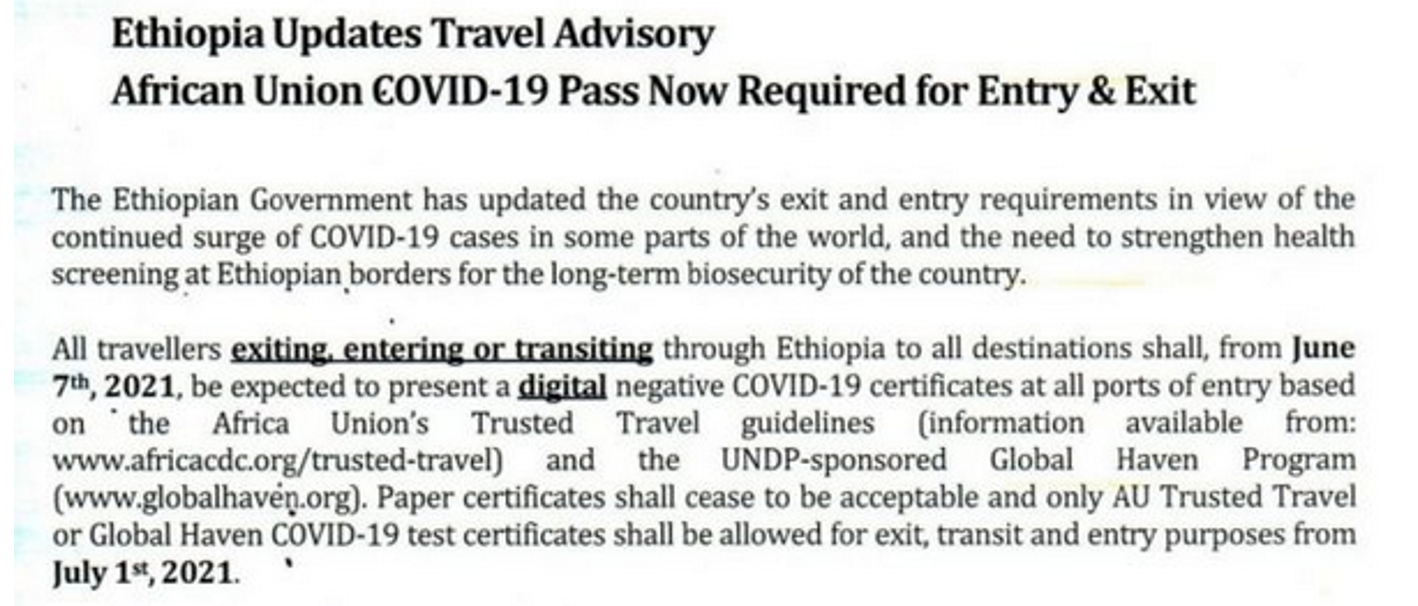
Ethiopia Updates Travel Advisory: African Union COVID-19 Pass Now Required for Entry and Exit

2 June 2021

Revised scope and direction for the Smart Vaccination Certificate and WHO’s role in the Global Health Trust Framework

4 June 2021

During the seventh meeting of the International Health Regulations (IHR) Emergency Committee regarding the coronavirus disease (COVID-19) pandemic on 15th April 2021, the Emergency Committee’s advice to the WHO secretariat stated that the WHO secretariat should:  

“Continue to update the WHO interim position on the considerations regarding requirements of proof of vaccination and to produce interim guidance and tools related to standardization of paper and digital documentation of COVID-19 travel-related risk reduction measures (vaccination status, SARS-CoV-2 testing and COVID-19 recovery status) in the context of international travel.”  

Given this recommendation from the IHR Emergency Committee meeting, the Smart Vaccination Certificate Secretariat has expanded the scope of the initiative to develop guidance that includes SARS-CoV-2 testing and COVID-19 recovery status. Accordingly, the Smart Vaccination Certificate specification will be renamed as the “Digital Documentation of COVID-19 Certificates (DDCC)” specification. The resulting guidance will be published in a series of three separate documents, which will guide Member States on how to digitally document COVID-19 vaccination status, SARS-CoV-2 test results, and COVID-19 recovery status. These guidance documents will include critical components such as the minimum datasets, expected functionality of digital systems, and preferred terminology code systems. They will also include a section on national digital architecture, recognizing that Member States are still expected to decide how they want to implement these systems. The DDCC specifications will include an HL7 FHIR Implementation Guide (IG), including example software implementations. 

These guidance documents will make no reference to the specific circumstances under which these certificates should be used. Such guidance will be made available in separate guidance documents published by WHO (e.g. DG temporary recommendations to States Parties after IHR Emergency Committees; WHO’s interim guidance documents on considerations for the implementation of public health and social measures; WHO’s interim guidance documents on considerations for a risk-based approach to international travel in the context of COVID-19; etc.).   

Additionally, in line with the change in scope, WHO DDCC specifications will not include a section on global architecture for a Global Health Trust Framework. At point in this time, WHO does not intend to implement a Global Health Trust Framework to store the digital public keys of members states, to facilitate the validation and verification of digitally signed COVID-19 certificates (e.g., vaccination certificates, SARS-CoV-2 test certificates, and COVID-19 recovery status certificates) across borders.   

WHO acknowledges the importance of a Global Health Trust Framework, however, the DDCC guidance will not include details of a technical architecture for a Global Health Trust Framework. The scope and technical approach for an eventual WHO Global Health Trust Framework will be informed through further consultation with Member States, recognizing there are implications beyond the COVID-19 pandemic-related use cases. For the purposes of the use cases included in the DDCC, Member States and regional networks can establish trust via bilateral or multilateral agreements with other Member States, or join other existing multinational or regional trust frameworks, as needed.  

Furthermore, WHO understands the importance of the need to digitize the paper-based International Certificate for Vaccination and Prophylaxis (i.e. Yellow card) over time and has decided to take a longer-term view in this respect to examine the different technical possibilities.   

The scope and technical requirements for the Digital Documentation of COVID-19 Certificates (DDCC) is no longer aligned with the remit of the Smart Vaccination Certificate working group when it was established; thus, the “Smart Vaccination Certificate working group” in its current form will be dissolved. WHO would like to thank every member of this working group for their respective inputs and contributions to the work done so far, to achieve the Smart Vaccination Certificate: Release Candidate 1 specification. 

As this work will remain a Member State-driven process, WHO will continue to engage Member States and representatives of partner agencies regarding the DDCC specifications document. 

COVID Vaccines – Refugees

COVID Vaccines – Refugees

UNHCR urges stronger support for refugee vaccinations in Asia

Office of the United Nations High Commissioner for Refugees

01 June 2021   

[Editor’s text bolding]

With COVID-19 raging in many parts of the world, UNHCR, the UN Refugee Agency, is warning about shortages of vaccines in the Asia-Pacific region, including for refugees and asylum-seekers.

We urge immediate and stronger support for the COVAX initiative, a worldwide effort aimed at achieving equitable access to COVID-19 vaccines. This is critical to save lives and curb the impact of the virus, particularly in developing nations. These countries host the vast majority of more than 80 million forcibly displaced people in the world. Yet so far, they have benefited from only a fraction of the world’s COVID-19 vaccines.

UNHCR stresses that no one can be left behind in the global effort against the coronavirus. The pandemic will be defeated only when vaccinations become available everywhere on an equitable basis.

We are particularly worried about the situation in the Asia and Pacific region, which in the past two months has experienced the largest increase in the number of cases globally. Over this period, there have been some 38 million recorded COVID-19 cases and more than half a million deaths.

The fragile health systems in many countries in this region have struggled to cope with this recent surge. The lack of hospital beds, oxygen supplies, limited intensive care unit (ICU) capacities and scarce health facilities and services have worsened outcomes for those infected with COVID-19, particularly in India and Nepal. The highly infectious variant of the virus which first emerged in India threatens to rapidly spread in the sub-region, including among refugee populations.

Refugees remain especially vulnerable to the spread of COVID-19. Overcrowded settings, coupled with limited water and sanitation facilities, can contribute to increased infection rates and an exponential spread of the virus.

In Cox’s Bazar, Bangladesh, where almost 900,000 Rohingya refugees are living in the single largest and most densely populated cluster of refugee camps in the world, the number of cases has increased considerably in the last two months. As of 31 May, there have been over 1,188 cases confirmed among the refugee population, with more than half of these cases recorded in May alone.

We have also seen a worrying increase in the number of COVID-19 cases among refugees and asylum-seekers in Nepal, Iran, Pakistan, Thailand, Malaysia and Indonesia. While efforts are underway to mitigate the spread of the virus, these preventive measures need to be complemented with intensified vaccinations.

Some refugees, including in Nepal, have already received their first vaccine dose with COVAX-provided supplies. Among the Rohingya refugees in the camps in Bangladesh, not a single vaccine has been administered yet given the scarcity of supplies in the country.

The current delays in vaccine shipments, brought about by limited supplies to COVAX, mean that some of the world’s most vulnerable people remain susceptible to the virus.

UNHCR is adding its voice to the calls for countries with surplus doses to donate to COVAX, and for manufacturers to boost supplies to the COVAX facility.

UNHCR’s total financial requirements for COVID include $455m in supplementary needs and $469m in COVID-related activities that are included in its regular budget. To date, including projected contributions, UNHCR has received $252.8m or 27% of these requirements.

COVID Vaccines – OCHA:: HDX

COVID Vaccines – OCHA:: HDX

COVID-19 Data Explorer: Global Humanitarian Operations

COVID-19 Vaccine Roll-out

May 29, 2021 | COVAX (WHO,GAVI,CEPI), UNDESA, Press Reports | DATA

Global COVID-19 Figures:  172M total confirmed cases;  3.7M total confirmed deaths
Global vaccines administered: 2.05B  [1.81B]

Number of Countries: 26  [26]

COVAX First Allocations (Number of Doses): 73M [73M]

COVAX Delivered (Number of Doses): 15M [15M]

Other Delivered (Number of Doses): 33M [24M]

Total Delivered (Number of Doses): 49M [40M]

Total Administered (Number of Doses):327M [27M]

Coronavirus [COVID-19] – WHO

Coronavirus [COVID-19] – WHO

Public Health Emergency of International Concern (PHEIC)

https://www.who.int/emergencies/diseases/novel-coronavirus-2019


Weekly Epidemiological and Operational updates

Last update: 5 Jun 2021

Confirmed cases ::                         172 242 495    [week ago:   169 118 995]

Confirmed deaths ::                          3 709 397    [week ago:       3 519 175]  

Vaccine doses administered:    1 638 006 899    [week ago: 1 546 316 352]


::::::

Weekly epidemiological update on COVID-19 – 1 June 2021

Overview

   In the past week, the number of new COVID-19 cases and deaths continues to decrease, with over 3.5 million new cases and 78 000 new deaths reported globally. Although the number of global cases and deaths continued to decrease for a fifth and fourth consecutive week respectively, case and death incidences remain at high levels and significant increases have been reported in many countries in all regions.

   In this edition, special focus updates are provided on:

:: SARS-CoV-2 Variants of Interest (VOIs) and Variants of Concern (VOCs), including the introduction of new labels for public communications, updates on VOI and VOC classifications and the global geographical distribution of VOCs Alpha (B.1.1.7), Beta (B.1.351), Gamma (P.1) and Delta (B.1.617.2).

:: Lessons learned during the early phases of rolling out COVID-19 vaccines, with a particular focus on low-and-middle income countries (LMICs).

[Excerpt, p. 5]

Weekly operational update on COVID-19 31 May 2021

Overview

    In this edition of the COVID-19 Weekly Operational Update, highlights of country-level actions and WHO support to countries include:

:: Launch of “Strengthening Civil Society Engagement in the COVID-19 Response” in Guyana

:: Infection prevention and control (IPC) critical for COVID-19 care and recovery in India

:: Intra-Action Review (IAR) in Montenegro

:: Vanuatu the seventh country in the Pacific islands to receive COVID-19 vaccine doses from the COVAX Facility

:: Indian Sign Language course extends OpenWHO reach and accessibility amidst the COVID-19 pandemic

:: Utilizing message testing to ensure behavioural messages resonate with the intended audience and a global consultative meeting on Intra-Action Reviews (IARs) and simulation exercises

:: Regular updates on WHO’s resource requirements and funds received to support countries in implementing the COVID-19 Strategic Preparedness and Response Plan (SPRP) 2021, WHO/PAHO procurement of critical supplies, and progress on a subset of indicators from the SPRP 2021 Monitoring and Evaluation Framework

::::::

::::::

Draft landscape and tracker of COVID-19 candidate vaccines

28 May 2021 | Publication

   The COVID-19 candidate vaccine landscape and tracker database compiles detailed information on COVID-19 vaccine candidates in development.

  The landscape is updated regularly – twice a week (Tuesday and Friday, 17:00 CET).

Download: https://cdn.who.int/media/docs/default-source/blue-print/28.05.2021-novel-coronavirus_landscape_covid-19.xlsx.zip?sfvrsn=e352acfa_3&download=true

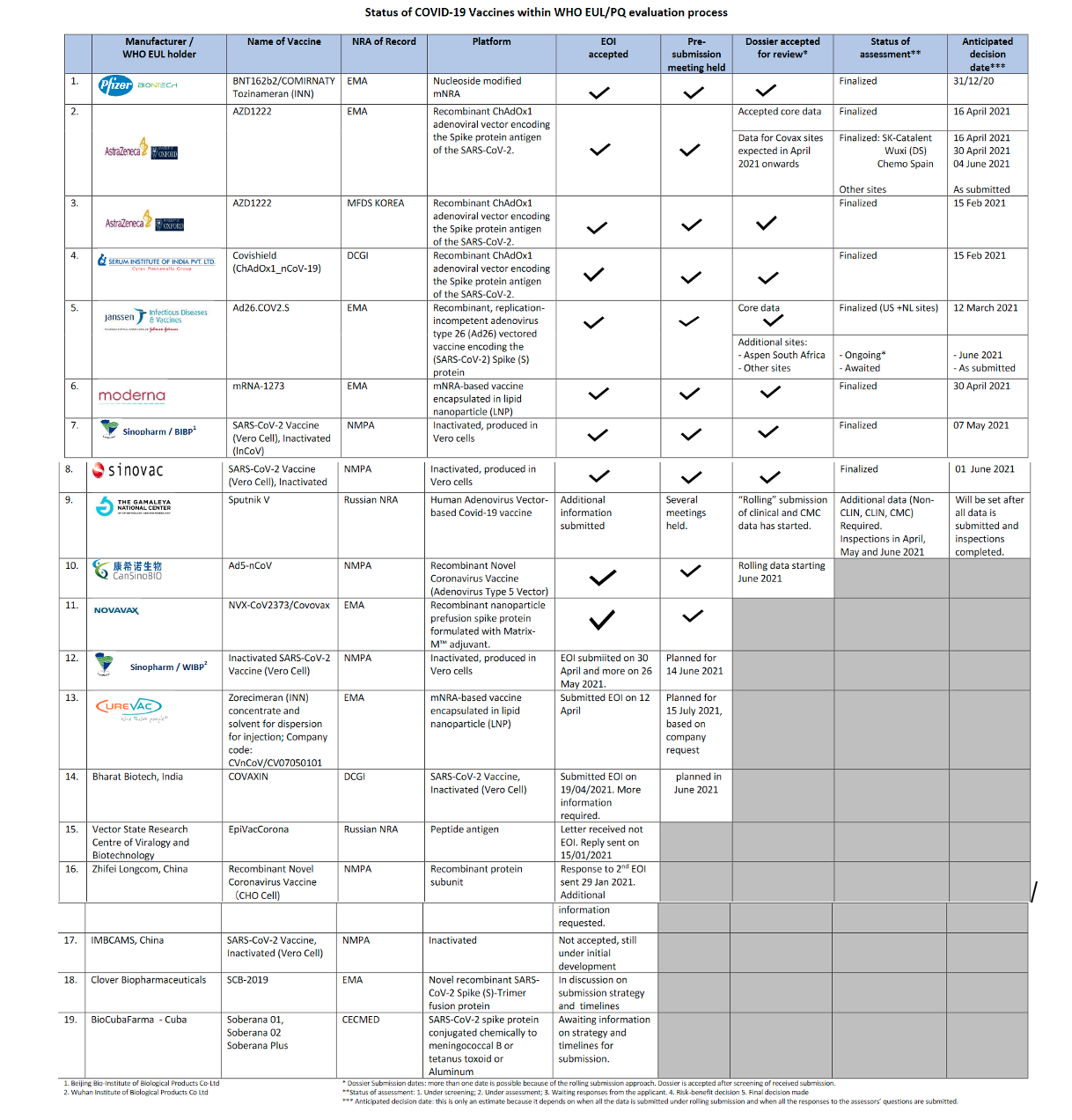
Status of COVID-19 Vaccines within WHO EUL/PQ evaluation process  28 May 2021

   For 19 vaccine candidates, presents Manufacturer, Name of Vaccine, NRA of Record, Platform, EOI Accepted Status, Pre-submission Meeting Held Status, Dossier Accepted for Review, Status of Assessment; Anticipated/Completed Decision Date

[click on the link above for full scale view]

03 June 2021

WHO validates Sinovac COVID-19 vaccine for emergency use and issues interim policy recommendations

1 June 2021   News release

WHO today validated the Sinovac-CoronaVac COVID-19 vaccine for emergency use, giving countries, funders, procuring agencies and communities the assurance that it meets international standards for safety, efficacy and manufacturing. The vaccine is produced by the Beijing-based pharmaceutical company Sinovac.

“The world desperately needs multiple COVID-19 vaccines to address the huge access inequity across the globe,” said Dr Mariângela Simão, WHO Assistant-Director General for Access to Health Products. “We urge manufacturers to participate in the COVAX Facility, share their knowhow and data and contribute to bringing the pandemic under control.”…

In the case of the Sinovac-CoronaVac vaccine, the WHO assessment included on-site inspections of the production facility. 

The Sinovac-CoronaVac product is an inactivated vaccine. Its easy storage requirements make it very manageable and particularly suitable for low-resource settings.

WHO’s Strategic Advisory Group of Experts on Immunization (SAGE) has also completed its review of the vaccine. On the basis of available evidence, WHO recommends the vaccine for use in adults 18 years and older, in a two-dose schedule with a spacing of two to four weeks. Vaccine efficacy results showed that the vaccine prevented symptomatic disease in 51% of those vaccinated and prevented severe COVID-19 and hospitalization in 100% of the studied population.

Few older adults (over 60 years) were enrolled in clinical trials, so efficacy could not be estimated in this age group. Nevertheless, WHO is not recommending an upper age limit for the vaccine because data collected during subsequent use in multiple countries and supportive immunogenicity data suggest the vaccine is likely to have a protective effect in older persons. There is no reason to believe that the vaccine has a different safety profile in older and younger populations. WHO recommends that countries using the vaccine in older age groups conduct safety and effectiveness monitoring to verify the expected impact and contribute to making the recommendation more robust for all countries…

COVID Vaccine Developer/Manufacturer Announcements [organizations from WHO EUL/PQ listing above]

COVID Vaccine Developer/Manufacturer Announcements [organizations from WHO EUL/PQ  listing above]

AstraZeneca

Press Releases – No new digest announcements identified 

Bharat Biotech, India

Press Releases  – Website not responding at inquiry [second week]

BioCubaFarma – Cuba

Últimas Noticias

Extienden a toda La Habana intervención sanitaria con el candidato vacunal Abdala
04/06/2021 16:15:31    |   BioCubaFarma

[Google translate: Health intervention with the vaccine candidate Abdala is extended to all of Havana

Health intervention with the vaccine candidate Abdala is extended to all of Havana.]

Comienza en Santiago de Cuba intervención sanitaria con candidato vacunal Abdala, en 464 sitios clínicos de cuatro municipios
31/05/2021 13:39:13

[Google translate: ” Health intervention begins in Santiago de Cuba with vaccine candidate Abdala, in 464 clinical sites in four municipalities”]

CanSinoBIO

News   – No new digest announcements identified 

Clover Biopharmaceuticals – China

News  – No new digest announcements identified 

Curevac  [Bayer Ag – Germany]

News  – No new digest announcements identified 

Gamaleya National Center

Latest News and Events – No new digest announcements identified  [See Russia/RFID below]

IMBCAMS, China

Home  – No new digest announcements identified 

Janssen/JNJ

Press Releases  – No new digest announcements identified 

Moderna

Press Releases

June 3, 2021

Moderna Announces Agreement to Supply the Republic of Botswana with its COVID-19 Vaccine

June 2, 2021

UNICEF and Moderna Announce Long Term Agreement to Supply Vaccine on Behalf of the COVAX Facility

June 1, 2021

Moderna Announces Agreement with Thermo Fisher Scientific for Fill/Finish Manufacturing of Moderna’s COVID-19 Vaccine

June 1, 2021

Moderna Announces Initiation of Rolling Submission of Biologics License Application (BLA) with U.S. FDA for the Moderna COVID-19 Vaccine

Novavax

Press Releases – No new digest announcements identified 

Pfizer

Recent Press Releases  – No new digest announcements identified 

Serum Institute of India

NEWS & ANNOUNCEMENTS  – No corporate announcements identified  [Last media release April 21.2021]

Sinopharm/WIBPBIBP

News  – No new digest announcements identified 

Sinovac

Press Releases  

World Health Organization Authorizes SINOVAC’s CoronaVac® for Emergency Use

2021/06/02

Vector State Research Centre of Viralogy and Biotechnology

Home   – No new digest announcements identified 

Zhifei Longcom, China

[Anhui Zhifei Longcom Biologic Pharmacy Co., Ltd.]

[No website identified]

::::::

GSK

Press releases for media

27 May 2021 Sanofi and GSK initiate global Phase 3 clinical efficacy study of COVID-19 vaccine candidate

26 May 2021 GSK and Vir Biotechnology announce sotrovimab (VIR-7831) receives Emergency Use Authorization from the US FDA for treatment of mild-to-moderate COVID-19 in high-risk adults and paediatric patients

Government and Life Science Industry Join Forces on 100 Days Mission for Future Pandemics

Government and Life Science Industry Join Forces on 100 Days Mission for Future Pandemics
04 June 2021
:: Landmark collaboration between Government and life sciences industry leaders to join mission to protect against future pandemic threats and slash time to develop and deploy new diagnostics, therapeutics and vaccines to 100 days.
:: Intention to work towards the ambition of a 100 Days Mission follows crucial discussions at UK-hosted G7 Health Ministers’ and life sciences meetings in Oxford.
:: CEOs and representatives of life science companies discussed the emerging recommendations in the pandemic preparedness partnership roadmap, which Sir Patrick Vallance and Melinda French Gates will present to G7 Leaders at the Carbis Bay Summit next week.

Life science industry leaders are joining forces with governments to step up collective efforts to save lives from diseases and tackle global pandemics, with a new commitment for partnership working to achieve the ambition of better pandemic preparedness announced today at the conclusion of the G7 Health event on life sciences.

Following discussions at the G7 Health Ministers’ Meeting – hosted by the UK Government as part of its G7 Presidency – CEOs and representatives of companies among those leading the efforts to develop COVID-19 diagnostics, vaccines and treatments backed the ambition of the 100 Days Mission set out by the pandemic preparedness partnership.

The Government and industry leaders agreed to work towards a plan to develop and deploy high-quality diagnostics, therapeutics and vaccines in just 100 days after a new pandemic threat is identified. Success would take the great achievement of delivering COVID-19 vaccines in 326 days to the next level and protect people from potential future pandemics.

CEOs and representatives from some of the world’s largest life sciences companies participated in the UK’s G7 Health event on life sciences, which also included deliberations on how the public and private sectors can work together to combat antimicrobial resistance (AMR).

All the participants recognised the crucial importance of sustained political and industry leadership in between outbreaks and of the public and private sectors working together to tackle the most complex global health threats…

More information on the Pandemic Preparedness Partnership can be found here: https://www.g7uk.org/new-global-partnership-launched-to-fight-future-pandemics/

The following representatives from industry participated in the G7 event:
Dr Albert Bourla, CEO and Chairman of Pfizer
Dr Giovanni Caforio, CEO and Chairman of Bristol Myers Squibb
Marc Casper, CEO of Thermo Fisher Scientific
Thomas Cueni, DG, International Federation of Pharmaceutical Manufacturers and Association (IFPMA)
Robert Ford, CEO of Abbott
Lars Fruergaard Jorgensen, CEO of Novo Nordisk
Paul Hudson, CEO of Sanofi
Martin Meeson, CEO of Fujifilm Diosynth Biotechnologies
Vas Narasimhan M.D., CEO of Novartis
Daniel O’Day, CEO of Gilead
Stefan Oelrich, Member of the Board of Management of Bayer AG and President Pharmaceuticals
Tom Polen, CEO of BD
David Ricks, CEO and Chairman of Eli Lilly & Company
Dr Severin Schwan, CEO of Roche
Paul Stoffels M.D. Vice Chairman of the Executive Committee and Chief Scientific Officer, Johnson &
Johnson
Pascal Soriot, CEO of Astra Zeneca
Dame Emma Walmsley, CEO of GlaxoSmithKline
Christophe Weber, CEO of Takeda
Jean-Christophe Tellier, CEO of UCB & President of International Federation of Pharmaceutical
Manufacturers and Associations (IFPMA)

U.S.: COVID-19 Vaccines – Announcements/Regulatory Actions/Deployment

U.S.: COVID-19 Vaccines – Announcements/Regulatory Actions/Deployment

Vaccines and Related Biological Products Advisory Committee
:: Vaccines and Related Biological Products Advisory Committee June 10, 2021 Meeting Announcement


::::::


White House [U.S.]
Briefing Room – Selected Major COVID Announcements
Press Briefing by White House COVID-19 Response Team and Public Health Officials
June 03, 2021 • Press Briefings

Statement by Senior Advisor and Chief Spokesperson Symone Sanders on Vice President Kamala Harris’s Calls with Foreign Leaders on the Global Allocation Plan for the First 25 Million Doses of COVID-19 Vaccines
June 03, 2021 • Statements and Releases

Statement by President Joe Biden on Global Vaccine Distribution
June 03, 2021 • Statements and Releases

FACT SHEET: Biden-Harris Administration Unveils Strategy for Global Vaccine Sharing, Announcing Allocation Plan for the First 25 Million Doses to be Shared Globally
June 03, 2021 • Statements and Releases
… The U.S. announced the proposed allocation plan for the first 25 million doses. Based on the framework above and pending legal and regulatory approvals, the United States plans to send our first tranche of 25 million doses:
:: Nearly 19 million will be shared through COVAX, with the following allocations:
. Approximately 6 million for South and Central America to the following countries: Brazil, Argentina, Colombia, Costa Rica, Peru, Ecuador, Paraguay, Bolivia, Guatemala, El Salvador, Honduras, Panama, Haiti, and other Caribbean Community (CARICOM) countries, as well as the Dominican Republic.
…Approximately 7 million for Asia to the following countries and entities:  India, Nepal, Bangladesh, Pakistan, Sri Lanka, Afghanistan, Maldives, Malaysia, Philippines, Vietnam, Indonesia, Thailand, Laos, Papua New Guinea, Taiwan, and the Pacific Islands.
…Approximately 5 million for Africa to be shared with countries that will be selected in coordination with the African Union.
:: Approximately 6 million will be targeted toward regional priorities and partner recipients, including Mexico, Canada, and the Republic of Korea, West Bank an d Gaza, Ukraine, Kosovo, Haiti, Georgia, Egypt, Jordan, India, Iraq, and Yemen, as well as for United Nations frontline workers…  

FACT SHEET: President Biden to Announce National Month of Action to Mobilize an All-of-America Sprint to Get More People Vaccinated by July 4th
June 02, 2021 • Statements and Releases

Remarks by President Biden on the COVID-19 Response and Vaccination Program
June 02, 2021 • Speeches and Remarks


::::::

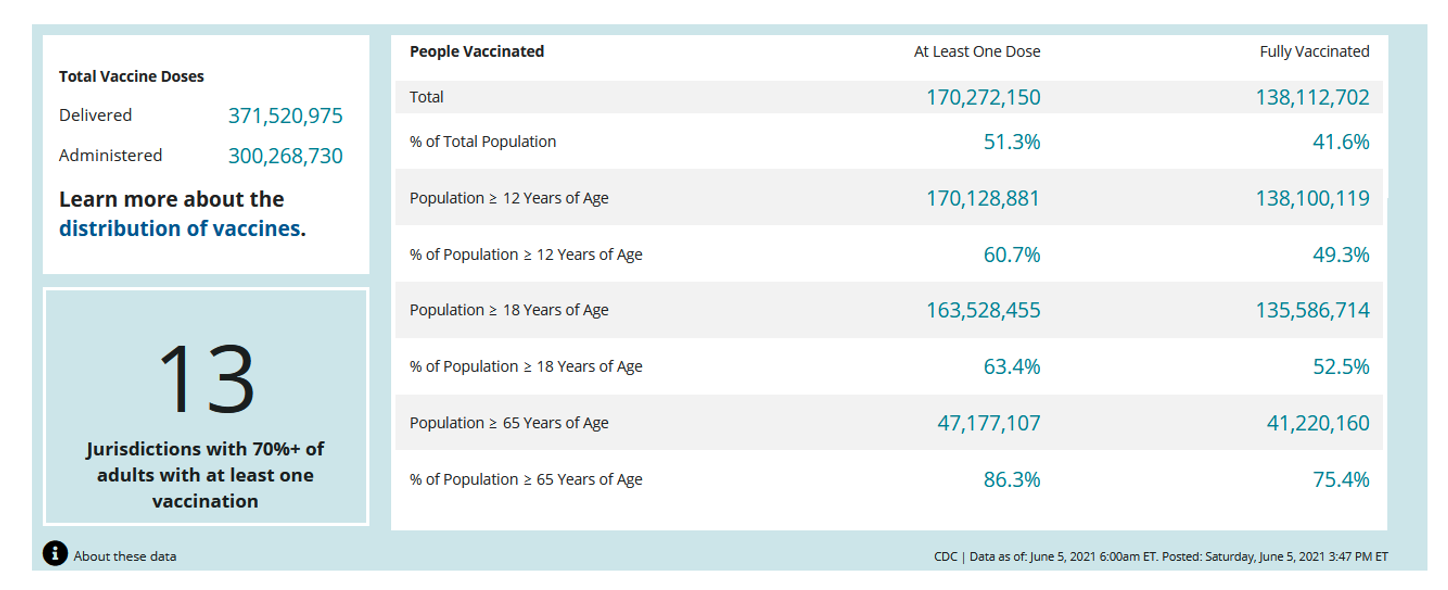
COVID Data Tracker [U.S.] June 5, 2021

Europe: COVID-19 Vaccines – Announcements/Regulatory Actions/Deployment

Europe: COVID-19 Vaccines – Announcements/Regulatory Actions/Deployment


European Medicines Agency
News & Press Releases
News: Advancing international collaboration on COVID-19 real-world evidence and observational studies (new)
Last updated: 04/06/2021


News: EU regulators develop recommendations to forecast demand of medicines (new)
Last updated: 03/06/2021


News: Additional manufacturing capacity for BioNTech/Pfizer’s COVID-19 vaccine (new)
CHMP, Last updated: 01/06/2021
EMA has recommended the approval of additional manufacturing and filling lines at Pfizer’s vaccine manufacturing site in Puurs, Belgium. The recommendation by the Agency’s Committee for Human Medicines (CHMP) is expected to have a significant and immediate impact on the supply of Comirnaty, the COVID-19 vaccine developed by BioNTech and Pfizer, in the European Union…


European Centre for Disease Prevention and Control
https://www.ecdc.europa.eu/en
Latest Updates
Publication
Reducing COVID 19 transmission and strengthening vaccine uptake among migrant populations in the EU/EEA
Technical report – 3 Jun 2021

Publication
Suspected adverse reactions to COVID-19 vaccination and the safety of substances of human origin
Technical report – 3 Jun 2021

Publication
Interim public health considerations for COVID-19 vaccination of adolescents in the EU/EEA
Technical report – 1 Jun 2021

News
ECDC report outlines considerations for COVID-19 vaccination of adolescents
News story – 1 Jun 2021


European Commission
https://ec.europa.eu/commission/presscorner/home/en
News
Press release 4 June 2021
EU proposes a strong multilateral trade response to the COVID-19 pandemic
Today, the EU has submitted its proposal seeking the commitment of World Trade Organization (WTO) members for a multilateral trade action plan to expand the production of COVID-19 vaccines and treatments, and ensure universal and fair access.

Speech 2 June 2021
Speech by President von der Leyen at the Gavi COVAX Advance Market Commitment Summit
I am particularly grateful that the EU’s industrial partners have committed themselves too. They will make available 1.3 billion doses in 2021. BioNTech-Pfizer, Johnson & Johnson and Moderna will provide these vaccines at no profit for the low-income countries and at lower prices for the middle-income countries. And they will supply an additional 1 billion or more doses in 2022. It’s in our mutual interest to end this global pandemic as soon as possible.
That’s why the EU, together with the European Investment Bank, will reorient 300 million euros to COVAX. This is Team Europe’s contribution to AVATT, COVAX’s cost-sharing rapid finance scheme. This scheme will help vaccine purchases in Africa. And it will foster links between COVAX and the African Union.
You can continue to count on Team Europe’s commitment. We are here for the long haul. We are here until we end the pandemic everywhere.

Press release 1 June 2021
EU Digital COVID Certificate: EU Gateway goes live with seven countries one month ahead of deadline
Today, the EU Digital COVID Certificate has reached another important milestone with the go-live of the technical system at EU level, which allows to verify certificates in a secure and privacy-friendly way.

Russia: COVID-19 Vaccines – Announcements/Regulatory Actions/Deployment

Russia: COVID-19 Vaccines – Announcements/Regulatory Actions/Deployment


Russia: Sputnik V – “the first registered COVID-19 vaccine”
https://sputnikvaccine.com/newsroom/pressreleases/
Press Releases
Brazil becomes the 67th country in the world to authorize Sputnik V vaccine
Press release, 05.06.2021

RDIF, Mumtalakat and Binnopharm Group to establish production of the Russian Sputnik V coronavirus vaccine in Bahrain
Saint-Petersburg, June 3, 2021 – The Russian Direct Investment Fund (RDIF, Russia’s sovereign wealth fund), Bahrain’s Mumtalakat Holding Company (Mumtalakat, sovereign wealth fund of the Kingdom of Bahrain) and Binnopharm Group (а subsidiary of Sistema PJSFC, a publicly traded Russian investment company) today signed a Memorandum of Understanding (MoU) to establish a new vaccine production facility in the Kingdom of Bahrain to manufacture and distribute the Russian Sputnik V coronavirus vaccine across the MENA region…
…As part of cooperation the two funds recently joined efforts to prevent the spread of coronavirus and intend to establish a local production of Sputnik V, the world’s first registered vaccine against coronavirus, in Bahrain. Bahrain authorized the emergency use of Sputnik V vaccine In February 2021…

Sputnik Light vaccine (the first component of Sputnik V vaccine) demonstrates 78.6-83.7% efficacy among the elderly in Argentina
Press release, 02.06.2021

Single-dose Sputnik Light vaccine approved for use in Mauritius
Press release, 02.06.2021

Single-dose Sputnik Light vaccine approved for use in Palestine
Press release, 31.05.2021

Sputnik V demonstrates highest safety profile during the vaccination campaign in Serbia
Press release, 28.05.2021

India: COVID-19 Vaccines – Announcements/Regulatory Actions/Deployment

India: COVID-19 Vaccines – Announcements/Regulatory Actions/Deployment


Ministry of Health and Family Welfare
https://www.mohfw.gov.in/


Government of India – Press Information Bureau
Latest Press Releases
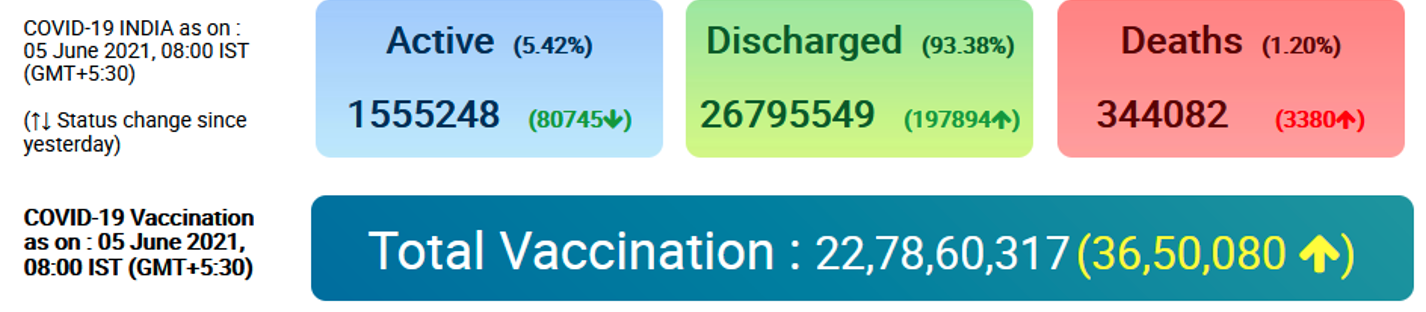
Prime Minister reviews progress of India’s vaccination drive
Posted on: 04 Jun 2021
:: Government of India is helping Vaccine Manufacturers in terms of facilitating more production units, financing and supply of raw materials.
:: PM instructed that steps need to be taken to bring vaccine wastage down
:: PM reviews status of vaccination coverage in health-care workers, front-line workers, 45+ and 18-44 age groups


Indian Council for Medical Research (ICMR)
https://www.icmr.gov.in/media.html
No new digest content identified.

POLIO Public Health Emergency of International Concern (PHEIC);WHO/OCHA Emergencies

Emergencies

POLIO
Public Health Emergency of International Concern (PHEIC)

Polio this week as of 02 June 2021
:: You are invited to the virtual launch of the Polio Eradication Strategy 2022-2026, at an online event on Thursday 10 June 2021 (at 2pm, Central European Summer Time).  More information, including registration details, are available here.
:: Meeting virtually this week at the 74th World Health Assembly (WHA), global health leaders and ministers of health noted the new Global Polio Eradication Initiative Strategic Plan 2022-2026 and highlighted the importance of collective action to achieve success. Read more

Summary of new WPV and cVDPV viruses this week (AFP cases and ES positives):
:: Afghanistan: one cVDPV2 case
:: Pakistan: one cVDPV2 case
:: Nigeria: two cVDPV2 cases and three cVDPV2 positive environmental samples
:: Tajikistan: two cVDPV2 positive environmental samples

::::::
::::::

WHO/OCHA Emergencies

Editor’s Note:
Continuing with this edition, we include information about the last apparent update evident on the WHO emergency country webpages, recognizing almost universal and significant interims since last update regardless of the level of the emergency listed.

WHO Grade 3 Emergencies [to 5 Jun 2021]

Democratic Republic of the Congo – No new digest announcements identified [Last apparent update: 3 May 2021]
Mozambique floods – No new digest announcements identified [Last apparent update: 3 November 2020]
Nigeria – No new digest announcements identified [Last apparent update: 29 Jun 2020]
Somalia – No new digest announcements identified [Last apparent update: 13 July 2020]
South Sudan – No new digest announcements identified [Last apparent update: 4 February 2020]
Syrian Arab Republic – No new digest announcements identified [Last apparent update: 24 October 2020]
Yemen – No new digest announcements identified [Last apparent update: 30 June 2020]

::::::

WHO Grade 2 Emergencies [to 5 Jun 2021]
Afghanistan – No new digest announcements identified [Last apparent update: 5 July 2020]
Angola – No new digest announcements identified [Last apparent update: 16 March 2021]
Burundi – No new digest announcements identified [Last apparent update: 04 July 2019]
Burkina Faso – No new digest announcements identified [Last apparent update: 21 mai 2021]
Cameroon – No new digest announcements identified [Last apparent update: 22 August 2019]
Central African Republic – No new digest announcements identified [Last apparent update: 12 June 2018]
Ethiopia – No new digest announcements identified [Last apparent update: 22 August 2019]
Iran floods 2019 – No new digest announcements identified [Last apparent update: 2 March 2020]
Iraq – No new digest announcements identified [Last apparent update: 12 May 2021
Libya – No new digest announcements identified [Last apparent update: 7 October 2019]
Malawi – No new digest announcements identified [Last apparent update: 22 April 2021
Measles in Europe No new digest announcements identified [Last apparent update: 26-04-2021]
MERS-CoV – No new digest announcements identified [Last apparent update: 8 July 2019]
Mozambique – No new digest announcements identified [Last apparent update: 03 November 2020]
Myanmar – No new digest announcements identified [Last apparent update: 29 March 2021]
NigerNo new digest announcements identified [Last apparent update: 16 avril 2021]
occupied Palestinian territory – No new digest announcements identified [Last apparent update: 4 September 2019]
HIV in Pakistan – No new digest announcements identified [Last apparent update: 27 August 2019]
Sao Tome and Principe Necrotizing Cellulitis (2017) – No new digest announcements
Sudan – No new digest announcements identified [Last apparent update: 24 June 2020]
Ukraine – No new digest announcements identified [Last apparent update: 1 May 2019]
Zimbabwe – No new digest announcements identified [Last apparent update: 10 May 2019]

::::::

WHO Grade 1 Emergencies [to 5 Jun 2021]

Chad – No new digest announcements identified [Last apparent update: 30 June 2018]
Djibouti – No new digest announcements identified [Last apparent update: 25 novembre 2020]
Kenya – No new digest announcements identified [Last apparent update: 21 May 2021]
Mali – No new digest announcements identified [Last apparent update: 3 May 2017]
Namibia – viral hepatitis – No new digest announcements identified [Last apparent update: 20 July 2018]
Tanzania – No new digest announcements identified [Last apparent update: 21 October 2019]

::::::
::::::

UN OCHA – Current Emergencies
Current Corporate Emergencies
Ethiopia
Ethiopia – Tigray Region Humanitarian Update Situation Report, 3 June 2021
HIGHLIGHTS
:: Hostilities have largely ceased along the boundary with Eritrea but access to these areas is often denied.
:: Nine aid workers have been killed in Tigray since the start of the conflict, including another NGO worker on 28 May in Adigrat.
:: 21 per cent of the 21,000 children under-5 screened for malnutrition were identified with severe wasting, significantly above the 15 per cent threshold set by WHO..
:: More than 5,400 unaccompanied and separated children have been identified, of whom only 7.5 per cent are placed at temporary alternative care.
:: More than 2.8 million people of the targeted 5.2 million reached with food under the 2021 response plan since late March, including about 650,000 people during the reporting period

::::::
::::::

WHO & Regional Offices [to 5 Jun 2021]

WHO & Regional Offices [to 5 Jun 2021]
https://www.who.int/
4 June 2021
Departmental news
Revised scope and direction for the Smart Vaccination Certificate and WHO’s role in the Global Health Trust Framework

4 June 2021
News release
WHO joins the UN Decade on Ecosystem Restoration on World Environment Day

3 June 2021
Departmental news
WHO and European Union’s funded Health and Care Cluster collaborating on Digital and Assistive Technologies for Ageing webinar series

1 June 2021
Departmental news
What worked for us: knowledge-sharing to improve reproductive health programming

1 June 2021
News release
WHO validates Sinovac COVID-19 vaccine for emergency use and issues interim policy recommendations

1 June 2021
Statement
Statement on protection of health care in complex humanitarian emergencies
This year marks the 9th anniversary of the World Health Assembly Resolution 65.20 (2012) in relation to the protection of health care in complex humanitarian emergencies.
With deep regret, we note that violence against health care personnel and attacks on health care continue to be reported, including incidents linked to the response to the COVID-19 pandemic across the world.
During the COVID-19 pandemic, more than ever, protecting the health, welfare and lives of health care workers on the frontline is critical to enabling a better response.
WHO will continue to expand and refine its coordinated efforts to collect data on the incidence and types of attacks on health care, including in the context of the COVID-19 pandemic, in all complex humanitarian emergencies.  By so doing we will further advance our understanding of the scope and nature of the problem in different contexts and better inform the design of  mechanisms to prevent and respond to the attacks.
WHO also takes this opportunity to underscore that all parties in armed conflicts must avoid militarizing health care facilities and health transportation including ambulances and other types of mobile medical units. Such acts are totally unacceptable. They undermine the vital humanitarian work being undertaken and irresponsibly increase the risk of exposing patients and health care workers to potential attacks.

1 June 2021
Joint News Release
New US$50 billion health, trade and finance roadmap to end the pandemic and secure a global recovery

1 June 2021
Departmental news
WHO and Canada: Working together to end the acute phase of the COVID-19 and equipping countries to emerge from the pandemic with stronger and more equitable health systems

1 June 2021
Departmental news
My Hero is You: one year on, planning for a sequel gets underway

31 May 2021
Departmental news
WHO announces simple, easy-to-say labels for SARS-CoV-2 Variants of Interest and Concern

31 May 2021
News release
The Seventy-fourth World Health Assembly closes

31 May 2021
Departmental news
World Health Assembly recommends reinforcement of measures to protect mental health during public health emergencies


::::::

Weekly Epidemiological Record, Vol. 96, No. 21, pp. 173–196 28 May 2021
:: 73 Dracunculiasis eradication: global surveillance summary, 2020
:: Monthly report on dracunculiasis cases, January-March 2021
:: e limination of Human African Trypanosomiasis as public health problem


::::::

WHO Regional Offices
Selected Press Releases, Announcements
WHO African Region AFRO
:: Risk of COVID-19 surge threatens Africa’s health facilities 03 June 2021
:: “The Whole Nation Together Against COVID-19” Awareness Campaign launched jointly by the Government of Mauritius, United Nations and World Health Organization 01 June 2021
:: Second Training of Trainers on Infection Prevention and Control 01 June 2021
:: Key tool to aid Africa’s COVID-19 vaccine financing 30 May 2021

WHO Region of the Americas PAHO
No new digest content identified

WHO South-East Asia Region SEARO
:: 3 June 2021 News release
Countries, health partners discuss strengthening collective response to COVID-19 in WHO South-East Asia Region

WHO European Region EURO
:: WHO/Europe launches Pan-European Leadership Academy demonstration project to strengthen skills among young public health professionals 04-06-2021
:: Regional Director takes European Programme of Work to countries during visits 04-06-2021
:: Ending this pandemic, preventing the next one: European perspectives at the Seventy-fourth World Health Assembly 03-06-2021
:: Promoting cycling can save lives and advance health across Europe through improved air quality and increased physical activity 03-06-2021

WHO Eastern Mediterranean Region EMRO
:: Statement on protection of health care in complex humanitarian emergencies 1 June 2021…
:: More than 10 million cases of COVID-19 reported in WHO’s Eastern Mediterranean Region
Cairo, 31 May 2021

WHO Western Pacific Region
:: 3 June 2021 | Feature Story Be inspired to quit: Success stories from ex-smokers in the Region
:: 3 June 2021 | Feature Story Six organizations are recognized for their tobacco control contributions in the Western Pacific Region

CDC/ACIP [U.S.] [to 5 Jun 2021]

CDC/ACIP [U.S.] [to 5 Jun 2021]
http://www.cdc.gov/media/index.html
https://www.cdc.gov/vaccines/acip/index.html
Latest News Releases, Announcements
Statement from CDC Director Rochelle P. Walensky, MD, MPH
Friday, June 4, 2021
On May 12, 2021, CDC recommended use of the Pfizer COVID-19 vaccine in people aged 12 years and up based on the safety and efficacy of the vaccine in adolescents following clinical trials. At the time, there was a growing body of evidence that demonstrated the severe health impacts of COVID-19 on adolescents.
Today’s MMWR presents additional data reporting the trends in hospitalizations among adolescents with COVID-19. I am deeply concerned by the numbers of hospitalized adolescents and saddened to see the number of adolescents who required treatment in intensive care units or mechanical ventilation.
Much of this suffering can be prevented.
Until they are fully vaccinated, adolescents should continue to wear masks and take precautions when around others who are not vaccinated to protect themselves, and their family, friends, and community. I ask parents, relatives and close friends to join me and talk with teens about the importance of these prevention strategies and to encourage them to get vaccinated. If parents or their teenagers have questions or concerns, I suggest they talk with their adolescent’s healthcare provider, local health department or neighborhood pharmacist…

Media Statement from CDC Director Rochelle P. Walensky, MD, MPH, on 40 years since CDC published its first report on HIV in the United States
Thursday, June 3, 2021

MMWR News Synopsis Friday, June 4, 2021

MMWR News Synopsis Friday, June 4, 2021
:: Estimated Annual Number of HIV Infections, United States, 1981–2019
:: COVID-19 Severity and COVID-19–Associated Deaths Among Hospitalized Patients with HIV Infection — Zambia, March–December 2020
:: Impact of Policy and Funding Decisions on COVID-19 Surveillance Operations and Case Reports — South Sudan, April 2020–February 2021
:: Patterns in COVID-19 Vaccination Coverage by Social Vulnerability and Urbanicity — United States, December 14, 2020–May 1, 2021 (Early Release May 28, 2021)

Hospitalization of Adolescents Aged 12–17 Years with Laboratory-Confirmed COVID-19 — COVID-NET, 14 States, March 1, 2020–April 24, 2021
Early Release / June 4, 2021 / 70
Fiona P. Havers, MD1; Michael Whitaker, MPH1; Julie L. Self, PhD1; Shua J. Chai, MD2,3; Pam Daily Kirley, MPH2; Nisha B. Alden, MPH4; Breanna Kawasaki, MPH4; James Meek, MPH5; Kimberly Yousey-Hindes, MPH5; Evan J. Anderson, MD6,7,8; Kyle P. Openo, DrPH7,9; Andrew Weigel, MSW10; Kenzie Teno, MPH10; Maya L. Monroe, MPH11; Patricia A. Ryan, MS11; Libby Reeg, MPH12; Alexander Kohrman, MPH12; Ruth Lynfield, MD13; Kathryn Como-Sabetti, MPH13; Mayvilynne Poblete, MPH14; Chelsea McMullen, MS15; Alison Muse, MPH16; Nancy Spina, MPH16; Nancy M. Bennett, MD17; Maria Gaitán17; Laurie M. Billing, MPH18; Jess Shiltz, MPH18; Melissa Sutton, MD19; Nasreen Abdullah, MD19; William Schaffner, MD20; H. Keipp Talbot, MD20; Melanie Crossland, MPH21; Andrea George, MPH21; Kadam Patel, MPH1,22; Huong Pham, MPH1; Jennifer Milucky, MSPH1; Onika Anglin, MPH1,22; Dawud Ujamaa, MS1,22; Aron J. Hall, DVM1; Shikha Garg, MD1,23; Christopher A. Taylor, PhD1; COVID-NET Surveillance Team (
Summary
What is already known about this topic?
Most COVID-19–associated hospitalizations occur in adults, but severe disease occurs in all age groups, including adolescents aged 12–17 years.
What is added by this report?
COVID-19 adolescent hospitalization rates from COVID-NET peaked at 2.1 per 100,000 in early January 2021, declined to 0.6 in mid-March, and rose to 1.3 in April. Among hospitalized adolescents, nearly one third required intensive care unit admission, and 5% required invasive mechanical ventilation; no associated deaths occurred.
What are the implications for public health practice?
Recent increased hospitalization rates in spring 2021 and potential for severe disease reinforce the importance of continued COVID-19 prevention measures, including vaccination and correct and consistent mask wearing among persons not fully vaccinated or when required.

China CDC

China CDC
http://www.chinacdc.cn/en/
CCDC Weekly – Weekly Reports: Current Volume (3)
2021-06-04 / No. 23
PDF of this issue
No new digest content identified.

National Health Commission of the People’s Republic of China [to 5 Jun 2021]
http://en.nhc.gov.cn/
News
June 5: Daily briefing on novel coronavirus cases in China
On June 4, 31 provincial-level regions and the Xinjiang Production and Construction Corps on the Chinese mainland reported 24 new cases of confirmed infections.

China’s Sinopharm COVID-19 vaccine to COVAX in production
2021-06-02
BEIJING — China on June 1 said the first batch of Chinese vaccines supplied to COVAX officially rolled off the production line, which is another important reflection of China’s commitment to making its COVID-19 vaccines global public goods with concrete actions…

WHO validates China’s Sinovac COVID-19 vaccine for emergency use
2021-06-02

China reports adverse reaction rate of 11.86 out of 100,000 COVID-19 vaccine doses
2021-05-31
BEIJING — The incidence of adverse reactions to COVID-19 vaccines in China is 11.86 out of 100,000 doses, the Chinese Center for Disease Control and Prevention (China CDC) said on May 28…

National Medical Products Administration – PRC [to 5 Jun 2021]
http://english.nmpa.gov.cn/news.html
News
Over 700 mln COVID-19 vaccine doses administered across China
2021-06-04
More than 704.8 million doses of COVID-19 vaccines had been administered across China as of Wednesday, the National Health Commission (NHC) said on June 3.

Organization Announcements

Organization Announcements
Editor’s Note:
Careful readers will note that the number and range of organizations now monitored in our Announcements section below has grown as the impacts of the pandemic have spread across global economies, supply chains and programmatic activity of multilateral agencies and INGOs.


Paul G. Allen Frontiers Group [to 5 Jun 2021]
https://alleninstitute.org/what-we-do/frontiers-group/news-press/
News
No new digest content identified.


BARDA – U.S. Department of HHS [to 5 Jun 2021]
https://www.phe.gov/about/barda/Pages/default.aspx
News
No new digest content identified.


BMGF – Gates Foundation [to 5 Jun 2021]
https://www.gatesfoundation.org/ideas/media-center
Press Releases and Statements
Press release
Jun 02, 2021
The Bill & Melinda Gates Foundation pledges $50 million to increase access to safe and affordable COVID-19 vaccines in lower-income countries
Foundation urgently calls for high-income countries to share at least 1 billion excess COVID-19 doses with lower-income countries in 2021 to accelerate global vaccine access and save lives
SEATTLE, June 2, 2021 – The Bill & Melinda Gates Foundation today announced a $50 million commitment to Gavi, the Vaccine Alliance. The pledge will support COVID-19 vaccine purchasing through Gavi’s COVAX Advance Market Commitment (AMC) as well as delivery of these vaccines to 92 lower-income countries.
The pledge was announced at Gavi’s COVAX AMC Summit, an event co-hosted by the government of Japan and Gavi that gathered world leaders, the private sector, civil society, and technical partners to build support to procure COVID-19 vaccines and equitably distribute them to lower-income countries.
“The world must urgently come together to expand equitable access to COVID-19 vaccines, or we risk more deaths and the emergence of new variants that could prolong the pandemic for everyone,” said Mark Suzman, CEO of the Bill & Melinda Gates Foundation. “Thanks to today’s contributions, especially Japan’s generous pledge and its leadership in global health, we’ve taken an important step towards that goal. This summit is a powerful example of what can be achieved when we act collectively to control the pandemic and save lives.”…


Bill & Melinda Gates Medical Research Institute [to 5 Jun 2021]
https://www.gatesmri.org/
The Bill & Melinda Gates Medical Research Institute is a non-profit biotech organization. Our mission is to develop products to fight malaria, tuberculosis, and diarrheal diseases—three major causes of mortality, poverty, and inequality in developing countries. The world has unprecedented scientific tools at its disposal; now is the time to use them to save the lives of the world’s poorest people
No new digest content identified.


CARB-X [to 5 Jun 2021]
https://carb-x.org/
News
06.01.2021  | 
CARB-X is funding Swiss pharma company BioVersys to develop a new class of antibiotics to treat infections caused by multidrug-resistant ESKAPE pathogens
CARB-X is awarding BioVersys, a pharmaceutical company headquartered in Basel, Switzerland, up to US$4.35 million in non-dilutive funding, to develop a new class of antibiotics to treat life-threatening infections caused by ESKAPE pathogens, bacteria that have developed resistance to most antibiotics available today. BioVersys could receive up to $10.98 million in additional funds from CARB-X if the project achieves certain milestones, subject to available funds.


Center for Vaccine Ethics and Policy – GE2P2 Global Foundation [to 5 Jun 2021]
https://centerforvaccineethicsandpolicy.net/
News/Analysis/Statements
:: Past weekly editions and posting of all segments of Vaccines and Global Health: The Week in Review are available here.
:: [NEW] Informed Consent: A Monthly Review – June 2021 is now posted here


CEPI – Coalition for Epidemic Preparedness Innovations [to 5 Jun 2021]
http://cepi.net/
Latest News
To keep coronavirus at bay, we must create a ‘variant-proof’ world
Blog 04 Jun By Dr. Richard Hatchett
In the battle against COVID-19, humankind faces a shape-shifting enemy. The scale of the challenge has been hammered home in recent months with the emergence of multiple variants of concern as the disease has ripped through Brazil, South Africa, and now India. Sadly, there is no sign of an imminent end to the current pandemic, which has already claimed at least 3.7 million lives and is still causing more than half a million new infections every day.
The hard reality is that despite the administration of 2 billion doses of vaccine worldwide – an unprecedented achievement – we remain locked in a deadly race with the virus. While recent data shows that vaccines remain sufficiently effective against some priority variants of concern, we will only win when we have created a “variant-proof” world that can keep a lid on the havoc caused by its troublesome mutations.


DARPA – Defense Advanced Research Projects Agency [to 5 Jun 2021
https://www.darpa.mil/news
News
No new digest content identified.


Duke Global Health Innovation Center [to 5 Jun 2021]
https://dukeghic.org/
WEEKLY COVID VACCINE RESEARCH UPDATE
Last dated update: FRIDAY, April 16, 2021


EDCTP [to 5 Jun 2021]
http://www.edctp.org/
The European & Developing Countries Clinical Trials Partnership (EDCTP) aims to accelerate the development of new or improved drugs, vaccines, microbicides and diagnostics against HIV/AIDS, tuberculosis and malaria as well as other poverty-related and neglected infectious diseases in sub-Saharan Africa, with a focus on phase II and III clinical trials
No new digest content identified.


Emory Vaccine Center [to 5 Jun 2021]
http://www.vaccines.emory.edu/
Vaccine Center News
No new digest content identified.


European Vaccine Initiative [to 5 Jun 2021]
http://www.euvaccine.eu/
Latest News
No new digest content identified.


FDA [to 5 Jun 2021]
https://www.fda.gov/NewsEvents/Newsroom/PressAnnouncements/default.htm
Press Announcements /Selected Details
June 4, 2021 – Coronavirus (COVID-19) Update: June 4, 2021
June 1, 2021 – Coronavirus (COVID-19) Update: June 1, 2021


Fondation Merieux [to 5 Jun 2021]
http://www.fondation-merieux.org/
News, Events
Mérieux Foundation co-organized event
8th Annual meeting of the Global Task Force on Cholera Control (GTFCC)
June 8 – 10, 2021 – Virtual Event


Gavi [to 5 Jun 2021]
https://www.gavi.org/
News Releases
World leaders unite to commit to global equitable access for COVID-19 vaccines
2 June 2021
[See COVID above for full text]

3 June 2021
Gavi welcomes U.S. allocation plan for vaccine dose-sharing – 19 million doses donated to COVAX in first tranche
[See COVID above for full text]

2 June 2021
World leaders unite to commit to global equitable access for COVID-19 vaccines

31 May 2021
New Zealand transfers vaccine doses to COVAX – 6 Pacific nations first to benefit


GHIT Fund [to 5 Jun 2021]
https://www.ghitfund.org/newsroom/press
GHIT was set up in 212 with the aim of developing new tools to tackle infectious diseases that
No new digest content identified.


Global Fund [to 5 Jun 2021]
https://www.theglobalfund.org/en/news/
News & Stories
Technical Note on Leveraging COVID-19 Response Mechanism Investments for Geographic Information Systems
01 June 2021


Global Research Collaboration for Infectious Disease Preparedness [GloPID-R] [to 5 Jun 2021]
https://www.glopid-r.org/news/
News
No new digest content identified.


Hilleman Laboratories [to 5 Jun 2021]
http://www.hillemanlabs.org/
Website not responding at inquiry


Human Vaccines Project [to 5 Jun 2021]
http://www.humanvaccinesproject.org/media/press-releases/
No new digest content identified.


IAVI [to 5 Jun 2021]
https://www.iavi.org/newsroom
PRESS RELEASES/FEATURES
FEATURES
June 5, 2021
IAVI marks 40 years since the first description of AIDS
A commentary by Mark Feinberg, M.D., Ph.D., IAVI president and CEO
[Closing excerpt]
… Forty years since the first description of HIV/AIDS, we have in hand today effective treatment and prevention tools, promising new biomedical prevention modalities, and exciting proof of concept for a new vaccine strategy. Further progress toward the goals of universal access to HIV prevention tools and an effective HIV vaccine will take time and sustained investment and so, inevitably, test the patience of policymakers, advocates, funders, and scientists. But this progress must be a global priority. The only real hope we have of ending the HIV/AIDS pandemic is through the deployment of an effective HIV vaccine, one that is achieved through the work of partners, advocates, and community members joining hands to do together what no one individual or group can do on its own. The prospects of that happening have never looked more promising than they do today.


International Coalition of Medicines Regulatory Authorities [ICMRA]
http://www.icmra.info/drupal/en/news
Selected Statements, Press Releases, Research
No new digest content identified.


ICRC [to 5 Jun 2021]
https://www.icrc.org/en/whats-new
Selected News Releases, Statements, Reports
ICRC President visits Myanmar to discuss humanitarian issues
The ICRC President Peter Maurer while on a visit to Myanmar said that the people, caught between armed conflict and COVID-19, are in urgent need of assistance and protection.
03-06-2021 | Statement


International Generic and Biosimilar Medicines Association [IGBA]
https://www.igbamedicines.org/
News
No new digest content identified.


IFFIm
http://www.iffim.org/
Press Releases/Announcements
No new digest content identified.


IFRC [to 5 Jun 2021]
http://media.ifrc.org/ifrc/news/press-releases/
Selected Press Releases, Announcements
IFRC braces for hurricane season in midst of COVID-19 pandemic
Panama/Geneva, 31 May 2020 —The International Federation of Red Cross and Red Crescent Societies (IFRC) is currently mobilizing and ramping up the efforts of hundreds of Red Cross teams across the Americas to prepare for another hurricane season during …
31 May 2021


Institut Pasteur [to 5 Jun 2021]
https://www.pasteur.fr/en/press-area
Press Info
No new digest content identified.


IOM / International Organization for Migration [to 5 Jun 2021]
http://www.iom.int/press-room/press-releases
News
IOM Strengthens Preparedness Efforts ahead of Cyclone and Monsoon Season in Cox’s Bazar
2021-06-04 14:10
Cox’s Bazar – Cox’s Bazar, home to 900,000 Rohingya refugees, narrowly avoided Cyclone Yaas last week – the Bay of Bengal’s second major storm of the cyclone season that went on to do over USD 2 billion damage elsewhere in Bangladesh and India.

Goma Volcano Eruption Displaces 415,700 People as IOM Prepares Response
2021-06-01 16:32
Goma – The eruption of Mount Nyiragongo volcano has forced more than 415,000 people, nearly half of whom are children, to leave Goma, according to thousands of individual assessments carried out by the International Organization for Migration’s (IOM) Displacement Tracking Matrix…


IOM Announces Appointment of New Deputy Directors General
2021-05-31 19:39
Geneva – The International Organization for Migration (IOM) today announced the selection by Director General António Vitorino of two new Deputy Directors General during a special session of the IOM Member State Council in Geneva.


IRC International Rescue Committee [to 5 Jun 2021]
http://www.rescue.org/press-release-index
Media highlights [Selected]
No new digest content identified.


IVAC [to 5 Jun 2021]
https://www.jhsph.edu/research/centers-and-institutes/ivac/index.html
Updates; Events
No new digest content identified.


IVI [to 5 Jun 2021]
http://www.ivi.int/
Selected IVI News, Announcements, Events
IVI to develop an adaptive Phase 1b/2a schistosomiasis vaccine clinical trial
May 31, 2021 – SEOUL, South Korea – The International Vaccine Institute (IVI) announced today that the Bill & Melinda Gates Foundation awarded a grant to IVI to develop an adaptive trial design protocol for a Phase 1b/2a clinical trial of a schistosomiasis vaccine.
The grant is a Trial Planning Grant, part of the Gates Foundation’s Design, Analyze, Communicate (DAC) program which supports grantees in optimizing clinical studies for informativeness and impact. The goal of IVI’s schistosomiasis vaccine project is to advance the development of a safe, effective, and affordable vaccine to reduce morbidity and mortality from schistosomiasis in moderate- to high-transmission settings.
Dr. Florian Marks, Deputy Director General of Epidemiology, Public Health, and Impact at IVI, said: “A safe, effective, and accessible vaccine is the most sustainable solution to breaking the devastating cycle of Schistosomiasis infection and will save lives and improve the livelihoods of hundreds of millions of people. We are grateful to the Gates Foundation for their support and guidance in planning an adaptive Phase 1b/2a clinical trial for a schistosomiasis vaccine candidate which would accelerate the clinical development timeline as well as licensure and pre-qualification processes.”…


JEE Alliance [to 5 Jun 2021]
https://www.jeealliance.org/
Selected News and Events
No new digest content identified.


Johns Hopkins Center for Health Security [to 5 Jun 2021]
https://www.centerforhealthsecurity.org/news/center-news/
Center News
No new digest content identified.


MSF/Médecins Sans Frontières [to 5 Jun 2021]
http://www.msf.org/
Latest [Selected Announcements
No new digest content identified.


National Academy of Medicine – USA [to 5 Jun 2021]
https://nam.edu/programs/
Selected News/Programs
No new digest content identified.


National Vaccine Program Office – U.S. HHS [to 5 Jun 2021]
https://www.hhs.gov/vaccines/about/index.html
Upcoming Meetings/Latest Updates
NVAC 2021 Meetings
June 16-17, 2021 NVAC Meeting = Agenda


NIH [to 5 Jun 2021]
http://www.nih.gov/news-events/news-releases
News Releases
NIH researchers identify potential new antiviral drug for COVID-19
June 3, 2021 — Compound targets essential viral enzyme and prevents replication in cells.

NIH clinical trial evaluating mixed COVID-19 vaccine schedules begins
June 1, 2021 — Trial to evaluate safety, immunogenicity of various vaccine booster regimens.

NIH launches clinical trial of universal influenza vaccine candidate
June 1, 2021 — Nanoparticle vaccine developed by NIAID scientists.

U.S. blood donations are safe under current COVID-19 screening guidelines
June 1, 2021 — Researchers found no reason to alter the current blood donor screening practices that are in place.


UN OCHA Office for the Coordination of Humanitarian Affairs [to 5 Jun 2021]
https://www.unocha.org/
Press Releases
No new digest content identified.


PATH [to 5 Jun 2021]
https://www.path.org/media-center/
Press Releases
No new digest content identified.


Sabin Vaccine Institute [to 5 Jun 2021]
http://www.sabin.org/updates/pressreleases
Statements and Press Releases
Barney S. Graham, MD, PhD receives the 2021 Albert B. Sabin Gold Medal; Sabin Vaccine Institute’s Rising Star Award presented to Nginache Nampota-Nkomba, MBBS, MSc
Thursday, June 3, 2021
Washington, D.C. – The Sabin Vaccine Institute (Sabin) today announced that it has awarded its annual Albert B. Sabin Gold Medal to Barney S. Graham, MD, PhD, deputy director, Vaccine Research Center and chief of the Viral Pathogenesis Laboratory at the National Institute of Allergy and Infectious Diseases (NIAID), part of the National Institutes of Health. Sabin has also granted the Rising Star Award to Nginache Nampota-Nkomba, MBBS, MSc, a research physician and clinical research site leader at Blantyre Malaria Project in Malawi.
The Gold Medal, now in its 28th year, is Sabin’s highest scientific honor, given each year to a distinguished member of the global health community who has made extraordinary contributions to vaccinology or a complementary field. Past award recipients include leaders of vaccinology and vaccine advocacy such as Drs. D.A. Henderson, William Foege and Carol Baker…


UNAIDS [to 5 Jun 2021]
http://www.unaids.org/en
Selected Press Releases/Reports/Statements
4 June 2021
Hearing civil society’s voice on the High-Level Meeting on AIDS

2 June 2021
“Even though we are sex workers, we’re still people”: living the harsh reality of sex work in Zimbabwe


UNDP United Nations Development Programme [to 5 Jun 2021]
https://www.undp.org/news-centre
News Centre
No new digest content identified.


UNHCR Office of the United Nations High Commissioner for Refugees [to 5 Jun 2021]
http://www.unhcr.org/en-us/media-centre.htmlS
Selected News Releases, Announcements
UNHCR urges stronger support for refugee vaccinations in Asia
1 Jun 2021
[See COVID above for detail]


UNICEF [to 5 Jun 2021]
https://www.unicef.org/media/press-releases
Selected Press Releases, Statements
Press release
06/03/2021
UNICEF supports 26 oxygen plants and sends over 4,000 oxygen concentrators, and other critical supplies as India continues to grapple with COVID-19

Press release
06/03/2021
UNICEF supply operations reach record highs in 2020 amid global fight against COVID-19 pandemic
UNICEF procured supplies and services worth nearly US$4.5 billion in 2020 despite widespread disruptions to global transport and supply chains
… In its Supply Annual Report released today, UNICEF said that in 2020 it shipped more than 200 million medical masks, 195 million gloves, 5.7 million gowns, 3.3 million COVID-19 molecular diagnostic tests and 16,795 oxygen concentrators to 139 countries in support of the pandemic response.
Despite the unique challenges posed by COVID-19, UNICEF’s regular work procuring and delivering supplies for children was not interrupted. This included the delivery of over 2 billion vaccine doses to ensure vital routine immunization programmes were maintained, according to the report…

News note
06/02/2021
UNICEF signs COVID-19 vaccine supply agreement with Moderna


Unitaid [to 5 Jun 2021]
https://unitaid.org/
Featured News
No new digest content identified.


Transparency International [to 5 Jun 2021]
https://www.transparency.org/news/pressreleases
Press
Lack of transparency over vaccine trials, secretive contracts and ‘science by press release’ risk success of global COVID-19 response
Issued by Transparency International Global Health
A lack of transparency in COVID-19 vaccine trials and secrecy over deals between governments and drug companies risks the success of the global pandemic response, new research from Transparency…
25 May 2021


Vaccination Acceptance & Demand Initiative [Sabin) [to 5 Jun 2021]
https://www.vaccineacceptance.org/
Announcements
No new digest content identified.


Vaccine Confidence Project [to 5 Jun 2021]
http://www.vaccineconfidence.org/
News, Research and Reports
Coronavirus global impact
Launched April 2, 2020 and recurring every 3 days, Premise Data is utilizing its global network of Contributors to assess economic, social, and health sentiment surrounding the coronavirus (COVID-19).


Vaccine Education Center – Children’s Hospital of Philadelphia [to 5 Jun 2021]
http://www.chop.edu/centers-programs/vaccine-education-center
News
No new digest content identified.


Wellcome Trust [to 5 Jun 2021]
https://wellcome.ac.uk/news
News and reports
Opinion
Our open letter to the UK Prime Minister, Boris Johnson
4 June 2021
In an open letter ahead of the G7 Summit, our Director Jeremy Farrar and Steven Waugh, Executive Director at the UK Committee for UNICEF (UNICEF UK) urge the UK Prime Minister, Boris Johnson, to show historic leadership and begin sharing vaccines with the world.

Q&A :: Anna Mouser, Jeremy Farrar
Why we need fair global vaccine allocation to end Covid-19
3 June 2021


The Wistar Institute [to 5 Jun 2021]
https://www.wistar.org/news/press-releases
Press Releases
Jun. 2, 2021
The Wistar Institute Announces COVID-19 Vaccine Mandate for All Employees
PHILADELPHIA — (June 2, 2021) — The Wistar Institute, an international biomedical research leader with special expertise in cancer, immunology and infectious disease research and vaccine development, will require all employees to be vaccinated against COVID-19 by July 1, 2021.

Press Release
Jun. 1, 2021
The Wistar Institute Recruits Noam Auslander, Ph.D., as Assistant Professor to Bring Artificial Intelligence Research to Its Cancer Center
PHILADELPHIA — (June 1, 2021) — The Wistar Institute, an international biomedical research leader in cancer, immunology and infectious diseases, announces the appointment of Noam Auslander, Ph.D., as assistant professor in the Molecular and Cellular Oncogenesis Program of The Wistar Institute Cancer Center.


WFPHA: World Federation of Public Health Associations [to 5 Jun 2021]
https://www.wfpha.org/
Latest News
No new digest content identified.


World Bank [to 5 Jun 2021]
http://www.worldbank.org/en/news/all
Selected News, Announcements
World Bank Injects $115 Million to Boost COVID-19 Vaccination in Mozambique
WASHINGTON, June 3, 2021 —The World Bank approved today a $100 million grant from the International Development Association (IDA)* and a $15 million grant from the Global Financing Facility (GFF) in support…
Date: June 03, 2021 Type: Press Release

Safeguarding Animal, Human and Ecosystem Health: One Health at the World Bank
Overview: Increasing interactions between humans and animals, the erosion of biodiversity, alteration of ecosystems, and climate change are increasingly driving the emergence of infectious diseases, most of them from animals, and sometimes with the potential to become pandemics…
Date: June 03, 2021 Type: Brief
…The “One Health” approach proactively engages different disciplines, such as human medicine, veterinary medicine, and environmental health sciences, to attain optimal health for people, animals and our environment.
:: One Health can help achieve progress on national and global priorities. Strengthening public health systems at the human-animal-environment interface protects health, agricultural production, and ecosystem services—including food and nutrition security to disaster resilience and ecotourism–all of which contribute to economic development.
:: Actions to address disease risk and prevent disease emergence at the source are a key part of the One Health approach. This includes improving animal health and welfare.
:: The One Health approach promotes synergies at national and global levels. The One Health approach is endorsed by international agencies such as WHO, FAO, OIE and their Tripartite alliance.
:: One Health strategies are highly cost-effective. One Health improves effectiveness of core public health systems, substantially reducing morbidity, mortality, and economic costs of outbreaks.
… The World Bank has over US$ 1.5 billion on One Health in operations, including livestock and agriculture projects that include One Health approaches, and One Health-oriented projects that focus entirely on reducing the risk of emerging health threats…

Call to Action on COVID Vaccine Access for Developing Countries by Heads of World Bank Group and International Monetary Fund
WASHINGTON, June 3, 2021—David Malpass, President of the World Bank Group, and Kristalina Georgieva, Managing Director of the International Monetary Fund, today issued the following joint statement to…
Date: June 03, 2021 Type: Statement
[See COVID above for detail]

New World Bank Support to Enable Equitable Access to COVID-19 Vaccines in Senegal
WASHINGTON, June 2, 2021 — The World Bank’s Board of Executive Directors approved $134 million (half of the funds in grants), from the International Development Association (IDA) to enable safe, affordable…
Date: June 02, 2021 Type: Press Release

Remarks by World Bank Group President David Malpass at the World Health Organization Media Briefing on COVID-19 and Vaccine Equity
I join my colleagues in expressing the urgency to quickly make approved vaccines available to everyone.   My immediate priority is for countries that have sufficient supply to quickly release doses…
Date: June 01, 2021 Type: Speeches and Transcripts
[See COVID above for detail]


World Customs Organization – WCO [to 5 Jun 2021]
http://www.wcoomd.org/
Latest News – Selected Items
03 June 2021
The WCO COVID-19 Project supports Madagascar Customs in enhancing its preparedness by drafting Standard Operating Procedures to expedite the movement of relief goods and humanitarian aid


World Organisation for Animal Health (OIE) [to 5 Jun 2021]
https://www.oie.int/en/for-the-media/press-releases/2021/
Press Releases
No new digest content identified.


WTO – World Trade Organisation [to 5 Jun 2021]
http://www.wto.org/english/news_e/news_e.htm
WTO News and Events
New $50 billion health, trade and finance roadmap to end the pandemic and secure a global recovery
1 June 2021
The heads of the world’s predominant global financing, health and trade agencies have united to urge government leaders to urgently finance a new $50 billion roadmap to accelerate the equitable distribution of health tools to help end the pandemic that has devastated lives and livelihoods for 18 months and also set the foundations for a truly global recovery, as well as enhanced health security.
[See COVID above for detail]

::::::


ARM [Alliance for Regenerative Medicine] [to 5 Jun 2021]
Press Releases – Alliance for Regenerative Medicine (alliancerm.org)
Selected Press Releases
No new digest content identified.


BIO [to 5 Jun 2021]
https://www.bio.org/press-releases
Press Releases
No new digest content identified.


DCVMN – Developing Country Vaccine Manufacturers Network [to 5 Jun 2021]
http://www.dcvmn.org/
News; Upcoming events
No new digest content identified.


ICBA – International Council of Biotechnology Associations [to 5 Jun 2021]
https://internationalbiotech.org/news/
News
No new digest content identified.


IFPMA [to 5 Jun 2021]
http://www.ifpma.org/resources/news-releases/
Selected Press Releases, Statements, Publications
Government and Life Science Industry Join Forces on 100 Days Mission for Future Pandemics
04 June 2021
[See COVID above for deatil]


PhRMA [to 5 Jun 2021]
http://www.phrma.org/
Selected Press Releases, Statements
No new digest content identified.
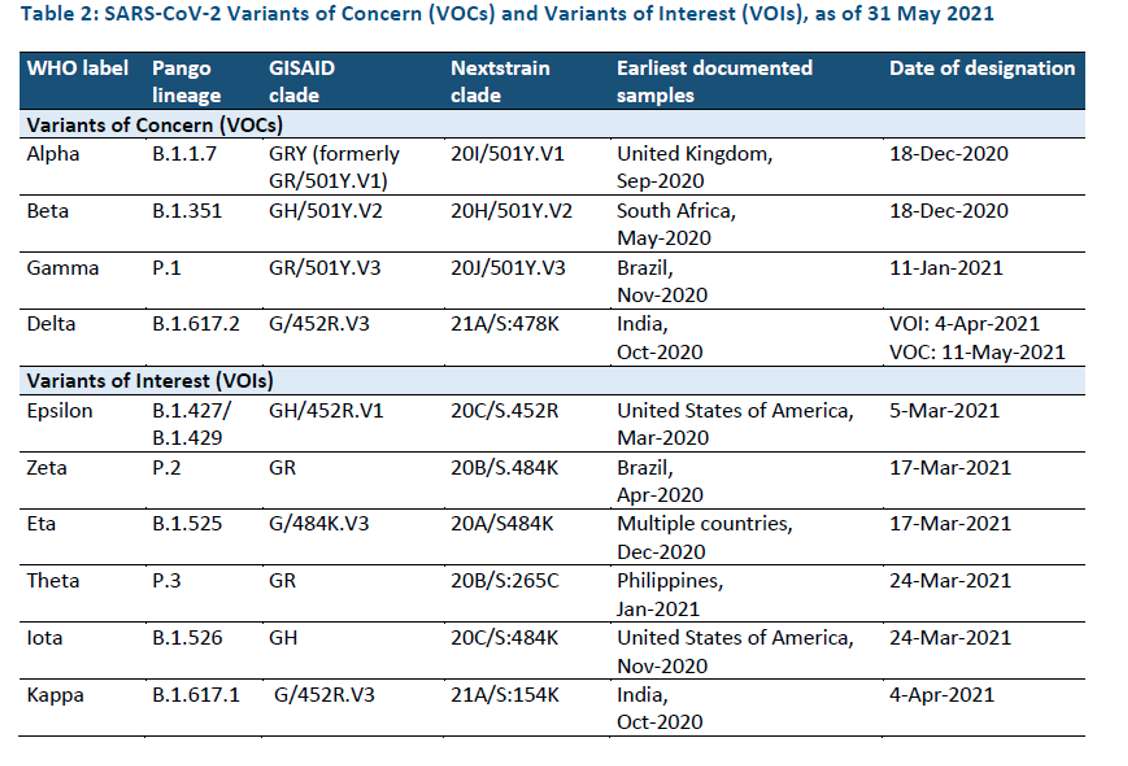
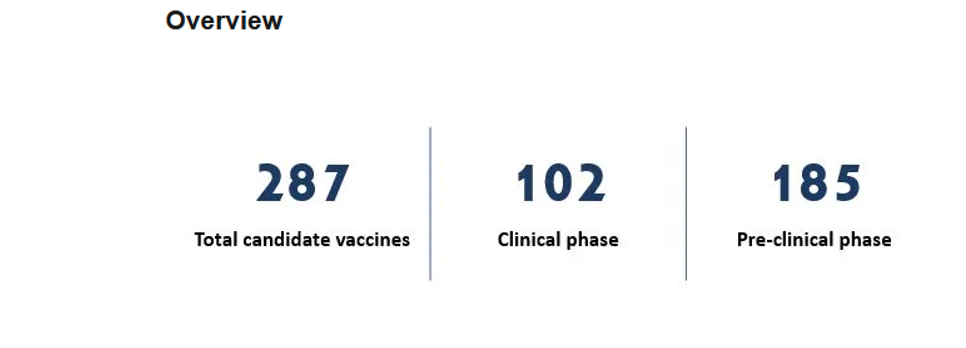
Journal Watch

Journal Watch
Vaccines and Global Health: The Week in Review continues its weekly scanning of key peer-reviewed journals to identify and cite articles, commentary and editorials, books reviews and other content supporting our focu-s on vaccine ethics and policy. Journal Watch is not intended to be exhaustive, but indicative of themes and issues the Center is actively tracking. We selectively provide full text of some editorial and comment articles that are specifically relevant to our work. Successful access to some of the links provided may require subscription or other access arrangement unique to the publisher.
If you would like to suggest other journal titles to include in this service, please contact David Curry at: david.r.curry@centerforvaccineethicsandpolicy.org

Transgenerational Trauma

AMA Journal of Ethics
Volume 23, Number 6: E435-504 June 2021
https://journalofethics.ama-assn.org/issue/transgenerational-trauma


Transgenerational Trauma
One thing that makes trauma transgenerational is narrative. Narrative, for example, is what makes a Confederate flag from 1865 flint for insurrection in 2021. Consequences of global and domestic insults, such as slavery and forced migration, have long ramified intergenerationally in communities, families, and individuals’ bodies. Legacies of trauma travel in stories across places and over time, and their effects include health status inequity and cumulative stress embodiment. Transmission of historically entrenched patterns of oppression also influence persons’ lived experiences of marginalization, convey health risk, and can play out during clinical encounters.

The role of facial contact in infection control: Renewed import in the age of coronavirus

American Journal of Infection Control
June 2021 Volume 49 Issue 6 p657-856
http://www.ajicjournal.org/current


Major Articles
The role of facial contact in infection control: Renewed import in the age of coronavirus
Paul A. Christensen, Joseph R. Anton, Canivan R. Anton, Mary R. Schwartz, Rose C. Anton
Published online: November 03, 2020
p663-673

Readability, content, and quality of COVID-19 patient education materials from academic medical centers in the United States

American Journal of Infection Control
June 2021 Volume 49 Issue 6 p657-856
http://www.ajicjournal.org/current


Readability, content, and quality of COVID-19 patient education materials from academic medical centers in the United States
Jessica Kruse, Paloma Toledo, Tayler B. Belton,…William A. Grobman, Emily S. Miller, Elizabeth M.S. Lange
Published online: November 27, 2020

Willingness to Vaccinate Against COVID-19 in the U.S.: Representative Longitudinal Evidence From April to October 2020

American Journal of Preventive Medicine
June 2021 Volume 60 Issue 6 p737-884
http://www.ajpmonline.org/current


Research Articles
Willingness to Vaccinate Against COVID-19 in the U.S.: Representative Longitudinal Evidence From April to October 2020
Michael Daly, Eric Robinson
Published online: February 15, 2021
p766-773
Open Access

Who Counts and Who Gets Counted? Health Equity in Infectious Disease Surveillance

American Journal of Public Health
June 2021 111(6)
http://ajph.aphapublications.org/toc/ajph/current


Who Counts and Who Gets Counted? Health Equity in Infectious Disease Surveillance
Surveillance, Other Race/Ethnicity, Statistics/Evaluation/Research, Race/Ethnicity, Epidemiology, Social Science
Grace A. Noppert and Lauren C. Zalla
111(6), pp. 1004–1006

Recommendations for Delivering COVID-19 Vaccine in Jails: Evidence from Kansas, Iowa, Nebraska, and Missouri

American Journal of Public Health
June 2021 111(6)
http://ajph.aphapublications.org/toc/ajph/current


NOTES FROM THE FIELD
Recommendations for Delivering COVID-19 Vaccine in Jails: Evidence from Kansas, Iowa, Nebraska, and Missouri
Infections, Health Service Delivery, Immunization/Vaccines, Public Health Workers, Community Health
Megha Ramaswamy, Catherine L. Satterwhite, Ashlyn Lipnicky, Amanda Emerson, Phil Griffin, Donald Ash and Kevin Ault
111(6), pp. 1035–1039

Equitable Access and Distribution of COVID-19 Vaccines for US Vulnerable Populations: Federal Health Center Program Perspective

American Journal of Public Health
June 2021 111(6)
http://ajph.aphapublications.org/toc/ajph/current


Equitable Access and Distribution of COVID-19 Vaccines for US Vulnerable Populations: Federal Health Center Program Perspective
Health Service Delivery, Immunization/Vaccines, Community Health, Socioeconomic Factors, Access to Care
Sue C. Lin
111(6), pp. 1070–1072