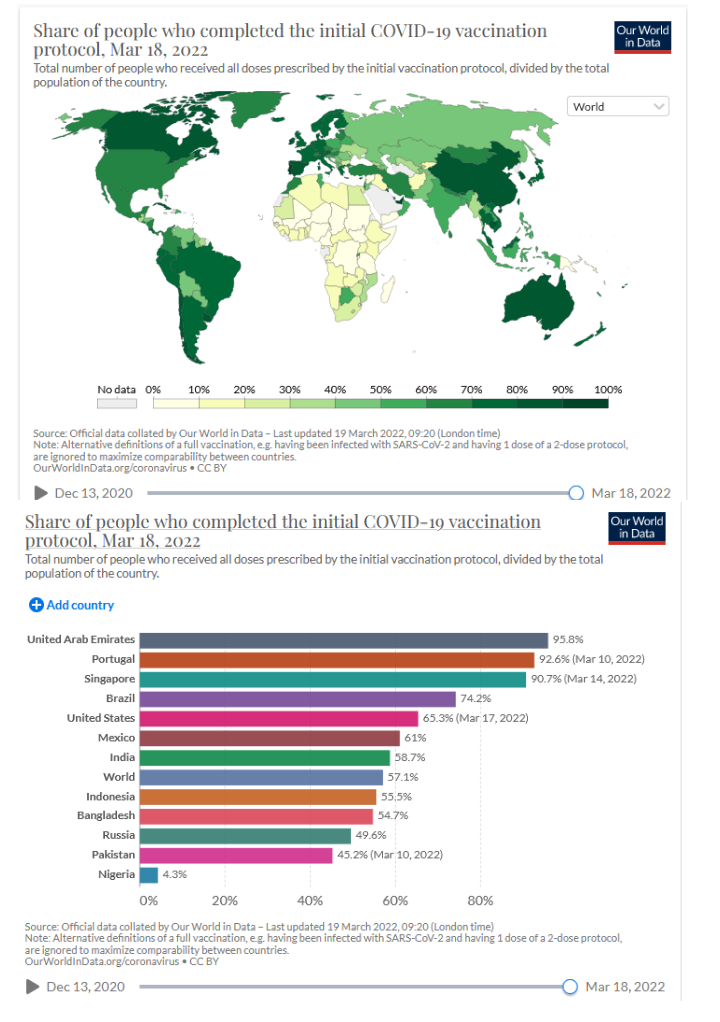
Our World in Data Coronavirus (COVID-19) Vaccinations[Accessed 19 Mar 2022] 64% of the world population has received at least one dose of a COVID-19 vaccine. 10.99 billion doses have been administered globally, and 17.03 million are now administered each day. Only 14.4% of people in low-income countries have received at least one dose.
Statement by President Joe Biden on the White House COVID-19 Response Coordinator
March 17, 2022 • Statements and Releases
…To lead this effort, I am excited to name Dr. Ashish Jha as the new White House COVID-19 Response Coordinator. Dr. Jha is one of the leading public health experts in America, and a well known figure to many Americans from his wise and calming public presence. And as we enter a new moment in the pandemic – executing on my National COVID-19 Preparedness Plan and managing the ongoing risks from COVID – Dr. Jha is the perfect person for the job.
I appreciate both Jeff and Dr. Jha for working closely to ensure a smooth transition, and I look forward to continued progress in the months ahead.
U.S. Department of State [to 19 Mar 2022] https://www.state.gov/coronavirus/releases/ Press Statement The United States Shares 500 Million COVID-19 Vaccine Doses Worldwide
Antony J. Blinken March 17, 2022
The United States has now shared over 500 million safe and effective COVID-19 vaccine doses, free of cost, to more than 110 countries and economies around the world – for the sole purpose of saving lives.
Since the start of the pandemic, we have provided nearly $20 billion in health, humanitarian, economic, and development assistance to over 120 countries, including rapid response support for urgent health needs and technical assistance to expand vaccine access. We have also invested and supported the expansion of regional COVID-19 vaccine manufacturing in Africa and Asia. Today, we continue to work tirelessly with governments and international organizations, vaccine producers, NGOs, the private sector, and others to deliver vaccines, get shots in arms, increase testing and treatment, support and protect healthcare workers, and more. Our recently announced COVID-19 Global Action Plan provides a clear roadmap for this international coordination…
Marking Delivery of Half a Billion U.S.-Donated COVID-19 Vaccines
March 17, 2022
Today, the United States has delivered half a billion COVID-19 vaccines, all donated free of charge, to more than 110 countries in every region of the world—more doses than any other nation. For every shot we have given in the United States, nearly one has been shipped abroad. Today marks an important milestone in reaching President Biden’s extraordinary pledge to donate more than 1.2 billion safe and effective shots worldwide, with no expectations in return.
The United States Announces nearly $585 Million in New Humanitarian Assistance for the People of Yemen as Crisis Threatens Millions of Lives
March 16, 2022
Today, the U.S. Secretary of State Antony Blinken announced nearly $585 million in humanitarian assistance for the people of Yemen at the 2022 High-Level Pledging Event for the Humanitarian Crisis in Yemen. In recent weeks, life-saving humanitarian programs in Yemen have been halted or forced to scale back significantly due to a lack of resources. This newly announced funding will enable continued provision of life-saving aid for Yemen’s most vulnerable people amid the intensifying conflict and the country’s devastating economic deterioration. The United States remains one of the largest donors of humanitarian assistance to Yemen, providing nearly $4.5 billion since the conflict began seven years ago.
Press release 16 March 2022 Yemen: Commission pledges €154 million for conflict-affected people
The European Commission has today announced €154 million for 2022 to support those most in need in Yemen at the high-level pledging event for Yemen co-hosted by the United Nations, Sweden and Switzerland.
Government of India – Press Information Bureau Latest Press Releases COVID-19 UPDATE
Posted On: 19 MAR 2022 9:24AM by PIB Delhi
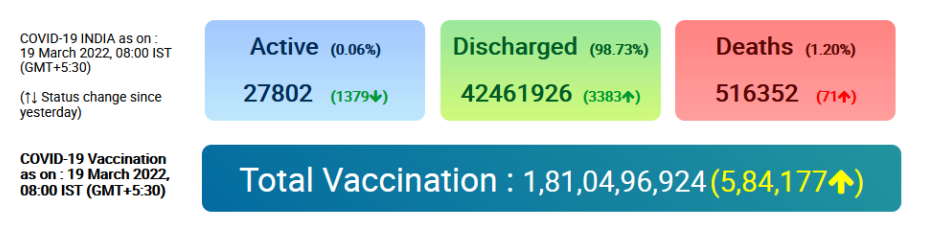
181.04 cr vaccine doses have been administered so far under Nationwide Vaccination Drive
India’s Active caseload currently stands at 27,802
Active cases stand at 0.06%
Recovery Rate currently at 98.73%
3,383 recoveries in the last 24 hours increases Total Recoveries to 4,24,61,926
2,075 new cases recorded in the last 24 hours
Daily positivity rate (0.56%)
Weekly Positivity Rate (0.41%)
78.22 cr Total Tests conducted so far; 3,70,514 tests conducted in the last 24 hours
Editor’s Note: WHO has issued a single situation report on Ukraine [5 March 2022 Emergency in Ukraine – Situation Report 1] which we featured in last week’s edition. Ukraine has not yet been listed in the omnibus inventory on WHO emergencies below.
Northern Ethiopia Ethiopia – Northern Ethiopia Humanitarian Update Situation Report, 17 March 2022 HIGHLIGHTS With the Meher planting season a month away, only 4,000 tonnes of improved seed (of 49,000 tonnes required) is available in Tigray. Thanks to the batch received through UNHAS, 117,870 animals were vaccinated during the reporting period, and 2.93 million vaccinated since 7 July 2021 in Tigray (24% of target). Only 5 of 100 large rubber tents required in Jara IDP site in North Wollo Zone, Amhara are in place. Additional plastic sheets also required for 150,000 IDPs to be relocated there. 11 schools are sheltering IDPs in Afdera and Kori woredas in Afar and an additional 198 schools remain closed due to insecurity, impacting more than 48,000 children.
Ukraine Ukraine: Humanitarian Impact Situation Report (As of 3:00 p.m. (EET) on 18 March 2022) :: Now in its fourth week, the ongoing military offensive has already caused 2,149 civilian casualties, including 816 killed, according to the Office of the High Commissioner for Human Rights (OHCHR). The actual figures are likely much higher as fierce clashes continue across the country.
Editor’s Note: WHO has issued a single situation report on Ukraine [5 March 2022 Emergency in Ukraine – Situation Report 1] which we featured in last week’s edition. Ukraine has not yet been listed in the omnibus inventory on WHO emergencies below.
Northern Ethiopia Ethiopia – Northern Ethiopia Humanitarian Update Situation Report, 17 March 2022 HIGHLIGHTS With the Meher planting season a month away, only 4,000 tonnes of improved seed (of 49,000 tonnes required) is available in Tigray. Thanks to the batch received through UNHAS, 117,870 animals were vaccinated during the reporting period, and 2.93 million vaccinated since 7 July 2021 in Tigray (24% of target). Only 5 of 100 large rubber tents required in Jara IDP site in North Wollo Zone, Amhara are in place. Additional plastic sheets also required for 150,000 IDPs to be relocated there. 11 schools are sheltering IDPs in Afdera and Kori woredas in Afar and an additional 198 schools remain closed due to insecurity, impacting more than 48,000 children.
Ukraine Ukraine: Humanitarian Impact Situation Report (As of 3:00 p.m. (EET) on 18 March 2022) :: Now in its fourth week, the ongoing military offensive has already caused 2,149 civilian casualties, including 816 killed, according to the Office of the High Commissioner for Human Rights (OHCHR). The actual figures are likely much higher as fierce clashes continue across the country.
WHO & Regional Offices [to 19 Mar 2022] https://www.who.int/ News [Selected] 15 March 2022 Departmental news WHO and Kuaishou Technology provide access to COVID-19 information and mental health tips
14 March 2022 Departmental news WHO released a new operational guide to promote COVID-19 vaccination uptake and tackle vaccine hesitancy among refugees and migrants
13 March 2022 Statement Stop attacks on health care in Ukraine
17 March 2022 Speech WHO Director-General’s keynote speech at the Thailand International Health Expo 2022 – 17 March 2022
17 March 2022 Speech WHO Director-General’s opening remarks at the Member State Information Session on COVID-19 – 17 March 2022
16 March 2022 Speech WHO Director-General’s opening remarks at 28th Tripartite Executive Annual Meeting Tripartite Joint Secretariat on AMR – 17 March 2022
16 March 2022 Speech WHO Director-General’s opening remarks at the WHO press conference – 16 March 2022
16 March 2022 Speech WHO Director-General’s closing remarks at the High-level pledging event for the humanitarian crisis in Yemen – 16 March 2022
16 March 2022 Speech WHO Director-General’s remarks at the 4th Meeting of Global Leaders Group on AMR – 16 March 2022
Africa CDC [to 19 Mar 2022] http://www.africacdc.org/ News Outbreak Brief 113: Coronavirus Disease 2019 (COVID-19) Pandemic
Date of Issue: 14 March 2022
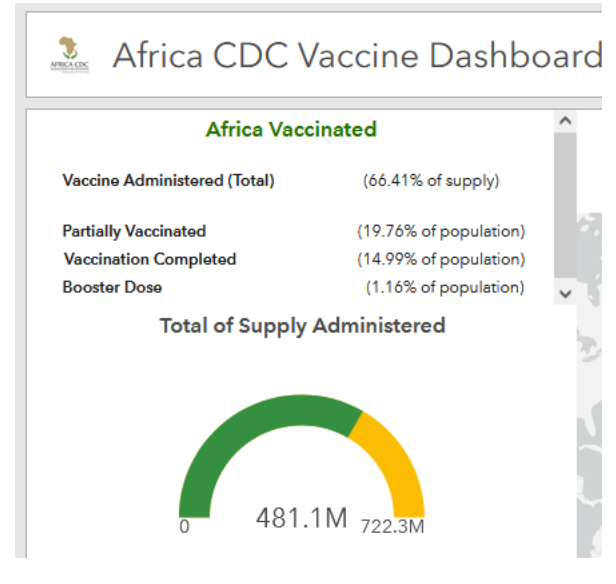
… As of 6 p.m. East African Time (EAT) 14 March 2022, a total of 11,283,362 COVID-19 cases and 250,393 deaths (CFR: 2.2%) have been reported by the 55 African Union (AU) Member States (MS). This represents 3% of all cases and 4.1% of all deaths reported globally. Thirty-four (62%) AU MS are reporting CFRs higher than the global CFR. Since the detection of COVID-19 on the African continent in February 2020, 53 (96%) AU MS have experienced three COVID-19 waves, 47 (72%) countries have experienced four waves and nine countries have experienced five waves.One country (Mauritius) is currently experiencing a sixth wave. Figure 1 shows the trend of new COVID-19 cases reported per day by the AU region from 15 February 2020 to 14 March 2022. Despite a test positivity rate of 11.2%, the daily reported number of new cases across the continent is on a downward trend. More information on the COVID-19 situation in Africa is available on the Africa CDC daily dashboard and hotspot dashboard
Careful readers will note that the number and range of organizations now monitored in our Announcements section below has grown as the impacts of the pandemic have spread across global economies, supply chains and programmatic activity of multilateral agencies and INGOs.
Global initiative will accelerate the discovery and development of antiviral drug candidates that can be distributed quickly and equitably next time the world faces a pandemic threat
COPENHAGEN – SAN FRANCISCO – SEATTLE (March 14, 2022) – Today, the Novo Nordisk Foundation, Open Philanthropy, and the Bill & Melinda Gates Foundation announced an initial commitment of up to $90 million of coordinated funding toward Pandemic Antiviral Discovery (PAD), a new initiative to catalyze discovery and early development of antiviral medicines for future pandemics. With equitable access as a core principle of the initiative, the founding partners are committed to ensuring that discoveries and innovations supported by PAD are accessible to people in low- and middle-income countries…
Bill & Melinda Gates Medical Research Institute [to 19 Mar 2022]
The Bill & Melinda Gates Medical Research Institute is a non-profit biotech organization. Our mission is to develop products to fight malaria, tuberculosis, and diarrheal diseases—three major causes of mortality, poverty, and inequality in developing countries. The world has unprecedented scientific tools at its disposal; now is the time to use them to save the lives of the world’s poorest people
Military operations – from combat, to medical triage, to disaster relief – require complex and rapid decision-making in dynamic situations where there is often no single right answer. Two seasoned military leaders facing the same scenario on the battlefield, for example, may make different tactical decisions when faced with difficult options. As AI systems become more advanced in teaming with humans, building appropriate human trust in the AI’s abilities to make sound decisions is vital.
Duke Global Health Innovation Center [to 19 Mar 2022]
The European & Developing Countries Clinical Trials Partnership (EDCTP) aims to accelerate the development of new or improved drugs, vaccines, microbicides and diagnostics against HIV/AIDS, tuberculosis and malaria as well as other poverty-related and neglected infectious diseases in sub-Saharan Africa, with a focus on phase II and III clinical trials
March 22 – 24, 2022 – Centre des Pensières, Veyrier-du-Lac (France)
From March 22-24, 2022, the second Workshop of the Global Collaboration on Advanced Vaccinology Training will be held at Les Pensières Center for Global Health, with approximately 70 participants.
The Global Fund’s malaria Strategic Initiative, alongside Gavi and Unitaid, continues to fund the Malaria Vaccine implementation program to generate further evidence on the RTS,S vaccine’s impact, safety, and feasibility over the next two years.
The Global Fund is organizing a Global Health Supply Chain Dialogue from 29 to 31 March 2022 under the theme “Building Resilient Supply Chains for Effective Pandemic Preparedness”. The conference aims to foster discussion between countries and partners on NEXTGen market shaping strategies, and generate commitment to an action plan that will strengthen public health supply chains, an essential element in the path to more resilient health systems.
The second webinar in the ZonMw series ‘Response to COVID-19 vaccine in patients with a hematological condition and primary immunodeficiencies’… Monday April 4, 2022, from 5pm to 6pm CET.
The following is a statement from Peter Maurer, the president of the International Committee of the Red Cross (ICRC), who is currently in Ukraine: Kyiv (ICRC) – Driving toward Kyiv this week, the signs of conflict grew.
Seven years of raging conflict in Yemen has exhausted the population’s capacity to cope, even as global attention is shifting toward other high-profile crises.
Somalia is the most severely affected of the countries facing the ongoing drought in the Horn of Africa. The situation is alarming, and it is deteriorating. People are massively abandoning their homes in search for water and food.
16-03-2022 | News release
International Coalition of Medicines Regulatory Authorities [ICMRA]
Jamaica, 17 March 2022 – The low rate of vaccination against COVID-19 in the Caribbean must be addressed through building confidence among the population as well as responding to the inequity of vaccine access, says the International Federation of the Red Cross and Red Crescent Societies (IFRC).
Building this confidence is a key factor in promoting universal vaccination and therefore fostering socio-economic recovery in the Caribbean, where only 40 per cent of the population counts with a complete scheme of vaccination, in comparison with 68 per cent in South America and 60 per cent in Central America. In the Americas region more than 1.7 billion COVID-19 vaccine doses have been administered…
ISC is a non-governmental organization with a unique global membership that brings together 40 international scientific Unions and Associations and over 140 national and regional scientific organizations including Academies and Research Councils.
Register for the webinar: https://bit.ly/zero-dose-ivac-webinar When: March 28th from 8:00-9:00am Description: How do we restore and strengthen immunization to effectively reach populations in humanitarian settings? An estimated two-thirds of zero-dose children live in conflict-affected settings. Research suggests that global conflicts are lasting longer and becoming more complex with greater impacts on civilian populations. A panel […]
March 17, 2022 – SEOUL, South Korea – The International Vaccine Institute (IVI) announced today that the United Arab Emirates (UAE) joined IVI, becoming the international organization’s 37th member state. His Excellency Abdulla Saif Al Nuaimi, Ambassador of the UAE to the Republic of Korea, raised the flag of the UAE at IVI headquarters…
Johns Hopkins Center for Health Security [to 19 Mar 2022]
I have been watching with increasing sadness and alarm as health care facilities come under fire during Russia’s invasion of Ukraine with devastating impacts on patients, civilians, and frontline workers. Earlier this week, the World Health Organization confirmed at least 31 such attacks, including the shelling of a children’s and maternity hospital. Many facilities are […]
Vaccines Federal Implementation Plan 2021-2025 On Wednesday March 2, 2022, the U.S. Department of Health and Human Services (HHS) published a Request for Information (RFI) to solicit stakeholder written public comments on the draft Vaccines Federal Implementation Plan 2021-2025- PDF*. HHS values input from all stakeholders and will take all public comments into consideration before finalizing this document. We encourage your input or comments and ask that you circulate this information to others who may also wish to provide comments. Information about how to provide written public comment is found on HHS.gov and the deadline for submissions is 5 p.m. EST Tuesday March 29, 2022. The Vaccines Federal Implementation Plan is a companion document to the Vaccines National Strategic Plan 2021-2025 published in January 2021. This plan outlines the federal government’s broad national vaccination goals and offers a framework to eliminate vaccine-preventable diseases through safe and effective vaccination over the lifespan, for both federal agencies and external partners. The implementation plan focuses on the specific actions that federal agencies can take to further those same national vaccination goals.
Russia’s war against the people of Ukraine is a deeply distressing moment for the world. Thousands of people have been killed with millions fleeing from the war. Beyond the ongoing humanitarian disaster, the economic damage is already being felt worldwide and risks becoming increasingly severe.
Some mental health treatments and interventions are effective. Others aren’t. And there’s still little to no understanding of why, or how to improve the outlook for anxiety, depression and psychosis. New Wellcome funding aims to address that.
To respond swiftly to the growing demand for data to monitor the welfare impacts of COVID-19 on households, the World Bank and various partners embarked on an initiative to implement High-Frequency Phone…
DUSHANBE, March 14, 2022 – The Government of Tajikistan and the World Bank signed today a $25 million grant agreement as additional financing to the Tajikistan Emergency COVID-19 Project, which has been…
Trade policy is health policy, and WTO members have a unique responsibility to leverage the full force of trade to achieve better health outcomes around the world, according to Deputy Director-General Anabel González. In an article published on 17 March in Think Global Health Trade, a multi-contributor website by the Council on Foreign Relations, DDG González points at the three main lessons which have emerged from the pandemic: global trade equals strength, a rules-based trading system matters in times of crisis, and better trade collaboration will improve health outcomes around the world.
World Trade Organization Director-General Ngozi Okonjo-Iweala today warmly welcomed the breakthrough among four WTO Members on a waiver of the Trade Related Intellectual Property agreement for the production of vaccines against the COVID-19 pandemic.
[See Perspectives above for detail]
::::::
ARM [Alliance for Regenerative Medicine] [to 19 Mar 2022]
Steve Bates Chair of ICBA said “The leaked QUAD proposal of a waiver on intellectual property rights for COVID vaccines would, if agreed, have a chilling impact on investment into the small companies that have been at the heart of the solutions to COVID-19. It would do nothing to solve the challenges we face in 2022 and make it far harder for small companies pioneering in this space in future”
“Small biotechs throughout ICBA member countries, including, for example, companies such as Canada-based Acuitas Therapeutics, BioNtech from Germany and the UK’s Vaccitech, all depend on their intellectual property to deliver key innovations that underpin the current generation of COVID -19 vaccines. Alongside these successes are many, many companies in our community that invested heavily and failed to make breakthroughs. This proposal directly threatens this innovative ecosystem’s ability to attract the capital needed to develop next generation of vaccines whilst doing nothing to solve the access challenges we have in 2022.”
“The reported proposal misguidedly casts IP as a barrier to COVID-19 vaccine access and distribution despite there being abundant supply of COVID-19 vaccines given the collective manufacturing globally of over 11 billion doses in 2021. Weakening IP rights does nothing to facilitate the distribution of these manufactured vaccines to people around the world who most need them – rather prioritizing addressing healthcare infrastructure and vaccine hesitancy in the developing world would lead to more shots in arms.”
WASHINGTON, D.C. (March 16, 2022) – The Pharmaceutical Research and Manufacturers of America released the following statement on the war in Ukraine:
“We are deeply saddened by the war taking place against the people of Ukraine. The biopharmaceutical research industry is united in our mission of providing vaccines and treatments to all patients who need them. Like the broader health care sector, biopharmaceutical companies serve a critical humanitarian role in sustaining access to medicines and clinical trials for patients wherever they are. PhRMA’s member companies are working in a variety of ways to support those affected by this humanitarian crisis, including by providing free essential medicines, making monetary donations to non-profits providing aid, monitoring for supply chain disruptions, and addressing the safety of employees and their families through financial assistance, transportation and other resources.
“We condemn the violence unfolding against the people of Ukraine and hope for its immediate end.”
To learn more about individual company efforts, please visit the website set up by our European sister association, the European Federation of Pharmaceutical Industries and Associations’ (EFPIA), found here.
Journal Watch Vaccines and Global Health: The Week in Review continues its weekly scanning of key peer-reviewed journals to identify and cite articles, commentary and editorials, books reviews and other content supporting our focu-s on vaccine ethics and policy. Journal Watch is not intended to be exhaustive, but indicative of themes and issues the Center is actively tracking. We selectively provide full text of some editorial and comment articles that are specifically relevant to our work. Successful access to some of the links provided may require subscription or other access arrangement unique to the publisher.
If you would like to suggest other journal titles to include in this service, please contact David Curry at: david.r.curry@centerforvaccineethicsandpolicy.org
Tactical Health and Law Enforcement Tactical health involves providing field-based clinical support to law enforcement operations during frontline crisis interventions and prehospital emergency care. Health professional skill can inform individual officers’ occupational health maintenance and help agents of the state navigate primary and secondary trauma and posttrauma experiences in field- and clinic-based settings. Tactical health expertise can also inform department- and agency-level policies, decisions, and responses to community health and safety threats. Ethical questions considered in this issue focus on the nature and scope of health professionals’ collaborations with law enforcement personnel during and following critical event preparation and responses.
On the accuracy of short-term COVID-19 fatality forecasts Forecasting new cases, hospitalizations, and disease-induced deaths is an important part of infectious disease surveillance and helps guide health officials in implementing effective countermeasures. For disea…
Authors: Nino Antulov-Fantulin and Lucas Böttcher
Citation: BMC Infectious Diseases 2022 22:251
Content type: Research article Published on: 14 March 2022
Public knowledge, attitude, and acceptance toward COVID-19 vaccines in Palestine: a cross-sectional study
The consequences of the COVID-19 pandemic on physical and mental health in addition to the global economy are huge. Vaccination is a pivotal measure to decrease COVID-19 morbidity and mortality and to help bri…
Authors: Mohammed Al-kafarna, Sajeda Ghassan Matar, Hossam Waleed Almadhoon, Bashar Khaled Almaghary, Mohamed Sayed Zaazouee, Asmaa Ahmed Elrashedy, Dalia Sami Wafi, Sami D. Jabari, Omar H. Salloum, Eman Ahmed Ibrahim, Hala ZI Alagha and Elfatih A. Hasabo
Citation: BMC Public Health 2022 22:529
Content type: Research Published on: 17 March 2022
Public perception of isolation, quarantine, social distancing and community containment during COVID-19 pandemic
Effective strategies of prevention have been and can aid in reducing and overcoming contagious diseases including COVID-19, still there is dearth of knowledge regarding general public awareness and perception….
Authors: Tahreem Hussain, Nida Jawed, Saba Mughal and Kashif Shafique
Citation: BMC Public Health 2022 22:528
Content type: Research Published on: 17 March 2022
Determinants of pentavalent and measles vaccination dropouts among children aged 12–23 months in The Gambia
Every year, vaccination averts about 3 million deaths from vaccine-preventable diseases (VPDs). However, despite that immunization coverage is increasing globally, many children in developing countries are sti…
Authors: Peter A. M. Ntenda, Alick Sixpence, Tisungane E. Mwenyenkulu, Kondwani Mmanga, Angeziwa C. Chirambo, Andy Bauleni and Owen Nkoka
Citation: BMC Public Health 2022 22:520
Content type: Research Published on: 17 March 2022
Ethical challenges and moral distress among field epidemiologists
As ‘disease detectives’ and directors of public health programs, field epidemiologists play essential roles in protecting public health. Although ethical issues receive considerable attention in medical and re…
Authors: Emma Cooke, George Lopez, Angela Hilmers and David G. Addiss
Citation: BMC Public Health 2022 22:510
Content type: Research Published on: 16 March 2022
Reviews Dynamic Regulatory Assessment: evolving the European Regulatory Framework for the Benefit of Patients and Public Health—an EFPIA View
Esteban Herrero-Martinez, Nasir Hussain, Nadege Le Roux,…Mark Mayer, Rodrigo Palacios, Thomas C. Kühler
Published online: November 27, 2021
p132-138 Open Access ABSTRACT
The European Union regulatory framework supports development, review, authorization, and maintenance of medicines to benefit public health; however, many elements are 2 decades old and undergoing review. Scrutiny was triggered by the coronavirus disease 2019 pandemic, the need to support future innovative medicines, the digital transformation of data exchange, and the need to address efficiency and capacity limitations. There are also ongoing evolutions in regulatory science for medicines (eg, cell and gene therapies), medical device combinations, and software, as well as the need to fully leverage contemporary information technology (IT). Important initiatives to address these challenges include the European Medicines Agency (EMA) Regulatory Science Strategy,1 the EU Regulatory Network Strategy,2 and the Big Data Steering Group,3 alongside European Commission–led initiatives such as the Pharmaceutical Strategy.4
Dynamic regulatory assessment (DRA) is a concept that seeks to integrate these various elements to re-imagine regulatory review interactions across the product life cycle. DRA calls for iterative regulatory dialogue, data submission, and evidence assessment, enabled by contemporary IT. DRA will facilitate iterative interaction and data assessment as it accumulates over a product’s life cycle, bringing significant efficiencies for all product types. The DRA concept primarily evolved through dialogue within working groups of the European Federation of Pharmaceutical Industries and Associations. This article describes the long-term vision of the European Federation of Pharmaceutical Industries and Associations and outlines important strategic elements of progress, including: aligning on a multi-stakeholder vision for DRA in the European Union and across regions; leveraging learnings from ongoing initiatives; and advancing IT, governance, and standards considerations. Ultimately, DRA should consider outcomes that deliver optimal benefits for patients in the European Union and worldwide.
Original Research Willingness to Accept Expedited COVID-19 Vaccine Research for Children Aged <12 Years After Adult Vaccine Approval
Ran D. Goldman, Jeffrey N. Bone, Renana Gelernter,… Mark A. Griffiths, Ahmed Mater, for the International COVIPAS (COVID-19 Parental Attitude Study) Group
Published online: November 15, 2021 ABSTRACT
Purpose
The goal of this study was to assess if caregivers’ attitudes toward the regulatory process of approving the vaccine against coronavirus disease 2019 (COVID-19) for children aged <12 years changed after a vaccine was approved for adults. Methods This was a larger scale COVIPAS (COVID-19 Parental Attitude Study) survey of caregivers presenting with their children aged ≤12 years for emergency care in 12 hospitals in the United States, Canada, and Israel. The study compared willingness to support abridged research into COVID-19 vaccines for children between the peak of the pandemic (March–May 2020) and after a COVID-19 vaccine became available for adults (December 2020–March 2021). Findings A total of 1956 surveys were included in the analyses. Overall, 385 (30.9%) caregivers in the pre–vaccine approval period and 250 (35.3%) caregivers in the post–adult vaccine phase supported abridged research into COVID-19 vaccines (P < 0.001). In both phases, mothers were less likely to favor abridged approval. Those with children who were fully vaccinated based on the pediatric schedule in their country favored abridged approval in phase 1 (odds ratio, 1.98; 95% confidence interval, 1.31–3.08) but less so in phase 2. In both phases, age and concerns of parents that they had COVID-19 or their child had COVID-19 were not associated with changes in response between phases. Implications Willingness to expedite vaccine approval increased after the emergency approval of COVID-19 vaccine for adults. Mothers are much less likely to approve expedited approval. No significant changes have been found in the composition of caregivers willing to forego regulatory demands on vaccine approval.
Article European Union: Commission Proposes Directive to Establish Due Diligence Procedures in Global Value Chains to Safeguard Human Rights and the Environment
On February 23, 2022, the European Commission published a proposal for a Directive on Corporate Sustainability Due Diligence. The directive would lay down rules for companies with regard to actual and potential adverse human rights and environmental impacts on their own and their subsidiaries’ operations and within their value chains, as well as establish rules … Continue reading “European Union: Commission Proposes Directive to…
Contributor: Gesley, Jenny
Date: 2022-03-15
Possibility of COVID-19 eradication with evolution of a new omicron variant COVID-19 has been a global health concern since 2019 until date. Global concerted efforts to combat this pandemic has resulted in a number of vaccines distributed across the globe. Although the presence of the…
Authors: Moses Okpeku
Citation: Infectious Diseases of Poverty 2022 11:30
Content type: Commentary Published on: 14 March 2022
Research Letter Prevalence and Durability of SARS-CoV-2 Antibodies Among Unvaccinated US Adults by History of COVID-19
Jennifer L. Alejo, MD; Jonathan Mitchell, MBBS; Amy Chang, MD; et al.
free access has active quiz
JAMA. 2022;327(11):1085-1087. doi:10.1001/jama.2022.1393
This study uses serologic testing to characterize natural immunity and the long-term durability of SARS-CoV-2 antibodies among unvaccinated US adults by history of COVID-19 infection.
Viewpoint Navigating Clinical and Business Ethics While Sharing Patient Data
Kelly N. Michelson, MD, MPH; James G. Adams, MD; Joshua M. M. Faber, BA
free access
JAMA. 2022;327(11):1025-1026. doi:10.1001/jama.2022.1942
This Viewpoint discusses the gap between clinical medical ethics and some business practices related to patient data sharing and secondary use of data by corporations.
Editorial Nigeria: rightly taking its place on the world stage
The Lancet
Nigeria is emerging as a world power. It has great intellectual, cultural, and social capital, as well as financial assets. It dominates west Africa, having more than half of the region’s population, and has the highest gross domestic product on the continent. The population of more than 200 million is projected to double by 2050, and to reach 733 million by 2100—making Nigeria the third most populous country in the world, after China and India. This rapid population growth has been accelerated by falling infant mortality combined with a steady birth rate and can create a demographic dividend for Nigeria. But to take advantage of this situation, appropriate investments in health, education, and skills need to be made. Published today, The Lancet Nigeria Commission: investing in health and the future of the nation, views this human potential and extraordinary opportunity through a health lens, telling the story of Nigeria as shaped by the country’s history and present circumstances. Written by a team of experts working at institutions across the country, and members of the diaspora, it has been led by Nigerians for Nigerians.
This potential might not be realised if the country does not address intractable poverty and extreme inequality. Recent trends in health outcomes, as detailed in the accompanying Article published today, record 20 years of increased healthy life expectancy (although it is still low within the region, at 56 years), reductions in mortality for males and females of all ages, and rises in health expenditure but, overall, health outcomes are still poor. Nigeria has repeatedly failed to realise the health gains promised by multiple political leaders, and this failure is holding the country back…
Article | 31 January 2022 | Open Access Vaccines elicit highly conserved cellular immunity to SARS-CoV-2 Omicron
Current vaccines induce broadly cross-reactive cellular immunity against SARS-CoV-2 variants, including Omicron, and provide protection against severe disease despite a substantially reduced neutralizing antibody response.
Jinyan Liu, Abishek Chandrashekar, Dan H. Barouch
Patents | 16 March 2022 Contractual solutions to overcome drug scarcity during pandemics and epidemics
Licensing provisions that obligate recipients of government funding to share relevant technology and know-how for scarce drugs during pandemics and epidemics can reduce shortages and overcome obstacles that intellectual property rights present.
Sapna Kumar
Ana Santos Rutschman
Editorial | 14 March 2022 Rare diseases, common challenges
The genetics community has a particularly important part to play in accelerating rare disease research and contributing to improving diagnosis and treatment. Innovations in sequencing technology and machine learning approaches have positively affected diagnostic success, but more coordinated efforts are needed to move towards effective therapies or even cures for these important, and sometimes overlooked, class of diseases.
Comment | 28 January 2022 A call to action for translational sciences in COVID-19 and future pandemics
Translation Together, a transnational consortium of translational research organizations, reflects on successes and challenges in regional COVID-19 pandemic responses and proposes five priorities to improve preparedness for future global public health crises and improve the global approach to translational research and science.
Kanny K. Wan, Danielle Davis, Christine M. Cutillo
 vaccines and global health :: ethics and policy