Ebola – Guinea

Milestones :: Perspectives :: Research


Ebola – Guinea

Ebola virus disease – Guinea
WHO – Disease outbreak news
17 February 2021
On 14 February 2021, the Ministry of Health (MoH) of Guinea informed WHO of a cluster of Ebola Virus Disease (EVD) cases in the sub-prefecture of Gouécké, Nzérékoré Region, Guinea between 18 January and 13 February 2021. The cases showed symptoms of diarrhea, vomiting and bleeding after attending the burial of another relative (a 51 year-old nurse) on 1 February 2021…

Public health response
On 14 February 2021, following the declaration of the EVD outbreak, the MoH of Guinea convened a crisis meeting. The MoH , WHO, Global Outbreak Alert and Response Network (GOARN) partners, have initiated measures to control the outbreak and prevent further spread…

WHO support for the Guinean authorities
:: WHO will help supply vaccines, therapeutics, reagents and personal protective equipment.
:: WHO will be part of the partner coordination.
:: WHO will be involved in all pillars of the response, and will help to strengthen response in each area
WHO will recruit and deploy human resources to N’Zérékoré region to support investigation, contact tracing and vaccination.
:: In coordination with partners, WHO will work to reinforce risk communication and community engagement by deploying communicators and socio anthropologists.
:: WHO will provide logistic support, hygiene kits and IPC materials, where they are needed.

WHO risk assessment
WHO considers the risk of spread in the country as very high given the unknown size, duration and origin of the outbreak; potentially large number of contacts; potential spread to other parts of Guinea and neighboring countries; limited response capacity currently on the ground; and unknown virus strain. In addition, there are ongoing challenges for the public health system due to the COVID-19 epidemic, and recent yellow fever and measles outbreaks.
WHO assess the risk for the region as high. The Nzérékoré Region of Guinea shares borders with Sierra Leone and Liberia, where EVD outbreaks occurred previously. Despite some movement restrictions across official border-crossings due to the ongoing COVID-19 pandemic, a significant proportion of cross-border movement continues to take place and poses a risk of EVD spread. It is therefore essential that neighboring countries assess their preparedness capacities and implement readiness/response measures…

More than 11,000 Ebola vaccines expected in Guinea this weekend
By Aaron Ross
February 18, 2021 DAKAR (Reuters) – Guinea expects to receive more than 11,000 Ebola vaccines this weekend, with more to follow, and inoculations could start as soon as Monday, a health ministry official and the World Health Organization said on Thursday.

COVID Vaccines – UN Security Council

Milestones :: Perspectives :: Research


COVID Vaccines – UN Security Council

Secretary-General, Addressing Security Council, Pledges Full Support for Creating Emergency Task Force to Prepare Global COVID-19 Vaccine Plan
17 February 2021
SG/SM/20583
Following are UN Secretary-General António Guterres’ remarks, as delivered, to the Security Council open meeting:  “Equitable access to COVID-19 vaccines in contexts affected by conflict and insecurity”, today:
I thank the United Kingdom for organizing this meeting and for reinforcing my call for a global ceasefire to ease suffering, create space for diplomacy and enable humanitarian access — including for the delivery of vaccines worldwide.

COVID-19 continues its merciless march across the world — upending lives, destroying economies and undermining the Sustainable Development Goals.  The pandemic is exacerbating all the factors that drive instability — hindering our efforts to implement Security Council resolution 2532 (2020) for the cessation of hostilities, conflict prevention and resolution.

Defeating COVID-19, now that we have begun to have the scientific capacity to do so, is more important than ever.  The rollout of COVID-19 vaccines is generating hope.  At this critical moment, vaccine equity is the biggest moral test before the global community.  We must ensure that everybody, everywhere, can be vaccinated as soon as possible.

Yet, progress on vaccinations has been wildly uneven and unfair.  Just 10 countries have administered 75 per cent of all COVID-19 vaccines.  Meanwhile, more than 130 countries have not received a single dose.  Those affected by conflict and insecurity are at particular risk of being left behind.

When pandemic strikes, we are only safe if everyone is safe.  If the virus is allowed to spread like wildfire in the Global South, or parts of it, it will mutate again and again.  New variants could become more transmissible, more deadly and, potentially, threaten the effectiveness of current vaccines and diagnostics.  This can prolong the pandemic significantly, enabling the virus to come back to plague the Global North.  It will also delay the world economic recovery.

We have come together to create the COVAX facility — the one global tool to procure and deliver vaccines for low- and middle-income countries.  COVAX requires to be fully funded.  But we must do even more.  Our efforts need to be comprehensive and well-coordinated everywhere.  The world urgently needs a global vaccination plan to bring together all those with the required power, scientific expertise and production and financial capacities.


I believe the G20 is well placed to establish an emergency task force to prepare such a global vaccination plan and coordinate its implementation and financing.  This task force should include all countries in which there is a capacity to develop vaccines or to produce them if licenses are available, together with the WHO [World Health Organization], Gavi, and other relevant technical organizations and the international financial institutions.  The task force would have the capacity to mobilize the pharmaceutical companies and key industry and logistics actors.

I am ready to galvanize the full United Nations System in support of this effort.  The G7 meeting later this week can help create the momentum to mobilize the necessary financial resources.  Together, we can ensure sufficient supply, fair distribution and vaccine confidence.

We can defeat this disease.  We can get our economies running again.  I am convinced it is possible.  Let’s make it happen, together.

UN Security Council session on COVID-19: IFRC warns of combined dangers of mistrust and vaccine inequity
New York, 17 February 2021 – The chief executive of the world’s largest humanitarian network has warned world leaders of the consequences of high levels of mistrust and persistent inequity in the distribution of COVID-19 vaccines…
Mr Chapagain went on to share the IFRC’s deep concerns about pervasive inequality and inequity in the distribution of COVID-19 vaccines worldwide. According to IFRC analysis, less than 1 per cent of COVID-19 vaccine doses globally have been administered in the 32 countries currently facing severe or very severe humanitarian crises.
Mr Chapagain said: “People trust us for our actions. They look at what we do, and they judge us for what we do not do. They see, clearly, the current high levels of vaccine inequity and inequality. “Equity is not something that happens on its own. History tells us this. Just as we need to ensure that all countries can access vaccines, we also need to make sure that those vaccines reach the arms of all the people who need them. Underserved, alienated, or isolated communities, including those living in areas not under the control of States, as well as detainees, IDPs and refugees, must be integrated in national vaccination efforts. Strong involvement of the International Red Cross and Red Crescent Movement and other local impartial organizations in vaccination activities can help ensure that these communities are not left behind.”…
17 February 2021

G7 Leaders’ statement, 19 February 2021

Milestones :: Perspectives :: Research


G7 Leaders’ statement, 19 February 2021
European Council Statements and remarks [Editor’s text bolding]
We, the leaders of the Group of Seven, met today and resolved to work together to beat COVID-19 and build back better. Drawing on our strengths and values as democratic, open economies and societies, we will work together and with others to make 2021 a turning point for multilateralism and to shape a recovery that promotes the health and prosperity of our people and planet.

We will intensify cooperation on the health response to COVID-19. The dedication of essential workers everywhere represents the best of humanity, while the rapid discovery of vaccines shows the power of human ingenuity. Working with, and together to strengthen, the World Health Organisation (WHO), and supporting its leading and coordinating role, we will: 
:: accelerate global vaccine development and deployment;
:: work with industry to increase  manufacturing capacity, including through voluntary licensing;
:: improve information sharing,  such as on sequencing new variants; and,
:: promote transparent and responsible practices, and vaccine confidence.

We reaffirm our support for all pillars of the Access to COVID-19 Tools  Accelerator (ACT-A), its COVAX facility, and affordable and equitable access to vaccines, therapeutics and diagnostics, reflecting the role of extensive immunisation as a global public good. Today, with increased financial commitments of over four billion USD to ACT-A and COVAX, collective G7 support totals seven and a half billion USD. We invite all partners, including the G20 and International Financial Institutions, to join us in increasing support to ACT-A, including to increase developing countries’ access to WHO-approved vaccines through the COVAX facility.

COVID-19 shows that the world needs stronger defences against future risks to global health security. We will work with the WHO, G20 and others, especially through the Global Health  Summit in Rome, to bolster global health and health security architecture for pandemic preparedness, including through health financing and rapid response mechanisms, by strengthening the “One Health” approach and Universal Health Coverage, and exploring the  potential value of a global health treaty.

We have provided unprecedented support for our economies over the past year totalling over $6 trillion across the G7. We will continue to support our economies to protect jobs and  support a strong, sustainable, balanced and inclusive recovery. We reaffirm our support to  the most vulnerable countries, our commitment to the Sustainable Development Goals, and  our partnership with Africa, including to support a resilient recovery. We will work through  the G20 and with the International Financial Institutions to strengthen support for countries’ responses by exploring all available tools, including through full and transparent implementation of the Debt Service Suspension Initiative and the Common Framework.

Recovery from COVID-19 must build back better for all. Looking to UNFCCC COP26 and CBD COP15, we will put our global ambitions on climate change and the reversal of biodiversity  loss at the centre of our plans. We will make progress on mitigation, adaptation and finance  in accordance with the Paris Agreement and deliver a green transformation and clean energy  transitions that cut emissions and create good jobs on a path to net zero no later than 2050.  We are committed to levelling up our economies so that no geographic region or person, irrespective of gender or ethnicity, is left behind.

We will: champion open economies and societies; promote global economic resilience; harness the digital economy with data free  flow with trust; cooperate on a modernised, freer and fairer rules-based multilateral trading  system that reflects our values and delivers balanced growth with a reformed World Trade Organisation at its centre; and, strive to reach a consensus-based solution on international taxation by mid-2021 within the framework of the OECD. With the aim of supporting a fair  and mutually beneficial global economic system for all people, we will engage with others,  especially G20 countries including large economies such as China. As Leaders, we will consult  with each other on collective approaches to address non-market oriented policies and practices, and we will cooperate with others to address important global issues that impact all countries.

We resolve to agree concrete action on these priorities at the G7 Summit in the United Kingdom in June, and we support the commitment of Japan to hold the Olympic and Paralympic Games Tokyo 2020 in a safe and secure manner this summer as a symbol of global unity in overcoming COVID-19.

COVAX – UPDATES

Milestones :: Perspectives :: Research


COVAX – UPDATES

G7 backs Gavi’s COVAX Advance Market Commitment to boost COVID-19 vaccines in world’s poorest countries
:: Today G7 leaders announced a doubling of funding for Gavi COVAX AMC to support lower-income economies obtain life-saving vaccines against COVID-19, ensuring greater equity in fighting to end the acute phase of the pandemic.
:: New funding from the European Union, Germany and the United States will allow COVAX, the international COVID-19 vaccine mechanism, to secure more doses and further diversify its vaccine portfolio, advancing its goal to roll out at least 1.3 billion vaccine doses in world’s poorest economies in the next few months.
:: This comes alongside a number of recent pledges, including a pledge announced today by Ireland.
:: The announcement also includes securing doses for COVAX to support vital humanitarian work in places where populations face emergencies.
:: In addition, the UK and France announced commitments to share vaccine doses with lower-income economies, joining a number of other countries expressing the same goal, to further accelerate a coordinated international response and help put an end to the pandemic globally.

Geneva, 19 February 2021 – The virtual G7 Early Leaders’ Summit event saw the announcement of major new funding, including new pledges of EUR 980 million from Germany and EUR 500 million from the European Union, and an allocation of US$ 2 billion in funding by the United States for 2021, with an additional US$ 2 billion planned over 2021-2022. A number of other recent pledges bring funds raised for Gavi COVAX Advance Market Commitment (Gavi COVAX AMC), the funding mechanism to finance doses of COVID-19 vaccines for 92 lower-income economies within the COVAX Facility, to a total of US$ 6.3 billion. In addition, the United Kingdom announced it would be sharing surplus doses with COVAX, providing an additional source of vaccines for the world…
____


GERMANY ANNOUNCES LARGEST SINGLE PLEDGE TO SUPPORT GLOBAL HEALTH SECURITY
German Chancellor Angela Merkel announced an additional EUR 980 million contribution to COVAX at the virtual G7 Early Leaders’ Summit. This unprecedented commitment by Germany is the country’s largest single pledge to support global health security. It comes alongside a broader German commitment to support the international effort to end COVID-19, with a significant additional funding pledge to the Access to COVID-19 Tools (ACT) Accelerator. Alongside support for the Gavi COVAX AMC, new German funding will also support reinforcement of diagnostics, therapeutics and health systems to combat COVID-19 around the world – because no-one is safe until everyone is safe…
____


EUROPEAN UNION PLEDGES FOR THE GAVI COVAX AMC
At the G7 virtual leaders’ meeting, President of the European Commission, Ursula von der Leyen announced an additional EUR 500 million pledge to the Gavi COVAX AMC, which includes EUR 300 million in grant funding from the European Commission and EUR 200 million in guarantees through the European Investment Bank (EIB). This is in addition to EUR 100 million already pledged by the European Commission and EUR 400 million in guarantees from the EIB in December 2020. This brings the Commission’s financial support to COVAX to EUR 1 billion as part of Team Europe’s considerable support to the COVAX AMC…
____


2021 UNITED STATES FUNDING FOR GAVI COVAX AMC
Using funds appropriated by a bipartisan Congressional vote in December 2020, the United States will provide an initial US$ 2 billion contribution to Gavi, the Vaccine Alliance for the COVAX Advance Market Commitment, the innovative financing instrument of the COVAX Facility, which supports access to safe and effective vaccines for 92 low- and middle-income economies. The United States will also take a leadership role in galvanizing further global contributions to COVAX by releasing an additional US$ 2 billion through 2021 and 2022. In close cooperation with Gavi, this additional $2 billion in funding will serve to expand COVAX’s reach…
____


IRELAND PLEDGES FUNDING FOR COVAX
Ireland also announced EUR 4 million in funding for COVAX today. Irish Minister of State for Overseas Development Aid and Diaspora Colm Brophy TD added: “Ireland is delighted to allocate €4 million to the COVAX Facility, part of at least €50 million in Irish Aid support to global public health this year.  This will support developing countries, who most need vaccines and can least afford them, secure their share of global supply.”..
____


SIGNIFICANT ADDITIONAL INTERNATIONAL FUNDING FOR THE GAVI COVAX AMC
These new announcements come on top of other recent pledges to Gavi’s COVAX AMC from a number of governments. These include additional pledges from Japan (US$ 70m), the Netherlands (EUR 25m) and Sweden (SEK100m) and new commitments from the Austrian Development Cooperation (EUR 2.4m), Belgium (EUR 4m), Iceland (ISK250m) and Luxembourg (EUR 1m).

The Thistledown Foundation, a private charitable foundation established in late 2019 by Tobias Lütke and Fiona McKean, has also pledged CAD 5 million to Gavi’s COVAX AMC to ensure equitable access of COVID-19 vaccines.
____


UK AND FRENCH COMMITMENT TO SHARE SURPLUS DOSES WITH COVAX FOR DEVELOPING COUNTRIES
The UK Government has announced that the UK will share the majority of any future surplus coronavirus vaccines from its supply with the COVAX procurement pool to support developing countries, in addition to the UK’s £548 million existing funding for the COVAX AMC. This commitment allows the COVAX Facility to access an additional source of doses for participating economies.

This comes alongside a call by French President Emmanuel Macron for higher-income countries to reserve a percentage of their vaccine doses for lower-income economies. Gavi welcomes this renewed momentum created by President Macron, as dose sharing by countries in a position to do so can potentially add significant volumes of vaccines to the global effort to ending the acute phase of the pandemic. In addition to France and Norway as part of Team Europe, Canada has made a similar commitment.


::::::

Gavi signs memorandum of understanding with Novavax on behalf of COVAX Facility
:: The signed memorandum of understanding (MoU) between Gavi and Novavax is to make a cumulative volume of 1.1 billion doses of the Novavax vaccine candidate available to the COVAX Facility
:: This cumulative volume of doses will be provided to COVAX based on terms defined in the final advance purchase agreement with Novavax, once signed, and via an existing agreement with the Serum Institute of India (SII)
:: Dr Seth Berkley, CEO of Gavi: “This agreement helps the COVAX Facility close in on the goal of delivering two billion doses in 2021 and increases the range of vaccines available to us as we build a portfolio suitable for all settings and contexts.”

Geneva, 18 February 2021 – Gavi, the Vaccine Alliance announced today that it had signed a memorandum of understanding (MoU) with Novavax that, combined with a separate existing agreement with Serum Institute of India (SII), will provide a total of 1.1 billion doses of the company’s NVX-CoV2373 COVID-19 vaccine candidate to the COVAX Facility. The MoU lays the foundation for agreement on final terms via an advance purchase agreement and is a critical step toward making sure doses of the vaccine, if approved and licensed, will be made available to all countries and economies participating in the COVAX Facility…


::::::

COVAX Statement on WHO Emergency Use Listing for AstraZeneca/Oxford COVID-19 Vaccine
Geneva / New York / Oslo – 16 February 2021 – The Coalition for Epidemic Preparedness Innovations (CEPI), Gavi, the Vaccine Alliance (Gavi) and the World Health Organization (WHO), as co-leads of the COVAX initiative for equitable global access to COVID-19 vaccines, alongside key delivery partner UNICEF, are pleased to welcome the news that two versions of the AstraZeneca/Oxford COVID-19 vaccine have been given WHO Emergency Use Listing (EUL). Yesterday’s announcement means that two versions of the AstraZeneca/Oxford vaccine, produced by AstraZeneca-SK Bioscience (AZ-SKBio) and the Serum Institute of India (AZ-SII), are now available for global rollout through the COVAX Facility.

Building on the early information provided in the interim distribution forecast published on 3 February 2021, COVAX will now complete the process of final Q1/Q2 allocations of the AstraZeneca/Oxford vaccine to Facility participants. Information on these final allocations will be communicated to all participants and published online the week of February 22nd.

In order for doses to be delivered via this first allocation round, several critical pieces must be in place:
:: All Facility participants must have given national regulatory authorisation for the vaccines in question, a process which can be expedited by issuing special authorisations for use based on granting of WHO EUL.
:: All Facility participants must have signed indemnity agreements with the manufacturers in question in order to receive doses through COVAX. The COVAX Facility is helping to facilitate the process of getting these agreements in place. In particular, COVAX is supporting AMC-eligible participants by negotiating a template indemnity agreement on their behalf – saving time and resources – and establishing a no-fault compensation mechanism and fund.
:: AMC-eligible economies must have submitted National Deployment and Vaccination Plans (NDVPs) through the COVID-19 Partners Platform, that have then been reviewed and validated by COVAX…

A universal coronavirus vaccine

Featured Journal Content


Science
19 February 2021 Vol 371, Issue 6531
http://www.sciencemag.org/current.dtl
Editorial
A universal coronavirus vaccine
By Wayne C. Koff, Seth F. Berkley
COVID-19 has already produced catastrophic social, economic, and public health consequences, with more than 107 million documented cases and 2.3 million deaths. Although this pandemic is far from over, we now have the tools to end it, with the largest and most rapid global deployment of vaccines under way. That we got this far so quickly is remarkable, but next time we might not be so lucky. More virulent and deadly coronaviruses are waiting in the wings. Thus, the world needs a universal coronavirus vaccine.

The speed with which safe and effective COVID-19 vaccines have been developed and made available is unprecedented, taking less than a year. However, if faced with a more virulent strain with a higher case fatality rate than severe acute respiratory syndrome coronavirus 2 (SARS-CoV-2), even this rapid time frame may not be enough to prevent a death toll on the scale of the 1918 influenza pandemic, which killed more than 50 million. Moreover, there is a continuing risk that the virus will mutate in ways that render existing COVID-19 vaccines less effective—as we’ve already seen for the B.1.351 variant first identified in South Africa—or even ineffective.

As with influenza, the case for a vaccine that protects all people against all forms of coronavirus is strong. SARS-CoV-2 belongs to a diverse group of viruses of which there are thousands capable of infecting a wide range of animals, from bats and pangolins to pigs and mink. SARS-CoV-1, which emerged in 2002, had a 10% fatality rate; Middle East respiratory syndrome coronavirus (MERS-CoV) in 2012 was 34% fatal.

The potential is increasing for other coronaviruses to jump species and cause more pandemics. The reasons are many. The animals that the viruses infect are ones that humans regularly come into contact with. Modern agricultural practices, viral evolution, and relentless human encroachment on the natural environment mean there is an increasing risk of people encountering previously isolated animal populations that harbor new strains with pandemic potential. With human migration, population growth, urbanization, rapid global travel, and climate change hastening the spread, it has never been easier for outbreaks to turn into epidemics and escalate into pandemics.

At the same time, the recent convergence of technological advances in biomedical, computing, and engineering sciences has ushered in a new era in antigen and vaccine discovery. High-performance supercomputing and machine learning, coupled with structural modeling, have the potential to greatly accelerate identification of common antigenic targets shared across coronaviruses. Databases of genetic sequences of animal isolates of coronaviruses can be used to model the evolutionary emergence of the viruses. Ongoing efforts to decode the principles of immunity in aging populations can enhance the effectiveness of vaccines for those most vulnerable. Collectively, studies now suggest that developing a universal coronavirus vaccine is scientifically feasible.

This must be a worldwide effort. A roadmap is needed to lay out the core scientific issues as well as a framework for funding and sharing of information, data, and resources. Early on, it will be essential to establish a global surveillance network for zoonotic coronaviruses like the World Health Organization’s Global Influenza Surveillance and Response System or the United States Agency for International Development’s PREDICT program (which was defunded last year). In addition, a global effort to identify coronavirus-specific broadly neutralizing antibodies is needed to facilitate cross-reactive coronavirus antigen discovery.

None of that can happen until all stakeholders, across governments, industry, academia, and nongovernmental organizations, recognize this as a global public health priority. With COVID-19, much of the groundwork has been laid. To wait until after this crisis passes could prove to be a missed opportunity. It is estimated that the current pandemic will end up costing between US$ 8 and 16 trillion globally, ∼500 times more than would be required for preventing the next pandemic.

That is not to say that this will be easy, and a stepwise approach from COVID-19 to pan-coronavirus to universal coronavirus vaccines may be required. SARS-CoV-2 is rapidly adapting to humans, and other novel coronaviruses are mutating, recombining, and replicating in bats and other animal species, positioning to jump species sometime in the future. If we choose to wait for the next coronavirus to emerge, it may be too late, as it was with COVID-19. Creating the tools for preventing the next coronavirus pandemic is within our means and should be considered a global health priority. We can either invest now or pay substantially more later.

Weekly Epidemiological and Operational updates

Featured Journal Content


Coronavirus [COVID-19] – WHO
Public Health Emergency of International Concern (PHEIC)
https://www.who.int/emergencies/diseases/novel-coronavirus-2019


Weekly Epidemiological and Operational updates
Last update: 23 January 2021
Confirmed cases :: 110 384 747 [week ago: 107 838 255] [two weeks ago: 104 956 439]
Confirmed deaths :: 2 446 008 [week ago: 2 373 398] [two weeks ago: 2 290 488
Countries, areas or territories with cases :: 223


Weekly epidemiological update – 16 February 2021
Overview
The number of global new cases reported has continued to fall, with 2.7 million new cases last week, a 16% decline compared to the previous week. The number of new deaths reported also fell, with 81 000 new deaths reported last week, a 10% decline as compared to the previous week. This brings the global cumulative numbers to 108.2 million cases and over 2.3 million cases since the start of the pandemic.
In this edition of the COVID-19 Weekly Epidemiological Update, special focus updates are provided on: the global influenza surveillance and response system as well as on SARS-CoV-2 variants of concern.

WHO lists two additional COVID-19 vaccines for emergency use and COVAX roll-out

Featured Journal Content


WHO lists two additional COVID-19 vaccines for emergency use and COVAX roll-out
AstraZeneca/Oxford-developed vaccines to reach countries in the coming weeks
15 February 2021
News release Geneva, Switzerland
Today WHO listed two versions of the AstraZeneca/Oxford COVID-19 vaccine for emergency use, giving the green light for these vaccines to be rolled out globally through COVAX. The vaccines are produced by AstraZeneca-SKBio (Republic of Korea) and the Serum Institute of India.
WHO’s Emergency Use Listing (EUL) assesses the quality, safety and efficacy of COVID-19 vaccines and is a prerequisite for COVAX Facility vaccine supply. It also allows countries to expedite their own regulatory approval to import and administer COVID-19 vaccines.
“Countries with no access to vaccines to date will finally be able to start vaccinating their health workers and populations at risk, contributing to the COVAX Facility’s goal of equitable vaccine distribution,” said Dr Mariângela Simão, WHO Assistant-Director General for Access to Medicines and Health Products…

COVID Vaccine Developer Announcements

Featured Journal Content


COVID Vaccine Developer Announcements

Johnson & Johnson Announces Submission to World Health Organization for Emergency Use Listing of Investigational Single-Shot Janssen COVID-19 Vaccine Candidate
Feb 19, 2021

Dr. Reddy’s Initiates Process for Emergency Use Authorization of Sputnik V
February 19, 2021
Dr. Reddy’s Laboratories Ltd today announced that it has initiated the process with the Drugs Controller General of India (DCGI) for Emergency Use Authorization (EUA) of the well-studied human adenoviral vector-based platform vaccine candidate, Sputnik V…
As part of the review process, Dr. Reddy’s will present the safety profile of the phase 2 study, and interim data of the phase 3 study, which is expected to complete by 21st February 2021.
In September 2020, Dr. Reddy’s partnered with the Russian Direct Investment Fund (RDIF) to conduct the clinical trials of the Sputnik V and for its distribution rights in India. The vaccine is currently undergoing the phase 3 clinical trial in India…
Ethics Approval Granted for Open Orphan’s COVID-19 Human Challenge Study Model
Call for volunteers to enroll in studies that will play a key part in developing effective vaccines and treatments for COVID-19
February 17, 2021

European Commission Purchases Additional 150 Million Doses of COVID-19 Vaccine Moderna
February 17, 2021

Coronavirus (COVID-19) Vaccinations

Our World in Data
Coronavirus (COVID-19) Vaccinations
Our World in Data and the SDG-Tracker are collaborative efforts between researchers at the University of Oxford, who are the scientific editors of the website content; and the non-profit organization Global Change Data Lab, who publishes and maintains the website and the data tools that make our work possible. At the University of Oxford we are based at the Oxford Martin Programme on Global Development.

Research and data: Hannah Ritchie, Esteban Ortiz-Ospina, Diana Beltekian, Edouard Mathieu, Joe Hasell, Bobbie Macdonald, Charlie Giattino, and Max Roser
Web development: Breck Yunits, Ernst van Woerden, Daniel Gavrilov, Matthieu Bergel, Shahid Ahmad, Jason Crawford, and Marcel Gerber

U.S.: COVID-19 Vaccines – Announcements/Regulatory Actions/Deployment

Featured Journal Content


U.S.: COVID-19 Vaccines – Announcements/Regulatory Actions/Deployment


CDC – Coronavirus Disease 2019 (COVID-19) – Latest Updates
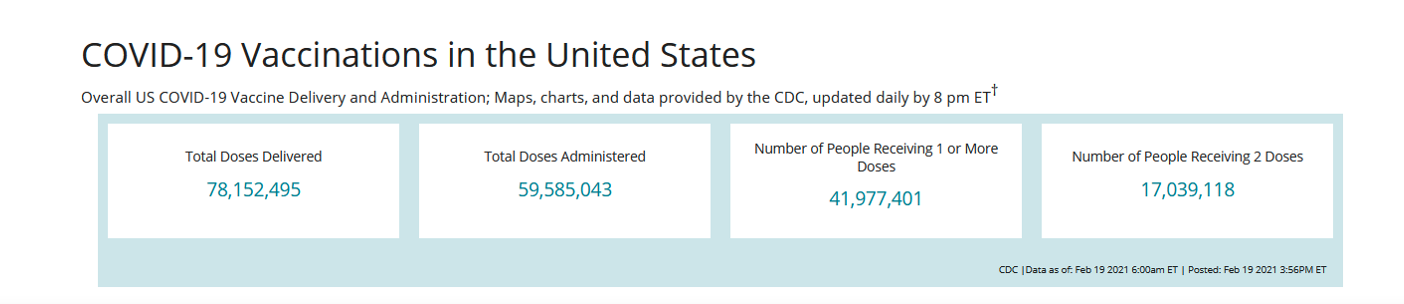
:: Overall US COVID-19 Vaccine Distribution and Administration Update as of Fri, 19 Feb 2021 06:00:00 EST Friday, February 19, 2021


FDA
Vaccines and Related Biological Products Advisory Committee February 26, 2021 Meeting Announcement – 02/26/2021 – 02/26/2021
The committee will meet in open session to discuss EUA of the Janssen Biotech Inc. COVID-19 Vaccine for active immunization to prevent COVID-19 caused by SARS-CoV-2 in individuals 18 years and older.

Vaccines and Related Biological Products Advisory Committee March 5, 2021 Meeting Announcement – 03/05/2021 – 03/05/2021
The Committee will meet in open session to discuss and make recommendations on the selection of strains to be included in the influenza virus vaccines for the 2021 – 2022 influenza season.

White House [U.S.]
Briefing Room
Fact Sheet: President Biden Announces New Actions to Expand and Improve COVID-19 Testing
February 17, 2021 • Statements and Releases
As the virus continues to spread throughout the world, and with new variants emerging, the facts are clear that it is critical that we vaccinate as many people as possible, as quickly as possible. Tomorrow at the G7, the President will announce that he is taking concrete steps to improve the health and the safety of Americans by protecting vulnerable populations worldwide. He will also call on G7 partners to prioritize a sustainable health security financing mechanism aimed at catalyzing countries to build the needed capacity to end this pandemic and prevent the next one.

COVID has shown us that no nation can act alone in the face of a pandemic. Today, President Biden is taking action to support the world’s most vulnerable and protect Americans from COVID-19.

Using money appropriated by a bipartisan Congressional vote in December 2020, the United States will provide an initial $2 billion contribution to Gavi, the Vaccine Alliance for the COVAX Advance Market Commitment, the innovative financing instrument of the COVAX Facility, which supports access to safe and effective vaccines for 92 low- and middle-income economies.

The United States will also take a leadership role in galvanizing further global contributions to COVAX by releasing an additional $2 billion through 2021 and 2022, of which the first $500 million will be made available when existing donor pledges are fulfilled and initial doses are delivered to AMC countries. In close cooperation with Gavi, this additional $2 billion in funding will serve to expand COVAX’s reach.  We also call on our G7 and other partners to work alongside Gavi, to bring in billions more in resources to support global COVID-19 vaccination, and to target urgent vaccine manufacturing, supply, and delivery needs.

Finally, at the G7 President Biden will reaffirm the U.S. commitment to global health security and advancing the Global Health Security Agenda.  All countries should have the capability to prevent, detect, and respond to outbreaks.  The COVID-19 pandemic and ongoing outbreaks of Ebola in the Democratic Republic of the Congo and Guinea highlight the need for sustainable health security financing to catalyze country capacity to prevent biological catastrophes…

Statement by National Security Advisor Jake Sullivan
February 13, 2021
The mission of the World Health Organization (WHO) has never been more important, and we have deep respect for its experts and the work they are doing every day to fight the COVID-19 pandemic and advance global health and health security. That is why President Biden rejected and reversed the Trump Administration’s decision to disengage from the WHO. But re-engaging the WHO also means holding it to the highest standards.  And at this critical moment, protecting the WHO’s credibility is a paramount priority. We have deep concerns about the way in which the early findings of the COVID-19 investigation were communicated and questions about the process used to reach them. It is imperative that this report be independent, with expert findings free from intervention or alteration by the Chinese government. To better understand this pandemic and prepare for the next one, China must make available its data from the earliest days of the outbreak. Going forward, all countries, including China, should participate in a transparent and robust process for preventing and responding to health emergencies — so that the world learns as much as possible as soon as possible.

Remarks by President Biden at Pfizer Manufacturing Site
February 19, 2021 • Statements and Releases

Press Briefing by White House COVID-19 Response Team and Public Health Officials
February 19, 2021 • Press Briefings

Fact Sheet: President Biden to Take Action on Global Health through Support of COVAX and Calling for Health Security Financing
February 18, 2021 • Statements and Releases

Press Briefing by White House COVID-19 Response Team and Public Health Officials
February 17, 2021 • Press Briefings

Statement by White House Press Secretary Jen Psaki on Cases of Ebola
February 16, 2021 • Statements and Releases

Europe: COVID-19 Vaccines – Announcements/Regulatory Actions/Deployment

Featured Journal Content


Europe: COVID-19 Vaccines – Announcements/Regulatory Actions/Deployment


News: EMA receives application for conditional marketing authorisation of COVID-19 Vaccine Janssen
Last updated: 16/02/2021
EMA has received an application for conditional marketing authorisation (CMA) for a COVID-19 vaccine developed by Janssen-Cilag International N.V.
EMA’s human medicines committee (CHMP) will assess the vaccine, known as COVID-19 Vaccine Janssen, under an accelerated timetable. The Committee could issue an opinion by the middle of March 2021, provided the company’s data on the vaccine’s efficacy, safety and quality are sufficiently comprehensive and robust.
Such a short time for evaluation is only possible because EMA has already reviewed some data during a rolling review

Russia: COVID-19 Vaccines – Announcements/Regulatory Actions/Deployment

Featured Journal Content


Russia: COVID-19 Vaccines – Announcements/Regulatory Actions/Deployment


Russia: Sputnik V – “the first registered COVID-19 vaccine”
https://sputnikvaccine.com/newsroom/pressreleases/
Press Releases
Sputnik V granted emergency use authorization in Ghana
Press release, 20.02.2021
The vaccine was approved under the emergency use authorization procedure. Ghana has become the 31st country in the world and 5th state of Africa to register Sputnik V.

Sputnik V authorized in 30 countries
Press release, 19.02.2021
Sputnik V had been approved earlier in Russia, Belarus, Argentina, Bolivia, Serbia, Algeria, Palestine, Venezuela, Paraguay, Turkmenistan, Hungary, UAE, Iran, Republic of Guinea, Tunisia, Armenia, Mexico, Nicaragua, Republika Srpska (entity of Bosnia and Herzegovina), Lebanon, Myanmar, Pakistan, Mongolia, Bahrain, Montenegro, Saint Vincent and the Grenadines, Kazakhstan, Uzbekistan and Gabon and San Marino.

Sputnik V authorized in Gabon
Press release, 17.02.2021

Sputnik V certified in Uzbekistan
Press release, 17.02.2021

China: COVID-19 Vaccines – Announcements/Regulatory Actions/Deployment

Featured Journal Content


China: COVID-19 Vaccines – Announcements/Regulatory Actions/Deployment

China promotes global vaccine equity
Updated: 2021-02-19 | CHINA DAILY
Nation uses its strength in production chains to help boost capacity, FM says
China is contributing its fair share to help ease the global shortfall in COVID-19 vaccines as it expands assistance to countries in dire need, advances vaccine-related cooperation with eligible partners, boosts vaccine exports and gears up production.
Concerns are lingering globally about the widening gap between immunity and development around the world as high-income nations acquire more doses of vaccine than poorer countries, observers and international health agencies have warned.
China has offered COVID-19 vaccine assistance to 53 developing countries at their request, and it has exported or is exporting vaccines to 22 nations, State Councilor and Foreign Minister Wang Yi said.
The nation has also been using its strength in production chains to help other countries manufacture vaccines in China or locally in order to boost global production capacity, Wang said on Wednesday via video link at a United Nations Security Council open briefing on ensuring equitable access to vaccines.
During the Spring Festival holiday, China delivered vaccine shipments to seven countries.
Leaders of countries such as Hungary greeted the shipments’ arrival at airports and expressed heartfelt thanks to China, Foreign Ministry spokeswoman Hua Chunying said at a daily news conference in Beijing on Thursday.
China has never sought geopolitical advantage in carrying out international cooperation on COVID-19 vaccines, never calculated any economic gains and never attached any political conditions, Wang said…

Selected Announcements: COVID-19 Vaccines – Announcements/Regulatory Actions/Deployment

Featured Journal Content


Selected Announcements: COVID-19 Vaccines – Announcements/Regulatory Actions/Deployment

ICMRA COVID-19 Virus Variants Workshop
Co-chairs: Marion Gruber (FDA, US) and Marco Cavaleri (EMA, EU)
International Coalition of Medicines Regulatory Authorities [ICMRA]
10 February 2021
… The ICMRA works hop was organised in light of the possible spread of these new variants globally and the need to consider rapid updates of current vaccines. The objectives were to discuss current surveillance activities to monitor the spread of the variants, and minimal elements of data that would be required to swiftly approve updated versions of available vaccines against emerging variants of SARS-CoV-2…
[Excerpt]
3. Vaccines: Possible minimal requirements for regulatory approval, or updated versions, of already-approved vaccines
The focus of the discussion was on the generation of monovalent vaccines containing the spike protein from an emerging variant recognized to pose a significant public health threat because it has shown to escape immunity from current vaccines.  Multivalent vaccines against SARS-CoV-2 variants were not considered in this workshop.


There was consensus that large safety and efficacy studies, similar to those required for initial approval of COVID-19 vaccines, are not feasible and would not be compatible with the timeframe for a rapid regulatory decision responsive to public health needs.

Authorization under emergency use approval and approval of variant COVID-19 vaccines against a SARS-CoV-2 variant expressing the spike protein and made by the same manufacturer and process as the prototype COVID-19 vaccine shown to be safe and effective in clinical trials, could be considered based on clinical data bridging the immune response of the variant vaccine to the prototype parent vaccine for which efficacy has been demonstrated in clinical disease endpoint efficacy studies.

Assuming that much of the manufacturing process and controls, as well as the facilities for vaccine production, for the variant COVID-19 vaccine would be identical to that of the prototype COVID-19 vaccine and depending on platform specific aspects, data to be generated may be confined to critical aspect of product characterization, potency assay and stability.

In general, it was agreed that additional non-clinical safety studies would not be required. Data derived from animal challenge/protection studies in a relevant model could be considered supportive. However, clinical immunogenicity and safety data would provide primary evidence for determining the suitability of the variant vaccines.

Inference of efficacy would need to be supported by conducting clinical non-inferiority immunogenicity studies comparing the immune responses induced by a variant COVID-19 vaccine against the SARS-CoV-2 variant of concern to the immune responses induced by the prototype vaccine for which clinical studies demonstrated efficacy and when administered according to the authorized dose and dosing regimen.

Studies in seronegative adults showing non-inferiority after a primary series of the new variant vaccine against the variant strains compared to prototype vaccine against ancestral strain were discussed as critical evidence for inferring efficacy of the variant vaccine.


In addition, booster studies would provide evidence to support the use of the variant vaccine when administered as a booster to individuals who were already vaccinated with the prototype vaccine as a primary series according to the authorized dose and dosing regimen. In this case, one option would be to demonstrate non-inferiority of the variant booster response against the variant strain versus the immune response of the primary series of the prototype vaccine against the ancestral strain.

As no correlate of protection for COVID-19 vaccines has been established to date, immune markers best suited for inferring protection were briefly discussed. The majority view was that neutralizing antibodies would constitute the most suitable immune marker for conducting immuno-bridging studies despite the complexity of comparing results from assays against different strains.

T-cell responses are considered an important component of the immune response elicited by different vaccines contributing to protection, but it would not be feasible to measure them due to lack of currently available validated assays.

The size of the studies would be driven by pre-specified statistical success criteria and endpoints.  Safety data should be collected covering both solicited and unsolicited adverse events as part of the immunogenicity studies. The safety of the variant vaccine would likely not differ significantly from that of the prototype, however, should unexpected safety signals arise, the safety database may have to be extended.


The importance of post-authorization studies evaluating safety and effectiveness of the variant COVID-19 vaccines was stressed…

Emergencies

Emergencies

POLIO
Public Health Emergency of International Concern (PHEIC)

Polio this week as of 17 February 2021
:: “The polio programme brought women out into the workforce in an unprecedented way, says Dr. Olayinka. “Women were powerful mobilizers, particularly older, respected women and could enter any home. The polio programme was one of the first programmes bringing the women out, training them how to speak to other women and community members, which gave them a standing in the community. They also received some stipends which empowered them a bit financially.” Read more in our latest “Women Leaders in Polio Eradication” series.

Summary of new WPV and cVDPV viruses this week (AFP cases and ES positives):
:: Afghanistan: 1 cVDPV2 case and five cVDPV2 positive environmental samples
:: Pakistan: four WPV1 positive environmental samples
:: Côte d’Ivoire: one cVDPV2 case
:: Democratic Republic of the Congo (DR Congo): two cVDPV2 cases
:: Egypt: two cVDPV2 positive environmental samples
:: Ethiopia: three cVDPV2 cases
:: Kenya: one cVDPV2 positive environmental sample
:: Mali: one cVDPV2 case
:: Sudan: one cVDPV2 case and three cVDPV2 positive environmental samples
:: Tajikistan: one cVDPV2 case

::::::

Statement of the Twenty-Seventh Polio IHR Emergency Committee
19 February 2021 Statement
[Excerpts]
The twenty-seventh meeting of the Emergency Committee under the International Health Regulations (2005) (IHR) on the international spread of poliovirus was convened by the WHO Director-General on 1 February 2021 with committee members and advisers attending via video conference, supported by the WHO Secretariat.  The Emergency Committee reviewed the data on wild poliovirus (WPV1) and circulating vaccine derived polioviruses (cVDPV).  The following IHR States Parties provided an update at the video conference on the current situation in their respective countries: Afghanistan, Burkina Faso, the Republic of the Congo, Côte d’Ivoire, Egypt, the Islamic Republic of Iran, Liberia, Madagascar, Mali, Sierra Leone and Pakistan and Tajikistan…

…COVID-19
The committee was concerned that COVID-19 continues to have an impact on polio eradication at many levels.  Many of the polio affected countries are currently experiencing a second wave of COVID-19, notably Malaysia, Pakistan and Nigeria. Although resumption of SIAs is now a major focus of the polio program the effect of the pause in 2020 and the current second wave will hamper this resumption. There are ongoing signs of the impact of COVID-19 on surveillance, particularly with slow shipment and handling and reporting of samples for polio testing.   All these factors serve to heighten the risk of polio transmission.

The committee noted that since the beginning of the pandemic, the value of polio-funded staff and assets contributed to the COVID-19 response in more than 50 countries is estimated at USD $104 million. In view of the overwhelming public health imperative to end the COVID-19 pandemic, the POB has committed to the polio program’s continued support for the next phase of COVID-19 response, COVID-19 vaccine introduction and delivery, through existing assets, infrastructure and expertise in key geographies.

Conclusion
The Committee unanimously agreed that the risk of international spread of poliovirus remains a Public Health Emergency of International Concern (PHEIC) and recommended the extension of Temporary Recommendations for a further three months.  The Committee recognizes the concerns regarding the lengthy duration of the polio PHEIC, but concludes that the current situation is extraordinary, with clear ongoing and increasing risk of international spread and ongoing need for coordinated international response. The Committee considered the following factors in reaching this conclusion:

…Additional considerations
The committee welcomed the Emergency Use Listing of novel OPV2 but cautioned there was much to be done before the new vacccine could be expected to have a significant impact globally on the spread of cVDPV2. The phased replacement during 2021 of Sabin OPV2 with novel OPV2 is expected to substantially reduce the source of cVDPV2 emergence, transmission and subsequent risk of international spread.  Full licensure and pre-qualification of nOPV2 is not expected before 2022; therefore all countries at risk of cVDPV2 outbreak should consider preparing for novel OPV2 use under Emergency Use Listing procedure.

The committee welcomed the progress being made in individual countries that were facing huge challenges with both polio and COVID-19.  COVID-19 is also likely to continue to have a significant adverse impact on stopping polio transmission throughout 2021, with diversion of resources, barriers to successful polio campaign implementation and the consequential growing immunity gap.  However, the committee urged countries to look for where synergies can be built between polio and COVID -19 control, such as countering vaccine hesitancy, expanding and sharing testing resources, and vaccine management.  Countries also needed to make sure that local lockdowns and border restrictions were implemented in such a way as to avoid hampering specimen shipment and testing, particularly in West Africa where there are already constraints in lab capacity.  As testing for COVID-19 is strengthened, this should be done so as to strengthen lab capacity for other infectious diseases such as polio.  The committee urges affected countries to strengthen cross border cooperation as this appeared to be inconsistently carried out.

The committee also noted the risk of vaccine hesitancy could be exacerbated during the pandemic, so that adverse events during the development or future deployment of any COVID-19 vaccine could compound the existing issues around polio vaccines, particularly but not only in Pakistan.  Conversely, vaccine issues arising out of novel OPV2 or trivalent OPV use could adversely affect any future COVID-19 vaccine deployment.  The committee urged countries with particular issues around vaccine hesitancy to make preparations now to avert situations of greater vaccine refusals through education campaigns, activities to counter misinformation and rumors and wherever possible provide incentives to target populations such as multi-antigen campaigns and offering other health and wellbeing services (vitamins, anti-worming medication, soap etc).

The committee was also very concerned about the polio program funding gap which is developing in 2021 and beyond, noting several countries in Africa had been adversely affected by funding constraints.  The committee called on donors to maintain funding of polio eradication activities, as the potential for reversal of progress appears high, with many years of work undone easily and swiftly if WPV1 spreads outside the endemic countries.

Noting the serious situation in Afghanistan, the committee welcomed the recent agreement regarding mosque to mosque vaccination campaign activities but urged using multiple vaccines to avoid outbreaks of other vaccine preventable diseases such as measles.

Based on the current situation regarding WPV1 and cVDPV, and the reports provided by affected countries, the Director-General accepted the Committee’s assessment and on 19 February 2021 determined that the situation relating to poliovirus continues to constitute a PHEIC, with respect to WPV1 and cVDPV… 

::::::
::::::

WHO/OCHA Emergencies

Editor’s Note:
Continuing with this edition, we include information about the last apparent update evident on the WHO emergency country webpages, recognizing almost universal and significant interims since last update regardless of the level of the emergency listed.

WHO Grade 3 Emergencies [to 20 Feb 2021]

Democratic Republic of the Congo – No new digest announcements [Last apparent update: 12 Jan 2021]
Mozambique floods – No new digest announcements identified [Last apparent update: 3 November 2020]
Nigeria – No new digest announcements identified [Last apparent update: 29 Jun 2020]
Somalia – No new digest announcements identified [Last apparent update: 17 July 2020]
South Sudan – No new digest announcements identified [Last apparent update: 4 February 2020]
Syrian Arab Republic – No new digest announcements identified [Last apparent update: 24 October 2020]
Yemen – No new digest announcements identified [Last apparent update: 30 June 2020]

::::::

WHO Grade 2 Emergencies [to 20 Feb 2021]
Afghanistan – No new digest announcements identified [Last apparent update: 5 July 2020]
Angola – No new digest announcements identified [Last apparent update: 03 December 2020]
Burkina Faso – No new digest announcements identified [Last apparent update 04 février 2021]
Burundi – No new digest announcements identified [Last apparent update: 04 July 2019]
Cameroon – No new digest announcements identified [Last apparent update: 22 August 2019]
Central African Republic – No new digest announcements identified [Last apparent update: 12 June 2018]
Ethiopia – No new digest announcements identified [Last apparent update: 22 August 2019]
Iran floods 2019 – No new digest announcements identified [Last apparent update: 12 March 2020]
Iraq – No new digest announcements identified [Last apparent update: 16 December 2020]
Libya – No new digest announcements identified [Last apparent update: 7 October 2019]
Malawi Floods – No new digest announcements identified [Last apparent update: 09 October 2019]
Measles in Europe – No new digest announcements identified [Last apparent update: 16-12-2020]
MERS-CoV – No new digest announcements identified [Last apparent update: 8 July 2019]
Mozambique – No new digest announcements identified [Last apparent update: 03 November 2020]
Myanmar No new digest announcements identified [Last apparent update: :: 3 January 2021
Niger – No new digest announcements identified [Last apparent update: 11 février 2021]
occupied Palestinian territory – No new digest announcements identified [Last apparent update: 4 September 2019]
HIV in Pakistan – No new digest announcements identified [Last apparent update: 27 August 2019]
Sao Tome and Principe Necrotizing Cellulitis (2017) – No new digest announcements
Sudan – No new digest announcements identified [Last apparent update: 24 June 2020]
Ukraine – No new digest announcements identified [Last apparent update: 1 May 2019]
Zimbabwe – No new digest announcements identified [Last apparent update: 10 May 2019]

::::::

WHO Grade 1 Emergencies [to 20 Feb 2021]

Chad – No new digest announcements identified [Last apparent update: 30 June 2018]
Djibouti – No new digest announcements identified [Last apparent update: 25 novembre 2020]
Kenya – No new digest announcements identified [Last apparent update: 11 December 2020]
Mali – No new digest announcements identified [Last apparent update: 3 May 2017]
Namibia – viral hepatitis – No new digest announcements identified [Last apparent update: 20 July 2018]
Tanzania – No new digest announcements identified [Last apparent update: 21 October 2020]

::::::
::::::

UN OCHA – L3 Emergencies
The UN and its humanitarian partners are currently responding to three ‘L3’ emergencies. This is the global humanitarian system’s classification for the response to the most severe, large-scale humanitarian crises. 
Syrian Arab Republic
:: Syrian Arab Republic: COVID-19 Response Update No. 15 – 16 February 2021

Yemen – No new digest announcements identified

::::::

UN OCHA – Corporate Emergencies
When the USG/ERC declares a Corporate Emergency Response, all OCHA offices, branches and sections provide their full support to response activities both at HQ and in the field.
East Africa Locust Infestation
:: Desert Locust situation update 16 February 2021

COVID-19 – No new digest announcements identified

::::::
::::::

WHO & Regional Offices [to 20 Feb 2021]

WHO & Regional Offices [to 20 Feb 2021]

20 February 2021 Statement
WHO Director-General’s statement on Tanzania and COVID-19

19 February 2021 News release
World Waking Up To Vaccine Equity

19 February 2021 Statement
Statement of the Twenty-Seventh Polio IHR Emergency Committee

19 February 2021 News release
G7 leaders commit US$ 4.3 billion to finance global equitable access to tests, treatments and vaccines in 2021

18 February 2021 Departmental news
From paper to digital pathway: WHO launches first ‘SMART Guidelines’

17 February 2021 Departmental news
WHO announces updates on new molecular assays for the diagnosis of tuberculosis (TB) and drug resistance

16 February 2021 Joint News Release
COVAX Statement on WHO Emergency Use Listing for AstraZeneca/Oxford COVID-19 Vaccine

16 February 2021 Departmental news
WHO launches consolidated guidelines for malaria

16 February 2021 Departmental news
Consultation: Draft Global Strategy on WASH and NTDs 2021−2030

15 February 2021 Departmental news
Taeniasis: large-scale treatment shows interesting and far-reaching results

15 February 2021 News release
WHO lists two additional COVID-19 vaccines for emergency use and COVAX roll-out

15 February 2021 Departmental news
WHO launches new tools to help countries build effective childhood cancer programmes


::::::

WHO Regional Offices
Selected Press Releases, Announcements
WHO African Region AFRO
No new digest content identified

WHO Region of the Americas PAHO
No new digest content identified

WHO South-East Asia Region SEARO
No new digest content identified

WHO European Region EURO
:: Overcoming COVID-19 and its collateral effects 19-02-2021
:: WHO reviews effect of physical activity on enhancing academic achievement at school 18-02-2021
:: New assessment shows high risk of introduction and spread from fur farming of the virus that causes COVID-19 17-02-2021
:: Aron Anderson – Cancer Ambassador for WHO/Europe 16-02-2021
:: Meet Florence, WHO’s digital health worker who can help you quit tobacco 15-02-2021

WHO Eastern Mediterranean Region EMRO
:: WHO Regional Director’s statement for virtual press briefing, 15 February
15 February 2021 – More than one year after the first case of COVID-19 was reported in our Region, the situation remains critical. Almost six million people have been infected, and almost 140,000 people have tragically died. In our Region, where people and health systems are constantly ravaged by conflict, natural disasters, and disease outbreaks, this virus has stretched us all…
:: Occupied Palestinian territory and Tunisia notified of indicative allocation of COVID-19 vaccine doses during first half of 2021 via COVAX Facility Cairo, 14 February 2021

WHO Western Pacific Region
:: Staying safe from COVID-19 during religious and cultural celebrations 16 February 2021

CDC/ACIP [U.S.] [to 20 Feb 2021]

CDC/ACIP [U.S.] [to 20 Feb 2021]
http://www.cdc.gov/media/index.html
https://www.cdc.gov/vaccines/acip/index.html
Latest News Releases, Announcements
CDC MEDIA TELEBRIEFING: National Forum on COVID-19 Vaccine
What: The Centers for Disease Control and Prevention (CDC) is hosting a virtual National Forum on COVID-19 Vaccine for vaccine practitioners and champions.
When: Monday, February 22 through Wednesday, February 24, 2021
Background: The forum supports the Biden-Harris Administration’s goals of mounting safe, effective, and comprehensive COVID-19 vaccine implementation strategies. It will facilitate information exchange and provide participants with practical information that can be applied in their communities.

ACIP Meeting – February 24-25, 2021
Virtual meeting. No registration is required.
Meeting time, 9:30am – 5:30pm EST
Webcast link: http://www.ustream.tv/channel/VWBXKBR8af4
Draft Agenda
Agenda references:
:: Rabies Vaccines
:: Dengue Vaccine
:: Ebola Vaccine
:: Hepatitis Vaccine
:: Pneumococcal Vaccines
:: Zoster Vaccines
:: Influenza Vaccines
:: Cholera Vaccine
:: Orthopoxviruses Vaccines

MMWR News Synopsis Friday, February 19, 2021
:: Decline in Receipt of Vaccines by Medicare Beneficiaries During the COVID-19 Pandemic — United States, 2020
After the COVID-19 emergency declaration in March 2020, weekly routine vaccination rates among Medicare beneficiaries declined by up to 89% compared with the same period in 2019. Vaccination providers should reassure patients that vaccination services can be delivered safely and emphasize the importance of routine vaccination to protect their health during the COVID-19 pandemic.
Investigators compared weekly rates of routine vaccination for four vaccines among Medicare beneficiaries during January 5–July 18, 2020 with rates from January 6–July 20, 2019. These include routine vaccines to protect against shingles, pneumococcal disease, tetanus, diphtheria, and whooping cough. The analysis found vaccination rates declined by up to 89% from 2019 to 2020 with similar declines across people from all racial/ethnic groups. However, adults from racial/ethnic minority groups had lower vaccination rates than did their white counterparts. When resuming in-person visits, vaccination providers should take actions to prevent the spread of COVID-19 and address patient concerns about exposure to COVID-19 during visits. Continued efforts by vaccination providers and public health officials will be needed to ensure routine vaccination rates among adults returns to pre-pandemic levels and to ensure protection of all older adults against vaccine-preventable diseases.

:: Care Outcomes Among Black or African American Persons with Diagnosed HIV in Rural, Urban, and Metropolitan Statistical Areas — 42 U.S. Jurisdictions, 2018
:: Trends in Use of Telehealth Among Health Centers During the COVID-19 Pandemic — United States, June 26–November 6, 2020
:: Required and Voluntary Occupational Use of Hazard Controls for COVID-19 Prevention in Non–Health Care Workplaces — United States, June 2020
:: Maximizing Fit for Cloth and Medical Procedure Masks to Improve Performance and Reduce SARS-CoV-2 Transmission and Exposure, 2021 (Early Release February 10, 2021)

Coronavirus Disease 2019 (COVID-19)- CDC

Coronavirus Disease 2019 (COVID-19)– CDC
Selected Resources
:: EARLY RELEASE: First Month of COVID-19 Vaccine Safety Monitoring – United States, December 14, 2020-January 13, 2021 Friday, February 19, 2021
:: Overall US COVID-19 Vaccine Distribution and Administration Update as of Fri, 19 Feb 2021 06:00:00 EST Friday, February 19, 2021
:: When Vaccine is Limited, Who Gets Vaccinated First? Friday, February 19, 2021
:: EARLY RELEASE: Detection of B.1.351 SARS-CoV-2 Variant Strain – Zambia, December 2020 Wednesday, February 17, 2021
:: EARLY RELEASE: First Identified Cases of SARS-CoV-2 Variant B.1.1.7 in Minnesota – December 2020-January 2021 Wednesday, February 17, 2021
:: How CDC is responding to SARS-CoV-2 variants globally Tuesday, February 16, 2021

China CDC

China CDC
http://www.chinacdc.cn/en/
No new digest content identified.

National Health Commission of the People’s Republic of China [to 20 Feb 2021]
http://en.nhc.gov.cn/
News
Feb 20: Daily briefing on novel coronavirus cases in China
On Feb 19, 31 provincial-level regions and the Xinjiang Production and Construction Corps on the Chinese mainland reported 8 new cases of confirmed infections

China promotes global vaccine equity
Updated: 2021-02-19 | CHINA DAILY
Nation uses its strength in production chains to help boost capacity, FM says
China is contributing its fair share to help ease the global shortfall in COVID-19 vaccines as it expands assistance to countries in dire need, advances vaccine-related cooperation with eligible partners, boosts vaccine exports and gears up production…
[See China above for detail]

Head of WHO-led team says mission to Wuhan successful
2021-02-14
The WHO’s animal disease expert Peter Ben Embarek, who heads the WHO-led team to China, said the mission to study the origin of the virus had been successful, and the team had gained a better understanding of what happened in Wuhan in December 2019.

National Medical Products Administration – PRC [to 20 Feb 2021]
http://english.nmpa.gov.cn/news.html
News
Chinese mainland reports no new locally transmitted COVID-19 cases
2021-02-20
The Chinese mainland reported no new locally transmitted COVID-19 cases on Feb 19, the National Health Commission said Saturday.

Organization Announcements

Organization Announcements


Paul G. Allen Frontiers Group [to 20 Feb 2021]
https://alleninstitute.org/what-we-do/frontiers-group/news-press/
News
No new digest content identified.


BARDA – U.S. Department of HHS [to 20 Feb 2021]
https://www.phe.gov/about/barda/Pages/default.aspx
BARDA News
No new digest content identified.


BMGF – Gates Foundation [to 20 Feb 2021]
http://www.gatesfoundation.org/Media-Center/Press-Releases
Press Releases and Statements
No new digest content identified.


Bill & Melinda Gates Medical Research Institute [to 20 Feb 2021]
https://www.gatesmri.org/
The Bill & Melinda Gates Medical Research Institute is a non-profit biotech organization. Our mission is to develop products to fight malaria, tuberculosis, and diarrheal diseases—three major causes of mortality, poverty, and inequality in developing countries. The world has unprecedented scientific tools at its disposal; now is the time to use them to save the lives of the world’s poorest people
No new digest content identified.


CARB-X [to 20 Feb 2021]
https://carb-x.org/
News
No new digest content identified.


Center for Vaccine Ethics and Policy – GE2P2 Global Foundation [to 20 Feb 2021]
https://centerforvaccineethicsandpolicy.net/
News/Analysis/Statements
Past weekly editions of Vaccines and Global Health: The Week in Review are available here.


CEPI – Coalition for Epidemic Preparedness Innovations [to 20 Feb 2021]
http://cepi.net/
Latest News
New infectious disease R&D grant opportunity launches for Canadian researchers
18 Feb 2021
By Jodie Rogers
CEPI and the Canadian Institutes of Health Research Institute of Infection and Immunity (CIHR-III), one of the 13 virtual institutes of Canada’s federal funding agency for health research, CIHR, have today launched the CIHR-CEPI Leadership Award for Excellence in Vaccine Research for Infectious Diseases of Epidemic Potential funding opportunity.
The award is a new two-year grant funding opportunity for up to six independent mid-career researchers in Canada to pursue projects—co-developed alongside CEPI—to expedite the development of vaccines against emerging infectious diseases, including COVID-19. The Request for Applications is now available on the CIHR-III website in English and in French...

COVAX Statement on WHO Emergency Use Listing for AstraZeneca/Oxford COVID-19 Vaccine
Geneva / New York / Oslo – 16 February 2021 The Coalition for Epidemic Preparedness Innovations (CEPI), Gavi, the Vaccine Alliance (Gavi), and the World Health Organization (WHO), as co-leads of the COVAX initiative for equitable global access to COVID-19 vaccines, alongside key delivery partner UNICEF, are pleased to welcome the news that two versions of the AstraZeneca/Oxford COVID-19 vaccine have been given WHO Emergency Use Listing (EUL). Yesterday’s announcement means that two versions of the AstraZeneca/Oxford vaccine, produced by AstraZeneca-SK Bioscience (AZ-SKBio) and the Serum Institute of India (AZ-SII), are now available for global rollout through the COVAX Facility…


DARPA – Defense Advanced Research Projects Agency [to 20 Feb 2021
https://www.darpa.mil/
News
No new digest content identified.

Duke Global Health Innovation Center [to 20 Feb 2021]
https://dukeghic.org/
Launch and Scale Speedometer
No new digest content identified.


EDCTP [to 20 Feb 2021]
http://www.edctp.org/
The European & Developing Countries Clinical Trials Partnership (EDCTP) aims to accelerate the development of new or improved drugs, vaccines, microbicides and diagnostics against HIV/AIDS, tuberculosis and malaria as well as other poverty-related and neglected infectious diseases in sub-Saharan Africa, with a focus on phase II and III clinical trials
No new digest content identified.


Emory Vaccine Center [to 20 Feb 2021]
http://www.vaccines.emory.edu/
Vaccine Center News
No new digest content identified.


European Commission [to 20 Feb 2021]
http://europa.eu/rapid/search-result.htm?query=18&locale=en&page=1
Latest
Press release 19 February 2021
G7: EU to support COVID-19 vaccination strategies and capacity in Africa
The President of the European Commission, Ursula von der Leyen, has announced today €100 million in humanitarian assistance to support the rollout of vaccination campaigns in Africa, which are spearheaded by the Africa Centres for Disease Control and Prevention (Africa CDC).

Press release 19 February 2021
New EU project to support readiness for vaccination efforts and resilient health systems in the Western Balkans
The European Union in partnership with the World Health Organisation (WHO) has launched a new regional project worth over €7 million to support safe and effective vaccination of the populations across the Western Balkans.

Press release 19 February 2021
EU doubles contribution to COVAX to €1 billion to ensure safe and effective vaccines for low and middle-income countries
The European Union has announced today an additional €500 million for the COVAX Facility, doubling its contribution to date for the global initiative that is leading efforts to secure fair and equitable access to safe and effective COVID-19 vaccines in low and middle-income countries.

News 17 February 2021
Von der Leyen announces the start of HERA Incubator to anticipate the threat of coronavirus variants
The HERA Incubator will bring together science, industry and public authorities, and leverage all available resources to enable Europe to respond to this challenge.

Press release 17 February 2021
Coronavirus: Commission approves second contract with Moderna to ensure up to additional 300 million doses
Today, the European Commission approved a second contract with the pharmaceutical company Moderna, which provides for an additional purchase of 300 million doses (150 million in 2021 and an option to purchase an additional 150 million in 2022) on behalf of all EU Member States.


European Medicines Agency [to 20 Feb 2021]
http://www.ema.europa.eu/ema/
News & Press Releases
News: EMA receives application for conditional marketing authorisation of COVID-19 Vaccine Janssen
Last updated: 16/02/2021
EMA has received an application for conditional marketing authorisation (CMA) for a COVID-19 vaccine developed by Janssen-Cilag International N.V.
EMA’s human medicines committee (CHMP) will assess the vaccine, known as COVID-19 Vaccine Janssen, under an accelerated timetable. The Committee could issue an opinion by the middle of March 2021, provided the company’s data on the vaccine’s efficacy, safety and quality are sufficiently comprehensive and robust.
Such a short time for evaluation is only possible because EMA has already reviewed some data during a rolling review


European Vaccine Initiative [to 20 Feb 2021]
http://www.euvaccine.eu/
Latest News
EVI
17 Feb 2021
EVI to lead Immune Monitoring in pan-European vaccine trial network, VACCELERATE
EVI to lead Immune Monitoring in pan-European vaccine trial network, VACCELERATE, as part of €150 million EU investment in research to counter coronavirus variants.
The European Commission announced today a €150 million investment for research to counter coronavirus variants. As part this “European Health Emergency Preparedness and Response Authority (HERA) Incubator” programme, Horizon 2020 funding will support the rapid establishment of a new EU-wide vaccine trial network called VACCELERATE. The grant agreement was signed today between representatives of the VACCELERATE consortium and the European Commission.
VACCELERATE will receive a €12 million grant and involves 26 partners, including the European Vaccine Initiative (EVI), in 16 Member States (AT, BE, CY, DE, DK, EL, ES, FR, IE, IT, LT, NL, PL, PT, SE, SK) and 5 associated countries (CH, IL, NO, RS, TR). VACCELERATE network, led by University Hospital Cologne, will act as a single entry point for vaccine developers, including SMEs, who are looking for European infrastructure to carry out vaccine trials. The consortium will work closely with the European Medicines Agency (EMA) to enable clinical trials for COVID-19 vaccines and prepare Europe for other emerging infectious diseases in the future.
EVI will have a key role in the project by leading the immune monitoring activities, which will focus on compiling, standardizing and prioritizing a comprehensive catalogue of immunological and genetic assays for COVID-19 vaccines. This will involve close collaboration with consortium partners as well as with other initiatives and networks that strive to standardise assessment of COVID-19 vaccines…


FDA [to 20 Feb 2021]
https://www.fda.gov/NewsEvents/Newsroom/PressAnnouncements/default.htm
Press Announcements /Selected Details
:: February 19, 2021 – Coronavirus (COVID-19) Update: February 19, 2021


:: February 18, 2021 – COVID-19 Update: USDA, FDA Underscore Current Epidemiologic and Scientific Information Indicating No Transmission of COVID-19 Through Food or Food Packaging


:: February 16, 2021 – Coronavirus (COVID-19) Update: February 16, 2021


FDA – COVID-19 Vaccines [to 20 Feb 2021]
www.fda.gov/covid19vaccines
News and Updates; Upcoming Events
No new digest content identified.


Fondation Merieux [to 20 Feb 2021]
http://www.fondation-merieux.org/
News, Events
Mérieux Foundation co-organized event
MERACON: Returning to rabies elimination in 2021 webinar
February 26, 2021 – 9:00am -12:00pm (CET)
Context
The COVID-19 pandemic has hampered global travel and has placed a strain on public health systems globally. Because of this, many rabies activities were postponed or cancelled in 2020. Similarly, the planned in-person regional MERACON workshop that was initially scheduled for mid-2020 was postponed to 2021. As a means to continue remote support, foster collaboration and continue to drive progress towards rabies elimination in the MERACON countries, the MERACON steering committee has scheduled a digital meeting in webinar format. This webinar will act as a precursor to a more detailed workshop later in the year which we hope to host in-person (COVID-19 restrictions permitting).


Gavi [to 20 Feb 2021]
https://www.gavi.org/
News Releases
G7 backs Gavi’s COVAX Advance Market Commitment to boost COVID-19 vaccines in world’s poorest countries
19 February 2021

Gavi signs memorandum of understanding with Novavax on behalf of COVAX Facility
18 February 2021

COVAX Statement on WHO Emergency Use Listing for AstraZeneca/Oxford COVID-19 Vaccine
16 February 2021
[See COVID above for detail on these announcements]


GHIT Fund [to 20 Feb 2021]
https://www.ghitfund.org/newsroom/press
GHIT was set up in 212 with the aim of developing new tools to tackle infectious diseases that
Press Releases
No new digest content identified.


Global Fund [to 20 Feb 2021]
https://www.theglobalfund.org/en/news/
News & Stories
No new digest content identified.


Global Research Collaboration for Infectious Disease Preparedness [GloPID-R] [to 20 Feb 2021]
https://www.glopid-r.org/news/
News
No new digest content identified.


Hilleman Laboratories [to 20 Feb 2021]
http://www.hillemanlabs.org/
No new digest content identified.


Human Vaccines Project [to 20 Feb 2021]
http://www.humanvaccinesproject.org/media/press-releases/
Press Releases
Science, 19 FEBRUARY 2021 • VOL 371 ISSUE 6531
Editorial: A univer sal coronavirus vaccine
Wayne C . Koffi, chief executive officer of the Human Vaccines Project; Seth Berkley, chief executive officer of Gavi, The Vaccine Alliance, Geneva, Switzerland.
[See COVID above for detail]


IAVI [to 20 Feb 2021]
https://www.iavi.org/newsroom
PRESS RELEASES/FEATURES
No new digest content identified.


International Coalition of Medicines Regulatory Authorities [ICMRA]
http://www.icmra.info/drupal/en/news
Selected Statements, Press Releases, Research
ICMRA COVID-19 Virus Variants Workshop
10 February 2021
Co-chairs: Marion Gruber (FDA, US) and Marco Cavaleri (EMA, EU)
[See COVID above for detail]


International Generic and Biosimilar Medicines Association [IGBA]
https://www.igbamedicines.org/
*News
Press Releases/Announcements
No new digest content identified.


IFFIm
http://www.iffim.org/
Press Releases/Announcements
No new digest content identified.


IFRC [to 20 Feb 2021]
http://media.ifrc.org/ifrc/news/press-releases/
Selected Press Releases, Announcements
Kazakhstan
Kazakhstan: IFRC and Red Crescent launch bot to counter COVID misinformation
A social media chatbot has been launched in an innovative bid to share accurate, trusted information in a country with one of the world’s highest rates of vaccine hesitancy
19 February 2021

UN Security Council session on COVID-19: IFRC warns of combined dangers of mistrust and vaccine inequity
17 February 2021
[See COVID above for detail]

Africa, Guinea
Ebola outbreak in Guinea: Red Cross calls for a response that is “faster than the virus”
A network of more than 700 trained Red Cross volunteers has been activated as part of a first wave of response to the new Ebola outbreak in the rural community of Gouéké in Guinea’s N’Zerekore prefecture.
15 February 2021


Institut Pasteur [to 20 Feb 2021]
https://www.pasteur.fr/en/press-area
Press release 18.02.2021
Improving immunotherapies for blood cancers: real-time exploration in the tumor
Monoclonal antibodies are part of the therapeutic arsenal for eliminating cancer cells. Some make use of the immune…


IRC International Rescue Committee [to 20 Feb 2021]
http://www.rescue.org/press-release-index
Media highlights [Selected]
Press Release
IRC joins #FirstRespondersFirst initiative to help humanitarian staff manage the psychological toll of responding to COVID-19 on the frontlines
February 18, 2021

Press Release
As new Ebola outbreaks emerge in the DRC and Guinea, the IRC calls for swift action and funding for frontline aid agencies to stop the spread
February 15, 2021


IVAC [to 20 Feb 2021]
https://www.jhsph.edu/research/centers-and-institutes/ivac/index.html
Updates; Events
No new digest content identified.


IVI [to 20 Feb 2021]
http://www.ivi.int/
Selected IVI News, Announcements, Events
No new digest content identified.


JEE Alliance [to 20 Feb 2021]
https://www.jeealliance.org/
Selected News and Events
No new digest content identified.


Johns Hopkins Center for Health Security [to 20 Feb 2021]
https://www.centerforhealthsecurity.org/news/center-news/
Center News
Health Security Releases Special Feature on Infodemics
February 19, 2021

New Report: Staying Ahead of the Variants: Policy Recommendations to Identify and Manage Current and Future Variants of Concern
February 16, 2021
The Johns Hopkins Center for Health Security released a new report on the status of SARS-CoV-2 surveillance, sequencing, and variant characterization and actions the U.S. government should take to increase capacity to respond to new virus variants.
The 3 new concerning variants of SARS-CoV-2 could make the virus spread more easily or make therapeutics and vaccines for COVID-19 less effective. And as the pandemic unfolds, more variants will emerge and spread…
PDF: https://www.centerforhealthsecurity.org/our-work/publications/staying-ahead-of-the-variants


MSF/Médecins Sans Frontières [to 20 Feb 2021]
http://www.msf.org/
Latest [Selected Announcements]
Guinea
Five questions on the Ebola outbreak in Guinea
Interview 19 Feb 2021

Coronavirus COVID-19 pandemic
Southern Africa needs the right COVID-19 vaccines, at the right price – right now
Press Release 18 Feb 2021

Myanmar
MSF concerned for welfare of healthcare workers and people in Myanmar
Statement 17 Feb 2021

Iraq
Severe COVID-19 patients in Iraq “were almost sure to die”
Project Update 16 Feb 2021


National Vaccine Program Office – U.S. HHS [to 20 Feb 2021]
https://www.hhs.gov/vaccines/about/index.html
Upcoming Meetings/Latest Updates
NVAC Meeting – February 4-5, 2021
Agenda


NIH [to 20 Feb 2021]
http://www.nih.gov/news-events/news-releases
News Releases
To end HIV epidemic, we must address health disparities
February 19, 2021 — Expert report cites unequal progress in Southern U.S. and among marginalized groups.

NIH funds study to evaluate remdesivir for COVID-19 in pregnancy
February 17, 2021 — The study will be conducted at 17 sites in the continental United States and Puerto Rico.


PATH [to 20 Feb 2021]
https://www.path.org/media-center/
Press Releases
No new digest content identified.


Sabin Vaccine Institute [to 20 Feb 2021]
http://www.sabin.org/updates/pressreleases
Statements and Press Releases
No new digest content identified.


UNAIDS [to 20 Feb 2021]
http://www.unaids.org/en
Selected Press Releases/Reports/Statements
15 February 2021
Félix Tshisekedi, President of the Democratic Republic of the Congo and 2021 African Union Chair, calls on his peers to learn from HIV and strengthen health systems

15 February 2021
Tuberculosis testing gap among people living with HIV is narrowing


UNHCR Office of the United Nations High Commissioner for Refugees [to 20 Feb 2021]
http://www.unhcr.org/en-us/media-centre.htmlS
Selected Announcements
Humanitarian agencies seek US$222 million to support Burundian refugees
16 February 2021

UNHCR alarmed at armed atrocities in eastern DR Congo
This is a summary of what was said by UNHCR spokesperson Babar Baloch – to whom quoted text may be attributed – at today’s press briefing at the Palais des Nations in Geneva.
16 February 2021


UNICEF [to 20 Feb 2021]
https://www.unicef.org/media/press-releases
Selected Press releases, Statements
No new digest content identified.


Unitaid [to 20 Feb 2021]
https://unitaid.org/
Featured News
19 February 2021
Germany contributes €20 million to Unitaid’s vital work on COVID-19
…The funding from Germany will contribute to the realisation of key aspects of the new ACT-Accelerator Therapeutics Partnership strategy (co-led by Unitaid and Wellcome), including advancing research on new treatments for COVID-19, ensuring affordable supplies and country preparedness so that low- and middle-income countries are able to use treatments effectively, further allowing for the procurement of proven treatments, as and when they become available….

19 February 2021
Unitaid welcomes the appointment of Dr. Ngozi Okonjo-Iweala to lead WTO


Vaccination Acceptance Research Network (VARN) [to 20 Feb 2021]
https://vaccineacceptance.org/news.html#header1-2r
Announcements
No new digest content identified.


Vaccine Confidence Project [to 20 Feb 2021]
http://www.vaccineconfidence.org/
News, Research and Reports
No new digest content identified.


Vaccine Education Center – Children’s Hospital of Philadelphia [to 20 Feb 2021]
http://www.chop.edu/centers-programs/vaccine-education-center
News
No new digest content identified.


Wellcome Trust [to 20 Feb 2021]
https://wellcome.ac.uk/news
News
Explainer
What are human infection studies and why do we need them?
Human infection studies (also known as human challenge trials and controlled human infection models) have the power to rapidly accelerate the development of much-needed vaccines and treatments, including for Covid-19.
18 February 2021

Opinion
We’re backing the AMR Action Fund – this is what it means for antibiotic innovation
Wellcome joins a new collaboration of private and philanthropic partners in the search for new antibiotics to treat drug-resistant infections. Tim Jinks explains why this is important and why the next move needs to come from governments.
17 February 2021


The Wistar Institute [to 20 Feb 2021]
https://www.wistar.org/news/press-releases
Press Releases
No new digest content identified.


WFPHA: World Federation of Public Health Associations [to 20 Feb 2021]
https://www.wfpha.org/
Latest News
No new digest content identified.


World Bank [to 20 Feb 2021]
http://www.worldbank.org/en/news/all
Selected News, Announcements
How COVID-19 is Affecting Companies Around the World
Date: February 17, 2021 Type: Infographic
Almost a year into the pandemic, nearly every business in the world has been affected by COVID-19, but performance has varied widely, even within countries and industries. Data collected through the World Bank firm surveys offer some glimpses into why, and how this may be relevant for policy.

Statement of Mr. Ferid Belhaj, Vice President of the Middle East and North Africa Region, The World Bank: Launch of the National COVID-19 Vaccine Campaign in Lebanon
As prepared for delivery
Date: February 14, 2021 Type: Statement


World Organisation for Animal Health (OIE) [to 20 Feb 2021]
https://www.oie.int/en/for-the-media/press-releases/2021/
Press Releases
No new digest content identified.


::::::


ARM [Alliance for Regenerative Medicine] [to 20 Feb 2021]
Press Releases – Alliance for Regenerative Medicine (alliancerm.org)
Press Releases
No new digest content identified.


BIO [to 20 Feb 2021]
https://www.bio.org/press-releases
Press Releases
Fresh Perspective for BIO Operations, Sustainability
BIO taps MN biotech leader, Shaye Mandle, as new Chief Operating Officer
February 16, 2021
Washington, D.C.  – As the Biotechnology Innovation Organization (BIO) continues to restructure for a stronger and reinvigorated future, the organization announced new leadership for operations and sustainability. Shaye Mandle was named Chief Operating Officer (COO), effective March 1, 2021…


DCVMN – Developing Country Vaccine Manufacturers Network [to 20 Feb 2021]
http://www.dcvmn.org/
News; Upcoming events
16 February 2021
WHO lists two COVID-19 vaccines from DCVMN members for emergency use


ICBA – International Council of Biotechnology Associations [to 20 Feb 2021]
https://internationalbiotech.org/news/
News
No new digest content identified.


IFPMA [to 20 Feb 2021]
http://www.ifpma.org/resources/news-releases/
Selected Press Releases, Statements, Publications
The AMR Action Fund announces appointment of CEO, Henry B. Skinner, PhD
18 February 2021
Dr. Skinner will help ensure the AMR Action Fund achieves its mission to bring two to four new antibiotics to patients by the end of the decade and facilitate needed long-term policy solutions
FEBRUARY 18, 2021, BOSTON, MA — Today, the AMR Action Fund announced the appointment of its first Chief Executive Officer (CEO), Henry B. Skinner, PhD. The AMR Action Fund (www.AMRactionfund.com) is a ground-breaking partnership that was launched in July 2020 by more than 20 leading pharmaceutical companies. It aims to invest over US$1 billion to strengthen and accelerate clinical research of innovative new antibiotics that are addressing the most resistant bacteria and life-threatening infections, as well as provide technical support to biotech companies developing assets in this field. The AMR Action Fund is the largest collaborative venture ever created to address antimicrobial resistance (AMR)…

The AMR Action Fund announces its first non-industry investments, raising an additional US$140 million toward
18 February 2021
The AMR Action Fund, launched in July 2020, aims to bring 2 to 4 new antibiotics to patients by the end of the decade and facilitate needed long-term solutions
FEBRUARY 18, 2021, BOSTON — Today, the AMR Action Fund announced its first initial close with non-pharmaceutical industry investments of more than US$140 million from the Boehringer Ingelheim Foundation, the European Investment Bank (supported by the European Commission), and the Wellcome Trust. This adds to the initial investment from more than 20 leading biopharmaceutical companies that established the Fund as announced in July 2020. With this significant financial commitment from global foundations and development banks, the AMR Action Fund becomes the world’s largest public-private partnership supporting the development of new antibiotics. It demonstrates the type of commitment and collaboration across sectors that is urgently needed to address the global threat of antibiotic-resistant infections – also called antimicrobial resistance, or AMR…

Global Principles on Incentivizing Antibiotic R&D
IFPMA Policy Position :: 15 February 2021 :: 11 pages
PDF: https://www.ifpma.org/wp-content/uploads/2021/02/IFPMA-Global-Principles-on-Incentivizing-Antibiotic-RD.pdf
[Excerpt]
…We therefore call on all countries to take steps now to deliver a clear implementation roadmap by the end of 2021, make meaningful progress in implementation by 2023, and ensure full and effective implementation by 2025 at the latest of:
[1] New economic incentives, giving confidence to the private sector to invest in R&D at the level needed to create a robust antibiotic pipeline.
[2] Bespoke valuation of antibiotics, assessing and recognizing the full value antibiotics deliver to society and correcting their current under-valuation.
[3] Reimbursement reforms, to maintain availability of antibiotics on the market and to enable patient access to the most appropriate antibiotic to treat or prevent their infection.
While the solutions to these challenges will look different in different countries – there is no ‘one size fits all’ – this supportive policy framework is necessary to drive long-term investments in innovative antibiotics, throughout the discovery, development, and product lifecycle. In this paper, we propose a set of principles and models to establish such a framework, and we make an urgent call to Governments to drive these reforms to implementation, thereby delivering on recent G7 and G20 commitments..


PhRMA [to 20 Feb 2021]
http://www.phrma.org/
Selected Press Releases, Statements
The latest: What they are saying: Intellectual property protections vital to COVID-19 research, development and manufacturing
February 12, 2021
Strong and reliable IP protections – including patents – have supported America’s robust innovation ecosystem by promoting discovery, development, affordability and access to new treatments and cures. As our industry continues to expand vaccine production and deliver medicines to patients in need, reliable IP protections have been critical in supporting multiple research and development and manufacturing ramp-ups on COVID-19 vaccines and therapeutics. Innovators need strong and reliable IP protections to research, develop and manufacture new therapeutics and vaccines that will improve patients’ lives during the current pandemic and beyond…
Blog Post
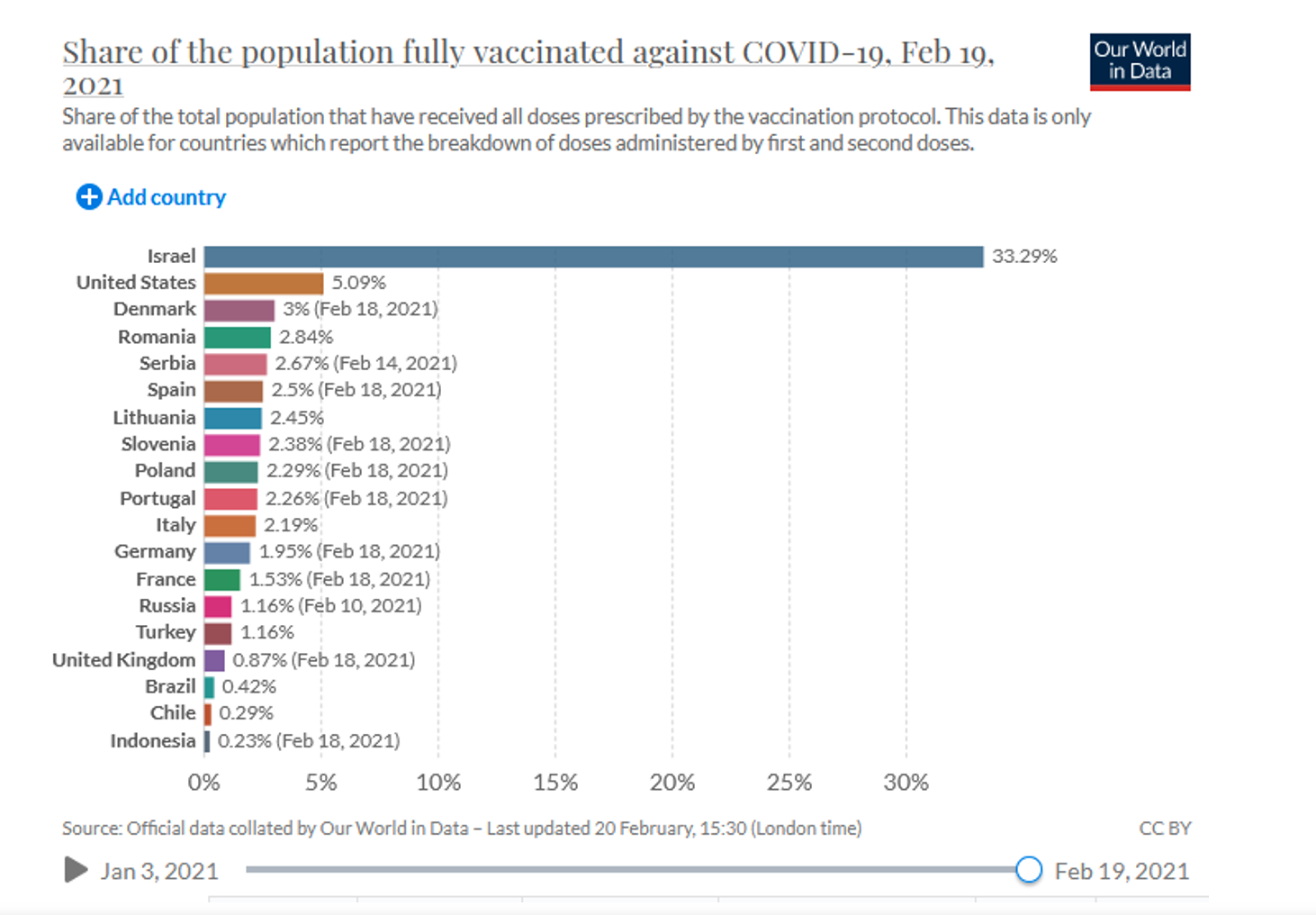
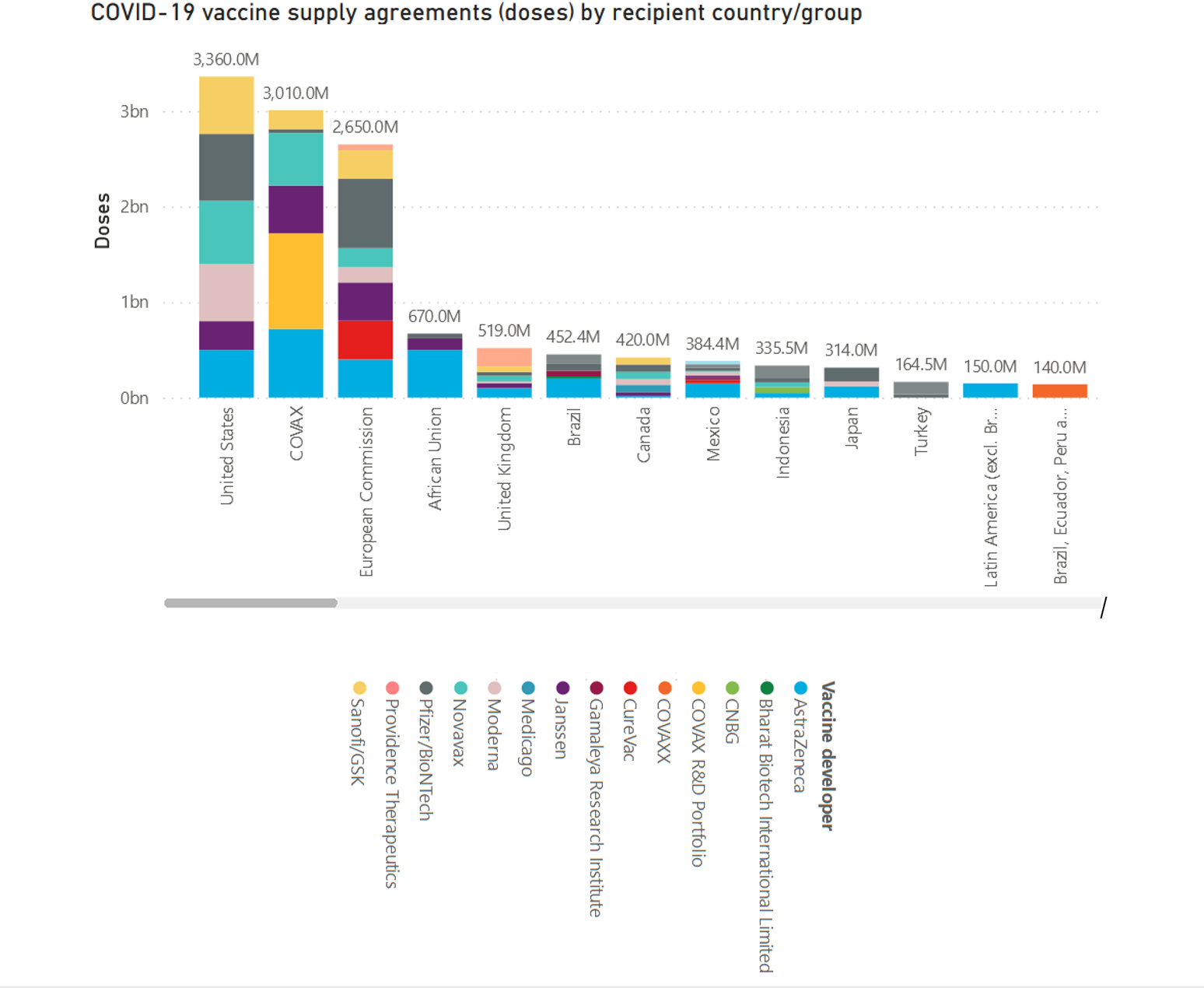
Journal Watch

Journal Watch
Vaccines and Global Health: The Week in Review continues its weekly scanning of key peer-reviewed journals to identify and cite articles, commentary and editorials, books reviews and other content supporting our focu-s on vaccine ethics and policy. Journal Watch is not intended to be exhaustive, but indicative of themes and issues the Center is actively tracking. We selectively provide full text of some editorial and comment articles that are specifically relevant to our work. Successful access to some of the links provided may require subscription or other access arrangement unique to the publisher.
If you would like to suggest other journal titles to include in this service, please contact David Curry at: david.r.curry@centerforvaccineethicsandpolicy.org

Racial and Ethnic Health Equity in the US: Part 1

AMA Journal of Ethics
Volume 23, Number 2: E83-211 Feb 2021
https://journalofethics.ama-assn.org/issue/racial-and-ethnic-health-equity-us-part-1


Racial and Ethnic Health Equity in the US: Part 1
Health equity is defined by the World Health Organization as the “absence of unfair and avoidable or remediable differences in health among social groups.” Domestically and globally, health inequity is not a historical accident. Inequity today is not unfortunate—that is, not a product of a mere turn of the proverbial cosmic wheel—but unjust—that is, generated by colonial, White supremacist policies and practices structured and maintained over time, forged to persist in hierarchies that serve some of us, our ancestors, and our descendants well and some of us, our ancestors, and our descendants ill. This first of a 2-part theme issue focuses specifically on racial and ethnic inequity in morbidity, mortality, and access to services that are endemic to American life. We investigate health inequity as a product of transgenerational patterns of oppression that must be remediated by all of us compassionately and more deliberately and quickly than they were created.

Should Remdesivir Be Used for the Treatment of Patients With COVID-19? Rapid, Living Practice Points From the American College of Physicians (Version 1)

Annals of Internal Medicine
February 2021 Volume 174, Issue 2
http://annals.org/aim/issue


Clinical Guidelines
Should Remdesivir Be Used for the Treatment of Patients With COVID-19? Rapid, Living Practice Points From the American College of Physicians (Version 1)
FREE
Amir Qaseem, MD, PhD, MHA, Jennifer Yost, RN, PhD, Itziar Etxeandia-Ikobaltzeta, PharmD, PhD,
… et al.

Artificial intelligence for good health: a scoping review of the ethics literature

BMC Medical Ethics
http://www.biomedcentral.com/bmcmedethics/content
(Accessed 20 Feb 2021)


Research article
Artificial intelligence for good health: a scoping review of the ethics literature
Authors: Kathleen Murphy, Erica Di Ruggiero, Ross Upshur, Donald J. Willison, Neha Malhotra, Jia Ce Cai, Nakul Malhotra, Vincci Lui and Jennifer Gibson
15 February 2021
Artificial intelligence (AI) has been described as the “fourth industrial revolution” with transformative and global implications, including in healthcare, public health, and global health. AI approaches hold promise for improving health systems worldwide, as well as individual and population health outcomes. While AI may have potential for advancing health equity within and between countries, we must consider the ethical implications of its deployment in order to mitigate its potential harms, particularly for the most vulnerable. This scoping review addresses the following question: What ethical issues have been identified in relation to AI in the field of health, including from a global health perspective?

Cost-effectiveness of pneumococcal vaccines among adults over 50 years old in low- and middle-income countries: a systematic review

Expert Review of Vaccines
Vol 19 (12) 2020
https://www.tandfonline.com/toc/ierv20/current


Cost-effectiveness of pneumococcal vaccines among adults over 50 years old in low- and middle-income countries: a systematic review
Yixue Shao & Charles Stoecker
Pages: 1141-1151
Published online: 22 Jan 2021

A framework for preferred practices in conducting culturally competent health research in a multicultural society

Health Research Policy and Systems
http://www.health-policy-systems.com/content
[Accessed 20 Feb 2021]


A framework for preferred practices in conducting culturally competent health research in a multicultural society
Improving the health and well-being of the whole population requires that health inequities be addressed. In an era of unprecedented international migration, meeting the health care needs of growing multicultu…
Authors: Lisa Woodland, Ilse Blignault, Cathy O’Callaghan and Ben Harris-Roxas
Citation: Health Research Policy and Systems 2021 19:24
Content type: Research
Published on: 18 February 2021
Abstract
Background
Improving the health and well-being of the whole population requires that health inequities be addressed. In an era of unprecedented international migration, meeting the health care needs of growing multicultural or multiethnic societies presents major challenges for health care systems and for health researchers. Considerable literature exists on the methodological and ethical difficulties of conducting research in a cross-cultural context; however, there is a need for a framework to guide health research in multicultural societies.
Methods
The framework was informed by “research on research” that we have undertaken in community and primary health care settings in Sydney, Australia. Case studies are presented as illustrative examples.
Results
We present a framework for preferred practices in conducting health research that is culturally informed, high-quality, safe, and actionable.
Conclusions
The framework is not intended to be universal, however many of its aspects will have relevance for health research generally. Application of the framework for preferred practices could potentially make health research more culturally competent, thus enabling enhanced policies, programmes and practices to better meet population health needs. The framework needs to be further tested and refined in different contexts.

Disability inclusion in humanitarian action

Humanitarian Exchange Magazine
Number 78, October 2020
https://odihpn.org/magazine/inclusion-of-persons-with-disabilities-in-humanitarian-action-what-now/


Disability inclusion in humanitarian action
by HPN October 2020
The theme of this edition of Humanitarian Exchange, co-edited with Sherin Alsheikh Ahmed from Islamic Relief Worldwide, is disability inclusion in humanitarian action. Persons with disabilities are not only disproportionately impacted by conflicts, disasters and other emergencies, but also face barriers to accessing humanitarian assistance. At the same time, global commitments and standards and the IASC Guidelines on the inclusion of persons with disabilities in humanitarian action all emphasise how persons with disabilities are also active agents of change. Disability and age-focused organisations have led on testing and demonstrating how inclusion can be done better. Yet despite this progress, challenges to effective inclusion remain.

As Kirstin Lange notes in the lead article, chief among these challenges is humanitarian agencies’ lack of engagement with organisations of persons with disabilities. Simione Bula, Elizabeth Morgan and Teresa Thomson look at disability inclusion in humanitarian response in the Pacific, and Kathy Al Jubeh and Alradi Abdalla argue for a ‘participation revolution’, building on learning from the gender movement. Tchaurea Fleury and Sulayman AbdulMumuni Ujah outline how the Bridge Article 11 training initiative is encouraging constructive exchange between humanitarian and disability actors. The lack of good, disaggregated data is highlighted by Sarah Collinson; Frances Hill, Jim Cranshaw and Carys Hughes emphasise the need for training resources in local languages and accessible formats; and Sophie Van Eetvelt and colleagues report on a review of the evidence on inclusion of people with disabilities and older people.

Rebecca Molyneux and co-authors analyse the findings of a review of a DFID programme in north-east Nigeria, while Carolin Funke highlights the importance of strategic partnerships between disability-focused organisations, drawing on her research in Cox’s Bazar. Sherin Alsheikh Ahmed describes Islamic Relief Worldwide’s approach to mainstreaming protection and inclusion, while Pauline Thivillier and Valentina Shafina outline IRC’s Client Responsive Programming. The edition ends with reflections by Mirela Turcanu and Yves Ngunzi Kahashi on CAFOD’s SADI approach.

Declining Life Expectancy in the United StatesThe Need for Social Policy as Health Policy

JAMA
February 16, 2021, Vol 325, No. 7, Pages 605-702
https://jamanetwork.com/journals/jama/currentissue


Health Policy
Declining Life Expectancy in the United StatesThe Need for Social Policy as Health Policy
Atheendar S. Venkataramani, MD, PhD; Rourke O’Brien, PhD; Alexander C. Tsai, MD, PhD
free access
JAMA. 2021;325(7):621-622. doi:10.1001/jama.2020.26339
This Viewpoint reviews the social and economic drivers of declines in longevity in the US, especially among lower socioeconomic status groups, and proposes policy options for the Biden-Harris administration to mitigate the trend, including an increase in the federally mandated minimum wage.

Recalibrating the Use of Race in Medical Research

JAMA
February 16, 2021, Vol 325, No. 7, Pages 605-702
https://jamanetwork.com/journals/jama/currentissue


Recalibrating the Use of Race in Medical Research
John P. A. Ioannidis, MD, DSc; Neil R. Powe, MD, MPH, MBA; Clyde Yancy, MD, MSc
free access has audio
JAMA. 2021;325(7):623-624. doi:10.1001/jama.2021.0003
This Viewpoint reviews the way race has been used and misused in medical research and urges careful consideration by investigators of how its use might ameliorate or worsen health inequalities.

Race and Pharmacogenomics—Personalized Medicine or Misguided Practice?

JAMA
February 16, 2021, Vol 325, No. 7, Pages 605-702
https://jamanetwork.com/journals/jama/currentissue


Race and Pharmacogenomics—Personalized Medicine or Misguided Practice?
Christopher W. Goodman, MD; Allan S. Brett, MD
free access
JAMA. 2021;325(7):625-626. doi:10.1001/jama.2020.25473
This Viewpoint uses examples of recommendations for race-based pharmacogenetic testing to discuss flaws and inconsistencies with race and ethnicity as surrogates for biology, and the consequences of those deficiencies for clinical decision-making.

Clinical Trials of Broadly Neutralizing Monoclonal Antibodies for Human Immunodeficiency Virus Prevention: A Review

Journal of Infectious Diseases
Volume 223, Issue 3, 1 February 2021
https://academic.oup.com/jid/issue/223/3


REVIEWS
Clinical Trials of Broadly Neutralizing Monoclonal Antibodies for Human Immunodeficiency Virus Prevention: A Review
Sharana Mahomed, Nigel Garrett, Cheryl Baxter, Quarraisha Abdool Karim, Salim S Abdool Karim
The Journal of Infectious Diseases, Volume 223, Issue 3, 1 February 2021, Pages 370–380, https://doi.org/10.1093/infdis/jiaa377
The use of broadly neutralizing antibodies (bnAbs) is a promising approach that could help reduce the human immunodeficiency virus (HIV) epidemic burden. This review describes the status and available data on bnAbs in clinical trials for HIV prevention.

Guillain-Barré Syndrome After High-Dose Influenza Vaccine Administration in the United States, 2018–2019 Season

Journal of Infectious Diseases
Volume 223, Issue 3, 1 February 2021
https://academic.oup.com/jid/issue/223/3


VIRUSES
Editor’s Choice
Guillain-Barré Syndrome After High-Dose Influenza Vaccine Administration in the United States, 2018–2019 Season
Silvia Perez-Vilar, Mao Hu, Eric Weintraub, Deepa Arya, Bradley Lufkin
The Journal of Infectious Diseases, Volume 223, Issue 3, 1 February 2021, Pages 416–425, https://doi.org/10.1093/infdis/jiaa543
Using VSD and Medicare data, we rapidly evaluated a potential association between the 2018–2019 high-dose influenza vaccine and GBS and determined that, if a risk existed, it was similar in magnitude to that from prior seasons.

A Comparative Analysis of the Knowledge and Stigmatizing Attitude of Ghanaians and Nigerians towards COVID-19 Survivors

Journal of Refugee & Global Health
Volume 4, Issue 1 (2021)
https://ir.library.louisville.edu/rgh/


Original Research
A Comparative Analysis of the Knowledge and Stigmatizing Attitude of Ghanaians and Nigerians towards COVID-19 Survivors
Emmanuel Lamptey, Dorcas Serwaa, Maxwell Hubert Antwi, Theckla Ikome Ms, and Nkechi Odogwu

Safety and efficacy of an rAd26 and rAd5 vector-based heterologous prime-boost COVID-19 vaccine: an interim analysis of a randomised controlled phase 3 trial in Russia

The Lancet
Feb 20, 2021 Volume 397 Number 10275 p641-766
https://www.thelancet.com/journals/lancet/issue/current

Articles
Safety and efficacy of an rAd26 and rAd5 vector-based heterologous prime-boost COVID-19 vaccine: an interim analysis of a randomised controlled phase 3 trial in Russia
Denis Y Logunov, and the Gam-COVID-Vac Vaccine Trial Group