The epidemiological impact of the NHS COVID-19 app

Nature
Volume 594 Issue 7863, 17 June 2021
https://www.nature.com/nature/volumes/594/issues/7863


Article | 12 May 2021
The epidemiological impact of the NHS COVID-19 app
Statistical analysis of COVID-19 transmission among users of a smartphone-based digital contact-tracing app suggests that such apps can be an effective measure for reducing disease spread.
Chris Wymant, Luca Ferretti, Christophe Fraser

Integrated vaccination and physical distancing interventions to prevent future COVID-19 waves in Chinese cities

Nature Human Behaviour
Volume 5 Issue 6, June 2021
https://www.nature.com/nathumbehav/volumes/5/issues/6


Article | 18 February 2021
Integrated vaccination and physical distancing interventions to prevent future COVID-19 waves in Chinese cities
Vaccination combined with physical distancing can suppress resurgences without relying on stay-at-home restrictions. To achieve herd immunity, cities with a higher population density require more stringent physical distancing measures with longer durations.
Bo Huang, Jionghua Wang, Shengjie Lai

Anti-intellectualism and the mass public’s response to the COVID-19 pandemic

Nature Human Behaviour
Volume 5 Issue 6, June 2021
https://www.nature.com/nathumbehav/volumes/5/issues/6


Article | 28 April 2021
Anti-intellectualism and the mass public’s response to the COVID-19 pandemic
Merkley and Loewen find that anti-intellectualism (distrust in experts and intellectuals) is linked to COVID-19 (mis)perceptions, compliance with public health directives and information search using survey and experimental data from Canada.
Eric Merkley, Peter John Loewen

Health systems resilience in managing the COVID-19 pandemic: lessons from 28 countries

Nature Medicine
Volume 27 Issue 6, June 2021
https://www.nature.com/nm/volumes/27/issues/6


Review Article | 17 May 2021
Health systems resilience in managing the COVID-19 pandemic: lessons from 28 countries
A review of COVID-19 responses in 28 selected countries identifies elements of highly effective public health responses and offers recommendations toward strengthening health systems resilience.
Victoria Haldane, Chuan De Foo, Helena Legido-Quigley

COVID-19 dynamics after a national immunization program in Israel

Nature Medicine
Volume 27 Issue 6, June 2021
https://www.nature.com/nm/volumes/27/issues/6


Article | 19 April 2021
COVID-19 dynamics after a national immunization program in Israel
A retrospective analysis of data from the Israeli Ministry of Health collected between 28 August 2020 and 24 February 2021 documents the real-life effect of a national vaccination campaign on the pandemic dynamics.
Hagai Rossman, Smadar Shilo, Eran Segal

Timeliness of routine childhood vaccination in low- and middle-income countries, 1978–2021: Protocol for a scoping review to map methodologic gaps and determinants

PLoS One
http://www.plosone.org/
[Accessed 19 Jun 2021]


Timeliness of routine childhood vaccination in low- and middle-income countries, 1978–2021: Protocol for a scoping review to map methodologic gaps and determinants
Oghenebrume Wariri, Uduak Okomo, Yakubu Kevin Kwarshak, Kris A. Murray, Chris Grundy, Beate Kampmann
Study Protocol | published 17 Jun 2021 PLOS ONE
https://doi.org/10.1371/journal.pone.0253423

Policy liberalism and source of news predict pandemic-related health behaviors and trust in the scientific community

PLoS One
http://www.plosone.org/
[Accessed 19 Jun 2021]


Policy liberalism and source of news predict pandemic-related health behaviors and trust in the scientific community
Madeleine Reinhardt, Matthew B. Findley, Renee A. Countryman
Research Article | published 17 Jun 2021 PLOS ONE
https://doi.org/10.1371/journal.pone.0252670

COVID-19 vaccine prioritization of incarcerated people relative to other vulnerable groups: An analysis of state plans

PLoS One
http://www.plosone.org/
[Accessed 19 Jun 2021]


COVID-19 vaccine prioritization of incarcerated people relative to other vulnerable groups: An analysis of state plans
Rachel Strodel, Lauren Dayton, Henri M. Garrison-Desany, Gabriel Eber, Chris Beyrer, Joyell Arscott, Leonard Rubenstein, Carolyn Sufrin
Research Article | published 15 Jun 2021 PLOS ONE
https://doi.org/10.1371/journal.pone.0253208

Factors driving choices between types and brands of influenza vaccines in general practice in Austria, Italy, Spain and the UK

PLoS One
http://www.plosone.org/
[Accessed 19 Jun 2021]


Factors driving choices between types and brands of influenza vaccines in general practice in Austria, Italy, Spain and the UK
Anke L. Stuurman, Sara Ciampini, Alfredo Vannacci, Antonino Bella, Caterina Rizzo, Cintia Muñoz-Quiles, Elisabetta Pandolfi, Harshana Liyanage, Mendel Haag, Monika Redlberger-Fritz, Roberto Bonaiuti, Philippe Beutels
Research Article | published 15 Jun 2021 PLOS ONE
https://doi.org/10.1371/journal.pone.0252836

What we know about effective public engagement on CRISPR and beyond

PNAS – Proceedings of the National Academy of Sciences of the United States of America
June 01, 2021; vol. 118 no. 22
https://www.pnas.org/content/118/21


Social Sciences
What we know about effective public engagement on CRISPR and beyond
Dietram A. Scheufele, Nicole M. Krause, Isabelle Freiling, and Dominique Brossard
PNAS June 1, 2021 118 (22) e2004835117; first published April 30, 2021. https://doi.org/10.1073/pnas.2004835117

Setting ethical limits on human gene editing after the fall of the somatic/germline barrier

PNAS – Proceedings of the National Academy of Sciences of the United States of America
June 01, 2021; vol. 118 no. 22
https://www.pnas.org/content/118/21


Setting ethical limits on human gene editing after the fall of the somatic/germline barrier
John H. Evans
PNAS June 1, 2021 118 (22) e2004837117; first published April 30, 2021. https://doi.org/10.1073/pnas.2004837117

Knowledge, attitudes, and practices of the general population about Coronavirus disease 2019 (COVID-19): a systematic review and meta-analysis with policy recommendations

Public Health
Volume 194 Pages 1-274 (May 2021)
https://www.sciencedirect.com/journal/public-health/vol/194/suppl/C


Review article Full text access
Knowledge, attitudes, and practices of the general population about Coronavirus disease 2019 (COVID-19): a systematic review and meta-analysis with policy recommendations
S. Saadatjoo, M. Miri, S. Hassanipour, H. Ameri, M. Arab-Zozani
Pages 185-195

Childhood immunization appointment reminders and recalls: strengths, weaknesses and opportunities to increase vaccine coverage

Public Health
Volume 194 Pages 1-274 (May 2021)
https://www.sciencedirect.com/journal/public-health/vol/194/suppl/C


Research article Open access
Childhood immunization appointment reminders and recalls: strengths, weaknesses and opportunities to increase vaccine coverage
K.M. Jong, C.A. Sikora, S.E. MacDonald
Pages 170-175

Recent scientific/intellectual movements in biomedicine

Social Science & Medicine
Volume 278 June 2021
https://www.sciencedirect.com/journal/social-science-and-medicine/vol/278/suppl/C


Research article Abstract only
Recent scientific/intellectual movements in biomedicine
Larry Au
Article 113950
Abstract
This study compares the trajectories of recent scientific/intellectual movements (SIMs) in biomedicine: evidence-based medicine, translational medicine, precision medicine, personalized medicine, stratified medicine, and genomic medicine. Drawing on bibliometric analysis of these six SIMs, this study identifies three patterns: field integration, niche creation, and disruptive insurgence. Field integration SIMs such as evidence-based medicine and translational medicine are characterized by centrality of key concept papers of the SIM in co-citation networks and dense institutional and country collaboration networks, signaling the resonance of the SIM to the broader biomedical community. In contrast, niche creation SIMs such as stratified medicine and genomic medicine are characterized by lower levels of annual scientific production, the lack centrality or connectivity of key concept papers in co-citation networks, and less density in collaboration networks. Disruptive insurgence SIMs such as precision medicine and personalized medicine are characterized by a high level of annual scientific production, driven by a smaller core of institutions and countries. This is likely a transitional stage as field disrupting SIMs can either become integrated with the broader field or become influential in niches. Proponents of the current push for precision medicine should ensure that a wide range of institutions and specialties be included while being mindful of the dominance of cancer and genomic approaches to health and medicine.

Timeliness, completeness, and timeliness-and-completeness of serial routine vaccinations among rural children in Southwest China: A multi-stage stratified cluster sampling survey

Vaccine
Volume 39, Issue 24 Pages 3225-3310 (2 June 2021)
https://www.sciencedirect.com/journal/vaccine/vol/39/issue/24


Research article Abstract only
Timeliness, completeness, and timeliness-and-completeness of serial routine vaccinations among rural children in Southwest China: A multi-stage stratified cluster sampling survey
Xian-Yan Tang, Xing-Xing Yan, Xue Wei, Qing-Lian Qin, … Qiao Li
Pages 3236-3249

Factors influencing Covid-19 vaccine acceptance across subgroups in the United States: Evidence from a conjoint experiment

Vaccine
Volume 39, Issue 24 Pages 3225-3310 (2 June 2021)
https://www.sciencedirect.com/journal/vaccine/vol/39/issue/24


Research article Full text access
Factors influencing Covid-19 vaccine acceptance across subgroups in the United States: Evidence from a conjoint experiment
S.E. Kreps, D.L. Kriner
Pages 3250-3258

COVID-19 Vaccine Hesitancy in a Representative Education Sector Population in Qatar

Vaccines — Open Access Journal
http://www.mdpi.com/journal/vaccines


(Accessed 19 Jun 2021)
Open Access Article
COVID-19 Vaccine Hesitancy in a Representative Education Sector Population in Qatar

Vaccines 2021, 9(6), 665; https://doi.org/10.3390/vaccines9060665 – 18 Jun 2021
Abstract
Even though vaccination programs have now started in earnest across the globe and in Qatar, vaccine hesitancy remains a barrier to effectively tackling the pandemic. Many factors influence willingness to take vaccines including safety, efficacy, and side effects. Given their proximity to research […]

Open Access Article
COVID-19 Vaccine Hesitancy and Its Associated Factors in Japan
by Ryo Okubo et al
Vaccines 2021, 9(6), 662; https://doi.org/10.3390/vaccines9060662 (registering DOI) – 17 Jun 2021
Abstract
The vaccine confidence index in Japan is one of the lowest worldwide. This study aimed to examine the proportion of COVID-19 vaccine hesitancy in the Japanese population using a larger sample and more robust statistical methods than previously, and to identify factors associated […]

COVID-19 Vaccine Hesitancy and Its Associated Factors in Japan

Vaccines — Open Access Journal
http://www.mdpi.com/journal/vaccines


Open Access Article
COVID-19 Vaccine Hesitancy and Its Associated Factors in Japan
by Ryo Okubo et al
Vaccines 2021, 9(6), 662; https://doi.org/10.3390/vaccines9060662 (registering DOI) – 17 Jun 2021
Abstract
The vaccine confidence index in Japan is one of the lowest worldwide. This study aimed to examine the proportion of COVID-19 vaccine hesitancy in the Japanese population using a larger sample and more robust statistical methods than previously, and to identify factors associated […]

A Comparison of Vaccine Hesitancy of COVID-19 Vaccination in China and the United States

Vaccines — Open Access Journal
http://www.mdpi.com/journal/vaccines


Open Access Article
A Comparison of Vaccine Hesitancy of COVID-19 Vaccination in China and the United States
by Taoran Liu et al
Vaccines 2021, 9(6), 649; https://doi.org/10.3390/vaccines9060649 – 14 Jun 2021
Abstract
Objectives: To investigate the differences in vaccine hesitancy and preference of the currently available COVID-19 vaccines between two countries, namely, China and the United States (U.S.). Method: A cross-national survey was conducted in both China and the United States, and discrete choice experiments, […]

Media/Policy Watch

Media/Policy Watch
This watch section is intended to alert readers to substantive news, analysis and opinion from the general media and selected think tanks and similar organizations on vaccines, immunization, global public health and related themes. Media Watch is not intended to be exhaustive, but indicative of themes and issues CVEP is actively tracking. This section will grow from an initial base of newspapers, magazines and blog sources, and is segregated from Journal Watch above which scans the peer-reviewed journal ecology.
We acknowledge the Western/Northern bias in this initial selection of titles and invite suggestions for expanded coverage. We are conservative in our outlook in adding news sources which largely report on primary content we are already covering above. Many electronic media sources have tiered, fee-based subscription models for access. We will provide full-text where content is published without restriction, but most publications require registration and some subscription level.
The sheer volume of vaccine and pandemic-related coverage is extraordinary. We will strive to present the most substantive analysis and commentary we encounter.


The Atlantic
http://www.theatlantic.com/magazine/
Accessed 19 Jun 2021
[No new, unique, relevant content]


BBC
http://www.bbc.co.uk/
Accessed 19 Jun 2021
[No new, unique, relevant content]


The Economist
http://www.economist.com/
Accessed 19 Jun 2021
Week in charts
Vaccines as the new oil

Just as, in the 1970s, economic fortunes turned on a single product, oil, so today they depend on a single all-important input, vaccines. America, despite its poor initial response to the pandemic, is poised for a boom. Elsewhere, delays in buying, making and deploying shots have left much of the world vulnerable to economic setbacks. Even in Britain, despite rapid vaccination, rising case numbers have forced a delay in reopening the economy. Around the world, it is the urban poor who have been worst-affected by the virus. In well-off Singapore, migrant workers living in dormitories have endured lengthy lockdowns. Latin America has been especially hard hit by covid-19 in terms of deaths, economic contraction and the closure of schools. In India, perhaps 2m people have died…


Financial Times
https://www.ft.com/
June 18, 2021
Palestinians call off vaccine swap deal with Israel
Heba Saleh in Cairo
The Palestinian Authority has cancelled a vaccine swap deal with Israel hours after the arrangement was announced by both the Israeli government and the Palestinian Health ministry.
Mai Alkaila, Palestinian health minister said at a press conference on Friday that health officials who inspected the vaccines found they “did not meet standards and so we decided to return them.”
The decision followed criticism on social media and by rights groups, who said the soon-to-expire vaccines would be unusable before the PA was able to fully utilise them.
Israel and the Palestinian Authority had announced earlier the Jewish state would transfer up to 1.4m soon-to-expire BioNTech/Pfizer vaccine doses in exchange for a similar number of Pfizer doses that Palestinians are expected to receive later this year
Top of Form
Bottom of Form


Forbes
http://www.forbes.com/
Accessed 19 Jun 2021
Breaking  | 4 hours ago
Brazil Is Now The 2nd Country With 500,000 Covid Deaths — And Infections Aren’t Slowing Down
Just 29% of Brazil’s population is partially vaccinated against the coronavirus.
By Joe Walsh Forbes Staff

Jun 17, 2021
China’s Sinovac Vaccine Under Scrutiny As Covid Soars In Highly Vaccinated Countries
The vaccine, which already had a low efficacy rate of 51%, may be of limited use against newer variants of the coronavirus.
By Robert Hart Forbes Staff

Jun 17, 2021
Why Parents At Indiana University Staged A Protest Against The School’s Vaccine Mandate
The protest was organized by a newly-formed group called IU Family for Choice, Not Mandates, which has some 1,300 members. The group’s president, Ann Dorris, says members’ chief concern is the potential adverse health effects of the vaccine.
By Madison Fernandez Contributor


Foreign Affairs
http://www.foreignaffairs.com/
Accessed 19 Jun 2021
[No new, unique, relevant content]


Foreign Policy
http://foreignpolicy.com/
Accessed 19 Jun 2021
Review
The First Draft Account of the U.K.’s COVID-19 Catastrophe Is Damning
A new book gives the backstory of a dysfunctional early response.
By Jamie Maxwell, a political journalist in Glasgow, Scotland.

Argument
Demands for a Lab Leak Investigation Are a Dangerous Distraction
U.S.-China cooperation is vital for global health efforts.
By Deborah Seligsohn, an assistant professor of political science at Villanova University.
June 18, 2021


New Yorker
http://www.newyorker.com/
Accessed 19 Jun 2021
[No new, unique, relevant content]


New York Times
http://www.nytimes.com/
Accessed 19 Jun 2021
World
Singapore allows Sinovac shots, but casts doubt on their effectiveness.
Singapore is allowing 24 private health clinics to administer the vaccine. But it has not added it to the national vaccination program.
By Mike Ives 19 June 2021

World
The United States sends 2.5 million doses of Moderna’s vaccine to help Taiwan battle its first major outbreak.
The shipment, to arrive on Sunday, is triple what the U.S. had pledged. It may irk China.
By Jesus Jiménez and Annie Karni 19 June 2021

Middle East
Israeli-Palestinian Vaccine Deal Collapses Amid Expiry Date Dispute
After months of resisting sending vaccine doses to the Palestinian Authority, Israel on Friday morning said it would deliver a million or more. Hours later, the authority rejected the first shipment.
By Patrick Kingsley 18 June 2021

World
The U.S. Embassy in Kabul locks down, hit by a coronavirus outbreak surging across Afghanistan.
An official notice said that more than 115 people associated with the embassy had been infected, and that despite access to vaccines, most of those stricken were un- or only partially vaccinated.
By Thomas Gibbons-Neff, Fatima Faizi and Lara Jakes 17 June 2021


Washington Post
https://www.washingtonpost.com/
Accessed 19 Jun 2021
[No new, unique, relevant content]

Think Tanks et al

Think Tanks et al

Brookings
http://www.brookings.edu/
Accessed 19 Jun 2021
[No new digest content identified]
 
 
Center for Global Development [to 19 Jun 2021]
http://www.cgdev.org/page/press-center
Vaccine Certificates: Pam Dixon and Camilla Ravnbøl on the CGD Podcast
June 15, 2021
Anit Mukherjee of CGD, Pam Dixon of World Privacy Forum, and Camilla Ravnbøl of the University of Copenhagen discuss how vaccine certificates work, what challenges they pose, and how to make sure no one gets left behind.
Anit Mukherjee

What’s the Right Price for Surplus COVID-19 Vaccines? The Answer Is Closer to Zero Than You Might Think.
June 14, 2021
Many rich countries pre-ordered vast quantities of COVID-19 vaccines when they were still in development, enough to vaccinate their countries many times over.  What is the right ‘price’ to pay for surplus vaccines, as opposed to those newly purchased? And how much of their value should be counted as Official Development Assistance (ODA)? The choice matters for two reasons: firstly, it sets a precedent for the valuation of secondhand goods as development aid, which in turn sets incentives for donors. And secondly, some donors operate an ODA ceiling
Ranil Dissanayake

A Call for Greater Clarity in COVID-19 Vaccine Deals
June 14, 2021
Julia Kaufman, Janeen Madan Keller and Javier Guzman
 
 
Chatham House [to 19 Jun 2021]
https://www.chathamhouse.org/
Accessed 19 Jun 2021
[No new digest content identified]


CSIS
https://www.csis.org/
Accessed 19 Jun 2021
Podcast Episode
Upcoming Event
Building Resilience: Implementing Primary Care and Immunization Programs in the Covid-19 Context
June 28, 2021

Upcoming Event
CEPI 2.0: A Critical Inflection Point
June 23, 2021

Upcoming Event
The Reality of Rolling Out Covid-19 Vaccines
June 21, 2021

Podcast Episode
Krishna Udayakumar – Deep Inequities “Baked Into” Early Vaccine Deals
June 17, 2021 | By J. Stephen Morrison
Krishna Udayakumar explains how he systematically assembled data to make sense of the fast-moving global marketplace in vaccines, amid the pandemic, building on prior trust with private and public entities, and positioning the Duke Global Health Innovation Center as the go-to source. Starting in late 2020, that meant painting the picture of worsening inequities that reflected the overwhelming power advantages of wealthy states and powerhouse vaccine developers, rhetorical commitments to solidarity notwithstanding. We are now rapidly approaching a pivot point, as supply escalates later this year: estimated western production of 7 billion doses in 2021, 14 billion in 2022. The big worry looking ahead? Lack of delivery capacity and financing in low and lower-middle-income countries, which may, as a result, become “mired” in 20-40% coverage. The G7 summit was a “mixed bag, ” leaving us “nowhere near the end of the story.” The big question 12-18 months out: will it be a western consortium that vaccinates most of the low and lower-middle-income countries? Or will it be the world’s vaccine “workhorse,” China? Or some combination?, building … wealthy states and powerhouse vaccine developers, rhetorical commitments …


Kaiser Family Foundation
https://www.kff.org/search/?post_type=press-release
June 18, 2021 News Release
Survey and Event Examine Experiences and Concerns of Asian Immigrants During COVID-19 Pandemic and Amid Rising Incidents of Anti-Asian Hate Crimes
A KFF survey of Asian patients at four community health centers serving a predominantly Asian, low-income population finds a third (33%) of them have felt more discrimination based on their race/ethnicity since the COVID-19 pandemic began. Respondents, 80% of whom were born outside the U.S., reported a range of negative…

June 14, 2021 News Release
New Analysis: In Pursuit of a National Vaccination Benchmark, Hispanic and Black People’s Rates Projected to Lag Behind
Much attention has focused on President Biden’s stated goal of vaccinating 70% of U.S. adults by July 4th. While achieving a high overall vaccination rate is important for recovery from the COVID-19 pandemic, a new analysis of people ages 12 and older—a different population than President Biden’s goal, but one…

Vaccines and Global Health: The Week in Review :: 12 June 2021

Vaccines and Global Health: The Week in Review is a weekly digest  summarizing news, events, announcements, peer-reviewed articles and research in the global vaccine ethics and policy space. Content is aggregated from key governmental, NGO, international organization and industry sources, key peer-reviewed journals, and other media channels. This summary proceeds from the broad base of themes and issues monitored by the Center for Vaccine Ethics & Policy in its work: it is not intended to be exhaustive in its coverage. You are viewing the blog version of our weekly digest, typically comprised of between 30 and 40 posts below all dated with the current issue date

.– Request an Email Summary: Vaccines and Global Health : The Week in Review is published as a single email summary, scheduled for release each Saturday evening before midnight (EDT in the U.S.). If you would like to receive the email version, please send your request to david.r.curry@centerforvaccineethicsandpolicy.org.

– pdf version A pdf of the current issue is available here: 

– blog edition: comprised of the approx. 35+ entries posted below.

– Twitter:  Readers can also follow developments on twitter: @vaxethicspolicy.
.
– Links:  We endeavor to test each link as we incorporate it into any post, but recognize that some links may become “stale” as publications and websites reorganize content over time. We apologize in advance for any links that may not be operative. We believe the contextual information in a given post should allow retrieval, but please contact us as above for assistance if necessary.

Support this knowledge-sharing service: Your financial support helps us cover our costs and to address a current shortfall in our annual operating budget. Click here to donate and thank you in advance for your contribution.

.
David R. Curry, MS
Executive Director
Center for Vaccine Ethics and Policy

G7 – COVID

Milestones :: Perspectives :: Research


G7 – COVID

WHO Director-General’s opening remarks at the G7 Summit – 12 June 2021
12 June 2021
Thank you, Prime Minister Johnson, and greetings to everyone. As Sir Patrick and Melinda have outlined, the pandemic is asking us many questions. We welcome and appreciate the ambition of the 100 days mission – we need bigger, faster, better for the future.

The question that every person on earth is now asking is: how and when will we end this pandemic?
We have the knowledge and tools to do it, including vaccines.

In each of your nations, public health measures in combination with vaccination is driving cases and deaths to the lowest levels since the pandemic began. But around the world, many other countries are now facing a surge in cases – and they are facing it without vaccines.

We are in the race of our lives, but it’s not a fair race, and most countries have barely left the starting line.

Our short-term targets are to vaccinate at least 10% of the population of every country by September, and at least 40% by the end of the year, as you have seen in the joint proposal by the IMF, WHO, WTO and the World Bank. To reach those targets, we need 100 million more doses right now – this month and next month – and 250 million more by September. But we must aim higher.


To truly end the pandemic, our goal must be to vaccinate at least 70% of the world’s population by the time you meet again in Germany next year. This can be done with the support of the G7 and G20, together. To do that, we need 11 billion doses.

We welcome the generous announcements you have made about donations of vaccines. Thank you. But we need more, and we need them faster. Immediate dose donations are vital, ideally through COVAX. But so is scaling up production, including through the use of technology transfer and intellectual property waivers.

There are many other lessons we all must learn about how to keep our nations and our world safer from future pandemics. Above all, at the root of the pandemic is a deficit of solidarity and sharing – of the data, information, resources, technology and tools that every nation needs to keep its people safe.

WHO believes the best way to close that deficit is with an international agreement – a treaty, convention, call it what you will – to provide the basis for improved preparedness, detection and response, and for improved cooperation to identify the origins of new pathogens. And I would like to join Boris in thanking Charles Michel. It would also provide a vital underpinning for a stronger WHO at the centre of the global health architecture.

With 194 Member States and 150 country offices, WHO has a unique global mandate, unique global reach and unique global legitimacy. The pandemic has shown that the world needs the World Health Organization more than ever.

We look to the G7 for your continued support for a stronger WHO, for a safer world. Thank you.


::::::

G7 discuss 100 Days Mission to improve readiness for future pandemics
12/06/2021
Today (12 June), G7 Leaders will discuss the 100 Days Mission, an ambitious but essential mission to have safe and effective vaccines, therapeutics and diagnostics within 100 days of a future pandemic threat being identified. The UK Government’s Chief Scientific Adviser, Sir Patrick Vallance, and Melinda French Gates will address Leaders at the Carbis Bay Summit, setting out how governments, industry, international organisations and others should work together to speed up the world’s response to future pandemic threats…
The partnership today published its report: the ‘100 Days Mission for diagnostics, therapeutics and vaccines to respond to future pandemic threats’. The report sets out recommendations for governments, industry, international organisations and others, to speed up our response to a future pandemic through research & development and best practice in business as usual and having ‘rules of the road’ to guide international responses in pandemics. The report advises that, through building on the lessons and extraordinary scientific response to COVID-19, the world should aim for the following interventions to be available, safe, effective and affordable within the first 100 days of WHO declaring a pandemic:
:: Vaccines ready to be produced at scale for global deployment;
:: An initial regimen of therapeutics; and,
:: Accurate and approved rapid point of care diagnostic tests…

G7 leaders to agree landmark global health declaration
Published 11 June 2021
:: Leaders will sign-up to Carbis Bay Declaration on health, vowing to take steps to ensure the global devastation caused by coronavirus is never repeated
:: UK will establish a new centre to develop vaccines to prevent zoonotic diseases spreading from animals to humans
:: G7 countries and guests will be joined by Sir Patrick Vallance and Melinda French Gates who will present their ‘100 day mission’ to speed up the time it takes to develop vaccines, treatments and diagnostics

G7 Health Ministers’ Meeting, communique, Oxford, 4 June, 2021
[Excerpt]
…7. We emphasise the importance of promoting and monitoring equitable global access to safe, effective, quality and affordable vaccines, therapeutics and diagnostics. We affirm support for all existing pillars of the Access to COVID-19 Tools Accelerator (ACT-A), including its COVAX facility. We are committed to addressing the financing needs in global health to support the research, development, manufacturing, and equitable distribution of safe and effective COVID-19 diagnostics, therapeutics and vaccines. We note the intention to conduct a comprehensive strategic review as a basis for a possible adaptation and extension of its mandate to the end of 2022. We commit to supporting COVAX financially, including by encouraging pledges to the facility, including at the COVAX AMC Summit, disbursing as soon as possible, providing in-kind contributions, and coordinating with and using COVAX, which is the key mechanism for global sharing of vaccines to supplement its own direct procurement, to enable the rapid equitable deployment of vaccines. In this regard, we welcome the outcome of the COVAX Advance Market Commitment Summit co-hosted by Japan and Gavi on 2 June. We emphasise our support for global sharing of safe, effective, quality and affordable vaccine doses including working with COVAX when domestic situations permit. We affirm our support for efforts to strengthen supply chains and boost and diversify global vaccine manufacturing capacity, including for the materials needed to produce vaccines, including by sharing risks, and welcome the vaccines technology transfer hub launched by WHO. We recall in this regard the Charter for Equitable Access to COVID-19 Tools and welcome the commitments made in the G7 Foreign and Development Ministers’ equitable access and collaboration statement

FACT SHEET: United States and G7+ Plan to Defeat the COVID-19 Pandemic in 2022 and Prevent the Next Pandemic

Milestones :: Perspectives :: Research


FACT SHEET: United States and G7+ Plan to Defeat the COVID-19 Pandemic in 2022 and Prevent the Next Pandemic
June 11, 2021 Statements and Releases [Text-bolding from original]


Today, President Biden welcomed the historic commitment of the leaders of the G7 and guest countries to provide more than 1 billion additional COVID-19 vaccines for the world, starting this summer, of which the United States will contribute half a billion doses.

This commitment forms the basis of a comprehensive set of G7+ actions towards ending this global pandemic in 2022. The G7+ action plan that will be agreed to by leaders in Cornwall includes vaccinating the world’s most vulnerable, providing emergency supplies, bolstering world-wide economic recovery, and positioning the international community to prepare for, prevent, detect, and respond to future biological catastrophes.

The United States will lead the G7+ in a global COVID-19 vaccination campaign, providing 500 million safe and effective COVID-19 vaccines for the world through COVAX, with delivery starting in August 2021. This donation, which President Biden announced yesterday, is the largest single donation of vaccines in history and comprises half of the G7+ commitment to provide an additional 1 billion safe and effective COVID-19 vaccine doses over the next 12 months, especially to the world’s most vulnerable.

In addition, we are taking concrete and tangible steps to meet the ambition of the G7+ and drive action to end this pandemic and prevent the next. We call on other countries and private sector partners to join us.


To end the global COVID-19 pandemic, the United States and the G7+ will:
:: Accelerate Vaccination of the World’s Most Vulnerable
We are fully committed to working towards the ambitious goal of ending the pandemic. Yesterday’s announcement of half a billion new vaccine doses comes on top of both the at least 80 million vaccine doses previously announced by President Biden and the $2 billion in funding which the United States has previously provided to Gavi to support COVAX. We call on countries to donate additional doses of safe and effective vaccines, strengthen vaccine readiness, and work with private sector partners to vaccinate the world.

:: Support Last Mile Vaccination and Getting Shots into Arms
The Biden-Harris Administration will be providing hundreds of millions in support for programs that provide assistance to help countries and health systems prepare for vaccination around the world, including in Latin America, Asia, and Africa. That assistance comes on top of longstanding U.S. support for countries and communities around the world for immunization and strengthening health systems.

:: Save Lives Now with PPE and Emergency Medical Supplies
The Biden-Harris Administration is investing in efforts to help fragile countries with their emergency response, including lifesaving medical and other supplies to tackle COVID-19 surges while strengthening their health systems, building capacity to manage surges, and preventing disease spread. We must expand our emergency responses, including by delivering lifesaving medical supplies, oxygen, diagnostics, therapeutics, and PPE. We are providing emergency assistance in 2021 to regions that need it most, including sending multiple flights and more than $100 million in health assistance to India, and supporting responses in South Asia and Latin America as countries experience surges in COVID-19 cases.

Through the $11.5 billion provided in the American Rescue Plan (ARP) for the global COVID-19 response, we will continue to strengthen our global response to and recovery from COVID-19, including by expanding investments in lifesaving medical supplies, including oxygen, diagnostics, therapeutics, and PPE. We urge the World Bank Group and the other Multilateral Development Banks to increase the speed of their financial support to the response.

:: Boosting Global Supply and Supporting Surge Capacity
We must increase our investments in local production capacity for safe and effective COVID-19 vaccines, therapeutics, raw materials, diagnostics, and medical supplies. We will help develop and sustain a global vaccine supply network for this pandemic and the next.

The Biden-Harris Administration is investing, through the U.S. International Development Finance Corporation (DFC), in local production capacity for safe and effective COVID-19 vaccines, which will support at least 1 billion vaccine doses by the end of 2022. This includes our efforts through the Quad Vaccine Partnership of the United States, India, Japan, and Australia, and with peer Development Finance Institutions including the IFC, Proparco, and DEG to support vaccine manufacturing in Africa – for Africa. We strongly support the aim of developing a regional network of surge capacity to produce medical countermeasures, PPE, and other lifesaving treatments and supplies.

We recognize that the above immediate actions to end the pandemic contribute to our collective longer-term preparedness. We are committed to developing sustainable surge capacity in every region to scale up medical countermeasures and supply production on a “no regrets” basis at the first sign of a health crisis.

Simultaneously, we will work expeditiously to advance global health security to prevent future biological catastrophes:
:: Transform Disease Surveillance and Early Warning
We must substantially strengthen the rapid detection of infectious disease threats. We will support the establishment of a coordinated global surveillance network to improve disease forecasting and surveillance, enable swift detection of pathogens, and translate early detection into action. We commit to accelerate development, production, and deployment of safe and effective countermeasures within 100 days.

The Biden-Harris Administration is investing $500 million from the ARP to modernize public health data and infrastructure including establishing a new Center for Epidemic Forecasting and Outbreak Analytics at the U.S. Centers for Disease Control and Prevention, which will help lead a new global pandemic early warning network. The American Jobs Plan (AJP) includes $30 billion toward building U.S. pandemic readiness, including by accelerating our ability to develop, produce, and deploy safe and effective countermeasures within 100 days.

:: Advance Global Health Security
We must work with other countries and private sector partners to reach agreement by the 2021 UN General Assembly on the creation of a catalytic global health security financing mechanism and for its sustainable funding. We also commit to establishing the needed governance, oversight, accountability and transparency for future health security threats. The Biden-Harris Administration is spearheading an effort, building a coalition of public and private partners around the world, to come to consensus and establish and sustainably fund a global health security financing mechanism in 2021. We have also requested at least $250 million through the President’s Fiscal Year 2022 Budget Request to support seed funding for this mechanism this year. We look forward to progress before this year’s United Nations General Assembly, including consensus on the governance and transparency required for future health emergencies. In this regard, the Biden-Harris Administration welcomes the Independent Panel for Pandemic Preparedness and Response (IPPPR) recommendation to establish a Global Health Threats Council at the UN.

And we will go further to Build Back Better:
:: Build Resilience to Recover
We will not stop with ending the pandemic: we must also invest in the global recovery from COVID-19. The Biden-Harris Administration strongly supports assisting countries in recovering from the pandemic’s aftershocks. We seek to reorient our development finance tools to strengthen health systems, catalyze infrastructure investment in for low-and middle-income countries and reverse the secondary impacts that have sent millions into poverty and hunger, disrupting and destabilizing education, political, economic, and social systems. We strongly support the effort to recycle Special Drawing Rights (SDRs) to further support health needs. We will also maintain our strong commitment to global education and strengthening the resiliency of food systems, including by mitigating the disproportionate disruptions experienced by women and girls.

The United States remains committed to saving lives and ending the COVID-19 pandemic now. We look forward to the adoption of the G7+ action plan this weekend. We call on other countries and private sector partners to support this ambition.
Gavi welcomes U.S. decision to procure 500 million vaccine doses to be delivered through COVAX

Milestones :: Perspectives :: Research


Gavi welcomes U.S. decision to procure 500 million vaccine doses to be delivered through COVAX
:: US Government scheme, announced today, will see 500 million doses of the Pfizer-BioNTech vaccine distributed through the COVAX Facility
:: Deliveries will begin in August, with 200 million to be shipped in 2021 and a further 300 million by June 2022
Geneva, 10 June 2021 – Gavi, the Vaccine Alliance, today welcomes the decision by the United States Government to procure 500 million COVID-19 vaccine doses on behalf of the COVAX Facility.
Under the plan, 200 million doses of the Pfizer-BioNTech vaccine will be delivered in 2021, starting in August, with a further 300 million shipped in the first half of 2022.
The doses will be made available to all 92 economies eligible for donor-funded vaccines via the Gavi COVAX Advance Market Commitment (AMC), as well as member states of the African Union.
The 500 million doses outlined in this plan are separate from an earlier decision by the US Government to share 80 million doses starting in June as part of a broader global vaccine sharing strategy

Biopharmaceutical industry welcomes COVID-19 vaccine-sharing pledges but warn challenges remain to urgently address vaccine inequity

Milestones :: Perspectives :: Research


Biopharmaceutical industry welcomes COVID-19 vaccine-sharing pledges but warn challenges remain to urgently address vaccine inequity
:: G7 country dose sharing announcements on the back of the G20 pledges combined with vaccine makers commitment to make available 3,5 billion extra doses are an important starting point towards achieving vaccine equity.
:: Innovative vaccine manufacturers and biotech companies at the forefront producing COVID-19 vaccines are confident if scarcity of raw materials and trade barriers are addressed that they will be able to produce at least 10 billion by the end of 2021, which will be enough doses to vaccinate the world’s adult population.
:: The doses pledged to LMICs need to be efficiently distributed, in appropriate quantities to assist uptake and to avoid further surges of the coronavirus pandemic.

Geneva, 11 June 2021: Recent announcements today by G7 countries and last month by G20 countries of over 1 billion doses to be made available to low- and middle-income (LMIC) countries in 2020 and 2021 is an important step towards advancing fair and equitable access to COVID-19 vaccines around the world. Thankfully, the doses are available, not least because the global biopharmaceutical industry is on track to produce at least 10 billion doses by end 2021 of which 3,5 billion doses have been made in new commitments for COVAX last month at the G20 Global Health Summit. But vaccine equity will only be achieved if the doses are distributed efficiently and with due regard to the capacity of different LMICs to roll out their immunization plans across their priority populations.

Organizations representing the innovative vaccine manufacturers and biotech companies involved in the historic scaling up of vaccines manufacturing announced on 19th May 2021 their “Five steps to urgently advance COVID-19 vaccine equity”, where they committed to working with governments, IGOs and NGOs to support stepping up dose sharing, continue efforts to optimize production, call out trade barriers to be eliminated, support country readiness, and continue driving innovation.

“This weekend’s announcements from the G7 in the UK send a welcome and very important signal to the world: that it is not acceptable to deepen inequity by ignoring that whole swathes of the world have yet to vaccinate their healthcare workers and their most vulnerable populations, while a dozen of countries have sufficient doses to be considering vaccinating school children. Enlightened self interest which recognizes that sustained dose sharing across the globe is the only way out of this global health crisis” says Thomas Cueni, Director General of the International Federation of Pharmaceutical Manufacturers and Associations (IFPMA).


To date, 2 billion doses have been pledged in Q1 2021 by innovative vaccine manufacturers and biotech companies, a further 3,5 billion doses were pledged at cost or discounted to LMICs to COVAX or other established mechanisms at the G20 (May 2021). As manufacturing output picks up momentum, industry is confident that it will make the estimated 10 billion plus dose target by the end of 2021; with over 2,2 billion doses already produced by the end of May. But reaching the World Health Organization’s targets of 10% of the world’s population vaccinated by September and 30% by the end of the year depends swift translation of the pledges into action that allows a planned efficient and sustained roll out. According to UNICEF, G7 countries could donate 20% of available vaccines to COVAX now, without any significant delay in current plans to vaccinate their adult population.

The current pledges of over 1 billion doses to COVAX are welcome, but it will be important to work closely with LMICs to ensure that they are ready and able to deploy available doses within their shelf life.

World Trade Organisation

Milestones :: Perspectives :: Research


World Trade Organisation

Members approach text-based discussions for an urgent IP response to COVID-19
9 June 2021
WTO members moved closer to a text-based process to address the proposals put forward by delegations aimed at improving the international response to COVID-19 and achieving the common goal of providing global equitable access to vaccines and other medical products. At the formal meeting of the Council for Trade-Related Aspects of Intellectual Property Rights (TRIPS) on 8-9 June, members also addressed the continued exemption for least-developed countries (LDCs) from TRIPS obligations, currently set to expire on 1 July 2021.
[See COVID above for detail]

WTO receives updated petition calling for universally accessible and affordable COVID-19 vaccines
7 June 2021
A petition signed by over 2.7 million people from around the world calling for universal access to affordable COVID-19 vaccines was received by the WTO on 7 June. It was delivered by Avaaz, an online activist network, and the People’s Vaccine Alliance, a coalition of organizations. The petition brings together the work of more than 40 organizations worldwide, including the Online Progressive Engagement Network (OPEN), Public Citizen, Frontline AIDS, Amnesty International, Oxfam, SumOfUs and the European Citizens’ Initiative for No Profit on Pandemic.

To G7 leaders, pharmaceutical companies CEOs, and all member countries of the World Trade Organization:
We call on you urgently to ensure access to lifesaving Covid-19 vaccines, treatments and equipment for everyone in the world. Patents should be suspended, technological knowledge shared freely and openly, and no profiteering allowed during this pandemic. Governments, scientists and pharmaceutical companies must cooperate and combine resources to ensure no one is left behind. The pandemic will not be over, until it’s over everywhere.

COVID-19 response: freely available ISO standards

Milestones :: Perspectives :: Research


COVID – Standards

COVID-19 response: freely available ISO standards
International Organization for Standardization
2 June 2021
The list below has been compiled to support global efforts in dealing with the COVID-19 crisis. They are freely available in read-only format:
ISO 374-5:2016, Protective gloves against dangerous chemicals and micro-organisms – Part 5: Terminology and performance requirements for micro-organisms risk
ISO 5356-1:2015, Anaesthetic and respiratory equipment — Conical connectors — Part 1: Cones and sockets
ISO 10651-4:2002, Lung ventilators — Part 4: Particular requirements for operator-powered resuscitators
ISO 10651-5:2006, Lung ventilators for medical use — Particular requirements for basic safety and essential performance — Part 5: Gas-powered emergency resuscitators
ISO 10993-1:2018, Biological evaluation of medical devices – Part 1: Evaluation and testing within a risk management process
ISO 13485:2016, Medical devices — Quality management systems – Requirements for regulatory purposes
ISO 13688:2013, Protective clothing – General requirements
ISO 13688:2013/AMD 1:2021, Protective clothing — General requirements — AMENDMENT 1
ISO/TS 16976-8:2013, Respiratory protective devices — Human factors — Part 8: Ergonomic factors
ISO 17510:2015, Medical devices — Sleep apnoea breathing therapy — Masks and application accessories
ISO 18082:2014, Anaesthetic and respiratory equipment — Dimensions of non-interchangeable screw-threaded (NIST) low-pressure connectors for medical gases [Including ISO 18082:2014/AMD 1:2017, AMENDMENT 1]
ISO 18562-1:2017, Biocompatibility evaluation of breathing gas pathways in healthcare applications — Part 1: Evaluation and testing within a risk management process
ISO 18562-2:2017, Biocompatibility evaluation of breathing gas pathways in healthcare applications — Part 2: Tests for emissions of particulate matter
ISO 18562-3:2017, Biocompatibility evaluation of breathing gas pathways in healthcare applications — Part 3: Tests for emissions of volatile organic compounds (VOCs)
ISO 18562-4:2017, Biocompatibility evaluation of breathing gas pathways in healthcare applications — Part 4: Tests for leachables in condensate
ISO 19223:2019, Lung ventilators and related equipment — Vocabulary and semantics
ISO 20395:2019, Biotechnology — Requirements for evaluating the performance of quantification methods for nucleic acid target sequences — qPCR and dPCR
ISO 22301:2019, Security and resilience – Business continuity management systems –Requirements
ISO 22316:2017, Security and resilience – Organizational resilience – Principles and attributes
ISO 22320:2018, Security and resilience – Emergency management – Guidelines for incident management
ISO 22395:2018, Security and resilience – Community resilience – Guidelines for supporting vulnerable persons in an emergency
ISO 22609:2004, Clothing for protection against infectious agents — Medical face masks — Test method for resistance against penetration by synthetic blood (fixed volume, horizontally projected)
ISO 31000:2018, Risk management – Guidelines
ISO/PAS 45005:2020, Occupational health and safety management — General guidelines for safe working during the COVID-19 pandemic
ISO 80601-2-12:2020, Medical electrical equipment — Part 2-12: Particular requirements for basic safety and essential performance of critical care ventilators
ISO 80601-2-13:2011, Medical electrical equipment — Part 2-13: Particular requirements for basic safety and essential performance of an anaesthetic workstation [Including: ISO 80601-2-13:2011/Amd.1:2015, AMENDMENT 1 and ISO 80601-2-13:2011/Amd.2:2018, AMENDMENT 2]
ISO 80601-2-70:2020, Medical electrical equipment — Part 2-70: Particular requirements for basic safety and essential performance of sleep apnoea breathing therapy equipment
ISO 80601-2-74:2017, Medical electrical equipment — Part 2-74: Particular requirements for basic safety and essential performance of respiratory humidifying equipment
ISO 80601-2-79:2018, Medical electrical equipment — Part 2-79: Particular requirements for basic safety and essential performance of ventilatory support equipment for ventilatory impairment
ISO 80601-2-80:2018, Medical electrical equipment — Part 2-80: Particular requirements for basic safety and essential performance of ventilatory support equipment for ventilatory insufficiency
ISO 80601-2-84:2020, Medical electrical equipment — Part 2-84: Particular requirements for the basic safety and essential performance of ventilators for the emergency medical services environment
This action has been coordinated with the International Electrotechnical Commission (IEC), who are making complementary standards freely available at go.iec.ch/covid19faq.

COVID-19 Data Explorer: Global Humanitarian Operations

Milestones :: Perspectives :: Research


COVID Vaccines – OCHA:: HDX

COVID-19 Data Explorer: Global Humanitarian Operations
COVID-19 Vaccine Roll-out
Jun 12, 2021 | COVAX (WHO,GAVI,CEPI), UNDESA, Press Reports | DATA
Global COVID-19 Figures: 174M total confirmed cases; 3.8M total confirmed deaths
Global vaccines administered: 2.33B
Number of Countries: 26 [26]
COVAX First Allocations (Number of Doses): 73M [73M]
COVAX Delivered (Number of Doses): 15M [15M]
Other Delivered (Number of Doses): 33M [33M]
Total Delivered (Number of Doses): 49M [49M]
Total Administered (Number of Doses): 36M [36M]

Coronavirus [COVID-19] – WHO Public Health Emergency of International Concern (PHEIC)

Milestones :: Perspectives :: Research

Coronavirus [COVID-19] – WHO
Public Health Emergency of International Concern (PHEIC)
https://www.who.int/emergencies/diseases/novel-coronavirus-2019

Weekly Epidemiological and Operational updates
Last update: 12 Jun 2021
Confirmed cases :: 174 918 667 [week ago: 172 242 495]
Confirmed deaths :: 3 782 490 [week ago 3 709 397]
Vaccine doses administered: 2 156 550 767 [week ago: 1 638 006 899]

::::::

Weekly epidemiological update on COVID-19 – 8 June 2021
Overview
Global case and death incidences continued to decrease with over 3 million new cases and over 73 000 new deaths reported in the past week, a 15% and an 8% decrease respectively as compared to the week before. In the past week, the European and South-East Asia Regions reported marked declines in the number of new cases while the African Region reported an increase as compared to the previous week.
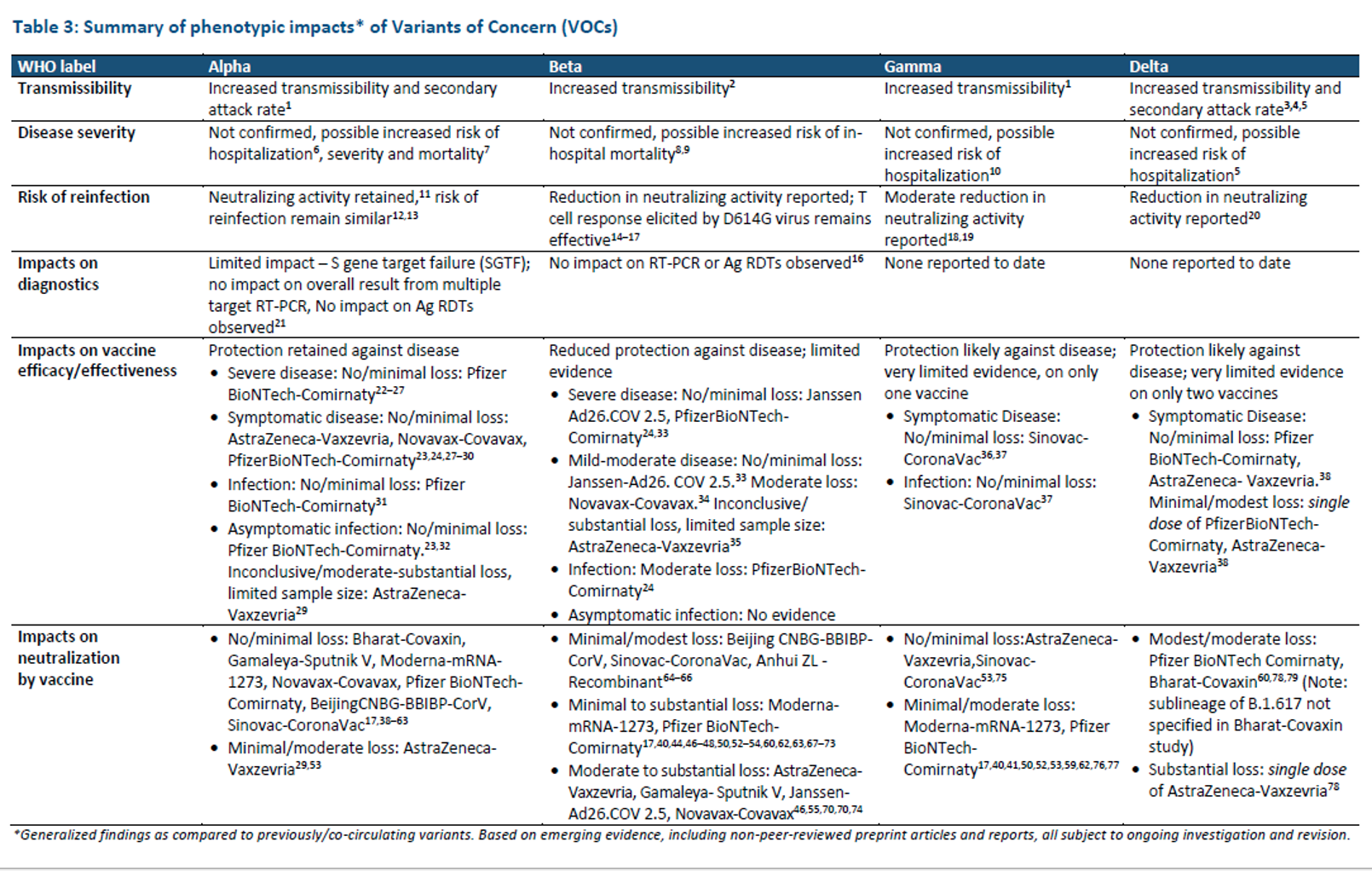
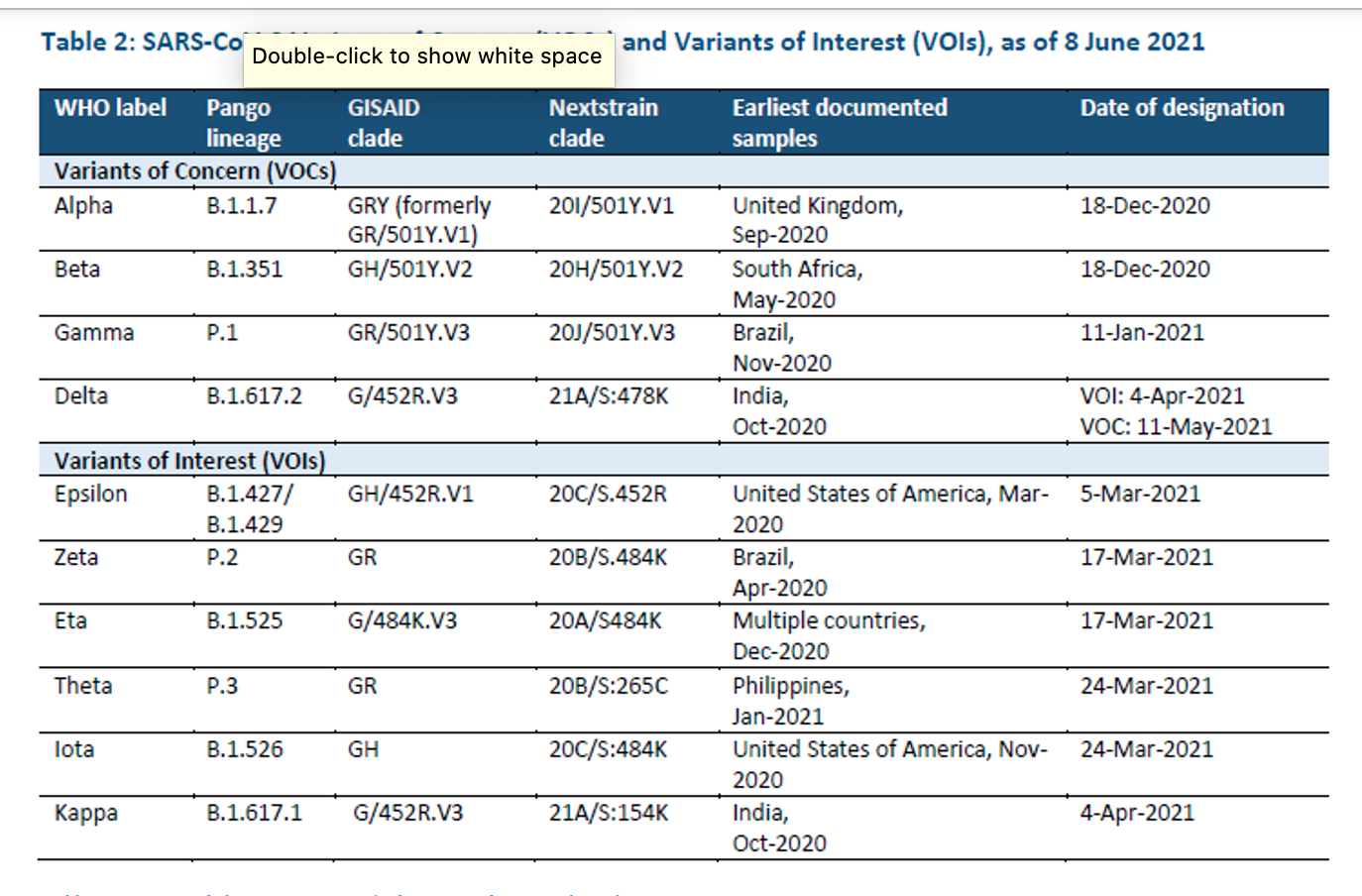
In this edition, a special focus update is provided on SARS-CoV-2 Variants of Interest (VOIs) and Variants of Concern (VOCs) Alpha (B.1.1.7), Beta (B.1.351), Gamma (P.1), and Delta (B.1.617.2). This includes updates on emerging evidence surrounding the phenotypic characteristics of VOCs (transmissibility, disease severity, risk of reinfection, and impacts on diagnostics and vaccine performance), as well as updates on the geographic distribution of VOCs.

[Excerpt, p. 5]

Weekly operational update on COVID-19 – 7 June 2021
Overview
In this edition of the COVID-19 Weekly Operational Update, highlights of country-level actions and WHO support to countries include:
:: Second training of trainers on infection prevention and control (IPC) in Mauritius
:: COVAX ships an additional 559 200 doses of COVID-19 vaccines to Malaysia
:: The Hospital of Tomorrow: WHO/Europe supports Tuscany Region in Italy in hospital redesign
:: Support for COVID-19 response amidst staggering health needs in the occupied Palestinian territory, including east Jerusalem
:: Strengthening vaccine rollout preparedness for refugees in Cox’s Bazar
:: The launch of the SPRP 2021 Monitoring and Evaluation Framework and progress on a subset of indicators
:: Librarians supporting the timely dissemination of COVID-19 seroprevalence data through GOARN and a workshop on health systems for health security
:: Updates on WHO’s financing to support countries in SPRP 2021 implementation and provision of critical supplies.

::::::
::::::

Draft landscape and tracker of COVID-19 candidate vaccines
11 June 2021
The COVID-19 candidate vaccine landscape and tracker database compiles detailed information on COVID-19 vaccine candidates in development.
The landscape is updated regularly – twice a week (Tuesday and Friday, 17:00 CET).
Download: https://cdn.who.int/media/docs/default-source/blue-print/28.05.2021-novel-coronavirus_landscape_covid-19.xlsx.zip?sfvrsn=e352acfa_3&download=true

::::::

Status of COVID-19 Vaccines within WHO EUL/PQ evaluation process 28 May 2021
For 19 vaccine candidates, presents Manufacturer, Name of Vaccine, NRA of Record, Platform, EOI Accepted Status, Pre-submission Meeting Held Status, Dossier Accepted for Review, Status of Assessment; Anticipated/Completed Decision Date
[click on the link above for full scale view]
03 June 2021 [Not updated]

COVID Vaccine Developer/Manufacturer Announcements [organizations from WHO EUL/PQ listing above]

Milestones :: Perspectives :: Research


COVID Vaccine Developer/Manufacturer Announcements [organizations from WHO EUL/PQ listing above]


AstraZeneca
Press Releases – No new digest announcements identified

Bharat Biotech, India
Press Releases – Website not responding at inquiry [third week]

BioCubaFarma – Cuba
Últimas Noticias
Se aprueba primer ensayo clínico en Cuba para población pediátrica.
Resumen:  El Centro para el Control Estatal de Medicamentos, Equipos y Dispositivos Médicos (CECMED) aprueba el primer ensayo clínico a ejecutarse en el país en población pediátrica con el candidato vacunal Soberana contra la Covid 19, desarrollado por el Instituto Finlay de Vacunas (IFV).
04/06/2021 16:15:31    |   BioCubaFarma
[Google translate: The first clinical trial in Cuba for the pediatric population is approved…CECMED) approves the first clinical trial to be carried out in the country in a pediatric population with the Sovereign vaccine candidate against Covid 19, developed by the Finlay Vaccine Institute (IFV).]


CanSinoBIO
News – No new digest announcements identified

Clover Biopharmaceuticals – China
News – No new digest announcements identified


Curevac [Bayer Ag – Germany]
News – No new digest announcements identified


Gamaleya National Center
Latest News and Events – No new digest announcements identified [See Russia/RFID below]

IMBCAMS, China
Home – No new digest announcements identified


Janssen/JNJ
Press Releases
Jun 11, 2021 United States
Johnson & Johnson Statement on Supply of its Single-shot COVID-19 Vaccine
Johnson & Johnson confirms the United States Food & Drug Administration (FDA) has authorized two batches of drug substance, manufactured at the Emergent BioSolutions, Inc. Bayview facility, under the Emergency Use Authorization (EUA) for its single-shot COVID-19 vaccine.
“Since establishing our COVID-19 vaccine program, Johnson & Johnson has committed to producing safe, high-quality vaccines in order to bring health and hope to people everywhere,” said Kathy Wengel, Executive Vice President and Chief Global Supply Chain Officer, Johnson & Johnson. “Today’s decisions represent progress in our continued efforts to make a difference in this pandemic on a global scale, and we appreciate the close collaboration with the FDA and global health authorities.”
The Company continues to substantially expand its global vaccine manufacturing network as we work with regulatory and health authorities to supply our COVID-19 vaccine worldwide…

Jun 10, 2021 United States
Johnson & Johnson statement on FDA approval of shelf life extension for company’s COVID-19 vaccine
We are pleased to confirm the U.S. Food & Drug Administration (FDA) has authorized an extension of the shelf life for the Johnson & Johnson single-shot COVID-19 vaccine from 3 months to 4.5 months. The decision is based on data from ongoing stability assessment studies, which have demonstrated that the vaccine is stable at 4.5 months when refrigerated at temperatures of 36 – 46 degrees Fahrenheit (2 – 8 degrees Celsius)…


Moderna
Press Releases
June 11, 2021
Moderna and Tabuk Pharmaceuticals Partner to Commercialize Moderna’s COVID-19 Vaccine in Saudi Arabia

June 10, 2021
Moderna Files for Emergency Use Authorization for its COVID-19 Vaccine in Adolescents in the United States

June 7, 2021
Moderna and Medison Pharma Partner to Commercialize Moderna’s COVID-19 Vaccine Across Central Eastern Europe and Israel

June 7, 2021
Moderna Files for Authorization with Health Canada for its COVID-19 Vaccine in Adolescents

June 7, 2021
Moderna Files for Conditional Marketing Approval for its COVID-19 Vaccine in Adolescents in the European Union


Novavax
Press Releases
Novavax Announces Positive Data from Three Complementary Studies of COVID-19 Beta (B.1.351) Variant Strain Vaccine
6/11/2021
– New vaccine based on the recombinant spike protein antigen (rS-B.1.351) from Beta (B.1.351) virus lineage highly immunogenic in mice and produced neutralizing antibodies
– Primates boosted with rS-B.1.351 vaccine induced strong neutralizing immune response to original SARS-CoV-2, Alpha (B.1.1.7) and Beta (B.1.351) variant strains
– Humans immunized with original NVX-CoV2373 vaccine demonstrated robust antibody responses to original SARS-CoV-2 strain, as well as to the Alpha (B.1.1.7) and Beta (B.1.351) variant strains
– Data available ahead of publication via preprint server, bioRxiv


Pfizer
Recent Press Releases
Pfizer and BioNTech to Provide 500 Million Doses of COVID-19 Vaccine to U.S. Government for Donation to Poorest Nations
Thursday, June 10, 2021
:: U.S. government to purchase at not-for-profit price 200 million doses in 2021 and 300 million in the first half of 2022
:: Doses to be donated to approximately 100 low- and lower middle-income countries including those in the African Union via the COVAX Facility
:: Effort is part of the companies’ recent pledge of two billion doses to ensure global equitable access to the vaccine

U.S. FDA Approves PREVNAR 20™, Pfizer’s Pneumococcal 20-valent Conjugate Vaccine for Adults Ages 18 Years or Older
Tuesday, June 08, 2021 – 07:12pm
:: First approval of a conjugate vaccine that helps protect against 20 serotypes responsible for the majority of invasive pneumococcal disease and pneumonia,1,2,3,4,5,6,7 including seven responsible for 40% of pneumococcal disease cases and deaths in the U.S.
:: Helps protect against more serotypes of pneumococcal disease than any other conjugate vaccine
:: Builds on Pfizer’s more than 20-year legacy and innovation in developing pneumococcal conjugate vaccines


Serum Institute of India
NEWS & ANNOUNCEMENTS – No corporate announcements identified
[Last media release April 21, 2021]


Sinopharm/WIBPBIBP
News – No new digest announcements identified


Sinovac
Press Releases – No new digest announcements identified


Vector State Research Centre of Viralogy and Biotechnology
Home – No new digest announcements identified

Zhifei Longcom, China
[Anhui Zhifei Longcom Biologic Pharmacy Co., Ltd.]
[No website identified]


::::::

GSK
Press releases for media – No new digest announcements identified

U.S.: COVID-19 Vaccines – Announcements/Regulatory Actions/Deployment

Milestones :: Perspectives :: Research


U.S.: COVID-19 Vaccines – Announcements/Regulatory Actions/Deployment

Vaccines and Related Biological Products Advisory Committee
:: Vaccines and Related Biological Products Advisory Committee June 10, 2021 Meeting Announcement
:: Meeting Information
:: Event Materials


::::::

White House [U.S.]
Briefing Room – Selected Major COVID Announcements
FACT SHEET: United States and G7+ Plan to Defeat the COVID-19 Pandemic in 2022 and Prevent the Next Pandemic
June 11, 2021 • Statements and Releases
[See COVID above for detail]

Remarks by President Biden on the COVID-19 Vaccination Program and the Effort to Defeat COVID-19 Globally
June 10, 2021 • Speeches and Remarks

Background Press Call by Senior Administration Officials on the President’s Historic COVID-19 Vaccine Announcement
June 10, 2021 • Press Briefings

FACT SHEET: President Biden Announces Historic Vaccine Donation: Half a Billion Pfizer Vaccines to the World’s Lowest-Income Nations
June 10, 2021 • Statements and Releases

Europe: COVID-19 Vaccines – Announcements/Regulatory Actions/Deployment

Milestones :: Perspectives :: Research


Europe: COVID-19 Vaccines – Announcements/Regulatory Actions/Deployment


European Medicines Agency
News & Press Releases
News: COVID-19 Vaccine Janssen: authorities in EU take steps to safeguard vaccine quality (new)
Last updated: 11/06/2021

News: Additional manufacturing capacity for Moderna’s COVID-19 vaccine (new)
CHMP, Last updated: 11/06/2021


News: Meeting highlights from the Pharmacovigilance Risk Assessment Committee (PRAC) 7-10 June 2021 (new)
PRAC, Last updated: 11/06/2021
PRAC concludes review of signal of capillary leak syndrome with COVID-19 vaccine Vaxzevria
EMA’s safety committee (PRAC) has concluded that people who have previously had capillary leak syndrome must not be vaccinated with Vaxzevria (formerly COVID-19 Vaccine AstraZeneca). The committee also concluded that capillary leak syndrome should be added to the product information as a new side effect of the vaccine, together with a warning to raise awareness among healthcare professionals and patients of this risk…


News: COVID-19 vaccines: update on ongoing evaluation of myocarditis and pericarditis (new)
PRAC, Last updated: 11/06/2021


European Centre for Disease Prevention and Control
https://www.ecdc.europa.eu/en
Latest Updates
Publication
Rapid risk assessment: Assessing SARS-CoV-2 circulation, variants of concern, non-pharmaceutical interventions and vaccine rollout in the EU/EEA, 15th update
Risk assessment – 10 Jun 2021
Although SARS-CoV-2 transmission remains widespread in large parts of the EU/EEA, most countries report declining trends in 14-day COVID-19 notification rates, hospital and intensive care unit (ICU) occupancy, and mortality. Many countries have initiated partial lifting of different non-pharmaceutical interventions (NPIs) that aim to reduce the degree of citizens physical contact and mobility. Since January 2021, EU/EEA countries have reported an increase in the number and proportion of SARS-CoV-2 cases of variants of concern (VOC) associated with increasing transmissibility and/or severity, with Alpha (B.1.1.7) the current dominant variant across the EU/EEA. Estimates across the region show that a large proportion of the population across Europe still remains susceptible to SARS-CoV-2 and that population immunity is far from being reached. As of 3 June, the median cumulative vaccine uptake in the EU/EEA adult population (aged 18 years and older) had reached 46.2% for at least one vaccine dose and 22.3% for the full vaccination course. The highest level of vaccine uptake was observed among the elderly aged over 80, in which the uptake reached 80.5% for at least one dose and 66.3% for full vaccination coverage. For healthcare workers, the median level of at least one dose uptake was 87% and the median uptake for the full vaccination course was 65.2%. Increased vaccine supply has allowed countries to expand eligibility for vaccination to younger age groups.


European Commission
https://ec.europa.eu/commission/presscorner/home/en
No new relevant announcements identified.

Russia: COVID-19 Vaccines – Announcements/Regulatory Actions/Deployment

Milestones :: Perspectives :: Research


Russia: COVID-19 Vaccines – Announcements/Regulatory Actions/Deployment


Russia: Sputnik V – “the first registered COVID-19 vaccine”
https://sputnikvaccine.com/newsroom/pressreleases/
Press Releases
Single-dose Sputnik Light vaccine registered in Mongolia
Press release, 11.06.2021

Sputnik V demonstrates high 94.3% efficacy and high safety profile during the vaccination campaign in Bahrain
Press release, 09.06.2021

Single-dose Sputnik Light vaccine approved for use in the Republic of the Congo
Press release, 07.06.2021

Brazil becomes the 67th country in the world to authorize Sputnik V vaccine
Press release, 05.06.2021

India: COVID-19 Vaccines – Announcements/Regulatory Actions/Deployment

Milestones :: Perspectives :: Research


India: COVID-19 Vaccines – Announcements/Regulatory Actions/Deployment


Ministry of Health and Family Welfare
https://www.mohfw.gov.in/

08.06.2021
Revised Guidelines for implementation of National COVID Vaccination Program

Government of India – Press Information Bureau
Latest Press Releases
No new digest content identified.

Indian Council for Medical Research (ICMR)
https://www.icmr.gov.in/media.html
No new digest content identified.

POLIO Public Health Emergency of International Concern (PHEIC); WHO/OCHA Emergencies

Emergencies

POLIO
Public Health Emergency of International Concern (PHEIC)

Polio this week as of 09 June 2021
:: Today, the Global Polio Eradication Initiative (GPEI) launched the Polio Eradication Strategy 2022-2026: Delivering on a Promise at a virtual event, to overcome the remaining challenges to ending polio, including setbacks caused by COVID-19. Read the press release here.
:: “We need to continue supporting the Global Polio Eradication Initiative, whose surveillance capacity and ability to reach vulnerable communities are critical in many countries to prevent and respond to pandemics.” – health ministers of the G7 countries. Read more…..

Summary of new WPV and cVDPV viruses this week (AFP cases and ES positives):
:: Afghanistan: one cVDPV2 case
:: Pakistan: two WPV1 and one cVDPV2 positive environmental samples
:: Burkina Faso: one cVDPV2 case

::::::
::::::

GPEI Strategy 2022-2026

Polio Eradication Strategy 2022-2026: Delivering on a Promise
Pre-publication version, as of 10 June 2021
Published by the World Health Organization (WHO) on behalf of the Global Polio Eradication Initiative (GPEI).
EXECUTIVE SUMMARY [excerpt]
Over the last decade, the Global Polio Eradication Initiative (GPEI) made steady progress on the path to eradication. Wild poliovirus types 2 and 3 (WPV2 and WPV3) were declared eradicated in 2015 and 2019, respectively; the World Health Organization (WHO) South-East Asia Region was declared free of poliovirus in 2014; and most recently, the WHO African Region was certified free of wild poliovirus (WPV) in August 2020. However, the final steps towards eradication have proven the most difficult.

The GPEI now faces programmatic and epidemiological challenges that demand new approaches to place the partnership and impacted countries on emergency footing (see Annex A). To achieve a polio-free world, the GPEI has re-envisioned the endgame pathway with an urgent call for collective ownership and accountability across the GPEI partnership and with governments, communities and all other stakeholders.

The Polio Eradication Strategy 2022–2026 offers a comprehensive set of actions that will position the GPEI to deliver on a promise that brought the world together in a collective commitment to eradicate polio. These actions, many of which are already underway in 2021, will strengthen and empower the GPEI to meet challenges head-on and achieve and sustain a polio-free world.

The GPEI will transform its approach in each region and country through five mutually reinforcing objectives that lay the foundation to achieve two elemental goals:
Goal One to permanently interrupt poliovirus transmission in the final WPV-endemic countries of Afghanistan and Pakistan, and
Goal Two to stop circulating vaccine-derived poliovirus (cVDPV) transmission and prevent outbreaks in non-endemic countries…

THE GPEI POLIO OVERSIGHT BOARD
Chris Elias
President, Global Development Division, Bill & Melinda Gates Foundation
2021 Chair of the Polio Oversight Board
Seth Berkley
Chief Executive Officer, Gavi, the Vaccine Alliance
Henrietta Fore
UNICEF Executive Director
Mike McGovern
Chair, International PolioPlus Committee, Rotary International
Tedros Adhanom Ghebreyesus
WHO Director-General
Rochelle Walensky
Director, US Centers for Disease Control and Prevention

::::::

Countries reaffirm commitment to ending polio at launch of new eradication strategy
10 June 2021 News release
Today, the Global Polio Eradication Initiative (GPEI) will launch the Polio Eradication Strategy 2022-2026: Delivering on a Promise at a virtual event, to overcome the remaining challenges to ending polio, including setbacks caused by COVID-19. While polio cases have fallen 99.9% since 1988, polio remains a Public Health Emergency of International Concern (PHEIC) and persistent barriers to reaching every child with polio vaccines and the pandemic have contributed to an increase in polio cases. Last year, 1226 cases of all forms of polio were recorded compared to 138 in 2018.  

In 2020, the GPEI paused polio door-to-door campaigns for four months to protect communities from the spread of COVID-19 and contributed up to 30,000 programme staff and over $100 million in polio resources to support pandemic response in almost 50 countries.

Leaders from the two countries yet to interrupt wild polio transmission—Pakistan and Afghanistan—called for renewed global solidarity and the continued resources necessary to eradicate this vaccine-preventable disease. They committed to strengthening their partnership with GPEI to improve vaccination campaigns and engagement with communities at high risk of polio.

The 2022-2026 Strategy underscores the urgency of getting eradication efforts back on track and offers a comprehensive set of actions that will position the GPEI to achieve a polio-free world. These actions, many of which are underway in 2021, include:

:: further integrating polio activities with essential health services—including routine immunization—and building closer partnerships with high-risk communities to co-design immunization events and better meet their health needs, particularly in Pakistan and Afghanistan;

:: applying a gender equality lens to the implementation of programme activities, recognizing the importance of female workers to build community trust and improve vaccine acceptance;

:: strengthening advocacy to urge greater accountability and ownership of the program at all levels, including enhanced performance measurement and engagement with new partners, such as the new Eastern Mediterranean Regional Subcommittee on Polio Eradication and Outbreaks; and,

:: implementing innovative new tools, such as digital payments to frontline health workers, to further improve the impact and efficiency of polio campaigns.

“With this new Strategy, the GPEI has clearly outlined how to overcome the final barriers to securing a polio-free world and improve the health and wellbeing of communities for generations to come,” said Dr Tedros Adhanom Ghebreyesus, Director-General of the World Health Organization and member of the Polio Oversight Board. “But to succeed, we urgently need renewed political and financial commitments from governments and donors. Polio eradication is at a pivotal moment. It is important we capitalise on the momentum of the new Strategy and make history together by ending this disease.”…

::::::
::::::

WHO/OCHA Emergencies

Editor’s Note:
WHO has apparently reorganized and fundamentally shifted how it judges and tracks “emergencies”. We found no announcement of descriptive information to share and present the webpage structure as encountered below.

Health emergencies list – WHO
The health emergencies list details the disease outbreaks, disasters and humanitarian crises where WHO plays an essential role in supporting countries to respond to and recover from emergencies with public health consequences.

Ebola outbreak, Democratic Republic of the Congo, 2021

Ebola outbreak outbreak, N’Zerekore, Guinea, 2021

Coronavirus disease (COVID-19) pandemic

Ebola outbreak, Equateur Province, Democratic Republic of the Congo, 2020

Ebola outbreak, North Kivu, Ituri, Democratic Republic of the Congo, 2018 – 2020

Ebola outbreak, Democratic Republic of the Congo, 2018

Yemen crisis

Syria crisis

Somalia crisis

Nigeria crisis

Ebola outbreak, Democratic Republic of the Congo, 2017

Zika virus disease outbreak, 2015-2016

Ebola outbreak: West Africa, 2014-2016

Iraq crisis

South Sudan crisis

Avian influenza A (H7N9) virus outbreak

Middle East respiratory syndrome (MERS-CoV) outbreak

Influenza A (H1N1) virus, 2009-2010 pandemic

::::::

UN OCHA – Current Emergencies
Current Corporate Emergencies
Ethiopia
Ethiopia Humanitarian Bulletin Issue #7 10 May – 6 June 2021
HIGHLIGHTS
:: Partners are implementing CERF-funded anticipatory action projects to mitigate the impact of drought and prevent a food security crisis.
:: The Federal and Regional Governments are preparing to implement a phased return/relocation plan for conflict-displaced people (IDPs) in various parts of the country ahead of the Kiremt/summer rainy season.

::::::
::::::

WHO & Regional Offices [to 12 Jun 2021]

WHO & Regional Offices [to 12 Jun 2021]
https://www.who.int/
11 June 2021 Statement
Statement for healthcare professionals: How COVID-19 vaccines are regulated for safety and effectiveness

11 June 2021 Departmental news
Approaches to sustained control of neglected tropical diseases need to evolve and adapt

11 June 2021 Departmental news
26 International experts to kickstart the One Health High Level Expert Panel (OHHLEP)

11 June 2021 Departmental news
New HIV/AIDS political declaration seeks to end inequalities and get on track to end AIDS by 2030

10 June 2021 News release
New WHO guidance seeks to put an end to human rights violations in mental health care

10 June 2021 News release
Countries reaffirm commitment to ending polio at launch of new eradication strategy

9 June 2021 Departmental news
Global Leaders from Health and Energy pave the way for a Clean and Healthy Future for All

9 June 2021 Statement
Council on the Economics of Health For All issues brief on equitable health innovation

9 June 2021 Departmental news
Record response to WHO’s call for antimicrobial resistance surveillance reports in 2020

8 June 2021 Departmental news
WHO publishes new guidance to accelerate in-country registration of WHO prequalified in vitro diagnostics

8 June 2021 Departmental news
New Policy Action Paper highlights feasible policy interventions for addressing the under representation of women in global health and care leadership

7 June 2021 Departmental news
WHO guideline development group meeting on WHO antenatal care guidelines: Update on early ultrasound scan recommendation


::::::

Weekly Epidemiological Record, Vol. 96, No. 23, pp. 217–228 11 June 2021
:: Considerations for pneumococcal vaccination in older adults


::::::

WHO Regional Offices
Selected Press Releases, Announcements
WHO African Region AFRO
:: How Senegal prepared for COVID-19 surge 11 June 2021
As the second wave of COVID-19 infections surged in early 2021, Senegal stepped up measures to cope with the anticipated rise in the number of patients needing critical care. Professor Daye Ka, Infectious and Tropical Disease Expert and member of Senegal’s COVID-19 task force, explains the steps taken to avert hospitals being overrun by a drastic rise in critically ill patients.
:: Tackling surges in severe COVID-19 cases in Africa 11 June 2021
Africa has the highest global mortality rate among critically ill COVID-19 patients despite having the world’s lowest COVID-19 infections and deaths overall, a recent study published by the Lancet found. Shortage of critical care resources and their underuse are some of the contributing factors. Dr Christian Owoo, a Senior Lecturer in the Department of Anaesthesia, University of Ghana Medical School and a Consultant Anaesthetist/Intensivist and Head of Intensive Care Unit at Korle Bu Teaching Hospital in Accra, discusses ways to prevent severe COVID-19 illness and avert a surge in deaths.
:: The system stalling COVID-19 importation into Rwanda 11 June 2021
The aircraft engines power down as disembarking passengers rummage through their carry-on bags for documents in readiness for immigration. This is Kigali International Airport, a busy regional hub. The country has implemented an innovative electronic tracking system to stop the domestic spread of COVID-19 from arriving passengers.

WHO Region of the Americas PAHO
No new digest content identified

WHO South-East Asia Region SEARO
:: 8 June 2021 News release
WHO tri-regional policy dialogue seeks solutions to challenges facing international mobility of health professionals

WHO European Region EURO
:: With the pandemic far from over, we all need to practice #SummerSense 10-06-2021
:: COVID-19: Learning from experience 10-06-2021
:: WHO tri-regional policy dialogue seeks solutions for international mobility of health professionals 09-06-2021
:: WHO study points to interventions for improving cardiovascular health in Tajikistan 09-06-2021
:: WHO/Europe and EuroHealthNet sign agreement to collaborate on addressing health inequalities and promoting sustainable development 09-06-2021

WHO Eastern Mediterranean Region EMRO
:: Update on COVID-19 in WHO’s Eastern Mediterranean Region
9 June 2021 – As of 08 June 2021 (11:59 PM), the Eastern Mediterranean Region has reported 10 353 336 confirmed COVID-19 cases and 206 573 deaths. While the total number of cases has declined over the past 6 weeks and the number of deaths stabilized, 9 countries reported an increase in cases last week, compared to the previous week. These include Somalia,…

WHO Western Pacific Region
No new digest content identified

CDC/ACIP [U.S.] [to 12 Jun 2021]

CDC/ACIP [U.S.] [to 12 Jun 2021]
http://www.cdc.gov/media/index.html
https://www.cdc.gov/vaccines/acip/index.html
Latest News Releases, Announcements
CDC COVID-19 Study Shows mRNA Vaccines Reduce Risk of Infection by 91 Percent for Fully Vaccinated People
June 7, 2021
A new CDC study finds the mRNA COVID-19 vaccines authorized by the Food and Drug Administration (Pfizer-BioNTech and Moderna) reduce the risk of infection by 91 percent for fully vaccinated people. This adds to the growing body of real-world evidence of their effectiveness. Importantly, this study also is among the first to show that mRNA vaccination benefits people who get COVID-19 despite being fully vaccinated (14 or more days after dose 2) or partially vaccinated (14 or more days after dose 1 to 13 days after dose 2).7, 2021

MMWR News Synopsis Friday, June 10, 2021

MMWR News Synopsis Friday, June 10, 2021
:: Progress Toward Rubella Elimination — World Health Organization European Region, 2005–2019
:: Impact of the COVID-19 Pandemic on Administration of Selected Routine Childhood and Adolescent Vaccinations — 10 U.S. Jurisdictions, March–September 2020
:: Genomic Surveillance for SARS-CoV-2 Variants Circulating in the United States, December 2020–May 2021
:: Hospitalization of Adolescents Aged 12–17 Years with Laboratory-Confirmed COVID-19 — COVID-NET, 14 States, March 1, 2020–April 24, 2021 (Early Release June 4, 2021)
:: Decreases in COVID-19 Cases, Emergency Department Visits, Hospital Admissions, and Deaths Among Older Adults Following the Introduction of COVID-19 Vaccine — United States, September 6, 2020–May 1, 2021 (Early Release June 8, 2021)

Impact of the COVID-19 Pandemic on Administration of Selected Routine Childhood and Adolescent Vaccinations — 10 U.S. Jurisdictions, March–September 2020
Analysis of immunization data from 10 U.S. jurisdictions shows a substantial decrease in routine vaccinations during March–May 2020, when many jurisdictions enacted stay-at-home orders due to the COVID-19 pandemic, compared with the same period during in 2018 and 2019. To prevent outbreaks of vaccine-preventable diseases, public health practitioners and health care providers should promote routine vaccination among children to ensure they are fully vaccinated as schools reopen for in-person learning.
Since the COVID-19 pandemic started, early reports from some state and local jurisdictions suggested that routine pediatric vaccinations had sharply declined, placing U.S. children at risk for vaccine-preventable diseases. To further understand the impact of the pandemic on routine childhood and adolescent vaccination, vaccine administration data from March through September 2020 from 10 U.S. jurisdictions were assessed. Fewer doses of routine childhood and adolescent vaccines were recorded during March–September 2020 than during the same periods in 2018 and 2019 in all 10 jurisdictions. The number of vaccine doses administered declined during March–May 2020, when many jurisdictions enacted stay-at-home orders. The number of vaccine doses administered during June–September, after many jurisdictions lifted stay-at-home orders in summer 2020, approached pre-pandemic levels. However, there was not a substantial increase above pre-pandemic levels, which would have been necessary to catch up children who did not receive routine vaccinations on time. This lag in catch-up vaccination might pose a serious public health threat, resulting in vaccine-preventable disease outbreaks, especially as schools reopen for in-person learning. Health care providers should assess the immunization status of all pediatric patients, including adolescents, and contact those who are behind schedule to ensure that all children are up to date.