An evaluation of an influenza vaccination campaign targeting pregnant women in 27 clinics in two provinces of South Africa, 2015 – 2018 Despite prioritization, routine antenatal influenza vaccine coverage is < 16% in South Africa. We aimed to describe maternal influenza vaccine coverage in 27 antenatal clinics (ANCs) in Gauteng and Western Cap…
Authors: Kate Bishop, Meredith McMorrow, Susan Meiring, Sibongile Walaza, Liza Rossi, Sarona Mhlanga, Stefano Tempia, Azwifarwi Mathunjwa, Jackie Kleynhans, Grace D. Appiah, Johanna M. McAnerney, Heather J. Zar and Cheryl Cohen
The impact of childhood RSV infection on children’s and parents’ quality of life: a prospective multicenter study in Spain Several immunisation candidates against RSV are in late-stage clinical trials. To evaluate the benefits of a potential vaccination programme, both economic and health benefits will be needed. Health benefits …
Authors: Eva Díez-Gandía, Carla Gómez-Álvarez, Mónica López-Lacort, Cintia Muñoz-Quiles, Isabel Úbeda-Sansano, Javier Díez-Domingo and Alejandro Orrico-Sánchez
Citation: BMC Infectious Diseases 2021 21:924
Content type: Research
Published on: 6 September 2021
HPV vaccination uptake and administration from 2006 to 2016 in a commercially insured population of the United States Human papillomavirus (HPV) infection can cause various cancers and can be prevented through vaccination. The American Cancer Society (ACS) has set an HPV vaccination completion target in 13-year-old children t…
Authors: Vimalanand S. Prabhu, Neha Bansal, Zhiwen Liu, Rodney Finalle, Martin Sénécal, Smita Kothari, Kemar Trowers and Evan Myers
Citation: BMC Public Health 2021 21:1629
Content type: Research article
Published on: 6 September 2021
Supplement: E-Mental-Health: Exploring the Evidence Base and Stakeholders’ Perspectives on Internet-Based Interventions for the Prevention of Mental Health Conditions
Mental illness represents an enormous personal, social and societal burden for European citizens1 calling for the need to expand existing models of mental healthcare delivery. In Europe, the Internet is a key source of health information,2 and technology-enhanced (psychological) interventions such as Internet- and mobile-delivered applications (‘eHealth’3 and ‘m-Health’4) have become increasingly popular and studied. There is already strong evidence of the efficacy of online interventions for the prevention and treatment of several psychological disorders5,6 and meta-analyses show effect sizes similar to face-to-face interventions.7
A chair at the table: a scoping review of the participation of refugees in community-based participatory research in healthcare Refugees often face psychosocial complexity and multi-dimensional healthcare needs. Community-Based Participatory Research (CBPR) methods have been previously employed in designing health programs for refugee communities and in building strong research partnerships in refugee communities. However, the extent to which these communities are involved remains unknown.
Authors: Tali Filler, Pardeep Kaur Benipal, Nazi Torabi and Ripudaman Singh Minhas
Citation: Globalization and Health 2021 17:103
Content type: Research
Published on: 6 September 2021
Localisation and local humanitarian action by HPN October 2020
The theme of this edition of Humanitarian Exchange is localisation+ and local humanitarian action. Five years ago this week, donors, United Nations (UN) agencies, non-governmental organisations (NGOs), the International Committee of the Red Cross (ICRC) and International Federation of Red Cross and Red Crescent Societies (IFRC) committed within the Grand Bargain to increase multi-year investments in the institutional capacities of local and national responders, and to provide at least 25% of humanitarian funding to them as directly as possible. Since then, there is increasing consensus at policy and normative level, underscored by the Covid-19 pandemic, that local leadership should be supported. Localisation has gone from a fringe conversation among policy-makers and aid agencies in 2016 to a formal priority under the Grand Bargain. Wider global movements on anti-racism and decolonisation have also brought new momentum to critical reflections on where power, knowledge and capacity reside in the humanitarian system. Yet progress has been slow and major gaps remain between the rhetoric around humanitarian partnerships, funding and coordination and practices on the ground.
Research Letter Age-Dependent Neutralization of SARS-CoV-2 and P.1 Variant by Vaccine Immune Serum Samples
Timothy A. Bates, BSc; Hans C. Leier, BA; Zoe L. Lyski, MS; et al.
free access has active quiz
JAMA. 2021;326(9):868-869. doi:10.1001/jama.2021.11656
This study examines the relationship between age and neutralizing antibody titers against the SARS-CoV-2 USA-WA1/2020 strain and the P.1 variant after 2 doses of the BNT162b2 vaccine.
Long-term Symptoms After SARS-CoV-2 Infection in Children and Adolescents
Thomas Radtke, PhD; Agne Ulyte, MD, PhD; Milo A. Puhan, MD, PhD; et al.
free access has active quiz
JAMA. 2021;326(9):869-871. doi:10.1001/jama.2021.11880
This cohort study reports the prevalence of long-term symptoms in children and adolescents who had recovered from acute SARS-CoV-2 infection.
Journal of Health Care for the Poor and Underserved (JHCPU)
Volume 32, Number 2, May 2021 Supplement https://muse.jhu.edu/issue/44396
Table of Contents Overview of the Issue Kevin B. Johnson, Tiffani J. Bright, Cheryl R. Clark
…The importance of techquity—defined as the strategic development and deployment of technology in health care and health to advance health equity—was even more apparent after the events of 2020. COVID-19 upended access to care and illuminated the impact of structural racism as a cause for a widening gap of access during the pandemic. Black Lives Matter became more than a trending hashtag on Twitter, or a movement resulting in peaceful protests and calls for policy reform: it put additional focus on the issue of race as a social and not a biological construct and called into question the rationale for common practices in health care that were triggered by race. A notable example was the emerging realization that kidney function assessment was tied to race and hardwired into many of our electronic health records. The real-world evidence around our lack of techquity was incontrovertible.
This Supplemental Issue of JHCPU provides articles that describe challenges to techquity, frameworks to improve the role of technology in care, and examples of how technology can transform health, public health, and health care…
Articles of Significant Interest in This Issue
Human papillomavirus (HPV) genomes replicate as extrachromosomal minichromosomes in persistently infected cells. Coursey at al. (e00686-21) defined elements in the HPV18 enhancer element that promote stable replication of viral DNA in dividing keratinocytes. They concluded that multiple elements within the enhancer contribute to stable replication and proposed that cellular pioneer factors create a favorable chromatin environment that supports and enhances the maintenance of the extrachromosomal minichromosomes.
Viewpoint What are the obligations of pharmaceutical companies in a global health emergency?
Ezekiel J Emanuel, et al. Introduction
During a global health emergency, everyone is morally required to help to combat the disease. With approximately 8000–10 000 people dying every day from COVID-19, as of writing, only rapid and globally distributed vaccinations will end the pandemic. With the support of national governments, pharmaceutical companies have produced more than 250 vaccine candidates to date.
WHO, the Coalition for Epidemic Preparedness Innovations, and Gavi, the Vaccine Alliance have established COVID-19 Vaccines Global Access (COVAX) to procure and fairly distribute vaccines.1
But much vaccine development, production, procurement, and distribution is ad hoc, generating controversy and inconsistency. Pharmaceutical companies have been criticised for knowledge hoarding, secret pricing, unreasonable profits, unfair bilateral deals, and extortionate demands for indemnification against liability.2, 3 COVAX has been criticised for an absence of transparency and accountability and for ignoring need in COVID-19 vaccine distribution.4, 5, 6, 7 All parties involved in researching, developing, manufacturing, and distributing COVID-19 vaccines need guidance on their ethical obligations. We focus on pharmaceutical companies’ obligations because their capacities to research, develop, manufacture, and distribute vaccines make them uniquely placed for stemming the pandemic…
Perspective | 08 September 2021 A roadmap for the Human Developmental Cell Atlas
This Perspective outlines the Human Developmental Cell Atlas initiative, which uses state-of-the-art technologies to map and model hum-an development across gestation, and discusses the early milestones that have been achieved.
Muzlifah Haniffa, Deanne Taylor, Matthias Zilbauer
PNAS – Proceedings of the National Academy of Sciences of the United States of America
August 31, 2021; vol. 118 no. 35 https://www.pnas.org/content/118/35
International Entrepreneurship Review
2021, 7(3), 7-21. https://doi.org/10.15678/IER.2021.0703.01 Open Access How do intergovernmental organizations embed themselves in global value chains: A case study of Gavi
Melodena Stephens, Immanuel Azaad Moonesar
Abstract
Objective: The article’s objective is to understand how non-MNE actors in the global arena, like intergovernmental organizations (IGOs) embed themselves in the global value chain by using their strong ties to states.
Research Design & Methods: For this study, a qualitative methodology approach investigates an underexplored area of research using a single case study, GAVI, that utilizes thick data.
Findings: The paper contributes to our understanding of IGOs and how they internationalize. New motives are identified, and the concept of soft power has been extended to IGOs.
Implications & Recommendations: IGOs in the humanitarian or developmental sector use soft power strategies to embed themselves in the global value chain. The paper’s implications are for policymakers and practitioners in the third sector, including those who invested interest at state-represented foreign direct investment. Future studies can look at how networks are leveraged, spillover occurs from a personal level to an institutional level, and vice-versa combining diplomacy, bargaining, and legitimacy.
Contribution & Value Added: The study highlights new areas of research like that of soft power. The current internationalization models of SMEs and MNEs may not neatly fit in the context of IGOs (which are born global). We reiterate that existing IB theories need to be applied to other state actors like sovereign wealth funds and non-governmental organizations.
medRxiv medRxiv is a free online archive and distribution server for complete but unpublished manuscripts (preprints) in the medical, clinical, and related health sciences. Preprints are preliminary reports of work that have not been certified by peer review. They should not be relied on to guide clinical practice or health-related behavior and should not be reported in news media as established information. medRxiv is for the distribution of preprints – complete but unpublished manuscripts – that describe human health research conducted, analyzed, and interpreted according to scientific principles… https://www.medrxiv.org/content/about-medrxiv
[Accessed 11 Sep 2021]
Op-Ed Africa must produce its own vaccines Landry Signé
Friday, September 10, 2021 Center for Global Development [to 11 Sep 2021] http://www.cgdev.org/page/press-center Accessed 11 Sep 2021 Before Recommending the RTS,S Malaria Vaccine for Wider Use, WHO Should Address Three Key Considerations
September 8, 2021
Last month, the world woke up to promising news on malaria prevention: administering an existing malaria vaccine (RTS,S) in addition to antimalarial drugs before the rainy season reduced child hospitalizations and deaths by approximately 70 percent in Burkina Faso and Mali. These results arrived ahead of a forthcoming decision from the World Health Organization on whether to recommend RTS,S for broader use. This blog argues that WHO should consider value for money and address three key considerations before making their reccomendation. Javier Guzman et al. Chatham House [to 11 Sep 2021] https://www.chathamhouse.org/ Accessed 11 Sep 2021
[No new digest content identified]
CSIS https://www.csis.org/ Accessed 11 Sep 2021
August 27, 2021 News Release
[No new digest content identified]
Vaccines and Global Health: The Week in Review is a weekly digest summarizing news, events, announcements, peer-reviewed articles and research in the global vaccine ethics and policy space. Content is aggregated from key governmental, NGO, international organization and industry sources, key peer-reviewed journals, and other media channels. This summary proceeds from the broad base of themes and issues monitored by the Center for Vaccine Ethics & Policy in its work: it is not intended to be exhaustive in its coverage. You are viewing the blog version of our weekly digest, typically comprised of between 30 and 40 posts below all dated with the current issue date
.– Request anEmail Summary:Vaccines and Global Health : The Week in Review is published as a single email summary, scheduled for release each Saturday evening before midnight (EDT in the U.S.). If you would like to receive the email version, please send your request to david.r.curry@centerforvaccineethicsandpolicy.org.
– pdf version: A pdf of the current issue is available here:
– blog edition: comprised of the approx. 35+ entries posted below.
– Twitter:Readers can also follow developments on twitter: @vaxethicspolicy. . – Links: We endeavor to test each link as we incorporate it into any post, but recognize that some links may become “stale” as publications and websites reorganize content over time. We apologize in advance for any links that may not be operative. We believe the contextual information in a given post should allow retrieval, but please contact us as above for assistance if necessary.
Support this knowledge-sharing service:Your financial support helps us cover our costs and to address a current shortfall in our annual operating budget. Click here to donate and thank you in advance for your contribution.
. David R. Curry, MS Executive Director Center for Vaccine Ethics and Policy
Editor’s Note:
As is obvious to all, the sheer volume of strategic announcements, regulatory actions, country program decisions, commentary, and, indeed, misinformation around COVID response continues at extraordinary levels. Our weekly digest strives to present a coherent and comprehensive snapshot, but cannot be exhaustive, If you recognize a missed strategic development, a new source of rigorous analysis, or an insight/commentary that would benefit our common understanding, please advise me…we will review all suggestions and consider for inclusion in a subsequent edition: david.r.curry@ge2p2global.org
We are seeking access to modelling which engages scenarios and articulates imperatives around a pandemic end-game through at least a 2025 horizon. We assess that WHO must be conducting or contracting for such modeling – or should recognize an imperative to be doing so in its global health governance role. If we have missed such modeling in progress, we would be delighted to be advised of it and will include it in our coverage.
COVID-19 Data Explorer: Global Humanitarian Operations COVID-19 Vaccine Roll-out Sep 04, 2021 | COVAX (WHO,GAVI,CEPI), UNDESA, Press Reports | DATA Global COVID-19 Figures: 219M total confirmed cases; 4.5M total confirmed deaths Global vaccines administered: 5.44B
Number of Countries: 29 [26]
COVAX Allocations Round 4-6 (Number of Doses): 120M
COVAX Delivered (Number of Doses): 74M [68M week ago]
Other Delivered (Number of Doses): 110M [98M week ago]
Total Delivered (Number of Doses): 180M [170M week ago]
Total Administered (Number of Doses): 160M [140M week ago]
::::::
Multilateral Leaders Task Force on COVID-19 [IMF, World Bank Group, WHO, WTO]
A joint initiative from the International Monetary Fund, World Bank Group, World Health Organization, and World Trade Organization to accelerate access to COVID-19 vaccines, therapeutics and diagnostics by leveraging multilateral finance and trade solutions, particularly in low- and middle-income countries.
Website accessed 04 Sep 2021: https://data.covid19taskforce.com/data The global view below is complemented by country-specific dashboards here.
WHO, Germany open Hub for Pandemic and Epidemic Intelligence in Berlin New hub’s mission is to provide the world with better data, analytics and decisions to detect and respond to health emergencies
1 September 2021 News release Berlin
To better prepare and protect the world from global disease threats, H.E. German Federal Chancellor Dr Angela Merkel and Dr Tedros Adhanom Ghebreyesus, World Health Organization Director-General, will today inaugurate the new WHO Hub for Pandemic and Epidemic Intelligence, based in Berlin.
“The world needs to be able to detect new events with pandemic potential and to monitor disease control measures on a real-time basis to create effective pandemic and epidemic risk management,” said Dr Tedros. “This Hub will be key to that effort, leveraging innovations in data science for public health surveillance and response, and creating systems whereby we can share and expand expertise in this area globally.”
The WHO Hub, which is receiving an initial investment of US$ 100 million from the Federal Republic of Germany, will harness broad and diverse partnerships across many professional disciplines, and the latest technology, to link the data, tools and communities of practice so that actionable data and intelligence are shared for the common good.
The WHO Hub is part of WHO’s Health Emergencies Programme and will be a new collaboration of countries and partners worldwide, driving innovations to increase availability of key data; develop state of the art analytic tools and predictive models for risk analysis; and link communities of practice around the world. Critically, the WHO Hub will support the work of public health experts and policy-makers in all countries with the tools needed to forecast, detect and assess epidemic and pandemic risks so they can take rapid decisions to prevent and respond to future public health emergencies.
“Despite decades of investment, COVID-19 has revealed the great gaps that exist in the world’s ability to forecast, detect, assess and respond to outbreaks that threaten people worldwide,” said Dr Michael Ryan, Executive Director of WHO’s Health Emergency Programme. “The WHO Hub for Pandemic and Epidemic Intelligence is designed to develop the data access, analytic tools and communities of practice to fill these very gaps, promote collaboration and sharing, and protect the world from such crises in the future.”
The Hub will work to:
Enhance methods for access to multiple data sources vital to generating signals and insights on disease emergence, evolution and impact;
Develop state of the art tools to process, analyze and model data for detection, assessment and response;
Provide WHO, our Member States, and partners with these tools to underpin better, faster decisions on how to address outbreak signals and events; and
Connect and catalyze institutions and networks developing disease outbreak solutions for the present and future.
Dr Chikwe Ihekweazu, currently Director-General of the Nigeria Centre for Disease Control, has been appointed to lead the WHO Hub. WHO would like to acknowledge the Nigerian government for its support, which ensures strong leadership for this important initiative…
::::::
3 September 2021 Remarks Director-General’s opening remarks at Building Resilience Through Innovation in Response to the COVID-19 Pandemic in LDCs Islamic Development Bank
1 September 2021 Remarks Dr Michael Ryan’s remarks at the launch of the WHO Hub for Pandemic and Epidemic Intelligence
1 September 2021 Remarks Director-General’s opening remarks at the Memorandum of Understanding with the Robert Koch Institute
1 September 2021 Remarks Director-General’s remarks at the inauguration of the WHO Hub for Pandemic and Epidemic Intelligence
::::::
31 August 2021 WHO compendium of innovative health technologies for low-resource settings 2021. COVID-19
Objectives
The response to the global COVID-19 pandemic crisis has exacerbated the need for rapid evidence-based assessments of innovative health technologies to ensure safe and appropriate use. Thus, the
objectives of the 2021 compendium are to:
1. Select innovative technologies that can have an immediate or future impact on the COVID-19
preparedness and response, have the potential to improve health outcomes and quality of
life, and/or offer a solution to an unmet medical/health technology need by evaluating their
appropriateness, quality, and safety.
2. Shed light on advantages and challenges associated with the adoption of innovative health
technologies in low-resource settings.
3. Acknowledge some success stories and, at the same time, raise awareness of the pressing need for appropriate and affordable design solutions and encourage more innovative efforts in the field.
4. Encourage greater interaction among the ministries of health, procurement officers, donors,
technology developers, manufacturers, clinicians, academics and the general public to ensure
greater investment in appropriate health technology and a move toward universal access to
essential health technologies.
5. Support informed procurement decisions by NGOs, governments, and other stakeholders.
:::::: Weekly operational update on COVID-19 – 30 August 2021 Overview
In this edition of the COVID-19 Weekly Operational Update, highlights of country-level actions and WHO support to countries include:
GeneXpert machine donated to Belize’s Central Medical Laboratory
Supporting quality management implementation, coordination and costing as part of the COVID-19 laboratory response in Kyrgyzstan
15 000 kg of medical supplies arrive in Fiji to support the response to a surge in COVID-19 cases
Extending COVID-19 vaccination to Rohingya refugees in Cox’s Bazar camps in Bangladesh
Responding to COVID-19 in Jordan: The Innovative Use of Online Platforms
The Elsje Finck-Sanichar College COVAB in Suriname embraces OpenWHO and online learning during COVID-19 pandemic
Progress on a subset of indicators from the SPRP 2021 Monitoring and Evaluation Framework
Updates on WHO’s financing to support countries in SPRP 2021 implementation and provision of critical supplies.
Weekly epidemiological update on COVID-19 – 31 August 2021 Overview
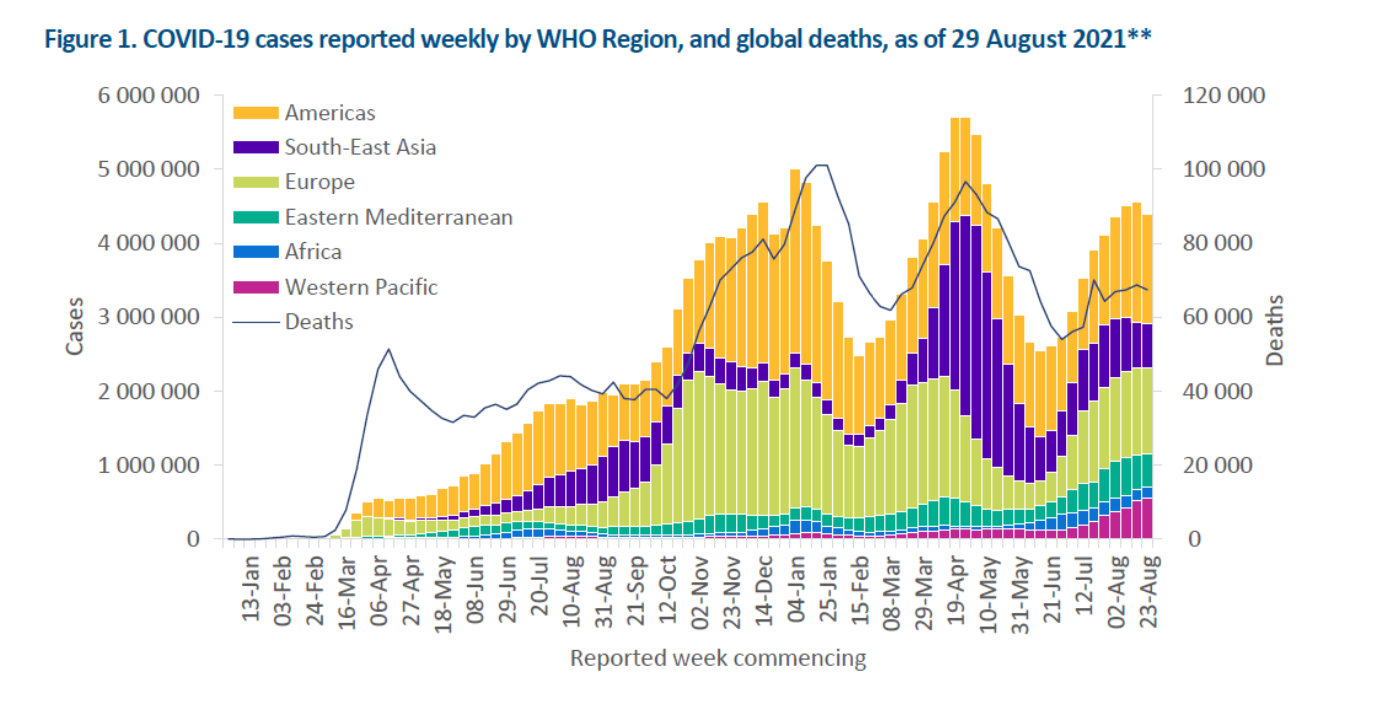
With just under 4.4 million new cases reported this week (23-29 August), the number of new cases reported globally remains similar to the previous week after increasing for nearly two months (since mid-June). In the past week all regions reported either a decline (Africa, Americas) or a similar trend (Europe, South-East Asia, Eastern Mediterranean) in new cases, except for the Western Pacific Region which reported a 7% increase as compared to previous week. The number of deaths reported globally this week were also similar to last week, with just over 67 000 new deaths reported. The Eastern Mediterranean and Western Pacific Regions reported an increase in the number of weekly deaths, 9% and 16% respectively, while the South-East Asia Region reported the largest decrease (20%). The cumulative number of cases reported globally is now nearly 216 million and the cumulative number of deaths is just under 4.5 million.
In this edition, a special focus update is provided on:
SARS-CoV-2 Variants of Concern (VOCs) Alpha, Beta, Gamma and Delta which includes updates on the geographic distribution of these VOCs as well as a description of a newly classified Variant of Interest (VOI), Mu.
“…Based on the latest round of assessments, B.1.621 was classified as a VOI on 30 August 2021 and given the WHO label “Mu”. This includes the descendent Pango lineage B.1.621.1. This variant is known as 21H in Nextstrain nomenclature. The Mu variant has a constellation of mutations that indicate potential properties of immune escape. Preliminary data presented to the Virus Evolution Working Group show a reduction in neutralization capacity of convalescent and vaccinee sera similar to that seen for the Beta variant, but this needs to be confirmed by further studies.
Since its first identification in Colombia in January 2021, there have been a few sporadic reports of cases of the Mu variant and some larger outbreaks have been reported from other countries in South America and in Europe. As of 29 August, over 4500 sequences (3794 sequences of B.1.621 and 856 sequences of B.1.621.1) have been uploaded to GISAID from 39 countries. Although the global prevalence of the Mu variant among sequenced cases has declined and is currently below 0.1%, the prevalence in Colombia (39%) and Ecuador (13%) has consistently increased….”
Status of COVID-19 Vaccines within WHO EUL/PQ evaluation process 19 August 2021
For 22 vaccine candidates, presents Manufacturer, Name of Vaccine, NRA of Record, Platform, EOI Accepted Status, Pre-submission Meeting Held Status, Dossier Accepted for Review, Status of Assessment; Anticipated/Completed Decision Date [No updates since 19 Aug 2021] ::::::
COVID Vaccine Developer/Manufacturer Announcements [relevant press releases/announcement from organizations from WHO EUL/PQ listing above]
AstraZeneca Press Releases AstraZeneca and European Commission reach settlement agreement over vaccine supply, ending litigation
03 September 2021
AstraZeneca and the European Commission have reached an agreement that ends legal proceedings over the execution of the Advance Purchase Agreement for the delivery of the COVID-19 vaccine Vaxzevria (ChAdOx1-S [Recombinant]).
Under the agreement, AstraZeneca commits to deliver 60 million doses of the vaccine by the end of the third quarter 2021, 75 million by the end of the fourth quarter 2021 and 65 million by the end of the first quarter 2022. Member States will be provided with regular delivery schedules, and capped rebates will apply in the event of any delayed doses…
BioCubaFarma – Cuba Últimas Noticias– [Website not responding at inquiry; receiving 403-Forbidden]
CanSinoBIO News– [Website not responding at inquiry]
Clover Biopharmaceuticals – China News – No new digest announcements identified
Curevac [Bayer Ag – Germany] News CureVac’s CVnCoV Phase 2b/3 Study Data Published in Preprints with The Lancet
TÜBINGEN, Germany / BOSTON, USA – August 31, 2021
CureVac N.V. (Nasdaq: CVAC), a global biopharmaceutical company developing a new class of transformative medicines based on messenger ribonucleic acid (“mRNA”), today announced the publication of its pivotal Phase 2b/3 (HERALD study) primary data of CVnCoV, its first-generation COVID-19 vaccine candidate, in Preprints with The Lancet. The HERALD study enrolled approximately 40,000 participants in ten countries across Latin America and Europe, in the predefined age groups 18 to 60 and above 60. For the final analysis, COVID-19 cases were caused by 15 different virus variants…
Gamaleya National Center Latest News and Events – No new digest announcements identified [See Russia/RFID below]
IMBCAMS, China Home– – [Website not responding at inquiry; receiving 502 Bad Gateway]
Novavax Press Releases– No new digest announcements identified Novavax Statement on CDC Guidance Update for COVID-19 Clinical Trial Participants
Aug 30. 2021
…the U.S. Centers for Disease Control and Prevention (CDC) has provided updated guidance for those who have been vaccinated as part of a clinical trial in the U.S. The CDC guidance states that participants in the Novavax PREVENT-19 Phase 3 clinical trial meet the criteria to be considered fully vaccinated two weeks after they have completed the vaccine series…
GSK Press releases for media
31 August 2021 SK bioscience and GSK start Phase 3 trial of adjuvanted COVID-19 vaccine candidate
:: Advance to Phase 3 follows positive interim Phase 1/2 immunogenicity and safety data
:: Global clinical trial will evaluate vaccine candidate GBP510 against the AZ/Oxford COVID-19 vaccine
:: Aim is for global supply through the COVAX facility in the first half of 2022, subject to data and regulatory review
SK Biosciences Press releases– No new digest announcements identified
The Race for Global COVID-19 Vaccine Equity
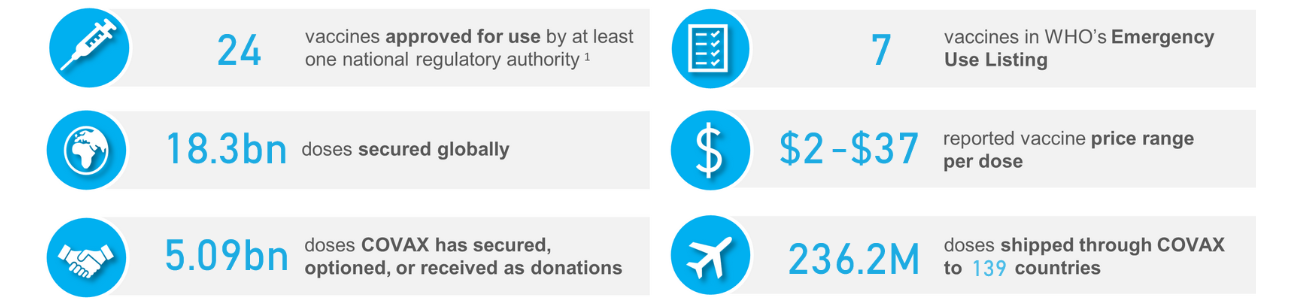
A flurry of nearly 200 COVID-19 vaccine candidates are moving forward through the development and clinical trials processes at unprecedented speed; more than ten candidates are already in Phase 3 large-scale trials and several have received emergency or limited authorization. Our team has aggregated and analyzed publicly available data to track the flow of procurement and manufacturing and better understand global equity challenges. We developed a data framework of relevant variables and conducted desk research of publicly available information to identify COVID vaccine candidates and status, deals and ongoing negotiations for procurement and manufacturing, COVID burden by country, and allocation and distribution plans. We have also conducted interviews with public officials in key countries to better understand the context and challenges facing vaccine allocation and distribution [accessed 24 July 2021] See our COVID Vaccine Purchases research See our COVID Vaccine Manufacturing research See our COVID Vaccine Donations & Exports research
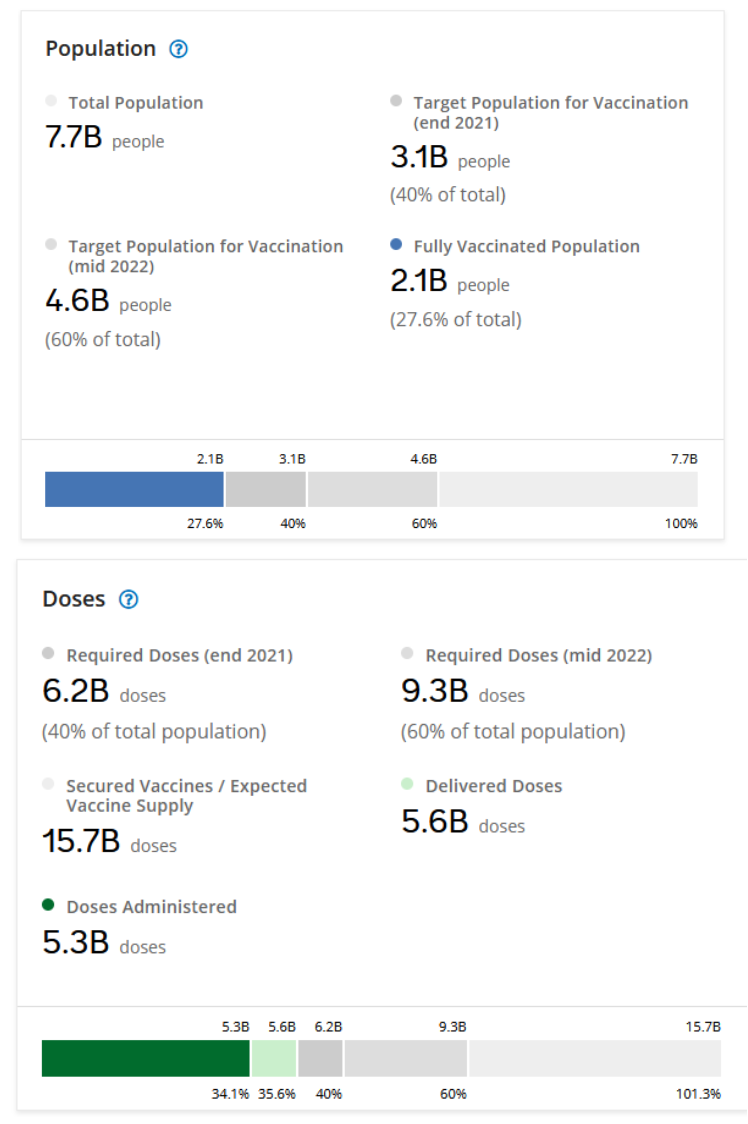
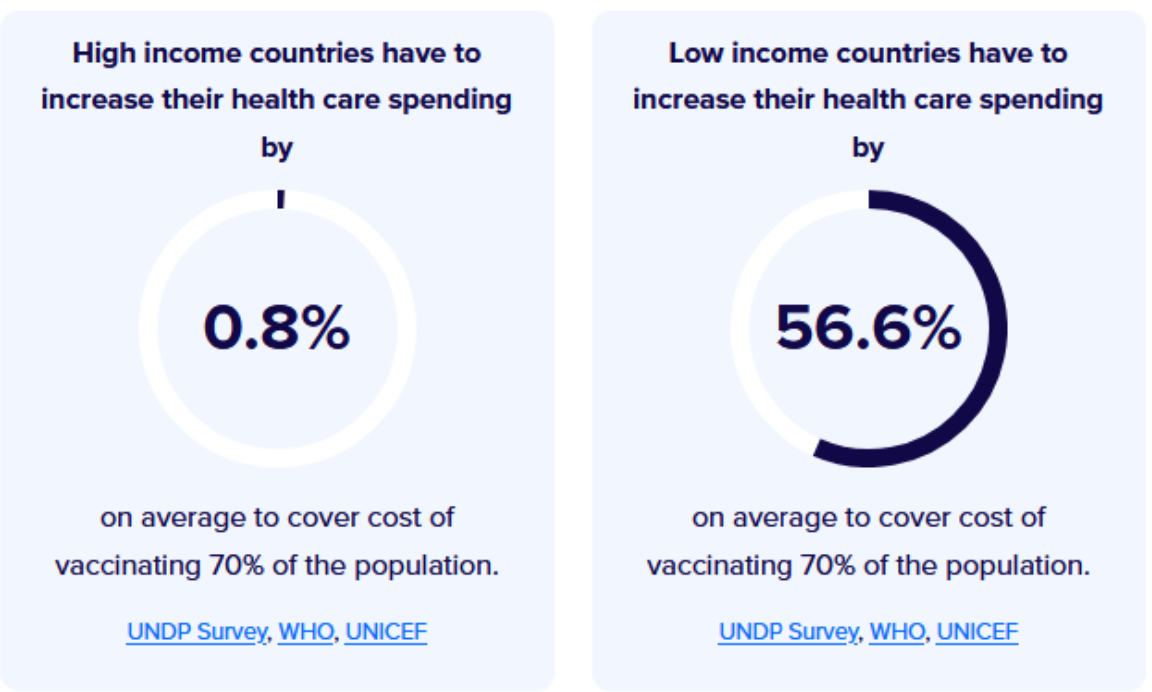
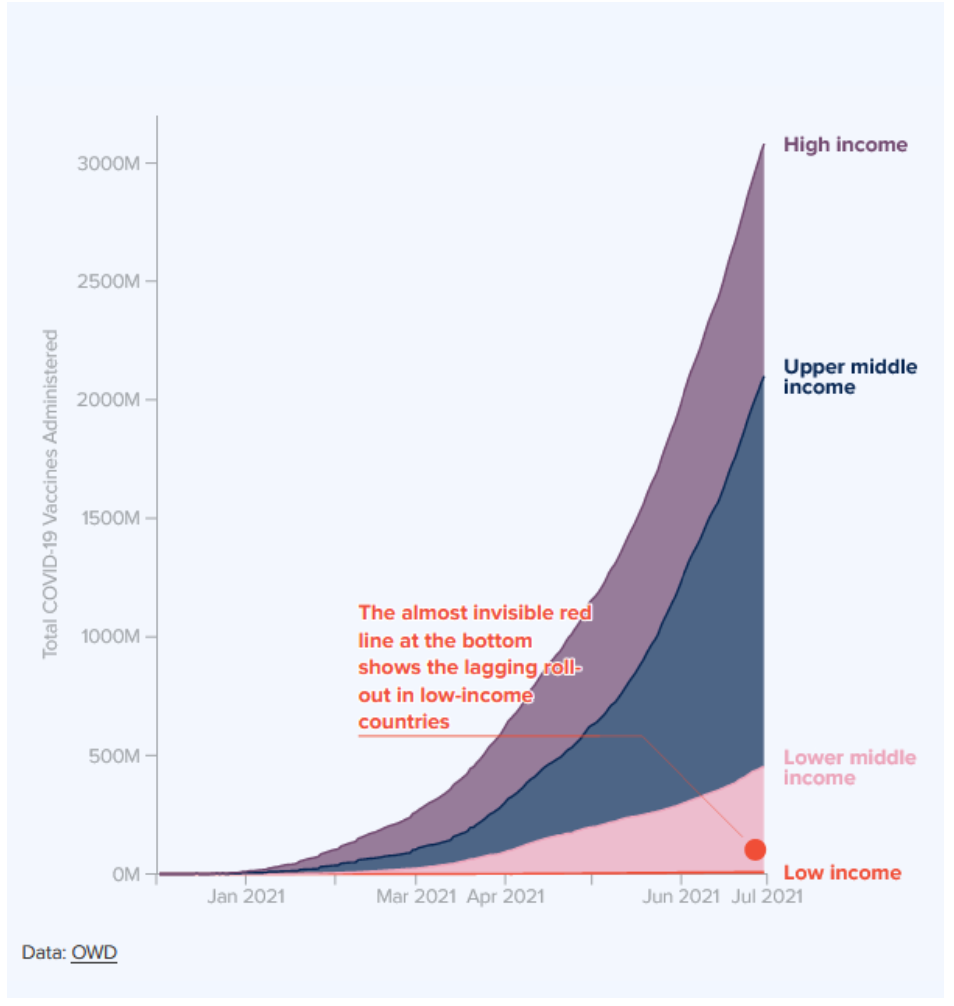
Global Dashboard on COVID-19 Vaccine Equity
The Dashboard is a joint initiative of UNDP, WHO and the University of Oxford with cooperation across the UN system, anchored in the SDG 3 Global Action Plan for Healthy Lives and Well-being for All.
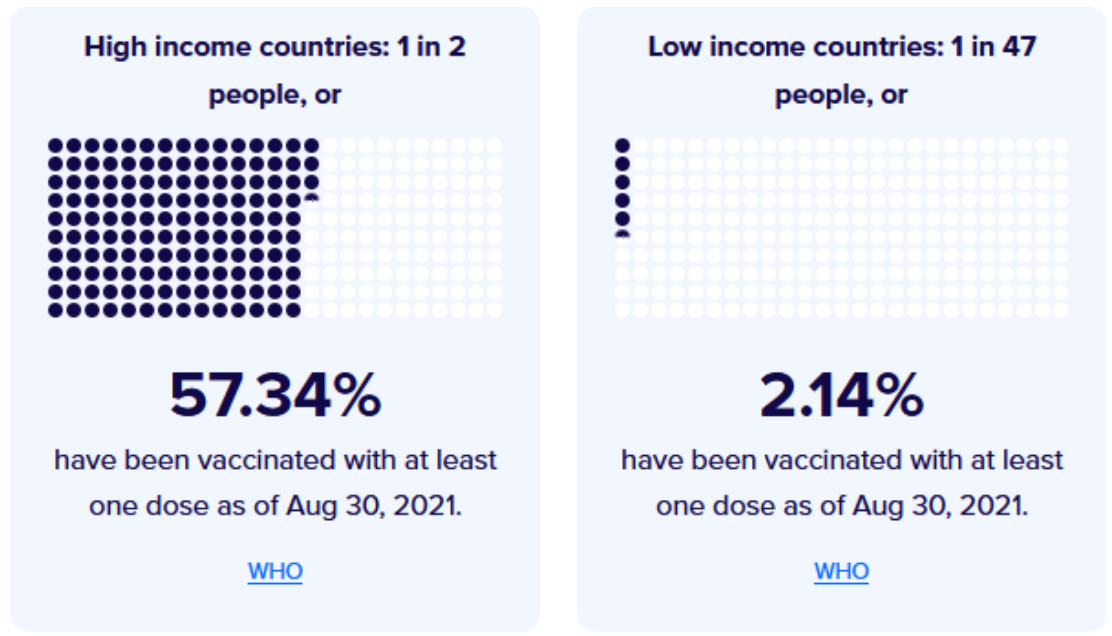
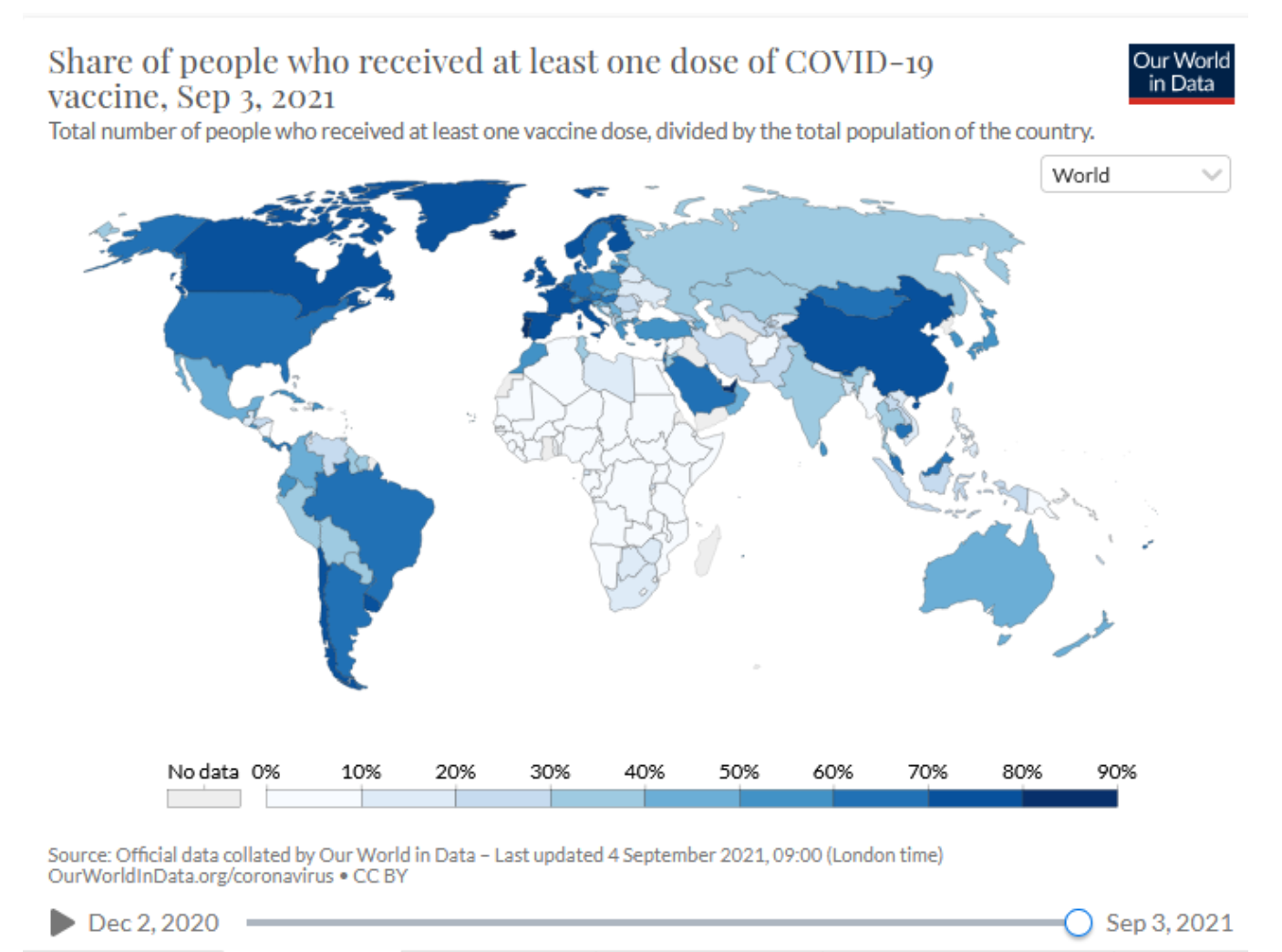
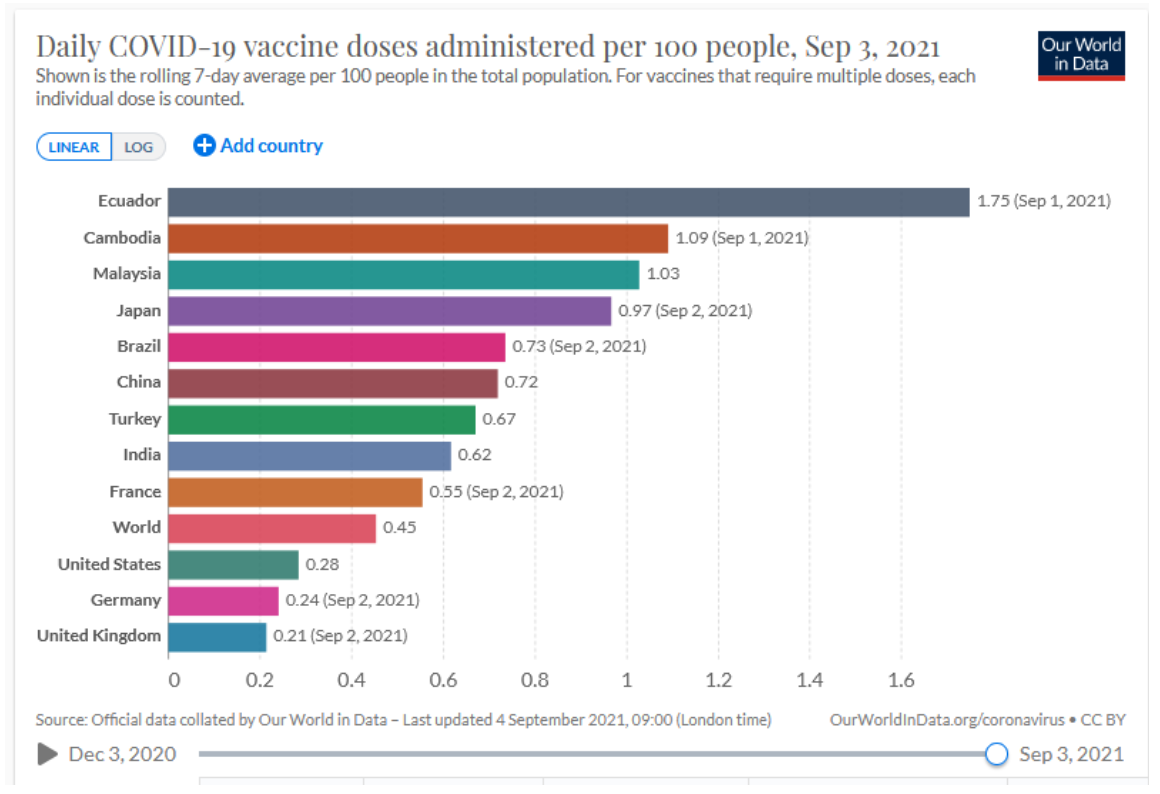
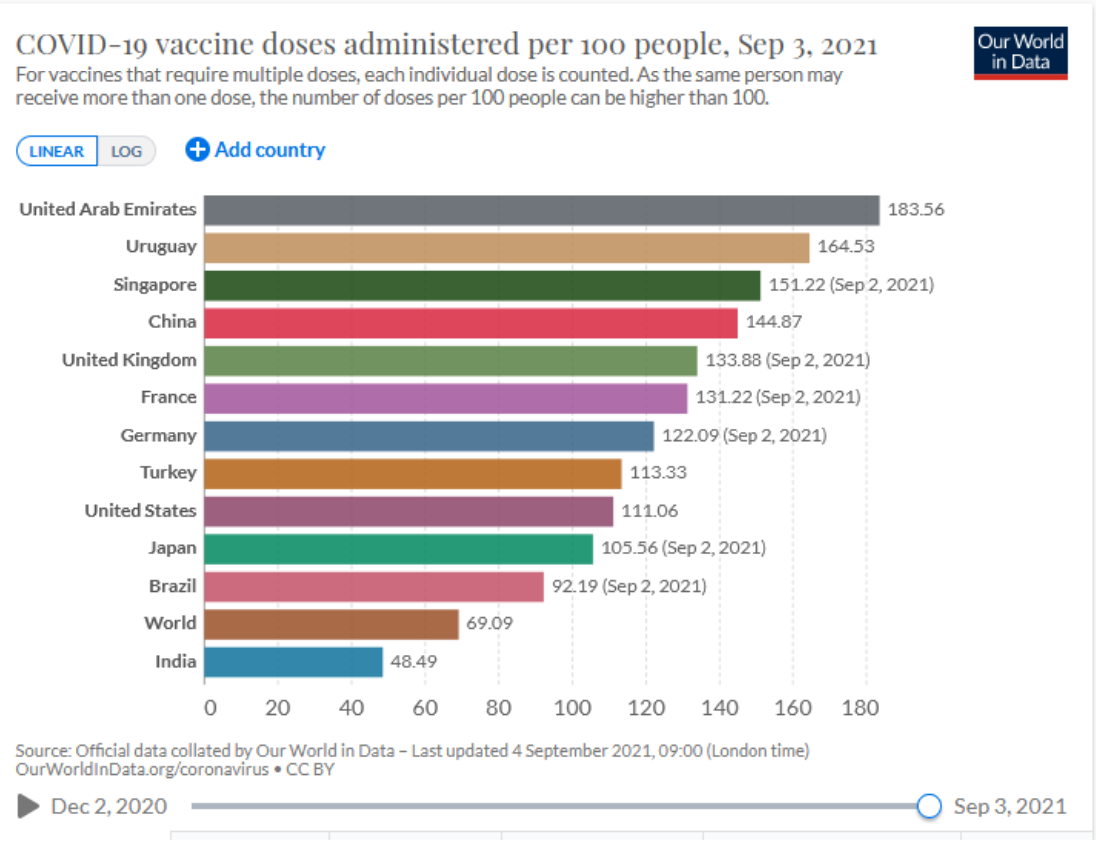
Our World in Data Coronavirus (COVID-19) Vaccinations[Accessed 04 Sep 2021] 40.2% of the world population has received at least one dose of a COVID-19 vaccine. 5.44 billion doses have been administered globally, and 35.64 million are now administered each day.
Only 1.8% of people in low-income countries have received at least one dose.
CDC Statement Following ACIP Pfizer-BioNTech Vote
Monday, August 30, 2021
Today, CDC Director Rochelle P. Walensky, M.D., M.P.H., endorsed the CDC Advisory Committee on Immunization Practices’ (ACIP) recommendation for use of the Pfizer-BioNTech’s licensed vaccine for people 16 and older.
This recommendation follows FDA’s decision to fully approve Pfizer’s COVID-19 vaccine.
The ACIP recommendation comes 9 months after the committee’s interim recommendation and after an exhaustive review of the scientific evidence demonstrating safety and effectiveness, and supporting continued use of the vaccine.
“We now have a fully approved COVID-19 vaccine and ACIP has added its recommendation. If you have been waiting for this approval before getting the vaccine, now is the time to get vaccinated and join the more than 173 million Americans who are already fully vaccinated,” said CDC Director Dr. Rochelle Walensky.
:: Vaccines and Related Biological Products Advisory Committee September 17, 2021 Meeting Announcement Agenda
…The committee will meet in open session to discuss the Pfizer-BioNTech supplemental Biologics License Application for COMIRNATY for administration of a third dose, or “booster” dose, of the COVID-19 vaccine, in individuals 16 years of age and older. Under Topic I, the committee will meet in open session to hear an overview of the research programs in the Laboratory of Bacterial Polysaccharides (LBP), Division of Bacterial, Parasitic, and Allergenic Products (DBPAP), Office of Vaccines Research and Review (OVRR), Center for Biologics Evaluation and Research (CBER). Also, on September 30, 2021, under Topic II, the Center for Biologics Evaluation and Research’s (CBER) VRBPAC will meet in open session to discuss and make recommendations on the selection of strains to be included in the influenza virus vaccines for the 2021 to 2022 southern hemisphere influenza season. Under Topic I, the committee will meet in open session to hear an overview of the research programs in the Laboratory of Bacterial Polysaccharides (LBP), Division of Bacterial, Parasitic, and Allergenic Products (DBPAP), Office of Vaccines Research and Review (OVRR), Center for Biologics Evaluation and Research (CBER). Also, on September 30, 2021, under Topic II, the Center for Biologics Evaluation and Research’s (CBER) VRBPAC will meet in open session to discuss and make recommendations on the selection of strains to be included in the influenza virus vaccines for the 2021 to 2022 southern hemisphere influenza season. Under Topic I, the committee will meet in open session to hear an overview of the research programs in the Laboratory of Bacterial Polysaccharides (LBP), Division of Bacterial, Parasitic, and Allergenic Products (DBPAP), Office of Vaccines Research and Review (OVRR), Center for Biologics Evaluation and Research (CBER). Also, on September 30, 2021, under Topic II, the Center for Biologics Evaluation and Research’s (CBER) VRBPAC will meet in open session to discuss and make recommendations on the selection of strains to be included in the influenza virus vaccines for the 2021 to 2022 southern hemisphere influenza season.
:: Vaccines and Related Biological Products Advisory Committee September 30, 2021 Meeting Announcement – 09/30/2021 – 09/30/2021 Agenda
…Under Topic I, the committee will meet in open session to hear an overview of the research programs in the Laboratory of Bacterial Polysaccharides (LBP), Division of Bacterial, Parasitic, and Allergenic Products (DBPAP), Office of Vaccines Research and Review (OVRR), Center for Biologics Evaluation and Research (CBER). Also, on September 30, 2021, under Topic II, the Center for Biologics Evaluation and Research’s (CBER) VRBPAC will meet in open session to discuss and make recommendations on the selection of strains to be included in the influenza virus vaccines for the 2021 to 2022 southern hemisphere influenza season..
European Medicines Agency News & Press Releases Meeting highlights from the Pharmacovigilance Risk Assessment Committee (PRAC) 30 August – 2 September 2021 News 03/09/2021 COVID-19 vaccines: EMA reviewing cases of multisystem inflammatory syndrome EMA’s safety committee (PRAC) is assessing whether there is a risk of multisystem inflammatory syndrome (MIS) with COVID-19 vaccines following a report of MIS with Comirnaty. The case occurred in a 17-year old male in Denmark who has since fully recovered. Some cases of MIS were also reported in the EEA following vaccination with other COVID-19 vaccines.1 MIS is a serious inflammatory condition affecting many parts of the body and symptoms can include tiredness, persistent severe fever, diarrhoea, vomiting, stomach pain, headache, chest pain and difficulty breathing. MIS has previously been reported following COVID-19 disease. The Danish patient, however, had no history of COVID-19. MIS is rare and its incidence rate before the COVID-19 pandemic estimated from 5 European countries was around 2 to 6 cases per 100,000 per year in children and adolescents below 20 years of age and below 2 cases per 100,000 per year in adults aged 20 years or more. At this stage, there is no change to the current EU recommendations for the use of COVID-19 vaccines…
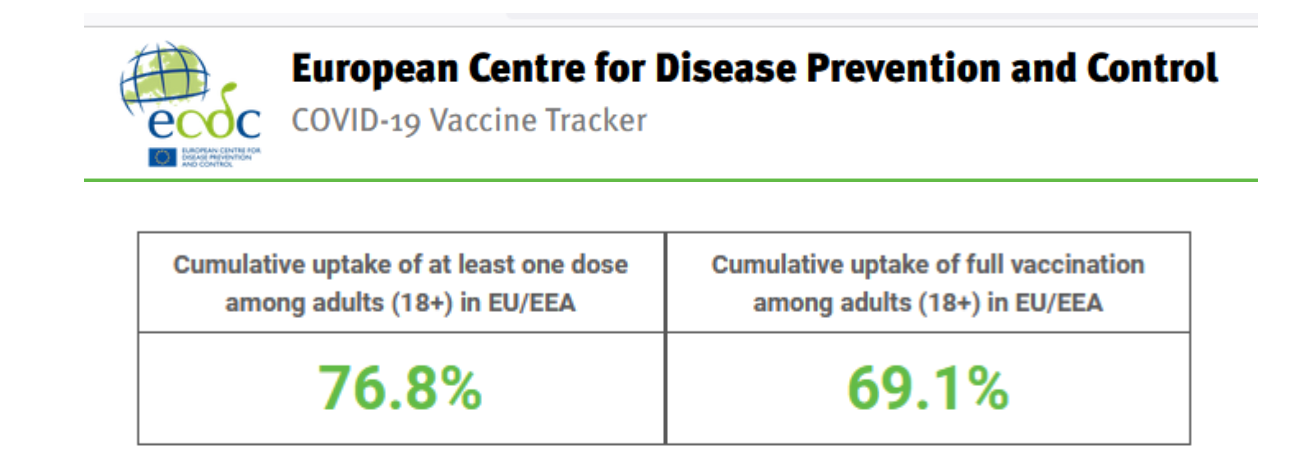
News: ECDC and EMA highlight considerations for additional and booster doses of COVID-19 vaccines (new) Last updated: 02/09/2021 Based on current evidence, there is no urgent need for the administration of booster doses of vaccines to fully vaccinated individuals in the general population, according to a technical report issued yesterday by the European Centre for Disease Prevention and Control (ECDC). The report also notes that additional doses should already be considered for people with severely weakened immune systems as part of their primary vaccination. Evidence on vaccine effectiveness and duration of protection shows that all vaccines authorised in the EU/EEA are currently highly protective against COVID-19-related hospitalisation, severe disease and death, while about one out of three adults in the EU/EEA over 18 years is still currently not fully vaccinated. In this situation, the priority now should be to vaccinate all those eligible individuals who have not yet completed their recommended vaccination course. To complement vaccination efforts, it is also crucial to continue applying measures such as physical distancing, hand and respiratory hygiene, and using face masks where needed, in particular in high-risk settings such as long-term care facilities or hospital wards with patients at risk of severe COVID-19…
::::::
European Centre for Disease Prevention and Control https://www.ecdc.europa.eu/en Latest Updates News ECDC awards 77 M€ to strengthen EU/EEA Member States’ capacities to detect and identify SARS-CoV-2 variants News story – 3 Sep 2021 ECDC has awarded more than 77 M€ to 24 EU/EEA countries to strengthen whole genome sequencing and RT-PCR infrastructures within the countries’ national public health programmes. The immediate objective is to reinforce countries’ capacities for early detection and enhanced monitoring of emergent and known SARS-CoV-2 variants. The support is a response to a request to ECDC by the European Commission to implement a number of activities that were launched as part of the “HERA Incubator ” aiming to support the rapid detection of SARS-CoV-2 variants across the EU…
News ECDC and EMA highlight considerations for additional and booster doses of COVID-19 vaccines Press release – 2 Sep 2021 Based on current evidence, there is no urgent need for the administration of booster doses of vaccines to fully vaccinated individuals in the general population, according to a technical report issued by the European Centre for Disease Prevention and Control (ECDC). The report also notes that additional doses should already be considered for people with severely weakened immune systems as part of their primary vaccination.
Press release 31 August 2021 Coronavirus: 70% of the EU adult population fully vaccinated Today, the EU has reached a crucial milestone with 70% of the adult population now fully vaccinated. In total, over 256 million adults in the EU have now received a full vaccine course.
 vaccines and global health :: ethics and policy