India’s role in COVID-19 vaccine diplomacy

Journal of Travel Medicine
Volume 28, Issue 7, October 2021
https://academic.oup.com/jtm/issue


Perspectives
India’s role in COVID-19 vaccine diplomacy
Khan Sharun, MVSc, Kuldeep Dhama, PhD
Journal of Travel Medicine, Volume 28, Issue 7, October 2021, taab064, https://doi.org/10.1093/jtm/taab064
Indian vaccine manufacturers such as Serum Institute of India, Bharat Biotech, Dr Reddy’s Laboratories, Biological E Limited, Aurobindo Pharma and Indian Immunologicals have already secured the license to manufacture major vaccine candidates. The ability of the country to manufacture cost-effective COVID-19 vaccines will help to meet the global vaccine requirements.

Unintended health and societal consequences of international travel measures during the COVID-19 pandemic: a scoping review

Journal of Travel Medicine
Volume 28, Issue 7, October 2021
https://academic.oup.com/jtm/issue


Review
Unintended health and societal consequences of international travel measures during the COVID-19 pandemic: a scoping review
Carmen Klinger, MSc, Jacob Burns, MSc, Ani Movsisyan, PhD, Renke Biallas, MSc, Susan L Norris, MD
Journal of Travel Medicine, Volume 28, Issue 7, October 2021, taab123, https://doi.org/10.1093/jtm/taab123

COVID-19 in fully vaccinated Everest trekkers in Nepal

Journal of Travel Medicine
Volume 28, Issue 7, October 2021
https://academic.oup.com/jtm/issue


Rapid Communications
COVID-19 in fully vaccinated Everest trekkers in Nepal
Bhawana Amatya, MD, Prativa Pandey, MD, Suvash Dawadi, MD, Shanta Manandhar, MD
Journal of Travel Medicine, Volume 28, Issue 7, October 2021, taab098, https://doi.org/10.1093/jtm/taab098
COVID-19 in a fully mRNA-1273 vaccinated aspiring Everest summiteer and an Everest trekker who had two doses of ChAdOx1nCoV-19 is presented. Delta B.1.617.2 variant was sequenced in one of the cases. Travellers should be wary of starting up travel to under-vaccinated regions, particularly if they are at high risk for severe disease.

Articles of Significant Interest in This Issue

Journal of Virology
Volume 95 • Number 21 • October 2021
http://jvi.asm.org/content/current


Spotlight 13 October 2021
Articles of Significant Interest in This Issue
https://doi.org/10.1128/JVI.01507-21
Natural isolates and recombinant SARS-CoV-2 viruses rapidly adapt to heparin binding in cultured cells. Shiliaev et al. (e01357-21) report that within a few passages, the viral spike protein acquires mutations in the N-terminal domain and in P1′ position of the furin cleavage site. These mutations are closely located on the protein surface, increasing positive charge in the region and the affinity of the virus to heparan sulfate. These mutations make SARS-CoV-2 mutants dramatically more infectious for the cultured cells and dominant in viral pools. Such viral mutants efficiently use glycosaminoglycans for primary attachment before the high-affinity interaction with the ACE2 receptor.

Malaria vaccine approval: a step change for global health

The Lancet
Oct 16, 2021 Volume 398 Number 10309 p1381-1460
https://www.thelancet.com/journals/lancet/issue/current


Editorial
Malaria vaccine approval: a step change for global health
The Lancet
On Oct 6, WHO announced that it will be recommending widespread use of the RTS,S/AS01 (RTS,S) malaria vaccine for children in sub-Saharan Africa and in other regions with moderate-to-high Plasmodium falciparum transmission. Malaria has ravaged people’s lives for centuries; today the burden falls disproportionately on children in tropical regions. 229 million cases were recorded in 2019, and 409 000 people lost their lives, two-thirds of whom were younger than 5 years and living in sub-Saharan Africa. Broad roll-out across the region is now eminently achievable. Challenges remain, but this scientific triumph could be one of the most monumental opportunities in child health for a generation.

RTS,S is the first parasite vaccine to have obtained regulatory approval. Designed to target the sporozoite phase of the lifecycle, it blocks infection of the liver, where the parasite would otherwise mature, multiply, re-enter the bloodstream, and infect erythrocytes. The first attempts at creating a malaria vaccine began in the 1960s, and the road to victory has been difficult. Most trials ended in disappointment and many observers doubted whether a malaria vaccine would ever become a reality. The success of RTS,S is the culmination of generations of scientific ingenuity, three decades of profitless research and development by GSK, the foresight of generous funders, and close collaboration within African communities.

Pivotal phase 3 trials in 2009–14 took place in Burkina Faso, Gabon, Ghana, Kenya, Malawi, Mozambique, and Tanzania. The final results, published in The Lancet in 2015, showed that children in these regions receiving three doses of RTS,S plus a booster dose, between 5 and 17 months of age, would have a 29% reduced risk of severe malaria. Crucial implementation programmes in Kenya, Ghana, Malawi, Burkina Faso, and Mali, which will continue until 2023, have confirmed that, when combined with seasonal malaria chemoprevention, RTS,S can reduce death from malaria by over 70%. Compliance and acceptance are high, despite the complexity of the vaccination schedule, and implementation appears realistic, even in countries with under-resourced health-care infrastructure.

WHO’s endorsement of RTS,S comes at a crucial time in malaria control. Between 2000 and 2015, widespread deployment of simple but innovative control measures turned the tide against malaria. Insecticide-treated mosquito nets, indoor spraying of homes, rapid diagnostic tests, and new treatments and prophylactics are estimated to have averted 7·6 million deaths since 2000. But progress has stagnated over the past 6 years, especially in high-burden countries. Evolving mosquito and parasite populations are escaping detection by diagnostic tests and developing resistance to insecticides and antimalarials. Only last year, WHO warned that global targets of reducing malaria case incidence and mortality rates by at least 90% by 2030 would be missed. There is hope that the vaccine can turbocharge malaria control.

How the vaccine will fit into wider programmes of malaria control remains unclear. Understandably, there are questions over who will pay to make the vaccine available to all who need it, many of whom live in countries with fragile health systems. After a period of stalled development funding for malaria control, there is optimism that international donors will fund vaccination, as noted in a World Report. A reliance on international donors need not be the only option, however. The 2019 Lancet malaria eradication Commission noted that in addition to innovative technology, such as vaccines, domestic funding for malaria control would accelerate progress. Domestic spending on health is woefully low in the sub-Saharan region, and projections suggest that this is unlikely to improve over the next 30 years. But if countries could fund health system strengthening and overcome the barriers to ensure equitable access, they might avoid pitfalls that can come from narrow, vertical approaches to global health issues, which have a history of skewing incentives and neglecting the wider needs of population health.

A strong case for investment in health to reduce child and maternal mortality was made by the Lancet Commission on Investing in Health. For a disease that kills a child every 2 minutes, a vaccine with even a modest 30% efficacy could have a considerable effect on improving child survival. Wide availability of a malaria vaccine will mean that the prospect of ending preventable child mortality within a generation is now a step closer.

Effectiveness of mRNA BNT162b2 COVID-19 vaccine up to 6 months in a large integrated health system in the USA: a retrospective cohort study

The Lancet
Oct 16, 2021 Volume 398 Number 10309 p1381-1460
https://www.thelancet.com/journals/lancet/issue/current


Articles
Effectiveness of mRNA BNT162b2 COVID-19 vaccine up to 6 months in a large integrated health system in the USA: a retrospective cohort study
Sara Y Tartof, et al.
Background
Vaccine effectiveness studies have not differentiated the effect of the delta (B.1.617.2) variant and potential waning immunity in observed reductions in effectiveness against SARS-CoV-2 infections. We aimed to evaluate overall and variant-specific effectiveness of BNT162b2 (tozinameran, Pfizer–BioNTech) against SARS-CoV-2 infections and COVID-19-related hospital admissions by time since vaccination among members of a large US health-care system.
…Interpretation
Our results provide support for high effectiveness of BNT162b2 against hospital admissions up until around 6 months after being fully vaccinated, even in the face of widespread dissemination of the delta variant. Reduction in vaccine effectiveness against SARS-CoV-2 infections over time is probably primarily due to waning immunity with time rather than the delta variant escaping vaccine protection.

Burden and characteristics of COVID-19 in the United States during 2020

Nature
Volume 598 Issue 7880, 14 October 2021
https://www.nature.com/nature/volumes/598/issues/7880


Article | 26 August 2021
Burden and characteristics of COVID-19 in the United States during 2020
Data-driven modelling including numbers of cases and population movements is used to simulate the COVID-19 pandemic in the United States in 2020, providing insights into the transmission of the disease.
Pei Sen, Teresa K. Yamana, Jeffrey Shaman

Learning on knowledge graph dynamics provides an early warning of impactful research

Nature Biotechnology
Volume 39 Issue 10, October 2021
https://www.nature.com/nbt/volumes/39/issues/10


Analysis | 17 May 2021
Learning on knowledge graph dynamics provides an early warning of impactful research
Biotechnology-related papers predicted to be of long-term impact are identified in a machine learning framework (DELPHI) that analyzes relationships among a range of features from the scientific literature over time.
James W. Weis, Joseph M. Jacobson

A cross-population atlas of genetic associations for 220 human phenotypes

Nature Genetics
Volume 53 Issue 10, October 2021
https://www.nature.com/ng/volumes/53/issues/10


Article | 30 September 2021
A cross-population atlas of genetic associations for 220 human phenotypes
Genome-wide analyses in BioBank Japan, UK Biobank and FinnGen identify ~5,000 new loci associated with 220 human traits. Statistical decomposition of matrices of phenome-wide summary statistics further highlights variants underpinning diseases across populations.
Saori Sakaue, Masahiro Kanai, Yukinori Okada

Individualized therapy trials: navigating patient care, research goals and ethics

Nature Medicine
Volume 27 Issue 10, October 2021
https://www.nature.com/nm/volumes/27/issues/10


Perspective | 12 October 2021
Individualized therapy trials: navigating patient care, research goals and ethics
In this Perspective, the authors discuss the ethical challenges of individualized therapy (also called n-of-1) trials and argue that, although customized for the patient, these constitute ‘research’ nonetheless.
Patrick Bodilly Kane, Merlin Bittlinger, Jonathan Kimmelman

Effectiveness of the BNT162b2 mRNA COVID-19 vaccine in pregnancy

Nature Medicine
Volume 27 Issue 10, October 2021
https://www.nature.com/nm/volumes/27/issues/10


Brief Communication | 07 September 2021
Effectiveness of the BNT162b2 mRNA COVID-19 vaccine in pregnancy
In an observational cohort of pregnant women in Israel, the BNT162b2 COVID-19 vaccine was found to have effectiveness similar to that seen in the general population.
Noa Dagan, Noam Barda, Ran D. Balicer

Advancing the use of genome-wide association studies for drug repurposing

Nature Reviews Genetics
Volume 22 Issue 10, October 2021
https://www.nature.com/nrg/volumes/22/issues/10


Review Article | 23 July 2021
Advancing the use of genome-wide association studies for drug repurposing
Genome-wide association studies (GWAS) have revealed important biological insights into complex diseases. The authors review approaches that leverage GWAS to identify opportunities for repurposing existing drugs, including single-loci mapping to drug targets, transcriptome-wide association studies, gene-set association, causal inference by Mendelian randomization and polygenic scoring.
William R. Reay, Murray J. Cairns

Progress of the COVID-19 vaccine effort: viruses, vaccines and variants versus efficacy, effectiveness and escape

Nature Reviews Immunology
Volume 21 Issue 10, October 2021
https://www.nature.com/nri/volumes/21/issues/10


Progress | 09 August 2021
Progress of the COVID-19 vaccine effort: viruses, vaccines and variants versus efficacy, effectiveness and escape
This Progress article provides an update on the COVID-19 vaccine effort in the light of ongoing vaccine efficacy studies and real-world data on vaccine effectiveness, including the impact of virus variants of concern and challenges for global deployment.
John S. Tregoning, Katie E. Flight, Benjamin F. Pierce

Immune-mediated inflammatory disease therapeutics: past, present and future

Nature Reviews Immunology
Volume 21 Issue 10, October 2021
https://www.nature.com/nri/volumes/21/issues/10


Perspective | 13 September 2021
Immune-mediated inflammatory disease therapeutics: past, present and future
In this Perspective, McInnes and Gravallese highlight the remarkable progress made over the past 20 years in treating immune-mediated inflammatory diseases. The available therapies have progressed from broad-spectrum immune modulators to highly targeted biological and small-molecule agents as our understanding of disease mechanisms has advanced.
Iain B. McInnes, Ellen M. Gravallese

Envisioning an actionable research agenda to facilitate repurposing of off-patent drugs

Nature Reviews Drug Discovery
Volume 20 Issue 10, October 2021
https://www.nature.com/nrd/volumes/20/issues/10


Comment | 27 May 2021
Envisioning an actionable research agenda to facilitate repurposing of off-patent drugs
Repurposing off-patent drugs has long been proposed as a cost-effective and efficient strategy to develop new treatments, but its potential has not been realized. Here, we highlight some of the barriers that underlie this lack of progress and discuss potential strategies to address them.
Christopher P. Austin, Bobbie Ann Mount, Christine M. Colvis

The PROTACtable genome

Nature Reviews Drug Discovery
Volume 20 Issue 10, October 2021
https://www.nature.com/nrd/volumes/20/issues/10


Perspective | 20 July 2021
The PROTACtable genome
Targeted protein degradation by proteolysis-targeting chimeras (PROTACs) is attracting substantial interest as a therapeutic modality that could circumvent some limitations of traditional small-molecule drugs. This article presents a systematic approach to assessing the PROTAC tractability (PROTACtability) of protein targets, which could support decision-making on whether a particular target may be amenable to modulation using a PROTAC.
Melanie Schneider, Chris J. Radoux, Andrew R. Leach

Risk factors for breakthrough SARS-CoV-2 infection in vaccinated healthcare workers

PLoS One
http://www.plosone.org/
[Accessed 16 Oct 2021]


Research Article
Risk factors for breakthrough SARS-CoV-2 infection in vaccinated healthcare workers
Moza Alishaq, Hanaa Nafady-Hego, Andrew Jeremijenko, Jameela Ali Al Ajmi, Mohamed Elgendy, Suni Vinoy, Sameera Bihi Fareh, Justine Veronica Plaatjies, Mariam Nooh, Nadya Alanzi, Anvar H. Kaleeckal, Ali Nizar Latif, Peter Coyle, Hamed Elgendy, Abdul-Badi Abou-Samra, Adeel Ajwad Butt
Research Article | published 15 Oct 2021 PLOS ONE
https://doi.org/10.1371/journal.pone.0258820

Knowledge, attitude and practice of influenza vaccination among Lebanese parents: A cross-sectional survey from a developing country

PLoS One
http://www.plosone.org/
[Accessed 16 Oct 2021]


Knowledge, attitude and practice of influenza vaccination among Lebanese parents: A cross-sectional survey from a developing country
Ramia Zakhour, Hani Tamim, Farah Faytrouni, Joanne Khoury, Maha Makki, Lama Charafeddine
Research Article | published 14 Oct 2021 PLOS ONE
https://doi.org/10.1371/journal.pone.0258258

Trust in scientists in times of pandemic: Panel evidence from 12 countries

PNAS – Proceedings of the National Academy of Sciences of the United States
October 05, 2021; vol. 118 no. 40
https://www.pnas.org/content/118/40


Political Sciences
Trust in scientists in times of pandemic: Panel evidence from 12 countries
Yann Algan, Daniel Cohen, Eva Davoine, Martial Foucault, and Stefanie Stantcheva
PNAS October 5, 2021 118 (40) e2108576118; https://doi.org/10.1073/pnas.2108576118
Significance
During the COVID-19 pandemic, support for nonpharmaceutical interventions (NPIs) and compliant behavior changed substantially over time. Using a large-scale, longitudinal, and representative survey for 12 countries from March to December 2020 (n = 54,000), combined with experimental data, we show that trust in scientists is the critical determinant of societies’ resilience in their fight against the pandemic. Yet, this trust has eroded dramatically in some countries such as France. Individuals and countries for which trust in scientists has declined have experienced fading support for and compliance with NPIs. In countries where trust in government is low, the independence of scientists and scientific institutions is essential to obtain citizen’s support for measures necessary to protect public health.
Abstract
This article analyzes the specific and critical role of trust in scientists on both the support for and compliance with nonpharmaceutical interventions (NPIs) during the COVID-19 pandemic. We exploit large-scale, longitudinal, and representative surveys for 12 countries over the period from March to December 2020, and we complement the analysis with experimental data. We find that trust in scientists is the key driving force behind individual support for and compliance with NPIs and for favorable attitudes toward vaccination. The effect of trust in government is more ambiguous and tends to diminish support for and compliance with NPIs in countries where the recommendations from scientists and the government were not aligned. Trust in others also has seemingly paradoxical effects: in countries where social trust is high, the support for NPIs is low due to higher expectations that others will voluntary social distance. Our individual-level longitudinal data also allows us to evaluate the effects of within-person changes in trust over the pandemic: we show that trust levels and, in particular, trust in scientists have changed dramatically for individuals and within countries, with important subsequent effects on compliant behavior and support for NPIs. Such findings point out the challenging but critical need to maintain trust in scientists during a lasting pandemic that strains citizens and governments.

Prevalence, Trends and Conditions for the DTP3 Vaccine: A 25-Year Historical Perspective

Risk Management and Healthcare Policy
https://www.dovepress.com/risk-management-and-healthcare-policy-archive56
[Accessed 16 Oct 2021]


Original Research
Prevalence, Trends and Conditions for the DTP3 Vaccine: A 25-Year Historical Perspective
Araújo Veras AAC, Arruda Vidal S, Costa de Macêdo V, de Carvalho Lima M, Cabral de Lira PI, da Fonseca Lima EJ, Batista Filho M
Risk Management and Healthcare Policy 2021, 14:4301-4310
Published Date: 14 October 2021

Acceptance and willingness to pay for COVID-19 vaccines among pregnant women in Vietnam

Tropical Medicine & International Health
Volume 26, Issue 10 Pages: i-iv, 1139-1323 October 2021
https://onlinelibrary.wiley.com/toc/13653156/current


RESEARCH ARTICLES
Acceptance and willingness to pay for COVID-19 vaccines among pregnant women in Vietnam
Long Hoang Nguyen, Men Thi Hoang, Lam Duc Nguyen, Ly Thi Ninh, Ha Thi Thu Nguyen, Anh Duy Nguyen, Linh Gia Vu, Giang Thu Vu, Linh Phuong Doan, Carl A. Latkin, Bach Xuan Tran, Cyrus S.H. Ho, Roger C.M. Ho
Pages: 1303-1313
First Published: 09 August 2021

Standardizing shared vaccination responsibilities among specialists to improve vaccination rates of immunosuppressed patients

Vaccine
Volume 39, Issue 41 Pages 6015-6182 (1 October 2021)
https://www.sciencedirect.com/journal/vaccine/vol/39/issue/41


Discussion Full text access
Standardizing shared vaccination responsibilities among specialists to improve vaccination rates of immunosuppressed patients
Shubha Bhat, Freddy Caldera, Francis A. Farraye
Pages 6015-6016

The next frontier in vaccine safety and VAERS: Lessons from COVID-19 and ten recommendations for action

Vaccine
Volume 39, Issue 41 Pages 6015-6182 (1 October 2021)
https://www.sciencedirect.com/journal/vaccine/vol/39/issue/41


Discussion Full text access
The next frontier in vaccine safety and VAERS: Lessons from COVID-19 and ten recommendations for action
John G. Rizk, Charles E. Barr, Youssef Rizk, John C. Lewin
Pages 6017-6018

Factors affecting non-coverage of measles-rubella vaccination among children aged 9–59 months in Tanzania

Vaccine
Volume 39, Issue 41 Pages 6015-6182 (1 October 2021)
https://www.sciencedirect.com/journal/vaccine/vol/39/issue/41


Research article Abstract only
Factors affecting non-coverage of measles-rubella vaccination among children aged 9–59 months in Tanzania
Abdallah Mkopi, Sally Mtenga, Charles Festo, Grace Mhalu, … Honorati Masanja
Pages 6041-6049

Vaccine complacency and dose distribution inequities limit the benefits of seasonal influenza vaccination, despite a positive trend in use

Vaccine
Volume 39, Issue 41 Pages 6015-6182 (1 October 2021)
https://www.sciencedirect.com/journal/vaccine/vol/39/issue/41


Research article Open access
Vaccine complacency and dose distribution inequities limit the benefits of seasonal influenza vaccination, despite a positive trend in use
Abraham Palache, Steven Rockman, Beverly Taylor, Meral Akcay, … Paula Barbosa
Pages 6081-6087

The impact of COVID-19 vaccination delay: A data-driven modeling analysis for Chicago and New York City

Vaccine
Volume 39, Issue 41 Pages 6015-6182 (1 October 2021)
https://www.sciencedirect.com/journal/vaccine/vol/39/issue/41


Research article Full text access
The impact of COVID-19 vaccination delay: A data-driven modeling analysis for Chicago and New York City
Vinicius V.L. Albani, Jennifer Loria, Eduardo Massad, Jorge P. Zubelli

Access to HPV vaccination in Japan: Increasing social trust to regain vaccine confidence

Vaccine
Volume 39, Issue 41 Pages 6015-6182 (1 October 2021)
https://www.sciencedirect.com/journal/vaccine/vol/39/issue/41


Research article Open access
Access to HPV vaccination in Japan: Increasing social trust to regain vaccine confidence
Keiko Kunitoki, Masafumi Funato, Makiko Mitsunami, Takahiro Kinoshita, Michael R. Reich
Pages 6104-6110

Cognitive Factors Influencing COVID-19 Vaccination Intentions: An Application of the Protection Motivation Theory Using a Probability Community Sample

Vaccines
https://www.mdpi.com/journal/vaccines


Open Access Article
Cognitive Factors Influencing COVID-19 Vaccination Intentions: An Application of the Protection Motivation Theory Using a Probability Community Sample
by Kwok Kit Tong et al.
Vaccines 2021, 9(10), 1170; https://doi.org/10.3390/vaccines9101170 – 12 Oct 2021
Abstract
COVID-19 vaccines, as one of the effective ways of dealing with the COVID-19 pandemic, can lower COVID-19 risk and protect against severe disease and death; however, substantial individual differences in vaccination intentions have hindered the realization of a high vaccination rate among the [..

Determinants of COVID-19 Vaccine Hesitancy in Portuguese-Speaking Countries: A Structural Equations Modeling Approach

Vaccines
https://www.mdpi.com/journal/vaccines


Open Access Article
Determinants of COVID-19 Vaccine Hesitancy in Portuguese-Speaking Countries: A Structural Equations Modeling Approach
by Álvaro Francisco Lopes de Sousa et al.
Vaccines 2021, 9(10), 1167; https://doi.org/10.3390/vaccines9101167 (registering DOI) – 12 Oct 2021
Abstract
COVID-19 vaccine hesitancy (VH) has caused concerns due to the possible fluctuations that may occur directly impacting the control of the pandemic. In this study, we aimed to estimate the prevalence and factors associated with COVID-19 VH in Portuguese-speaking countries. We developed a […

medRxiv

medRxiv
medRxiv is a free online archive and distribution server for complete but unpublished manuscripts (preprints) in the medical, clinical, and related health sciences. Preprints are preliminary reports of work that have not been certified by peer review. They should not be relied on to guide clinical practice or health-related behavior and should not be reported in news media as established information. medRxiv is for the distribution of preprints – complete but unpublished manuscripts – that describe human health research conducted, analyzed, and interpreted according to scientific principles…
https://www.medrxiv.org/content/about-medrxiv
[Accessed 16 Oct 2021]

Selected Content
Evaluation of COVID-19 vaccine breakthrough infections among immunocompromised patients fully vaccinated with BNT162b2
Manuela Di Fusco, Mary M Moran, Alejandro Cane, Daniel Curcio, Farid Khan, Deepa Malhotra, Andy Surinach, Amanda Miles, David Swerdlow, John M McLaughlin, Jennifer L Nguyen
medRxiv 2021.10.12.21264707; doi: https://doi.org/10.1101/2021.10.12.21264707

Effects of Side-Effect Risk Framing Strategies on COVID-19 Vaccine Intentions in the United States and the United Kingdom: A Randomized Controlled Trial
Nikkil Sudharsanan, Caterina Favaretti, Violetta Hachaturyan, Till Baernighausen, Alain Vandormael
medRxiv 2021.10.12.21264877; doi: https://doi.org/10.1101/2021.10.12.21264877

Breakthrough SARS-CoV-2 infections in 620,000 U.S. Veterans, February 1, 2021 to August 13, 2021
Barbara A Cohn, Piera M Cirillo, Caitlin C Murphy, Nickilou Y Krigbaum, Arthur W Wallace
medRxiv 2021.10.13.21264966; doi: https://doi.org/10.1101/2021.10.13.21264966

Breastfeeding infants receive neutralizing antibodies and cytokines from mothers immunized with a COVID-19 mRNA vaccine
Vignesh Narayanaswamy, Brian Pentecost, Corina N Schoen, Dominique Alfandari, Sallie S Schneider, Ryan Baker, Kathleen F Arcaro
medRxiv 2021.10.12.21264890; doi: https://doi.org/10.1101/2021.10.12.21264890

A Third Dose of SARS-CoV-2 Vaccine Increases Neutralizing Antibodies Against Variants of Concern in Solid Organ Transplant Recipients
Andrew H. Karaba, Xianming Zhu, Tao Liang, Kristy H. Wang, Alex G. Rittenhouse, Olivia Akinde, Yolanda Eby, Jessica E. Ruff, Joel N. Blankson, Aura T. Abedon, Jennifer L. Alejo, Andrea L. Cox, Justin R. Bailey, Elizabeth A. Thompson, Sabra L. Klein, Daniel S. Warren, Jacqueline M. Garonzik-Wang, Brian J. Boyarsky, Ioannis Sitaras, Andrew Pekosz, Dorry L. Segev, Aaron A.R. Tobian, William A. Werbel
medRxiv 2021.08.11.21261914; doi: https://doi.org/10.1101/2021.08.11.21261914

Comparative immunogenicity and effectiveness of mRNA-1273, BNT162b2 and Ad26.COV2.S COVID-19 vaccines
Vivek Naranbhai, Wilfredo F. Garcia-Beltran, Christina C. Chang, Cristhian Berrios Mairena, Julia C. Thierauf, Grace Kirkpatrick, Maristela L. Onozato, Ju Cheng, Kerri J. St. Denis, Evan C. Lam, Clarety Kaseke, Rhoda Tano-Menka, Diane Yang, Maia Pavlovic, Wendy Yang, Alexander Kui, Tyler E. Miller, Michael G. Astudillo, Jennifer E. Cahill, Anand S. Dighe, David J. Gregory, Mark C. Poznansky, Gaurav D. Gaiha, Alejandro B. Balazs, A. John Iafrate
medRxiv 2021.07.18.21260732; doi: https://doi.org/10.1101/2021.07.18.21260732

The impact of mandatory COVID-19 certificates on vaccine uptake: Synthetic Control Modelling of Six Countries
Melinda C. Mills, Tobias Rüttenauer
medRxiv 2021.10.08.21264718; doi: https://doi.org/10.1101/2021.10.08.21264718

Efficacy and Safety of NVX-CoV2373 in Adults in the United States and Mexico
Lisa M. Dunkle, Karen L. Kotloff, Cynthia L. Gay, Germán Áñez, Jeffrey M. Adelglass, Alejandro Q. Barrat Hernández, Wayne L. Harper, Daniel M. Duncanson, Monica A. McArthur, Diana F. Florescu, R. Scott McClelland, Veronica Garcia-Fragoso, Robert A. Riesenberg, David B. Musante, David L. Fried, Beth E. Safirstein, Mark McKenzie, Robert J. Jeanfreau, Jeffrey K. Kingsley, Jeffrey A. Henderson, Dakotah C. Lane, Guillermo M. Ruíz-Palacios, Lawrence Corey, Kathleen M. Neuzil, Robert W. Coombs, Alex L. Greninger, Julia Hutter, Julie A. Ake, Katherine Smith, Wayne Woo, Iksung Cho, Gregory M. Glenn, Filip Dubovsky, for the 2019nCoV-301 Study Group
medRxiv 2021.10.05.21264567; doi: https://doi.org/10.1101/2021.10.05.21264567

Think Tanks et al

Think Tanks et al
 
 
Brookings [to 16 Oct 2021]
http://www.brookings.edu/
Report
Amid the pandemic, Black and Latino men have experienced the largest drop in life expectancy
Andre M. Perry, Ariel Gelrud Shiro, Anthony Barr, and Carl Romer
Monday, October 11, 2021
 
 
Center for Global Development [to 16 Oct 2021]
http://www.cgdev.org/page/press-center
Accessed 16 Oct 2021
Four Pandemic Asks for IDA20 Replenishment at the World Bank
October 13, 2021
The World Bank’s International Development Association (IDA), the largest single source of concessional financing for development in lower-income countries, is under-utilized in the world’s fight against pandemics, and can deploy its resources and expertise to play a much more significant role in the COVID-19 response and beyond as part of its upcoming replenishment, known as IDA20.
Amanda Glassman

The Roots of Policy Incoherence: Domestic Policy, Global Public Goods, and International Development
Publication
October 12, 2021
Governments make policy to affect three domains: domestic outcomes, outcomes in foreign countries, and shared global challenges. This note sets out how the conceptual and analytical incoherence of policy set in developed countries across these three domains undermines their own effectiveness—most notably on international development and shared global challenges.
 
 
Chatham House [to 16 Oct 2021]
https://www.chathamhouse.org/
Accessed 16 Oct 2021
[No new digest content identified]


CSIS
https://www.csis.org/
Accessed 16 Oct 2021
Transcript
Allied Infrastructure Strategy in the Indo-Pacific
October 15, 2021

Transcript
What Next? Looking Beyond the Covid-19 Summit
October 14, 2021


Kaiser Family Foundation
https://www.kff.org/search/?post_type=press-release
[No new digest content identified]


ODI [Overseas Development Institute] [to 16 Oct 2021]
https://odi.org/en/publications/
Publications
What MDBs (and their shareholders) can do for vaccine equity
06 October 2021
In late 2020 the World Bank and the Asian Development Bank (AsDB) announced large-scale financing packages to help the rollout of Covid-19 vaccines in low- and middle-income countries. But despite the urgency of doing this to bring the global pandemic to an end, the uptake of these financing packages has so far been slow. Why are committed funds sitting idle at the same time that vaccination programmes are a priority in many countries battling new waves of Covid-19 infections? And at the same time as many activists and world leaders call on G7 leaders to ramp up their contributions to the global vaccination effort?

In this long-read we review some of the factors and bottlenecks that can plausibly explain this low uptake of MDB financing for vaccine purchases from governments in low-and middle-income countries. More importantly, we outline what management and shareholders of MDBs should do to ramp up the use of these financing facilities or deploy resources to support the health response against Covid-19. The fundamental issue has been between the country-based lending model of MDBs and the need to finance and procure a global public good (a low-cost vaccine). MDBs thus need a clearer mandate and dedicated grant financing for global public goods, including vaccine procurement.

Vaccines and Global Health: The Week in Review :: 9 October 2021


Vaccines and Global Health: The Week in Review is a weekly digest  summarizing news, events, announcements, peer-reviewed articles and research in the global vaccine ethics and policy space. Content is aggregated from key governmental, NGO, international organization and industry sources, key peer-reviewed journals, and other media channels. This summary proceeds from the broad base of themes and issues monitored by the Center for Vaccine Ethics & Policy in its work: it is not intended to be exhaustive in its coverage. You are viewing the blog version of our weekly digest, typically comprised of between 30 and 40 posts below all dated with the current issue date

.– Request anEmail Summary:Vaccines and Global Health : The Week in Review is published as a single email summary, scheduled for release each Saturday evening before midnight (EDT in the U.S.). If you would like to receive the email version, please send your request to david.r.curry@centerforvaccineethicsandpolicy.org.

– pdf version A pdf of the current issue is available here:


– blog edition: comprised of the approx. 35+ entries posted below.

– Twitter:Readers can also follow developments on twitter: @vaxethicspolicy.
.
– Links:  We endeavor to test each link as we incorporate it into any post, but recognize that some links may become “stale” as publications and websites reorganize content over time. We apologize in advance for any links that may not be operative. We believe the contextual information in a given post should allow retrieval, but please contact us as above for assistance if necessary.

Support this knowledge-sharing service: Your financial support helps us cover our costs and to address a current shortfall in our annual operating budget. Click here to donate and thank you in advance for your contribution.

.
David R. Curry, MS
Executive Director

WHO recommends groundbreaking malaria vaccine for children at risk

Milestones :: Perspectives :: Research


Malaria


WHO recommends groundbreaking malaria vaccine for children at risk
Historic RTS,S/AS01 recommendation can reinvigorate the fight against malaria
6 October 2021 News release
The World Health Organization (WHO) is recommending widespread use of the RTS,S/AS01 (RTS,S) malaria vaccine among children in sub-Saharan Africa and in other regions with moderate to high P. falciparum malaria transmission. The recommendation is based on results from an ongoing pilot programme in Ghana, Kenya and Malawi that has reached more than 800 000 children since 2019.


“This is a historic moment. The long-awaited malaria vaccine for children is a breakthrough for science, child health and malaria control,” said WHO Director-General Dr Tedros Adhanom Ghebreyesus. “Using this vaccine on top of existing tools to prevent malaria could save tens of thousands of young lives each year.”

Malaria remains a primary cause of childhood illness and death in sub-Saharan Africa. More than 260 000 African children under the age of five die from malaria annually. In recent years, WHO and its partners have been reporting a stagnation in progress against the deadly disease.

“For centuries, malaria has stalked sub-Saharan Africa, causing immense personal suffering,” said Dr Matshidiso Moeti, WHO Regional Director for Africa. “We have long hoped for an effective malaria vaccine and now for the first time ever, we have such a vaccine recommended for widespread use. Today’s recommendation offers a glimmer of hope for the continent which shoulders the heaviest burden of the disease and we expect many more African children to be protected from malaria and grow into healthy adults.”


WHO recommendation for the RTS,S malaria vaccine
Based on the advice of two WHO global advisory bodies, one for immunization and the other for malaria, the Organization recommends that:


WHO recommends that in the context of comprehensive malaria control the RTS,S/AS01 malaria vaccine be used for the prevention of P. falciparum malaria in children living in regions with moderate to high transmission as defined by WHO.  RTS,S/AS01 malaria vaccine should be provided in a schedule of 4 doses in children from 5 months of age for the reduction of malaria disease and burden.

Summary of key findings of the malaria vaccine pilots
Key findings of the pilots informed the recommendation based on data and insights generated from two years of vaccination in child health clinics in the three pilot countries, implemented under the leadership of the Ministries of Health of Ghana, Kenya and Malawi. Findings include:
Feasible to deliver: Vaccine introduction is feasible, improves health and saves lives, with good and equitable coverage of RTS,S seen through routine immunization systems. This occurred even in the context of the COVID-19 pandemic.
Reaching the unreached: RTS,S increases equity in access to malaria prevention.
Data from the pilot programme showed that more than two-thirds of children in the 3 countries who are not sleeping under a bednet are benefitting from the RTS,S vaccine.
Layering the tools results in over 90% of children benefitting from at least one preventive intervention (insecticide treated bednets or the malaria vaccine).
Strong safety profile: To date, more than 2.3 million doses of the vaccine have been administered in 3 African countries – the vaccine has a favorable safety profile.
No negative impact on uptake of bednets, other childhood vaccinations, or health seeking behavior for febrile illness. In areas where the vaccine has been introduced, there has been no decrease in the use of insecticide-treated nets, uptake of other childhood vaccinations or health seeking behavior for febrile illness.
High impact in real-life childhood vaccination settings: Significant reduction (30%) in deadly severe malaria, even when introduced in areas where insecticide-treated nets are widely used and there is good access to diagnosis and treatment.
Highly cost-effective: Modelling estimates that the vaccine is cost effective in areas of moderate to high malaria transmission.

Next steps for the WHO-recommended malaria vaccine will include funding decisions from the global health community for broader rollout, and country decision-making on whether to adopt the vaccine as part of national malaria control strategies.


Financial support
Financing for the pilot programme has been mobilized through an unprecedented collaboration among three key global health funding bodies: Gavi, the Vaccine Alliance; the Global Fund to Fight AIDS, Tuberculosis and Malaria; and Unitaid.

Note to editors:
The malaria vaccine, RTS,S, acts against P. falciparum, the most deadly malaria parasite globally, and the most prevalent in Africa.
The Malaria Vaccine Implementation Programme is generating evidence and experience on the feasibility, impact and safety of the RTS,S malaria vaccine in real-life, routine settings in selected areas of Ghana, Kenya and Malawi.
Pilot malaria vaccine introductions are led by the Ministries of Health of Ghana, Kenya and Malawi.
The pilot programme will continue in the 3 pilot countries to understand the added value of the 4th vaccine dose, and to measure longer-term impact on child deaths.
The Malaria Vaccine Implementation Programme is coordinated by WHO and supported by in-country and international partners, including PATH, UNICEF and GSK, which is donating up to 10 million doses of the vaccine for the pilot.
The RTS,S malaria vaccine is the result of 30 years of research and development by GSK and through a partnership with PATH, with support from a network of African research centres.
The Bill & Melinda Gates Foundation provided catalytic funding for late-stage development of RTS,S between 2001 and 2015.


::::::

GSK welcomes WHO recommendation for broad roll-out of its RTS,S/AS01e (RTS,S) malaria vaccine
Issued: 6 October, London UK
Based on the recommendation of its global advisory bodies for immunization and malaria, WHO has recommended the wider use of GSK’s RTS,S malaria vaccine in children living in sub-Saharan Africa and other regions with moderate to high malaria transmission.
Malaria vaccine pilot programmes in Ghana, Kenya and Malawi have shown high impact in real-life childhood vaccination settings, strong community demand and that RTS,S can be effectively delivered through routine child immunization platforms.
Recommendation follows shortly after new data show that RTS,S, in combination with seasonal administration of antimalarials, lowers clinical episodes of malaria, hospital admissions with severe malaria, and deaths by around 70%.

GlaxoSmithKline (GSK) plc welcomes and applauds the WHO recommendation for the broader deployment of GSK’s RTS,S malaria vaccine to reduce childhood illness and deaths from malaria in children living in sub-Saharan Africa and other regions with moderate to high transmission as defined by WHO. RTS,S is the first and only malaria vaccine to have been shown in pivotal long-term clinical trials to significantly reduce malaria in children. The vaccine is the result of over 30 years of research led by GSK, with PATH and other partners.


Thomas Breuer, Chief Global Health Officer, GSK, said: “GSK is proud that RTS,S, our ground-breaking malaria vaccine, developed over decades by our teams and partners, can now be made available to children in sub-Saharan Africa and other regions with moderate to high malaria transmission. This long-awaited landmark decision can reinvigorate the fight against malaria in the region at a time when progress on malaria control has stalled. Both real world evidence and clinical trial data show that RTS,S, alongside other malaria prevention measures, has the potential to save hundreds of thousands of lives.”…

GSK believes that beating malaria is a shared responsibility and demands a range of tools – from accessible testing and treatment to preventative measures like a vaccine, complemented by bed nets as well as trained health workers to support prevention and treatment in the community.

GSK continues active research in malaria as part of its extensive Global Health research and development programme, and also works with partners such as Comic Relief and AMREF Health Africa to increase public health awareness, train health workers in underserved communities to better diagnose and treat malaria, and increase access to testing and medications.


::::::

GAVI, Unitaid and the Global Fund welcome WHO recommendation for world’s first malaria vaccine
WHO recommendation for wider use of the RTS,S malaria vaccine is largely based on data gathered during malaria vaccine pilots which took place in Kenya, Ghana and Malawi
Gavi, the Vaccine Alliance, the Global Fund to Fight AIDS, Tuberculosis and Malaria and global health agency Unitaid have together committed nearly US$ 70 million to fund the pilots
Following the WHO recommendation, global stakeholders, including Gavi, will consider whether and how to finance a new malaria vaccination programme

Geneva, 6 October 2021 – Gavi, the Vaccine Alliance, global health agency Unitaid and the Global Fund to Fight AIDS, Tuberculosis and Malaria welcome the WHO recommendation for wider routine use of the RTS,S malaria vaccine. The recommendation is based on data gathered through the Malaria Vaccine Implementation Programme (MVIP) which took place in Kenya, Ghana and Malawi over a two-year period and a clinical trial around the seasonal delivery of the vaccine in Mali and Burkina Faso, countries that experience high seasonal variation in malaria transmission.

The RTS,S pilots achieved and maintained good coverage levels, despite the COVID-19 pandemic. As of September 2021, over two years after the start of vaccinations, more than 2.3 million RTS,S doses have been administered across the three countries and more than 800,000 children have been reached with at least one dose of the vaccine. The pilots provided an opportunity to evaluate the feasibility of delivering four doses of RTS,S in real-life settings, where the vaccine was successfully rolled into existing immunisation programmes, widely accepted by both caregivers and healthcare workers, and reduced hospitalisations from severe malaria by 30%.

A further clinical trial led by the London School of Hygiene & Tropical Medicine assessed the impact of seasonal delivery of the malaria vaccine alongside seasonal malaria chemoprevention in Mali and Burkina Faso, countries that experience high seasonal variation of malaria transmission. The findings indicated a decrease of more than 70% in severe malaria cases in children when the vaccine was administered in combination with preventive antimalarials.

“Today marks a historic achievement in our fight against malaria,” said Dr Seth Berkley, CEO of Gavi, the Vaccine Alliance. “Malaria still kills over 250,000 children every year. The vaccine is an important additional tool to help control this disease alongside other interventions, such as bed nets, and especially when delivered seasonally in combination with antimalarial medication. I applaud the countries and communities who participated in the trials and pilots to provide this critical new tool for African countries.”


Ministries of Health led the implementation of the vaccine, which was delivered through routine immunisation programmes, with WHO playing a coordinating role, working in collaboration with GlaxoSmithKline, PATH and UNICEF. Following its investment of around US$ 700 million in the development of RTS,S, GSK has donated up to 10 million doses for the pilot programme. Gavi, the Global Fund and Unitaid have together committed nearly US$ 70 million to fund the pilot, which was designed to address several outstanding questions related to the public health use of the vaccine following the Phase 3 trial showing efficacy of RTS,S.

“We welcome this new tool in the fight against malaria,” said Peter Sands, Executive Director of the Global Fund. “In countries where the Global Fund invests, we have reduced malaria deaths by 45% since 2002 with testing, treatment and prevention tools such as mosquito nets. In the vaccine pilots, the RTS,S vaccine was most effective when used together with these existing tools. Significant additional resources will be necessary to enable wide deployment of the vaccine alongside other innovations, and as part of a sustained and comprehensive response in the countries that need it the most.”

“Even before the COVID-19 pandemic hit, progress against malaria was stalling,” said Dr Philippe Duneton, Executive Director of Unitaid. “This vaccine is a welcome new tool that, when used in combination with existing interventions like bed nets, has the potential to drive down malaria and extend protection to children across Africa. Pilot implementation has demonstrated how we can equitably reach children with this life-saving vaccine – now we need to ensure adequate and affordable supply to truly reignite the fight against malaria.”

The data collected through MVIP achieved similar rates of efficacy as seen in the Phase 3 clinical trial conducted from 2009 to 2014. The trial found that among children aged 5–17 months who received four doses of RTS,S, the vaccine prevented approximately 4 in 10 (39%) cases of malaria over 4 years of follow-up, and about 3 in 10 (29%) cases of severe malaria. Significant reductions were also seen in overall hospital admissions as well as in admissions due to malaria or severe anaemia. In addition, the vaccine reduced the need for blood transfusions, which are required to treat life-threatening malaria anaemia, by 29%.

Following the WHO recommendation, global stakeholders, including Gavi, will consider whether and how to finance a new malaria vaccination programme in sub-Saharan Africa. Ahead of this important decision, an innovative financing agreement between Gavi, MedAccess and GSK guarantees continued production of the RTS,S antigen for the malaria vaccine. The partnership aims to address vaccine supply challenges and reduce barriers to initial roll-out in the event that the Gavi Board makes a decision in favour of a Gavi-supported malaria vaccination programme.


The vaccine will be a complementary malaria control tool to be added to the core package of WHO-recommended measures for malaria prevention. This includes the routine use of insecticide-treated bed nets, indoor spraying with insecticides, malaria chemoprevention strategies, and the timely use of malaria testing and treatment.

::::::

PATH applauds WHO recommendation for broader use of first malaria vaccine
Vaccine shown to be cost-effective and trusted by caregivers and health care workers
October 6, 2021 by PATH
COVID – PHEIC

Milestones :: Perspectives :: Research

::::::


COVID – PHEIC

Editor’s Note:
As readers absorb the WHO-UN world COVID vaccination targets announcement just below with its summary of imperatives, we urge a careful reading of the underlying technical document referenced in the concluding Note to Editors : The Global COVID-19 Vaccination – Strategic Vision for 2022 Technical Document [15 September 2021].

This 92-page technical document represents important work to be sure, but our initial assessment is that it lacks any material discussion of scenarios/outcomes beyond 2022 – indeed there seems to be literally no instance where 2023-2025 or beyond is discussed or analyzed [except for a reference to an IMF projection on 2025 economic impacts].


We invite anyone to correct our understanding, but it is entirely unclear what the 2023-25 scenarios may be if, indeed, the 70% vaccination target is achieved at some point during 2022. This is startling…

We repeat our interest in access to modelling which engages scenarios and articulates imperatives around a COVID-19 pandemic end-game through at least a 2025 horizon. If we have missed such modeling in progress, we would be delighted to be advised of it and will include it in our coverage.

WHO, UN set out steps to meet world COVID vaccination targets

Milestones :: Perspectives :: Research


WHO, UN set out steps to meet world COVID vaccination targets
7 October 2021 News release
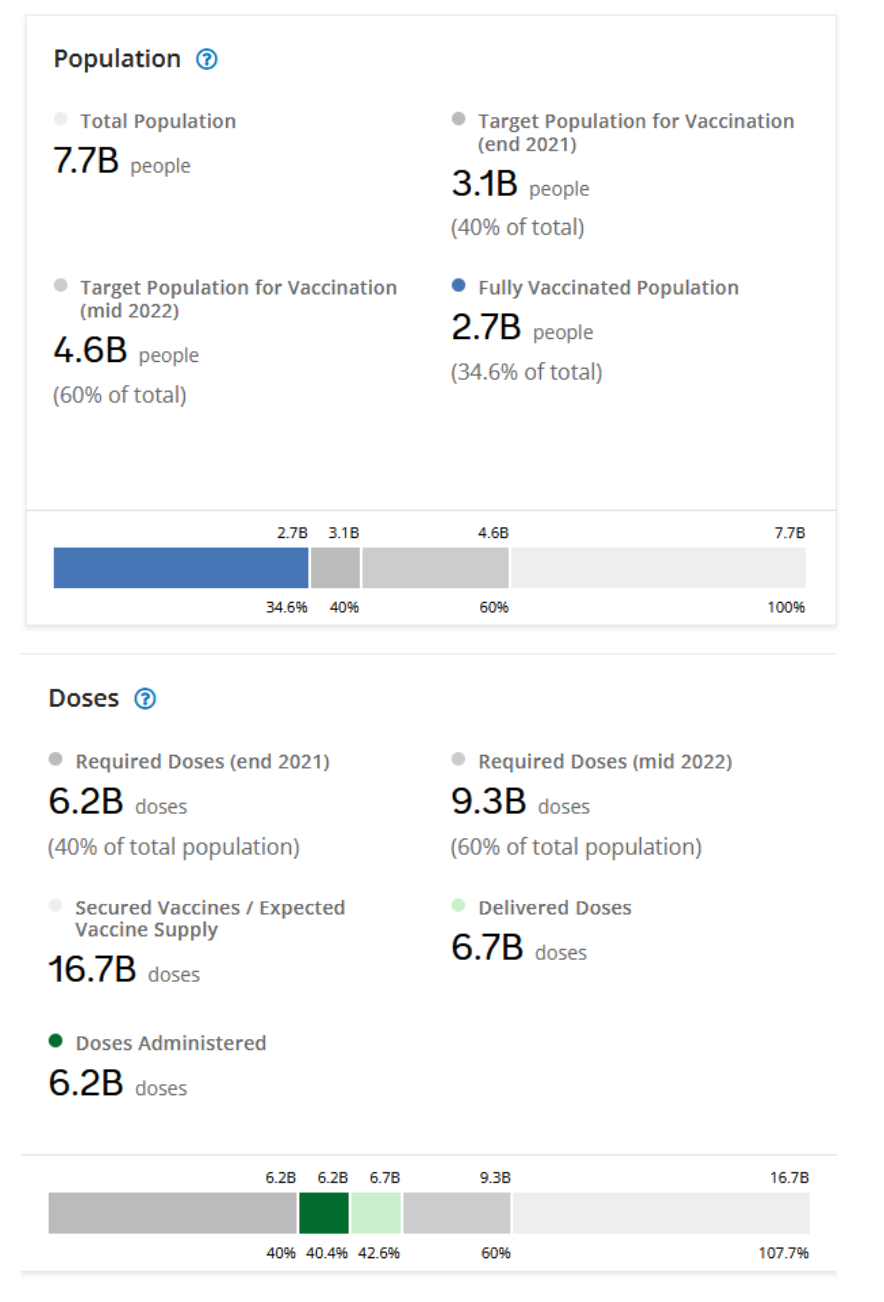
Working with COVAX, African Vaccine Acquisition Trust and other partners – world can and must meet WHO targets to vaccinate 40% of the population of all countries by the end-2021 and 70% by mid-2022
Vaccine supply gaps to COVAX must be closed immediately for countries to reach the 40% year-end target
United Nations Secretary-General and WHO Director-General call on countries and  manufacturers to make good on their commitments without further delays

The World Health Organization has today launched the Strategy to Achieve Global Covid-19 Vaccination by mid-2022 (the Strategy) to help bring an end to what has become a two-track pandemic:  people in poorer countries continue to be at risk while those in richer countries with high vaccination rates enjoy much greater protection.

WHO had set a target to vaccinate 10% of every country, economy and territory by the end of September but by that date 56 countries had not been able to do so, the vast majority of these are countries in Africa and the Middle East.

The new strategy outlines a plan for achieving WHO’s targets to vaccinate 40% of the population of every country by the end of this year and 70% by mid-2022.

Science has played its part by delivering powerful, life-saving tools faster than for any outbreak in history,” said WHO Director-General Dr Tedros Adhanom Ghebreyesus. “But the concentration of those tools in the hands of a few countries and companies has led to a global catastrophe, with the rich protected while the poor remain exposed to a deadly virus. We can still achieve the targets for this year and next, but it will take a level of political commitment, action and cooperation, beyond what we have seen to date.”

“This is a costed, coordinated and credible path out of the COVID-19 pandemic for everyone, everywhere,” said United Nations Secretary-General Antonio Guterres. “Without a coordinated, equitable approach, a reduction of cases in any one country will not be sustained over time. For everyone’s sake, we must urgently bring all countries to a high level of vaccination coverage.”

To achieve the global vaccination targets, there should be a three-step approach to vaccination, with all older adults, health workers, and high-risk groups of all ages, in every country vaccinated first, followed by the full adult age group in every country and lastly extended vaccination of adolescents.

Vaccinating 70% of the global population requires at least 11 billion vaccine doses.   By the end of September, just over 6 billion doses had already been administered worldwide.  With global vaccine production now at nearly 1.5 billion doses per month, there is sufficient vaccine from a supply perspective to achieve the global vaccination targets provided that there is equitable distribution of those doses.

Substantial financing has already been invested to procure most of the required vaccine doses for low- and lower-middle-income countries through COVAX, the African Vaccine Acquisition Trust (AVAT) and bilateral contracts.  There needs to be additional investment to secure the remaining vaccine doses for these countries as well as investment to support in-country delivery.


The Strategy outlines the priority actions needed from the different actors to achieve the targets.
All Countries must:
Establish updated national COVID-19 vaccine targets and plans defining dose requirements to guide manufacturing investment and vaccine redistribution, and financial and programmatic resource needs to guide internal planning and external support;
Monitor vaccine demand and uptake carefully to rapidly adapt services and ensure continuity of vaccine supplies;
Commit to equitable distribution of vaccines in line with the WHO three-step approach;
Revise national vaccination strategies, policies and prioritization as needed to harness emerging evidence to maximize the impact of existing, modified and new vaccines.


Countries with high vaccine coverage must:
Swap vaccine delivery schedules, with COVAX and AVAT to enhance coverage in countries in need;
Fulfil and accelerate vaccine dose-sharing and donation commitments to COVAX in the near term, for those with existing pledges;
Establish new dose-sharing commitments to facilitate progress toward the 70% coverage target in every country.


Vaccine-producing countries must:
Allow the free cross-border flow of finished vaccines and raw materials;
Enable diversified vaccine production, both geographically and technologically, including through non-exclusive, and transparent licensing and sharing of know-how to allow transfer of technology and scale-up of manufacturing.


COVID-19 vaccine manufacturers must:
Prioritize and fulfil COVAX and AVAT contracts as a matter of urgency;
Provide full transparency on the overall monthly production of COVID-19 vaccines and clear monthly schedules for supplies to COVAX, AVAT and low and low-middle income countries, to enable proper global and national-level planning and optimal use of scarce supplies;
Actively engage and work with countries that have high coverage and that have contracted high volumes of vaccines to allow the prioritization of COVAX and AVAT contracts, including through delivery schedule swaps, and facilitate rapid and early dose-sharing;
Commit to share know-how more rapidly, facilitate technology transfer and provide transparent non-exclusive voluntary licenses, to ensure that future vaccine supply is reliable, affordable, available, and deployed to every country in volumes and timing that achieves equitable access.


Civil society, community organizations, and the private sector must:
Advocate locally, nationally and internationally for equitable access to COVID-19 vaccines, tests and treatments, calling for and monitoring in particular the specific actions required of manufacturers, governments and multilateral actors;
Mobilize and empower communities, including through social media and community networks, to generate strong vaccine demand and address misinformation and misperceptions that contribute to vaccine hesitancy;
Provide support to the in-country delivery of vaccination programmes and services.


Global and regional multilateral development banks and institutions must:
Enable countries to more rapidly access the capital and external support needed for in-country vaccine delivery, prioritizing low-income settings and especially targeting support to the technical, logistics and human resources required;
Engage fully with COVAX/ACT-Accelerator and AVAT, with integrated operations and real-time sharing of information to truly support equitable access;
Support international procurement and allocation mechanisms to enable all countries to equitably, efficiently and rapidly achieve the COVID-19 vaccine targets;
Support vaccine distribution plans and a campaign to convey the life-saving importance of approved COVID-19 vaccinations.

For their part, WHO, Gavi, UNICEF and CEPI must work in close collaboration with World Bank, World Trade Organization, International Monetary Fund, Africa CDC, AVAT, and other key partners to monitor progress, identify changes needed to resolve bottlenecks, coordinate information and prioritize actions; continue to co-lead and manage the COVAX Pillar of ACT-Accelerator; support the equitable allocation of available vaccines, particularly to low-, lower-middle-income and lagging countries; directly support countries to develop and sustain rapid, effective, high-quality COVID-19 vaccine delivery programmes that can achieve the global targets; address key research, policy, safety and regulatory issues that will optimize vaccine impact including effective supply, dosing and vaccine schedules, mixing and matching of products, protection against variants, and other issues; and monitor and report monthly on progress towards the global COVID-19 vaccination goals.


Note to Editors:
The Strategy to Achieve Global Covid-19 Vaccination by mid-2022 can be read in its entirety here.
See also:
:: The Global COVID-19 Vaccination – Strategic Vision for 2022 Technical Document
:: Slide deck on the Strategy to Achieve Global Covid-19 Vaccination by mid-2022

Following the WHO declaration of novel coronavirus as a public health emergency of international concern on 30 January 2020, the main global immunization partners developed a global COVID-19 vaccination strategy through the Access to COVID-19 Tools Accelerator (ACT-A) Vaccines Pillar (COVAX). The ACT-A prioritized strategy and budget can be read here. The 2022 Global Vaccination Strategy is intended to complement that strategy.

The immediate goal of the global COVID-19 vaccination strategy is to minimize deaths, severe disease and overall disease burden; curtail the health system impact; fully resume socio-economic activity, and reduce the risk of new variants.

The 2022 Global COVID-19 Vaccination Strategy is based on a technical analysis that established a Conceptual COVID-19 Goal Framework which specifies a sequence of socio-economic and health goals, which could be achieved with various levels of vaccination scope and other interventions. The Conceptual Goal Framework structures the technical analyses of vaccination requirements to achieve ever broader health, social and economic goals and builds upon WHO’s broader COVID-19 Strategic Preparedness and Response Plan (SPRP) first published in 2020 and subsequently updated in 2021. The SPRP’s strategic objectives inform and align with the health and socioeconomic dimensions of the Global COVID-19 Vaccine Strategic Vision Goal Framework.


::::::

WHO, WIPO, WTO Workshop on Innovation in, and Access to, COVID 19 Technologies: Intellectual property licensing, technology transfer, and sharing of know-how and clinical trial information
5 October 2021 Departmental news
On September 27, 2021, the World Health Organization (WHO), the World Intellectual Property Organization (WIPO) and the World Trade Organization (WTO) jointly organized a Workshop on Innovation in, and Access to, COVID-19 Technologies. The workshop focused on intellectual property licensing, technology transfer, and sharing of know-how and clinical trial information. It aimed at strengthening the capacity of policymakers and experts coming from WHO, WIPO and WTO members to address the COVID-19 pandemic. This capacity-building activity was conceived to help members update their knowledge and understanding of how intellectual property (IP), know-how and technology transfer work in actuality.

The activity was agreed in a June 15, 2021 meeting among the Directors General of WHO, WIPO and WTO  in which they underscored their commitment to universal, equitable access to COVID-19 vaccines, therapeutics, diagnostics, and other health technologies.

In three panels, speakers addressed the following themes: realizing global equitable access for vaccines, diagnostics, therapeutics and other COVID-19 health technologies; mechanisms and processes to support technology transfer and IP licensing; and enabling factors and policies for technology transfer…

More than 200 participants from a broad range of members of WHO, WIPO and WTO participated in this training. The program, the full summary of key issues addressed by the workshop, as well as presentations shown during the event are posted on the meeting webpage as they become available.


::::::

Interim statement on booster doses for COVID-19 vaccination
4 October 2021 Statement
WHO, with support of the Strategic Advisory Group of Experts (SAGE) on Immunization and its COVID-19 Vaccines Working Group, continues to review the emerging evidence on the need for and timing of a booster dose for the currently available COVID-19 vaccines which have received Emergency Use Listing (EUL). This statement reflects the current understanding of vaccine performance and supply, as of the time of update…

Rationale for the administration of booster doses
The current primary goal of immunization in the COVID-19 pandemic remains to protect against hospitalization, severe disease and death. Hence, booster doses may only be needed if there is evidence of insufficient protection against these disease outcomes over time.

The degree of waning of immunity and need for booster doses of vaccine may differ between vaccine products, target populations, circulating SARS CoV-2 virus, in particular variants of concern (VoC), and intensity of exposure. For some vaccines, restricted booster indications have been included into the product label of some jurisdictions.

In a period of continued global vaccine supply shortage equity considerations at country, regional and global level remain an essential consideration to assure vaccination of high priority groups in every country. Improving coverage of the primary vaccination series should be prioritized over booster vaccination…

Conclusions
Introducing booster doses should be firmly evidence-driven and targeted to the population groups in greatest need. The rationale for implementing booster doses should be guided by evidence on waning vaccine effectiveness, in particular a decline in protection against severe disease in the general population and in high-risk populations, or due to a circulating VoC. To date, the evidence remains limited and still inconclusive on any widespread need for booster doses following a primary vaccination series.

In the context of ongoing global vaccine supply constraints, broad-based administration of booster doses risks exacerbating inequities in vaccine access by driving up demand and diverting supply while priority populations in some countries, or in subnational settings, have not yet received a primary vaccination series.  The focus remains on urgently increasing global vaccination coverage with the primary series driven by the objective to protect against severe disease.

SAGE will deliberate on the evidence for a booster dose during an upcoming Extraordinary SAGE meeting in November 2021.

COVID-19 VACCINE PRODUCTION AND TARIFFS ON VACCINE INPUTS

Milestones :: Perspectives :: Research


COVID-19 VACCINE PRODUCTION AND TARIFFS ON VACCINE INPUTS
World Trade Organization
08 October 2021 :: 35 pages
INFORMATION NOTE
Key points:
Among the top 27 vaccine manufacturing economies, Switzerland has the lowest verage applied most-favoured-nation (MFN) tariff at 1.5 per cent for vaccine production inputs.
Iran and Cuba have the highest applied MFN tariff at 11.9 per cent and 10.3 per cent, respectively.
Using criteria of at least 5 per cent tariff for the product group as a “choke point” level, Argentina, India and Iran have all 13 product groups of vaccine inputs which can be considered sensitive/critical at varying levels, depending on the share of these product groups relative to total imported vaccine inputs.
Of the 27 top manufacturers, 23 have at least 5 choke points.
In Kazakhstan, the average tariff for the product group “vaccine ingredients” is almost 29 per cent, and this product group accounts for nearly one quarter of imported vaccine inputs.
Among the different product groups, “vaccine ingredients” are the building blocks for vaccines and yet it is a tariff choke point for 17 manufacturing economies. On average, the lowest tariff is for “heat marker vaccine vial monitor”, with the exception of Iran, which levies a tariff of 32 per cent (the highest average product group duty imposed by an individual economy).
Tariffs on critical products to manufacture vaccines remain high, especially in some developing countries, and might impede the flow across borders. This is especially important when a high percentage of these inputs must be imported from other economies.
Member cooperation at the WTO could support the elimination or significant reduction of tariffs on these vaccine inputs to reduce costs and to expand output from vaccine manufacturers meeting acute global needs.

WTO issues papers on vaccine inputs tariffs and bottlenecks on critical COVID-19 products
8 October 2021
The WTO Secretariat has published two information notes on issues relating to the manufacturing of COVID-19 vaccines.

The first one is a new study that focuses on COVID-19 vaccines production and tariffs on vaccine inputs. Based on the Joint Indicative List of Critical COVID-19 Vaccine Inputs for Consultation (Version 1.0), this new report explores the most-favoured nation (MFN) tariffs and imports of these products by the 27 top vaccine manufacturing economies in order to identify possible “sensitive” or choke points. Any product group with an average tariff of at least 5% was deemed a possible “choke point”.

The report concludes that tariffs on critical products to manufacture vaccines remain high, especially in some developing countries, and might impede the flow across borders and/or increase the cost of vaccine manufacturing. It calls for members’ cooperation under the WTO to support the elimination and/or significant reduction of tariffs on these vaccine inputs to reduce costs and expand output from vaccine manufacturers meeting acute global needs. The paper can be found here.

The second paper updates the “Indicative list of trade-related bottlenecks and trade-facilitating measures on critical products to combat COVID-19” that was previously published on 20 July 2021. This revised version is based on issues identified and suggestions made by stakeholders at various events and consultations convened by the WTO, as well as with vaccine manufacturers in the context of meetings organized by the Multilateral Leaders Task Force on COVID-19, which was established by the World Health Organization (WHO), the International Monetary Fund (IMF), the World Bank and the WTO.

One common theme that emerges in this update is that essential goods and inputs need to flow efficiently and expeditiously to support the rapid scaling up of COVID-19 production capacity worldwide. As manufacturers scale-up production and establish new sites in different countries, the production network is not only becoming larger, but also increasingly complex and international. Because the delay of a single component may significantly slow down or even bring to a halt vaccine manufacturing, it follows that inputs need to flow expeditiously, and each node within the supply chain network needs to operate seamlessly with the others.

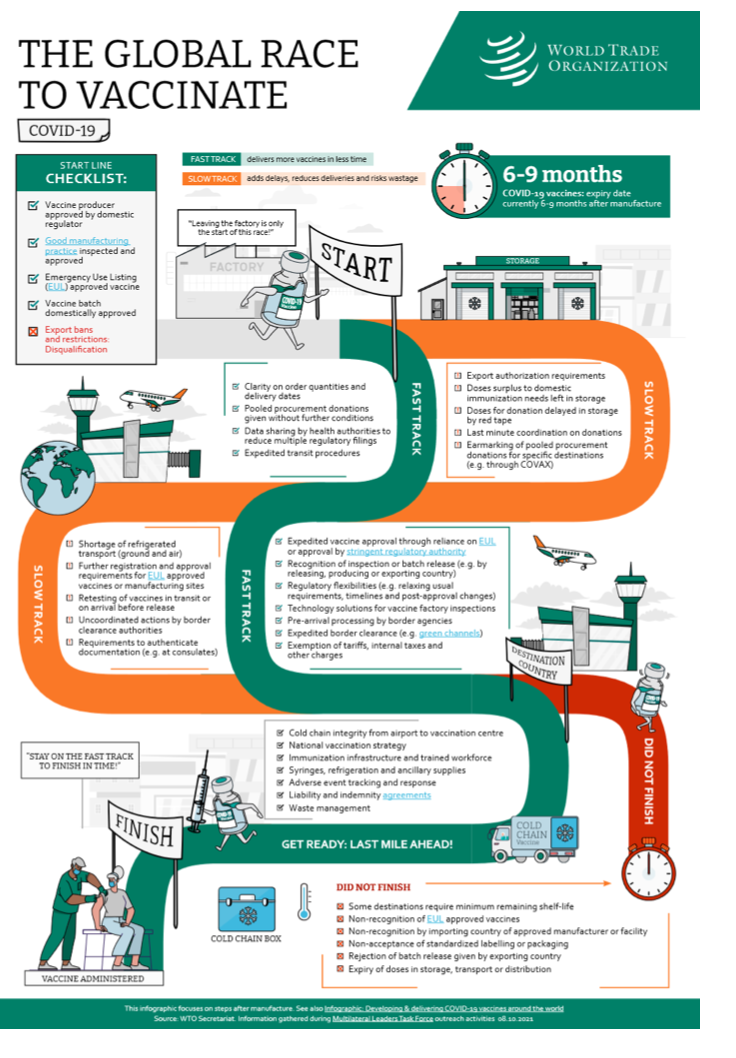
Intended to be a living document, the revision of the “Indicative List of Trade-Related Bottlenecks and Trade-Facilitating Measures on Critical Products to Combat COVID-19” can be downloaded here. Based on this paper, the WTO Secretariat has also issued the infographic “The Global Race to Vaccinate” , which shows the various steps involved in vaccination after manufacture.


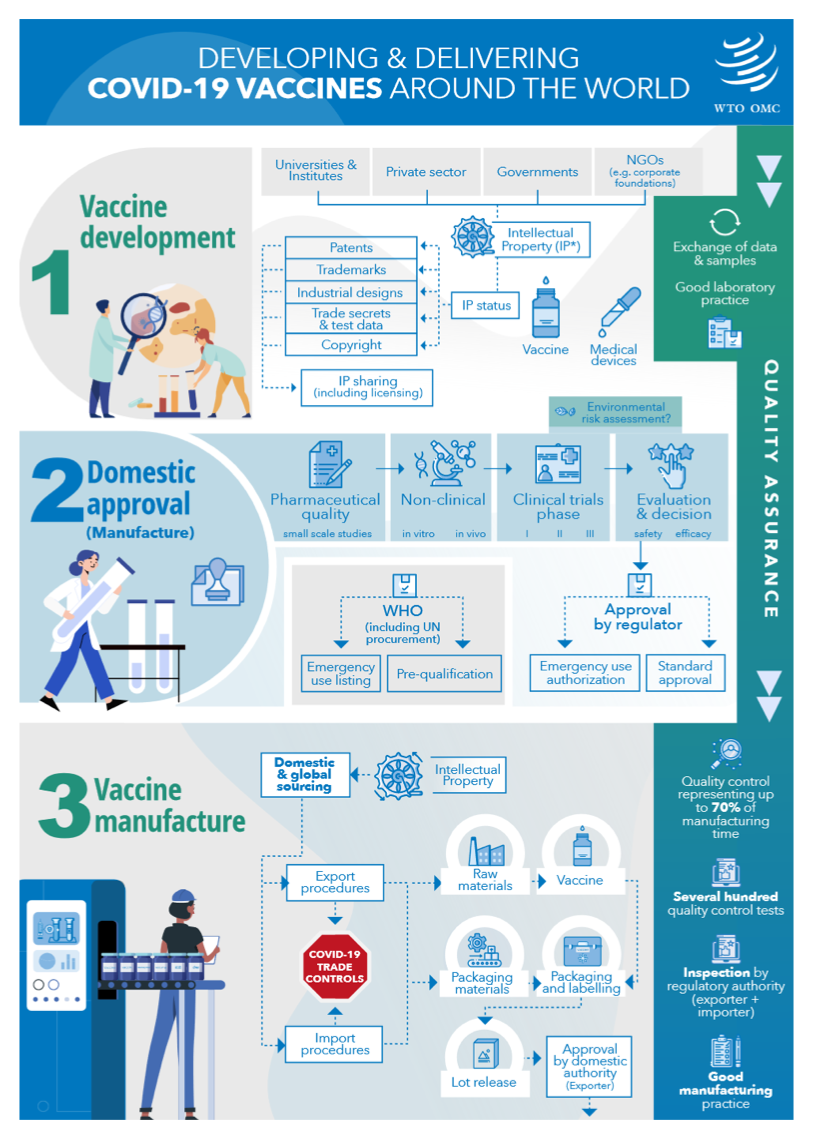
See also the infographic “Developing & delivering COVID-19 vaccines around the world“.

COVID Vaccines – OCHA:: HDX

Milestones :: Perspectives :: Research


COVID Vaccines – OCHA:: HDX

COVID-19 Data Explorer: Global Humanitarian Operations
COVID-19 Vaccine Roll-out
09 Oct 2021 | COVAX (WHO,GAVI,CEPI), UNDESA, Press Reports | DATA
Global COVID-19 Figures: 236M total confirmed cases; 4.8M total confirmed deaths
Global vaccines administered: 6.44B
Number of Countries: 29 [29 week ago]
COVAX Allocations Round 4-6 (Number of Doses): 120M [120M week ago]
COVAX Delivered (Number of Doses): 98M [95M week ago]
Other Delivered (Number of Doses): 160M [140M week ago]
Total Delivered (Number of Doses): 260M [240M week ago]
Total Administered (Number of Doses): 230M [220M week ago]

World Bank Vaccine Operations Portal

Milestones :: Perspectives :: Research


World Bank Vaccine Operations Portal
https://www.worldbank.org/en/who-we-are/news/coronavirus-covid19/world-bank-support-for-country-access-to-covid-19-vaccines
As of September 30, 2021, the World Bank approved operations to support vaccine rollout in 61 countries amounting to $5.8 billion. See the latest project financing, project documents and procurement information in this list. More information will be shared here as it becomes available. 

Multilateral Leaders Task Force on COVID-19 [IMF, World Bank Group, WHO, WTO]

Milestones :: Perspectives :: Research


Multilateral Leaders Task Force on COVID-19 [IMF, World Bank Group, WHO, WTO]
A joint initiative from the International Monetary Fund, World Bank Group, World Health Organization, and World Trade Organization to accelerate access to COVID-19 vaccines, therapeutics and diagnostics by leveraging multilateral finance and trade solutions, particularly in low- and middle-income countries. Website accessed 09 Oct 2021: https://data.covid19taskforce.com/data The global view below is complemented by country-specific dashboards here.

Coronavirus [COVID-19] – WHOPublic Health Emergency of International Concern (PHEIC)

Milestones :: Perspectives :: Research

::::::


Coronavirus [COVID-19] – WHO
Public Health Emergency of International Concern (PHEIC)
https://www.who.int/emergencies/diseases/novel-coronavirus-2019


Weekly Epidemiological and Operational updates
Last update: 09 Oct 2021
Confirmed cases :: 236 599 025 [233 503 524 week ago]
Confirmed deaths :: 4 831 486 [4 777 503 week ago]
Vaccine doses administered: 6 262 445 422 [6 143 369 655 week ago]


:::::::

Weekly epidemiological update on COVID-19 – 5 October 2021
Overview
Globally, the number of weekly COVID-19 cases and deaths continued to decline. This is a trend that has been observed since August. Over 3.1 million new cases and just over 54 000 new deaths were reported during the week of 27 September to 3 October 2021. Cases this week decreased by 9% as compared to the previous week, while deaths remained similar. All regions reported a decline in the number of new cases this week apart from the European Region which remained similar to the week before. The largest decrease in new weekly cases was reported from the African Region (43%), followed by the Eastern Mediterranean Region (21%), the South-East Asia Region (19%), the Region of the Americas (12%) and the Western Pacific (12%). The cumulative number of confirmed cases reported globally is now over 234 million and the cumulative number of deaths is just under 4.8 million.

In this edition, we provide updates on the impacts of the phenotypic characteristics (transmissibility, disease severity, risk of reinfection, and impacts on diagnostics and vaccine performance) of SARS-CoV-2 Variants of Concern (VOCs) and the geographic distribution of VOCs.

Vaccines: The Week in Review

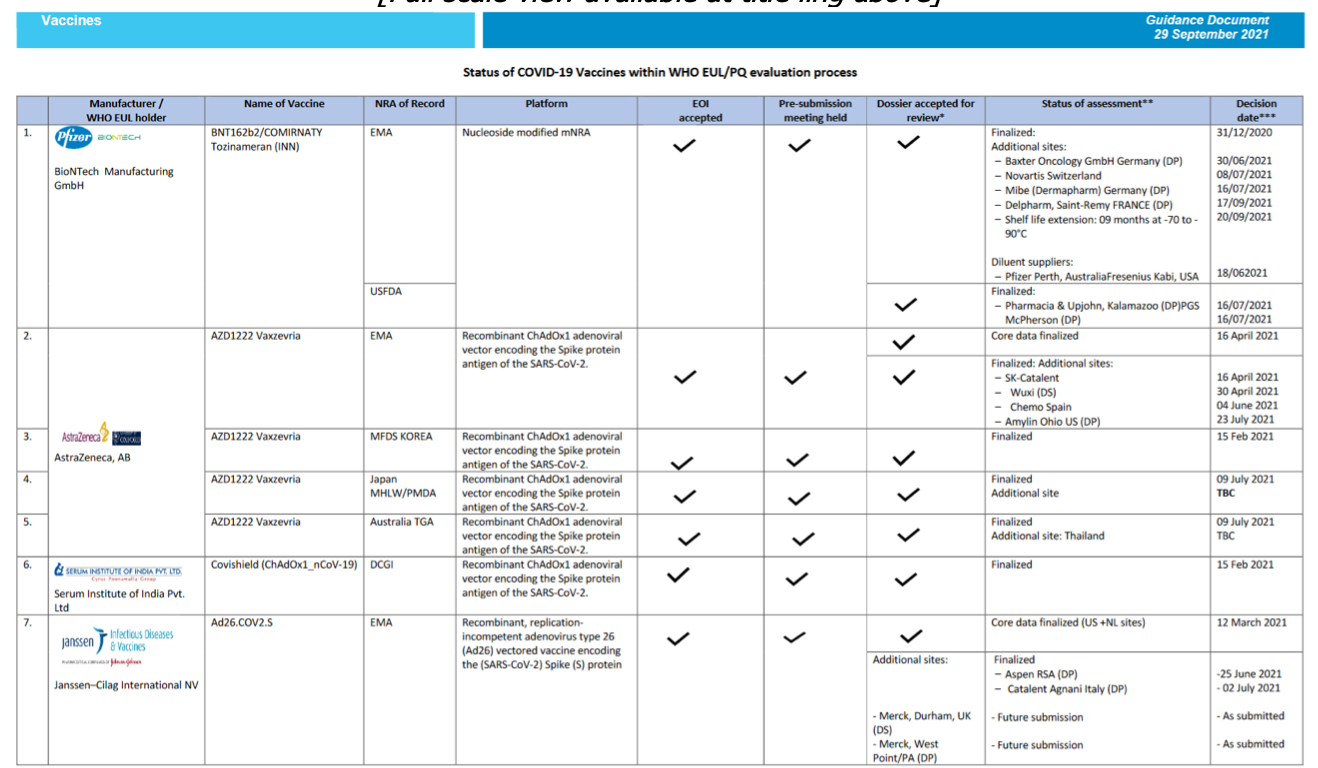
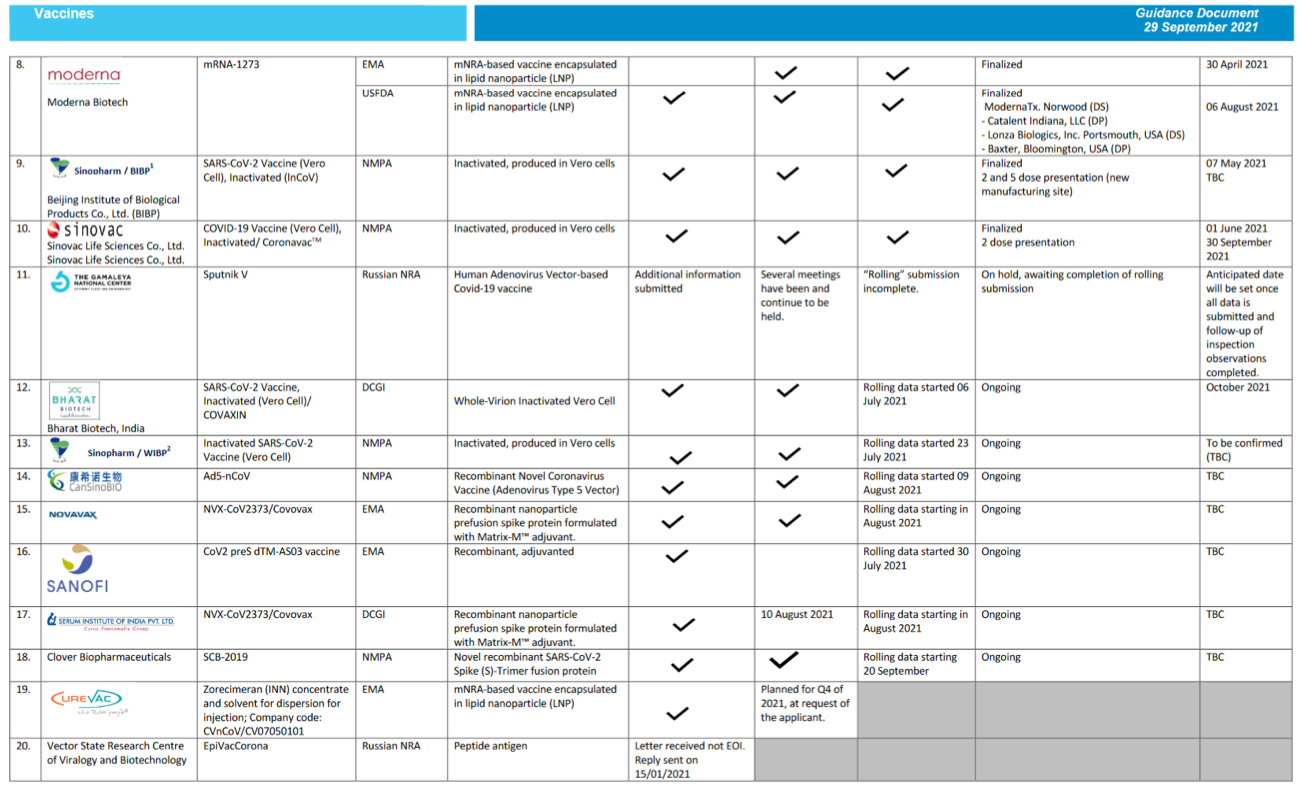
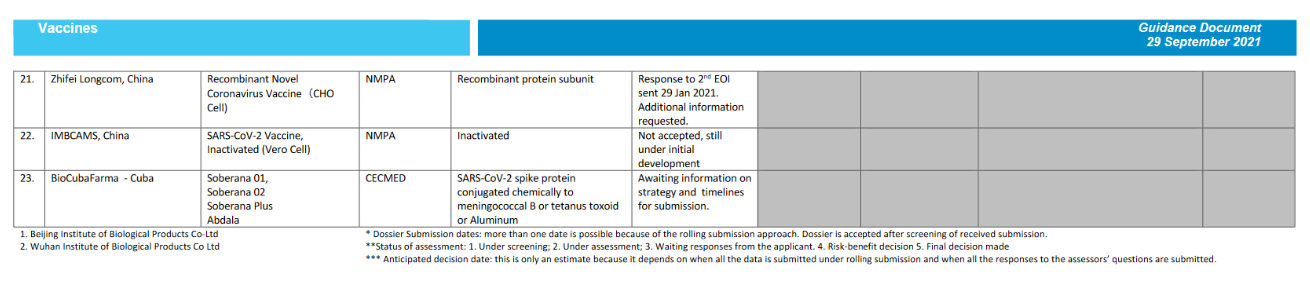
Status of COVID-19 Vaccines within WHO EUL/PQ evaluation process 29 September 2021

For 23 vaccine candidates, presents Manufacturer, Name of Vaccine, NRA of Record, Platform, EOI Accepted Status, Pre-submission Meeting Held Status, Dossier Accepted for Review, Status of Assessment; Anticipated/Completed Decision Date

[Full scale view available at title link above]