Open Letter on ACT-A Therapeutics and Ongoing Roadblocks to Enhancing Access – IFPMA
10 May 2022 [Text-bolding from original]
Dear ACT-A partners,
As a founding partner of ACT-A, we remain committed to the collective goal of enabling global and equitable access to COVID-19 vaccines, therapeutics and diagnostics. Two and a half years on, the world is very much still in the grip of COVID-19 and we share the concern of our global health partners that we must redouble our efforts in order to defeat this pandemic.
The biopharmaceutical industry has stepped up to the challenge and done everything possible to meet what has been asked of us on facilitating access to therapeutics.
Remarkable progress has been made in the fight against COVID-19 and this year particularly so on therapeutics. Antivirals can offer an important option for preventing severe illness, saving lives and preserving health system resources in the process. Our member companies have acted decisively early on by putting equitable access to antivirals at the top of our priorities. We have signed voluntary licence agreements (bilaterally and through Medicines Patent Pool) along with enabling the transfer of technology to scale up sublicensees’ manufacturing capabilities. We have also engaged with ACT-A’s procurement partners to put in place timely supply agreements for several million treatment courses to reach LMICs, while also submitting for emergency and full regulatory approvals and WHO pre-qualification in record time. In amongst all this, our companies continue to adhere to tiered pricing as a guiding principle for access.
Despite these efforts, we remain concerned that COVID-19 treatments are unlikely to reach those who need them in a timely and efficient manner due to a number of issues, many of which rest with ACT-A. We anticipated these and raised them on multiple occasions to the ACT-A partners, charting as far back as midway through 2021. However, many of these issues today remain unresolved and if not dealt with promptly, run the risk of further exacerbating inequality of access to treatments.
Cognizant that ACT-A alone cannot fully address such issues, we call on global partners to work collaboratively with us to help overcome three main challenges:
[1] Demand signals, forecasts and purchase requests from ACT-A have been late and significantly lower than expected. This impacts access.
We moved quickly to calls to deliver safe and effective antiviral therapeutics as soon as possible and at an affordable price. Yet, we have been surprised by the slow pace of concrete orders coming through the ACT-A Tx Pillar.
Outside of the ACT-A pillar, certain LMICs have moved forward of their own accord to procure millions of courses of antiviral treatment in the past several months. This undermines equity between those LMICs with the financial ability to procure bilaterally and those which will rely on the ACT-A system to support procurement.
Worryingly, demand in private markets supplied by generic manufacturers outside our members’ voluntary licensing networks with unknown quality-assurance risks creating even greater inequality in LMICs where the public sector has not yet provided access.
The procurement activities outside of ACT-A combined with the slow orders via ACT-A would suggest that roadblocks are occurring within the ACT-A system, and that countries have not been informed on how to access antivirals via ACT-A. These roadblocks are outside of our control and we urge that this be addressed as a priority.
[2] An allocation framework for therapeutics should have been designed and coordinated with partners early on. This impacts access.
Since June 2021, we have been calling for a clear allocation framework for therapeutics to be developed to provide guidance on how to ensure equity, knowing how important this would be for the manufacturers particularly when it was widely-known that volumes for some medicines would be limited in the early months of 2022.
We are still no clearer about the timelines for the allocation framework anticipated by ACT-A. Such a lack of transparency and ongoing delays in allocation, lack of global funding and clear signals of supranational demand have made it difficult for manufacturers to forecast the supply needed to meet the ACT-A demand volumes.
While manufacturers have set aside supply in the short-term to fulfil ACT-A procurement agreements that are now in place and they are now ready to ship product, the global health community to date has not provided a coordinated system for equitable access to antiviral treatments.
ACT-A should streamline the procurement process with manufacturers through a single contract approach in support of access, thereby avoiding protracted negotiations with individual ACT-A partners. The current process is challenging given ACT-A partners place different procedural demands on manufacturers and operate different General Terms and Conditions, leading to cumbersome legal negotiations and unnecessary delays.
[3] Country readiness risks slowing down treatment uptake. This impacts access.
While innovator companies and their licensees continue to ramp up manufacturing to supply the world, we remain concerned that local systems will not have the absorption capacity for the new therapeutics to be most impactful in curbing the effect of the COVID-19 pandemic.
Effective scale up of antivirals requires: availability of diagnostics; clear communication to patients on how, where, and when to seek testing and treatment, and information to healthcare providers on the choice of which antiviral treatment option is most appropriate for which patient.
We have consistently expressed our concerns about the preparedness of countries to absorb these new medicines into their pandemic responses. While we understand that work is underway in ACT-A to accelerate and enhance improved access to COVID-19 diagnostics and treatment while continuing to build capacity for test-trace-isolate and treatment efforts, we believe more must be done and reiterate our offer to collaborate on this important aspect.
In conclusion, whilst we continue to develop and supply the needed medical innovations to respond to the pandemic and to enable equitable access to the new therapeutics, we wish to share our concerns that the ecosystem as it currently exists is not fit-for-purpose to ensure that patients have access to these treatments within the critical timeframes required, and not enough coordination seems to be in place to address identified access issues…
WTO Members welcome Quad document as basis for text-based negotiations on pandemic IP response
10 May 2022
At a General Council meeting on 10 May, WTO members agreed that the outcome document emerging from the informal process conducted with the Quad (European Union, India, South Africa and the United States) opens the prospect for text-based negotiations on an intellectual property response to COVID-19. Members welcomed the proposal as a positive development and thanked Director-General Ngozi Okonjo-Iweala and Deputy Director-General Anabel González, as well as the four members of the Quad, for their efforts in trying to find a way forward on this long-standing issue…
…China announced at the meeting that it will not avail itself of the flexibilities under the Quad waiver text provided that language is used opening benefits of the waiver to all developing members while encouraging those with capacity to export vaccines to opt out. China and several other members rejected a second option in the text that would restrict waiver eligibility to those developing countries that exported more than 10 per cent of the world’s vaccine doses in 2021.
Several delegations took the floor to praise China for showing leadership in this process. The DG also thanked China for its announcement.
“China has made a bold move today and we should recognize it,” she said. “I think it really opens up the spirit of constructiveness which I hope will be forthcoming from our members to get a workable proposal out of this.”
Ambassador Gberie urged members to be pragmatic in working for an outcome on the waiver text by the time ministers gather in Geneva for the WTO’s 12th Ministerial Conference (MC12) on 12-15 June…
::::::
IFPMA statement on Quad’s Outcome Document on TRIPS
10 May 2022 [Excerpt]
…IFPMA and its members from the global biopharmaceutical industry reaffirm their position that weakening the intellectual property (IP) framework is counterproductive, and would undermine industry’s ability to partner with academia, research institutes, and other private companies to address the current and future pandemics.
Far from posing barriers, it is clear that IP-based incentives were central to the innovation and to the hundreds of collaborations that enabled the development, manufacturing, scale-up and distribution of novel COVID-19 vaccines and therapeutics. While IP rights have never contributed to COVID-19 vaccine supply constraints, the “Quad proposal” is especially misguided now that it is widely acknowledged that there are no longer any such constraints.
The IP TRIPS Waiver is not only the wrong solution, but it is also an outdated proposal that has been overtaken by events, since vaccine supplies are vastly outstripping demand. The current proposals should be shelved and the focus should be directed to getting vaccines into arms for those who need them most….
Weekly Epidemiological and Operational updates Last update: 13 May 2022 Confirmed cases :: 517 648 631 Confirmed deaths :: 6 261 708 Vaccine doses administered: 11 655 356 423
::::::
Weekly epidemiological update on COVID-19 – 11 May 2022 Overview Globally, the number of new COVID-19 cases and deaths has continued to decline since the end of March 2022. During the week of 2 through 8 May 2022, over 3.5 million cases and over 12 000 deaths were reported, decreases of 12% and 25% respectively, as compared to the previous week. However, an increase in the number of new weekly cases was reported from the Region of the Americas (+14%) and the African Region (+12%) and an increase in the number of weekly deaths was reported from the African Region (+84%). As of 8 May 2022, over 514 million confirmed cases and over six million deaths have been reported globally. In this edition, we provide an update on the geographic distribution of circulating SARS-CoV-2 variants of concern (VOCs), including the prevalence and summary of current evidence of the Omicron variant. We also provide updates on vaccine effectiveness for the Omicron variant.
COVID Vaccines/Therapeutics – Developer/Manufacturer Announcements [Selected press releases/announcements from organizations from WHO EUL/PQ listing above and other organizations]
AstraZeneca Press Releases – No new digest announcements identified
Pfizer Recent Press Releases
05.13.2022 Pfizer and BioNTech Provide Update on COVID-19 Vaccine Supply Agreement with European Commission
…This amendment rephases planned deliveries to help support the European Commission and Member States’ ongoing immunization programs, and is aligned to the companies’ commitment to working collaboratively to identify pragmatic solutions to address the evolving pandemic needs. Doses scheduled for delivery in June through August 2022, will now be delivered in September through fourth quarter 2022. This change of delivery schedule does not impact the companies’ full-year 2022 revenue guidance or the full-year commitment of doses to be delivered to EC Member States in 2022…
Sanofi Pasteur Press Releases
May 11 2022 Press releases New nirsevimab data analyses reinforce efficacy against RSV
A prespecified pooled analysis of Phase 3 and Phase 2b data demonstrated an efficacy of 79.5% against medically attended lower respiratory tract infections (LRTI), including hospitalizations, caused by respiratory syncytial virus (RSV)1
Nirsevimab is the first investigational immunization designed to protect all infants across the RSV season with a single dose
Two analyses are being presented at the European Society for Paediatric Infectious Diseases meeting1,2
Serum Institute of India NEWS & ANNOUNCEMENTS – No new digest announcements identified
COVID-19 Global Targets and Progress Tracker – IMF The COVID-19 Global Targets and Progress Tracker presents a consolidated view of the progress towards global COVID-19 targets, barriers in access to COVID-19 tools, and delivery of donor pledges.
The global targets presented in the Tracker are based on an alignment of the targets identified in the IMF Pandemic Proposal, ACT-A Strategic Plan & Budget, and the US-hosted Global C19 Summit, and as such have been reaffirmed by multilateral institutions and global leaders. We will continue to enhance the tracker as we improve our data collection efforts.
Global Dashboard on COVID-19 Vaccine Equity The Dashboard is a joint initiative of UNDP, WHO and the University of Oxford with cooperation across the UN system, anchored in the SDG 3 Global Action Plan for Healthy Lives and Well-being for All.
Duke – Launch and Scale Speedometer The Race for Global COVID-19 Vaccine Equity A flurry of nearly 200 COVID-19 vaccine candidates are moving forward through the development and clinical trials processes at unprecedented speed; more than ten candidates are already in Phase 3 large-scale trials and several have received emergency or limited authorization. Our team has aggregated and analyzed publicly available data to track the flow of procurement and manufacturing and better understand global equity challenges. We developed a data framework of relevant variables and conducted desk research of publicly available information to identify COVID vaccine candidates and status, deals and ongoing negotiations for procurement and manufacturing, COVID burden by country, and allocation and distribution plans. We have also conducted interviews with public officials in key countries to better understand the context and challenges facing vaccine allocation and distribution [accessed 24 July 2021] See our COVID Vaccine Purchases research See our COVID Vaccine Manufacturing research See our COVID Vaccine Donations & Exports research
COVID-19 Data Explorer: Global Humanitarian Operations COVID-19 Vaccine Roll-out 14 May 2022 | COVAX (WHO,GAVI,CEPI), UNDESA, Press Reports | DATA Global COVID-19 Figures: 517M total confirmed cases; 6.3M total confirmed deaths Global vaccines administered: 11.7B
Number of Countries: 28
COVAX Allocations Round 4-9 (Number of Doses): 170M
COVAX Delivered (Number of Doses): 300M
Other Delivered (Number of Doses): 320M
Total Delivered (Number of Doses): 610M
Total Administered (Number of Doses): 410M
Multilateral Leaders Task Force on COVID-19 [IMF, World Bank Group, WHO, WTO] https://data.covid19taskforce.com/data A global effort to help developing countries access and deliver COVID-19 vaccines, testing, and therapeutics, as they work to end the pandemic and boost economic recovery. The International Monetary Fund, World Bank Group, World Health Organization and World Trade Organization have joined forces to accelerate access to COVID-19 vaccines, therapeutics and diagnostics by leveraging multilateral finance and trade solutions, particularly in low- and middle-income countries. Website accessed 14 May 2022: https://data.covid19taskforce.com/data The global view below is complemented by country-specific dashboards here.
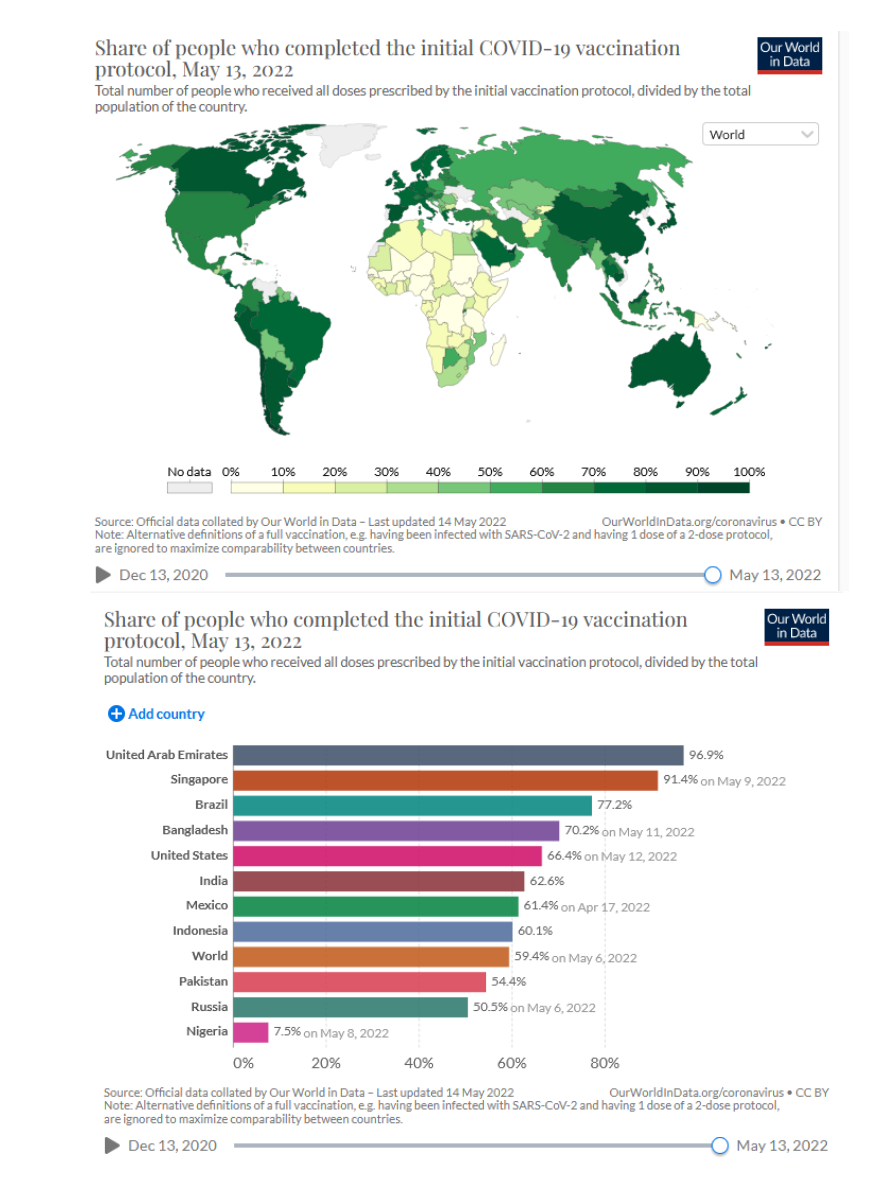
Our World in Data Coronavirus (COVID-19) Vaccinations[Accessed 14 May 2022] :: 65.4% of the world population has received at least one dose of a COVID-19 vaccine. :: 11.65 billion doses have been administered globally, and 6.45 million are now administered each day. :: Only 15.7% of people in low-income countries have received at least one dose.
Regulatory Actions Vaccines and Related Biological Products Advisory Committee– FDA https://www.fda.gov/advisory-committees/blood-vaccines-and-other-biologics/vaccines-and-related-biological-products-advisory-committee Calendar :: On June 7, FDA intends to convene VRBPAC to discuss an EUA request for a COVID-19 vaccine manufactured by Novavax to prevent COVID-19 in individuals 18 years of age and older.
:: On June 8, 21 and 22, the FDA has held dates for the VRBPAC to meet to discuss updates to the Moderna and Pfizer-BioNTech EUAs for their COVID-19 vaccines to include younger populations. As the sponsors complete their submissions and the FDA reviews that data and information, it will provide additional details on scheduling of the VRBPAC meetings to discuss each EUA request.
:: On June 28, the FDA plans to convene the VRBPAC to discuss whether the SARS-CoV-2 strain composition of COVID-19 vaccines should be modified, and if so, which strain(s) should be selected for Fall 2022. This meeting is a follow-up to the April 6 VRBPAC meeting that discussed general considerations for future COVID-19 vaccine booster doses and the strain composition of COVID-19 vaccines to further meet public health needs.
…Once the meeting dates are finalized, the FDA intends to make background materials available to the public, including the meeting agenda and committee roster, no later than two business days before each meeting…
The United States Provides Nearly $808 Million in Emergency Humanitarian Assistance for Syria
May 10, 2022
Today, U.S. Ambassador to the United Nations Linda Thomas-Greenfield announced the United States is providing nearly $808 million in additional humanitarian assistance for the Syria crisis response at the sixth Brussels Conference on “Supporting the Future of Syria and the Region,” hosted by the European Union. This new funding includes nearly $446 million from the U.S. Agency for International Development (USAID) and is the largest USAID funding contribution for Syria this year.
News ECDC and WHO publish joint surveillance bulletin on hepatitis outbreak News story – 13 May 2022
News Epidemiological update: Hepatitis of unknown aetiology in children Epidemiological update – 11 May 2022
Publication COVID-19 Aviation Health Safety Protocol: Operational guidelines for the management of air passengers and aviation personnel in relation to the COVID-19 pandemic Technical guidance – 11 May 2022
Statement 12 May 2022 State aid: Commission will phase out State aid COVID Temporary Framework The European Commission will phase out the State aid COVID Temporary Framework, adopted on 19 March 2020 and last amended on 18 November 2021, enabling Member States to remedy a serious disturbance in the economy in the context of the coronavirus pandemic.
Government of India – Press Information Bureau Latest Press Releases COVID – 19 Vaccination Update – Day 484 :: India’s cumulative vaccination coverage crosses 191.30 Crore :: More than 13 lakh Vaccine doses administered today till 7 pm Posted On: 14 MAY 2022 9:22PM by PIB Delhi
[We did not identify official announcements about China’s COVID response in general, or in Shanghai, Beijing or other China locations, leading us to include these reports/observations from the general media below. See China CDC below for additional announcements]
Locked down Shanghai aims to eliminate Covid over the next week
Text by: Oliver FARRY | Lou KISIELA | Antoine MOREL | Yan CHEN
France 24, 13/05/2022
Shanghai has been under complete lockdown for six weeks now. Around 26 million inhabitants have been confined to their homes and the government has been adamant in its pursuit of zero Covid cases.
However, the goal of zero cases has yet to be reached. The World Health Organization says China’s strategy is unsustainable but Chinese President Xi Jinping is not letting up. This week, health measures were further tightened in China’s economic capital.
“We have to transfer you. You have been named as a contact case. Open up or we will knock the door in!” said one of the health workers to a resident of a building that was condemned due to the presence of a Covid case.
China tightens curbs on overseas travel as part of Covid-19 battle
:: Immigration authorities say they will tighten restrictions on ‘non-essential’ travel and passport approvals
:: The measures were announced following last week’s meeting of the top leadership, where they doubled down on the zero-Covid policy Phoebe Zhang and Guo Rui
South China Morning Post, Published: 13 May, 2022
Can Xi Jinping vanquish Covid without crushing China’s economy? The Big Read Chinese economy
In a crucial political year, a series of open-ended lockdowns have heaped pressure on struggling businesses
Sun Yu in Zhengzhou and Tom Mitchell in Singapore
Financial Times, May 12 2022
“When we talk about the zero-Covid strategy, we don’t think that it is sustainable considering the behavior of the virus now and what we anticipate in the future,” Mr. Tedros told a briefing on Tuesday, adding that the WHO has been discussing the issue with Chinese experts.
The remarks pit the global health agency against Chinese leader Xi Jinping, who has hitched his reputation to the strategy of strict border controls, widespread lockdowns and mass quarantining of infected people. Mr. Xi last week reiterated China’s unwavering commitment to its Covid-19 approach and pledged to “resolutely fight” any questioning of official policies.
An article that included a video clip of Mr. Tedros’s remarks posted on the United Nations’ WeChat account was widely shared on the microblogging platform. The clip was quickly removed and the article was tagged as “violating laws and regulations”—meaning it could still be read but not shared. On Weibo, China’s Twitter, searches for #Tedros no longer worked as of Wednesday evening local time.
The incident helps illustrate the vanishing space for debate over China’s coronavirus controls, even for global organizations.
There was no acknowledgment of the WHO’s comments in major state-run media Wednesday, though a spokesman for China’s Foreign Ministry called for Mr. Tedros to avoid making what he called irresponsible comments.
At Shanghai’s daily Covid-19 briefing, Wu Huanyu, deputy director of the city’s center for disease control, reaffirmed that China will stick to the policy now dubbed “dynamic zero.”
“Shanghai has a large population of older people, who are more vulnerable to Covid,” he said. “Dynamic zero is achievable.”…
Polio this week as of 11 May 2022 Headlines
:: Ahead of the WHO World Health Assembly (WHA) taking place from 22-28 May 2022, the GPEI has prepared two reports which will inform Member State discussions, namely on polio eradication, and on polio transition planning and post-certification. The reports are available on this page.
Summary of new polioviruses this week: – Djibouti: five cVDPV2 positive environmental samples – DR Congo: 11 cVDPV2 cases – Mozambique: one cVDPV2 case – Nigeria: one cVDPV2 case and one positive environmental sample – Yemen: six cVDPV2 positive environmental samples
UN OCHA – Current Emergencies Current Corporate Emergencies Afghanistan No new updates identified.
Northern Ethiopia Ethiopia – Northern Ethiopia Humanitarian Update Situation Report, 12 May 2022 HIGHLIGHTS
Humanitarian partners continue to move additional aid supplies into Tigray via the Semera-Abala-Mekelle road bringing 250 trucks since 1 April.
Only 1.5 million people or 24 per cent of the total caseload assisted with food in Tigray since mid-October. 115 trucks of food required a day to reach all in need by end of May.
Amhara authorities continued with the relocation of displaced people, at a slower pace, relocating over 20,000 people from Kobo and over 4,000 people from Sekota since mid-March.
Over 10.4 million people out of the 11.6 million target caseload reached with food assistance in Amhara under the current food distribution which started on 22 December 2021.
About 90,000 people in Afar assisted with water trucking with the support of 23 trucks operating at displacement sites and Woredas with water shortage during the reporting period.
Ukraine Ukraine: Situation Report – Last updated: 12 May 2022
Eastern Ukraine continues to face the fiercest fighting. Attacks were also reported in southern, south-eastern and central parts of Ukraine.
On 8 May, over 170 civilians were evacuated from Mariupol (Donetska oblast) and surrounding areas as part of the third evacuation operation coordinated by the UN and ICRC.
As of 3 May, the International Organization for Migration estimates that slightly over 8 million people have been displaced within Ukraine.
On 7 May, the World Food Programme reported that it has supported over 3.4 million people across Ukraine with food and cash assistance since 24 February.
As of 6 May, the UN Children’s Fund has supported 1.3 million people with access to safe water.
WHO & Regional Offices [to 14 May 2022] https://www.who.int/news 13 May 2022 Departmental news WHO launches new Mortality Database visualization portal
13 May 2022 Departmental news TB laboratory manuals issued to support the implementation of WHO-recommended diagnostics
12 May 2022 News release WHO and MPP announce agreement with NIH for COVID-19 health technologies
12 May 2022 Departmental news New report shows progress and missed opportunities in the control of NCDs at the national level
10 May 2022 Statement World leaders urged to make firm commitments at Second Global COVID-19 Summit by ACT-Accelerator agency leads
::::::
WHO Director General Speeches [selected] https://www.who.int/director-general/speeches Selected 12 May 2022 Speech WHO Deputy Director-General’s speech – Partnering to build sustainable Health Eco-System in Africa, African-European Collaboration
12 May 2022 Speech WHO Director-General’s live speech at 2nd Global COVID Summit – 12 May 2022
10 May 2022 Speech WHO Director-General’s remarks at the Special Session of the WHO Regional Committee for Europe — 10 May 2022
10 May 2022 Speech WHO Director-General’s opening remarks at the WHO press conference – 10 May 2022
::::::
WHO Regional Offices Selected Press Releases, Announcements WHO African Region
:: Southern Africa faces uptick in COVID-19 cases
12 May 2022 Brazzaville – Southern Africa is facing an upsurge in COVID-19 cases for the third consecutive week as the winter season in the region approaches. The uptick has broken a two-month-long decline in overall infections recorded across the continent.
The sub-region recorded 46 271 cases in the week ending on 8 May 2022, marking a 32% increase over the week before.
WHO Region of the Americas PAHO
:: 10 May 2022 Technical Note: acute, severe hepatitis of unknown origin in children
This technical note follows the previous reports regarding the event of acute, severe hepatitis of unknown origin in children disseminated by the Pan American Health Organization / World Health Organization (PAHO/WHO) on 23 April 2022 (two reports), 25 April 2022, and 29 April 2022. This event was first reported by the United Kingdom…
Disease Outbreak News (DONs)
Latest WHO Disease Outbreak News (DONs), providing information on confirmed acute public health events or potential events of concern.
9 May 2022 Estimating global and country-specific excess mortality during the COVID-19 pandemic Overview
Estimating the true mortality burden of COVID-19 for every country in the world is a difficult, but crucial, public health endeavor. Attributing deaths, direct or indirect, to COVID-19 is problematic. A more attainable target is the “excess deaths”, the number of deaths in a particular period, relative to that expected during “normal times”, and we estimate this for all countries on a monthly time scale for 2020 and 2021. The excess mortality requires two numbers, the total deaths and the expected deaths, but the former is unavailable for many countries, and so modeling is required for these countries, and the expected deaths are based on historic data and we develop a model for producing expected estimates for all countries. We allow for uncertainty in the modeled expected numbers when calculating the excess.
We describe the methods that were developed to produce World Health Organization (WHO) excess death estimates. To achieve both interpretability and transparency we developed a relatively simple overdispersed Poisson count framework, within which the various data types can be modeled. We use data from countries with national monthly data to build a predictive log-linear regression model with time-varying coefficients for countries without data. For a number of countries, subnational data only are available, and we construct a multinomial model for such data, based on the assumption that the fractions of deaths in specific sub-regions remain approximately constant over time. Our inferential approach is Bayesian, with the covariate predictive model being implemented in the fast and accurate INLA software. The subnational modeling was carried out using MCMC in Stan or in some nonstandard data situations, using our own MCMC code. Based on our modeling, the 95% interval estimate for global excess mortality, over 2020–2021, is 13.3–16.6 million.
Addis Ababa, Ethiopia: The Africa Centres for Disease Control and Prevention today released the results of a new 27-country analysis on the health and economic impact of COVID-19 vaccination. The retrospective study on the roll-out of COVID-19 vaccine programmes demonstrated that earlier start dates and rapid scale-up delivered greater health benefits – measured in terms of hospitalizations and deaths averted – and were more cost-effective when compared with programs that started later and scaled more slowly. Furthermore, the benefits of COVID-19 vaccines vary widely depending on the pace of roll-out, the population targeted, and the type of vaccines used in the campaigns. The analysis also drew on research from Kenya, Nigeria, Ethiopia and South Africa.
The analysis demonstrated that vaccine programs deliver the best value for money when focused on the most vulnerable, including the elderly, pregnant women, health workers and those with comorbidities. This is especially true in countries with a low overall risk of severe outcomes from COVID-19, such as nations with younger populations or that have already had significant exposure to the virus. In Kenya, researchers found that scaling up to 30% of the population, but focusing on the elderly, was far more effective than reaching 70% coverage of the general population. Nigerian researchers found the same result when modelling targeted scale-up to 25% of the population.
“The evidence is clear – countries should aim to vaccinate those most at risk, as quickly as possible, with the most cost-effective vaccines available to them,” said Dr. Ahmed Ogwell Ouma, Deputy Director of the Africa CDC. “This is how we can save the most lives and deliver the highest value for money.”…
Careful readers will note that the number and range of organizations now monitored in our Announcements section below has grown as the impacts of the pandemic have spread across global economies, supply chains and programmatic activity of multilateral agencies and INGOs.
The Bill & Melinda Gates Medical Research Institute is a non-profit biotech organization. Our mission is to develop products to fight malaria, tuberculosis, and diarrheal diseases—three major causes of mortality, poverty, and inequality in developing countries. The world has unprecedented scientific tools at its disposal; now is the time to use them to save the lives of the world’s poorest people
The European & Developing Countries Clinical Trials Partnership (EDCTP) aims to accelerate the development of new or improved drugs, vaccines, microbicides and diagnostics against HIV/AIDS, tuberculosis and malaria as well as other poverty-related and neglected infectious diseases in sub-Saharan Africa, with a focus on phase II and III clinical trials
Global Health and Prosperity Initiative, which supports the global response to the COVID-19 pandemic and strengthening health resilience in developing countries.
The Global Fund to Fight AIDS, Tuberculosis and Malaria applauds the decision by New Zealand to contribute NZ$8 million to the Global Fund’s COVID-19 Response Mechanism (C19RM). The new funding will help provide lifesaving diagnostic tests, treatment…
The Global Fund to Fight AIDS, Tuberculosis and Malaria thanks the European Union and Team Europe for their contribution to the Global Fund’s COVID-19 Response Mechanism (C19RM). The President of the European Commission, Ursula von der Leyen, announc…
The Board of the Global Fund to Fight AIDS, Tuberculosis and Malaria held its 47th Board meeting this week in Geneva. A few months ahead of the Global Fund’s Seventh Replenishment Conference to be hosted by the United States, the Board renewed its ca…
The Global Fund, the United States and Unitaid, together with FIND and other ACT-Accelerator partners, are launching over US$120 million in support to countries for test-and-treat programs to prevent hospitalizations and deaths from COVID-19 for thos…
A statement from Peter Maurer, president of the International Committee of the Red Cross (ICRC), following a trip to Syria this week: Damascus (ICRC) – It takes years, sometimes decades, for societies shattered by conflict to recover.
More than 10.5 million people in Burkina Faso, Mali, Niger and Mauritania are at risk of facing hunger during the upcoming agricultural lean period — the time between harvests when food stocks are most depleted — as conflict worsens an ongoing foo
12-05-2022 | News release
International Coalition of Medicines Regulatory Authorities [ICMRA]
ISC is a non-governmental organization with a unique global membership that brings together 40 international scientific Unions and Associations and over 140 national and regional scientific organizations including Academies and Research Councils.
The question of who owns the copyright to scientific publications, such as journal articles, is complex and contested. Jenice Jean Goveas looks at the issue and considers some of the recent initiatives designed to support authors to retain rights to their published work.
International Union of Immunological Societies (IUIS)
2 ECCP projects to contribute to the government’s efforts towards control and prevention of cholera and diarrheal diseases
May 13, 2022, SEOUL, Korea — The International Vaccine Institute (IVI), in collaboration with LG Electronics, the Ethiopian government led by Armaur Hansen Research Institute (AHRI), and the Ethiopian Public Health Institute (EPHI), will vaccinate 40,000 people against cholera in May to support prevention of the disease in Ethiopia. In a separate but coordinated project funded by other Korean donors, IVI and Ethiopian partners will immunize an additional 60,000 people against the diarrheal disease in Ethiopia…
Johns Hopkins Center for Health Security [to 14 May 2022]
To enhance and coordinate its research on autoimmune diseases the National Institutes of Health should create an Office of Autoimmune Disease-Autoimmunity Research and a plan that spans all institutes and centers to provide an overall NIH strategy for autoimmune disease research.
Automated research workflows – which integrate computation laboratory automation and tools from artificial intelligence – have the potential to increase the speed of research activities and accelerate scientific discovery. A new report recommends ways to advance their development.
National Vaccine Program Office – U.S. HHS [to 14 May 2022]
May 12, 2022 — The injection was found to be safe, well-tolerated and induced a neutralizing antibody response in adult volunteers [eastern equine encephalitis virus (EEEV), western equine encephalitis virus (WEEV), and Venezuelan equine encephalitis virus (VEEV)],
In response to the commitments made at President Biden’s Second COVID-19 Summit today, especially the licensing of publicly owned medical technologies, such as the stabilized spike protein for use by the World Health Organization’s (WHO) COVID-19 Technology Access Pool (C-TAP) through the Medicines Patent Pool (MPP), Robbie Silverman, Oxfam America’s Senior Manager of Private Sector Advocacy, made the following statement:
“Today’s announcement that the US will share its technology with the COVID-19 Technology Access Pool sets a welcome and bold example for the sharing of essential technologies we all need. Now we need to see this kind of leadership from the US at the WTO.
“We hope today’s announcement encourages similar moves on other US-funded technologies and spur major vaccine manufacturers to heed the US’s example. Much more can be done to ensure that everyone, everywhere is protected in this ongoing pandemic. The US should also urgently step up its funding commitments at least to the full $5 billion requested.
“Even with this little bit of progress, we still urgently need a WTO TRIPS waiver that waives intellectual property for vaccines, tests, and treatments to ensure that all countries have the technology and resources to vaccinate, test and treat people…”
World leaders have not done enough to achieve their goal of vaccinating 70% of people in each country by September, campaigners with the People’s Vaccine Alliance warned ahead of the second virtual summit on COVID-19 hosted by US President Biden along with Belize, Germany, Indonesia, and Senegal. The World Health Organization’s target of reaching 70% by mid-year is even further out of reach.
PATH looks forward to supporting even greater alignment in advancing digital public goods to increase donor and country confidence in the value of adapting and scaling specific digital tools… Digital Public Goods Alliance (DPGA)
PATH joins global leaders in pledging concrete commitments to advance the goals of the Second Global COVID-19 Summit: to vaccinate the world, save lives now, and build better health security.
PATH’s commitments at the US COVID-19 Summit
To support these goals, PATH is proud to announce additional commitments, namely:
PATH will help vaccinate the world by supporting COVID-19 vaccination campaigns. We will provide training, mentorship, and supervision to health workers tasked with vaccination and deploy and scale digital tools to track vaccination and generate demand through targeted social media campaigns. This includes a US$5 million investment to reach an estimated 20 million vaccine-hesitant individuals in 2 years.
We will also support the development of a new affordable COVID-19 vaccine that could be manufactured in Brazil, Thailand, and Vietnam.
To save lives now, we will work with key partners to improve oxygen delivery in 10 countries through research, innovation, policy and advocacy, stakeholder engagement, and implementation support. We will also support the creation of healthy and sustainable markets for oxygen systems to expand access to this lifesaving medicine.
We will stand up interoperable digital systems in four countries to provide country governments with the information they need to identify and manage outbreaks, vaccination coverage, vaccine supplies and track vaccination records.
We will advance the affordability and reliability of COVID-19 diagnostics by performing market analyses, supporting the development of new technologies, navigating regulatory processes and requirements, and performing research that drives decision-making for health system stakeholders.
We will build better health security by using our expertise to equip world leaders with the information they need to design a better architecture for global health security.
Finally, we will work across our global team of advocates to hold leaders accountable to their commitments and to secure political support for the establishment of a new global health security and pandemic preparedness fund as well as other policies and funding to prevent and respond to future pandemics.
Statement by the Under-Secretary-General for Humanitarian Affairs and Emergency Relief Coordinator, Martin Griffiths, the UN High Commissioner for Refugees, Filippo Grandi, and the Administrator of the United Nations Development Programme (UNDP), Achim Steiner
Geneva – Unitaid welcomes the Clinton Health Access Initiative (CHAI) announcement on agreements with leading generic manufacturers to make nirmatrelvir/ritonavir available to low- and middle-income countries (LMICs) at under US$25 per treatment course. The agreements also settle on production guarantee and allocation capacity for 4.5 million treatment courses per month for LMICs.
Pfizer’s oral COVID-19 treatment — a combination of nirmatrelvir and ritonavir tablets sold under the name Paxlovid — was strongly recommended by the World Health Organization (WHO) last month, based on evidence on prevention of hospitalization and death for mild-to-moderate COVID-19 patients at high risk of developing severe forms of the disease, when administered in early stages of the infection.
These agreements represent an important step in the global COVID-19 response, building on the groundwork Unitaid and partners of the Access to COVID-19 Tools (ACT) Accelerator’s therapeutics pillar have laid to ensure equitable, rapid and affordable access to new treatment options. Focused efforts are aimed at introducing those treatments in LMICs alongside adequate testing to realize the promise of test-and-treat strategies in decentralized settings…
Joint Statement on the Special Session of the World Health Organization Regional Committee for EuropeThe World Federation of Public Health Associations (WFPHA), the European Public Health Alliance (EPHA), the European Public Health Association…
Context Priority Areas Country Examples Resources Context Menstrual Health and Hygiene (MHH) is essential to the well-being and empowerment of women and adolescent girls. On any given day, over 800…
Good morning, afternoon, and evening to colleagues around the world. This Summit is timely. COVID-19 and its consequences remain ever present. The World Bank Group is working hard to…
The COVID-19 pandemic exacerbated poverty and threatened livelihoods in Liberia. The need to respond to this challenge spurred the expansion and digitization of the government’s ongoing cash transfer program. The Liberia Social Safety Nets Project launched the government’s first-ever urban cash transfer program. It provided emergency cash transfers for close to 15,000 households living in vulnerable communities in the Greater Monrovia area, which had recorded the highest number of COVID-19 cases in Liberia. These households received the cash transfers in their mobile wallet accounts. Importantly, up to 70 percent of cash recipients were women.
In meetings this week with the heads of leading UN System international agencies, WTO Director-General Ngozi Okonjo-Iweala said that cooperation on trade would be critical to addressing global challenges such as high food prices and the ongoing pandemic and urged them to support WTO members’ efforts to deliver results at the upcoming 12th Ministerial Conference (MC12), to be held between 12-15 June 2022 in Geneva.
Speaking to a meeting of the General Council on 9 May, WTO Director-General Ngozi Okonjo-Iweala called on WTO members to step up efforts to deliver substantive outcomes at the organization’s upcoming 12th Ministerial Conference (MC12) in Geneva on 12-15 June.
::::::
ARM [Alliance for Regenerative Medicine] [to 14 May 2022]
Scientists stand ready, once again, to help world leaders increase access to critical vaccines and therapies
May 12, 2022
The White House today hosted world leaders and key public and private sector partners at the second Global COVID-19 Summit, a virtual event. Following the conversation, Dr. Michelle McMurry-Heath, President and CEO of the Biotechnology Innovation Organization (BIO), made the following remarks:
“For the last two years, the scientists within the life sciences industry have worked tirelessly to develop therapeutics and vaccines to fight COVID-19 and save lives. In addition to creating these lifesaving treatments, we have worked with key partners – including governments, NGOs, and more – to promote greater vaccine equity and access around the world.
“We have made a lot of progress in this effort. In 2021 alone, companies produced more than 11 billion doses of COVID vaccines, enough to give two shots to every adult on the planet. We anticipate that number jumping to 18.6 billion by the end of this year.
“However, as has been made clear at today’s Second COVID-19 Summit, there is still work to be done to help overcome global vaccine hesitancy and to ensure countries around the globe have the health care infrastructure they need to get more shots in arms.
“BIO is encouraged by the recommitment of global leaders, including the United States, to strengthen COVID-19 response efforts. The scientists within the life sciences industry stand ready, once again, to help achieve this critical goal of increasing access to vaccines and therapeutics.”
DCVMN – Developing Country Vaccine Manufacturers Network [to 14 May 2022]
Journal Watch Vaccines and Global Health: The Week in Review continues its weekly scanning of key peer-reviewed journals to identify and cite articles, commentary and editorials, books reviews and other content supporting our focu-s on vaccine ethics and policy. Journal Watch is not intended to be exhaustive, but indicative of themes and issues the Center is actively tracking. We selectively provide full text of some editorial and comment articles that are specifically relevant to our work. Successful access to some of the links provided may require subscription or other access arrangement unique to the publisher.
If you would like to suggest other journal titles to include in this service, please contact David Curry at: david.r.curry@centerforvaccineethicsandpolicy.org
Health Equity in US Latinx Communities
Latinx communities in the US include over 60 million people with a plurality of political beliefs, cultural practices, and wealth. This diversity is also expressed in population health data: some health indicators suggest advantages of Latinx community membership while other data demonstrate inequitable disease burden and maldistribution of environmental and occupational risk. Legacies of colonial conquest of the Americas persist in discrimination and marginalization today and are embodied by members of our Latinx communities.
Continued effectiveness of COVID-19 vaccination among urban healthcare workers during delta variant predominance Data on COVID-19 vaccine effectiveness (VE) among healthcare workers (HCWs) during periods of delta variant predominance are limited.
Authors: Fan-Yun Lan, Amalia Sidossis, Eirini Iliaki, Jane Buley, Neetha Nathan, Lou Ann Bruno-Murtha and Stefanos N. Kales
Citation: BMC Infectious Diseases 2022 22:457
Content type: Research Published on: 12 May 2022
Multi-site observational maternal and infant COVID-19 vaccine study (MOMI-vax): a study protocol Pregnant women were excluded from investigational trials of COVID-19 vaccines. Limited data are available to inform pregnant and postpartum women on their decisions to receive a COVID-19 vaccine.
Authors: Flor M. Munoz, Richard H. Beigi, Christine M. Posavad, Barbra A. Richardson, Helen Y. Chu, Karin Bok, James Campbell, Cristina Cardemil, Emily DeFranco, Robert W. Frenck, Mamodikoe Makhene, Jeanna M. Piper, Jeanne Sheffield, Ashley Miller and Kathleen M. Neuzil
Citation: BMC Pregnancy and Childbirth 2022 22:402
Content type: Study protocol Published on: 12 May 2022
Experience of discrimination during COVID-19 pandemic: the impact of public health measures and psychological distress among refugees and other migrants in Europe The COVID-19 pandemic has had a disproportionately hard impact on refugees and other migrants who are often exposed to the virus with limited means to protect themselves. We tested the hypothesis that during t…
Authors: Mattia Marchi, Federica Maria Magarini, Antonio Chiarenza, Gian Maria Galeazzi, Virginia Paloma, Rocío Garrido, Elisabeth Ioannidi, Katerina Vassilikou, Margarida Gaspar de Matos, Tania Gaspar, Fabio Botelho Guedes, Nina Langer Primdahl, Morten Skovdal, Rebecca Murphy, Natalie Durbeej, Fatumo Osman…
Citation: BMC Public Health 2022 22:942
Content type: Research Published on: 11 May 2022
Featured Article Inducing broad-based immunity against viruses with pandemic potential
Alessandro Sette, Erica Ollmann Saphire
Saphire and Sette discuss potential approaches for vaccine development against the broad array of SARS-CoV-2 variants and other viruses of pandemic potential. Approaches that elicit both humoral and cellular responses are considered and are expected to be synergistic with each other, providing humanity with the best chance to defend against the next pandemic.
Reviews Mucosal immune responses to infection and vaccination in the respiratory tract
Robert C. Mettelman, E. Kaitlynn Allen, Paul G. Thomas
Thomas and colleagues present an overview of pulmonary immunity, covering innate and adaptive responses following infection and vaccination, with a particular focus on responses to influenza and SARS-CoV-2. They also highlight exciting recent advances and the importance of continuing research efforts into human respiratory health.
Immunological defense of CNS barriers against infections
Leonel Ampie, Dorian B. McGavern
Neuroanatomical barriers are defended by the immune system to safeguard the CNS parenchyma from pathogens. Ampie and McGavern review the anatomy and development of CNS barriers as well as their immunological composition during steady state and in response to infections. They also explore how to protect these barriers via vaccination and then discuss the immunology and neuropathogenesis of a contemporary CNS challenge (i.e., SARS-CoV-2).
Immunity to enteric viruses
Ainsley Lockhart, Daniel Mucida, Roham Parsa
Pathogenic enteric viruses are a major cause of morbidity and mortality, particularly among children in developing countries. In this review, Mucida and colleagues discuss natural and vaccine-acquired immunity to enteric viruses, highlighting specialized features of the intestinal immune system. A deeper mechanistic understanding of enteric anti-viral immunity can lead to better vaccines for existing and emerging viruses.
Comment Offline: Bill Gates and the fate of WHO
Richard Horton
On the same day that Gates made his pitch, WHO published a white paper on Strengthening the Global Architecture for Health Emergency Preparedness, Response, and Resilience. It was timed to provoke debate in advance of the World Health Assembly later this month. WHO has reviewed over 300 recommendations made by recent international commissions and panels, synthesising their ideas into ten proposals. WHO suggests the formation of a Global Health Emergency Council, led by heads of state, to “break the cycle of panic and neglect that has characterized the response to previous global health emergencies”. The agency recommends revision of the International Health Regulations, stronger independent monitoring of national preparedness programmes, formation of a new global health emergency workforce (akin to GERM, but without decision-making power), and the creation of new financing instruments. These are important reforms that deserve support. But there is one assumption threaded through the white paper that should be subject to scrutiny—the idea that WHO itself should be at “the centre” of emergency preparedness. The existential anxiety within WHO is palpable. Repeated warnings about duplication and competition are designed to dissuade member states from “creating a parallel structure, which could lead to further fragmentation”. For example, according to WHO, the Global Health Emergency Council should be aligned (read subservient) to the constitution and governance of WHO and be supported (read controlled) by WHO’s Secretariat in Geneva. A new Standing Committee on Health Emergencies to complement the work of the Council would exist only as a subcommittee of WHO’s Executive Board. WHO concludes, “Finally, it is clear that at the heart of the HEPR [health emergency preparedness and response] architecture, the world needs a strengthened WHO, with the authority, financing and accountability to effectively fulfil its unique mandate as the directing and coordinating authority on international health work.” WHO’s white paper is an ambitious land grab for power.
On the same day that Gates made his pitch, WHO published a white paper on Strengthening the Global Architecture for Health Emergency Preparedness, Response, and Resilience. It was timed to provoke debate in advance of the World Health Assembly later this month. WHO has reviewed over 300 recommendations made by recent international commissions and panels, synthesising their ideas into ten proposals. WHO suggests the formation of a Global Health Emergency Council, led by heads of state, to “break the cycle of panic and neglect that has characterized the response to previous global health emergencies”. The agency recommends revision of the International Health Regulations, stronger independent monitoring of national preparedness programmes, formation of a new global health emergency workforce (akin to GERM, but without decision-making power), and the creation of new financing instruments. These are important reforms that deserve support. But there is one assumption threaded through the white paper that should be subject to scrutiny—the idea that WHO itself should be at “the centre” of emergency preparedness. The existential anxiety within WHO is palpable. Repeated warnings about duplication and competition are designed to dissuade member states from “creating a parallel structure, which could lead to further fragmentation”. For example, according to WHO, the Global Health Emergency Council should be aligned (read subservient) to the constitution and governance of WHO and be supported (read controlled) by WHO’s Secretariat in Geneva. A new Standing Committee on Health Emergencies to complement the work of the Council would exist only as a subcommittee of WHO’s Executive Board. WHO concludes, “Finally, it is clear that at the heart of the HEPR [health emergency preparedness and response] architecture, the world needs a strengthened WHO, with the authority, financing and accountability to effectively fulfil its unique mandate as the directing and coordinating authority on international health work.” WHO’s white paper is an ambitious land grab for power.
Neither Gates nor WHO seem to understand the nature or true scale of this pandemic. First, SARS-CoV-2 thrived on inequality. There is no serious discussion about the way this virus exploited deep disparities across societies and why attacking these disparities must be part of preparedness planning. Second, COVID-19 is a disease that normalised inequity—for testing, vaccines, and now antivirals. There is no sense of urgency to advance equity. And third, COVID-19 is a zoonotic disease. There is no recognition that preventing a pandemic means redefining the relationship between humans, wildlife, and the viruses that pass among us. One final warning. Do not assume that governments will be willing to invest in preparedness, despite the catastrophe we have endured. Countries are already resisting calls to invest in the next replenishment round for the Global Fund to Fight AIDS, Tuberculosis and Malaria. If governments are unwilling to support an initiative with one of the best track records in global health, it is questionable whether they will make speculative investments to prevent a future pandemic. The disagreeable truth is that we are living at a very dangerous moment, one in which careless self-satisfaction is the reward we have given ourselves for this illusory triumph.




 vaccines and global health :: ethics and policy