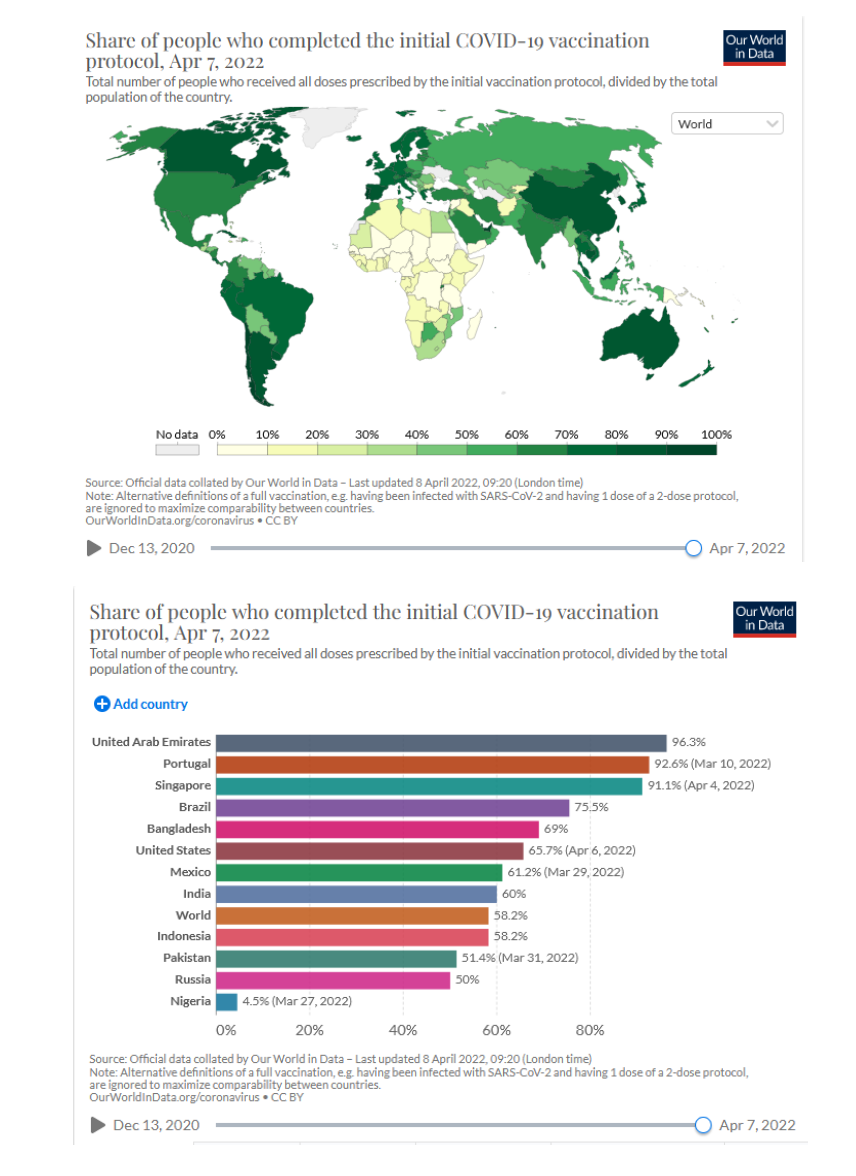
Our World in Data Coronavirus (COVID-19) Vaccinations[Accessed 09 Apr 2022] 64.7% of the world population has received at least one dose of a COVID-19 vaccine. 11.37 billion doses have been administered globally, and 13.32 million are now administered each day. Only 14.8% of people in low-income countries have received at least one dose.
Regulatory Actions Emergency Use Authorization for Vaccines to Prevent COVID-19 Guidance for Industry – March 2022 Final – March 31, 2022
Docket Number: FDA-2020-D-1137
Issued by: Center for Biologics Evaluation and Research
PDF: https://www.fda.gov/media/142749/download
FDA plays a critical role in protecting the United States (U.S.) from threats such as emerging infectious diseases, including the Coronavirus Disease 2019 (COVID-19) pandemic. FDA is committed to providing timely guidance to support response efforts to this pandemic.
FDA is issuing this guidance to provide sponsors of requests for Emergency Use Authorization (EUA) for COVID-19 vaccines with recommendations regarding the data and information needed to support the issuance of an EUA under section 564 of the FD&C Act (21 U.S.C. 360bbb-3) for an investigational vaccine to prevent COVID-19 for the duration of the COVID-19 public health emergency. This document supersedes the guidance of the same title issued in May 2021 (which superseded the guidance of the same title issued October 2020 and reissued February 2021).
USAID [to 09 Apr 2022] https://www.usaid.gov/news-information/press-releases Selected Press Releases, Statements, Announcements On the Urgent Need for Additional Global COVID-19 Resources
April 4, 2022
Statement by Administrator Samantha Power
Throughout the COVID-19 pandemic, Congress has consistently come together in an inspiring show of bipartisan support to fund our response. The $10 billion agreement announced this afternoon, while helping to fund our immediate domestic needs like treatments and tests, unfortunately leaves out the resources we need to power our global COVID response—an effort that is critical to preventing the emergence of new deadly variants and moving the world beyond this pandemic.
European Medicines Agency News & Press Releases Press Releases News: ECDC and EMA issue advice on fourth doses of mRNA COVID-19 vaccines (new) Last updated: 06/04/2022 The European Centre for Disease Prevention and Control (ECDC) and EMA’s COVID-19 task force (ETF) have concluded that it is too early to consider using a fourth dose of mRNA COVID-19 vaccines (Pfizer’s Comirnaty and Moderna’s Spikevax) in the general population. However, both agencies agreed that a fourth dose (or second booster) can be given to adults 80 years of age and above after reviewing data on the higher risk of severe COVID-19 in this age group and the protection provided by a fourth dose. ECDC and EMA also noted that there is currently no clear evidence in the EU that vaccine protection against severe disease is waning substantially in adults with normal immune systems aged 60 to 79 years and thus no clear evidence to support the immediate use of a fourth dose. Authorities will continue to monitor data to determine if there is an increasing risk of severe illness among those who are vaccinated…
Press release 8 April 2022 Ukraine: EU agrees fifth package of restrictive measures against Russia The European Commission welcomes today’s agreement by the Council to adopt a fifth package of restrictive measures against Putin’s regime in response to its brutal aggression against Ukraine and its people.
Press release 6 April 2022 Food crisis: the EU takes action to support Africa’s Sahel and Lake Chad regions With the aggravation of the food security and nutrition due to Russia’s invasion of Ukraine, the EU is today reinforcing its political and financial commitment to partner countries in Africa. A total of €554 million in 2022 will be targeted at increasing food security in Sahel and Lake Chad.
Government of India – Press Information Bureau Latest Press Releases COVID – 19 Vaccination Update – Day 449 :: India’s cumulative vaccination coverage crosses 185.68 Crore :: More than 12 lakh Vaccine doses administered today till 7 pm :: More than 2.21 Crore Vaccine Doses administered to 12-14 age group so far Posted On: 09 APR 2022 8:14PM by PIB Delhi
[We did not identify official announcements about Shanghai confirming the reports below; See China CDC below for additional announcements]
Shanghai widens COVID testing as other Chinese cities impose curbs Reuters April 8, 2022 Most large Chinese cities keeping COVID restrictions in place Food supply issues persist in the locked-down city Senior epidemiologist calls for “thunderous” action to cut transmission SHANGHAI, April 8 (Reuters) – Shanghai on Friday announced a record 21,000 new cases and a third consecutive day of COVID testing as a lockdown of its 26 million people showed no sign of easing and other Chinese cities tightened curbs – even in places with no recent infections. Beijing authorities intervened in Shanghai after its failure to isolate COVID by locking the city down in stages, and insists that the country stick to its zero-tolerance policy to prevent its medical system from breaking down. Authorities across China, which have mostly managed to keep COVID at bay for the last two years, are stepping up coronavirus control measures, including movement restrictions, mass testing and new quarantine centres. Cities that sprang into action this week include Zhengzhou, in central Henan province, which on Thursday said it would test all 12.6 million residents after finding a few asymptomatic cases…
Polio this week as of 06 April 2022
:: The GPEI has released an updated draft version of the Standard Operating Procedures (SOPs) to offer guidance to any country that detects any type of poliovirus outbreak or event, to respond in a timely and effective manner. This version of the SOPs builds on the prior versions developed since 2015 and takes into account the key developments, lessons learnt and availability of new tools since
:: This week, the Strategic Advisory Group of Experts on immunization (SAGE) is convening in Geneva, Switzerland. On polio eradication, the group will review the global current epidemiology, updated data on novel oral polio vaccine type 2 (nOPV2) use, and recommendations on initial planning for OPV cessation.
:: On 26 April, the programme will launch the new investment case for the GPEI’s Strategy: Delivering on a Promise. This one-hour, virtual event, “Investing in the Promise of a Polio-free World”, will feature live remarks from WHO Director-General Dr Tedros Adhanom Ghebreyesus and UNICEF Executive Director Catherine Russell, as well as the stories of health workers and Ministers of Health working with the polio programme around the world. Please register here to learn more about the financial and political support needed to end polio for good.
Summary of new WPV and cVDPV viruses this week (AFP cases and ES positives): – DR Congo: seven cVDPV2 cases – Egypt: one cVDPV2 positive environmental sample – Nigeria: six cVDPV2 cases and seven positive environmental samples
:::::: ::::::
Disease Outbreak News (DONs)
Latest WHO Disease Outbreak News (DONs), providing information on confirmed acute public health events or potential events of concern.
7 April 2022 | Middle East respiratory syndrome coronavirus (MERS-CoV) – Saudi Arabia Summary This is the bi-annual update on Middle East Respiratory Syndrome Coronavirus (MERS-CoV) infections reported to WHO from the Kingdom of Saudi Arabia. Between 1 August 2021 to 28 February 2022, six additional cases of MERS-CoV infections, including four associated deaths were reported to WHO from the Kingdom of Saudi Arabia. These cases were reported from Riyadh (four cases), Eastern (one case), and Taif (one case) regions. Based on the current situation and available information, WHO re-emphasizes the importance of strong surveillance by all Member States for acute respiratory infections, including MERS-CoV, and careful review of any unusual patterns.
:::::: ::::::
WHO/OCHA Emergencies
Health emergencies list– WHO
“The health emergencies list details the disease outbreaks, disasters and humanitarian crises where WHO plays an essential role in supporting countries to respond to and recover from emergencies with public health consequences.”
UN OCHA – Current Emergencies Current Corporate Emergencies Afghanistan No new updates identified.
Northern Ethiopia Ethiopia – Northern Ethiopia Humanitarian Update Situation Report, 7 Apr 2022 HIGHLIGHTS
Only 8 per cent of cash needs transferred to Tigray for humanitarian operations since 12 July 2021.
To date, about 15,000 people have been relocated to Sabacare 4 displacement site in Mekelle, reaching its full capacity.
245 schools in Afar remain closed, or 20 percent of the schools in the region, forcing more than 53,000 students out of school. Additional 5 schools are hosting displaced people.
An additional 10 mobile health and nutrition teams were deployed to Amhara to scale-up the response, bringing the total number of teams operating in the region to 88.
30 mobile health and nutrition teams are operating in conflict affected areas in Afar, reaching more than 8,000 people with health care during the week.
WHO & Regional Offices [to 09 Apr 2022] https://www.who.int/news News [Selected] 7 April 2022 Departmental news Open to all, anytime, anywhere: Free online courses bring vaccine knowledge to the global community
6 April 2022 News release WHO urges accelerated action to protect human health and combat the climate crisis at a time of heightened conflict and fragility
4 April 2022 Departmental news WHO announces updates on new TB antigen-based skin tests for the diagnosis of TB infection
4 April 2022 News release Billions of people still breathe unhealthy air: new WHO data
4 April 2022 Departmental news Health and the environment
2 April 2022 Departmental news Suspension of supply of COVID-19 vaccine (COVAXIN®)
Today, WHO confirmed the suspension of supply of Covaxin (Bharat Biotech) through UN procurement agencies, and recommended that countries using the vaccine take action as appropriate.
The suspension is in response to the outcome of a WHO inspection on 14–22 March 2022, and the need to conduct process and facility upgrade to address recently identified deficiencies in good manufacturing practices (GMP).
Bharat Biotech has committed to addressing the GMP deficiencies and is developing a corrective and preventive action plan for submission to the Drugs Controller General of India (DCGI) and WHO. In the interim and as a precautionary measure, the company has indicated that it will suspend production of Covaxin for export. As a consequence, supply will be interrupted for the foreseeable future.
The risk assessment to date does not indicate change in the risk–benefit ratio. The data, available to WHO, indicate the vaccine is effective and no safety concerns exist…
1 April 2022 Departmental news Parliaments promote women’s, children’s and adolescents’ health in the time of COVID-19
WHO Region of the Americas PAHO
:: On World Health Day, PAHO Director calls for concerted action to safeguard the health of the planet and its people
Washington, D.C., April 7, 2021 (PAHO) – After two years of the COVID-19 pandemic with millions of lives lost to the virus, Pan American Health Organization Director (PAHO) Carissa F. Etienne, marked World Health Day by calling for the urgent protection of the environment and highlighted how the health of the planet is linked to our own. “The so-…
:: World Health Day 2022
World Health Day is celebrated every year on 7 April to commemorate the anniversary of the founding of the World Health Organization (WHO) in 1948. Each year for this date, a theme is chosen that highlights an area of priority concern for WHO. In the face of the current pandemic, a polluted planet, and an increasing incidence of diseases,…
:: Americas at risk of further COVID-19 wave as cases surge in other regions, PAHO Director warns
Vaccination campaigns must focus on protecting the most vulnerable. Washington D.C. 6 April 2022 (PAHO) – As cases of COVID-19 surge in Europe and East Asia due to Omicron BA.2, the Pan American Health Organization (PAHO) Director Carissa F. Etienne has urged countries to remain vigilant and urgently close vaccination gaps. While COVID cases…
WHOWestern Pacific Region
:: 7 April 2022 Countries in the Western Pacific on the frontlines of the climate crisis, says WHO
:: 7 April 2022 Regional Director’s remarks at the virtual press conference on 7 April 2022
::::::
WHO Events https://www.who.int/news-room/events/1 [Selected] Public hearings regarding a new international instrument on pandemic preparedness and response
12 – 13 April 2022
In a consensus decision aimed at protecting the world from future infectious diseases crises, in December 2021 the World Health Assembly agreed to kickstart a global process by establishing an intergovernmental negotiating body (INB) to draft and negotiate a convention, agreement or other international instrument under the Constitution of the World Health Organization to strengthen pandemic prevention, preparedness and response.
Dr Tedros Adhanom Ghebreyesus, WHO Director-General, said the decision by the World Health Assembly was historic in nature, vital in its mission, and represented a once-in-a-generation opportunity to strengthen the global health architecture to protect and promote the well-being of all people.
As part of this historic decision, the World Health Assembly requested the Director-General to hold public hearings, in line with standard WHO practice, to support the work of the INB. Registration and additional information on the public hearings is available at https://inb.who.int
6 April 2022 Sharing and reuse of health-related data for research purposes: WHO policy and implementation guidance Overview
The purpose of this document is to clarify the policy and practice on the reuse and onward sharing for research purposes of health data collected under the auspices of WHO technical programmes. This covers use in both emergency and non-emergency situations and complements the following: the Policy on use and sharing of data collected in Member States by the World Health Organization (WHO) outside the context of public health emergencies; the Policy statement on data sharing by the World Health Organization in the context of public health emergencies; and the Joint statement on public disclosure of results from clinical trials. This policy covers the reuse of health data for research purposes. Its scope includes research data generated by research undertaken directly by WHO, or funded by WHO, as well as the use of other health data for research purposes.
This document sets out the objectives of this WHO policy and the obligations of WHO staff and researchers funded by WHO. The following section of this document entitled Guidance on the implementation of the WHO policy on the sharing and reuse of health-related data for research purposes provides further references and resources to assist in the development of a data management and sharing plan that is in alignment with the vision of this policy.
ACIP Meetings
Next ACIP Meeting April 20, 2022 11:00am – 4:00pm ET.
This meeting is virtual. No registration is required to watch the webcasts. Webcast Link No Agenda posted at inquiry
Careful readers will note that the number and range of organizations now monitored in our Announcements section below has grown as the impacts of the pandemic have spread across global economies, supply chains and programmatic activity of multilateral agencies and INGOs.
The Bill & Melinda Gates Medical Research Institute is a non-profit biotech organization. Our mission is to develop products to fight malaria, tuberculosis, and diarrheal diseases—three major causes of mortality, poverty, and inequality in developing countries. The world has unprecedented scientific tools at its disposal; now is the time to use them to save the lives of the world’s poorest people
The European & Developing Countries Clinical Trials Partnership (EDCTP) aims to accelerate the development of new or improved drugs, vaccines, microbicides and diagnostics against HIV/AIDS, tuberculosis and malaria as well as other poverty-related and neglected infectious diseases in sub-Saharan Africa, with a focus on phase II and III clinical trials
:: The Ministry of Health and Population, Gavi, the Vaccine Alliance, UNICEF, WHO and other partners are collaborating on the nationwide typhoid vaccine introduction including a catch-up campaign, which seeks to vaccinate all children from the age of 15 months to 15 years to protect them from typhoid fever.
:: The campaign aims to reach 95% coverage of nearly 7.5 million children with the typhoid conjugate vaccine (TCV) and simultaneously identify ‘zero-dose’ children and those that have missed other routine vaccines.
:: Gavi, MedAccess and the Open Society Foundations announce a new partnership to create an innovative Risk Sharing Facility to support the COVAX Cost-Sharing Mechanism.
:: The partnership aims to build on intensive efforts by Gavi to extend its suite of innovative financing instruments to help donors and countries stretch their available resources as the pandemic shifts and to protect against future shocks. The Facility’s instruments also represent a pathway and toolkit to address future global health crises.
:: This new partnership comes as Gavi seeks to raise additional funds to support COVAX. April 8 will see Germany, Indonesia and Senegal co-host the 2022 Gavi COVAX AMC Summit, where governments, international organisations, civil society and the private sector will come together to renew their commitment to global vaccination.
Collaboration to target bacterial and viral pathogens including HIV, SARS-CoV-2, antimicrobial-resistant pathogens, and tuberculosis
NEW YORK, NY & CAMBRIDGE, MA — APRIL 7, 2022 — Moderna, Inc. (Nasdaq: MRNA), a biotechnology company pioneering messenger RNA (mRNA) therapeutics and vaccines, and the nonprofit scientific research organization IAVI today announced a new collaboration to employ mRNA technology to meet the challenge of a range of global health threats. These diseases — HIV/AIDS, tuberculosis (TB), antimicrobial-resistant enteric infections, and COVID-19 — are estimated to have caused at least 95 million new infections and more than 4 million deaths in 2020 alone. The collaboration combines the power of Moderna’s mRNA platform and IAVI’s expertise in discovery and product development to advance vaccines and antibodies designed to be globally accessible, especially in low-income countries where the targeted diseases have high incidence and prevalence….
States often face situations in which their officials have to use force to maintain or restore public security, law and order in armed conflicts or situations of violence that do not meet the threshold of applicability of international humanitarian l
… IFFIm’s established, in-demand vaccine bonds have already accelerated funding from donors to aid the fight against COVID-19. So far in this pandemic, over US$ 1.23 billion in new pledges have been committed to IFFIm for the COVAX AMC. IFFIm has frontloaded US$ 975 raised on capital markets backed by those donations in 2021.
…By harnessing its frontloading capability, IFFIm can be a valuable financial tool helping Gavi and donors to respond as efficiently and effectively as possible to upcoming global health challenges without any immediate impact on donors’ fiscal or official development assistance (ODA) positions.
“IFFIm has a crucial capability – bringing pledged money forward in time and putting it to work immediately. IFFIm was created 15 years ago to accelerate childhood vaccination, and was hugely successful at it. Now it’s an essential part of funding the fight to break COVID,” said Ken Lay, IFFIm Board Chair. “Working with Gavi and the World Bank, we expect it can do even more.”
Geneva, 6 April 2022 – The International Federation of Red Cross and Red Crescent Societies (IFRC) calls for solidarity with people affected by crises everywhere as the response to the conflict in Ukraine shows the way.
The support from people and donors around the world demonstrates what is possible and illustrates the good practice essential in any humanitarian crisis. At the same time, the massive differences depending on where a crisis occurs and who it affects have been thrown into stark relief…
ISC is a non-governmental organization with a unique global membership that brings together 40 international scientific Unions and Associations and over 140 national and regional scientific organizations including Academies and Research Councils.
During World Immunization Week 2022 the International Vaccine Access Center, along with global immunization and indigenous health partners, will host a three webinars. Registration is free, and we encourage all to sign up and save these dates on their calendars. Enabling Equitable Access to COVID-19 Vaccines for Indigenous Populations When: April 26, 2022 from 6:00 […]
This is a summary of what was said by UNHCR spokesperson Matthew Saltmarsh – to whom quoted text may be attributed – at today’s press briefing at the Palais des Nations in Geneva.
Geneva – Unitaid joins partners to observe World Health Day 2022 today, reaffirming its strong commitment to contribute to keep humans and the planet healthy.
Climate change has been identified as the single biggest health threat of the 21st century, already harming the world’s most vulnerable people and menacing to undermine decades of progress in global health…
With the aim of exchanging best practices and motivating Customs Administrations to promote ethics through WCO tools, the Webinar “Ethics and Transparency – A Commitment for All” was organized by the Private Sector Consultative Group and the WCO Regional Vice-Chair for the Americas and the Caribbean…
The World Organisation for Animal Health (OIE) joins the World Aquatic Animal Day celebrations by raising awareness on the need to maintain sustainable aquatic ecosystems to ensure a better future for all.
Over 50 million people worldwide depend on fisheries and aquaculture for their livelihoods. However, aquatic animal diseases can jeopardise the economic and environmental sustainability of this source of income. For instance, on a global scale, disease outbreaks cost the aquaculture industry over US$6 billion per year…
Members welcomed the latest update on export restrictions and prohibitions and trade-easing measures relating to the COVID-19 pandemic, which was presented by the WTO Secretariat at a meeting of the Committee on Market Access on 30-31 March. The Committee also heard about the first experience-sharing session on COVID-19-related goods, where members sought to better understand how they define lists of “essential goods” to combat the pandemic and the challenges they face with tariff classification.
In her address to the Steering Committee of the Inter-Parliamentary Union on 31 March, Deputy Director-General Angela Ellard provided an overview of the state of negotiations in the run-up to the 12th Ministerial Conference (MC12). She also highlighted the importance of the rules based international order and multilateralism, particularly in light of the war in Ukraine, and called on parliamentarians to help “make the world safer and more prosperous through trade”. The full text of her remarks is below.
::::::
ARM [Alliance for Regenerative Medicine] [to 09 Apr 2022]
April 4, 2022, Geneva – The international trade body representing the biopharmaceutical industry (IFPMA) today welcomes the announcement of the AMR Action Fund’s first portfolio investments. The Fund is the world’s largest public-private partnership investing in biotech companies that are developing antibiotics, involving more than 20 leading biopharmaceutical companies who raised the majority of the approximately US $1 billion when the Fund was launched in 2020. IFPMA played an instrumental role conceiving the Fund in collaboration with the European Investment Bank, the Wellcome Trust and the World Health Organization.
The announcement marks an important milestone for the Fund, which has as its goal to invest in the development of between two and four new antibiotics by 2030. New antibiotics are critical to helping stem the rise of antimicrobial resistance (AMR), which is a leading cause of death worldwide. At least 1.27 million deaths per year are directly attributable to infections that have grown resistant to existing antibiotics, with an additional 4.95 million deaths associated with resistant infections…
[See AMR Action Fund announcements in Perspectives above]
International Generic and Biosimilar Medicines Association [IGBA]
Journal Watch Vaccines and Global Health: The Week in Review continues its weekly scanning of key peer-reviewed journals to identify and cite articles, commentary and editorials, books reviews and other content supporting our focu-s on vaccine ethics and policy. Journal Watch is not intended to be exhaustive, but indicative of themes and issues the Center is actively tracking. We selectively provide full text of some editorial and comment articles that are specifically relevant to our work. Successful access to some of the links provided may require subscription or other access arrangement unique to the publisher.
If you would like to suggest other journal titles to include in this service, please contact David Curry at: david.r.curry@centerforvaccineethicsandpolicy.org
Health Equity in US Latinx Communities
Latinx communities in the US include over 60 million people with a plurality of political beliefs, cultural practices, and wealth. This diversity is also expressed in population health data: some health indicators suggest advantages of Latinx community membership while other data demonstrate inequitable disease burden and maldistribution of environmental and occupational risk. Legacies of colonial conquest of the Americas persist in discrimination and marginalization today and are embodied by members of our Latinx communities.
Analysis Ethical considerations in international clinical trial site selection (6 April, 2022)
Jennifer Miller, Joseph Millum Abstract
New medicines and vaccines are predominantly tested in high-income countries. However, as the COVID-19 pandemic highlighted, the populations who can benefit from these interventions are not limited to these wealthier regions. One-third of novel Food and Drug Administration approved drugs, sponsored by large companies, treat infectious diseases like tuberculosis and HIV, which disproportionately affect low-income and middle-income countries (LMICs). The medicines for non-communicable diseases (NCDs) are also relevant to LMIC health needs, as over three-quarters of deaths from NCDs occur in LMICs. There are concerns clinical trial data may not extrapolate across geographical regions, as product effectiveness can vary substantially by region. The pentavalent rotavirus vaccine, for example, had markedly lower efficacy in LMICs. Efficacy variations have also been found for other vaccines and drugs. We argue there are strong ethical arguments for remedying some of this uneven distribution of clinical trial sites by geography and income. Chief among them, is that these disparities can impede equitable access to the benefits of clinical research, such as representation in the evidence base generated to guide prescribing and use of medicines and vaccines. We suggest trial site locations should be made more transparent and for later stage trials their selection should be informed by the global distribution of disease burden targeted by an experimental product. Countries with high prevalence, incidence, severity or infection transmission rates for targeted diseases should have real opportunities to engage in and enrol their populations in trials for novel medicines and vaccines.
Examining the unit costs of COVID-19 vaccine delivery in Kenya Vaccines are considered the path out of the COVID-19 pandemic. The government of Kenya is implementing a phased strategy to vaccinate the Kenyan population, initially targeting populations at high risk of seve…
Authors: Stacey Orangi, Angela Kairu, Anthony Ngatia, John Ojal and Edwine Barasa
Citation: BMC Health Services Research 2022 22:439
Content type: Research Published on: 4 April 2022
Ethical and practical considerations for cell and gene therapy toward an HIV cure: findings from a qualitative in-depth interview study in the United States HIV cure research involving cell and gene therapy has intensified in recent years. There is a growing need to identify ethical standards and safeguards to ensure cell and gene therapy (CGT) HIV cure research r…
Authors: Karine Dubé, John Kanazawa, Hursch Patel, Michael Louella, Laurie Sylla, Jeff Sheehy, Lynda Dee, Jeff Taylor, Jen Adair, Kim Anthony-Gonda, Boro Dropulić, John A. Sauceda, Michael J. Peluso, Steven G. Deeks and Jane Simoni
Citation: BMC Medical Ethics 2022 23:39
Content type: Research Published on: 9 April 2022
CoronaVac vaccine is effective in preventing symptomatic and severe COVID-19 in pregnant women in Brazil: a test-negative case-control study More doses of CoronaVac have been administered worldwide than any other COVID-19 vaccine. However, the effectiveness of COVID-19 inactivated vaccines in pregnant women is still unknown. We estimated the vaccin…
Authors: Enny S. Paixao, Kerry L. M. Wong, Flavia Jôse Oliveira Alves, Vinicius de Araújo Oliveira, Thiago Cerqueira-Silva, Juracy Bertoldo Júnior, Tales Mota Machado, Elzo Pereira Pinto Junior, Viviane S. Boaventura, Gerson O. Penna, Guilherme Loureiro Werneck, Laura C. Rodrigues, Neil Pearce, Mauricio L. Barreto and Manoel Barral-Netto
Citation: BMC Medicine 2022 20:146
Content type: Research article Published on: 5 April 2022
Global diversity of policy, coverage, and demand of COVID-19 vaccines: a descriptive study Hundreds of millions of doses of coronavirus disease 2019 (COVID-19) vaccines have been administered globally, but progress on vaccination varies considerably between countries. We aimed to provide an overall picture of COVID-19 vaccination campaigns, including policy, coverage, and demand of COVID-19 vaccines.
Authors: Zhiyuan Chen, Wen Zheng, Qianhui Wu, Xinghui Chen, Cheng Peng, Yuyang Tian, Ruijia Sun, Jiayi Dong, Minghan Wang, Xiaoyu Zhou, Zeyao Zhao, Guangjie Zhong, Xuemei Yan, Nuolan Liu, Feiran Hao, Sihong Zhao…
Citation: BMC Medicine 2022 20:130
Content type: Research article Published on: 4 April 2022
“Most of the cases are very similar.”: Documenting and corroborating conflict-related sexual violence affecting Rohingya refugees In August 2017, a large population of Rohingya from northern Rakhine state in Myanmar fled to Bangladesh due to “clearance operations” by the Myanmar security forces characterized by widespread and systematic …
Authors: Lindsey Green, Thomas McHale, Ranit Mishori, Linda Kaljee and Shahanoor Akter Chowdhury
Citation: BMC Public Health 2022 22:700
Content type: Research Published on: 9 April 2022
Factors associated with COVID-19 vaccine intent among Latino SNAP participants in Southern California COVID-19 is significantly impacting the health and well-being of the country, particularly for ethnic minority populations and low-income groups. Our goal was to determine COVID-19 vaccination intent in a low-…
Authors: Vanessa P. Scott, Sarah Hiller-Venegas, Kate Edra, Joe Prickitt, Yesenia Esquivel, Blanca Melendrez and Kyung E. Rhee
Citation: BMC Public Health 2022 22:653
Content type: Research article Published on: 5 April 2022
Reimagining peer review as an expert elicitation process Journal peer review regulates the flow of ideas through an academic discipline and thus has the power to shape what a research community knows, actively investigates, and recommends to policymakers and the wid…
Authors: Alexandru Marcoci, Ans Vercammen, Martin Bush, Daniel G. Hamilton, Anca Hanea, Victoria Hemming, Bonnie C. Wintle, Mark Burgman and Fiona Fidler
Citation: BMC Research Notes 2022 15:127
Content type: Commentary Published on: 5 April 2022
Screening for Hepatitis B in partners and children of women positive for surface antigen, Burkina Faso
Alice Nanelin Guingané, Rémi Kaboré, Yusuke Shimakawa, Eric Nagaonlé Somé, Dramane Kania, Amandine Pisoni, Nicolas Nagot, Rachel King, Roger Sombié, Nicolas Meda, Philippe Van de Perre, Edouard Tuaillon
Bull World Health Organ. 2022 Apr 1; 100(4): 256–267. Published online 2022 Feb 22. doi: 10.2471/BLT.21.287015
PMCID: PMC8958837
Therapeutic Innovations in Neuroscience
The theme of this issue of Clinical Pharmacology & Therapeutics (CPT) encompasses neuroscience in the broad sense to include neurology and psychiatry, nonclinical and clinical aspects, novel clinical trial methodologies, and modeling and simulation approaches applicable to central nervous system (CNS) drug development and therapy. While naturally the last two years have been dominated by coronavirus disease 2019 (COVID-19), it is important not to forget that drug development for other indications has not been stopped, albeit many trials were affected in terms of delays in recruitment and collection of clinical data.
The COVID-19 pandemic has triggered a new bout of anti-vaccination propaganda. These are often grounded in pseudoscience and misinterpretation of evolutionary biology.
Caring for the Critically Ill Patient Effect of Antiplatelet Therapy on Survival and Organ Support–Free Days in Critically Ill Patients With COVID-19A Randomized Clinical Trial
REMAP-CAP Writing Committee for the REMAP-CAP Investigators
free access has active quiz
JAMA. 2022;327(13):1247-1259. doi:10.1001/jama.2022.2910
This randomized clinical trial assesses the effect of treatment with an antiplatelet agent vs no antiplatelet therapy on days alive and free of intensive care unit respiratory or cardiovascular organ support within 21 days among patients critically ill with COVID-19.
Association Between 2-Dose vs 3-Dose Hepatitis B Vaccine and Acute Myocardial Infarction
Katia Bruxvoort, PhD; Jeff Slezak, MS; Lei Qian, PhD; et al.
free access
JAMA. 2022;327(13):1260-1268. doi:10.1001/jama.2022.2540
This large prospective cohort study compares the rates of acute myocardial infarction between recipients of a 2-dose hepatitis B vaccine and recipients of a 3-dose hepatitis B vaccine.
Research Letter Estimates of SARS-CoV-2 Omicron Variant Severity in Ontario, Canada
Ana Cecilia Ulloa, MPH; Sarah A. Buchan, PhD; Nick Daneman, MD, MSc; et al.
free access has active quiz has audio
JAMA. 2022;327(13):1286-1288. doi:10.1001/jama.2022.2274
This study examines hospitalizations and deaths associated with the SARS-CoV-2 Omicron variant compared with matched patients infected with the Delta variant.
Viewpoint Expanding Efforts and Support to Respond to the HIV and COVID-19 Intersecting Pandemics
Lawrence Corey, MD; Russell Corbett-Detig, PhD; Chris Beyrer, MD, MPH
free access
JAMA. 2022;327(13):1227-1228. doi:10.1001/jama.2022.3517
This Viewpoint discusses the generation of SARS-CoV-2 variants of concern globally and the need for increased access to COVID-19 vaccination in Africa, particularly for people living with HIV and for households and people living in densely populated communities.


 vaccines and global health :: ethics and policy